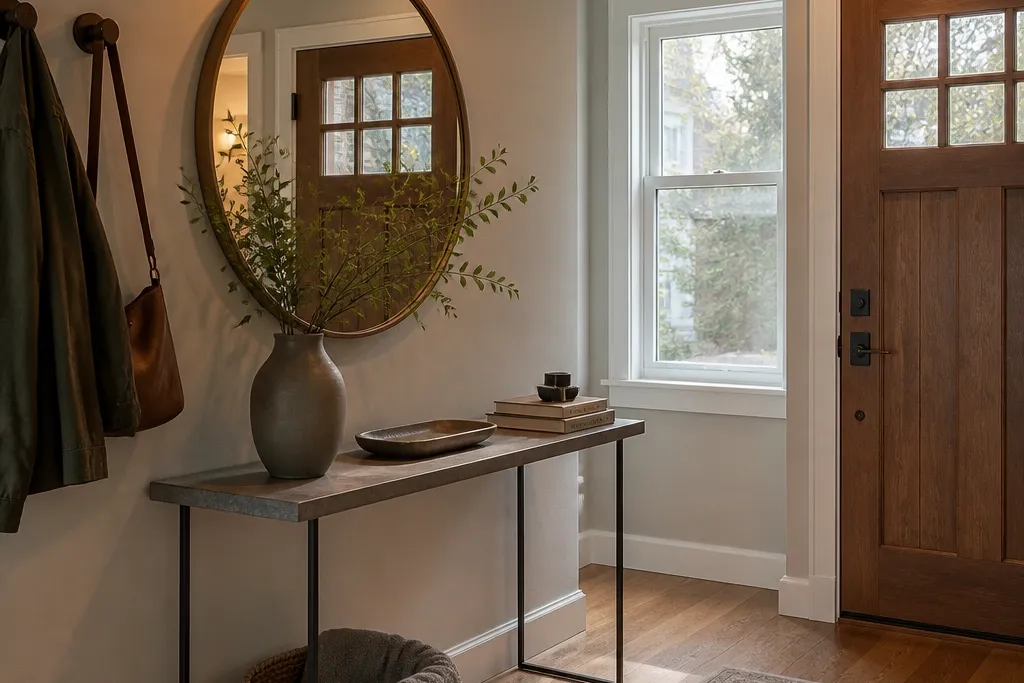
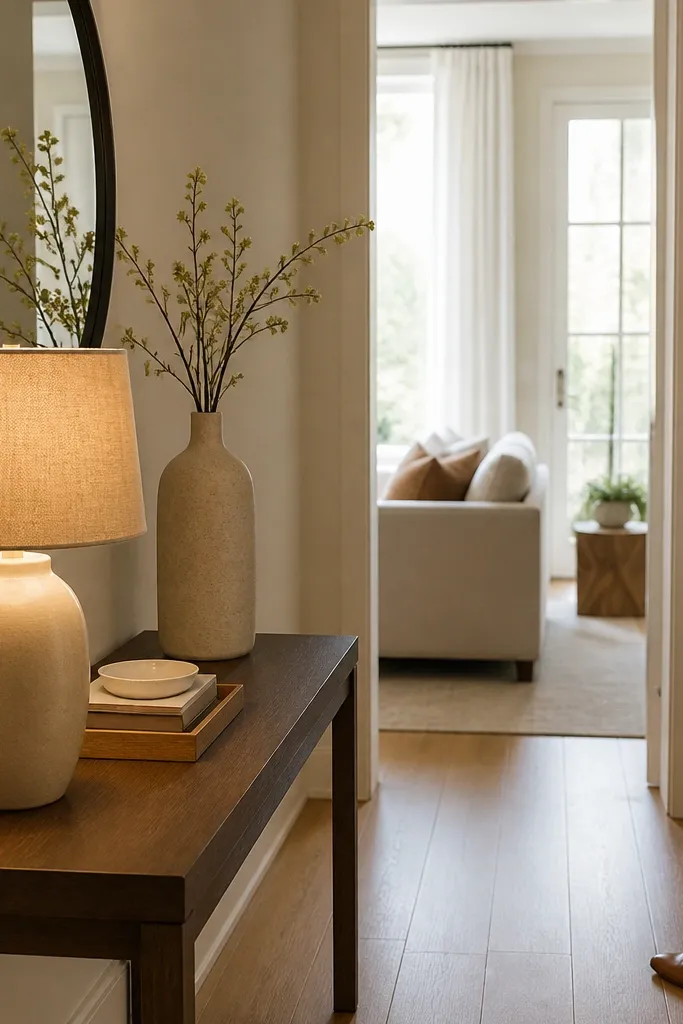
1. Oversized round mirror over a slim console
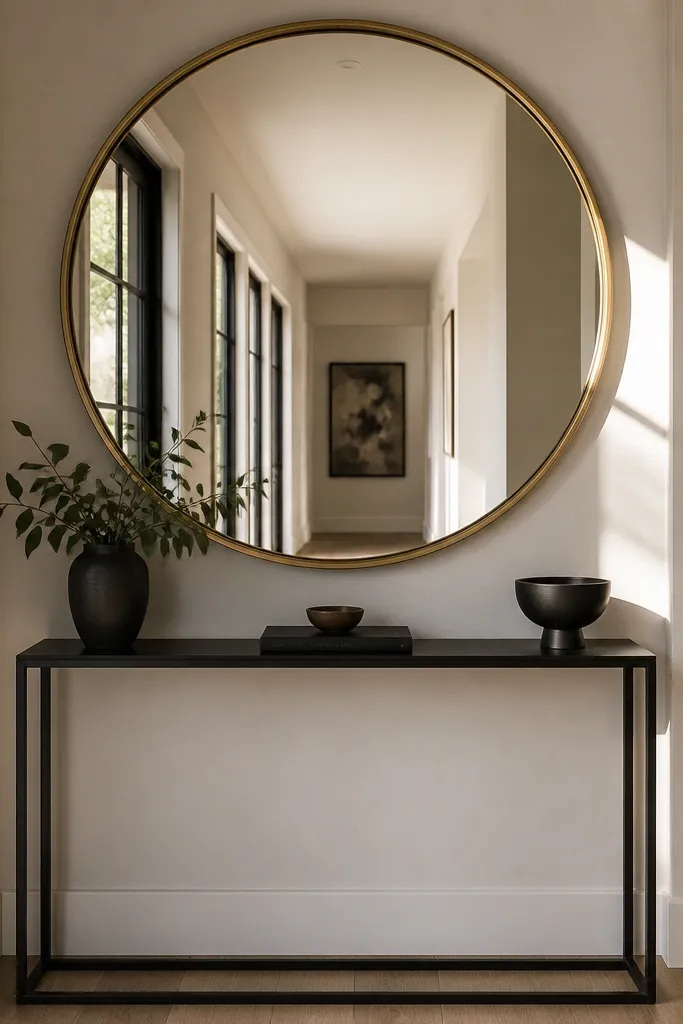
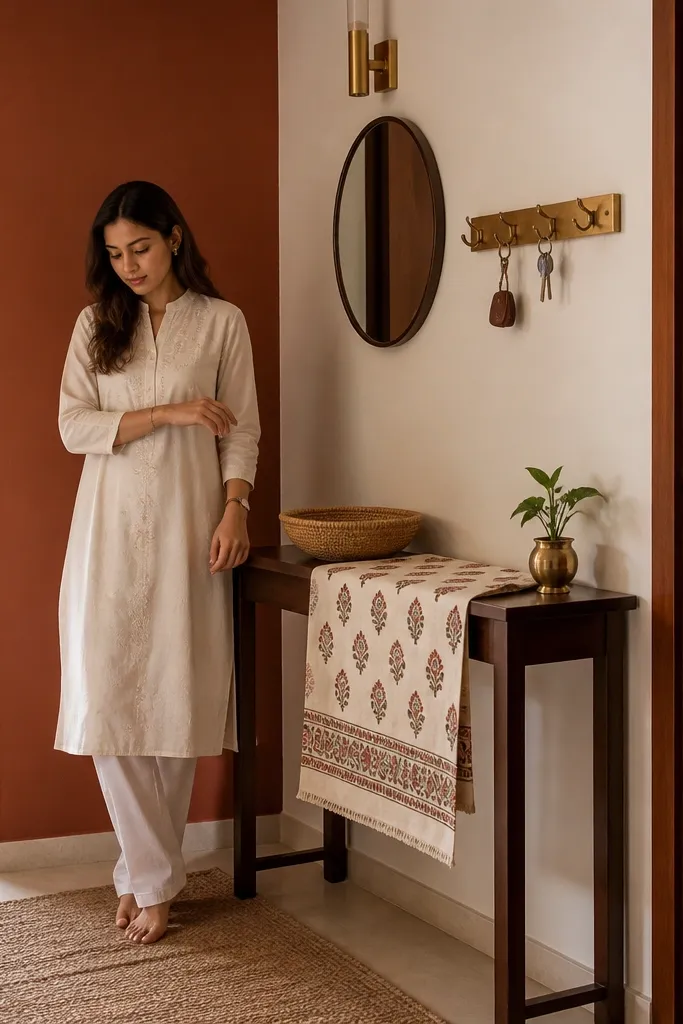
This is the fastest beginner-friendly foyer ideas entryway that still reads high-end. A round mirror softens the angles of most entryways, and the reflective shape makes the space feel bigger without adding visual clutter. Pair it with a console that’s 12-16 inches deep so you don’t lose walking room. Keep the frame finish consistent with your hardware — black frame for black knobs, warm wood or brass for warm fixtures. Style the top with a single lamp and one tray so the first impression looks intentional, not crowded.
Start by centering the mirror over the console. Measure the floor to the top of the mirror — aim for 65-70 inches, then adjust if your ceiling is low. Choose a console that’s 12-16 inches deep and wide enough to leave 2-3 inches of breathing room on each side of the mirror. Add a slim tray (about 10-14 inches long) and a small lamp, then finish with one object that gives height, like a vase or a candle holder.
Pro tipPick a mirror frame that matches your door hardware or light fixture finish so the room looks “pulled together.”
Watch outAvoid leaning the mirror or using a mirror that’s too small for the wall — it makes the entry look unfinished.
2. Gallery wall with 3 sizes and consistent spacing
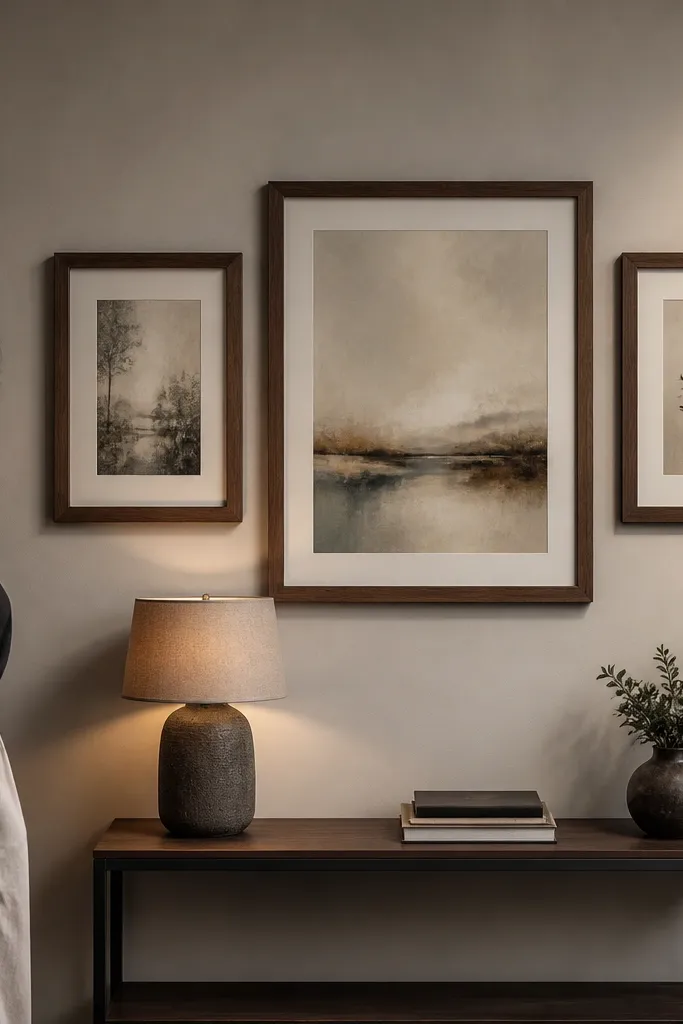
A gallery wall gives instant personality to an entryway that’s otherwise blank, and it works even when you don’t have a lot of space. The trick is not the art — it’s the spacing. Use three frame sizes so the wall has rhythm: one large center piece, two smaller pieces flanking it. Stick to a consistent frame finish, like black metal or warm wood, so the wall looks styled instead of random. Add a small console below only if you have room; otherwise let the gallery be the anchor.
Choose a set of frames in the same finish and mat color. Layout dry first on the floor, then transfer to the wall using painter’s tape to mark center points. Keep even gaps between frames, usually 2-3 inches, and align the top edges so the wall reads clean. Hang the center piece at about 60 inches from the floor to the middle of the frame, then place the smaller frames symmetrically.
Use matching mat colors (cream or off-white) to make the colors in the art look cohesive.
Avoid mixing frame finishes and mat colors — that’s what makes gallery walls look messy in entryways.
3. Bench + two baskets for a tidy drop zone
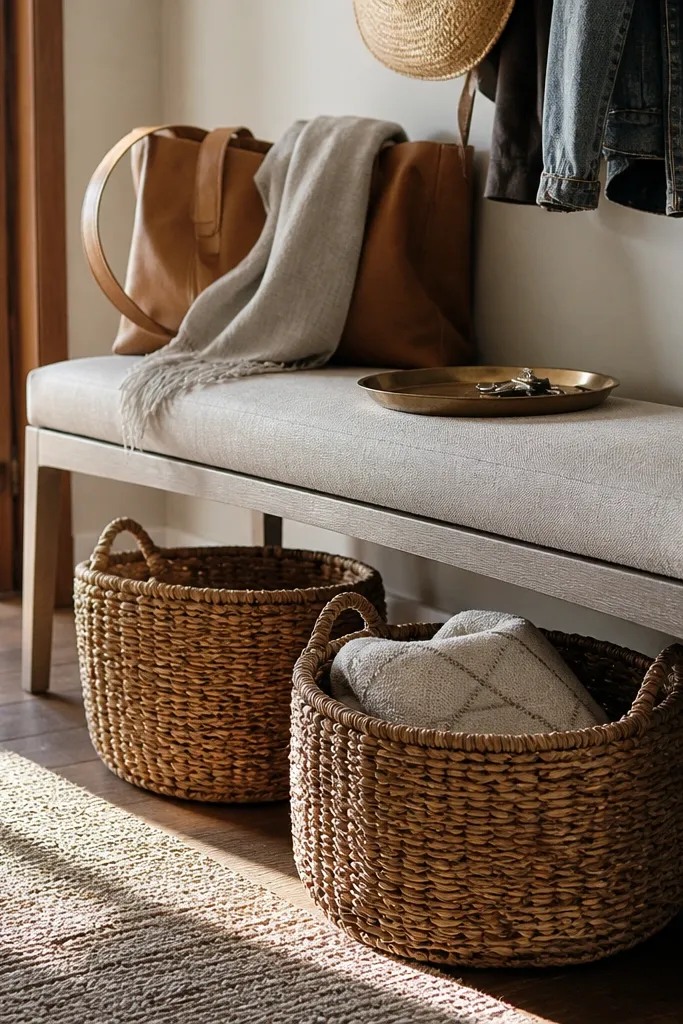
If your entryway catches shoes, bags, and mail, this setup looks good while keeping the mess controlled. A bench gives you a place to sit while putting on shoes, and the baskets hide the daily chaos. Choose woven baskets in natural tones like seagrass or rattan so they look warm instead of utilitarian. The key is proportions: keep the bench length around the width of your main wall area, and place baskets that fit under the seat without bulging. Add a tray on top for mail — the entry looks organized in every photo.
Place the bench against the wall where you can open doors without bumping it. If the space is tight, use a bench that’s 40-48 inches long and 16-18 inches deep. Slide two baskets into the open area under the bench or on the floor next to it, then measure so the basket edges align. Finish by putting a shallow tray on the seat and adding a small catch-all like a key dish or a folded scarf.
Choose baskets with handles so you can pull them out fast when you need to clear the entry.
Avoid using baskets that are too big for the bench — they look sloppy and push the furniture out of scale.
4. Wall hooks with a built-in-looking coat rail vibe
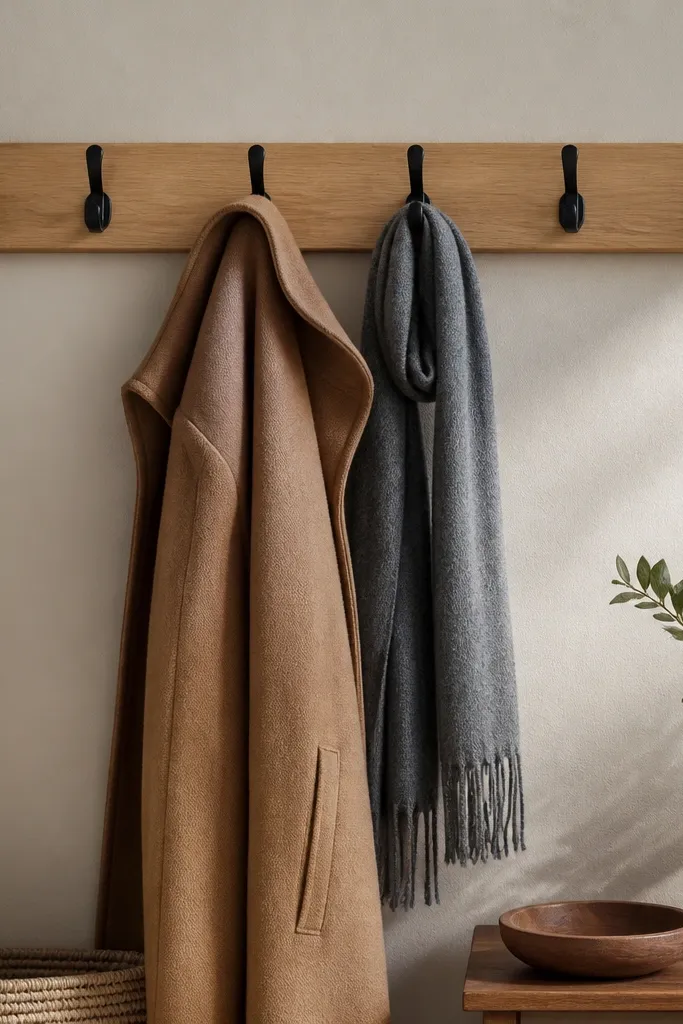
Hooks are the most beginner-friendly foyer ideas entryway when you need storage but don’t want a bulky cabinet. A neat row of hooks looks intentional when you match the finish and keep spacing consistent. If you want the built-in look, use hooks mounted on a simple wood rail or a narrow board — it makes the wall feel designed, not accidental. Keep the hardware finish consistent with your door hardware or light fixture. Style what goes on the hooks: one long coat, a hat, and a scarf — the entry looks curated because the items repeat in color and texture.
Find the wall section near the door where coats actually hang without dragging on the floor. Mark hook positions so the top hook sits around 66-70 inches from the floor. Use a level and install with wall anchors if you’re not hitting studs. Mount a narrow wood board (about 4-6 inches wide) and attach hooks to it so the row looks cohesive. Add a small bench or shoe tray underneath so the storage has a landing spot.
Pro tipUse hooks in one finish only — mixing brushed nickel with black hardware makes entryways look unfinished fast.
Watch outAvoid placing hooks too low — coats will pool at ankle height and the entry will look cluttered.
5. Tall floor vase + minimal runner for instant height
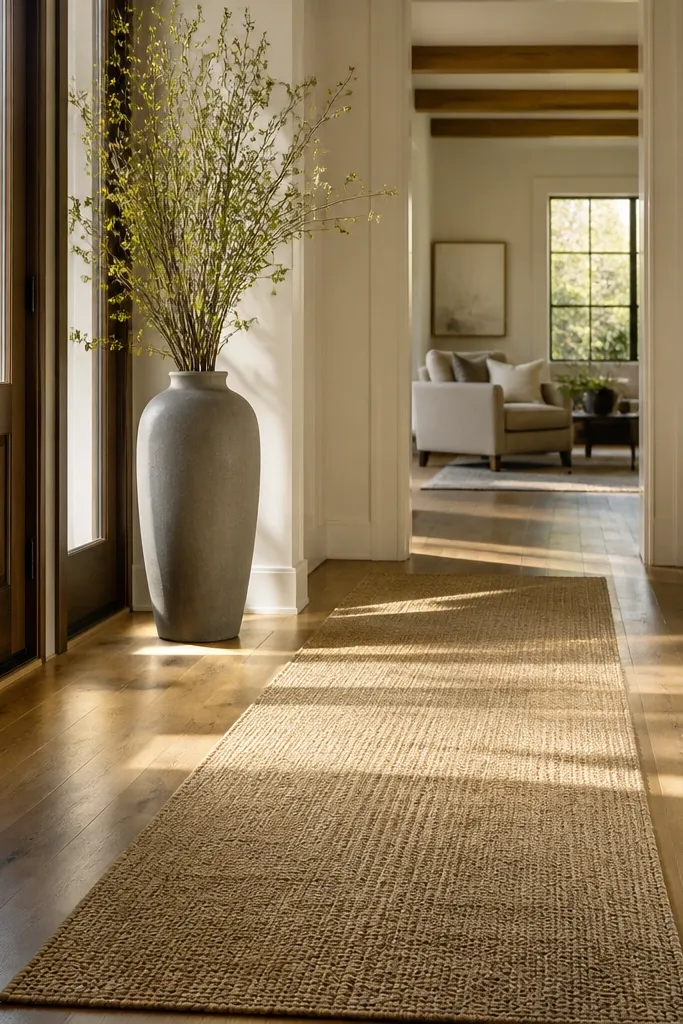
This idea works when your entryway feels flat, especially with low ceilings or narrow walls. A tall floor vase creates vertical movement, and a runner gives you a defined pathway from the door to the next room. Go for a vase in matte ceramic, either white, stone gray, or black — matte hides fingerprints and looks better in daylight. Choose a runner with a low-contrast pattern or solid color so it doesn’t fight your wall decor. Keep the console styling minimal: one tall vase, one small object, and one tray.
Place the runner so it doesn’t bunch — aim for 6-10 inches of clearance from the walls if it’s a tight hallway. Choose a vase height of about 18-30 inches depending on the wall height. Put the vase on the console or directly on the floor next to it if the console is narrow. Add one plant stem or dried branch arrangement inside, keeping it around the height of the vase so it looks full.
Match the runner tone to your wall trim or floor color for a clean, blended look.
Avoid a runner with a loud pattern when you already have art or a gallery wall — it makes the entry visually busy.
6. Black sconce pair flanking a mirror
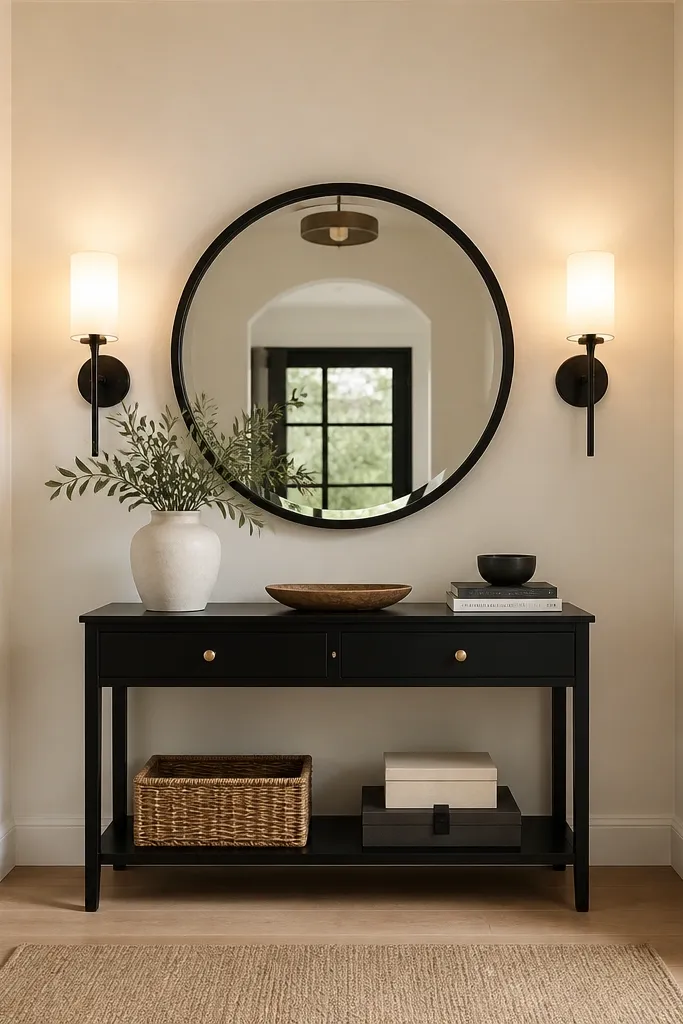
Lighting is where most entryways lose their “first impression” factor. Wall sconces give you face-friendly light and make the mirror glow instead of casting harsh shadows. Flank a mirror with matching sconces so the symmetry reads polished. Black sconces are forgiving because they hide minor wall imperfections and look sharp with wood floors, white walls, and brass accents. Use warm bulbs at about 2700K for a cozy entry that still looks crisp.
Pick a mirror first, then measure the space between the mirror and the corners. Install sconces so the center of each sconce is around the middle of the mirror height range (often 60-66 inches from the floor). If you’re not comfortable with wiring, buy plug-in sconces and run the cord behind a small console or along trim. Choose bulbs labeled 2700K and check wattage so the sconces are bright enough — look for around 400-800 lumens total per fixture depending on shade size.
Pro tipUse frosted or lightly diffused shades if you hate glare on the mirror.
Watch outAvoid mixing bulb temperatures — cool white bulbs make entryways look harsh and flat.
7. Layered entry rug with a washable top
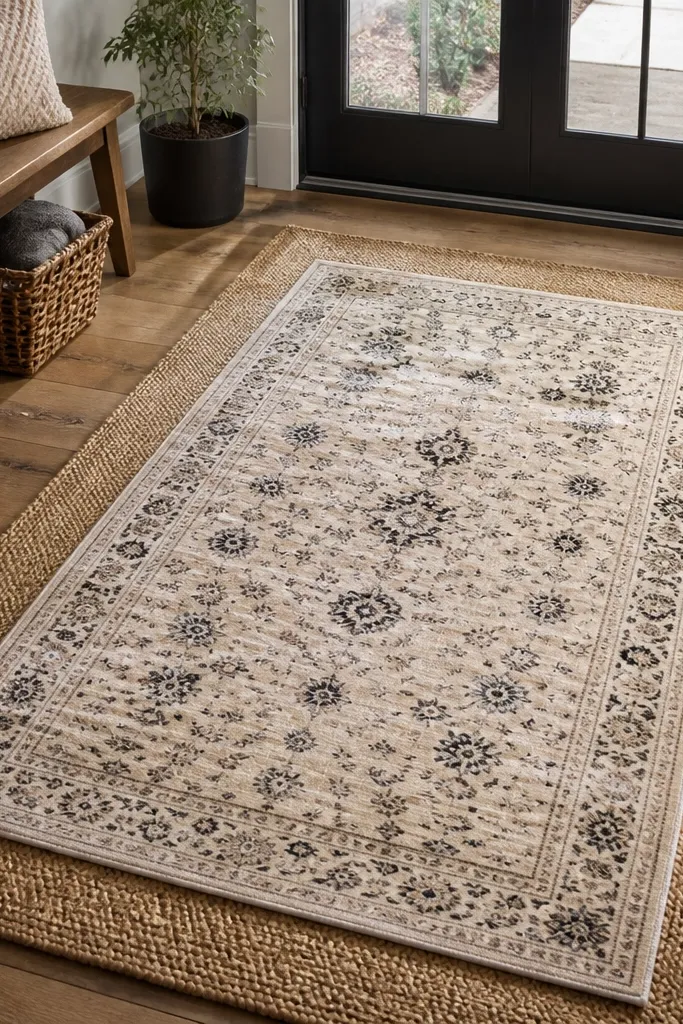
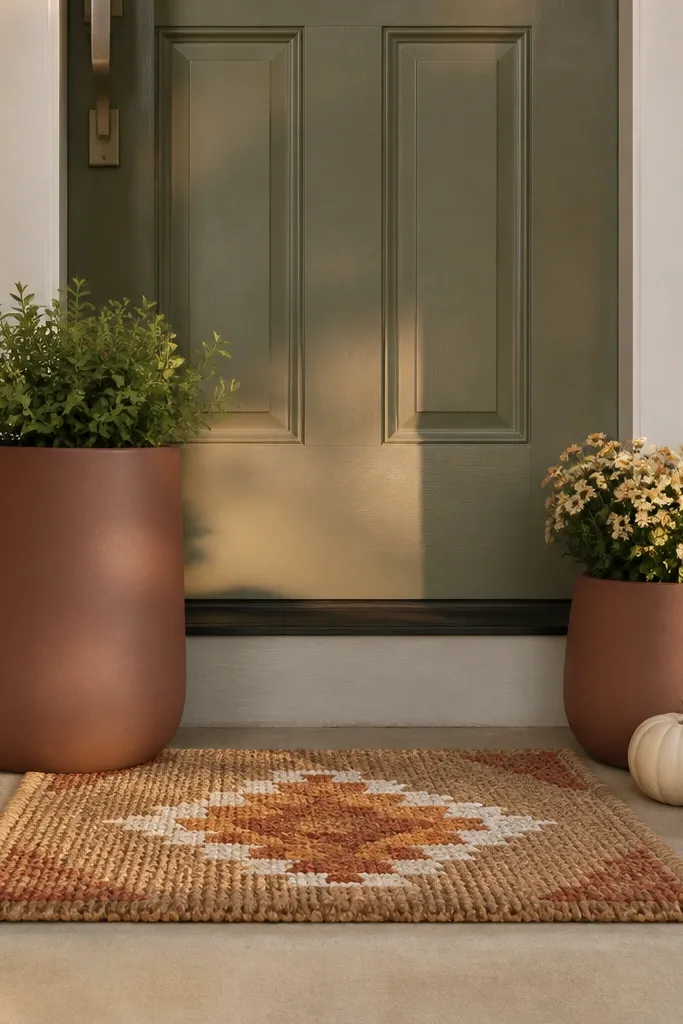
A layered rug setup makes a foyer look designed even when you’re starting with plain floors. The trick is to keep one rug neutral and add a washable top layer that matches your style. Pick a base runner in jute-look or flat weave, then add a washable rug with a subtle pattern in cream, taupe, or small black accents. This gives texture without making the entry hard to maintain. It also frames the door landing so the space reads intentional, not just “traffic area.”
Measure from the door threshold to the point where you want the rug to end. Place a flat weave runner first, then lay the washable rug on top in the center. Leave about 2-4 inches of base runner visible on each side for a layered effect. Secure with rug grippers so the top rug doesn’t slide, then trim nothing unless the rug manufacturer allows it.
Choose a rug with low pile if your entry has doors that swing over the floor area.
Avoid high-pile rugs in busy entries — they trap dirt and look worn quicker.
8. Console styling with a tall, a tray, and a grounded book stack
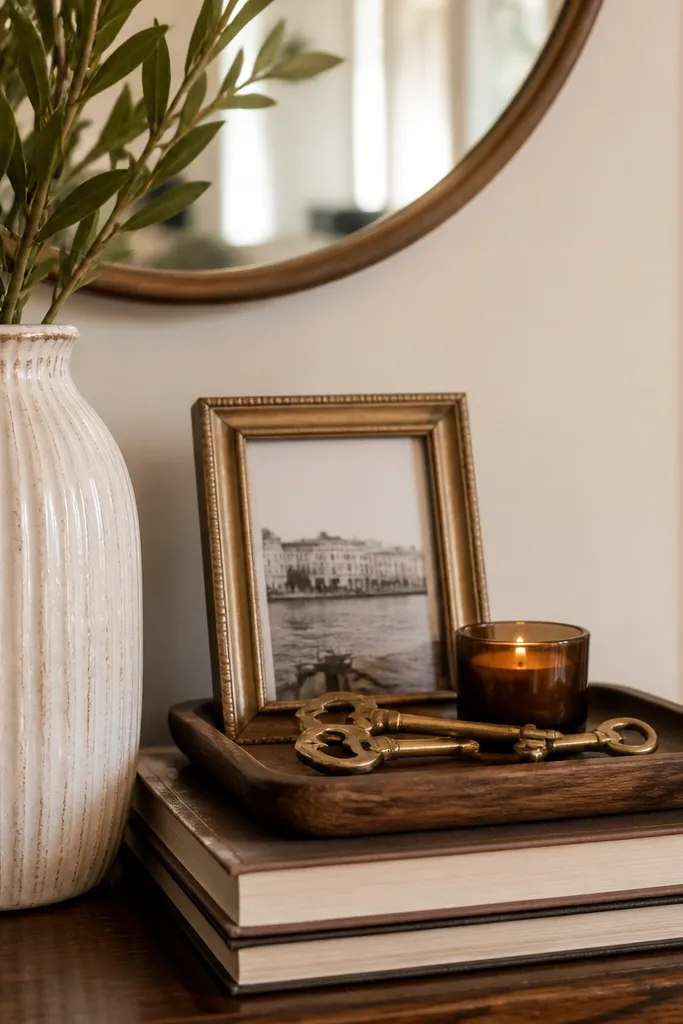
Console styling looks polished when it has clear height and a grounding base. Use the same formula every time: one tall item (vase or candlestick), one medium item (lamp or small framed photo), and one tray for the small stuff. Keep materials consistent — ceramic plus wood plus metal — so it looks curated without being complicated. This is ideal for beginner-friendly foyer ideas entryway because you’re not guessing where everything goes; you’re placing three categories with intentional spacing. The result is photogenic because the objects create clear silhouettes against the wall.
Measure your console length and plan for 60-70% of the top to be clear. Place the tall item slightly off-center, then add the tray about 6-10 inches away so it doesn’t look jammed. Add a small book stack or a single book with a decorative object on top of it, keeping it low so the tall piece stays dominant. If you use a lamp, center it on one side and keep the shade height around 16-20 inches so it doesn’t overwhelm the mirror.
Pro tipUse a tray for keys and mail — it instantly makes the console look styled instead of “storage.”
Watch outAvoid filling the whole top surface — crowded consoles look messy in foyers because people move through them constantly.
9. Painted entry wall in a single dramatic color
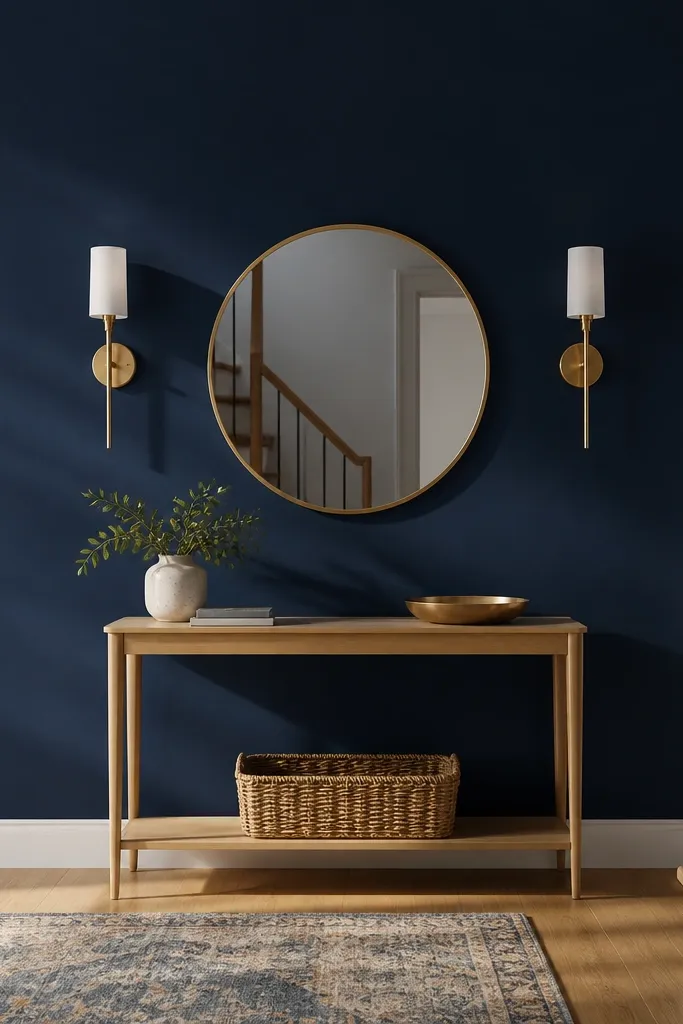
A single painted wall makes a foyer feel intentional even with minimal furniture. Choose a deep neutral like deep green, warm charcoal, or rich navy — these photograph well and hide scuffs. Place the mirror or art on that wall so the color becomes the backdrop and the entry feels designed. Keep the rest of the foyer lighter: white trim, light curtains, and warm wood floors. This works especially well in entryways that feel “too plain” and need a first-impression upgrade without adding more objects.
Pick one wall that you see immediately from the front door. Test your paint color on a small section and check it at night — deep colors can shift. Patch and sand any rough spots, then use primer if you’re changing from light to dark. Apply two coats with a matte or eggshell finish, then hang your mirror centered so it sits about 65 inches from the floor to the top. Style with a lighter frame and warm-toned decor so it pops against the darker wall.
Pro tipUse eggshell paint on walls with traffic so it wipes clean without looking glossy.
Watch outAvoid choosing a bright saturated color if you want a calm entry — neon shades read loud in small foyers.
10. Mirrored console for instant brightness
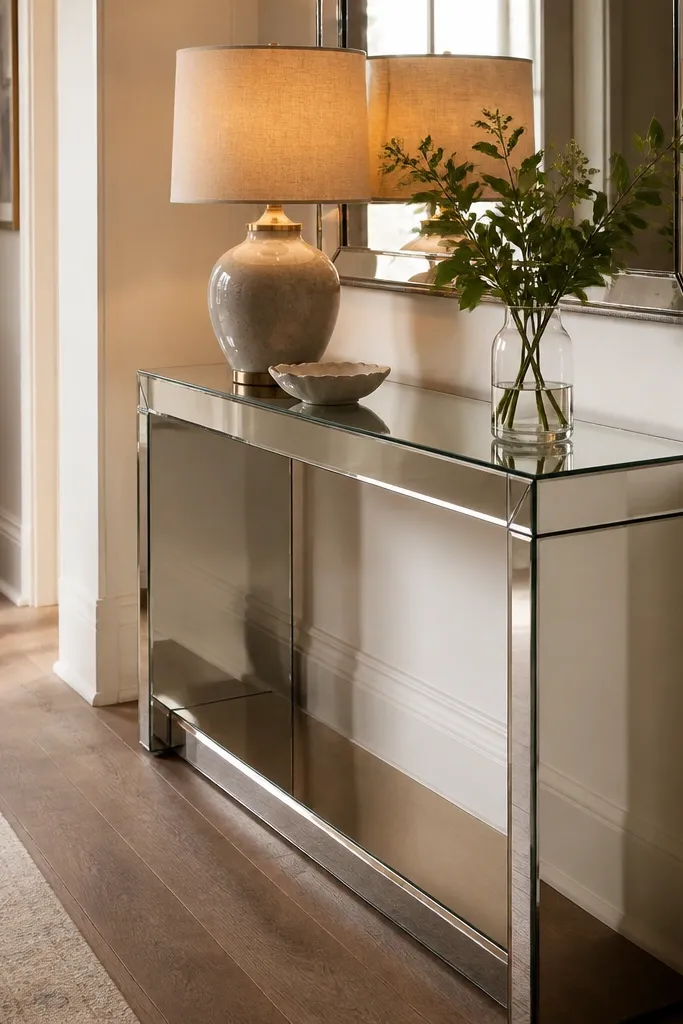
A mirrored console is a smart choice for narrow entryways because it adds light without taking up visual weight. The reflective surface bounces daylight into the room, making the entry feel less cramped. Choose a console with clean lines and an open base so it doesn’t look bulky. Pair it with warm decor — a beige lamp shade and a natural wood frame — so the mirrored surface doesn’t feel cold. This is a beginner-friendly foyer ideas entryway solution when you want the “wow” effect with minimal styling.
Pick a console depth of 10-14 inches so you keep clearance for foot traffic. Place it against the main wall visible from the door, then center your mirror above it. Add one lamp and one tray; keep items to 3-4 pieces total so the reflection doesn’t look cluttered. Wipe the mirrored surface with a microfiber cloth before photos since dust shows up fast. Budget depends on size, but expect to pay more than wood consoles for mirrored frames.
Use a warm lamp shade color like oatmeal or cream so reflections look soft, not icy.
Avoid stacking tall decor on mirrored surfaces — it makes the reflection look chaotic.
11. Wood slat wall panel behind a bench or console
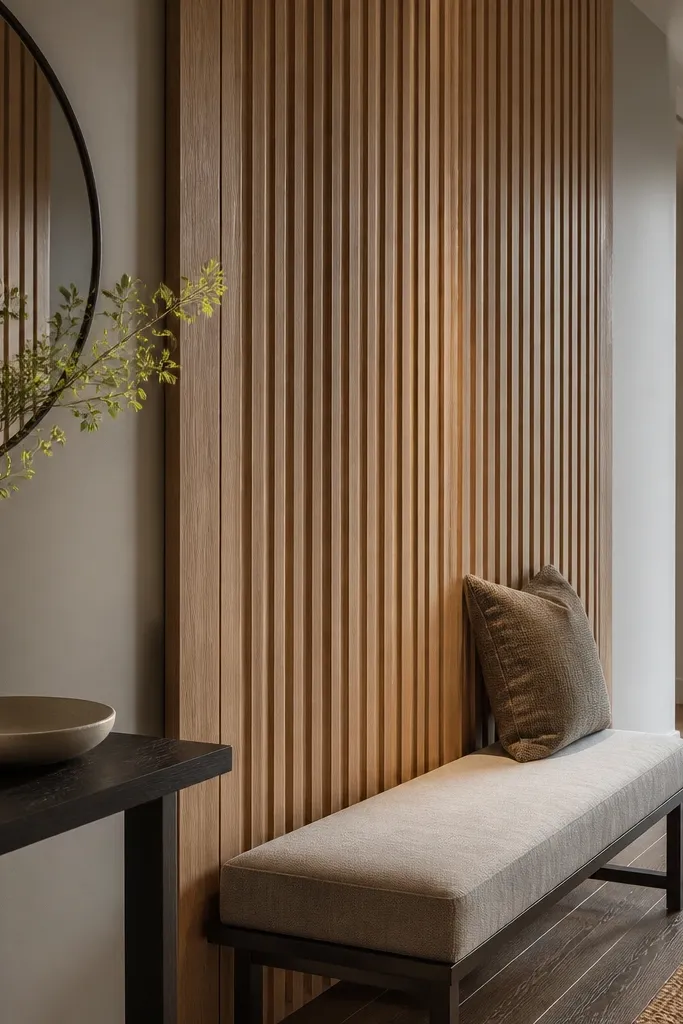
A wood slat accent wall turns a basic entry into something architectural without needing full carpentry. The slats add texture that looks good from every angle, and it photographs beautifully with side lighting. Keep the slats in a warm natural tone or light oak to match most floors and furniture. Place the console or bench in front of it and mount a mirror above so the slat wall becomes the background. This solves the “blank wall” problem immediately, even if you keep decor minimal.
Choose a pre-made slat panel system or individual slats with a consistent spacing. Measure the wall area and plan for a centered layout — aim for a panel that spans about 60-80 inches wide in a small entry. Install with level marks and follow the panel instructions for anchors. Paint or stain only if the slats are unfinished; otherwise stick to the provided finish. After the slat wall is up, hang your mirror so it’s centered, then place the bench or console 2-4 inches in front.
Add one wall sconce or aim a small lamp toward the slats for stronger texture in the evening.
Avoid glossy finishes on slats — they show glare and wall imperfections.
12. Entryway wreath or seasonal art swap with a simple hook
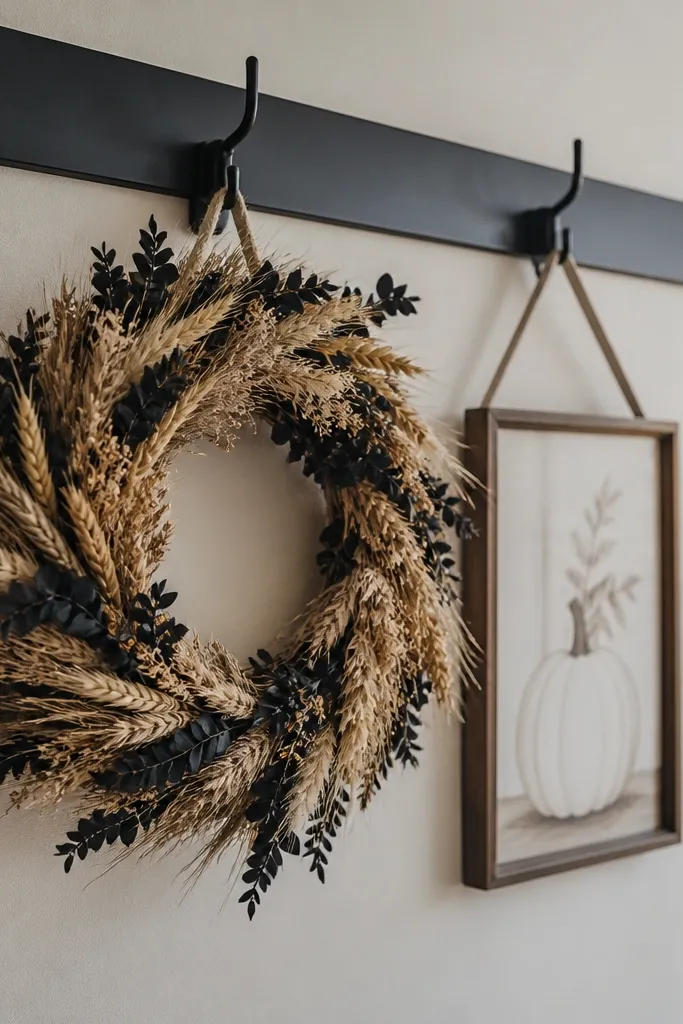
This is a practical way to keep the entry looking fresh without buying a whole new setup every season. A simple wreath hook or over-the-door hanger lets you rotate a wreath, seasonal art, or a framed print quickly. Choose a wreath with a consistent color palette like neutral greens, dried wheat, or black accents. Pair it with a small side table or console so the door area looks styled from inside the house too. The benefit is that the entry always has a focal point, even when you’re busy.
Install a wreath hook on the door at about eye level so it doesn’t hit your coat or bag when you walk in. If you’re using an over-the-door hanger, pick one with a low profile and test it with the door fully open. Style the adjacent console with one matching element — a small candle or a tray — so the wreath doesn’t float alone. Keep the wreath size proportional to the door; for standard doors, look for wreath diameter around 18-24 inches.
Pro tipMatch one material between the wreath and entry decor, like wood, linen, or black metal.
Watch outAvoid oversized wreaths that hit the door handle — they look awkward and get knocked off.
13. Corner console with a tall plant for a clean "filler-free" look
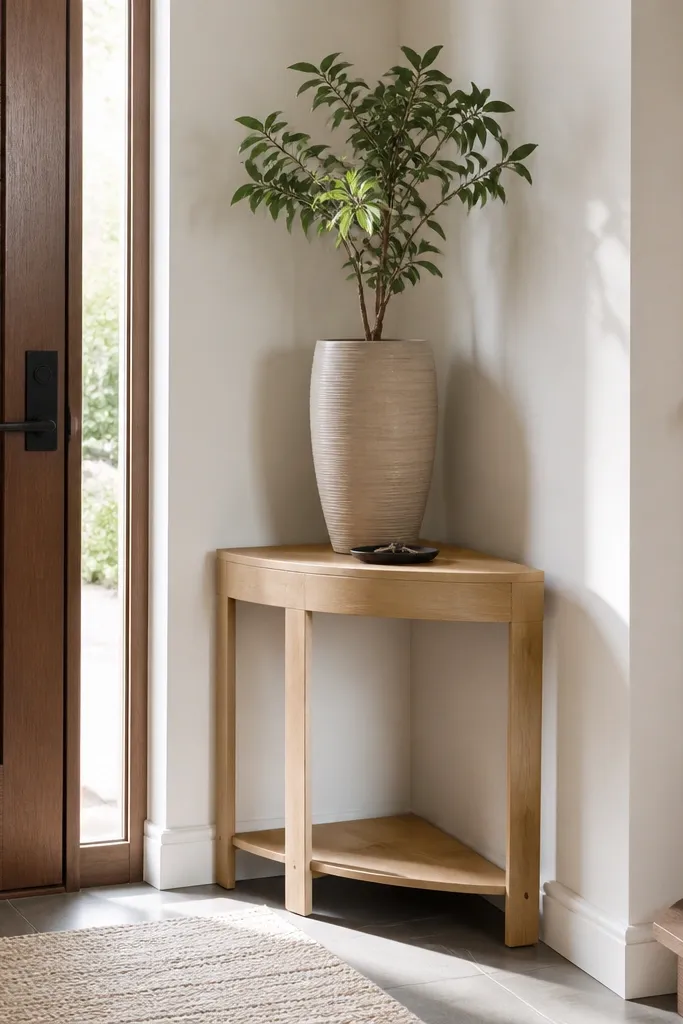
Corners are where entryways go to waste. A corner console solves the “empty corner” problem and gives you a place for keys or a small lamp without blocking the main path. Choose a narrow, angular console or a round-top corner table so it fits the geometry. Add a tall plant or tall ceramic piece to lean into the height of the corner and balance the visual weight. This delivers a beautiful first impression because the entry looks styled from the moment you step in, not after you walk deeper into the room.
Find the corner you see first from the doorway. Measure the wall length and pick a console that’s about 14-18 inches wide at the deepest point. Mount a small framed photo or mirror slightly above console height so it reads as a unit. Place a tall plant in a pot that matches your decor color palette and keep the plant height around 30-48 inches for a noticeable silhouette.
Pro tipUse a pot color that matches your metal finishes — black pot for black hardware, warm pot for brass.
Watch outAvoid placing the console flush against a baseboard without checking clearance — you want enough space for doors and shoe storage to work.
14. Large fabric pouf as seating with a tray for keys
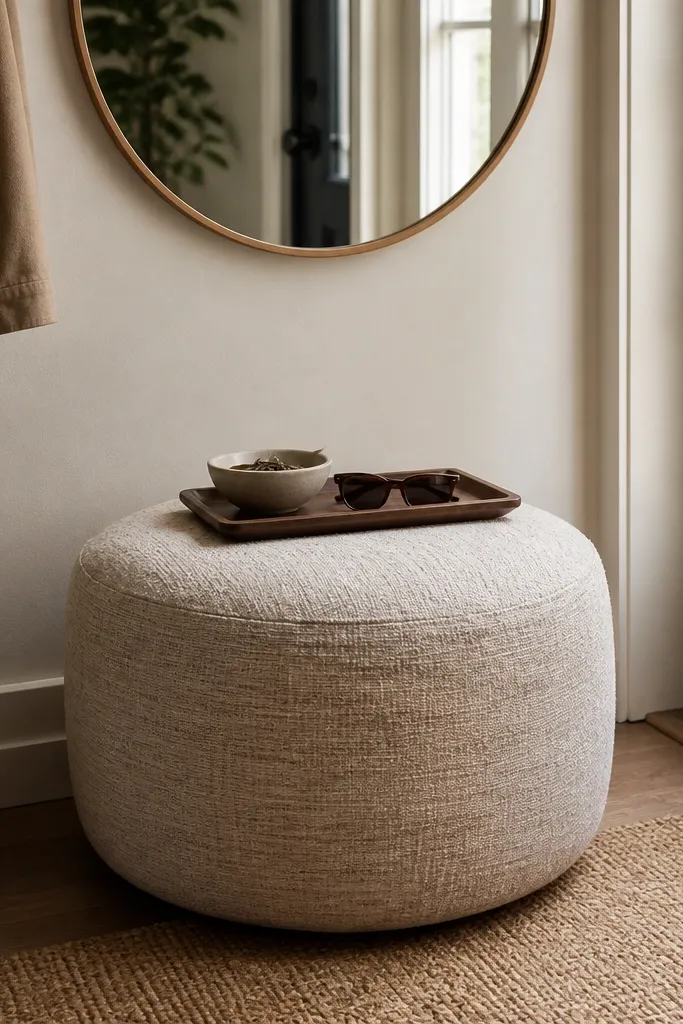
A pouf is a beginner-friendly foyer ideas entryway solution when you want seating but don’t have room for a bench. It brings softness, texture, and a photo-friendly shape, especially in neutral tones like oatmeal, camel, or light gray. Put it under a mirror or in front of a wall hook area so the entry feels complete. The tray is the secret — it gives the pouf a job and keeps keys from becoming visual clutter. This setup works in apartments and small homes where every inch counts.
Choose a pouf size that’s wide enough for sitting — aim for about 16-20 inches wide and 16-18 inches tall. Place it near the mirror or wall hook area, leaving at least 24 inches of walking clearance from the door swing. Add a shallow tray on top (about 10-14 inches) for keys, a small dish, and maybe a folded scarf. Style one side with a small floor lamp or a wall sconce so the pouf looks intentional at night.
Pro tipPick a fabric pouf with a removable cover if you can — entryways get dirty fast.
Watch outAvoid glossy or shiny poufs — they show scuffs and look worn quickly.
15. Framed fabric panel or linen art in a simple frame
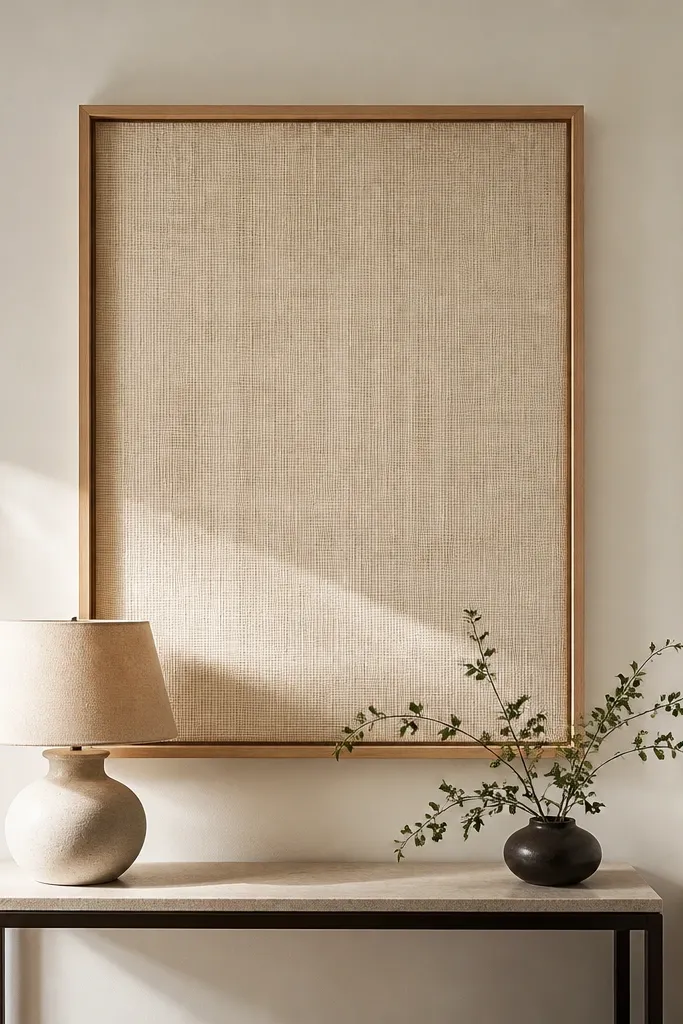
Textile wall art is one of the prettiest beginner-friendly foyer ideas entryway because it adds softness without needing a gallery wall. A linen fabric panel in a simple frame looks tailored and makes the entry feel cozy. Choose fabric in a solid or subtle weave — cream, sand, muted sage, or warm taupe — so it reads calm and works with any decor style. Mount it at the same height as a mirror so the wall has a clear focal point. This solves the blank wall issue while keeping the look clean and photogenic.
Pick a frame size that fits the wall area — for a small foyer, a 24x36 inch panel is a good starting point. Hang the art so the center is around 60-65 inches from the floor. Use a simple frame in black, natural oak, or brushed brass to match nearby metals. If you’re using a fabric panel that’s not pre-framed, stretch it evenly and secure the back before mounting. Style the console below with one textured item like a ceramic vase in the same color family as the linen.
Match the fabric tone to your rug or curtains so the entry looks cohesive instead of mismatched.
Avoid busy patterns in foyers — they compete with coats and bags that are already visually active.