

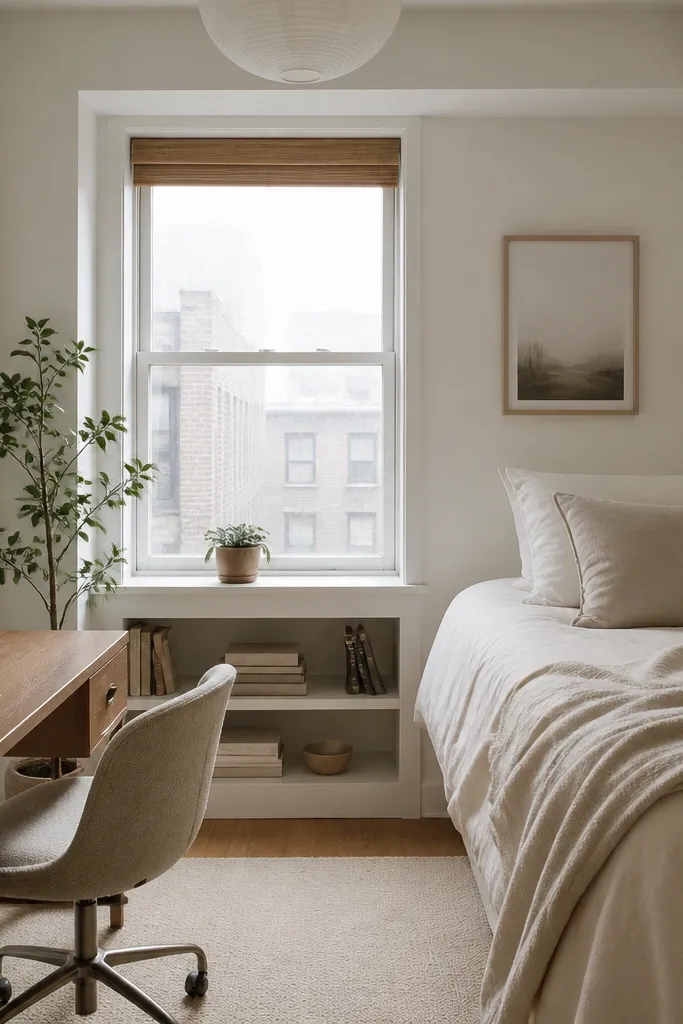
1. Eggshell Wall + Matte Edge Trim
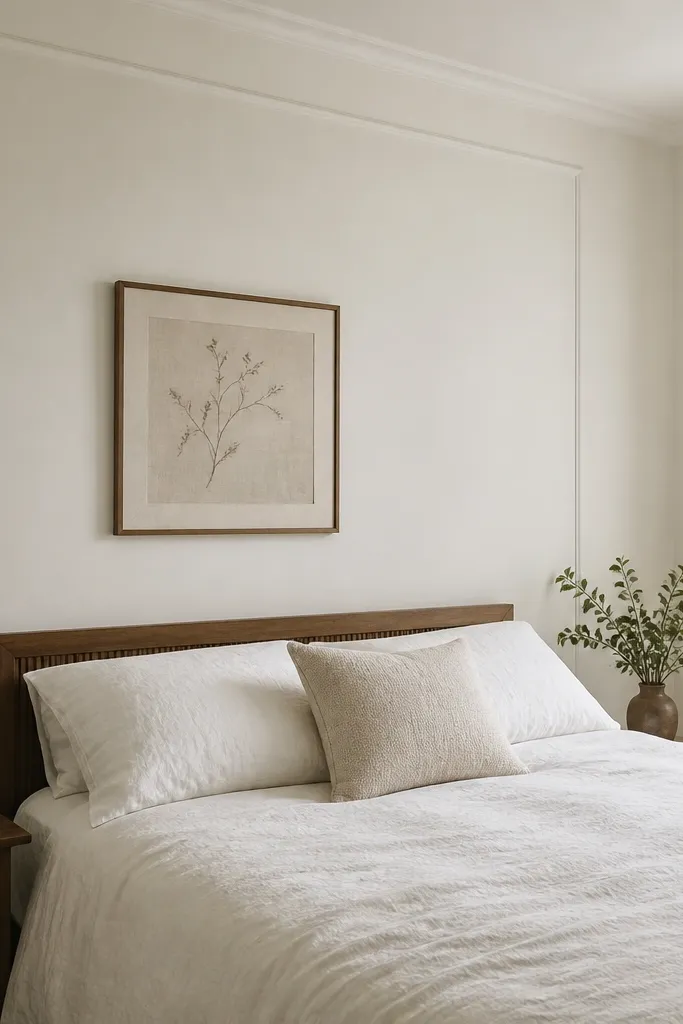
Warm off-white paint makes small rooms feel bigger because it reflects light without the glare that bright white can create. Matte edge trim keeps the lines crisp, so your eye doesn’t bounce around the room. When you pair it with linen bedding, the texture gives depth without adding visual clutter. This combo is the base layer for a small space clean room aesthetic because it makes everything else look intentional.
Use eggshell or soft matte paint, not satin. If you can’t repaint, use a peel-and-stick wall panel in a smooth plaster finish on just the bed wall (about 4-6 feet wide). Keep the bed textiles in one undertone: true white sheets with cream pillows, or cream sheets with oatmeal pillows, but not both cool and warm whites.
Hold two swatches under your room light at night and choose the one that looks warm, not gray.
Avoid bright white walls with glossy trim — it makes small rooms look harsh and “staged.”
2. Bedding in One Undertone Set

The clean girl look falls apart when whites don’t match. I pick one undertone and build the whole bed around it so your eye reads the bed as one calm block. Linen or linen-blend fabric gives that lived-in crispness, and it hides minor wrinkles better than shiny cotton. The result looks clean because the bed is the biggest visual surface in a small room.
Choose a duvet cover with a matte finish and a subtle texture (linen, linen-cotton blend, or washed cotton). Add two pillows in matching cases and one small throw in a slightly darker neutral like oatmeal or sand. Fold the throw into a rectangle about 12-14 inches wide so it looks deliberate.
Pro tipSteam or press just the top edge of the duvet cover. That one line makes the whole bed look “done.”
Watch outSkip mixed bright white and cool-gray bedding — it makes the room look like pieces were grabbed quickly.
3. Curtains That Kiss the Floor
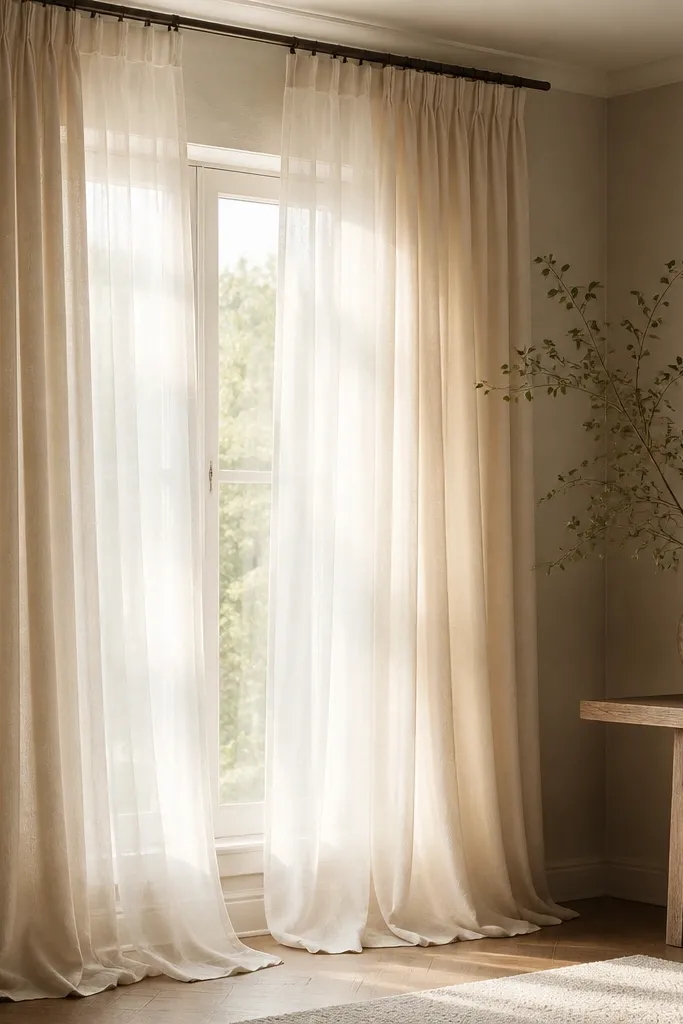
In a small room, window treatment height changes everything. Curtains that hang close to the ceiling and go down to the floor make walls look taller and corners softer. A sheer layer adds light diffusion, which keeps the room from looking dim or harsh. This creates that “clean room” calm because the window becomes a smooth, continuous frame instead of a patchwork of blinds.
Hang the rod 4-6 inches above the window trim and extend it 3-6 inches wider on each side. Choose cream drapes in a medium weight (not stiff) and add a sheer behind them. Let the hems be just long enough to touch the floor or lightly pool.
Pro tipIf you don’t want pooling, do a clean break: the hem should land 1 inch above the floor so the bottom line stays crisp.
Watch outAvoid short curtains that stop mid-window height — they shrink the room visually.
4. Floating Nightstand Shelf + Closed Drawer
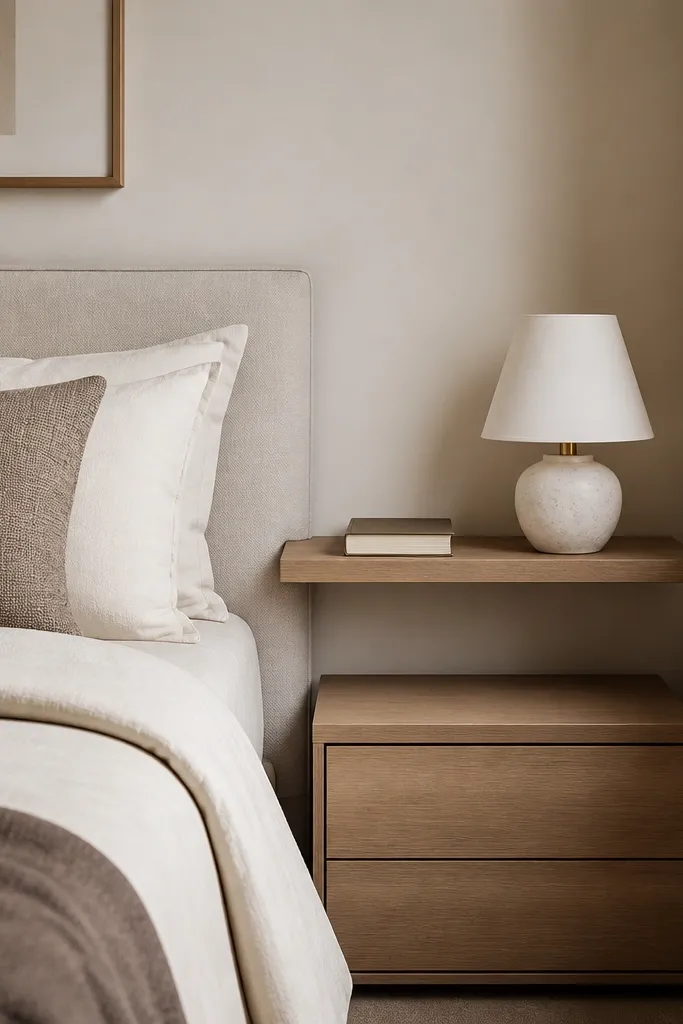
A clean room aesthetic needs fewer open surfaces near your bed. A floating shelf gives you one display spot, while a closed drawer handles the messy stuff like extra skincare, tissues, and charging cables. The lamp stays visible, but the clutter disappears. This setup works because the bed area is where your eyes land first.
Use a shelf about 10-12 inches deep so it doesn’t look bulky. Add a small lamp with a matte ceramic base and warm bulb. Store chargers, spare cords, and a mini water bottle in a lidded tray inside the closed drawer.
Pro tipKeep only one “vertical” item on the shelf (lamp or book) and one “flat” item (tray or coaster).
Watch outDon’t fill the shelf with three separate small things — it reads cluttered fast in tight rooms.
5. Lidded Bins Under the Bed
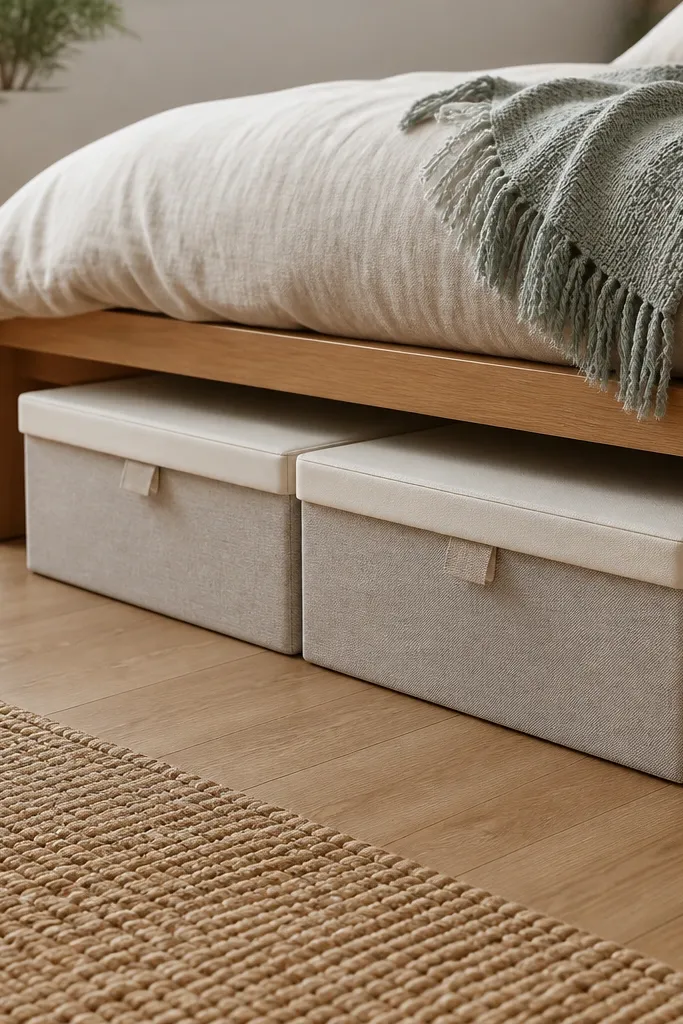
Under-bed storage is the clean room hack because it removes visual noise from the floor line. Lidded bins keep dust down and hide items that would otherwise peek out. Fabric bins look softer than plastic totes, which matters in a minimal aesthetic. In my experience, this is one of the few storage moves that actually improves the look, not just the function.
Measure the clearance: leave at least 1 inch of wiggle room so you can slide bins out easily. Choose bins in a light neutral like oatmeal or stone and keep the number to two or three max. Put bulky items like extra linens and seasonal clothes inside, and use a label maker on the lids.
Pro tipStore only categories that don’t need frequent access under the bed.
Watch outAvoid clear plastic totes — they show the mess and create a “storage wall” effect.
6. One-Layer Wall Gallery With Matte Frames

A clean room aesthetic doesn’t mean no art — it means controlled art. Matte frames reduce glare, and a tight set of three keeps the wall calm. If you leave breathing room around the frames, the wall looks curated without looking crowded. This works in small rooms because it gives interest at eye level without taking over the whole space.
Pick frames in one finish: light wood or off-white painted. Use prints with lots of negative space (white margins, soft neutrals, or line drawings). Keep the center of the gallery around 57-60 inches from the floor so it looks intentional above furniture.
Pro tipUse painter’s tape to map the spacing and step back. If the frames cover more than half the wall width, shrink the set.
Watch outSkip glossy black frames — they reflect light and make the room feel busy.
7. Matching Soap + Toothbrush Station
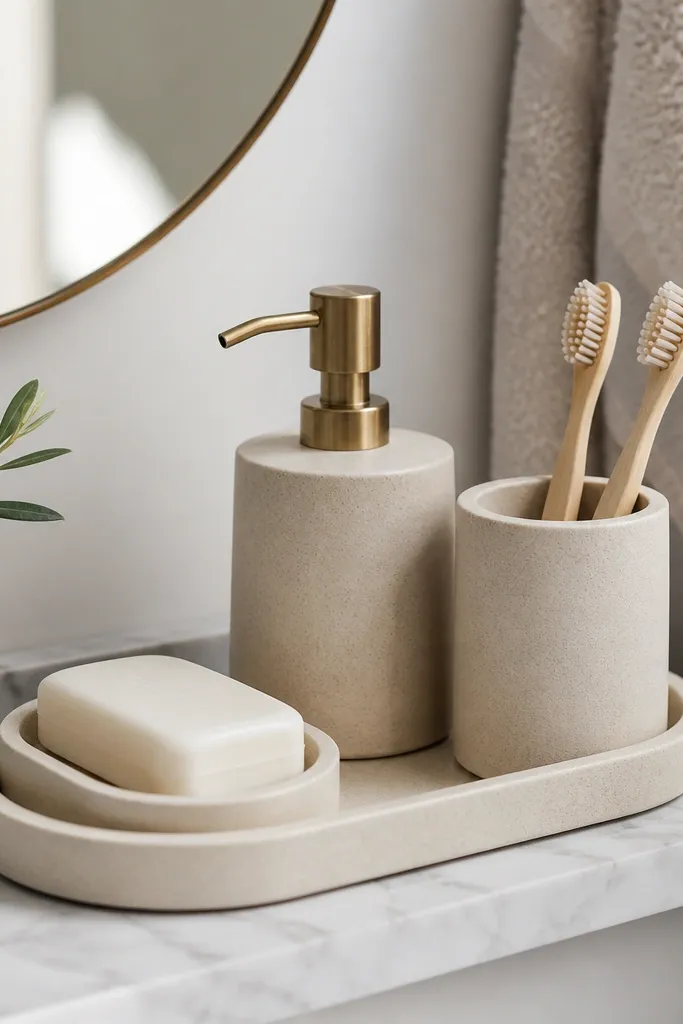
Your bathroom counter is a tiny version of your whole room. When everything sits on one tray, it becomes a single visual block instead of scattered items. Coordinating the materials — matte ceramic, frosted glass, and light wood — makes it look styled even on ordinary days. This is the easiest way to keep a small space clean room aesthetic consistent across rooms.
Choose a tray about 12-16 inches long so it fits soap, toothbrush, and a small cup. Use one soap format (bar soap with a dish, or liquid in a pump) and repeat the same finish on each item. Keep the tray near a sink edge so you don’t spill into the center of the counter.
Wipe the tray with a damp microfiber cloth every morning. The shine level stays even.
Don’t place items directly on the counter without a grouping tray — it looks accidental.
8. Matte Black Bedside Lamp, Warm Bulb
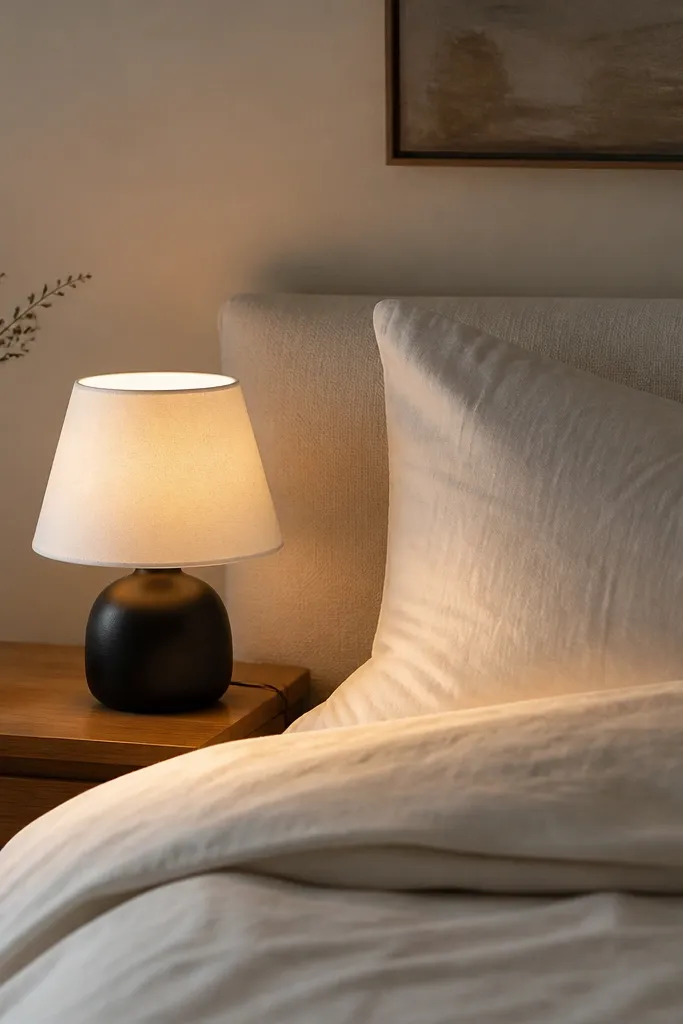
Lighting is the difference between “clean” and “sterile.” A matte black base adds contrast without looking loud, and a white shade spreads light evenly. I always use 2700K bulbs because they make whites look creamy instead of blue. When the lamp is placed beside the bed, the whole room reads softer at night.
Pick a shade size around 8-10 inches wide for small bedside tables. Use a dimmable bulb if you can, but even without dimming, warm color is enough. Keep the cord hidden behind the nightstand or under a cable clip.
Pro tipIf your lamp shade looks dull, dust it with a dry cloth. A clean shade changes the glow immediately.
Watch outAvoid bright cool-white bulbs (4000K+) — they make the room look like a hallway.
9. Laundry Hamper With Closed Lid
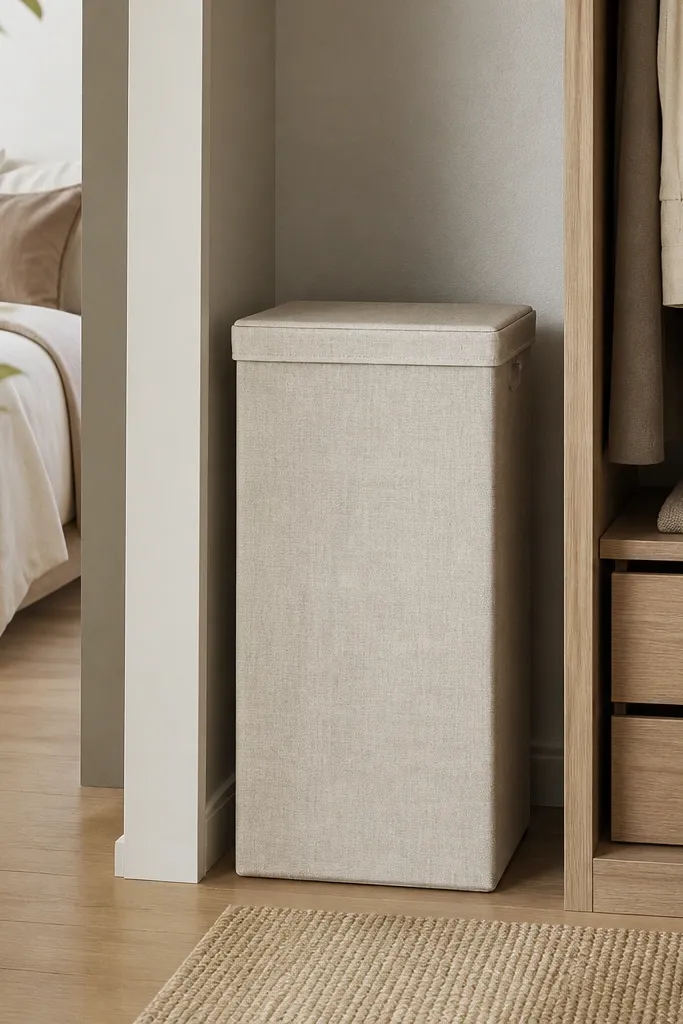
Open laundry piles destroy the clean room illusion. A closed lid hamper keeps the room looking calm even when you’re mid-week busy. Linen-look fabric softens the visual weight, and a tall shape uses vertical space that small rooms need. This is the simplest fix for “my room always looks messy” complaints.
Choose a hamper that’s 18-22 inches wide and tall enough to avoid overflow. Put it in the corner behind a door swing or near the closet so it’s not in your main sightline. If you need a second hamper for delicates, use the same fabric and lid type.
Use one small removable bag inside for faster laundry days.
Don’t choose a hamper with visible holes or open slats — it shows the pile.
10. Minimal Vanity Shelf With One Container Stack
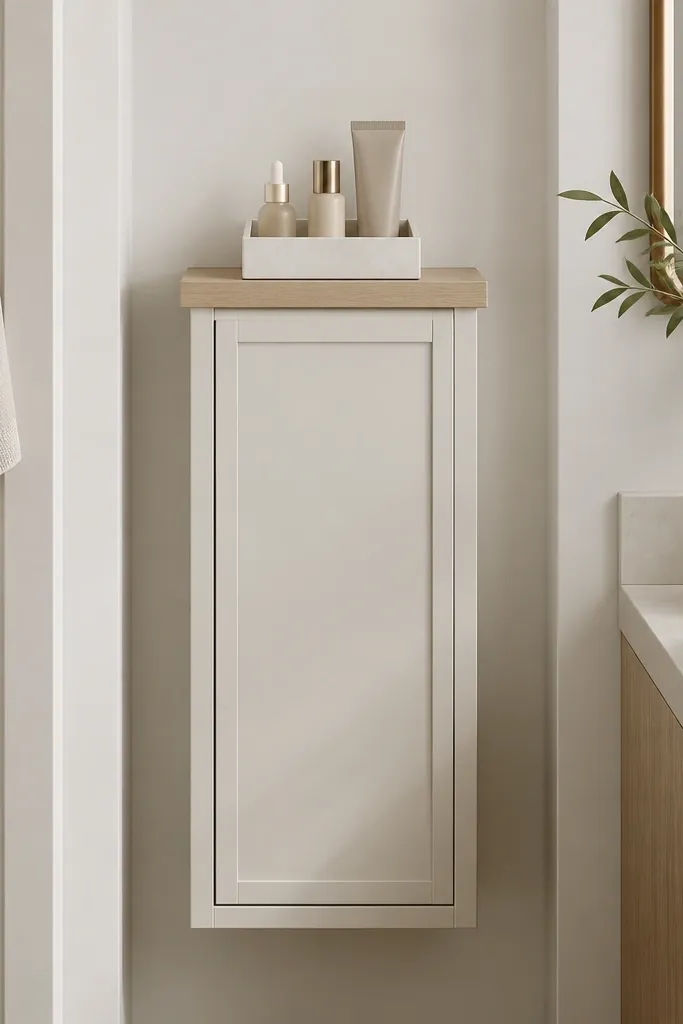
This look is about reducing “stuff per surface.” One organizer container stack keeps bottles from spreading out and turning into visual clutter. I like slim organizers with compartments because they stop items from migrating. When your countertop stays mostly empty, your room reads clean even if you use products daily.
Use a slim shelf 6-8 inches deep so it doesn’t feel crowded. Put skincare in one organizer tray and keep the rest in the cabinet. Match finishes: matte acrylic, frosted glass, or light ceramic.
Group by routine: morning items on the left, evening items on the right, and keep the middle empty for a clean look.
Skip mixed-height stacks of random bottles — they create uneven visual noise.
11. Rounded Storage Caddies for Cables
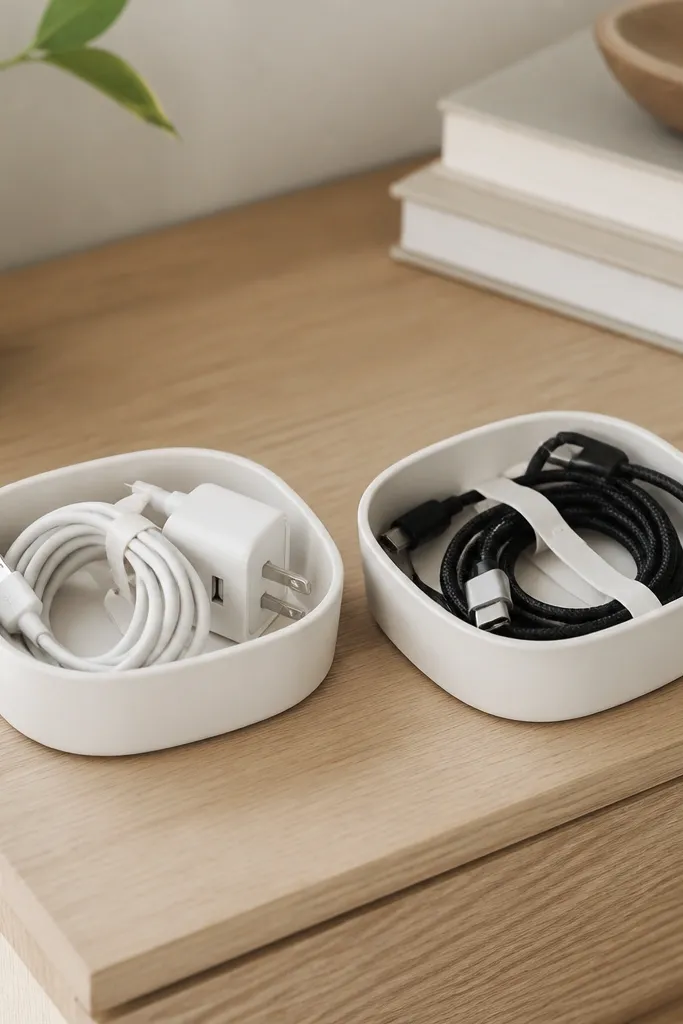
Cable clutter is sneaky. Even if your room is clean, visible cords break the clean room aesthetic because they look unfinished. Rounded caddies make the cords look “contained,” and matching colors keep the setup calm. I use this exact method under desks and on nightstands.
Bundle each charger cord with a fabric tie, then store bundles inside caddies with a lid or soft cover. Keep only one active charger on the surface and hide the rest. Place the caddies in a drawer or inside a cabinet so they’re out of sight.
Pro tipLabel cords by device name with tiny labels on the caddy, not on the cords.
Watch outAvoid leaving chargers in loose piles — they tangle and look messy fast.
12. Rug With a Low Pile and Soft Edge
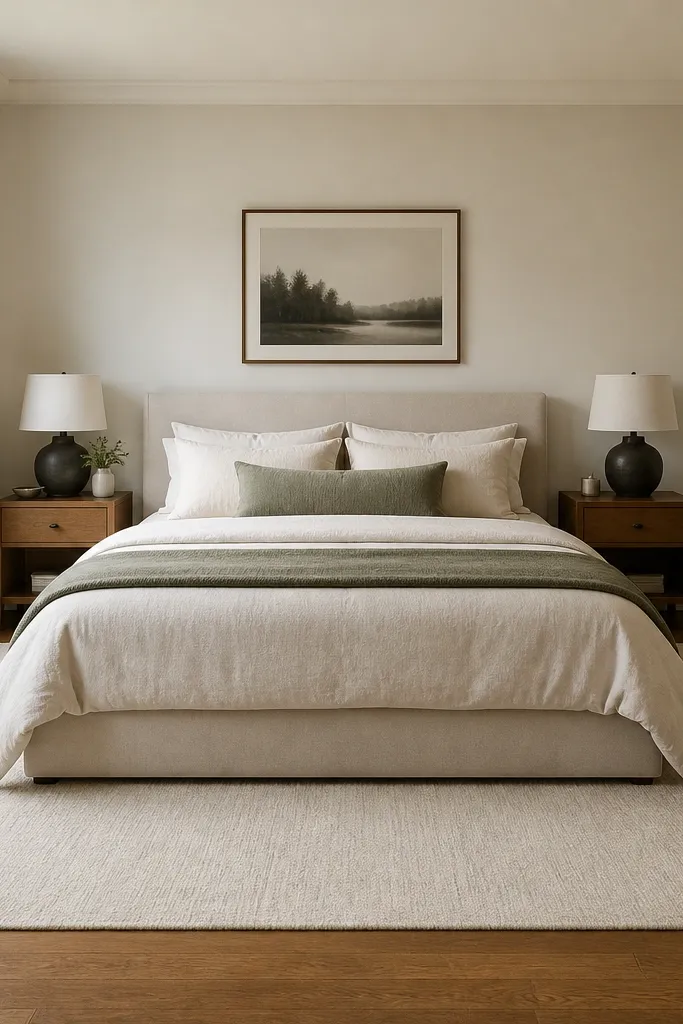
In small rooms, the rug is a big visual anchor. Low pile looks cleaner because it doesn’t catch dust the way shag does, and it keeps lines crisp. A cream or light oatmeal rug makes the floor feel cohesive, so you don’t see every small stain or speck as clearly. This supports a small space clean room aesthetic because the room looks “one piece.”
Choose a rug that sits under the front legs of the bed and extends at least 8-12 inches beyond the bed edge. Avoid super high shag if you have pets or you’re constantly walking in and out. For color, pick a rug with subtle speckling or tonal flecks so it hides everyday life.
Pro tipUse a rug pad with grip so the rug doesn’t shift. Movement makes a rug look messy even when it’s clean.
Watch outSkip rugs with heavy patterns — they draw attention to small imperfections.