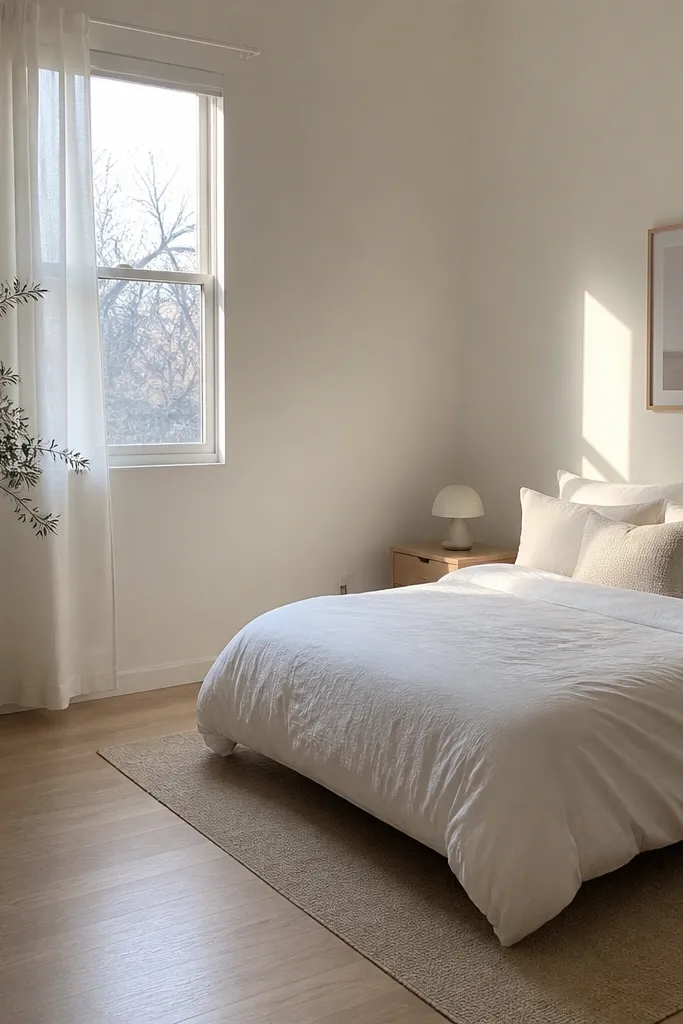
1. Oat Linen Bedding + One Warm Accent Throw
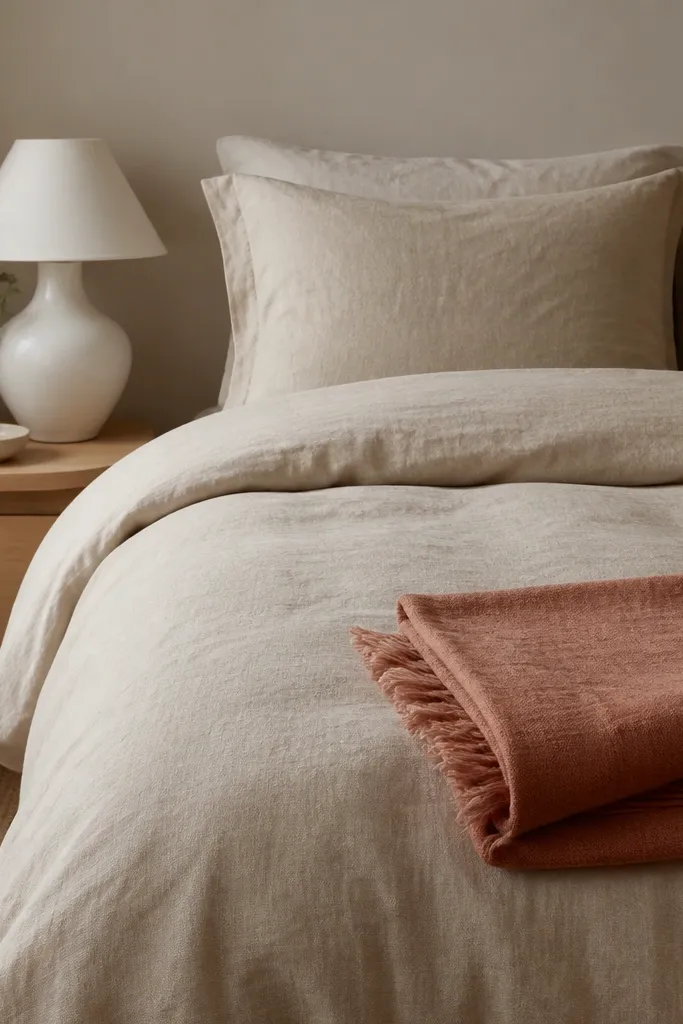
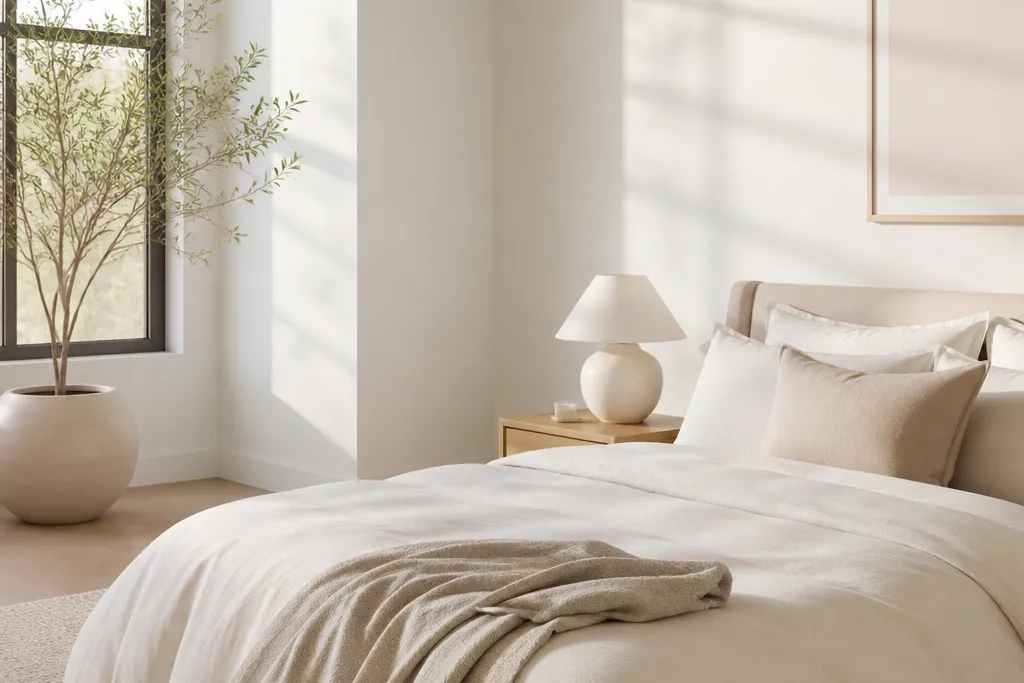
Use an oat duvet cover (matte, not shiny) and pillowcases that match the duvet color family. Keep the throw in one color only — dusty terracotta, rust, or muted cranberry — and fold it the same way every day (about one-third of the bed width). This setup works best in bedrooms where the bed is the main visual anchor.
This is the clean-room aesthetic shortcut because linen looks textured even when it’s slightly rumpled, so it forgives real life. Oat tones also hide shadows from morning light, which makes the room feel softer and less busy. The single accent throw adds warmth without adding extra clutter because it lives in one place — the foot of the bed.
Watch outAvoid layering five different throw blankets — it looks cozy but it also looks messy fast.
Pro tipBuy two pillowcases sets and rotate them. The “freshly changed” look stays clean without you constantly re-fluffing.
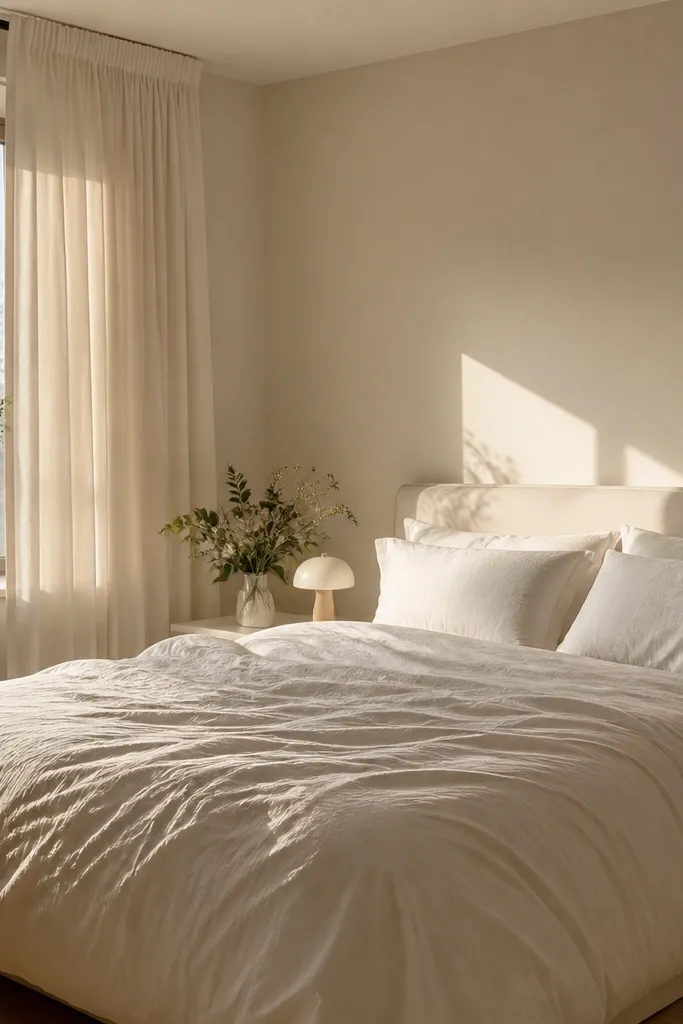
2. One-Color Curtain Panels That Touch the Floor
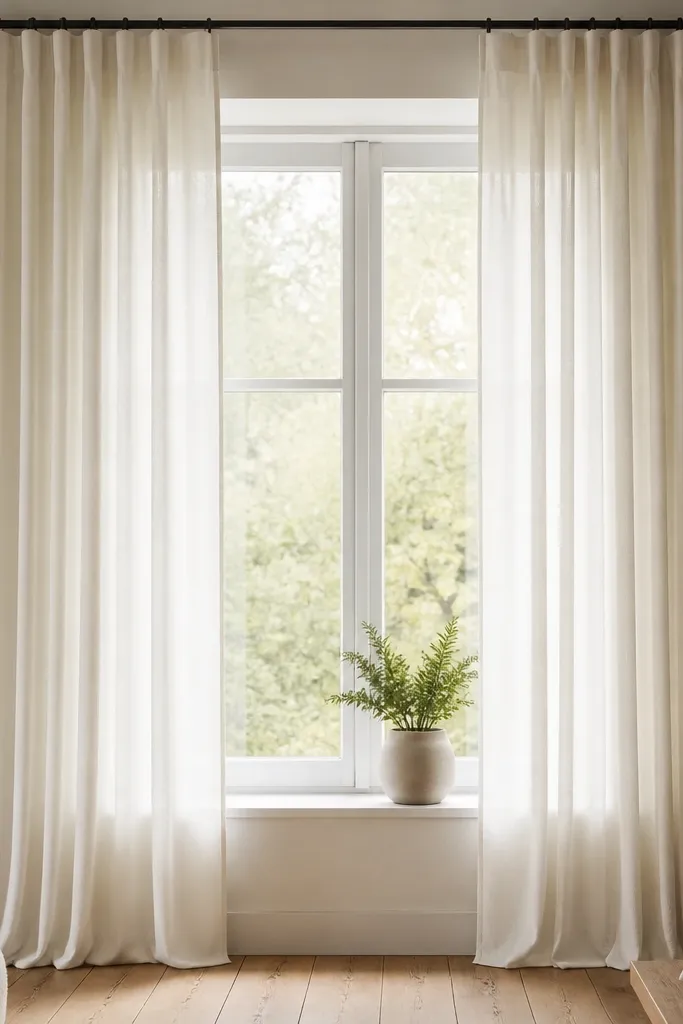
Hang the rod 4-6 inches above the window frame and aim for curtains that puddle lightly on the floor. Choose a matte fabric like cotton-linen blend or thick cotton sateen (not glossy). Keep the window sill empty except for one item you can wipe easily.
Curtains that hit the floor create a single clean vertical line. That reduces the “chopped” look that happens when you use short panels or mismatched lengths. Cream and off-white also make the room brighter, which helps everything look fresher even when you haven’t rearranged.
Watch outSkip sheer curtains with bold patterns if your goal is calm — the pattern becomes visual noise.
Pro tipSteam the curtains once and leave them alone. Wrinkles that look natural in linen still read intentional.
3. Closed Storage Nightstand with a Clear Top Rule
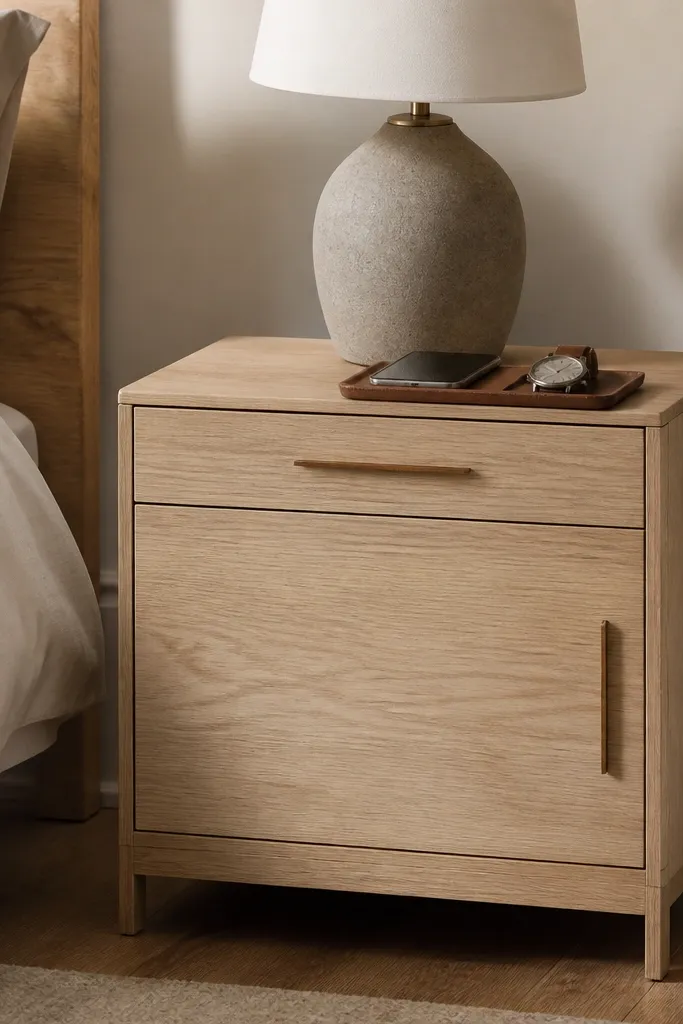
Choose a nightstand with at least one closed compartment and a top surface that fits one tray (around 8x10 inches). Use a single tray in a neutral finish — white ceramic, woven natural fiber, or light oak. Keep cords and chargers inside the drawer whenever possible.
A nightstand with drawers is the fastest way to stop daily clutter from spreading. The clear top rule makes it look clean even after a busy day: everything that isn’t a lamp or a small tray goes into the drawer. This is where most “messy bedroom” vibes come from — the top becomes a catch-all.
Watch outDon’t use a nightstand that’s basically open shelves — it looks airy until it fills up.
Pro tipPut a small bin inside the drawer for hair ties, lip balm, and spare meds. You stop the “random pile” before it starts.
4. Laundry Basket With a Matching Lid or Cover
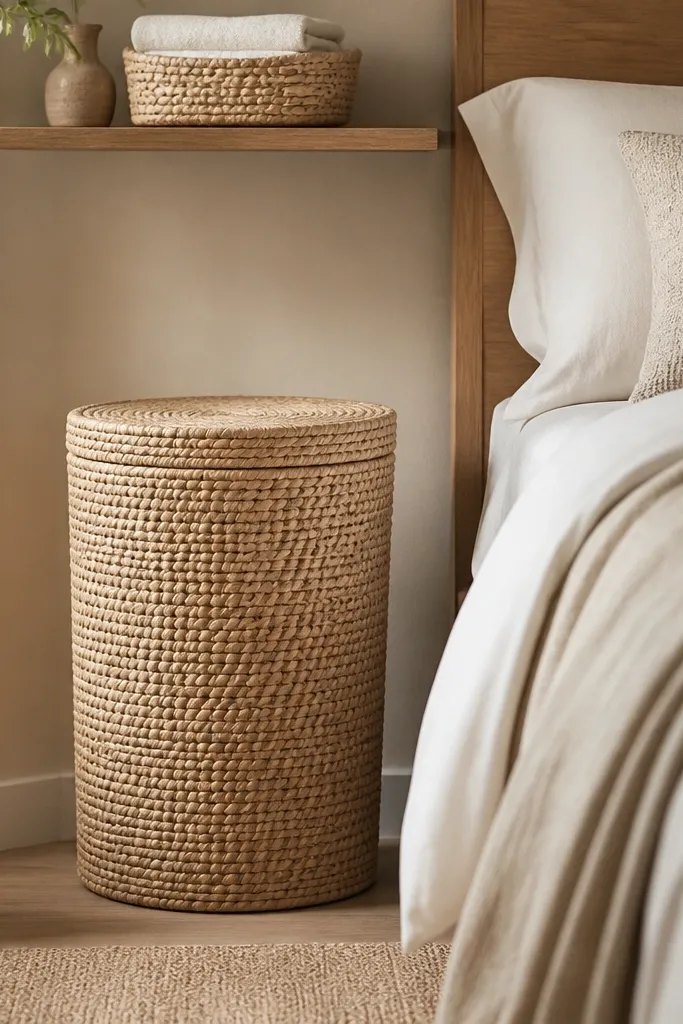
Pick a hamper color that matches your wall or bedding tone: oat, warm white, sand, or light gray-beige. If you have open shelving, use a covered basket on the bottom shelf and keep towels in one neat stack. Place it where you actually drop clothes — near the closet or dresser.
Laundry is the most common reason a room stops looking clean. A hamper with a lid keeps the visual mess contained, even if clothes are piled inside. Matching the hamper to your palette makes it disappear into the room instead of standing out as “the mess.”
Watch outSkip tall open baskets in busy corners. They make everything look cluttered even when it’s just one load.
Pro tipIf your hamper is woven and sheds, line it with a washable cotton liner. It stays clean without constant vacuuming.
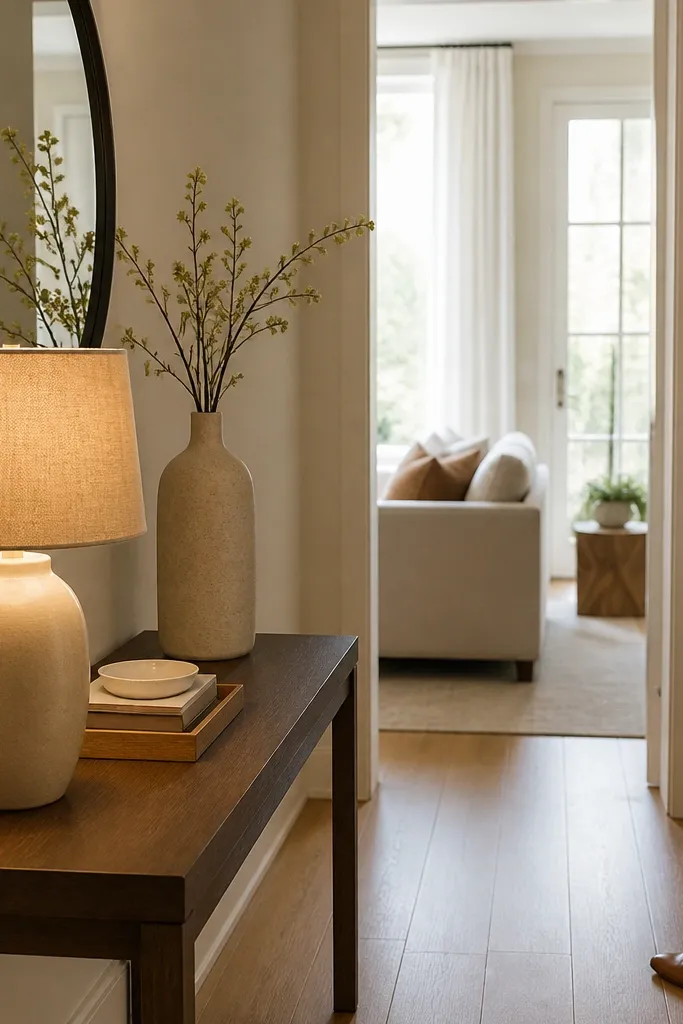
5. The "Tray Only" Entry Table Setup
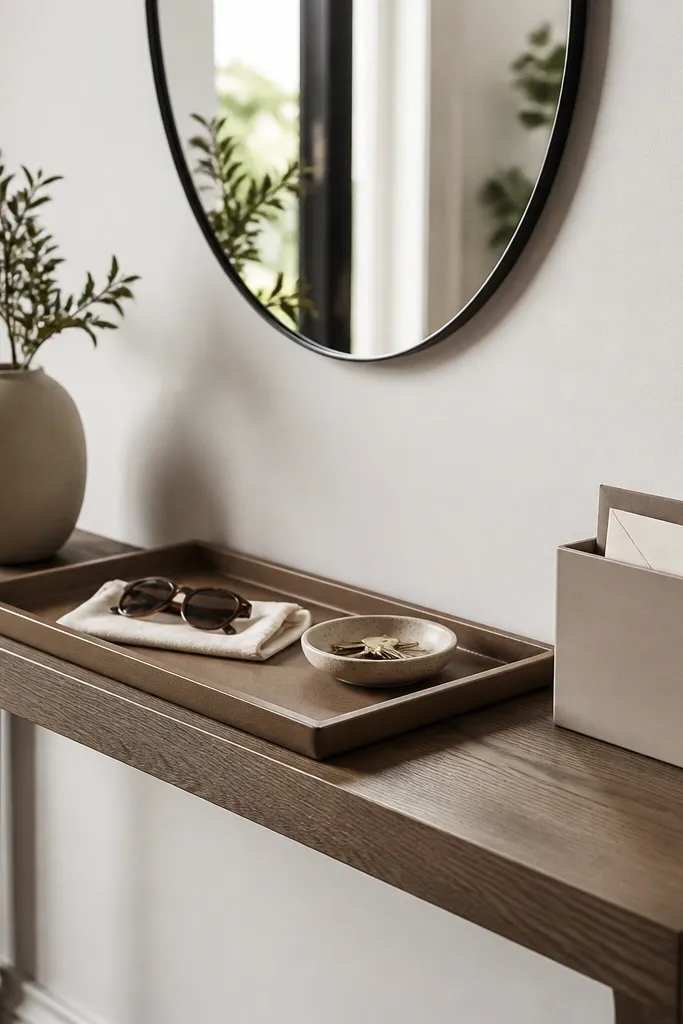
Entry clutter is loud. The tray-only rule forces everything to land in one zone that looks designed. I like trays because they create a boundary, and boundaries stop stuff from wandering onto the rest of the table.
Use one tray about 16-20 inches long and keep it centered. Add one keys dish and one mail organizer that closes (magnetic flap or drawer). If you need a spot for a mask or small wallet, put it in the same pouch every time.
Label the mail organizer with tape on the inside flap so you don’t see text all day.
Avoid leaving loose mail flat on the console. It creates a visual stack that never looks finished.
6. Matte Ceramic Planter + One Low-Shelf Plant

Choose one plant that fits your light: pothos for medium light, snake plant for low light. Use a pot in white, cream, or soft gray-beige. Keep a tiny saucer under it and wipe the outside rim once a week.
Plants add life, but they also add clutter risk if you scatter pots, tools, and extra items around them. Keeping one plant in a matte pot with a simple placement makes it feel calm instead of chaotic. Matte ceramics also hide water spots better than shiny finishes.
Watch outSkip plant shelves with multiple pots at different heights. It looks like a plant store.
Pro tipPut plant care tools in a small zip pouch inside a cabinet. Your shelf stays clean and you still have everything when you need it.
7. Book Stack in One Direction With a Color Border
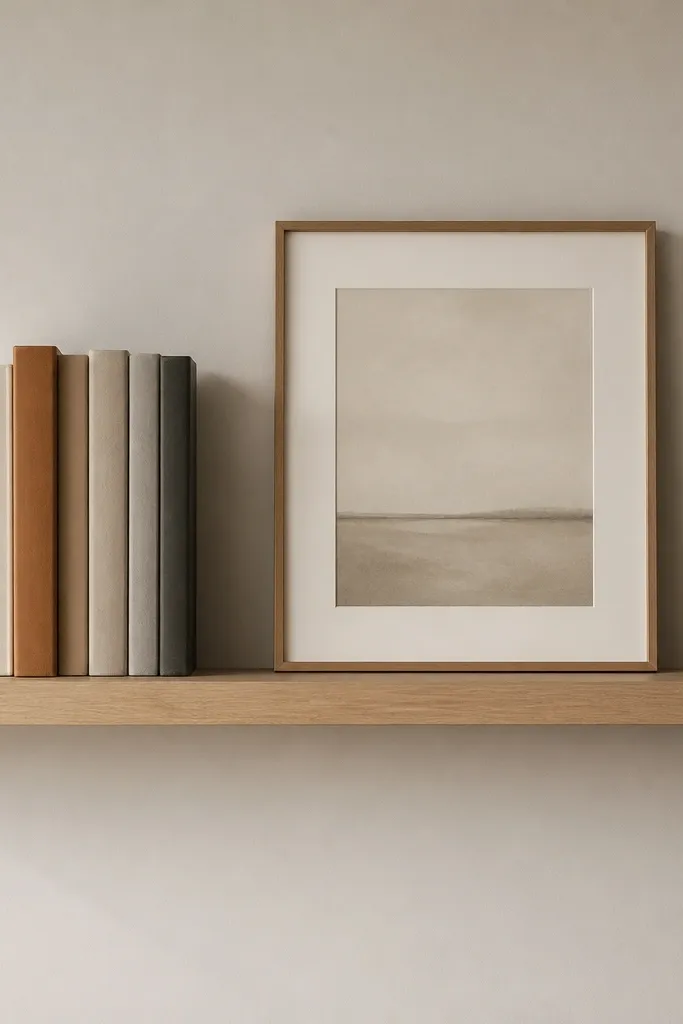
Book stacks look neat when they follow a simple visual rule: same direction, same spacing, and no extra loose books. A color border effect happens when the spines share a tone — like warm whites, sand, and muted browns. It looks intentional without needing lots of decor.
Pick 3-5 books and stand them with spines facing outward. Leave 1 inch of space between the stack and the wall so dust doesn’t collect in corners. If your books are mixed colors, hide the worst spines by leaning one plain cover book in front.
Use a thin bookend in the same tone as your shelf (light wood or matte black). It keeps the stack from tipping and looking sloppy.
Avoid random single books scattered across shelves. They look like you stopped mid-clean.
8. Coordinated Bins on Open Shelves
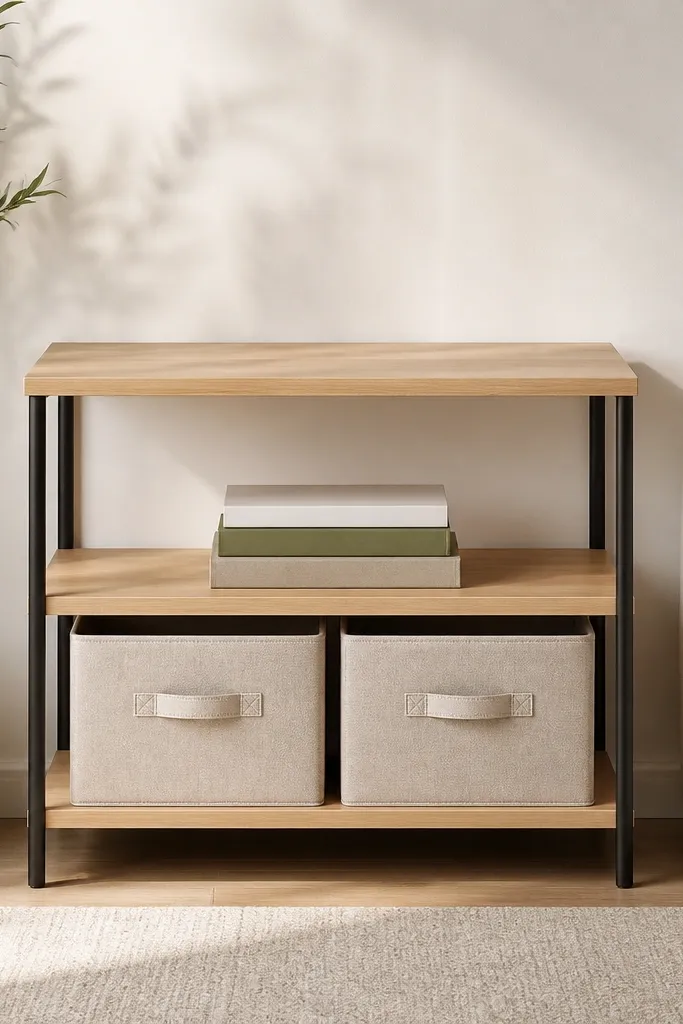
Choose bins in one fabric type: canvas, cotton, or linen blend. Keep them uniform in height so the shelf looks even. For a clean room aesthetic, go with light neutrals and avoid bright patterns.
Open shelving without bins turns into a daily mess magnet. Matching bins hide the stuff you don’t want to see: chargers, extra skincare, socks, or craft supplies. When the bin colors match your palette, the room reads calm even with items inside.
Watch outSkip plastic bins with glossy finishes if you’re going for soft and calm.
Pro tipPut the bins on the bottom two shelves first. The top shelf should be mostly empty for that airy look.
9. Desk With a Single Cable Path
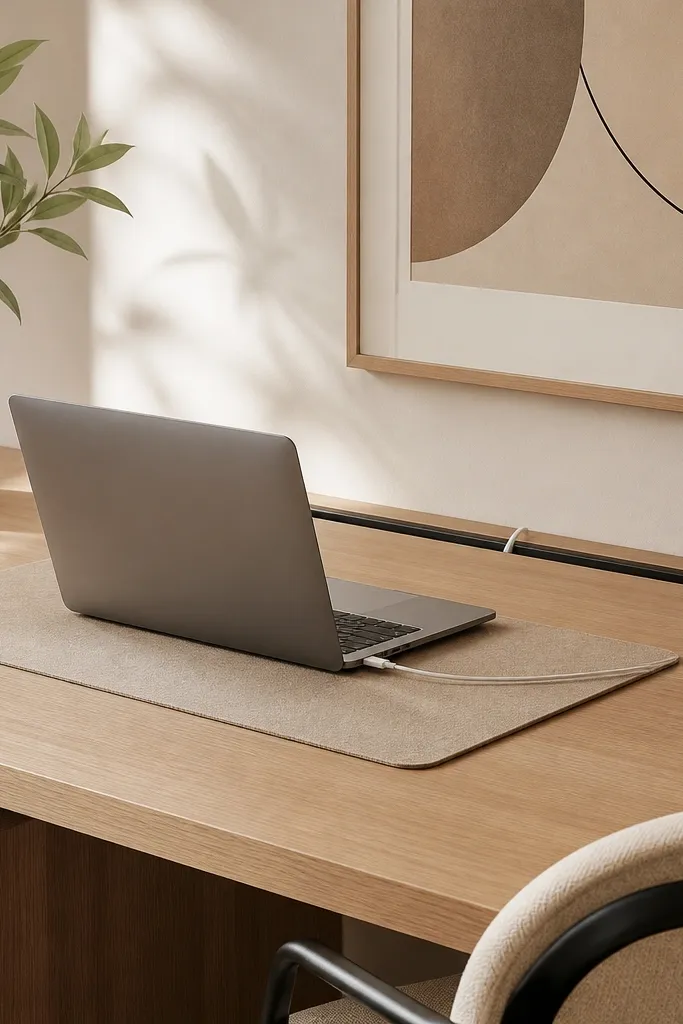
Mount a cord tray under the desk or use a sticky cable channel along the back edge. Route every cable through that channel, then connect them behind the desk so the front stays clear. Use one desk mat to unify the surface and hide minor scuffs.
Cords are visual clutter. One cable path makes the desk look organized even when the device setup changes. I’ve had the best results with cord trays and routing clips because they remove the “messy spaghetti” look permanently.
Watch outAvoid power strips on the floor with cords hanging loosely — it reads messy instantly.
Pro tipTape a small strip of painter’s tape on the underside of the desk label for which cable goes where. You stop re-spaghetti-ing.
10. Matte Rug in One Neutral Zone
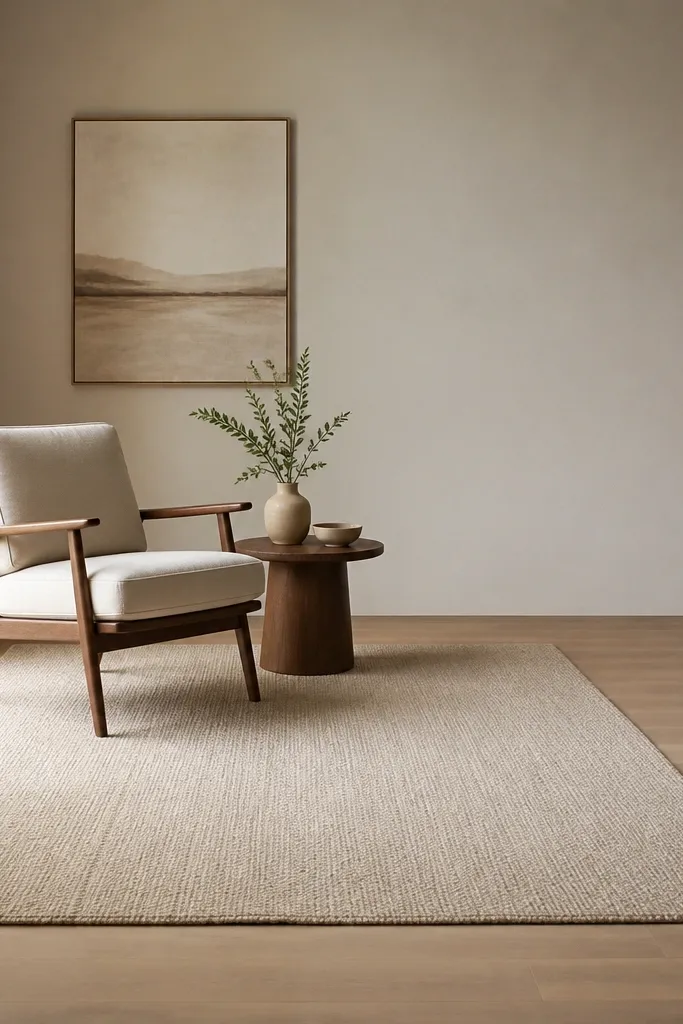
A big rug makes the room feel “finished,” and it also reduces the look of scattered items because the floor becomes one visual surface. Matte textures hide footprints and dust better than shiny rugs. Light neutrals make the room feel brighter, and brightness calms the eye.
Choose a rug that is at least 6x9 if you have a living room or office layout. Keep it in warm beige, oatmeal, or light greige with a subtle weave. Vacuum with a beater bar on low for the first week to loosen fibers.
Use a rug pad. It stops sliding and keeps corners from curling up — curled edges look messy.
Avoid tiny rugs under furniture. The room looks chopped into squares.
11. White Walls With One Soft Artwork Size Rule

Pick a frame in natural oak, light walnut, or white-washed wood. Choose artwork with mostly neutrals and one muted accent color that matches a throw or plant pot. Hang it so the center is about 57 inches from the floor for most eye-level viewing.
Too many small frames create visual noise. One larger piece with a calm color palette gives your eye a place to rest. I like light wood frames because they warm up white walls and don’t look harsh.
Watch outAvoid mixing frame finishes like black + chrome + silver in the same small area.
Pro tipUse painter’s tape to map the frame on the wall before you hang. It’s the fastest way to avoid crooked placement.
12. Mirrors With Matte Frames for Less Glare
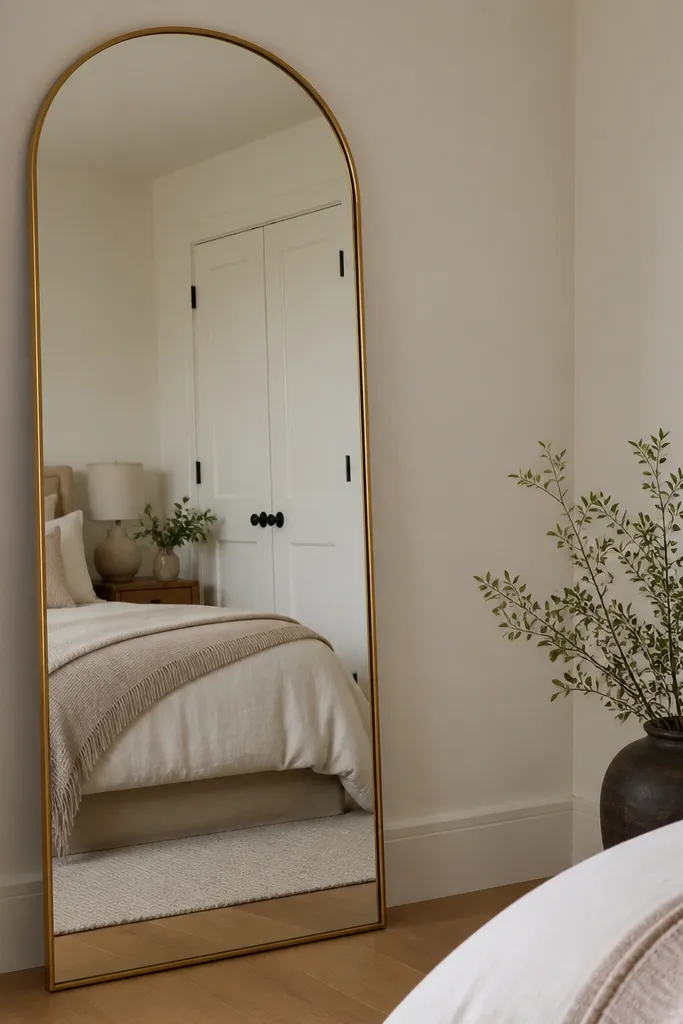
Choose a vertical mirror about 60-70 inches tall so it doesn’t look like a tiny accent. Place it across from a window or near a lamp. Keep the surface around it minimal: one small side table or none at all.
A mirror adds light, which makes the room look cleaner because shadows soften. Matte frames look calmer than shiny frames, which catch glare and make dust more visible in the reflection. Placement matters: I aim mirrors so they reflect empty wall space more than clutter.
Watch outAvoid mirrors that reflect your laundry hamper or open closet shelves.
Pro tipWipe the mirror with a microfiber cloth and a tiny bit of glass cleaner once a week. Smudges show in reflections and kill the “clean” vibe.