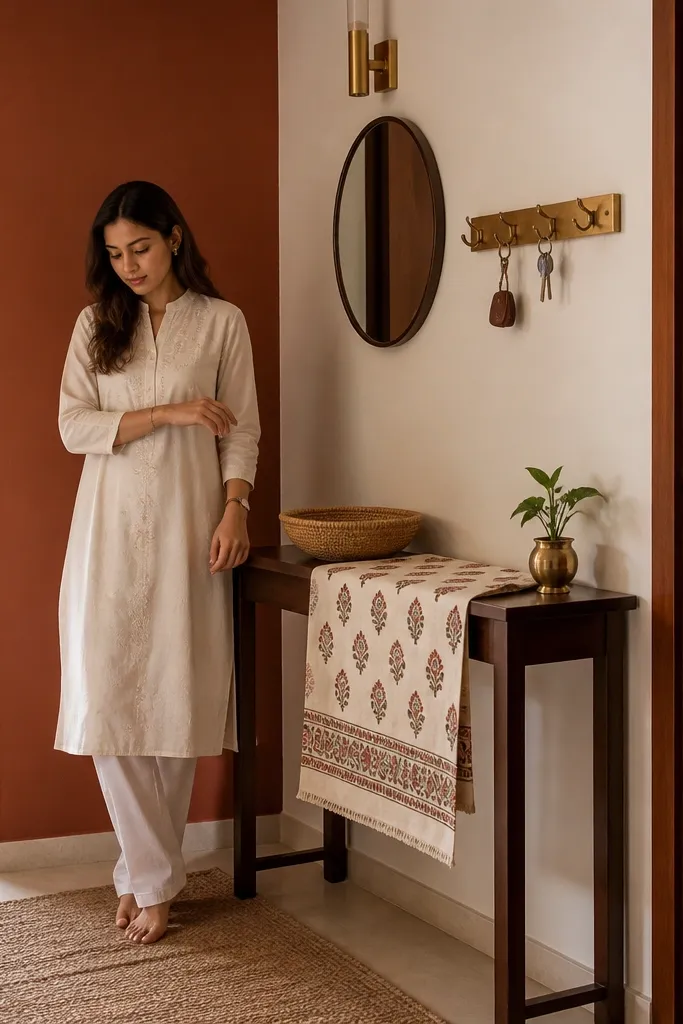
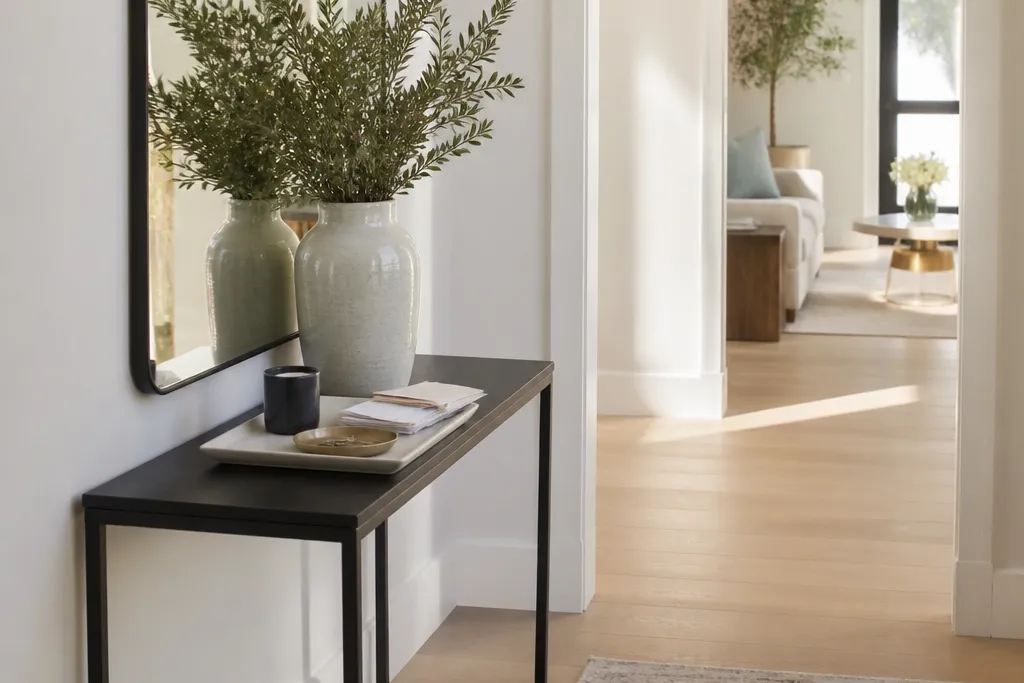
1. Tall mirror over a slim console with a single tray landing zone
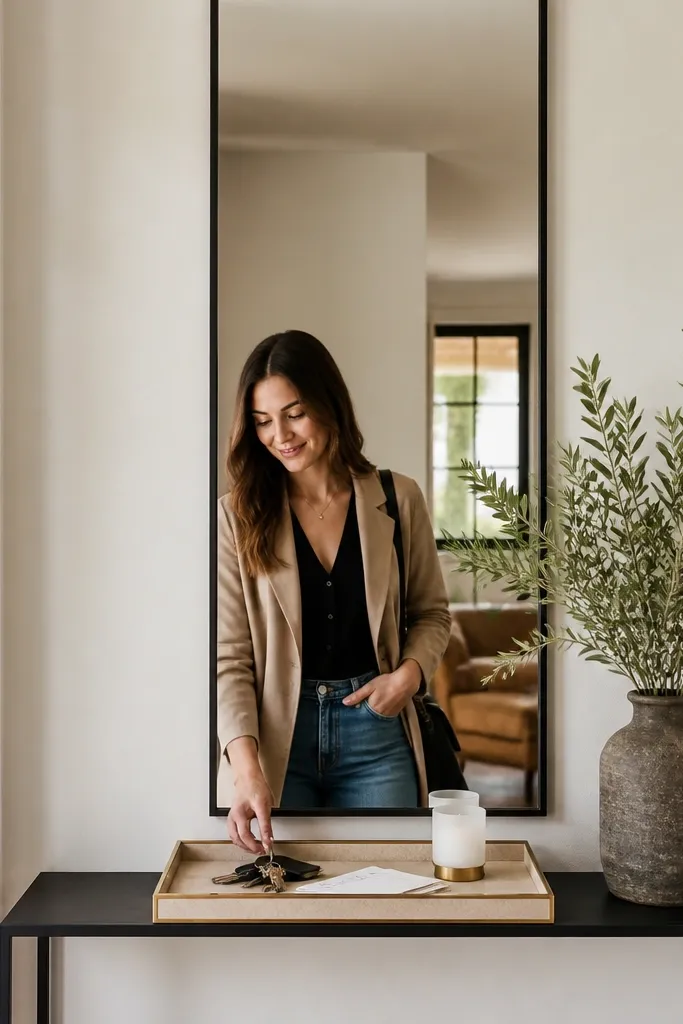
This setup makes the foyer feel taller and calmer because the mirror creates a vertical line while the console stays visually light. Go for a slim console around 12-16 inches deep so you don’t crowd the walkway, then place one styled tray for keys, mail, and a small candle. Use a mirror with a thin frame in black, brushed brass, or aged silver so it looks intentional next to wood or stone floors. The mistake this prevents is “everything everywhere” — the tray gives one clear landing spot, and the mirror adds brightness so the area doesn’t look dim or cramped.
Start by measuring your wall: choose a mirror height that sits with about 60 inches from floor to the mirror’s bottom edge in most foyers. Pick a console depth of 12-16 inches and center it under the mirror, leaving at least 30 inches of clear path to the next doorway. Then add one tray (about 10-14 inches wide) and keep only three items on it — keys, a mail slot or small stack, and one small object like a candle or incense holder.
If your mirror frame is dark, add one warm metal detail elsewhere (brass door hardware or a brass photo frame) so the foyer doesn’t look like it has “random black” pieces.
Avoid filling the console with five different containers — it kills the clean landing zone look.
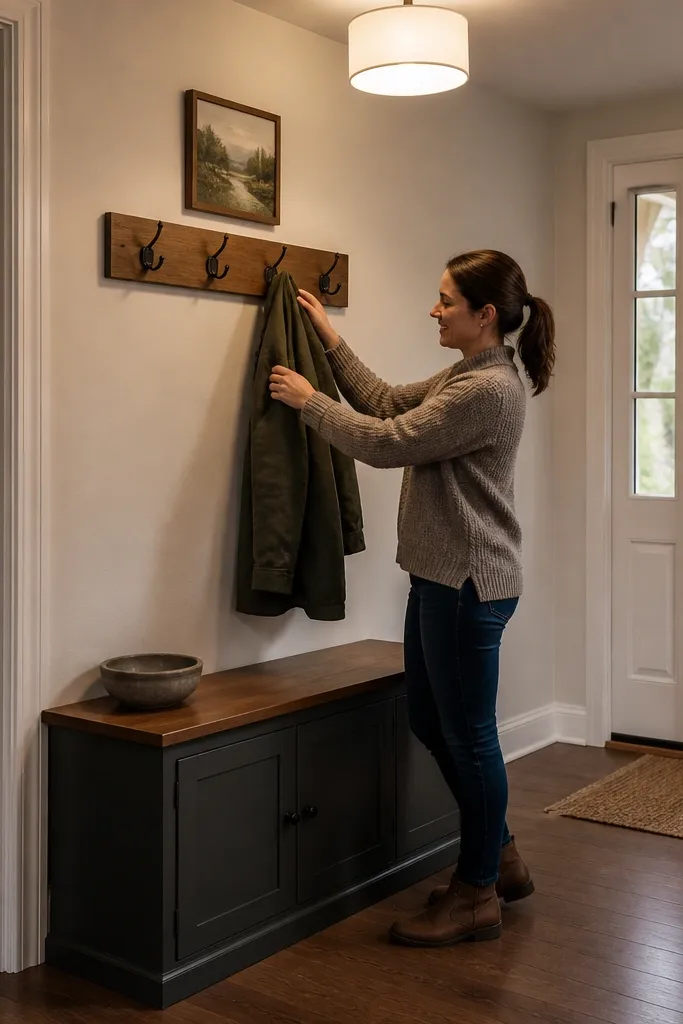
2. Bench + wall hooks combo for shoes and coats that still looks styled
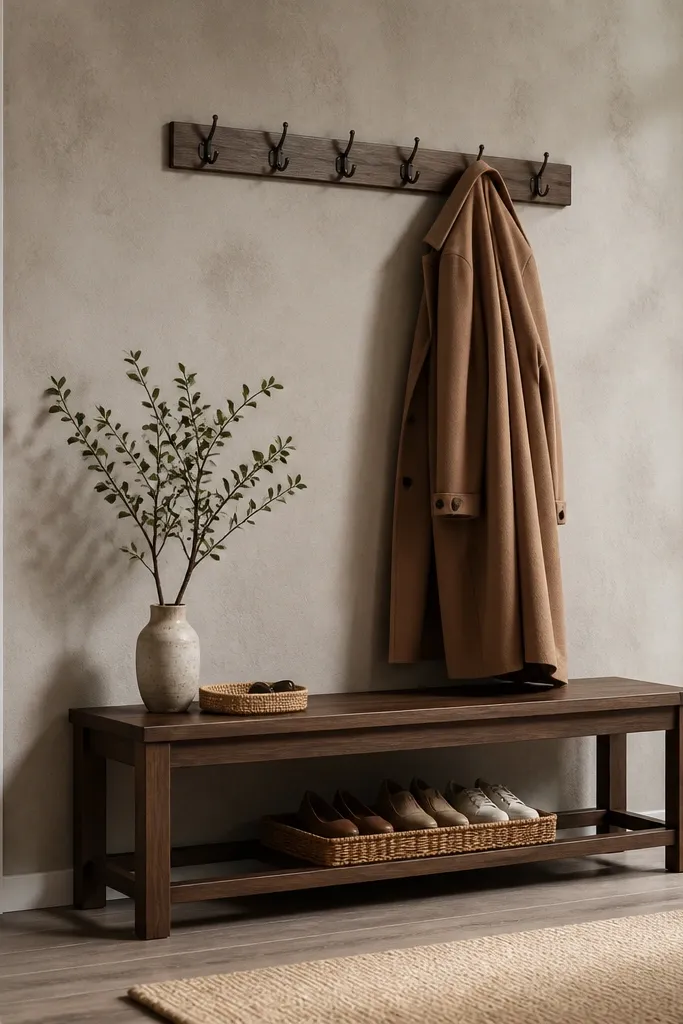
A bench is the fastest way to make an entryway feel like it has a routine. Pair it with wall hooks so coats hang up immediately, and add a shoe basket or a low cabinet under the bench so footwear doesn’t spill onto the floor. Choose a bench length that matches your space — 48 inches for small foyers, 60 inches if you can — and keep the seat height around 18 inches so it’s comfortable without looking bulky. This solves the common problem where coats dominate the wall and shoes sit in piles because there’s no dedicated place for either.
Mount hooks at about 66-72 inches from the floor to the hook tips for adult coats, and add two more hooks for bags at the same height. Place the bench 2-4 inches away from the wall so you can tuck items behind it and still slide the bench in for wiping. Use one under-bench closed basket (woven or fabric) and keep one bench tray or small vase on top so the styling looks deliberate.
Pick hooks with matching finishes (all black or all brass) and keep the bench cushion in a solid neutral like oatmeal or taupe for a calmer look.
Avoid a bench with open cubbies full of shoes — it looks like an overflow bin.
3. Floating shelf with a narrow runner and a single sculptural object
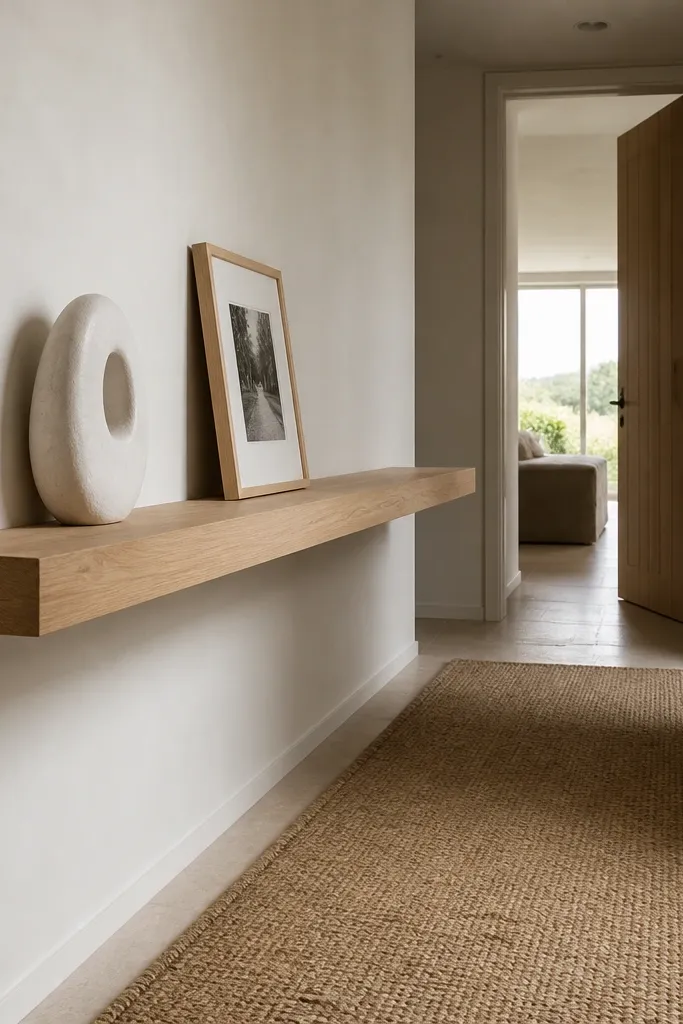
For tiny foyers, a floating shelf gives you vertical storage without eating floor space. Put it above a runner so your eye reads a clear pathway, then style the shelf with one sculptural object and one small framed photo. Use a runner that’s 24-30 inches wide for hallways and choose a low-pile or flatwoven texture so it doesn’t curl under shoes. This creates a welcoming look even when you can’t fit a console, and it prevents the mistake of cluttering the floor with loose baskets.
Pro tipUse command strips or a stud finder for the shelf only if you’re mounting into studs — a shelf that sags will ruin the clean look fast.
Install the shelf so the bottom edge lands around 72-78 inches from the floor for easy access while standing in the entry. Keep the shelf depth under 6 inches so it doesn’t look heavy. Then place a runner that runs from the entry threshold to the first doorway or furniture edge, leaving about 2 inches of clearance on each side.
Watch outAvoid stacking multiple small items on the shelf — one object is the rule here.
4. Round mirror paired with a console that has one dark leg color
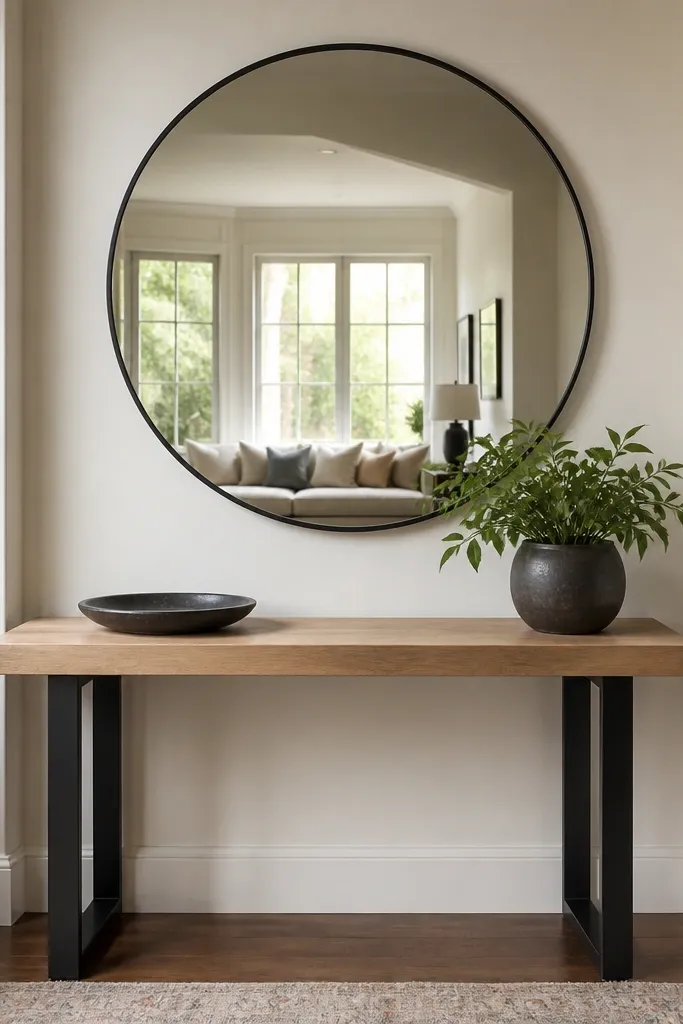
Round mirrors soften a foyer’s geometry, especially in square entryways or homes with lots of corners. Pair it with a console that has one dark element — black legs, a black shelf, or a black drawer pull — so the mirror doesn’t feel disconnected from the rest of the room. Choose a round mirror diameter around 26-32 inches depending on wall size; too big looks like a spotlight, too small looks like a decoration. This approach prevents the mistake of mixing mirror shapes and furniture styles until the entryway looks like a collage.
Pro tipIf your door is dark, match the console leg color to the door hardware for a tight, intentional look.
Pick the mirror first: aim for a diameter that leaves 4-8 inches of wall space to the sides of the console. Center the console under the mirror and keep its depth 14-18 inches. Add one vase or candlestick on the console (use a warm-toned ceramic or glass) and keep the rest empty so the mirror reflection stays crisp.
Watch outAvoid a round mirror over a console that has no matching dark detail anywhere — it reads random.
5. Gallery wall with a grid layout and consistent mat colors
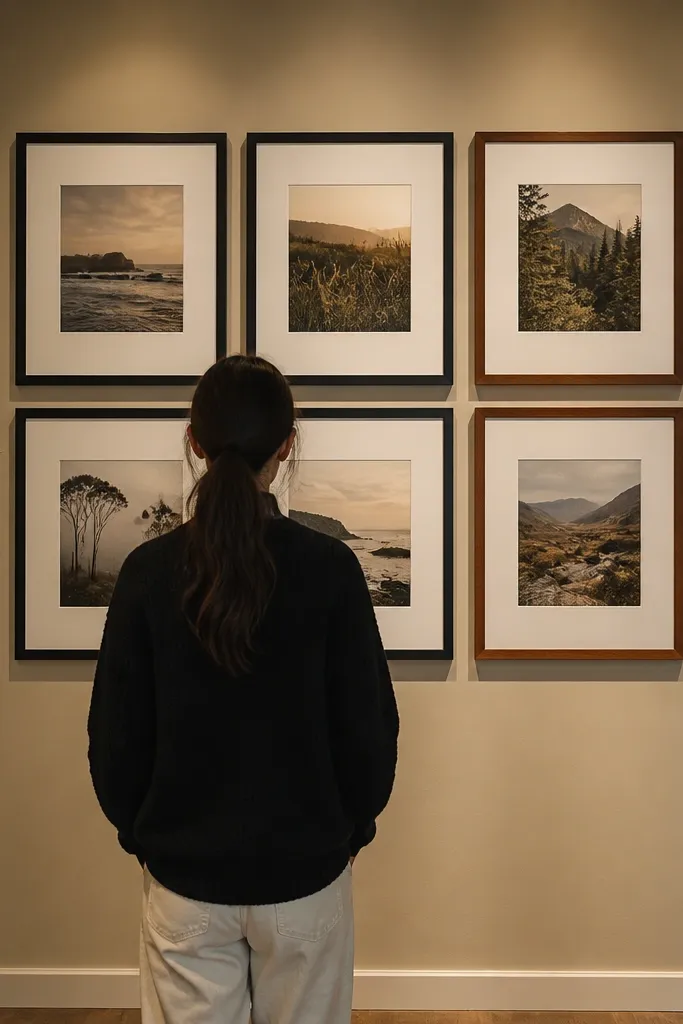
A gallery wall works in foyers when you control spacing and mat color. Use a grid layout — for example, 3 frames across — and keep all mats the same off-white tone so the wall looks cohesive, even when the frames differ slightly. Stick to black frames on one side of the palette and walnut frames on the other to keep it from feeling chaotic. This solves a common foyer issue: people hang art too high, too close together, or with mismatched mat colors, and the wall becomes visually noisy.
Pro tipAdd one small sconce light or a picture light if your foyer is dim — shadows make gallery walls look messy.
Lay out the frames on the floor first and decide your spacing: aim for 2-3 inches between frames for a clean grid. Mount the center of the gallery at about 60 inches from the floor to align with eye level when someone stands in the entry. Use only one mat color across the set and keep frame widths within 1 inch of each other.
Watch outAvoid mixing wildly different mat colors like bright white and warm ivory — it breaks the grid effect.
6. Statement pendant or flush mount with a dimmer for instant welcome
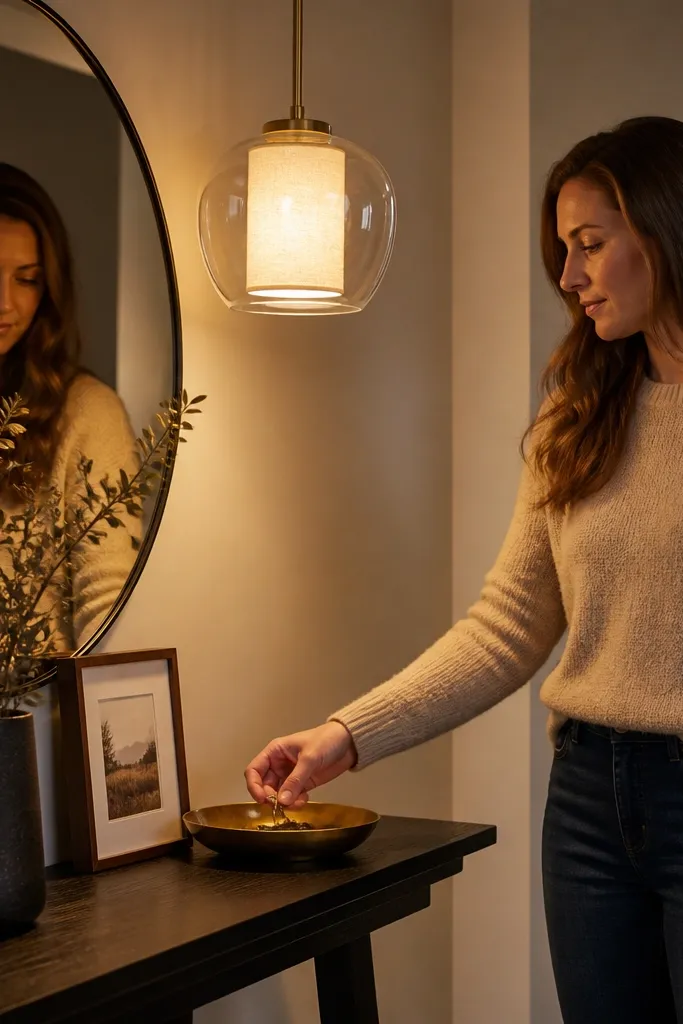
Good lighting is the difference between a foyer that feels welcoming and one that looks like a hallway. Choose a fixture that throws light downward and softly across the wall — pendant glass, linen shade, or a flush mount with a warm diffuser. Install a dimmer if you can; at 70% brightness the foyer looks more flattering, and at full brightness it still reads clean. This prevents the mistake of using one harsh overhead bulb that makes the entryway look flat and uninviting.
Match fixture scale to the space: in a small foyer, a 12-16 inch diameter flush mount is safe; in a two-story entry, go larger and center it over the main landing. Use a warm bulb around 2700K and choose LED bulbs labeled dimmable. If you have a console, aim the light so it highlights the mirror — position the fixture so the mirror reflection looks bright, not washed out.
Warm metal fixtures (brass or bronze) look better in foyers because they pick up the color from wood floors and rugs.
Avoid cool 4000K bulbs — they make entryways look tired and a little clinical.
7. Layered rug runner with a flatwoven base and a patterned top
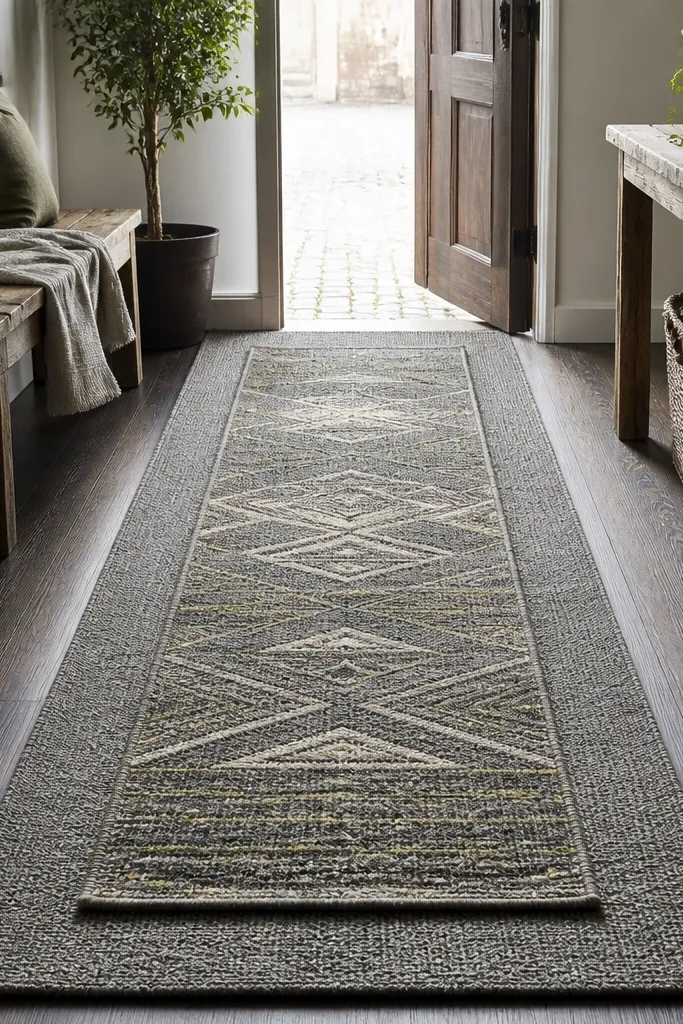
A rug layer makes a foyer look designed, especially when your entry is narrow and you want pattern without chaos. Use a flatwoven base (neutral jute look or gray flat weave) under a patterned runner that’s narrower — typically 20-24 inches if the base is wider. The top runner adds style, and the base keeps the floor from looking bare around the edges. This solves the mistake of choosing one rug that’s either too thin, too small, or too busy next to furniture.
Measure the entry path and choose a runner length that covers the area where shoes stop — usually from the door area to the first furniture edge. Use a rug pad so the runner doesn’t slide; cut the pad to the base runner size. Start with neutral base first, then place the patterned runner centered so it leaves 1-3 inches of base visible on each side.
If you have dark floors, pick a runner with light cream or sand tones so it brightens the entry instead of blending in.
Avoid oversized rugs that stop short of the landing zone — they look like a temporary placement.
8. Console with cabinet doors and one open shelf for styled contrast
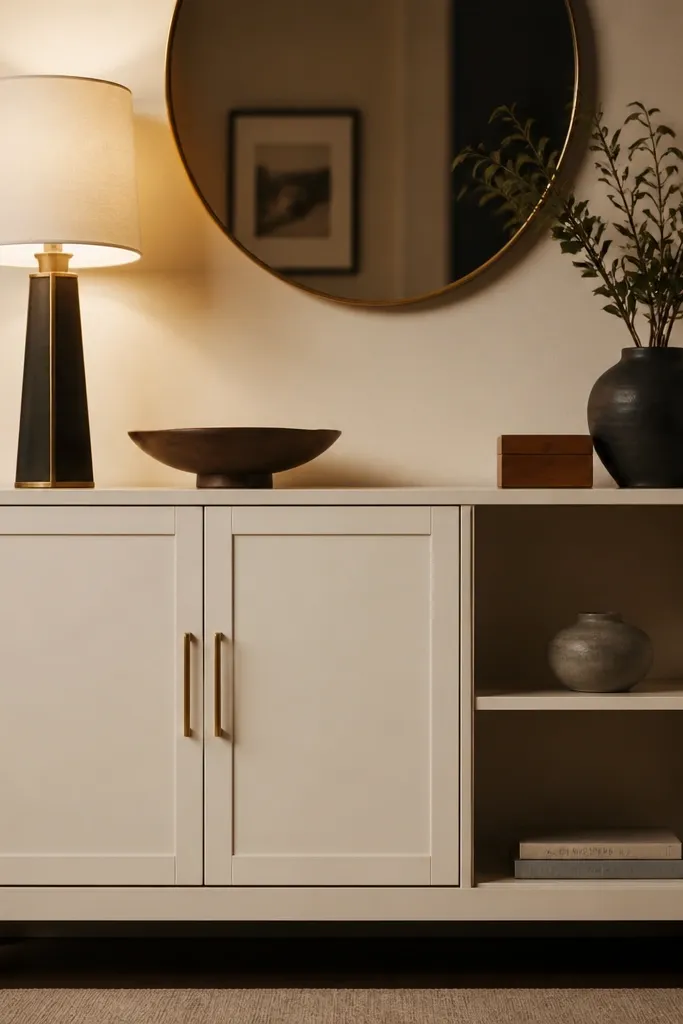
Closed storage is a cheat code for foyers. A console with cabinet doors keeps mail, gloves, and random bits out of sight, while a single open shelf gives you a place for one or two decorative pieces. This gives you a clean look in photos because the mess never becomes part of the design. Choose hardware finishes that match your light fixture or door knobs, and keep the console color grounded — oak, walnut, or painted warm white.
Pick a console width that matches your wall section: leave at least 6-10 inches of clearance on either side if you have a doorway or trim. Install it so the top surface sits around 30 inches from the floor for comfortable access. Style the open shelf with one tray and one tall item like a candle or slim ceramic vase; everything else stays in the closed cabinets.
If you want it to look extra intentional, align the tray edge with the shelf edge so nothing looks casually placed.
Avoid fully open shelving consoles — they turn daily clutter into permanent decor.
9. Shoe storage bench with a flip lid and a hidden brush kit
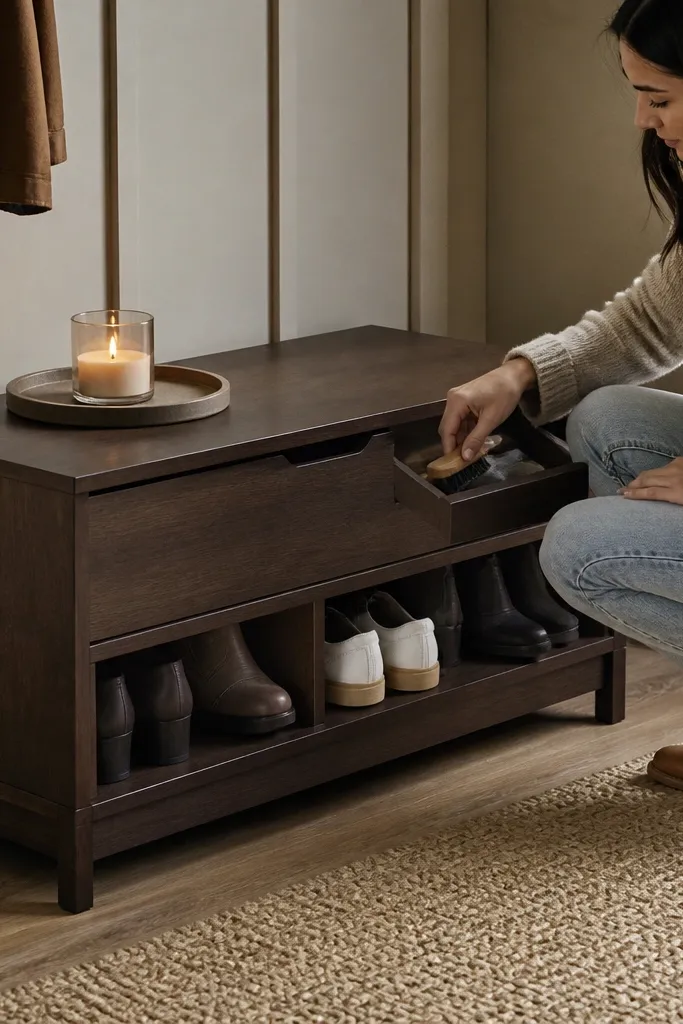
A flip-lid shoe bench looks sleek because it hides the mess and keeps the top surface clean for styling. Add a small hidden brush kit inside so you’re not leaving shoe care products in the open. Choose a bench with a matte finish (dark wood or painted linen white) so scuffs don’t stand out as much as gloss. This prevents the common foyer mistake where shoes and cleaning supplies are stored in visible baskets that make the entry look busy.
Pro tipUse a dark bench and keep the lid edges clean — it reads more premium and hides wear.
Measure your entry and choose a bench length that fits between walls with 30 inches of walkway. Place it where you naturally pause to remove shoes — usually near the door but not blocking the path to the next room. Store only two categories inside: shoes plus one brush kit; keep the top surface to one item like a small tray.
Watch outAvoid benches that open upward without soft-close hardware — the constant clanging ruins the calm look.
10. Wall-mounted key organizer plus a small catch-all bowl on the console
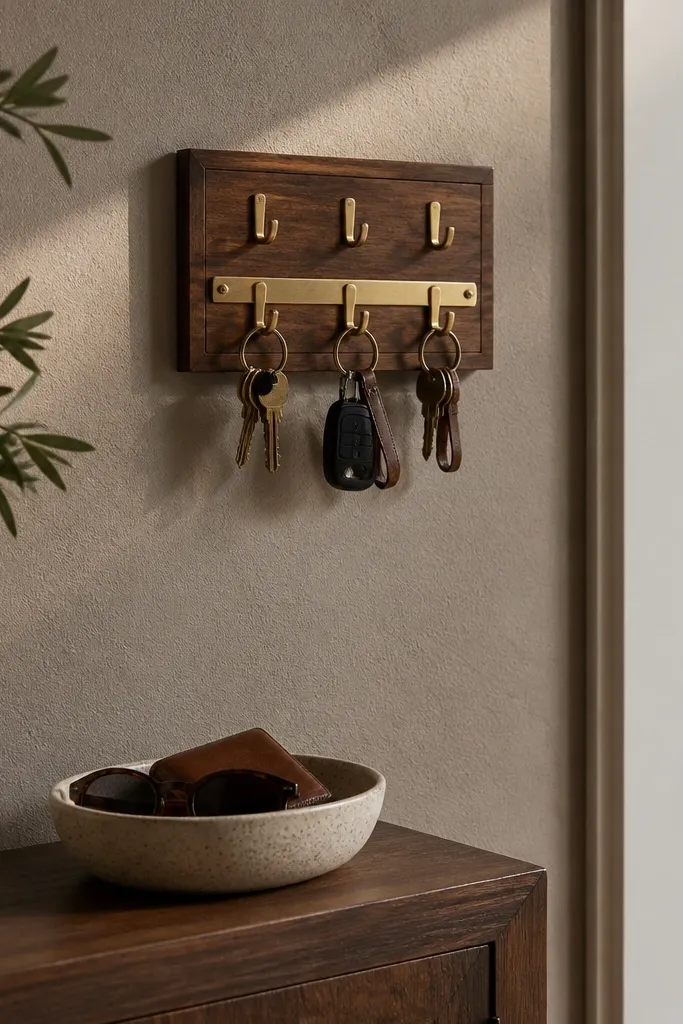
This is the cleanest way to stop the “keys on the counter” problem. Mount a key organizer near the door at about 54-60 inches so you hit it without thinking, then keep only one catch-all bowl on the console for loose items like sunglasses or a small wallet. The bowl should be ceramic or stone, not a tall decorative stand that collects dust. This approach fixes the most common foyer mistake: too many places for small items, which turns into clutter.
Pro tipMatch the bowl color to your mirror frame or light fixture metal so the system looks designed, not random.
Install the organizer using a stud finder, and keep it directly beside or slightly above the door lock so keys and mail feel like one system. Then place the console bowl within arm’s reach of the landing tray. Keep the bowl size small — around 6-9 inches wide — so it holds what you need but doesn’t become a catch-all for everything.
Watch outAvoid leaving a key bowl plus a second key station — two places means two piles.
11. Mirrored console for tiny foyers with a single warm accent
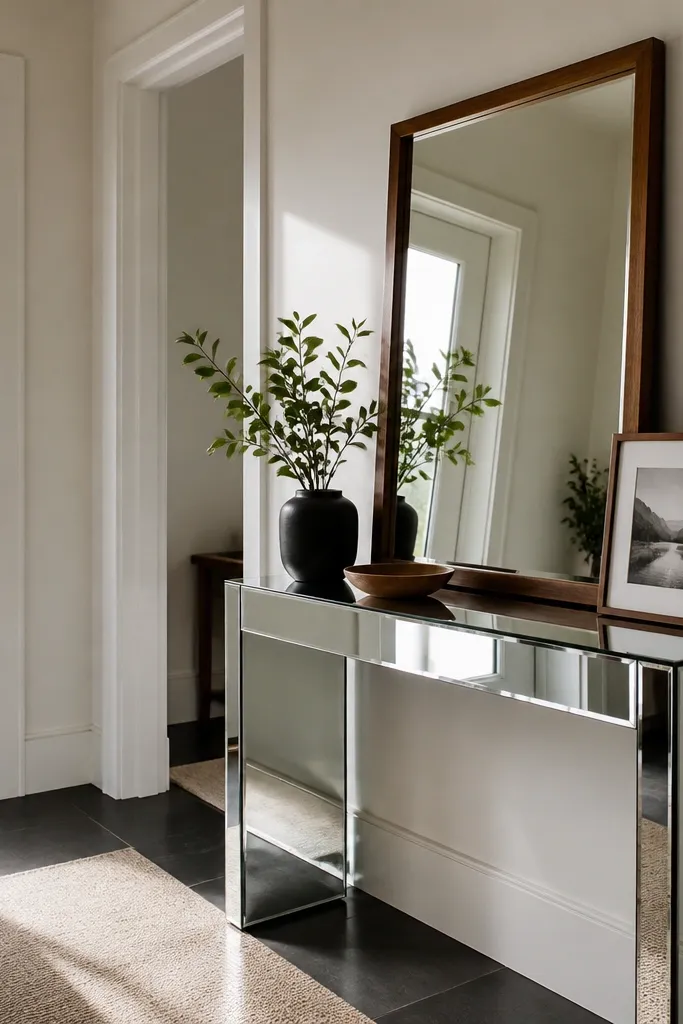
A mirrored console makes small foyers feel bigger because it bounces light and visually reduces the furniture footprint. Keep the styling minimal so the reflections don’t look like clutter. Choose a mirrored surface with a clean edge (not too ornate) and pair it with one warm accent like a wood frame mirror, a walnut tray, or a brass candle. This prevents the mistake of using bulky furniture in a small entryway and then compensating with more decor, which makes the space feel tighter.
Pro tipWipe the mirrored surface once a week — fingerprints show more in foyers than in other rooms.
Pick a console that’s 10-14 inches deep for narrow entries, and place it directly under the wall mirror or opposite a window if you have one. Style with one tray and one vase; keep any other items out of the mirror’s reflection line. Use warm lighting around 2700K so the mirrored surface looks flattering instead of harsh.
Watch outAvoid mirrored consoles with heavy clutter on top — reflections multiply mess fast.
12. Foyer plant corner with a tall floor planter and a narrow side table
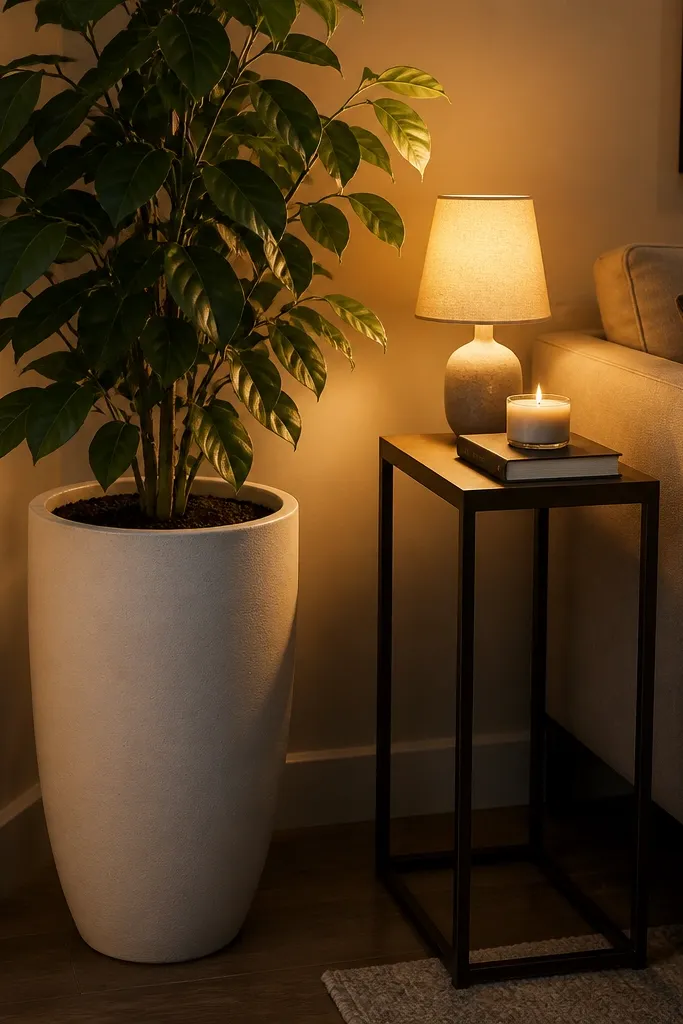
A tall plant gives your foyer a vertical focal point without making the space feel crowded. Use a floor planter in matte white, black, or textured stone so it looks grounded, then place it near the mirror or light so it catches warm highlights. Add a narrow side table next to it for one lamp or one candle so the plant doesn’t look isolated. This fixes the common mistake where people put a small plant on the floor and it disappears, leaving the foyer feeling flat.
Pro tipRotate the plant weekly so the leaves stay symmetrical in photos.
Choose a plant that fits your light: a fiddle leaf fig look needs brighter light, while a snake plant can handle lower light better. Place the planter so the leaves don’t brush door swings; leave at least 6 inches of clearance from door paths. Add the side table at about 18 inches from the plant so you can style without blocking the walkway.
Watch outAvoid tiny floor planters in a big empty corner — scale is what makes it look intentional.
13. Foyer wall sconces flanking a mirror with warm glass shades
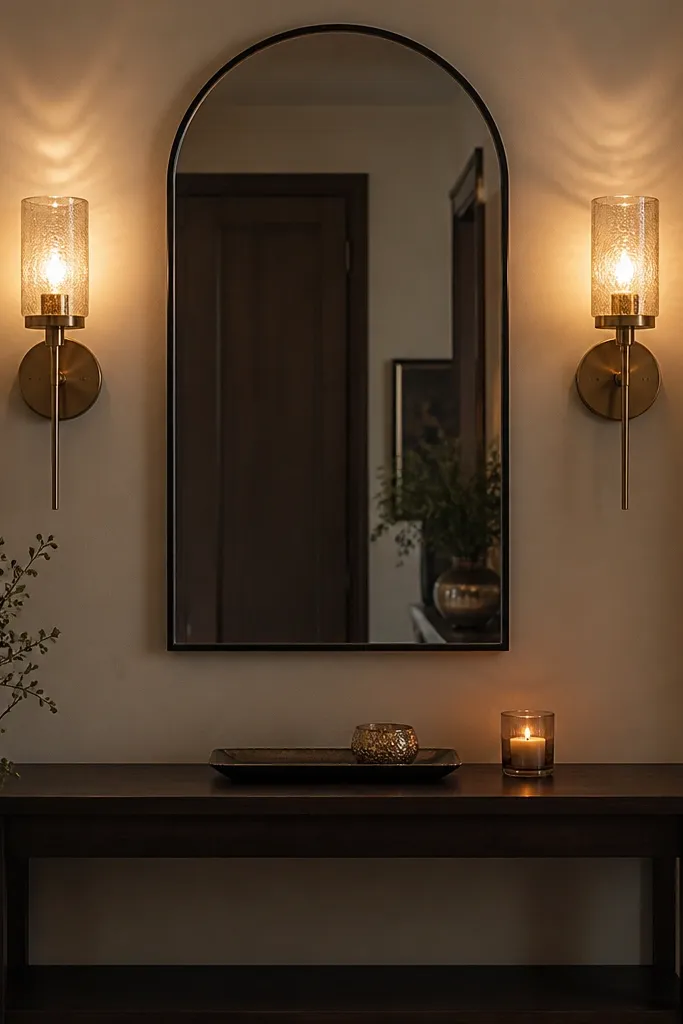
Flanking sconces make a foyer look designed because they frame the mirror and balance the light. Choose sconces with warm glass shades or linen diffusers so the light spreads softly across faces and walls. Match the height of the sconces to the mirror center so everything lines up — that alignment is what makes the entryway feel pulled together. This prevents the mistake of using a single light source that creates one bright spot and leaves the rest of the foyer shadowy.
Pro tipIf your mirror is arched, use sconces with a curved shade shape to echo the form.
Mount the mirror first, then place the sconces so the center of each sconce lines up about 4-6 inches above the mirror’s center. Keep bulbs warm at 2700K and choose dimmable if you can. Wire in a way that doesn’t strain the look of the wall — use clean cord management or hire an electrician if needed.
Watch outAvoid mismatched sconce sizes — two different heights makes the mirror look crooked even when it isn’t.
14. Coat rack with a built-in bench shelf and a color-matched umbrella stand
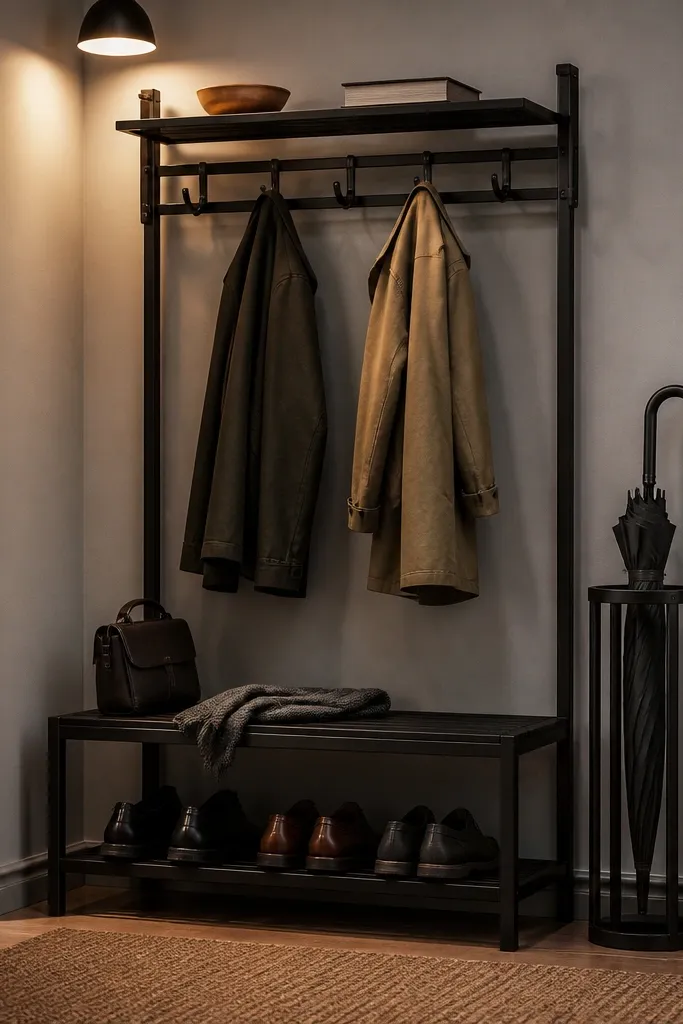
When rain and coats are part of your reality, a coat rack system keeps the foyer tidy without hiding the function. Choose a coat rack with a top shelf so you can stage one small item like a tray or a book, and pair it with an umbrella stand that matches the metal finish. The color match matters: black metal with black hardware, or brass with brass light and hardware. This prevents the mistake of adding umbrellas to random corners and letting coats spill onto chairs or the floor.
Place the coat rack within 3-6 feet of the door so you reach it immediately when coming in. Mount wall anchors or use a freestanding unit that’s stable; don’t rely on a wobbly base in a high-traffic entry. Then place the umbrella stand right next to the rack, not across the room, and keep the shelf styling to one tray or a single vase.
Use a small mat under the umbrella stand if you get frequent wet weather — it keeps the area from looking stained.
Avoid a coat rack plus an umbrella stand in different finishes — it reads like two separate problems.