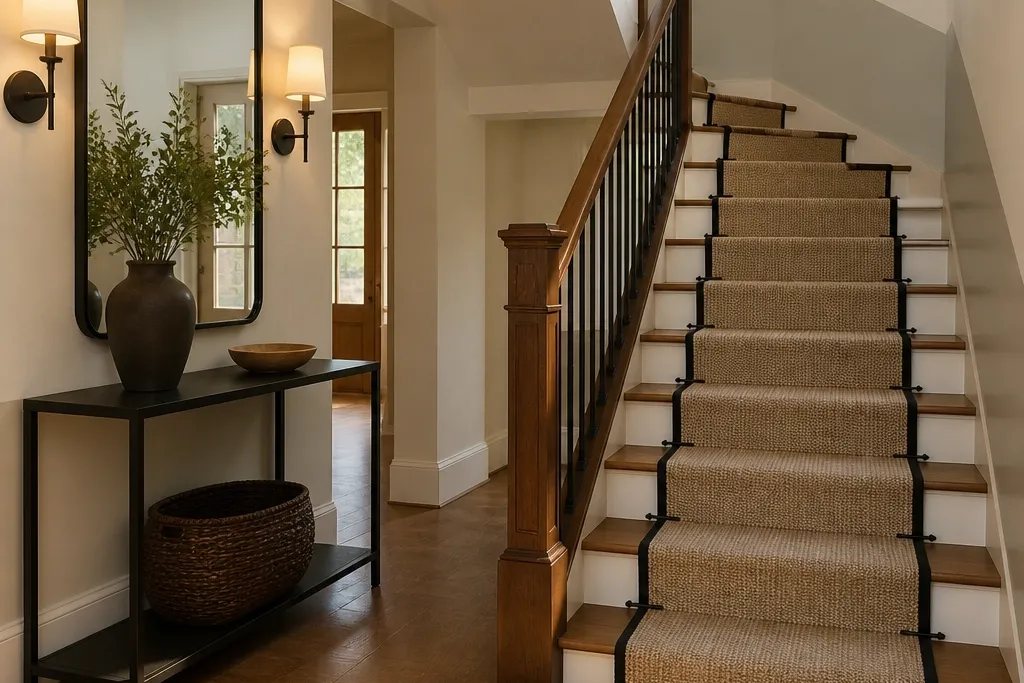
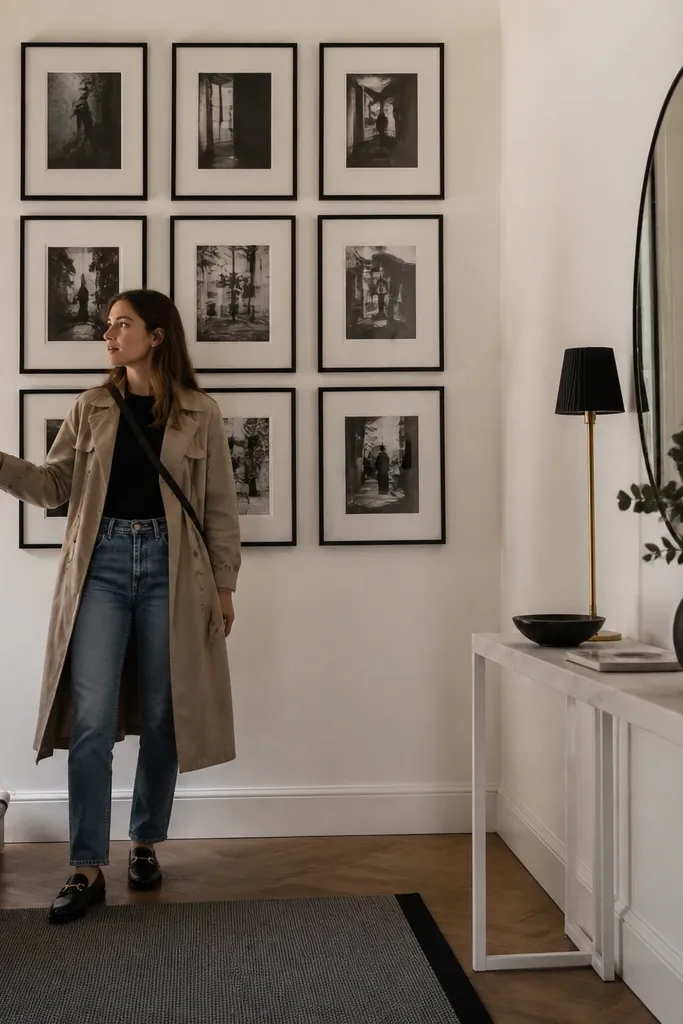
1. Black-framed mirror over a slim white console
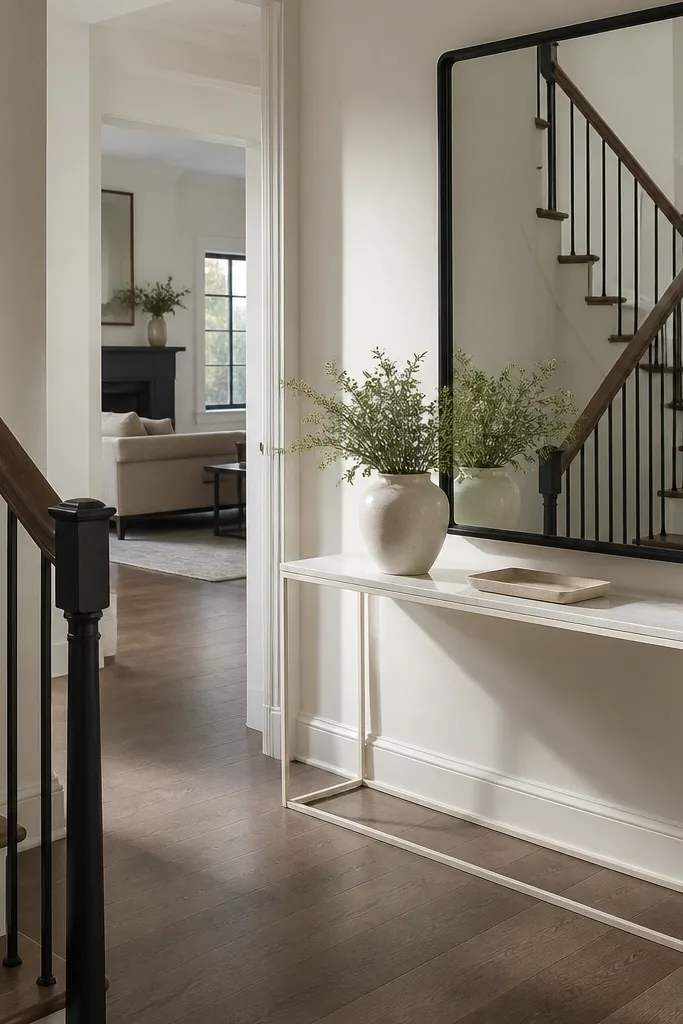
This look works because it creates one clean vertical line in a space that already has vertical lines from the stairs. The black frame adds contrast against light walls, while the slim console keeps the stair path open. Use a white console top if your stairs are warm wood — it brightens the landing area and stops the foyer from feeling heavy. Add a short runner only where the walkway passes, not up the entire visual width, so the mirror stays the hero. Finish the console with two matching planters in matte ceramic and one layered tray to keep the entryway from looking like a “drop zone.”
Measure the wall span above the console and choose a mirror that is 2/3 the console width. Install it so the mirror’s center sits around 66 inches from the floor. Place the console 6-8 inches behind the edge of the runner’s path so people can pass without brushing it. Use two wall sconces or one sconce per side at about 75 inches from the floor for a balanced glow that doesn’t wash out the frame. Budget-wise, expect to spend most of your money on the mirror frame and the console — the decor is cheap to swap later.
Pro tipHang the mirror so it visually lines up with the stair rail post on the landing. That alignment makes the whole foyer feel designed, not accidental.
Watch outDon’t use a mirror that is wider than the console — it crowds the stairs and makes the landing feel smaller.
2. Two-tone wall zoning with a runner that reads centered
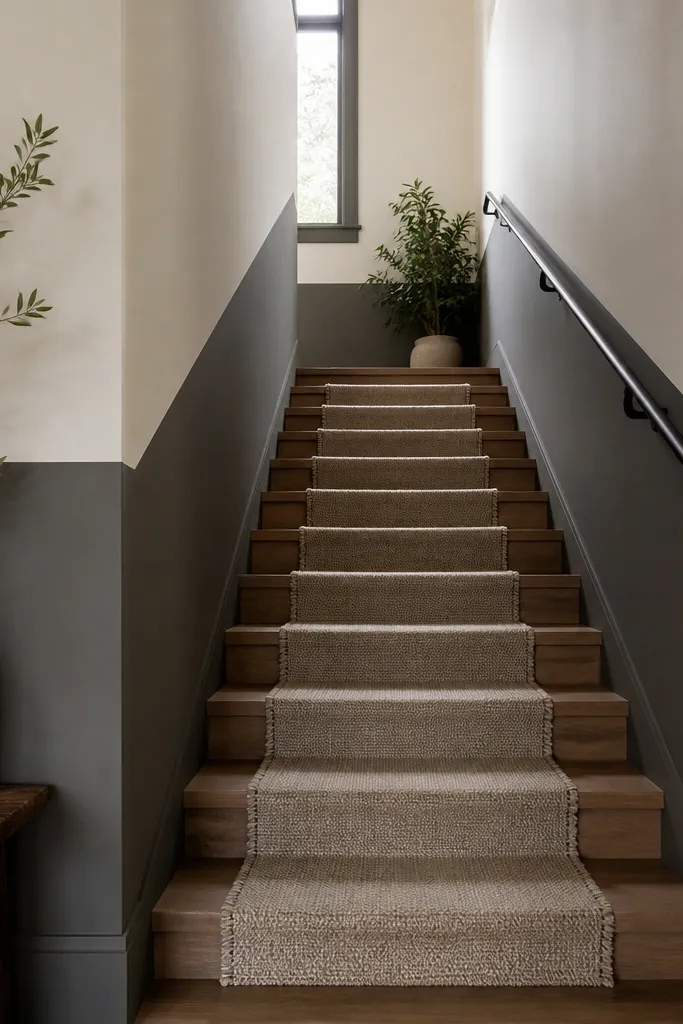
Wall zoning is the fastest fix for stairs that break up your entryway visually. Paint the lower half in a deep, low-sheen tone like charcoal or warm taupe, then keep the upper half in a soft warm white. The dark band anchors the space and makes the runner look intentional rather than temporary. Choose a runner with a pattern that doesn’t fight the stair lines — subtle stripes or a small geometric works better than big medallions. This idea is especially strong when your foyer walls are currently the same color everywhere and the stairs look like they cut through an unfinished room.
Tape a straight line at your preferred split height, usually around 36-40 inches from the floor. Paint the upper wall first, then use a roller for even coverage on the lower band with a satin finish. Center the runner so there is equal border space on both sides of the treads; if the runner is too wide, it will look messy at the rail. Install a simple bench or narrow shoe cabinet on the dark wall side so it visually “sits” in the anchored zone. Tools you need: painter’s tape, a 2-inch angled brush, a 9-inch roller, and a level — the line is what makes it look high-end.
Pro tipUse satin for the lower band. It cleans up better near the stairs where scuffs happen.
Watch outDon’t pick a bright white for the upper wall if your stairs are honey or red-toned — it can make the wood look orange.
3. Sculptural pendant over a wood-and-leather entry bench
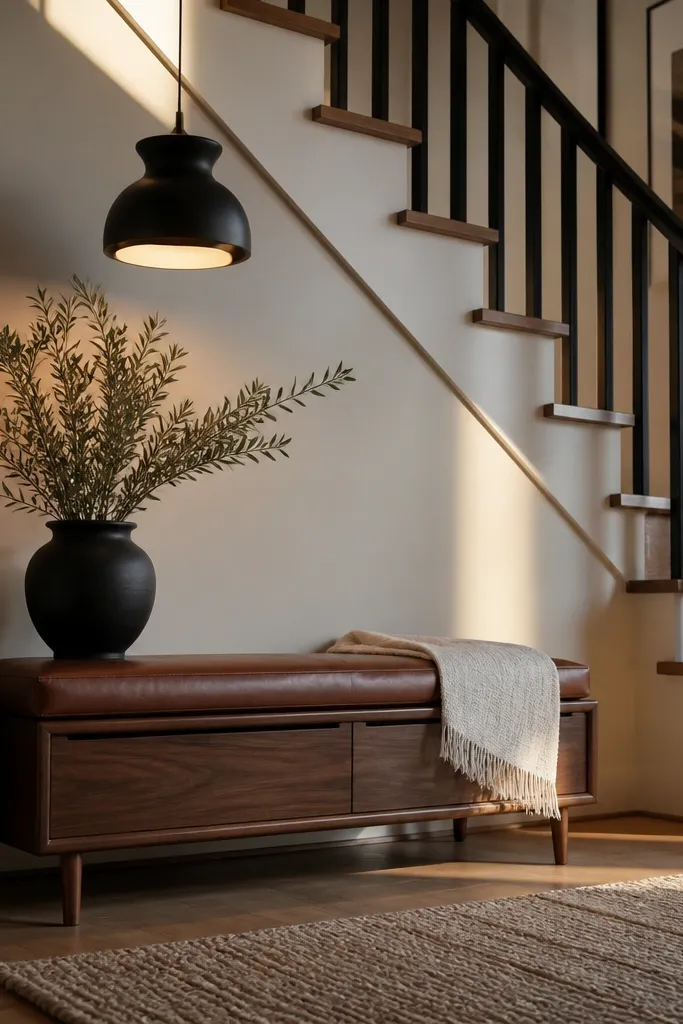
If your foyer feels flat, lighting can fix it faster than decor. Put a sculptural pendant over a bench at the bottom of the stairs, then let the stair rail guide the light upward. Choose a bench with real texture — walnut wood with a leather or cognac faux-leather cushion — so it looks good even when it’s empty. Keep colors warm and grounded: cognac, walnut, and matte black metal. The pendant makes the entryway feel like a destination, and the bench gives you a functional place for shoes and bags without cluttering the stair landing.
Pick a pendant with a clear silhouette — a drum or globe can work, but keep the shade open enough that light reaches the wall. Hang it so the bottom of the shade is about 78-82 inches from the floor. Center the bench under the pendant and leave 12-18 inches between the bench and the first stair tread if possible. Add one small basket underneath for mail or scarves, then place a single tray on top to keep the surface tidy. Plan effort around electrical work — if you need a new fixture, budget for an electrician or choose a plug-in style with a long cord cover.
Pro tipMatch pendant metal to your stair hardware or door knobs. It makes the whole foyer look cohesive.
Watch outDon’t put a pendant too low. In a stair foyer, it creates a visual bump right where people’s eyes travel.
4. Gallery wall on the stair landing wall with a strict grid
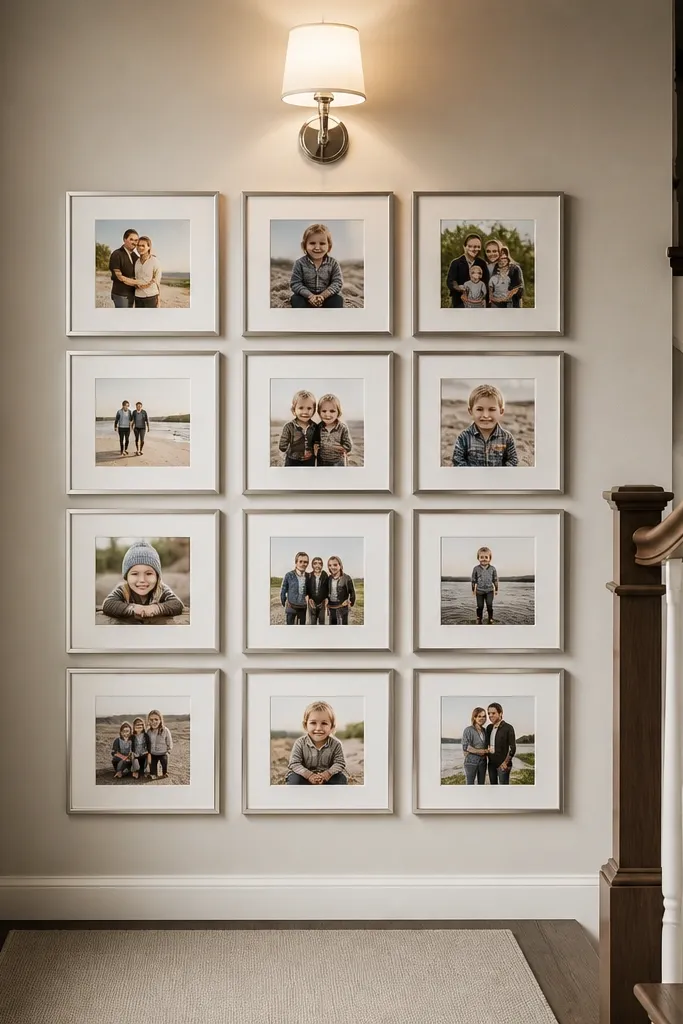
A stair landing wall is prime real estate for a gallery wall because it’s where people pause and look up. The trick is to choose a strict grid, not a random mix — it keeps the stairs from feeling busy. Use frames in one finish, like matte black or satin silver, and keep mat colors consistent (clean white or warm cream). For photos, select a limited theme: black-and-white architecture prints, botanical line drawings, or simple neutral landscapes. This approach works best when the wall is visible from the entry door and when you want the stairs to look like part of the design plan, not just a staircase.
Measure the wall width of the landing and decide on a grid size, like 3 frames wide by 2 frames tall. Use picture-hanging templates or painter’s tape to map spacing; aim for 2.5-3 inches between frames. Mount the center of the grid at about 60 inches from the floor, then adjust based on your door height and rail. Use spacers behind frames if you need to keep everything perfectly level. Cost stays reasonable if you buy uniform frames from the same retailer and print images yourself at a local copy shop.
Choose frames with a thin profile. Thick frames can look heavy next to stair rail details.
Don’t mix frame colors and mat tones — the stair wall already has too many lines.
5. Rattan console with a runner that repeats the stair rhythm
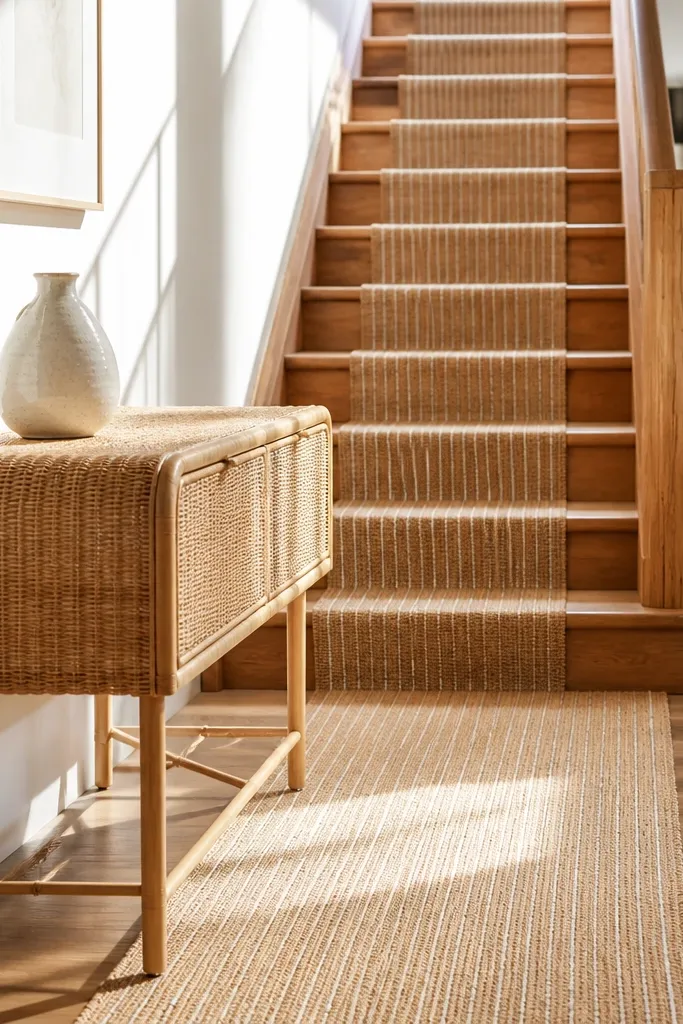
This is a great aesthetic when you want warmth without making the foyer look dark. A rattan console adds texture that looks good beside wood stairs, and it photographs well because it has lots of light-catching detail. Pair it with a runner that repeats the stair rhythm: thin stripes, small woven texture, or a low-contrast pattern that doesn’t overpower the steps. Keep the color palette to cream, tan, and one dark anchor like matte black. This works best in entryways with light walls and natural wood stairs where the current look feels too plain.
Choose a console depth around 12-14 inches so it doesn’t block the stair path. Place it so it sits 6-8 inches back from the runner’s centerline. Pick a runner width that leaves about 6 inches of border on each side for a typical stair run; measure your stairs first to avoid guessing. Add a woven tray and one tall vase on the console, then keep the rest of the surfaces clear. If you need storage, add a rattan cabinet basket instead of bulky drawers.
Use one dark accessory — like a black ceramic lamp or a black frame — to keep the rattan from looking washed out.
Don’t choose a runner with bold contrast if your console already has strong texture.
6. Open shelving cubbies with closed shoe storage on the bottom
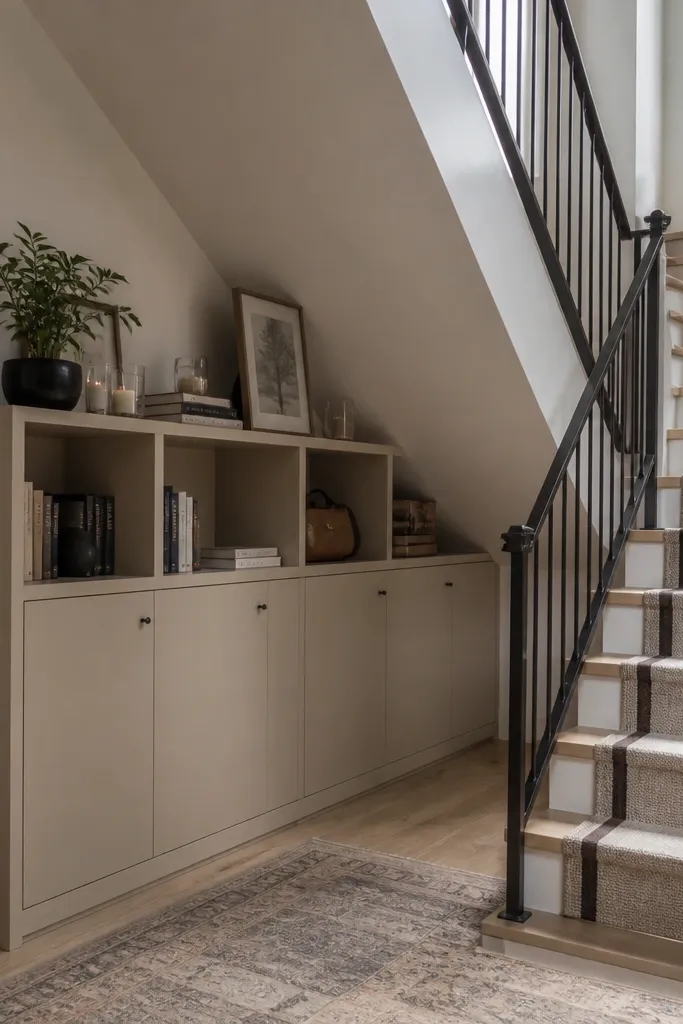
Stairs create constant visual movement, so your entryway needs storage that looks organized even when it’s used. This design uses open cubbies for styling and closed cabinets or drawers for shoes and bags. The open sections should be spaced so the decor lines up — think vertical stacks of books or matching candle heights. Choose shelving in white oak or painted white, then keep the hardware consistent with your light fixtures. The result looks styled, but it still handles real life, which is exactly what you need in a foyer with stairs where mess travels fast.
Select a shelving unit that matches the wall width and leaves at least 3 inches of clearance from the stair edges. Put the closed shoe storage at the bottom and keep the open cubbies above waist height. Install shelves level using a laser level; one crooked cubby will ruin the grid look. Style each open section with one vertical item and one small horizontal item, not a pile. Cost control: buy the shelving unit first, then add cheaper decor pieces that match your palette.
Pro tipUse the same size baskets in every closed cubby. Matching containers make the entryway look intentional.
Watch outDon’t leave shoes visible in the open cubbies — it kills the “beautiful foyer” effect.
7. Full-height runner and side sconce pairing for a dramatic stair wall
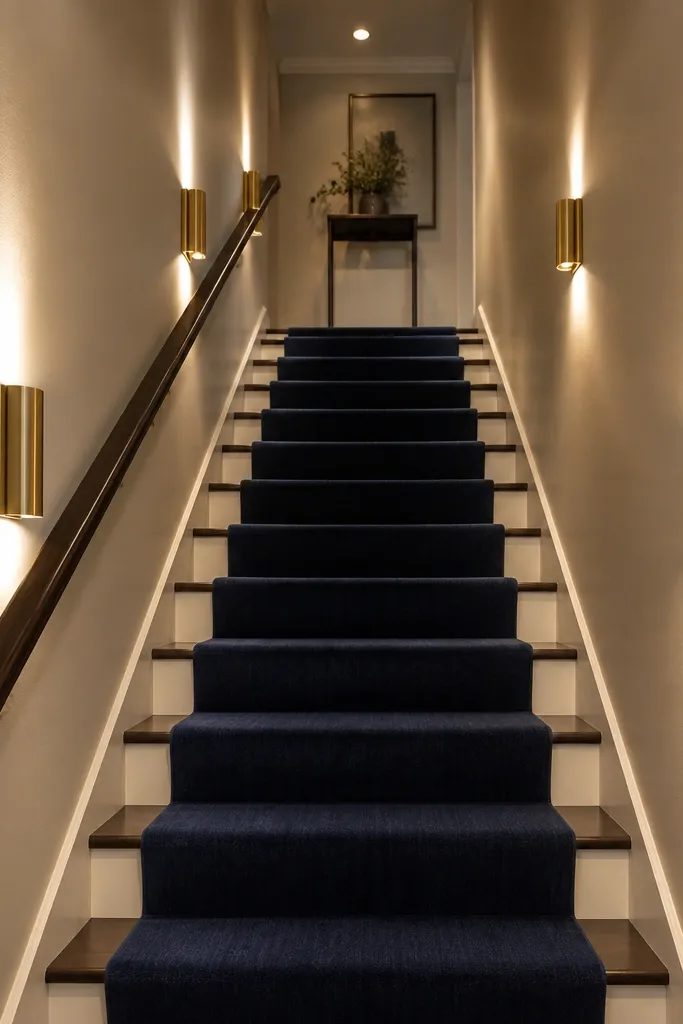
If your foyer feels like it has good bones but no drama, this gives you a clear focal path. Use a darker runner, like charcoal or deep navy, and pair it with matching sconces on the wall next to the stairs. The sconces should be placed so the light hits the wall just above the runner height, creating a glow that makes the steps look sculpted. Keep the entry furniture simple — a narrow console and one mirror — so the runner and lighting do the heavy lifting. This look is photogenic because the contrast creates strong shadows and clean lines, especially in stair foyers where the camera naturally looks upward.
Choose a runner long enough to cover the stairs without awkward seams at the landing; measure from the top tread to the bottom landing area. Center it and use non-slip rug tape underneath each stair tread edge. Install sconces at roughly 68-72 inches from the floor, aiming the light slightly downward toward the runner. Select a console with a reflective or smooth finish like lacquered white or polished wood so it picks up the sconce glow. If you’re adding new wiring, plan for an electrician — lighting is worth doing right here.
Pro tipUse bulbs with a warm temperature, around 2700K. It makes charcoal and navy look richer instead of flat.
Watch outDon’t combine a dark runner with cold gray walls. The whole stair run can look dull.
8. Floating staircase-side console with a long mirror strip
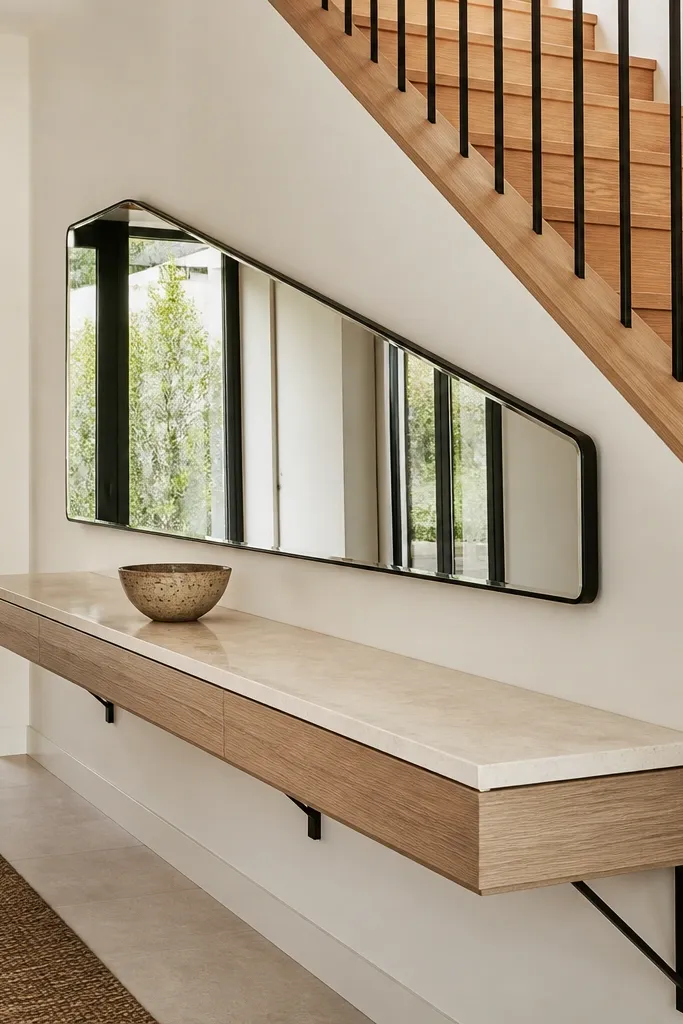
This idea works when your stairs run along a wall and you want the side to look dressed without blocking movement. A floating-feeling console (thin legs or a wall-mounted look) keeps the visual weight low, which helps when the stairs already take up vertical space. Add a long mirror strip to reflect light and visually extend the hallway. Keep decor minimal: one tall plant in a matte pot and a single sculptural object. The beauty here is the line — the mirror and console create a continuous horizontal element that balances the stair’s verticality.
Measure the side wall length and choose a console that is 70-80% of that span so it looks intentional, not squeezed. Mount or position it so the top surface stays around 30-32 inches from the floor. Use a mirror strip about 2 inches smaller on each side than the console width. Add one sconce or ceiling light aimed toward the mirror so it reflects light onto the entry. Cost is moderate: you’ll spend on the mirror and the console, then keep decor simple.
If the wall is painted, match the mirror frame finish to the paint undertone (warm black for warm whites, cooler black for cooler tones).
Don’t hang the mirror too high. If it sits above eye level, it stops reflecting the entry and looks floating.
9. Stair rail styling with matching planters and a clean runner edge
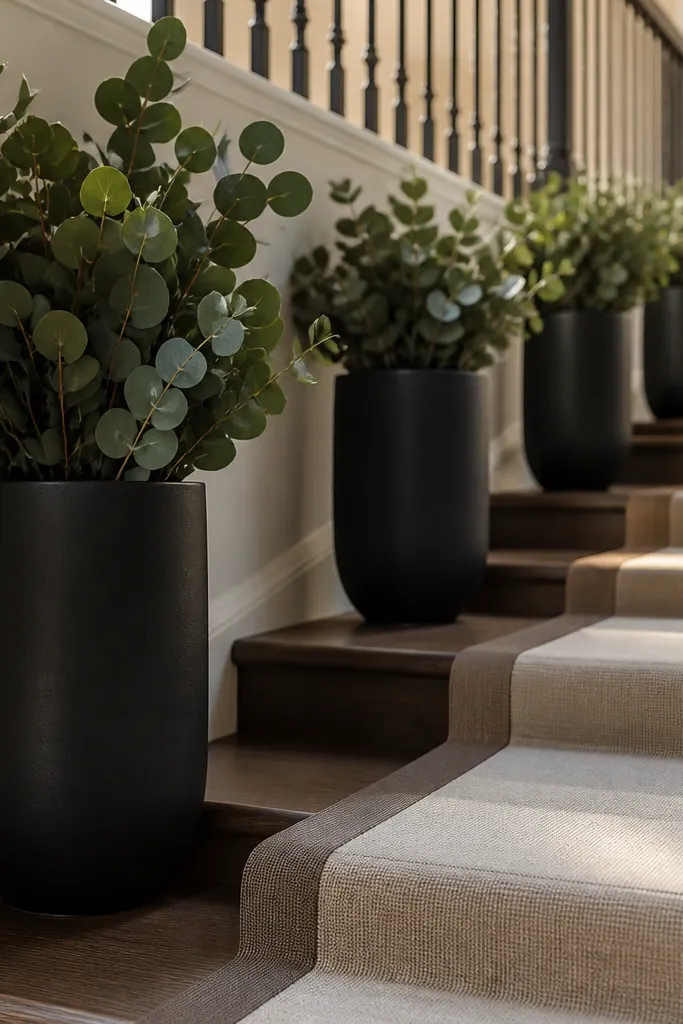
You can make stairs look styled without adding furniture by focusing on the rail and the runner edge. Use matching planters or small lanterns placed at consistent intervals along the stair wall or landing ledge. Choose one planter material, like black metal or matte ceramic, and keep the color consistent — that repetition makes the staircase feel designed. The runner should have a crisp edge: center it, then avoid letting it bunch near the landing. This look is best for entryways where the bottom of the stairs is too tight for a console, but you still want the foyer to look beautiful from the door.
Pick two planter sizes and use them as a pattern: for example, larger planters at the landing corners and smaller ones near the middle treads. Place them so they don’t block handrails or create snag points for bags. Center the runner first, then trim or adjust so the edge stays straight — bunched carpet ruins the whole effect. Add one warm light source near the landing, like a floor lamp with a shade, if you don’t have overhead lighting. Keep plant choices simple: tall artificial olive stems or real greenery in lightweight planters.
Use the same height for the top of every planter. Visual rhythm matters more than the plant variety.
Don’t stack too many objects on the landing. If everything is “decor,” nothing reads as the focal point.
10. Neutral upholstered bench with a textured wall behind
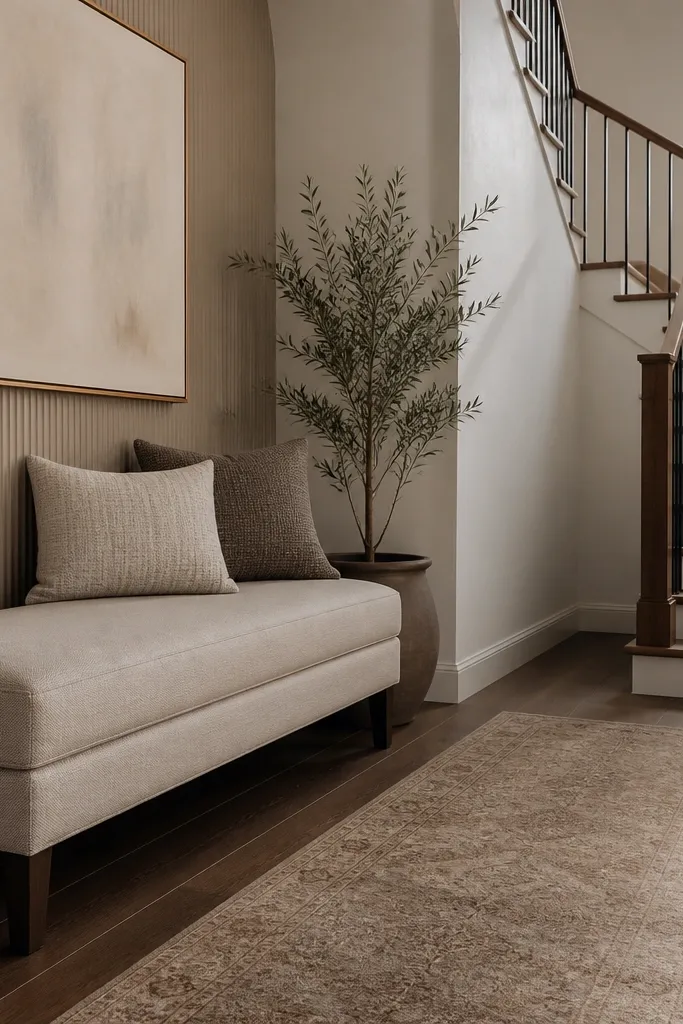
When your stairs feel like they dominate the entry, soften the bottom area with texture and upholstery. Put an upholstered bench in a neutral fabric like oatmeal linen or light greige bouclé, then add a textured wall feature behind it — a simple fluted panel, linen-look wallpaper, or a subtle plaster finish. The goal is a calm backdrop that makes the stairs feel less harsh. Add a mirror above or to one side, but keep the frame finish simple. This look is photogenic because it creates soft light reflections and visible texture, which stands out even in low natural light.
Choose a bench width that matches the wall span and leaves at least 18 inches to the side of the stair opening. Install the textured wall panel or wallpaper on only the area where people look first — usually a rectangle behind the bench. Hang a mirror so its bottom edge is around 10-12 inches above the bench seat. Use wall sconces or a close-to-wall lamp so the texture catches light. Plan for labor if you’re doing wallpaper or panels — that’s the main effort here, not the decor.
Pro tipStick to one texture type. Linen bench plus wood panel plus heavy wallpaper can look busy fast in stair foyers.
Watch outDon’t choose a bench fabric that’s too dark. Under stair lighting, it can look flat and heavy.
11. Matte black stair railing with brass accents and a light stone console
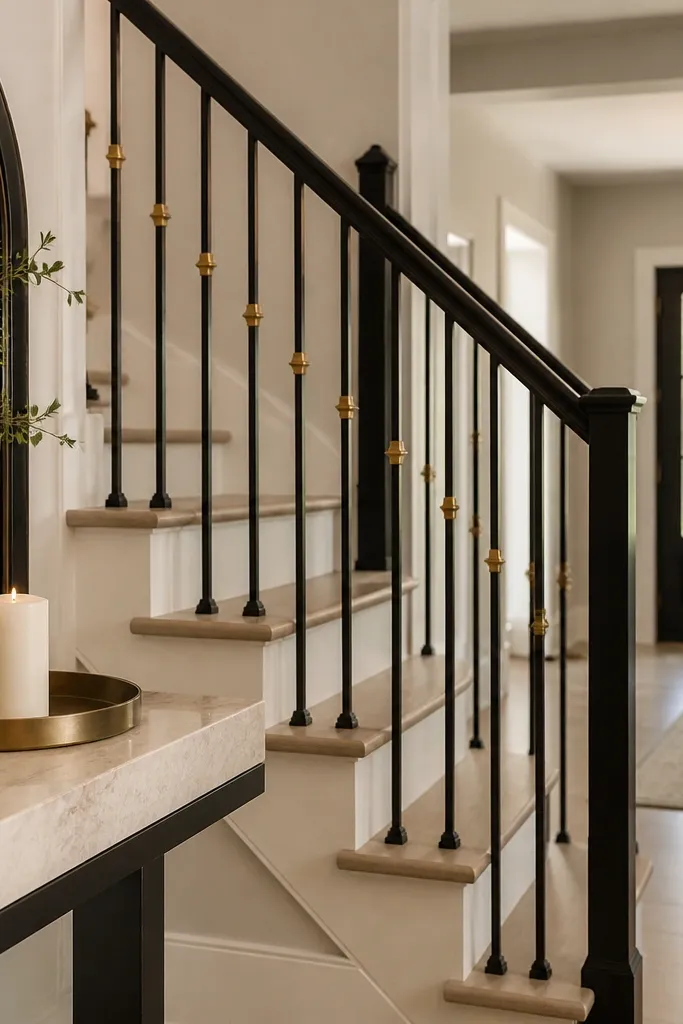
This is the “clean and expensive” combo when you want a crisp aesthetic. Matte black on the stair railing and door hardware gives you structure, while brass accents add warmth without going too colorful. Pair it with a light stone console top, like white marble or a light travertine look, because it brightens the entry and makes black details pop. Keep the runner neutral — cream or light beige — so the stone and brass carry the visual interest. This works well when your foyer has a modern layout and you want the stairs to look like a design feature, not a functional necessity.
If you’re starting from scratch, choose a runner in light neutral tones with a low-contrast weave. Place a light stone console at the base of the stairs with a width that fits the wall — aim for 48-60 inches. Use brass-framed decor like a slim picture frame or a pair of brass candlesticks. Keep the console surface clear: one tray plus one lamp or candle holder. Cost is moderate to high if you’re replacing surfaces, but you can control budget by using a stone-look laminate top.
Pro tipMatch brass accents across at least two items — for example mirror frame and lamp base. Two points of repetition look intentional in photos.
Watch outDon’t mix brass with warm copper and gold variations in the same foyer. The finishes will fight.
12. Corner entry screen with hidden shoe space and a stair-side wreath moment
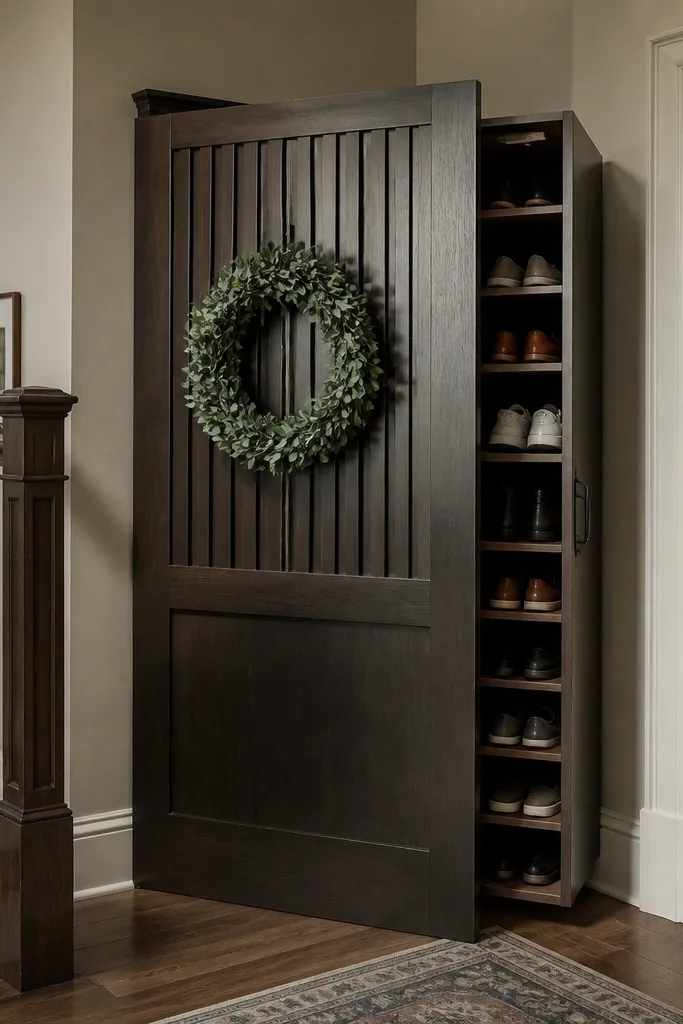
A corner screen is a clever move in stair foyers where the entry mess has nowhere to go. It hides shoes and bags while still looking decorative, and the screen creates a soft frame around the stairs. Add a wreath or garland moment on the stair side wall or landing — keep it simple in one material like eucalyptus or dried neutral stems. Choose a screen finish that matches the rest of your metals, like matte black or natural wood. This idea is especially good for narrow foyers where a full console table would block the walkway.
Measure the corner depth and choose a screen that leaves at least 30 inches of clear path to the stairs. Place the screen so it faces the entry door at a slight angle, then position a small shoe basket inside or behind it. Add the wreath at a consistent height around 60-65 inches from the floor, centered near the stair wall. Keep the runner minimal and centered so the corner screen doesn’t make the entry feel crowded. Cost is low if you find a ready-made screen; your main spend is decor and baskets.
Use one large wreath instead of three small ones. One scale reads cleaner next to stairs.
Don’t put the screen too close to the first step. It will block movement and make the landing feel tight.