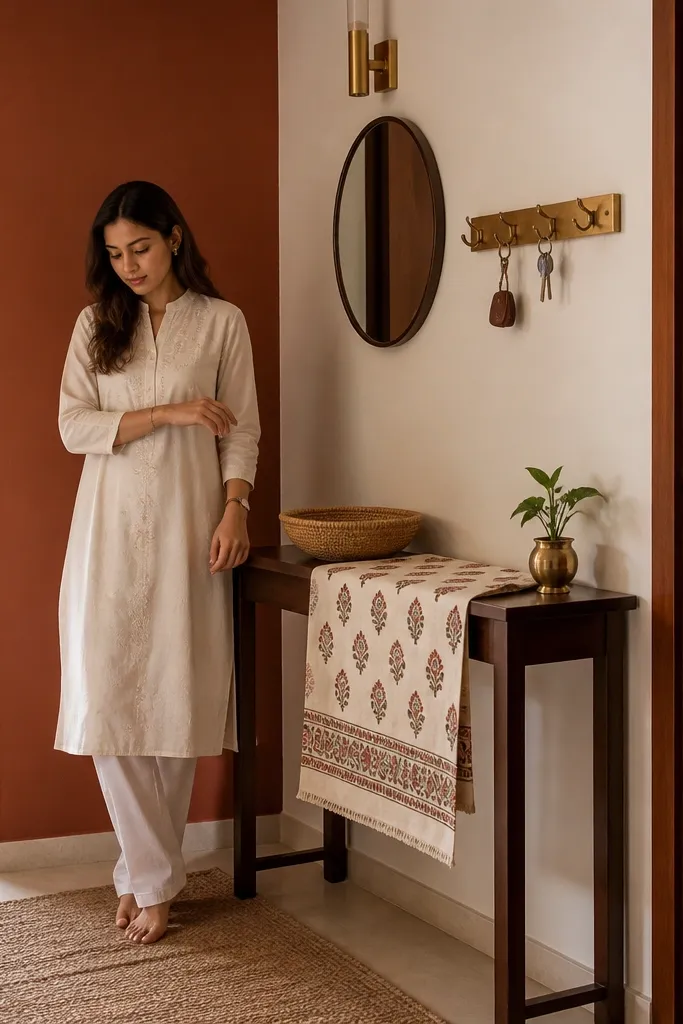
1. Walnut console with a linen runner and an arched mirror
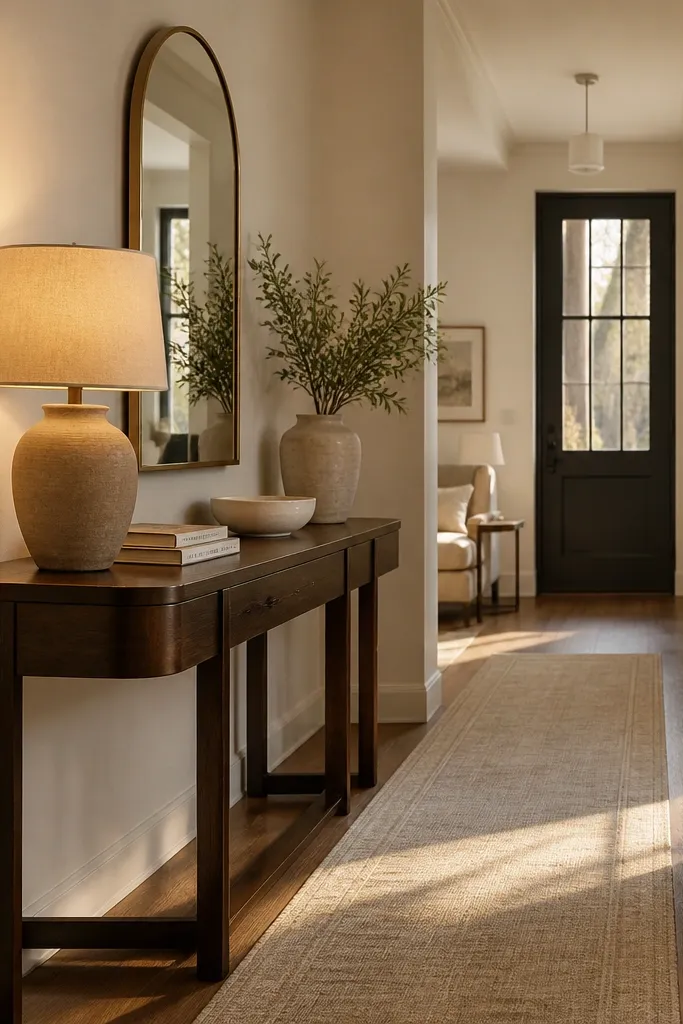
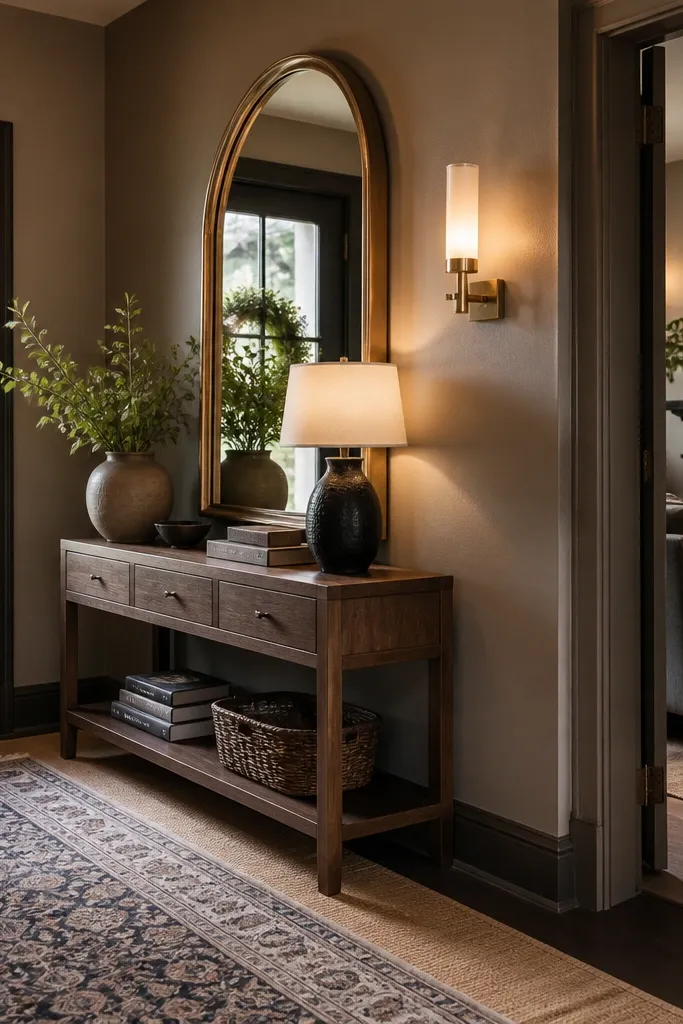
This look works because walnut brings warmth without turning the entry orange, and a linen runner adds that soft, lived-in texture people notice instantly. The arched mirror breaks up straight hallway lines and makes the foyer feel kinder when you walk in. Keep the mirror frame in a warm metal like aged brass or antique bronze so it reads cozy, not shiny. Use matte ceramics on top — a small off-white vase and a tray — so the light doesn’t glare. It’s especially good for a narrow foyer where you need both visual width and a clear focal point.
Start by choosing a console that’s about 10-12 inches deep for tight foyers, or 14-16 inches deep for wider entries. Center an arched mirror on the wall above the console with the mirror’s bottom edge roughly 6-8 inches above the console top. Lay a linen runner so it extends 6-10 inches past the console on both sides. Finish styling in this order: flat tray on the left, one lamp or vase on the right, then one small object in the middle to balance the composition.
Pick a runner with visible weave texture; smooth “fake linen” looks flat in hallway lighting.
Avoid a mirror that’s too rectangular and too small — it won’t soften the entry or bounce enough light.
2. Painted entry wall in warm greige with a gallery rail
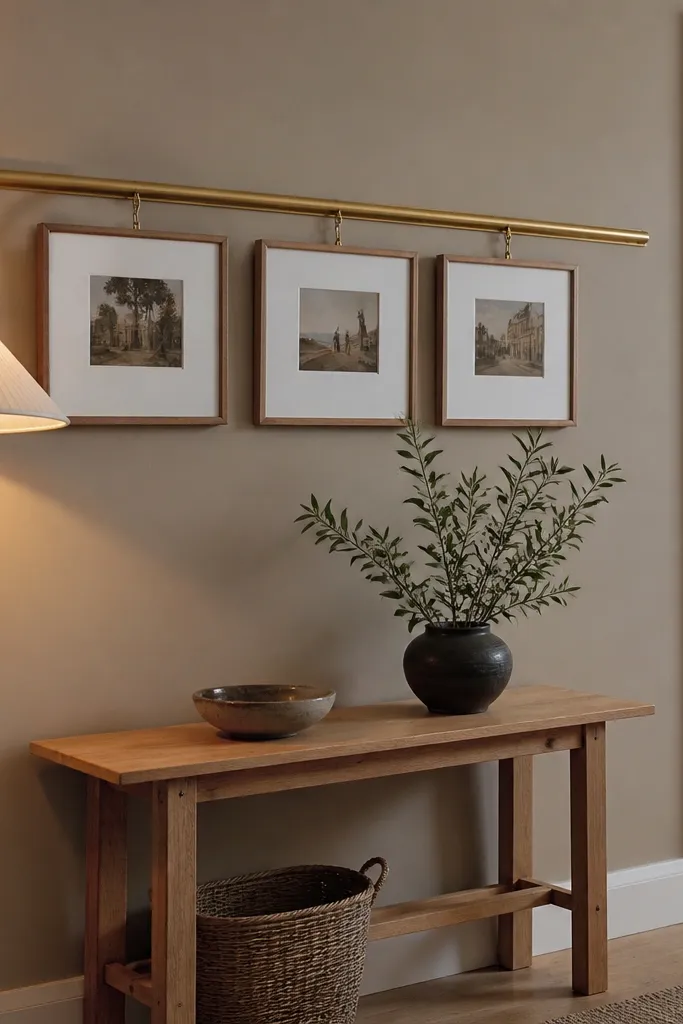
Paint one wall in a warm greige and keep trims bright white for crisp edges. Install a picture rail or a small grid rail at about 58-60 inches from the floor for the center line, then hang 3-5 pieces with equal spacing. Use frames that are all the same finish and similar mat thickness (about 1-2 inches) so the gallery looks planned. Place no more than one small console item if you have a narrow surface; let the wall carry the warmth.
If your foyer is mostly blank wall and you want warm without buying new furniture, paint is the fastest win. A warm greige (think taupe-leaning, not gray-leaning) makes whites and wood look softer, and it photographs well under warm bulbs. A gallery rail gives you a clean, intentional look even with small art — you can keep frames aligned and swap prints later. Choose frames in blackened bronze or matte black for contrast, then use art with creamy backgrounds and muted earth colors. This is best for foyers where there’s no room for a console or the wall is the only focal area.
Watch outAvoid mixing frame finishes and mat colors on the same wall — it reads messy fast in small foyers.
Pro tipUse art with off-white mats instead of pure white — it keeps the whole entry from feeling stark.
3. Boucle bench with a braided basket and a brass wall sconce
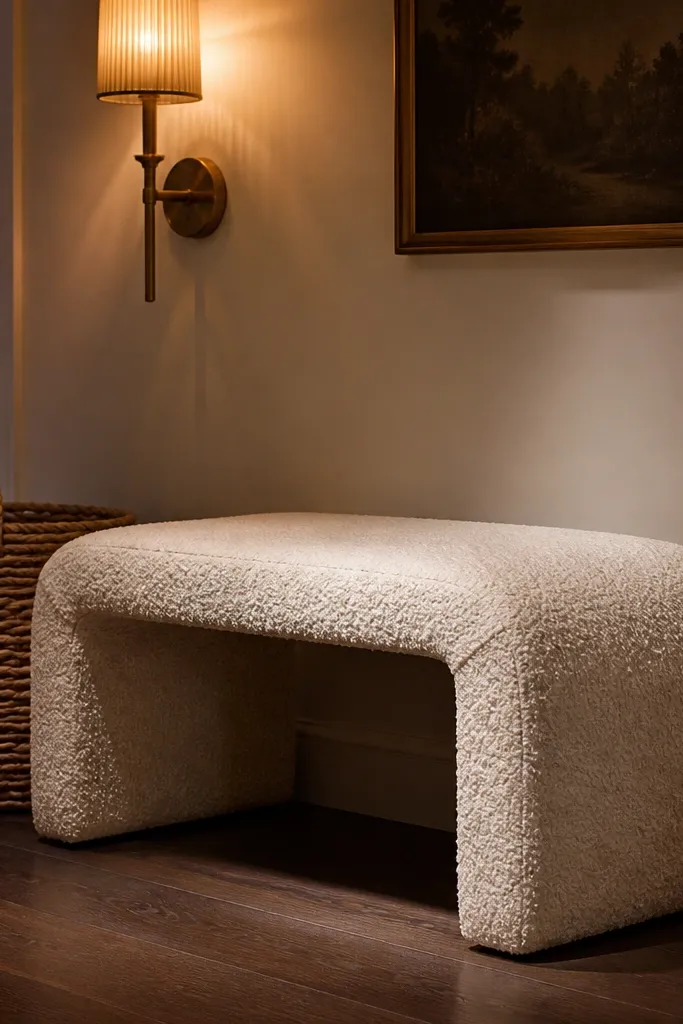
Choose a bench that’s 16-20 inches deep and set it so there’s at least 30 inches of walking clearance from the front door swing. Position the bench against the wall beneath the sconce, keeping the sconce center about 66-70 inches from the floor. Use a braided basket inside a nearby lower space or next to the bench for gloves and throws. Style the bench with one tray or one small lamp, not multiple items, then add a single neutral cushion in a similar tone to the boucle.
Boucle turns a foyer from “decorated” into “inviting” because it catches light in a soft, fuzzy way. Pair it with a braided basket so you get warmth from both fabric and natural texture. A brass wall sconce matters because it adds upward light and creates a glow that looks good in photos and in real life. Choose a bench in cream or oatmeal, then keep the basket in natural seagrass or rattan. This setup is perfect when you want seating for shoes or quick drop-offs, and your entry has a wall that can take a sconce.
Watch outDon’t add a bench plus a long rug plus a big console in a tiny foyer — it gets crowded and the warmth disappears.
Pro tipUse a warm bulb in the sconce and aim for a shade that diffuses light; harsh clear bulbs make boucle look dull.
4. Black console, white runner, and a sunburst mirror for contrast
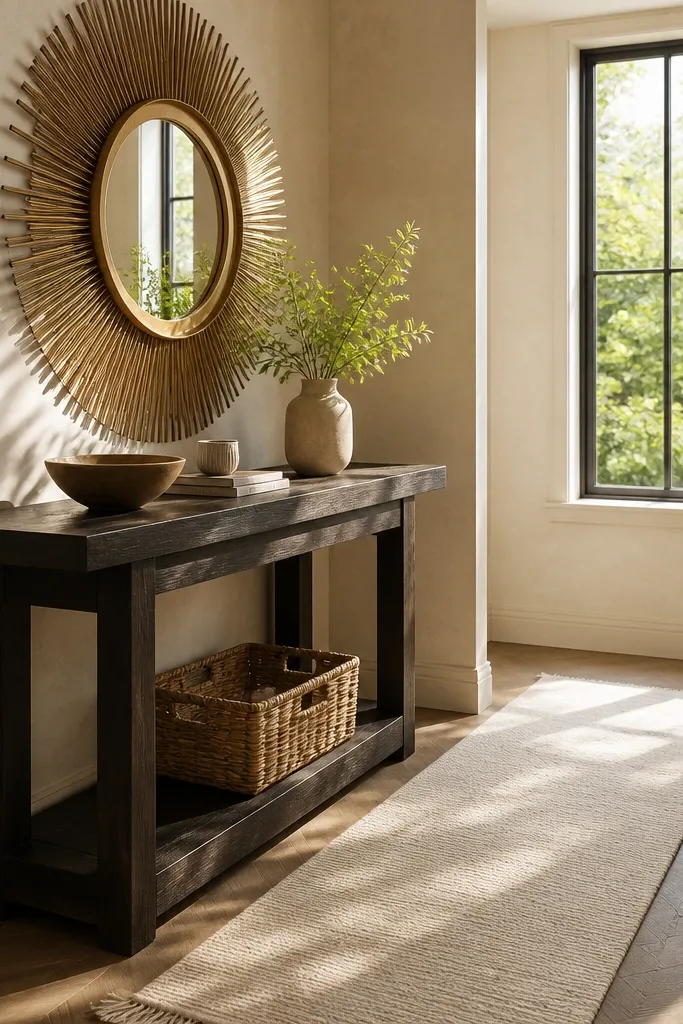
Pick a black console with a matte finish and a top width that fits your wall — aim for 70-80% of the wall width under your mirror. Hang the sunburst mirror so its widest point is centered and roughly 6-8 inches above the console top. Lay a white runner that stops short of door thresholds by about 2-4 inches so it doesn’t bunch. Style with one tall candle or candlestick and one shallow tray; keep all objects the same temperature (warm whites and brass).
This one looks “designed” fast because it uses high-contrast shapes: a black console anchors the space, a white runner makes it bright, and a sunburst mirror adds a hit of pattern. The key is to keep the rest calm so the mirror’s drama looks intentional, not busy. Use a runner that has texture — flat weave or subtle fringe — so it doesn’t look like a sterile strip. For warmth, choose warm white accents (cream, ivory) and warm metals like brass in the mirror frame or lamp base. It’s a great choice for entryways with light floors and a lot of empty white wall.
Watch outAvoid pure snow-white everywhere — go cream/ivory on at least one textile so it reads warm.
Pro tipIf the floor is glossy, matte black looks best; if the floor is matte, add a brass tray to catch light.
5. Tall curtain panels in a linen look with a console under them
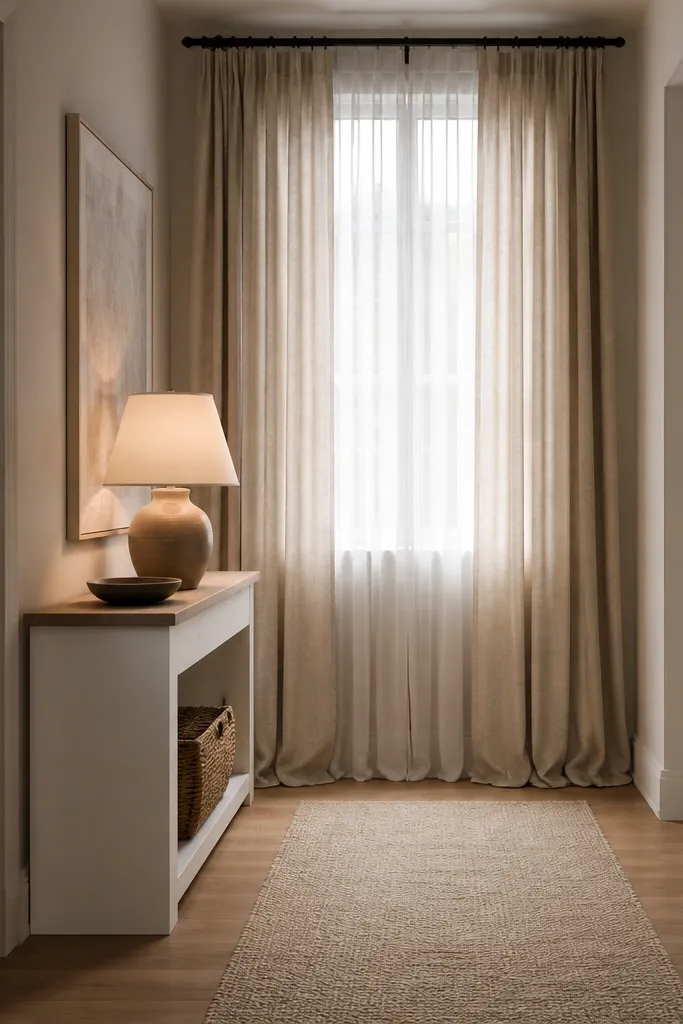
Curtains make a foyer feel like a room instead of a hallway. Linen-look panels add softness and hide visual clutter, especially if your entry has a window or a glass door that shows the outside. The goal is warmth through drape: long panels that skim the floor and create gentle folds. Pair them with a low console in light wood or painted white so the drape looks intentional, not heavy. This works best when your foyer is open to living space and you want that “arrival” feeling the moment you step inside.
Install the curtain rod 4-6 inches above the window trim and extend it 6-10 inches wider than the window on each side. Hang panels so they reach to the floor or just kiss the floor with a 1/2 inch break. Place a console under the window with the top about 30-34 inches from the floor depending on your door clearance. Style the console with a tall lamp and a shallow tray; keep the lamp shade in a warm white fabric to match the curtains.
Use curtain panels with a visible weave or slub; smooth sheers look cold under entry lighting.
Avoid short curtains that end at the window sill — they make the foyer feel tighter and less warm.
6. Molded plaster-look wall panels with a slim entry console
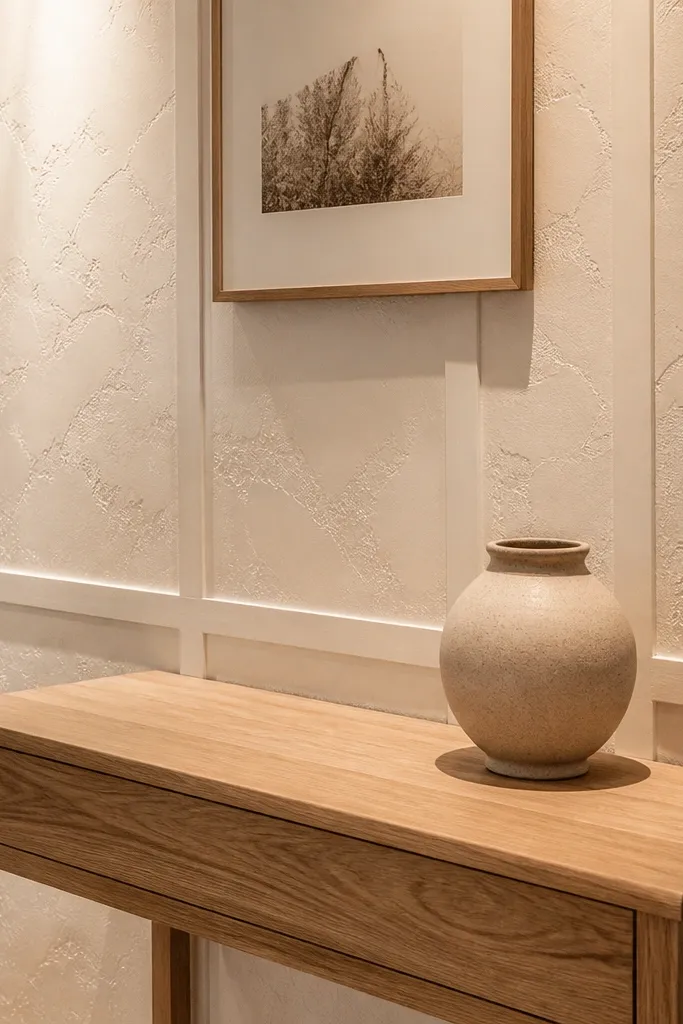
Textured wall panels create warmth even when you keep everything else simple. A plaster-look finish reads like soft, hand-finished material, and it hides minor wall imperfections that flat paint shows. Add a slim console so the texture stays the hero. Keep the console top in light oak or a warm white finish, then add one or two pieces in matte ceramics. This is a strong choice for foyers that feel flat or echo-y, where you want a cozy, quiet visual without adding lots of items.
Apply or install plaster-look panels on one wall section — aim for a height that covers most of the wall up to about 7 feet for a typical foyer. If you’re painting over panels later, do one coat of primer followed by two coats in a warm off-white. Mount a slim console 6-8 inches below your main focal point (often a mirror), leaving enough clearance for door swing. Add a single large frame or mirror to balance the texture, then style only a tray and one vase so the wall doesn’t compete.
Light from above works better with texture; if your foyer light is only overhead, add a small sconce or lamp.
Avoid covering textured walls with too many small framed pieces — it makes the wall look busy.
7. Patterned runner with solid wood benches and woven pendant light
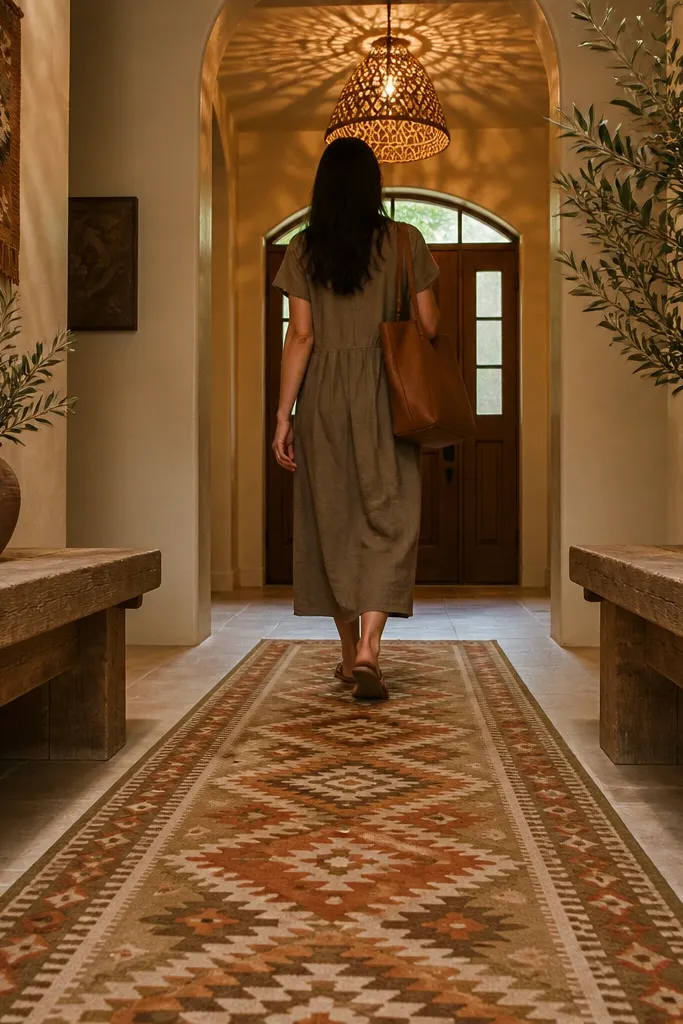
A patterned runner adds warmth because it brings movement and color without taking up square footage. Choose a pattern with earth tones — terracotta, olive, and cream — so it reads warm under yellow bulbs. Pair it with a solid wood bench to keep the look grounded and sturdy. A woven pendant adds texture overhead and softens harsh light from ceiling fixtures. This combo is ideal when your entry is open and you want the whole area to feel like an intentional vignette, not a hallway corner.
Pick a runner width that leaves about 8-12 inches of floor visible on each side in a medium foyer. Center the runner so it aligns with the front door opening and extends 12-18 inches beyond the bench. Add a solid wood bench with a seat height around 18 inches and place it so you have 30 inches of clearance from the door swing. Hang a woven pendant 30-36 inches above the floor, then style one small basket or ceramic bowl near the bench.
Match one runner color to a small item (like a terracotta vase) so the pattern looks collected, not random.
Avoid high-contrast black-and-white patterns if your goal is warm — they read colder in entry lighting.
8. Oversized round mirror and a monochrome console styling
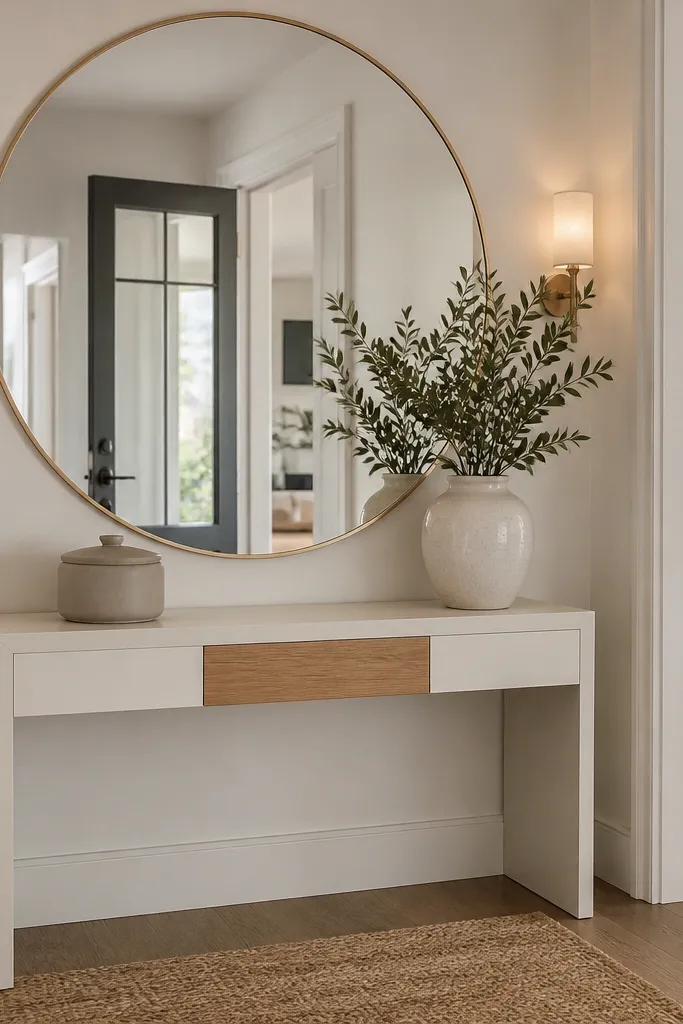
Choose a mirror diameter that’s about 24-32 inches for a small console wall, or 32-40 inches for a wider wall. Hang it centered so the mirror’s bottom edge lands around 6-8 inches above the console top. Select a console in light wood or matte white, then limit decor to three items: a tray, one vase, and one lamp. If you add a runner, keep it in a solid cream with a subtle texture and avoid bold patterns that fight the mirror.
An oversized round mirror makes entryways feel bigger instantly because it enlarges reflected light and softens corners. Keep the styling monochrome — warm whites, taupes, and one wood tone — so the mirror stays the focal point. Round shapes look friendlier than rectangles, especially in tight foyers where you can’t control every angle. Add one soft textile like a small runner or a folded throw on the console chair if you have one. This is best for small front foyers that need visual expansion and a clean, calm look.
Watch outAvoid clutter on the console — a big mirror needs space around it to look intentional.
Pro tipUse a mirror with a thin frame; thick frames can make small foyers feel cramped.
9. Entry wall wainscoting in warm white with brass hooks and art
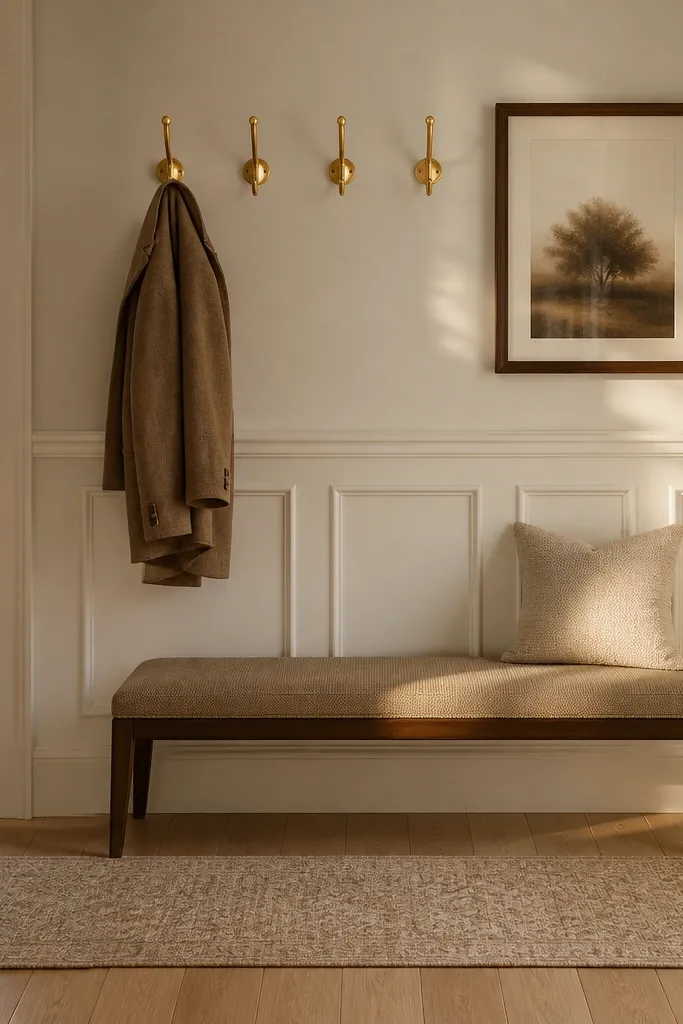
Install wainscoting around the main entry wall at a comfortable height, usually 32-36 inches from the floor for the top rail. Paint with warm white and keep baseboards crisp in the same shade for a clean look. Mount brass hooks in a vertical line so they look organized; leave about 2.5-3 inches between hooks. Add a small mirror or framed art above the hooks, then style the console with one basket and one lamp so the wall details stay visible.
Wainscoting gives structure and warmth because it adds classic lines without needing a lot of color. Paint it warm white (not cool blue-white), then add brass hooks for bags and keys — the hardware adds a cozy glow. Hang a small piece of art above the hook area or place a narrow mirror nearby. This style looks especially good in foyers with traditional molding or in homes where you want structure but still want the space to feel soft. It’s also practical: hooks keep the entry looking tidy so your decor stays photogenic.
Watch outAvoid mismatched hook styles — consistent hardware makes the whole entry read finished.
Pro tipUse brass hooks in a satin finish; polished brass can look too bright in hallway lighting.
10. Terracotta floor tiles look with a sage-green wall and a light runner
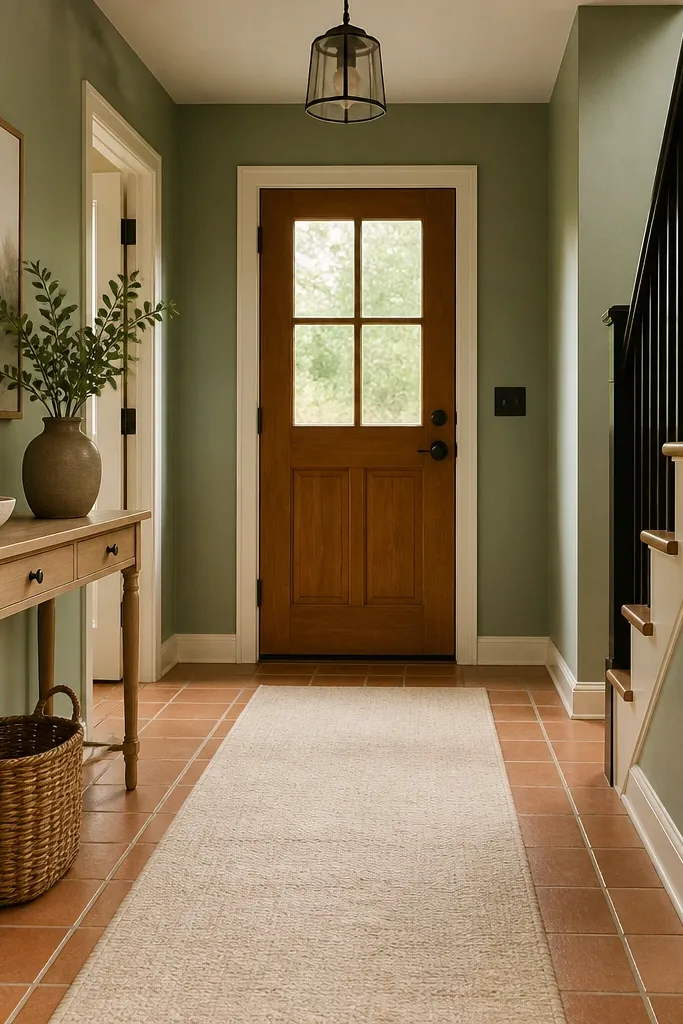
Paint the entry wall sage green in a muted tone, then choose a runner in cream with a flat weave texture. Place a small console or narrow table and keep it light wood so it doesn’t compete with the wall color. Style with one terracotta vase and one woven basket; keep metals in aged brass or bronze. Mount a mirror with a warm frame and set it so the bottom edge sits 6-8 inches above the console top.
Warm doesn’t have to mean beige. Sage-green walls paired with terracotta-toned accents create a calm, welcoming entry that still feels alive. If your foyer has terracotta or warm-toned floors, this pairing makes the whole space look cohesive. Add a light runner in cream or oatmeal to keep the walkway bright and to soften the contrast. For decor, use clay-colored ceramics, a woven basket, and a warm wood tray. This works well when your entry has a window or natural light that brings out green tones.
Watch outAvoid pairing sage with stark pure white textiles; go cream to keep it warm.
Pro tipUse warm bulbs even if the wall is green — cool light can turn sage gray quickly.
11. Rattan console shelf with a layered tray and warm ceramic set

Rattan and woven textures read warm because they have visible airiness and soft shadows. A rattan console shelf is a great option when you want storage-lite styling that still feels cozy and intentional. Layer a tray system on top so the decor looks collected: one larger tray for structure, one smaller tray for height, then ceramics in warm neutrals. Choose a mirror with a woven or light wood frame to keep the materials consistent. This is best for foyers that are bright but feel “empty,” where you need texture without adding heavy furniture.
Pick a rattan console with a top width that fits your wall and a depth around 12-14 inches so it doesn’t block sightlines. Place it so the console top is about 30-34 inches from the floor depending on your mirror height. Set a large tray centered, then add a smaller tray slightly off-center to create depth. Style with two ceramic pieces in cream and sand tones plus one greenery stem; avoid adding more than one plant because it crowds the texture.
Wipe rattan with a dry microfiber cloth before styling — dust dulls the weave and makes it look less warm.
Avoid mixing rattan with lots of glossy black decor; the contrast can look harsh in entry lighting.
12. Tall cabinet entry with frosted glass doors and a soft runner
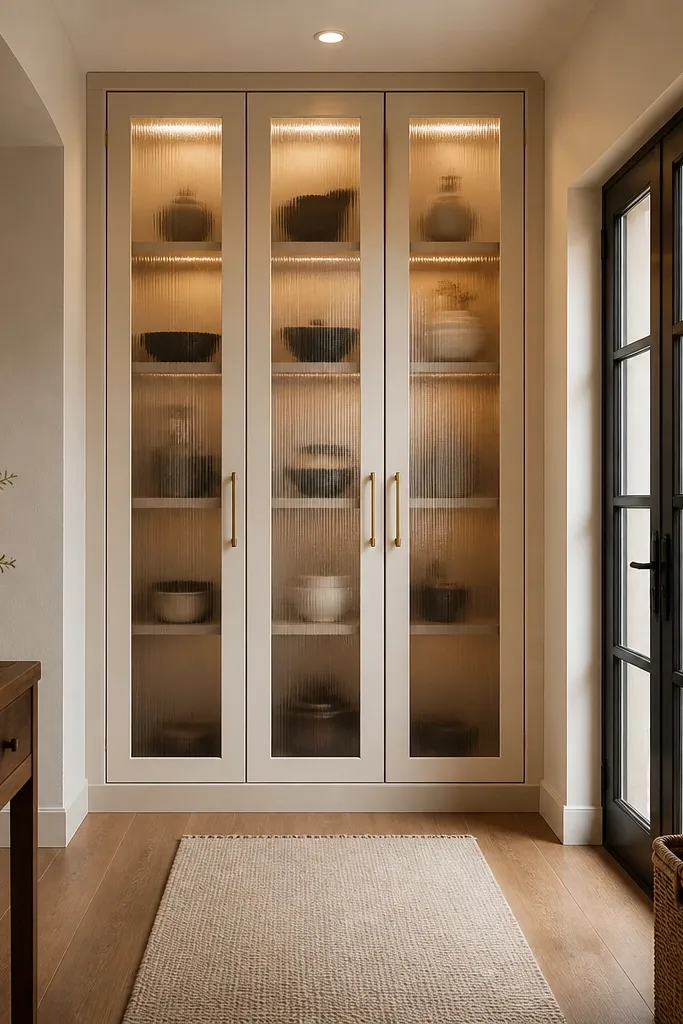
When a foyer is warm but messy, it never looks good in photos or in real life. A tall cabinet with frosted glass doors solves that by hiding everyday clutter while still letting light through. Pair it with a soft runner in a neutral tone so the floor area doesn’t look bare. Choose cabinet hardware in brushed brass or bronze so it looks warm instead of shiny. This setup is ideal for entryways where shoes, mail, and bags always end up in the open, and you want a calm, curated look.
Select a cabinet height that reaches close to your ceiling or at least 70-80 inches so it balances vertical space in a hallway. Position it on the wall opposite the door or next to the main walkway, leaving at least 36 inches for movement. Add a runner that matches the cabinet color temperature — cream or oat for warm looks. Style the cabinet top with one tall object (like a lamp or vase) and one low object (like a tray), then keep the rest inside the cabinet.
Use frosted glass if you want warmth but hate seeing clutter; clear glass turns the foyer into a storage display.
Avoid open shelving in the entry if you want warm and good-looking — visible items kill the cozy effect.