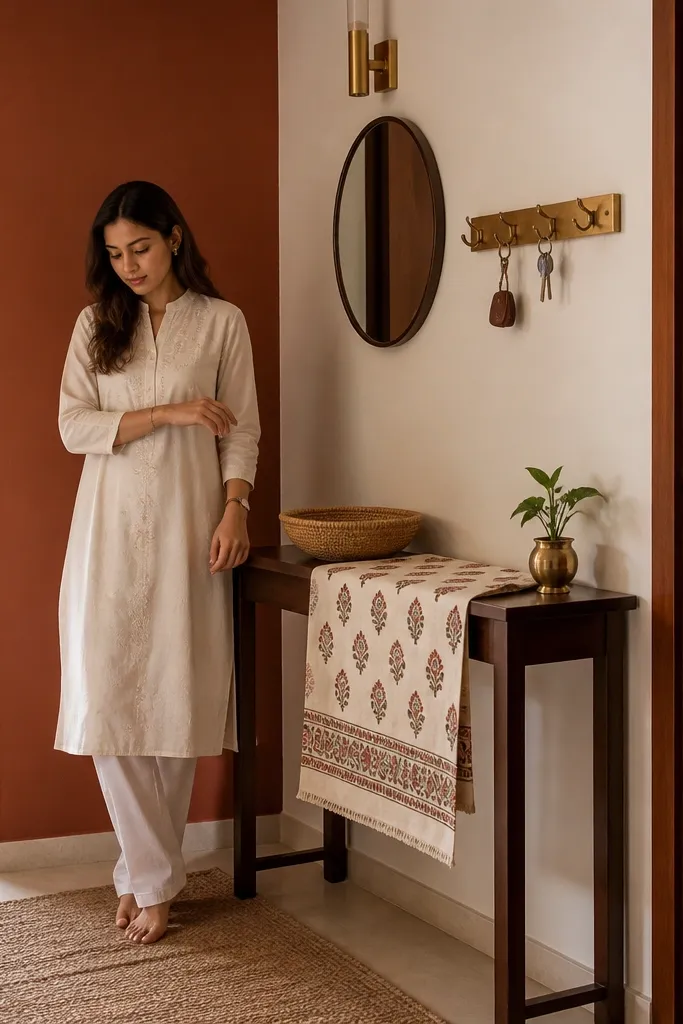
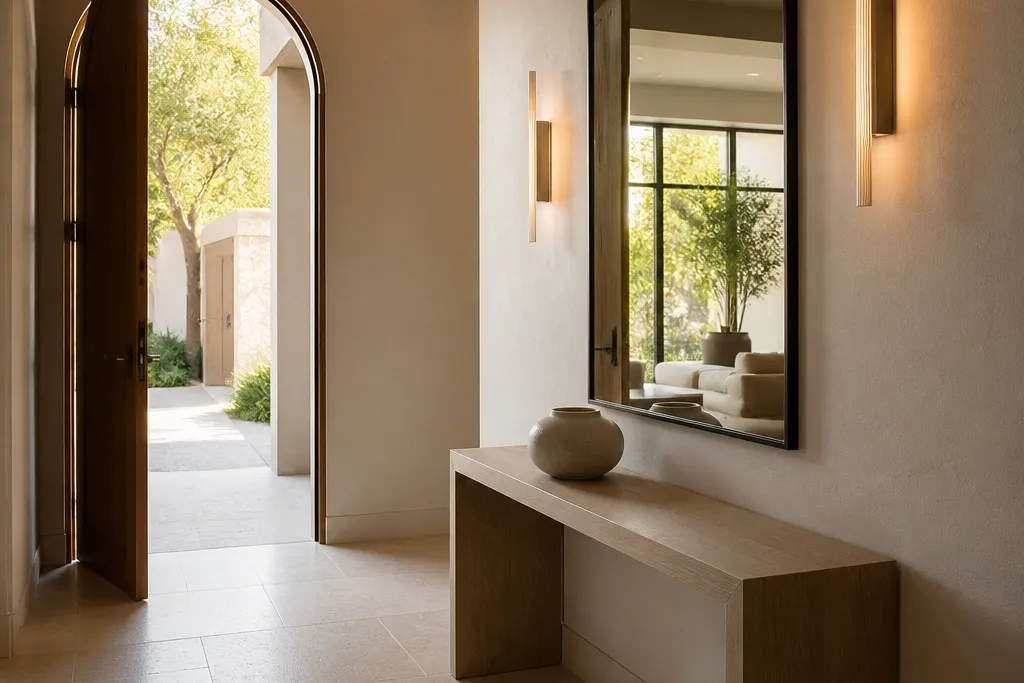
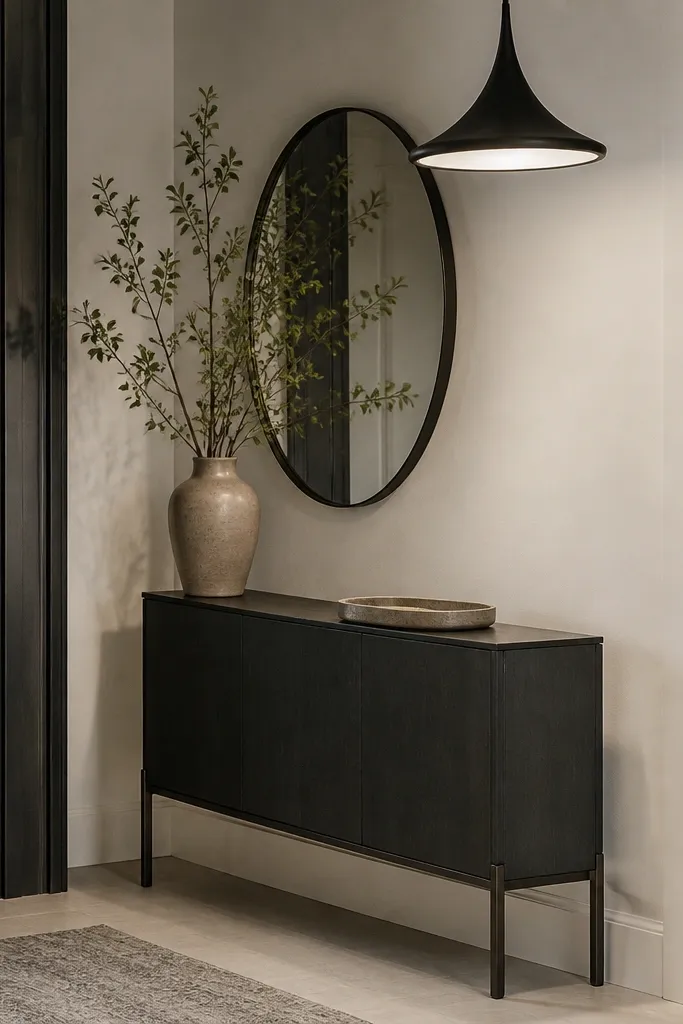
1. Floating walnut console with a black-framed mirror
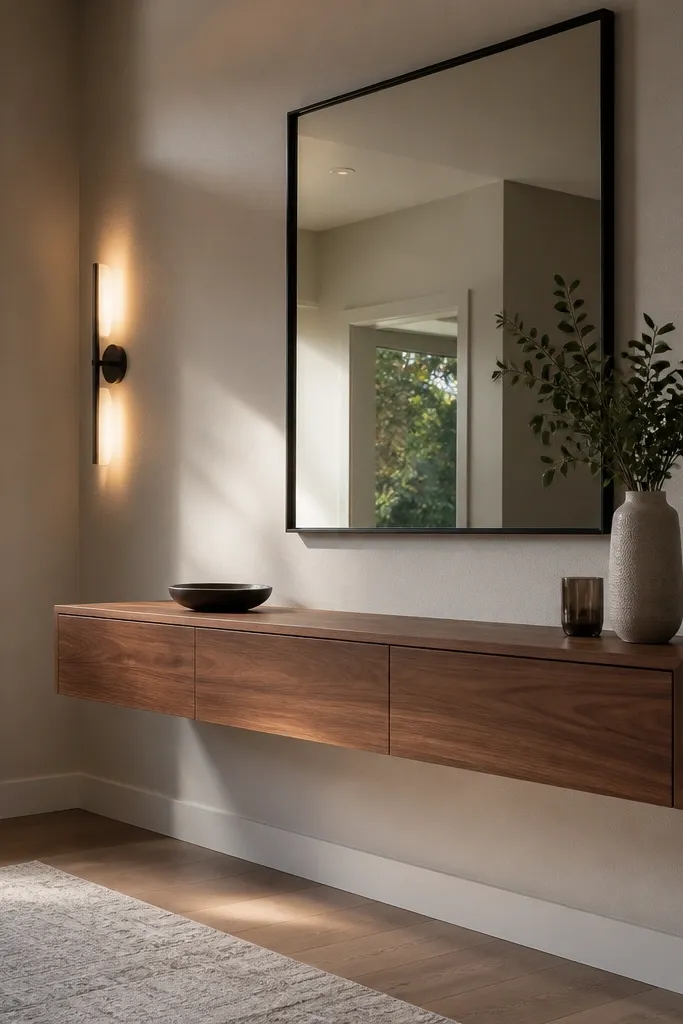
This setup looks clean because the console is visually light and the mirror frames the entry without adding extra furniture bulk. Walnut gives you warmth without turning the foyer into a cabin — especially if the top is matte and the finish is even. The black frame adds contrast and reads modern against light walls, so you get that high-end modern foyer vibe without colorful decor. Keep everything on the console minimal: one tray, one small vase, and a slim catchall for keys. This works best in narrow entries where a full dresser would eat the space.
Pro tipPick mirror glass that’s not tinted green; clear or lightly warm glass makes the walnut look more expensive.
Measure the wall first. A good starting point is 8-12 inches from the floor to the top of the console surface, then center the mirror over the console with about 2-4 inches of gap between mirror bottom and console. Install the console using a stud finder and proper wall anchors, then hang the mirror at eye level (about 57-60 inches from floor to mirror center). Finish by placing a single shallow tray (stone or matte black metal) so small items don’t scatter visually.
Watch outAvoid a shiny walnut or glossy mirror frame — they reflect harsh spots and kill the clean look.
2. Oversized round mirror with a slim stone console
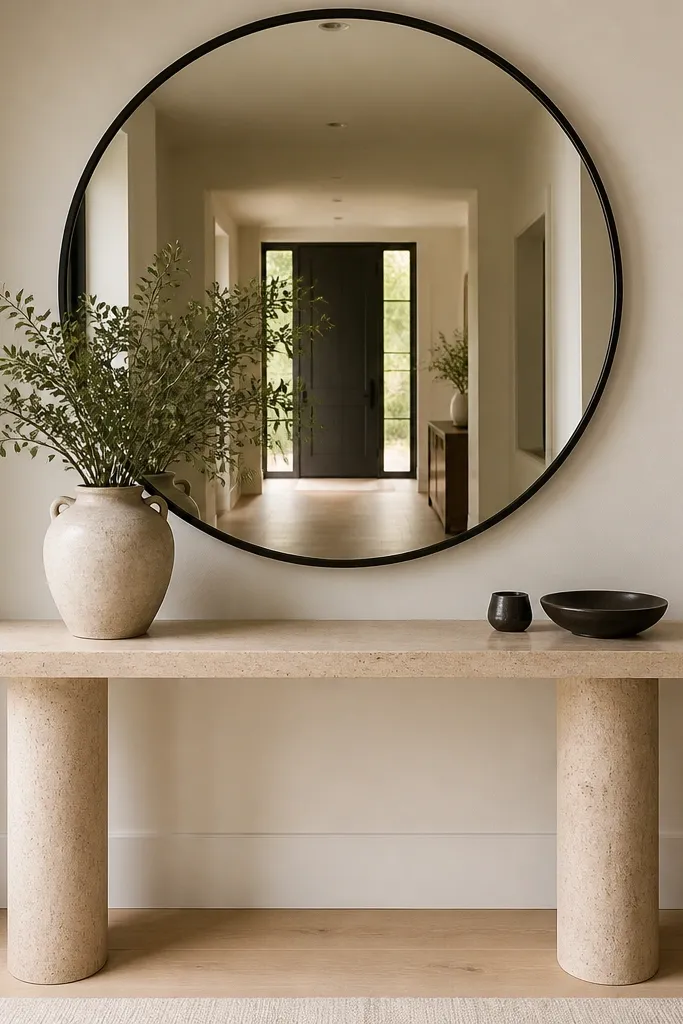
A large round mirror softens modern geometry and makes the entry feel more welcoming while staying sophisticated. Pair it with a slim stone console in honed finish (light travertine, limestone, or a similar matte look) to keep the space calm and tactile. The honed surface hides tiny scuffs and doesn’t glare, which matters in foyers where you touch things constantly. This combo is great for clean, minimalist homes where you want softness without adding clutter. It also helps small entries because the mirror expands the perceived depth.
Choose a mirror diameter that dominates the wall area: aim for at least 30-36 inches wide for most standard foyers. Place the console so it sits 3-6 inches below the mirror bottom, then keep the console depth around 12-14 inches so the walkway stays open. Use a honed stone console or a stone-look slab with a matte seal. Set one object only on the console — a low ceramic vessel or a short stack of books with a single neutral tray.
Use a thin LED wall wash or a ceiling fixture with a shade that doesn’t cast a harsh line across the mirror.
Skip decorative clutter on a stone console; stone reads “expensive” when it’s clean and empty.
3. Gallery wall in one color with a minimalist console
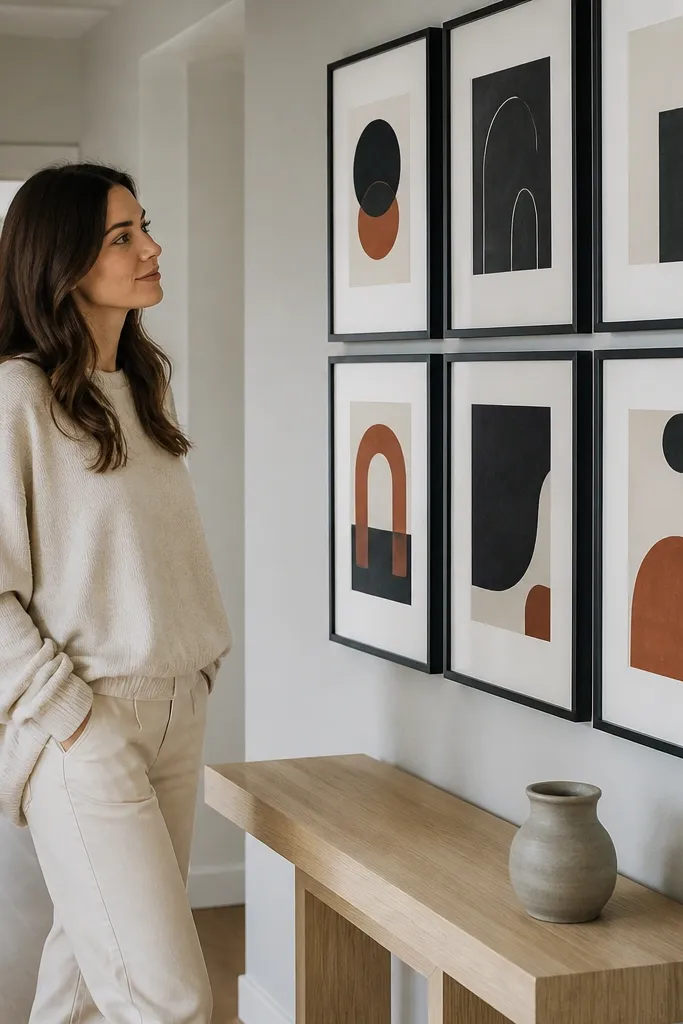
A one-color gallery wall keeps the foyer looking intentional instead of busy. The trick is to use frames in the same finish (all black or all brushed nickel) and art with a consistent palette — think off-white, charcoal, and one muted accent like clay. Pair it with a minimalist console in white oak or painted matte white so the wall art is the only visual pattern. This works when your entry has enough wall width for multiple frames and you want personality without losing the clean, sophisticated feel. It’s also a smart move if you don’t want a big mirror to reflect every doorway mess.
Pro tipIf you want it to look high-end, buy museum-matte frames or use matte paper prints; glossy prints look cheap under entry lighting.
Lay out frames on the floor first and keep spacing consistent: use 1.5-2 inches between frames for a modern grid look. Mount the gallery so the center of the arrangement lands around 60 inches from the floor. Choose a console with a plain top and closed storage below, about 14-16 inches deep. Place only a slim vase or a single sculptural object on top so the gallery doesn’t compete.
Watch outDon’t mix frame finishes (black + brass + silver) — it reads like leftover pieces, not a plan.
4. Black steel and glass foyer table with a linen runner
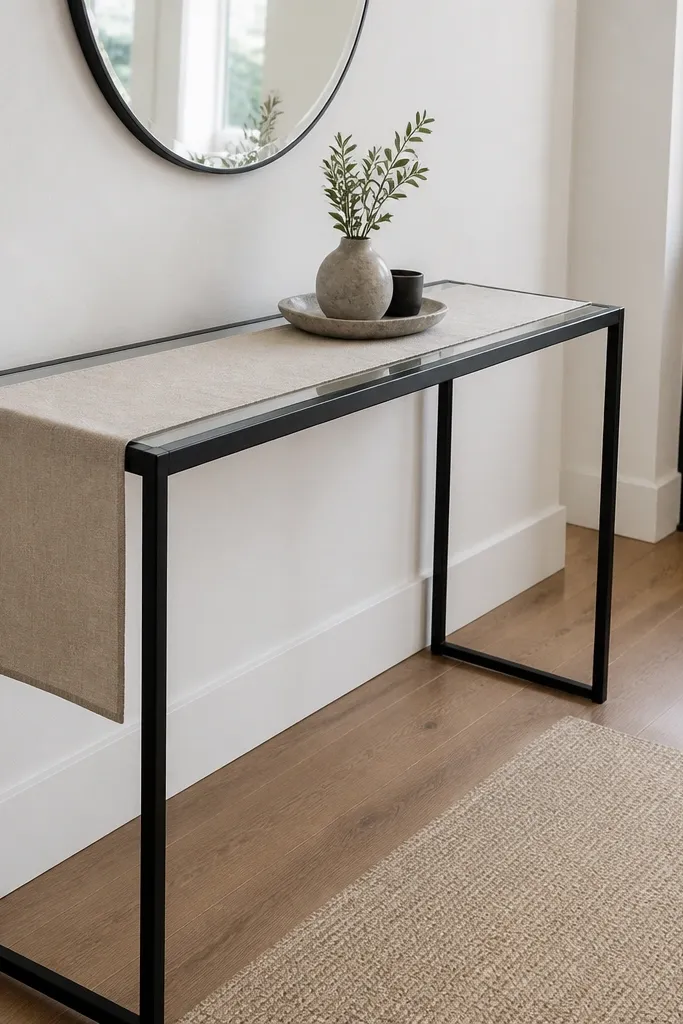
This look is clean and modern because the materials are crisp and the visual weight stays low. A black steel and glass console gives you straight lines and a polished feel, while a light linen runner adds softness underfoot so it doesn’t look cold. Keep the runner color in a neutral family — oatmeal, stone, or light greige — so it doesn’t fight the glass. The glass top also makes the console feel lighter in tight foyers. This is a strong choice for apartments or homes with darker entry floors where you still want brightness.
Pro tipUse felt pads under glass-top decor so nothing slides and leaves streaks.
Pick a console width that matches your entry width, usually 40-54 inches, and keep the depth around 12-15 inches. Place the runner with a small border gap on both sides so it doesn’t bunch at the door — aim for 3-5 inches of side clearance. Use a runner with a flat weave or low pile so it stays neat. On the console, add a small tray and one candle or diffuser — glass and steel look best with controlled styling.
Watch outAvoid thick, high-pile rugs here; they make the console look flimsy and the entry feels cluttered.
5. Built-in entry bench with hidden cubbies and a stone top
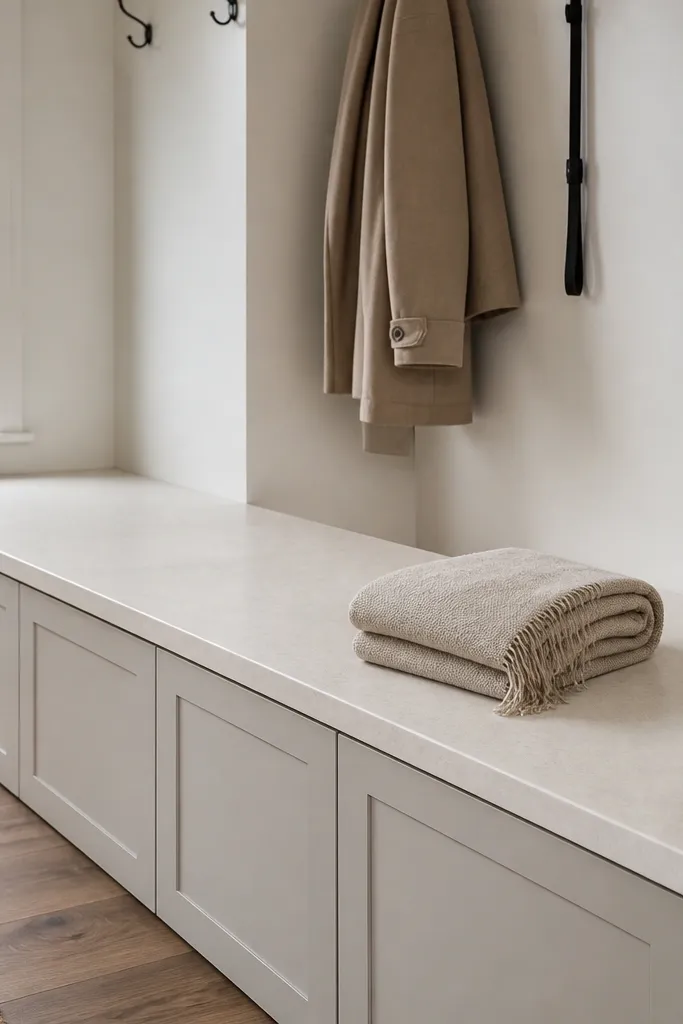
Hidden cubbies are the cleanest way to keep the foyer looking sophisticated because shoes, bags, and daily mess disappear instantly. A built-in bench with a stone or quartz top feels high-end and holds up to daily wear. Choose a light stone tone (warm white or pale gray) to brighten the entry, especially if the space is narrow. The bench also solves the real problem of entries: you need a place to sit while putting on shoes. This is ideal for families, people with lots of bags, or anyone who wants a “hotel lobby” tidy look without constant reorganizing.
Pro tipPut a small labeled organizer inside one cubby for keys and daily accessories so the bench stays styled, not chaotic.
Plan the bench depth around 16-18 inches for comfort and a clean line. Keep the cubbies 10-12 inches wide each so shoes and small items fit without forcing. If you’re doing a DIY-friendly approach, use pre-made bench base units and top them with a thin quartz slab or a stone-look solid surface. Add a cushion in a durable fabric (performance linen or tightly woven cotton) and keep it monochrome.
Watch outSkip open shelves in a high-traffic entry; open storage looks messy fast.
6. Tall cabinet with fluted doors and a single statement vase
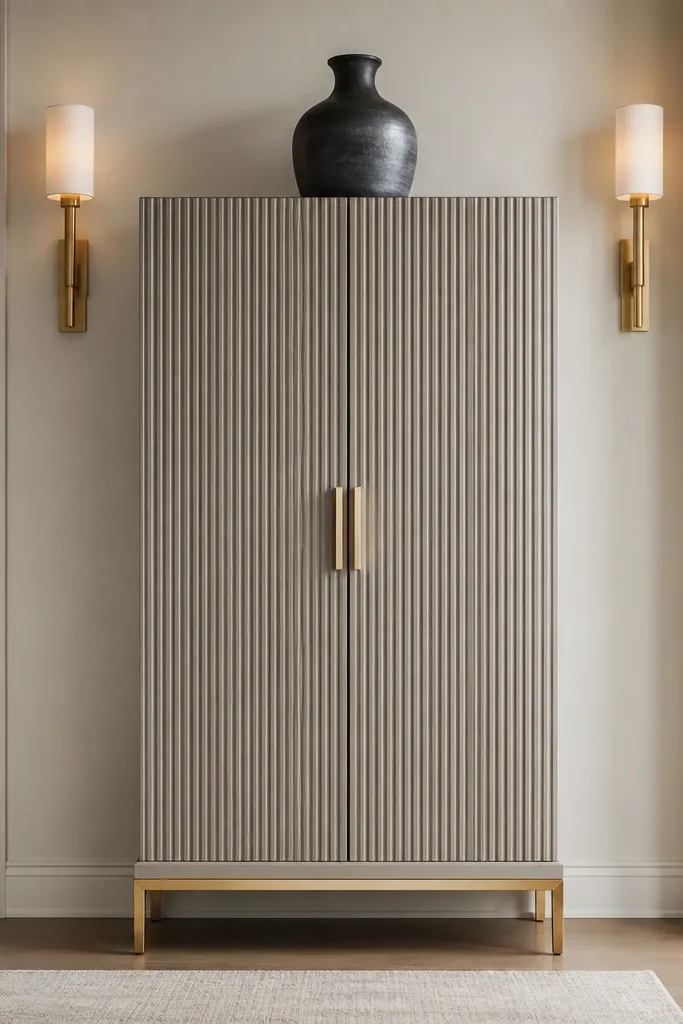
Fluted doors add modern texture without turning the foyer into a craft project. A tall cabinet makes the entry feel finished because it gives vertical storage and hides the mess behind doors. Keep the cabinet color neutral — matte white, greige, or deep charcoal — and match the hardware to your light fixtures. The look stays clean because you’re not spreading decor across surfaces; you’re letting one top moment do the work. This is a great choice when the foyer has a blank corner that needs both function and style.
Choose cabinet height so it reaches close to the ceiling if possible, or at least 84-90 inches for a strong vertical line. Install it flush to the wall, then center the cabinet in the corner so it doesn’t look like an afterthought. Use a single statement vase on top — around 10-14 inches tall — and one small tray underneath it if you need a landing spot. Keep the rest of the top empty so the fluting stays the star.
Use a soft-close hinge cabinet if you can; the daily sound and feel matter more than you’d think in an entry.
Don’t add multiple toppers (candles, frames, boxes). Fluted cabinets look best with one intentional object.
7. Textured plaster wall niche with a slim console
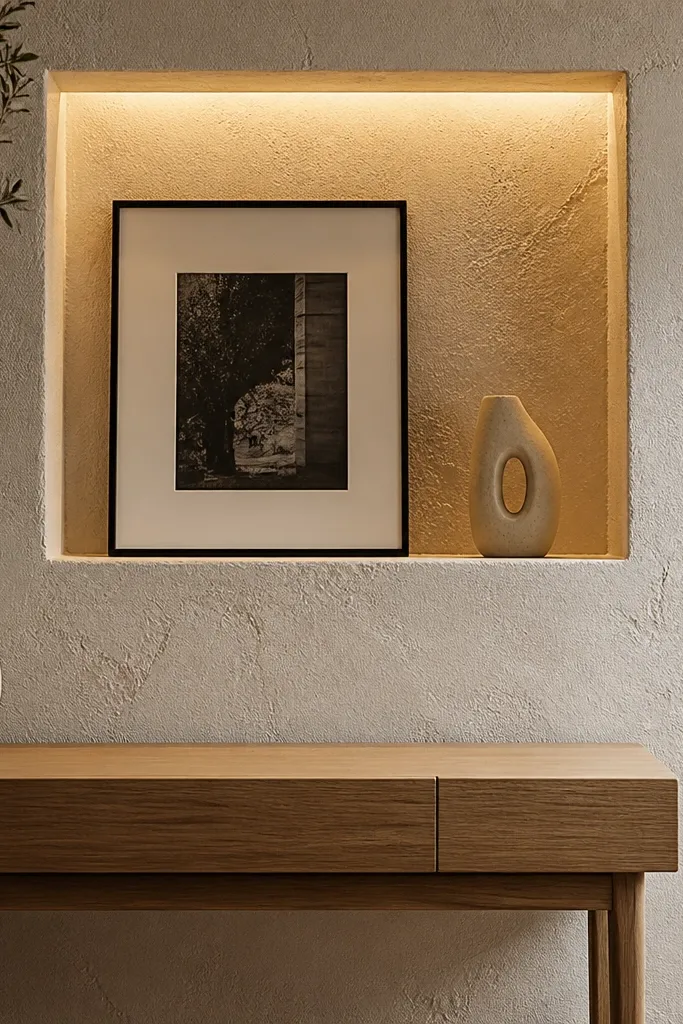
A wall niche gives you a built-in focal point that looks custom even when it’s simple. Textured plaster (microcement or lime plaster look) creates depth under entry lighting, so the foyer feels expensive. Pair the niche with a slim console below, and keep the decor tight: one framed photo or a minimal sculptural piece inside the niche. This setup is clean because it channels attention into one place instead of spreading it across too many items. It also works well for entryways that have an awkward stretch of blank wall where a mirror would feel random.
Pro tipUse a warm LED strip inside the niche if possible; it makes plaster look like real material, not paint.
Decide the niche size first: a common modern proportion is about 18-24 inches wide and 24-30 inches tall. Place it at about 60-66 inches from the floor to the niche center, then mount the console 10-14 inches below the niche. Use matte plaster or a plaster-look panel for low glare. Style the niche with a single object — a tall ceramic, a minimal sculpture, or a small framed print — and keep the console top empty or nearly empty.
Watch outAvoid glossy niche finishes; they throw highlights that make the foyer feel less refined.
8. Monochrome console styling with black trays and white ceramics
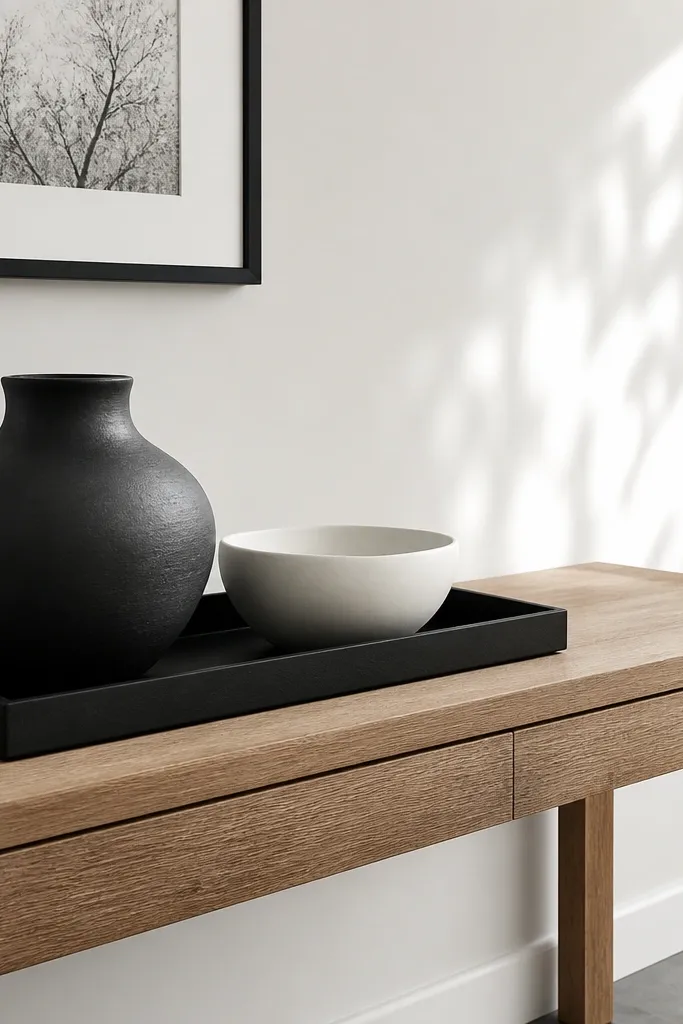
This is the quickest path to “clean sophisticated” because the styling system is controlled. Use one black tray (matte ceramic, slate, or black metal) and keep every small object inside that boundary. Choose white ceramics with slight variation — a matte ceramic vessel and a smooth white ceramic bowl — so it looks layered, not cluttered. The console itself should be simple: painted wood, white oak, or a plain stone slab. This approach works in any foyer size because it doesn’t rely on big changes like built-ins.
Pro tipMatch the tray finish to your door hardware; the visual link makes the whole entry look planned.
Start with a console that has enough flat space but no extra shelves, usually 36-60 inches wide and 12-16 inches deep. Add one black tray sized to hold your daily items: aim for 12-18 inches wide. Put keys in a small dish inside the tray and keep mail off the console by using a wall-mounted mail slot or a basket under the table. Finish with one centerpiece object that stays the same most days.
Watch outSkip mixed materials on the console (wood, chrome, and glass all together). It breaks the monochrome system.
9. Sculptural floor lamp + console table for a bright, airy entry
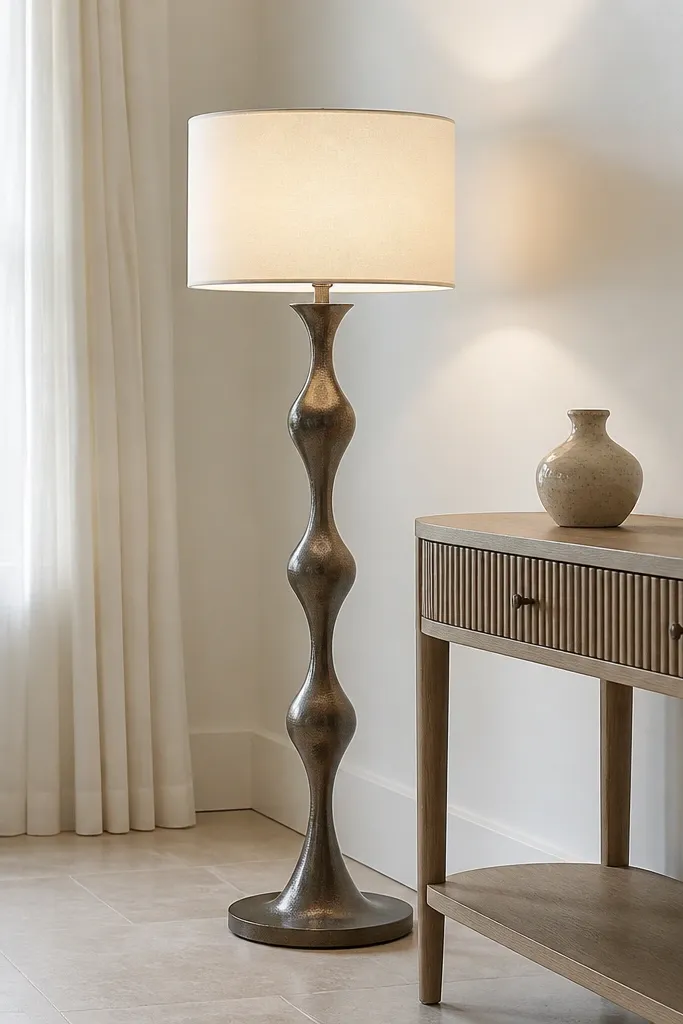
If your entry feels dim, this is the fix that looks designer without adding clutter. A sculptural floor lamp with a fabric shade gives you soft, even light that makes walls look cleaner and colors more accurate. Place it next to a light console in a warm neutral finish so the lamp becomes a vertical design element. The key is to choose a shade that diffuses — linen or a matte off-white — not a shiny drum that throws glare. This works especially well in foyers with no ceiling light or with a ceiling light that’s too harsh.
Pro tipUse a dimmer if you can. Entry lighting that can soften at night makes the space feel instantly more sophisticated.
Pick a lamp height around 58-70 inches so it clears the mirror or wall art line. Put the lamp 6-10 inches away from the console or wall so it doesn’t visually mash into the same plane. Choose a console depth of 12-16 inches and keep the top styling minimal. Use 2700K bulbs and test how the shade looks at night; if it creates bright rings, switch shade or bulb.
Watch outAvoid bright white LED bulbs (4000K). They make wood look gray and stone look washed out.
10. Long runner + narrow console with two matching wall sconces
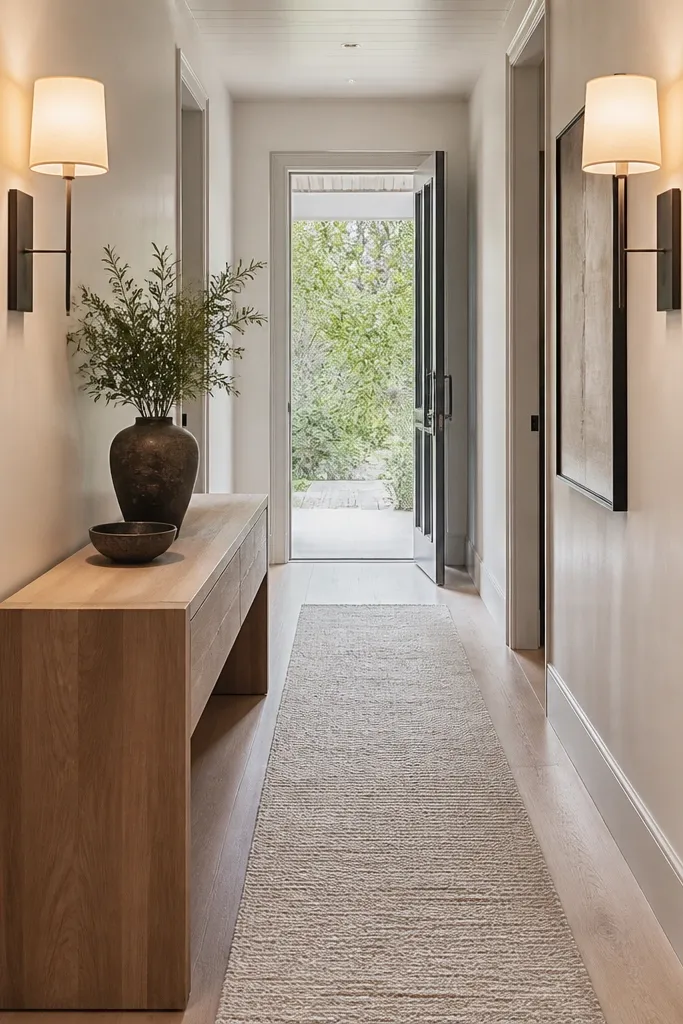
This look is clean because it’s symmetrical and repeatable. A narrow console keeps the walkway open, while a long runner visually stretches the entry and hides minor floor imperfections. Two matching wall sconces create a balanced glow so your entryway looks styled even without heavy decor. Choose sconces with shades that diffuse light down onto the wall and console area. This setup suits townhomes, hall entries, and foyers where you have a long sightline from the front door.
Pro tipIf you have a mirror, place it between the sconces so the light reflects and doubles the glow without extra items.
Choose a runner long enough to extend under at least the front edge of the door area, usually 6-10 inches past where your feet land. Place a narrow console centered on the runner line, with depth around 12-14 inches. Mount sconces at about 68-72 inches from the floor to the center of the fixture, keeping them evenly spaced on both sides of the mirror or art. Keep the sconces the same finish and shade style.
Watch outAvoid mismatched sconce heights; even a 1-2 inch difference shows immediately in a symmetrical foyer.
11. Black framed mirror with a pair of matching glass-front cabinets
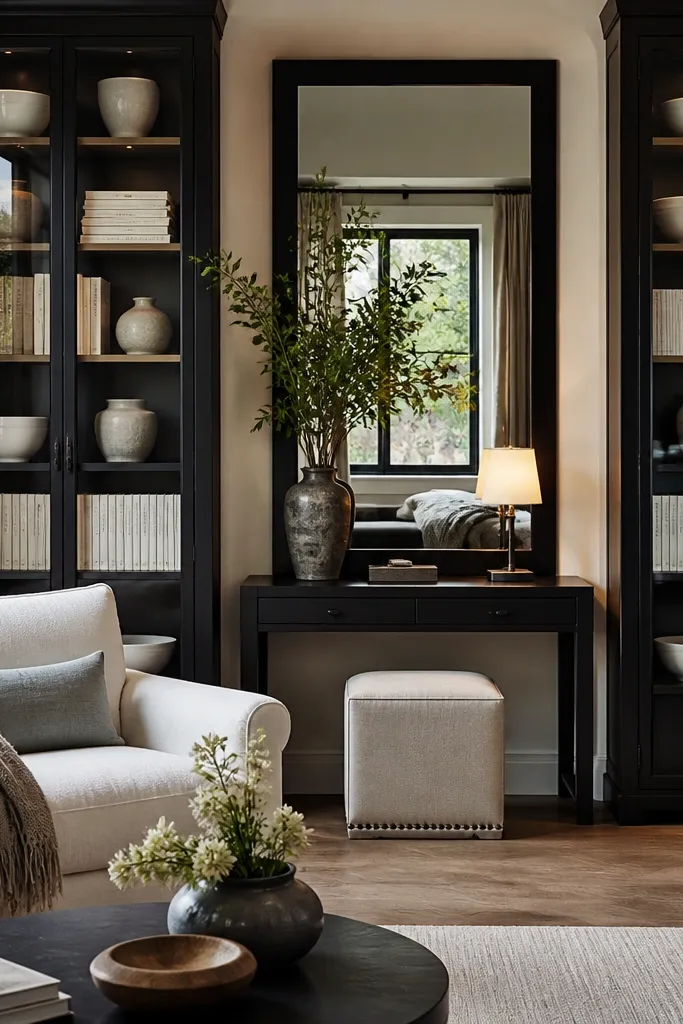
Glass-front cabinets can still look clean when they’re paired and styled with rules. Use two matching cabinets with black frames on either side of a black-framed mirror to create a modern, hotel-like rhythm. Inside, keep items uniform: white bowls, neutral ceramics, or neatly stacked books with consistent spine color. This makes the entry feel curated without looking cluttered because the glass creates structure. It’s best for foyers with enough width to install two cabinets; otherwise it gets crowded.
Pro tipUse LED puck lights inside the cabinets if you can; it makes glass look intentional instead of dim and messy.
Measure the wall width and plan for cabinet widths around 18-24 inches each, leaving a gap for the mirror. Install the cabinets level, then align the mirror center with the center line between the cabinets. Choose glass doors with clear glass, not textured, so the interior looks orderly. Style the interior with one category of items and use a tray or riser so everything sits at the same height.
Watch outSkip random decor inside glass cabinets. If you can’t explain the arrangement in one sentence, it won’t read clean.
12. White oak console with brass hardware and a single dark vase
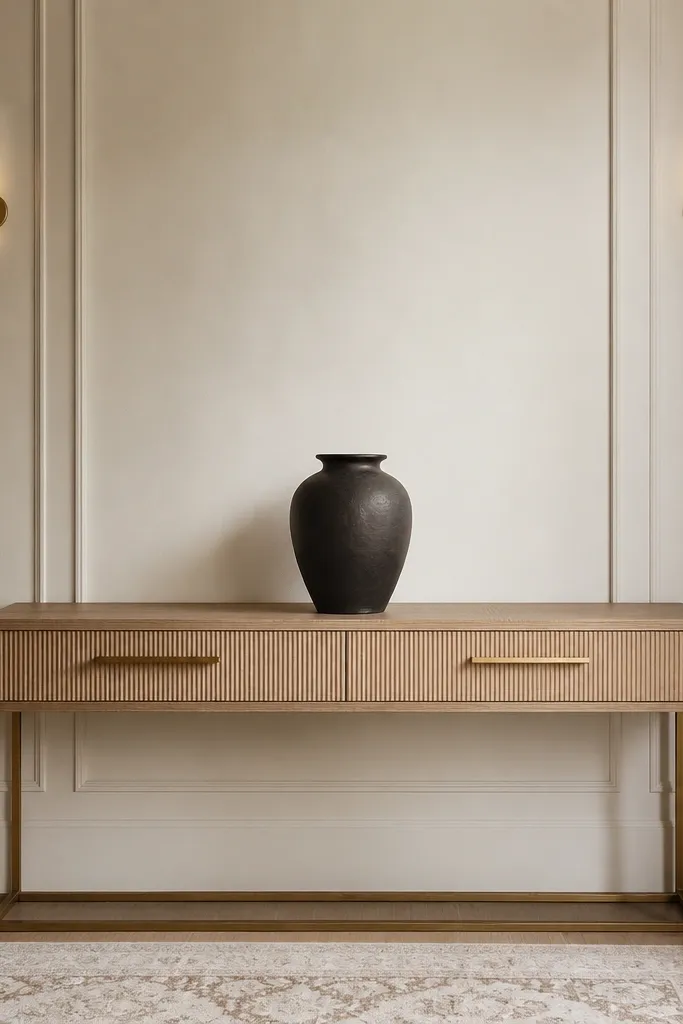
Warm woods plus brass reads high-end when the styling stays minimal. A white oak console with subtle brass hardware gives you modern warmth, while a single dark vase — matte black, deep olive, or espresso brown — adds contrast and makes the entry look intentional. This works especially well in foyers with cream or warm white walls because the wood won’t feel yellow or heavy. Keep the rest of the surface empty so you don’t fight the wood grain with too many patterns. It’s a strong choice for people who want sophisticated without going fully black.
Pro tipWipe brass hardware with a microfiber cloth regularly; tarnish makes it look “cheap” fast under entry lighting.
Choose a console width that fits your door swing and circulation, usually 40-56 inches, and keep depth around 12-15 inches. Install it so there’s about 30-36 inches of clearance from the floor to the top of your most-used landing point (for most people, that’s around waist height). Add one dark vase centered on the console, about 10-16 inches tall. Use a brass tray or brass-toned catchall for keys so the metal finishes match.
Watch outAvoid mixing brass with chrome light fixtures. Pick one metal direction and stick to it.
13. Tall mirror panel with a slim entry console and hidden shoe storage
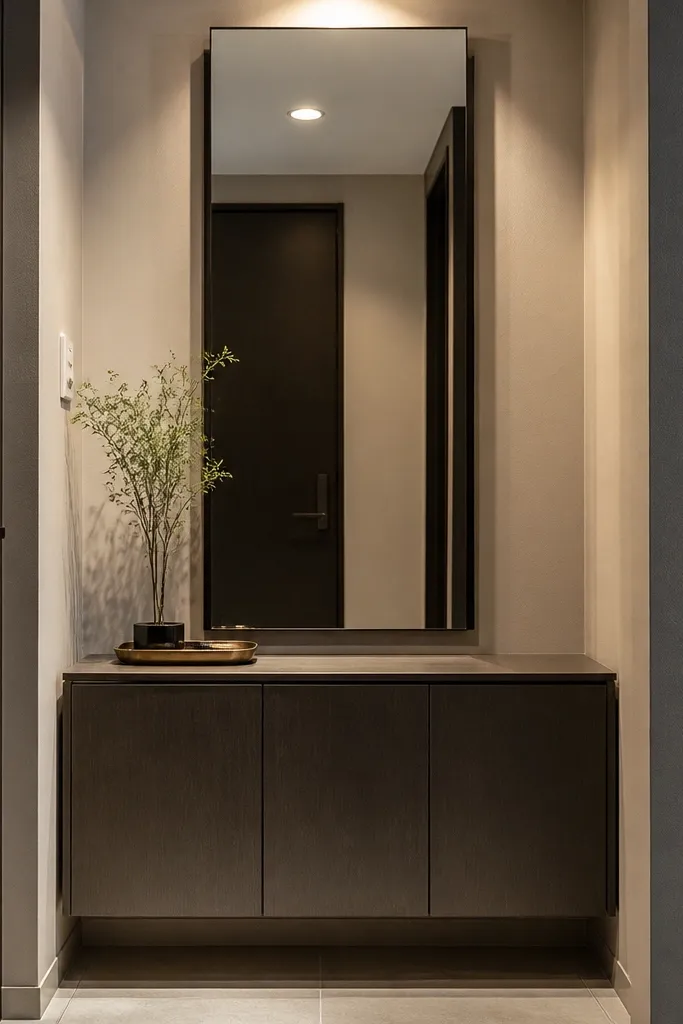
A tall mirror panel makes a foyer look larger and cleaner because it removes the “empty wall” problem and reflects light vertically. Pair it with a slim console for daily essentials and hidden shoe storage below so the lower half stays tidy. This is one of the best options for narrow entries because it doesn’t crowd the floor with extra furniture. The mirror also makes the space feel more finished when there’s little room for a bench or coat rack. Keep the console styling minimal and use one long tray for keys and mail.
Pro tipUse a narrow LED strip behind the mirror if you can; it makes the panel look high-end without adding decor.
Select a mirror height that reaches 70-90 inches so it reads like an architectural element. Mount it securely to the wall with proper anchors, then place the console 6-10 inches below the mirror bottom. Choose a console with closed storage or add a shoe cabinet under it; aim for doors that close flush and don’t show clutter. Put a long slim tray on top and keep daily items inside it so nothing spills onto the console surface.
Watch outSkip a mirror with heavy ornamentation. For clean, sophisticated, the frame should be simple and straight.
14. Matte black coat rack wall with a bench and a single framed print
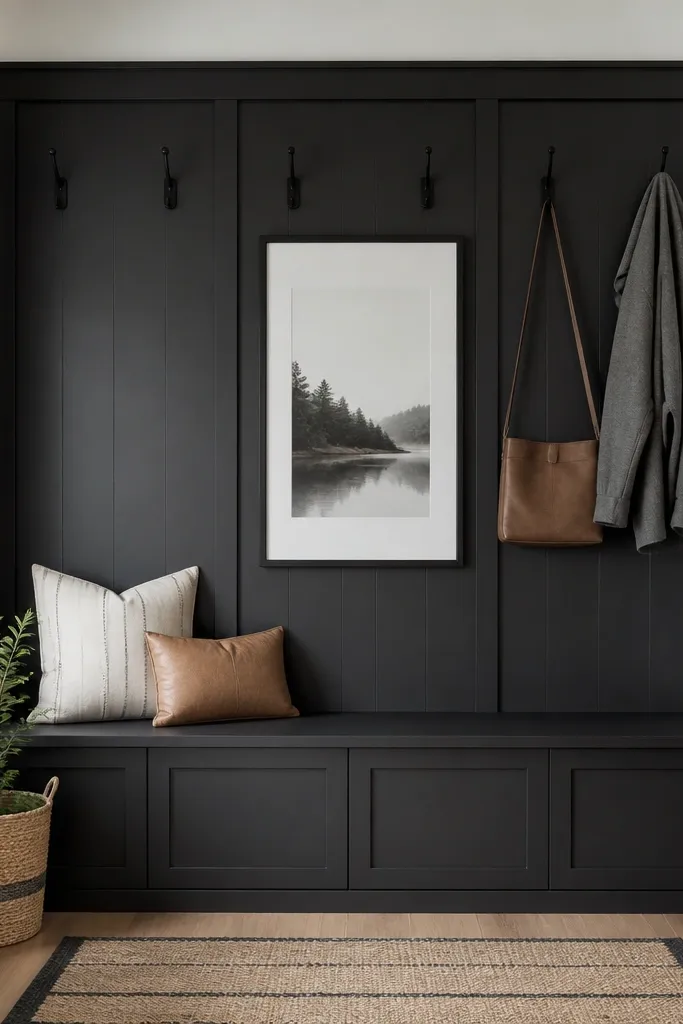
This is a modern foyer idea for people who want order fast. A matte black coat rack wall organizes coats and bags immediately, and the matte finish hides fingerprints. Add a bench with a simple seat and closed storage underneath, then top it off with one framed print instead of a crowded gallery. The whole look stays clean because you’re using vertical storage (hooks) and a single art focal point. It’s ideal for small foyers where every inch matters and you still need an entry system that doesn’t fall apart by day three.
Pro tipMatch the coat rack and bench metal accents to your door hardware so the entry reads consistent.
Choose a coat rack system that mounts into studs and includes enough hooks for your household plus guests. Install the coat rack so the top hooks are around 72-76 inches from the floor and the lower hooks are around 52-58 inches. Add a bench 14-18 inches deep with a closed drawer or cabinet base. Hang one framed print at eye level above the bench or on the adjacent wall, and keep the rest of the wall blank.
Watch outAvoid mixed hook styles (some modern, some decorative). It looks random against a clean wall.
15. Stone slab console with a pivot door entry screen
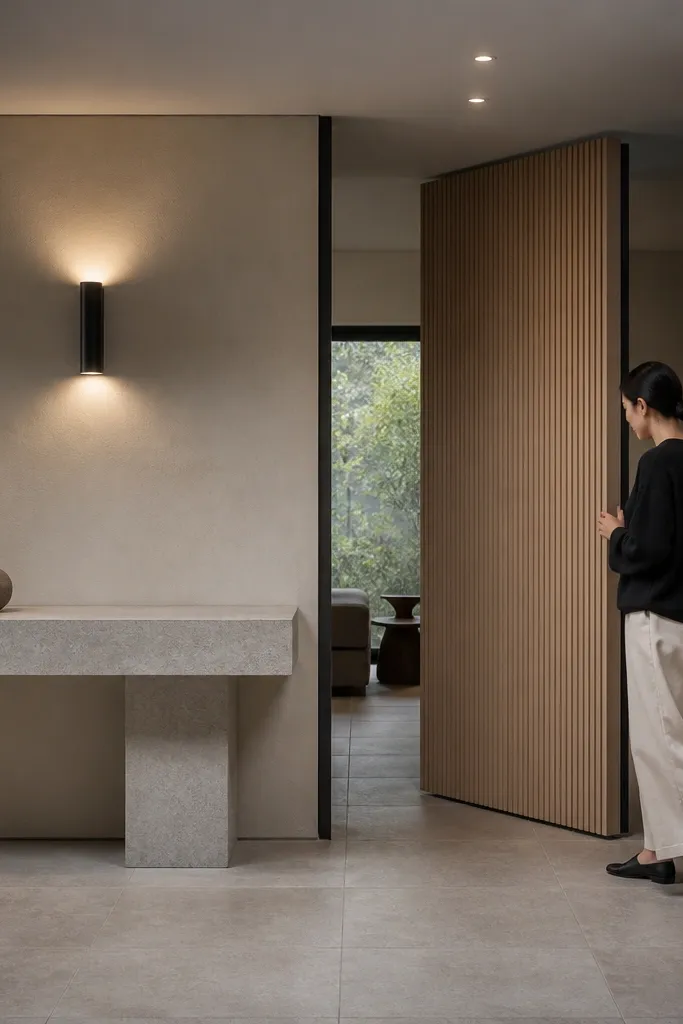
This setup makes a foyer feel clean because it hides the mess behind a simple architectural move: a pivot door screen in front of the entry zone. Pair it with a slim stone slab console in honed gray limestone so the surface reads calm instead of busy. Keep everything matte — matte black wall hardware, a satin brass or black lamp base, and one low tray in the same tone family as the stone. The pivot screen creates a clear “before you enter” boundary, so coats, bags, and mail don’t sit in full view. It looks high-end because the materials do the heavy lifting — honed stone absorbs light and feels expensive right away. This is a great choice for narrow entryways where a traditional console plus open sightlines makes the space look clutter-prone.
Pro tipMatch the screen finish to the console hardware finish (both matte black or both satin) so the entry reads intentional from the street. Use one shallow catchall tray no larger than 10x14 inches so the console stays “clean” in photos.
Step 1 — measure your sightline and pick the screen size: aim for the pivot screen to cover the area where people naturally drop items, usually a 24-36 inch wide section centered on your console. The screen should sit 2-4 inches behind the console front edge so it doesn’t feel crowded. Step 2 — install a honed stone slab console that’s 12-16 inches deep and about 48-72 inches long, mounted with a concealed steel bracket system or a floating-style ledger into studs. Step 3 — mount the pivot hardware at the top track height so the screen clears the floor by about 1/2 inch; use shims to keep the reveal even. Materials: honed limestone or quartzite slab, concealed console brackets, pivot hinge kit, matte black paint for any metal framing, and two anchors into studs. Effort is moderate: expect 1 weekend for framing and hardware alignment, plus the console install; cost depends on stone, but plan a meaningful spend for the slab and pivot hardware.
Watch outDon’t place the console flush against the screen — leave that 2-4 inch gap so the materials separate and the entry doesn’t feel cramped.