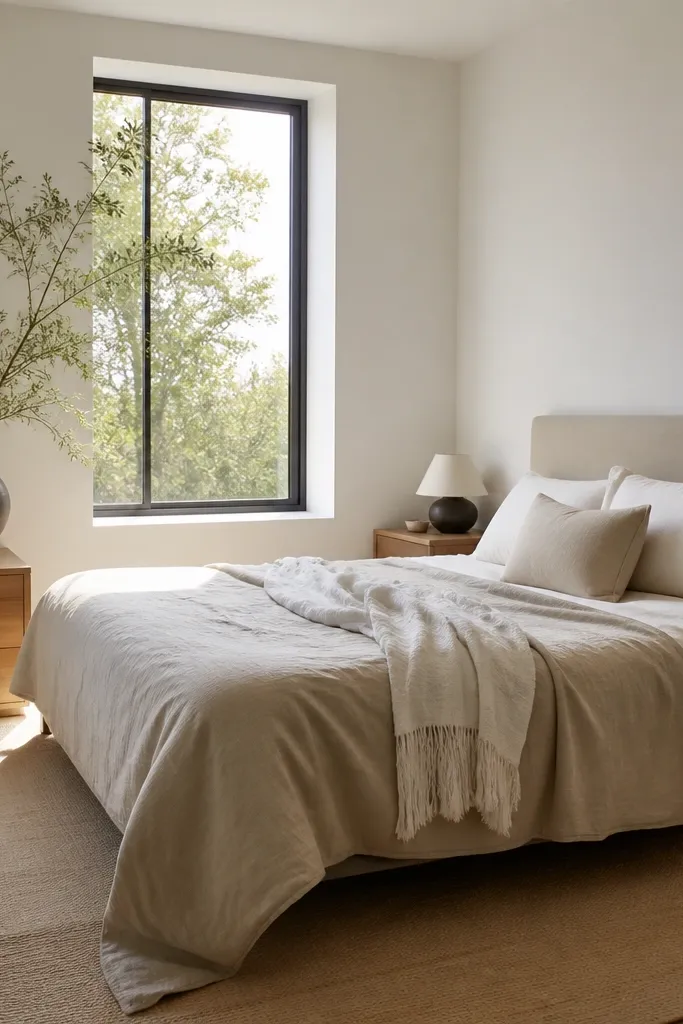
1. Two-Neutral Palette With One Soft Accent
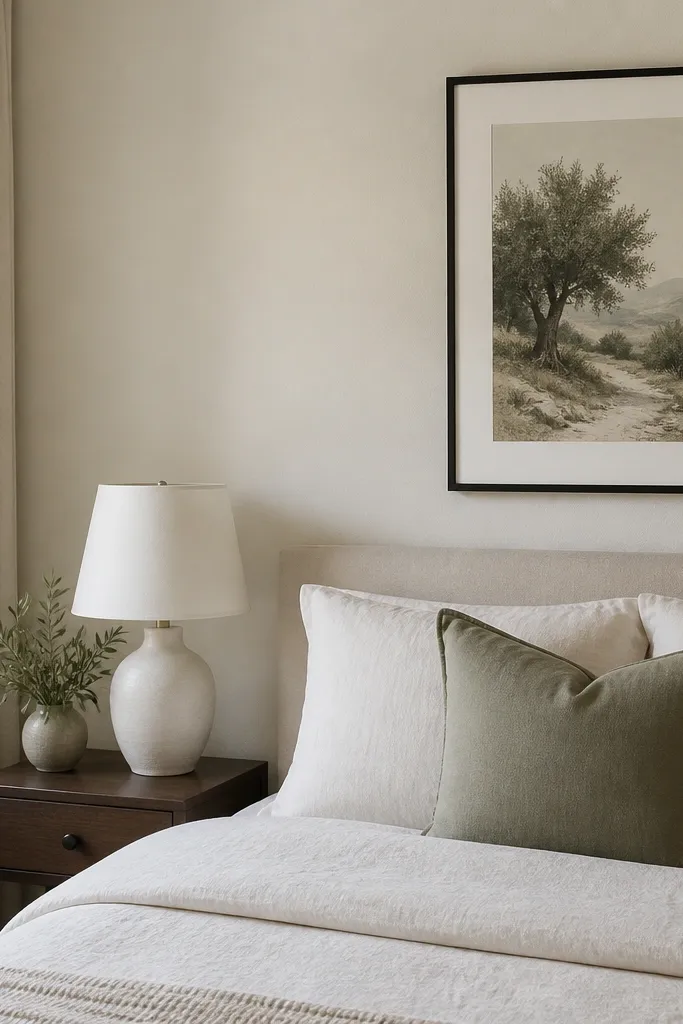
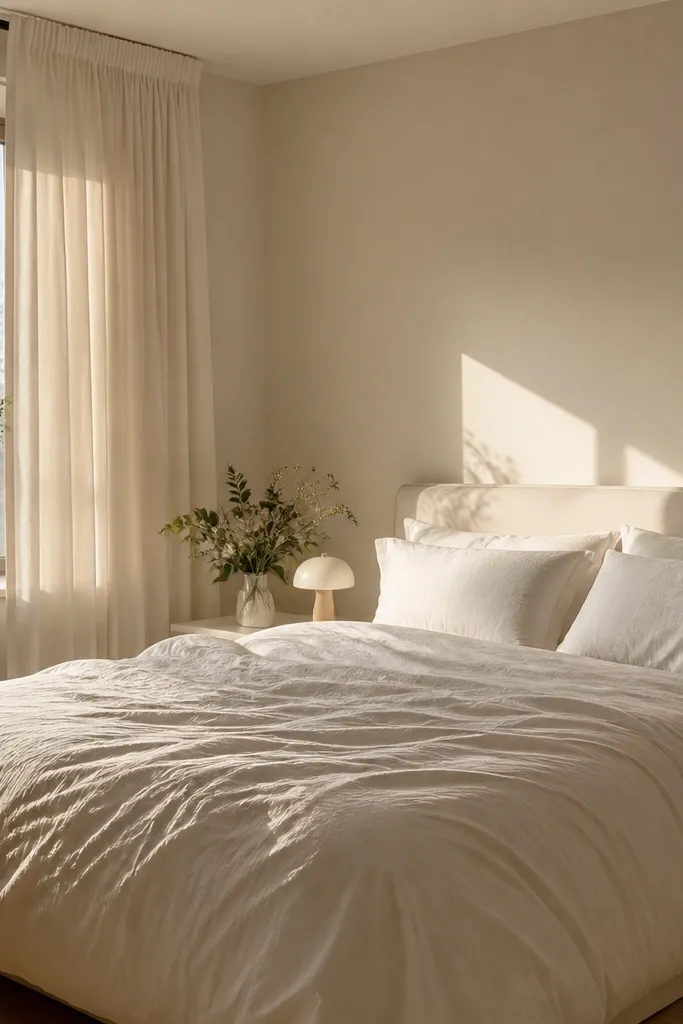
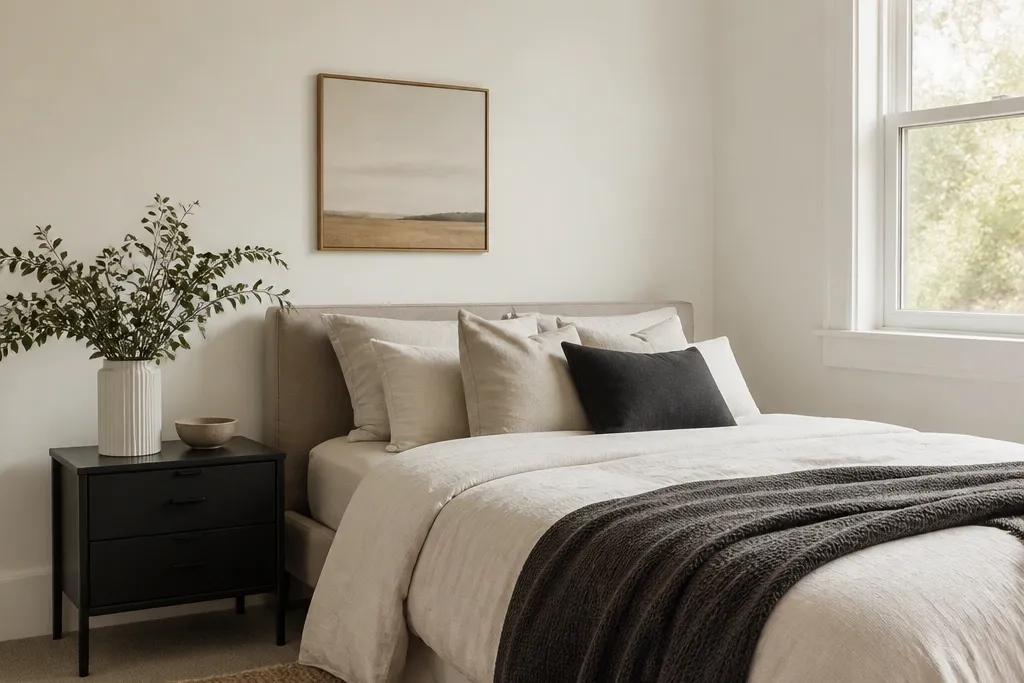
I start every small clean-room aesthetic with color limits because it reduces visual noise. Warm off-white walls make the room feel bigger, while light linen and pale greige textiles keep it soft but still crisp. One accent color, like sage, shows up in only two spots so the room looks styled without adding extra clutter. When the palette is tight, you can change small items later and it still reads clean.
Pro tipTake a photo of your room and desaturate it. If more than one strong color shows up, pick one accent and remove the others from visible surfaces.
Paint or choose a wall base in warm off-white (not bright blue-white). Add one accent color through textiles: a throw pillow and a curtain tieback or small plant pot in the same tone. Keep the rest in off-white, greige, light oak, or matte black so everything matches even when you’re not thinking about it.
Watch outAvoid mixing cool gray and warm beige at the same time — it makes the room look unfinished.
2. Under-Bed Storage That Hides Everything Flat
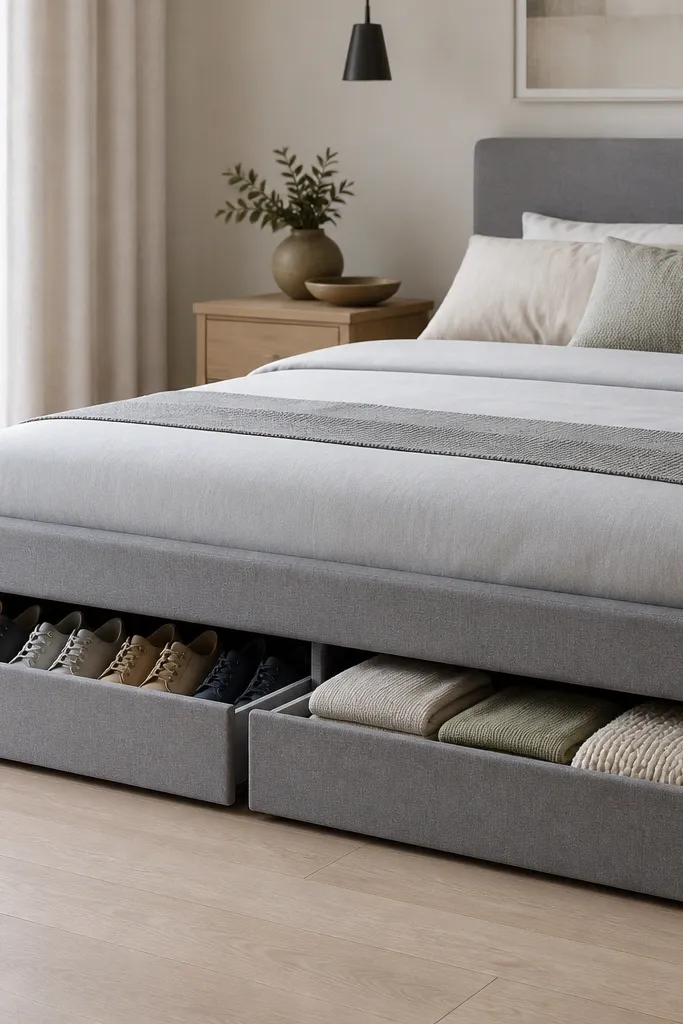
This is the fastest way I’ve found to make a small room look clean without constant organizing. Under-bed storage removes bulky items from sight, which is what your eyes react to first. Use fabric drawers with solid panels so the contents don’t show through. The room looks calmer instantly because the bed base stays uninterrupted.
Pro tipLabel only the outside edge with a small strip of masking tape — you’ll find things faster without a bunch of paperwork labels.
Choose bins that slide smoothly and fit your bed clearance. Measure the gap between the floor and the bed frame height, then subtract 1 inch so bins don’t scrape. Pick bins in a light neutral (stone, light gray) that matches your bedding so the storage disappears visually.
Watch outSkip open mesh totes under the bed. They show shape and color and make the room look messy even when you’re “organized.”
3. Closed Nightstand or Dresser With One Tray Landing Zone
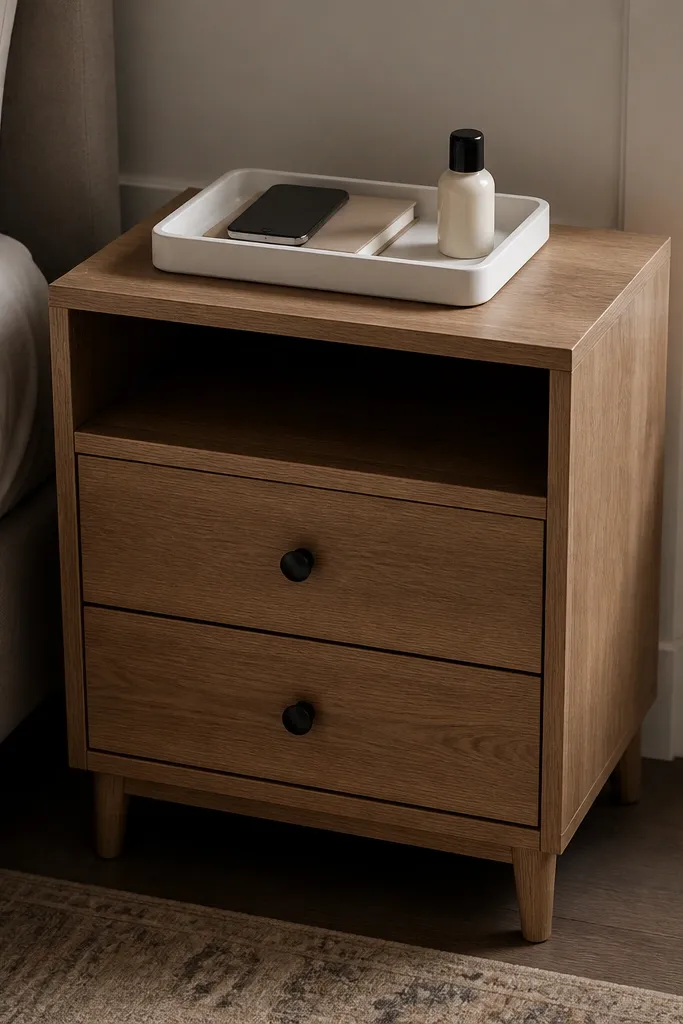
A closed nightstand keeps the daily clutter from spreading onto your wall of sight. The one tray landing zone is where things can land without turning into a pile. Raised edges matter — loose items don’t slide off and look scattered. This setup makes the room look clean even when you’re mid-routine.
Pro tipAssign one tray for “in use” items only. When the item is done for the day, it goes into the drawer within 30 seconds.
Pick a nightstand with at least two drawers so the top stays mostly empty. Use a tray about 10-12 inches wide so it fits your daily items. Keep the tray color simple: matte white, light wood, or clear acrylic with a frosted look.
Watch outDon’t use a big open catch-all bowl. It turns into a random mix and breaks the clean look.
4. Wipeable Dresser Top With Matte Paint and No Knickknacks
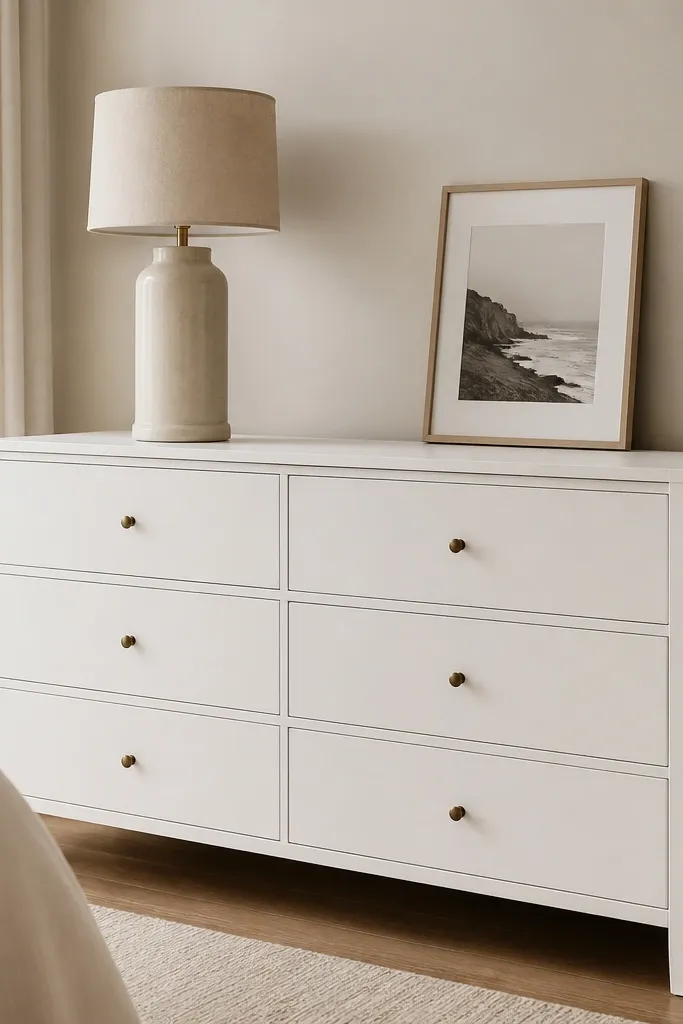
If your dresser top collects dust, it’s the wrong surface and the wrong amount of objects. Matte painted finishes look clean in daylight and don’t show fingerprints as easily as glossy. Limiting the top to one functional item (lamp) and one visual anchor (frame) keeps your room looking intentional. Your daily wipe becomes a quick pass instead of a “clean the whole surface” job.
Pro tipUse a microfiber cloth slightly damp with water, then dry it right away. It keeps matte surfaces from streaking.
Choose matte or eggshell paint sheens for the furniture surface if you’re painting. If you buy new, look for sealed tops that feel smooth and don’t snag on a microfiber cloth. Keep decor to two items max on the top: lamp plus one frame or one shallow tray.
Watch outAvoid high-gloss tabletops and glass knickknacks. They show smudges and reflect clutter.
5. Curtains That Reach the Floor and Don't Puddle
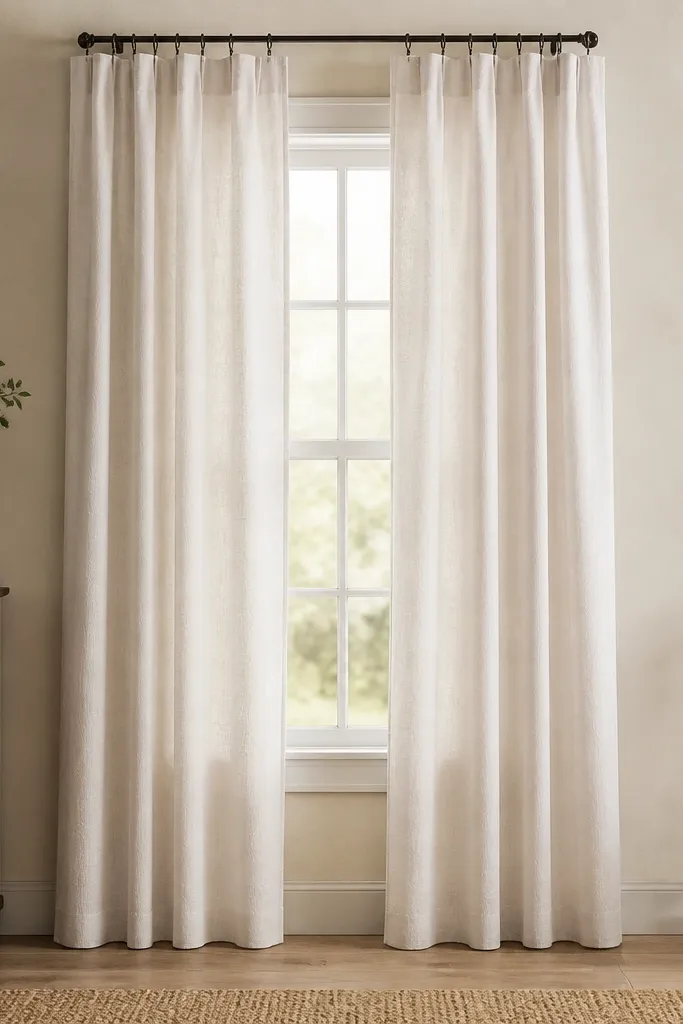
Curtains make a room feel finished, but only if the length is right. Floor-length fabric adds vertical lines, which makes the room look taller and cleaner. A light linen blend reads airy without looking flimsy. When the curtain doesn’t puddle, it stays neat and doesn’t collect dust bunnies in the hem.
Pro tipSteam the curtains before hanging. A quick steam removes wrinkles that look like “mess” from far away.
Measure from the rod to the floor, then subtract 1 inch so it skims the floor without dragging. Use a rod that matches your hardware — matte black with black hardware, brushed nickel with silver. If you want the cleanest look, pick solid color instead of busy patterns.
Watch outDon’t hang curtains that stop above the sill. They make the wall look unfinished and cluttered.
6. One Mirror on a Clean Wall for Instant Space Feel
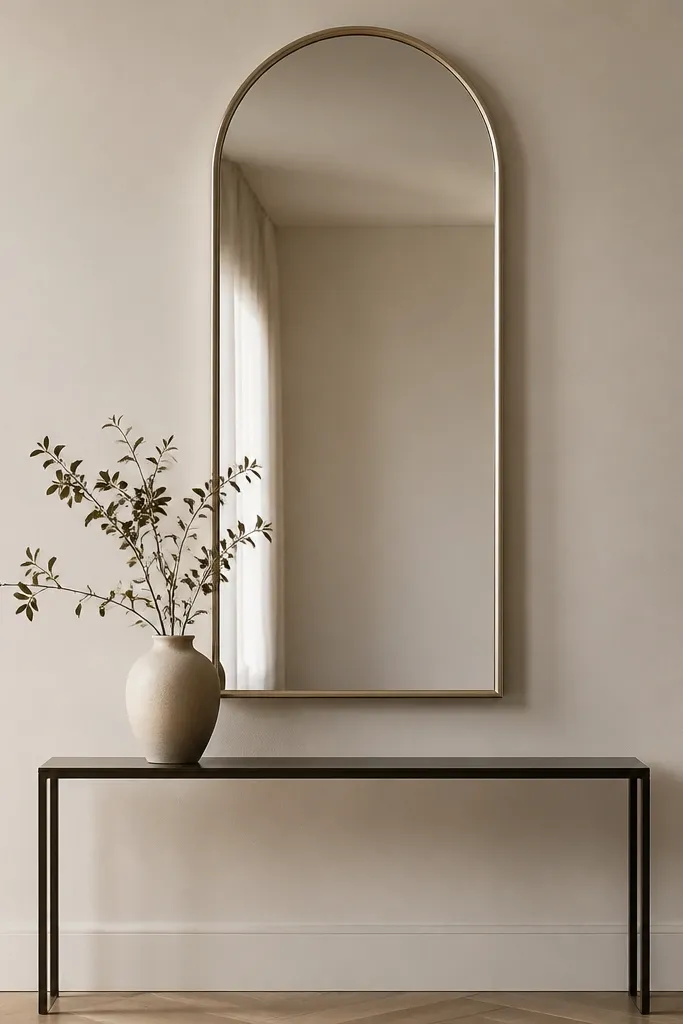
A mirror helps small rooms feel less boxed, and it also forces you to keep that wall clear. I like one mirror because it creates one clean focal point instead of multiple reflections. Choose a frame that matches other metal finishes so it looks like part of the room, not a random find. The glass also makes the space feel brighter when you position it near a light source.
Hang the mirror so the bottom sits about 5-7 inches above the floor. Place it opposite a window or across from a lamp. Keep the console below it minimal: one vase or one stacked book set, not a bunch of objects.
Use a glass cleaner on a microfiber cloth, not paper towels. It leaves fewer streaks that catch the light.
Avoid decorative mirrors with a lot of carved detail. They hide dust and look busy.
7. Matte Black Lighting With Linen Shade
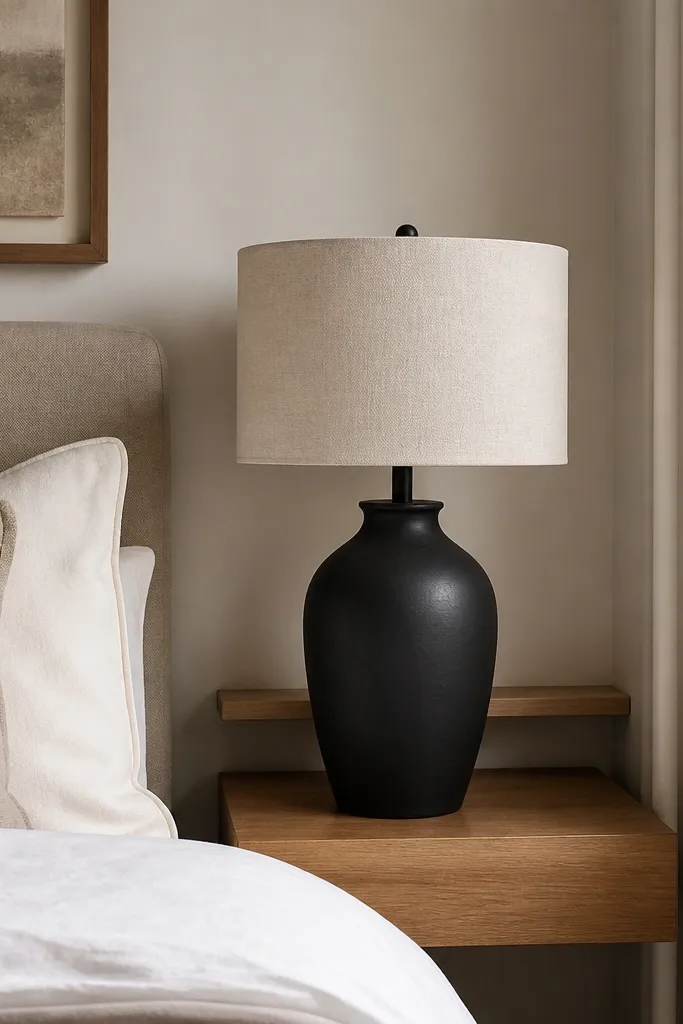
Lighting changes how clean a room feels. A matte black base looks sharp and doesn’t show grime like shiny finishes. Pair it with a linen shade so the light spreads softly instead of making glare that highlights dust. When the cord is managed, your room looks tidy even when something is plugged in.
Pro tipDust the lamp shade with a lint roller before cleaning the rest of the room. It makes a noticeable difference fast.
Pick a lamp scale that fits your surface: aim for about 22-26 inches tall for a bedside table. Use a cord cover in a matching color (white cord cover on white walls, black on dark walls). If you have a low outlet, install an outlet extender so the cord can sit neatly behind the furniture.
Watch outSkip reflective chrome lamps. They show fingerprints and make the room look less calm.
8. Bed Styling That Looks Crisp Even When You Skip a Perfect Fold
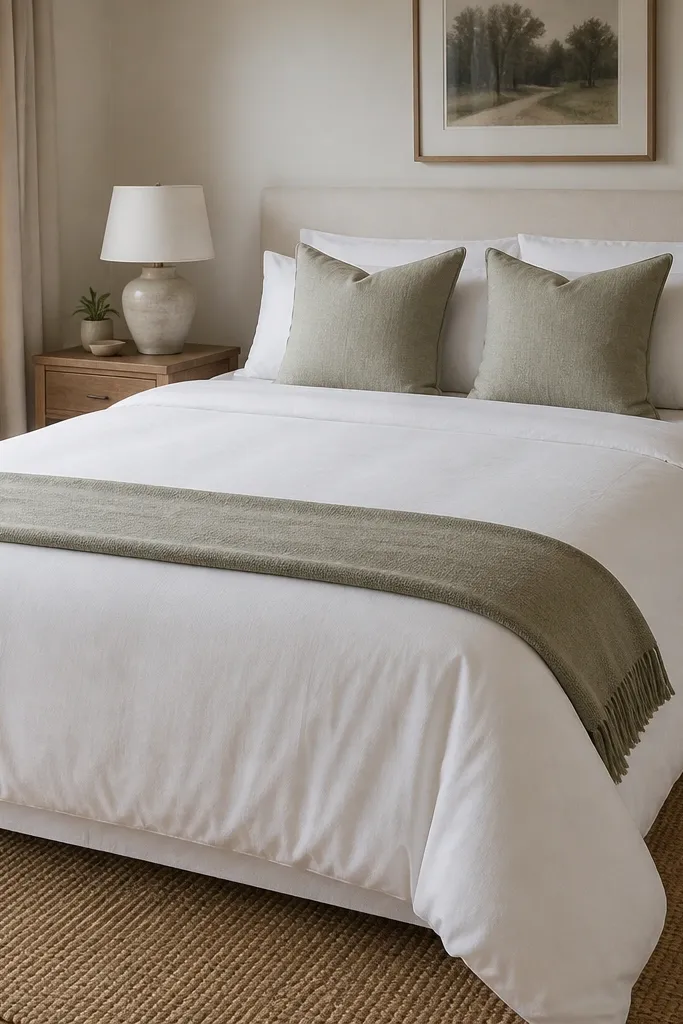
A clean room aesthetic needs a bed that reads smooth from across the room. I do this with a duvet in white or off-white, because it hides minor wrinkles and still looks bright. Tucking the duvet edges creates crisp lines that make the whole room look “managed.” The throw at the foot gives the bed a finished look without adding extra clutter on the sides.
Pro tipSteam the duvet corners after washing. It keeps the bed looking tailored without ironing everything.
Use a duvet cover that’s cotton or cotton-linen blend for easy washing. Tuck the sides under the mattress so the duvet doesn’t balloon. Keep pillow sizes consistent: two standard or two queen — avoid mixing too many sizes.
Watch outAvoid fluffy comforters with thick seams. They look lumpy fast and make the bed look messy.
9. Wall Frames in One Size and One Finish
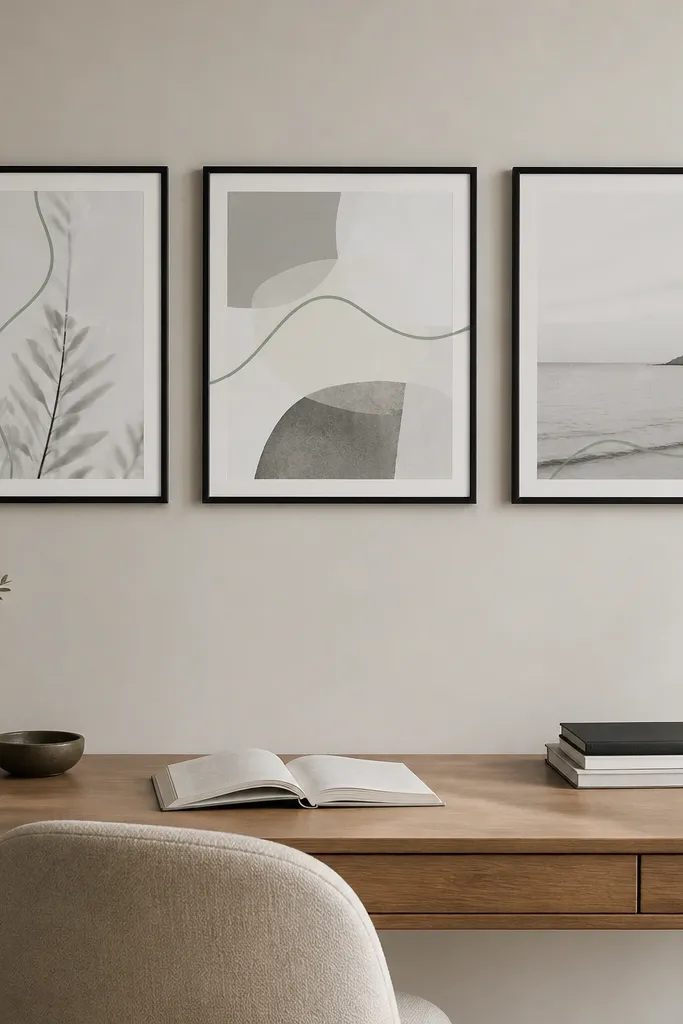
When frames match, your wall looks intentional even if you change prints later. I stick to one frame size and one finish so the wall doesn’t look like a collage of random purchases. Clean room aesthetic art usually has lots of negative space — light backgrounds, simple lines, and limited color. That negative space makes the wall feel quieter.
Pro tipUse painter’s tape to map the layout on the wall before hanging. Adjust until the bottom edge sits about 57-60 inches from the floor.
Pick frames with mats if you want extra “air” around the art. For a small wall, three frames in a vertical row or a 2x2 minus one layout looks balanced. Keep the art within a simple palette: off-white paper with gray and one muted accent.
Watch outSkip mixed frame depths. They create visual clutter and cast different shadows.
10. Open Shelving Only for Books, Closed for Everything Else
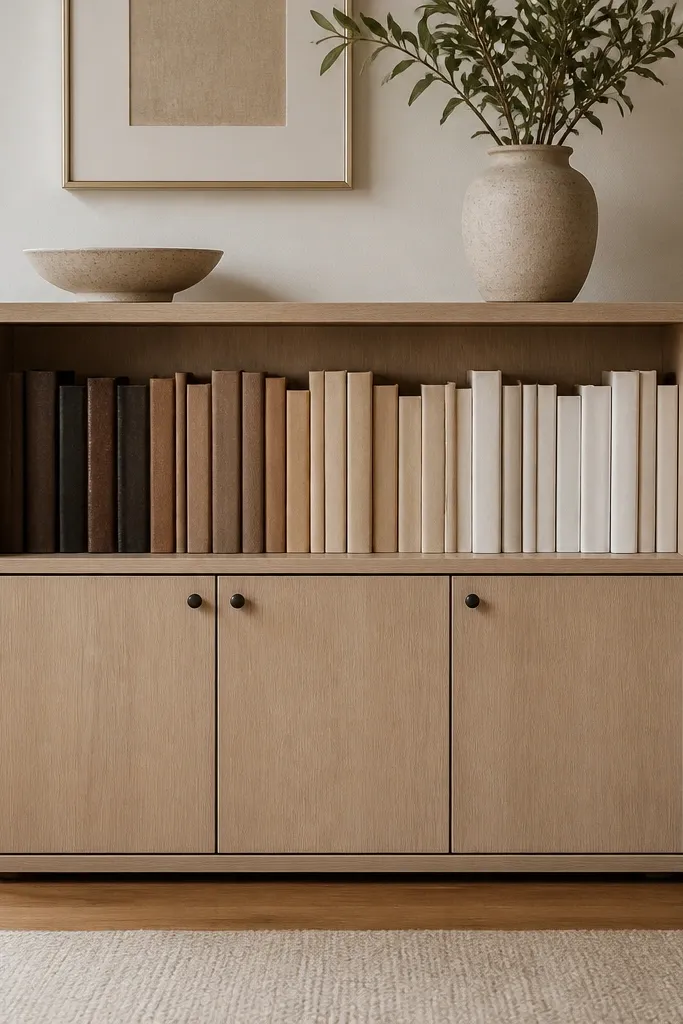
Open shelves look clean when they hold one type of item — books, baskets of the same color, or neatly folded linens. The moment you mix random objects, open shelving becomes a visual dump. I like using closed cubes below or behind doors so the mess has a hiding place. This keeps the room looking tidy even when you’re busy.
Pro tipLine up spines by height first, then color second. Height alignment makes it look clean even when colors aren’t perfect.
Choose shelf spacing that fits book heights without stacking too many. Use bookends and keep spines facing out so the shelf looks organized from the doorway. For non-book items, use matching closed bins in a single neutral color.
Watch outDon’t put cords, chargers, or random household tools on open shelves.
11. Laundry Corner With a Closed Hamper and a Wipeable Basket
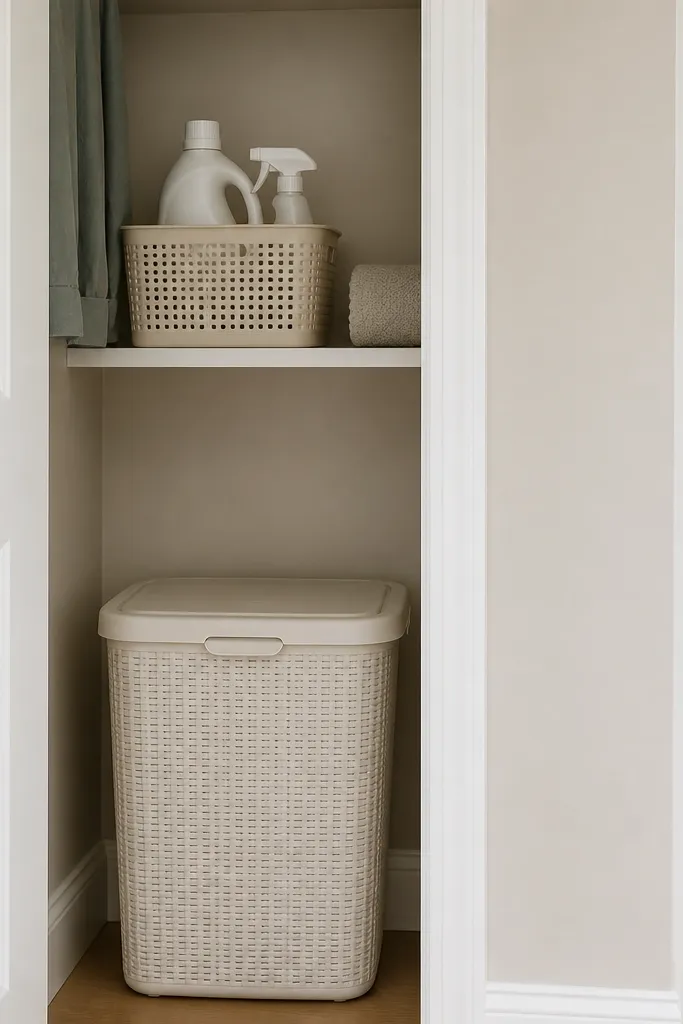
Laundry is the fastest way a clean room aesthetic falls apart because it adds piles and bags. A closed hamper removes the sight of dirty clothes, and a wipeable basket keeps supplies from turning into a sticky mess. I like a separate basket for “current week” products so you’re not digging through everything. It keeps the corner clean and reduces the chance of spills spreading onto shelves.
Pro tipKeep a roll of paper towels or a small microfiber cloth in the same basket. Wipe a spill immediately and you won’t get grime buildup.
Put the hamper inside a closet or behind a door if you can. If it’s in open sight, choose a hamper with a hard or fitted lid. Use a small plastic or coated fabric caddy for detergent bottles so you can wipe drips.
Watch outSkip open laundry bags. They look like a pile even when they’re only half full.