1. Extra-wide runner that still leaves breathing room
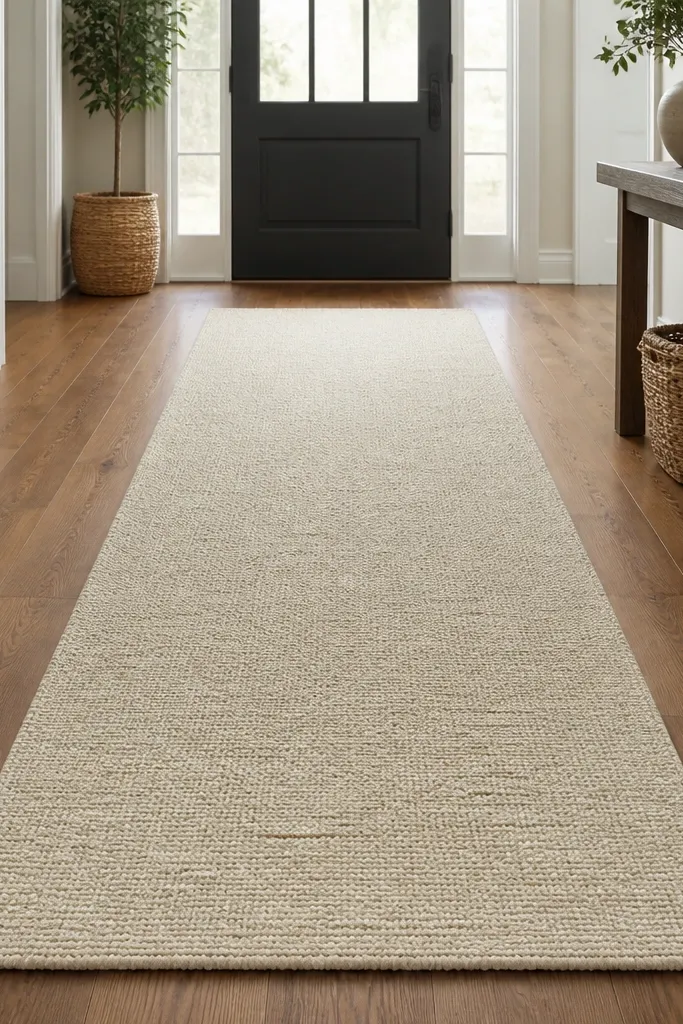
A narrow foyer needs a runner that reads intentional, not squeezed. Choose a runner that leaves 6-10 inches of bare flooring on each side — that strip of floor makes the room look wider. Go for a low-pile or tightly woven texture in cream, oat, or greige so light reflects without looking shiny. If you pick a pattern, keep it small-scale and linear so the runner guides the eye down the length instead of fighting it. This works especially well when your walls are light and your entry feels a little bare.
Measure the foyer width and subtract 12-20 inches total so you know your runner width target. For length, leave at least 6-10 inches clearance at each end so it doesn’t look pinned under the door or crowded at the entry threshold. Install with a gripper pad for smooth edges, then run a tape line to keep the edges parallel to the walls. Budget-wise, expect a decent runner to cost about $120-500 depending on size and material.
Trim the runner straight at the ends only if it’s a finished edge; otherwise, use a runner pad that keeps the edges crisp.
Avoid a runner that’s too narrow — it makes the foyer feel like a hallway inside a hallway.
2. Tall mirror placed to bounce light down the hall
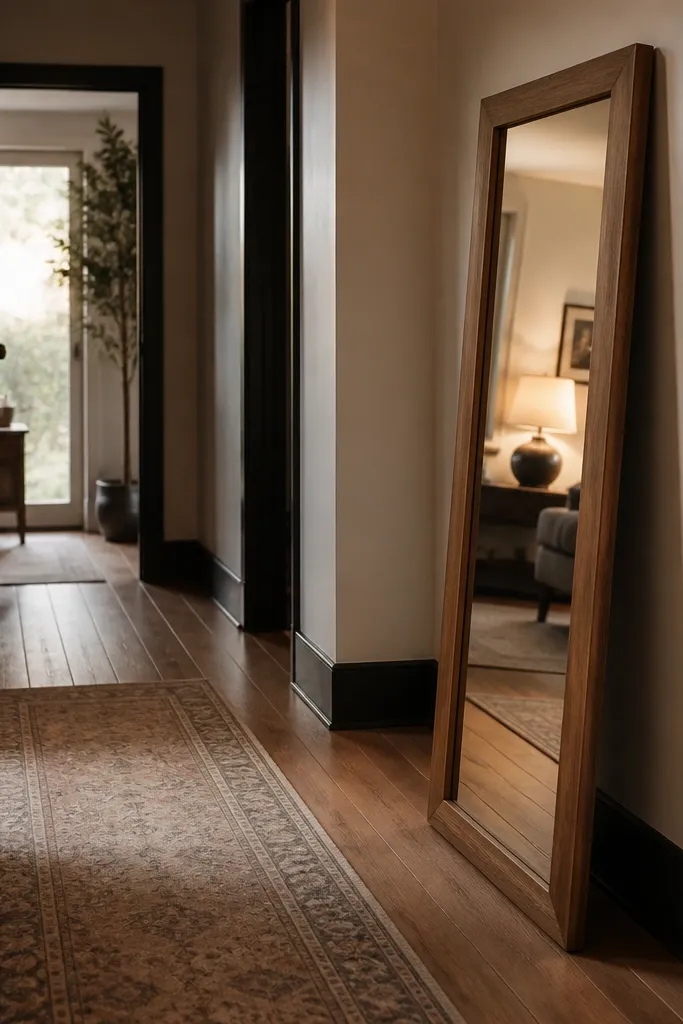
Mirrors are the fastest way to make a long foyer feel less stretched. Pick a tall mirror with a simple frame in black, warm wood, or brushed brass — it adds contrast without clutter. The trick is placement: the mirror should reflect either a warm lamp or a brighter section of the adjacent room, so the reflected light creates a second “entry glow” closer to the back of the hall. Keep the mirror centered on the wall where people naturally pause, usually across from a door or near the foyer’s midpoint. This look is especially strong in foyers with one window at the far end or limited overhead lighting.
Find the floor-to-center height: aim for 60 inches to the mirror’s center, then adjust up or down if you have tall hardware or a low chair rail. Use a stud finder and mount with proper wall anchors if you’re not hitting studs. Place the mirror so it lines up with a lamp or light source at roughly eye level, not the ceiling. Finally, step back and check that the reflection shows a warm surface (lamp shade, wall art, or a light-colored wall).
Use a warm bulb in the lamp near the mirror so the reflection looks like a continuous glow, not two separate light pools.
Don’t hang a mirror too high — if the center is above 66 inches, it stops feeling like a welcoming focal point.
3. Two matching wall sconces in a warm brass finish
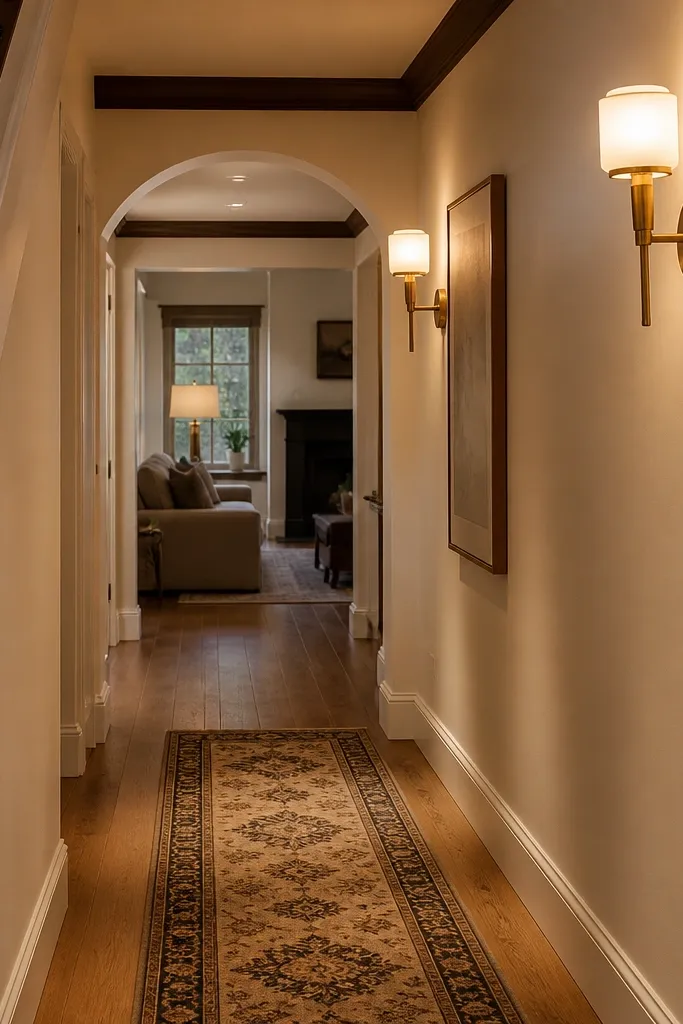
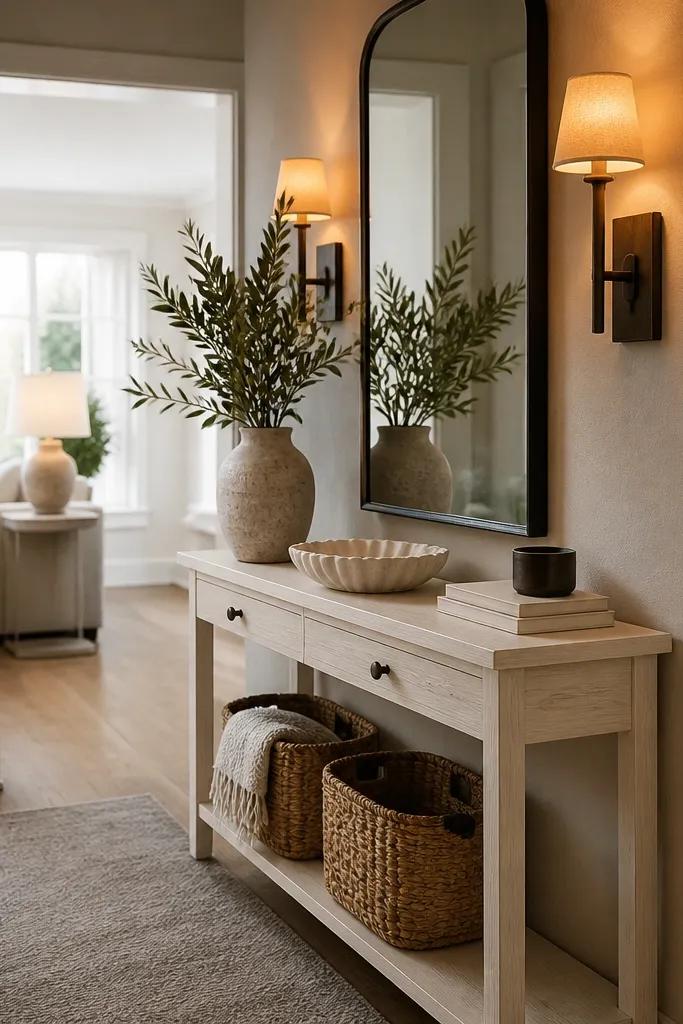
If your foyer has overhead lighting only, it reads harsh and flat. Two matching sconces add warmth at eye level and visually “break” the length. Choose warm brass, aged bronze, or a matte black finish with glass shades that diffuse light. Install them so the glow lands across the wall and slightly toward the floor, which helps the runner and floor look richer. This is a strong option when you want a quick and easy long foyer ideas entryway upgrade that feels like a real design decision, not temporary decor.
Measure the wall length and pick a spacing that feels balanced — in a long foyer, mount sconces so they sit about 4-6 feet apart from center to center. Set the bottom of the sconce shade around 65-68 inches from the floor, unless the fixture requires a different clearance. Use LED bulbs around 2700K and 800-1000 lumens total per sconce for a flattering wash. If wiring is a headache, choose plug-in sconces with cord covers and place the outlet behind furniture or near an existing switch line.
Pro tipMatch sconces to the mirror frame or hardware so the metal finishes look planned, not random.
Watch outAvoid cool white bulbs (4000K+), they make the foyer feel sterile.
4. Console table with a runner-led "walkway"
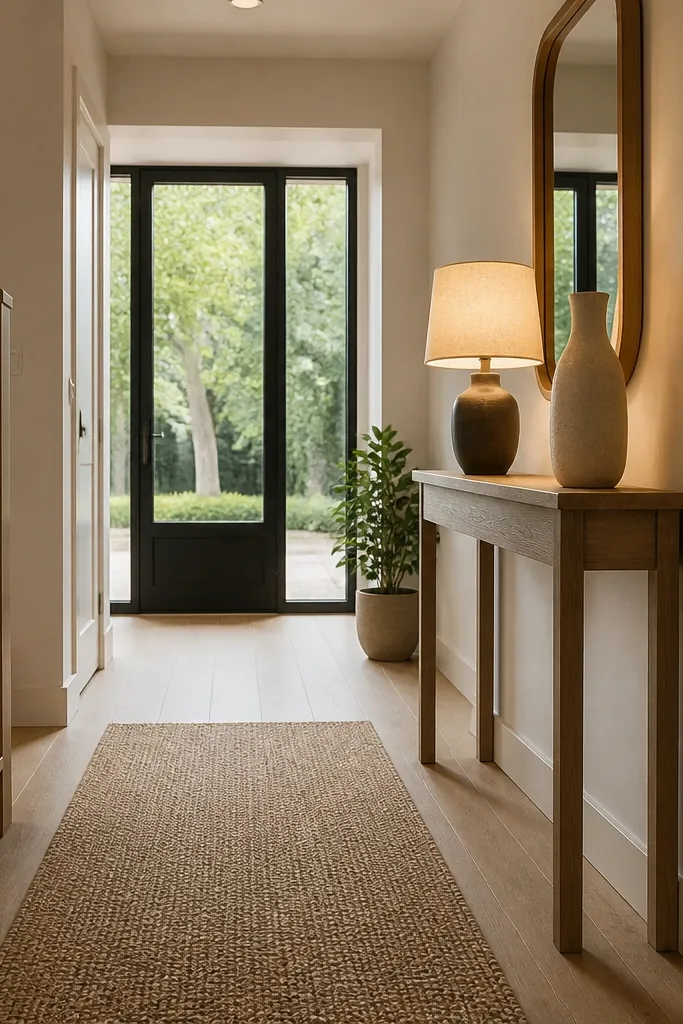
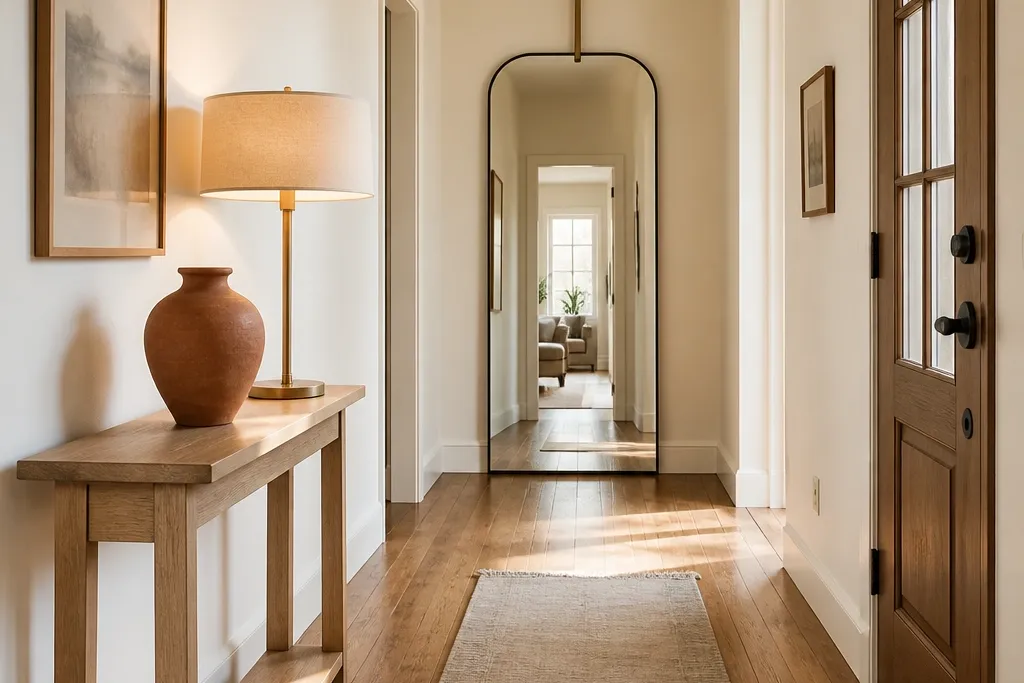
A long narrow foyer needs a horizontal surface that signals where to pause. Use a slim console table — think 10-14 inches deep — in light oak, walnut, or painted white with warm undertones. Place it where the runner transitions into the entry zone, so the table becomes the “landing.” Style it with a lamp plus one tall object (like a ceramic vase) so your vertical eye line doesn’t get dragged down the hallway. This works when you have enough wall space for a table and you want a focal point without eating floor space.
Measure the available wall length and keep the console centered or offset intentionally toward the main door. Position the table so there’s about 36 inches of walkway clearance in front of it, especially if you have a door swing nearby. Use 3 items at most on top: a lamp, a tray, and one taller accent. Secure the console with wall brackets if it’s in the path of kids or frequent door traffic.
Pick one shade color for the lamp (cream linen or warm beige) so it ties into the runner or wall paint.
Don’t use a deep console — anything over 16 inches makes a narrow foyer feel squeezed.
5. Gallery wall with even spacing and one "anchor" frame
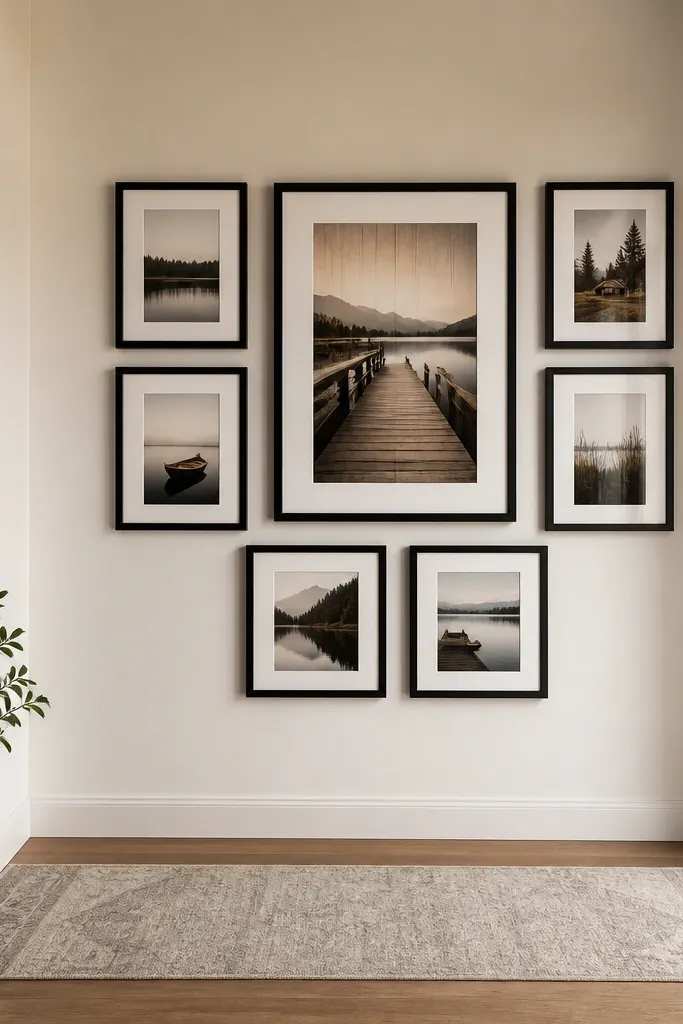
A gallery wall can make a long foyer feel designed instead of stretched, but spacing matters more than the frames. Choose a consistent frame finish (black, warm wood, or white) and keep mat colors neutral. Start with one larger anchor piece centered, then add medium frames around it so the whole arrangement “reads” as one composition. The goal is rhythm: place frames so the distance between centers lands around 24-36 inches down the length. This works best when you have blank walls and want a quick and easy long foyer ideas entryway upgrade without buying a full new furniture set.
Lay out frames on the floor first and decide on a grid — even rows or a staggered pattern both work if the spacing is consistent. Hang the anchor frame so its center lands at about 58-60 inches from the floor, then build outward using painter’s tape to mark the next centers. Use picture-hanging wire or rails so frames stay level. Cost is mostly frames and mats — plan about $60-300 per frame depending on material.
Pro tipUse a mix of sizes but keep mat widths the same so the wall looks intentional up close.
Watch outAvoid random heights — if frames vary too much, the foyer looks messy instead of curated.
6. Oversized single artwork to shorten the visual length
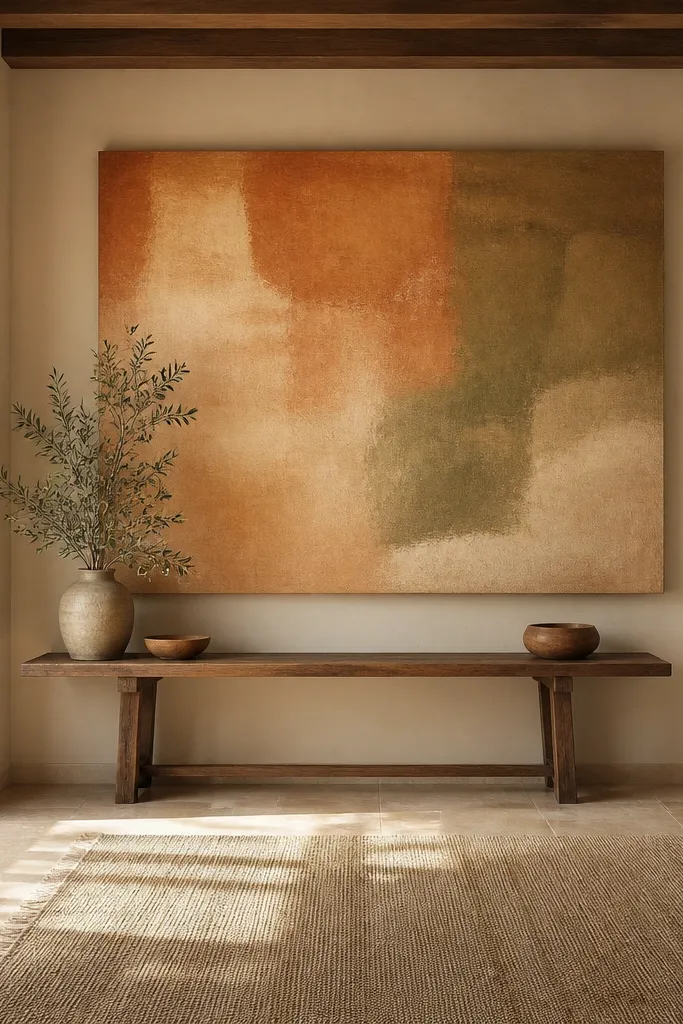
When a foyer is long, one big piece beats lots of small ones. Choose a single artwork that’s wide enough to span at least 60-70% of the table or wall width where it hangs. Go for a warm-toned abstract, a large botanical print, or a textured canvas with earthy neutrals. This approach creates one “stop” for the eye, which makes the hallway feel less like a corridor. It’s a great option if you don’t want to measure a gallery wall or if your entry gets cluttered easily.
Measure the wall area and aim for artwork that’s about 24-36 inches tall and wide enough to dominate the space (at least 40 inches wide in many narrow foyers). Hang the center at 58-60 inches from the floor, then adjust slightly if your table is high or low. Use wall anchors rated for the artwork weight and keep the picture level with a spirit level. If you’re renting or can’t nail, use a hanging system with removable anchors.
Pro tipPut the art on the same wall as the runner so the runner and artwork line up visually, not fighting each other.
Watch outAvoid tiny art — small pieces get swallowed by the long wall.
7. Statement pendant on a ceiling track line
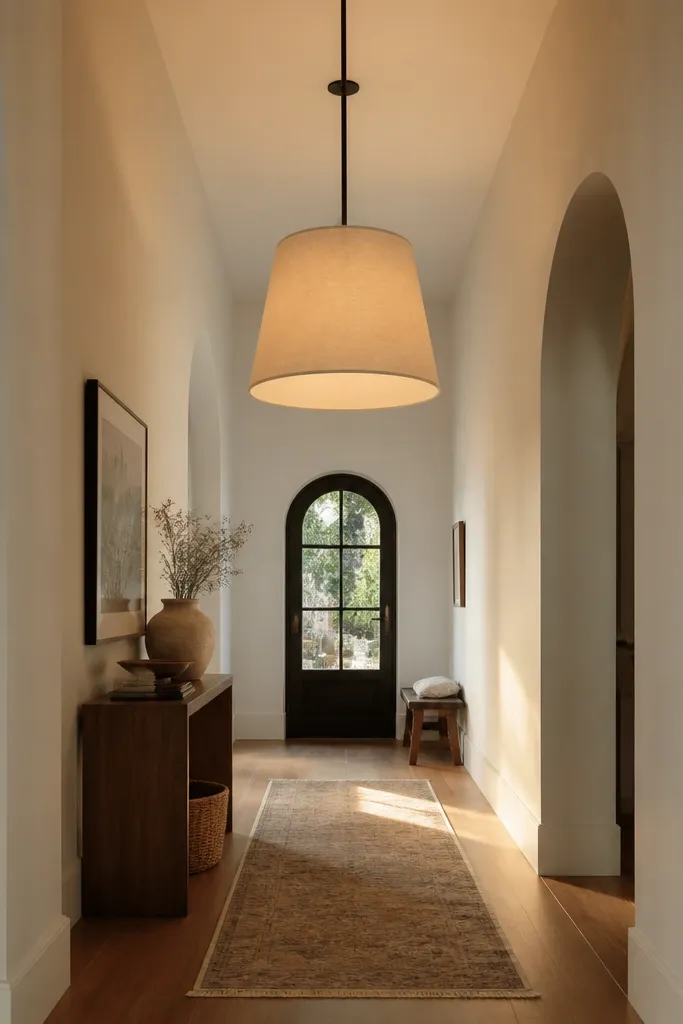
A long foyer can feel like a tunnel when lighting is only overhead and the fixtures are too small. A single statement pendant gives you a clear focal point and adds warmth that travels down the corridor. Choose a pendant with a warm interior finish and a fabric or glass shade that diffuses light. Hang it so the bottom is around 7 feet from the floor if you’re aiming for a dramatic look, or about 6.5 feet if the foyer has low ceilings. This works best when the foyer has a straight sightline from the front door and you want a “designed” moment without multiple fixtures.
Turn off power and confirm ceiling box compatibility before installing. Measure ceiling height and set the pendant drop so the bottom of the shade is 6.5-7 feet from the floor. Use a 2700K bulb and dimmer if you want the foyer to feel inviting at night. Keep the pendant centered over the entry zone, not in the far hallway where it won’t read as the main focal point.
Pro tipIf you have a mirror opposite, position the pendant so it reflects into it — the hall looks twice as bright.
Watch outAvoid a pendant that’s too high and too small — it won’t create a focal stop.
8. Long runner + two small rugs at the ends
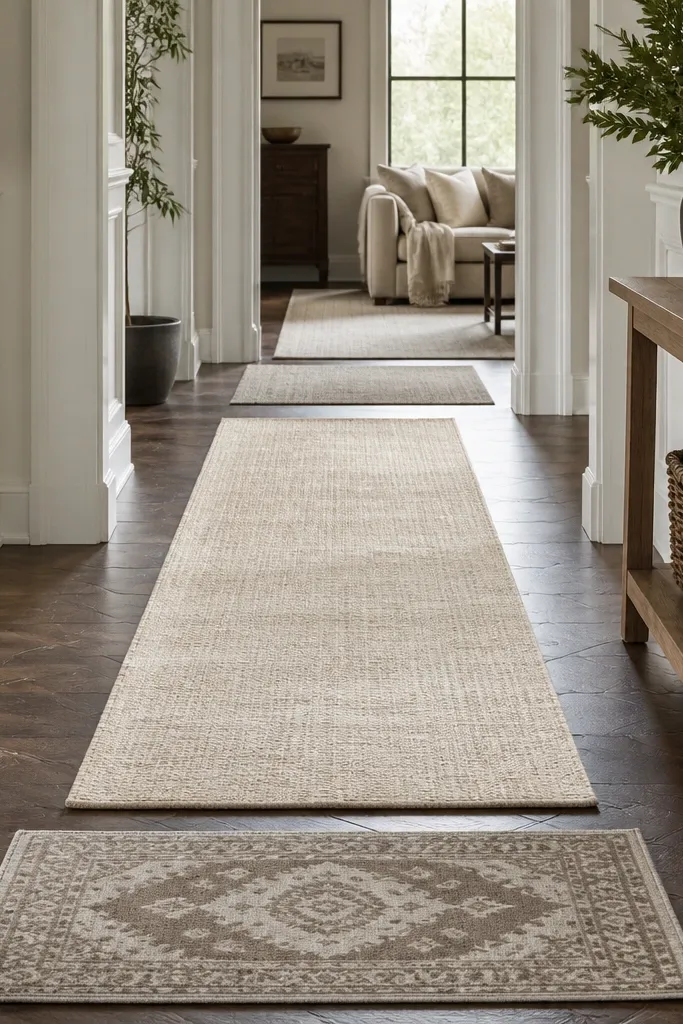
Layering rugs can make a long foyer feel more like a room and less like a passage. Use one main runner down the center, then add two small rugs at the entry points — one near the front door threshold and one near the transition to the next room. Keep the color family consistent: warm cream runner, then a smaller rug in camel, cognac, or muted olive. This creates “zones” without changing your floor plan. It’s ideal when you want a quick and easy long foyer ideas entryway look that feels cozy and styled, especially in homes with light hardwood floors.
Choose a runner first — it should be the widest you can fit without losing 6 inches of floor edge on either side. Pick two smaller rugs that match the undertone of the runner (same warm base color or same accent color). Place the small rugs flush with the threshold edges, then overlap the runner by about 2-4 inches where they meet. Use rug pads under each rug to prevent sliding and keep the edges crisp.
Keep patterns small on the runner and choose texture for the smaller rugs — flat patterns can fight when layered.
Don’t mix three different pattern styles — the foyer will look busy instead of inviting.
9. Paint one wall in warm greige and keep the rest light
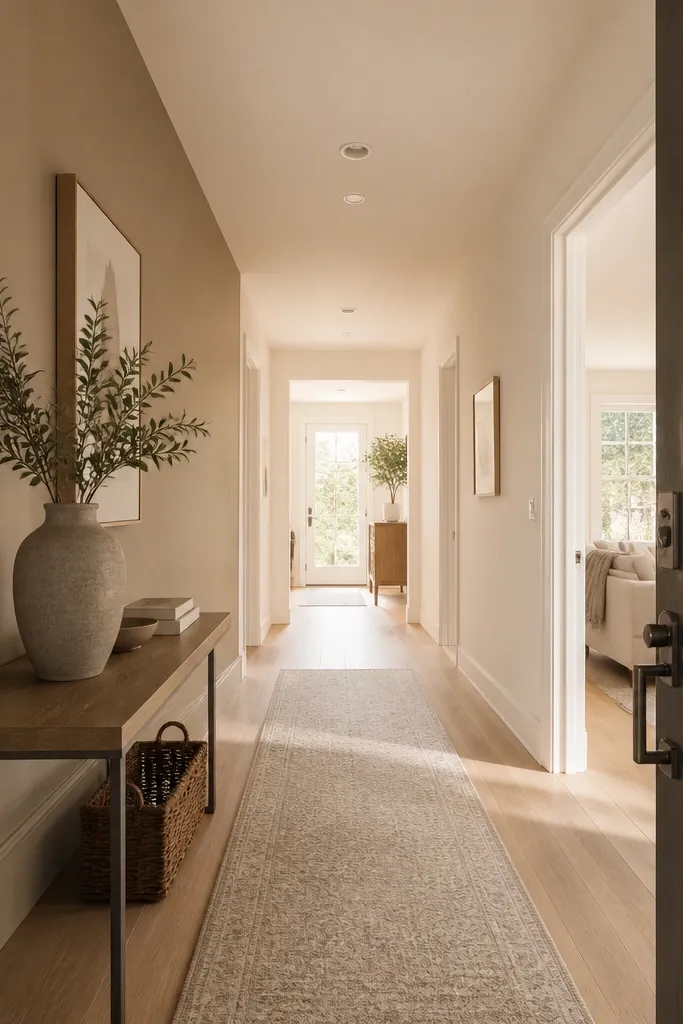
Color is the quickest way to change the emotional temperature of a narrow foyer. Paint one wall — the longest solid wall that you see from the doorway — in a warm greige or soft clay tone, while keeping the other walls a creamy white. This makes the accent wall feel closer, which shortens the perceived length. Use a satin or eggshell finish for easy cleaning near the entry. Pair it with brass hardware or warm wood frames so the undertones don’t clash. This is a strong option when the foyer feels too long because everything is the same pale color.
Test paint samples on the wall you plan to accent and observe them at night with your entry lighting. Tape and paint the accent wall only, then keep the other walls creamy white in eggshell. Apply two coats for even coverage and use a small foam roller for smooth texture. After it dries, hang your mirror or art within a week so you can assess how the new wall color changes the decor.
Match the accent wall undertone to your runner color — warm greige looks best with oat, camel, or cream textiles.
Avoid gray-on-gray accents that lean blue — they make narrow foyers feel colder.
10. Vertical wood slat paneling on the main wall
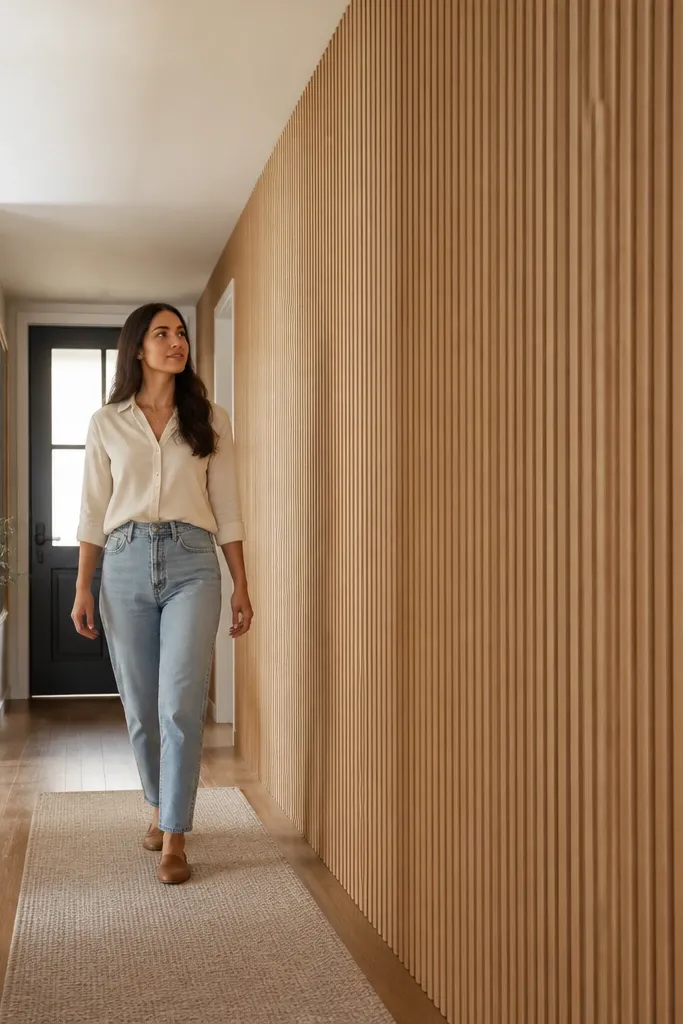
If you want a high-end look without complicated trim work, vertical slats add texture and direction. The vertical lines pull the eye up and down, which helps a long foyer feel more intentional and less stretched. Use light oak or natural ash slats with a matte clear finish so the texture doesn’t glare. Keep the rest of the foyer simple: a neutral runner, a slim console, and one large mirror. This is best when the foyer has a long blank wall and you want something that photographs well from the doorway.
Pick a slat kit or ordered boards with consistent widths, usually 1.5-3 inches wide. Install on the accent wall using a level and spacers so the gaps are uniform; start from the ceiling down. Seal or stain if needed, then paint the wall behind the slats the same color as the slat stain base. Finish by adding a mirror and one lamp so the slat texture shows in the warm light.
Pro tipChoose matte finishes and keep hardware warm metal so the wood grain reads soft, not shiny.
Watch outAvoid glossy slats — they create glare that looks messy in entryway lighting.
11. Wall-mounted coat hooks in a line with a bench below
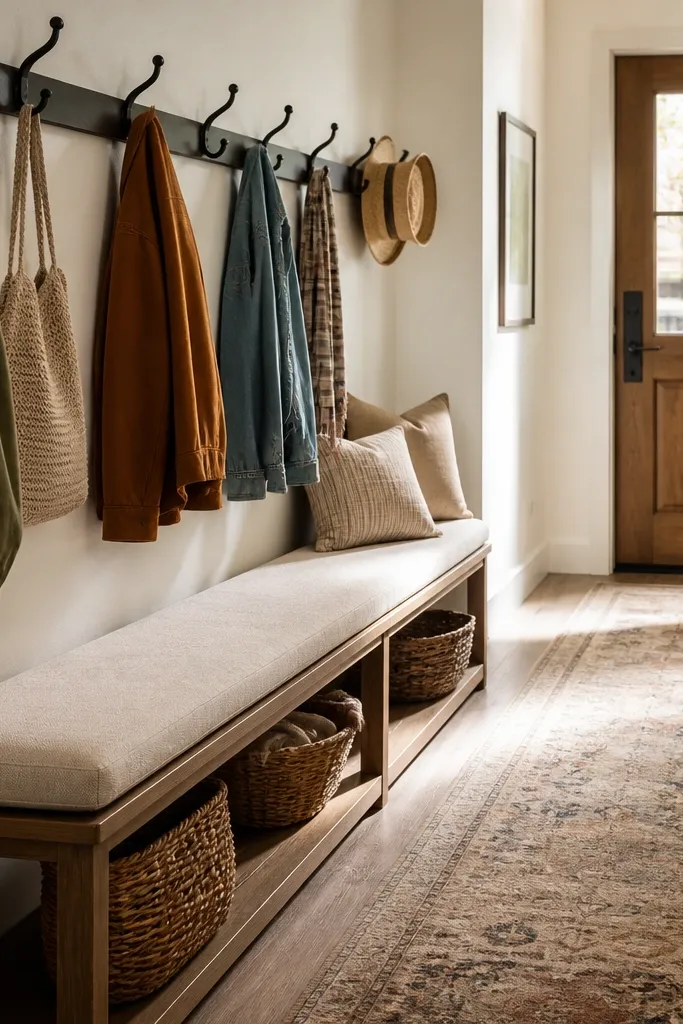
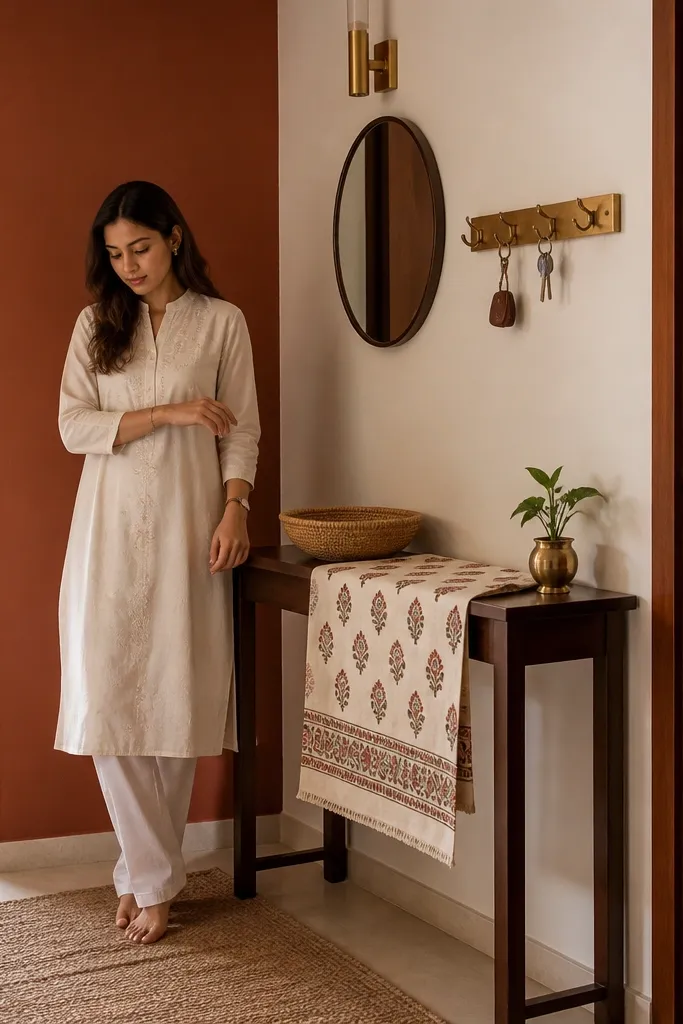
A narrow foyer can look uninviting because it has no place for everyday mess. Wall-mounted hooks give you a clean vertical organization point, and a narrow bench adds a warm seating moment. Choose hooks in black iron or brushed brass and mount them in a straight line so the eye reads order along the length. Put the bench under the hooks or slightly offset, then style it with one throw and a small tray for keys. This makes the entry look cared for, not clutter-prone.
Measure the wall and mark hook centers so they line up with your household’s height needs; start with about 66 inches from the floor to the hook height for adult use. Mount into studs when possible and use anchors only if studs aren’t available. Choose a bench depth around 12-16 inches and place it so there’s still about 36 inches clearance from the runner edge. Add a washable throw and a shallow tray to keep small items from spreading.
Keep hook spacing consistent — even 3-4 inches difference in alignment looks sloppy in a long hallway.
Avoid hooks that are too high or too low — awkward placement makes the foyer look neglected.
12. Floating shelves with three-tone styling
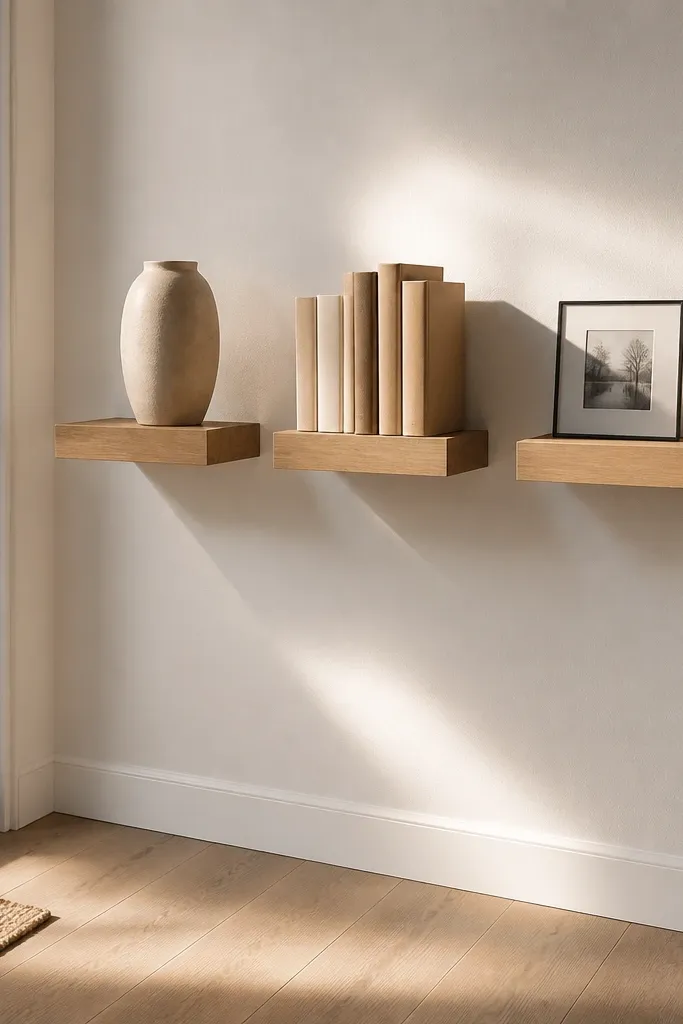
Floating shelves add height without taking floor space, which is a big deal in long narrow foyers. Style them in three tones: one warm neutral (cream or sand), one wood tone, and one metal or black accent. Keep objects tall and few — a ceramic vase, a stack of books, and a small framed photo. The visual stop happens at shelf height, and the repeated vertical elements make the hallway feel “designed” rather than empty. This works well when you don’t want a console or want extra storage for mail and keys.
Install shelves so the top shelf is around 72-75 inches from the floor, then place the next shelf 10-12 inches below if you’re doing two levels. Use a level and mount into studs with shelf brackets rated for weight. Style with 5-7 items total across the shelves, and keep the biggest item centered. Use book spines for height — keep them facing the same direction for a clean look.
Pro tipUse matte ceramics and textured books; glossy decor looks too reflective in entryway lighting.
Watch outDon’t overcrowd the shelves — too many objects makes the long foyer feel busy.
13. Matte black picture ledge with leaning art
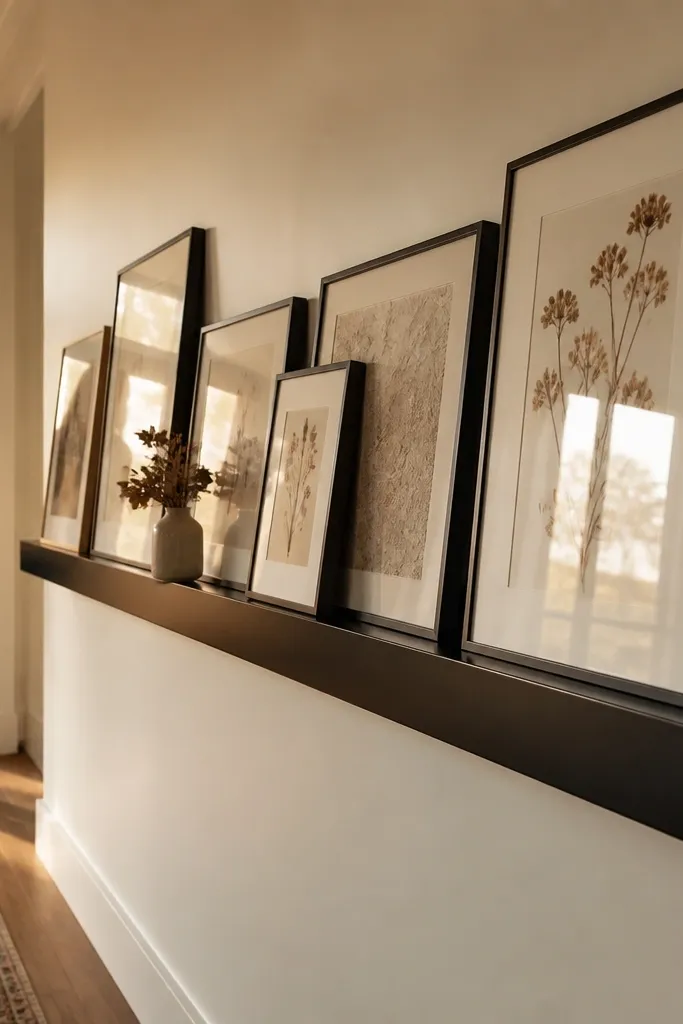
A picture ledge is a clever way to get a layered, gallery-like wall without drilling a dozen frame locations. Choose matte black or deep bronze so it reads intentional against light walls. Lean frames in a consistent angle pattern and keep the art sizes close so the wall looks like one composition. This approach works when you want quick and easy long foyer ideas entryway that can change seasonally without re-measuring. It also photographs well because the frames create depth.
Mount the ledge around 66-70 inches from the floor so the top edge of the art sits comfortably at eye level. Use wall anchors for the ledge only if you can’t hit studs; otherwise mount into studs for safety. Lean frames so the bottom edge rests on the ledge lip and the top edge aligns with your chosen angle. Start with two frames, then add a third only after you see the spacing from the doorway.
Pick frames with the same finish and mat color so the ledge styling looks like a set, not random leaning art.
Avoid mixing frame finishes — the wall will look chaotic in a narrow hallway.
14. Ceiling-to-floor curtains with a hidden track
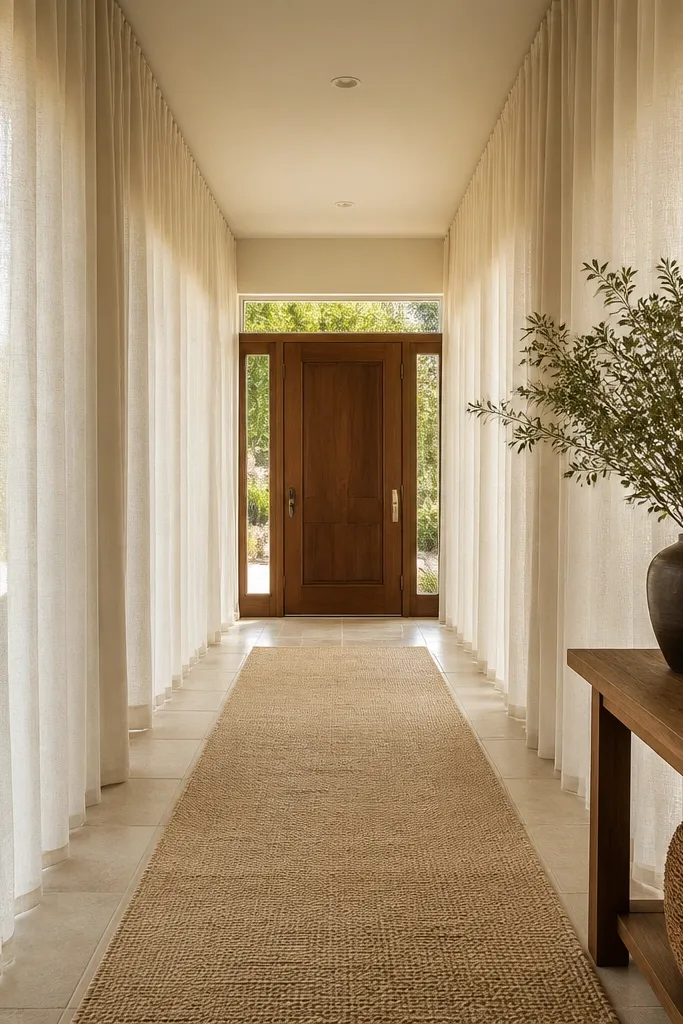
Curtains soften a long narrow foyer fast, especially if your entry has hard surfaces like tile, wood floors, or a bare doorway. Use a ceiling-to-floor curtain with a hidden track so the fabric hangs straight and high. Choose a thick linen-look in warm white, oat, or light sand — it filters light instead of blocking it. When the curtain spans wider than the doorway by 6-12 inches on each side, it widens the visual space and makes the hallway feel less tight. This is best when the foyer has a doorway opening you want to soften or hide.
Measure the ceiling height and install the track 2-4 inches below the ceiling so the fabric reaches the floor without pooling. Use curtain panels with enough width to stack and close — aim for 2-2.5x the measured opening width. Hang rings or clips so the fabric starts straight, then steam the panels to remove fold lines. Cost is usually $150-450 depending on fabric weight and track type.
Use a warm underlayer color in the fabric — it looks better in 2700K lighting than cool whites.
Avoid thin sheers — they don’t soften enough and can make the foyer feel exposed.