1. Centered wreath with a doormat that matches the wreath ribbon color
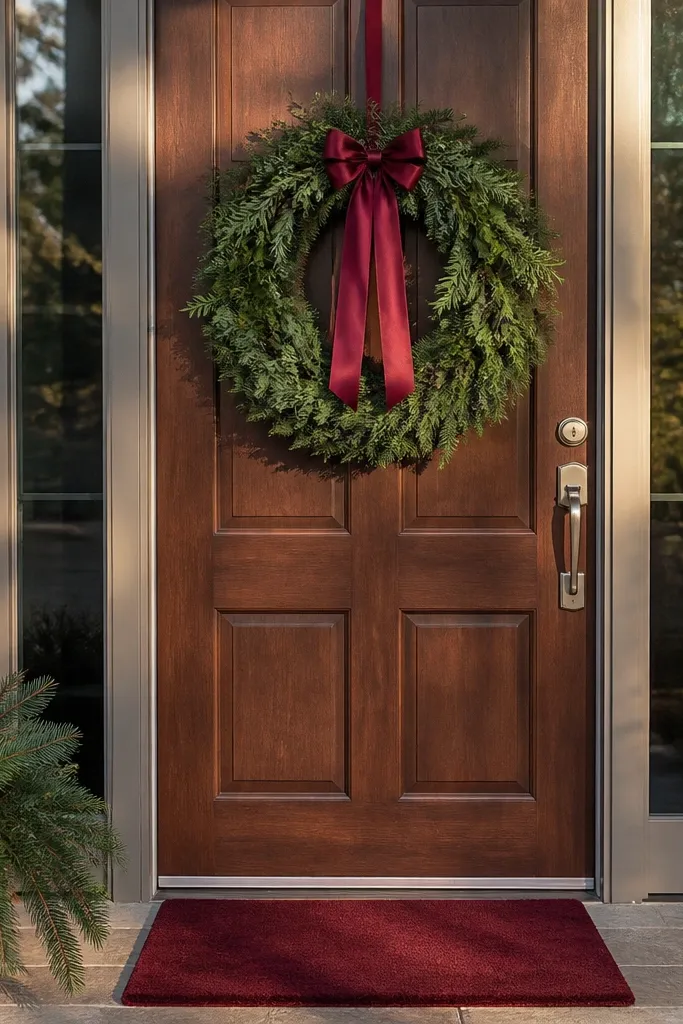
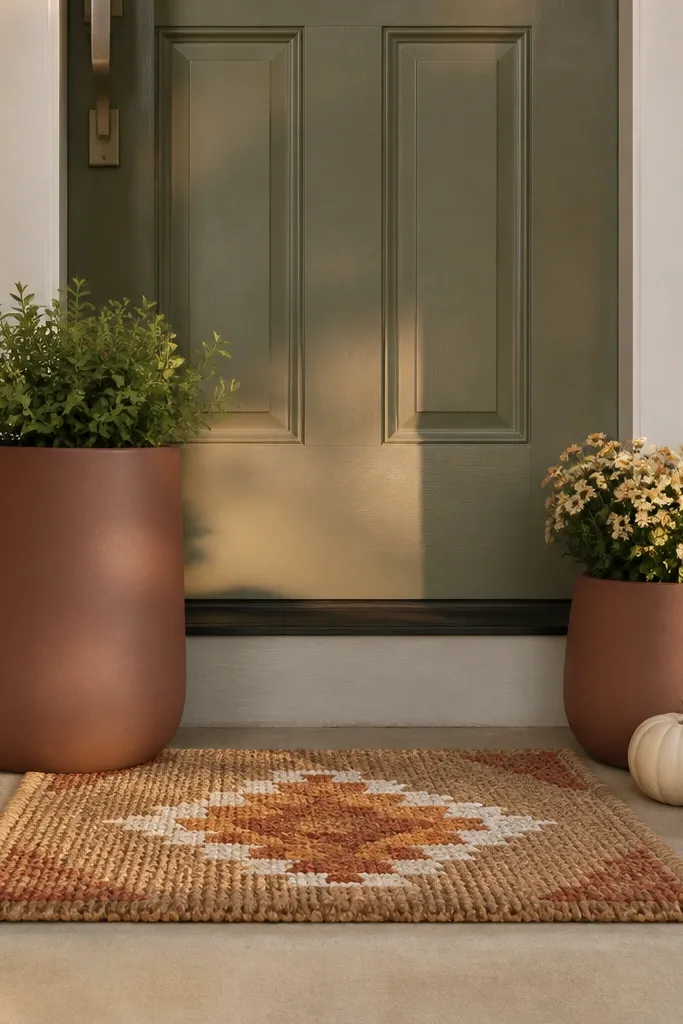
Start by centering the wreath so the bottom sits about 6-10 inches above the doormat edge. Next, select a doormat with the same accent color used on the wreath ribbon or bow (rust, olive, or black are easy wins). Finally, keep the rest of the porch simple: one planter per side or skip side decor entirely if the door area already feels full. Cost is usually $25-80 for the wreath and $20-60 for the mat, depending on materials and size.
A wreath reads instantly from the street, so it’s the cleanest anchor for a beginner-friendly front porch decor refresh. Choose a wreath that hits 18-24 inches across for a standard door; smaller looks like it’s hiding, larger can crowd the frame. Then pick a doormat that shares the wreath’s ribbon color or a secondary color from the greenery. This solves the “I bought a wreath but it still looks unfinished” problem because the doorway becomes one coordinated block.
Watch outDon’t pick a doormat pattern with three competing colors if your wreath already has a strong accent.
Pro tipHang the wreath slightly higher than your eye thinks — it looks more balanced in photos and from the sidewalk.
2. Two matching planters with tall stems for instant vertical balance
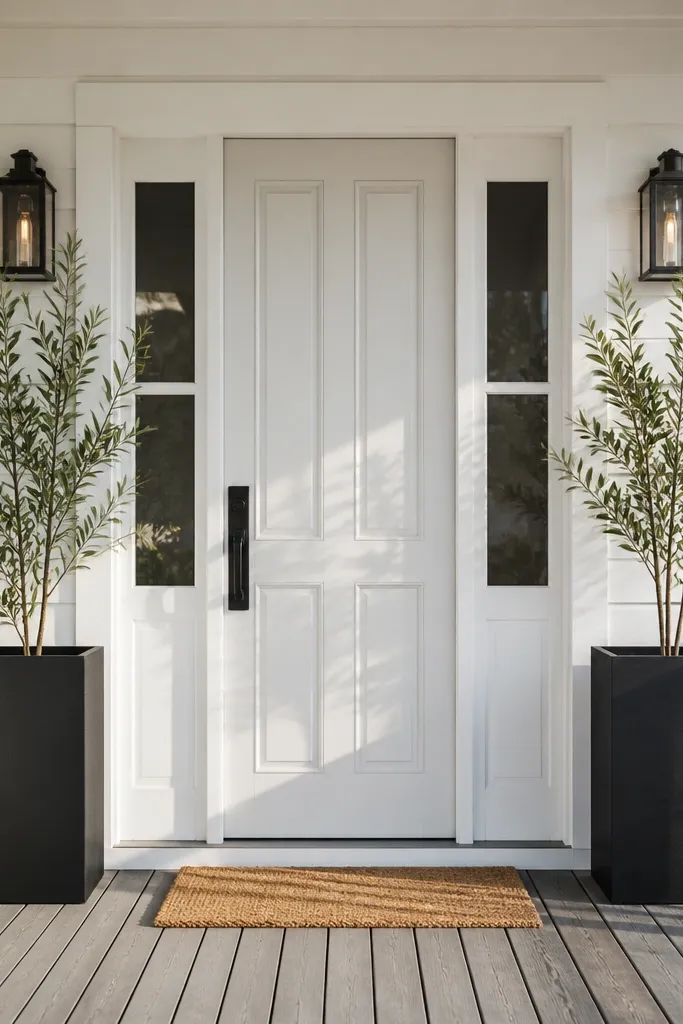
Set the planters about 18-24 inches apart from the door frame so you keep breathing room around the entry. Add a base of faux greenery or moss to the bottom, then insert 2-3 tall stems at different angles; the tallest should land around the wreath’s lower third height. Finally, top with a small layer of decorative gravel or wood chips to stop the arrangement from looking “stuffed.” Expect $40-120 for two planters and $20-60 for stems and filler.
Planters are a porch refresh shortcut because they create structure even when the greenery is simple. Use matching planters on both sides of the door — same shape and finish — and add tall stems so the arrangement reaches up instead of spreading sideways. For a photogenic look, choose planters in matte black, stone gray, or terracotta, then add stems with a natural curve. This fixes the common beginner issue where one planter looks lost and the porch feels lopsided.
Watch outSkip mismatched planter heights; uneven bases make the whole entry look accidental.
Pro tipIf your porch is narrow, use slimmer planters and taller stems rather than wider pots.
3. Front door tray with a sculptural lantern and a single faux plant
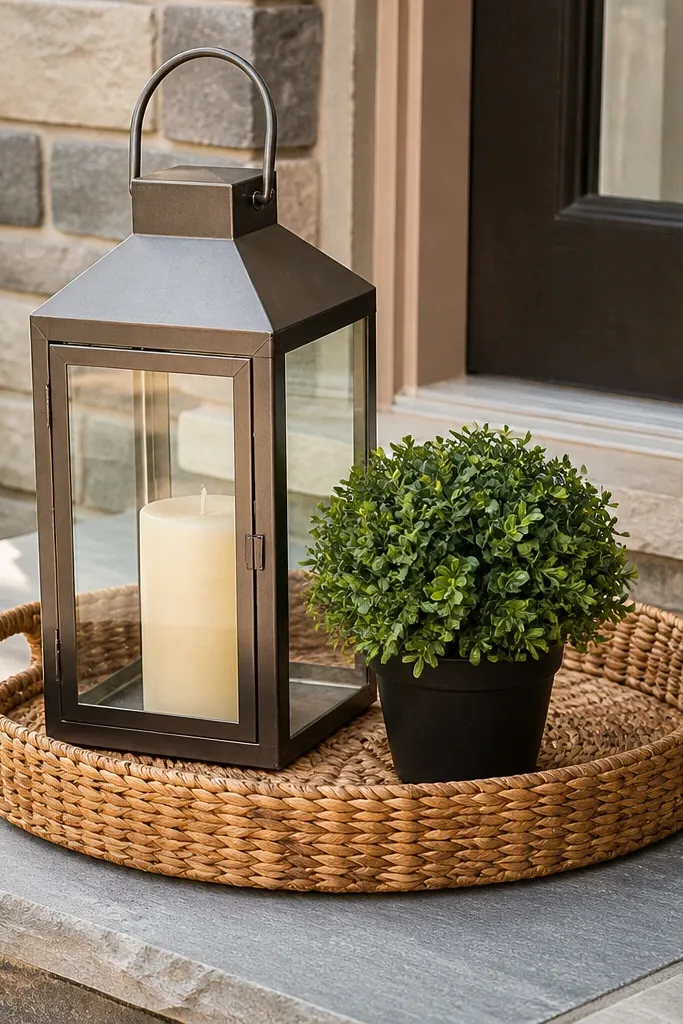
A tray makes porch decor look styled instead of scattered. Choose a shallow tray (about 18-24 inches wide) in wood, woven rattan, or matte metal. Place one lantern as the focal point and add one small plant — like a compact boxwood-style tuft — so the tray has a clear shape and one repeat texture. This solves the “I have a lantern and a plant but they look random” issue by grouping them into a deliberate composition.
Place the tray centered on the porch floor area near the door handle, not pushed into the corner. Set the lantern in the middle-back of the tray, then position the plant on one side so the items form a simple triangle. If you want a finishing touch, add one small filler element like a single decorative stone or a short candle sleeve. Cost is usually $25-70 for the tray, $30-90 for the lantern, and $15-35 for the plant.
Use battery candles with warm white glow inside the lantern — it reads cozy and looks good in evening photos.
Don’t overload the tray with three or four small items; one plant plus one lantern is cleaner.
4. Stacked books under a small sculpture for a neat height boost
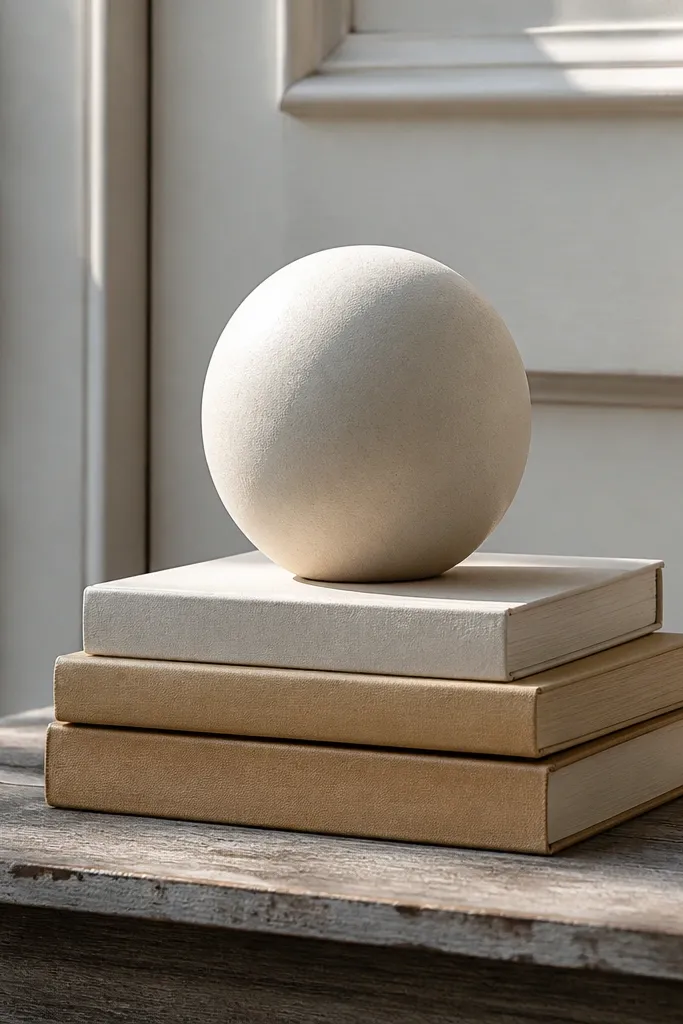
Start by choosing 2-3 books and stacking them so the top is roughly at mid-chest height for an adult standing at the door. Place the sculpture centered on top, then add one matching accent element nearby (a small tray edge, a single faux stem, or a second candle). Keep the sculpture base small enough to leave at least 2 inches of table space around it. Cost is low if you use your own books; add $20-60 for a small ceramic or candle pedestal.
If your porch has a side table or narrow bench, stacked books are a tidy way to add height without buying a tall riser. Pick books with consistent spines in neutrals or one accent color, like black-and-white covers or cream with tan. Then place a small sculpture — a ceramic sphere, a short vase, or a candle pedestal — on top. This gives your entryway a styled look and helps the decor read clearly from across the yard.
Watch outSkip glossy covers if they reflect hard light; matte spines look calmer.
Pro tipWipe book covers with a slightly damp cloth so the spines look crisp and not dusty in photos.
5. Woven runner rug with a doormat in a complementary solid color
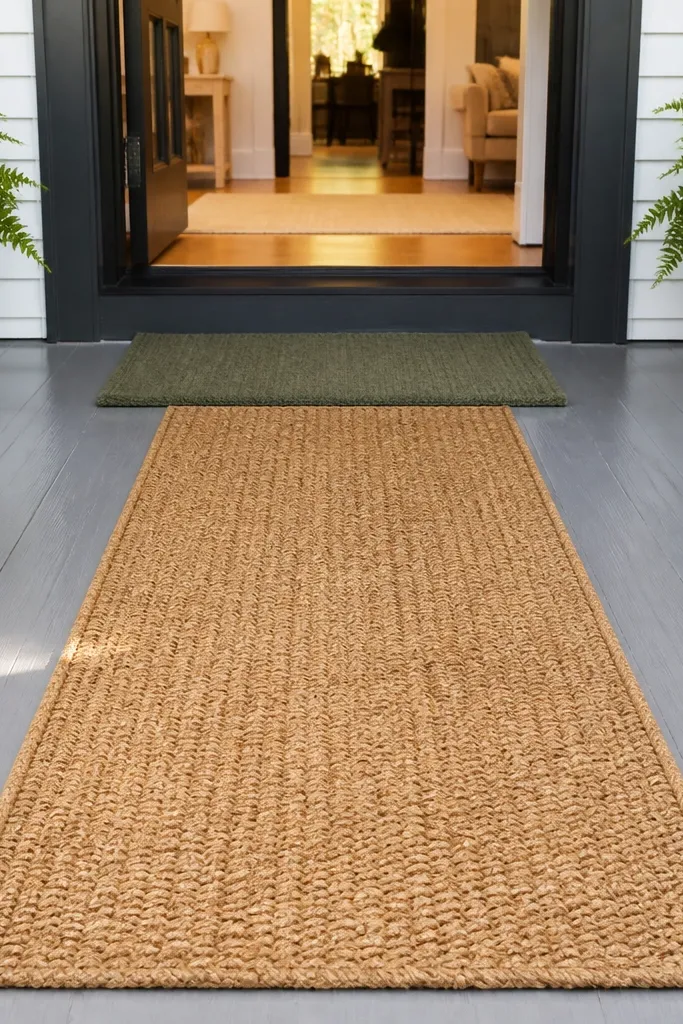
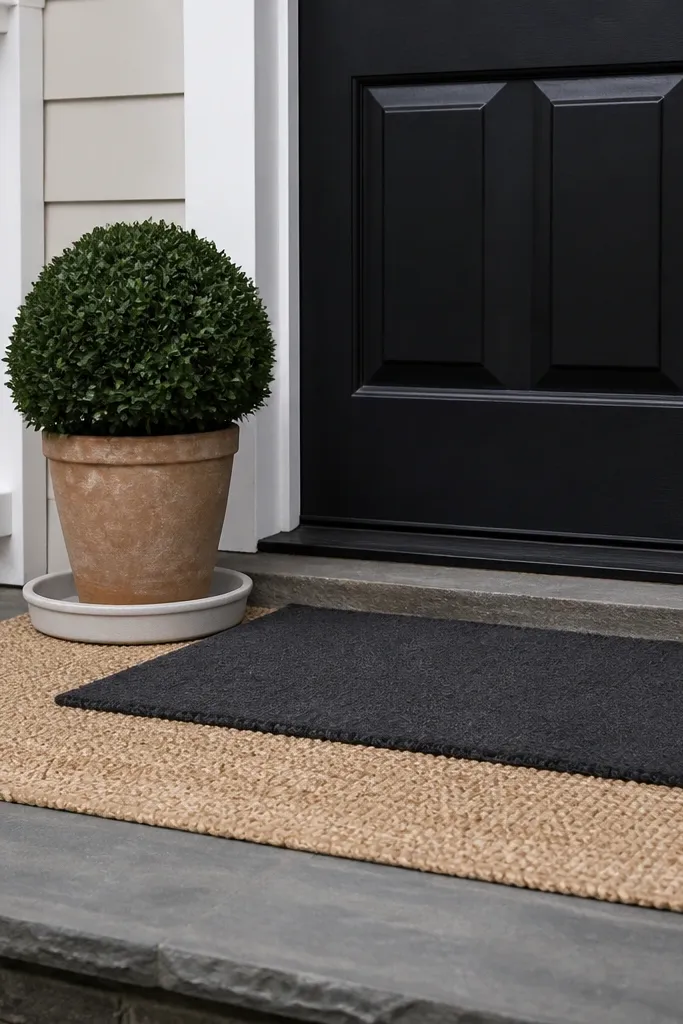
A woven runner turns a plain porch into a defined walkway. Choose a jute or natural fiber runner in a tight weave, then pair it with a solid doormat so the textures do the talking. The contrast is photogenic: warm woven pattern at the base, calm solid at the threshold. This solves the “my porch looks flat” problem because it adds a clear path leading to the door.
Lay the runner so it sits centered on the path to the door — aim for 12-18 inches of runner width if your porch is narrow, 24-30 inches if you have space. Place the doormat directly in front of the door so the runner edges don’t overlap the mat. If your runner sheds, use a non-slip rug pad underneath and trim only if needed. Cost is usually $40-140 for a runner and $20-60 for a doormat.
Choose a doormat color that matches the runner’s dominant neutral — tan with tan, gray with gray.
Don’t pair two busy patterns; woven runner + patterned doormat is how beginners get visual chaos.
6. Garland on the porch rail with two matching ribbon-tied bows
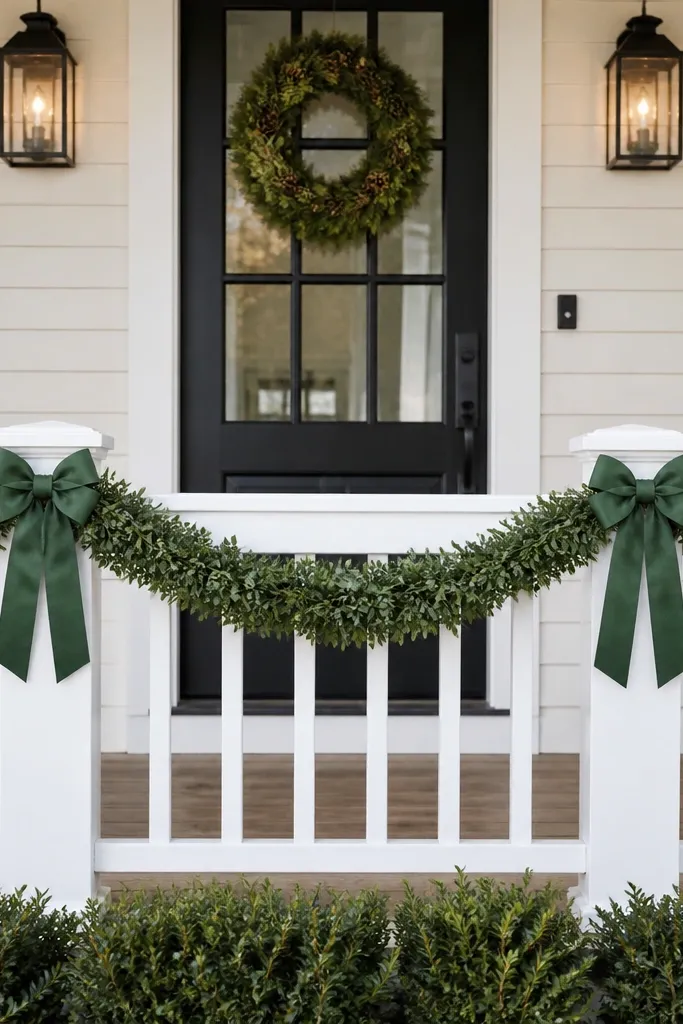
Rail garland is an easy entryway refresh because it frames the porch without filling the floor. Use a simple evergreen-style garland or faux boxwood strands, then tie two ribbon bows — one near eye level on each side of the door. Keep ribbon width around 1.5-2.5 inches so it shows clearly without looking costume-y. This fixes the “porch feels empty above” problem and makes the entryway look styled even if you skip extra decor on the ground.
Drape the garland along the rail starting about 6-10 inches before the door and ending a similar distance after, then secure with small zip ties or plant wire hidden under the rail. Tie bows at two points: one at about door knob height and one slightly above that. Fluff the garland so it has a gentle wave, not a straight line. Cost is usually $20-60 for garland and $10-25 for ribbon.
Use the same ribbon color as your wreath or doormat so the whole entry reads like one plan.
Skip thin ribbon; it disappears and makes the garland look unfinished.
7. Tall lanterns on both sides of the steps with a single color candle
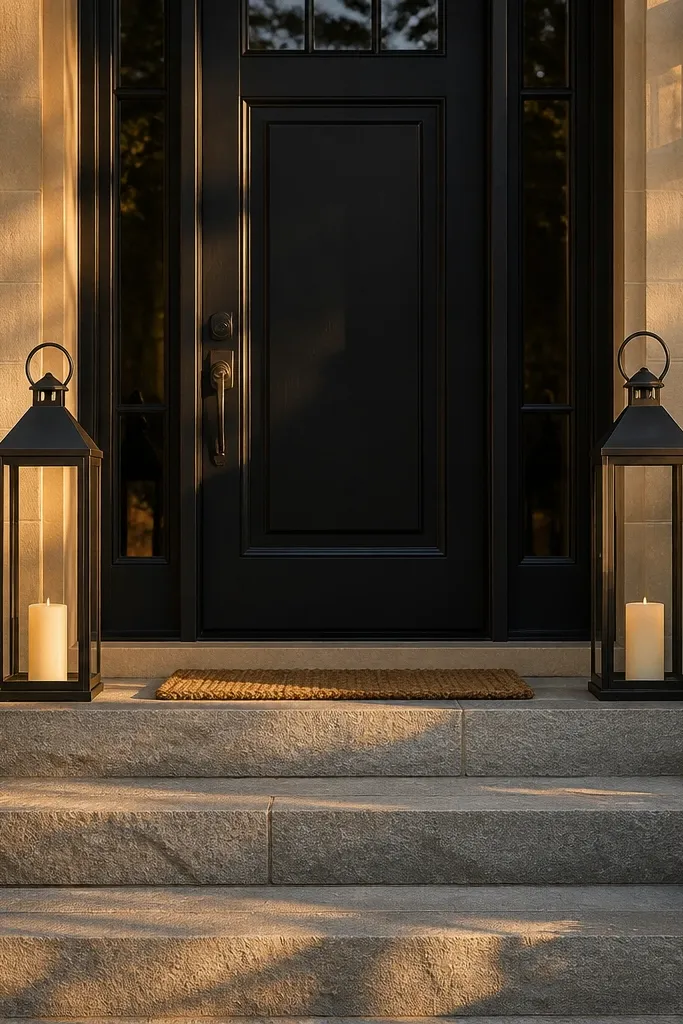
Place lanterns so their outer edges sit about 6-10 inches from the handrail or step edge, then adjust until the gap between lanterns feels balanced. Add faux or real battery candles inside with a consistent color and height (a medium 3-4 inch candle works well in most lanterns). Keep the rest of the step area clear — one lantern pair is enough. Budget $60-180 depending on lantern size and whether you choose real or battery candles.
Symmetry is the fastest way to make a porch look designed. Two tall lanterns — same height and finish — on either side of the steps create a frame for the door and guide the eye upward. Use candles in one color family, like cream or matte black, so you don’t get a patchwork effect. This solves the common beginner problem where lanterns look pretty individually but the entryway still looks off.
Watch outDon’t mix lantern finishes like black metal on one side and brass on the other.
Pro tipWipe lantern glass and use warm white bulbs if they’re battery — cool light makes everything look harsher.
8. Monochrome porch palette with one texture hero blanket on a bench
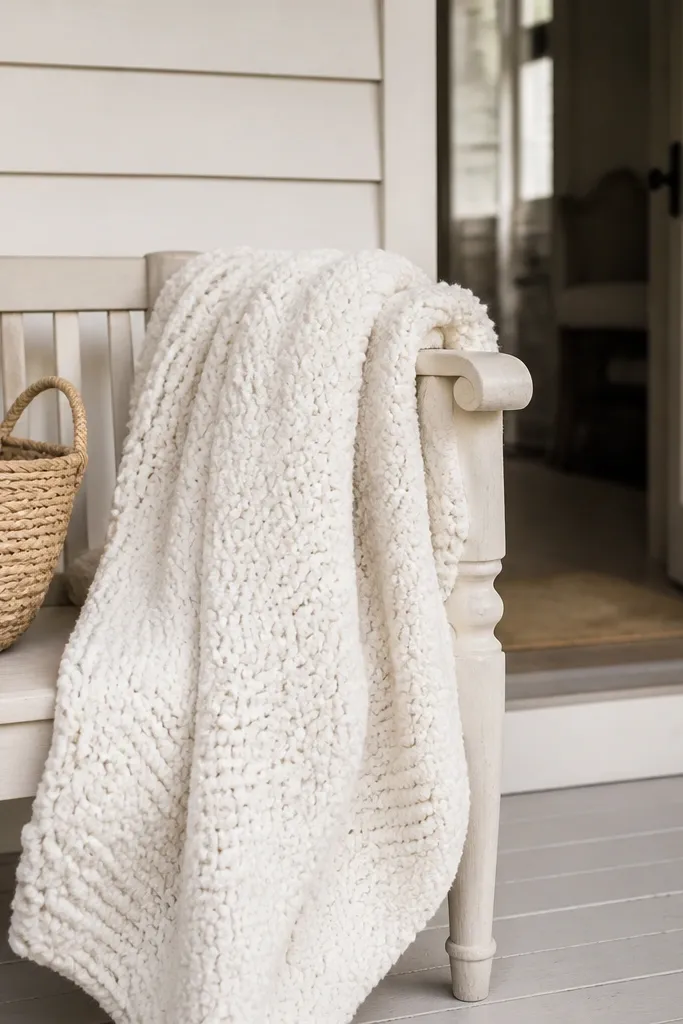
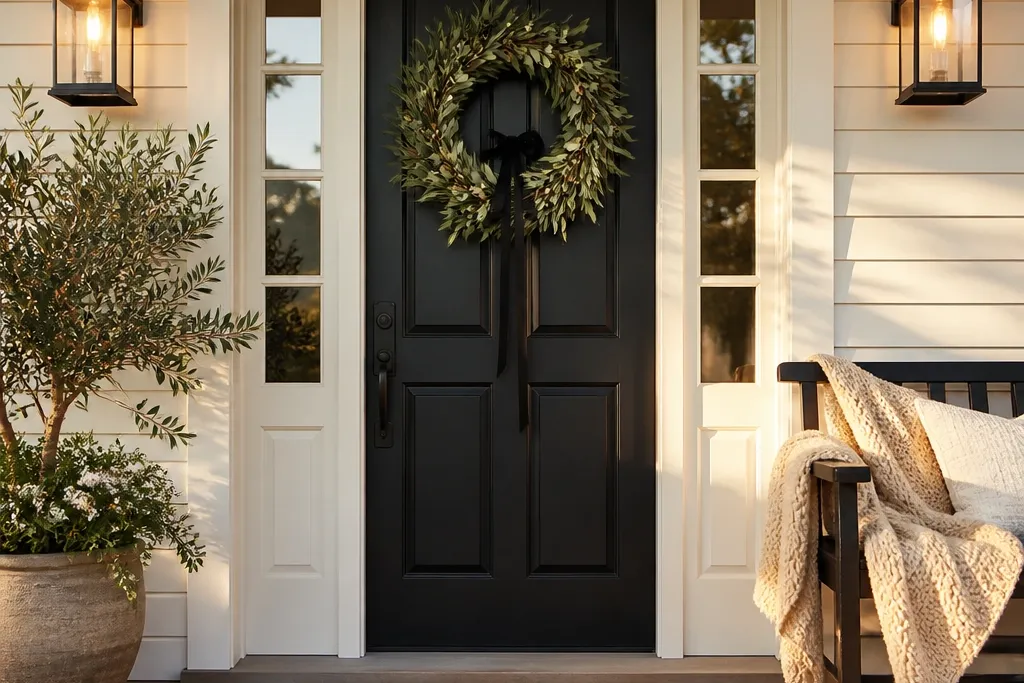
If your porch has a bench, this is the easiest way to get a polished look without stacking lots of items. Pick one monochrome palette (cream, black, or charcoal) and use one textured hero blanket — chunky knit, faux shearling, or a woven throw. Add a simple basket or small tray, but keep it in the same color family so the blanket becomes the focal point. This solves the problem where bench decor looks messy because there are too many competing items.
Fold the blanket once and drape it over the bench so the top edge sits at about the cushion seam height. Add one supporting item: a small tray or basket placed at one end of the bench, not centered. Keep decor to two items maximum if the bench is already visually close to the door. Expect $40-120 for a quality throw and $15-60 for a basket or tray.
Choose a blanket with visible texture; smooth throws blend in and look flat against wood or metal.
Skip a multi-color blanket with busy patterns; it breaks the monochrome look.
9. Hanging planter by the door with a trailing plant for soft movement
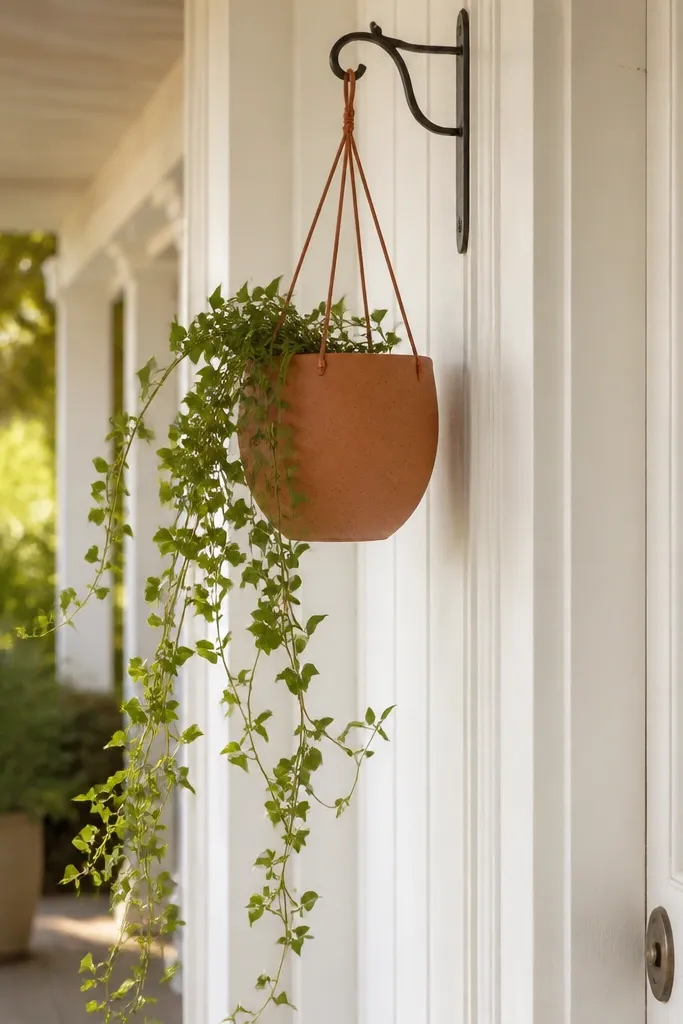
Mount the planter so the lowest trailing leaves sit about 8-12 inches above the doormat or step surface. Use a planters hook or wall bracket rated for the planter weight, then fill with potting mix if it’s a real plant or secure faux stems if it’s faux. Position it slightly off-center toward the side of the door that has more empty space. Cost is usually $25-90 for the planter and $10-30 for hardware.
A hanging planter adds height and softness without eating floor space, which is perfect for small porches. Look for a container with a simple shape and a matte finish, like terra cotta-look ceramic or black metal. Choose a trailing plant style — long stems that drape down — so it creates movement and makes the entry feel alive. This fixes the cramped-porch issue where you can’t fit planters on the ground but the door area still feels bare.
Watch outDon’t place it too low; it will look heavy and cluttered near the doormat.
Pro tipTrim trailing stems so the drape is even on both sides; uneven hanging looks sloppy fast.
10. Simple wall-mounted hooks and a patterned welcome sign on the same vertical line
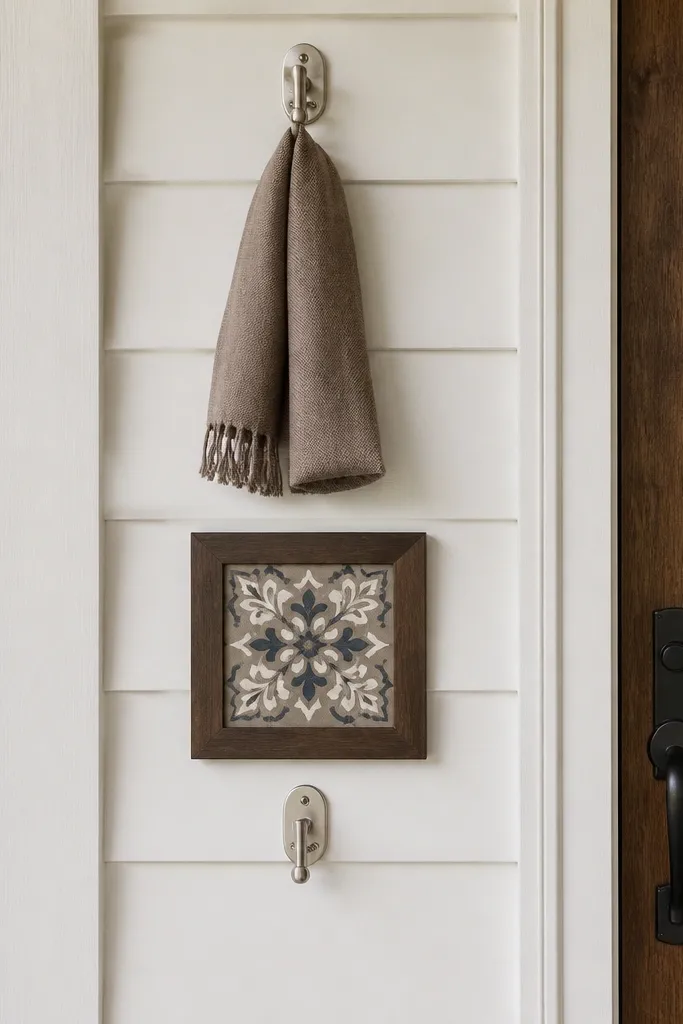
If your porch has a wall beside the door, wall decor is a clean way to add personality without crowding the floor. Install two hooks at a comfortable height for a coat or seasonal bag, then mount a welcome sign or small framed print centered on the same vertical line. Keep the sign size around 10-14 inches wide so it reads clearly but doesn’t fight the door hardware. This solves the “front door area looks blank” problem and gives you a functional, styled entry.
Find the center point of the door area and align your sign center with it, even if hooks sit on either side. Mark the hook positions so the top hook is about 60 inches from the floor, then drill with proper anchors for your wall type. Mount the sign so its bottom sits about eye level — roughly 62-66 inches from the floor for most porches. Cost is usually $15-40 for hooks and $20-80 for the sign.
Use one pattern only — either the sign has pattern or the hooks have color, not both.
Skip cluttered wall art; two items on one wall looks intentional, five looks random.