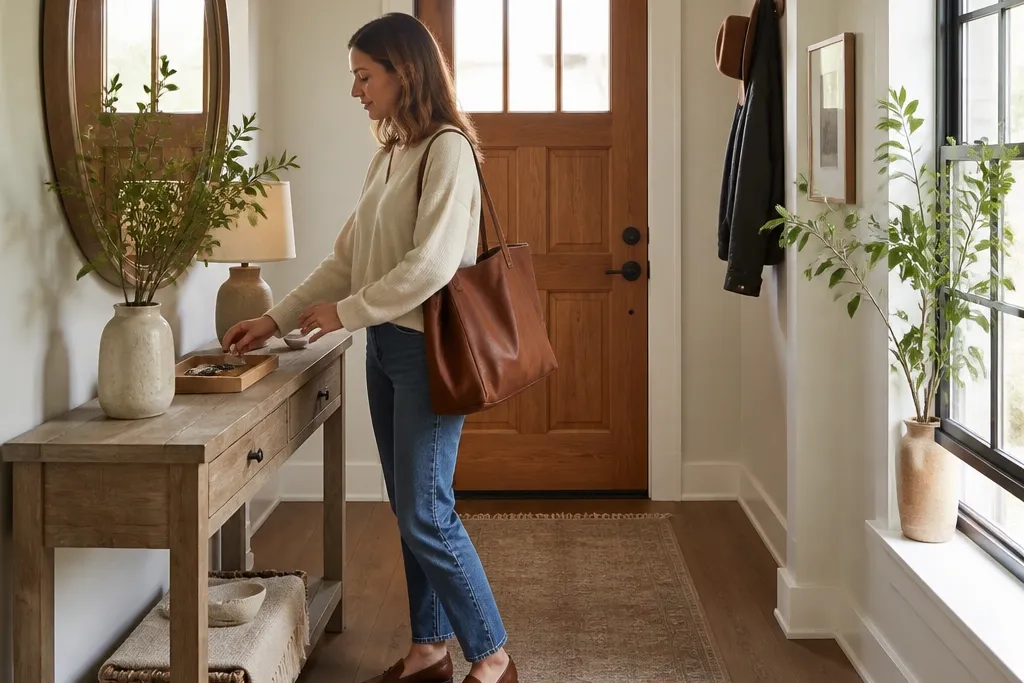
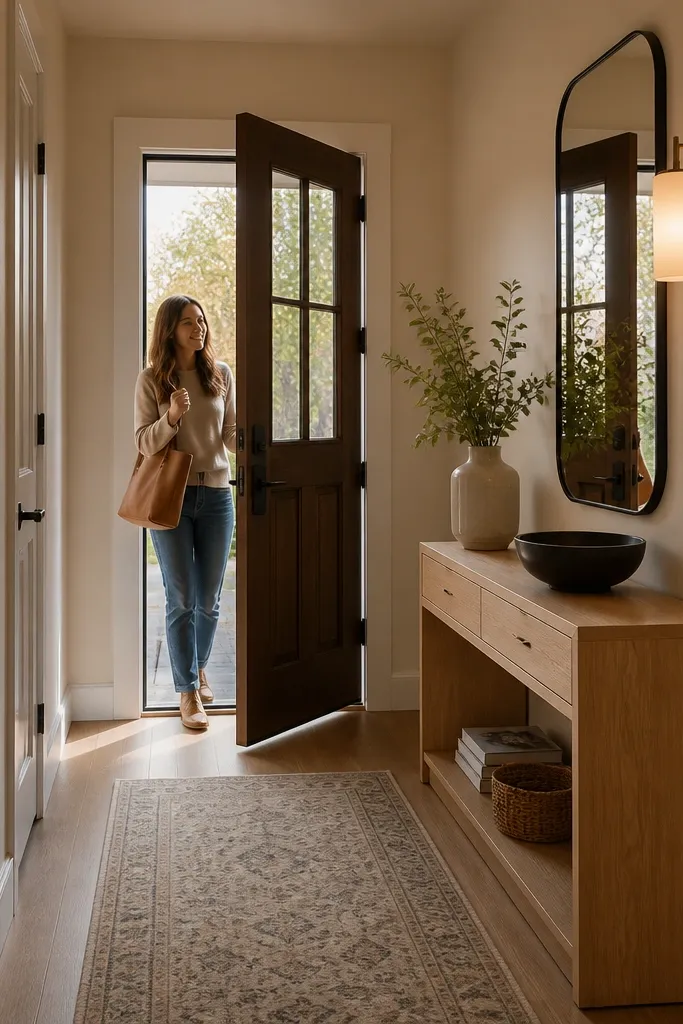
1. Slim console with a tall mirror that reaches the ceiling
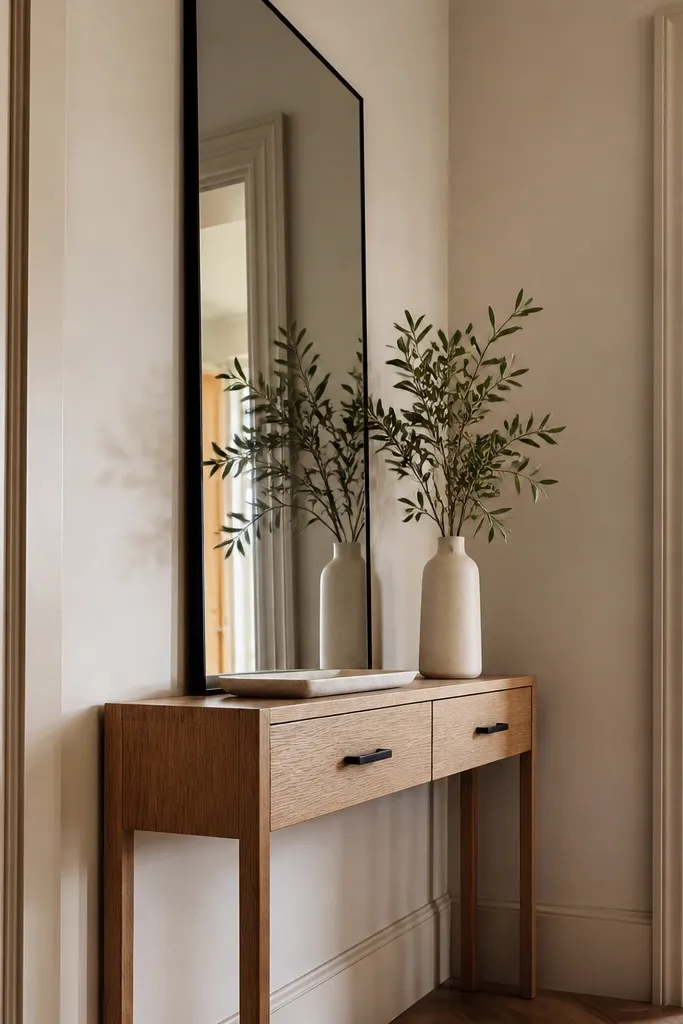
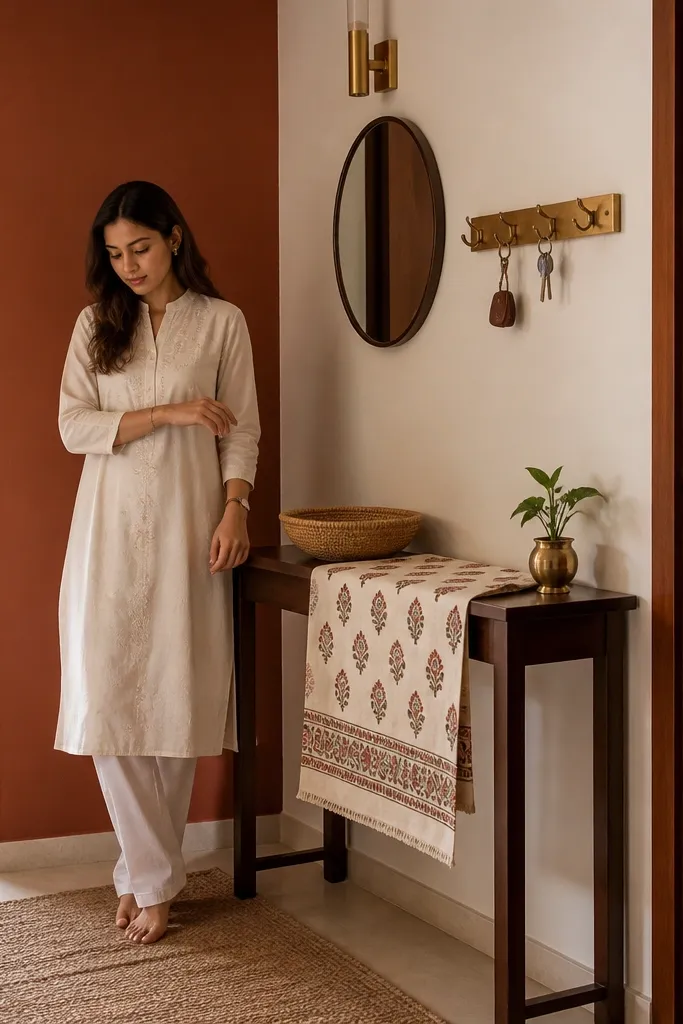
Measure your wall where the mirror will hang, then subtract 2 inches for trim clearance. Buy a console 10-12 inches deep and place it so there’s about 30 inches from the door opening to the front edge of the console. Hang the mirror so its bottom is around 8-10 inches above the console top; use two studs if possible. Add a single wall hook panel near the door for keys and a coat — keep the console top for display only.
This setup makes a tiny foyer feel taller because the mirror pulls the eye upward. Go for a console that’s 10-12 inches deep so you don’t waste walkway space, then choose a mirror at least 60 inches tall. Warm wood (oak, walnut tone) plus matte black hardware looks sharp and hides dust better than high-gloss finishes. Keep the top styling tight: one tray, one small vase, and nothing else that changes height. It fixes the common small-space problem where the entry looks like a dumping zone because the only surface is the floor.
Watch outDon’t choose a mirror that’s shorter than the console — it will make the wall look cut in half.
Pro tipIf the mirror reflects your coat mess, angle it slightly or move hooks so the reflection shows wall art, not hanging jackets.
2. Wall coat rail that runs the full width under a shelf
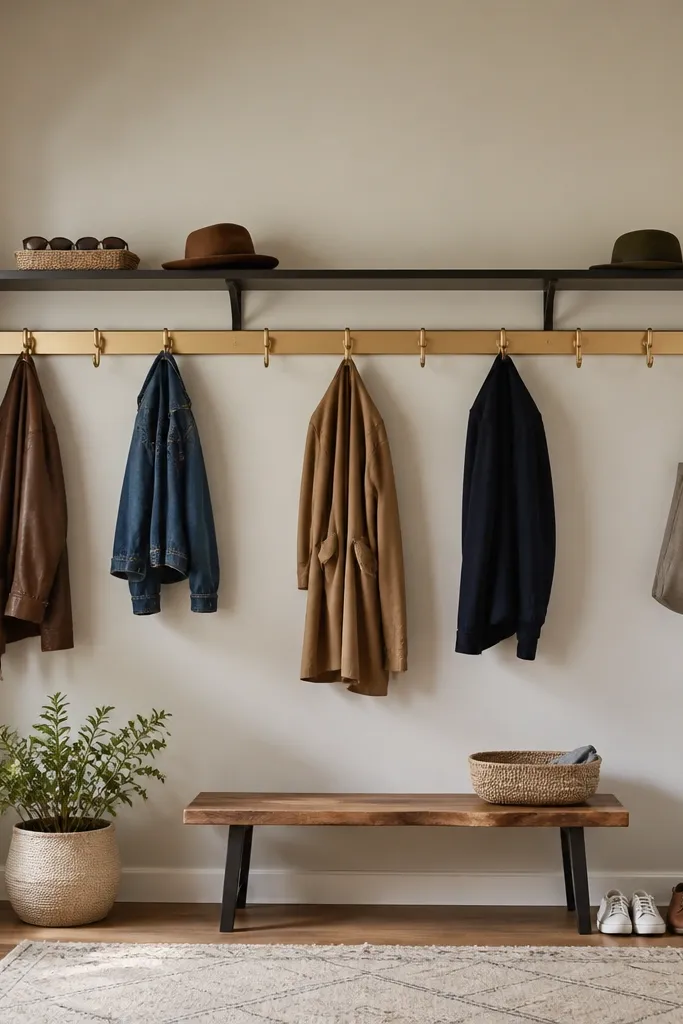
Find the wall span where you can cover most of the coat area; aim for a rail length that matches that width. Mount the rail 68-72 inches from the floor to the top of the hooks, then install the shelf 10-12 inches above the rail so items stay visible. Use a level and locate studs for the rail; for the shelf, use at least two anchors into studs if the span is longer. Put a small woven basket on the shelf for daily accessories and keep the rest off the floor.
A continuous coat rail solves the “one hook per coat” chaos in small foyers. Mount it high enough for coats to hang without dragging, and pair it with a narrow floating shelf for hats, sunglasses, and a small basket. Choose a rail in brushed brass or matte black — brass warms the space, black looks crisp against light walls. The shelf should be only 8-10 inches deep so it doesn’t protrude into traffic. This idea is photogenic because it creates clean vertical lines instead of scattered items on the floor.
Watch outSkip decorative hooks with different shapes — they look busy in small entryways.
Pro tipPaint or stain the wall in a warm neutral (greige, soft taupe) so the hardware reads intentional instead of harsh.
3. Boot tray entry landing mat with a slim shoe cabinet
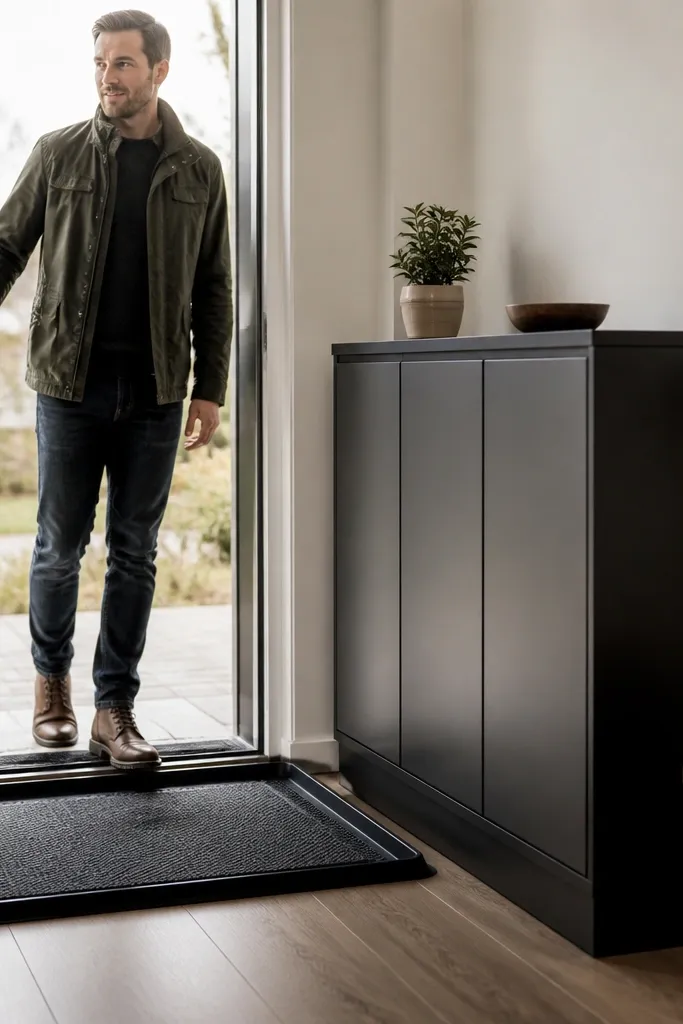
This is the “mess containment” look that still looks good. Put a low boot tray or doormat right at the entry threshold, then place a slim shoe cabinet beside it so wet shoes don’t end up on the floor. Look for a cabinet depth of 12-14 inches with doors that close — the closed faces keep the foyer from looking cluttered in photos. Choose a neutral mat in wool or textured rubber with a tight pattern, not a big busy print. It fixes the small-space small foyer ideas entryway issue where every visitor sees shoes and bags at step one.
Measure the door swing and place the mat so it sits fully under the walking path without blocking the door. Choose a shoe cabinet that fits within 14 inches depth and gets you 2-3 inches clearance from the wall or baseboard trim. Set the tray flush against the cabinet side or slightly in front of it so shoes land in one zone. Add a small scent diffuser or a simple ceramic dish on top — keep it single-item so the cabinet top doesn’t become a second mess.
Use a cabinet with soft-close doors; the quiet closes make the space feel more “designed.”
Don’t use an open shoe rack — it turns every pair into visual clutter.
4. Floating shelves with a narrow runner rug as the anchor
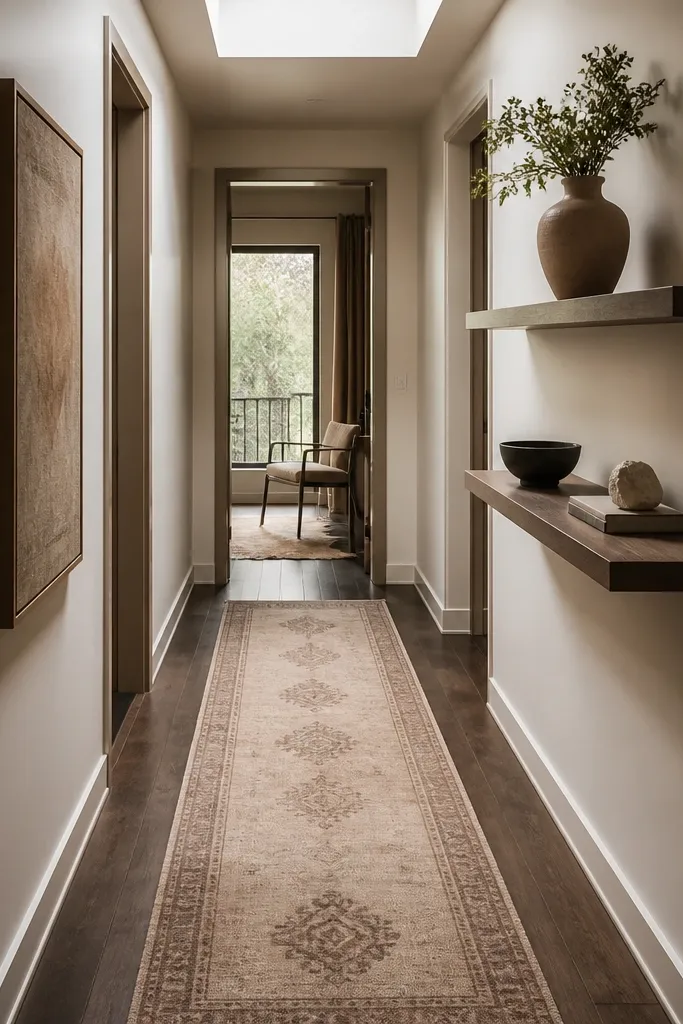
Measure from the front door to the first wall interruption; pick a runner length that ends before furniture blocks the path. Install shelves at 42-48 inches from the floor to the bottom shelf, leaving at least 10 inches vertical gap between shelf layers. Style the bottom shelf with flat items only so it doesn’t look cluttered. Keep the runner pattern simple — a small geometric or solid tone reads cleaner in photos.
If your foyer is narrow and long, a runner rug gives you instant cohesion. Pair it with two floating shelves on the side wall so the eye has a vertical rhythm, not just floor clutter. Choose a runner about 2-3 inches narrower than the wall-to-wall measurement so it feels tailored. For the shelf styling, use three heights only: a book stack, a small framed print, and a single ceramic piece. This works because it creates a guided path without adding bulky furniture.
Watch outDon’t go oversized with shelf decor — one framed piece beats five small frames in a tiny entry.
Pro tipUse rug binding in a contrasting neutral (cream binding on taupe rug, for example) so the edge looks finished.
5. Oversized round mirror with a slim console in light oak
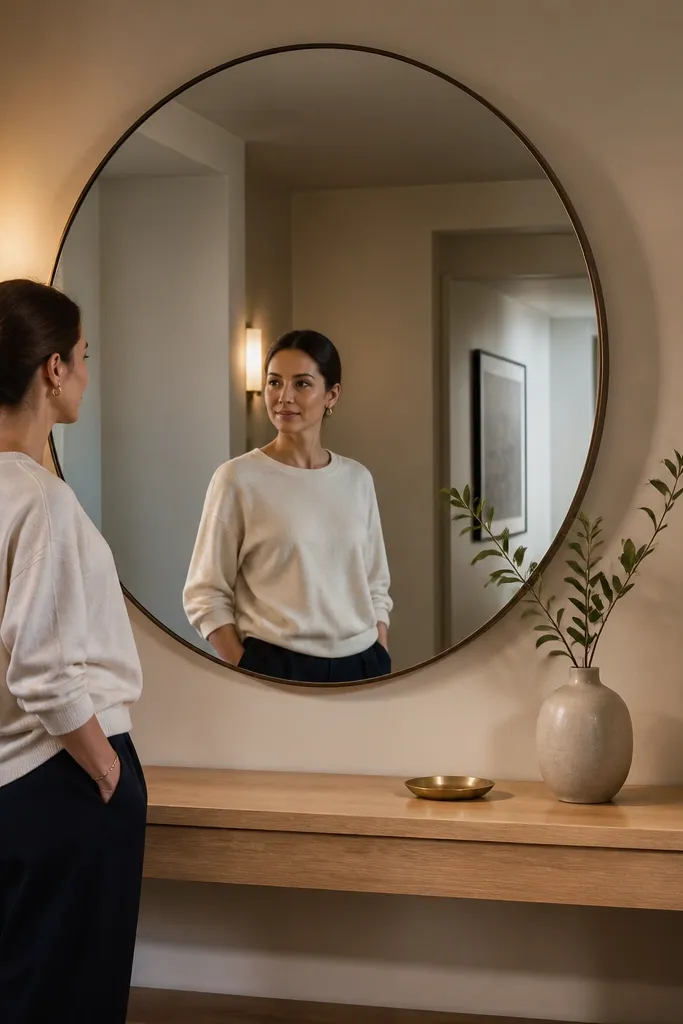
Pick a console depth of 10-12 inches and position it centered under the mirror. Hang the mirror so its center aligns roughly with eye height when standing — typically around 60-65 inches — then adjust based on your ceiling height. Choose a mirror frame in light wood or thin black metal to avoid visual heaviness. Style with one tray and one vertical element (a tall thin vase) so the composition reads balanced.
Round shapes soften tight corners and make a small foyer feel less rigid. An oversized round mirror — 30-36 inches diameter — creates a bigger-than-life focal point without the sharpness of a rectangle. Pair it with a console in light oak so the space looks bright even if you don’t have strong overhead lighting. Keep the console styling minimal: a shallow tray and two objects max. This idea is great for entryways where you need visual expansion but don’t want big furniture depth.
Watch outAvoid thick, ornate frames — they dominate small walls.
Pro tipIf your light source is off to one side, place the mirror so it catches that light — you’ll see brightness in photos.
6. Corner gallery ledge with a narrow bench and wall hooks
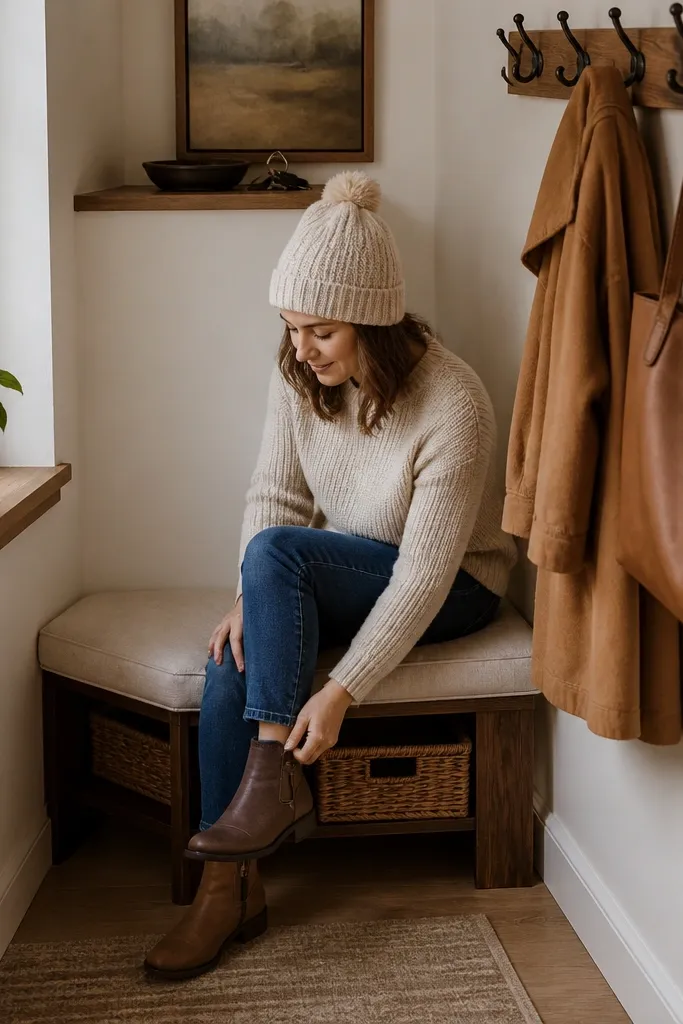
Corners are wasted space in most foyers. Use a corner bench for putting on shoes, then add wall hooks on the adjacent wall and a small gallery ledge above the bench for keys and mail. Choose a bench length of 36-48 inches so you still have room to walk past. The ledge keeps small items off the seat, and the hooks keep coats out of the way. This look works for small-space small foyer ideas entryway because it creates a “station” without blocking the main path.
Place the bench so its front edge leaves about 30 inches of clearance from the door swing path. Install a ledge 16-18 inches above the bench seat and mount hooks nearby at 66-70 inches height. Use a shallow bench depth (around 14-16 inches) so it doesn’t feel bulky in the corner. Hang one framed print above the ledge or lean a framed art piece to avoid cluttering the wall with multiple frames.
Match the bench fabric color to your rug or curtains; it makes the corner feel pulled together.
Skip a deep bench — it steals walking space fast.
7. Slim wall cabinet with glass door for a clean, photo-ready catchall
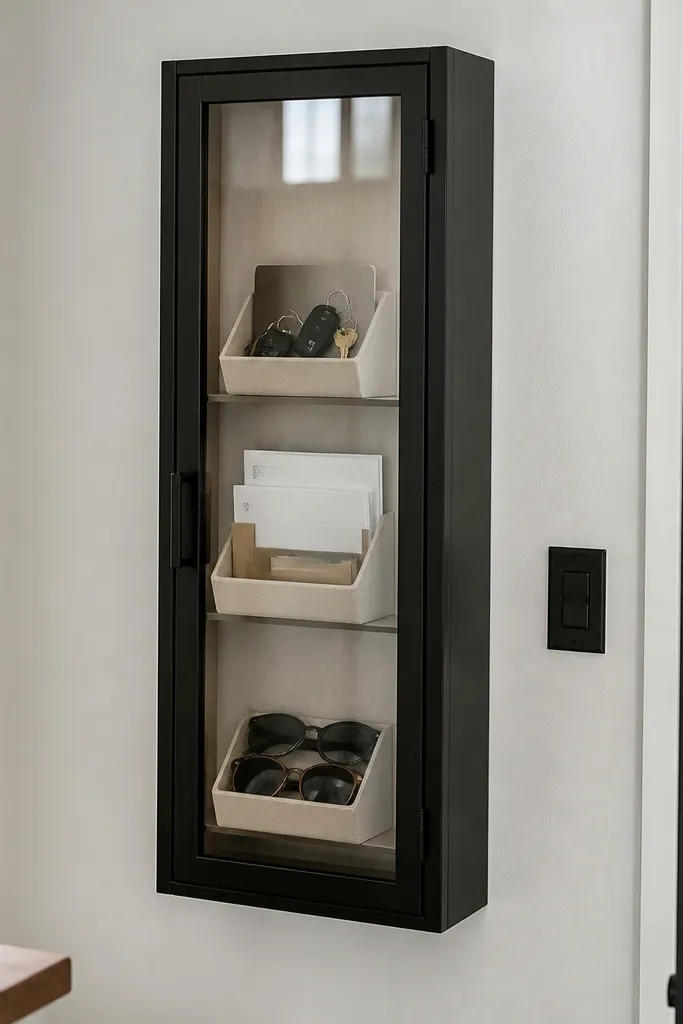
Pick a cabinet with interior shelves or compartments sized for key trays and small mail stacks. Mount it using a stud finder and secure at least two points into studs; keep the bottom edge around 6-8 inches above your door trim if there’s trim nearby. Place the most-used item bin at eye level. Add one small decorative object on top of the cabinet only if the top is visible; otherwise keep it empty to avoid dust and clutter.
A wall cabinet with a glass door looks tidy even when you’re using it daily. Put the cabinet at about 60 inches high so you can drop keys and mail inside without reaching down. Use labeled bins inside so the contents look organized from any angle. Choose a cabinet width that fits your wall — 18-24 inches — and keep the frame finish consistent with other hardware. This idea is built for small-space small foyer ideas entryway because it hides the visual noise while still being easy to use.
Watch outDon’t store bulky shoes here — glass cabinets look messy when they’re packed.
Pro tipLabel bins with small black labels on white tape for a clean look that photographs well.
8. Matte black wall sconce + mirror combo on one side of the entry
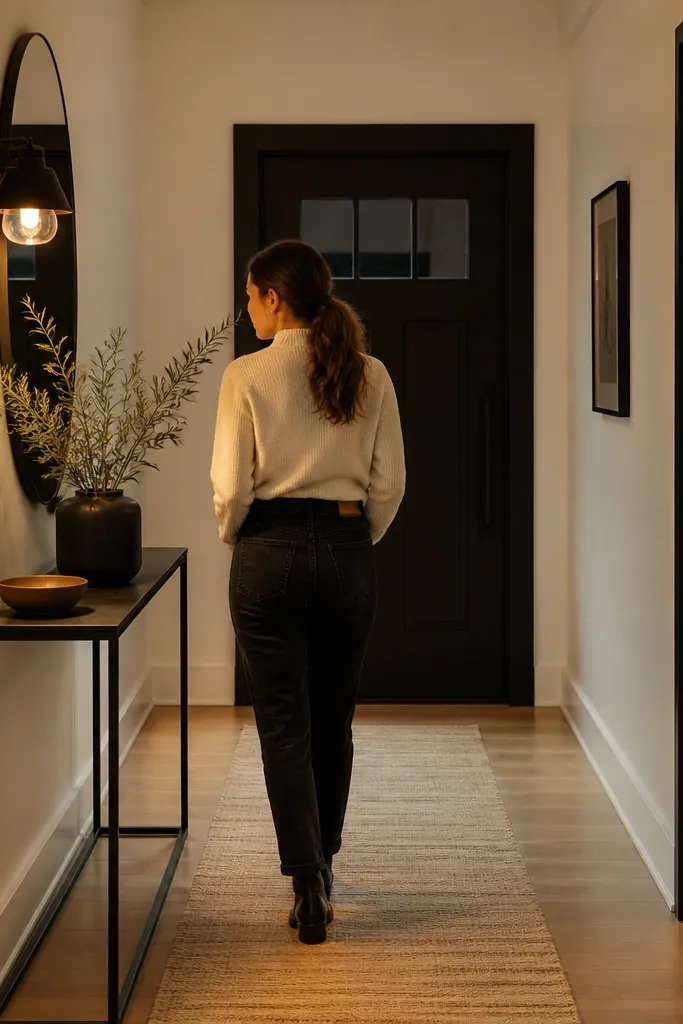
Small foyers look better when light has a direction. Pair a mirror with a wall sconce so the light bounces across the wall and makes the space feel larger than it is. Choose a sconce with a simple shade or a clear glass diffuser — avoid ornate cutouts that cast messy shadows. Use warm bulbs around 2700K so the mirror reflection looks flattering, not blue. This works when your entry has a dim hallway feel and you want a designed look without adding a floor lamp that eats space.
Choose a mirror size that matches the wall — 24-30 inches wide is a good range for tight entryways. Mount the sconce 60-66 inches from the floor and place it so the light aims toward the mirror, not outward into the room. If wiring is hard, pick a plug-in sconce with an inline switch and route the cord along the wall edge. Turn the mirror placement into a light test: tape the mirror location, then see where the sconce reflection lands in the evening.
Use the same finish as your door hardware and hooks so it reads intentional.
Skip cool white bulbs; they make small spaces look harsher in photos.
9. Entry wall art in a long horizontal frame strip
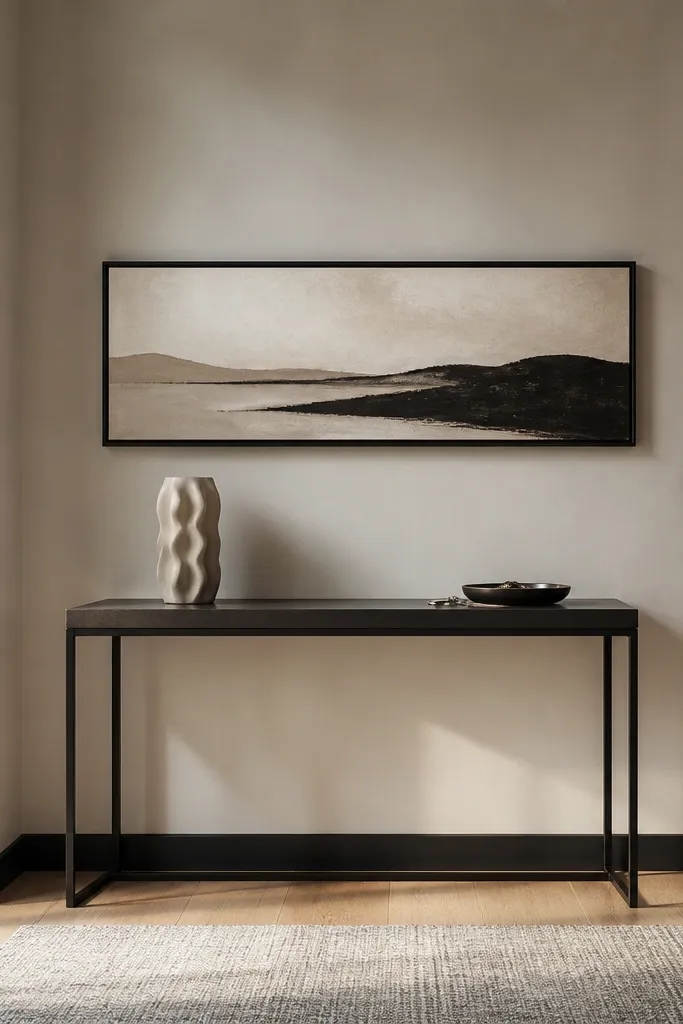
Art can do the job of furniture in a small foyer. A long horizontal frame — about 36-48 inches wide — creates width and pulls attention across the entry so it doesn’t feel like a dead-end hallway. Mount it above a narrow console or above a bench with hooks on the side. Choose a print with a limited palette: black and cream, or muted earth tones. The look is clean because you’re using one statement piece instead of many small items that clutter the wall.
Measure the wall width and pick art that’s about 2/3 to 3/4 of that measurement for balance. Hang the art with the center around 58-62 inches from the floor, then confirm it clears the door swing. If you have a console, keep it 10-12 inches deep so the art doesn’t feel too low. Style the console with a single tray and one tall thin object to echo the frame’s horizontal/vertical balance.
Choose matte frames — glossy ones reflect door light and make the art look messy at different times of day.
Don’t stack multiple small frames at eye level — it crowds the wall in tight foyers.
10. Textured runner in wool blend with a low-profile shoe bench
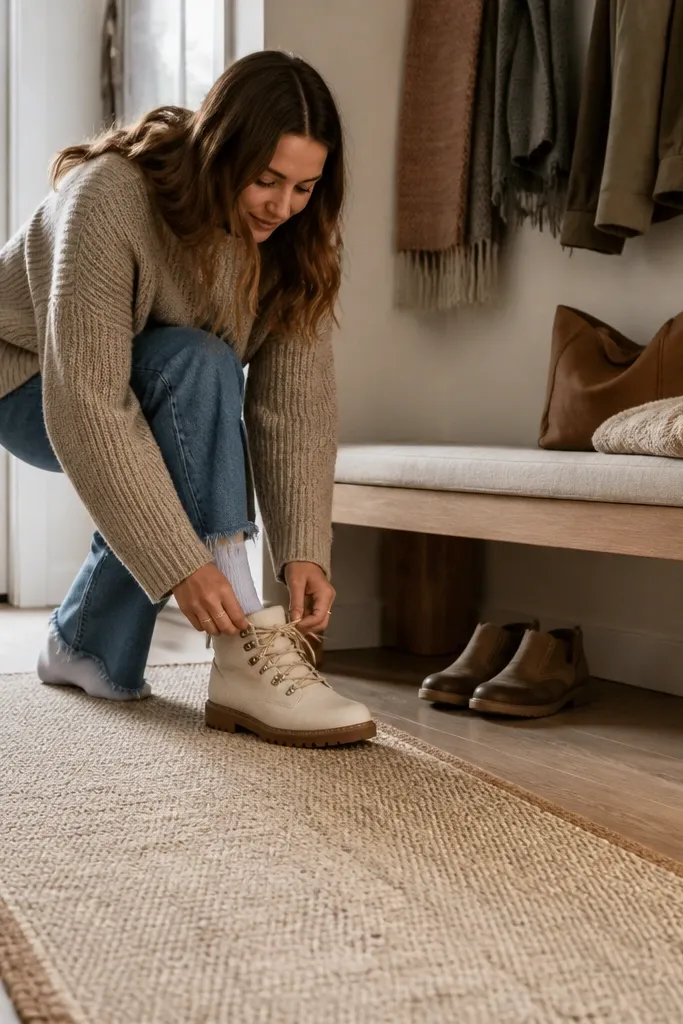
Textile is the easiest way to make a small foyer feel expensive without adding bulk. A wool blend runner adds softness underfoot, and a low-profile shoe bench keeps the entry functional. Choose a bench height around 16-18 inches so it feels grounded, not towering. Stick to neutral tones like oatmeal, clay, or charcoal with subtle texture. This works because the runner visually expands the length of the space and the bench hides shoes so the entry stays calm.
Measure the runner length so it stops before it hits the first piece of furniture in the hall; leave a gap of 6-10 inches if you have a door that swings. Place the shoe bench along the wall where it won’t block traffic; keep bench depth around 14-16 inches. Add a small tray on the bench for keys and a single decorative element. Vacuum the runner edges and use a non-slip rug pad so it doesn’t bunch, which ruins the look quickly.
Pick a runner with a tight, subtle texture — it hides dirt and looks good even after busy weeks.
Skip shaggy high-pile runners; they catch debris and look worn fast.
11. Narrow entry screen panel for privacy + storage pockets
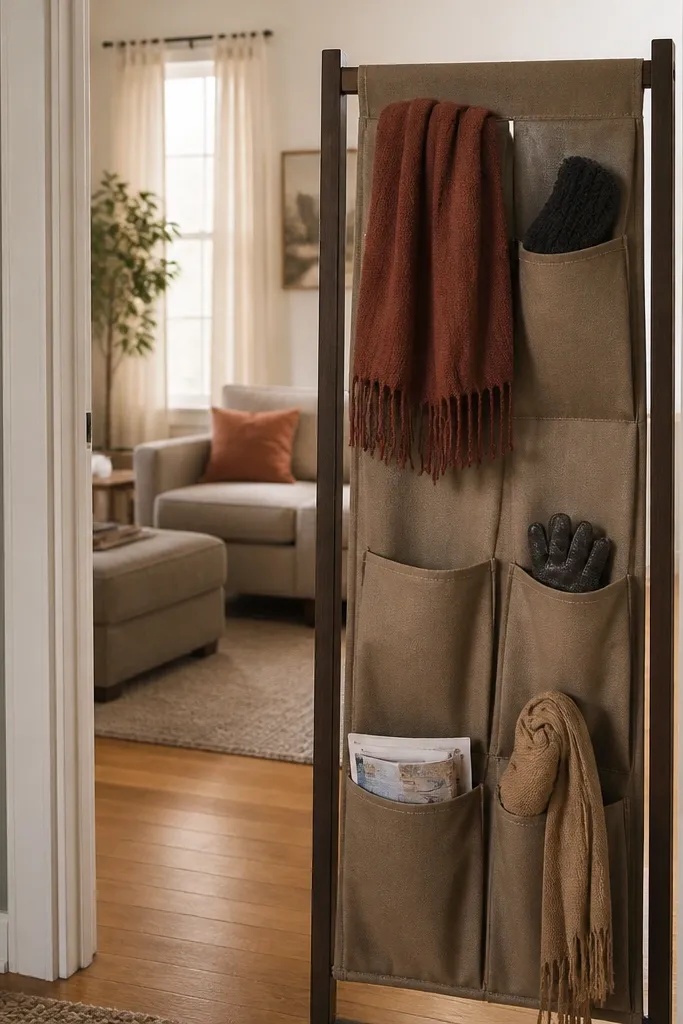
Place the screen a few inches off the wall so the pockets face inward and you can grab items easily. Route the screen so you don’t trap the door swing path; check clearance before buying. Fill pockets with flat items only — use small bins inside if the items are too loose. Add a small tray on the floor beside it only if you need it; otherwise keep the floor clean for the most polished look.
For foyers that open right into a main room, a slim screen creates visual separation and gives you storage without building shelves. Choose a folding screen with fabric pockets that hold small items like scarves, gloves, and mail. Keep the screen width narrow — around 24-30 inches — so it doesn’t block the walkway. Use a neutral fabric (cream, sand, light gray) so it reads airy. This idea is photogenic because it frames the entry and keeps daily items off the floor while still looking soft and intentional.
Watch outDon’t load pockets with bulky coats — it turns the screen into a clutter wall.
Pro tipUse pocket liners in the same color family as the fabric so the pockets don’t look like random storage.
12. Back-of-door organizer with a visual color theme
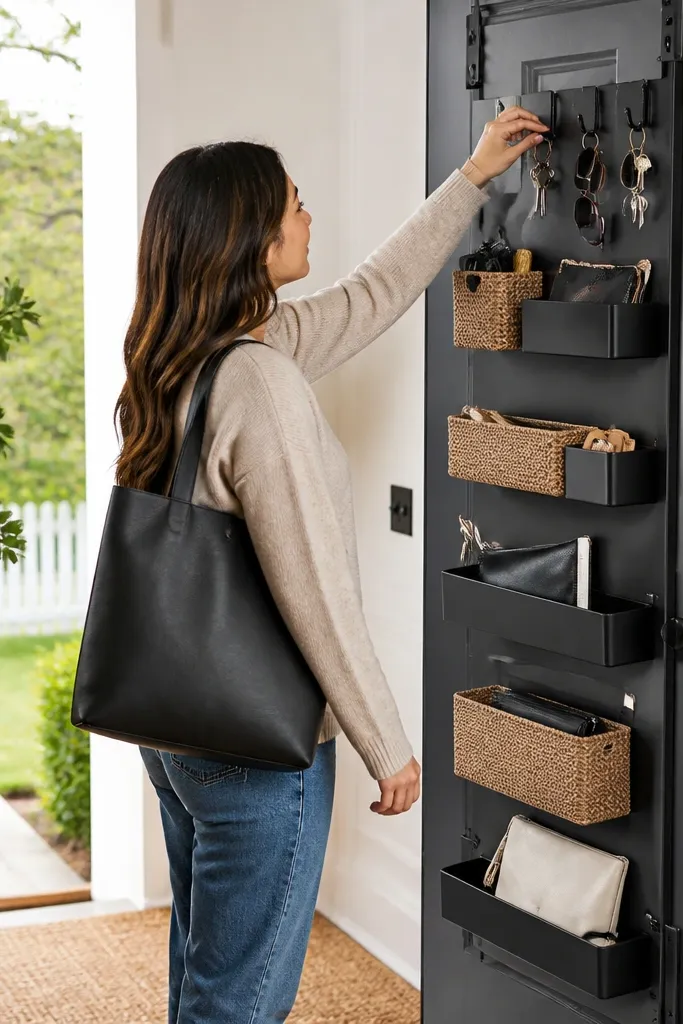
The back of the entry door is prime real estate in small foyers. Use a slim organizer with sections for keys, sunglasses, and small bags, then keep it color-coordinated so it looks designed. Choose neutral bins in black, white, or natural woven tones. If you’re using a hanging shoe organizer, skip the mesh look and go for fabric with solid panels so it reads clean. This idea works best when your front wall is too tight for a console, or when you need maximum function with zero footprint.
Measure the door width and choose an organizer that fits without hitting the floor or the door handle. Install it so the top pockets don’t interfere with the door closing — test the swing before you load it. Use only 2-3 categories: keys, daily accessories, and one mail section. Keep the rest empty so the visual stays tidy and the organizer doesn’t bulge.
Wipe bins with a dry cloth weekly; door organizers collect fingerprints and dust fast.
Don’t mix bright colors — it makes a small foyer look chaotic.
13. Light oak floating bench with under-shelf baskets
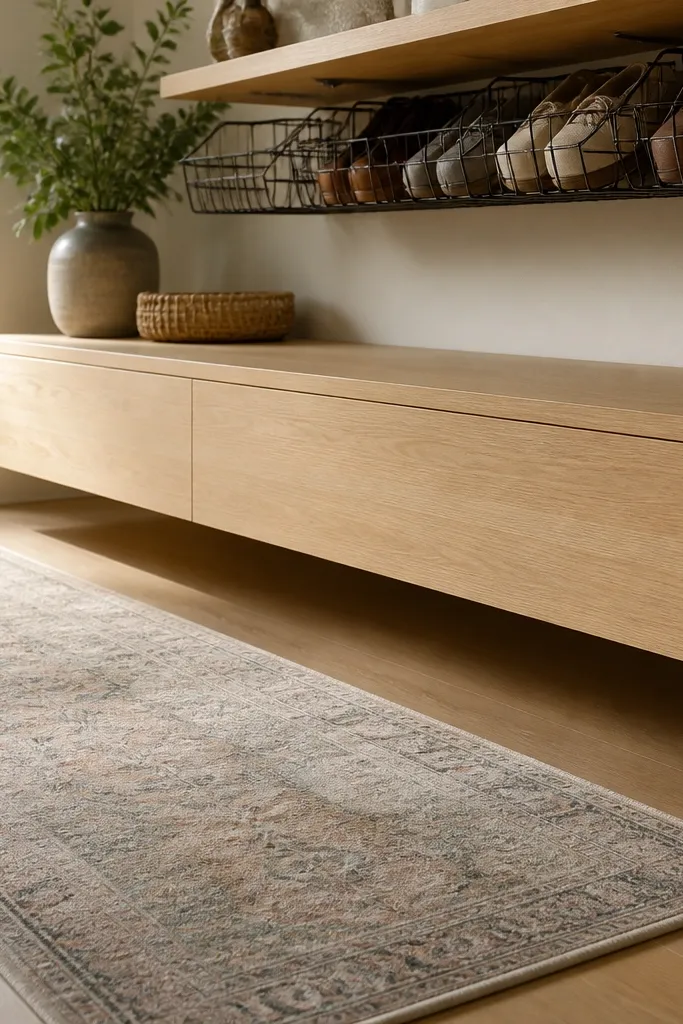
Pick a bench length that matches your wall space — 30-48 inches is a sweet spot for tight entries. Mount it into studs and keep the bench depth around 10-12 inches so it doesn’t protrude into traffic. Install a narrow shelf above or behind the bench depending on your wall — aim for baskets that slide in without scraping. Add two baskets only at first, then expand after you see what you actually use daily.
A floating bench gives you the look of seating without the bulky mass of a full bench. In small-space small foyer ideas entryway, the “lift” from the floor makes the entry feel bigger and easier to clean. Pair it with under-shelf baskets for shoes or scarves so the bench stays visually clean. Choose light oak or pale walnut for warmth, and keep baskets in woven natural tones or black for contrast. This setup works for narrow foyers where a traditional bench steals sight lines.
Watch outSkip heavy dark finishes if your entry has low light — it makes the bench look heavier.
Pro tipChoose baskets that stack neatly; lopsided baskets look messy even when the bench looks clean.
14. Vertical shoe storage tower in a narrow hallway niche
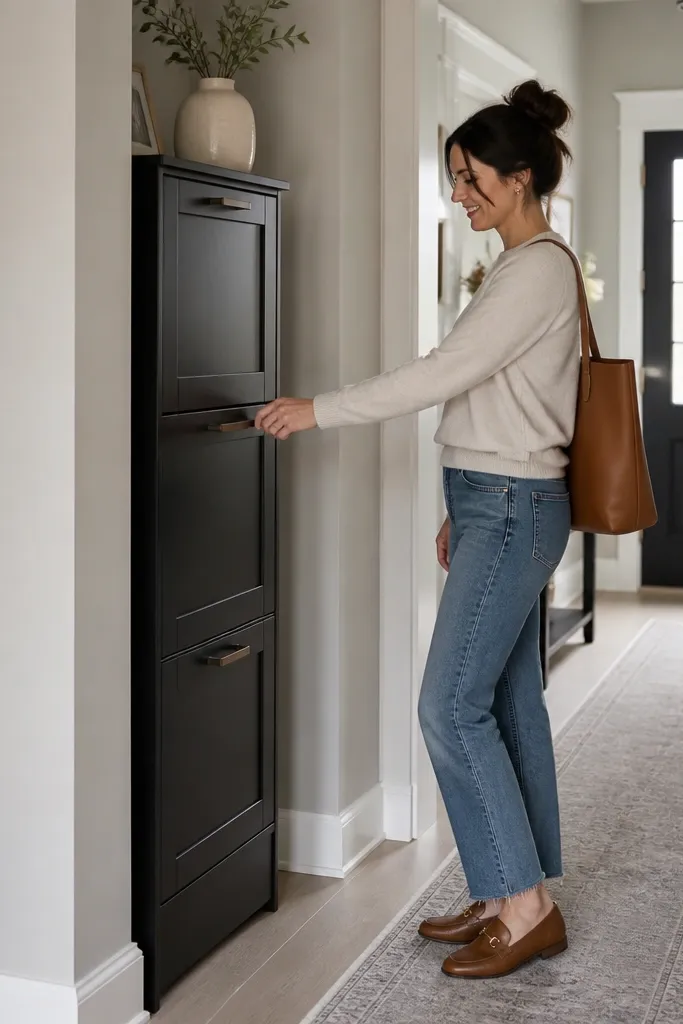
When your foyer is narrow, a tall shoe tower is the cleanest storage move. It keeps shoes contained and lets you use the rest of the floor for a runner or a small rug. Look for a tower that’s 16-18 inches wide and has doors or a closed front so the top surface stays calm. Choose a finish that matches your hardware — matte black or light wood. This idea hits the promise for small-space small foyer ideas entryway because it turns the biggest visual mess into a single vertical object.
Measure the niche width and depth and choose a tower that fits with 1 inch clearance on each side for easy opening. Place it near the door where shoes appear, not down the hall. Keep the top empty or use one tray that’s flat and low. Organize by pair type: boots in the bottom section, sneakers in the middle, and dress shoes up top so opening doors doesn’t become a shuffle.
Add a small label on the inside of the door so guests can put shoes back without guessing.
Don’t stack the tower with loose items on top; it turns into the new catchall.
15. Crisp monochrome entry with a slim bar cart as a floating shelf
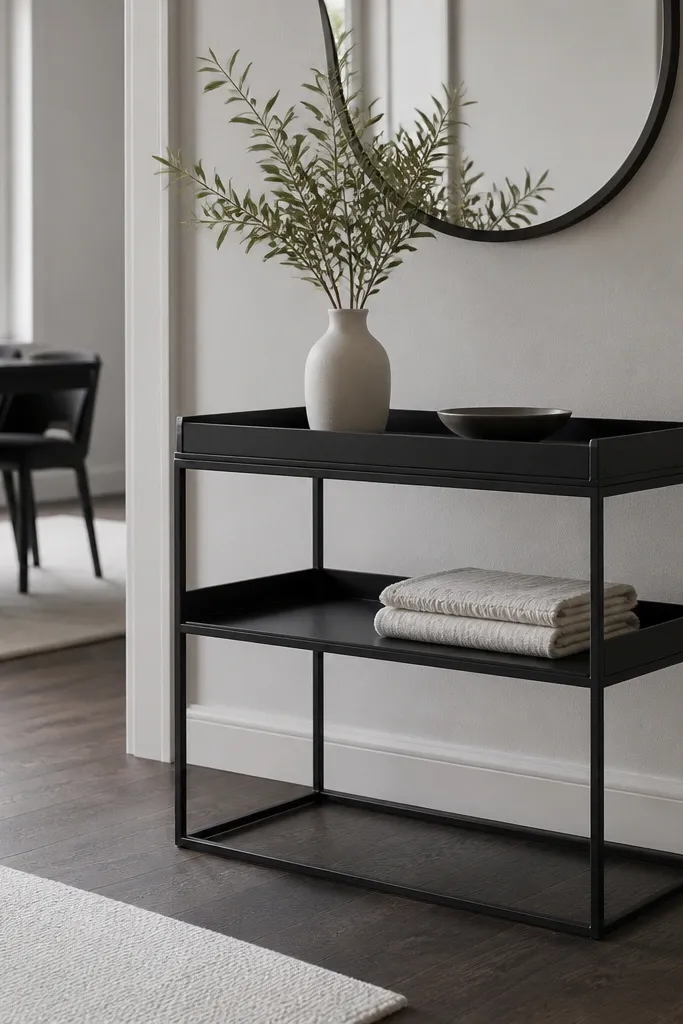
A slim bar cart gives you a photogenic surface that moves when you need clearance. In a small foyer, carts feel “light” because they have open sides, so the floor still looks open. Go monochrome — matte black frame with a tray in black or white — and keep the styling to three items max. Use it for a rotating seasonal look: one vase, one candle, one small dish. This works when you want small-space small foyer ideas entryway solutions that look styled but don’t require heavy installation.
Choose a cart width around 18-22 inches and place it along the wall where it won’t block the door swing. Keep one cart shelf dedicated to daily items and the other to display; don’t mix categories. Wipe the metal weekly so it stays crisp in photos. Add a non-slip mat under the tray if it slides, and position the cart so the front edge stays at least 30 inches from the main walking path.
Use a tray with raised edges so items don’t look scattered when the cart gets bumped.
Don’t use a cart with too many shelves; it creates visual noise in tight entries.