1. Cozy farmhouse wreath + lanterns on both sides
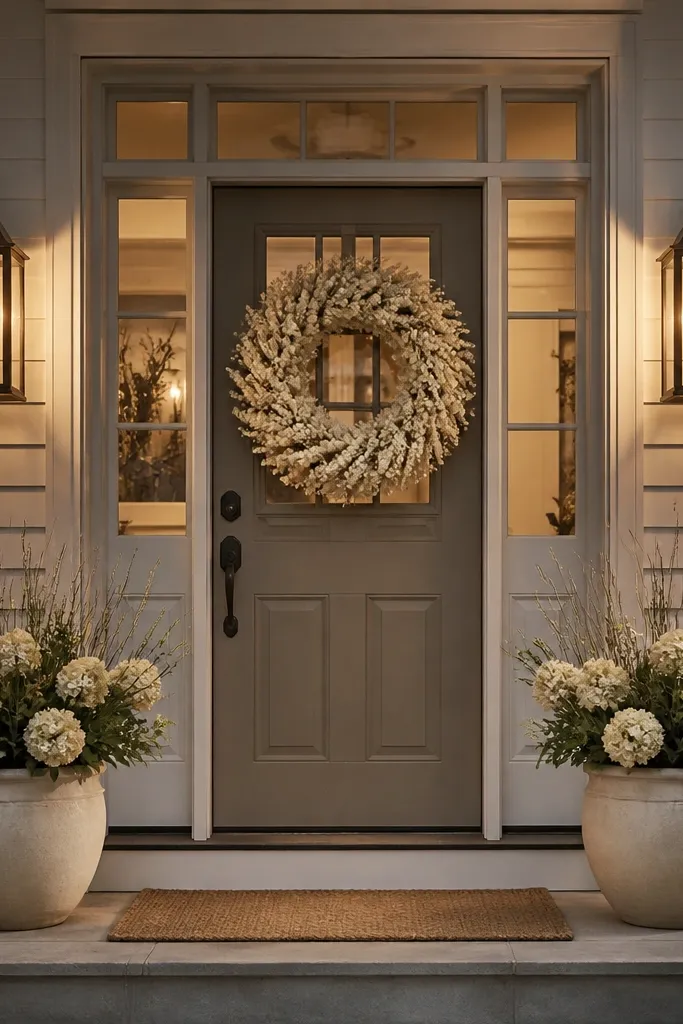
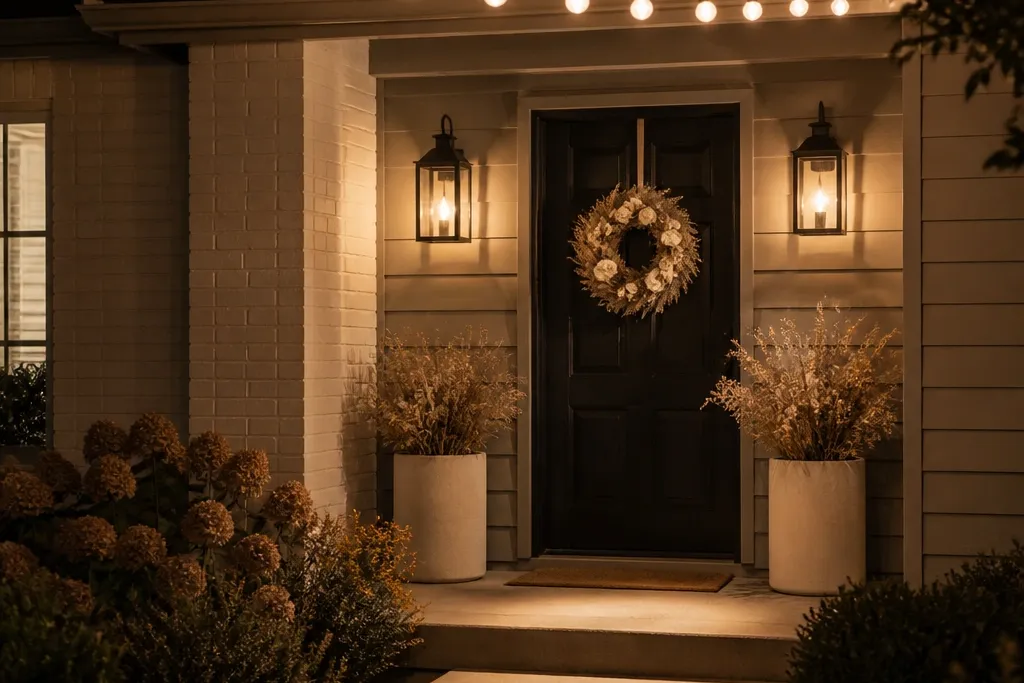
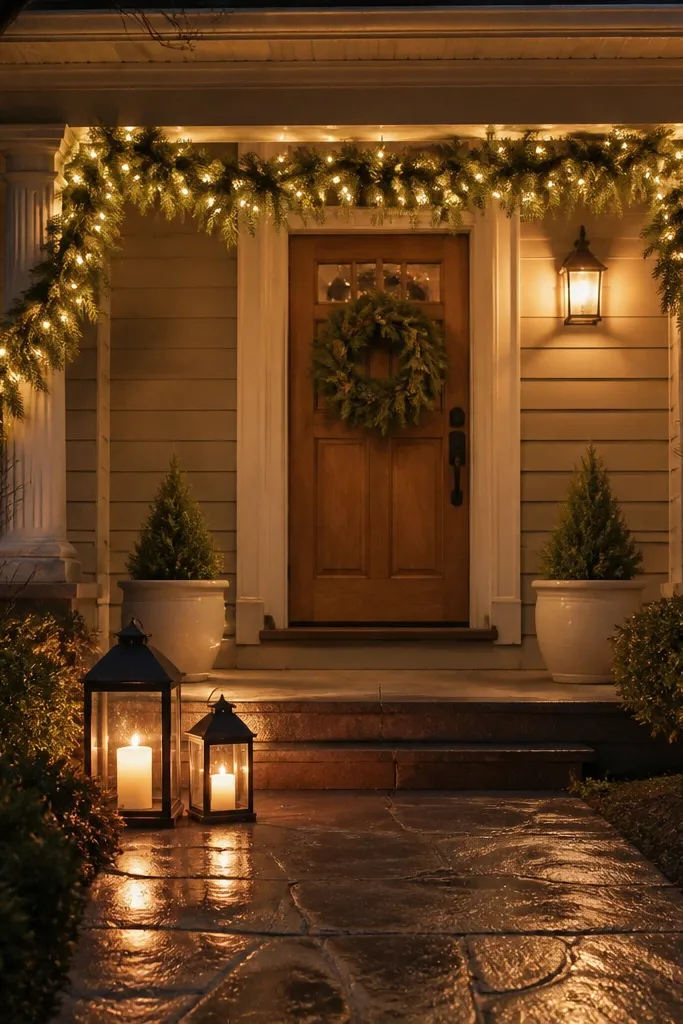
First, choose a wreath size that fits your door: aim for about 24-30 inches for standard doors. Then set two lanterns on matching stands or planters so their handles sit roughly level with the bottom edge of the wreath. Finally, route the lantern power cords behind the front door trim or along the wall side, and swap to 2700K bulbs if you’re using LED inserts. Cost-wise, this is usually a mid-range look because lanterns are the anchor pieces, but you can keep it tight by using one wreath form and two simpler lanterns.
This setup reads “welcoming” from the street because the wreath is your focal point and the lanterns give you warm light at two consistent heights. Go for a cream or tan wreath with matte stems, then add two black metal lanterns (or aged bronze) with warm bulbs inside. The lantern glass should be clear or lightly frosted so the light spreads without looking harsh. Place the lanterns at the same distance from the door on both sides to create instant balance — the key when you want curb appeal without overthinking it.
Watch outSkip random lantern sizes — mismatched heights make the whole entry look accidental.
Pro tipUse a wreath that has visible texture — burlap ribbon loops or dried stems — so it doesn’t look flat when the lights turn on.
2. Black-and-cream modern entry with globe string lights
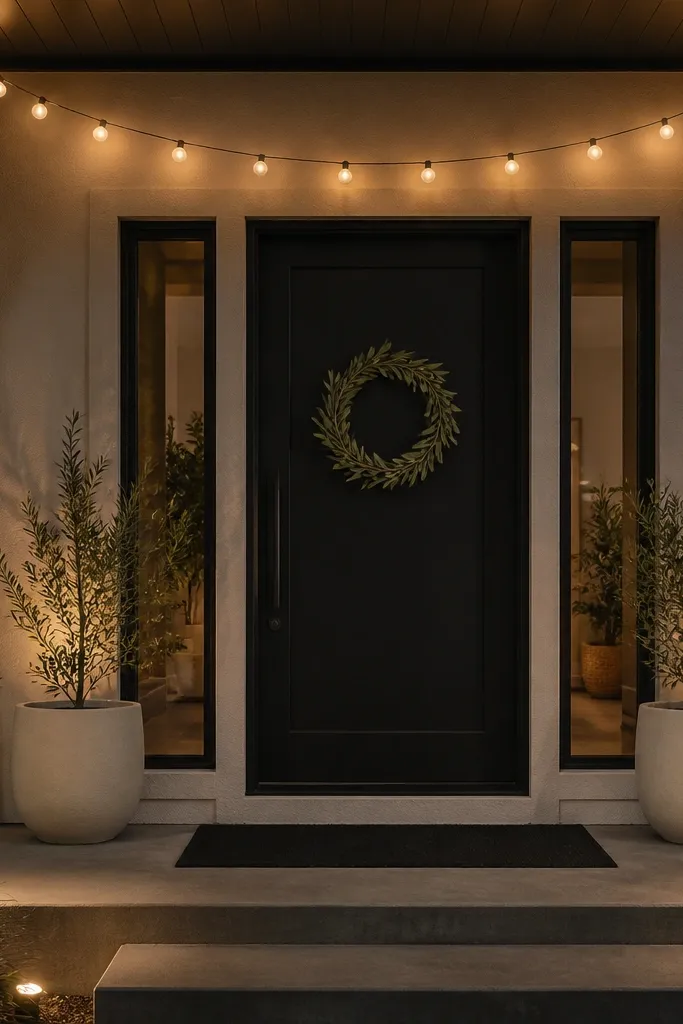
Modern porches look best when the lighting is clean and patterned. Globe string lights (small round bulbs) give a soft halo without the messy look of long strands of bare bulbs. Pair them with a black front door, cream planters, and a minimal wreath or slim garland so the light becomes the star. The contrast of black hardware and warm white bulbs makes the porch feel styled even if you keep decor minimal.
Start by hanging globe string lights along the top of the entry frame or under the porch eave, keeping the spacing tight (about 4-6 inches between bulbs). Then place two matching cream planters on either side of the door, or one planter if the entry is too narrow. Finally, add a simple wreath in the same cream/black palette and tuck any extra cord behind the planter bases. You’ll spend most of your budget on the string lights; everything else stays affordable because the look is driven by the lighting pattern.
Choose bulbs with a warm glow and avoid cool white — cool light makes cream decor look gray.
Don’t mix silver hardware and black lights; it creates visual noise fast.
3. Warm wood stair-step planters with fairy lights
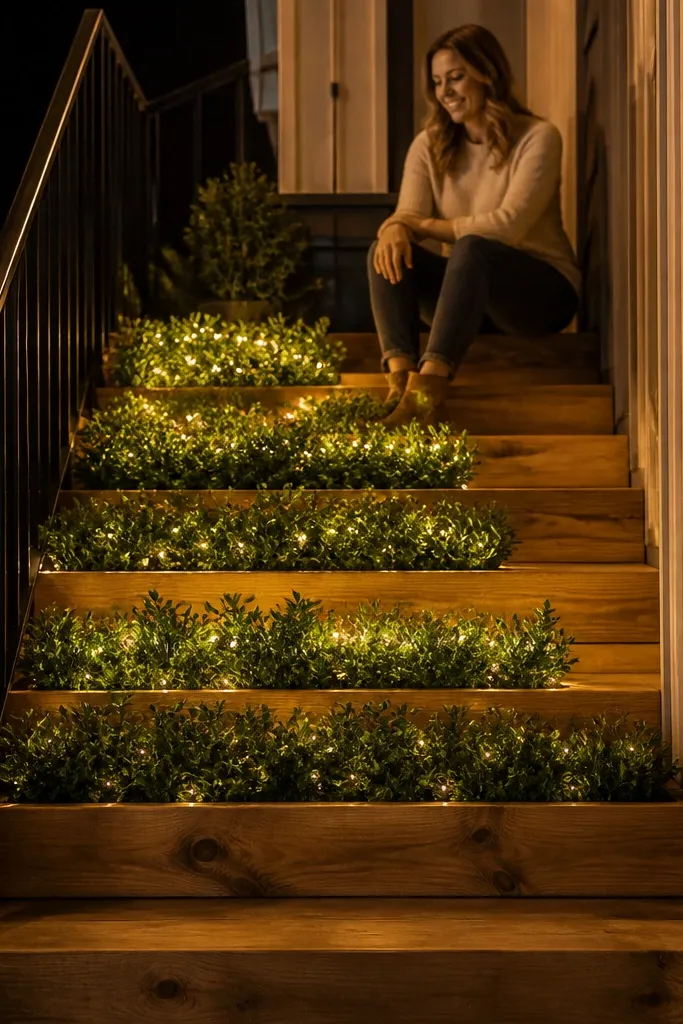
First, pick a stacked planter set that reaches at least door-knob height so the light reads even from the sidewalk. Then wind micro LEDs around the inner corners and back rails, leaving the front face clear so you see decor instead of wiring. Finally, tuck a small battery box in the planter base and secure it with a zip tie so it won’t shift when you water plants. This is a budget-friendly option because you can reuse existing planters and spend on just the lights and one bundle of greenery.
If your porch is narrow, you need vertical rhythm and “glow” that doesn’t take up floor space. Stair-step planters or stacked wooden crates let you create height without clutter. Wrap warm fairy lights (micro LEDs) around the back edges of the planters and between greenery so the glow looks built-in, not taped-on. Use warm wood tones (walnut, honey oak, or natural) plus greenery in deep green or olive so the lights look like they’re coming from within.
Watch outDon’t wrap lights in a tight spiral across the front — it looks like you added Christmas lights, not porch decor.
Pro tipHide lights behind leaves — aim the glow outward by wrapping around the “back spine” of the greenery.
4. Outdoor garland across the porch rail with ribboned warm bulbs
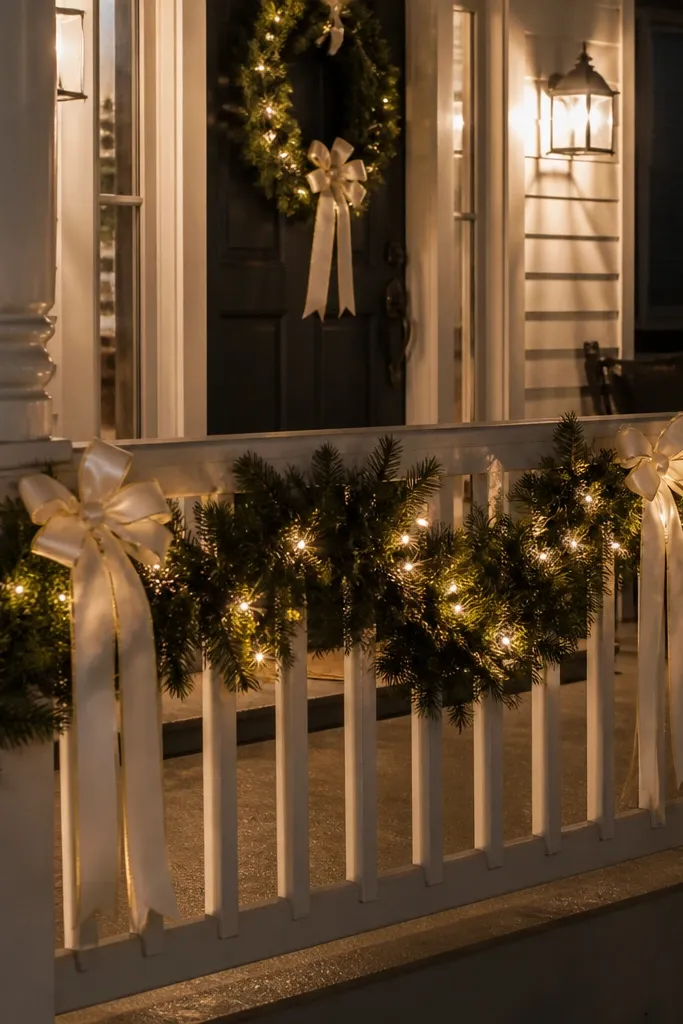
Garland lighting makes a porch look finished because it frames the entry like a picture. Use an evergreen garland (real or high-quality faux) and add warm lights woven through the greenery, then finish with ribbon loops that match your color theme. This works especially well if your porch has a horizontal rail or railing where you can create a long, continuous line of light. The lights should be warm and dimmable if possible so the porch doesn’t overpower your entry door.
Start by measuring your rail length and buying garland that covers it with at least a 6-12 inch overlap at corners. Then weave mini lights through the garland from the back, keeping the bulb density consistent, and secure with zip ties or green twist ties every 8-10 inches. Finally, hang the garland on the rail using hooks or small nails so it sits about 4-6 inches below the top rail line. Expect a moderate effort because you’re assembling, but the result is a clean, photo-friendly “line” of light.
Use two ribbon colors max: one neutral (cream, tan) and one accent (black, burgundy, or deep green).
Skip tangled cords — route the power source to a single discreet spot and build from there.
5. Lantern cluster on a doormat landing glow
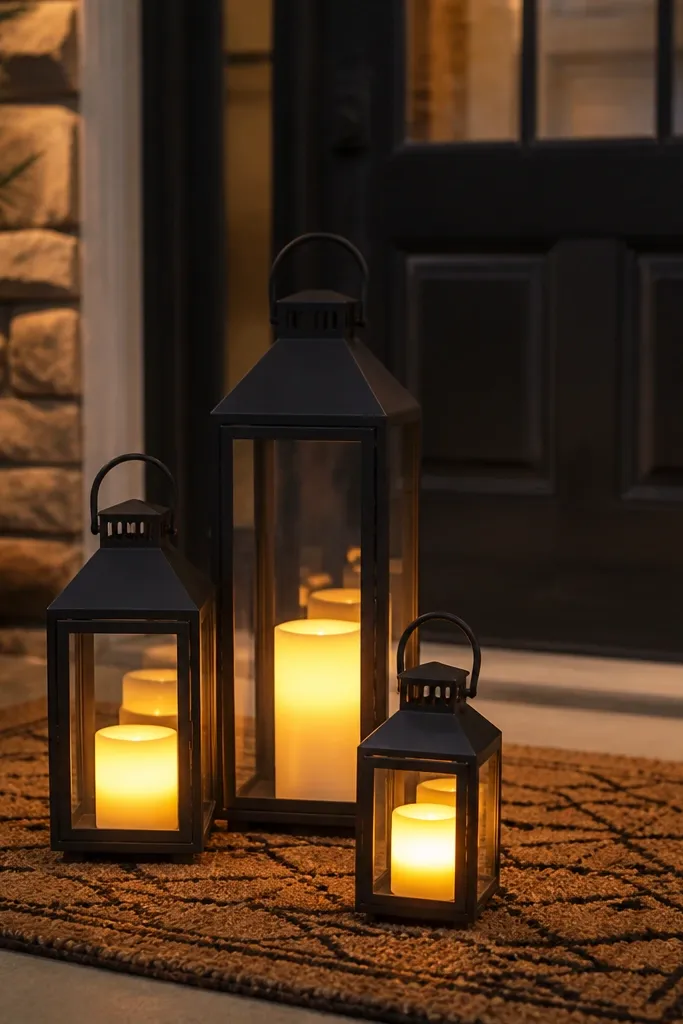
This is for people who want maximum impact without symmetry. A cluster of three lanterns creates a “light moment” at the doorstep, especially when you use different heights in the same finish. Choose lanterns in one metal tone (matte black or aged bronze) and fill them with warm LED candles or light inserts. Add a textured doormat underneath so the light bounces and looks richer. This setup is great when your porch is small, your door is close to the walkway, or you don’t have room for two large planters.
First, place the tallest lantern in the center, then set two shorter lanterns slightly forward-left and forward-right so they form a triangle. Next, ensure the lantern bases sit at least 2-3 inches apart so you don’t create a hard block of light. Finally, power them with one outdoor-rated plug-in set if possible, routing the cord along the floor edge under the mat lip. You’ll spend on lanterns, but you can use existing doormats and greenery to keep costs controlled.
Pick lanterns with vented sides or patterned glass so warm light spreads instead of looking like a single dot.
Don’t place lanterns too close to the door threshold — it makes the entry look cramped.
6. Twinkle lights behind a tall trellis with faux vines
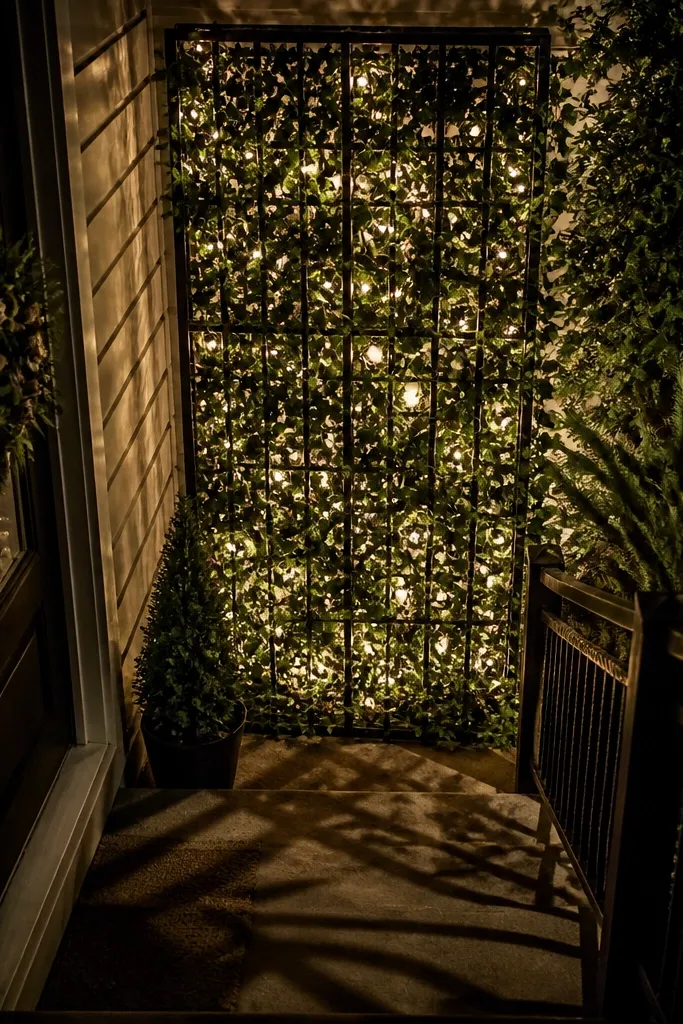
Start by placing the trellis 6-10 inches off the wall or planter edge so you can hide light strands behind it. Then secure mini twinkle lights with zip ties along the trellis rails, tucking the wire behind vines so you only see the bulbs. Finally, add a wreath or small door sign in front, but keep it smaller than the trellis so the light-depth stays the focal point. This takes a little assembly, but the payoff is a layered look that doesn’t require buying a lot of separate decor.
This is a vertical “wow” look that photographs beautifully because the lights create depth. A tall trellis with faux vines gives you a layered background, and twinkle lights hidden behind the foliage look like they’re floating. Stick to a single vine color family (dark green with hints of olive) and use warm white lights so the glow feels soft rather than icy. It works best on porches with a side wall or corner where you can anchor the trellis without blocking the door swing.
Watch outDon’t put lights on top of the vines only — you need depth, not a flat light layer.
Pro tipUse a warm white set with a steady glow or subtle twinkle — harsh blinking reads cheap in photos.
7. Blue-gray coastal porch with starfish lanterns and rope lights
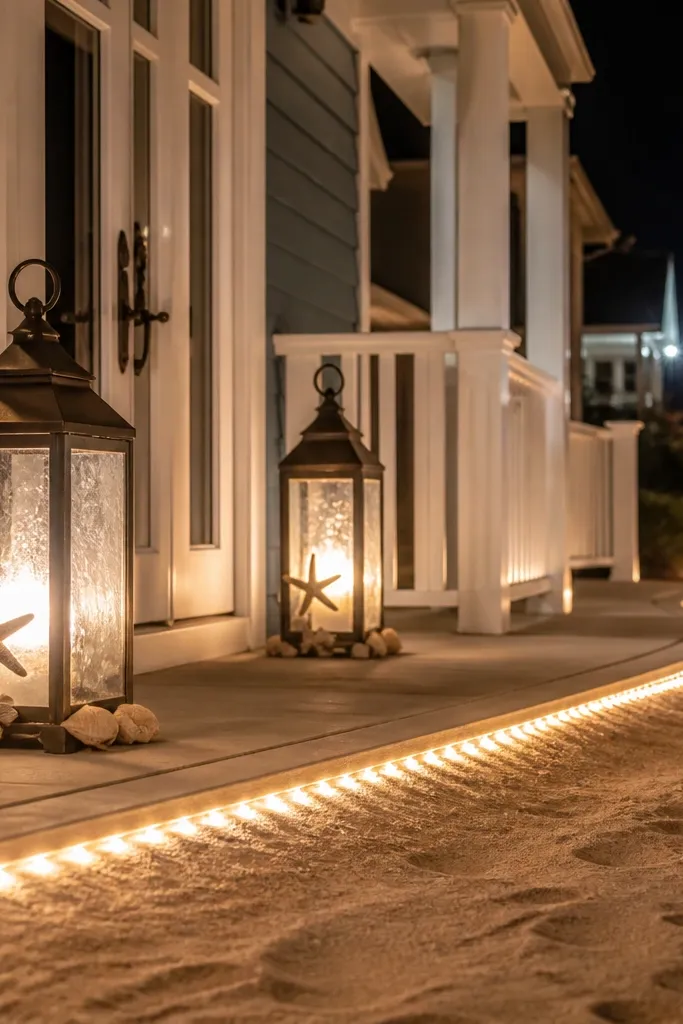
Coastal themes look best when the lighting matches the shoreline vibe: soft, linear, and warm. Rope lights tucked along the porch edge create a clean shoreline line, while lanterns with sea-themed accents (starfish, shells) add texture. Choose a blue-gray palette with white and sand neutrals so the lights don’t clash with decor. Keep everything matte — woven baskets, light wood, and fabric planters — because glossy accents can glare under rope lighting at night.
First, run rope lights along the underside of the porch rail or the top edge of steps, following the outline of your entry. Use clips designed for outdoor rope lights so spacing stays even and the line doesn’t sag. Then place two lanterns with sea accents on either side of the door or on the step corners, keeping them the same height. Finally, add one woven basket or driftwood-style planter to anchor the theme and hide any extra cord near the outlet. This is an easy “upgrade” because rope lights do the heavy lifting visually.
Use warm white rope lights and keep the rope line tight to one edge; multiple edges can look messy.
Avoid bright white LED floodlights — they kill the cozy coastal mood.
8. Holiday-style evergreen swags with warm mini bulbs
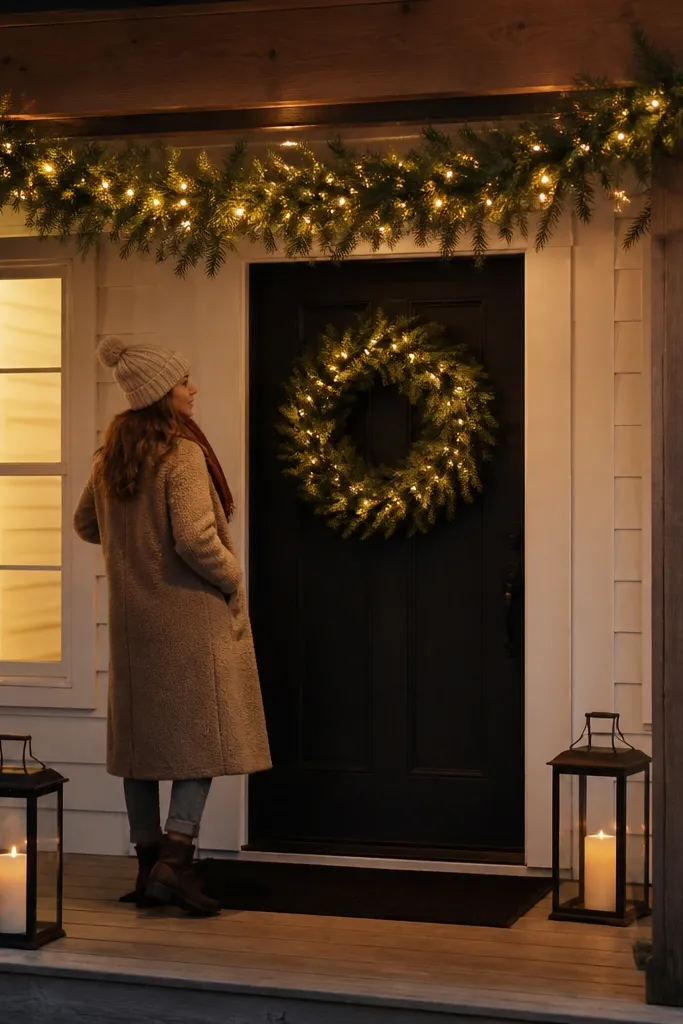
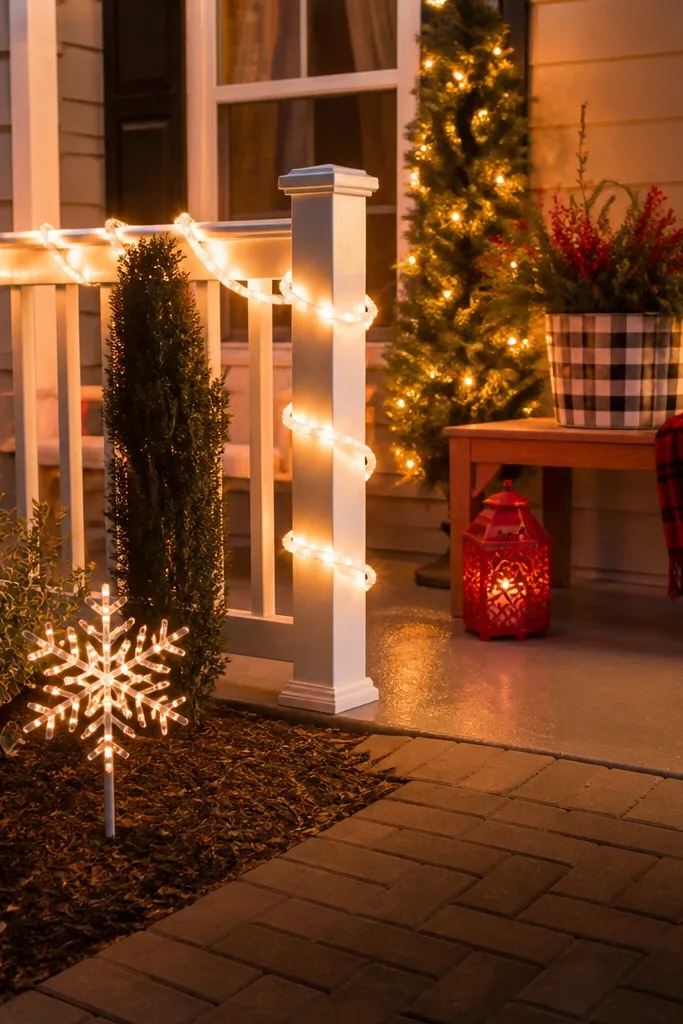
Even if you’re not doing a full seasonal theme, evergreen swags create instant curb appeal because they fill empty vertical space. Add warm mini bulbs into the garland so the glow is distributed, not concentrated. Style with simple candle lanterns and a wreath that matches the swag color palette. This works well on porches with columns, posts, or a covered entry where you can hang swags on both sides and create symmetry. The key is to keep the swags consistent in thickness so the porch looks designed, not thrown together.
Start by hanging swags on both posts/columns at the same height, using hooks so the garland sits just below the top rail. Then weave warm mini lights through the swag from the inside, spacing bulbs about every 2-3 inches visually in the garland. Finally, add one large wreath at the door and place matching candle lanterns at the base of each post. Plan on moderate effort because swags take time to hang evenly, but you’re getting a high-impact look for the time.
Choose faux greenery with needle texture — it makes the warm bulbs look softer and more natural.
Don’t mix light colors (white + colored) — it ruins the clean theme.
9. Scandi neutral porch with paper lanterns and LED candles
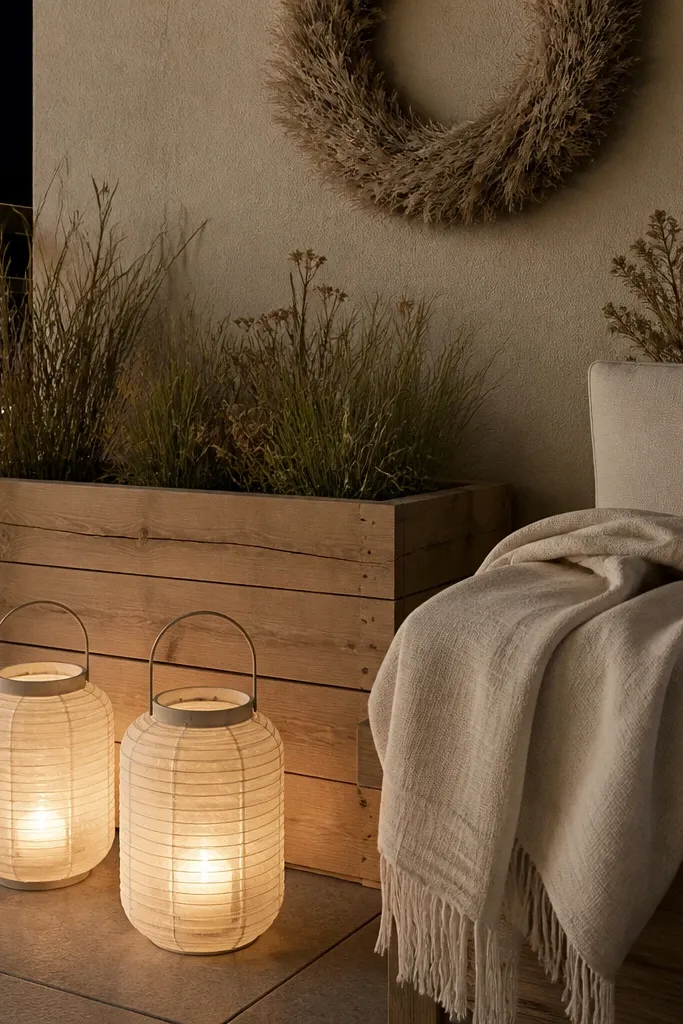
First, place two to three paper lanterns at ground level near the entry, staggering heights so one sits slightly taller than the wreath. Then insert outdoor-safe LED candles inside each lantern so you don’t rely on fragile bulbs. Finally, add one string of warm fairy lights along the porch edge behind the lantern cluster, keeping it subtle so the lanterns remain the main light source. Expect low cost if you already have neutrals; the lanterns are usually the spend.
Scandi looks feel modern and cozy because they use soft shapes and neutral layers. Paper lanterns with warm LED candles create a gentle glow without harsh points of light. Pair them with light wood planters, linen-textured throws over outdoor benches (if you have one), and a simple round wreath in natural tones. This theme is great when your porch furniture is already neutral and you want lighting to add warmth, not clutter. The lantern glow also photographs well because it creates a smooth light gradient.
Watch outSkip placing lanterns too close to wind — paper lanterns need a stable spot or they’ll look messy.
Pro tipUse warm white LEDs with a soft diffusion cover so the glow looks like paper light, not a bare bulb.
10. Rustic wine-country porch with grapevine wreath and amber bulbs
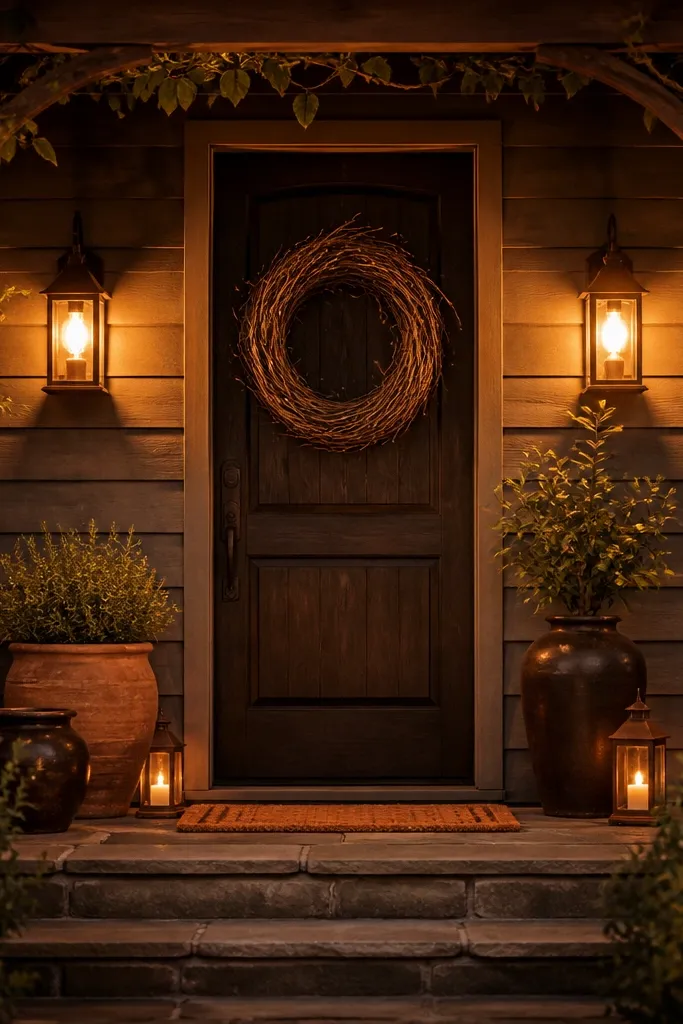
Wine-country porch decor looks best when the lighting leans amber and the textures look natural. A grapevine wreath adds visible texture, and amber-tinted bulbs make the whole porch feel like it’s lit by firelight. Pair with lanterns in dark metal and planters with terracotta or deep brown accents. This setup is photogenic because the grapevine texture catches light and creates shadow patterns, which makes the porch look styled even from a distance.
Start by choosing a grapevine wreath in a 24-28 inch size, then wrap a thin string of warm mini lights around the wreath frame so the bulbs sit between vines. Next, place two matching lanterns at the base of the door steps with amber bulbs inside or LED inserts labeled for amber warmth. Finally, add one terracotta-toned planter or basket to bring the color theme together and hide any cords near the wall. This is a moderate effort look since you’re adding lights to the wreath, but it’s one of the most “expensive looking” without being complicated.
If your bulbs are too orange, switch back to warm white — amber should feel warm, not orange-red.
Don’t use shiny gold decor with amber bulbs; it looks costume-y under night light.
11. Monochrome black porch with white ribbon bow and LED candlesticks
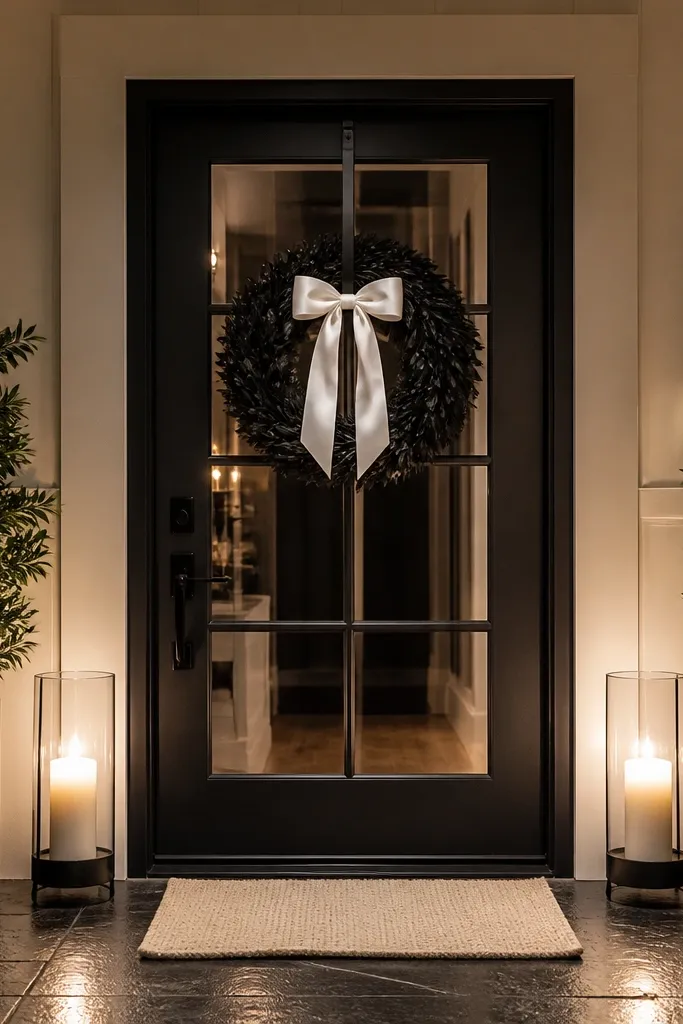
Monochrome looks dramatic because it removes visual clutter. Use a matte black wreath or simple black frame wreath, then add one white ribbon bow for contrast. LED candlesticks in glass holders give you the height and glow of candles without the safety headaches. This theme works on modern porches, small entries, and anyone who wants a crisp look that still feels warm at night. The white ribbon catches light and creates a clear focal point so curb appeal doesn’t depend on lots of decor.
First, hang the wreath centered at eye level and keep it about 2-4 inches wider than your door width so it reads from the street. Then place two LED candlesticks on either side of the door base, using glass hurricane holders if you want the glow to spread. Finally, run a small string of warm white micro LEDs behind the ribbon bow or along the top frame of the wreath so the light highlights the bow shape. You can keep costs down by buying one good wreath and reusing planters or stepping stones you already own.
Choose candlesticks with a flicker option set to low or steady — constant flicker can look too Halloween.
Skip multicolor bulbs — monochrome means one light tone.
12. Terracotta and sage porch with string lights in a planter arch
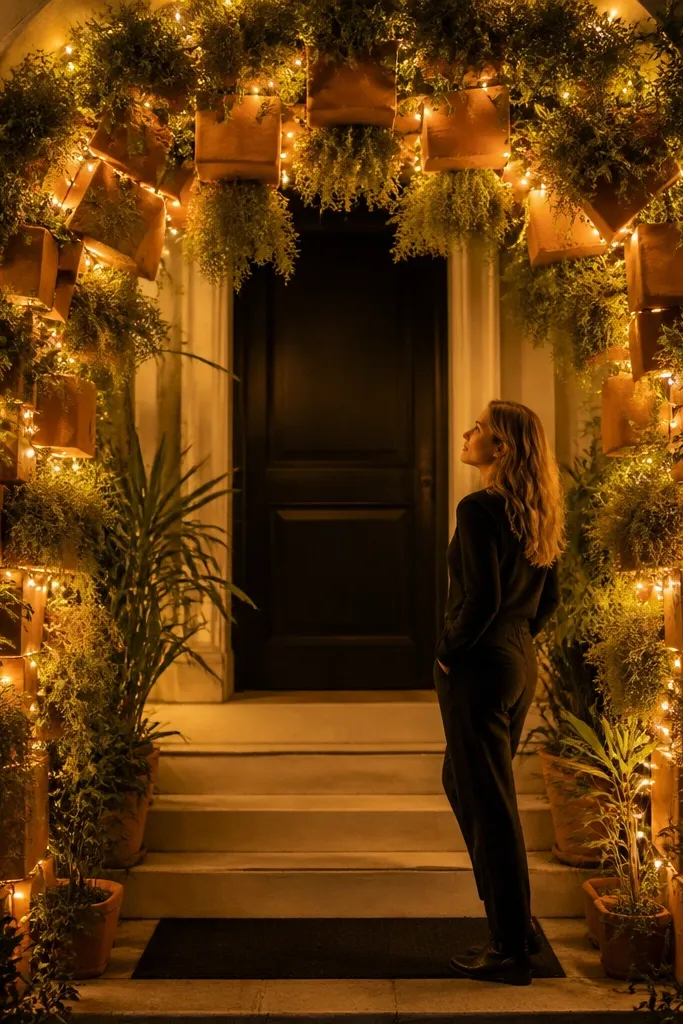
First, anchor the arch securely — if it’s freestanding, place it on flat pavers or use a stabilizing base so it doesn’t wobble. Then wrap warm micro string lights around the arch’s vertical frame and tuck a few strands behind the greenery so you get depth. Finally, place two matching terracotta planters at each base with either matching plants or the same faux greenery bundles. Effort is moderate, mostly because you’re wrapping carefully, but the result looks intentional from both sides of the walkway.
A planter arch gives you a built-in frame, and string lights make it look like a mini entrance tunnel. Use terracotta planters and sage-green faux greenery or real potted herbs, then wrap warm string lights around the arch so bulbs sit between leaves. This is a great solution when you want themed front porch decor with lights but your porch doesn’t have columns or a railing to hang garland. The arch creates a focal shape, and the lights make the arch feel welcoming rather than decorative-only.
Watch outDon’t use cool white for sage and terracotta; it turns the palette dull.
Pro tipKeep the light line even — if one side is heavier, the arch will look lopsided in photos.
13. Rattan and cream porch with lighted woven baskets
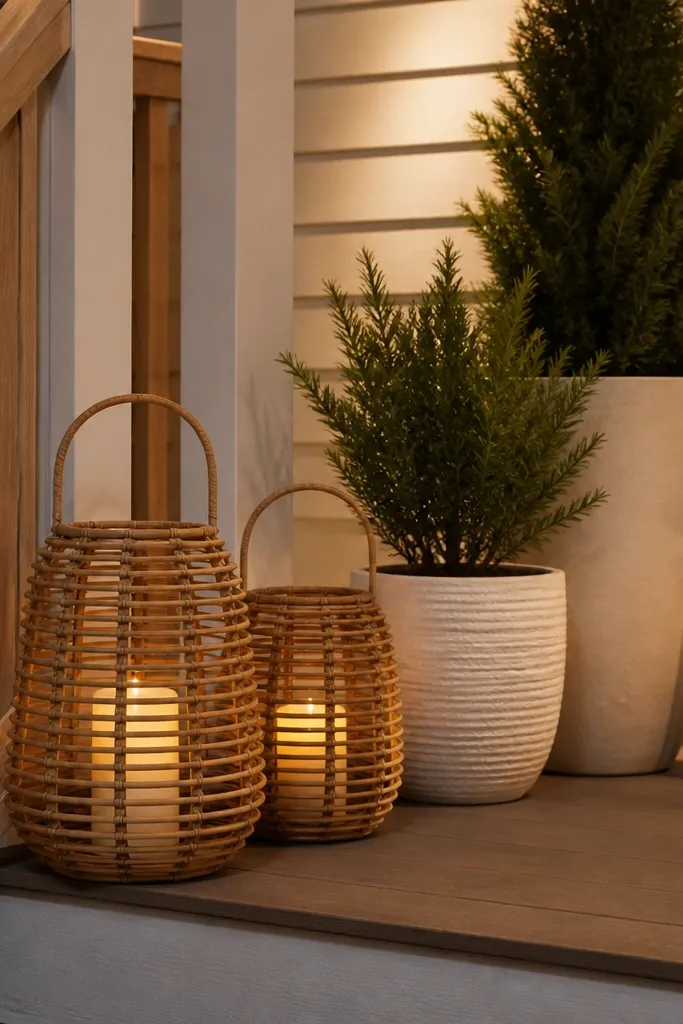
Woven baskets look expensive under warm lighting because texture catches the glow. Use rattan or light woven baskets as your decor holders, then add battery-powered LED candles or small light inserts inside the baskets. Keep the color palette cream, natural wood, and one accent like black. This setup is perfect for porches with limited floor space because baskets can sit on steps, consoles, or the floor near the door without looking bulky. It also photographs well because the light spreads through the weave.
First, pick two to four baskets that vary in size, with at least one tall basket that rises to wreath height. Then place LED candle lights or light inserts inside and secure the battery pack so it doesn’t shift when you move the basket. Finally, position baskets in a small cluster around the door area, leaving a clear path for the walkway. This is usually budget-friendly because baskets are often cheaper than lanterns, and the lighting is low-cost battery LEDs.
Choose baskets with tighter weave — the glow looks smoother, not patchy.
Skip plastic-looking baskets; they reflect light in a way that looks cheap at night.
14. Overhead porch swing lights with a centered door wreath
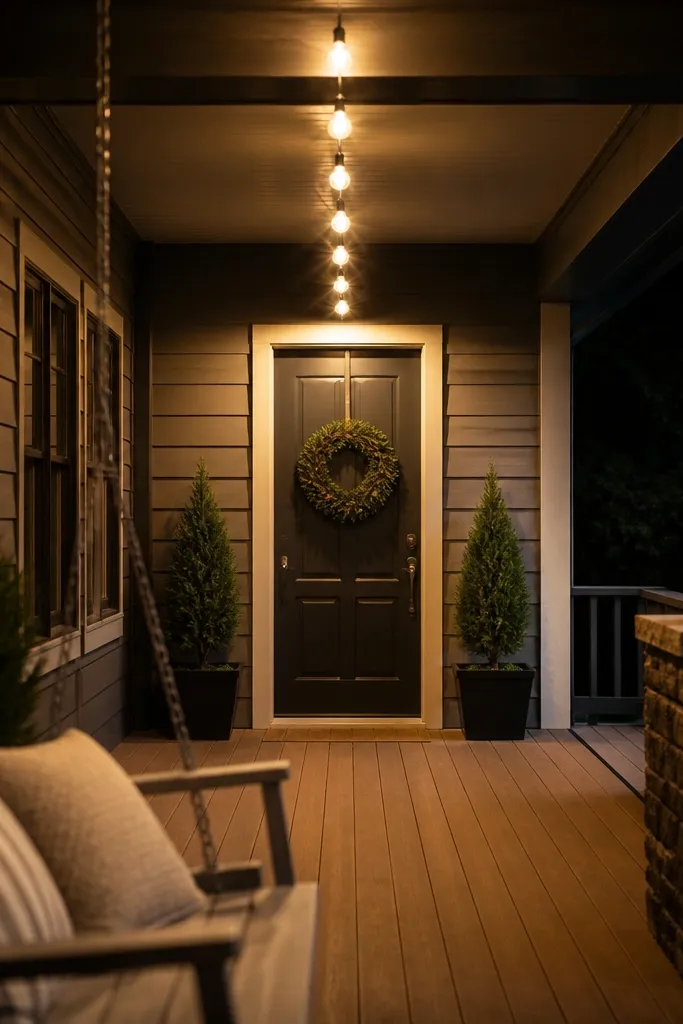
If you have any overhead structure — a porch beam, posts with crossbars, or a covered entry — overhead lighting is the fastest way to make the porch feel designed. Hang warm string lights in a straight line above the door so the light leads your eye to the wreath. Keep decor simple: one centered wreath, two small planters, and a doormat with texture. This setup is great when your porch decor feels overcrowded but you still want that “styled at night” look. Overhead lights also reduce shadows that can hide smaller decor pieces.
First, measure the span above your door and buy string lights long enough to cover it with slack of about 2-3 inches at each end. Then hang using clear hooks or small eye screws so the line stays even, and ensure the power source is near an outlet with an outdoor-rated extension cord if needed. Finally, center a wreath on the door and place two matching planters at the outer edges of the entry so they align with the overhead light line. Expect a low-to-mid effort build because installation is the main work.
Match the wreath ribbon or planter color to the light hardware finish so it looks cohesive.
Don’t let overhead lights sag — uneven lines read sloppy in photos.
15. Spring garden theme with pastel lanterns and warm pathway lights
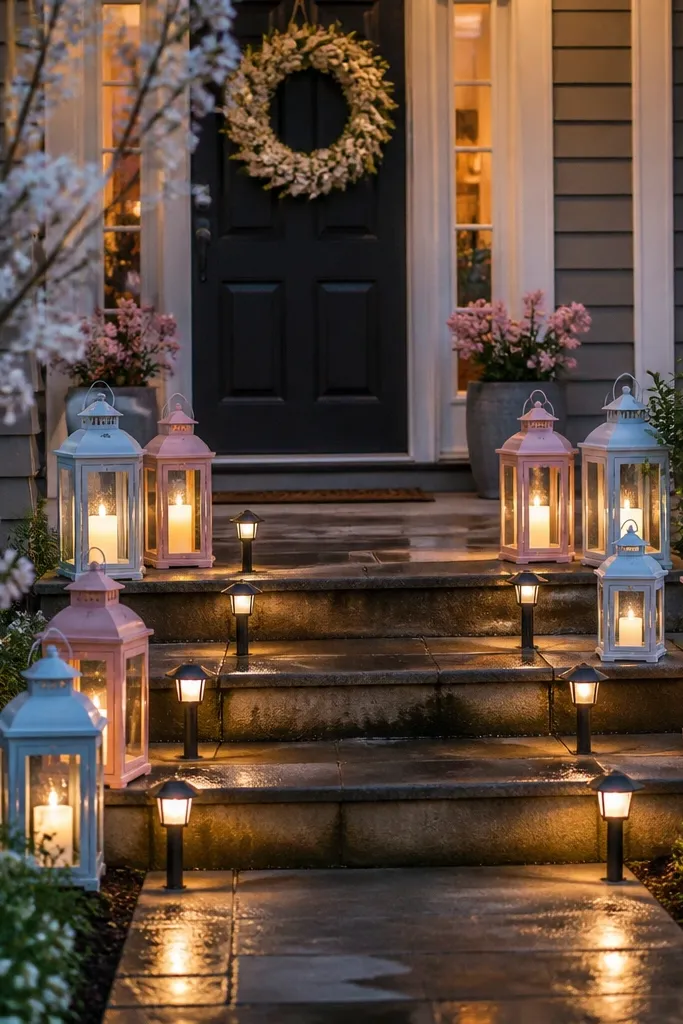
Spring porches need soft color and guidance. Use small pastel lanterns (powder blue, dusty rose, or pale yellow) paired with warm pathway lights along the walkway or step edges. The lights should be low and spaced evenly so they “draw” people to the door without lighting up the whole yard. Add a light wreath in white or pale green and one planter with fresh-looking greenery. This creates curb appeal because the entry feels guided and tidy, not just decorated.
First, place two to four pathway lights along the approach — keep spacing consistent at roughly 18-24 inches depending on walkway length. Then set pastel lanterns near the door steps, one on each side if you have space, and keep them the same height for symmetry. Finally, add a pale wreath and one matching planter color so the lanterns don’t feel random. This is a practical setup for front yards where the entry path is visible in the daylight and you want night visibility without glare.
Choose warm white pathway lights; cool white makes pastel lanterns look washed out.
Skip too many lantern colors — three pastel shades max keeps it clean.