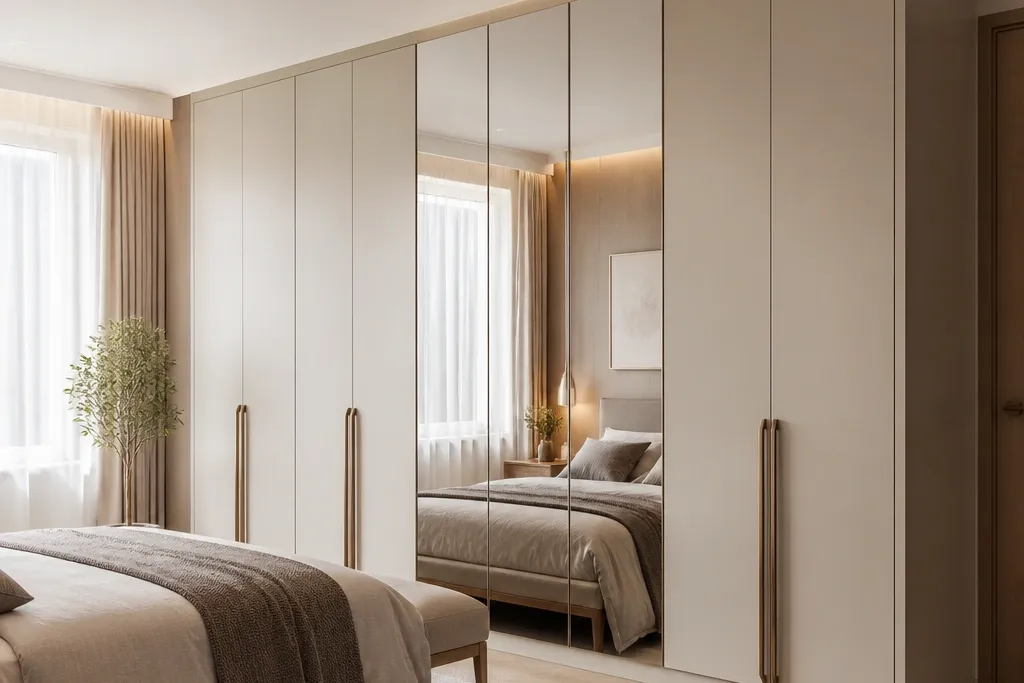
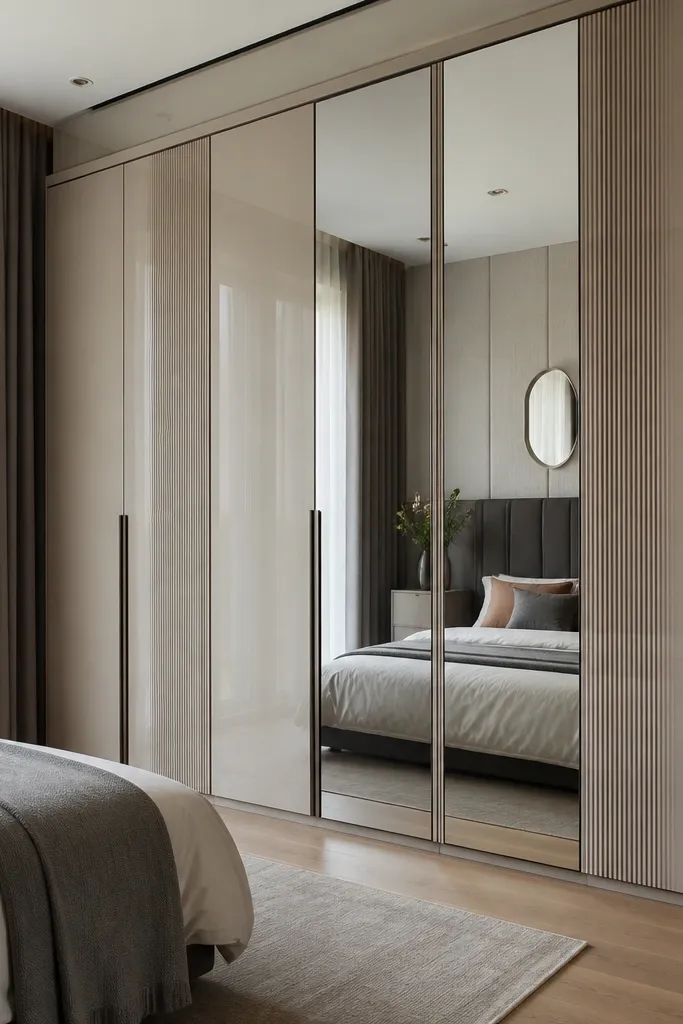
1. Full-Height Mirror Sliding Doors in Matte Ivory
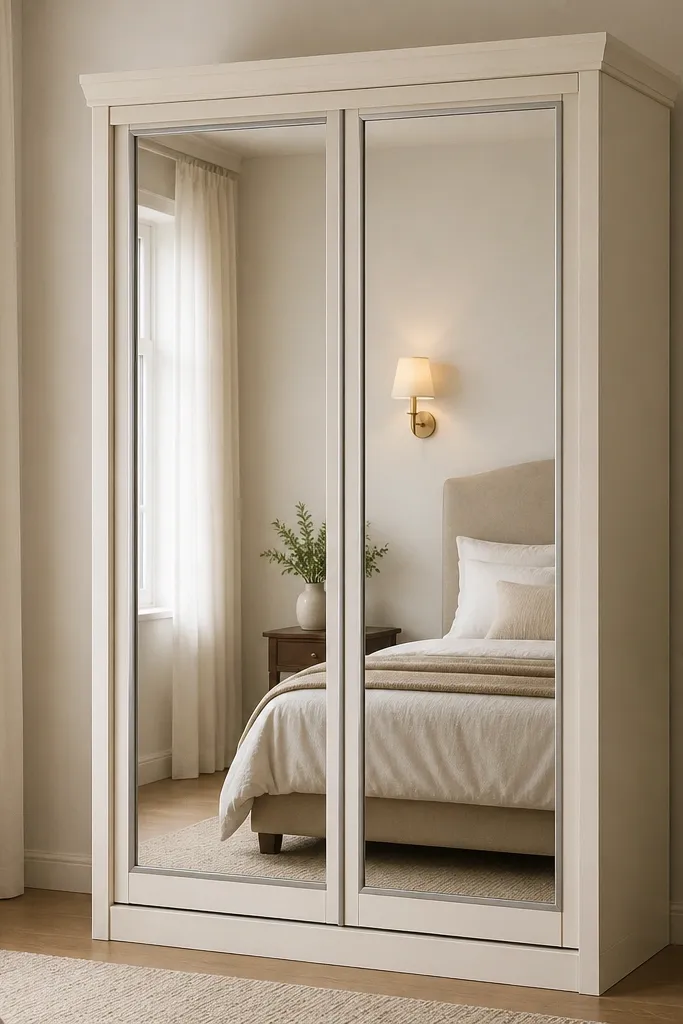
This design makes the ceiling feel higher because the mirror runs the full height of the door. Matte ivory hides fingerprints and looks clean even when the room is lived-in. The mirror reflects your bed wall and light source, so the room brightens without extra lamps. Thin metal trim keeps it from looking bulky and gives a crisp modern edge.
Go for a 2-door sliding unit with mirror panels at least 180 cm tall if your room is under 10 feet. Keep the frame trim in brushed steel or light silver-grey so it doesn’t clash with warm wood furniture. Pair it with an ivory headboard fabric (linen or textured cotton) so the mirror reflection looks soft, not harsh.
Place the almirah so the mirror catches the light from your main window — even 30-45 degrees of angle makes a difference in the bedroom glow.
Avoid thick, dark mirror frames on a small room — they make the reflection feel boxed in.
2. Arched Mirror Panels on Hinged Shutters with Warm Teak
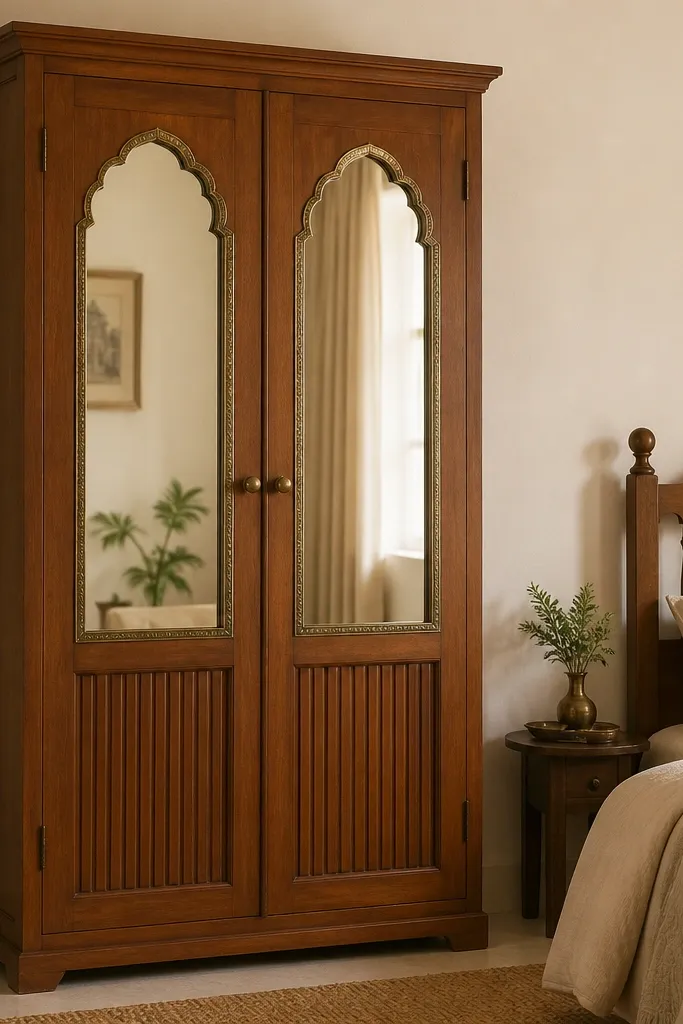
Arched mirrors add a gentle curve that looks styled without needing extra decor. Warm teak brings the mirror down to earth, so it doesn’t look like a showroom fixture. Antique brass frames catch light in a flattering way, especially with warm bulbs around 2700K. This combo makes a bedroom feel traditional and calm, not cold.
Choose arched mirrors that sit about 40-50 cm from the top edge of the door, leaving enough solid wood below for visual balance. The frame should be thin enough to keep the arch elegant, not chunky. Match the brass tone with your bed hardware or bedside lamp base so it feels intentional.
Pro tipUse a warm bulb (2700K) and a soft shade near the bed; the brass arch frame looks richer when the light is golden.
Watch outSkip overly ornate carvings on the rest of the almirah — too many details make the mirror look cluttered.
3. Mirror-Center Accent with Side Storage Panels
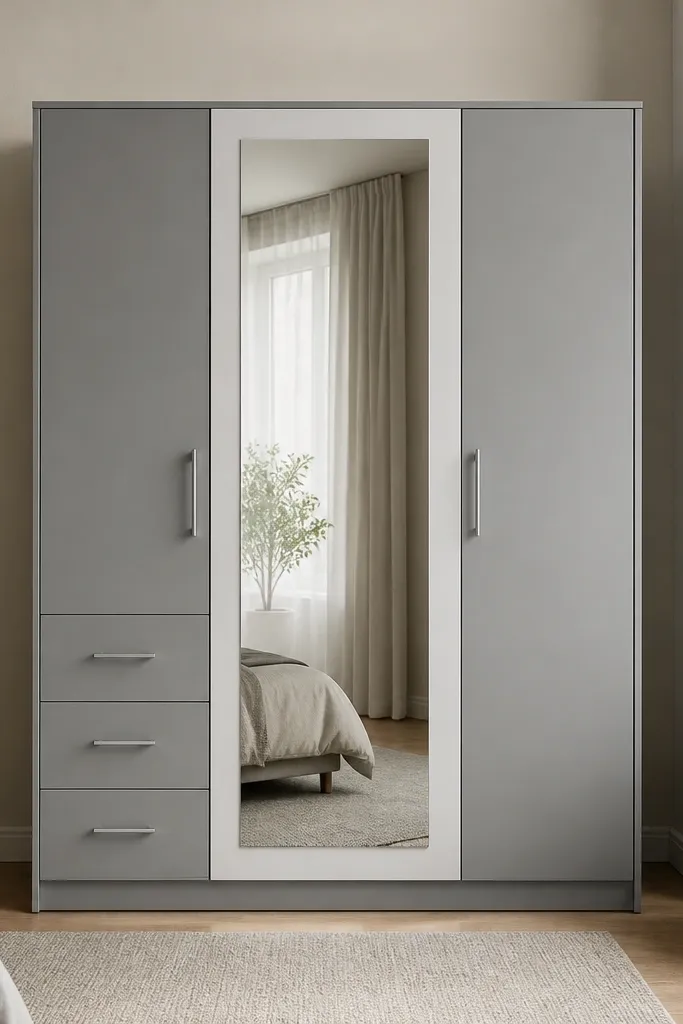
A central mirror panel is a smart trick when you don’t want full mirror coverage. It draws the eye to one focal point and makes the room feel more designed, even if the rest is matte and simple. The grey body keeps it modern, while a white mirror frame adds contrast. This works well when your room layout already has a window — the center mirror reflects the brightest wall area.
Pick a mirror panel width that’s about 35-45% of the total door width so it feels like an intentional feature. Keep the grey finish matte or fine-texture so it doesn’t show scuffs. For interiors, use light laminate shelves (ivory or light oak) so clothes look neat in the reflection.
Pro tipHang a full-length mirror elsewhere only if the almirah mirror doesn’t catch your window — otherwise you’ll end up with double reflections that look messy.
Watch outDon’t place the central mirror too low — below head height, it makes the room feel shorter.
4. Two-Tone Almirah with Mirror Back Panel Behind Glass
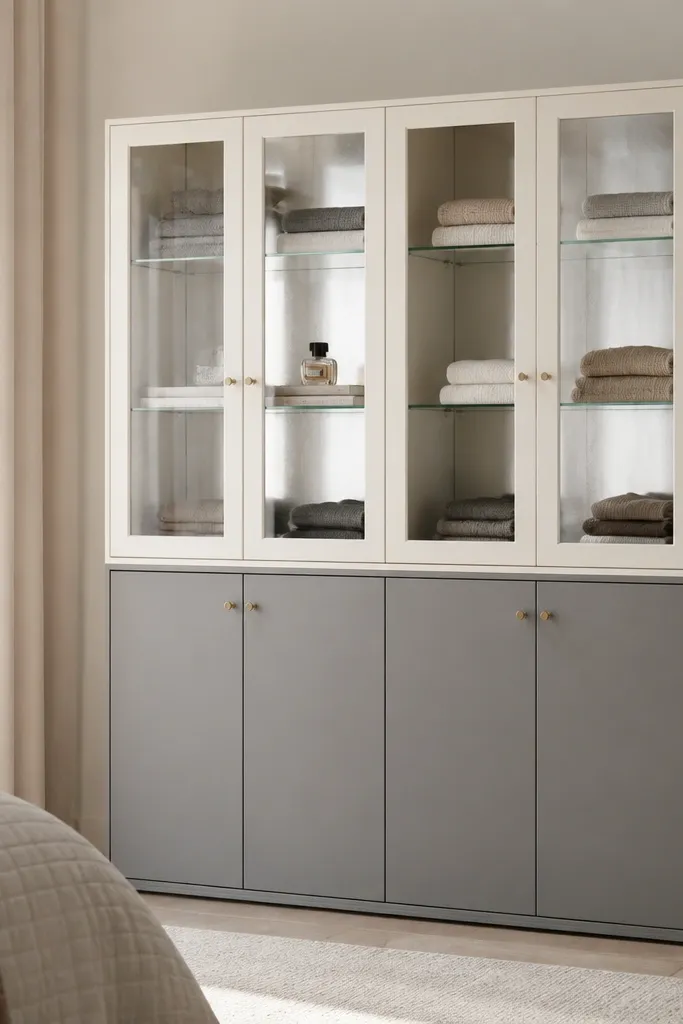
This is the “pretty but practical” mirror use. The mirror back panel makes the glass compartments look brighter and helps your folded items look more curated. The two-tone body keeps it stylish, and the lower storage stays calm without extra reflection. It’s also great for bedrooms where you don’t want full mirror doors but still want that light effect.
Use tempered glass doors for safety and clarity. Keep the mirror back panel a clean silver, not a dark chrome, so it doesn’t turn everything yellow. Choose a warm white upper and a cool grey lower to balance the tones; I’ve found this pairing works with both beige and grey bedding.
Pro tipAdd slim LED strips inside the top glass section — even a simple warm LED makes the mirror back panel look intentional.
Watch outSkip clutter behind glass — mirror backs show gaps and dust faster.
5. Herringbone Panels + Small Rectangular Mirrors on Hinged Doors
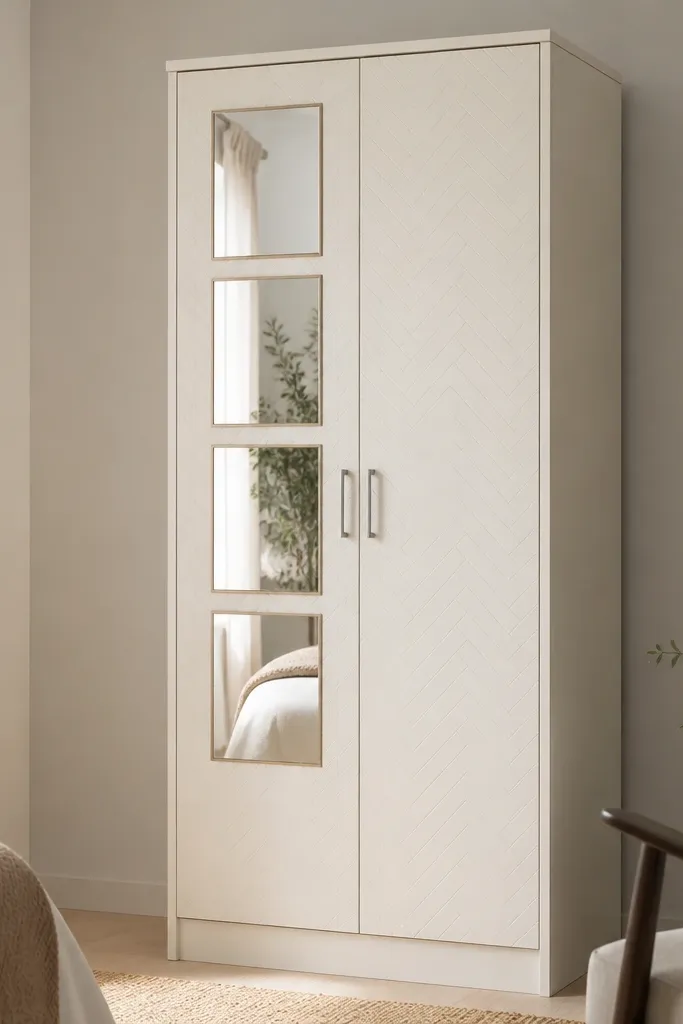
Small mirrors in a pattern give a designer look without turning the whole wardrobe into a reflective wall. The herringbone texture adds depth even when the mirrors are not catching direct light. This works best in bedrooms that already have a patterned rug or wallpaper, because it echoes the texture. The narrow nickel frames keep it modern and let the pattern do the talking.
Put the small mirrors near the top third of the door so the reflection feels like a style detail, not a makeup station. Use a slim frame width around 8-12 mm so it stays delicate. Keep the paint finish matte and touch-dry; glossy paint next to mirrors looks cheap because it shows glare.
Pro tipIf your room has a patterned bedspread, keep the mirrors smaller — they won’t compete with the fabric print.
Watch outDon’t stack too many mirrors on both doors — it turns into visual noise.
6. Mirror Door with Beveled Edges and Champagne Frame
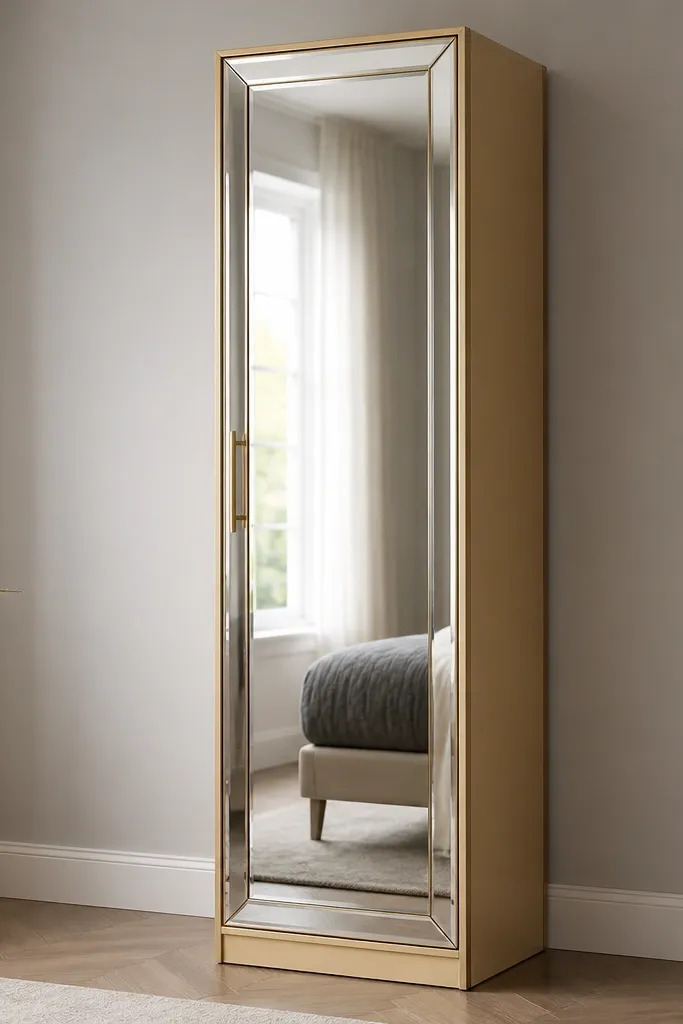
Beveled mirror edges add a subtle highlight line, so the mirror looks dimensional even in daylight. Champagne frames sit between gold and silver, which helps if your bedroom has mixed metals (like a silver lamp and a gold bed knob). The single mirror door also keeps the rest of the wardrobe grounded, so the bedroom doesn’t feel like a dressing room.
Choose a mirror with bevel depth around 10-15 mm for a visible sparkle without looking flashy. Keep the almirah color in a warm neutral (greige, champagne beige) so the frame blends. Pair it with a headboard in off-white or taupe to keep the warmth consistent.
Pro tipClean the bevel edges with a microfiber cloth and a streak-free glass spray — bevels show smudges faster than flat mirrors.
Watch outAvoid dark charcoal frames on warm beige bedrooms — the contrast looks heavy.
7. Mirror + Open Shelf Top in White Laminate
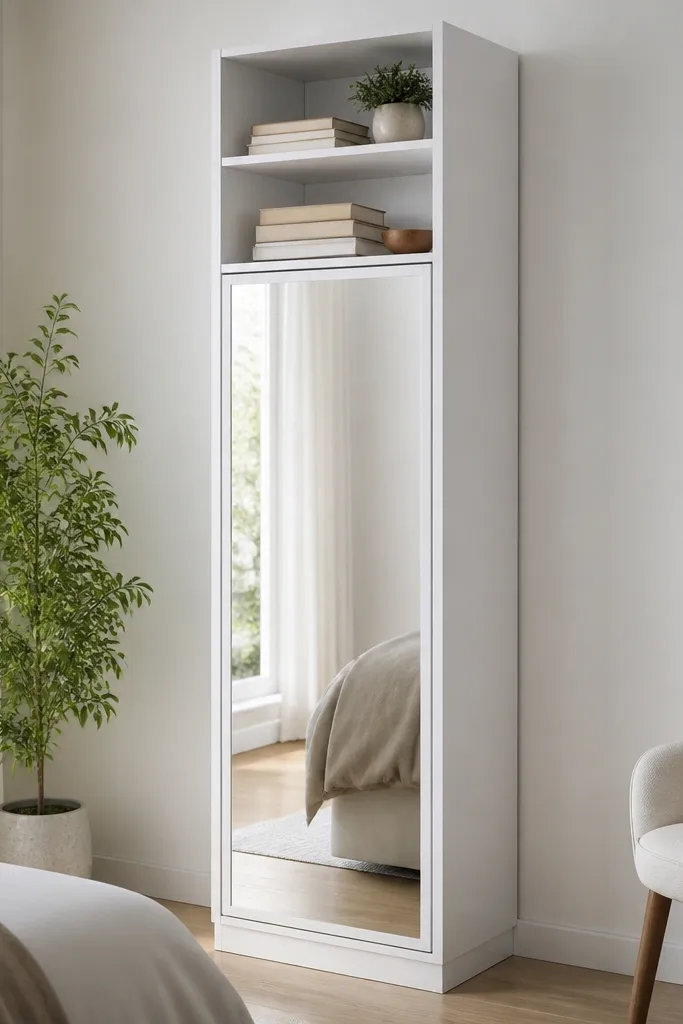
This layout gives you storage and display without adding extra furniture. The open shelves let you style small items, and the mirror below reflects the shelves lightly, making the top feel taller. White laminate is practical — it wipes clean and looks fresh. This is one of the best designs for small bedrooms because it combines “closet” and “decor corner” in one footprint.
Keep the open shelves depth around 25-30 cm so items don’t fall forward. Place the mirror panel directly under the shelves so the reflection lines up and looks intentional. Use white-on-white styling: off-white books, a ceramic in matte ivory, and a green plant with small leaves.
Pro tipUse baskets inside the shelves for cables and odds and ends; the mirror will magnify any mess.
Watch outSkip open shelving clutter — reflections make it look untidy fast.
8. Segmented Mirror Panels with Vertical Split Lines
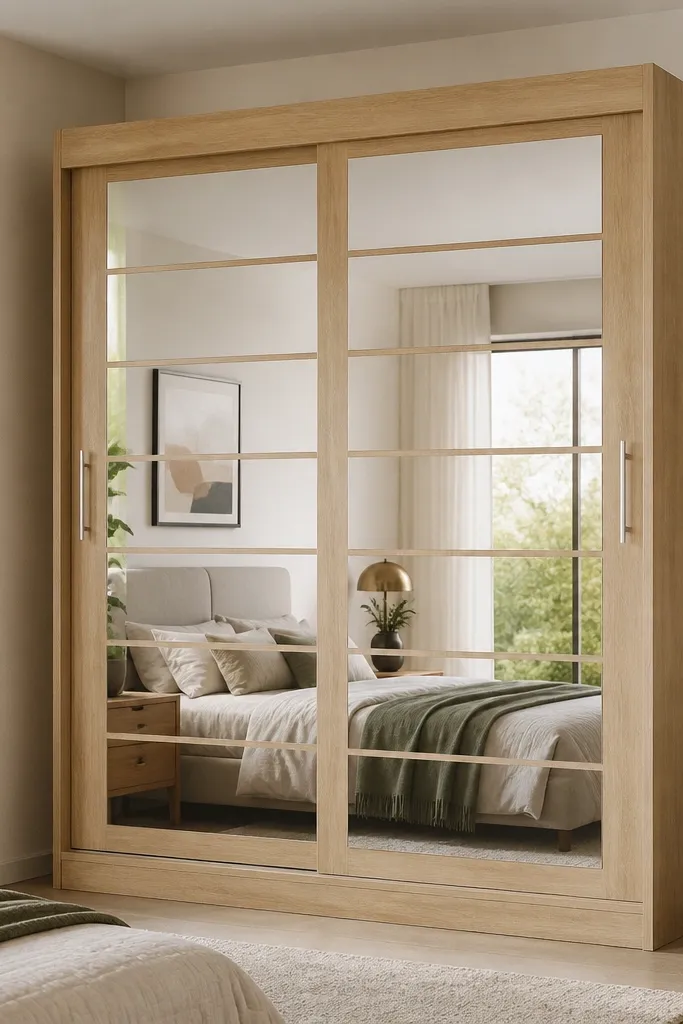
Segmented mirror panels break up the reflection into clean vertical lines, which makes the bedroom feel structured. Light oak adds warmth, and the wood strips act like “design lines” that guide your eye. This style looks great if your bedroom already has vertical elements like curtains or a tall headboard. It also hides minor alignment imperfections better than a single large mirror panel.
Keep the wood strip thickness slim (around 12-18 mm) so the mirror still dominates visually. Make sure all segments align across both doors — misalignment makes the grid look crooked. Pair with vertical stripe curtains or a tall bedside lamp to reinforce the lines.
Pro tipWhen ordering, request the mirror segments on the same plane with no tilt — it keeps reflections straight for photos and real life.
Watch outAvoid thick divider strips — they make the mirror effect smaller in a tight room.
9. Mirror Door with Fabric-Faced Side Panels in Blush
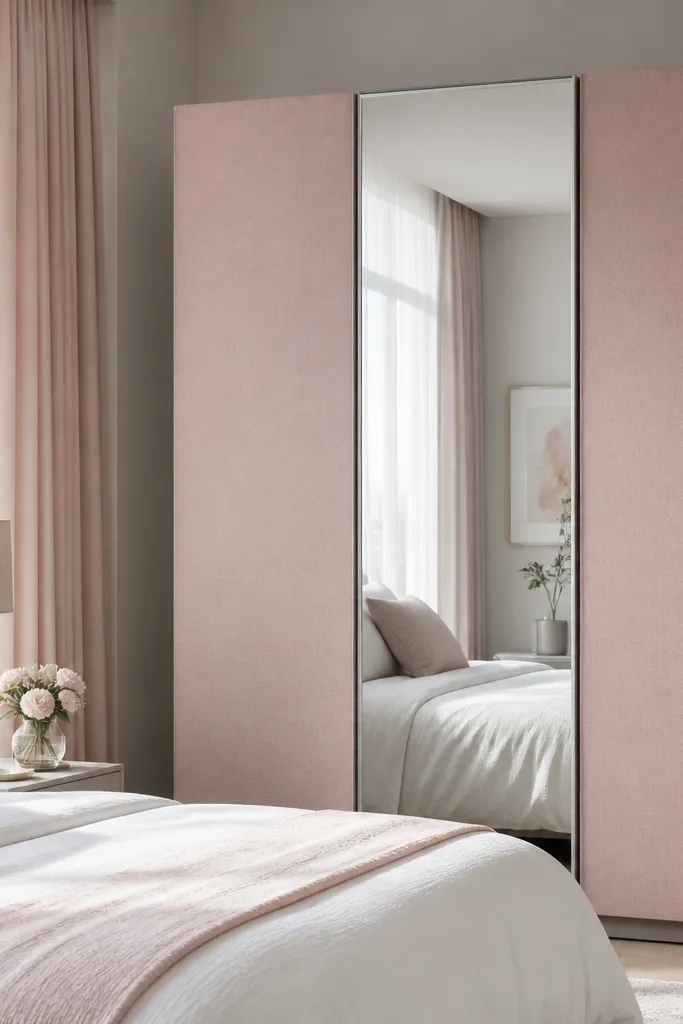
Fabric side panels soften the mirror’s reflective sharpness. The blush tone adds warmth and looks flattering on skin tones under bedroom lighting, which matters if you use the mirror for daily dressing. The contrast between soft fabric and hard glass looks intentional. This design works especially well if your bedroom theme is gentle and you want a “soft glam” feel without crystals.
Use upholstery-grade fabric with tight weave so it doesn’t snag. Leave the mirror framed with a thin metal edge to keep it clean. Keep the almirah body in white or very light beige, so the blush reads fresh and not dusty.
Pick a fabric that matches your curtain undertone — cool blush looks best with grey, warm blush looks best with cream.
Don’t use shiny fabric on mirror sides — it creates glare patches.
10. Mirrored Back + Solid Door Front for a Clean Look
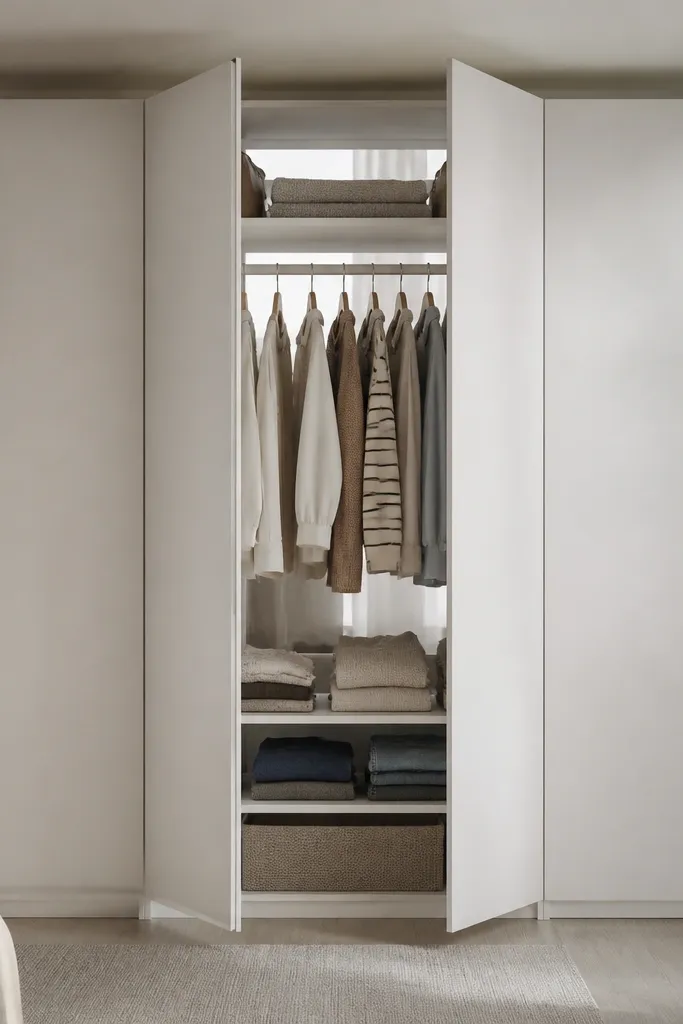
This is a sneaky design that keeps the room looking calm while still giving you brighter interiors. The mirrored back bounces light from inside your closet area, so dark corners don’t swallow folded clothes. It also helps you spot items faster when you open the doors. From outside, the bedroom stays clean because the front doors are solid.
Ask for mirror sheets on the back panel only, not the side walls, so the reflection doesn’t look chaotic. Install a small LED strip inside the wardrobe at the top edge for consistent lighting. Choose an interior shelf color that doesn’t look yellow against mirror, like light oak or ivory laminate.
Pro tipUse a dimmable LED driver if you want softer evening light — it makes the mirror back look warmer.
Watch outSkip mirror on all sides if you have patterned clothes — the reflections make it visually busy.
11. Mirror + Side Panel Lighting in Walnut Frame
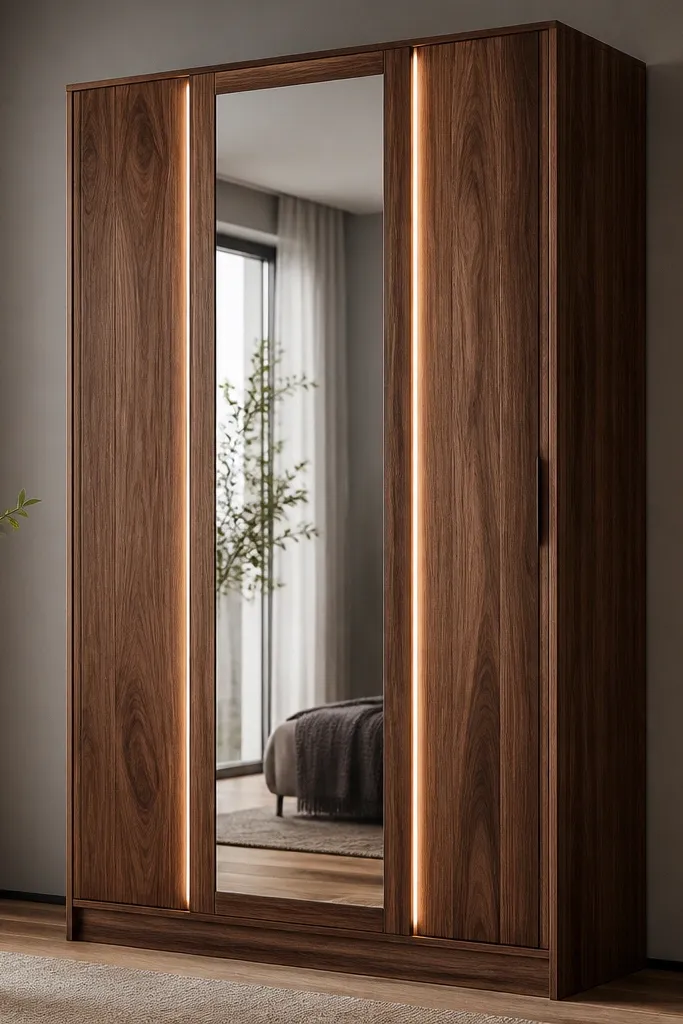
Side lighting turns a mirror into a practical grooming wall without adding a separate vanity. The walnut frame adds depth, and the hidden diffuser prevents harsh hotspots. When lights are on, the mirror looks like it has a soft glow, which makes the bedroom feel styled even with plain bedding. This design also helps if your room lighting is overhead-only and shadows fall on the bed area.
Use LED strips with a color temperature around 3000K for a warm bedroom tone. Keep the diffuser thickness thin so the light hugs the mirror frame. Install a switch near the bedside so you don’t reach toward the wardrobe every time.
Test the brightness in the room at night before finalizing — too bright looks clinical against a warm bed.
Avoid exposed LED points — they look like a DIY repair instead of an integrated feature.