1. Cream rug + walnut sofa grounding trick
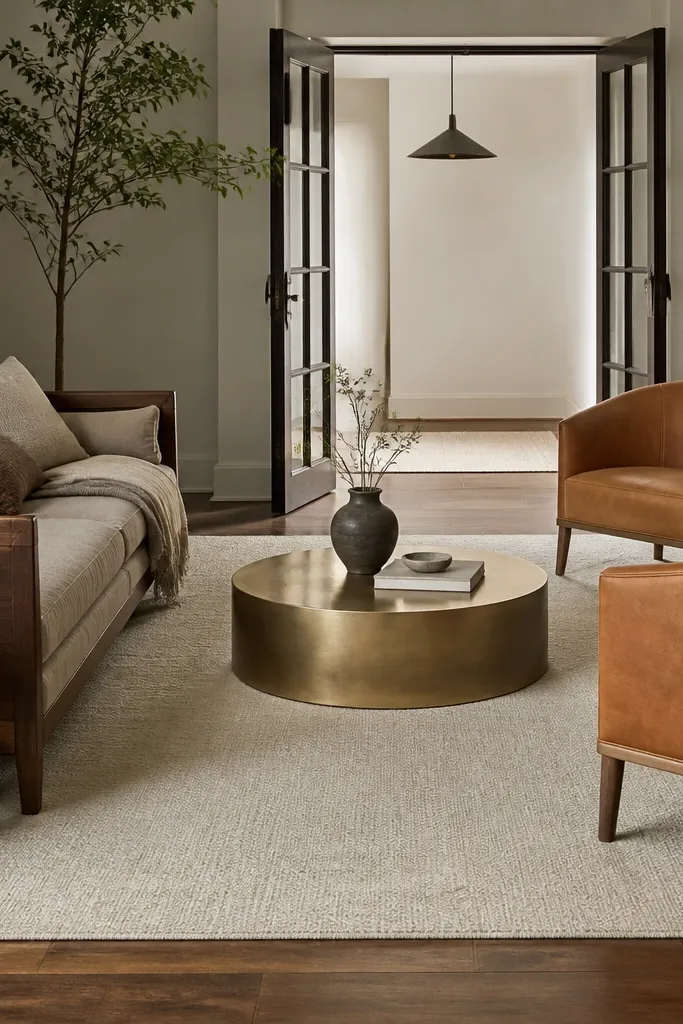
This layout works because the cream rug gives you a clean “floor horizon” under darker furniture. The walnut sofa already brings warmth, so you don’t need a loud pattern; a tonal weave keeps the room bright without looking sterile. Brass details on the coffee table pick up the rug’s warm undertone and make the whole scene feel finished.
Choose a low-pile rug in cream or ivory with a warm beige undertone, not cool white. Keep the rug edges visible — you want 8 to 10 inches beyond the chair front legs. Style with tan leather accents and one small tray in brass or aged gold.
If your rug looks slightly gray in daylight, swap it for one labeled “ivory” or “warm cream” and check it next to your sofa fabric in the store.
Avoid stark white rugs with cool undertones under warm wood — the contrast makes the room look mismatched.
2. Blue-and-ivory Moroccan inspired for a calm coastal feel
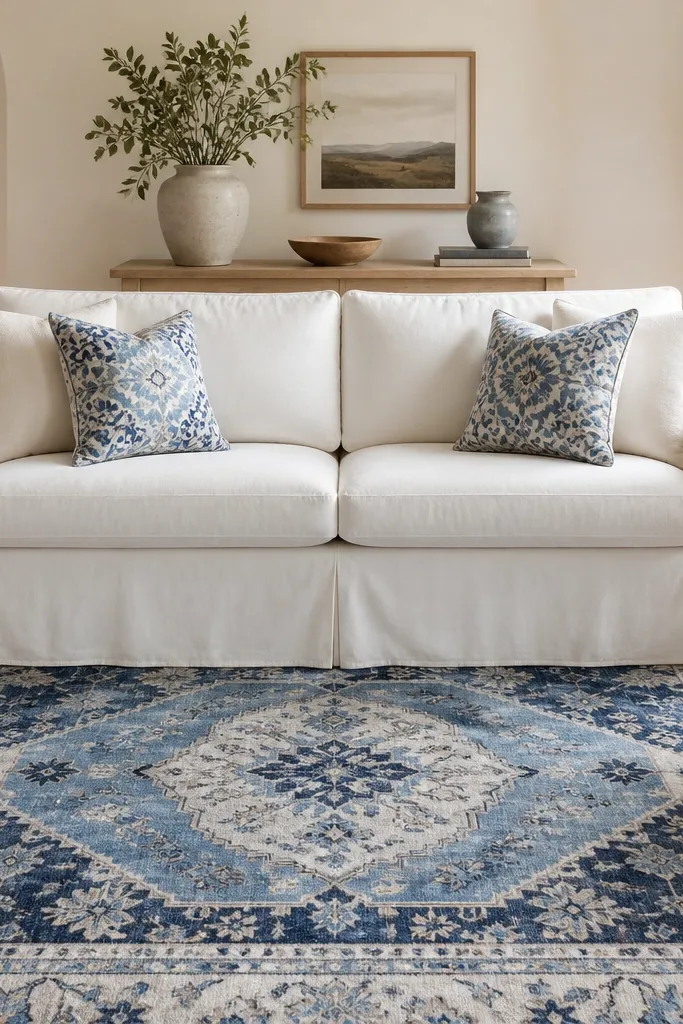
The reason this works is the rug pattern repeats like a rhythm under the sofa, so your eye knows where to land. Navy and powder blue together keep it coastal without turning into a “beach themed” room. The warm ivory background stops it from looking cold, especially with white upholstery.
Pick a rug with a dominant ivory base and navy lines that aren’t too thick. Size it so the sofa front legs sit on the rug — aim for at least 30 inches of rug visibility on both sides of the sofa. Use two pillows with one navy pattern and one solid powder blue to connect the colors.
Use a rug pad with grip — patterned flatweaves can shift if the pad is too thin.
Skip rugs where the blue is mostly teal or green — they fight with true navy throws and make the palette look off.
3. Small living room trick: round rug under a sectional corner
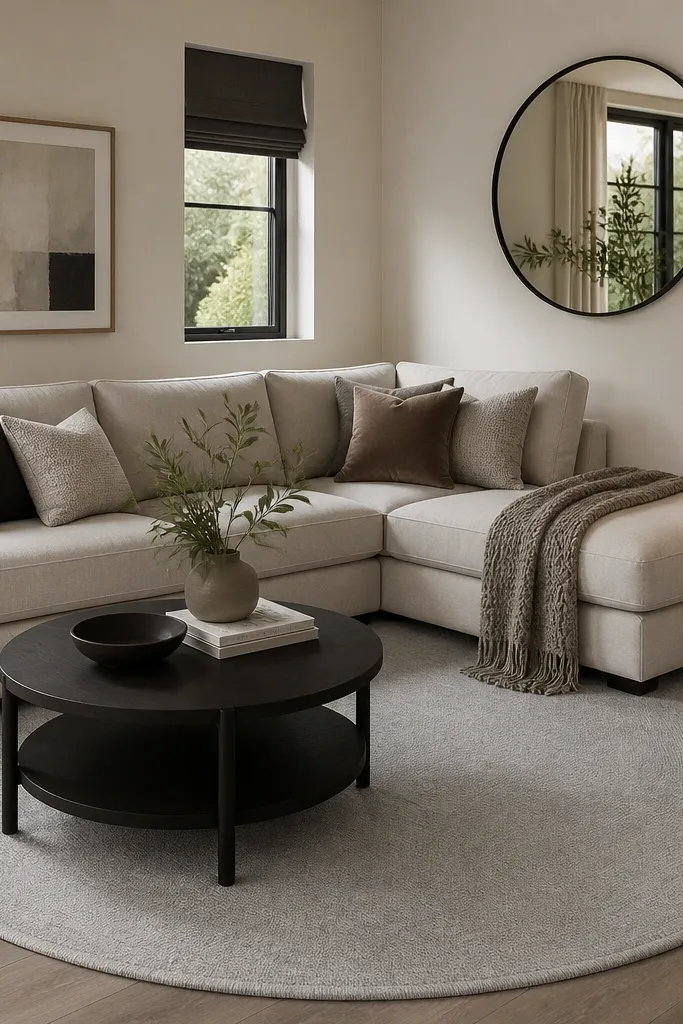
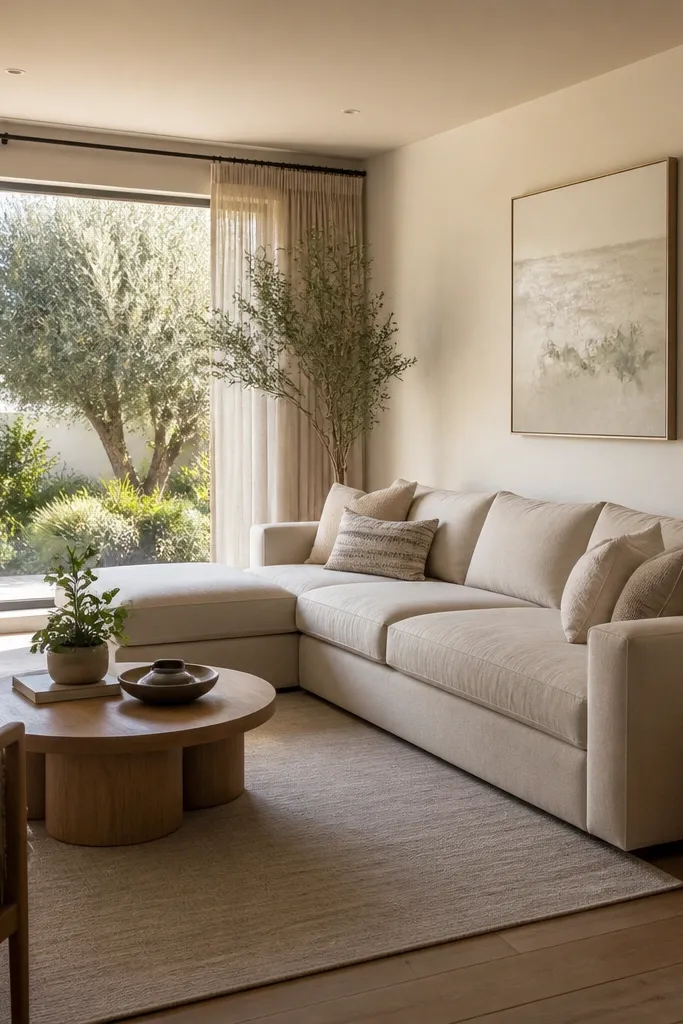
A round rug softens the hard angles of an L-shaped sectional, and it’s a lifesaver when rectangular rugs feel too “boxy.” The light gray keeps the room airy, and the short pile works well in tight spaces where you need furniture to sit cleanly. The circular shape also helps visually separate the seating zone from a nearby walkway.
Use a round rug with a diameter around 5 feet to 6 feet for most small corners. Place it so the center of the circle sits about 6 to 10 inches in from the sectional corner seam. Keep the border minimal so it doesn’t compete with wall art.
If your sectional has a chaise, center the round rug under the chaise foot area first, then adjust by eye using tape marks.
Don’t choose a round rug that’s too small — it will look like a decorative doormat instead of a seating anchor.
4. Layered look: jute base + patterned wool top
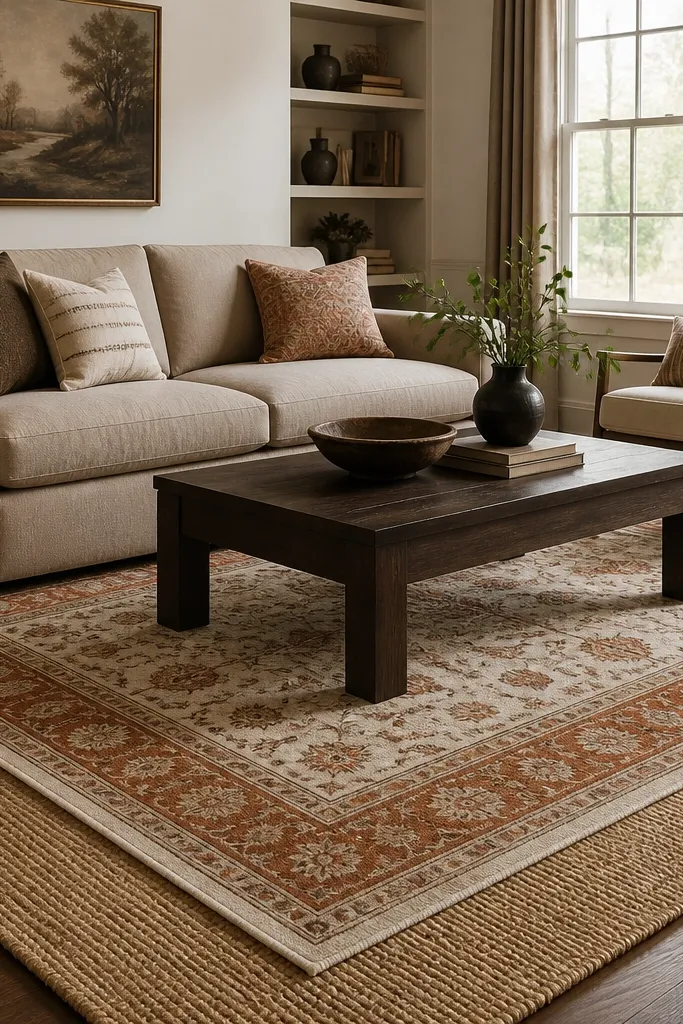
Start with a flatweave jute rug that’s large enough to cover the whole seating area. Then add a smaller patterned wool rug on top, centered under the coffee table and extending about 10 to 14 inches beyond the table edges. Leave a 2 to 4 inch jute border showing around the wool.
Layering lets you get the casual texture of jute without losing structure. Jute gives you that woven, earthy foundation, while a wool top rug adds pattern and softness where your feet land most. Rust and cream look great against beige upholstery and dark wood, and the contrast feels intentional rather than accidental.
Watch outAvoid thick shag on top of jute — it makes the stack too tall and visually messy.
Pro tipUse a thin non-slip rug pad under the jute and a separate pad under the wool layer to stop shifting.
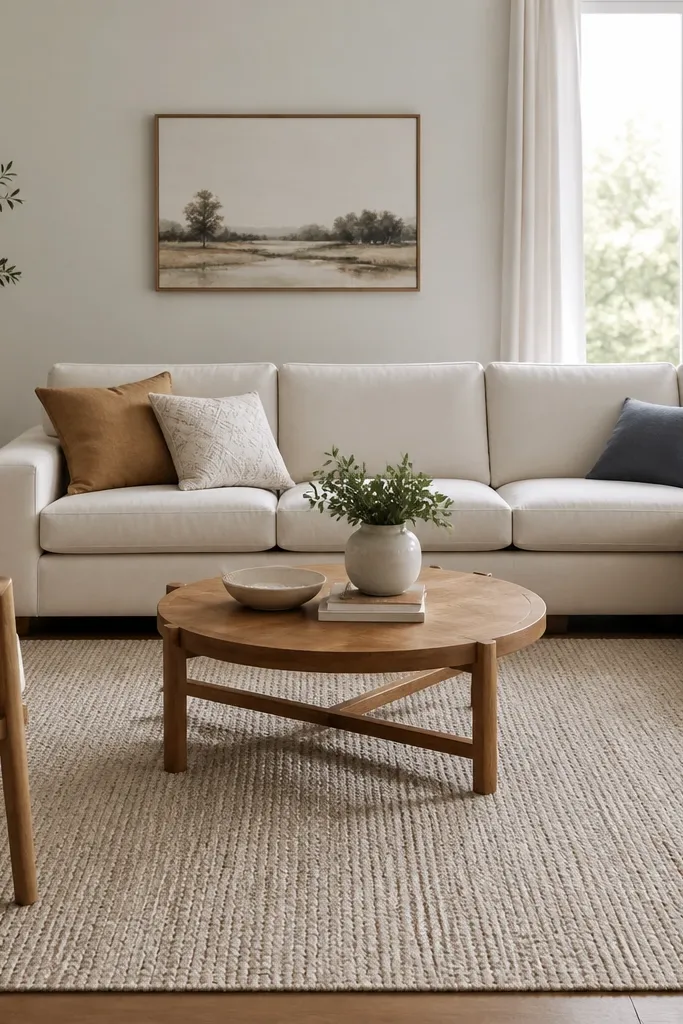
5. Monochrome taupe: flatweave with a darker border
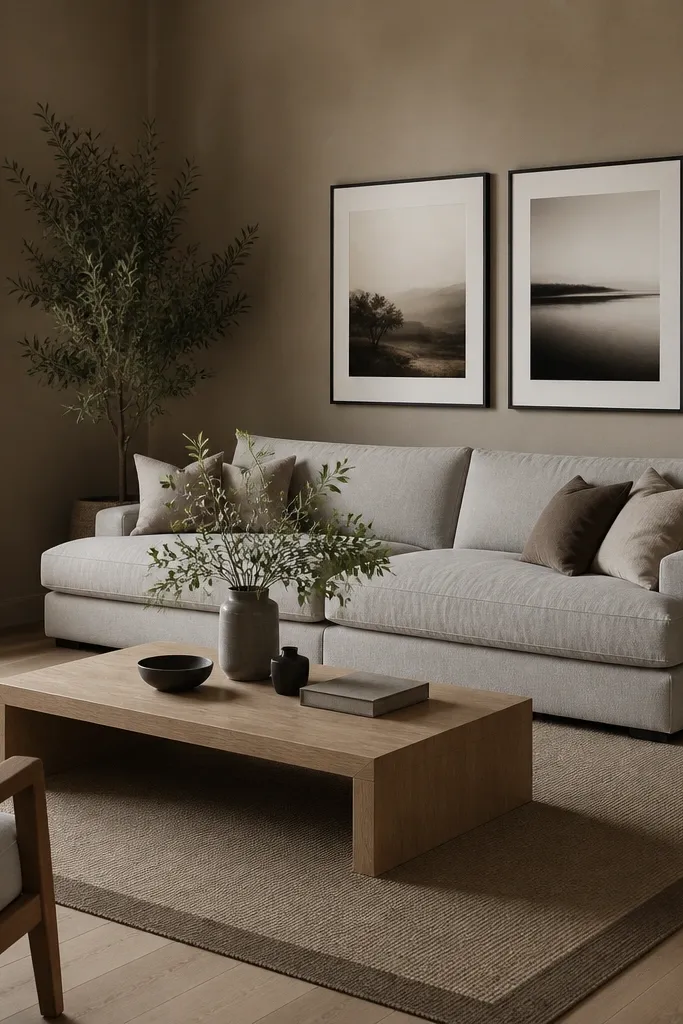
Choose a flatweave with a border that’s 1 to 2 shades darker than the main color. Keep the rug pile low so it doesn’t fight with low furniture legs. Match your throw pillows to the rug border shade, not the main taupe.
Monochrome works because the rug border adds definition when everything else is soft and neutral. The darker edging tells your eye where the “floor frame” is, which makes small rooms look more designed. Flatweave texture also adds grip underfoot, so it looks styled even with minimal decor.
Watch outAvoid rugs with the same exact color as the walls — you’ll lose the shape of the seating area.
Pro tipIf you have a lot of beige furniture, go for a rug with visible texture (tight weave) so it doesn’t blend into the floor.
6. Bold statement: oversized black-and-cream grid for modern homes
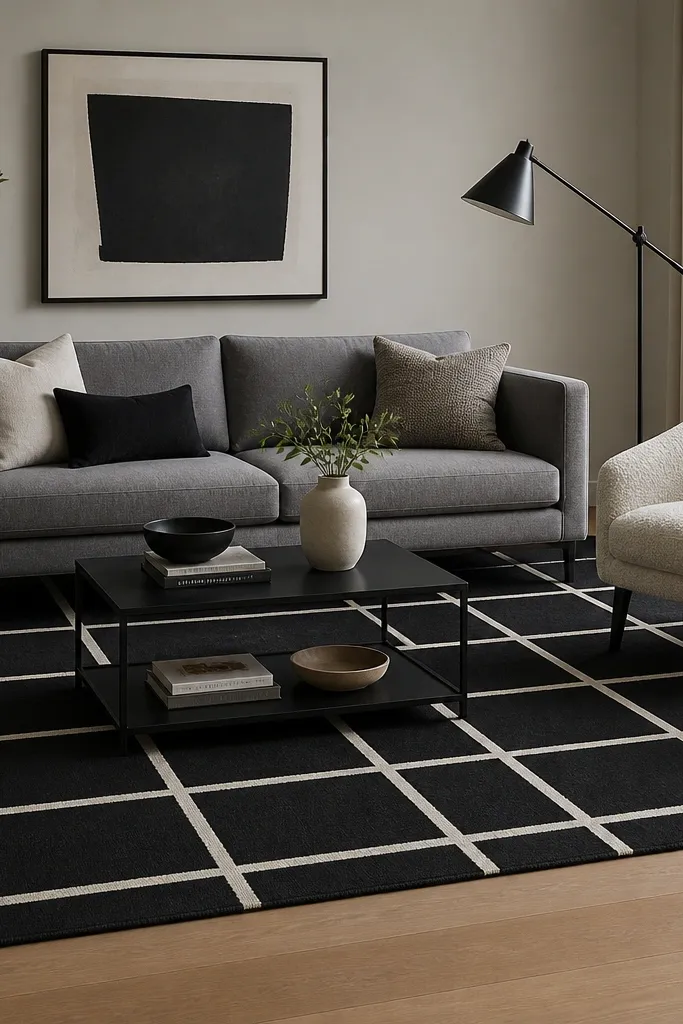
Pick an oversized rug where the grid squares are medium size, not tiny. For a typical sofa, you want the grid to extend past the sofa arms by about 12 inches on each side. Add one black accessory — a vase or lamp base — so the pattern doesn’t feel random.
A grid rug gives you straight lines that match modern furniture and makes the room feel structured. The black lines add contrast without needing color clutter, and the off-white background keeps it from feeling heavy. This works best if your sofa and chairs are solid colors or have minimal pattern.
Watch outAvoid thin, blurry grid prints that look like a low-resolution photo — they make the room feel cheap.
Pro tipUse a washable throw blanket with a subtle texture (like cotton waffle) to soften the grid’s sharpness.
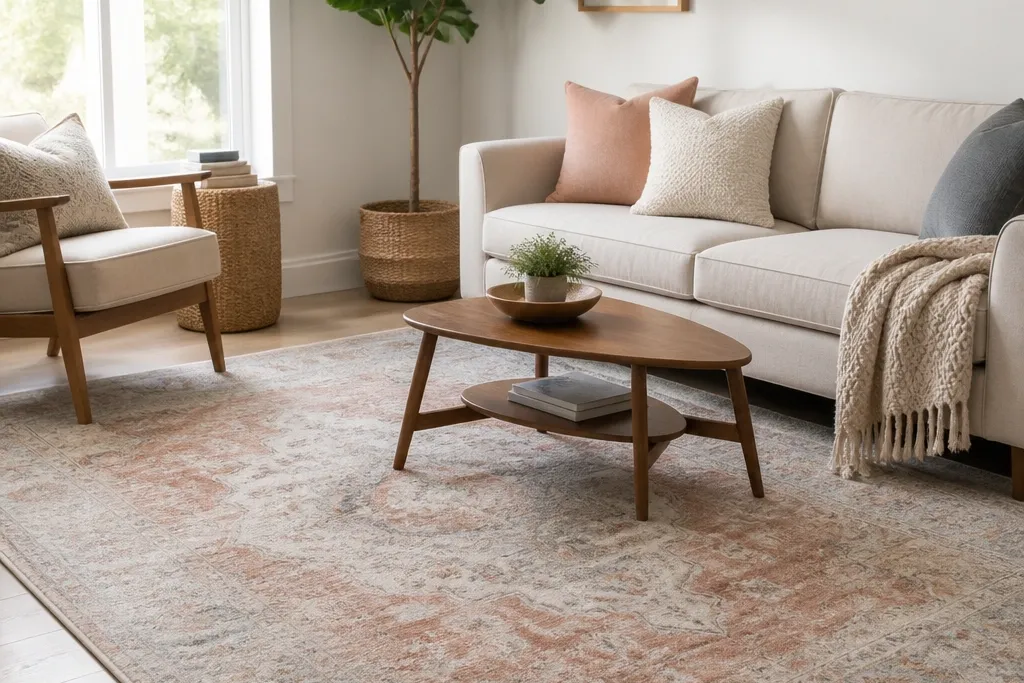
7. Warm terracotta and cream for springy living rooms
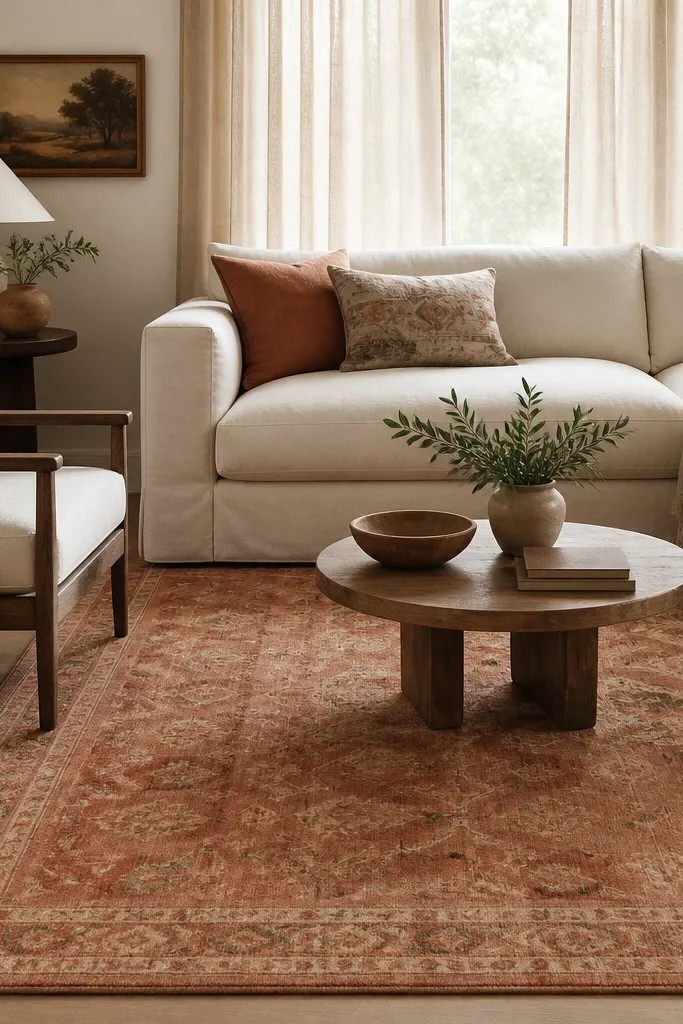
Terracotta brings warmth without turning the room orange. The cream background keeps the rug bright, and the slight olive in the pattern makes it feel grounded with natural materials like linen and rattan. This is one of my favorite beginner palettes because it hides dirt better than very pale rugs.
Choose a rug where terracotta is a secondary color, not the only pigment. Size it so the main pattern sits under the coffee table center, not off to one side. Add terracotta in one or two places: a throw pillow cover or a ceramic vase.
If your walls are cool white, warm the room by pulling terracotta into a single accessory, not multiple colors.
Don’t pick terracotta that reads pink — it clashes with many beige sofas and makes the rug look “off” in daylight.
8. Small space upgrade: 5x8 runner-style rug under seating
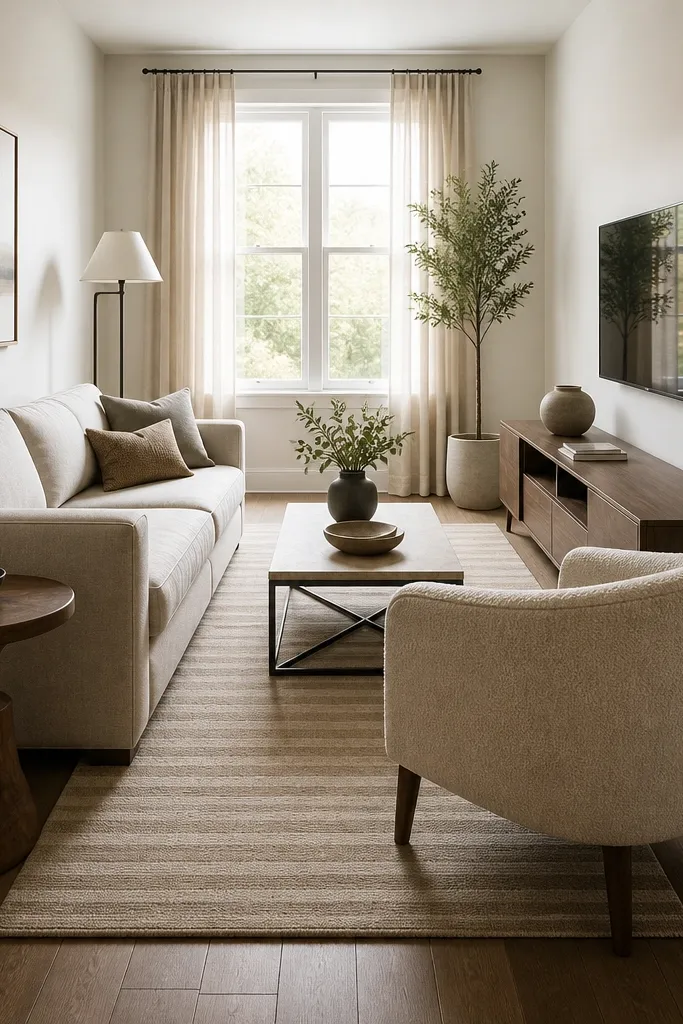
When your room is long and narrow, a standard square-ish seating rug can feel too wide and cramped. A 5x8 placed lengthwise gives you a “zone” without blocking walkways. Sand-and-cream stripes add direction, so the room feels longer and cleaner.
Measure your walkway first — leave at least 24 inches clear behind the chair if you can. Place the rug so chair front legs sit on it, and the rug ends fall near the midpoint of the chair backs. Keep the stripes subtle so they don’t fight with wall art.
Use a rug pad that matches the pile height so the rug doesn’t curl at the edges.
Avoid placing the rug too far forward — if it doesn’t touch the seating zone, it looks like an afterthought.
9. Color-washed vintage look: distressed panel rug
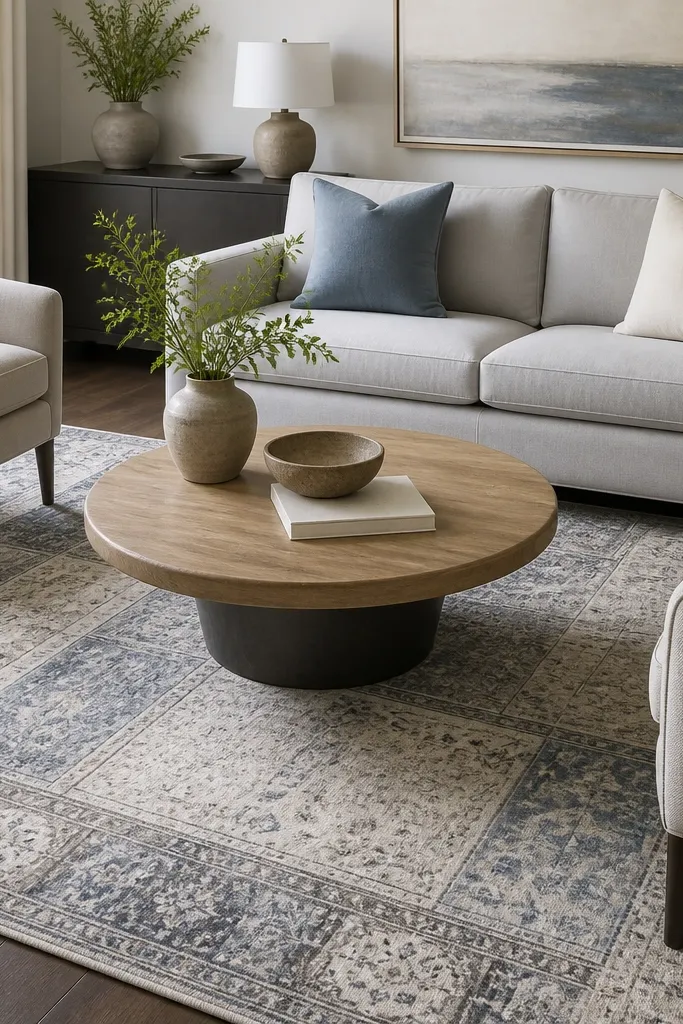
Pick a rug where the background is light (cream or off-white), then let the faded colors sit on top. Size it so the pattern’s center panel is under the coffee table, not hidden by furniture legs. Keep other decor toned down to avoid competing patterns.
A distressed panel rug makes a room feel lived-in because the fading looks like it already belongs there. The blocky pattern adds interest without heavy contrast, so it works even when you have busy wall art. Washed blues also calm down rooms with lots of white and chrome.
Watch outSkip high-contrast distressed rugs if your furniture is already dark; the room can feel harsh.
Pro tipChoose a rug that has at least one color that matches your floor undertone — warm floors like rugs with beige, cool floors like rugs with gray.
10. Monstera-friendly green: olive rug with tiny leaf pattern
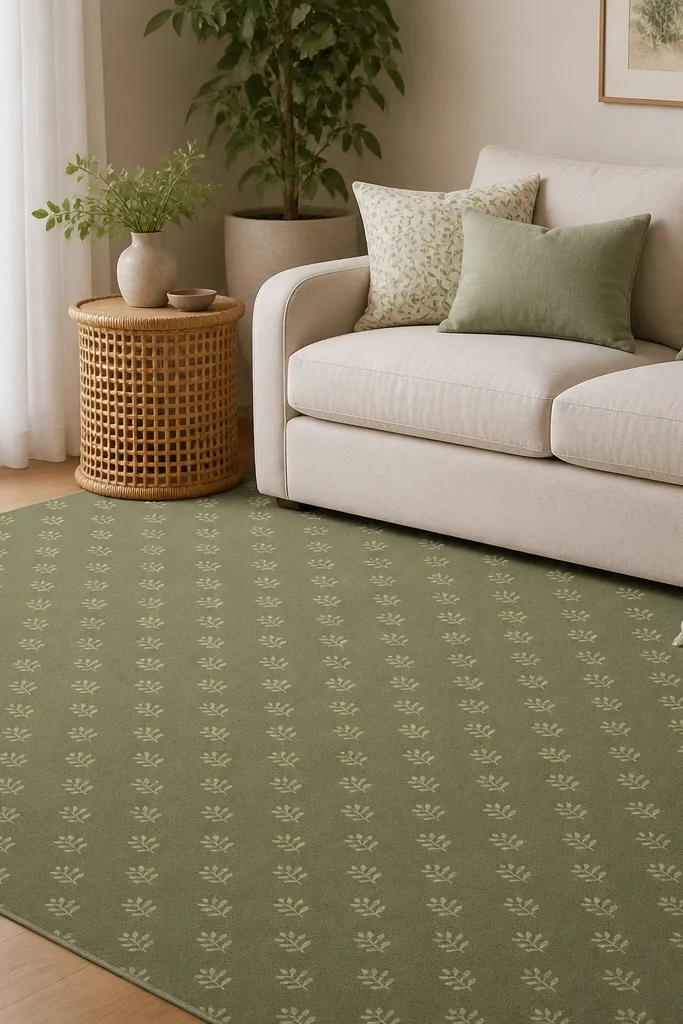
Choose an olive rug with an off-white background or a lighter olive base so it doesn’t look too heavy. Keep the rug size large enough that it covers the seating area — front legs on the rug is non-negotiable here. Repeat leaf-like shapes in a pillow or wall art frame, but keep it one item only.
This idea works because the leaf pattern stays small enough to read as texture, not a loud print. Olive grounds the whole room, and the tiny motif matches plant vibes without looking like a themed print. It’s also forgiving if you rotate decor seasonally.
Watch outAvoid large leaf patterns in small rooms — it makes the space feel busy fast.
Pro tipIf your plants are bright green, go slightly muted olive so you don’t end up with neon.
11. Black leather + cognac accents with camel rug
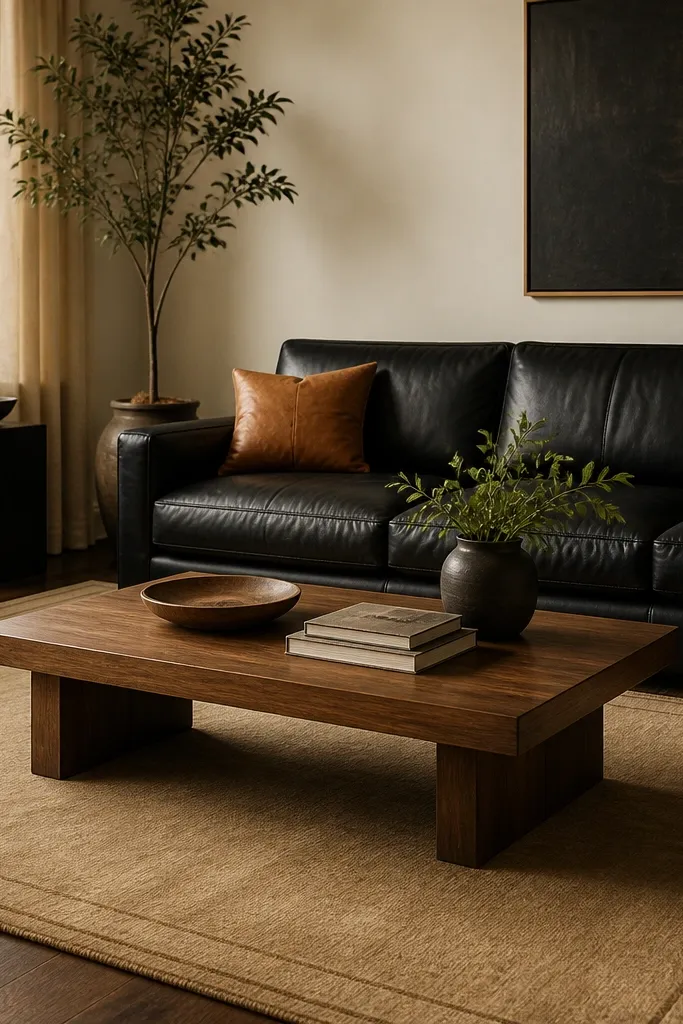
Pick a camel rug with a warm undertone (look for beige/golden notes, not yellowy mustard). Size it so the rug extends at least 10 inches past the sofa arms. Add one cognac item — a pillow or a small side table — to tie in the undertone.
Camel under black leather looks expensive because the warm color softens the starkness. The subtle border gives the rug structure, so it doesn’t get lost against dark furniture. Cognac accents echo the rug tone and make everything look pulled together even with minimal decor.
Watch outDon’t choose camel rugs that are too yellow — they can make black leather look dusty.
Pro tipUse a light rug pad under camel rugs; it makes the color look truer and prevents edge curling.
12. Navy and sand stripes for a balanced, family-friendly look
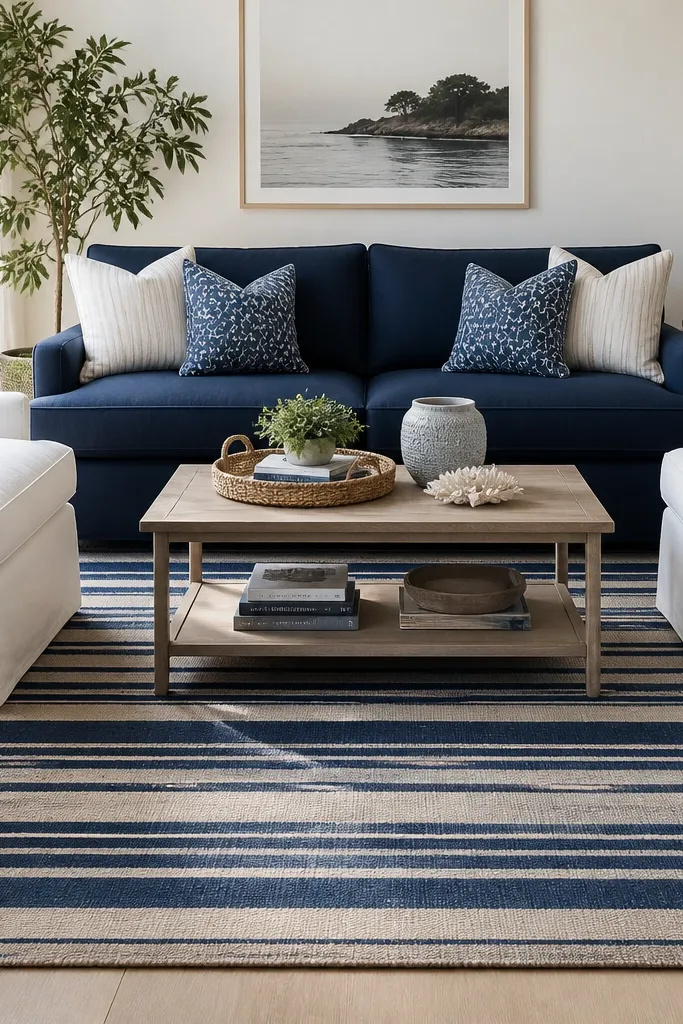
Stripes help the eye read spacing, which is handy in rooms with kids and frequent furniture rearranging. Navy hides stains better than light neutrals, and the sand stripe keeps it from feeling dark. This setup makes the living room look tidy even when throws and toys are out.
Choose a rug with horizontal stripes and a short pile if you have pets. Keep the rug long enough that both chairs' front legs land on it. Pair with white slipcovered chairs or light curtains to keep the palette bright.
Use a fabric protector spray made for rugs if you have spills; test a small corner first.
Avoid high-contrast stripes that are too thin — they look like an optical pattern and can feel harsh.