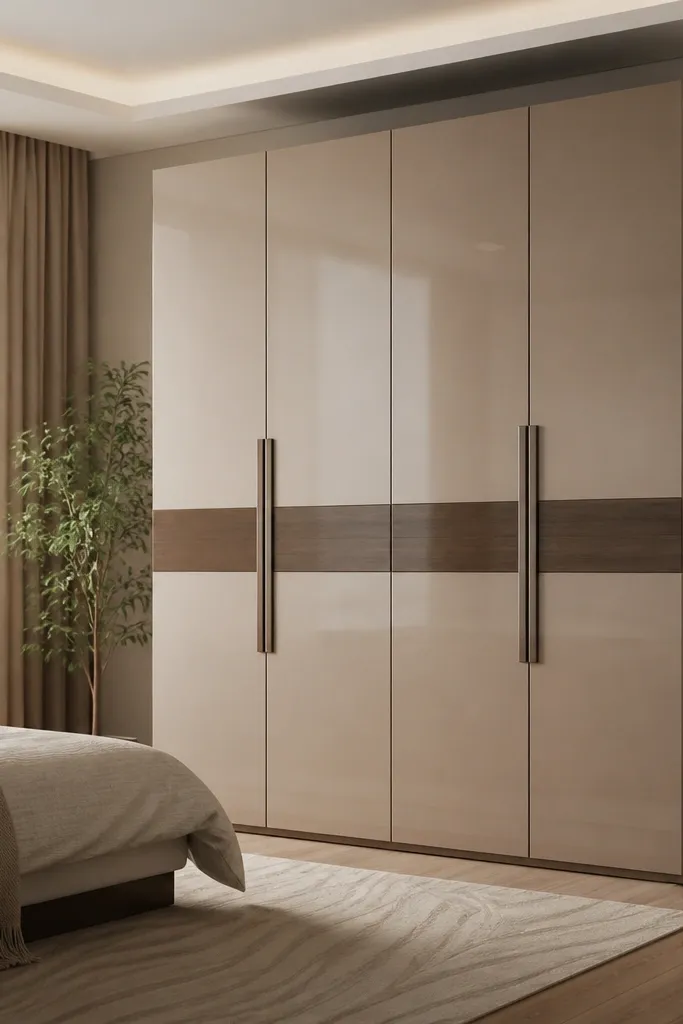
1. Mirror-Panel Almirah with Soft Grey Shutters
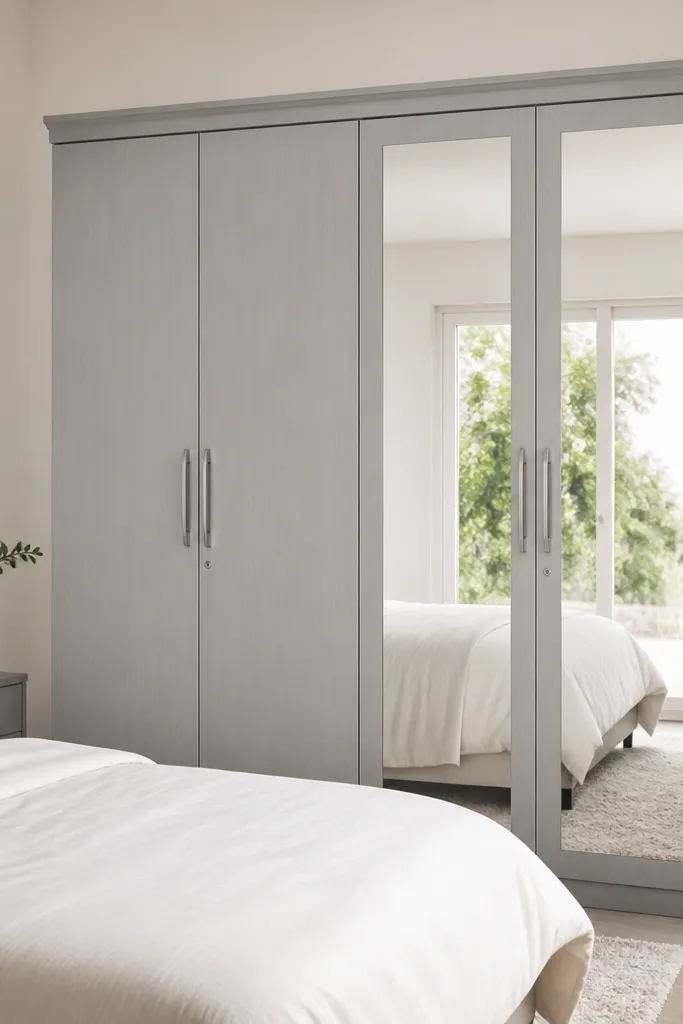
This design works because the mirror sits where your eye naturally scans when you enter the room. Soft grey keeps the bedroom calm, and the mirror breaks the heaviness of a full-height wardrobe. I’ve used this combination in small rooms where the ceiling is low — the mirror adds height without making the room feel busy. The vertical handle line also keeps the look crisp and less bulky.
Place it on the wall opposite the bedroom window or where light hits first. Keep the mirror panel width about the same as one shutter bay so it looks balanced, not chopped. Pair with white, light greige, or cool-toned bedding so the grey doesn’t turn dull.
Pro tipIf you want it to look more expensive, add a narrow LED strip behind the mirror edge — it makes the shutter line glow instead of reflecting harsh light.
Watch outAvoid mixing a mirror panel with too many different colors inside the shutter frames — it looks cluttered even when the exterior is clean.
2. Two-Tone Almirah with Walnut Bottom and Ivory Top
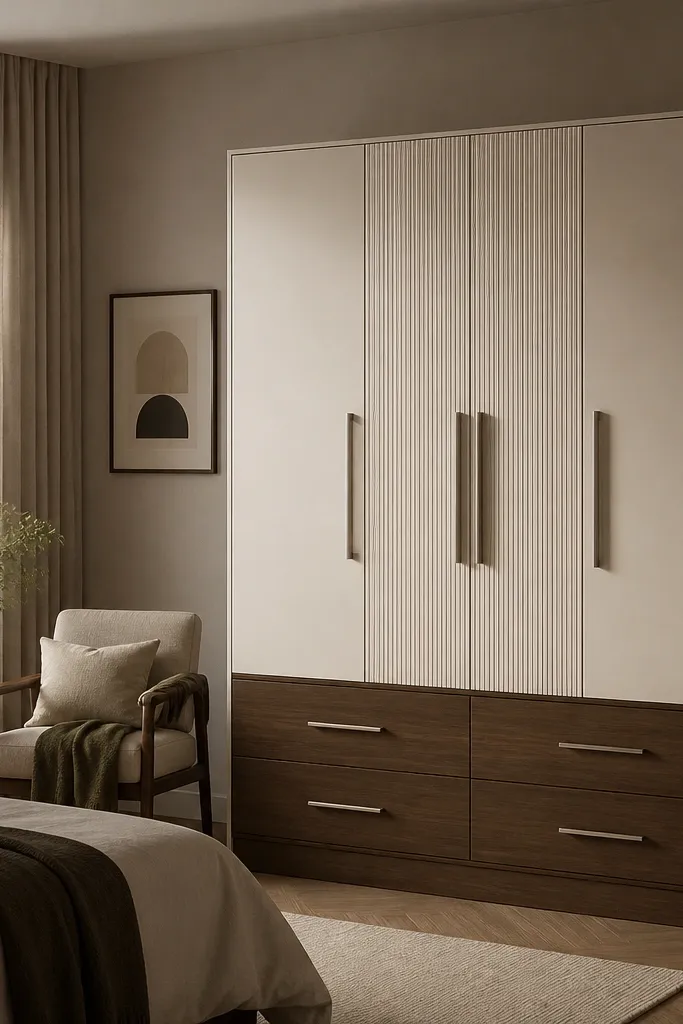
Two-tone wardrobes look intentional when the split is horizontal and the colors are close in warmth. Walnut bottom + ivory top gives you that grounded, bedroom-like feel while keeping the top visually lighter. The drawer strip at the bottom is practical for socks, tees, and sleepwear — you don’t have to open shutters for daily items. This also hides small mess because drawers close cleanly.
Keep the walnut section around 25-30% of the height so it reads as “base storage,” not a different cabinet. Match the drawer handles to your bed hardware color — brushed steel or dark bronze. Use cream curtains or a warm white wall paint so the ivory doesn’t look yellow.
Pro tipStyle the top shelf area with one long runner and a single basket — no more than two items, or the two-tone effect gets noisy.
Watch outDon’t choose a bright white top with a very orange walnut — it makes the whole wardrobe look mismatched under daylight.
3. L-Shaped Storage Look with Corner-Friendly Wardrobe
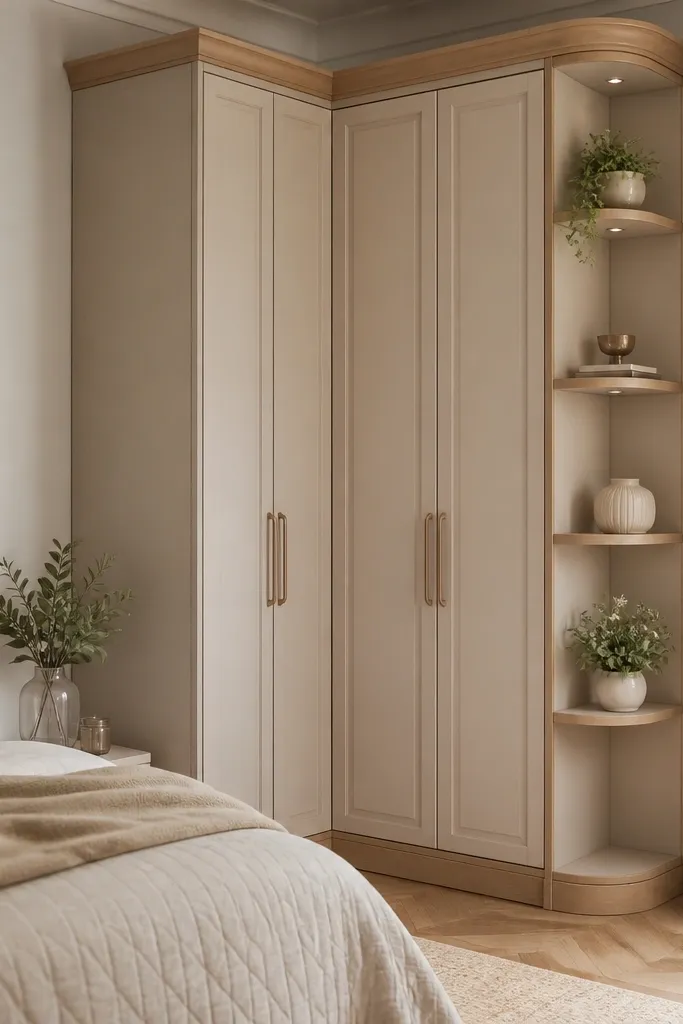
When your bedroom has a corner that collects clutter, a corner-friendly wardrobe keeps the room’s lines clean. The slight display shelf section gives you a “designed corner,” so you don’t feel the need to add extra decor. Warm beige makes the room cozy, and the paneling hides minor surface marks. I like this style for rooms where the bed is pushed into the corner — it makes the whole layout feel planned.
Leave 2-3 cm clearance from the adjacent wall so doors don’t scrape during expansion. Use the display area only for things you touch weekly — folded photo frames, a small vase, or folded throws. Keep the display open shelf section narrow, around 20-25 cm deep, so it doesn’t look like a separate unit.
Pro tipAdd soft LED inside the corner display — the shelf reads as intentional instead of just open space.
Watch outAvoid placing a wide open shelf in a corner where dust settles — it looks messy fast.
4. Sliding Shutter Almirah in Textured Charcoal
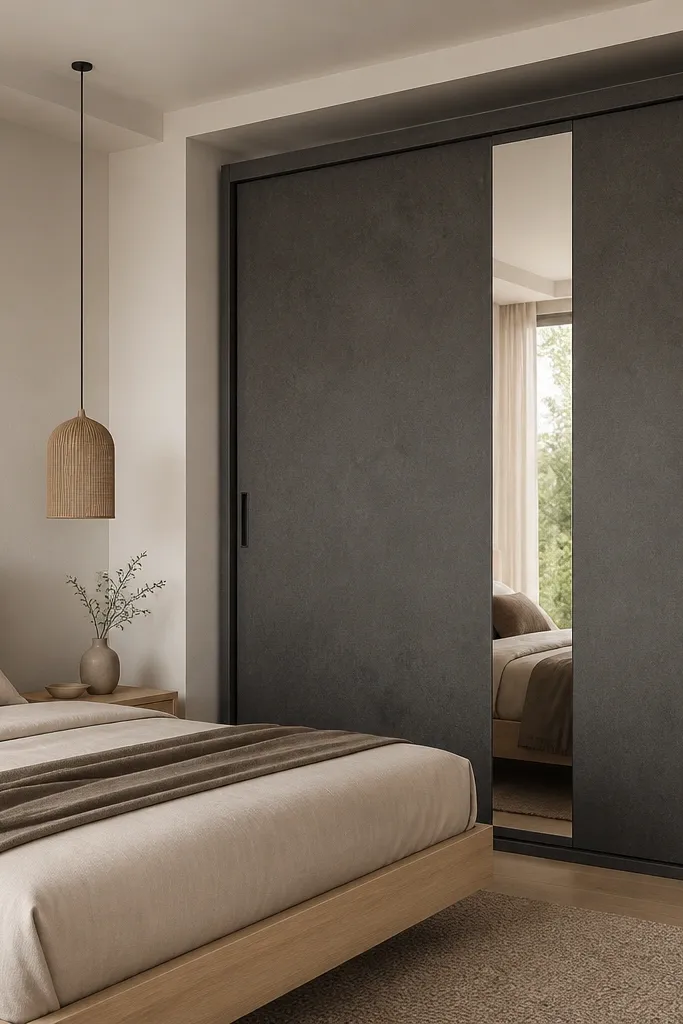
Sliding doors are a practical upgrade when your bedroom has a narrow walkway. Textured charcoal hides fingerprints better than glossy black, and the sliding motion keeps the room from looking cluttered with open door space. The mirror strip adds light without turning the whole face into a mirror wall. I’ve seen this design make even a small 9x10 room feel easier to move in.
Pick a track system that feels smooth when you slide it — test it before finalizing the fit. Keep the mirror strip at about one-third of the panel width so it doesn’t look like a sticker. Match the charcoal with a warm wood bed frame or brass-toned bedside lamp so it doesn’t feel cold.
Pro tipHang a long fabric panel or curtain on the wall beside the wardrobe to soften the charcoal face visually.
Watch outAvoid cheap track hardware — if the sliding feels rough in the store, it will feel worse after months of daily use.
5. White Shutter Almirah with Fluted Panels
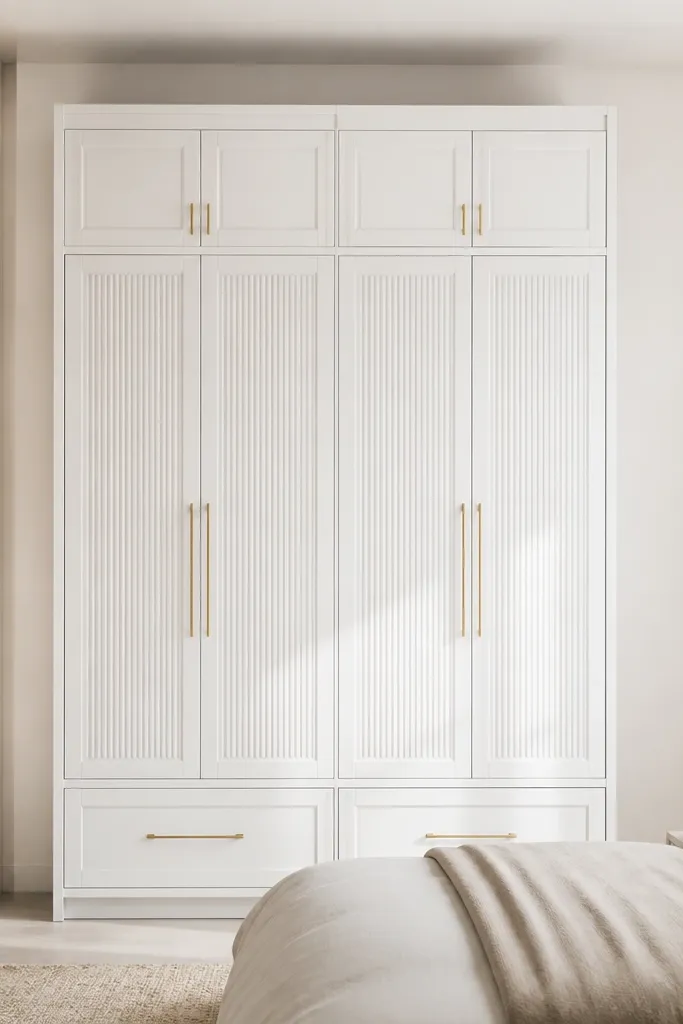
Fluted panels add texture without changing the color palette, and white makes the bedroom feel clean. This works best when your bed frame is also light — white, pale oak, or light grey. The fluting gives depth in different light angles, so the wardrobe doesn’t look flat. I like it for people who want a “hotel room” vibe without going full glossy.
Keep the fluting consistent — avoid mixing fluted and plain panels in the same shutter bay. Use gold-toned handles or matte brass to warm up the white. For bedroom styling, keep bedding in solid tones or subtle stripes so the fluted texture stays the star.
Use a microfiber cloth for quick wipe-downs — fluted surfaces show dust in the grooves if you let it build.
Don’t pair fluted white with a busy wall wallpaper pattern — the textures fight.
6. Open Shelf + Closed Cabinet Combo for Display Lovers
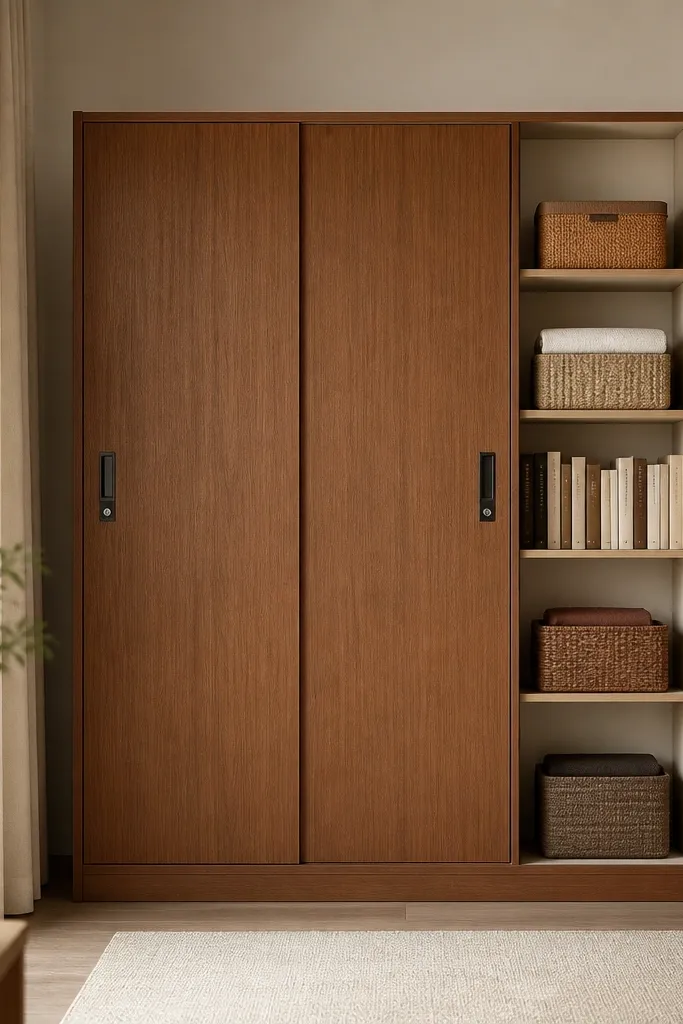
This design works if you like to display a few items but hate visual clutter. Closed shutters handle the “real life” clothes; open shelves hold what you can keep organized. The trick is using uniform basket sizes so the shelf looks curated even when it’s not perfect. Warm brown with light interior backing makes the open section look brighter and less messy.
Use baskets that are the same height per shelf, so the stack lines stay straight. Place the open shelf section at eye level — around 90-150 cm from the floor — so you don’t need to bend every time. Keep the open shelves limited to 2-3 bays wide so the wardrobe doesn’t look like a shelving unit.
Use one neutral basket color across the open shelves — I’ve used natural jute and it hides small wrinkles well.
Avoid leaving loose stacks on open shelves — folded clothes will look like laundry within a week.
7. Bedside-Integrated Wardrobe with Slim Dresser Bottom
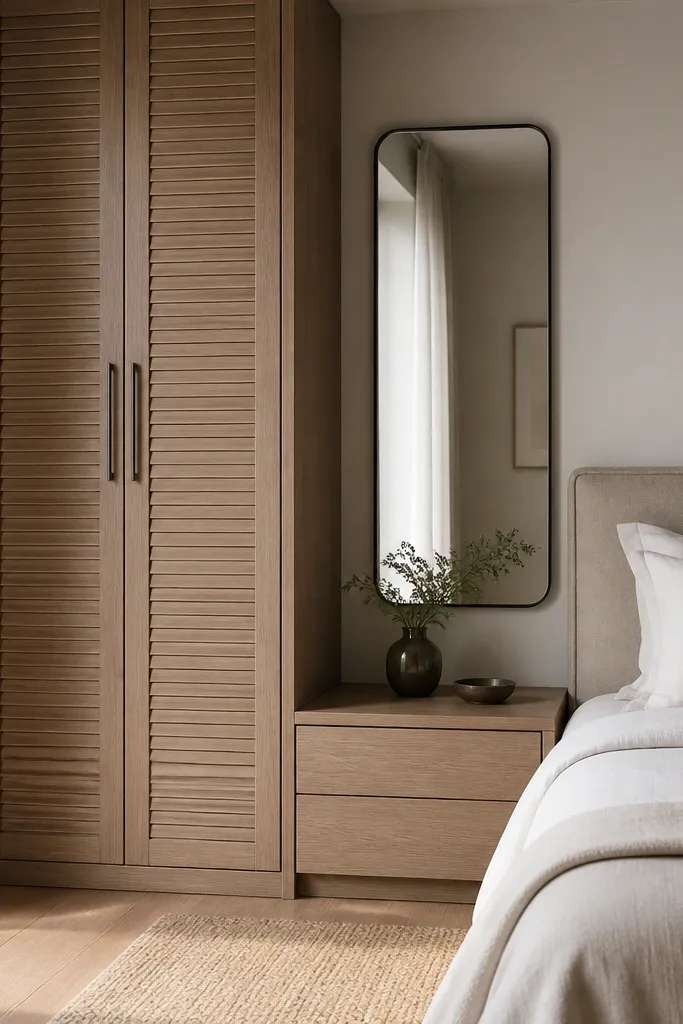
This is the design I pick when the bedroom needs storage but the bedside tables keep getting crowded. The slim dresser drawers let you store night essentials — chargers, lip balm, a small skincare pouch — without opening the main wardrobe. When the bottom section matches your lamp height, the whole wall looks balanced. It also makes the wardrobe feel less tall and more integrated.
Keep the dresser height around 60-75 cm, which matches typical bedside table proportions. Use the same finish for the drawers and shutter faces so the transition looks seamless. Fit two drawers wide enough for folded items and one narrow drawer for smaller accessories.
Pro tipPut a small tray on top of the dresser for keys and glasses — it stops random items from wandering onto the surface.
Watch outAvoid a bottom drawer that’s too short — it forces you to cram and the drawers start sticking.
8. Walnut Veneer Almirah with Brass Handle Lines
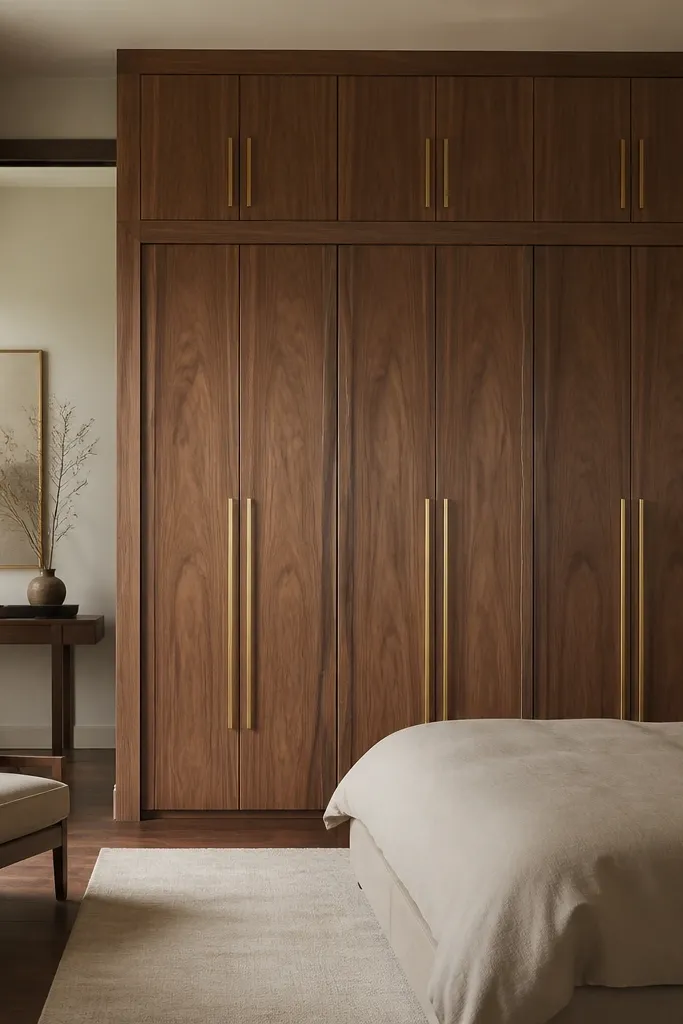
Walnut veneer looks premium when the grain direction stays consistent across panels. The brass handle lines add a “tailored” feel without turning the wardrobe into a gold-only theme. This style works in bedrooms with warm lighting because the satin sheen looks soft, not shiny. I’ve used this in rooms where the walls are beige and the bedroom needed one anchor piece.
Choose satin or semi-matte veneer, not high gloss. Make sure the brass finish matches your bed frame accents and lamp bases. For interior, add a light-colored lining on the hanging section so dark clothes don’t look dusty.
Pro tipWipe brass handles once a week with a slightly damp cloth — fingerprints show less when you keep it consistent.
Watch outDon’t mix brass handles with chrome bed hardware — it looks like two different furniture sets.
9. Pastel Blue Almirah with White Framed Shutters
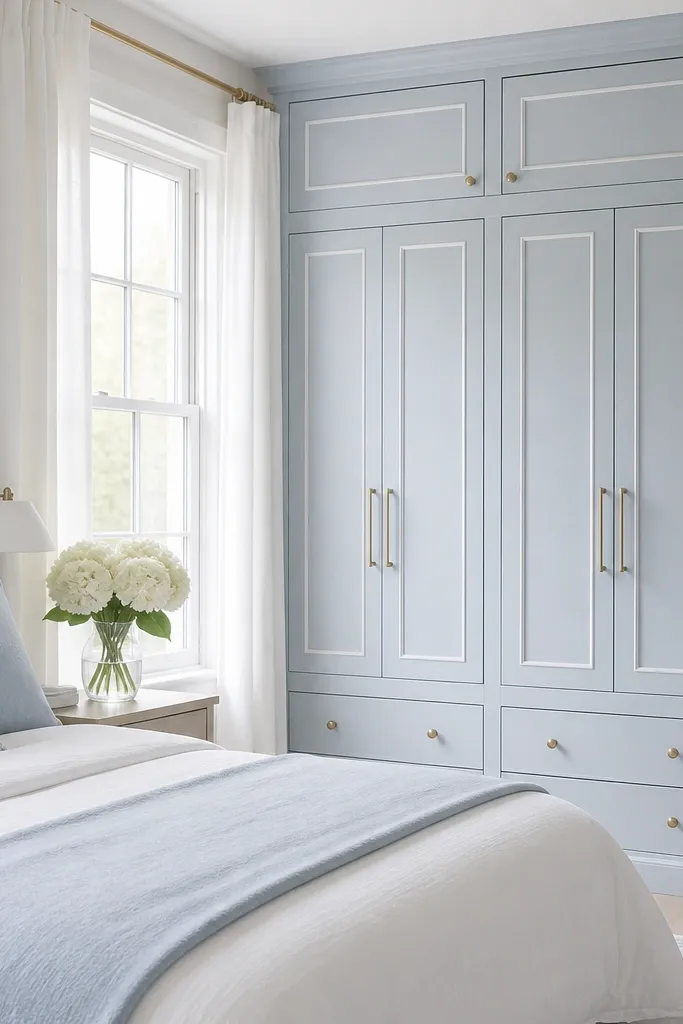
Pastel blue works when you want calm energy without going dark. The white framing makes the blue read as lighter and more structured, like a custom built-in. I’ve seen it look best with white bedding and simple curtains so the wardrobe doesn’t fight other colors. It also hides minor scuffs better than pure white because blue masks small marks.
Keep blue to a medium pastel, not powdery — powdery shades look grey in low light. Use white framing lines that are consistent width across shutters. If your room gets direct sun, choose a finish that resists fading; matte helps too.
Pro tipMatch the pastel blue in one other place — a throw pillow or curtain edge — so the wardrobe feels like part of the room, not decoration.
Watch outAvoid pairing pastel blue with loud orange or neon accents — it looks jarring in daylight.
10. Two-Drawer + Hanging Combo for Tight Bedrooms
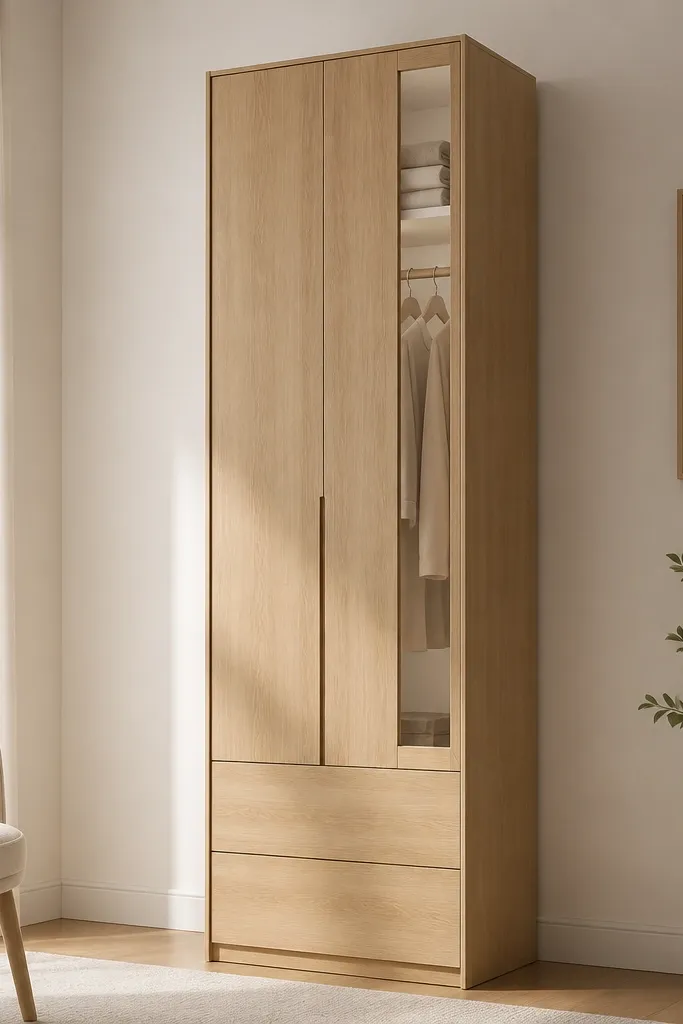
If your bedroom is narrow, a slim wardrobe with drawers at the bottom stops you from living out of the shelf. Two wide drawers are better than multiple tiny ones because they stay easier to organize. The hanging section gives you space for longer items — shirts, dresses, light jackets — without needing a separate wardrobe. This design keeps the exterior simple, so even a slimmer almirah looks intentional.
Aim for a depth that doesn’t crowd your walkway — I like 55-60 cm if you’re using standard hangers. Keep drawers wide enough for folded stacks about 30-35 cm tall when you pull them out. Match the drawer fronts and shutters in the same finish so the wardrobe reads as one unit.
Pro tipUse a divider in the drawers for tees and socks — otherwise the drawer front looks tidy but the drawer contents turn into a mess.
Watch outAvoid an extra-deep wardrobe in a tight room — you’ll lose the walkway and your door access becomes annoying.
11. Corner Mirror Wardrobe with Soft Beige Shutters
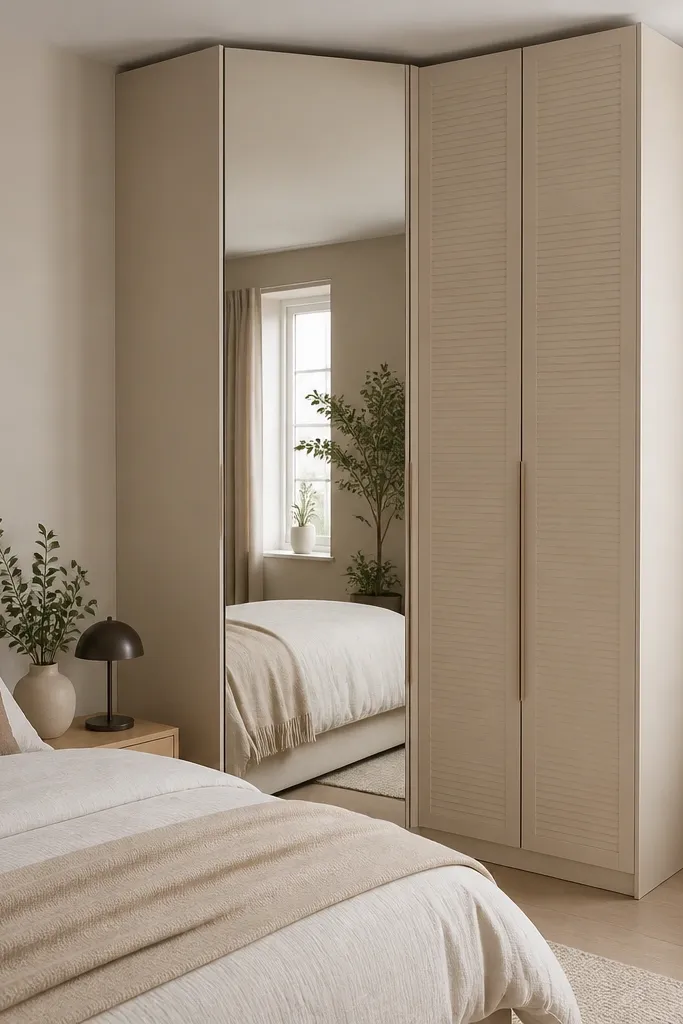
Corner mirror placement is sneaky-good because it bounces light from two directions. Soft beige keeps it warm and makes the mirror feel less harsh than a cold silver. I like this look for people who don’t want a fully mirrored wardrobe but still want the brightness. The simple shutter panels make the mirror feel like a feature, not a gimmick.
Install the mirror panel on the side that reflects your bed and the window area. Keep the mirror height from about 60 cm above the floor up to near the top cabinet line, so it looks proportional. Use warm white bedding so the beige doesn’t fight the mirror reflection.
Add a small rug with a low pile near the corner — when the mirror brightens the floor, texture shows more, and the right rug looks intentional.
Avoid placing the mirror where it reflects clutter — it will multiply it instantly.