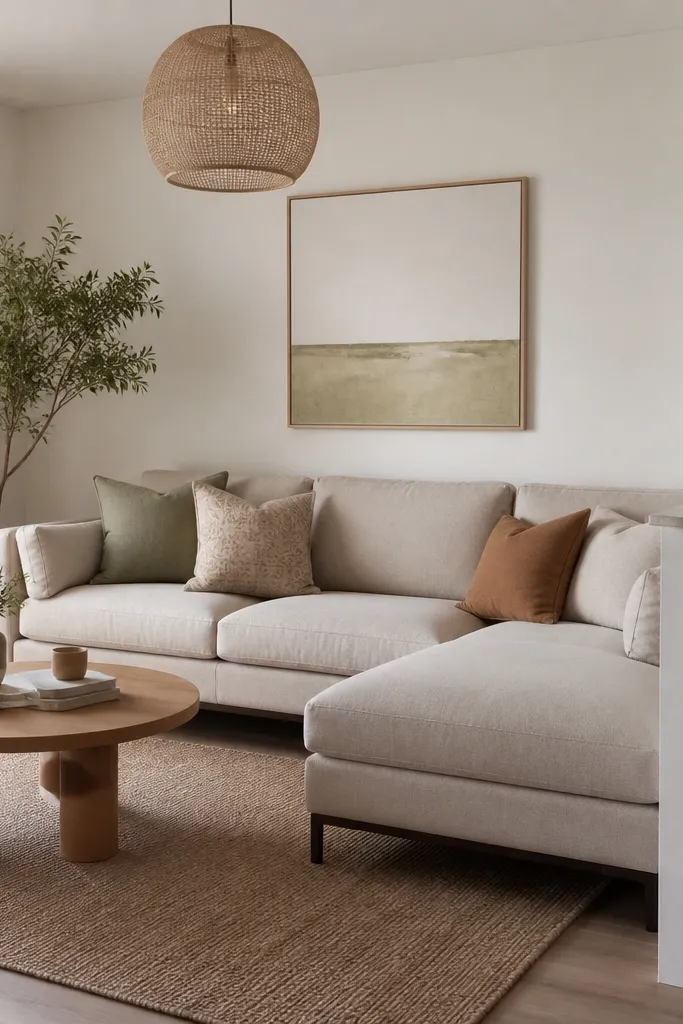
1. Warm Greige L with a Floating 2-Inch Gap
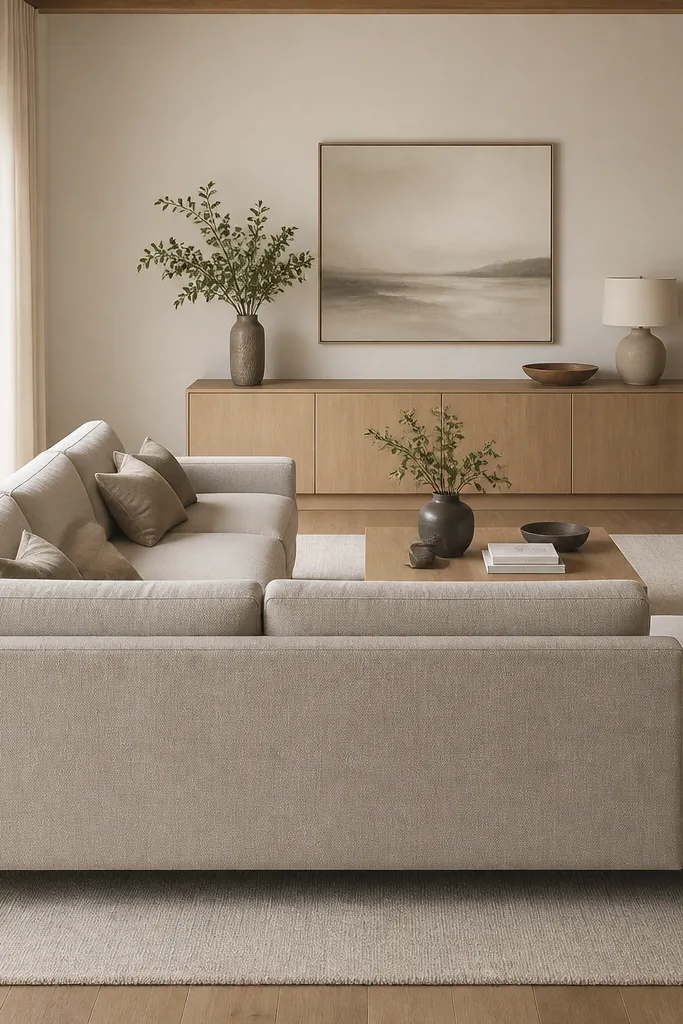
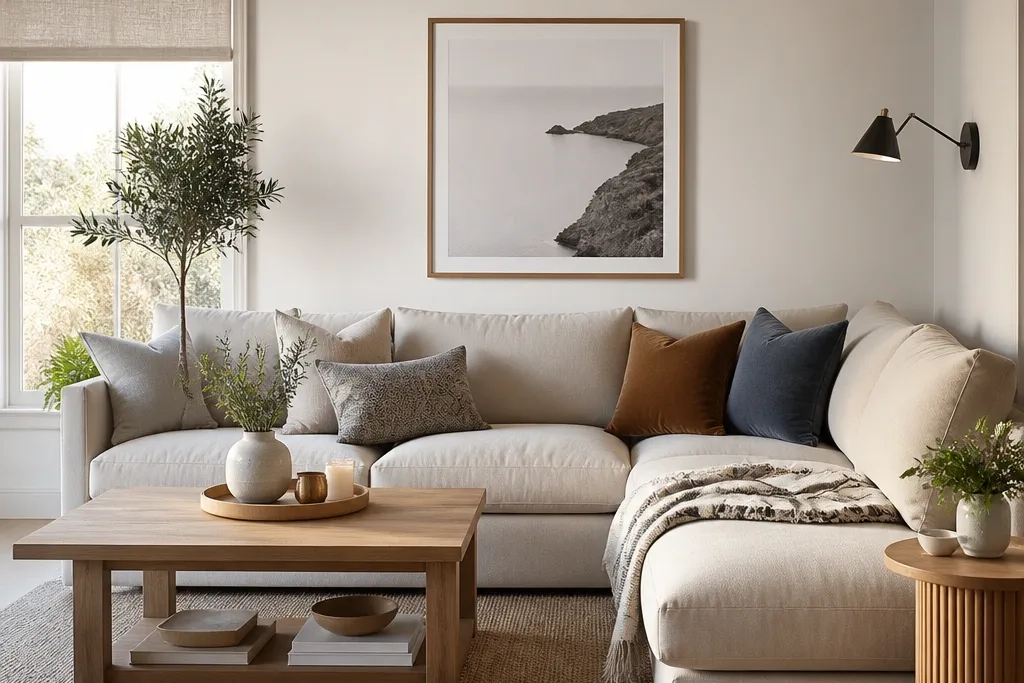
I like this setup because the sofa doesn’t glue itself to the wall. That tiny 2-inch gap lets light move behind it, so the L shape reads lighter even when the seating is deep. Keep the upholstery in a tight weave (not fuzzy) and pick a rug with a low pile so the room feels crisp. Warm greige also plays nicely with brass, light oak, and off-white curtains.
Pro tipRun a tape measure along the wall and mark a 2-inch spacer line, then place painter’s tape on the floor to lock your position before you move anything heavy.
Use a sofa with slim arms, ideally under 8 inches wide. Place it so the chaise points toward the window or open doorway, whichever creates the cleanest walkway. Aim for a rug that goes at least 6-8 inches beyond the sofa’s outer front edge on both sides.
Watch outAvoid high-contrast black-and-white upholstery in a tiny room — it makes the L shape look like a big block.
2. Oatmeal L Sofa Under a Low-Profile Window Curtain
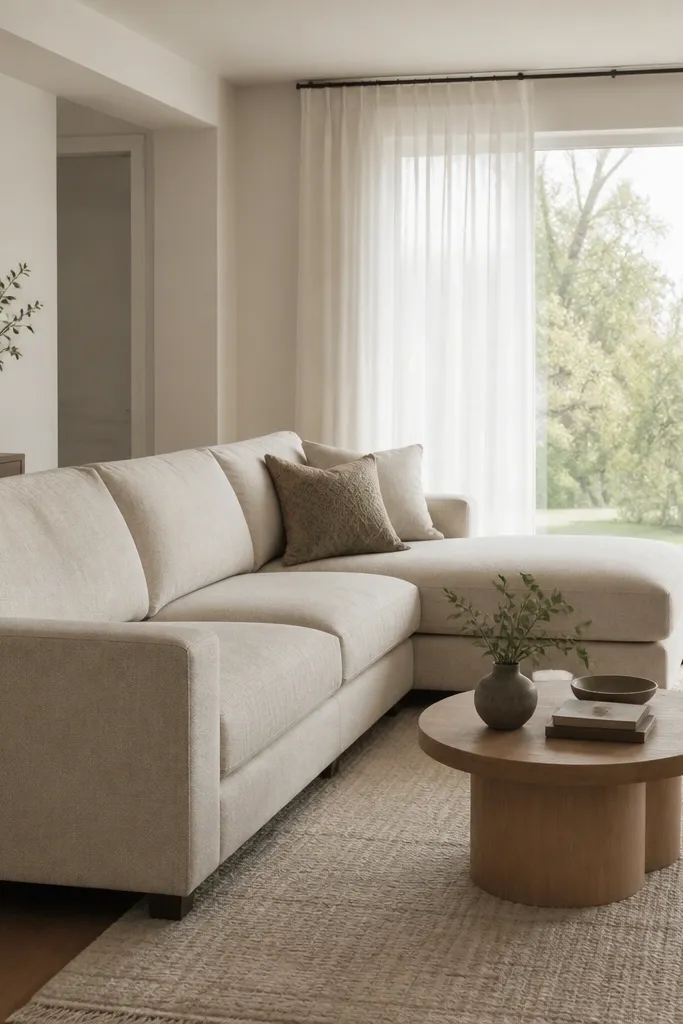
When the chaise sits near the window, you get natural light on the inside corner of the L, which visually “opens” the layout. Oatmeal fabric reflects soft daylight without turning gray. The trick is keeping window treatment low and airy so it doesn’t compete with the sofa’s mass. I pair this with a simple side table and a slim floor lamp to keep vertical clutter down.
Pro tipIf your window is narrow, keep pillows to two sizes only: one square throw pillow and one lumbar cushion.
Choose a chaise depth around 55-60 inches so you don’t crush the walkway. Hang curtains so they start 2-3 inches above the window trim and extend 4-6 inches past each side. Use a rug that reaches the front legs and leave 2-3 inches of floor visible at the back edge.
Watch outSkip heavy drapes that stop at the window sill — they make the sofa feel taller and heavier.
3. Charcoal L with a Light-Tone Rug That Breaks the Mass
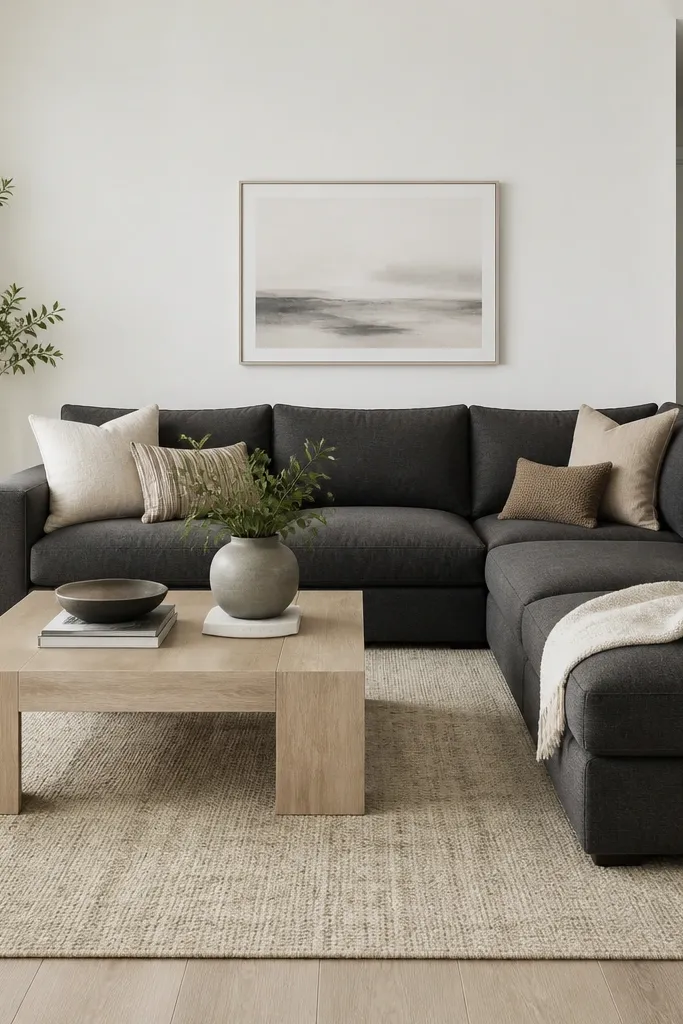
Dark upholstery can work in small rooms if you counter it with a rug that pulls the eye across instead of locking onto the sofa. A light beige or cream rug gives you contrast without the harshness of stark white. The subtle pattern matters — it hides vacuum lines and pet hair better than flat solid rugs. I like charcoal because it hides wear and stains, especially on the chaise where people put feet.
Go for a rug at least 8x10 if your room allows, or one that covers the front legs and extends 12 inches past the coffee table edges. Use a coffee table with an open shelf or slim legs so you still see floor. Add one warm wood element to keep the charcoal from feeling cold.
Pick rug fibers that clean well, like wool-blend or tightly woven synthetic — I’ve had better results with low-pile for small spaces.
Don’t put a small rug that sits only under the chaise — it makes the room look like two separate zones.
4. Sectional Facing a 55-Inch TV with a 7-Foot Viewing Setup
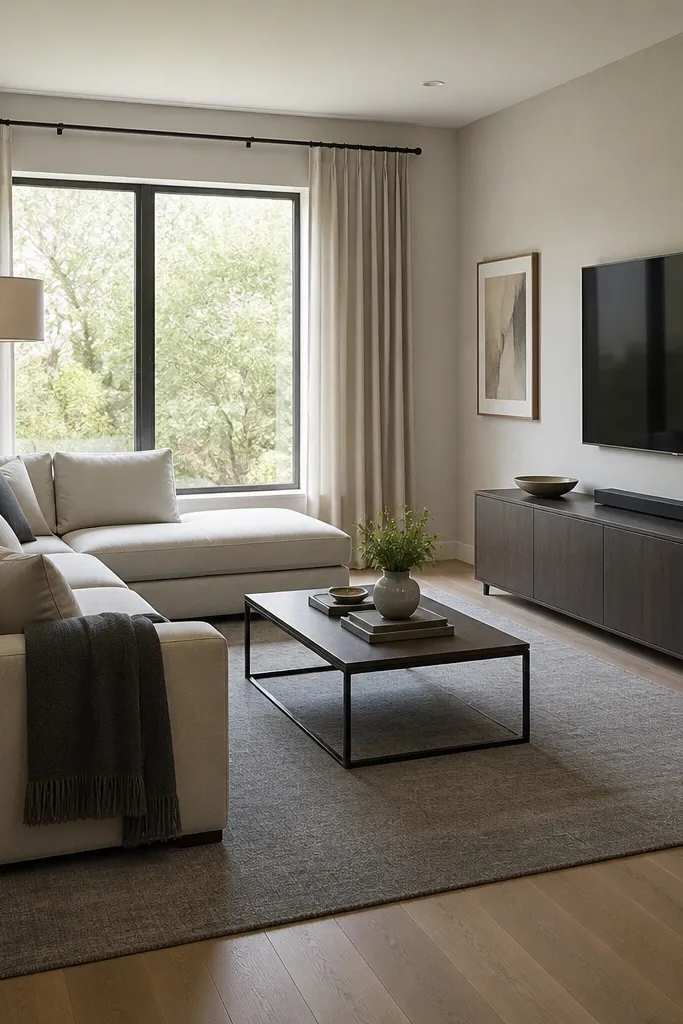
If you have a TV, layout is math. I aim for about 7 feet from sofa to screen for a 55-inch so the viewing angle feels relaxed without leaning. An L shape works well because one side becomes the “main seat” while the chaise turns into a casual lounge zone. Keep the wall behind the TV uncluttered so the sofa doesn’t compete with cables and decor.
Pro tipBefore you buy pillows, tape painter’s tape on the wall where the TV will hang and sit where you’ll watch to check glare from the window.
Mount the TV so the center sits around 42-45 inches from the floor. Put the sofa so the longest leg is parallel to the TV wall, with the inside corner slightly angled toward the room. Use a media console that’s 60-70 inches wide so it doesn’t look like a toy next to a sectional.
Watch outAvoid angling the sofa too hard toward the TV — it twists your posture and makes the room feel awkward.
5. Sage Green L Sofa with White Walls and Brass Accent Lamp
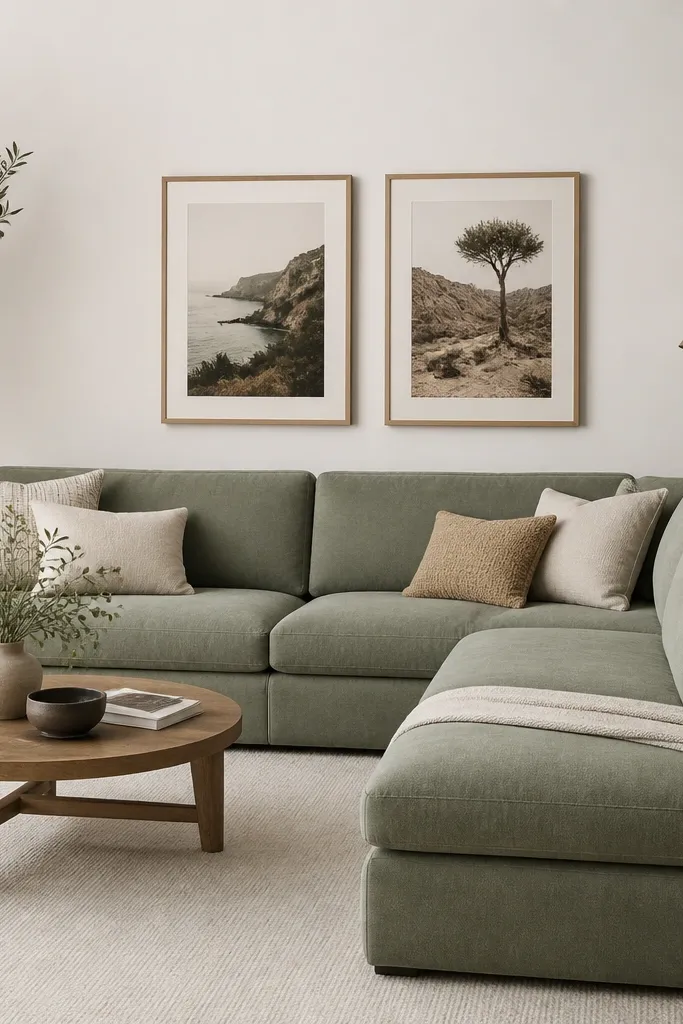
Sage reads calm in daylight and cozy at night. It also gives you color without the drama of jewel tones, which is helpful when the room is small and you don’t want to redecorate every season. Brass adds warmth and a little shine, which makes the sofa look intentional instead of bulky. Keep wall art in a single horizontal row so your eye doesn’t jump around.
Choose a sage fabric with a matte finish, not glossy. Use one brass lamp and one brass picture frame maximum so it stays clean. For pillows, do two tones: sage and cream, plus one small textured accent like bouclé or woven cotton.
If your room gets cool light, warm it with a cream rug and amber bulbs (2700K).
Skip multiple competing greens — sage plus forest plus mint usually turns patchy in small rooms.
6. Textured Bouclé L with a Slim Glass-Top Coffee Table
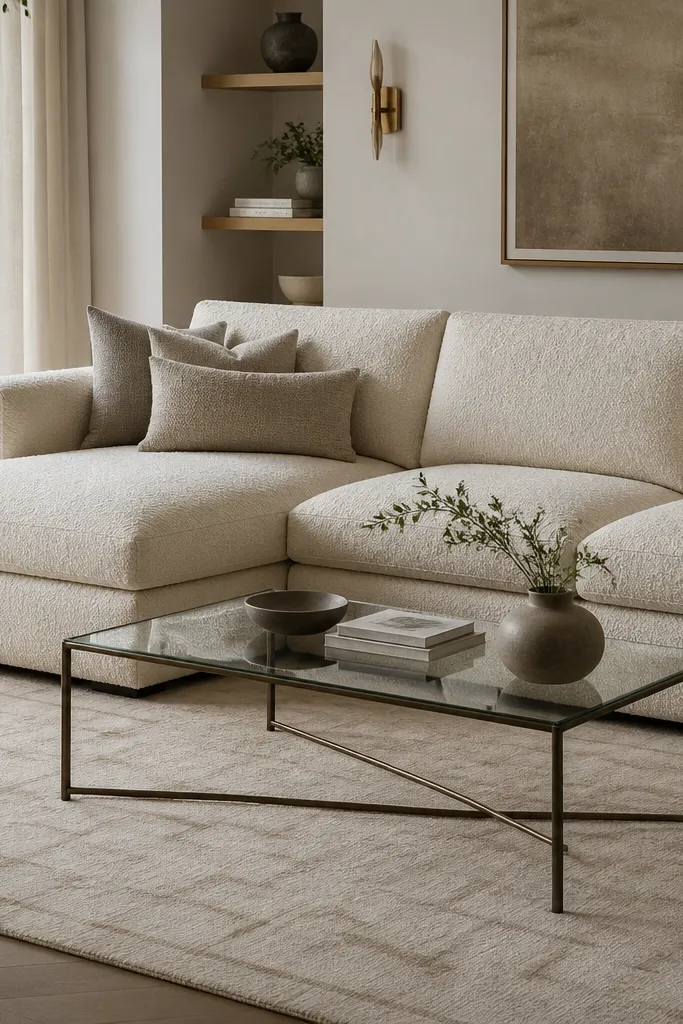
Bouclé catches light in a way that makes the sofa feel soft and inviting, but glass keeps the floor area visually open. That combo is great when you want a luxe look without adding more bulk. The secret is choosing a glass table with thin legs and a small footprint. The rug ties everything together so the sectional doesn’t look like it’s floating alone.
Pro tipVacuum bouclé with a brush attachment on low power — it keeps the loops looking even instead of flattened.
Keep the coffee table height around 16-17 inches so it lines up with sofa seat height. Use a rug that extends under the front legs by at least 6 inches. Stick to neutral pillows and one textured throw so the bouclé stays the star.
Watch outAvoid thick, chunky wood coffee tables in this setup — they fight the lightness you’re creating.
7. Low-Back L Sofa with Floor-to-Ceiling Sheers
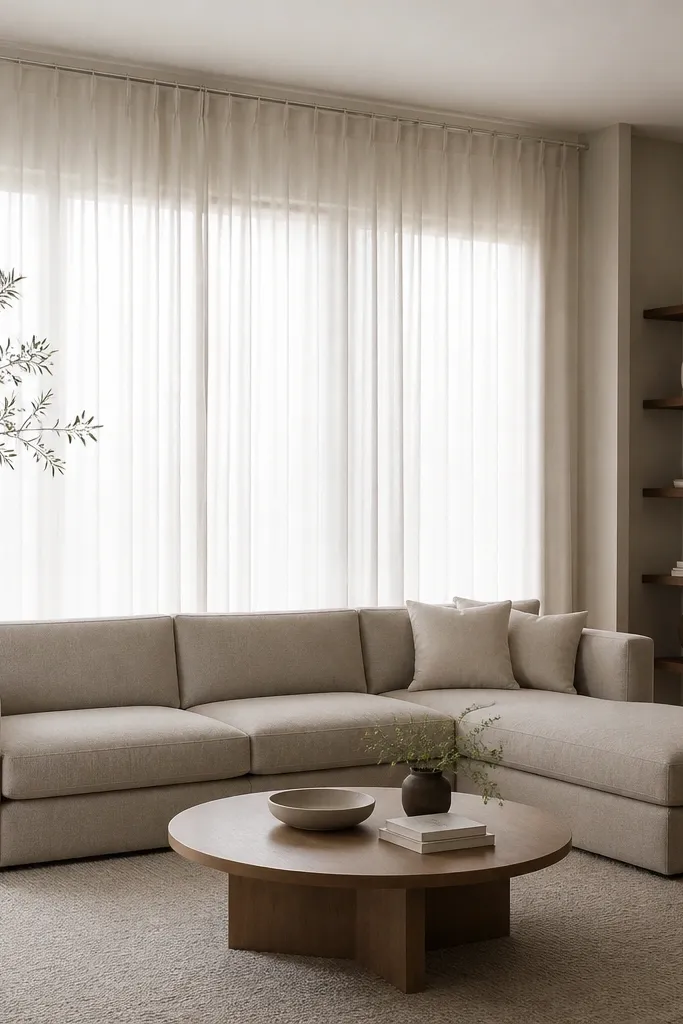
A low-back sectional keeps your eye from hitting a hard top line, which makes the room feel taller. Floor-to-ceiling sheers add softness, but they only work if the sofa is also visually light. Taupe is a good middle ground between warm and cool. I use this look when the room has a lot of windows and I want the seating to blend into that airy feel.
Choose a sofa with legs visible underneath so the floor plan stays open. Hang sheers from near the ceiling and let them fall straight, not gathered. Place a thin runner-style rug or a low-pile area rug that covers the seating path.
If you can see the curtain hardware through the sheer, swap to a rod that’s closer to the ceiling and paint it the same color as the wall.
Skip a tall, high-back sectional with sheers — it makes the room look top-heavy.
8. Navy L Sofa with a Tan Jute Rug and Woven Storage Basket
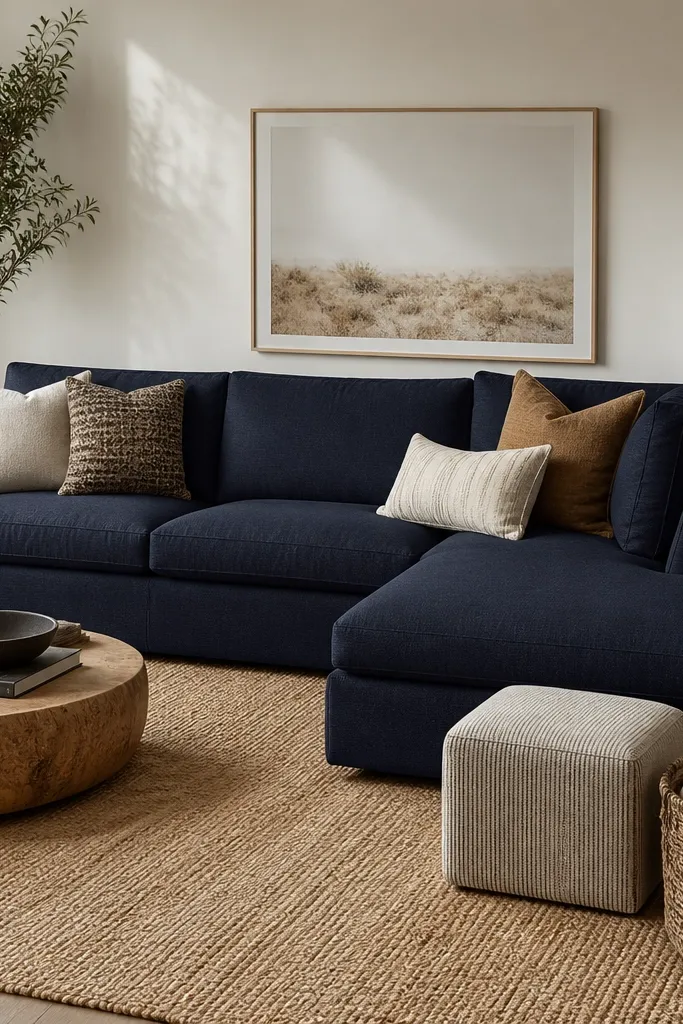
Navy can shrink the room visually if you pair it with the right texture. Jute adds warm texture and a lighter base color, so the navy doesn’t dominate. A woven basket is functional decor and it hides the mess that always appears in small spaces. The chaise becomes a reading spot when you add a small ottoman or a side table.
Pro tipUse a rug pad under jute so it doesn’t slide when you walk past the chaise.
Pick a rug that’s thick enough to feel grounded but not so shaggy it traps grit. Jute blends well with wood tones and tan leather accessories. Keep side tables small — 18-24 inches wide — and leave room for the walkway behind the ottoman.
Watch outAvoid placing a patterned rug under a patterned throw blanket — the room looks busy fast.
9. Patterned Pillow Strategy on a Solid L Sofa
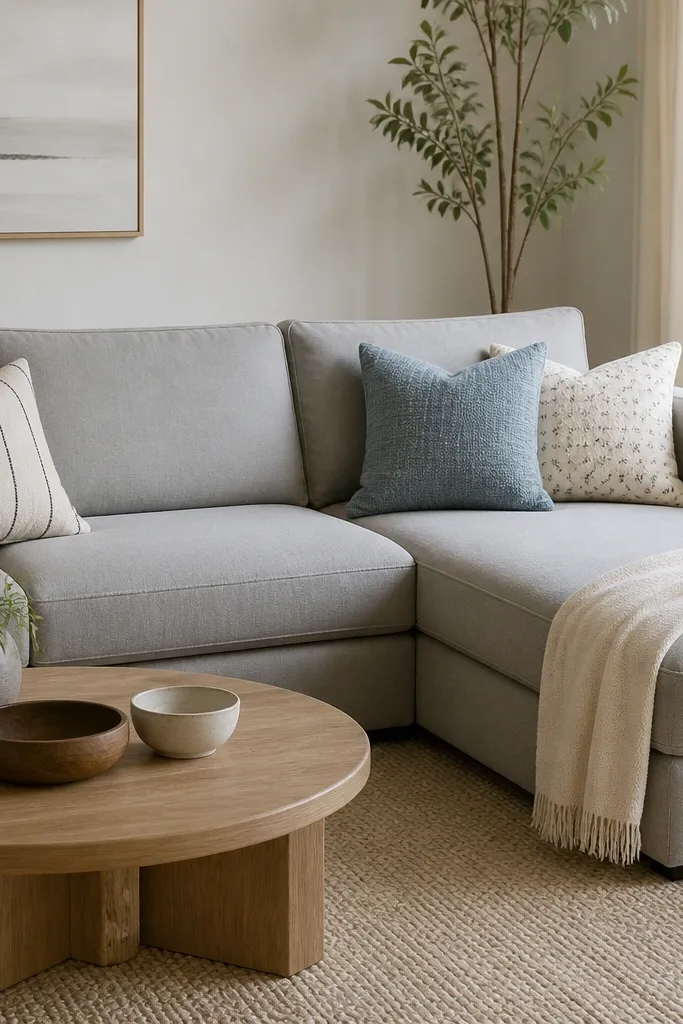
In a small living room, the sofa should stay mostly calm and the pillows do the fun work. I’ve had the best results with one dominant pillow pattern and two supporting solids or tiny motifs. This keeps the L shape from looking like it’s wearing a costume. The solid sofa also makes your wall art and curtains look better because they’re not fighting with upholstery patterns.
Pro tipIf you change pillow colors with the seasons, keep the sofa fabric the same for at least a year so your room doesn’t feel like it’s constantly being reworked.
Stick to a small palette: cream, charcoal, and one color (like muted blue). Use a 20x20-inch pillow for the main pattern and 18x18-inch for the others. Keep the throw folded, not draped messily, so it doesn’t add visual clutter to the chaise.
Watch outDon’t add patterned pillows in three directions (floral, geometric, stripes) — it looks chaotic next to an L shape.
10. Corner-Window L Sofa with the Chaise Cutout
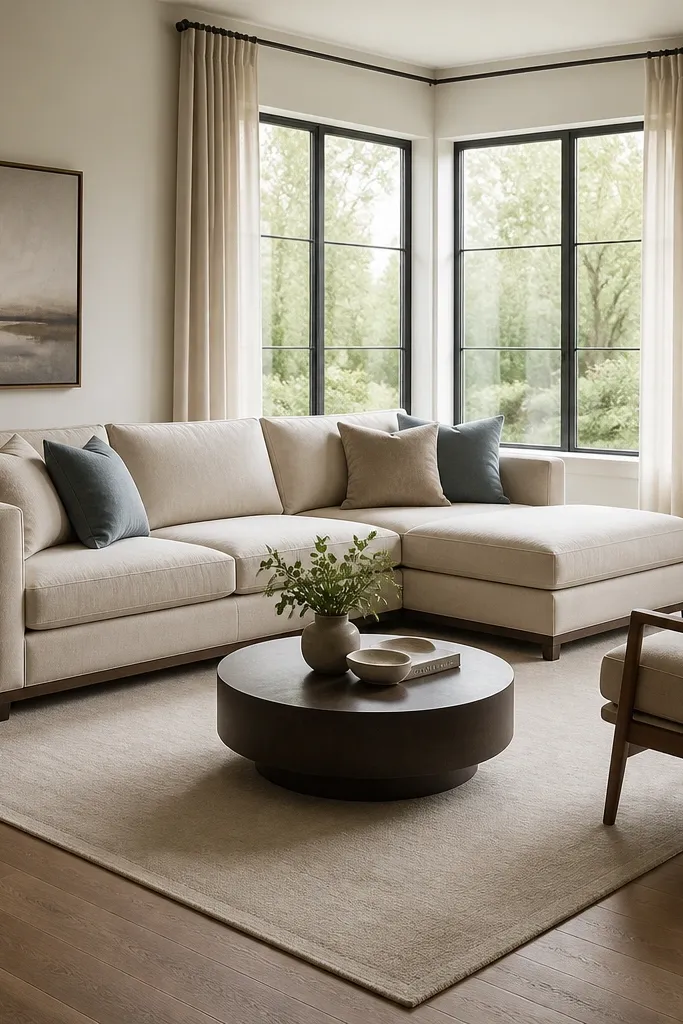
Corner windows create a weird dead zone, and the L shape solves it when you place the inside corner at the window corner. That way, the sofa doesn’t block light and it shapes the conversation area naturally. I like this when the room has one window that breaks the wall line. The key is keeping the chaise from jutting into the main walkway.
Pro tipUse a 1-2 inch rug border visible around the edges so the room looks intentionally framed, not accidentally placed.
Choose a sofa size that leaves at least 24 inches from the chaise edge to the nearest door or traffic path. Use a slim side table with a tray for drinks so you don’t need a big coffee table. Add one floor lamp to light the corner window side without crowding the seating.
Watch outAvoid putting the inside corner flush into the window trim — it makes the sofa feel jammed and tight.
11. Sectional with Open Shelving Behind the Short Wall
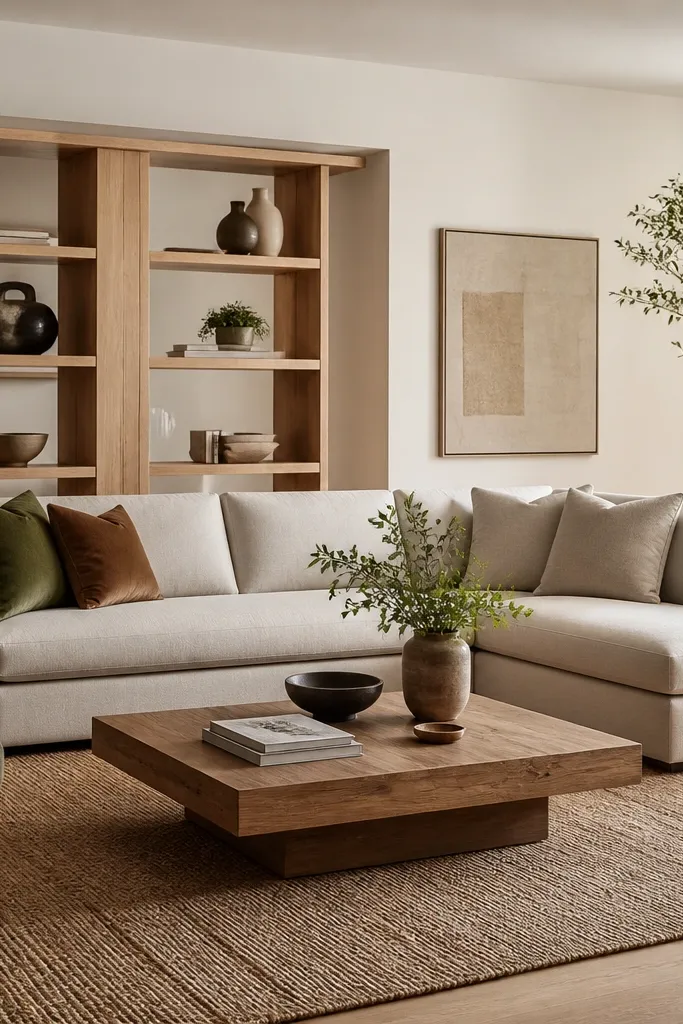
If your sofa back faces a short wall, you can make that area look planned instead of empty. Open shelving breaks up the visual mass behind the sofa and gives you a place to store books or baskets. I like light wood shelves with simple lines because they don’t compete with the sofa silhouette. Keep items spaced — 1-2 books, one small plant, one framed photo — so it stays airy.
Leave 2-4 inches between the sofa back and the shelving to avoid dust buildup. Put the shelves at about 72-78 inches high for a small room so it doesn’t feel like a ceiling drop. Use a rug with a subtle pattern so the shelving doesn’t clash with it.
Style shelves in pairs: two books stacked, one tall object, one flat tray. It looks balanced without adding clutter.
Skip closed cabinets right behind a sofa — they make the back wall look heavy.
12. Compact L Sofa with a Round Coffee Table Centered
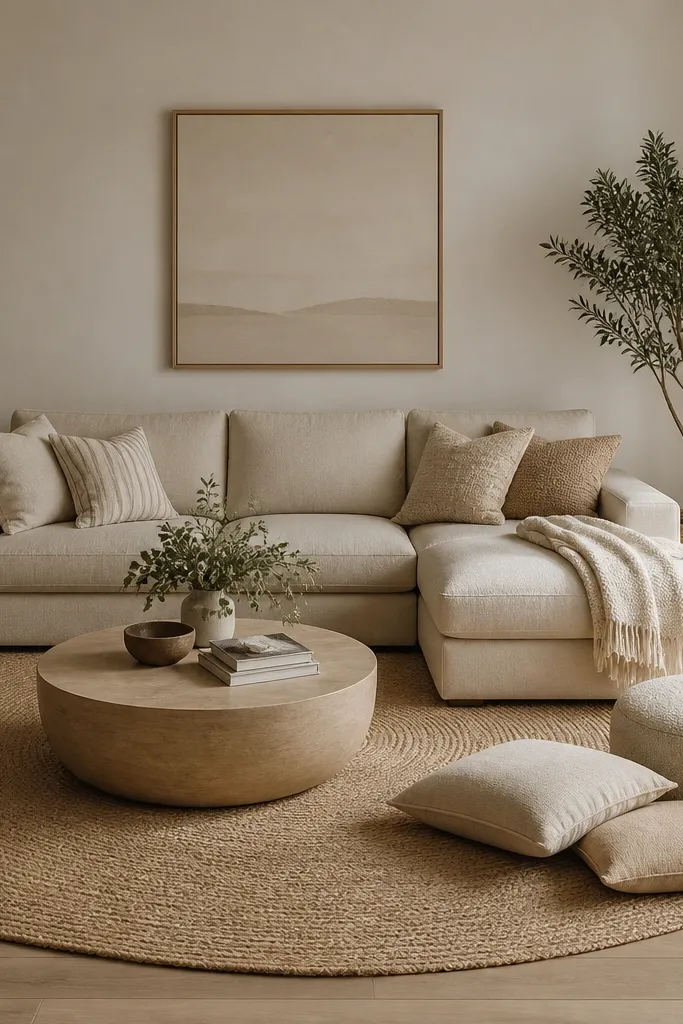
A round coffee table helps in tight rooms because it removes sharp corners from your traffic path. With an L shape, you already have angles, so rounding one element makes the room feel calmer. I use a round table to create a gentle “landing zone” for drinks and a tray. Pair it with one extra seat like a small floor cushion so you don’t need a second armchair.
Pick a coffee table diameter around 32-36 inches. Keep it centered so the front edge stays about 14-16 inches from the sofa seat. Use a rug that extends under the coffee table legs by at least 6 inches.
If your room is very narrow, choose a coffee table with a lower lip so chairs can slide closer when you pull them up.
Avoid a square coffee table with a tight clearance — it catches shins and makes the room feel narrower.