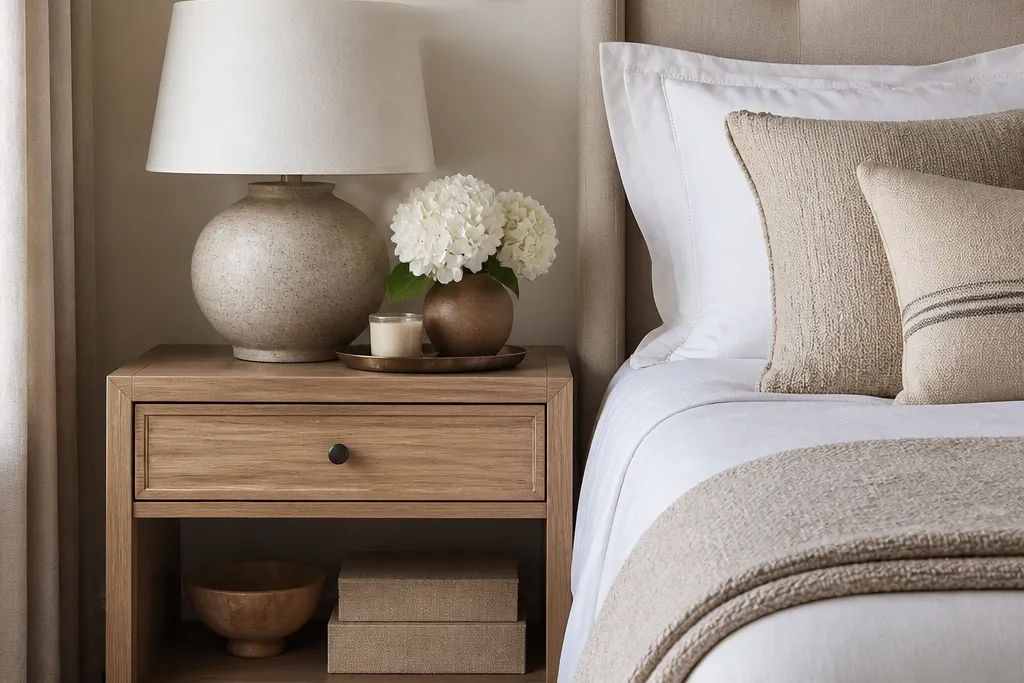
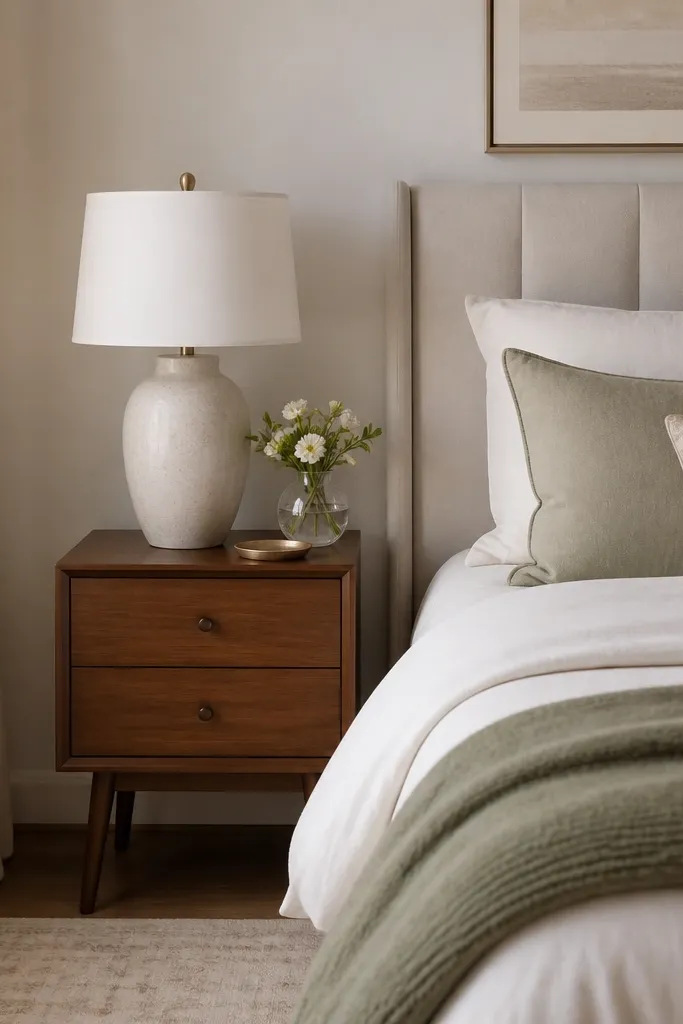
1. Warm Oak Floating-Look Shelf Side Table
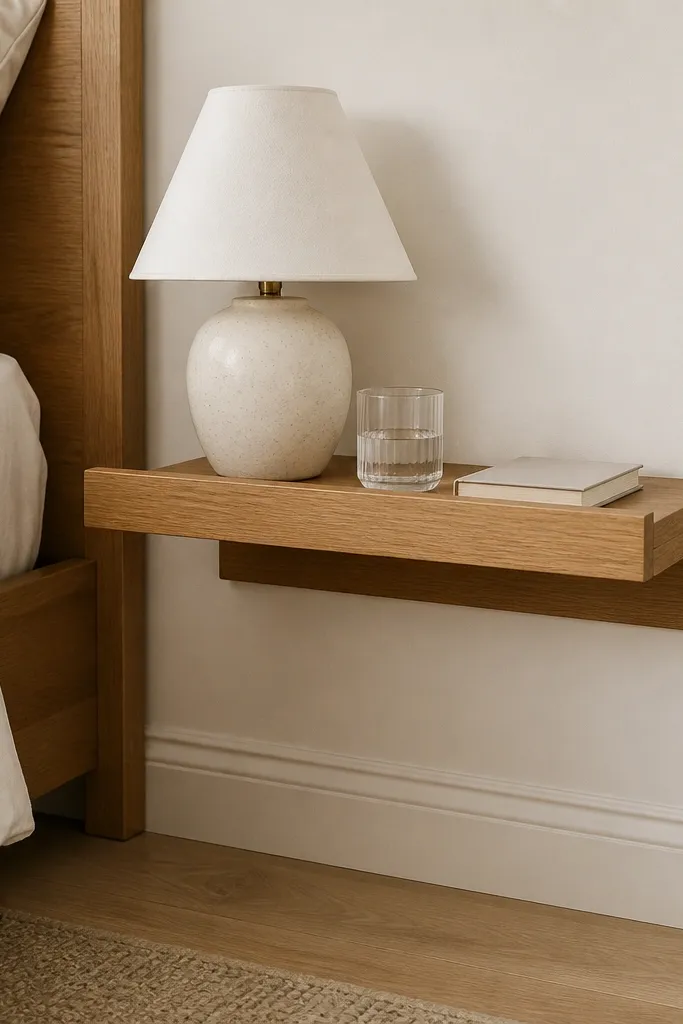
Mount it so the shelf top lands at mattress height or 1 inch below. Use a shelf bracket or hidden French cleat system rated for at least 50 lbs. Pair with a matte white lamp base so the wood grain stays the star.
This works because it gives you the surface you need without eating floor space. The warm oak tone adds softness, and the raised front lip keeps your book from slowly sliding off at night. Since the shelf looks “floating,” the room keeps its open feel, which matters in tight bedrooms.
Watch outDon’t mount it too low; a low shelf makes the lamp look awkward and makes the whole corner look unfinished.
Pro tipIf you’re worried about wobble, press your palm against the shelf after installation and shake gently — if it flexes, tighten the mounting hardware before you style it.
2. Matte Black Metal Frame with White Top
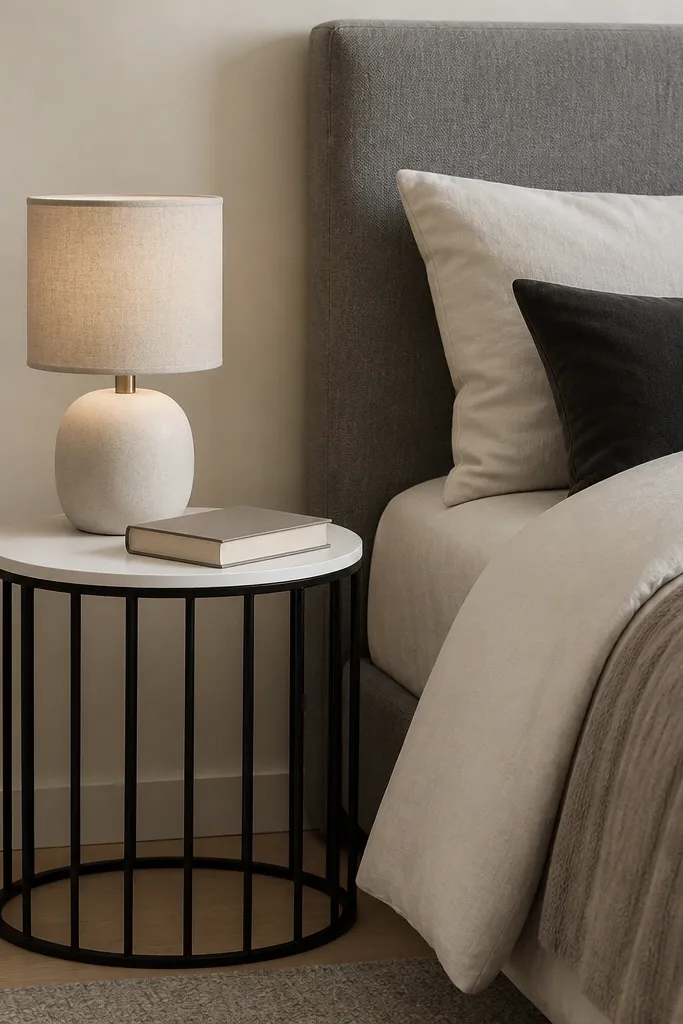
Metal-and-white looks crisp, and the thin frame visually “disappears” compared to a solid block table. Matte black gives contrast against light bedding, while the white top keeps the area bright. It’s a beginner-friendly combo because it matches almost any duvet color.
Choose a table with an open lower shelf if you want baskets underneath. Keep the top clean and limit styling to two items on one side. Use a linen shade lamp so the black doesn’t feel harsh.
Match the lamp base color to the table frame — it ties the corner together instantly.
Avoid glossy black; it reflects light in a way that makes the table look cheap and streaky.
3. Square Rattan Drawer Nightstand
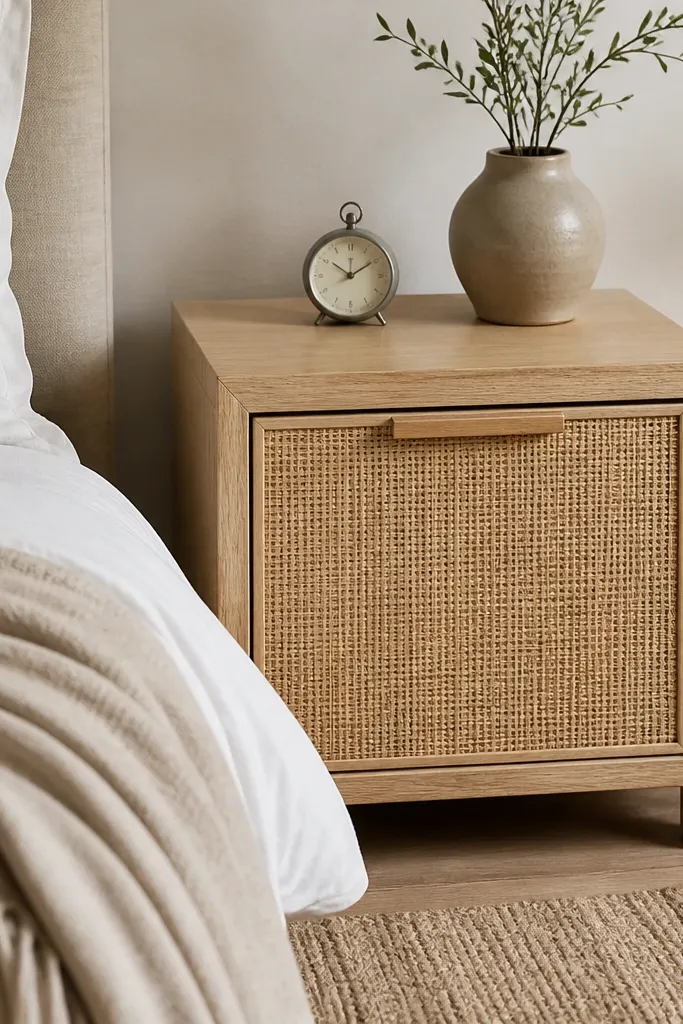
Pick a drawer that slides smoothly and doesn’t sit proud of the frame. Keep the top at mattress height so the alarm clock and glass of water are reachable. Style with one natural element like a dried branch or a small ceramic dish.
Rattan texture adds warmth and hides fingerprints better than smooth finishes. A single drawer front keeps clutter out of sight without making the table look heavy. The square shape reads tidy next to a bed and is easier to keep aligned than round tables.
Watch outDon’t overstuff the drawer; if it’s hard to close, it will stay half-open and look messy.
Pro tipWipe rattan with a dry microfiber cloth first, then use a barely damp cloth for spots — too much water can warp the weave.
4. Two-Tone Drum Side Table in Sage + Cream
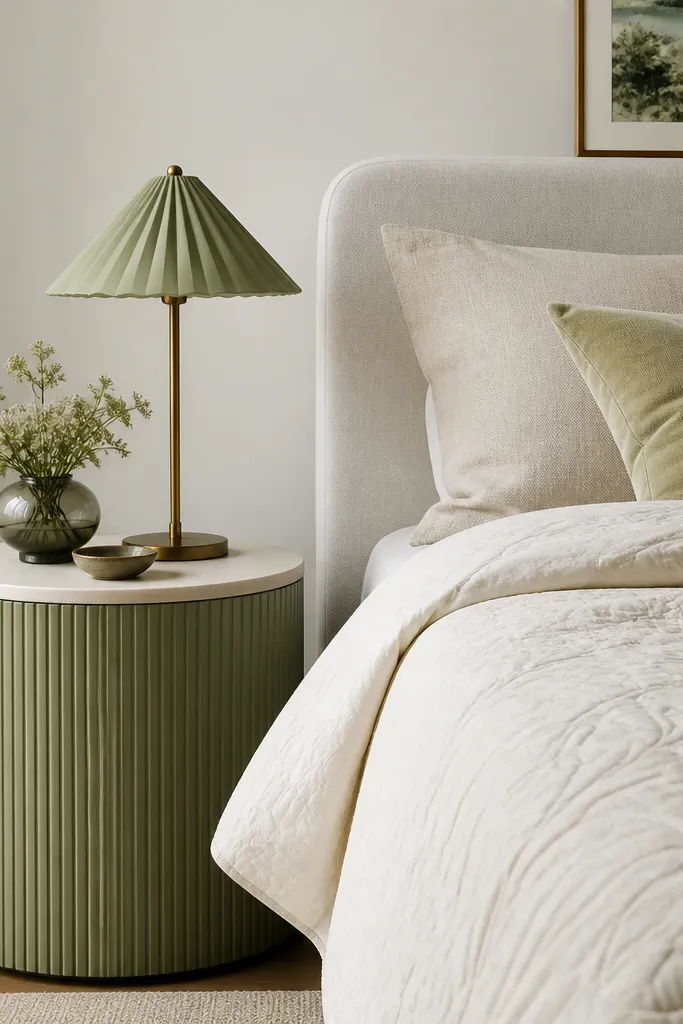
A drum shape rounds the corner and softens a bedroom that’s otherwise straight lines. Two-tone color blocks look intentional when the colors are muted — sage and cream are forgiving and work with neutral bedding. The rounded edges also help if you move around at night.
Keep the diameter around 16-20 inches so it doesn’t overpower the bed. Place the lamp slightly toward the back corner so the cord drops cleanly. Use a shade with a similar tone to the body for cohesion.
If your bedding is warm white, choose sage with a touch of gray, not yellow-green.
Avoid bright neon sage; it clashes with most bedding and makes the table look like an afterthought.
5. Marble-Look Top on Slim Brass Legs
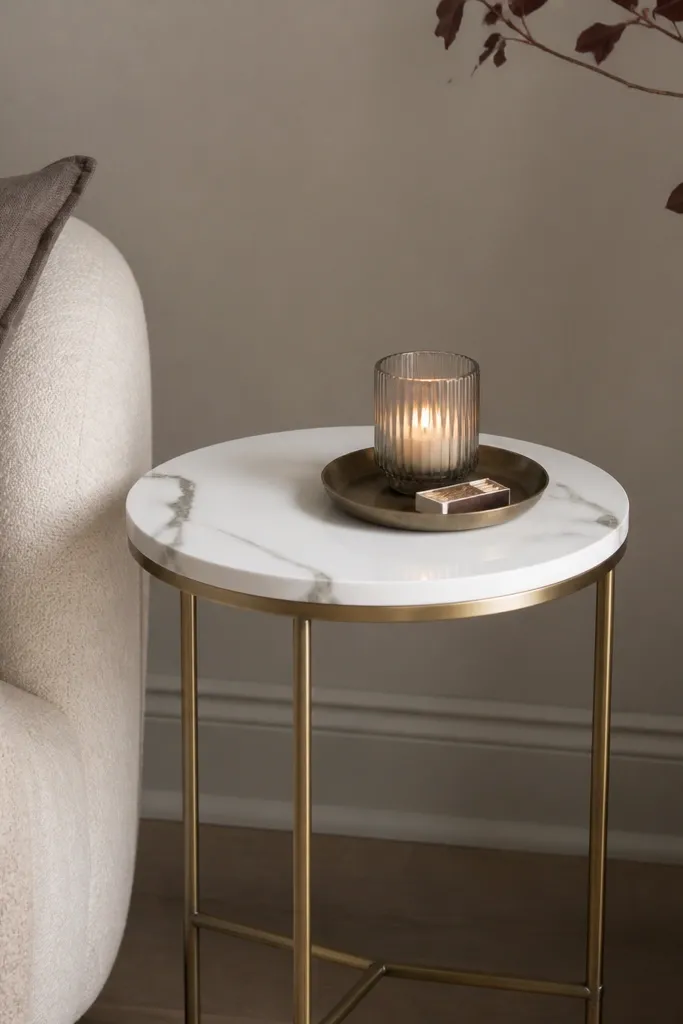
Choose legs that are straight and spaced evenly for stability. Use a tray sized about 8x12 inches so it doesn’t hang off the edge. Pair with warm metals like brass in your lamp base or picture frames.
Marble-look gives you that expensive look without the weight. Brass legs keep the silhouette light, so the table doesn’t feel like a block next to the bed. A tray on top makes it look styled instead of random.
Watch outDon’t let the lamp cord drape across the table top; route it down the back so it stays clean.
Pro tipUse a felt pad under the tray so the tray doesn’t slide and scratch the top.
6. Vintage-Style Writing Table as a Bedside Station
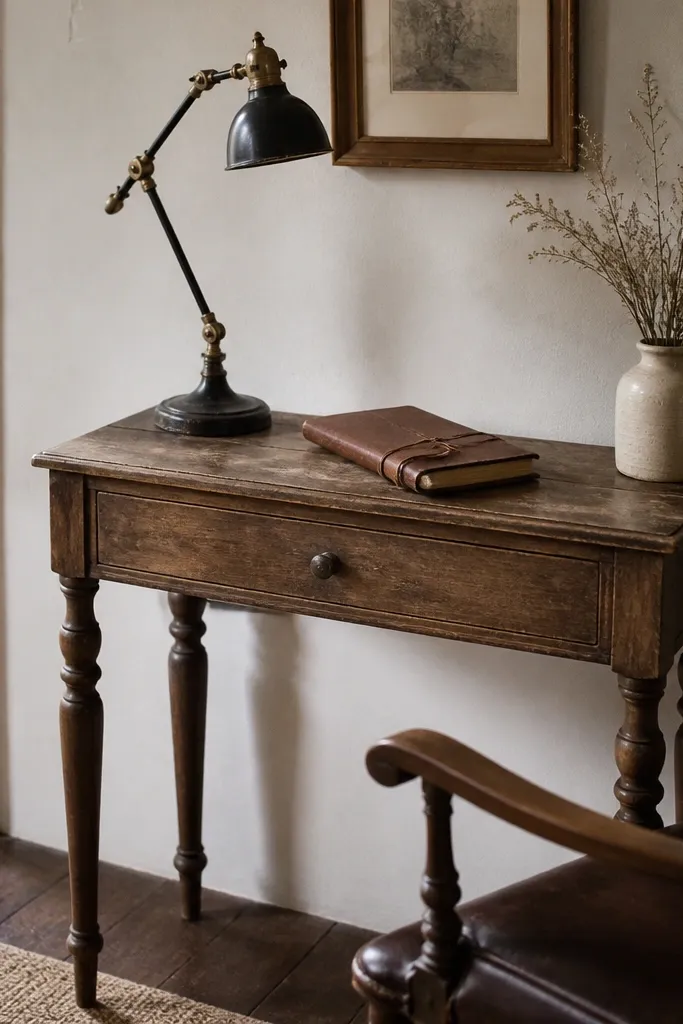
Pick a width around 22-26 inches so it still fits behind your chair-free walkway. Place the lamp on the side closer to the bed’s headboard, not at the extreme corner. Use a desk lamp with an adjustable neck so you can aim light without glare.
This is my favorite trick when your bedroom needs more than a lamp spot. A writing table gives you a deeper surface for a book, phone dock, and a journal without looking like you’re trying too hard. The turned legs add charm and make the table feel less bulky.
Watch outAvoid tables with wobbly legs; in real life, you’ll bump it and the whole bedside setup will start looking neglected.
Pro tipAdd a small under-table basket for chargers and cables; it keeps the top from turning into a tech station.
7. Tall Narrow Cabinet Nightstand for Small Rooms
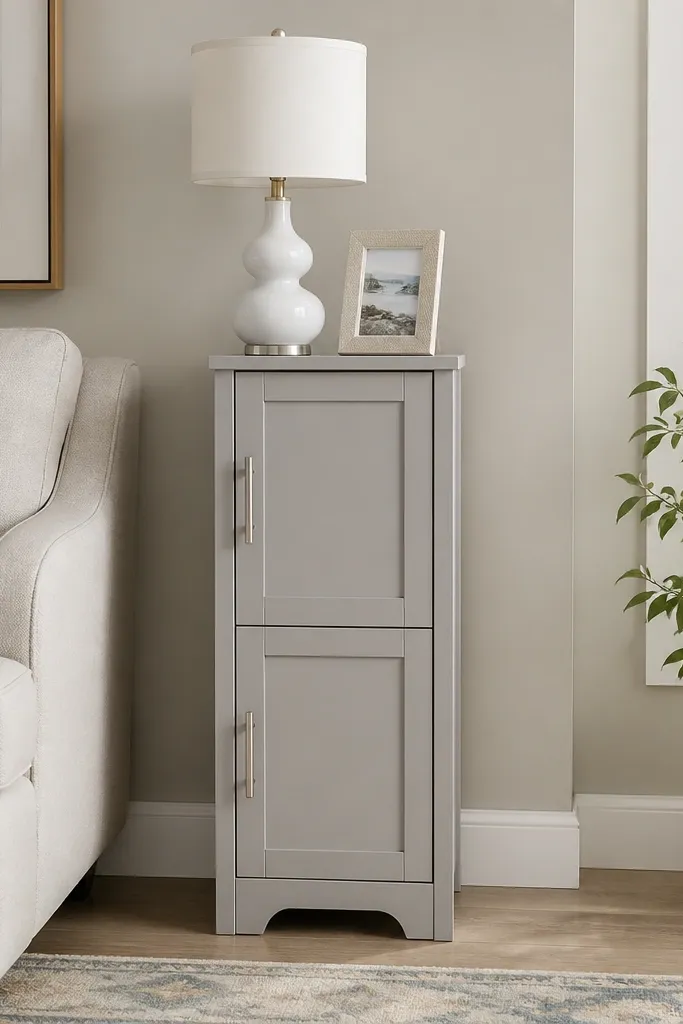
If your bedroom is tight, height helps you store without widening the footprint. Cabinet doors keep your bedside items hidden, which makes the room look calmer. Brushed metal handles add a subtle shine without looking flashy.
Aim for a depth around 14-16 inches and a height around 24-28 inches. Make sure the top is still reachable by your hand from bed — test it by standing where you sleep. Put the lamp on the left or right corner, then leave the middle open for a glass or tray.
Store only “night” items in the cabinet and keep the rest in a dresser. Overfilling makes it harder to use and you’ll stop closing it fully.
Avoid super shiny hardware; it shows fingerprints and smudges constantly.
8. Linen Upholstered Side Table with Hidden Storage
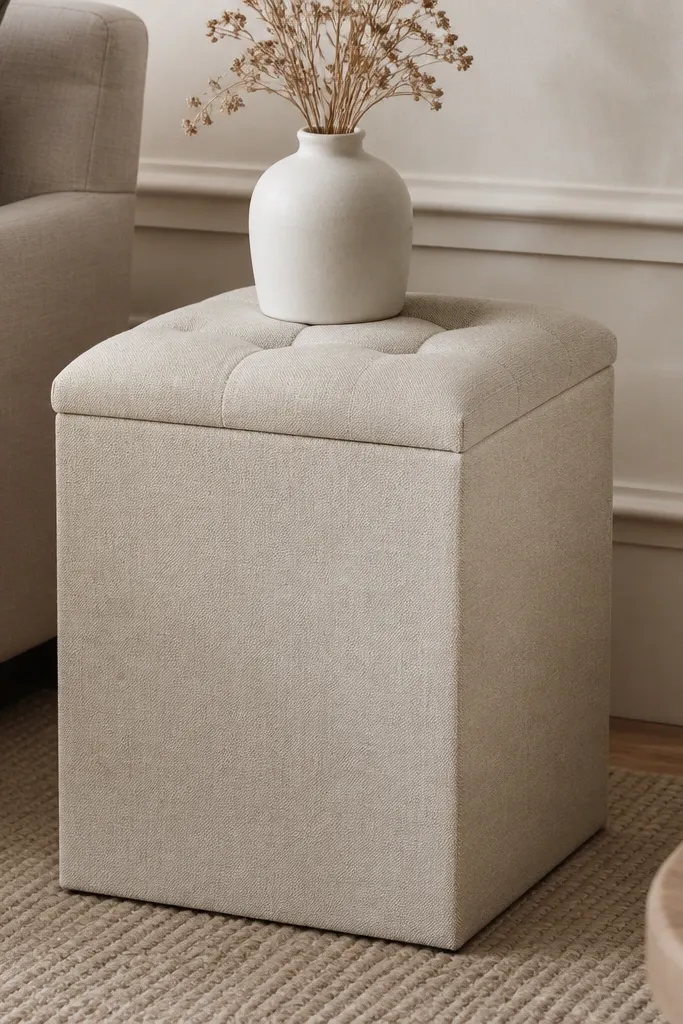
Choose a table with a flat top edge so trays and lamps sit evenly. Keep the lamp shade low enough that it doesn’t hit your eye line when you’re sitting up. If your room is cool-toned, choose linen with a slight warm undertone, not icy white.
Upholstered tables soften the whole room, especially if your bed frame is wood or metal. Linen hides scuffs better than glossy finishes, and the tufted top looks expensive without being complicated. Hidden storage means you can keep a spare book, eye mask, and lotion out of sight.
Watch outAvoid dark upholstery in bedrooms with poor light; it makes the corner look heavy and absorbs brightness.
Pro tipUse a washable tray liner or a small cloth under your lamp base to prevent fabric wear from heat and friction.
9. Clear Acrylic Side Table for Maximum Light
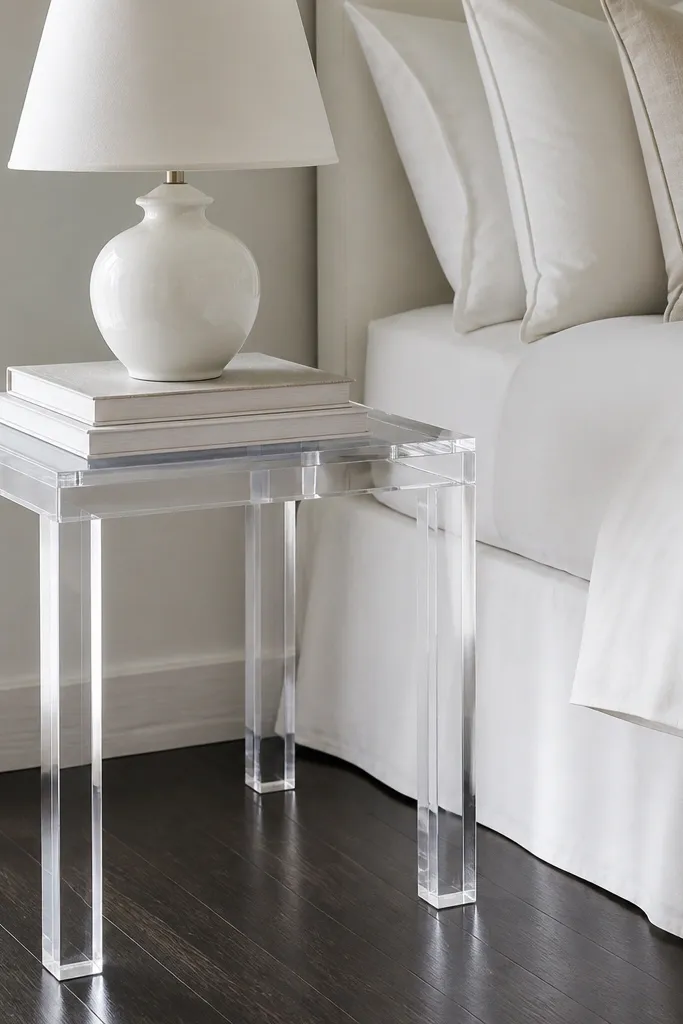
Pick an acrylic table with rounded corners for safety and comfort. Keep the top clutter low because you can see everything through the material. Use a lamp with a light base so the acrylic doesn’t look like it’s floating over something heavy.
Acrylic is the cheat code for small rooms because it doesn’t block sightlines. It keeps the bedside area feeling airy, even when you add a lamp and a book. It also works with almost any style — modern, coastal, even traditional.
Watch outAvoid placing a dark tray on acrylic; it can look like a floating black blob.
Pro tipClean acrylic with a microfiber cloth and a dedicated acrylic spray — paper towels leave micro-scratches.
10. Solid White Wood Side Table with One Big Drawer
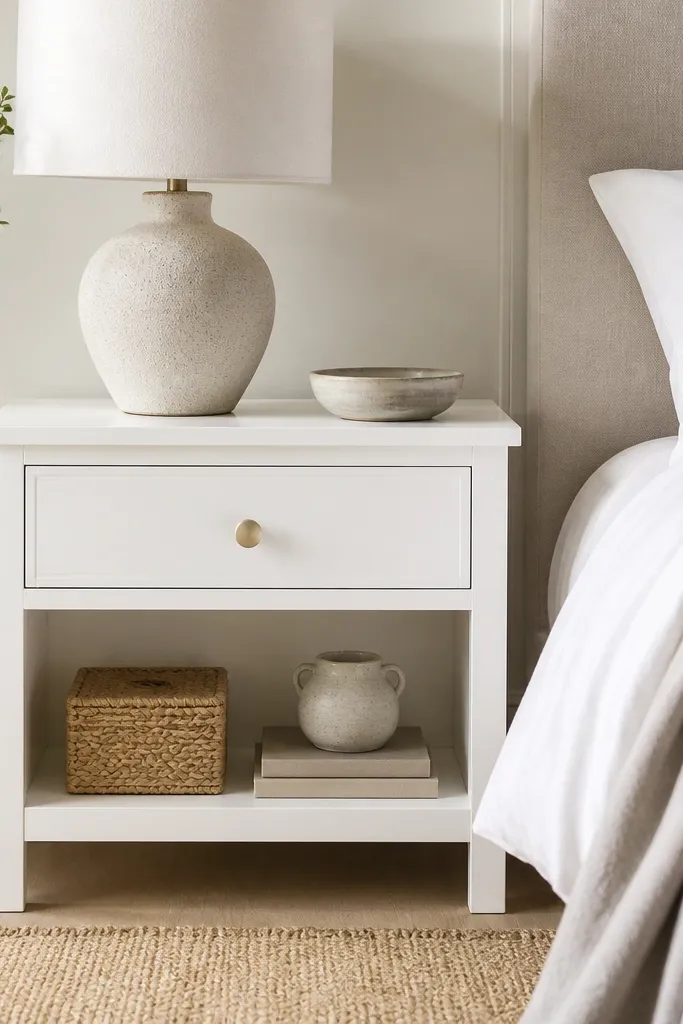
A one-drawer design is beginner-friendly because it reduces decision fatigue — you don’t have to style multiple compartments. White wood brightens the room and makes your bedding look cleaner. The drawer knob gives you an easy place to grab when you need your lip balm at night.
Choose a drawer front with smooth slides so it doesn’t stick when humidity changes. Keep the drawer centered and the table plumb; crooked alignment looks sloppy fast. Pair with warm bulbs (2700K) so the white looks creamy, not blue.
Put a small bin inside the drawer for “night essentials” so items don’t spill into the back.
Avoid cheap thin white paint; it chips around the knob first.
11. Folding Step Stool Side Table Hack
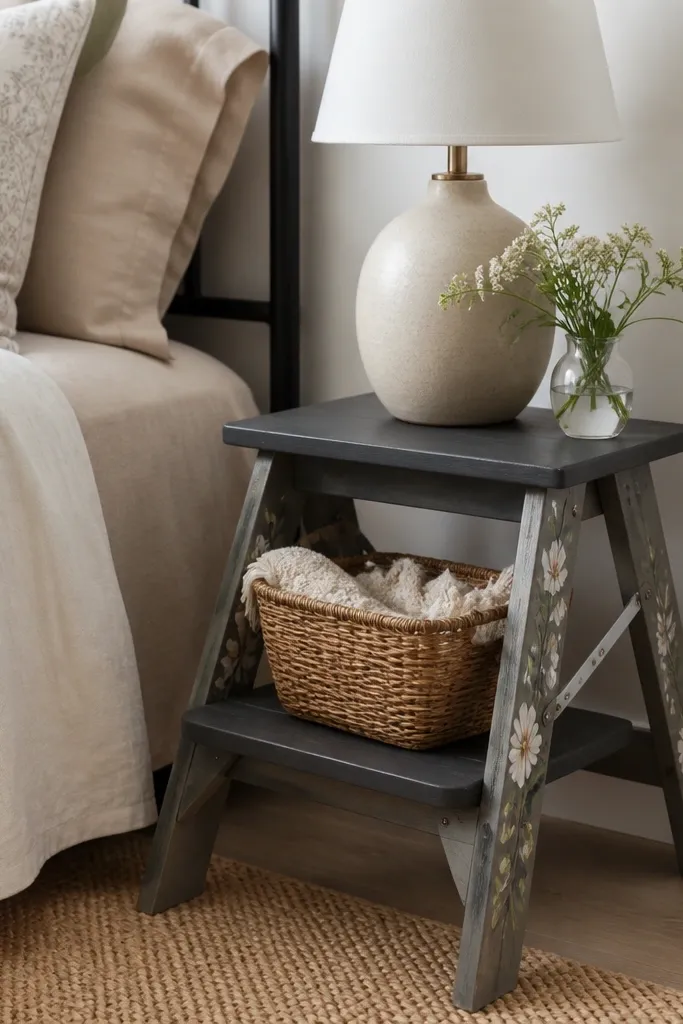
This is the fastest way to get a usable bedside surface when you don’t want to commit to furniture yet. Painted stool tops look intentional when the paint matches your room’s hardware color. The basket underneath gives you extra storage without adding a second piece.
Pick a stool with a stable top and a flat surface at the highest step, not a wobbly ladder-style top. Keep the lamp base small so it doesn’t overhang and tip. Limit the stool top to a lamp plus one small item.
Sand and prime before painting if the stool is glossy; otherwise the paint chips within weeks.
Avoid using an unweighted stool with a heavy lamp; it will feel unstable every time you bump it.
12. Round Nesting Tables with a Matching Tray Top
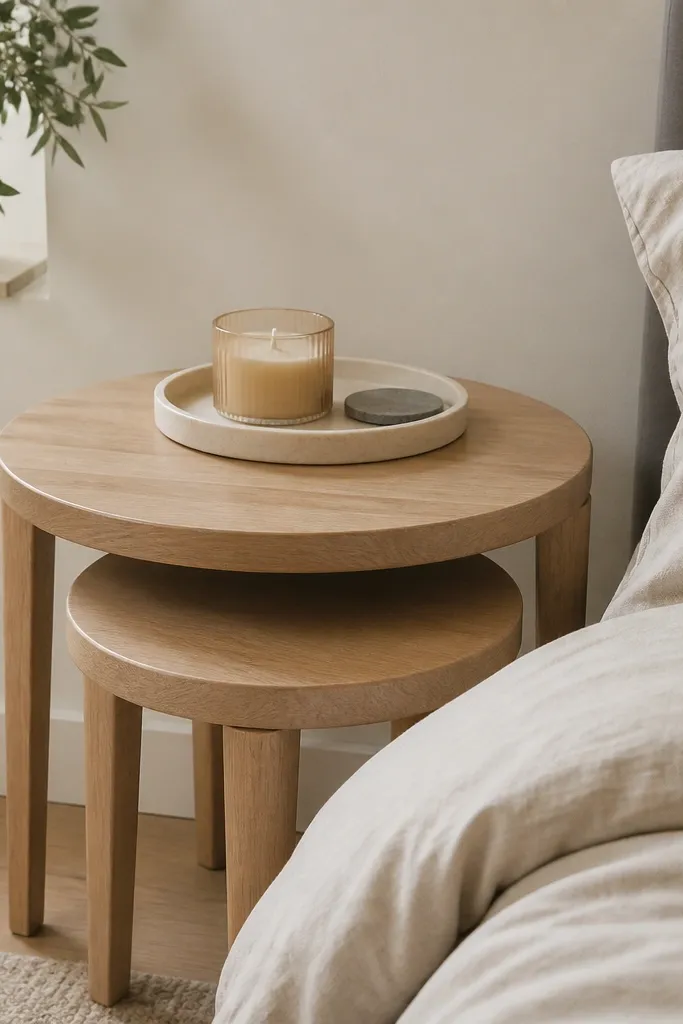
Choose nesting tables where the larger top is around mattress height. Use a tray with a rim so items don’t slide off the round surface. Keep the candle centered and the coaster nearby so it looks planned.
Nesting tables give you flexibility without clutter. You can pull the smaller table out when you’re working in bed and tuck it away when you’re done. The round shape softens corners and feels friendly beside a headboard.
Watch outAvoid mismatched wood tones; pairing different stains can look accidental instead of collected.
Pro tipIf your tray is wider than the table by more than 1 inch on each side, it will look messy fast.