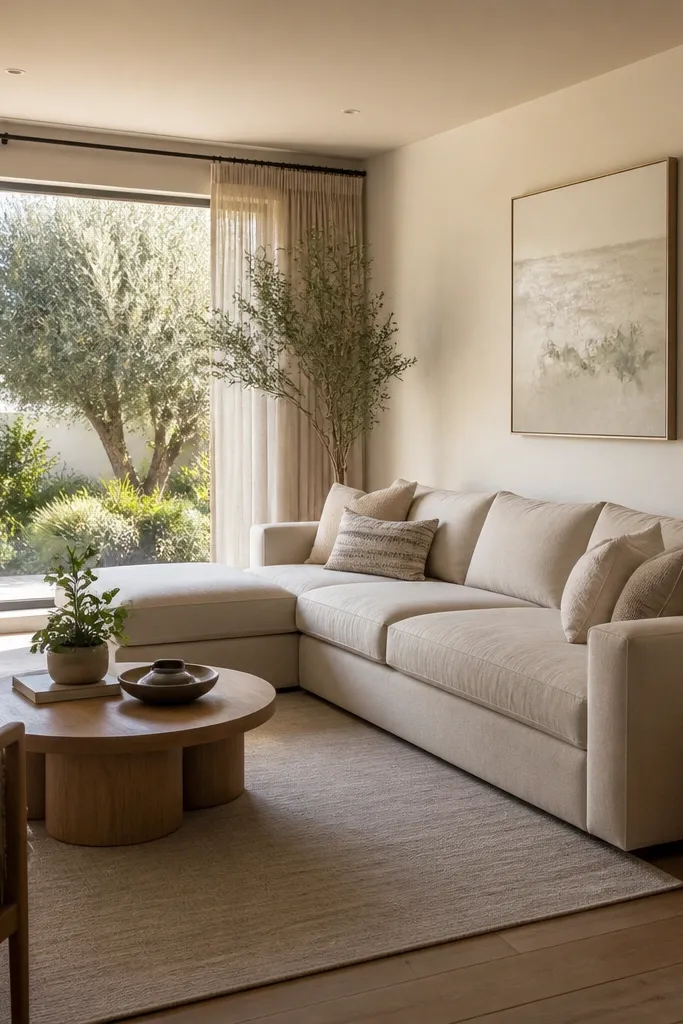
1. The "Chaise to the Window" bright-corner setup
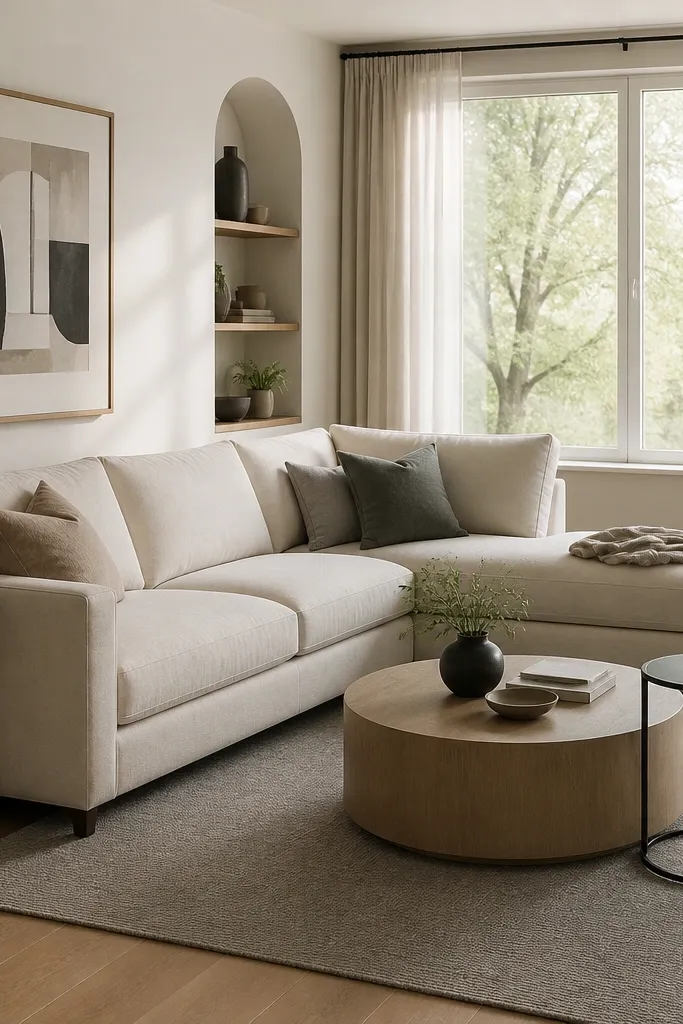
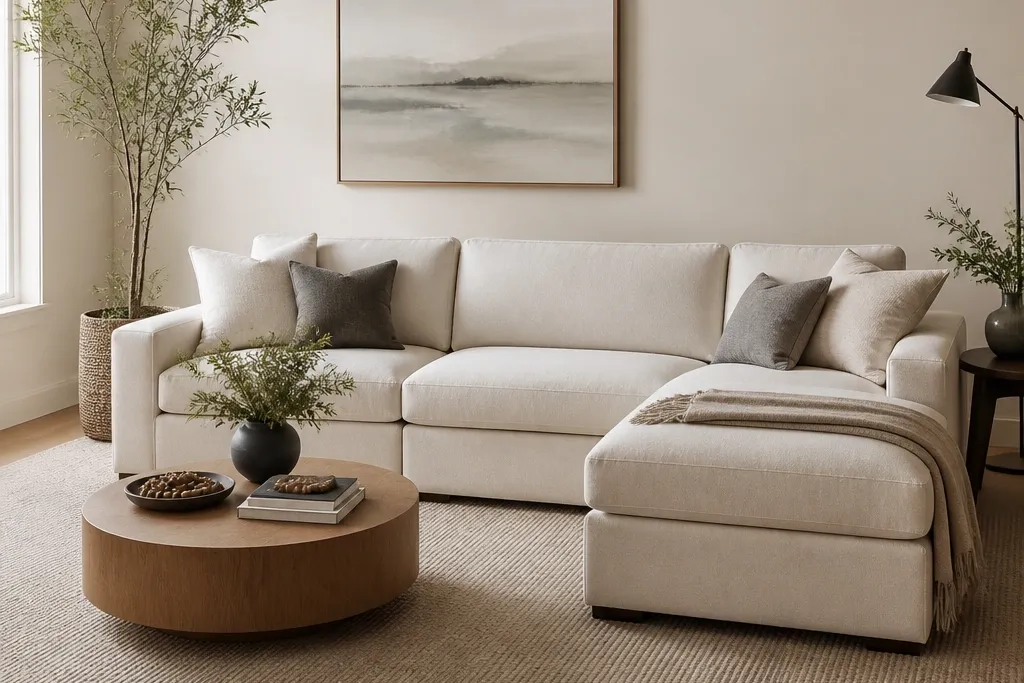
I like this layout because the chaise becomes the room’s natural “light sink.” The sofa stays anchored along the wall, but the open end faces the window, so the space feels airy instead of boxy. A light beige fabric hides everyday wear, and a gray rug keeps the room from turning too warm and flat. Add one warm wood piece (coffee table or side table) to balance the neutrals.
Place the sofa so the chaise edge is about 6-10 inches from the window trim. Use a rug that’s large enough to reach under the sofa’s front legs, not just under the coffee table. Choose a round coffee table 36-42 inches wide so you don’t fight the L shape corners.
Hang a single curtain panel that reaches close to the floor, then place the floor lamp on the chaise side. The lamp will catch the window light and make the whole setup feel intentional.
Avoid pushing the chaise too close to the window so it blocks the light path and makes the rug look misaligned.
2. Small-room L shape with a 3-seat "floating" feel
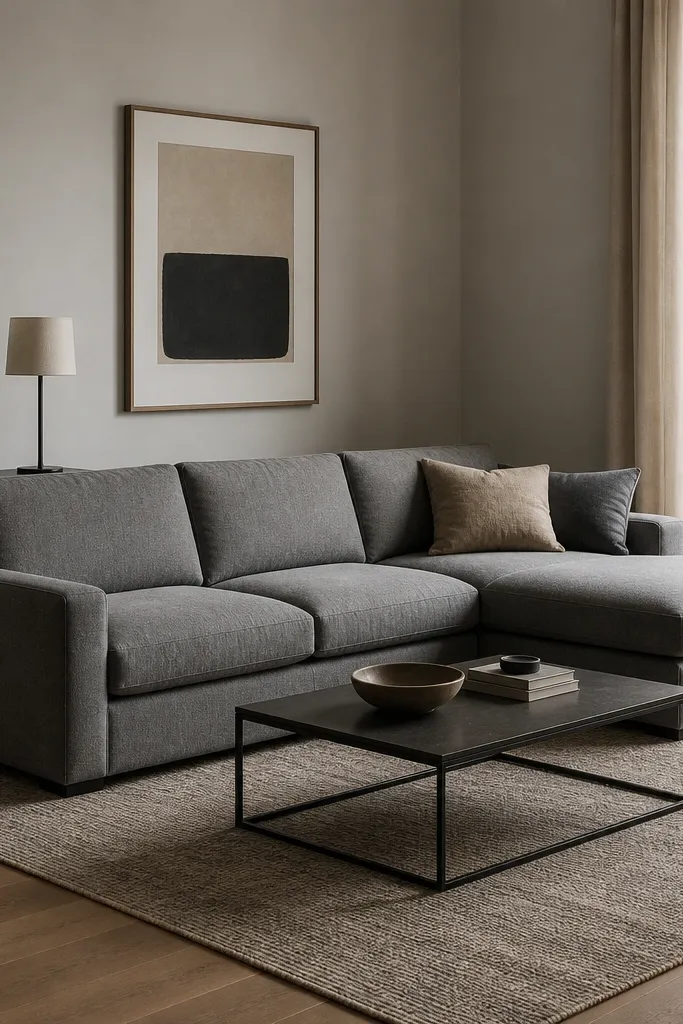
This is the layout I use when the room is narrow but you still want the L shape to look modern. Pulling the sofa 2-4 inches away from the wall gives you a cleaner shadow line and makes the seating feel lighter. A low-profile rug keeps the floor visually open. The console behind the short arm adds function without adding bulk.
Use a sofa with shorter depth if possible, and keep the rug at least 6 inches beyond the chaise on both sides. The console should be 10-12 inches deep so it doesn’t collide with side table space. Keep the coffee table height under 16 inches for a grounded look.
Pick one throw color and repeat it on two cushions. I usually do a muted olive throw with two olive-corner pillows against a gray sofa.
Don’t choose a thick shag rug in a small room — it visually swallows the L shape and makes traffic lanes feel narrower.
3. Two-tone zoning with a navy rug and warm wood table
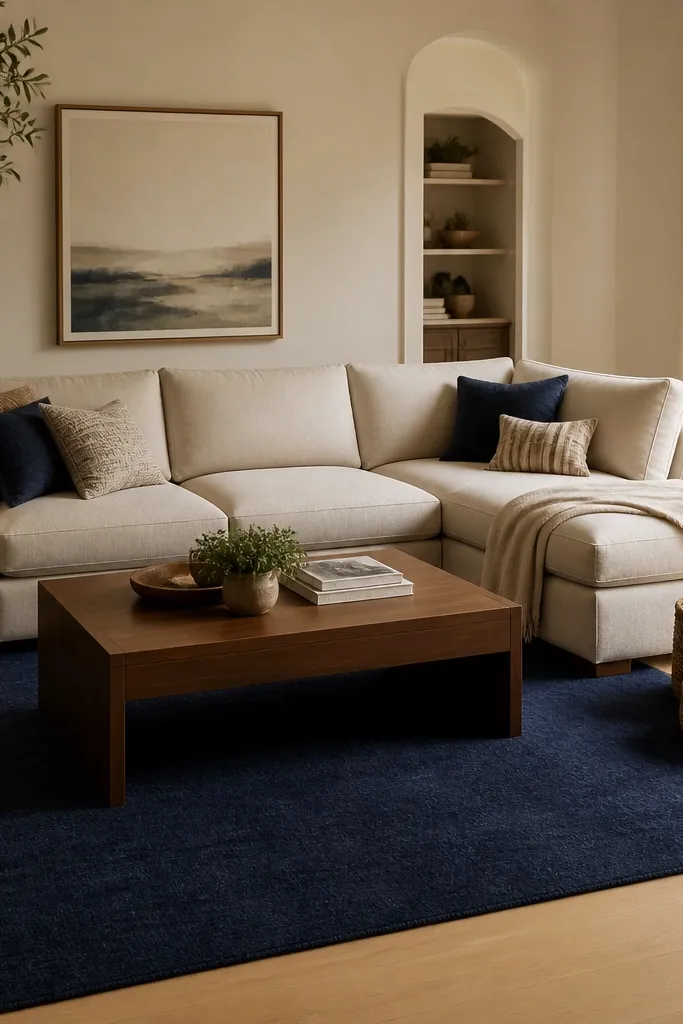
A dark rug makes the seating zone feel like it has a boundary, which helps beginners because the room stops looking like everything is floating. Navy with a cream sofa is a reliable combo that reads clean and calm. Warm wood ties it together so the room doesn’t feel cold. Woven baskets add texture without adding visual clutter.
Choose a navy rug with a flat weave so it lays crisp under the sofa front legs. Coffee table width should be about two-thirds the length of the sofa’s front run. Place baskets on the chaise side only, not both sides, so the layout stays clear.
Use a navy throw blanket folded over the chaise edge. It makes the rug color feel connected without adding more patterns.
Avoid mixing three different wood tones (walnut, oak, and black) in the same setup. Pick one warm wood and stick to it.
4. Monochrome lounge with a textured boucle sofa
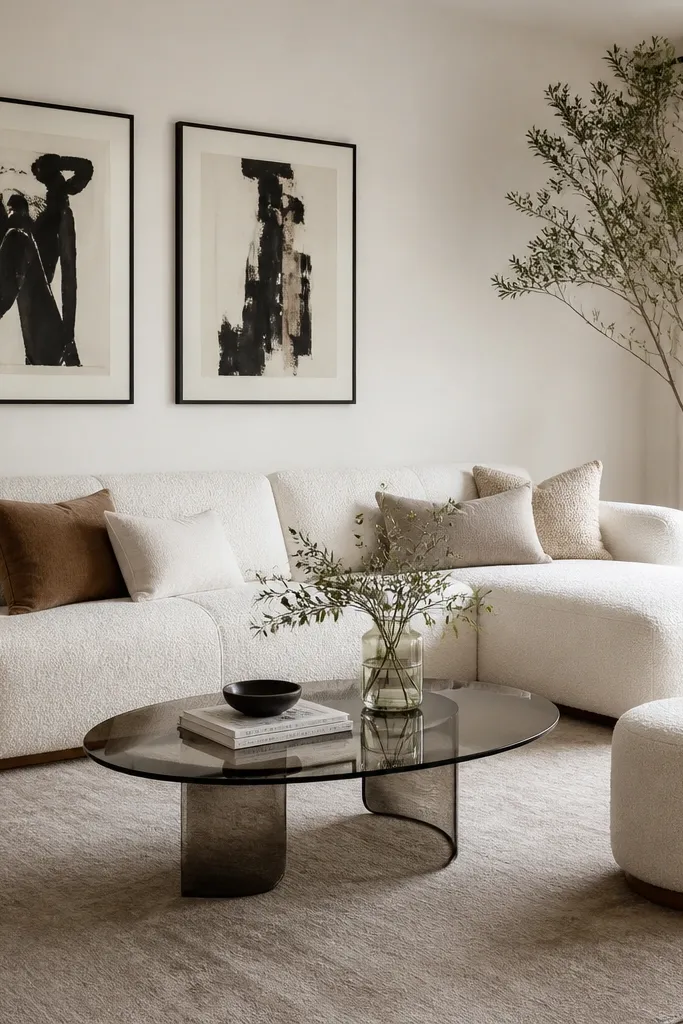
If your sofa is boucle or another high-texture fabric, you can keep the rest simple and still get depth. Monochrome works because the texture does the heavy lifting, especially when the rug is a flat weave in a close shade. Smoked glass adds lightness and keeps the coffee table from looking heavy against a pale sofa. Rounded edges feel cozy and forgiving for beginners who don’t want sharp visual lines.
Stick to one neutral family: white + taupe + light gray. Choose a rug with subtle tonal pattern rather than bold prints. Keep the coffee table 40 inches or less wide so it doesn’t overpower the chaise zone.
Pro tipAdd a footstool instead of a second accent chair. It keeps the conversation zone open and makes the L shape feel intentional.
Watch outDon’t pair boucle with a glossy black coffee table. The contrast looks harsh and cheap when the room is bright.
5. Corner-to-center U-shape vibe using two chairs
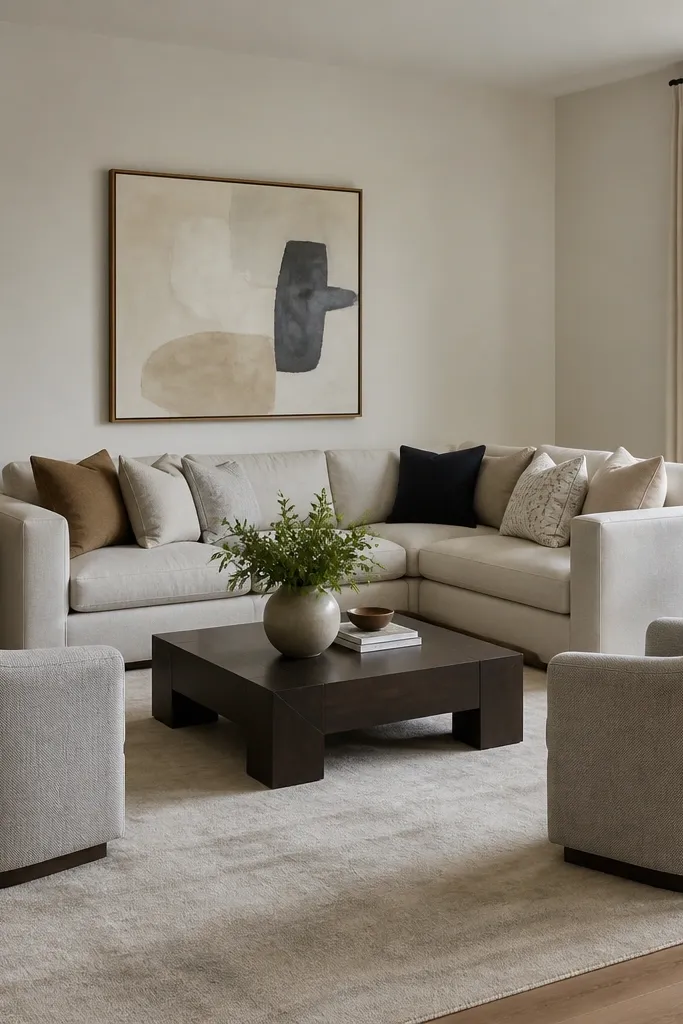
An L shape can look lonely if it’s the only big piece. Pull it into a U-shape vibe by adding two chairs that face the sofa’s open end. This makes conversation easy and gives beginners a clear “where do I put decor” answer. Matching lamps and consistent chair legs make the room feel designed instead of assembled.
Place chairs 42-48 inches apart, with the coffee table centered between them. Rug should extend under chair front legs as well as sofa front legs. Choose chairs with slim arms so the open end doesn’t feel blocked.
Use two matching throw pillows on the sofa and one on each chair. That creates a visual bridge across the U-shape.
Don’t place chairs too close to the sofa. If you can’t walk behind the coffee table without turning sideways, the room will feel cramped.
6. Rug-first layout with a 9x12 anchor
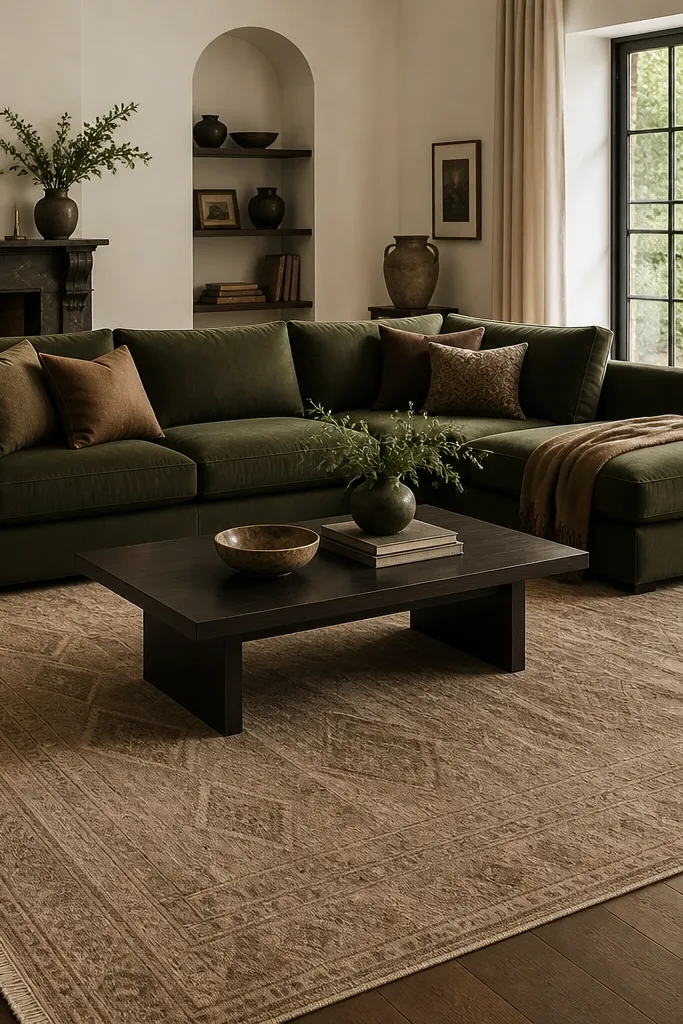
When you start with the rug, the sofa placement becomes easier and the room looks instantly grounded. A 9x12 rug is the most forgiving size for many living rooms because it covers the conversation zone and still leaves space for walking. Olive on a rug with subtle pattern looks lived-in without looking messy. Brass lighting warms up the darker sofa tone.
Center the rug under the coffee table, then shift the sofa so its front legs sit 1-3 inches inside the rug border. Coffee table should be 18-20 inches from the sofa front. Keep lamp bases within 12 inches of the chaise edge so the light doesn’t spill into walkways.
Pro tipUse a rug pad. I’ve skipped one in the past and the rug creased under the sofa legs in a month.
Watch outAvoid buying a rug that stops short of the sofa front legs. That gap makes the L shape look pasted onto the floor.
7. Low-profile coffee table for clean lines
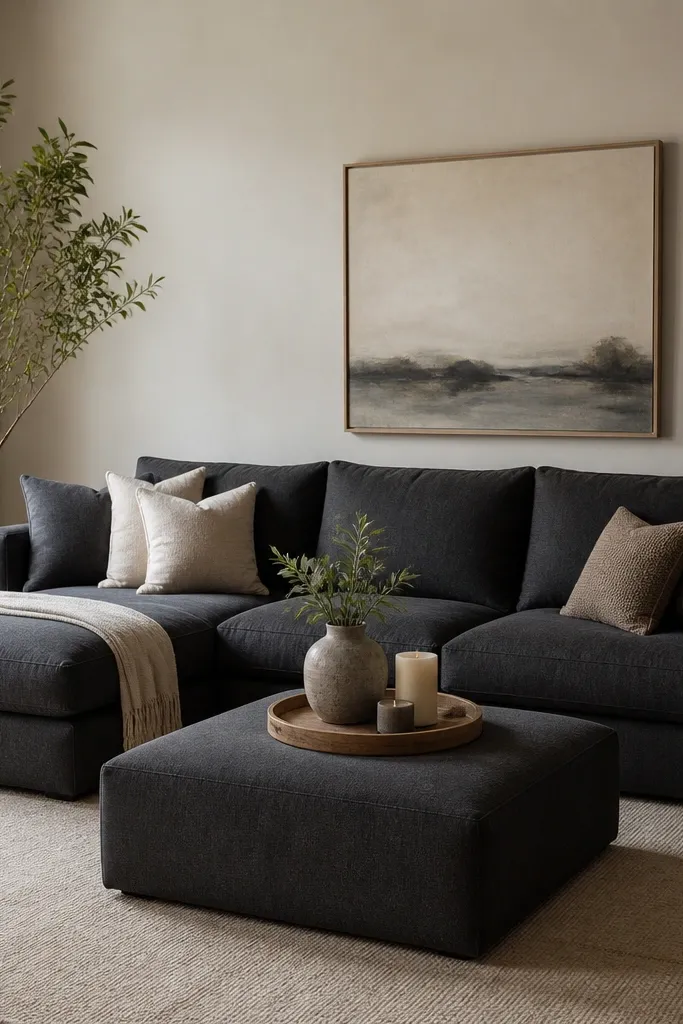
A low coffee table keeps the sightline open, which matters in beginner layouts because the room already has a bulky shape. Ottoman-style tables also hide clutter since you can add a tray. Charcoal sofa + beige rug makes the table look intentional rather than lost. A plant gives height without taking floor space.
Choose a coffee table height around 14-16 inches so it sits slightly below the sofa cushions. Keep the ottoman at least 6 inches away from the sofa so it doesn’t look wedged. Place the plant near the chaise corner, not directly in front of the sofa arm.
Use a tray with a lip. It keeps candles from sliding when you bump the table.
Avoid tall, chunky tables in a small or medium room. They make the L shape feel like it’s pressing into the coffee zone.
8. Soft contrast with sage throw + cream cushions
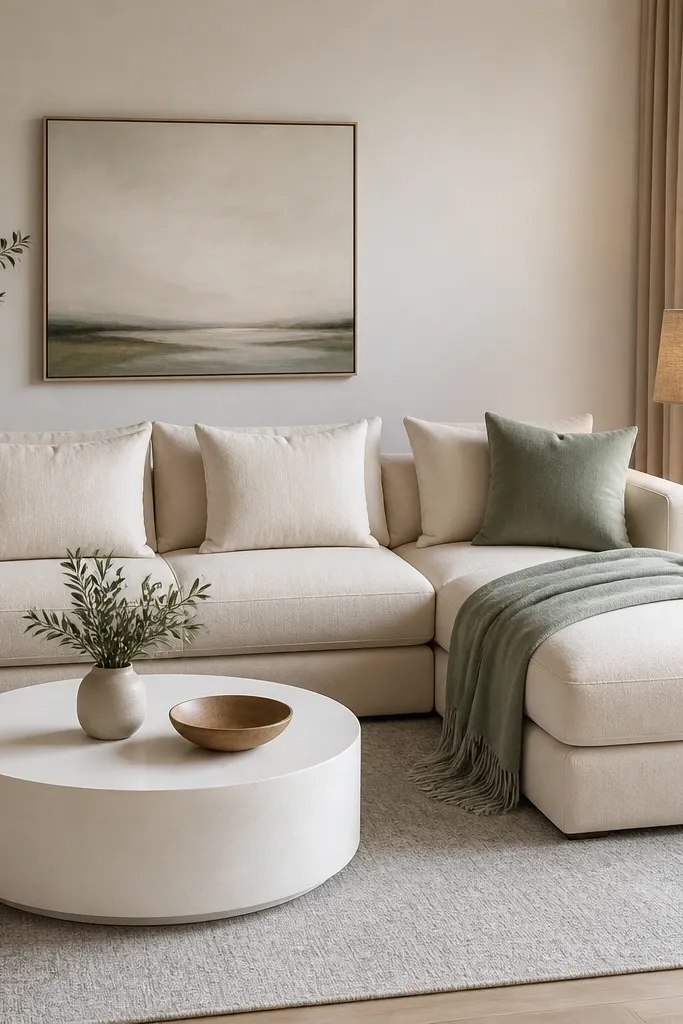
Beginner-friendly color styling is easiest when you pick one accent color and repeat it twice. Sage looks calm next to cream, and it doesn’t scream for attention. The throw on the chaise tells your eye where the “chill zone” is. A round white coffee table softens the L shape angles.
Stick to cream base cushions and keep the sage pieces limited to one cushion and one throw. If your sofa is light, choose a rug with a bit more tone like light gray. Side table should be about the same height as the coffee table so the visual rhythm stays clean.
Fold the throw in thirds and drape it so it reaches 4-6 inches down from the cushion edge.
Avoid using multiple accent colors in the same armchair area. Two tones max looks planned; three starts to look random.
9. Black-and-wood modern with a rectangular rug
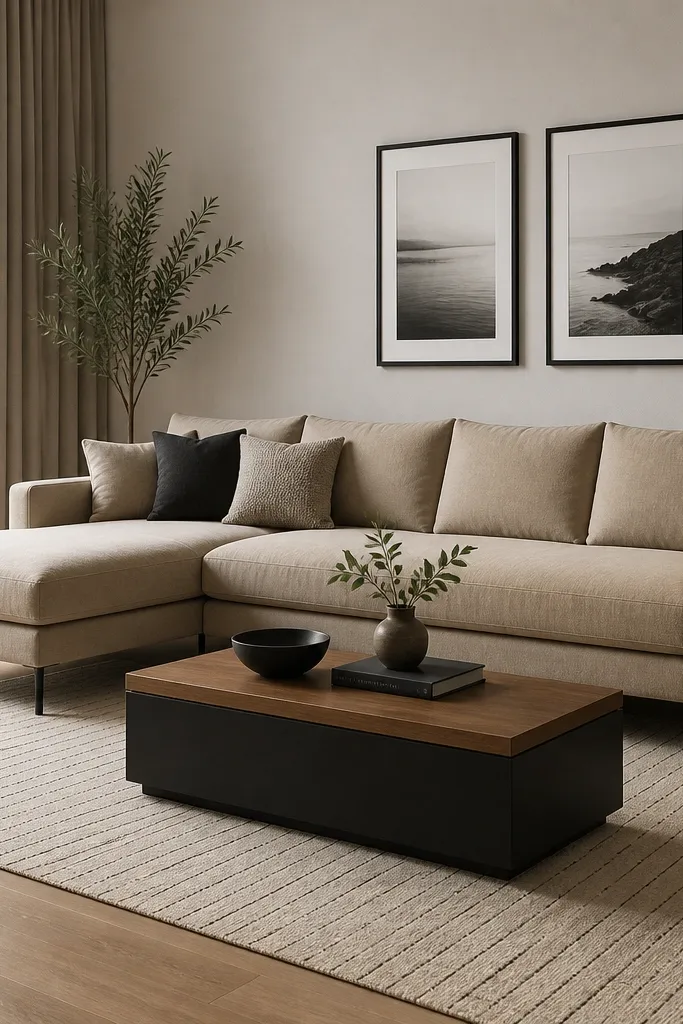
Black legs and black frames give you crisp structure, and the warm wood keeps it from feeling sterile. Thin stripe rugs are great for beginners because they add direction without loud patterns. The rectangular coffee table mirrors the rug shape and makes the room look organized. This setup feels modern without needing fancy decor.
Match one finish across three items: sofa legs, coffee table base, and lamp stand. Keep rug pattern line thickness consistent — thin stripes look cleaner. Place the coffee table so the edge sits 16-18 inches from the sofa front cushions.
Pro tipUse two black-framed prints with the same mat color. Mismatched mats make the wall look unfinished.
Watch outAvoid heavy patterned pillows when you already have a striped rug. Pick solid pillows and let the rug do the pattern work.
10. Warm neutral with a jute rug and layered throws
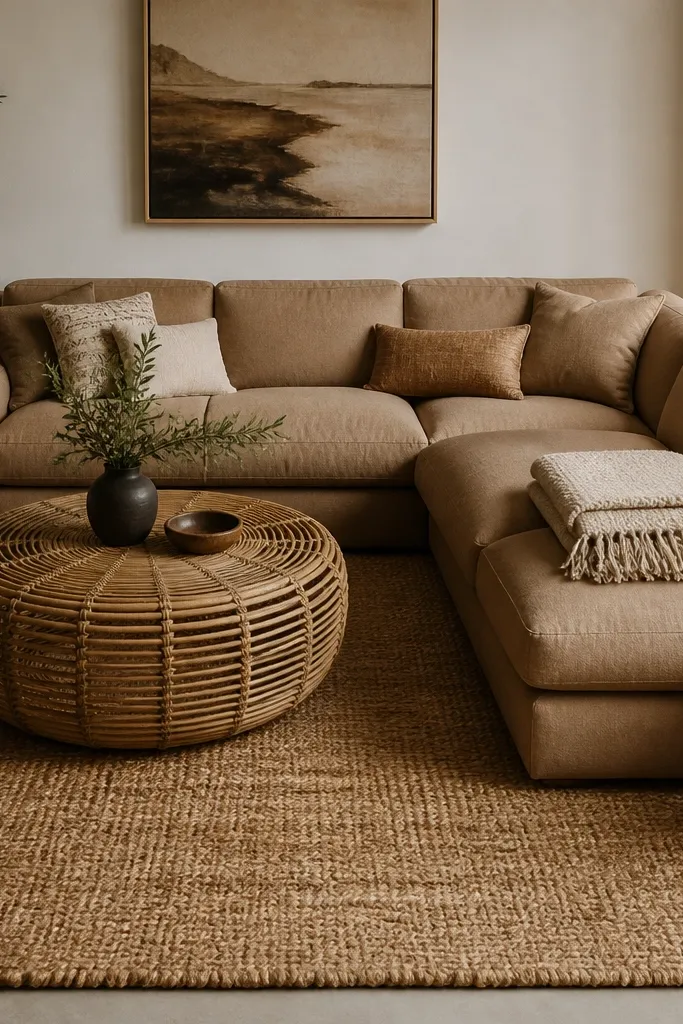
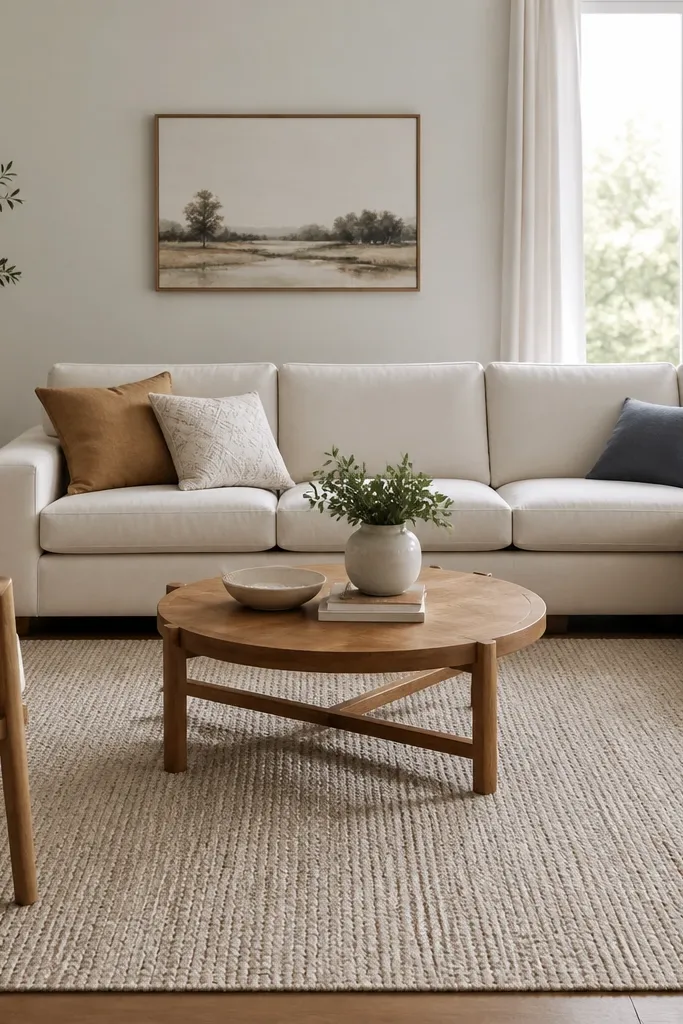
Jute and rattan are beginner magic because they hide small mistakes. If your rug placement is off by an inch or two, the texture still reads intentional. Warm neutral sofas plus natural fibers make the room feel calm and lived-in. Layered throws on the chaise keep the L shape from looking flat.
Choose a jute rug with a backing that doesn’t slide. Layer a thin flat cotton rug pad underneath if your floor is slippery. Coffee table should be 30-36 inches wide so it doesn’t overwhelm the open end.
Pro tipAdd a solid pillow cover in a muted terracotta tone. It warms up the natural fibers without adding a loud print.
Watch outAvoid placing a high-pile shag rug under a jute rug. The fibers fight visually and the floor looks messy.
11. Small apartment layout with a media console behind the short end
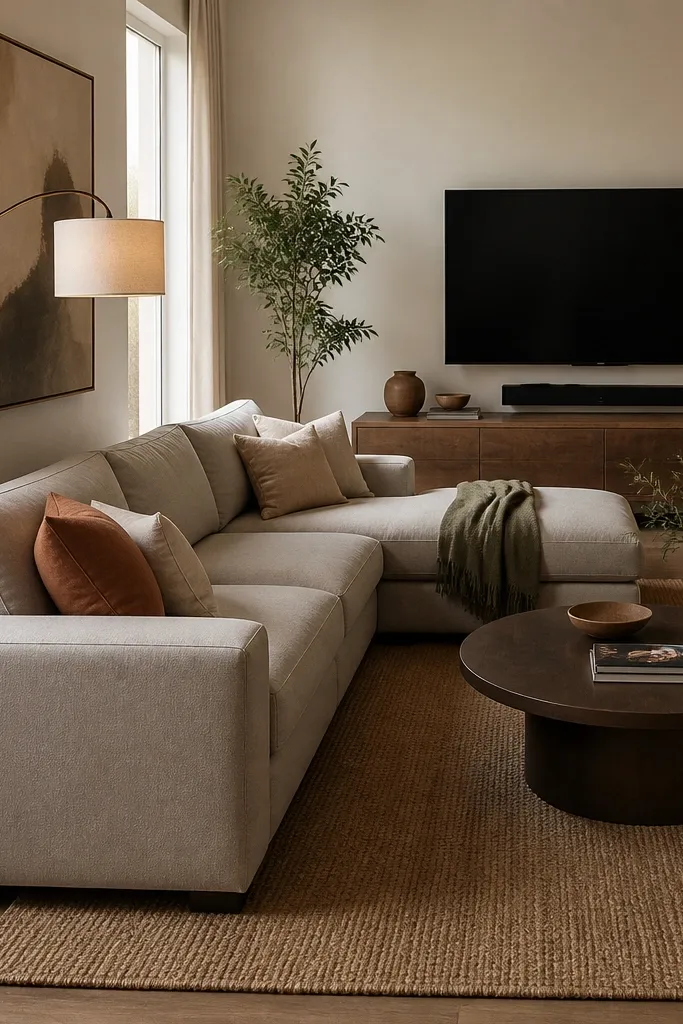
This layout works when you need TV + seating without wasting floor space. The media console gives you storage for remotes and blankets, and it visually completes the short end of the L. A round coffee table keeps you from hitting sharp corners when moving in a small living room. Floor lamps brighten the edges so the room doesn’t feel like one dark box.
Keep the sofa’s short arm 12-18 inches from the media console so you can walk behind it. Use a rug that stops 6-10 inches before the TV console to avoid visual clutter. Cable-manage the TV area so the wall looks clean.
Pro tipPut one basket on the console shelf specifically for throws. It keeps the chaise area tidy without hiding the sofa color.
Watch outAvoid mounting the TV too high. If viewers tilt their heads up, the whole setup feels wrong fast.
12. Dramatic contrast with a patterned rug and solid sofa
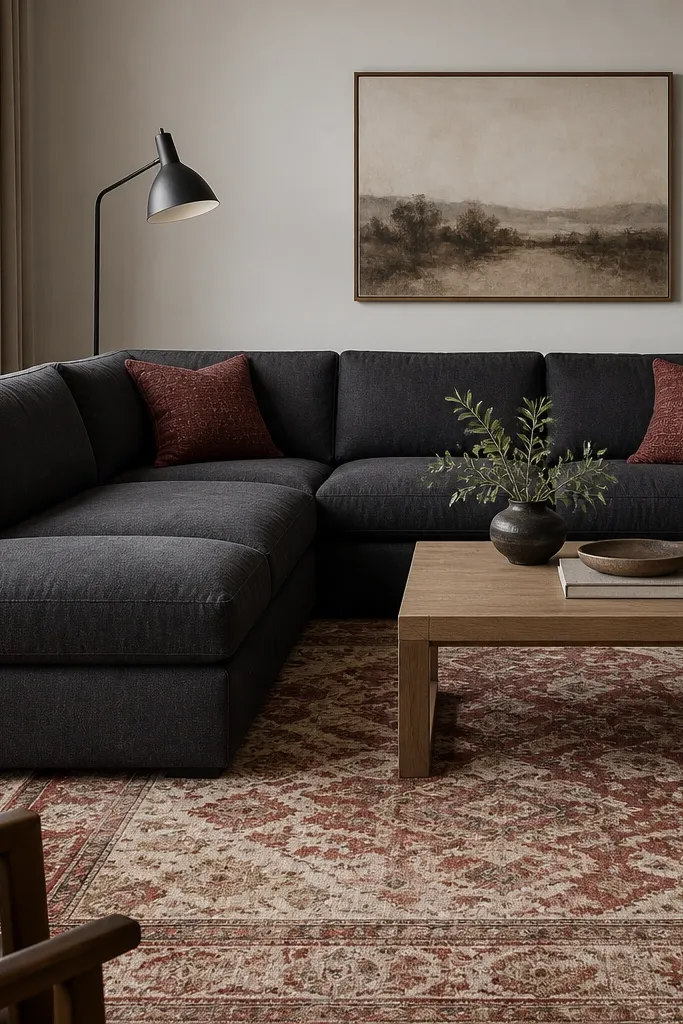
A patterned rug gives you instant personality, and beginners can pull it off by keeping the sofa solid. Charcoal grounds the pattern so it doesn’t look like a circus. Muted red accents show up in pillows and a small vase, so the rug feels intentional rather than random. The light wood coffee table prevents the room from turning too dark.
Choose a rug pattern with no more than two accent colors besides cream. Match one of those accent colors in a pillow or small decor item. Coffee table should be plain and light enough to show wood grain.
Pro tipPin the rug pattern direction so it aligns with a wall feature, like window trim or the TV frame.
Watch outAvoid repeating the rug pattern in curtains and pillows. Two pattern sources is enough for a living room.