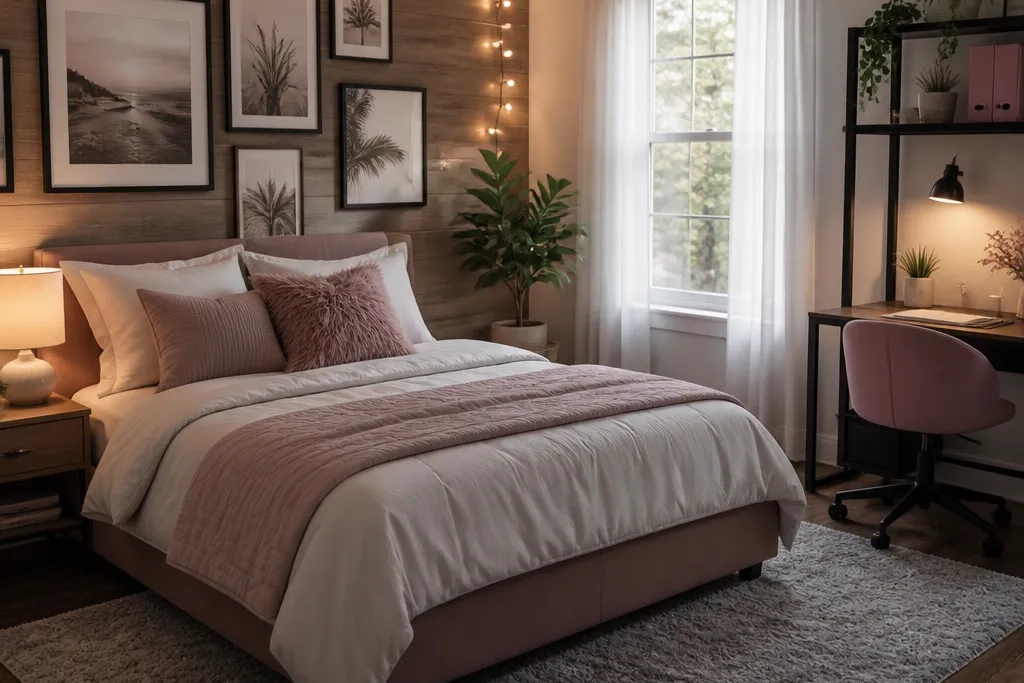
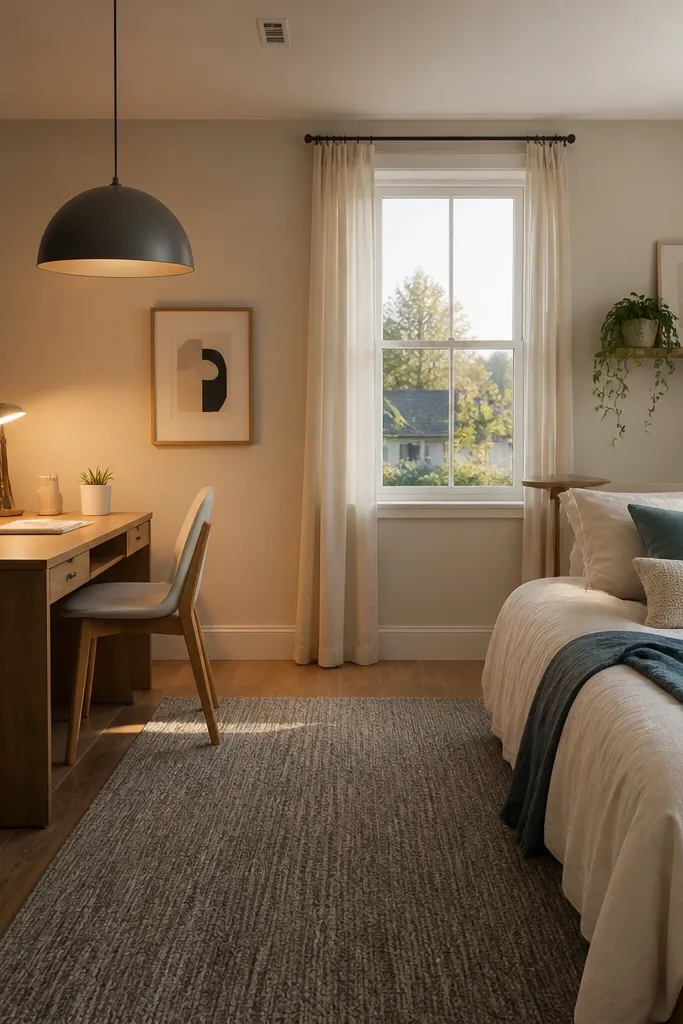
1. Dusty Pink Bed Wall With a Soft-Gray Rug
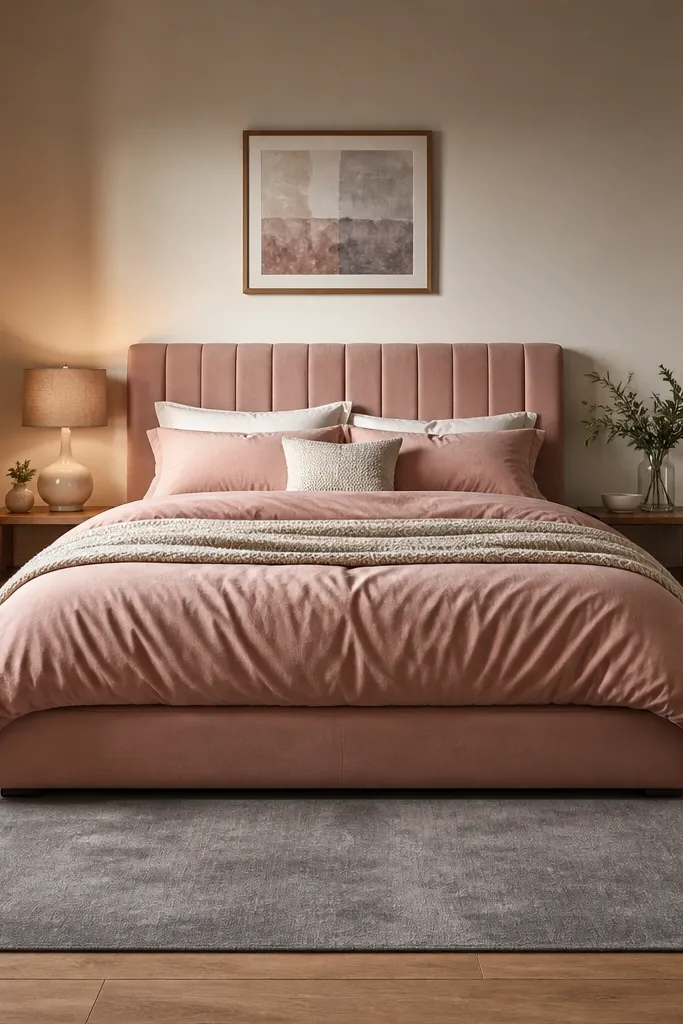
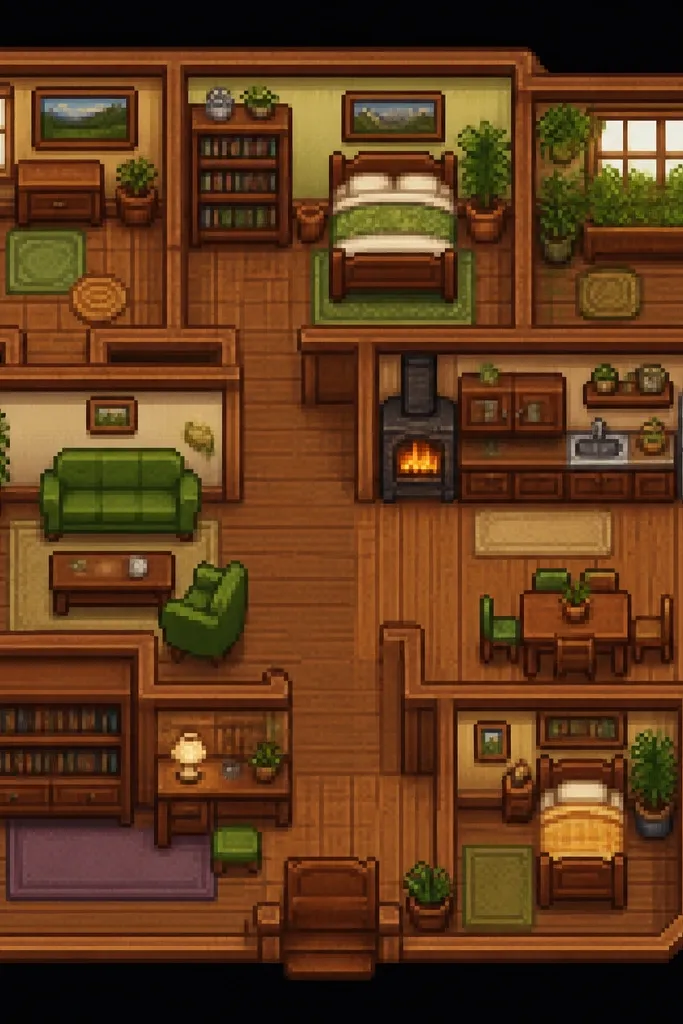
Step 1: Place the bed centered on the main wall. Set the rug so it extends a little past the sides of the bed and reaches about one foot (in Bloxburg scale) beyond the foot. Step 2: Add one matching nightstand and one lamp on the same side as the nightstand; keep the lamp shade light-colored (cream or beige). Step 3: Hang or place string lights at headboard height, following the bed width so the glow frames the focal point. Cost is low because you are mostly using bedding, one lamp, and lighting instead of lots of decor.
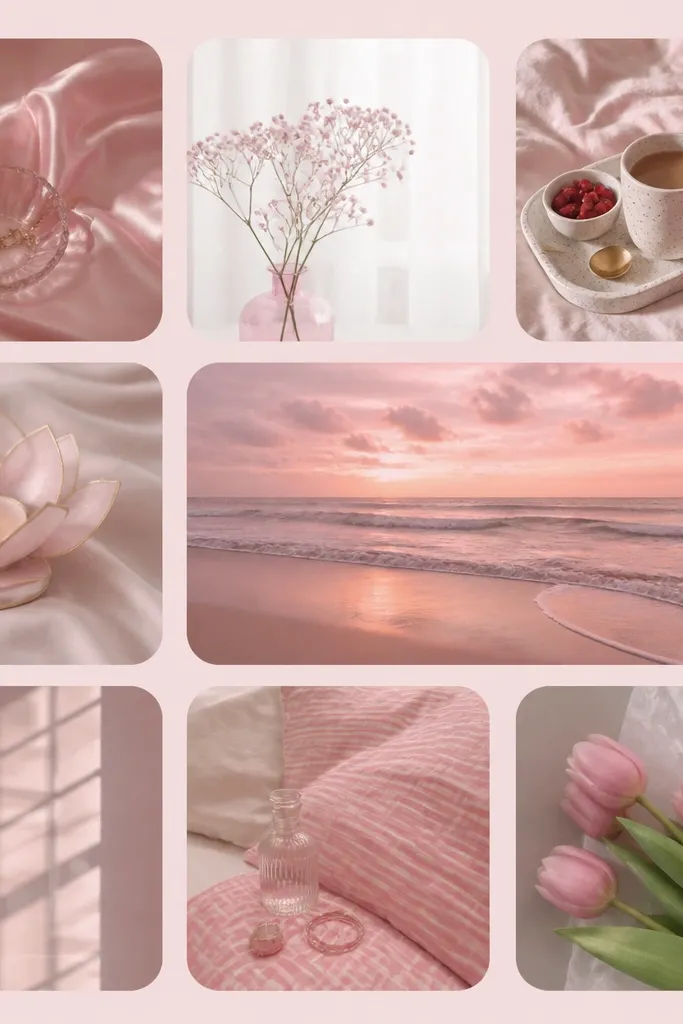
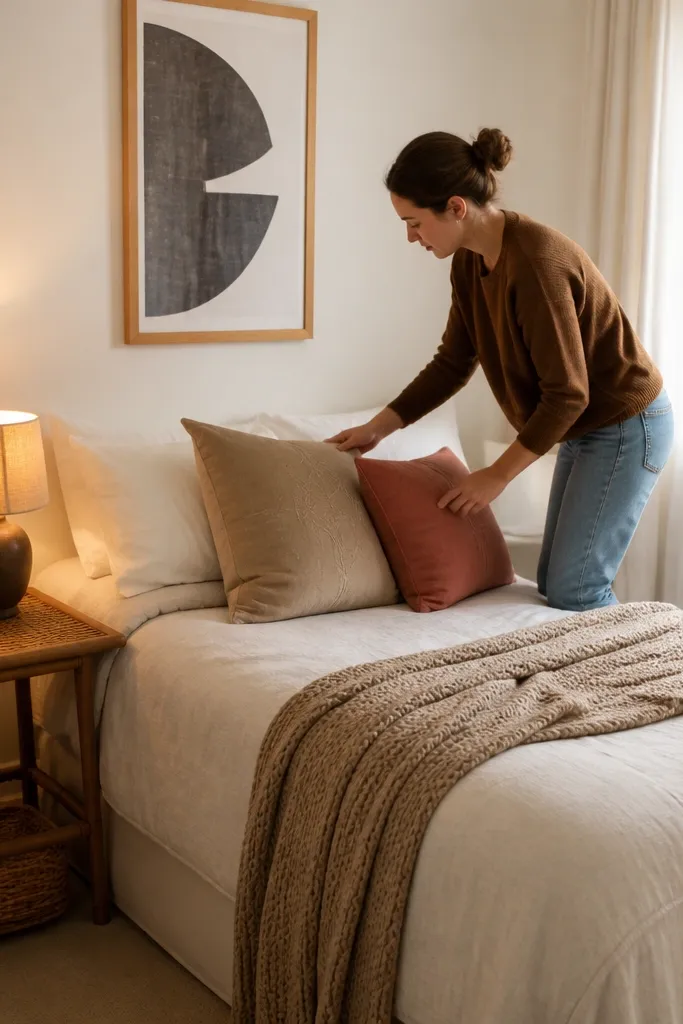
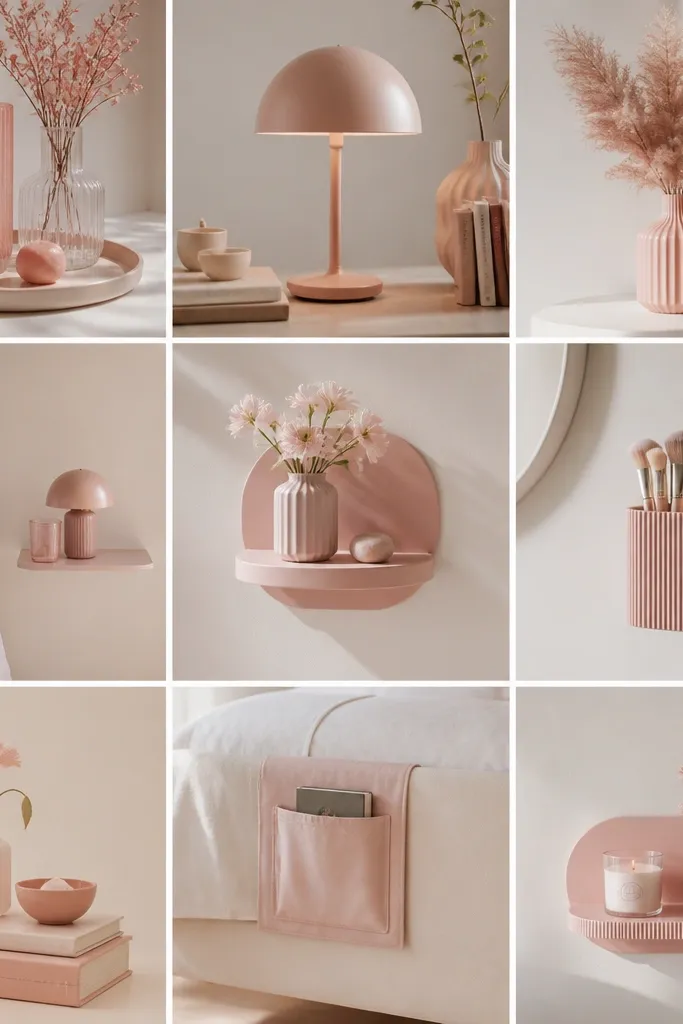
This layout is made for a teen who wants cozy but still clean. Put a dusty pink bed (solid color duvet or comforter look) against the main wall and add a soft-gray area rug centered under the bed. The gray rug stops the pink from looking loud, and it also makes the whole room feel grounded in screenshots. Add a slim nightstand on one side and a matching lamp with a beige shade so the lighting looks warm, not harsh. Finish with string lights taped along the headboard height so the wall looks styled without extra clutter.
Watch outDo not add three different wall decorations above the bed; pick one feature and let the lighting do the rest.
Pro tipMatch your pillow colors to your rug tones (pink + gray). That single repeat makes the room look designed.
2. Black Frame Desk Nook With White Sheer Curtains
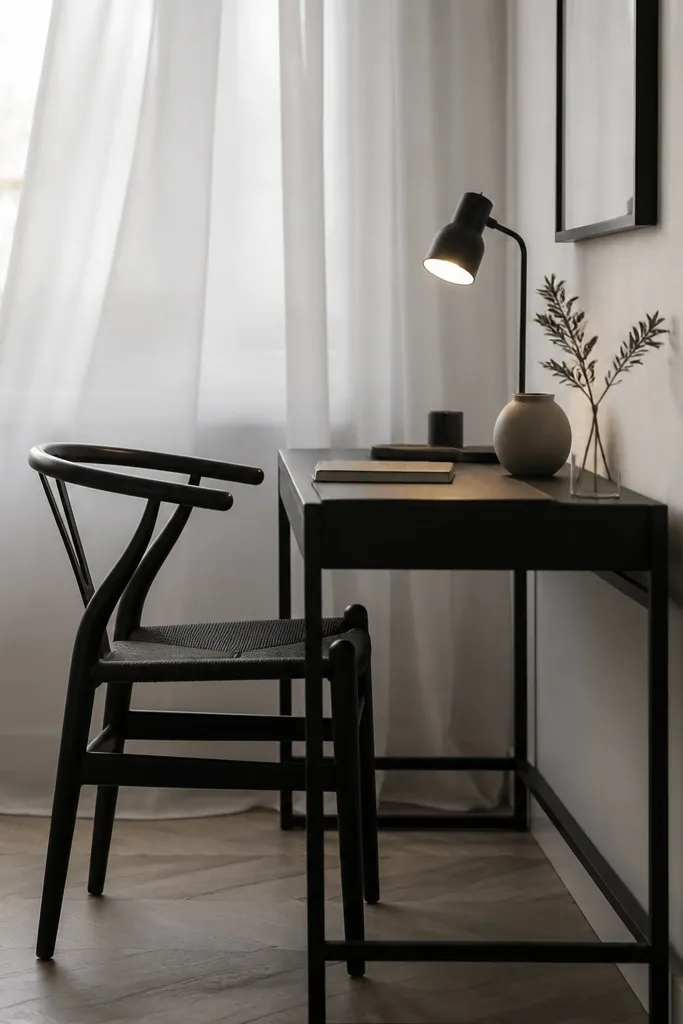
Step 1: Put the desk about one tile away from the side wall so you can place a chair comfortably. Leave at least two tiles clear in front for movement and to keep it from feeling cramped. Step 2: Add a curtain panel behind the desk area, then place a lamp on the desk corner farthest from the chair so it lights the workspace. Step 3: Add a small wall shelf above the desk with only 3 items max (a book stack, a small plant, a pen holder). This setup is mostly furniture + curtains, so it stays beginner-friendly.
A desk nook is the fastest way to make a teen room feel usable and personal. Choose a black-framed desk and a matching black chair, then place it against a side wall so you keep the center area open. Add white sheer curtains or a curtain panel behind or beside the desk to create softness and height. For the aesthetic, keep the desk surface mostly clean and add a single desk lamp with a warm bulb color. The curtains also help hide plain wall textures, which makes beginner rooms look more finished even with fewer items.
Watch outAvoid clutter on the desk surface; too many small items makes the nook look messy instead of styled.
Pro tipUse a single wall shelf color that matches your desk frame (black) for a cleaner look.
3. Teal Accent With Matching Bedding and Corner Shelves
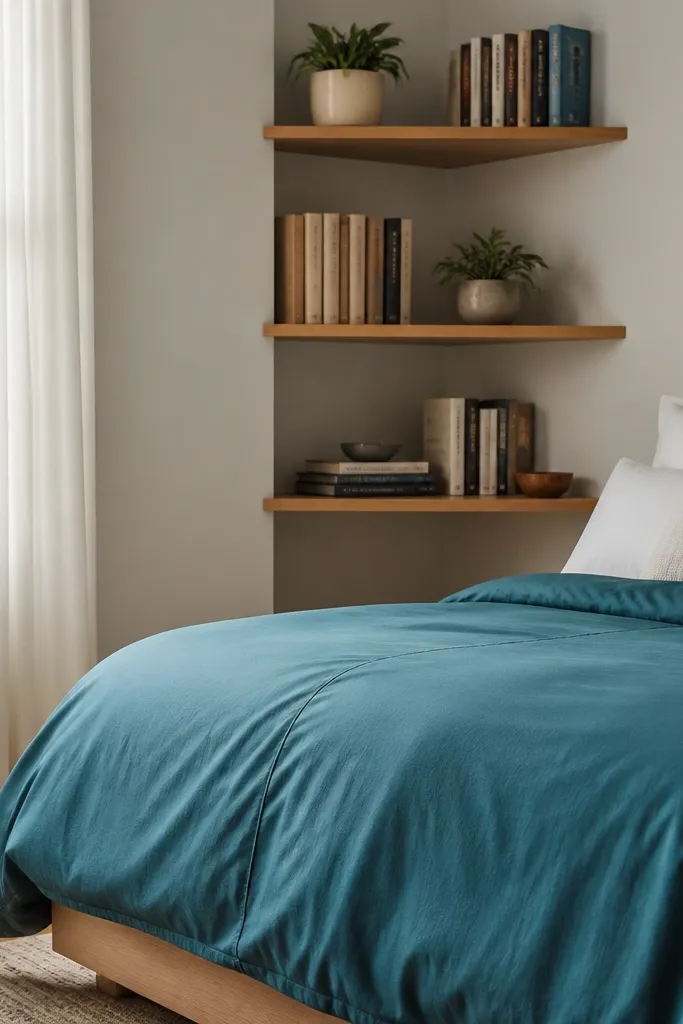
Step 1: Place the bed against a wall and center it. Choose bedding where teal is the main color and white or cream pillows are the secondary. Step 2: Add corner shelves near the bed corner (or desk corner) so the shelves rise above lamp height. Step 3: Arrange 5-7 items total on the shelves: 3-4 book stacks, one plant, and one small decor piece. Effort is low, and you are mostly repeating teal + white to tie everything together.
Teal is a strong teen color without turning the room into a theme park. Use teal bedding as the anchor and keep the rest mostly white or light wood. Corner shelves are perfect for beginners because they use vertical space and do not force you into a complex layout. Put a small shelf set in the corner near the bed or desk, then decorate with books in two shades and one small plant or decor object. This keeps your personality visible while the room still looks organized. The teal bedding becomes the focal point, and the shelves add structure without taking up floor space.
Watch outDo not add teal in five random places. Two hits (bedding + one decor item) are enough.
Pro tipRepeat teal once more on the lighting — a teal sign or teal lampshade makes the whole palette click.
4. Lavender Cozy Corner With an Oversized Knit Throw
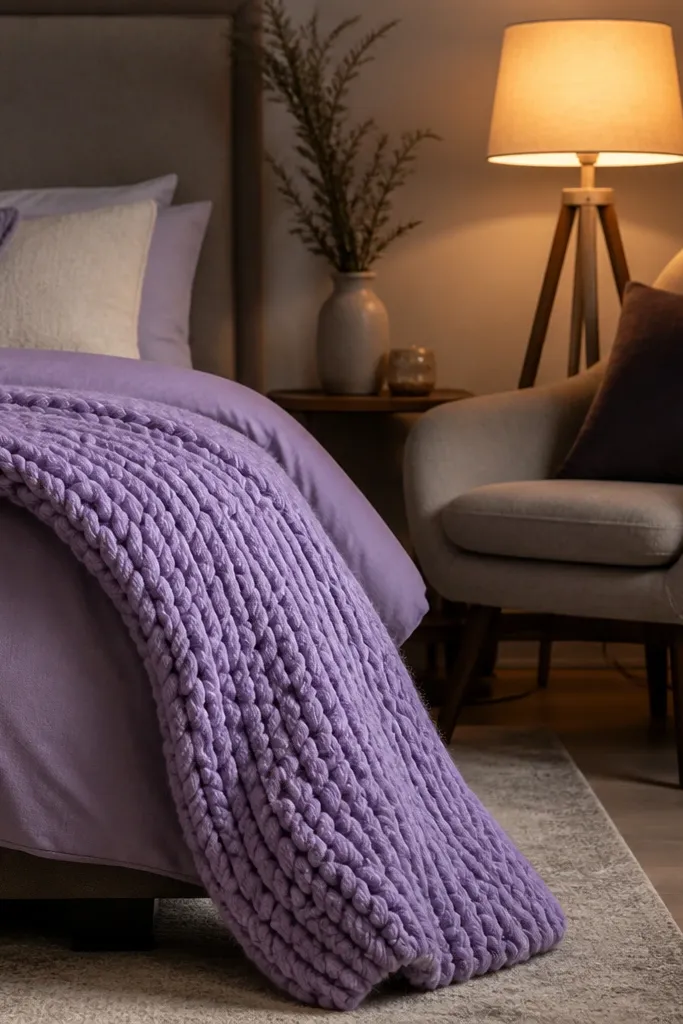
This idea is about texture, not more furniture. Start with lavender bedding and add an oversized knit throw draped over the foot or side of the bed so the room looks soft and lived-in. Then create a reading corner with one small chair and a floor lamp or table lamp. Use warm lighting to make lavender look flattering instead of washed out. The knit texture gives the room depth in a screenshot, which is why it works even if you only add a few decor items. Keep the rest of the palette neutral — cream walls, light wood, and white accents.
Step 1: Place the bed on the main wall, then position the chair in the nearest corner facing toward the bed. Leave enough space for the chair to read as a separate zone. Step 2: Add the knit throw across the bed so it covers the foot area and hangs slightly over the side. Step 3: Put a lamp near the chair, not behind the bed, so the light hits the throw and chair area. Cost is moderate because you are buying one statement textile piece and adding just one chair plus lighting.
Use a rug under the chair that is one shade darker than the floor. It makes the corner feel anchored.
Avoid placing the chair too close to the bed. If there is no gap, it looks like one crowded cluster.
5. Gallery Wall Collage Above the Bed With Warm Wood Frames
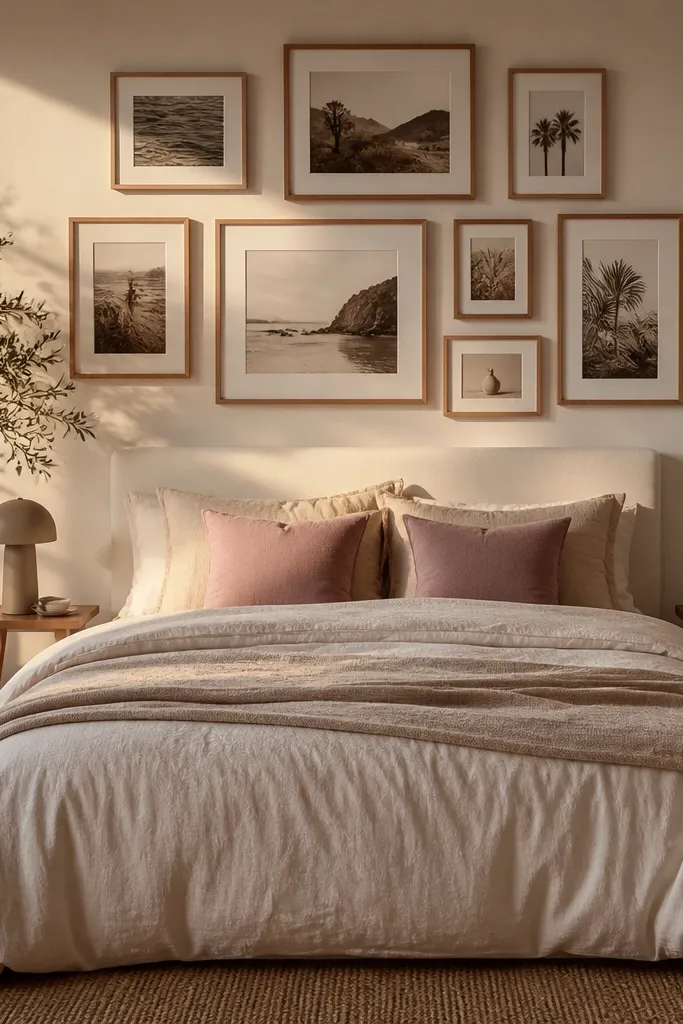
A gallery wall is the easiest “stylish personal space” trick because it turns a plain wall into a statement. Go for warm wood frames to keep the room cozy, then place the collage centered above the bed head. Keep the bed simple: white or cream bedding with a single accent color in the pillows. Add a thin nightstand with a lamp on one side so the collage does not look floating. String lights behind the bed at the collage height make the wall feel intentional, especially for beginners who do not want to build complicated shelving.
Step 1: Center the bed and leave enough wall space above it for frames. Place the gallery collage so it starts about one third down from the top of the bed head area. Step 2: Add one nightstand and one lamp on the same side; choose a lamp shade that matches your bedding (cream or light tan). Step 3: Put string lights behind the collage, following the outside rectangle of the frame group. This is beginner-friendly because you are focusing on one wall and limiting decor elsewhere.
Make sure all frames share the same wood tone. Mixed metals can look messy fast in Bloxburg rooms.
Do not stack the collage too high. If the frames touch the ceiling, the bed area looks cramped.
6. Monochrome Gray Room With a Black Bedside Cluster
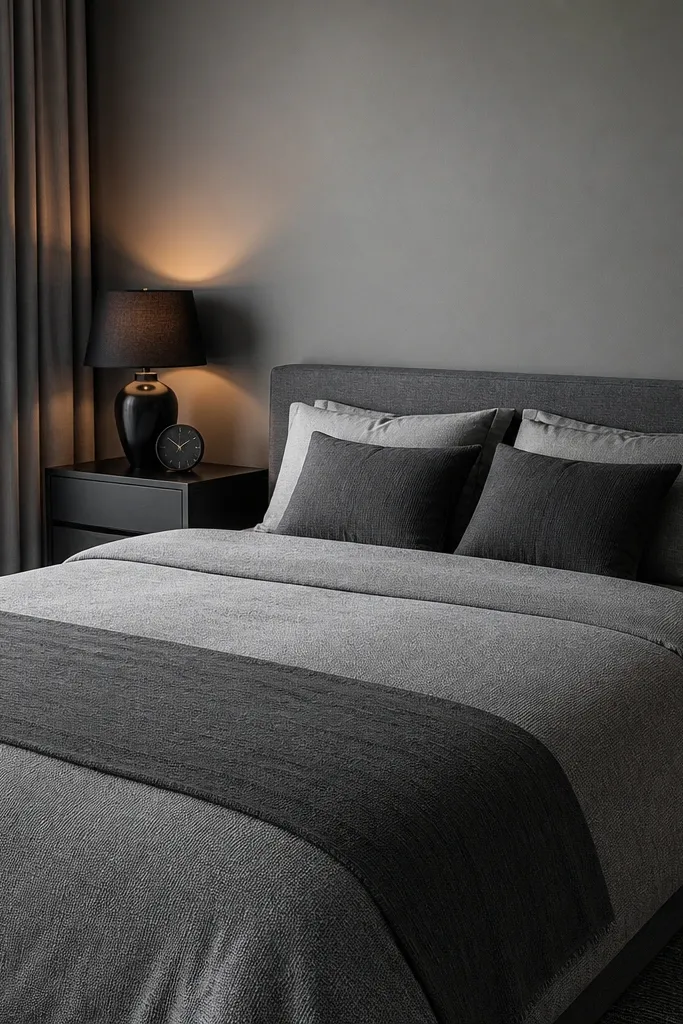
Step 1: Place the bed centered and choose a gray comforter with 2-3 gray pillows (vary the shade slightly). Step 2: Put two black nightstands on either side if your room allows width; if not, use one nightstand and keep the other side open. Step 3: Add a lamp on the nightstand and place a small tray or book stack next to it to look styled. Cost stays reasonable because you are repeating colors instead of buying lots of decor.
Monochrome rooms look expensive because you are controlling visual noise. Choose gray bedding and pair it with black nightstands and a black lamp base. Keep the wall simple — one curtain panel or a plain wall feature — so the bedside cluster becomes the focal point. Add one textured element like a darker gray throw or patterned pillow to prevent the room from looking flat. This setup is great for teens who want a sleek vibe without a complicated theme. In screenshots, the contrast between gray and black reads instantly.
Watch outAvoid mixing gray with too many other colors like teal and red. Monochrome only looks good when it stays tight.
Pro tipUse one shape repeat: square nightstands with square picture frames keeps it clean.
7. Pastel Rainbow Closet Wall With a Single Color Bed
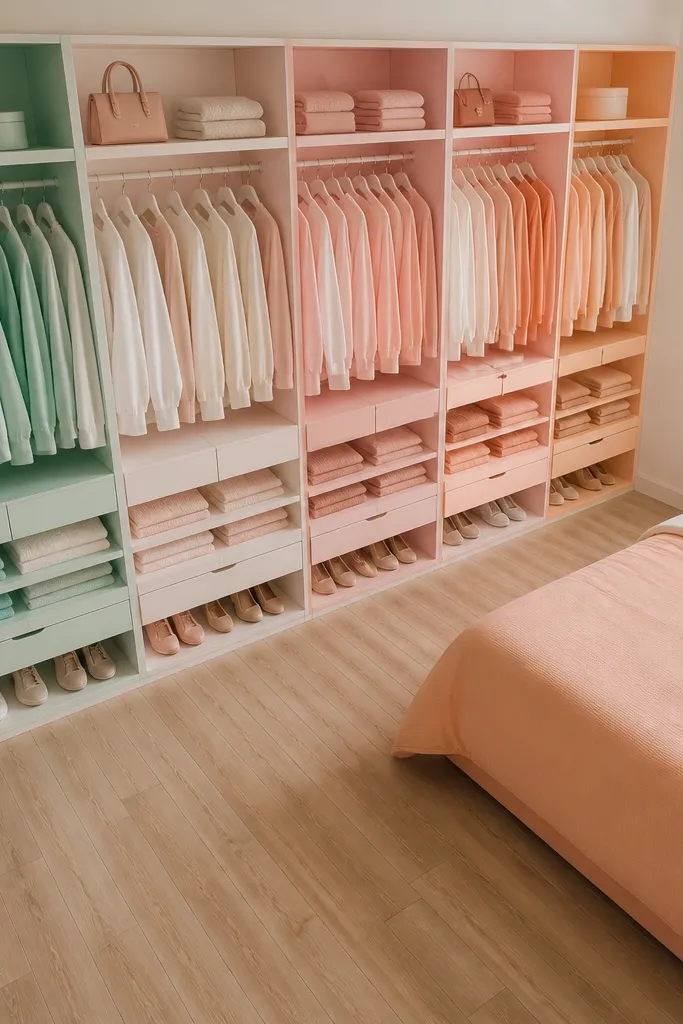
Step 1: Choose one pastel bed color and keep bedding mostly that shade with white or cream pillows. Step 2: Build or place a wardrobe/closet wall behind or near a corner so it reads like a display area. Step 3: Add pastel items in 4-6 colors max on the closet shelves so it looks curated. Finish by placing a single mirror near the closet wall to make the colors look intentional. Effort is medium but it is straightforward: bed stays simple, closet does the styling.
If your teen likes fashion, this idea turns their storage into decor. Keep the bed in one pastel shade (like mint, light pink, or soft peach) so the room stays calm. Then create a closet or wardrobe wall with pastel tones — think hangers, shelves, and small folded items displayed in multiple colors. The trick is restraint: use a single bed color and let the closet wall carry the playful energy. This gives a clear reason for multiple colors while still looking cohesive. It also solves a common beginner issue: rooms feel dull because storage is invisible.
Watch outDo not add rainbow decor to the bed area. Let the wardrobe wall be the only colorful zone.
Pro tipMatch the mirror frame color to the closet hardware so it looks like part of the set.
8. Small Room Layout With a Wall-Mounted TV and Floating Shelves
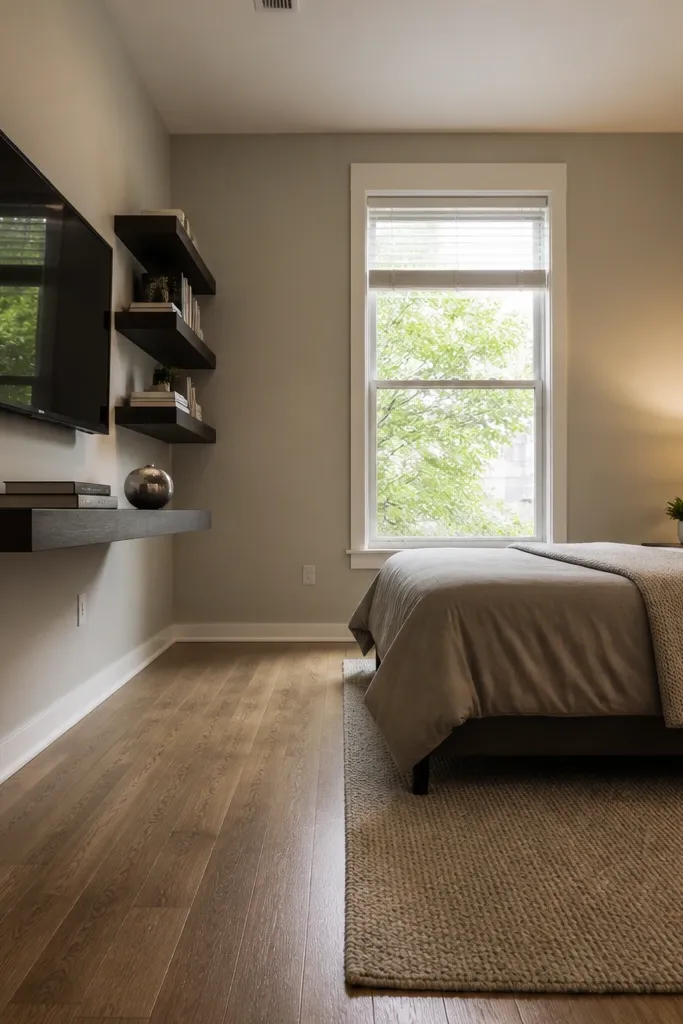
Step 1: Place the TV on the main wall, then put the bed on the opposite wall, leaving the center open for walking. Step 2: Add 2-3 floating shelves above or next to the TV; keep the items tall and grouped so the wall looks organized. Step 3: Lay a rug under the bed that fits the bed width and extends a bit on both sides. Add one floor lamp near the TV wall for mood lighting. Cost is low to medium because you are using fewer bulky items.
This is the layout for beginners who feel their room is too small for everything. Put a wall-mounted TV on one wall and keep the bed on the opposite wall so you get separation between sleep and hangout. Floating shelves are your best friend because they add storage and style without taking floor space. Use a compact rug under the bed zone to define it, then place a small bin or basket near the shelves for visual order. The look stays clean because the TV wall is structured and the shelves create a vertical line that makes the room feel bigger.
Watch outDo not place a large dresser in the center. It kills the flow in small rooms.
Pro tipKeep shelf items grouped by height: tall on the ends, shorter in the middle.
9. Starry Night Theme With Navy Bedding and White String Lights

A starry night theme looks good in Bloxburg when you keep it color-controlled. Use navy bedding as the base and add white string lights across the wall behind the bed so the glow feels like stars. Add dark curtains or a deep-toned wall covering to make the lighting pop. Then keep decor minimal: a single star sign or a small cluster of star-themed items near the headboard. This works for teen bedrooms because it looks cool without turning into a full-on themed set. The navy + white contrast is the reason it photographs well.
Step 1: Place the bed against the main wall and choose navy bedding plus 1-2 white pillows. Step 2: Add string lights behind the bed at headboard height and let them taper slightly toward the corners so it looks natural. Step 3: Put a dark curtain panel on the side of the bed wall if your room has window space; otherwise, use a wall divider or deep-toned hanging curtain. Keep any star decor to one area near the headboard. Effort is low because you are relying on lighting and bedding rather than lots of props.
Choose white string lights, not multicolor. Multicolor makes the room look busy fast.
Avoid adding too many star decorations on every surface. One cluster looks intentional; many clusters look messy.
10. Warm Beige Minimal With a Statement Pendant Light
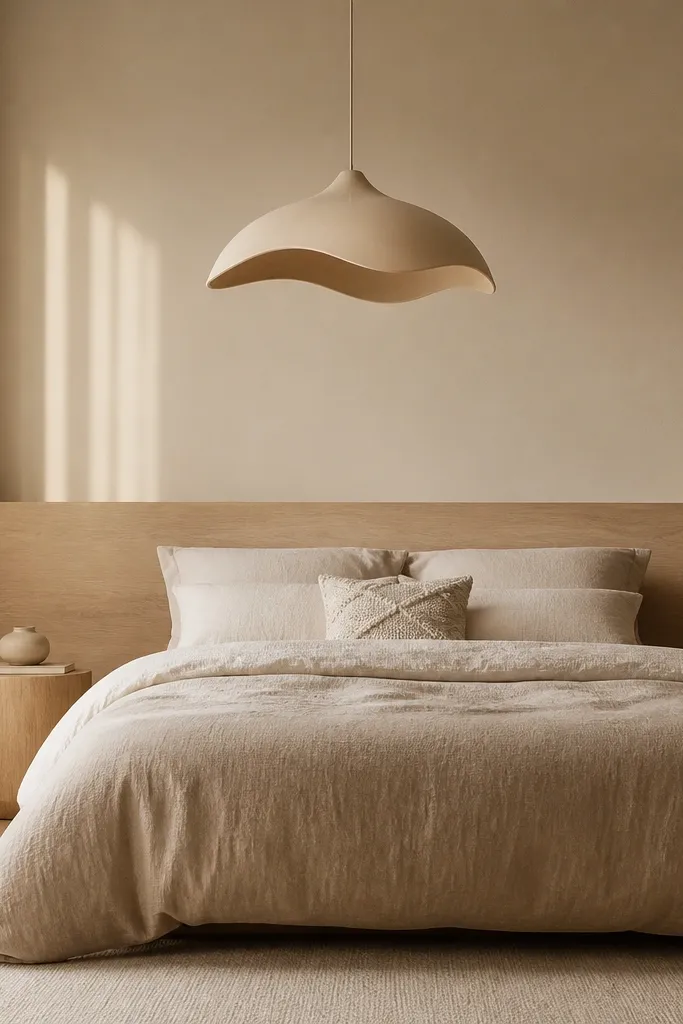
Step 1: Place the bed centered and choose warm beige bedding with one darker accent pillow (like tan or light brown). Step 2: Position the pendant light directly above the bed head area so it feels anchored. Step 3: Add a beige or cream rug under the bed and keep the floor around the bed clear. Step 4: Add one framed print above the bed or one shelf with a plant, a candle-style decor, and a book stack. Cost stays low because you are limiting decor to one wall and one lighting feature.
This is the cleanest beginner look for teens who want “stylish” without a themed vibe. Use warm beige bedding and add one statement pendant light above the bed or desk area. Keep walls neutral, then add a light wood or beige rug to soften everything. The pendant light creates instant focus, so even a simple room reads designed. Add one framed print above the bed or one small wall shelf with 3 items max. This idea works because it relies on proportion: one strong lighting element and a tight color palette.
Watch outDo not add multiple pendant lights or extra wall lighting. One statement light is the point.
Pro tipMatch your rug tone to your bedding tone. Close shades look cohesive; totally different shades look random.
11. Red Accent Pop With White Bedding and a Matching Accent Chair
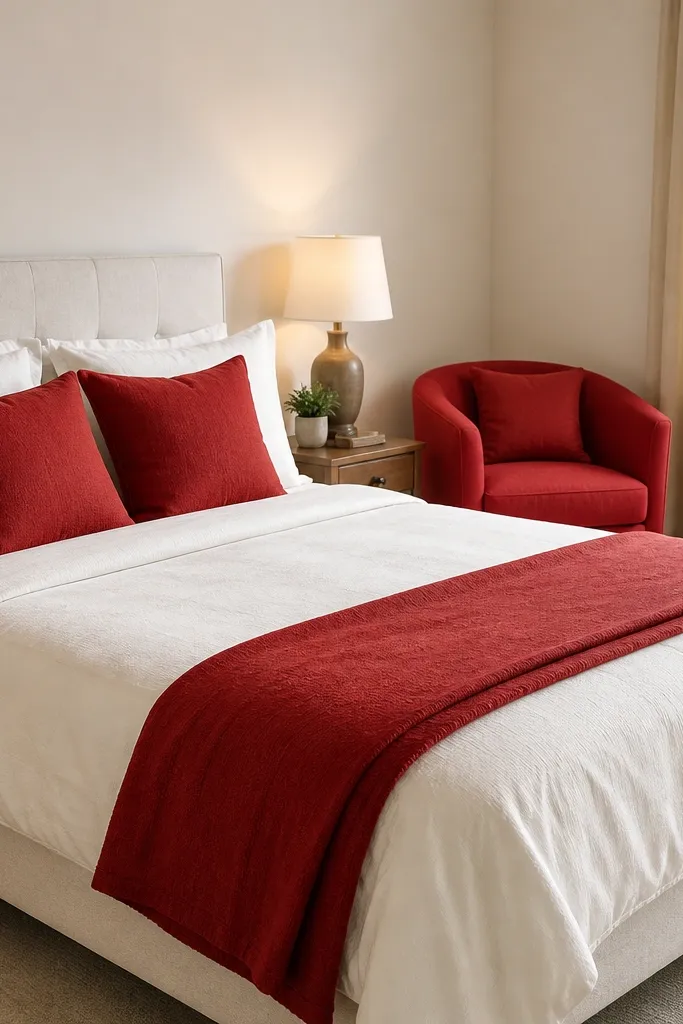
This look is for teens who want color that still feels classy. Keep bedding white or cream, then add red pillows or a red throw as your accent. Place a single accent chair in red in the corner near a lamp so the room has a second focal point. The red-and-white contrast looks bold in screenshots, and it stays coherent because you repeat red only twice: pillows and chair. Add a simple black or wood side table so the chair area feels functional. This solves the common issue where red decor makes rooms look chaotic — repetition fixes it.
Step 1: Place the bed on the main wall with white bedding and add red pillows (2-3 pillows total). Step 2: Put a red accent chair in a corner, angled toward the bed or toward a small side table. Step 3: Add a lamp next to the chair and keep the floor rug under the chair area in neutral tones. Step 4: Add one small decor item on the side table, like a book stack. Effort is medium but the build is simple: one bed, one chair, one lighting point.
Keep the chair fabric tone close to the pillow tone. Different reds look off fast.
Avoid adding red wall decor too. If red shows up on walls and furniture, it gets loud.
12. Soft Green Botanical Vibe With a Bedside Plant Shelf
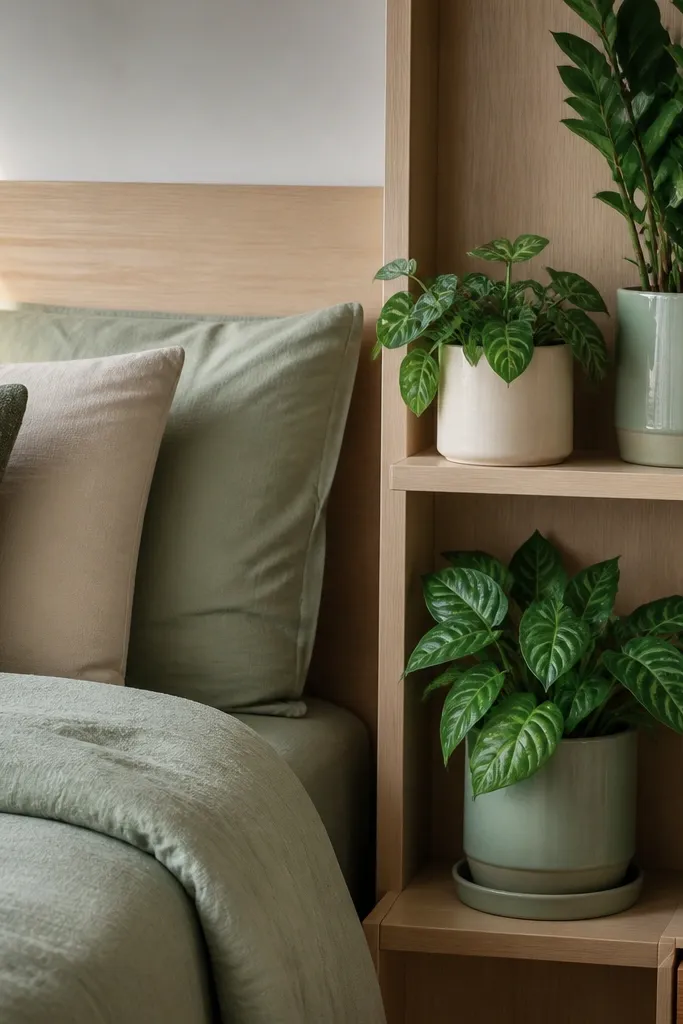
A botanical vibe looks fresh and teen-friendly when it stays soft. Use light green bedding or green accents in pillows, then bring in plants through one dedicated shelf area near the bed. Instead of spreading plants everywhere, keep them grouped on a shelf or in one corner so the look is intentional. Add a light wood desk or a simple bedside table and use a warm lamp to make greens look natural. This idea works because it gives you a “living” feel without needing a full theme wall. Green also pairs well with beige and white, which keeps the room photogenic.
Step 1: Place the bed against the wall and choose light green bedding with white pillows. Step 2: Add a small shelf beside the bed or near a window nook and place 4-6 plant items on it, mixing leaf shapes if available. Step 3: Add one small plant on the bedside table and keep the rest of the room mostly neutral. Step 4: Use a cream rug under the bed so the green does not feel heavy. Cost is low to medium since plants and simple shelves are affordable compared to big furniture sets.
Use one pot color family (all beige or all white) so the shelf looks styled, not random.
Do not cover the entire room in plants. One shelf plus one bedside plant is enough.
13. Black and White Stripe Rug Zone With a Minimal Bedside Setup
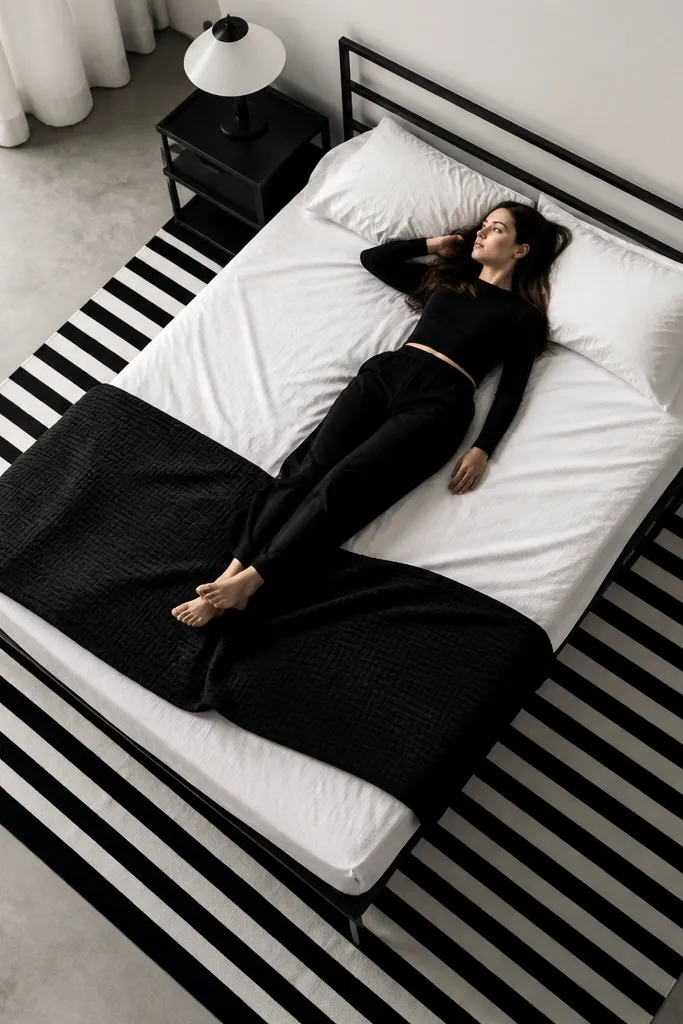
Step 1: Place the striped rug so it centers under the bed and extends slightly past both sides. Make sure the rug edges stay visible in screenshots around the bed. Step 2: Add one nightstand on one side and a lamp with a black base and light shade. Step 3: Add one wall frame above the bed or one shelf with only 3 items. Keep the floor clear around the rug so the stripes stand out. Cost is low because the rug does most of the visual work.
A bold rug pattern is the fastest way to make a beginner room look designed. Use a black and white striped rug to define a bed zone, then keep everything else monochrome and minimal: a simple bed frame, one nightstand, and a monochrome lamp. The stripes create motion and structure, which helps the room feel styled even when you do not have many decor items. Keep the wall behind the bed simple with one framed print or a small wall shelf. This idea is perfect when you want a teen bedroom that looks modern and clean, not cluttered.
Watch outAvoid adding patterned curtains on top of a patterned rug. Let the rug be the main pattern.
Pro tipChoose bedding that is mostly white or mostly black. Mixing too many colors fights the rug pattern.
14. Cozy Reading Wall With a Window Seat Look and Books
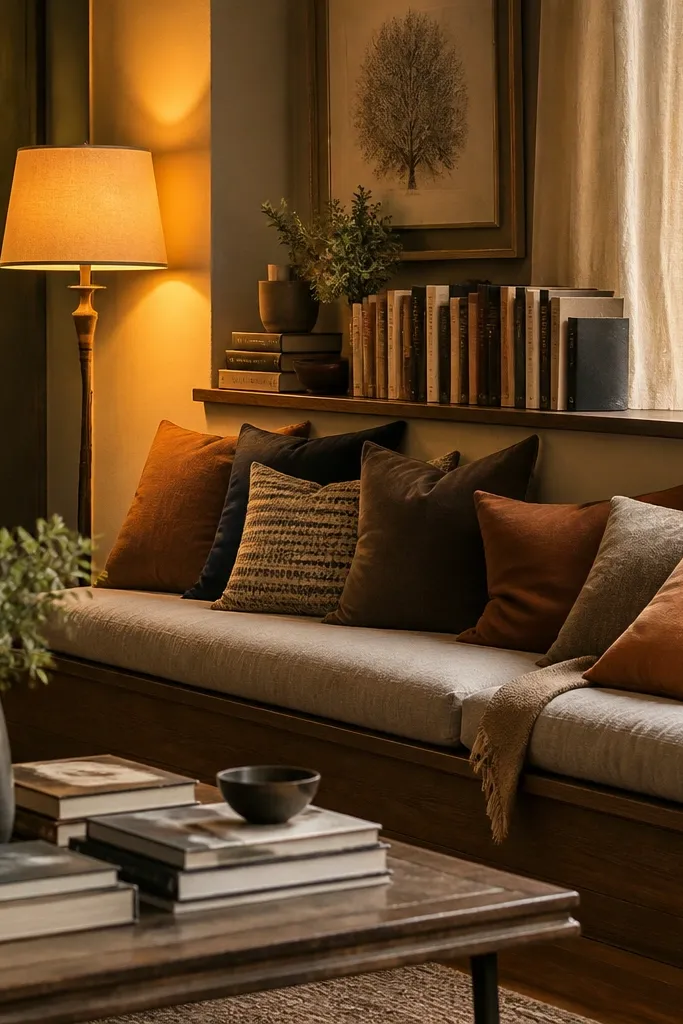
This idea makes a bedroom feel like a personal hangout, not just a bed room. Create a reading wall by placing a bench or window-seat style area along a wall (or near a window). Add layered pillows in complementary tones and stack books along the wall. Then bring in warm lighting with a floor lamp or table lamp so the seating area looks inviting. Keep the bed on the opposite wall with neutral bedding so the reading corner becomes the second focal point. In screenshots, the pillow layers and books show personality immediately.
Step 1: Build the reading wall area by placing a bench along one wall and add 2-4 pillows on top in 2-3 colors max. Step 2: Stack books on the side of the bench or in a nearby shelf so the books look “read later,” not randomly placed. Step 3: Place a lamp next to the seating and angle it toward the pillows. Step 4: Add a small rug under the seating area to define it from the rest of the floor. This is beginner-friendly because it uses one corner and simple stacking.
Use two textures: one smooth pillow set and one knit or textured throw. Texture reads well in Bloxburg lighting.
Do not place the seating area too far from the bed. You want it close enough to feel part of the same room zone.