1. Corner Daybed Setup with Open Walkway
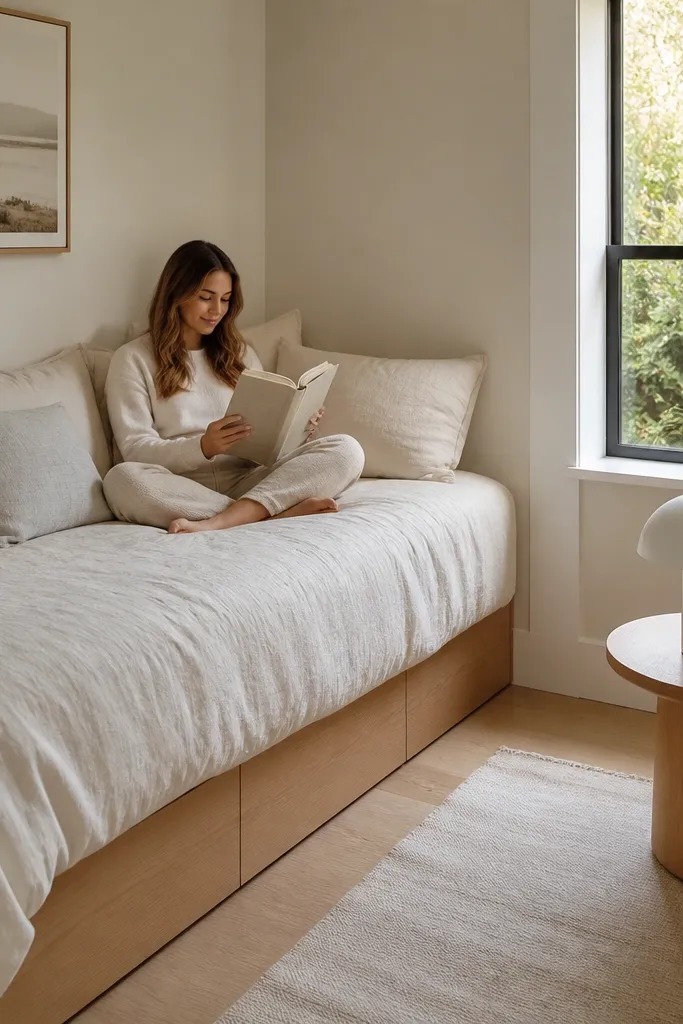
First, place the daybed in the corner with the open side facing into the room and keep about one character-width of walkway space. Then add one narrow side table next to the daybed and put a warm lamp on it; avoid stacking extra items on the floor. Finally, style the wall behind the daybed with one framed piece or a small shelf unit so the corner has a clear “finish.”
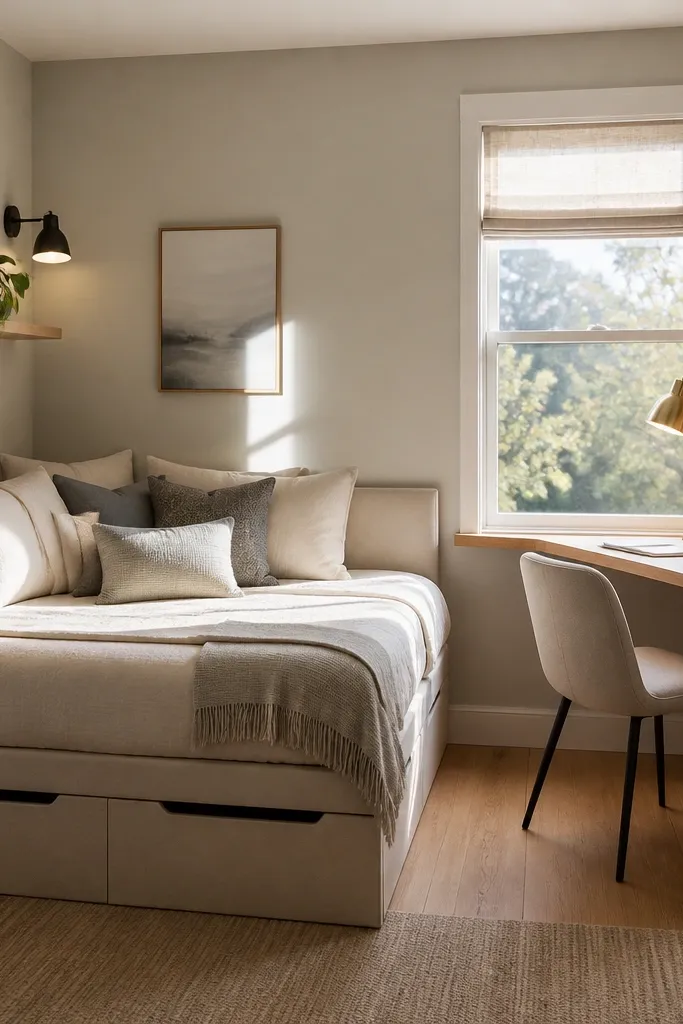
A corner daybed is one of the fastest ways to save floor space because it hugs the wall instead of taking over the center. In Bloxburg, the daybed layout reads lighter when the bedding is in one calm color family, like cream plus soft gray, instead of high-contrast prints. Put the daybed so its long side runs along the wall and leave a clear path on the opposite side for movement. Add a slim bedside table only where you need it, then keep the rest of the corner for a lamp and one small plant. This setup looks styled because the corner becomes a cozy nook, not a storage dump.
Watch outAvoid putting a second large cabinet in the same corner; it kills the open feel.
Pro tipUse bedding that matches your wall tone — cream bedding against pale walls makes the room look taller.
2. Floating Wall Shelf Bedside Pair
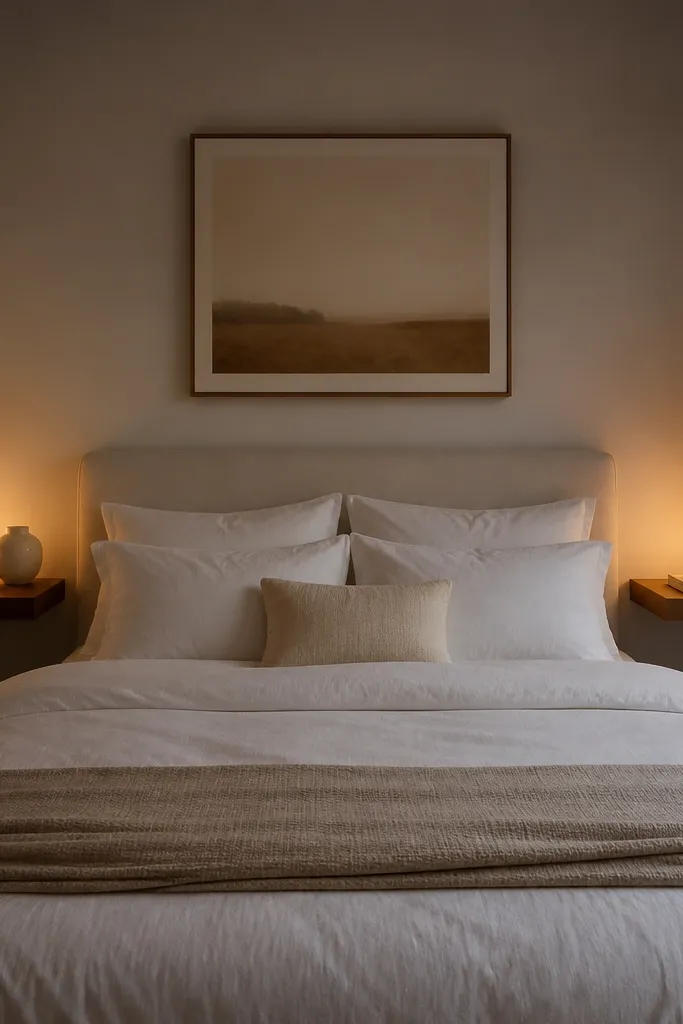
First, place your bed against a wall and leave at least a small gap so the shelves don’t look cramped above the headboard. Then mount two wall shelves at roughly bedside height (around the height of a seated character’s head) and space them evenly from the bed center. Finally, style each shelf with one functional item (light or book) and one small decorative piece, keeping the total items low.
If your bedside tables crowd the floor, switch to floating wall shelves and treat them like built-in nightstands. Two shelves placed symmetrically on either side of the bed create instant balance, which makes small rooms feel calmer. Keep items tight: one small lamp or lantern style light, one book stack, and one decorative object per shelf. Choose shelf decor in the same materials — light wood shelves with neutral decor looks cleaner than mixing too many colors. This idea solves the “my bed has nowhere to put things” problem while keeping the floor visually empty.
Watch outDon’t overload shelves; in small rooms, extra objects show as clutter even if they’re “organized.”
Pro tipLean into one color for decor (beige, white, or gray) so the shelves look intentional instead of scattered.
3. Wardrobe Dresser Combo with Mirror Wall
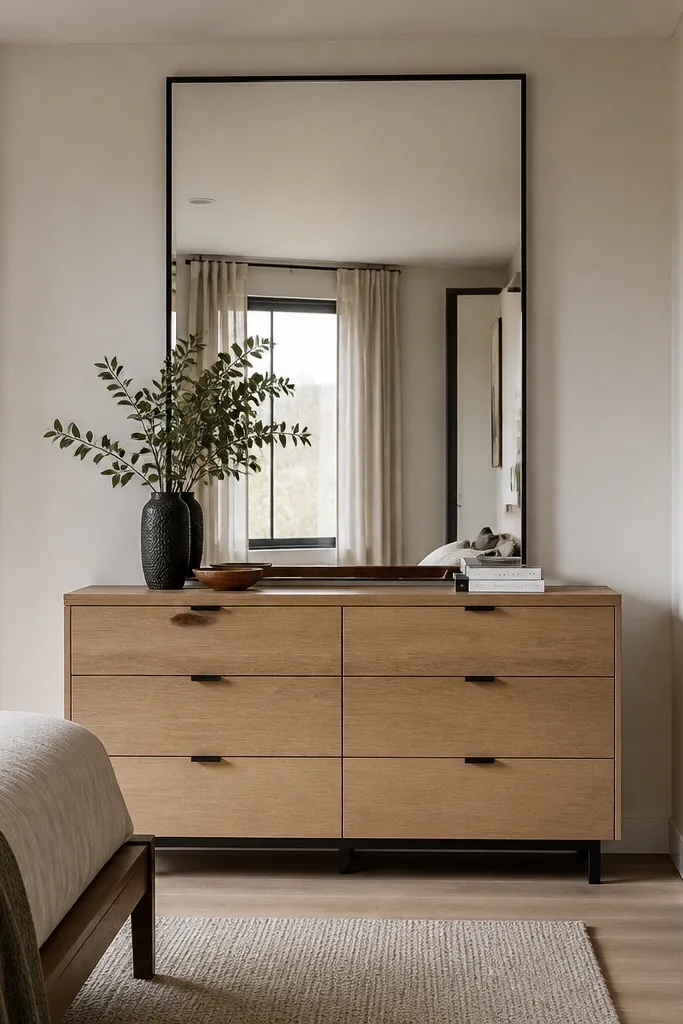
First, place a dresser along the wall next to your bed area, ideally within the same wall section so the layout feels cohesive. Then mount the mirror above the dresser so the mirror’s bottom sits just above the top of the drawers. Finally, add a small tray or two items on the dresser top and keep the rest of the surface clear for a photogenic look.
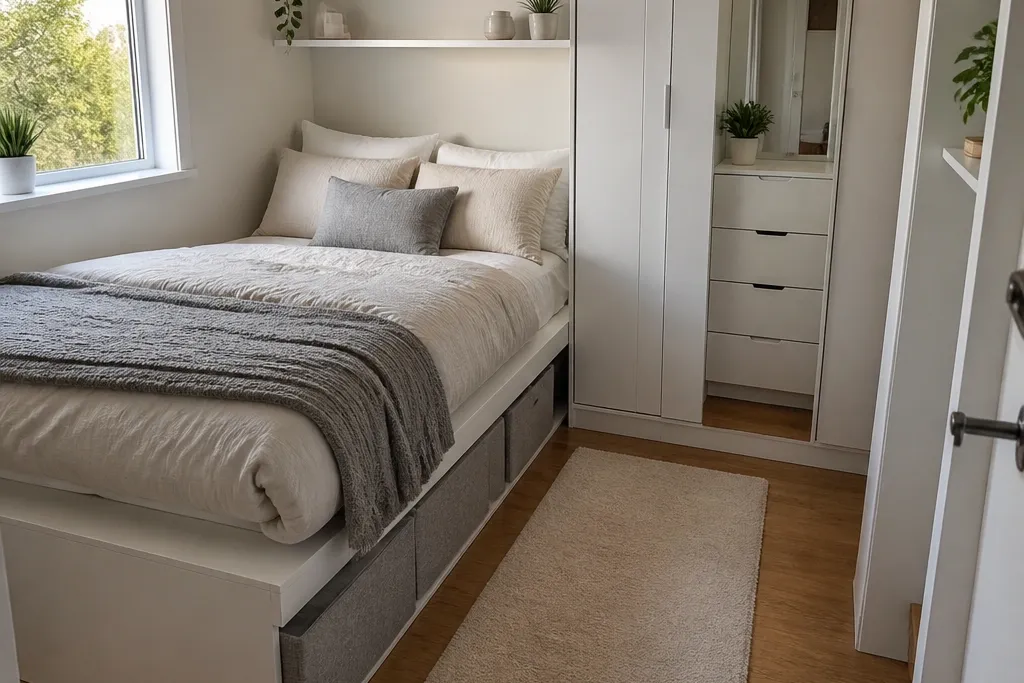
For a small bedroom, a tall mirror is the easiest illusion tool you can use, and pairing it with a dresser keeps the look practical. Put a mirror above (or directly behind) a dresser so you create one clean vertical line. The dresser drawers hide mess, and the mirror makes the room feel like it has more depth. Choose a simple mirror shape, like a tall arched or rectangular frame, and keep the dresser in a light wood or white finish so it doesn’t feel heavy. This setup works best when your room has one main wall that you can dedicate to a “dressing” moment.
Watch outAvoid placing the mirror across from a cluttered wall; it doubles the visual mess.
Pro tipUse warm light near the mirror so it reflects a glow, not a flat shine.
4. Under-Bed Storage with Visible Clean Bedding
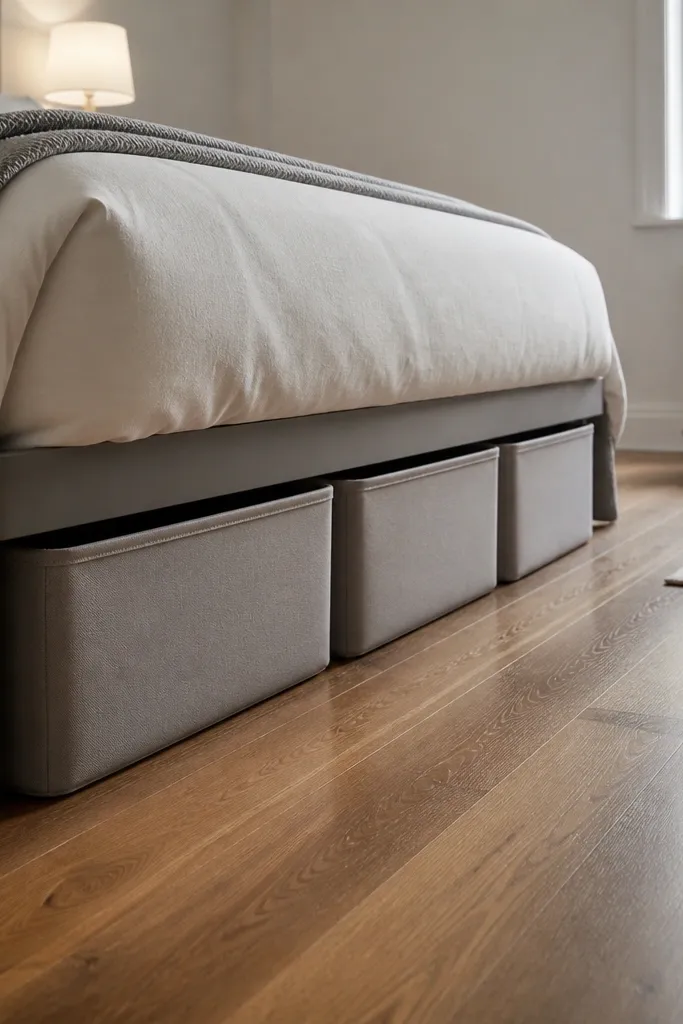
First, choose a bed placement that leaves space to slide bins underneath without blocking the bed frame. Then pick 2-3 bins in one color family and store items you don’t need daily (extra blankets, spare clothes, small decor). Finally, keep the bed styling minimal: solid bedding, two pillows, and one small throw so the bins stay hidden and the bed looks crisp.
Under-bed storage is the quiet hero for small rooms because it hides the stuff that makes bedrooms look messy in screenshots. The trick is to keep the bedding visually clean and use matching storage bins so the area under the bed looks uniform. In Bloxburg, bins that match in color — like light gray or tan — look more intentional than mixed tones. Set your bed so there is enough clearance for bins, then keep the top of the bed simple: solid-color sheets and one neat throw pillow. This idea solves the “my room is small so everything piles up” problem without adding extra furniture.
Watch outAvoid using dark, mismatched bins under a bright bed; it makes the whole lower half look heavy.
Pro tipUse one bin for “in-use” items and one for “weekend/extra” items so you don’t dig through everything.
5. Slim Desk Against Window Wall with Floating Organizer
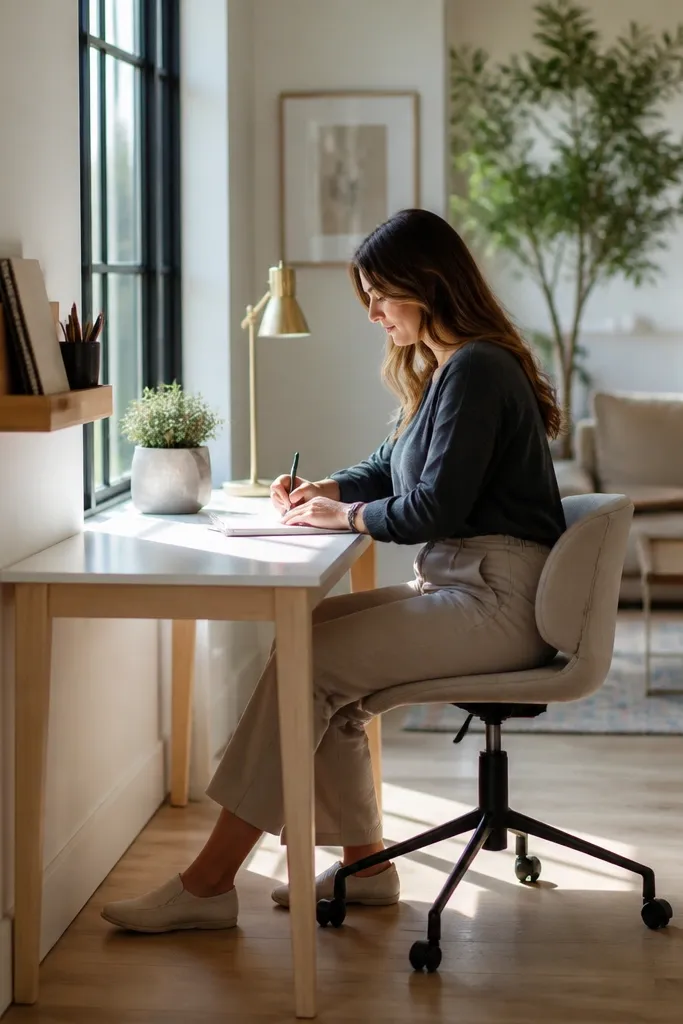
A slim desk placed along a window wall gives you a work spot without stealing the room’s center. This layout looks good because the desk line follows the wall and you get natural light in the photo. Choose a desk with a narrow footprint and pair it with a floating wall organizer above or behind the desk so you don’t need a bulky bookshelf. Keep the desktop styling minimal: one lamp, one stack of books, and one pen cup. This idea works perfectly when your bedroom doubles as a study area and you need a functional corner that still looks cute.
First, place the desk along the window wall and leave a clear path between desk and bed; aim for enough space to walk past without bumping. Then add a wall organizer above the desk using the same tone as your shelves or dresser. Finally, style the top with three items max and hang or place small decor on the wall organizer instead of cluttering the desk surface.
Match your lamp color to your bedding accents so the desk corner looks like part of the same design.
Avoid a desk that’s too wide for the wall; it makes the room feel squeezed even if it’s “only one piece.”
6. Twin-Color Bedding Strategy for Bigger Visual Space
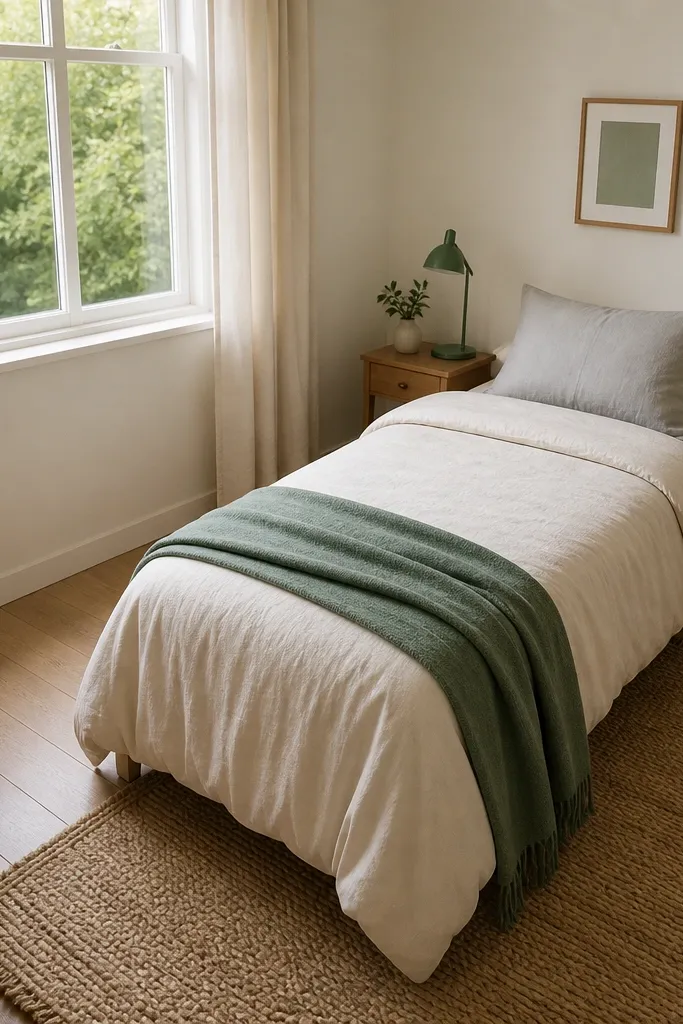
First, choose one base bedding color and one accent color; stick to them across pillows and one small throw. Then place the bed against a wall and keep the headboard area simple, with one wall decor piece centered behind it. Finally, repeat the accent color once on the desk or dresser using a small item like a lamp, book spine set, or vase.
Small rooms look bigger when your bed uses a tight color plan. Pick a light base color for the sheets or duvet — cream, soft white, or pale gray — then add one accent color through a throw blanket and one pillow. Keep the accent color repeated in two other places: maybe a lamp shade or a small wall art frame. The bed becomes a clean anchor, and the room stops looking patchy. This is especially helpful in Bloxburg because random decor colors can make the whole room feel chaotic fast.
Watch outAvoid two competing accent colors on the bed; it turns a small space into visual noise.
Pro tipIf you want a darker room, keep the bedding light anyway; dark walls + light bedding is the cleanest combo.
7. Bookshelf Ladder Wall with Vertical Decor Stack
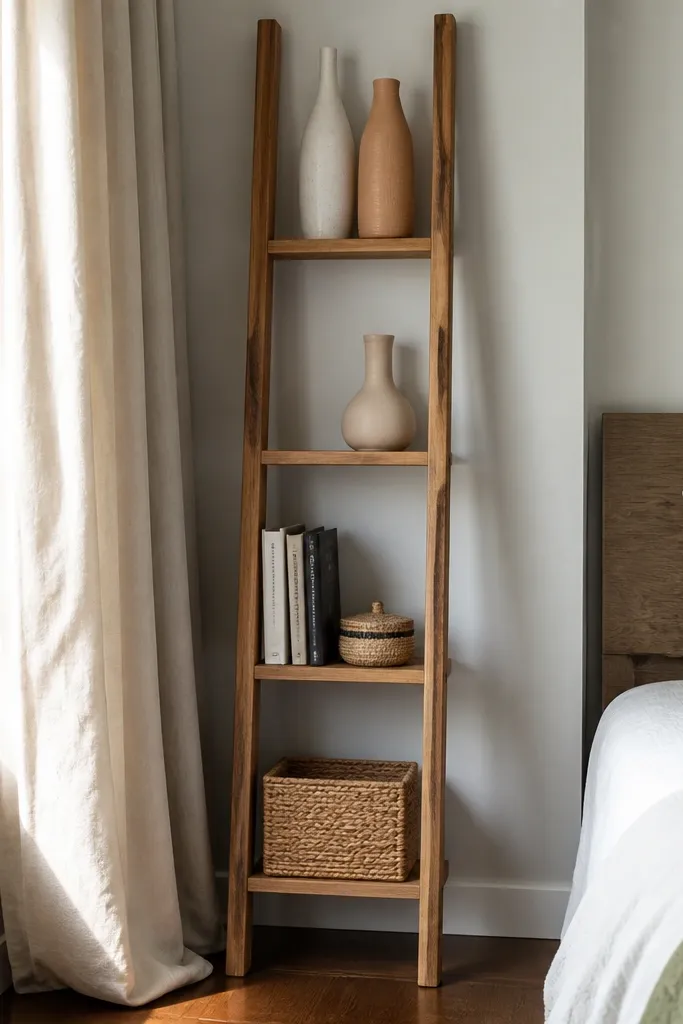
First, place the ladder shelf on a wall near the bed or desk, keeping it away from the main walking path. Then stack decor vertically: tall items on top, smaller items below, and leave one rung partly empty so it breathes. Finally, add one framed piece or small art on the wall next to it to complete the “wall story.”
A ladder-style bookshelf takes vertical space seriously, which helps small bedrooms feel taller. The shape is narrow, so it doesn’t eat floor room, and it creates a “designed” look through height variation. Style it with tall decor pieces on the top rungs and lighter items on the lower rungs — it reads balanced instead of top-heavy. Use mostly one material family, like wood tones with neutral decor, so the shelves look cohesive. This setup is great when you need storage for books and small items but you don’t want a bulky entertainment unit.
Watch outAvoid filling every rung evenly; full shelves look smaller and messier.
Pro tipLeave a small gap between shelf items; negative space makes shelves look intentional in small rooms.
8. Pegboard Wall for Hanging Bags and Small Decor
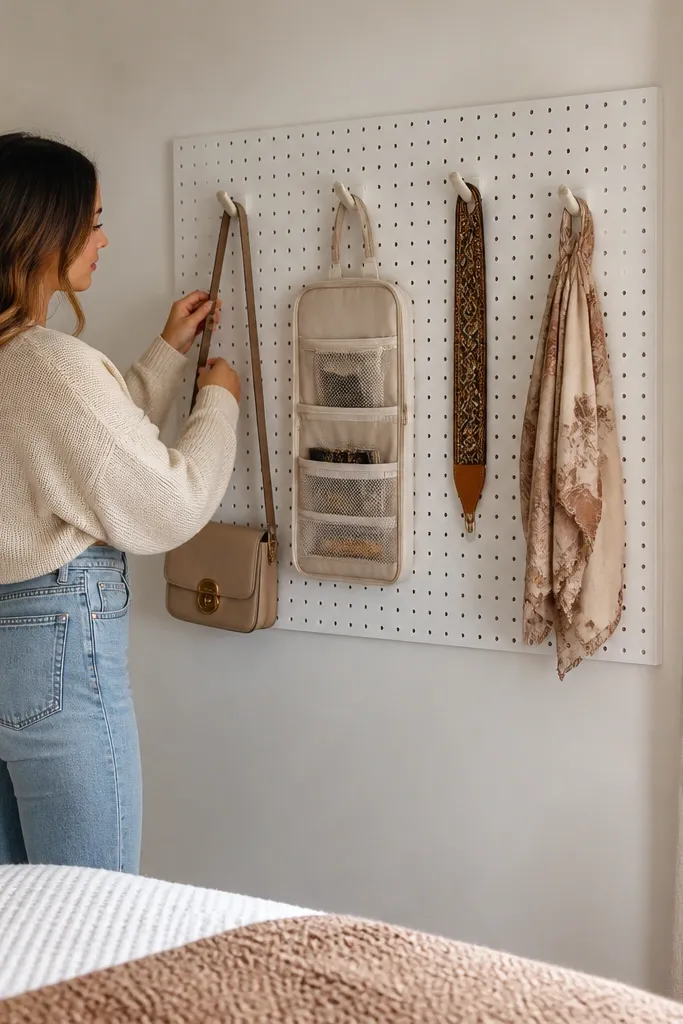
A pegboard wall is a smart small-room move because it turns “extra space” into storage without adding furniture. Hang one small bag or accessory organizer and a few hooks for lightweight items like headphones, a scarf, or a decorative strap. Keep the pegboard area near your bed or closet wall so everything is easy to reach. The look is clean when you stick to one hook color and keep hanging items in a tight palette. This idea solves the mess that usually lands on chairs and floors in small bedrooms.
First, pick a wall section that you can devote to storage and place the pegboard so it’s not blocking doorways. Then hang 2-4 items only, using hooks at different heights so it looks styled instead of random. Finally, add one small shelf ledge or a framed piece next to the pegboard to tie it into the rest of the room decor.
Use one decorative color for the hanging items, and keep the rest neutral so the wall looks planned.
Avoid hanging heavy bulky items; the wall should stay airy to keep the room feeling open.
9. Bed + Storage Bench at the Foot
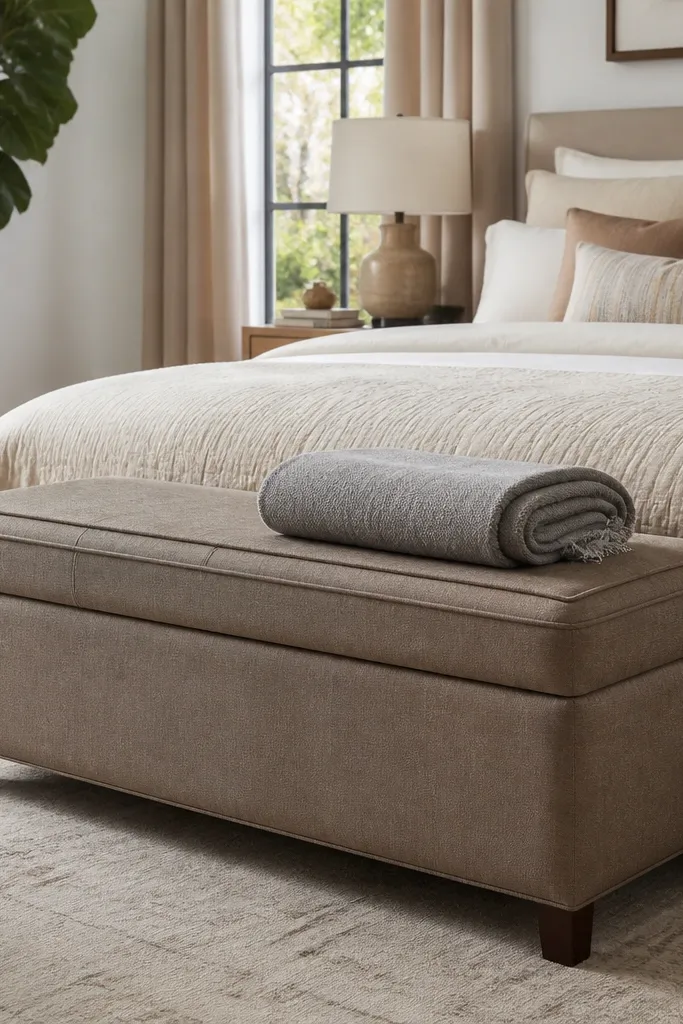
First, place the bed so the foot has enough clearance for the bench; aim for a small buffer so the bench doesn’t block movement. Then position the storage bench centered at the foot and keep its color close to your dresser or floor tone. Finally, add a folded throw or one small decorative item on top and keep the surrounding floor empty.
A storage bench at the foot of the bed gives you two wins: seating and hidden storage. In a small room, the foot of the bed is usually wasted space, so using it makes the room feel more complete without adding more clutter. Choose a bench with a lid or drawers and keep the top styled with a folded throw blanket. The bench also creates a “finished” look for the bed area, which matters in screenshots. This setup is ideal when you need a place for extra bedding, bags, or laundry piles that you don’t want visible.
Watch outAvoid a bench that’s too wide; it eats the floor and makes the room feel cramped.
Pro tipMatch bench fabric to your throw blanket so the bed area reads like one outfit.
10. Tall Plant + Warm Lamp Vertical Corner Styling
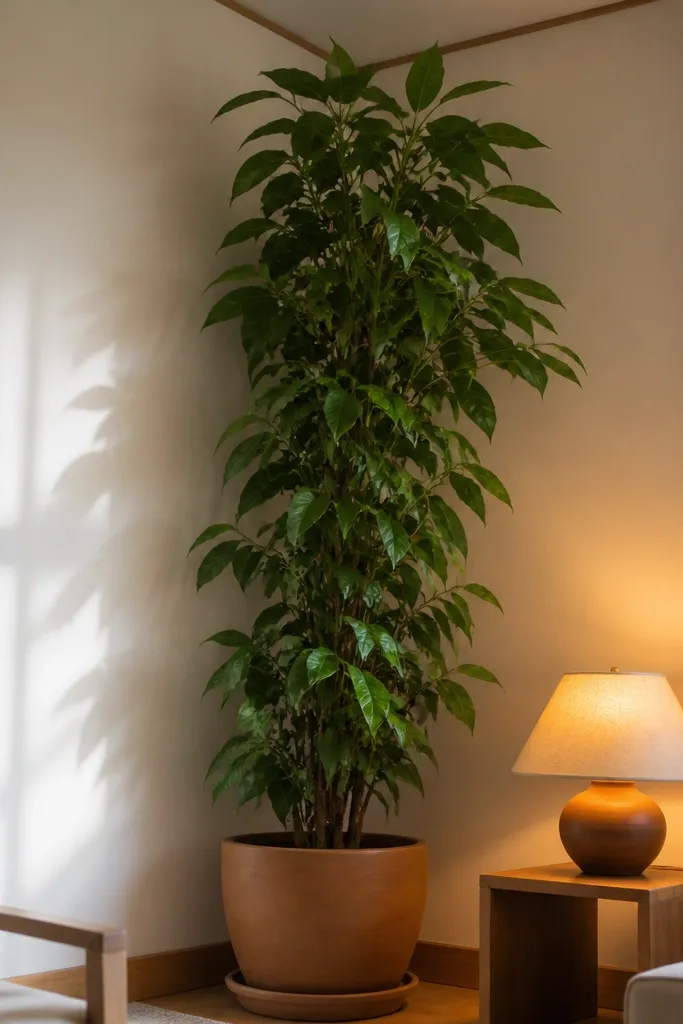
First, select the corner farthest from your desk or main walkway so the plant doesn’t block movement. Then place the lamp on a small table next to the plant and angle it so it lights the bed wall. Finally, add one small accessory beside the lamp, like a book stack, and leave the rest of the corner bare.
If your room feels flat, vertical styling fixes it fast. Put a tall plant in one corner and pair it with a warm lamp on a small side table. The plant adds height, the lamp adds glow, and together they pull attention up instead of toward the floor clutter. Choose a plant with a clean silhouette and keep the pot color neutral — white, beige, or light wood. This works best when the room already has basic furniture and you just need it to look designed and cozy.
Watch outAvoid placing the plant directly next to the bed if your headboard decor is already busy; it competes visually.
Pro tipUse warm lighting (amber tone) and keep the lamp shade light — it makes the plant look brighter and cleaner.
11. Single-Drawer Nightstand Swap for Wall-Only Surfaces
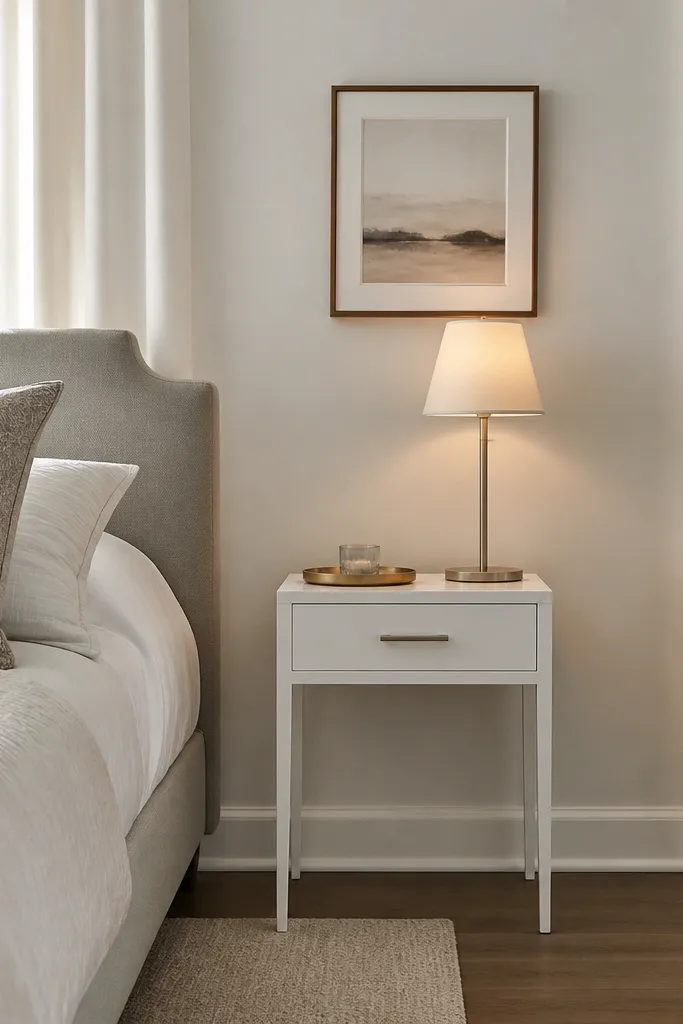
When small bedrooms feel crowded, it’s often because nightstands are too bulky or too duplicated. A single-drawer nightstand keeps the bed area functional while keeping the floor visually light. Pair it with wall art above the bed wall so the eye has something to land on at the right height. Keep the nightstand styling tight: one lamp and one small tray, nothing more. This idea is perfect for rooms that already have a desk and dresser and you don’t want to add more storage furniture.
First, remove extra bedside pieces and keep only one nightstand on the side you actually use most. Then place wall art centered above the bed or behind the headboard area so the bed wall looks complete. Finally, style the nightstand with exactly two items and clear the rest of the tabletop.
Use a tray on the nightstand; it makes small items look intentional instead of random.
Avoid two nightstands in a tiny room; the symmetry looks nice but it eats space.
12. Color-Blocked Rug to Define the Bed Zone
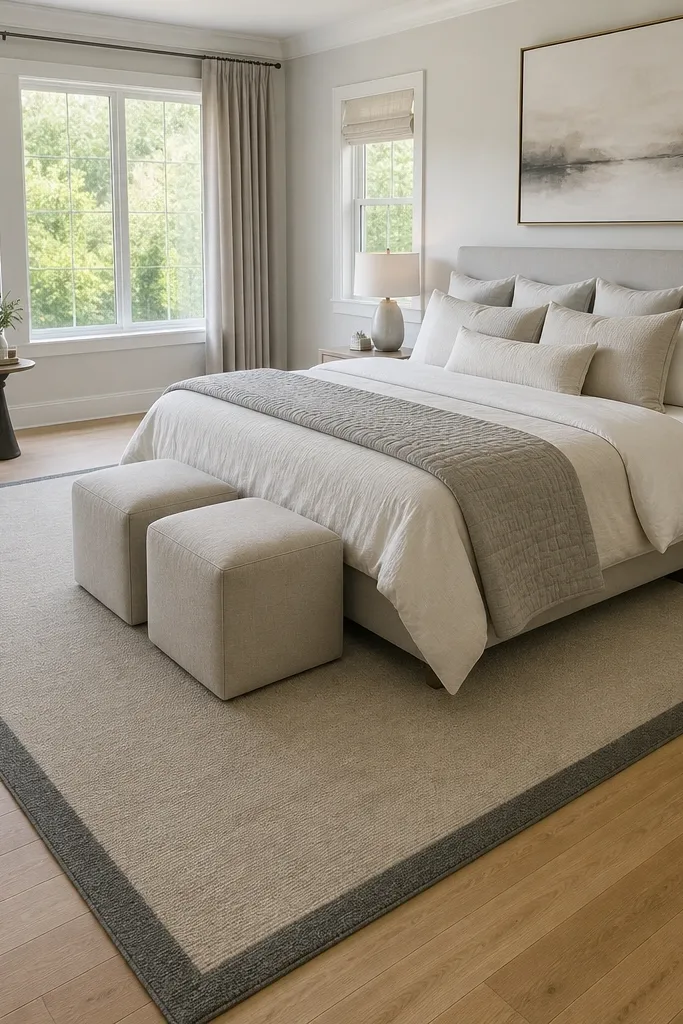
First, place the rug so it starts about a foot in front of the bed and continues under the bed front area. Then match one rug color to a pillow or throw so the zone looks connected. Finally, keep the rest of the floor clear — no extra rugs or mats competing with the rug.
A rug can make the bed area feel like its own zone, which helps small rooms look organized. Choose a rug with a simple pattern or color-block style and place it so it sits under at least the front half of the bed. If your bedding is light, pick a rug that has one matching tone plus a darker edge so it grounds the room. This trick makes the floor look less empty and reduces the “floating furniture” effect. It’s especially good in Bloxburg because rooms can look like separate islands when the floor is mostly bare.
Watch outAvoid tiny rugs that only sit under the bed legs — they make the space look smaller.
Pro tipChoose rug edges that contrast slightly with the floor color; it makes the bed zone pop in screenshots.
13. Clothes Rail + Shelf Above for True Small-Room Dressing
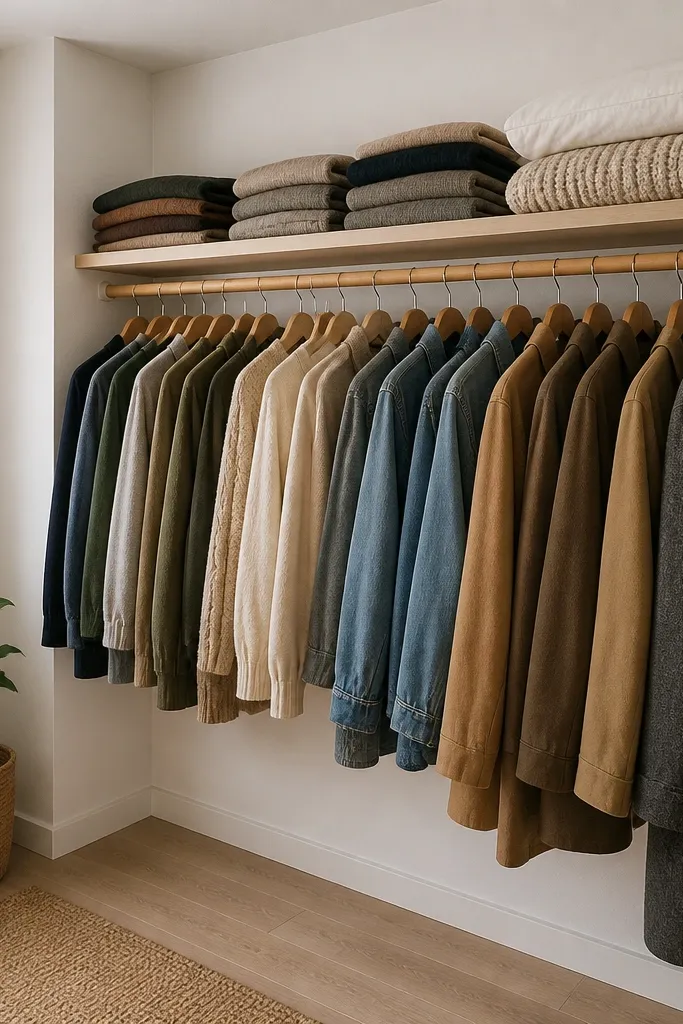
First, place a clothes rail along a wall with enough clearance so you can walk past it comfortably. Then add a shelf above at about shoulder height so folded items stay visible but not cluttered. Finally, hang 6-10 pieces only and fold the rest on the shelf; keep the rail from becoming a dumping spot.
A clothes rail setup is a clean alternative to bulky wardrobes in small bedrooms. It opens up the floor and shows your outfits neatly, which looks good in photos. Put the rail along a wall near where you get dressed, then add a simple shelf above for folded items like sweaters, towels, or spare bedding. Keep hangers consistent and choose a color palette for shirts and jackets so the rail looks curated rather than messy. This is a strong option when you want a stylish “dressing corner” without sacrificing space.
Watch outAvoid mixing too many bright colors on the rail; it turns the wall into visual clutter.
Pro tipUse matching hangers; even a small detail like that makes the rail look designed.