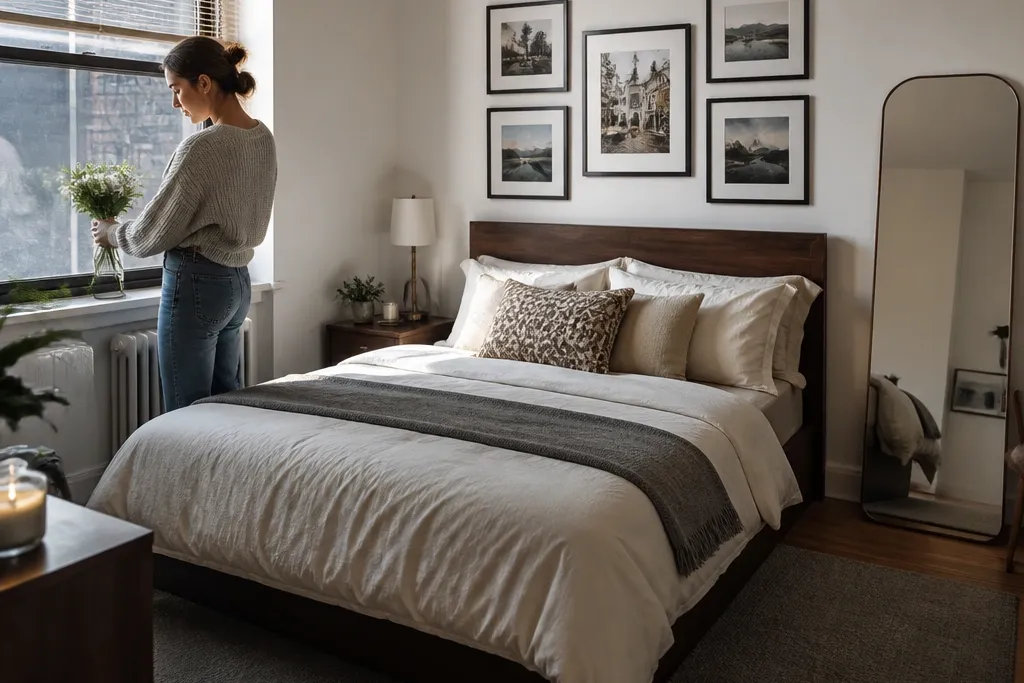
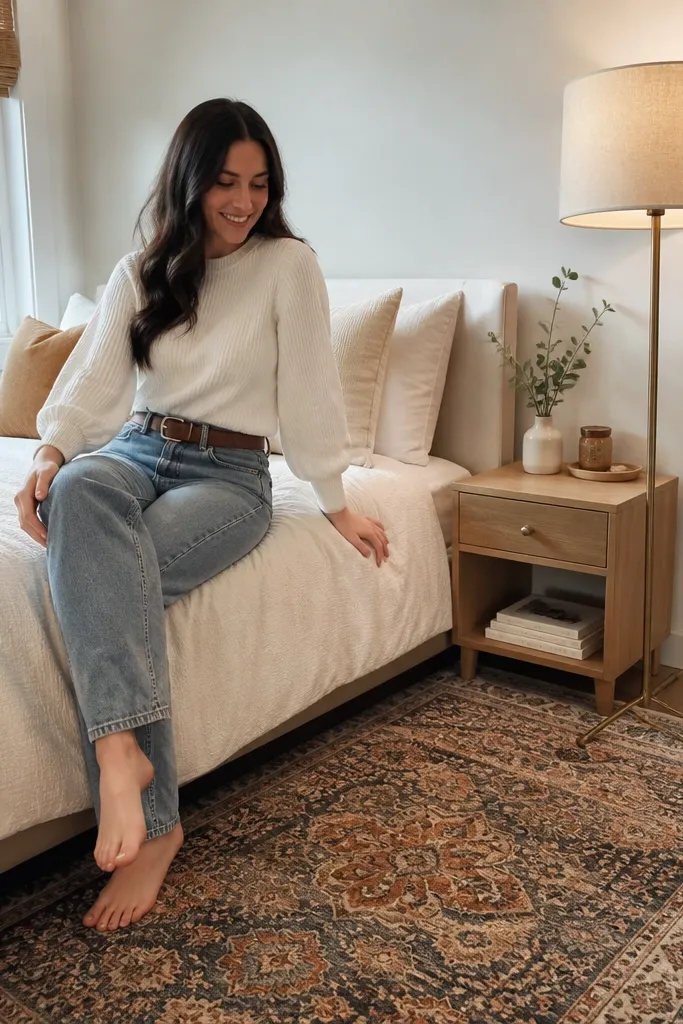
1. Warm Cream Bed + Dark Wood Contrast
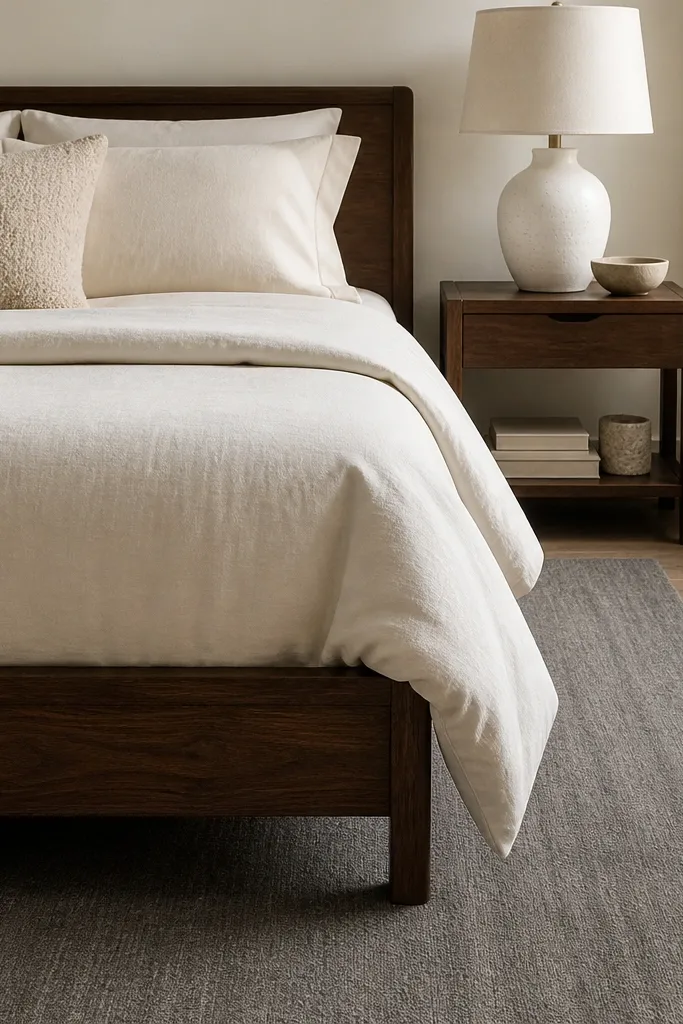
This look is built for renters because it relies on swap-able textures and a strong contrast, not permanent changes. Start with cream or off-white bedding so the room feels brighter, then bring in dark wood through your bed frame, dresser, or a side table. Add a medium-gray rug to connect the tones and stop the floor from looking empty. Place a tall floor lamp near one side of the bed to create a soft “photo glow” instead of harsh overhead lighting. The result reads clean, cozy, and intentional even in smaller rooms.
Step 1: Put the bed on the main wall and position a rug so it sits under the front two-thirds of the mattress (leave a little breathing space at the back). Step 2: Add a dark-wood dresser or side table on the opposite side of the bed, then match the lamp’s tone to that wood for cohesion. Step 3: Hang one wall piece above the headboard or center it slightly higher than the bed pillows so the whole wall looks balanced. Cost is mostly low because you’re buying a rug, lamp, and wall art, not changing your build.
Pro tipChoose curtains that are the same color family as the bedding — cream with cream, not cream with bright white.
Watch outDon’t use a bright white rug with cream bedding — the contrast makes the room look mismatched instead of styled.
2. Moody Charcoal + Deep Green Accent Corner
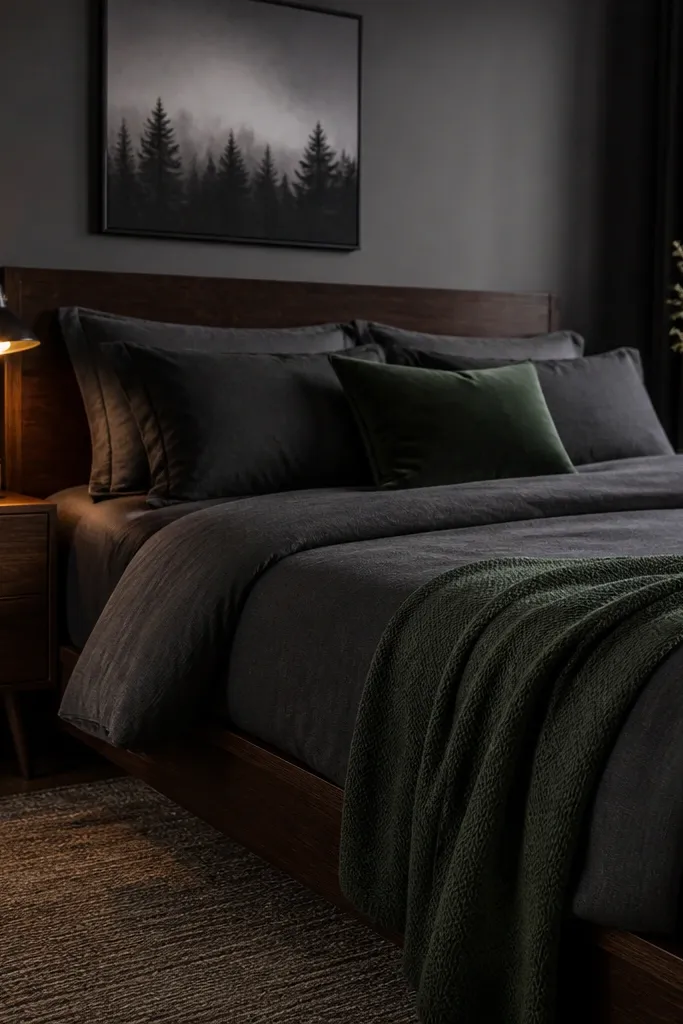
If your room feels small or plain, moody colors can make it look designed when you do it the right way. Charcoal bedding anchors the space and hides visual clutter, while a deep green throw or pillow adds color without screaming. Keep the rest of the room mostly neutral — think black-brown wood, dark gray, and a single green accent. Put the green item on top of the bed stack so it’s the first thing your eye lands on. This setup looks dramatic in screenshots but still feels cozy because the bedding is layered and the rug grounds the darker palette.
Step 1: Use charcoal bedding as the base, then add one deep green pillow and one green throw to the top layer. Step 2: Place a dark rug that reaches at least past the bed’s front corners; add a small side table in black-brown wood so the tones stay consistent. Step 3: Put a floor lamp in the corner behind the side table, not directly beside the bed, so you get a wider pool of light. Keep wall art minimal: one framed piece in a dark neutral with a small green detail works best.
Pro tipUse one green accent only — if you sprinkle green everywhere, it turns into visual noise.
Watch outAvoid mixing charcoal with bright, cool-toned blues — it makes the room look icy instead of moody.
3. Coastal Blue Stripes with Natural Light Wood
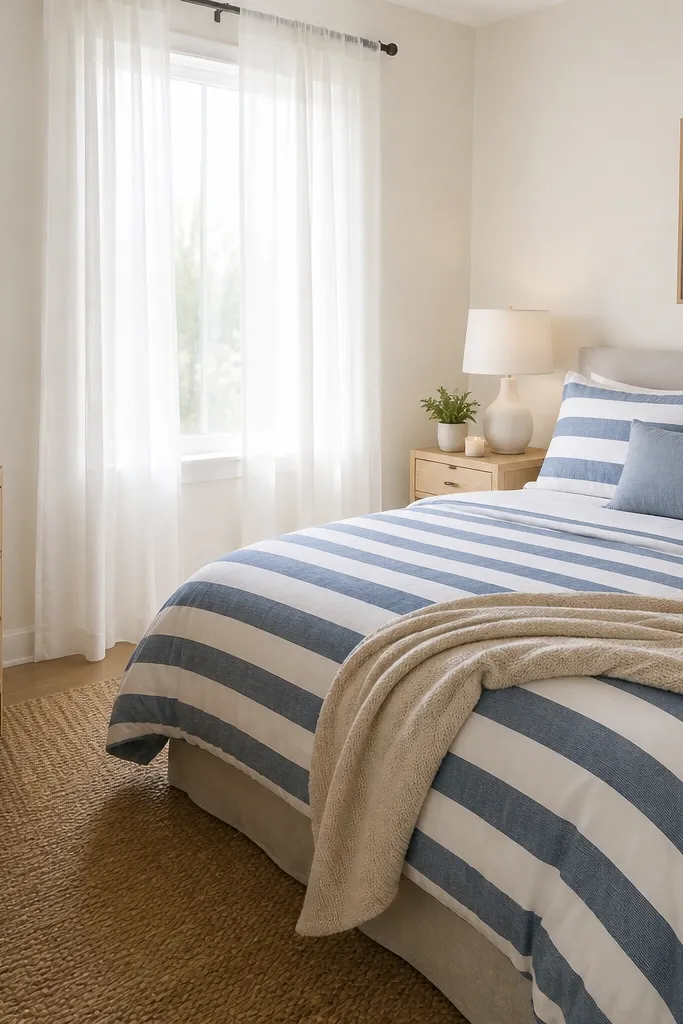
Coastal style looks amazing in Bloxburg because it reads clean and airy even when your space is limited. Blue stripes give you a pattern that feels styled, and light wood furniture keeps the look warm instead of cold. Use a woven or natural-toned rug to add texture since coastal rooms often lack visual weight. Add white or pale curtains to soften the walls and make the bed area feel taller. This combo works great for renters because you can rebuild it quickly by swapping bedding and curtains without touching your layout.
Step 1: Choose striped blue bedding and keep the rest of the palette to white, light wood, and one soft navy accent. Step 2: Add a light wood dresser and a matching bedside table, then place them so there’s a clear walkway from the door to the bed. Step 3: Add a woven-looking rug under the bed front corners and hang pale curtains near the window or wall opening. Finally, add one small wall print above the headboard — simple waves or a minimal frame looks best.
Pick one shade of blue for pillows and keep it consistent across bedding and throw so the stripes don’t clash.
Skip bright neon blues — they look harsh next to natural wood and ruin the calm coastal feel.
4. All-White Bedroom with a Single Black Mirror
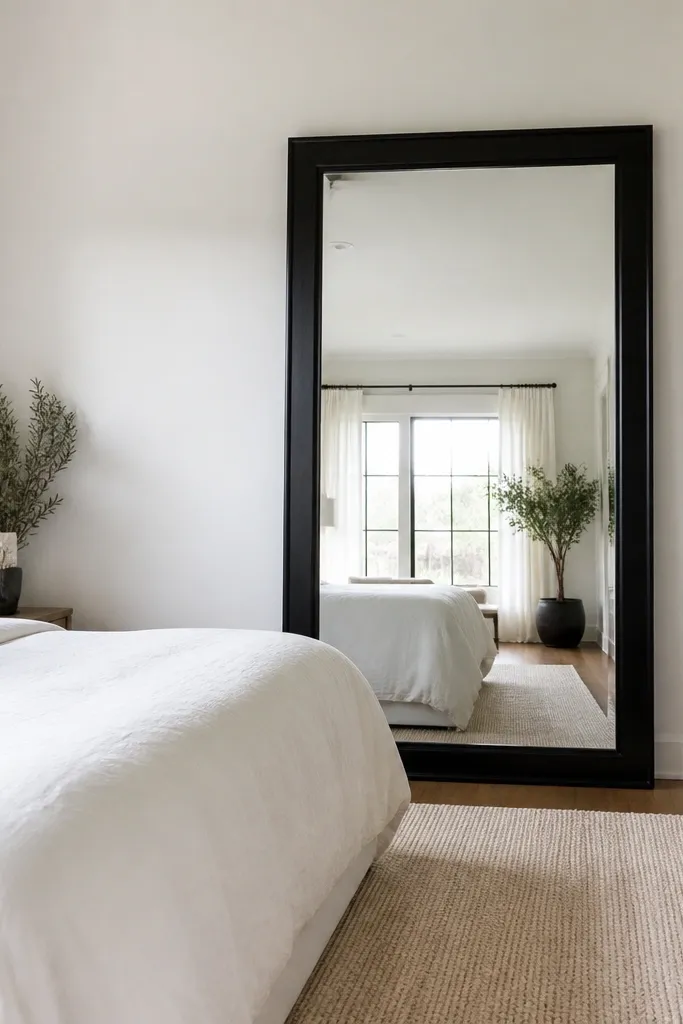
An all-white bedroom can look expensive in screenshots, but only if you add contrast and texture so it doesn’t feel flat. Keep bedding and curtains white or soft ivory, then introduce one bold contrast item: a black framed mirror. Place the mirror opposite the bed or across from the dresser so it visually widens the room. Use a light rug with a subtle pattern or texture so your floor doesn’t look like a blank sheet. Add one black lamp or black decor piece so the mirror doesn’t feel random.
Step 1: Build the base with white bedding and white curtains, then choose a rug that has slight texture (not a plain flat tone). Step 2: Place the black mirror on the wall across from the bed or where you can see it from the door. Step 3: Add a black table lamp on the dresser or bedside table, keeping the rest mostly white and wood. You can keep wall art minimal: one centered piece above the bed works better than a cluster.
Pro tipGive the mirror breathing room — center it and keep at least a hand-span of space from nearby decor.
Watch outDon’t add multiple black accents in different shades (dark brown + black + gray) or it stops reading as intentional contrast.
5. Gallery Wall Above the Bed with 5 Pieces
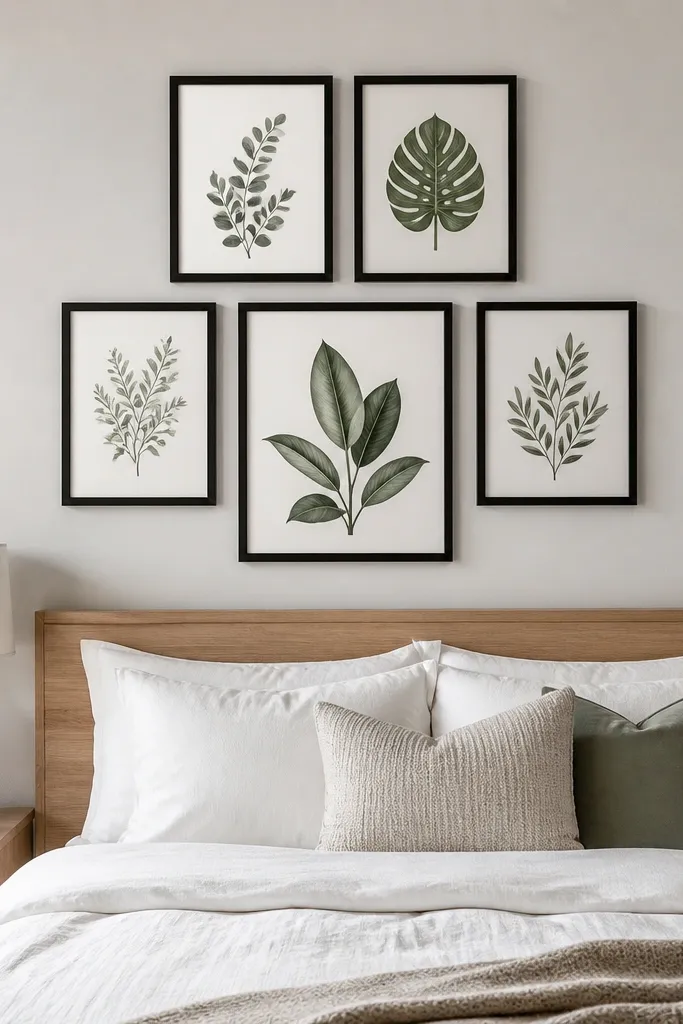
A gallery wall instantly makes a bedroom look styled, and it’s renter-friendly because you can move frames without touching your build. The best way to keep it from looking chaotic is to use exactly five pieces in a tight cluster above the bed. Choose frames that match in color (all black or all wood) and use art that shares a theme: neutrals, plants, or simple line art. Put neutral bedding under the gallery so the wall art is the focal point. A small lamp on the side table finishes the look by adding height and warmth.
Step 1: Center your bed first, then place the gallery wall so its middle sits directly above the headboard pillows. Step 2: Arrange five frames in a compact layout — one large center piece with two on each side (slightly staggered heights). Step 3: Keep the bedding color neutral and add one throw pillow with a color pulled from the wall art. Cost stays reasonable because you’re mostly buying frames and prints, not new furniture sets.
Pro tipUse the same frame finish for all five — mixed frame metals make the cluster look messy.
Watch outAvoid hanging frames too low; if they sit near the pillows, the bed area looks cramped.
6. Rug-First Layout for Small Rooms
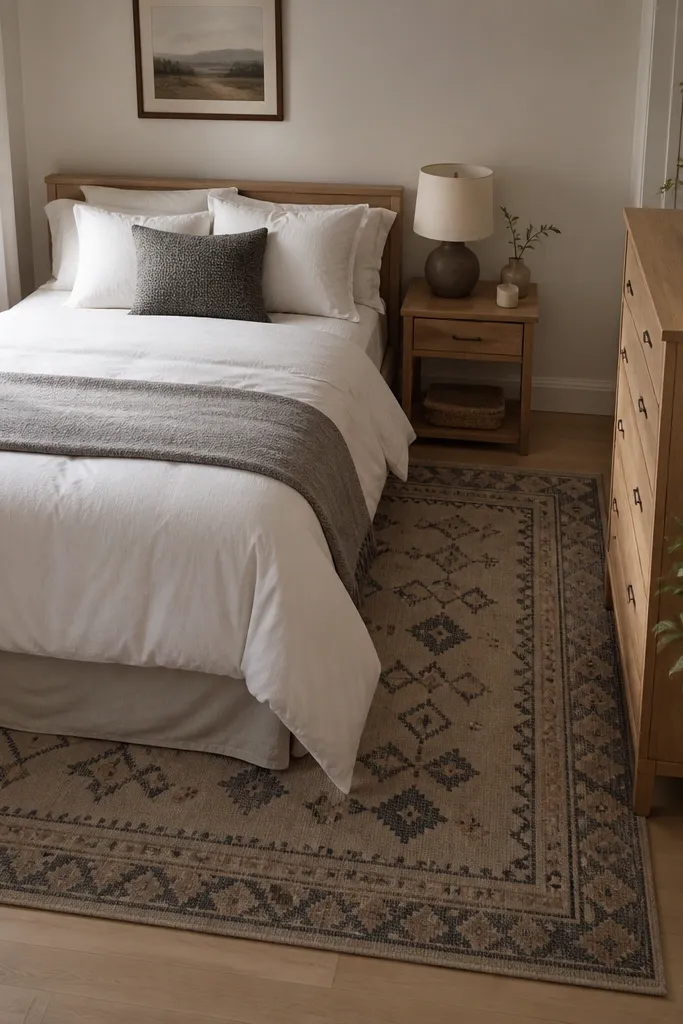
If your room feels cramped, the fix is to stop thinking about furniture first. Start with a rug that’s large enough to define a “zone” around the bed, then build furniture placement inside it. A patterned rug gives you visual structure, and it makes the floor stop looking empty. For small rooms, keep side tables compact and match finishes so they don’t look like random additions. This layout is screenshot-friendly because it gives the bed a clear stage and makes the room feel bigger.
Step 1: Place the rug so it extends beyond both sides of the bed by at least a small foot-width, and it reaches under the front corners. Step 2: Center the bed on the rug and put one small nightstand on one side only if space is tight; use a lamp on that nightstand to keep the height. Step 3: Add a dresser farther back on the wall, not beside the bed, so you keep a clear walkway. Finish with one wall art piece above the bed to avoid clutter.
Choose a rug pattern with one dominant color that matches your bedding to make the zone feel cohesive.
Don’t use a tiny rug; it makes the bed look like it’s floating in a smaller room.
7. Boho Layering with Tan Rug and Woven Throw
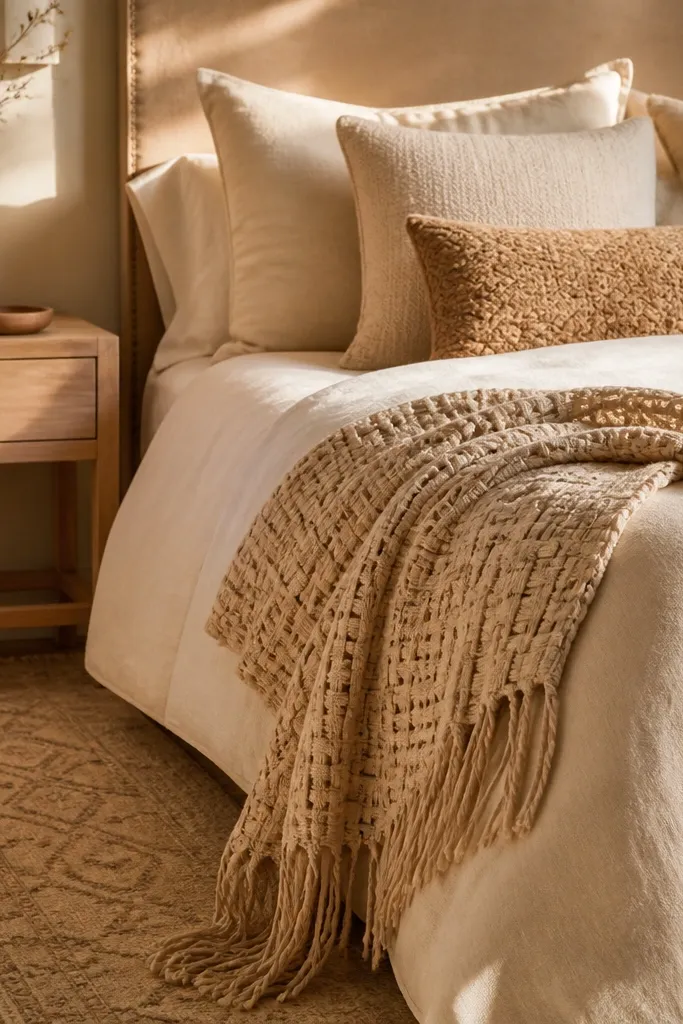
Boho looks great in Bloxburg when you keep it controlled. This version uses one warm base (tan or sand), one complementary neutral (cream or beige), and texture that reads as “handmade” on screen. A tan rug with subtle pattern grounds the bed area, and a woven throw adds depth without adding color chaos. Layer pillows in cream and soft brown, and keep wall decor minimal — one or two plant-themed pieces is enough. The warm floor lamp makes the textures pop, so the room looks cozy instead of dusty.
Step 1: Lay the tan rug first, then place the bed so the rug reaches under the front two-thirds. Step 2: Add cream bedding and stack 3 pillow heights — a front pillow, a slightly taller back pillow, then one woven throw draped over the foot or side. Step 3: Place a warm floor lamp near the corner of the bed so the light hits the woven texture. Finally, hang one plant or neutral wall print above the headboard.
Pro tipMatch your lamp shade to the rug tone — warm beige lamps look best with tan floors and rugs.
Watch outAvoid adding too many small decor items; boho gets cluttered fast in small bedrooms.
8. Black Bed Frame with Gold-Trim Lighting Feel
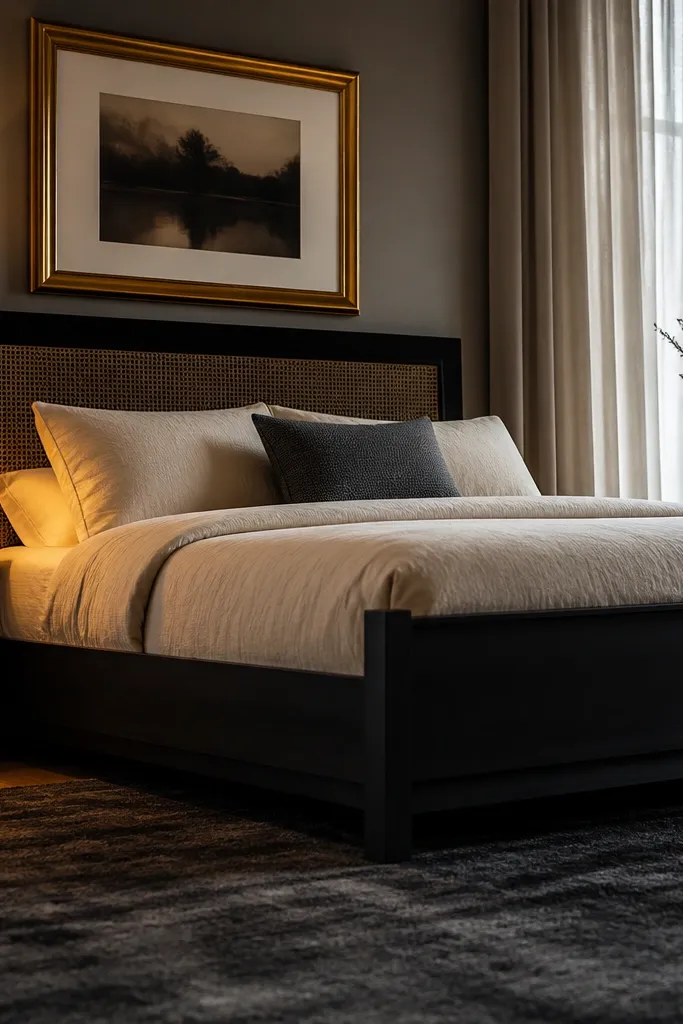
This is a high-contrast look that photographs well because it creates a crisp silhouette around the bed. Use a black bed frame and keep bedding cream or warm white so the bed stands out. Add warm-toned lighting — a lamp with a yellowish glow or gold-looking accents — so the room feels expensive instead of harsh. A dark runner or rug under part of the bed keeps the floor from looking blank. It works especially well if your room has light walls and you want the bedroom to feel more designed without changing the whole space.
Step 1: Choose black bedding base (or a black frame with light bedding) and keep colors to cream + black + one warm light tone. Step 2: Put a dark rug under the bed front corners and a smaller runner leading toward the door if space allows. Step 3: Add a bedside lamp and one additional light source farther away so shadows don’t crush the corners. Place one framed wall piece above the headboard — keep it simple and centered.
Pro tipUse warm bulbs/tones for every lamp so the black doesn’t look gray in screenshots.
Watch outDon’t mix warm gold lighting with cool blue bedding tones — it makes the room feel off-balance.
9. Pastel Pink + Sage Soft Contrast
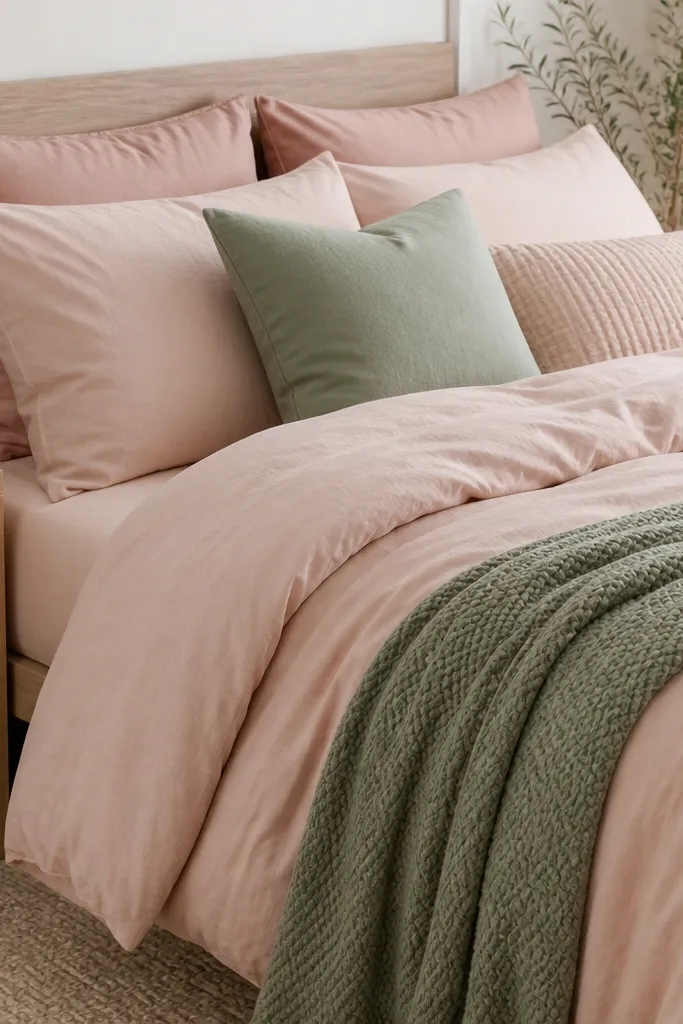
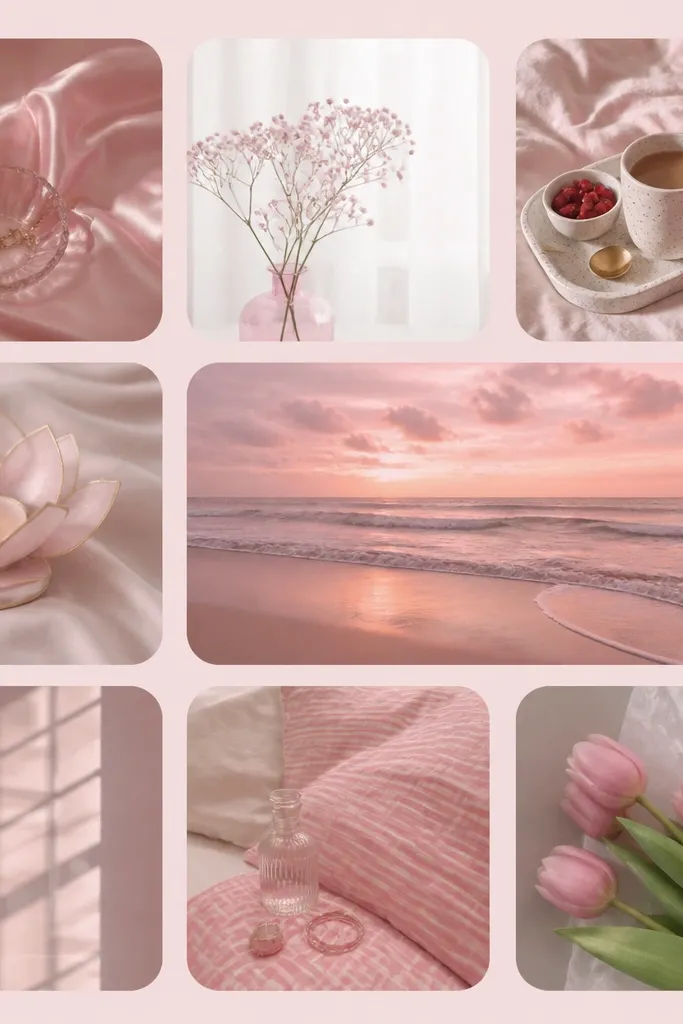
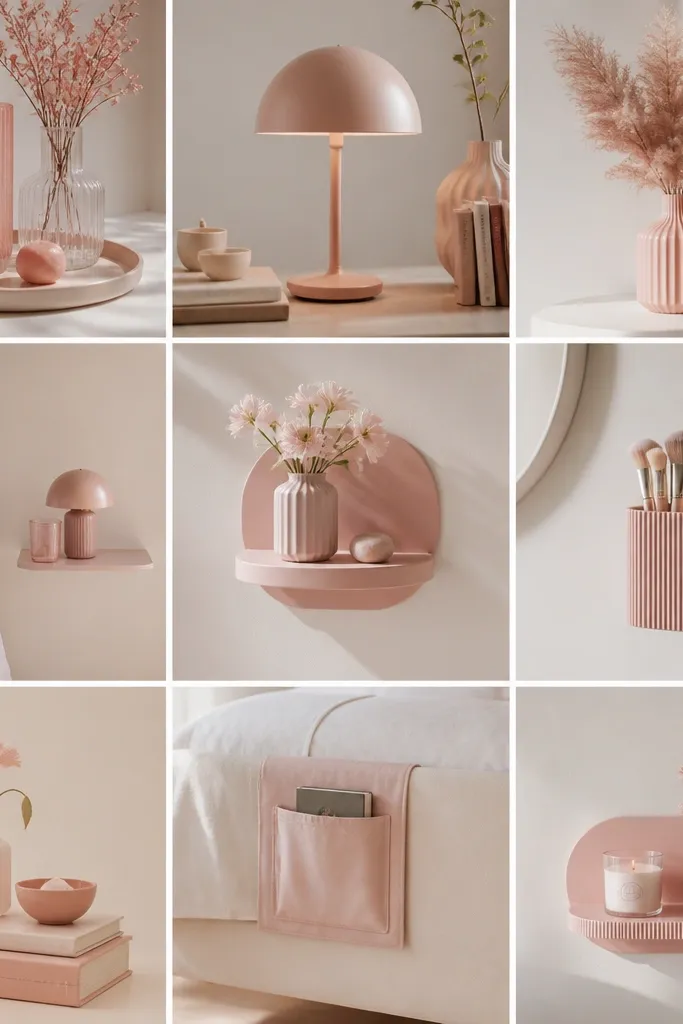
Soft pastel rooms look amazing when they have a second color that cools the palette. Pastel pink gives you the sweet aesthetic, and sage stops it from feeling childish or flat. Keep the rest neutral: white walls, light wood, and a pale rug. Put the sage accent on a single pillow or throw so it’s a gentle contrast, not a second focal point. This setup is renter-friendly because it relies on bedding swaps and small decor changes.
Step 1: Start with pastel pink bedding and one sage pillow or throw placed on top of the stack. Step 2: Use a light rug under the bed front corners and a small white or light wood side table on one side. Step 3: Add a simple wall print above the bed that includes pink or sage tones so the room feels connected. Finish with one lamp and keep the shade light so the pastel colors stay soft.
Keep sage to one item only — extra sage pieces make the palette look muddy.
Avoid hot pink with sage — it clashes and kills the soft, calming look.
10. Teen Workspace Bed Combo with Clean Desk Wall
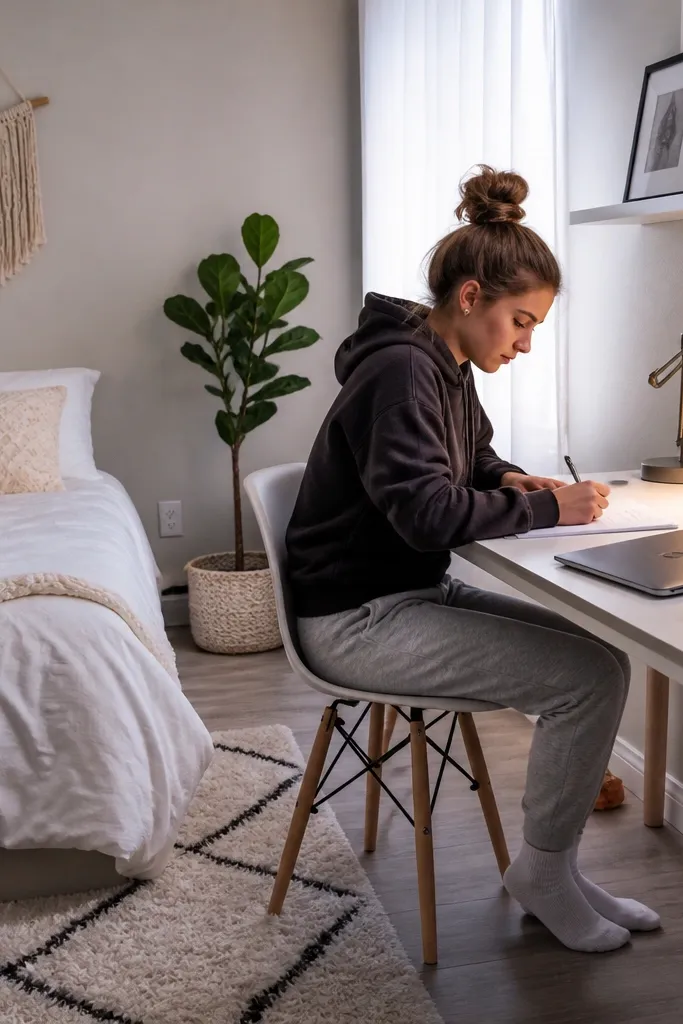
If your bedroom doubles as a study spot, you need separation that still looks pretty. This idea places the bed on one side and a slim desk on the other, then ties them together with matching wall decor and lighting. Use a wall shelf above the desk to add vertical interest without cluttering the floor. Keep your desk accessories minimal — one plant, one pencil holder, and a lamp. The look stays photogenic because the room has clear zones and consistent colors, not random items scattered across surfaces.
Step 1: Place the bed first, then position a slim desk across the room so you keep an easy walkway between bed and desk. Step 2: Mount or place wall shelves above the desk area and keep them to 2-3 items max. Step 3: Add a desk lamp and a bedside lamp, but keep both in the same color tone so the lighting feels coordinated. Choose a rug that visually connects the two zones, like a neutral patterned one under the bed front and desk area edge.
Pro tipMatch the wood tone of your desk and nightstand so the room reads cohesive even with two functional areas.
Watch outDon’t cram the desk with decor — one plant and one lamp is enough for a styled look.
11. Corner Window Curtain Look with Sheer Layer
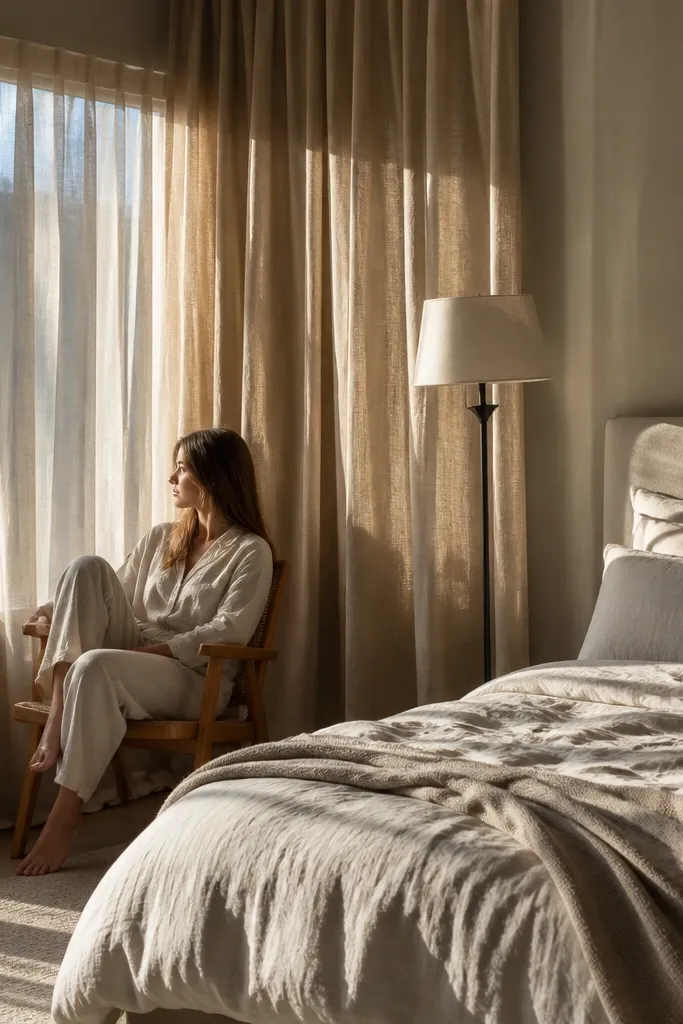
A curtain setup instantly makes a renter bedroom look “real,” like a staged apartment photo. Layer a sheer-looking curtain over a heavier curtain panel in a light neutral color, then frame the bed with that window vibe. Put a floor lamp near the curtain so light hits the fabric and creates depth. Keep the bed bedding simple and in the same color family as the curtains. This works best if your room has a window or a wall corner you can style — even a plain corner becomes a focal point with the right fabric layering.
Step 1: Hang or place the heavier curtain panel closest to the window wall, then add the lighter sheer layer slightly behind it. Step 2: Position the bed so its headboard is angled or aligned to make the curtains visible from the door. Step 3: Place a floor lamp near the window corner and use neutral bedding to keep attention on the curtain texture. Add one wall art piece on the wall opposite the window so the room balances out.
Keep curtains a bit longer than you think — extra length makes the room look taller in screenshots.
Avoid using two totally different curtain colors; matching color families look intentional.
12. Mirror + Dresser Styling for a Bigger Look
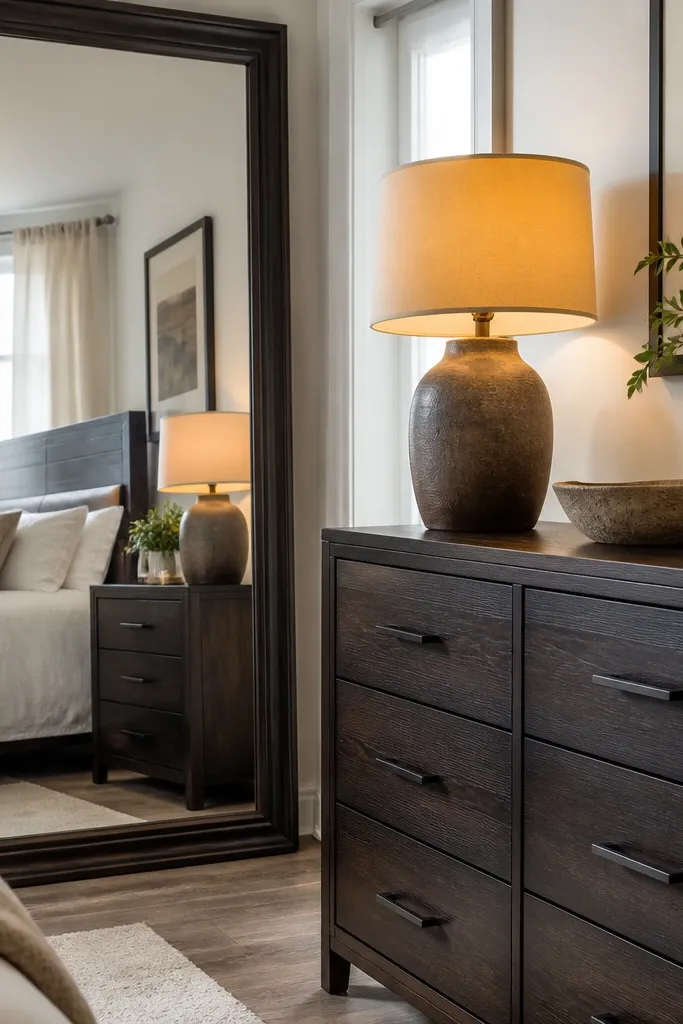
Mirrors are the fastest way to make a small bedroom feel less boxed in. This look uses a full-height mirror near the dresser, then repeats the dresser’s style in your lamp and nightstand so everything looks like one set. Choose a mirror with a simple frame color — black, dark wood, or white — then match that tone in your lighting. Keep the bed area clean with a layered pillow stack and one throw. The visual payoff is that the room looks deeper and more open, which matters a lot for renters who can’t change the layout.
Step 1: Place the dresser against a wall that you can see from the door, then put the mirror right next to or slightly above the dresser line. Step 2: Add a matching lamp on the dresser or on the nightstand, and keep the rest of the surfaces clear. Step 3: Add one rug that ties the bed and dresser wall together, then finish with a single centered wall piece above the bed. This setup is low effort because it’s mostly placement and surface styling.
Pro tipAngle the mirror so it reflects the bed light — even a slight angle makes the room feel brighter.
Watch outDon’t cover the mirror with clutter around it; the frame should be the star.
13. Monochrome Beige with Textured Throw Blanket

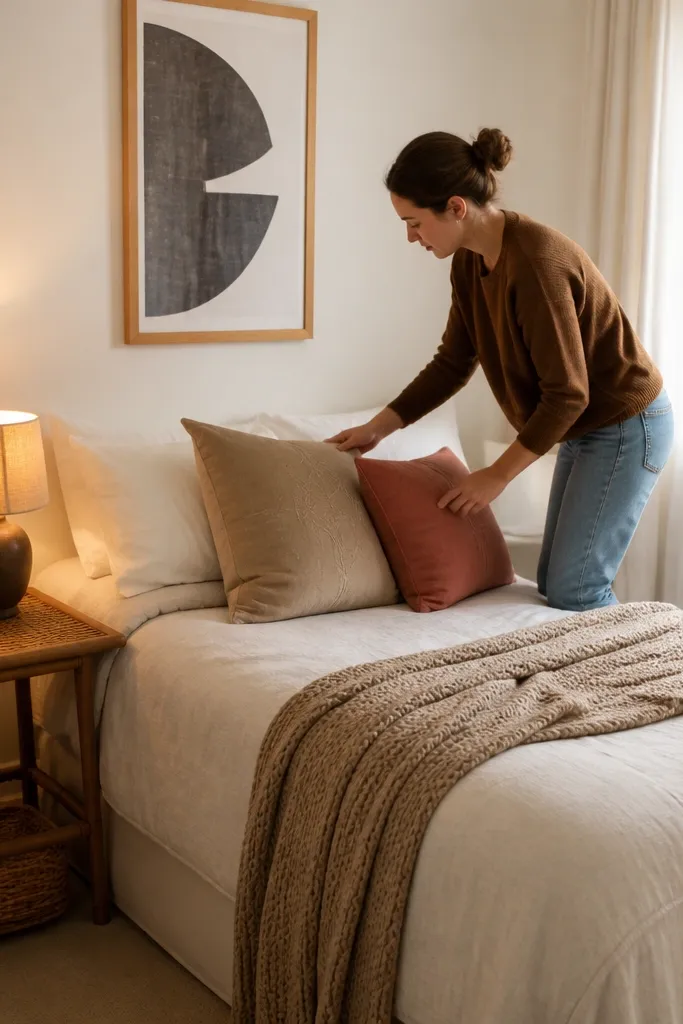
Monochrome beige is the safest aesthetic that still looks expensive, but the only way it works is texture. If you stick to flat, same-tone items, the room looks like a blank spreadsheet. Use beige bedding plus a textured throw with visible knit or patterned fabric, and add a rug with a subtle pattern so the floor doesn’t look flat. Add a warm table lamp to create highlights on the textures. Keep wall art in a similar neutral palette so the room stays calm and cohesive.
Step 1: Choose beige bedding and then add two different beige textures — one smooth sheet set and one knit or patterned throw. Step 2: Pick a beige rug with pattern and place it under the front two-thirds of the bed. Step 3: Put a warm table lamp on a side table, then hang one neutral wall print above the bed headboard. Finally, keep pillows to three tones max within beige, like sand, oatmeal, and cream.
Pro tipUse pillow sizes to create depth: one large back pillow, one medium front pillow, one smaller accent.
Watch outAvoid mixing beige with gray everywhere; it turns monochrome into “almost neutral” and looks unfinished.
14. Statement Headboard Wall with One Bold Color Frame
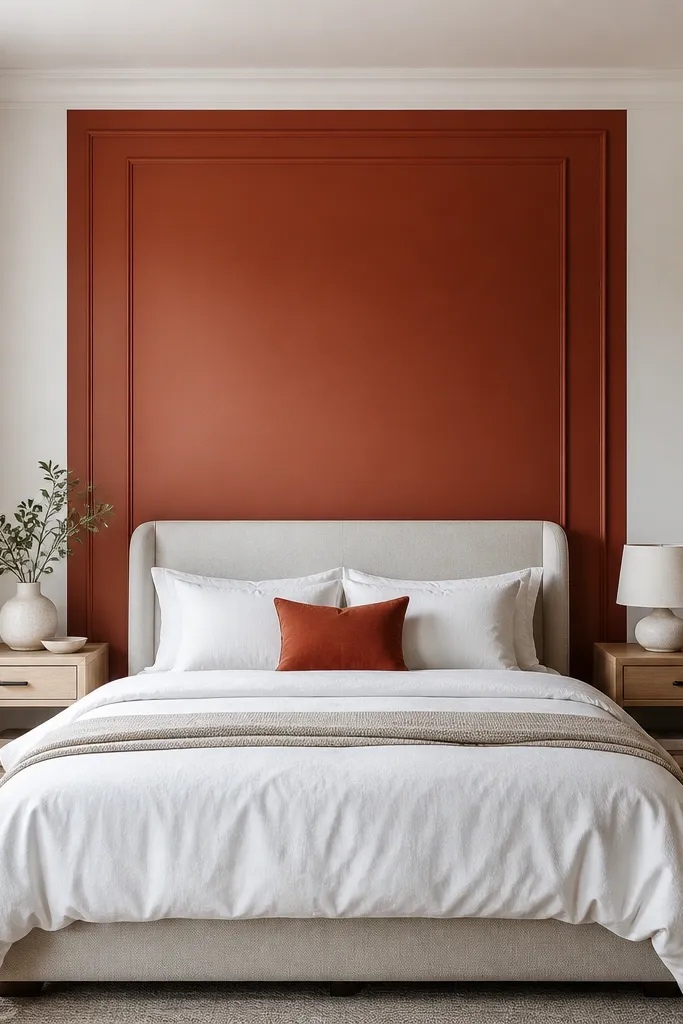
You don’t need a full build to create a statement wall. This look uses a single bold color element behind or above the bed, paired with neutral bedding so the color reads as intentional. Think deep terracotta, muted teal, or warm rust as the one pop — then repeat that color in one small accessory like a throw pillow or bedside decor. Add a framed art piece centered above the headboard to make the wall feel finished. This is perfect for renters because the impact comes from placement and a single color repeat, not structural changes.
Step 1: Place the bed on the main wall and center a framed art piece above the headboard height so it visually completes the wall. Step 2: Add one bold color wall element behind the bed area or on the wall directly above it, then keep your bedding neutral (cream, beige, or light gray). Step 3: Add the same bold color in one place — a throw pillow or small decor on the dresser. Cost stays manageable because you’re buying one statement item and a few matching textiles.
Pro tipPick one bold color and repeat it exactly twice: once on the wall, once in textiles.
Watch outDon’t add two different bold colors; the wall stops looking like a statement and starts looking like random decor.