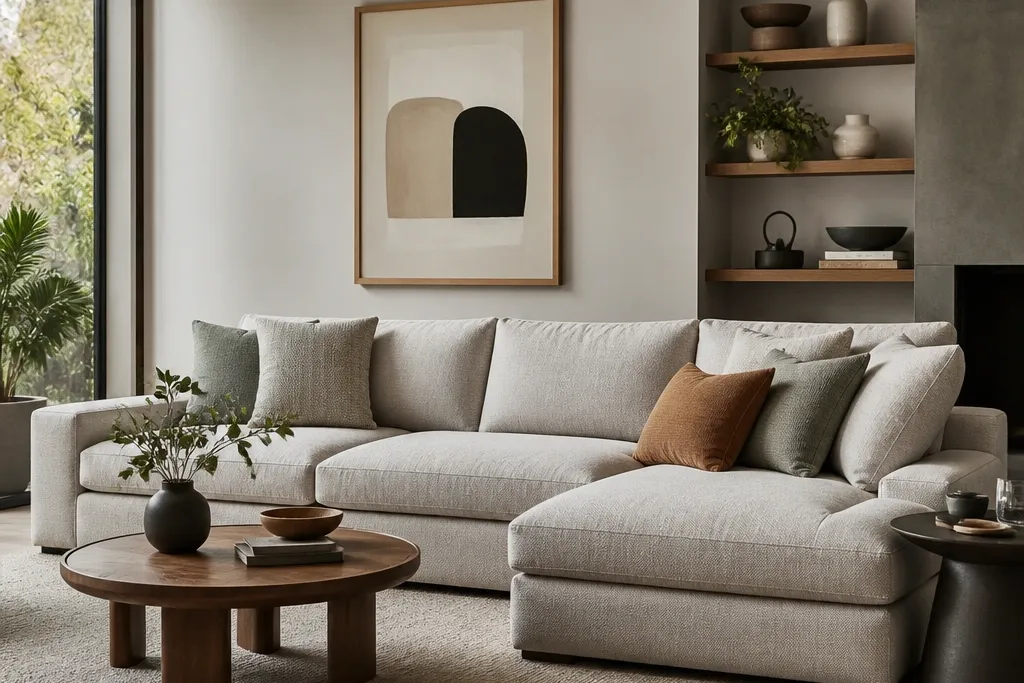
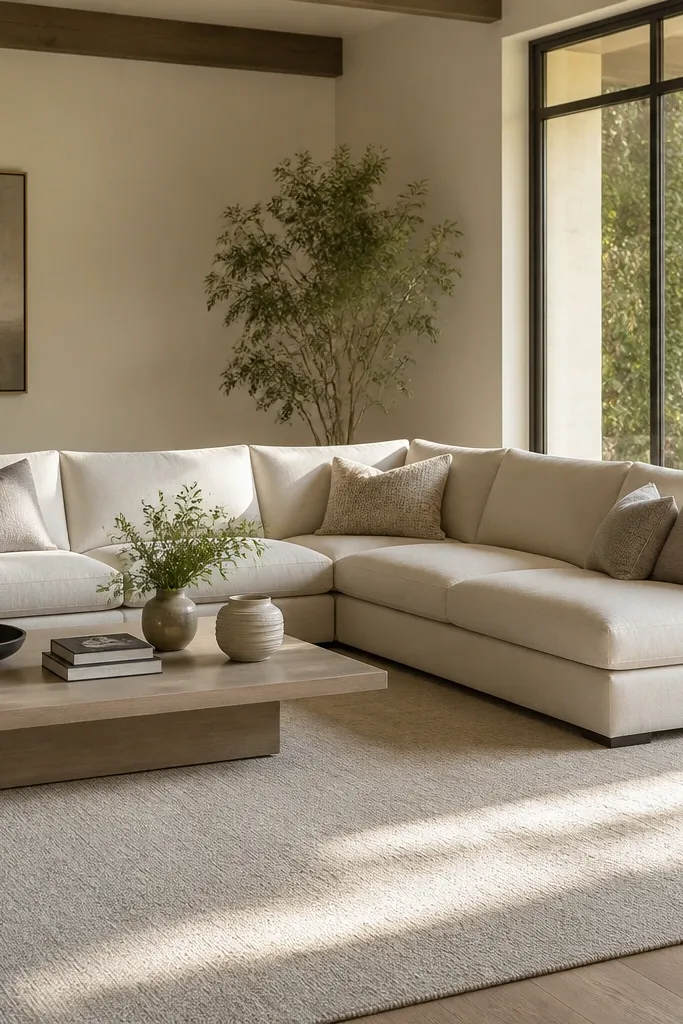
1. Chaises-forward cozy corner with a 9x12 rug anchor
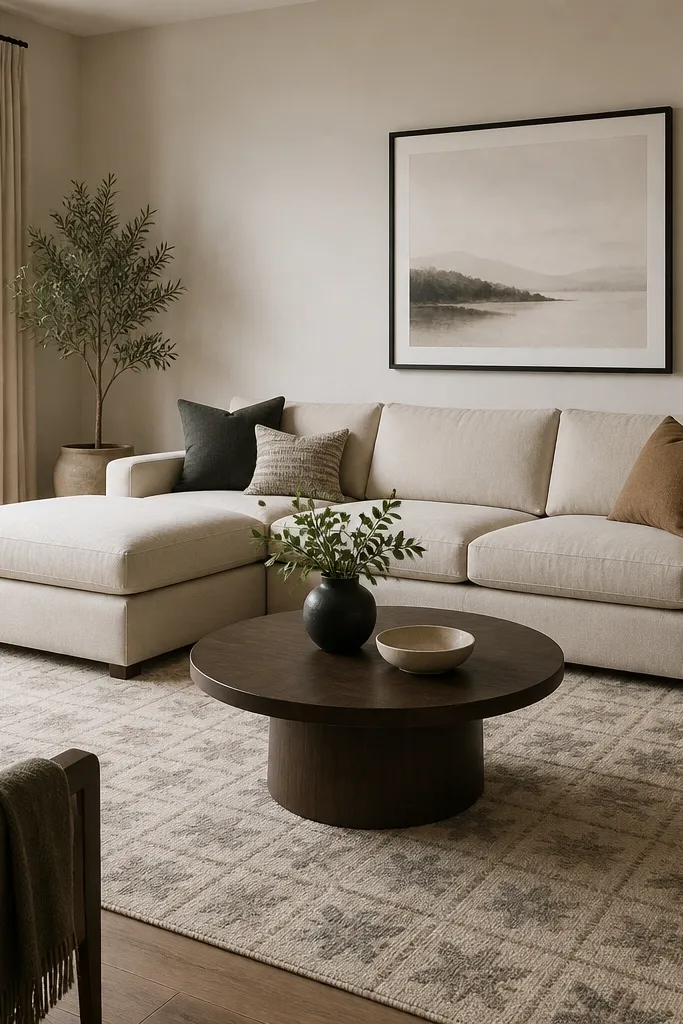
Use a rug that reaches at least 6 to 10 inches under the sofa front legs. Keep the coffee table about 16 to 18 inches from the chaise edge so you can reach drinks without standing. For pillows, do two 20x20 squares plus one 14x24 lumbar on the sofa back — no more than that on the chaise side.
This setup works because the chaise becomes the “landing zone” for lounging, and the rug makes the sofa feel grounded. I’ve used an oatmeal performance fabric like this in family rooms — it hides everyday dust and looks soft under warm lamp light. The round coffee table keeps the L shape from feeling boxy, and the large wall art balances the height difference between back cushions and the chaise end. Black accents (frame and lamp base) give contrast without turning the whole room dark.
Watch outAvoid a rug that stops short under the sofa front legs; it makes the whole piece look like it’s floating.
Pro tipHang the art so its center sits roughly 60 inches from the floor — it lines up with eye level when you’re seated.
2. Deep charcoal L sofa with warm wood and layered lighting
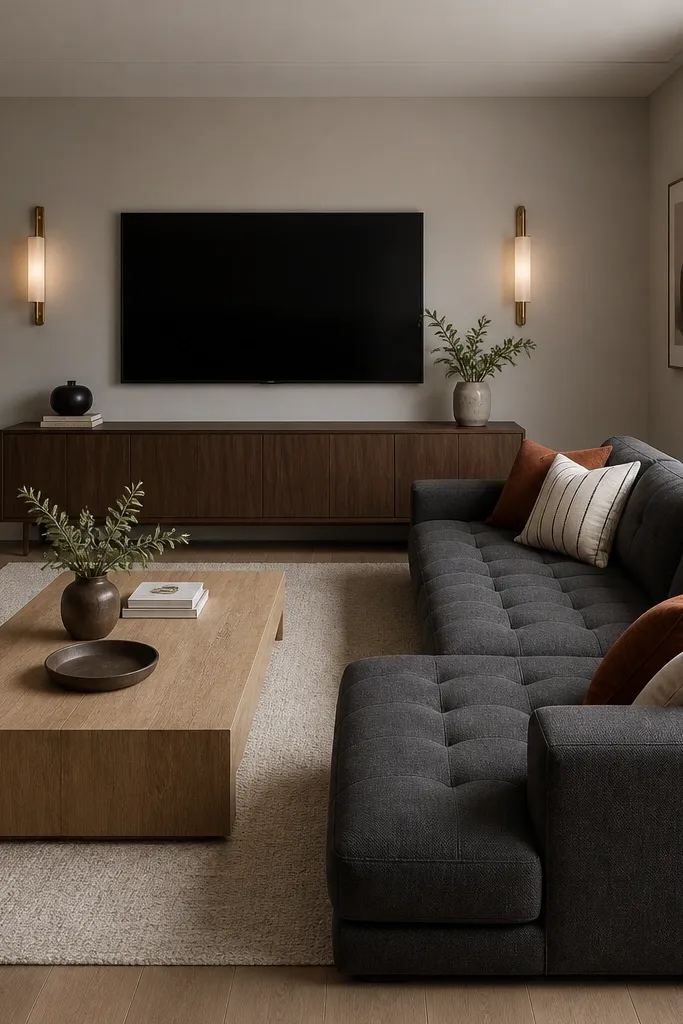
Dark sofas can look heavy, but this combination keeps it balanced. Charcoal fabric (especially if it’s a tight weave) absorbs glare and makes pillows and wood tones pop. Warm wood — walnut or oak - softens the mood, and the sconces add light at seated height so the room doesn’t feel dim from the corners. The rust pillow color ties into wood warmth and keeps the palette from feeling cold.
Choose a sofa with a slimmer arm if your room is under 14 feet wide. Place the coffee table 17 inches from the sofa front. Use one large throw draped across the chaise back and keep the rest of the pillows on the main back row.
Use bulbs around 2700K for that cozy living-room glow; cool white lighting makes charcoal look flat.
Avoid pairing charcoal with all-gray decor; it turns the room into a single flat tone.
3. Cream performance linen-look with a black grid coffee table
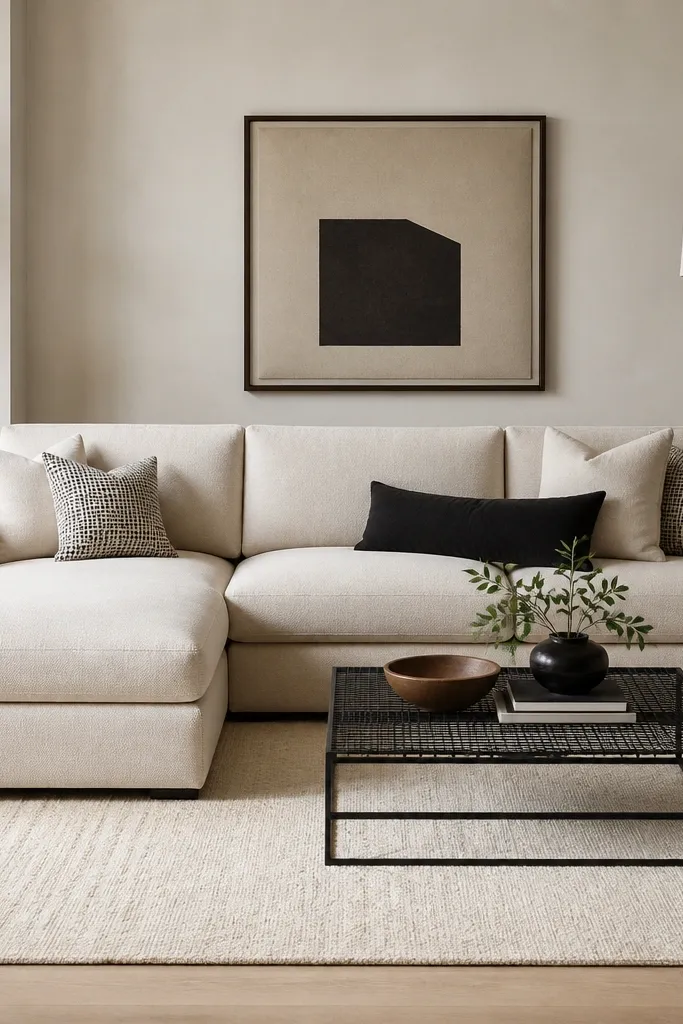
Keep the sofa’s front legs on the rug — even 1 to 2 inches of exposed floor can look off with light upholstery. Match the black in the lamp base and coffee table frame so the eye has a through-line. If your room is small, use three pillows total: two squares and one lumbar.
This is the “bright but not sterile” look. Cream linen-look fabric makes the room feel airy, and the black coffee table adds a graphic edge that keeps it from looking washed out. The low pile rug texture matters because it reduces friction under coffee-table movement and makes the sofa look more tailored to the floor. The check pillow gives pattern without overwhelming the chaise shape.
Watch outAvoid glossy faux leather accents with cream linen; the shine cheapens the softness.
Pro tipPress the throw flat with your hands before you drape it; linen-look fabric shows creases more than you think.
4. U-shaped feel using an L sofa plus two matching accent chairs
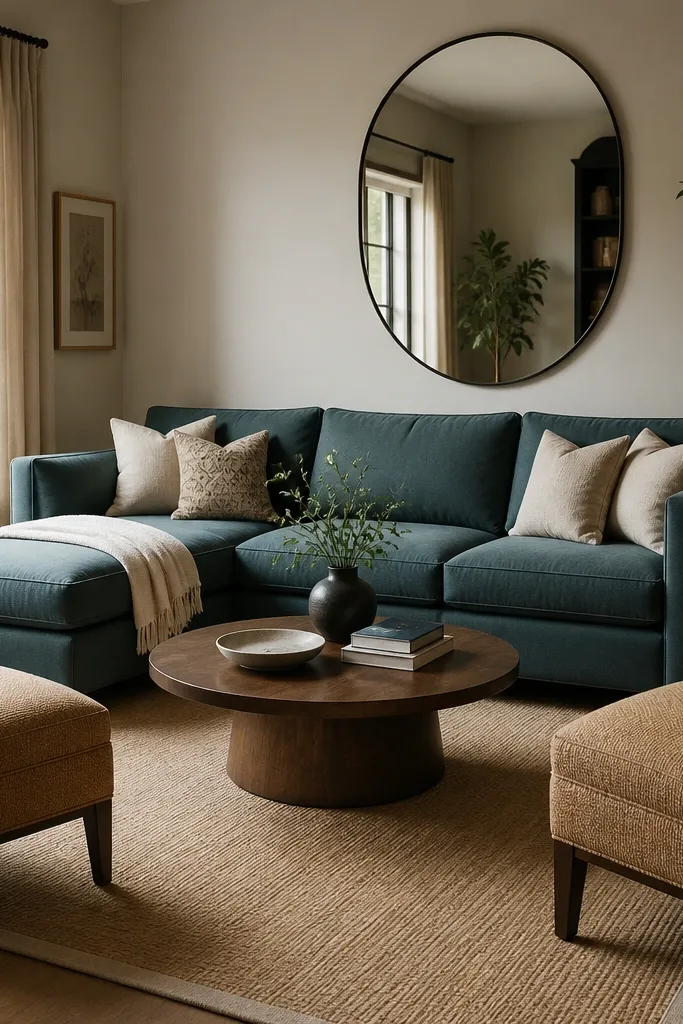
If you host people, this is the layout that feels natural. The L sofa sets the main lounging area, and the two chairs complete the conversation circle without crowding the walkways. Blue-green upholstery adds depth, and tan chairs keep the palette grounded. An oval mirror above the sofa adds softness since the sofa lines are straight.
Set the chairs so their inner arms face the sofa at about 45 degrees. Keep 24 to 30 inches between the coffee table edge and the chair fronts. Choose one rug color that matches the chair base so the room feels unified.
Use one patterned item (like the rug border) and keep pillows mostly solid to prevent “pattern overload.”
Avoid placing chairs too close to the sofa; you’ll lose the open feel and the room becomes tight.
5. Monochrome beige L sofa with a textured shag-free rug
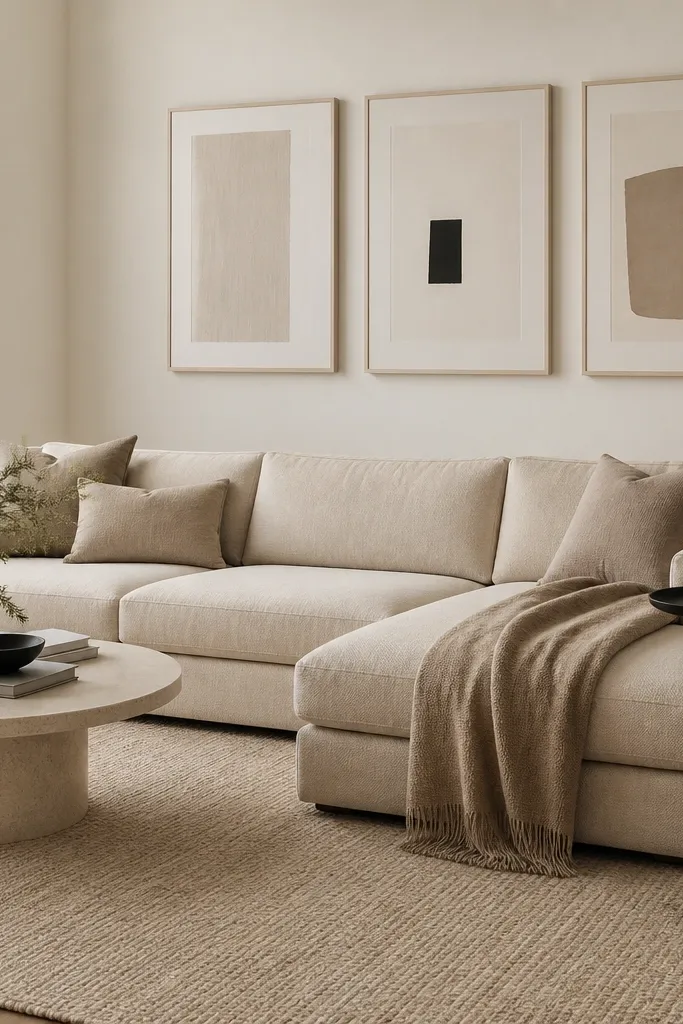
Pick pillow covers in two shades: one matching the sofa, one slightly darker. Use one “texture pillow” like a bouclé or ribbed knit, and keep the rest smooth. Place the tray table within arm reach from the chaise — around 12 to 14 inches from the sofa side.
Monochrome works when the textures do the heavy lifting. Beige upholstery with a woven throw creates depth without adding loud colors. A tightly woven rug keeps the room looking clean and modern; shag can make the sofa feel casual or messy depending on lighting. The black tray table adds a thin contrast line you can see from multiple angles.
Watch outAvoid mixing beige with beige that’s too similar in undertone; it turns into one flat blob.
Pro tipChange the look with lamp placement: warm table lamps near the chaise create shadow texture on the throw.
6. Olive green L sofa with brass accents and a round gallery wall
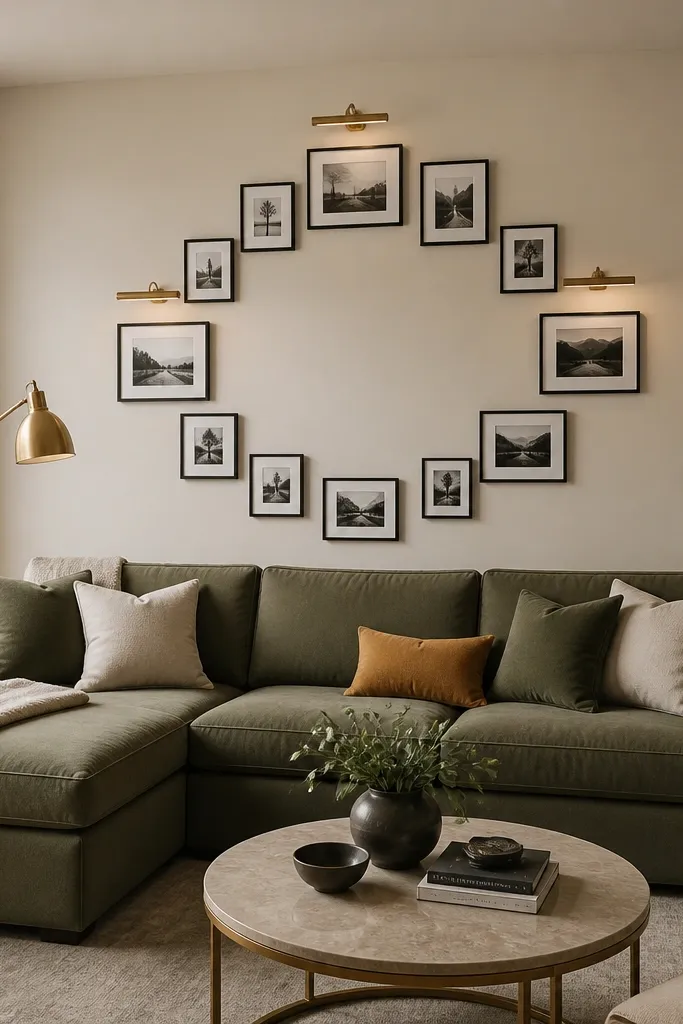
Use frames that are all the same finish (black or walnut) so the circle looks intentional. Keep the coffee table centered on the rug’s midpoint. For a neat look, keep the gallery wall height such that the bottom frame sits about 2 to 3 inches above the top of the sofa back.
Olive is one of the few greens that looks good in daylight and at night. Brass adds warm shine without feeling trendy, and the round gallery wall softens the straight L lines. A round coffee table helps the chaise edge feel less sharp. The pillow palette stays calm while still showing personality through mustard.
Watch outAvoid mixing multiple brass finishes (gold + antique + rose); it reads messy.
Pro tipDust brass with a microfiber cloth before you style; fingerprints show fast under warm lamps.
7. Small living room layout with an 80-inch L sofa and slim console
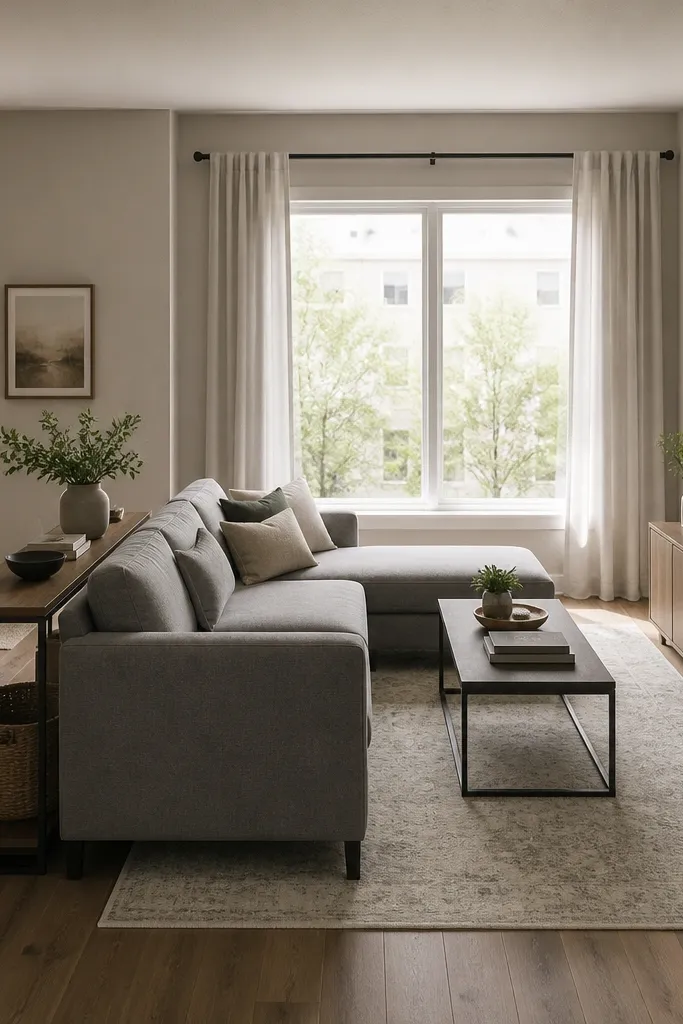
If your wall is tight, use an 80-inch long side and keep the chaise depth around 58 to 62 inches. Leave 28 to 32 inches from the console edge to the sofa arm for walk space. Choose a console depth under 10 inches so it doesn’t visually crowd.
Small rooms need less bulk and more alignment. A compact L sofa with narrow arms gives you the L shape seating without blocking the whole room. A slim console keeps the back wall from looking empty, and it gives you somewhere to place a lamp or book stack. The rug size is what makes it feel larger because it reduces visible floor around the sofa.
Watch outAvoid a wide coffee table in small layouts; go for round or narrow rectangle.
Pro tipUse a wall-mounted TV or keep the TV centered low; high TV stands make small rooms feel top-heavy.
8. Two-tone L sofa styling with a contrasting chaise throw
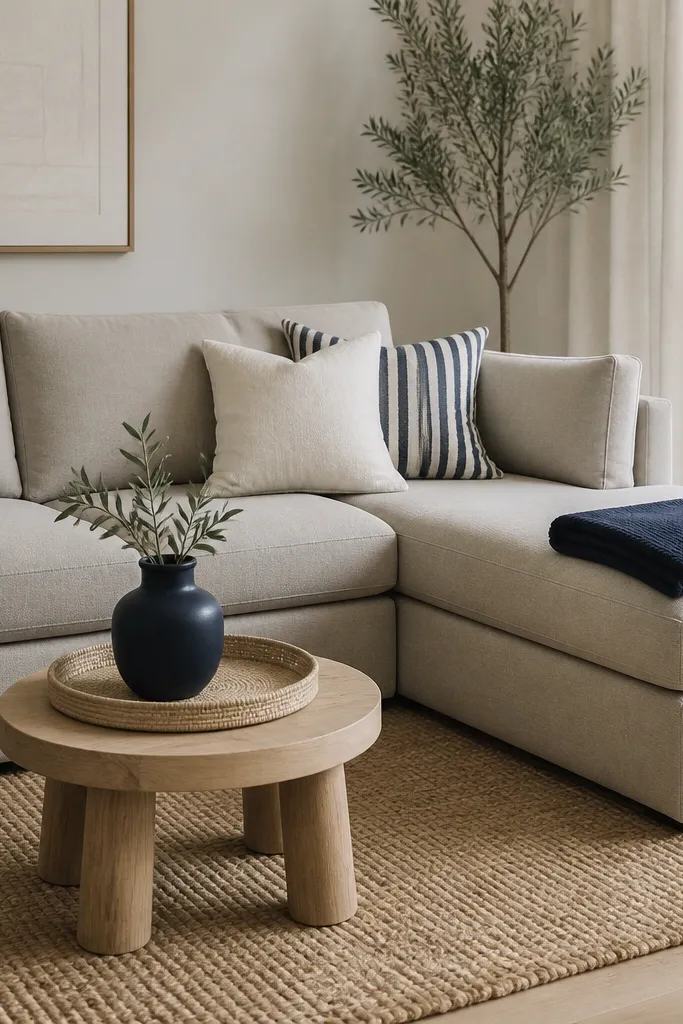
Fold the navy throw into a clean rectangle and drape it over the chaise back so it hangs 6 to 8 inches. Keep pillows to three total. Use navy in one vase or one candle holder so the color doesn’t feel random.
This look works because the contrast has one job: it marks the chaise area. When you choose just one “bold” fabric (navy throw) and repeat it in one or two accessories, the room feels styled rather than decorated. Greige upholstery gives you a calm base, and the tray table keeps the chaise surface functional without adding more furniture mass.
Watch outAvoid scattering navy everywhere; one strong repeat looks intentional.
Pro tipUse a lint roller on the throw before styling — navy shows fluff and fuzz more than you’d expect.
9. Pattern-forward rug and solid-texture sofa for balance
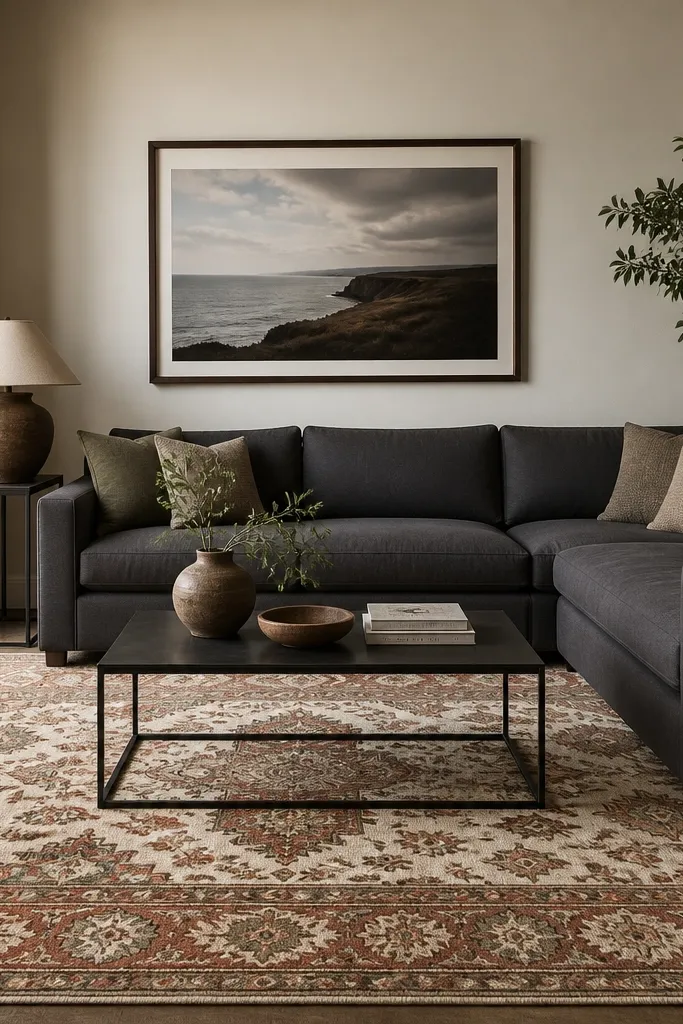
Choose pillow covers in colors pulled from the rug: cream and rust work well. If the rug has red tones, avoid green-heavy pillows — it can clash. Keep a 2 to 3 inch gap between the coffee table edge and rug border so the pattern doesn’t look cramped.
When your rug has real pattern energy, your sofa should stay quiet. I’ve done this in rooms where people kept buying patterned pillows and ended up with a visual headache. A solid dark sofa makes the rug readable, and the black metal coffee table repeats the dark tone without adding extra pattern. The single large wall piece gives the eye a place to rest.
Watch outAvoid matching multiple pillow patterns to the rug; it turns into noise fast.
Pro tipBring the rug colors to the sofa by matching one pillow to the dominant rug color, not the smallest accent color.
10. White slipcovered L sofa with dark walnut coffee table
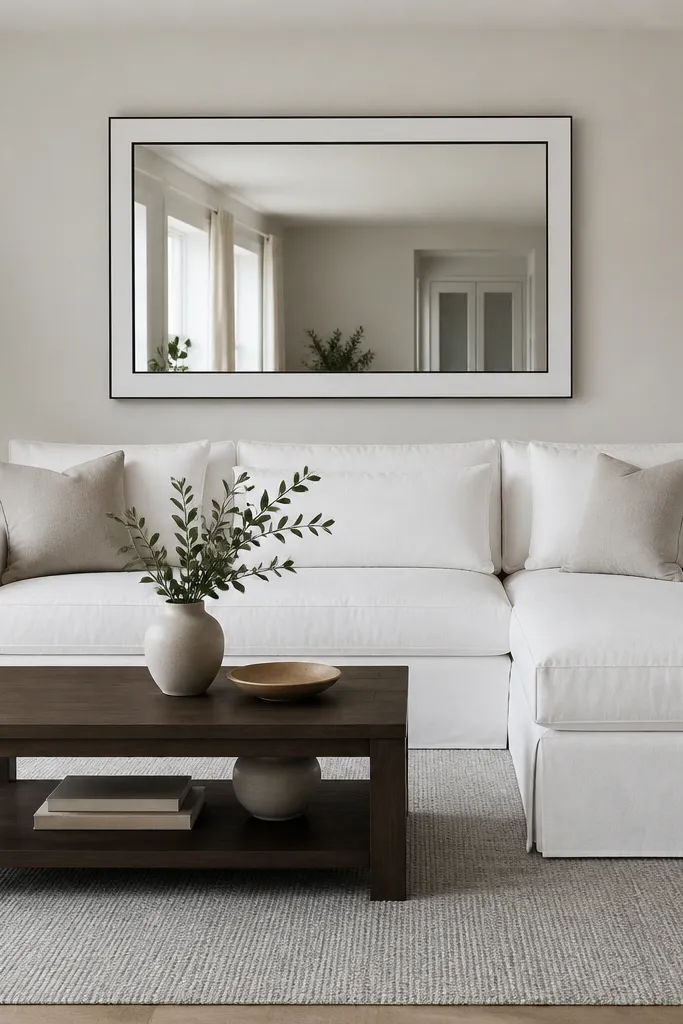
Slipcovers look sharp when they’re fitted and ironed. The white base brightens the room, and walnut adds warmth so it doesn’t feel like a showroom. The mirror increases light reflection, which helps white upholstery look clean even on cloudy days. This is a great setup for people who want an airy style without going full all-white walls.
Make sure the slipcover is tight at the arms and bottom — loose fabric wrinkles make it look cheap. Keep the coffee table lower shelf clear so you don’t visually chop the sofa. On pillows, use two solid tones and one textured pillow like cotton-linen blend.
Steam the slipcover seams lightly before guests come over; it makes a huge difference in how crisp it looks.
Avoid bright white pillows on a slightly warm white sofa; the undertones fight.
11. Terracotta throw + sand sofa for a sun-washed look
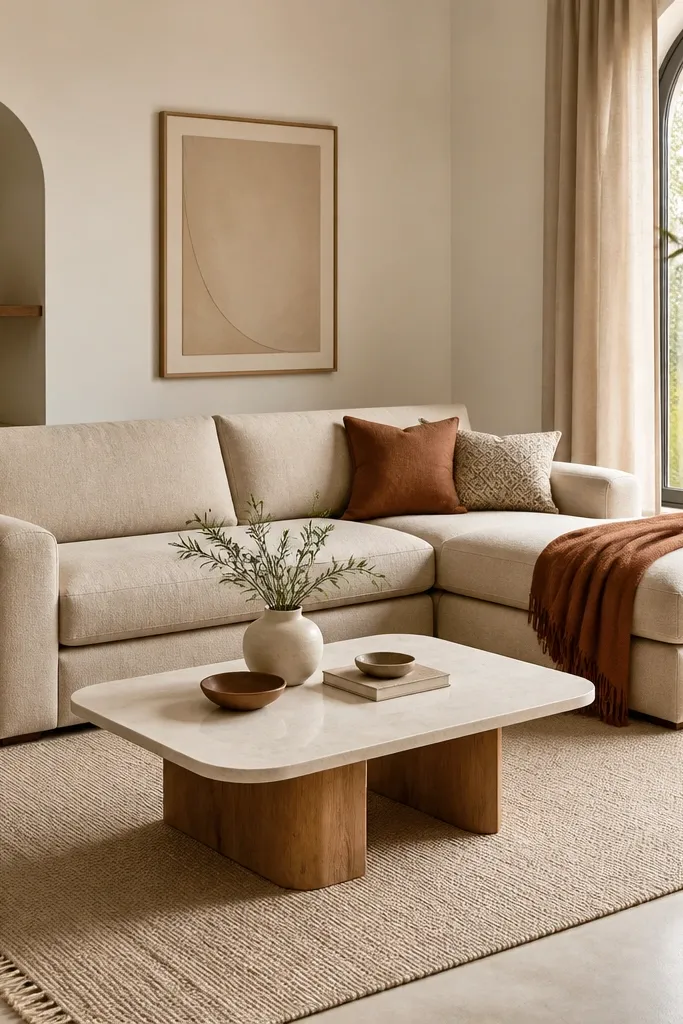
Terracotta reads warm and grounded, especially against sand. The stone-and-wood coffee table keeps the palette natural, and rattan adds texture without adding clutter. Fringe on the rug looks great when it’s minimal and the sofa lines are clean. This combo makes the room feel like late afternoon light, even indoors.
Pick terracotta that matches the throw’s undertone, not a random orange — look for muted clay tones. Keep the pillows to two: one sand and one terracotta stripe. Place the rattan side table within 18 inches of the sofa arm for drinks and books.
Use a warm white lamp shade, not a cool one, so terracotta doesn’t go pink.
Avoid pairing terracotta with icy blue accessories; it makes the palette feel off.
12. Modern L sofa with track arms and a floating media wall
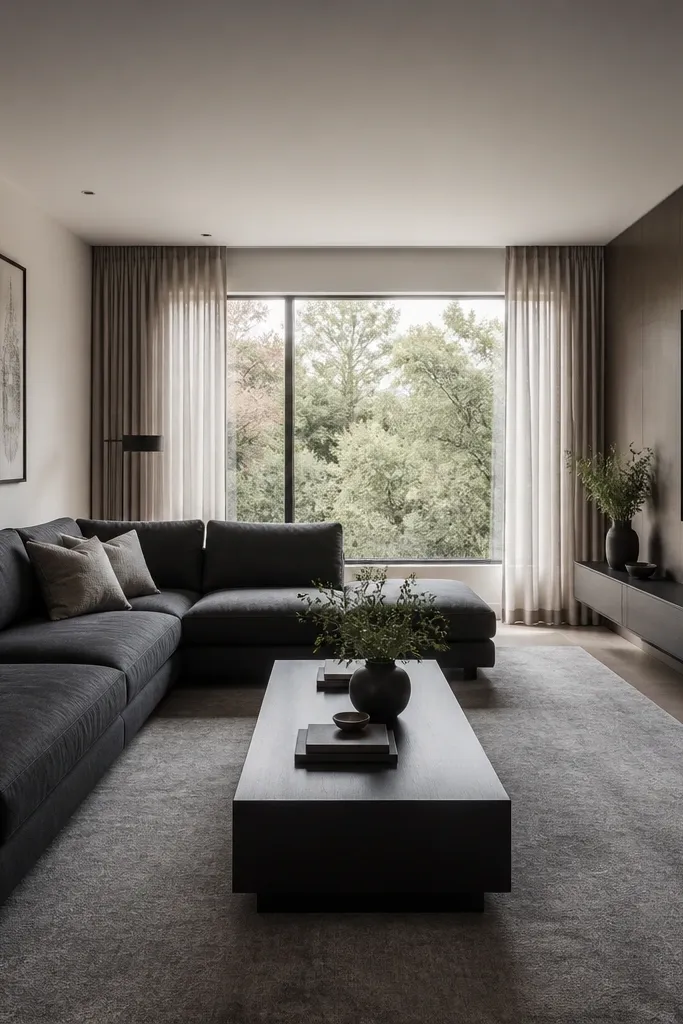
Center the coffee table with the TV, not the sofa corner. Keep the sofa back about 8 to 12 inches from the wall if you plan to use wall-mounted decor. Use two pillows only on the sofa back and keep the chaise side clear for lounging.
This is the “clean lines” look that makes a living room feel organized fast. Track arms reduce visual bulk, and the floating media wall keeps the area from feeling heavy behind the sofa. A long linear coffee table echoes the sofa’s modern shape. If you like a sleek aesthetic, this is the layout that keeps everything aligned.
Watch outAvoid thick, overstuffed cushions with track arms; the contrast makes the room look sloppy.
Pro tipRun a thin cable cover along the wall edge so the back of the TV doesn’t look messy.