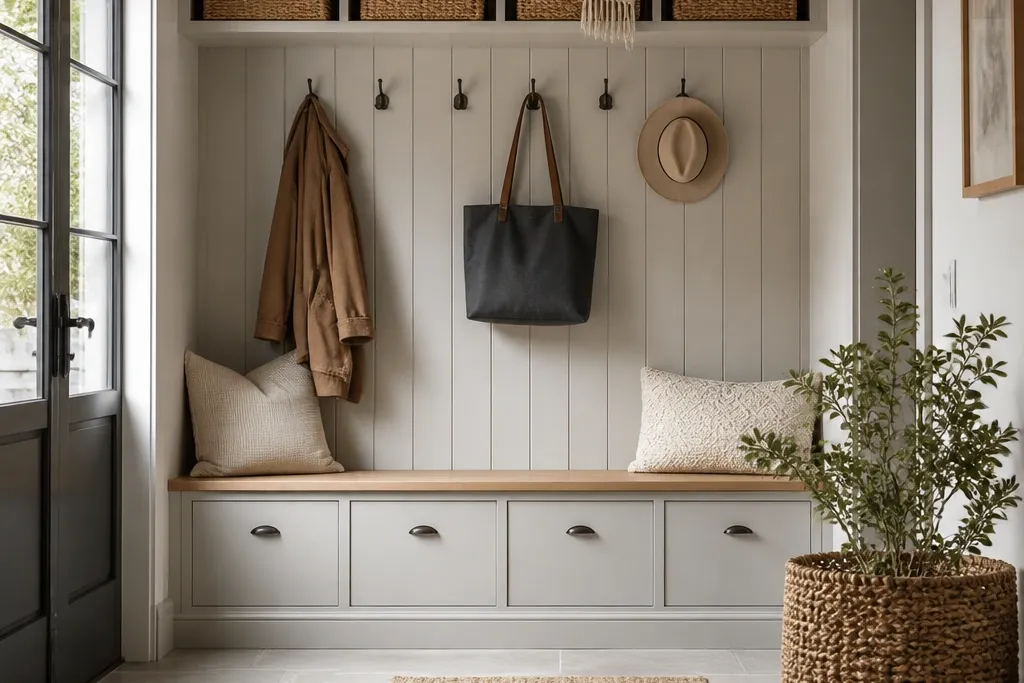
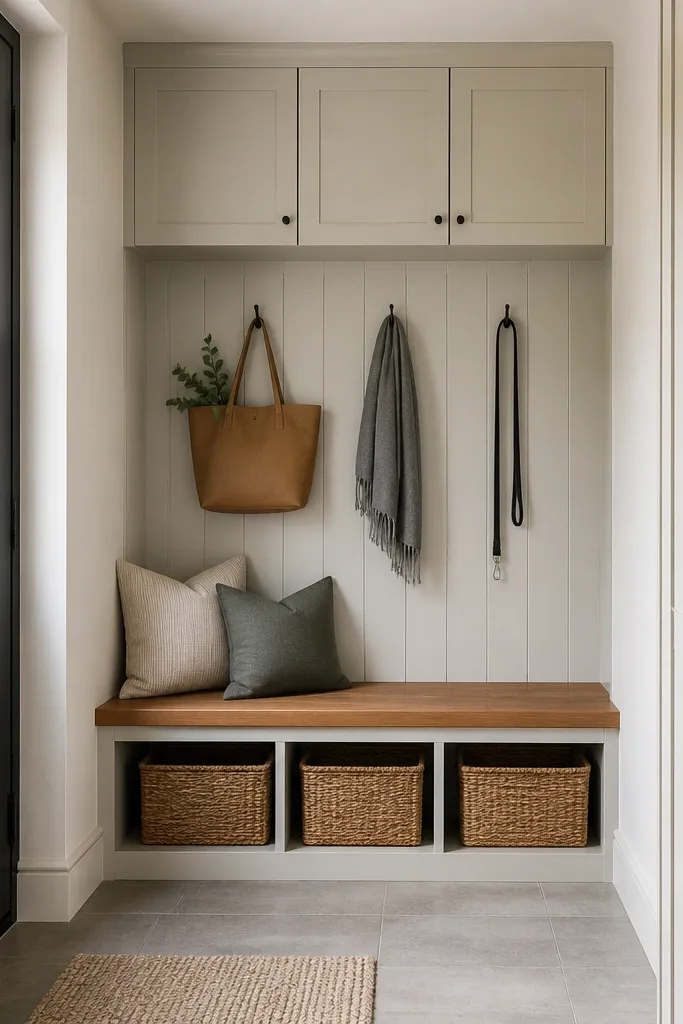
1. Shallow Shoe Drawer Under a Bench Seat
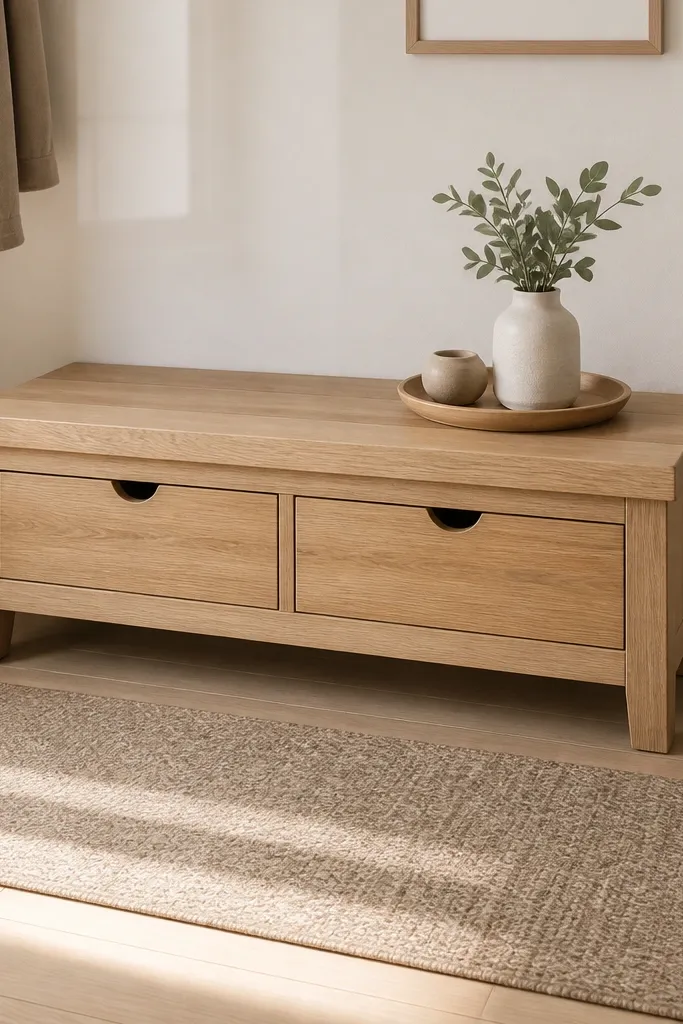
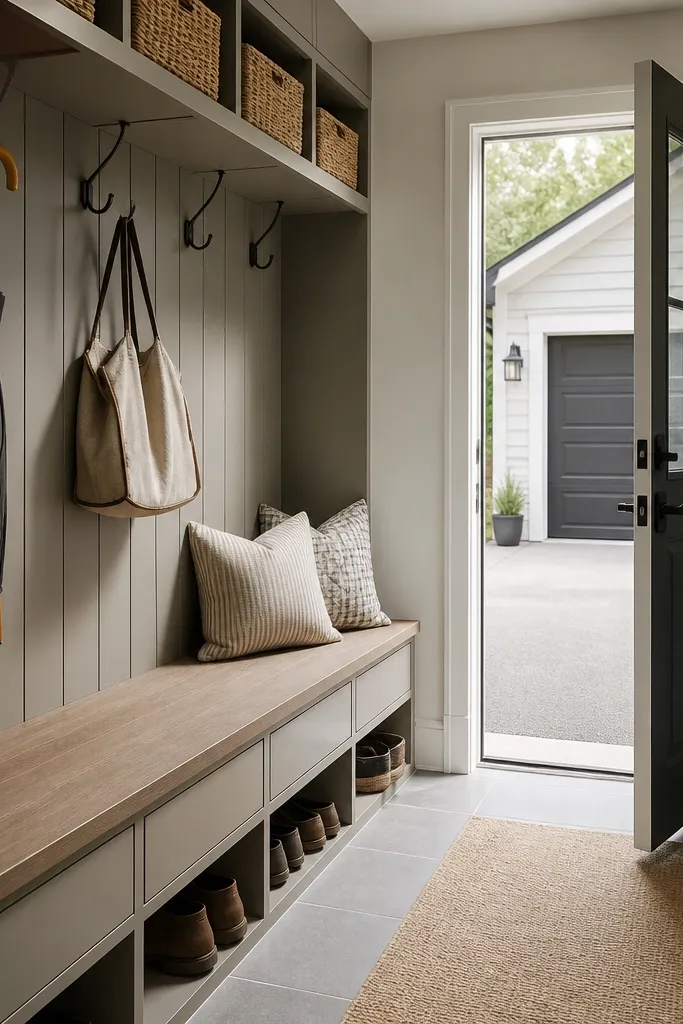
This setup hides shoes instantly, which is the #1 reason entryways look cluttered. I like shallow drawers because they fit boots and sneakers without turning into a tangled stack. Keep the bench top clear except for one tray for keys and a mail slot so the surface stays “finished.” The light wood tone makes the closed storage feel warm instead of boxy.
Choose a bench with at least 12-14 inches of depth for drawers. Use a runner that’s low pile and machine-washable, like a flatweave or washable cotton rug. For color, pair the bench with a white wall and one accent — either a black tray or a brushed brass hook set.
Pro tipAdd a label on the inside of each drawer front for “everyday” vs “weekend” shoes. It reduces rummaging, which keeps the drawers neater.
Watch outAvoid open cubbies for shoes if you have more than 6 pairs — they look messy fast.
2. Powder-Coated Metal Bench + Wipeable Doormat System
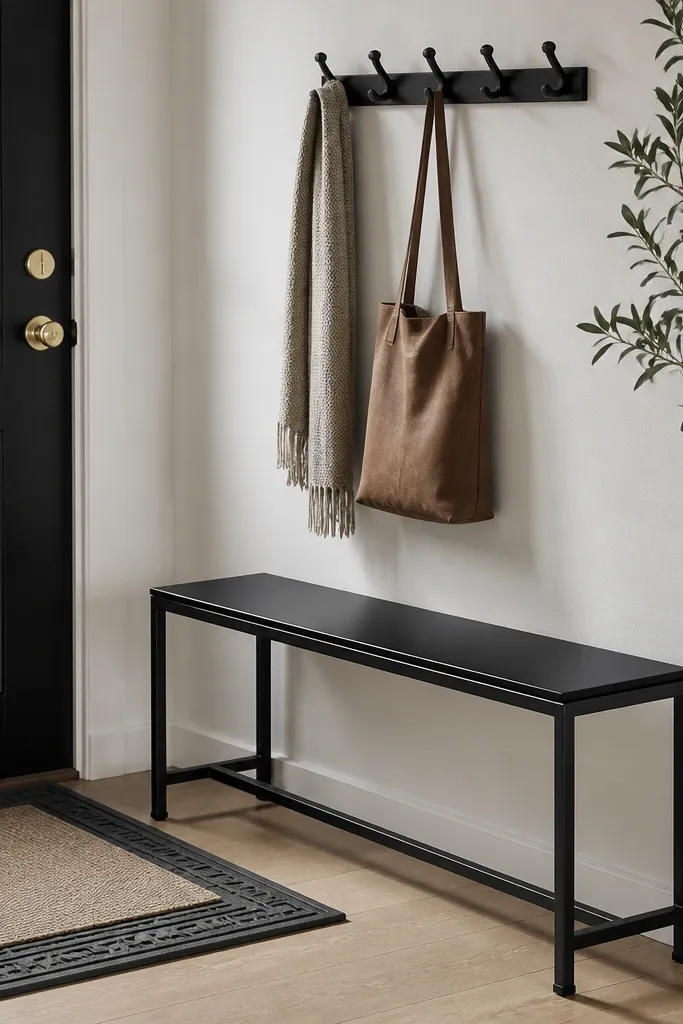
Metal benches wipe clean and don’t warp from damp coats. The two-mat system catches grit twice: the rubber mat scrapes off mud, and the inner mat catches remaining dirt before it hits your floors. This keeps the entry looking clean even when weather is gross. It also reduces the “wet coat drip” problem because you’re stopping debris at the door.
Use a rubber scraper mat that’s at least 30x48 inches for common entry doors. Then add a thin washable mat inside, sized so it doesn’t curl at the edges. Mount hooks about 60 inches high for adult coats and place them in a line above the bench.
Pro tipKeep a small spray bottle of cleaner near the door and wipe the bench weekly in 60 seconds. Consistency beats deep cleaning.
Watch outSkip plush shag rugs in mud season — they trap dirt and never look fresh.
3. Closed Cabinet with Inside Hooks for Wet Coats
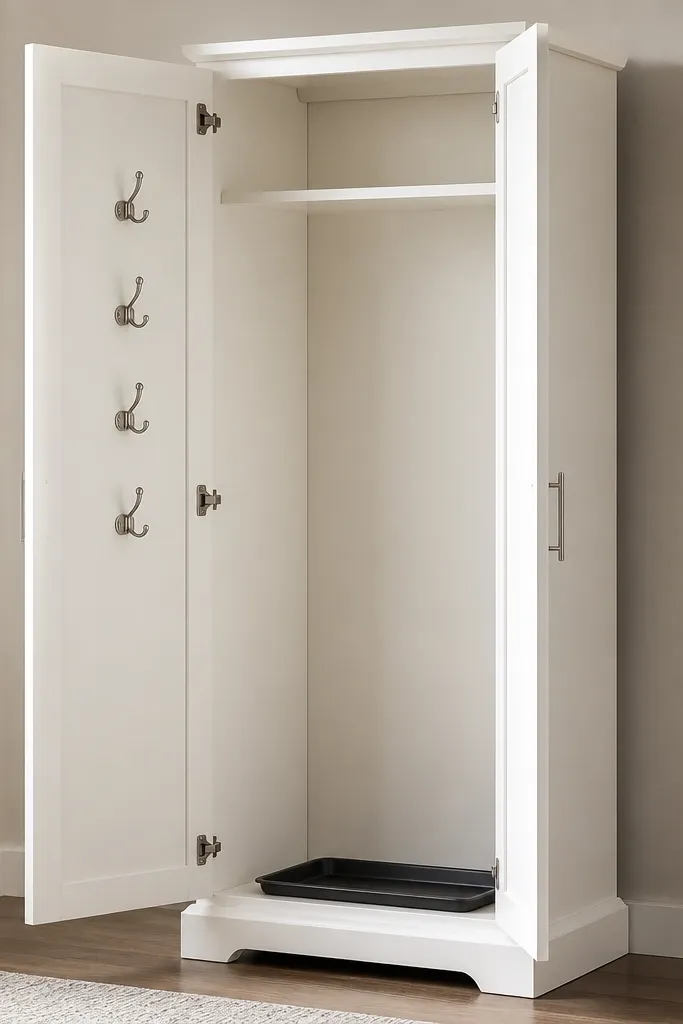
A closed cabinet hides the coat chaos while still letting coats dry. Inside hooks prevent coats from slumping on the floor, and the drip tray catches water so you don’t get that damp smell. Because doors stay shut, the entry looks crisp even with active use. This is the best move when you live with wet weather or kids who come in muddy.
Pick a cabinet with at least 16-18 inches of interior width to hang coats without crowding. Add a shallow plastic or metal drip tray on the bottom shelf. Mount hooks so coat hang height clears the tray by a few inches.
Use two hook heights: top hooks for lighter coats, lower hooks for heavier rain jackets. It keeps airflow better.
Avoid bare wood inside the cabinet if coats are often wet — it stains and smells.
4. Wall-Mounted Peg Rail with Matching Baskets Below
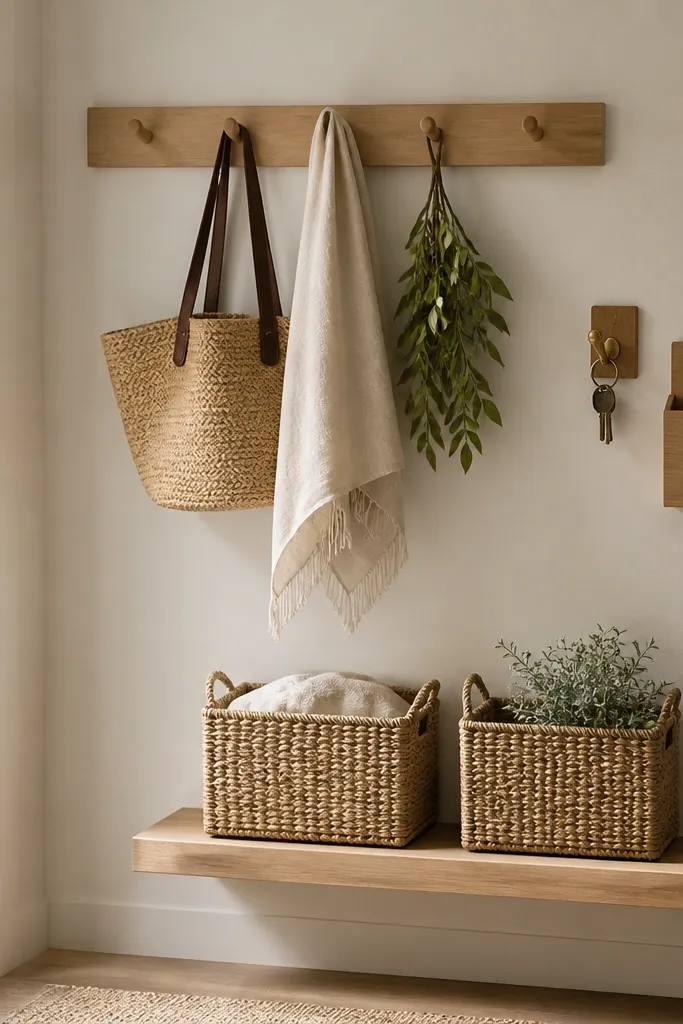
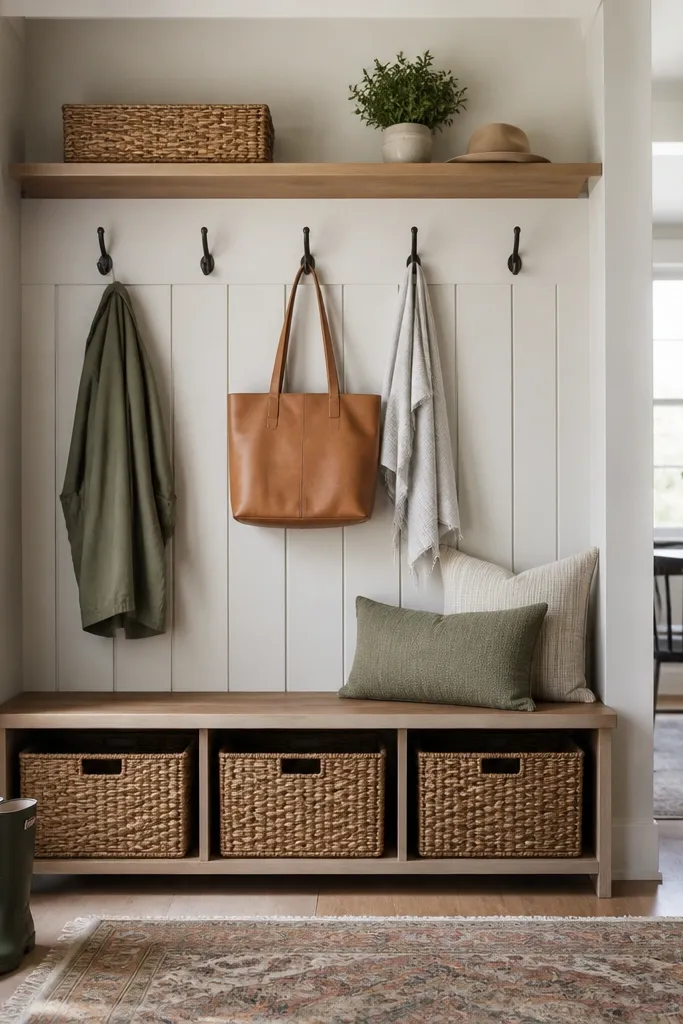
Peg rails look tidy because hooks line up and everything has a “spot.” Baskets below catch bags, gloves, and scarves so they don’t land on the floor. I like matching materials in one palette because it reads intentional, not random. This design also works for narrow hallways where a bench would block traffic.
Mount the rail so the lowest hook is around 54-56 inches from the floor. Use a shelf depth of 8-10 inches for baskets so they don’t stick out. Choose baskets with smooth sides and sturdy bases, ideally in sealed natural fibers or coated fabric.
Put a small label card inside each basket lid or back so everyone knows where items go.
Don’t mix tall hooks and low baskets of random heights — it creates overflow.
5. Floating Shelf + Hanging Over-the-Door Bag Organizer
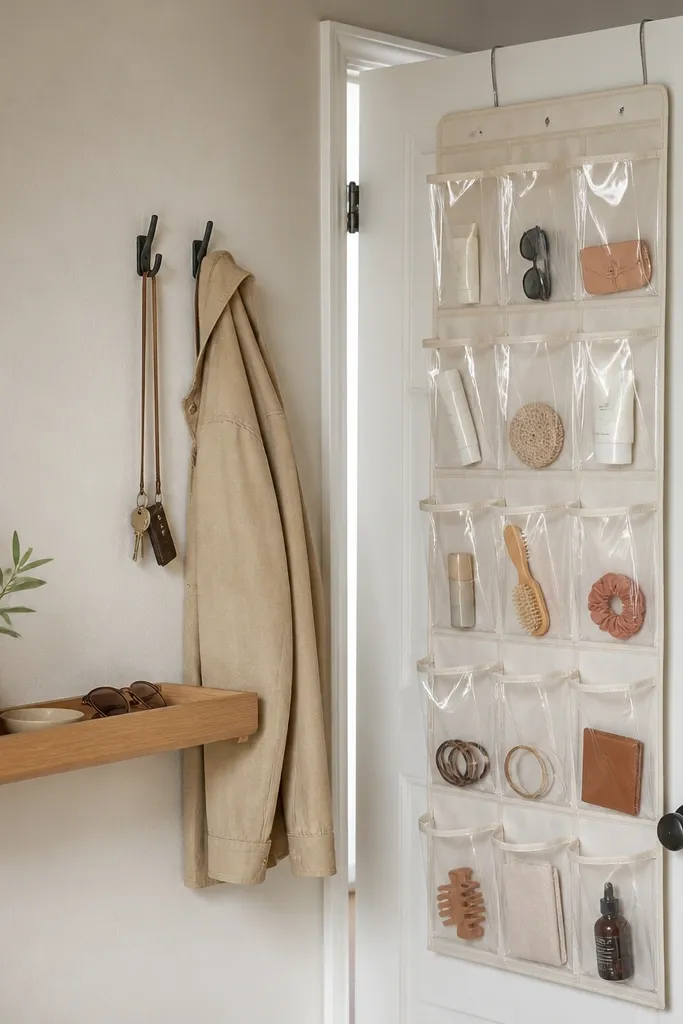
This is a tight-space solution that still looks styled. The floating shelf holds only the daily items you want visible — keys, a small catchall tray, and one decorative object. The over-the-door organizer stores bags and small accessories out of the main walkway. Clear pockets make it easy to find stuff quickly, which means less dumping on counters.
Use a shelf length of about 24-30 inches and keep it under 7 inches deep. Choose a door organizer with wipeable clear pockets and sturdy backing. If you have a small mudroom, keep coat hooks on the wall and use the door organizer for “small daily” items.
Hang an inexpensive fabric shoe pouch on the bottom of the door organizer for socks, wipes, or shoe spray.
Avoid paper organizers and fabric that stains easily — door grime transfers fast.
6. Two-Tier Catch-All Tray System (One for Today, One for Reset)
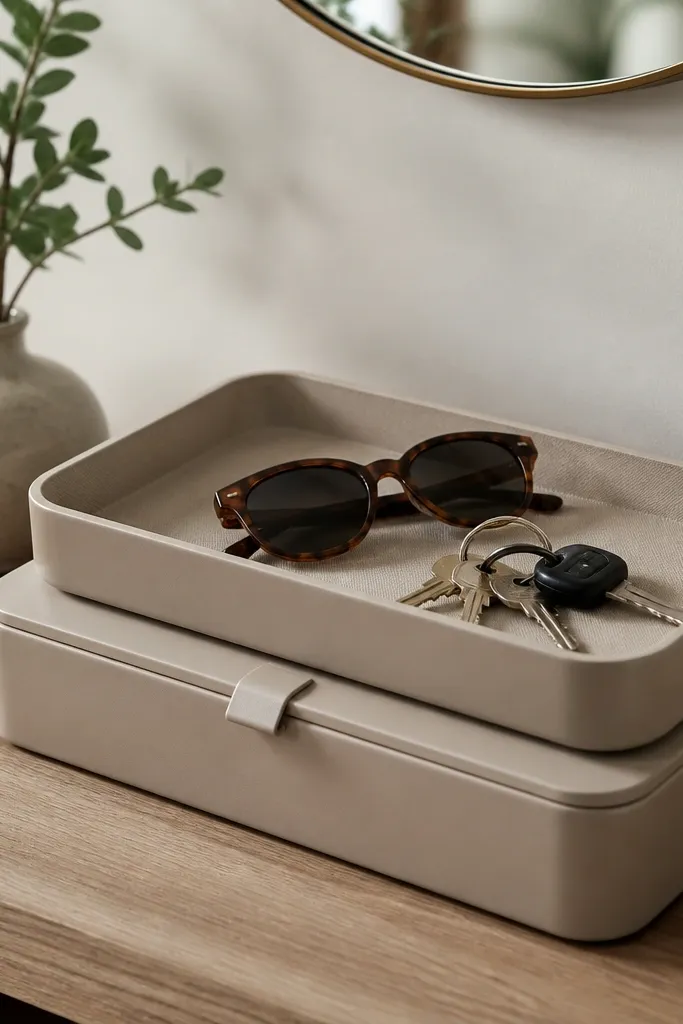
This keeps entryway surfaces from becoming a “landing zone” for everything. The top tray is for items you touch today, so it stays a little messy without looking chaotic. The bottom lidded tray is the reset — you move mail and extras into it at night. Lidded storage prevents paper piles from turning into clutter.
Use one shallow tray (about 12x16 inches) and one lidded tray slightly bigger. Choose materials that wipe: coated metal, lacquered wood, or sealed plastic. Place the system on a bench or cabinet top that’s at consistent height so it’s easy to use.
At night, do a 30-second sweep: everything in the top tray returns to the lidded tray or goes in a pocket.
Don’t use an open mail pile tray without a lid — it grows every day.
7. Rattan-Look Storage Bins with Plastic Liners
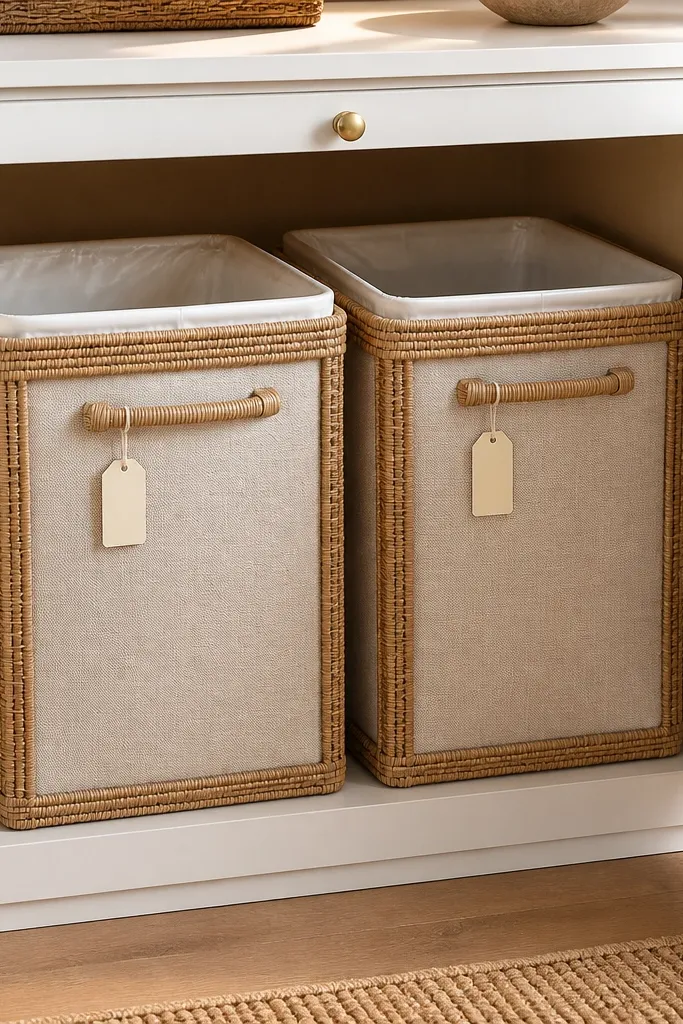
You get the warm look of rattan without the cleaning headache. The plastic liner stops moisture from damaging the woven look and makes wipe-downs simple. I use these for gloves, hats, and spare accessories because they stay contained. The cabinet doors keep the overall entry calm.
Pick bins that fit your cabinet opening with 1-2 inches of breathing room. Use liners that lift out so you can wipe under them. Keep the color neutral: natural tan plus white walls reads clean and stays forgiving.
Pro tipUse one bin for “weather” items and one for “small daily.” It makes morning decisions faster.
Watch outAvoid bins that shed fibers when you wipe — they look rough after a month.
8. Mudroom Entryway Wall Hooks + Bench Storage Combo in One Line
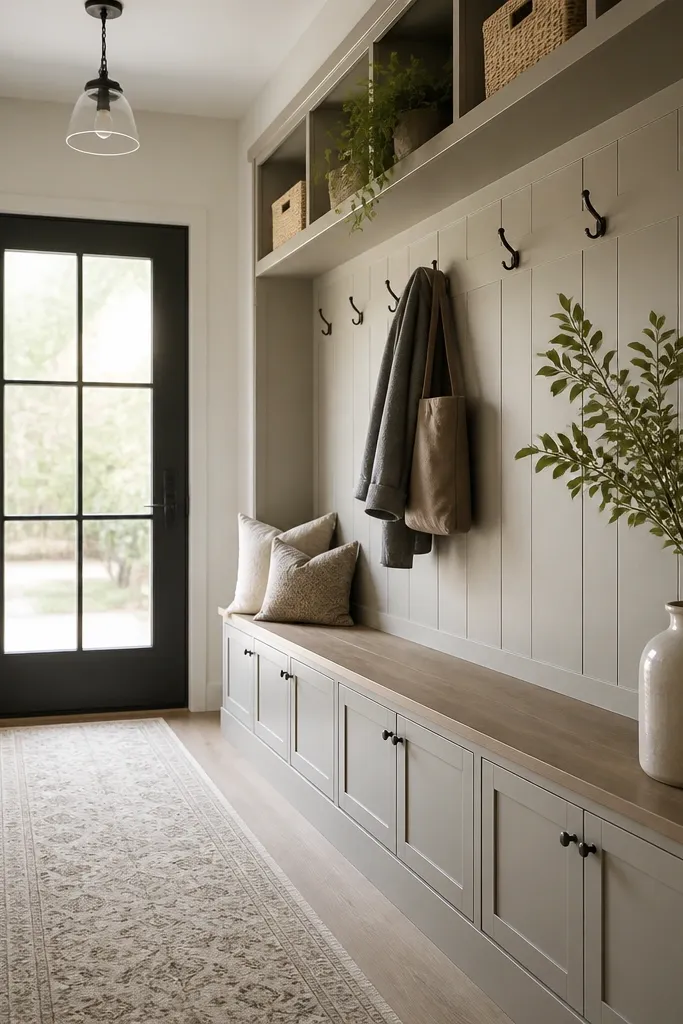
When hooks and storage line up, people stop tossing items around. I installed one of these in a narrow entry and the difference was immediate: coats hung up instead of dropping on the bench. Soft-close doors reduce the “slam and chaos” sound and keep doors from swinging open. The whole run looks intentional, which helps it look neat even when you’re mid-week busy.
Choose a unit length that matches your wall — leave 2-3 inches from edges for a finished look. Keep bench depth around 14-16 inches so you can sit and put shoes on. Use three to five hooks at coat height and keep lower hooks for kids or bags.
Hang hooks in a staggered height pattern: two higher, two mid, one lower. It fits different coat lengths without crowding.
Don’t mount hooks too high — coats end up on the floor because they’re hard to reach.
9. Matte Black Hardware + Light Walls for Low-Eye Mess
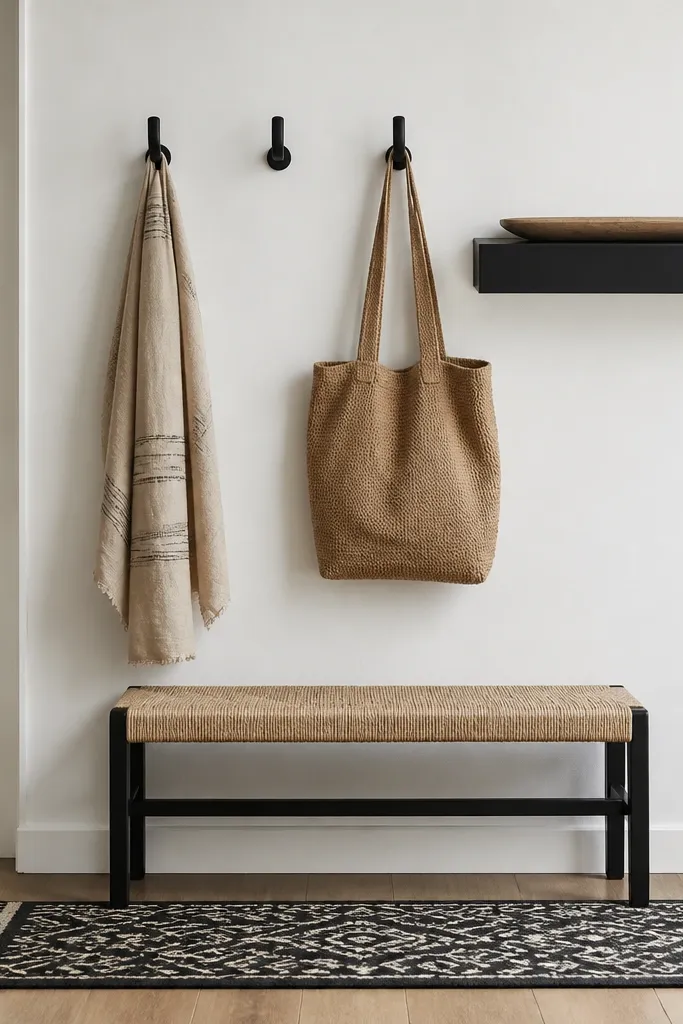
Matte black hides scuffs from keys and zippers better than shiny finishes. When everything is the same hardware color, the entry reads clean even when items are moving through. Light walls make the hooks look crisp, and the contrast keeps the space from feeling cluttered. This is a styling trick I use when I’m working on a budget and can’t replace everything.
Use matte black hooks and a matte black tray. Keep decor minimal: one tray, one small plant in a pot that wipes clean, one basket. Stick to a cream or oatmeal rug for warmth.
Wipe the hooks with a damp microfiber cloth once a week. Matte finishes show dirt less, but fingerprints still build.
Avoid glossy hardware — it shows smudges and looks messy in bright light.
10. Clear-Lid Storage Boxes for Seasonal Bulky Items
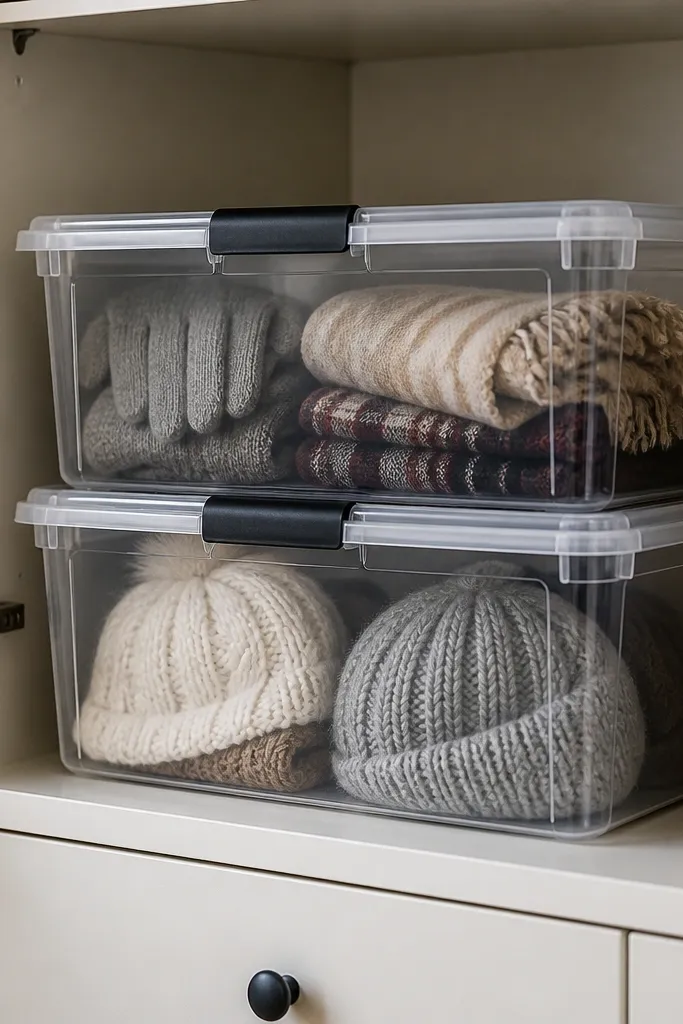
Clear lids let you find the right season gear without pulling everything out. It’s low maintenance because you don’t have to remember where things are — you can see it. I use these for bulky items that only need attention a couple times a year, which prevents them from living on the floor. It also keeps the entry from looking crowded when the weather changes.
Choose boxes that fit your cabinet shelf spacing with minimal wasted space. Label with a simple label maker and place it on the front edge. Use a neutral color for the box base if you want a softer look against white cabinetry.
Pro tipStore one box for “next season” and one for “current season.” It stops the scramble when the forecast flips.
Watch outAvoid opaque bins if you hate sorting — you’ll end up dumping them out to find what you need.
11. Doorway Mirror with Wipe-Down Frame + Small Trash Drop
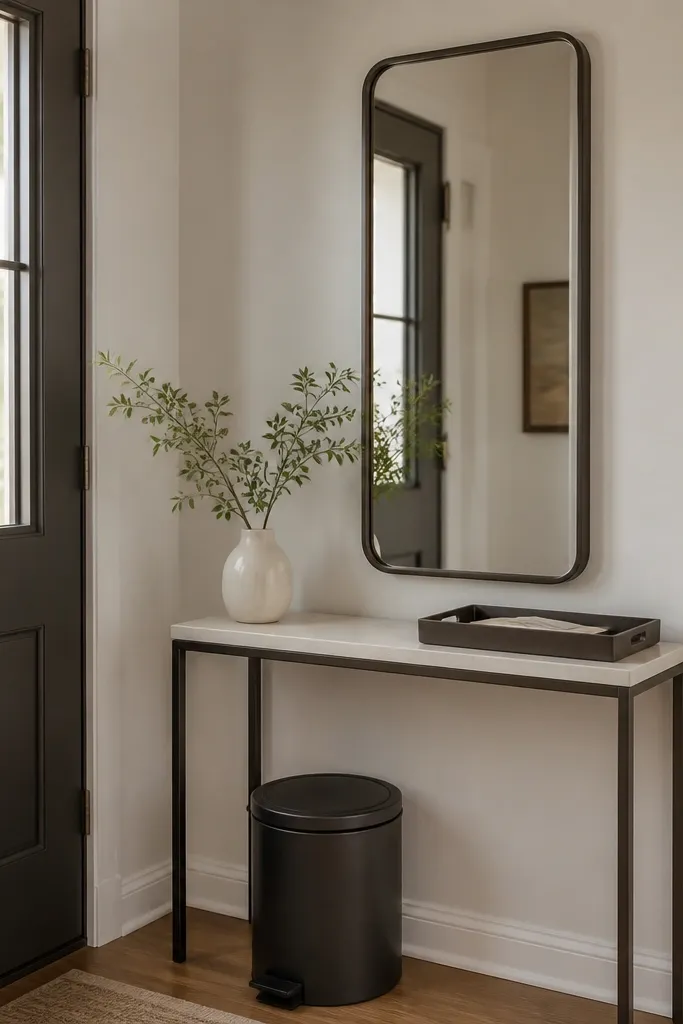
A mirror helps the entry feel bigger, but the real trick is pairing it with a trash drop and mail tray. Trash and paper are what multiply when people come in and don’t know where to put them. A lidded bin keeps the visual from turning into clutter. With a wipe-down frame, you don’t dread fingerprints and smudges.
Pick a mirror frame that’s sealed or painted, not raw wood. Use a console depth of 10-12 inches so it doesn’t eat the walkway. Put the mail tray at about 36 inches high so it’s easy for everyone.
Keep one small stack of spare grocery bags in the bin cabinet for quick cleanup.
Avoid placing mail trays too high — people drop it on the floor instead.
12. Bench with Removable Slipcover Seat Pad
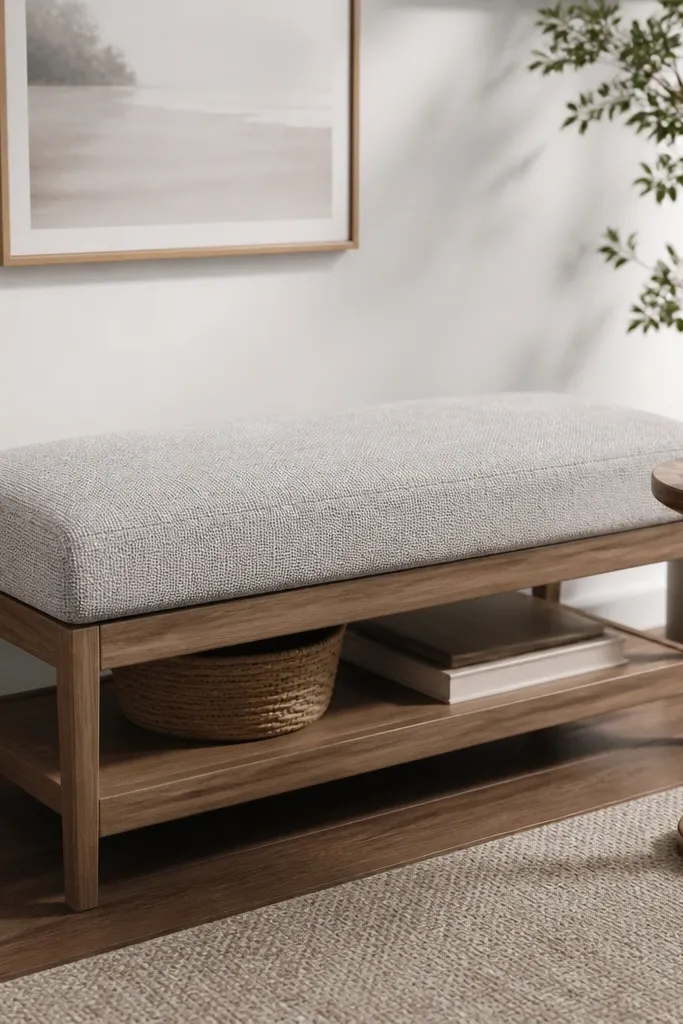
If you have a bench, the seat cover is where your maintenance lives. I like removable slipcovers because you can wash them after muddy days without replacing the whole bench. A subtle texture hides light dirt better than smooth fabric. This keeps the bench looking fresh even when you sit down in boots.
Choose a cover that fits with an elastic edge or zipper seam so it doesn’t shift. Use a fabric blend that survives washing, like cotton-poly canvas. Stick to light gray, oatmeal, or a muted olive for hides dirt well.
Pro tipKeep a lint roller and small fabric spray in a bin by the bench so you clean the seat before it stains.
Watch outAvoid white upholstery in a high-traffic entry — it will look gray fast.