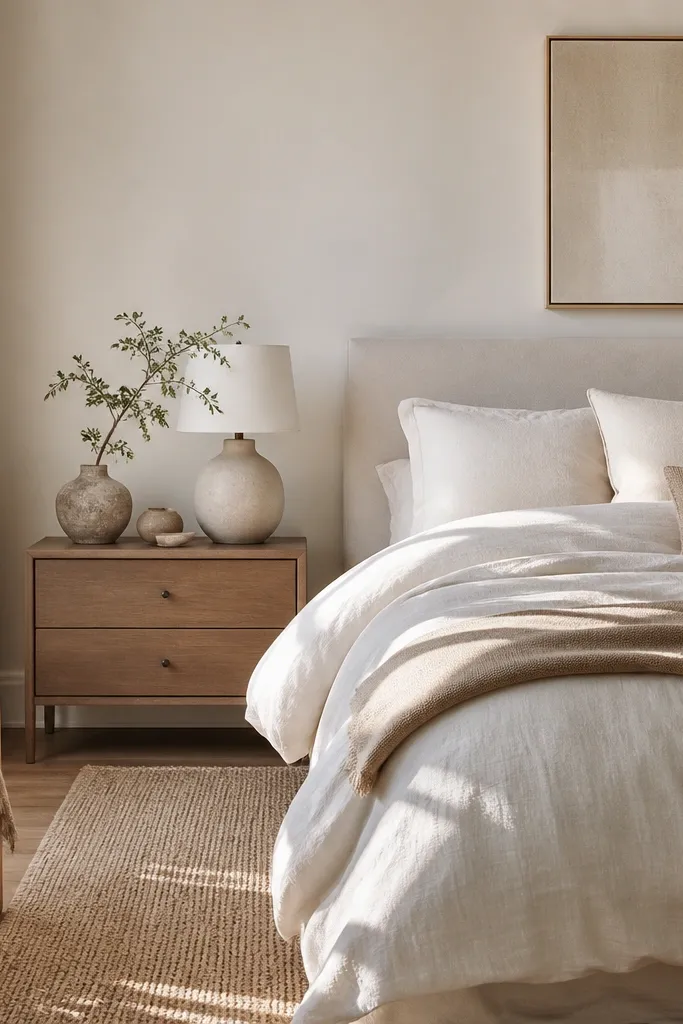
1. The 3-Object Dresser Top
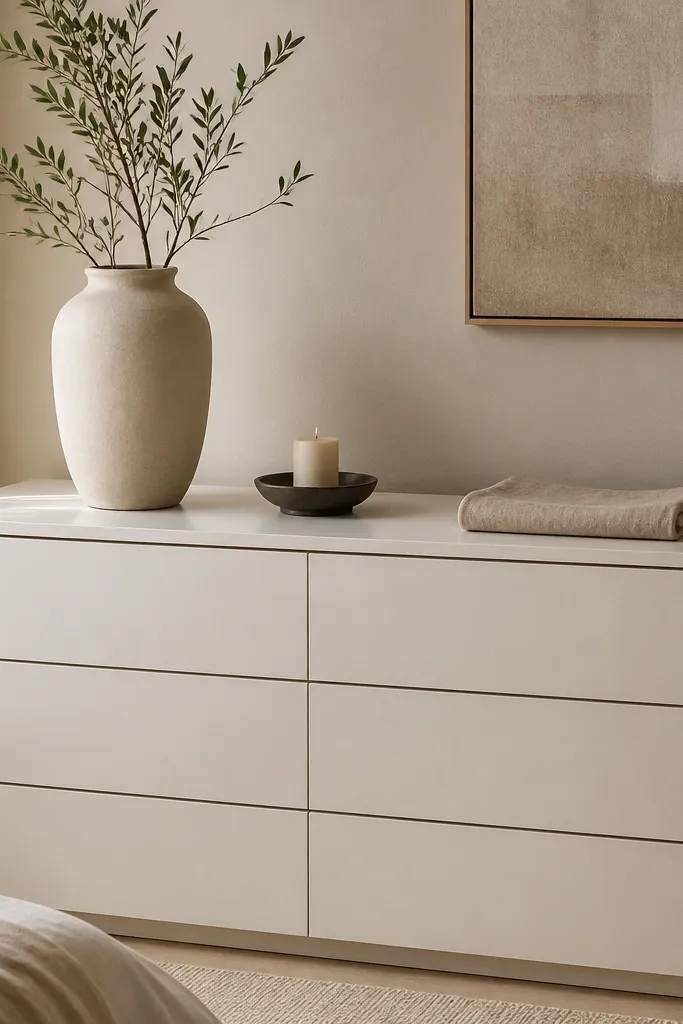
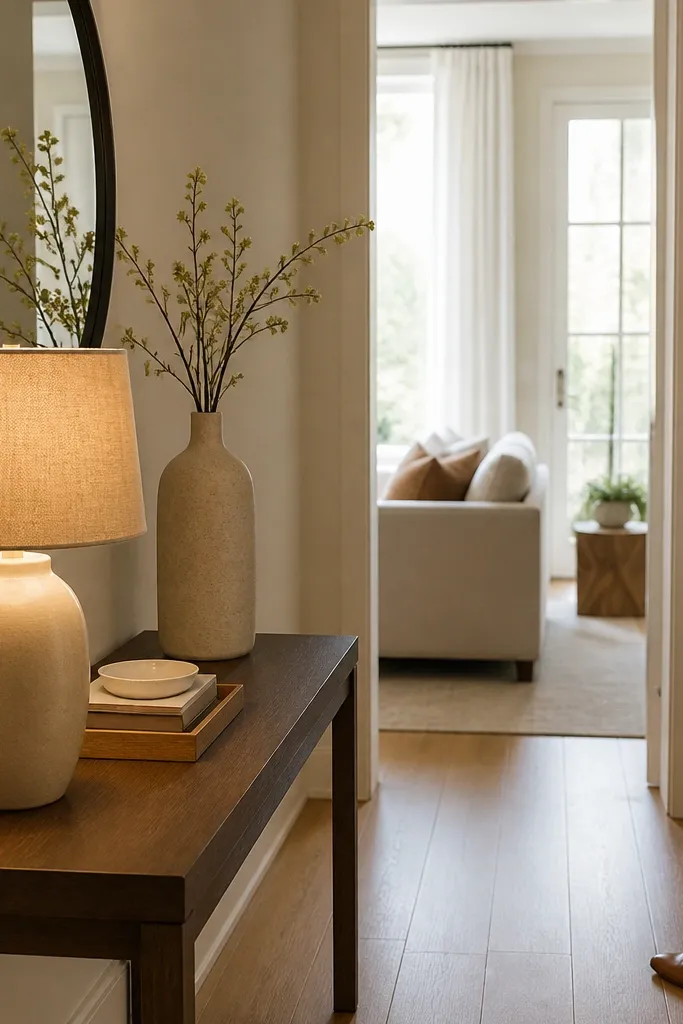
This look works because it breaks the clutter pattern without making you feel like you’re hiding your life. A dresser top with exactly three objects reads “styled” even when the rest of the room is casual. I like ceramic in oatmeal or off-white because it looks clean in daylight and doesn’t show fingerprints as fast as glossy pieces. Add one tray so tiny items like hair ties or a lip balm don’t spread out.
Use a tray that’s about two-thirds the dresser depth so it sits centered and doesn’t float. Fold a linen cloth into a rectangle and tuck it under the tray edge or beside the candle so it looks intentional. Keep the vase height at least 1.5 times the candle height for a clean vertical rhythm. This works best in bedrooms and guest rooms where you want a calm first impression.
Set a daily reset rule: if something new lands on the dresser, it must get moved into a drawer or tray within 10 minutes.
Avoid using a random mix of tall and short items with no tray — it reads messy even if the total count is low.
2. Bed Frame Minus the Visual Noise
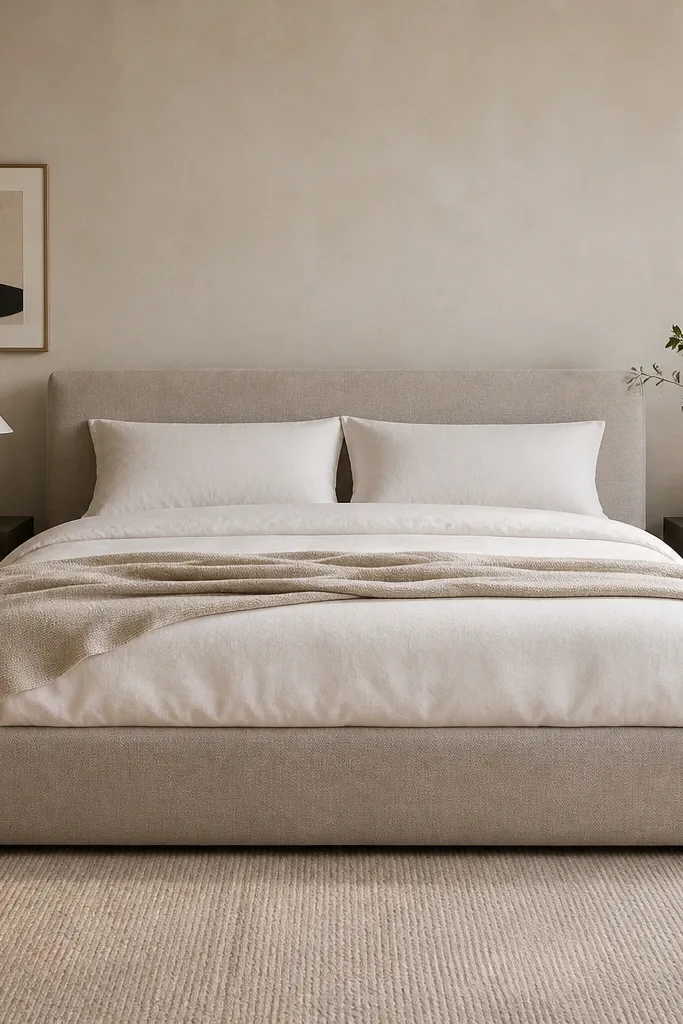
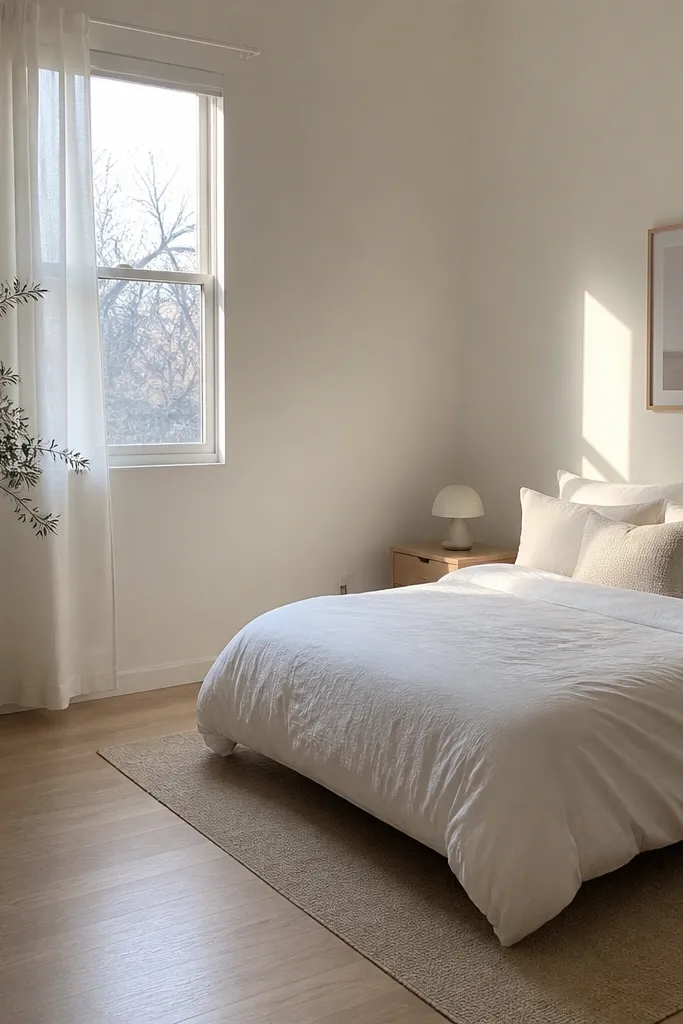
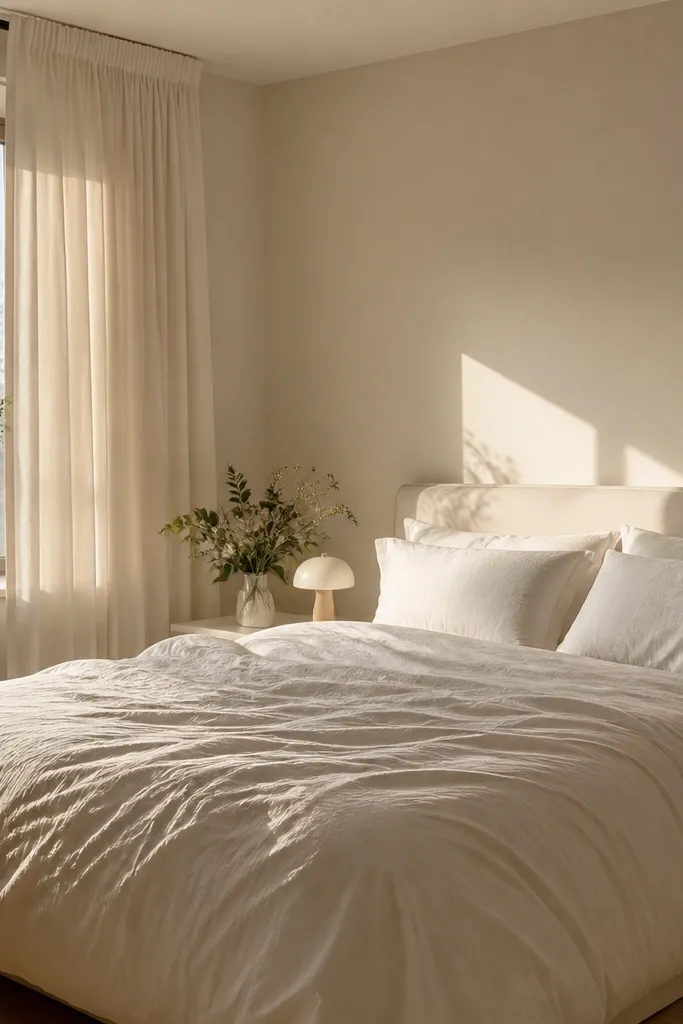
A clean room aesthetic starts at the bed because it’s the biggest flat surface in your line of sight. I use a low-profile upholstered or solid wood frame because it doesn’t create extra gaps where dust collects visually. Crisp bedding in one or two tones makes the room feel organized even when the closet is full. Symmetry helps too — it makes the room look “set” instead of “stuffed.”
Choose a duvet cover that matches your wall tone by 1-2 shades. Fold the throw blanket once and place it at the foot of the bed, about 1/3 of the bed width. Use two standard pillows behind and one smaller accent pillow centered in front. This setup looks best with soft matte fabrics like cotton sateen or linen-blend.
Iron or steam just the duvet top edge and pillowcases — that’s where the eye lands first.
Skip busy patterns and layered prints; they make the bed look busy even when everything is folded.
3. Corner Shelf with Color-Consistent Bins
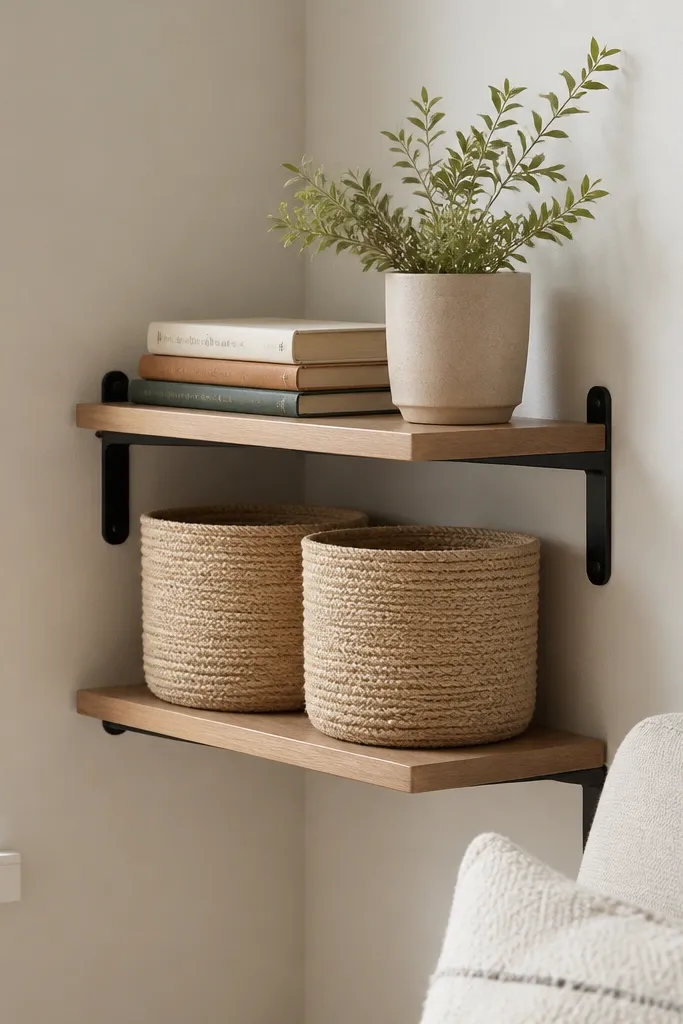
Corner shelves are where clean aesthetics either happen or fall apart. The secret is that the bins match — same material and similar color — so your storage looks like part of the decor plan. I like light natural woven or thick fabric bins in oatmeal and sand. The top shelf stays “styled,” while the lower shelf handles real life.
Keep the shelf styling to 3 objects on the top level: one plant or vase, one book stack (2-3 books), and one small tray. For bins, pick sizes that line up with the shelf openings so you don’t see gaps. Use a pot that’s matte and about 6-8 inches wide for a modern scale. This works in offices, bedrooms, and laundry rooms.
Pro tipLabel the bins with small, black-on-cream stickers inside the bin lid so the labels don’t interrupt the look.
Watch outDon’t mix bin materials like metal + wicker + plastic; the mismatch reads like clutter.
4. Desk Setup with a Single Catch Tray
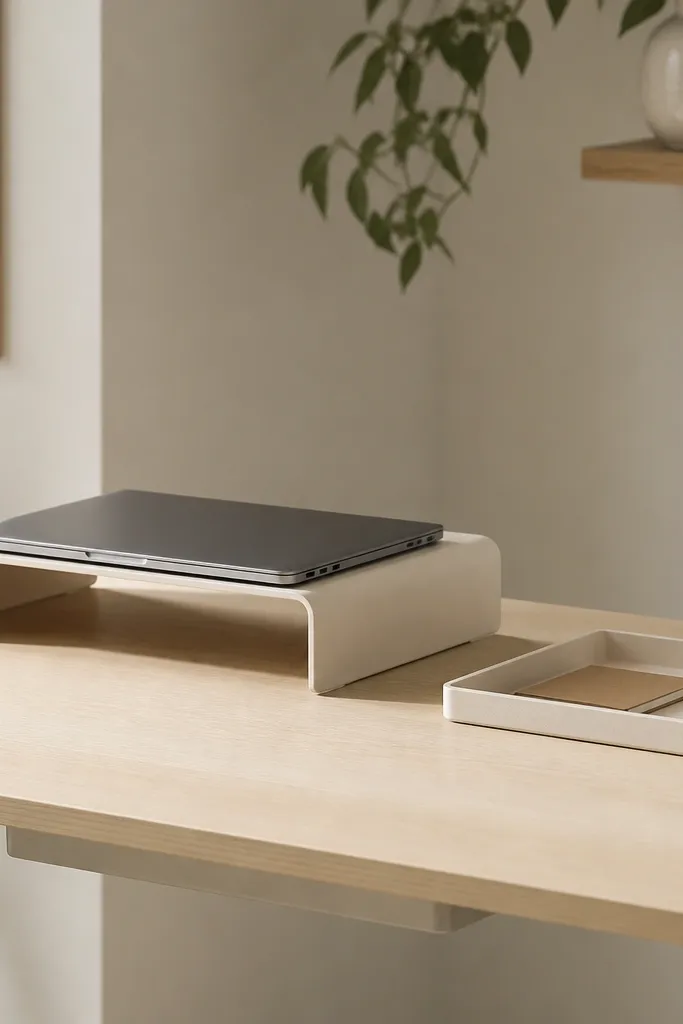
A modern clean room aesthetic in an office is mostly about controlling the "landing zone" where you toss things. One catch tray stops the spread of paper, chargers, and random bits across the desktop. I keep it shallow and wide so items stack neatly. Matte desk accessories also help — glossy ones show smudges and make the space look less clean.
Use a tray about the width of your keyboard and place it centered near the front edge. Keep pens, a notebook, and one small organizer inside the tray only. Add a cable management box or under-desk Velcro cable ties so cords don’t drape. This setup is especially good for small desks where every inch counts.
Pro tipStore your spare pens and sticky notes in a drawer — only the daily items live on the tray.
Watch outAvoid leaving chargers and cables on the desk edge; they create instant visual clutter.
5. Matte Black or Brushed Nickel Hardware Theme
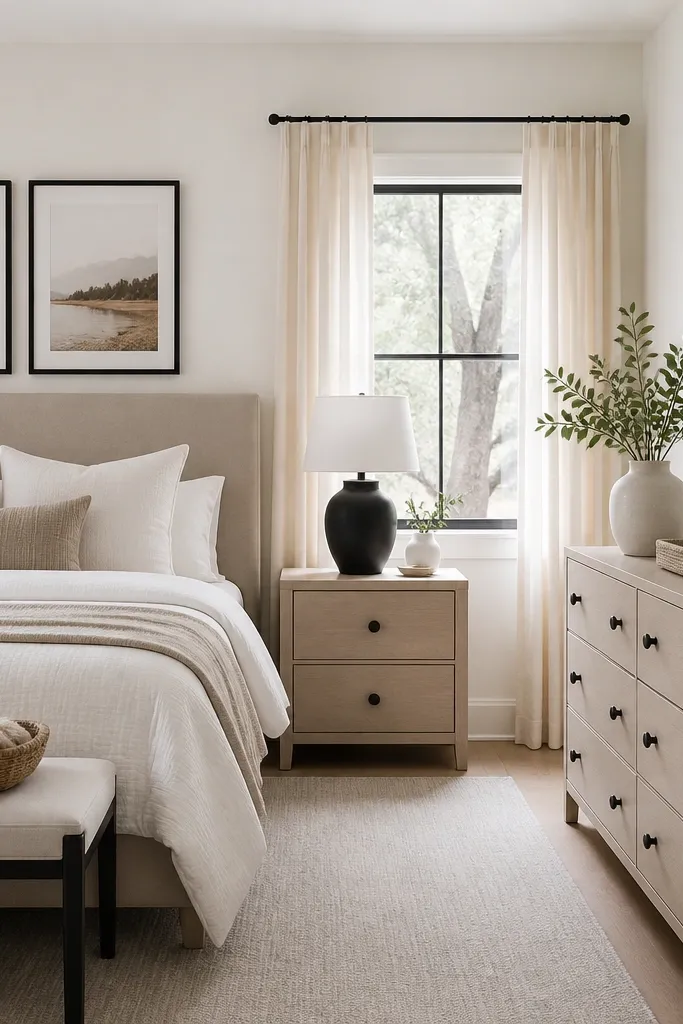
Consistency in metal finish makes a room look put-together even when you change small items. I’ve tested this in my own place: mixing brass and black made everything look accidental. When everything is brushed nickel or matte black, the room feels intentional. Keep the rest simple so the finish theme does the work.
Pick one finish and stick to it across frames, lamp bases, and small hardware like curtain rods rings. If your furniture already has a finish, match it instead of forcing a switch. Use picture frames with thin profiles so they read modern rather than bulky. This works in living rooms, offices, and entryways.
Wipe metal surfaces with a dry microfiber cloth before styling — fingerprints show fast on black finishes.
Don’t mix three metal finishes in one sightline — that’s where the “cheap” look starts.
6. Floor Basket Landing Zone by the Door
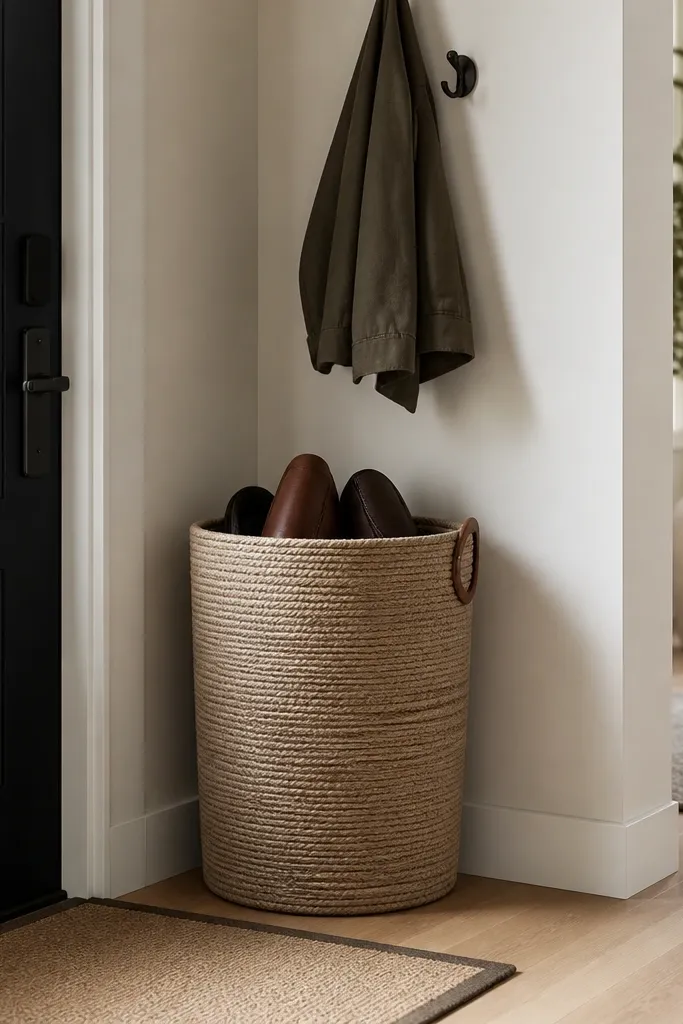
This is my go-to fix for entries that always look messy. A single basket gives you one place to drop bags, scarves, or shoes instead of letting everything drift across the floor. The modern clean room aesthetic comes from keeping the basket color close to your walls or flooring. I like tall baskets in cotton rope, seagrass, or fabric-lined options because they look soft, not industrial.
Choose a basket that fits the space — leave 2-3 inches of breathing room from the wall so it doesn’t look wedged. Put it next to a hook or bench so you can grab items easily. If shoes go in, use a washable mat or liner inside. Keep the doormat simple and low pile to avoid dirt buildup.
Pro tipDo a 30-second “bag sweep” rule: anything you carried in goes straight into the basket or on the hook within one minute.
Watch outAvoid open bins with no liner; small items spill visually and ruin the clean look.
7. Laundry Hamper That Doesn't Look Like Laundry
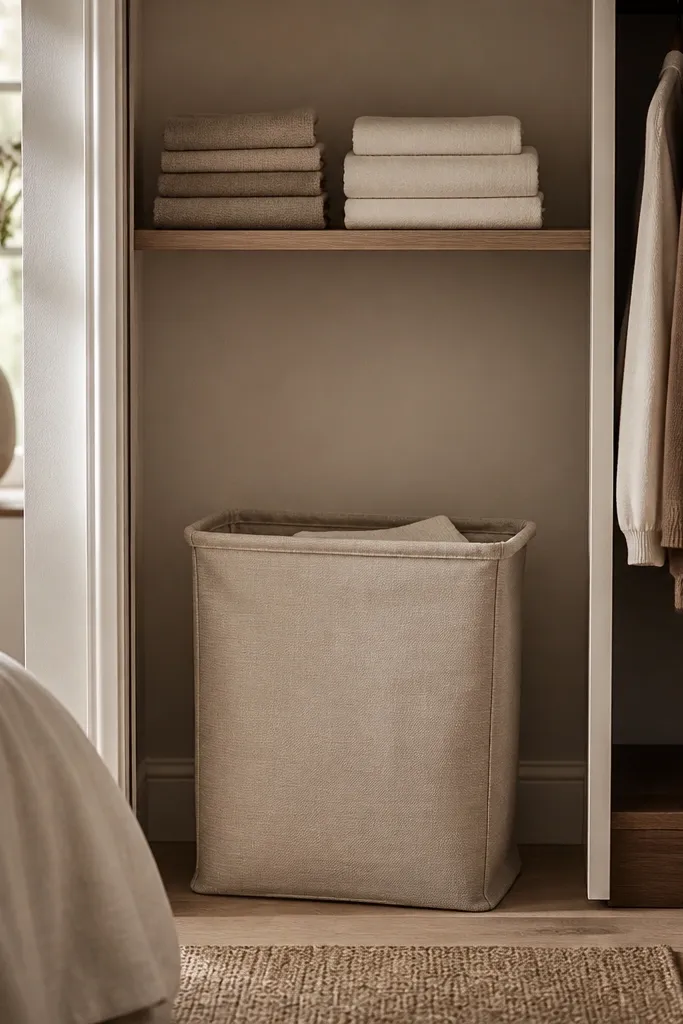
If your hamper is ugly, your whole room looks less clean even when it’s empty. A fabric hamper in the same color family as your bedding and curtains makes it disappear. I also like hampers with a rigid base so it stands straight and looks organized. Pair it with folded towels or extra linens in matching stacks and the area reads intentional.
Pick a hamper with a lid or a structured top so the opening doesn’t gape. Store it inside a closet recess if possible, or hide it behind a folding screen. Keep towel stacks tight: fold to the same height each time and align the edges against the wall. This works in bathrooms, bedrooms, and hall closets.
Use two hampers if you sort lights/darks; the room stays clean because you’re not cramming everything into one pile.
Skip shiny plastic hampers — they look like storage, not decor.
8. Gallery Wall with Consistent Frame Size
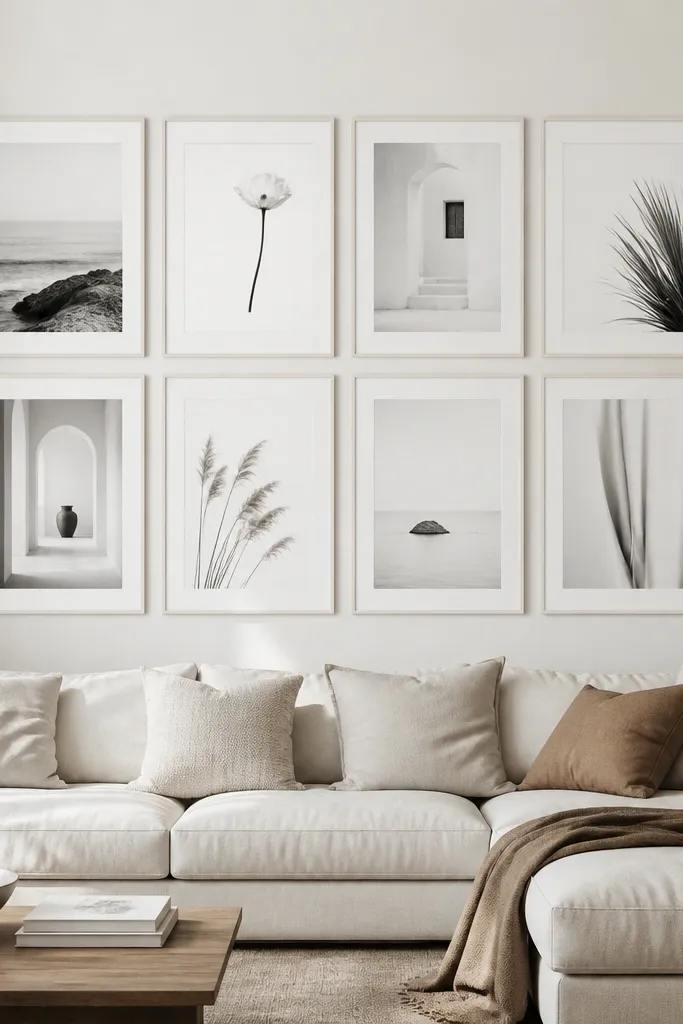
Clean rooms need fewer visual interruptions, and a gallery wall can either help or hurt. When frames match in size and finish, the wall looks organized instead of random. I use a consistent frame width like 1.25-1.5 inches and keep matting simple. Monochrome art with lots of white space gives the room breathing room.
Lay the layout on the floor first. Aim for even spacing: about 2-3 inches between frames for a modern grid. Use one or two art sizes only, like 8x10 and 11x14, to keep it cohesive. Hang the center at about 57 inches from the floor for most eye height.
Use painter’s tape to mark the grid on the wall before hanging — it prevents crooked spacing.
Avoid mixing thick and thin frames in one wall; it reads like leftovers.
9. Curtains with the Right Height (and No Pooling)
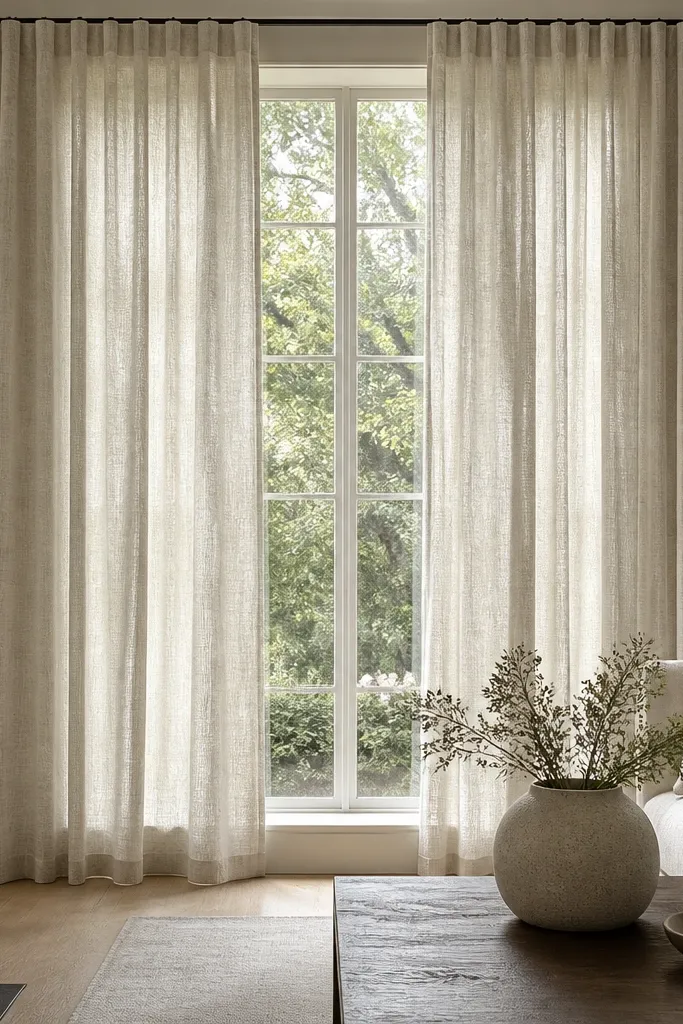
Curtains change the whole “clean” feel because they control how your eyes move across the room. I go for ceiling-mounted rods and floor-length panels that just kiss the floor. Linen blends look modern and hide minor wrinkles that can happen from daily use. When the curtain color matches your wall tone, the room looks calmer.
Mount the rod 4-6 inches above the window trim and extend it 6-10 inches wider on each side. Choose panels that are long enough to reach the floor — if they pool, they look sloppy. Use a simple ring or clip system so the folds hang evenly. This works in bedrooms and living rooms where you want a polished frame.
Steam the panels right after hanging; the vertical lines lock the clean look in place.
Skip short curtains that stop at the sill; that length always reads unfinished.
10. Monochrome Textiles with One Texture Accent
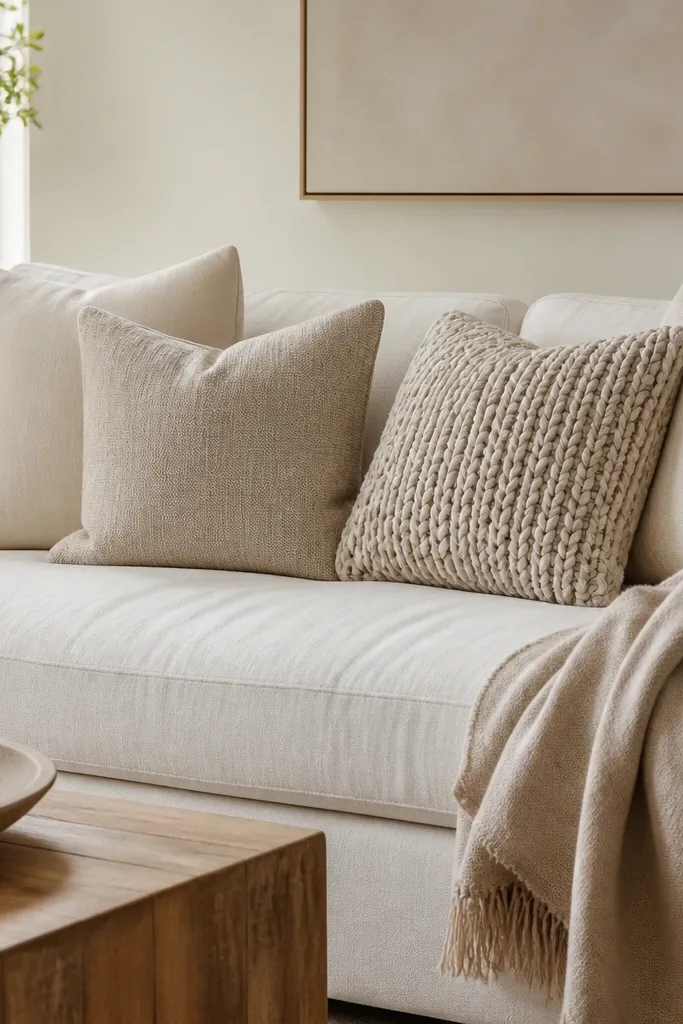
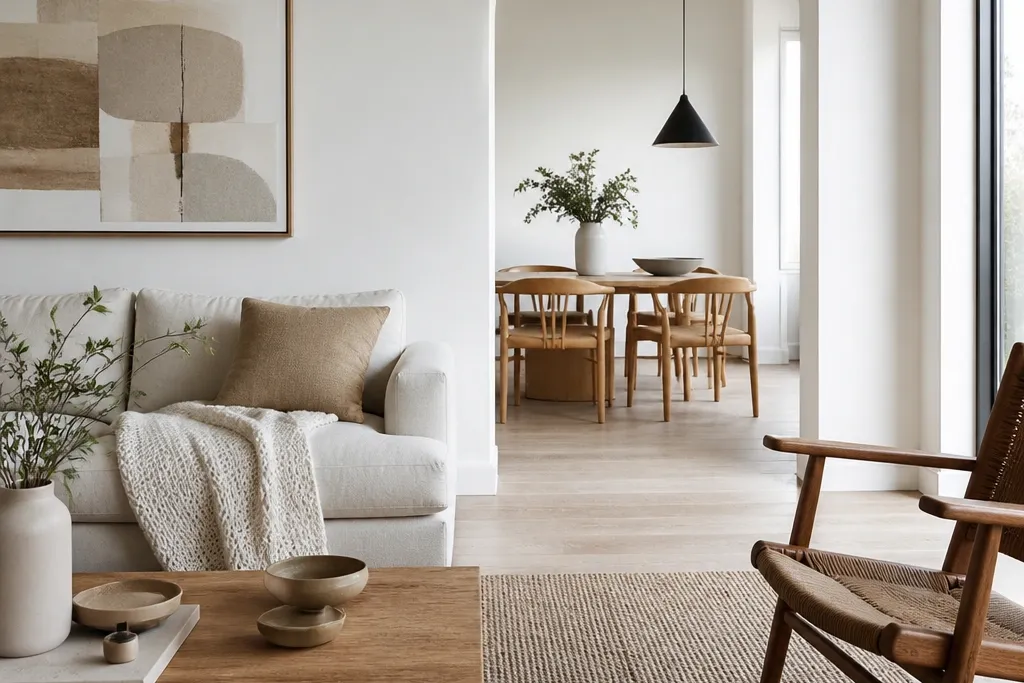
A modern clean room aesthetic loves monochrome, but you need texture so it doesn’t look flat. I keep the colors within one family, then add one tactile piece — chunky knit, boucle, or a ribbed cotton throw. The texture gives depth without adding pattern chaos. When everything is matte and soft, the room looks tidy even if you use it daily.
Pick 2-3 tones max: warm white, greige, and one deeper neutral like oat. Use one texture accent pillow and one smooth textile like a cotton throw. Keep pillow covers solid and swap inserts so the pillows look full but not lumpy. This is perfect for living rooms and reading corners.
Pro tipMatch the duvet color tone to the sofa throw so the room’s palette stays consistent.
Watch outDon’t add multiple patterns at once; two patterned pillows can ruin the clean look fast.
11. Shoe Storage with a Closed Door or Covered Bench
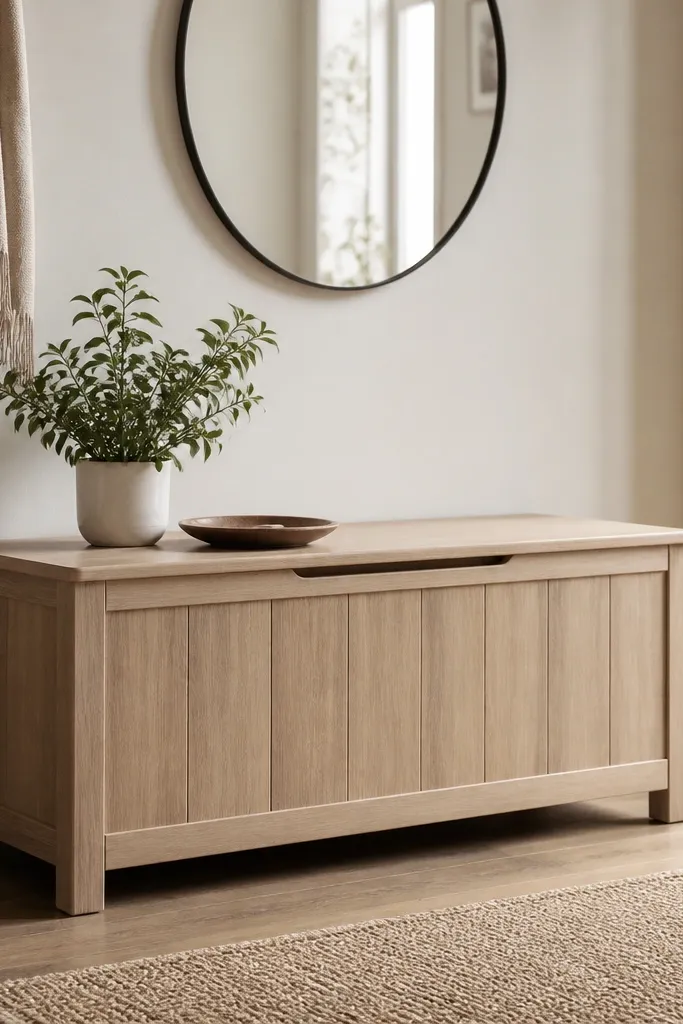
Shoes are the #1 reason entryways look cluttered. Closed storage fixes that instantly because you remove the visual noise. I like a covered bench or a cabinet with doors because it keeps the floor line clean. Add one tray on top for keys or a small candle so the surface still looks styled.
Choose a storage bench that fits your shoe count — if it’s too small, shoes pile up outside it. Put your tray in the center and keep it shallow. A small plant in a matte pot fits the modern look without adding clutter. This works best in narrow hallways where open shelves feel busy.
Pro tipStore shoes in pairs with toes aligned the same direction so the inside stays neat.
Watch outAvoid open shoe racks with mixed heights; they look messy even when the rack is “full but organized.”
12. Minimal Nightstand with a Drawer-First Rule
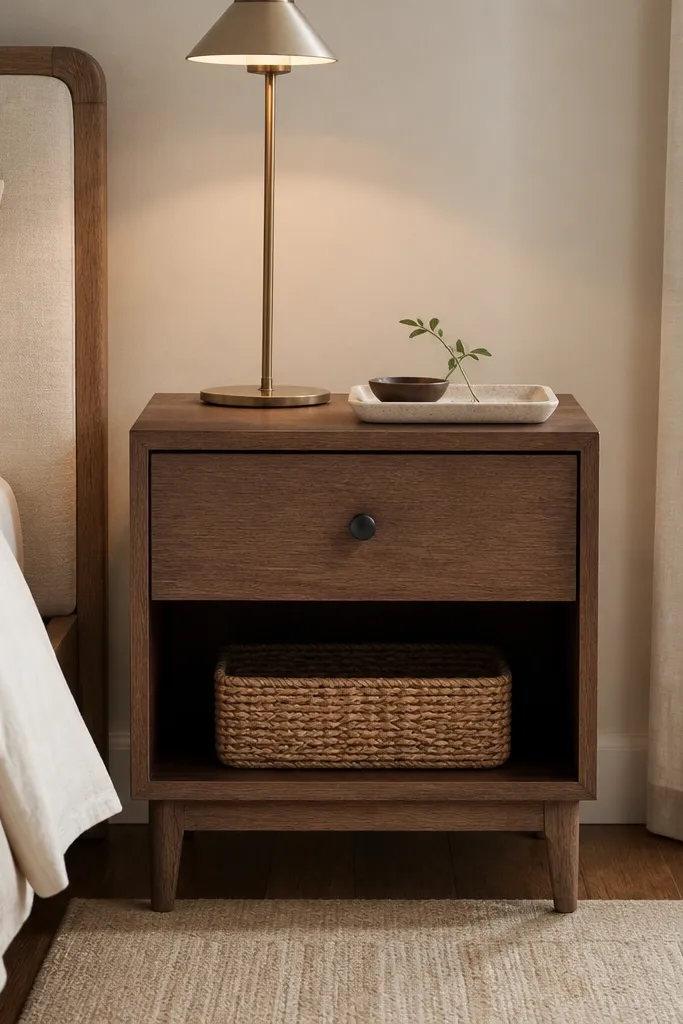
Nightstands get crowded because you drop things there when you’re tired. The clean-room version is drawer-first: keep the daily clutter out of sight. A small tray for the essentials keeps the top from turning into a junk island. Choose a lamp with a simple shade and base so it doesn’t add visual clutter.
Use a tray about the size of a paperback book so it contains charging cables, lip balm, or a small book. Keep only one lamp on the nightstand and put the second lamp on the other side, aligned. If you use an open shelf, keep it to one basket or one stack of books. This styling works in bedrooms and guest rooms.
Set a charging dock inside the drawer cutout so the cable disappears the moment you close it.
Skip oversized decor on the nightstand — it forces you to add more items to fill the space.