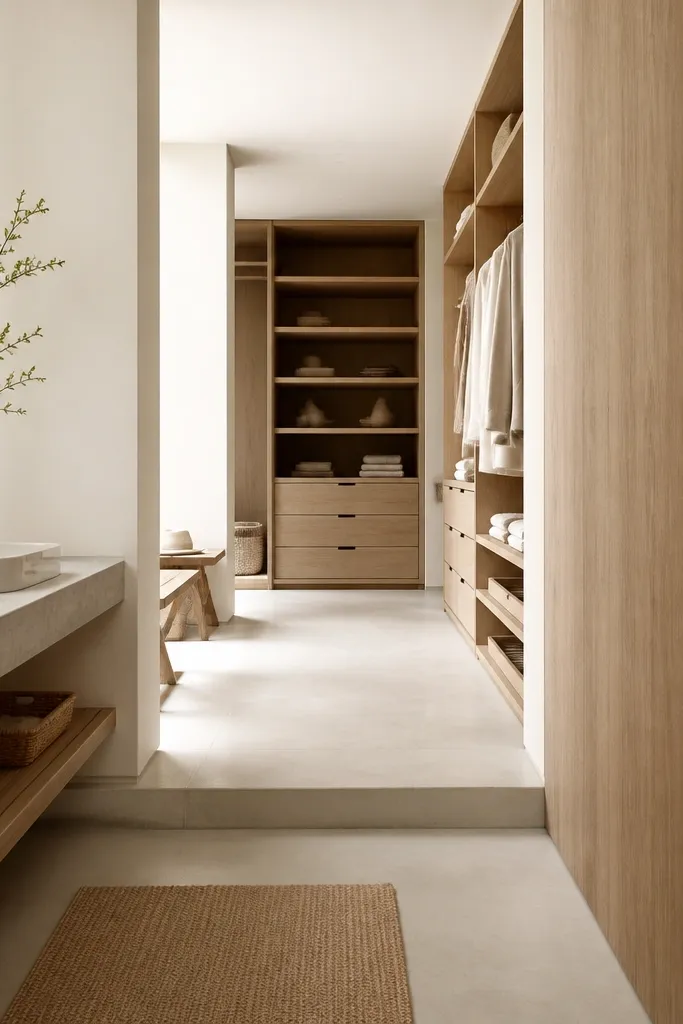
1. Under-bed drawers that match your bed frame
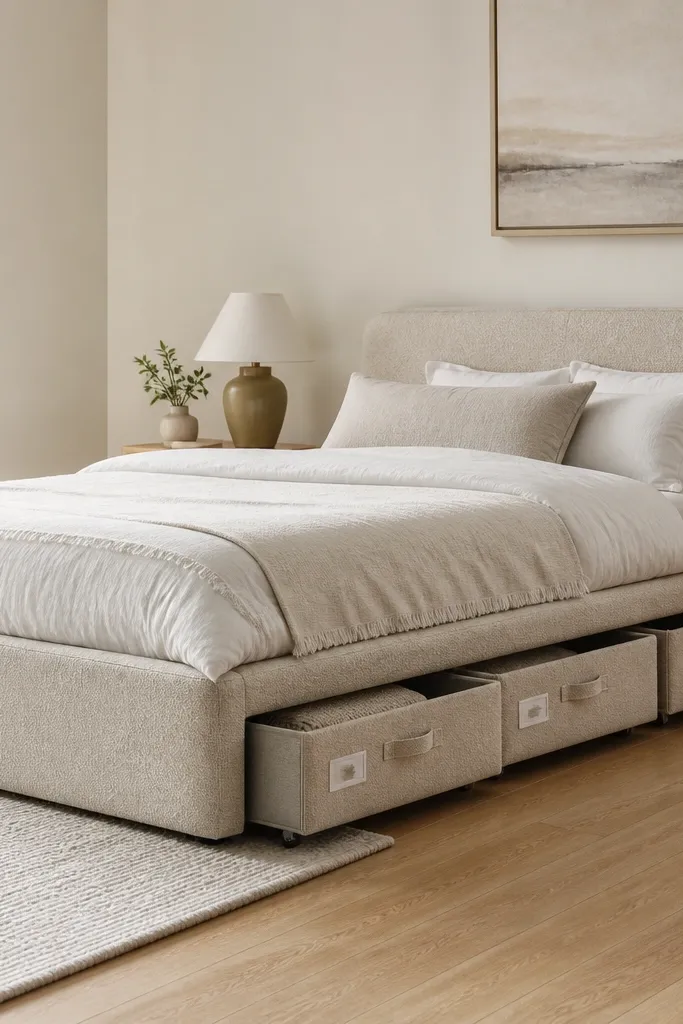
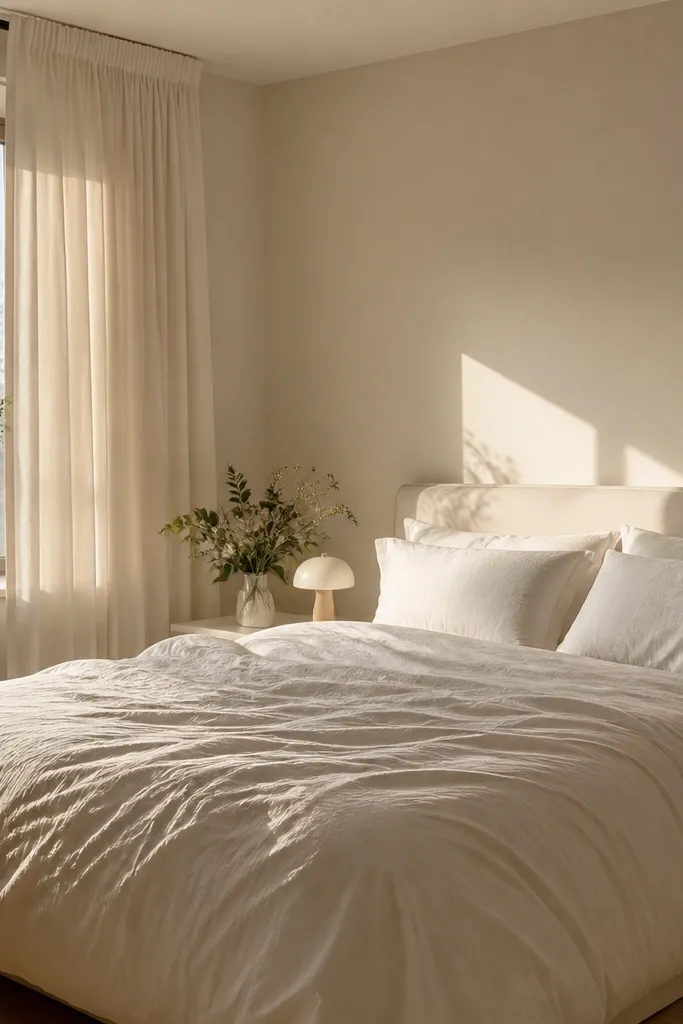
I like under-bed drawers because they remove bulky clutter from sight without eating wall space. Use a fabric-front drawer that matches your bed’s tone (oat, sand, or warm gray) so the storage blends into the room. The calm effect comes from uninterrupted lines — nothing visual sits between the bed and the floor.
Pro tipStore off-season items in the front pair of drawers and keep “weekly” items in the back pair so you don’t dig every time.
Measure clearance under your bed first. Aim for drawers that slide smoothly with at least 1/2 inch of wiggle room on both sides. If you have a metal bed frame, choose drawers with soft wheels or smooth glide pads to avoid scratching the floor.
Watch outAvoid clear plastic bins without lids — you’ll see dust and random stacks every day.
2. Cabinet doors instead of open shelves for the calm factor
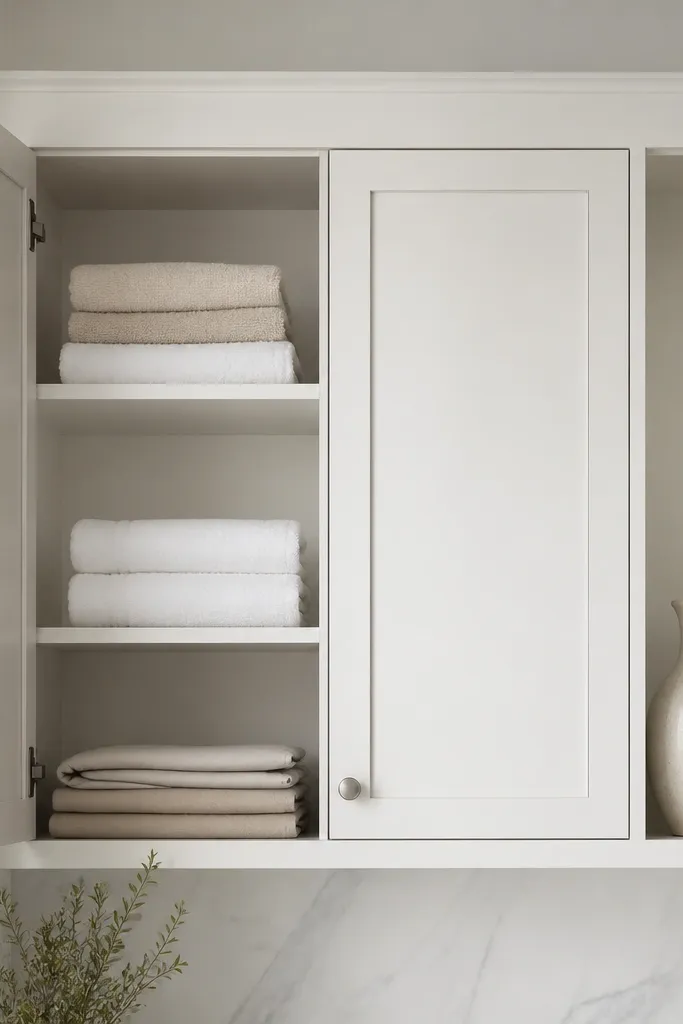
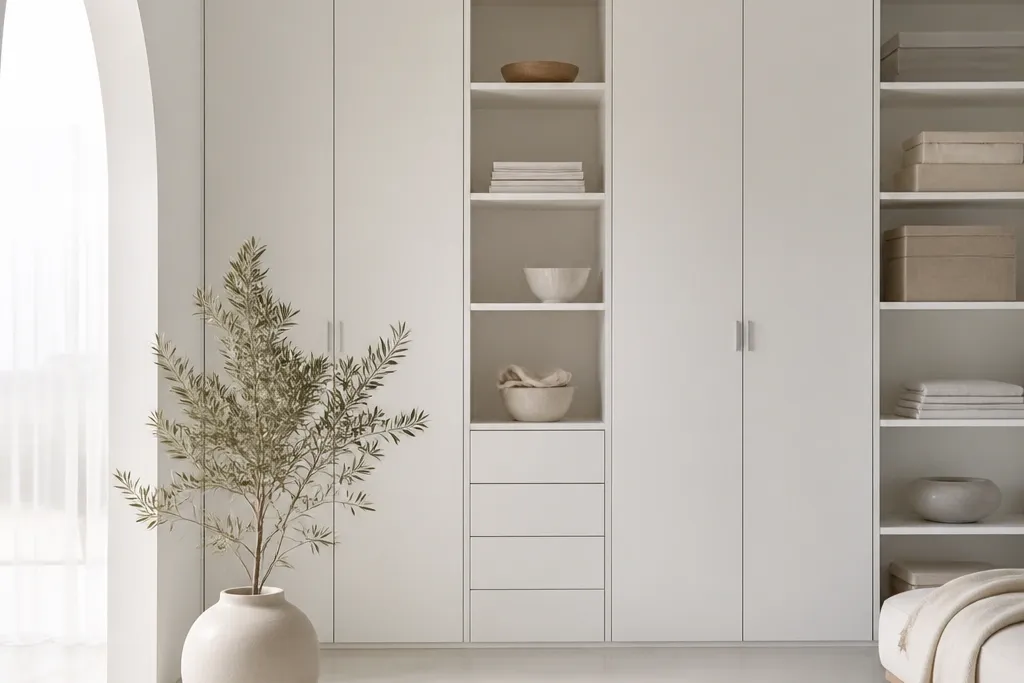
Open shelving looks cute until the day you need to store real life. Cabinet doors keep the “clean room aesthetic” when you’re not folding perfectly. I’ve found that even if you’re organized, open shelves still show visual noise from laundry textures and small items.
If you’re buying, pick doors with simple hardware — brushed nickel or matte black. For DIY, add magnetic cabinet latches to keep doors aligned and avoid gaps. Keep the open cubby for one item only — like a small vase or a framed print.
Use a label maker and keep labels inside the cabinet so they don’t become visual clutter.
Avoid mixing too many wood tones on shelves. Two finishes max — otherwise it looks cluttered even when it’s tidy.
3. Bedside charging station hidden in a drawer tray
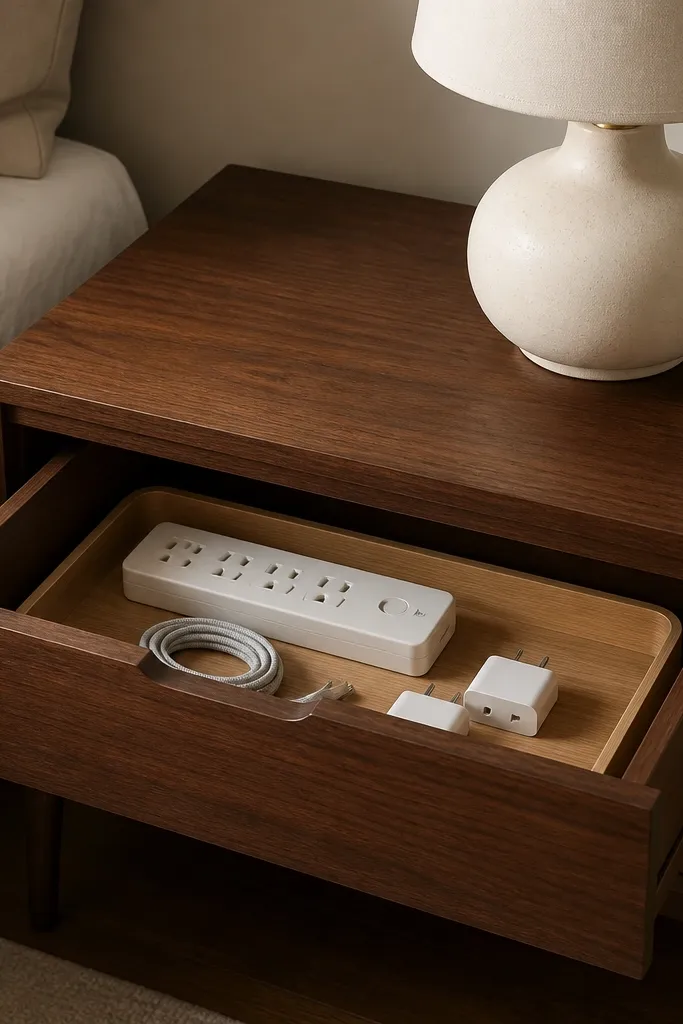
Charging cables are the fastest way to ruin a clean look. Put the messy electronics inside a drawer tray and keep only the lamp and one small item on top. The room feels peaceful because the cords are gone and your eye only sees calm objects.
Pro tipWrap cables with a fabric tie and keep them the same length every time.
Use a shallow tray that fits the drawer footprint — about 1 inch deep is enough for adapters. Route the cable through a small hole or use a cord channel on the back of the drawer. Keep one charging slot for your phone and one for a second device so you don’t stack adapters everywhere.
Watch outAvoid leaving charging blocks on the nightstand. They look like clutter even when you wipe dust.
4. Dresser top tray + two-height décor rule
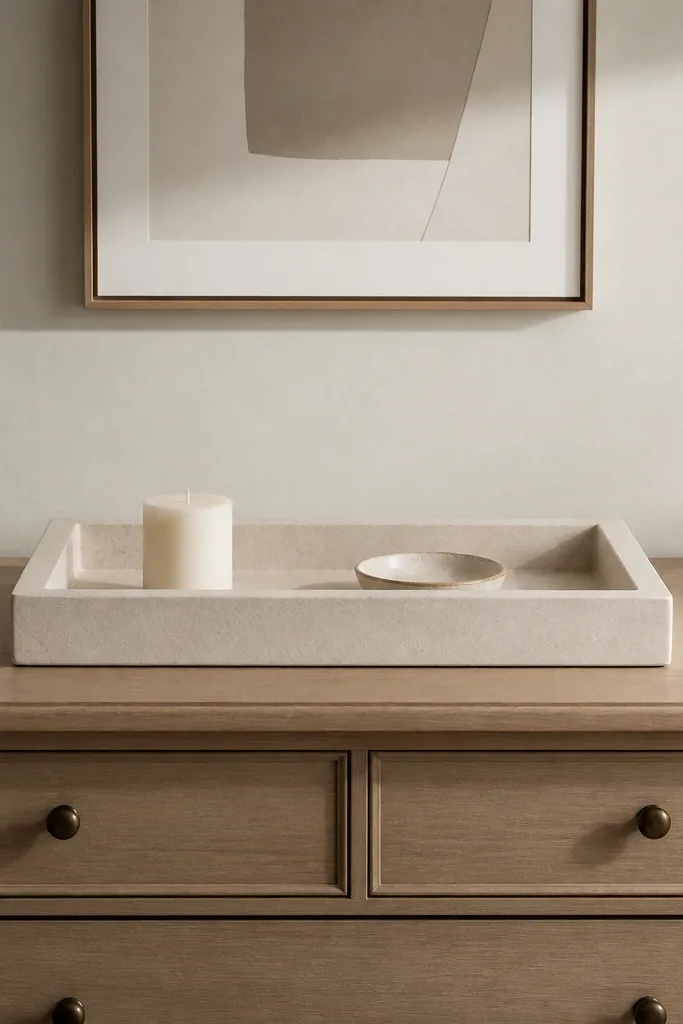
A tray gives you boundaries. When I used to scatter items across the dresser, the room looked busy even with “only a few things.” With a tray, you keep the same items but control their visual spread, so it reads as intentional storage.
Pro tipPut a small microfiber cloth folded under the tray edge so you can wipe fingerprints fast.
Choose a tray that matches your room materials — matte ceramic for a soft look, or light oak for warmth. Use one tall item (like a candle) and one low item (like a dish) so the height difference feels planned. Leave the remaining dresser top empty.
Watch outAvoid stacking more than two items inside the tray. Three starts looking like a “catch-all.”
5. Color-matched linen bins in a closet cubby wall
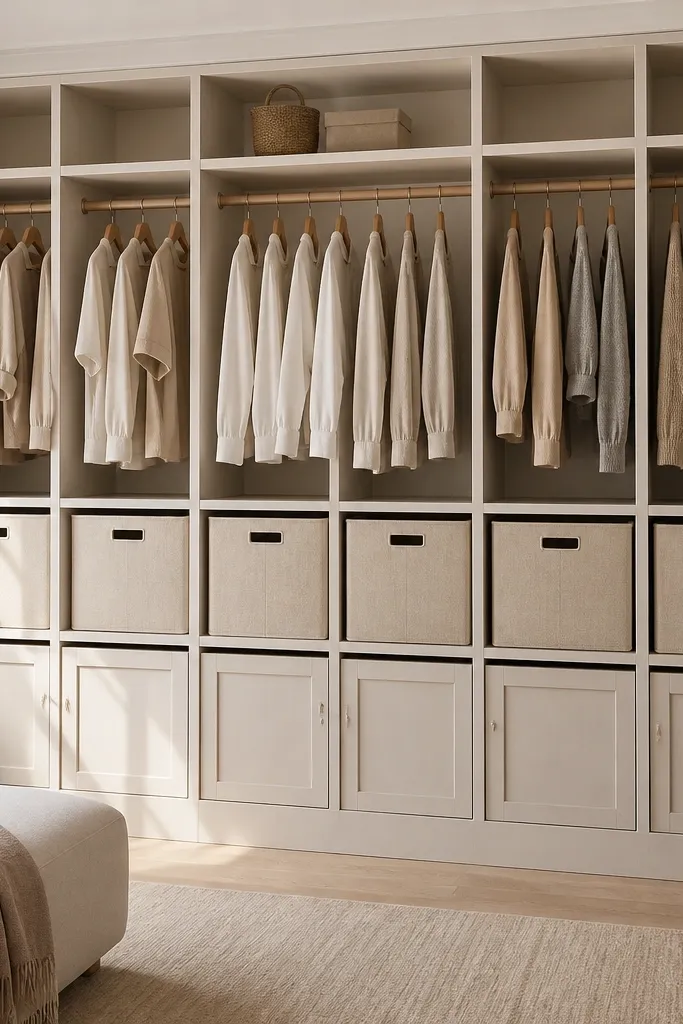
Same color bins make the storage disappear into the wall. Linen-texture fabric bins look soft and calm, and they handle wrinkles better than shiny plastic. I like this setup because you can sort without seeing the results until you open a bin.
Pro tipPut “weekly rotation” items in one labeled row so you don’t shuffle everything every time you grab something.
Pick bins that are the same height across the cubbies. If you have mixed closet sizes, use a single bin size for the majority and fill gaps with matching smaller bins. Keep heavy items in the bottom row to avoid bin sagging.
Watch outAvoid mixing bin colors with no plan. Two tones max looks styled; five tones looks like storage chaos.
6. Wall-mounted hooks with a hidden umbrella sleeve
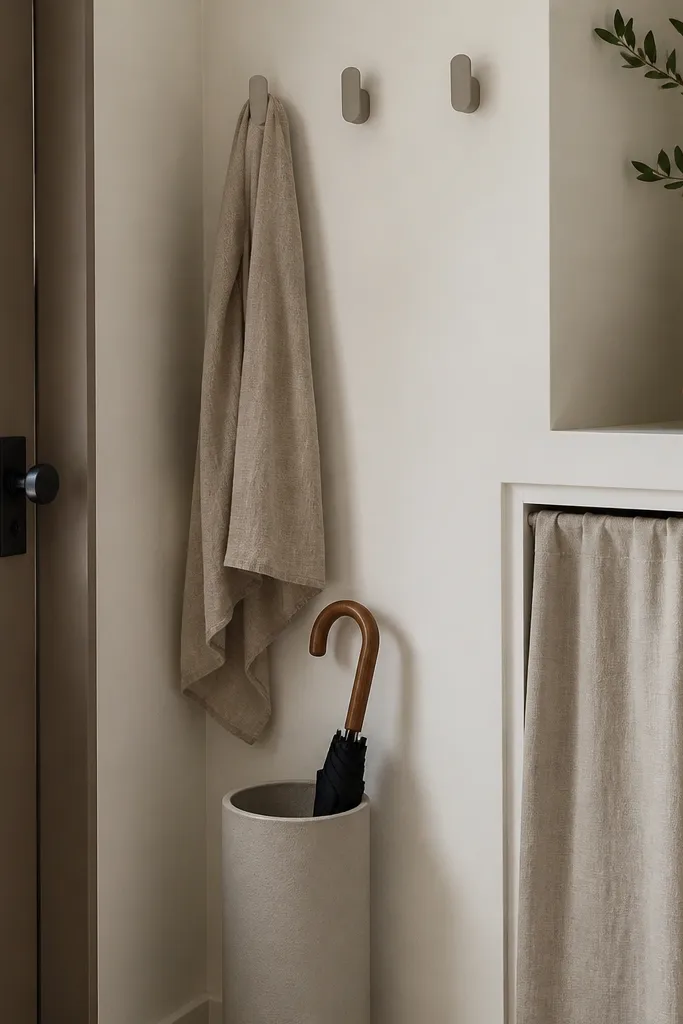
Hooks create order fast, but umbrellas, bags, and wet items can ruin the clean look. I use a hidden sleeve so the wet umbrella and tote bag don’t stay visible in the doorway. The room stays “clean room aesthetic” because the entry wall stays visually quiet.
Mount hooks at about 62 inches from the floor for coats and 48 inches for bags. Use a sleeve with a fabric exterior and a waterproof interior liner if you get rain. Keep a small mat under the sleeve so it catches drips without spreading them around.
Hang only one “daily” bag on the hooks. Everything else goes inside a closed spot.
Avoid leaving a pile of bags on the floor by the hooks. It defeats the whole point.
7. A retractable hamper with a matching lid
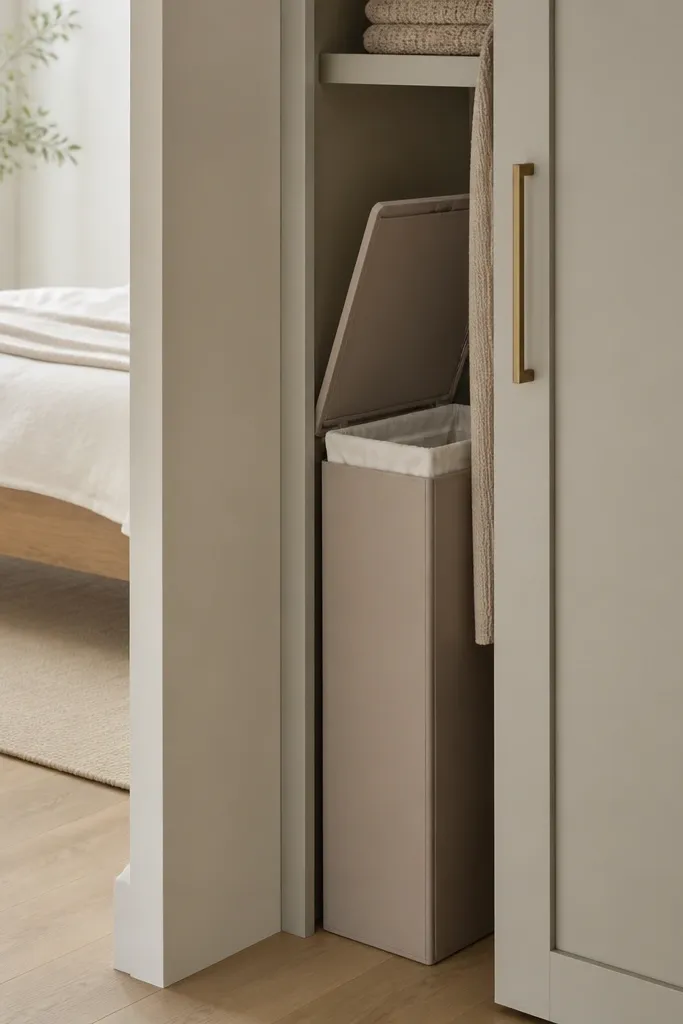
Laundry is the biggest enemy of the calm look. A hamper with a lid keeps the “dirty but not gross” factor contained. When it slides into a closet or behind a panel, it stops being a constant visual reminder.
Pro tipUse two sections inside the hamper for lights and darks so you’re not dragging laundry bags across the room.
Choose a hamper that fits your closet width — measure the opening and account for door swing. Use a liner you can remove and wash. If you want the clean look even more, pick a lid color that matches the door paint.
Watch outAvoid open hampers in bedrooms. They create visual clutter even when the hamper isn’t full.
8. Rolling cart with closed cabinet doors on top
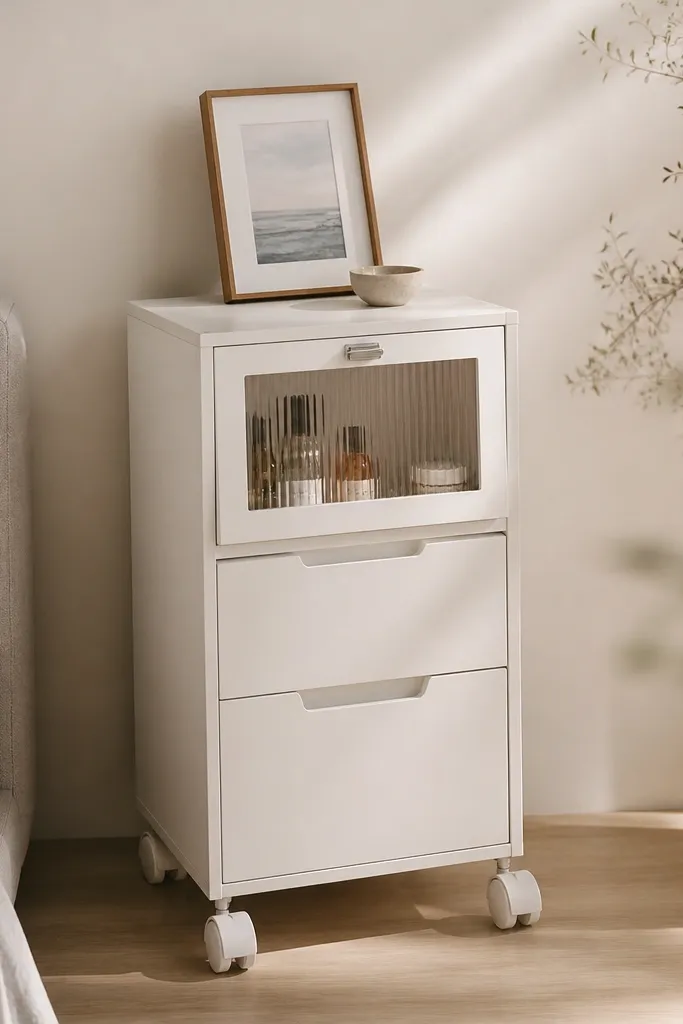
I use rolling carts when I need storage that moves with my day. The key is keeping bottles and small items behind a door so the front looks clean. The cart also lets you hide clutter when guests walk in.
Pro tipStore your “daily use” items in the top compartment and keep backups in the drawer below.
Pick a cart with a flat top so you can place a tray. Use bins inside drawers so items don’t spill into each other. Keep the top space limited to one tray and one décor item.
Watch outAvoid uncovered stacks on the cart. They show through the top like a mess waiting to happen.
9. Closet shelf dividers plus matching fold method
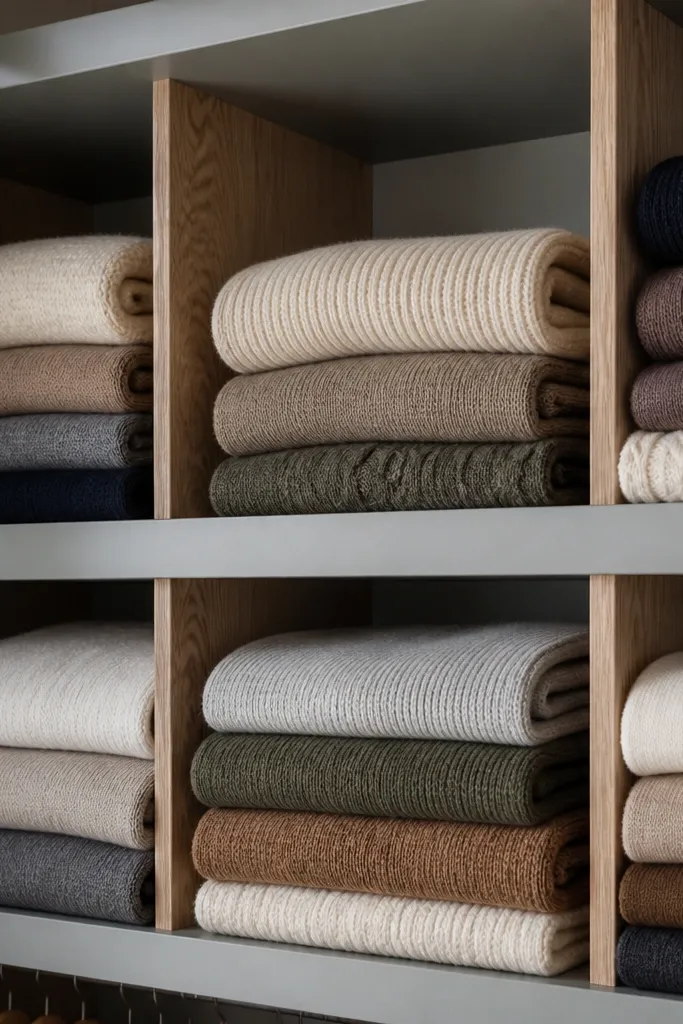
The easiest way to make shelves look tidy is to stop the “lean and collapse” effect. Shelf dividers keep folded items upright and separated, so the closet looks ordered even when you haven’t folded perfectly that week. It also saves time because you can see what’s on each shelf instantly.
Pro tipLabel the shelf dividers with small discreet tags so you don’t mix categories over time.
Use dividers that fit the shelf depth — usually 10-12 inches deep works for most closets. Fold items using a rectangle fold and place them upright like books. Keep one shelf for knits, one for tees, and one for socks so textures don’t mix visually.
Watch outAvoid stuffing items sideways. It makes the whole shelf look lumpy and messy.
10. Laundry sorting in two matching pull-out bins
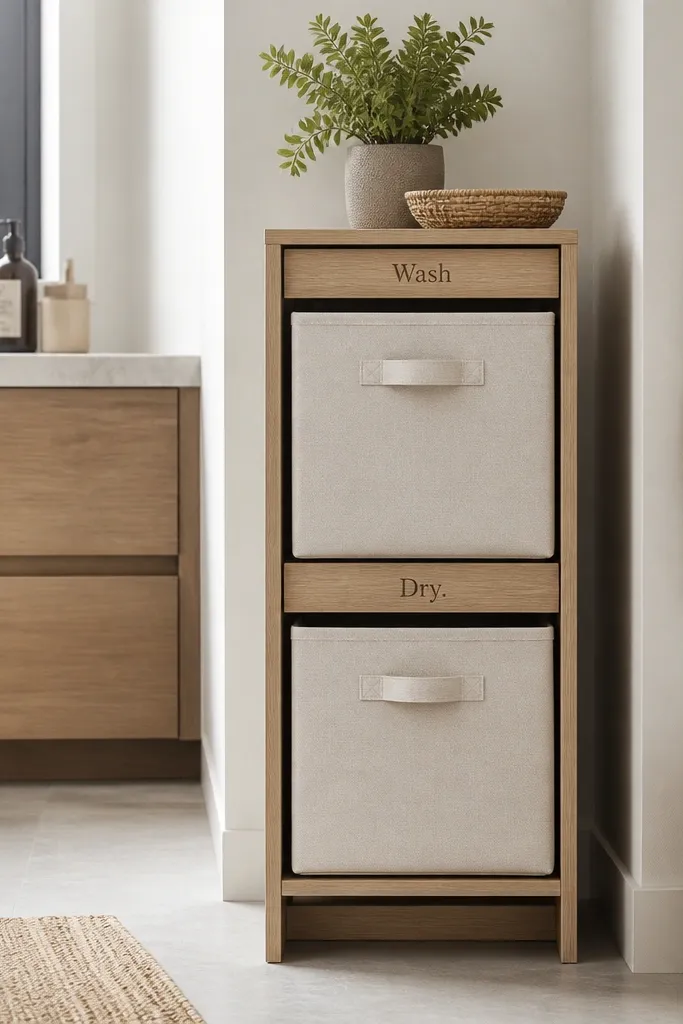
Sorting keeps piles from spreading across the room. Pull-out bins are cleaner-looking than two open bags because they stay contained and don’t slump. When the bins match, the system looks designed instead of improvised.
Pro tipPut “wash” closest to where you start laundry and “dry” closest to where you hang or dry it.
Install bins in a cabinet or under a bench where the door can close. Choose bins with lids or high sides so laundry doesn’t spill out. Keep the labels simple and small so they don’t look like a craft project.
Watch outAvoid mixed-size bins. The uneven gaps make the whole cabinet look unfinished.
11. Curtain-shelf hack for ugly closet contents
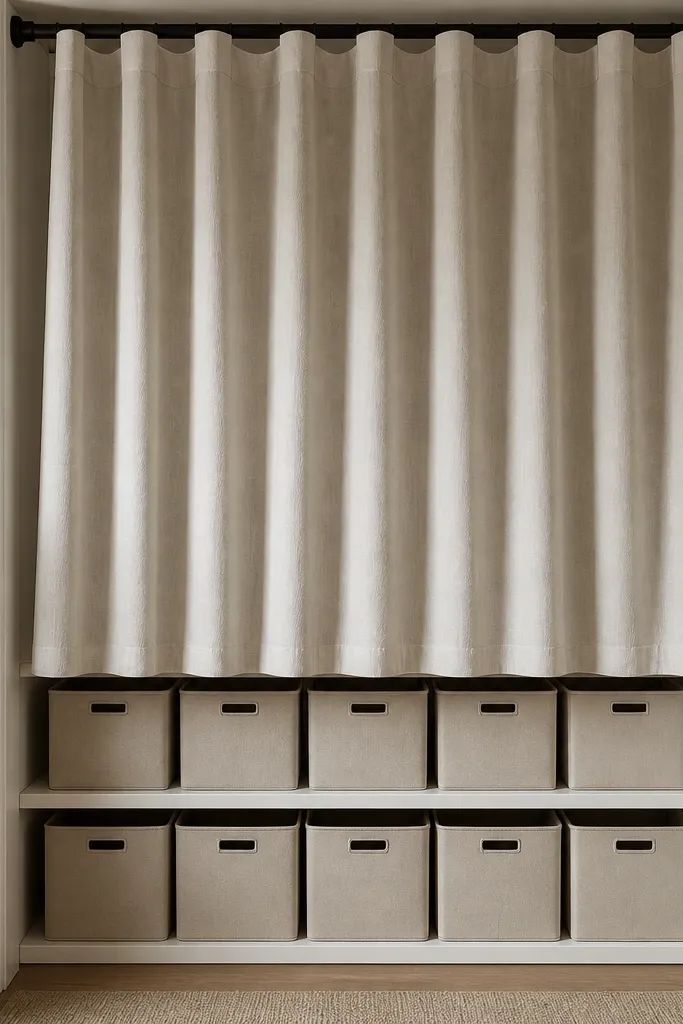
A curtain turns an open shelf into a closed storage zone without installing doors. Linen curtains look soft and calm, and they hide the mess while still letting you see the storage layout when you need it. This is the fastest way I’ve found to make a “not pretty” closet feel intentional.
Pro tipAdd a small weighted hem or clip weights so the curtain hangs flat.
Use a tension rod or a mounted rod wide enough to cover the entire shelf face. Hang the curtain so it covers the bins fully, with a slight gap at the floor so it doesn’t drag. Choose a curtain in the same color family as your walls.
Watch outAvoid thin sheers. They show bin labels and contents too clearly.
12. A narrow linen cabinet with pull-out trays
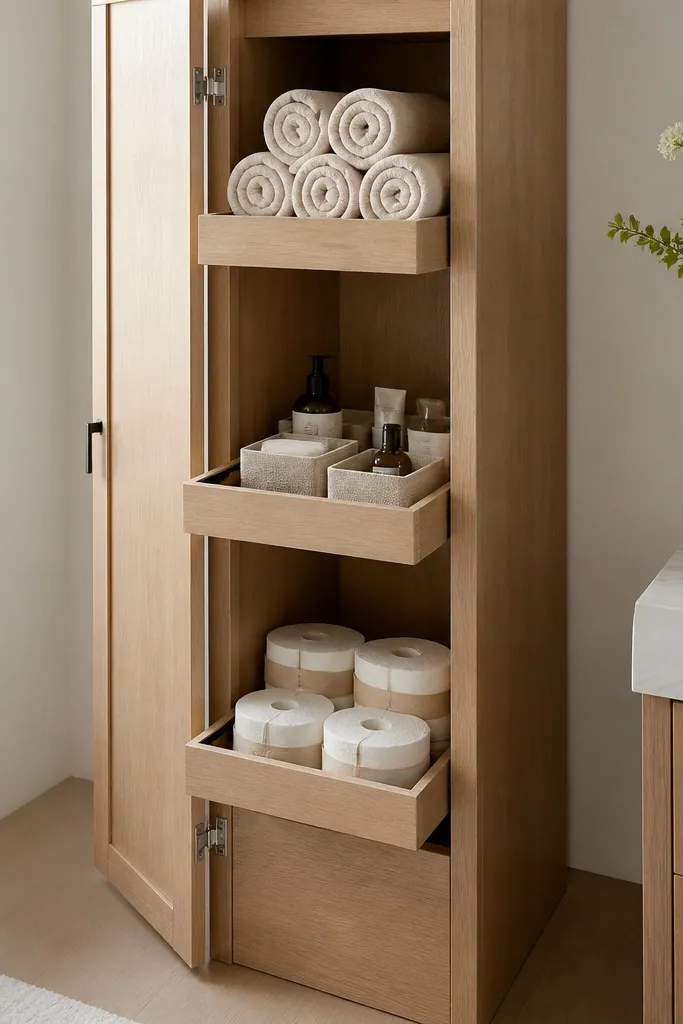
Pull-out trays make tall storage usable without digging to the back. The calm look comes from keeping everything front-facing and uniform. I’ve used this in small bathrooms where counters are tiny - the cabinet becomes the clean room aesthetic anchor.
Pro tipPut a small tray liner under each tray to catch spills and make wipe-down faster.
Pick a cabinet with interior width that matches your tray size so trays slide without wobble. Use rolled towels for the top tray so they look neat and stack efficiently. Keep toiletries in small boxes with consistent sizes to prevent a “jumbled drawer” look.
Watch outAvoid leaving items loose in the cabinet. You’ll end up with a pile that looks messy even when it’s “organized.”