1. Blush curtain + pink LED strip behind the valance
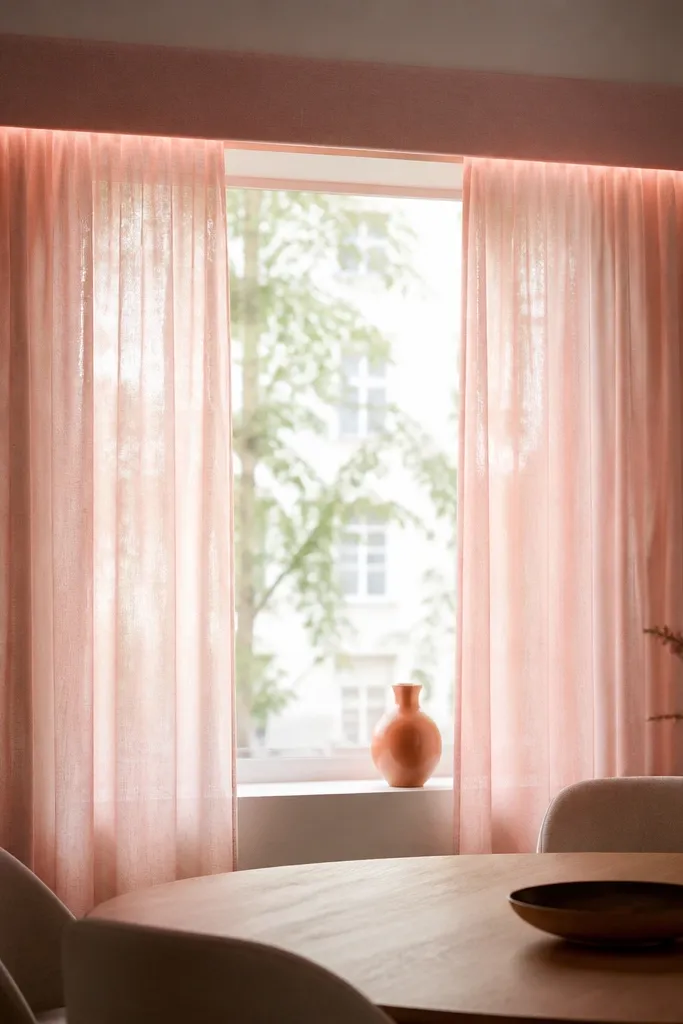
This setup makes pink look like it’s coming from the room instead of from one tiny lamp. The LED strip bounces through the sheer fabric, so you get a gentle halo rather than a harsh point source. Orange accents, like a terracotta vase or a burnt orange napkin, warm up the glow and keep it from feeling too sweet.
Pro tipSet the LEDs to a soft pink mode and keep brightness around 30-50% so the fabric stays blush, not magenta.
Use a 5V or 12V LED strip with a diffuser channel or tuck it behind the valance so the LEDs aren’t visible. Keep the curtain fabric lightweight, not thick blackout — you want light diffusion. Place one orange item within the light zone, like a ceramic vase or a folded napkin on the sill.
Watch outDon’t use a strip without a diffuser — visible LED dots make the whole thing look DIY.
2. Tabletop peach runner + warm orange candle wall lights
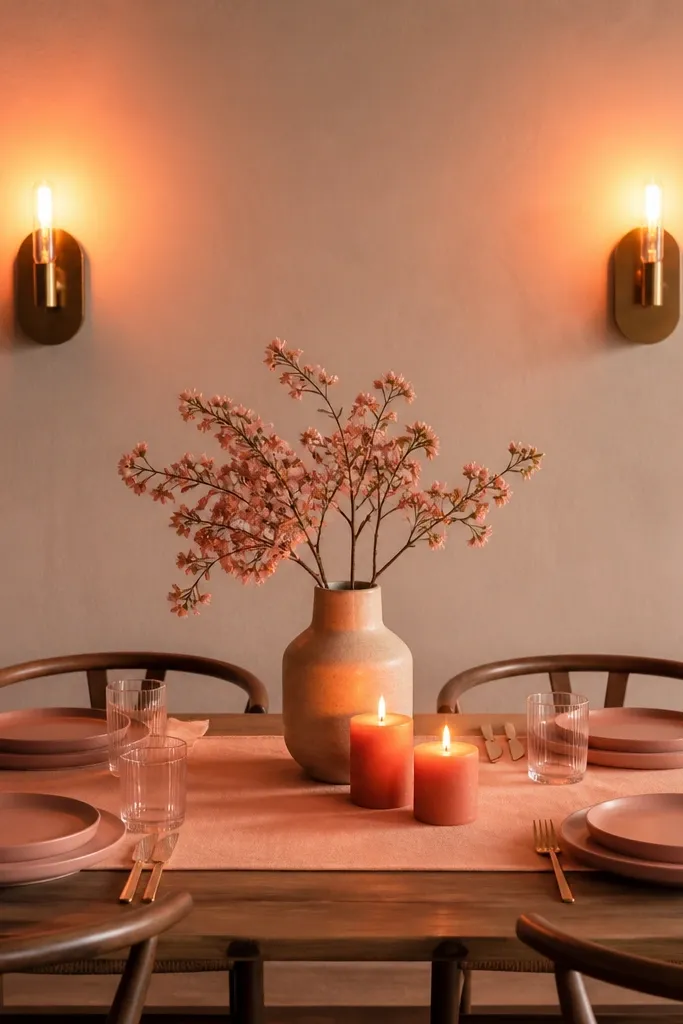
A peach runner grounds the palette so your pink decor doesn’t float. The warm orange candle color makes the runner look richer, while the wall lights give you that restaurant glow. This works because the light hits the table surface at an angle, so you see texture in the fabric and the candle holders.
Pro tipChoose candle holders in matte white, blush ceramic, or light wood so the orange light doesn’t reflect too harshly.
Lay a runner that’s about 12-16 inches wide for a standard table. Put candles in the centerline, spaced 6-10 inches apart. Use warm bulbs in sconces (2700K) and keep candle flame realistic or LED-flame if safety matters.
Watch outSkip bright white bulbs — they wash peach into pinkish-gray.
3. Pink acrylic shelf box with mini lights pink aesthetic widget glow
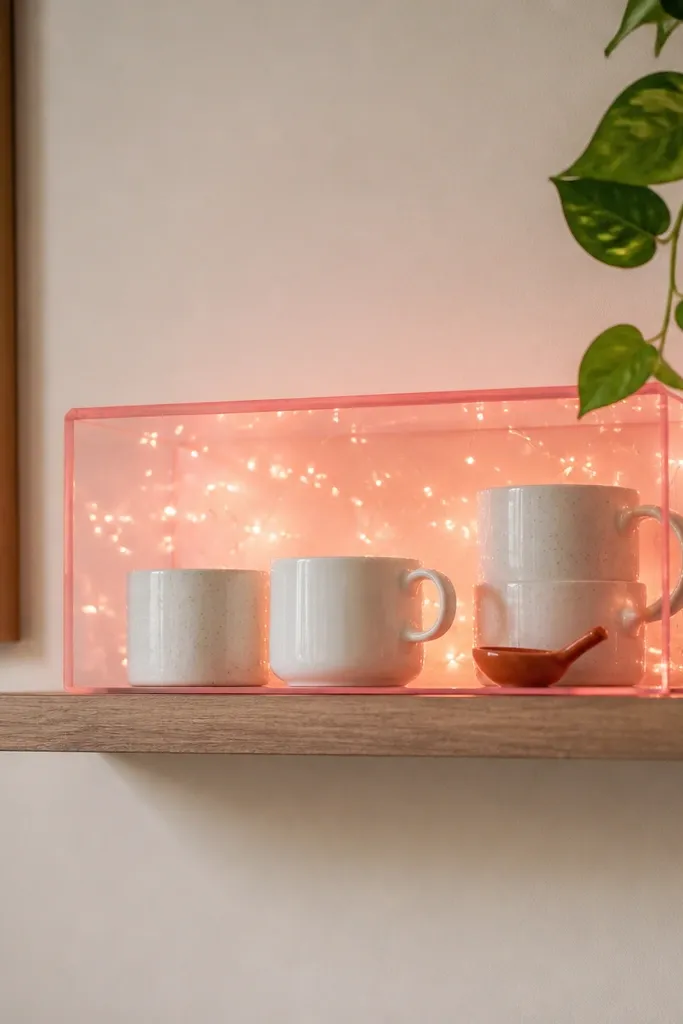
This is the cleanest way to get that “lit object” look without covering the whole room in light. Acrylic makes pink light look brighter and more even, so the shelf reads intentional. Orange pieces in the foreground — like a wooden spoon rest or a terracotta sugar bowl — add warmth and depth.
Pro tipWrap the cord behind the shelf bracket and use a white cord cover so the glow looks like it’s floating.
Use a clear pink-tinted acrylic box or a clear box with pink LED lights. Keep the lights inside the box and plug into a hidden outlet behind the shelf. Arrange items so you see 60-70% of the glowing space, not a packed clutter pile.
Watch outDon’t cram too many items — a glowing box needs breathing room to look premium.
4. Blush placemats + orange pendant lamp shade clip
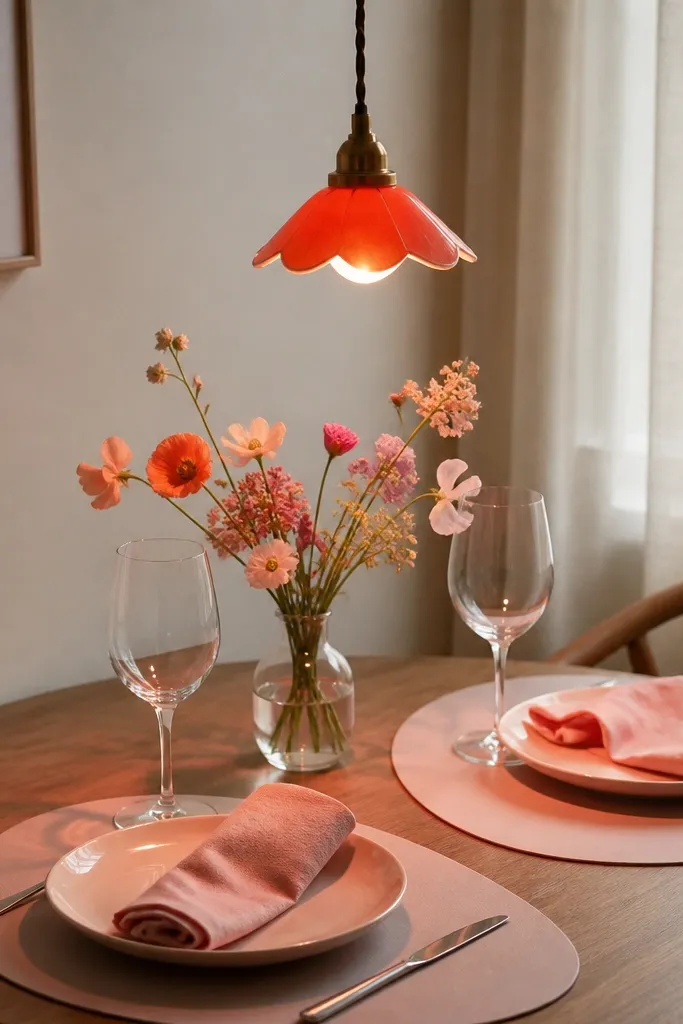
Clip-on shade covers are the fastest way to tint lighting without replacing fixtures. The pendant gives you direct light where you need it — the table — so the pink placemats look rosy instead of washed out. Orange tinting makes metal cutlery look warmer and less stark.
Pro tipTest the tint for 10 minutes at night before buying more decor — the plate color tells you immediately if it’s flattering.
Pick a clip-on cover in burnt orange or terracotta and match it with blush linens. Use the cover on a pendant or small chandelier directly above the dining center. Keep plates in white or cream so the tinted light shows clearly.
Watch outDon’t pick a cover that’s too dark — you’ll lose brightness and the pink looks heavy.
5. Pink lantern cluster on a buffet with orange glassware
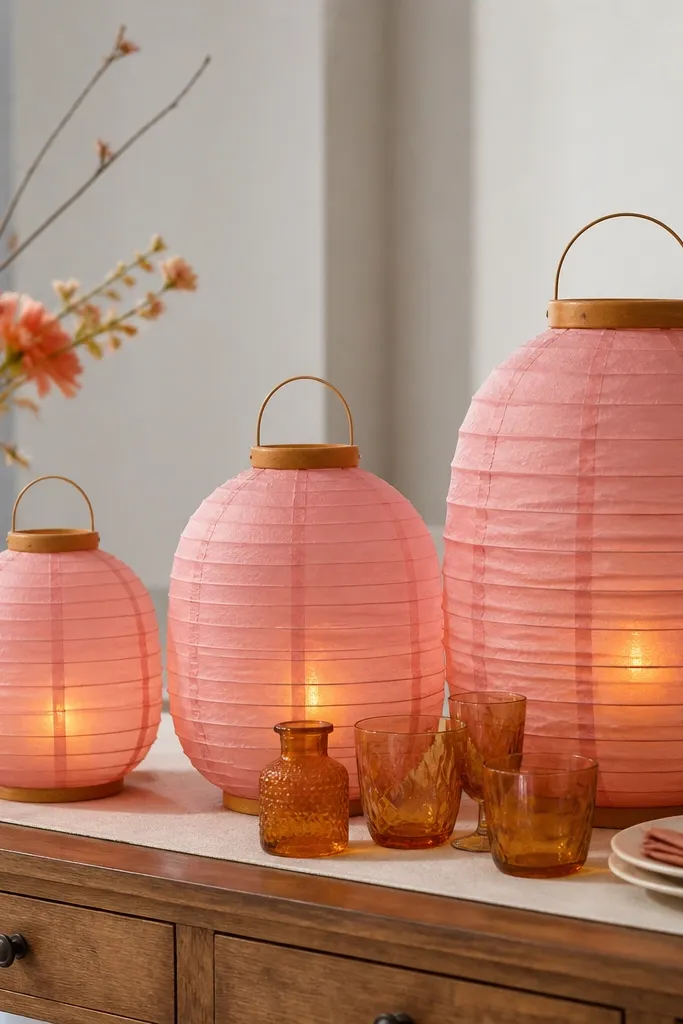
Lanterns turn lighting into decor, and the layered sizes make the buffet feel styled without extra clutter. Pink paper softens the light, and orange glassware catches highlights, so the scene looks dimensional. This works great when your kitchen is open-plan and you want the dining area to read as a distinct zone.
Pro tipUse a warm pink (not neon) so the lantern glow stays flattering on skin and food.
Use LED candles inside each lantern so you don’t deal with flame or heat. Keep lantern sizes staggered — small, medium, then one taller one — and center them over the buffet. Place orange glassware in a line so it looks intentional under the glow.
Watch outAvoid mixing too many lantern colors — stick to pink plus orange, not pink plus red.
6. Orange terracotta wall tray + pink LED under-shelf wash
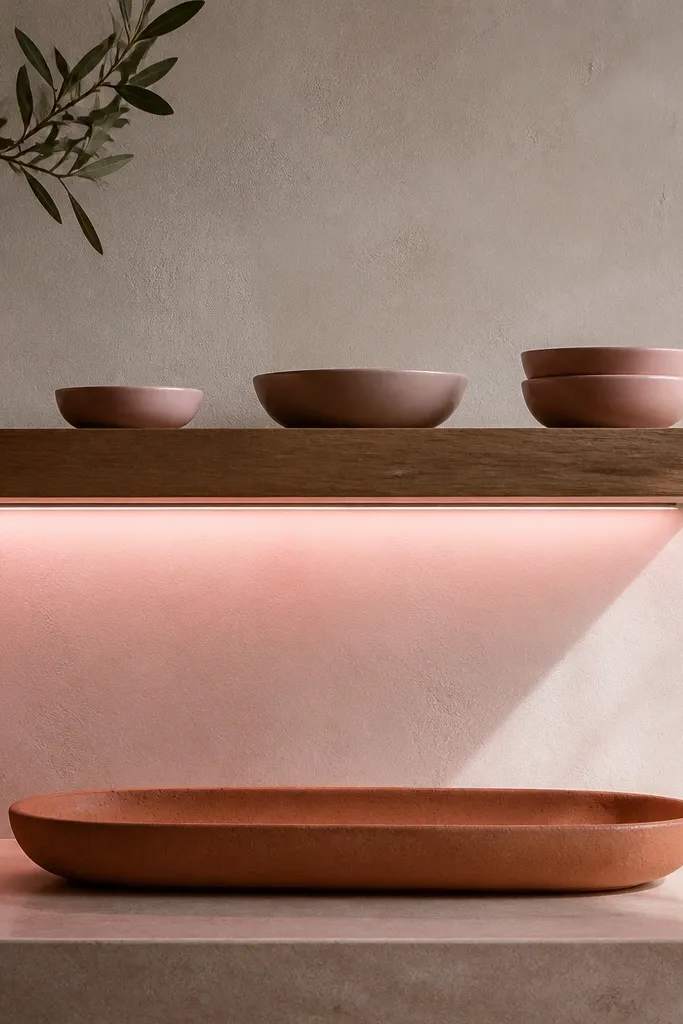
An under-shelf light wash makes pink feel like part of the architecture. The terracotta tray pulls the palette back into warm tones, so your kitchen doesn’t feel like a kids' room. I like this because it lights your serving area without turning the whole room into a nightclub.
Mount a shelf (or use a floating shelf) and place a pink LED strip under the front edge, hidden behind the shelf lip. Use a dimmer if you can. The terracotta tray should be centered and about the same width as the shelf, so the wash looks balanced.
Aim the light slightly upward so it hits wall texture, not just the shelf underside.
Don’t put the strip where you’ll see the LED chips from the doorway.
7. Blush linen runner + orange spice jars with fairy lights in a frame
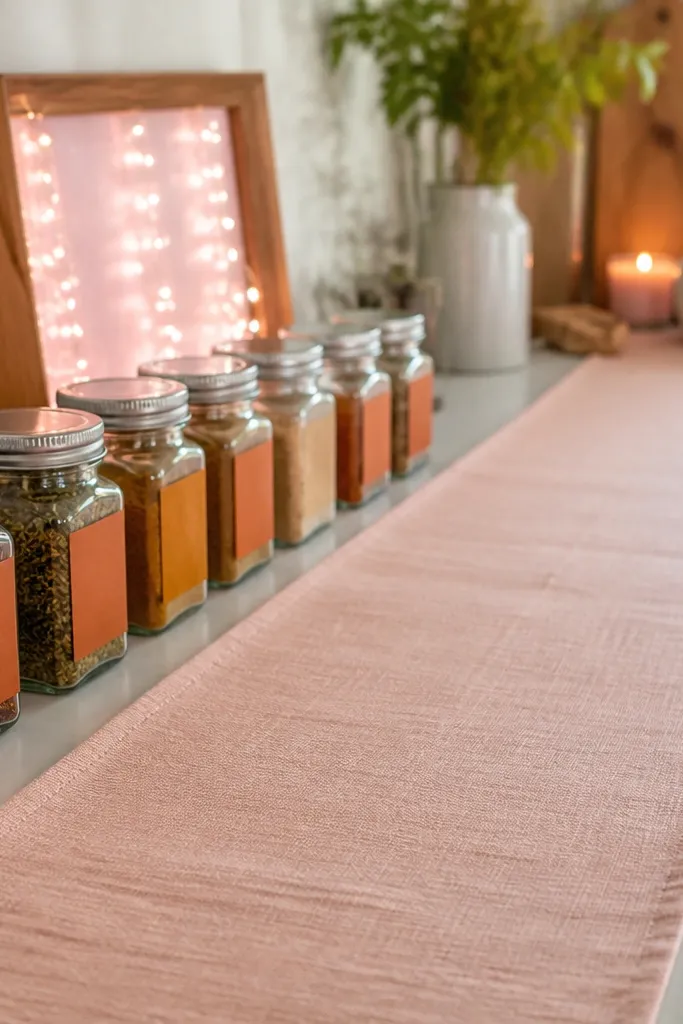
This is a “functional aesthetic” setup: the spice jars stay usable, but the frame adds that lit, curated feeling. Fairy lights in a frame create a gentle curtain of glow, so the pink looks soft and even. Orange labels act like color anchors so the runner doesn’t look pale.
Pro tipUse warm white fairy lights with a pink filter overlay (like a pink organza scrap) for a controlled pink tint.
Pick orange labels or paint jar lids in a consistent terracotta tone. Use a small frame with a backing sheet and tuck the fairy lights behind it. Keep the frame height about 10-14 inches so it doesn’t dominate the counter.
Watch outSkip random LED colors — keep the glow one pink tone across the frame.
8. Pink mirror tray with orange candle sticks and tiny puck lights
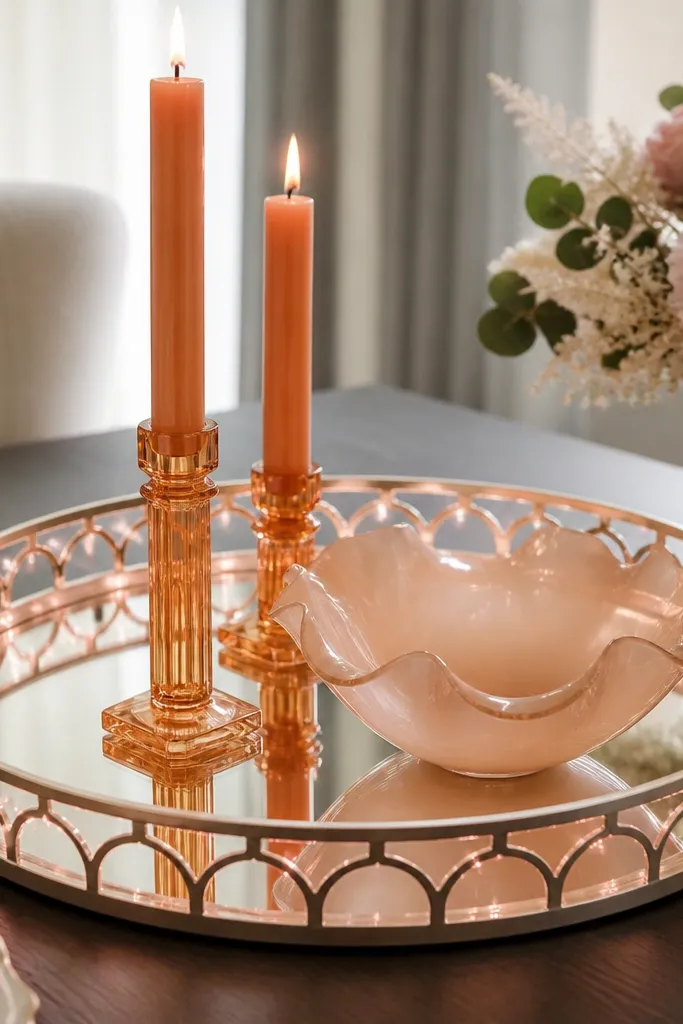
Mirrors do something underrated: they multiply light and make small decor look expensive. When you pair that with puck lights, the tray becomes a focal point that looks good from across the room. Orange candle sticks add a warm highlight so the pink reflection doesn’t feel cold.
Use a mirrored tray with a raised rim if possible. Place puck lights under the tray edge or in a small tray insert so they shine up. Candle sticks should be short, around 3-6 inches, so they don’t block the tray’s reflection.
Keep the mirrored tray clean and dry — fingerprints show up hard under pink tint.
Don’t use a dusty mirror — the glow turns gray and streaky.
9. Pink plate wall + orange serving bowl under a spotlight
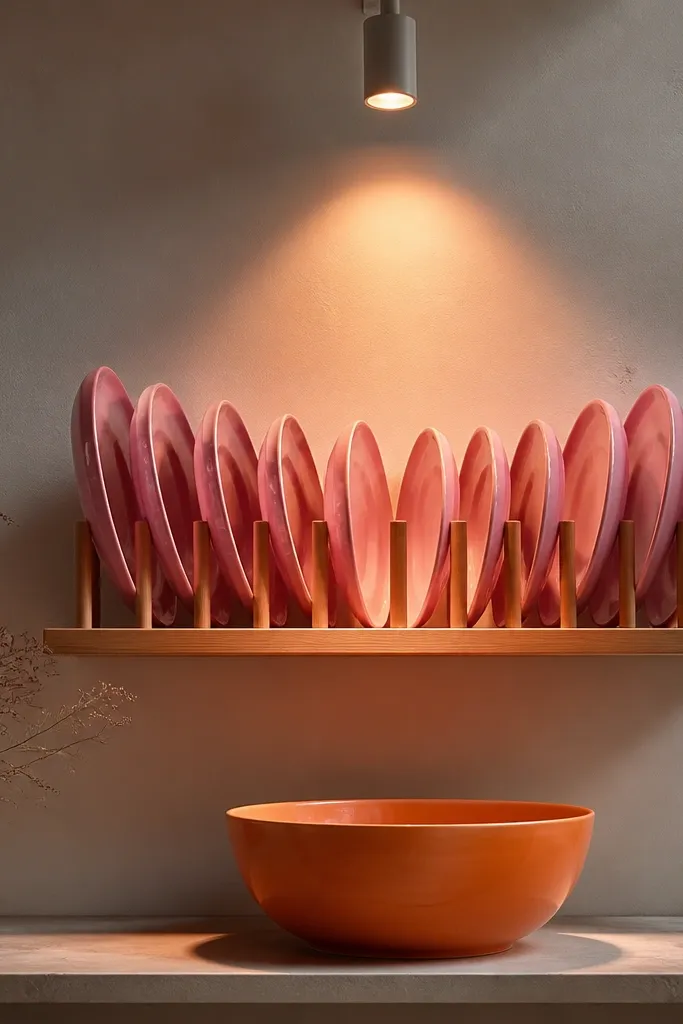
A plate wall gives you a built-in pattern, and a spotlight makes it look intentional. Pink plates look best when light hits them from above at a slight angle, so you get sheen on the glazed surface. The orange serving bowl below acts like a color landing spot.
Pro tipHang one plate slightly higher than you think — it balances the bowl visually.
Use plate hangers or adhesive plate mounts that match your wall type. Space plates 2-4 inches apart and keep the biggest plate near eye level. Use a warm spotlight bulb (2700K) and aim it so it hits the center of the plate rack.
Watch outAvoid mixing glossy and matte plates in the same cluster — the sheen mismatch looks accidental.
10. Orange terracotta floor vase + pink LED rope around the base
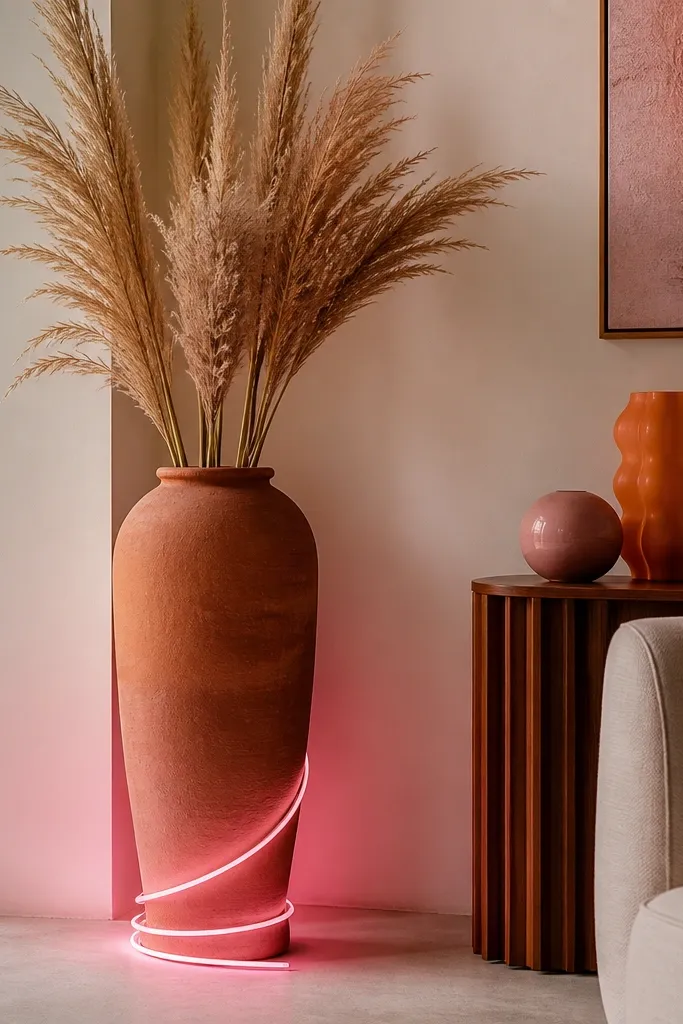
Floor lighting makes the whole dining corner feel anchored. Wrapping a rope light around the base creates an upward glow that flatters the vase surface and makes the stems look soft. Orange terracotta keeps it warm while the pink glow adds the aesthetic layer.
Pro tipUse a timer plug so the glow turns on before dinner without you thinking about it.
Use a rope light with a diffuser and tuck it under the vase so you don’t see the LEDs. Keep the glow low — the rope should sit 2-4 inches above the floor for best effect. Pair with one orange item nearby, like a small side-table lamp base or a terracotta coaster set.
Watch outDon’t wrap it too high — above mid-vase, it looks like a party prop.
11. Pink and orange place settings with a dimmable bulb hack
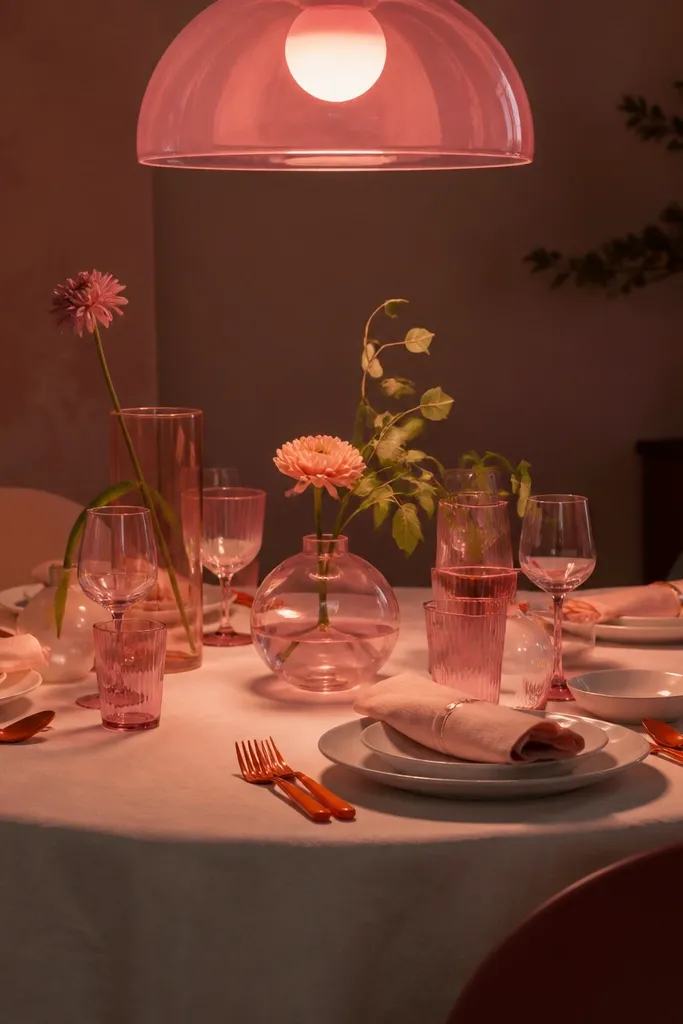
If your pink decor looks off, lighting brightness is usually the culprit. Dimming your main light makes pink look softer and orange look more like caramel. This setup is simple because the “widget” is really the bulb behavior — you get the aesthetic without extra hardware.
Use a dimmable bulb and a dimmer switch if you have one. If you don’t, add a plug-in dimmer for a lamp. Set the table with one orange element per place setting, like orange napkin rings or a terracotta-toned utensil holder.
Aim for low light levels during dinner — around 20-40% brightness — and let candles or LEDs do the rest.
Avoid bright overhead-only lighting — it makes pink look chalky.
12. Pink glass jar lights on a spice shelf with orange labels
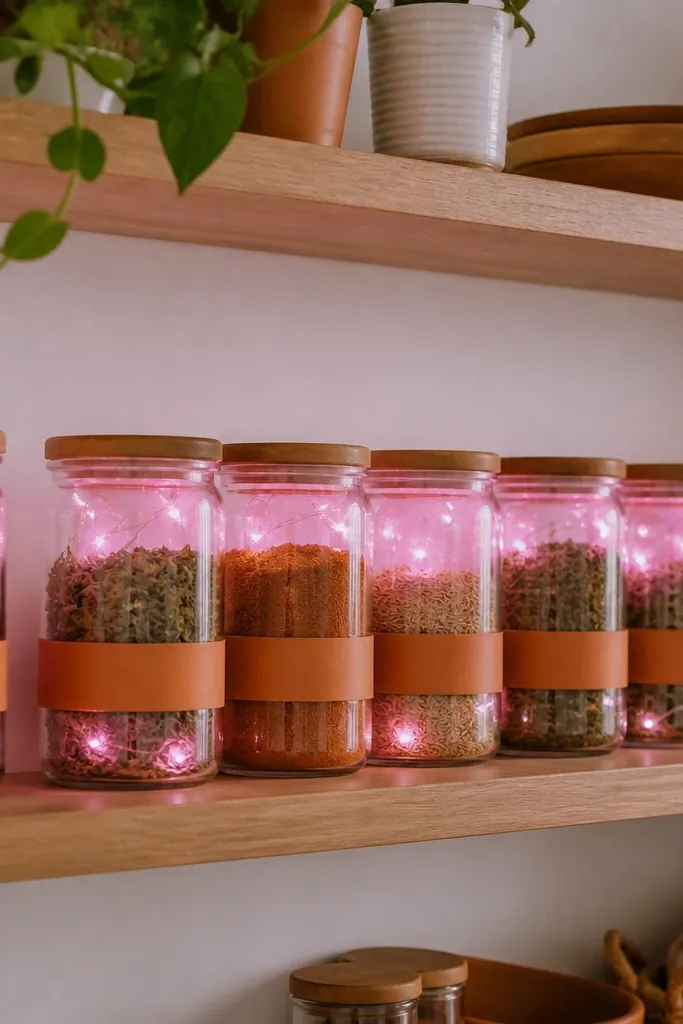
Glass jars turn small LEDs into a strong visual column. Pink inside glass looks richer than pink air, and the orange labels keep the palette readable. This is a great option when your shelf already has jars — you’re just upgrading them.
Pro tipWire the lights to one hidden outlet and use one switch for the whole shelf.
Choose clear jars with lids you can drill or pop a hole through for the light wire. Use warm white LED string lights and tint them pink with a pink silicone sleeve or a pink diffuser cap. Keep jar heights similar so the shelf looks organized, not random.
Watch outDon’t use tiny LEDs that look like pinpricks — pick a string with even spacing.