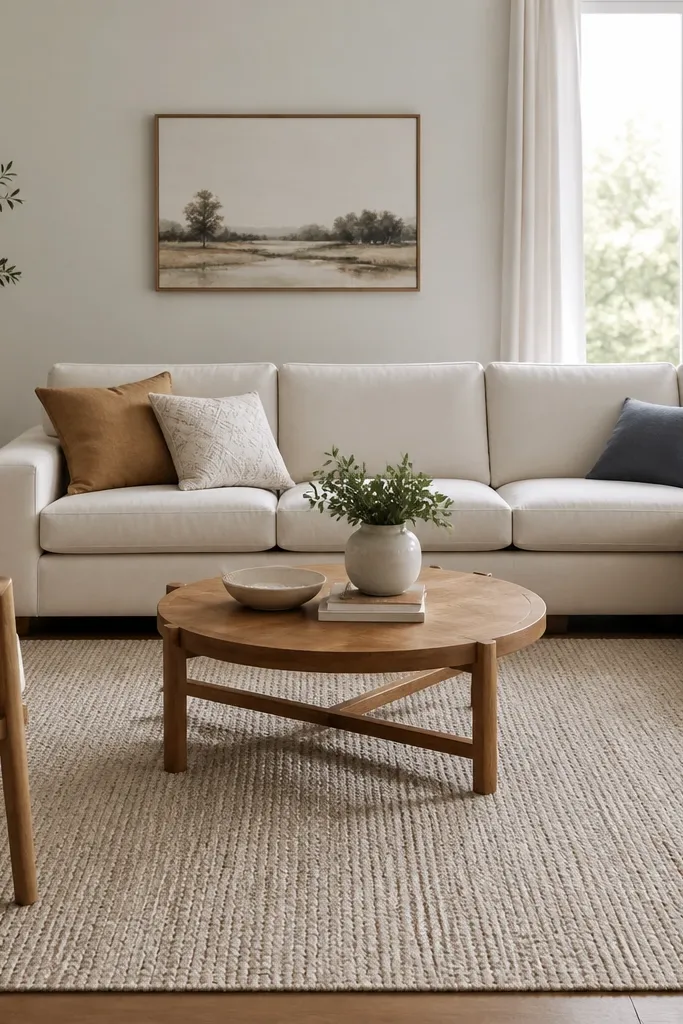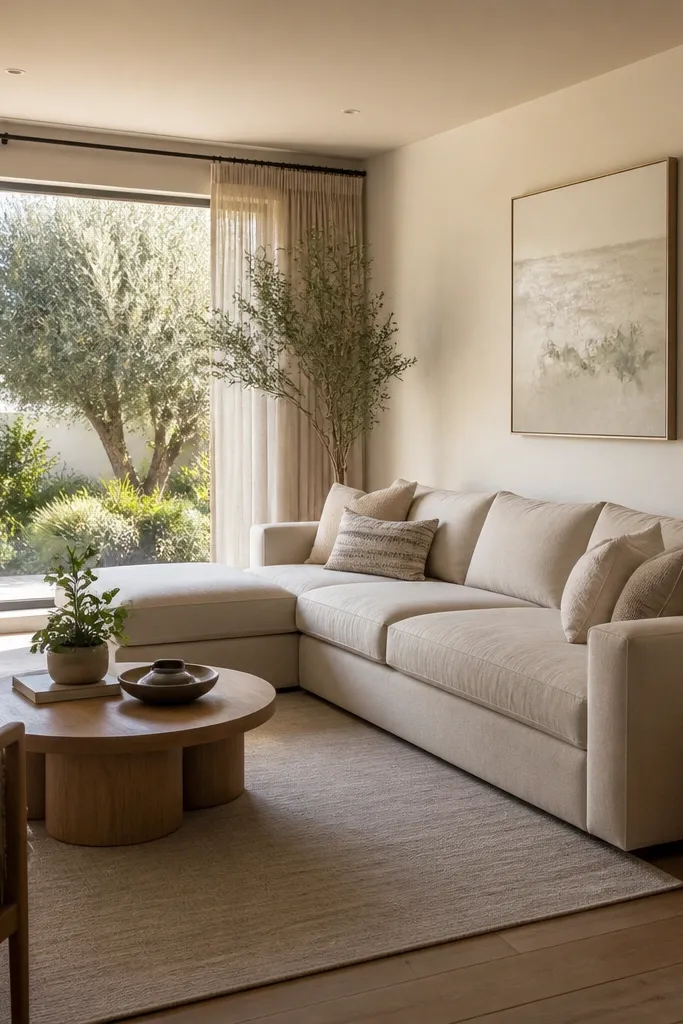
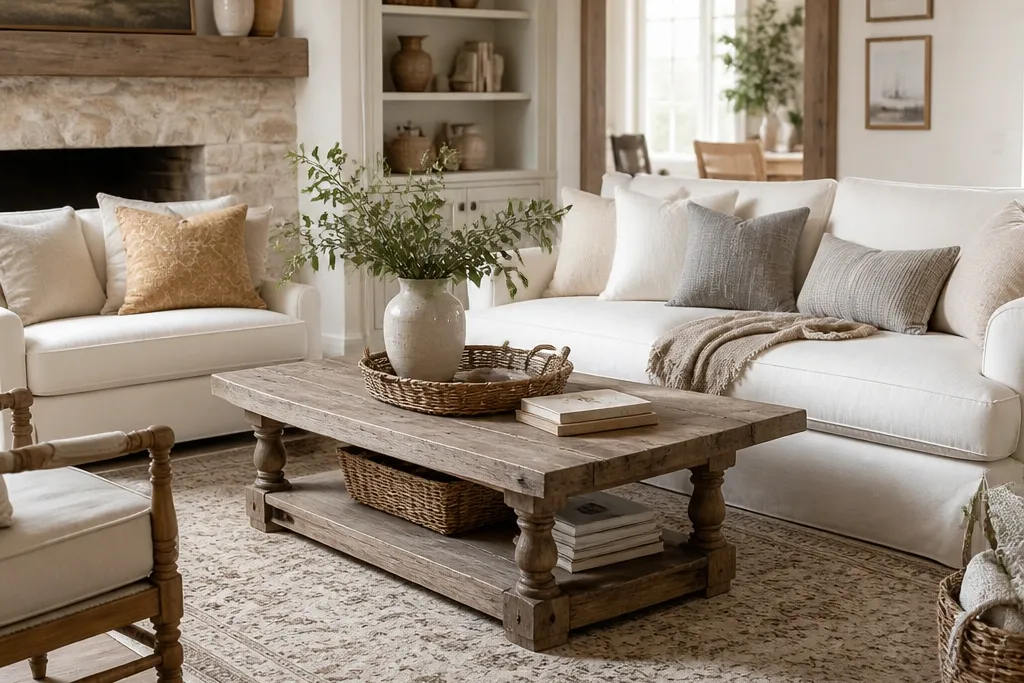
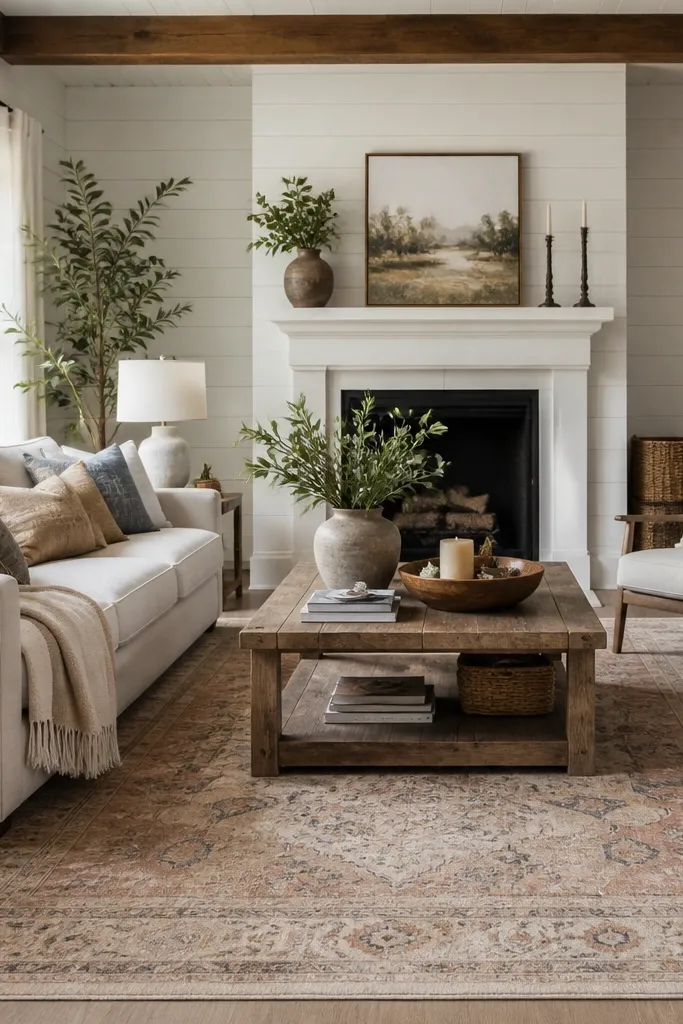
1. Oat Braided Rug Under a Cream Slipcovered Sofa
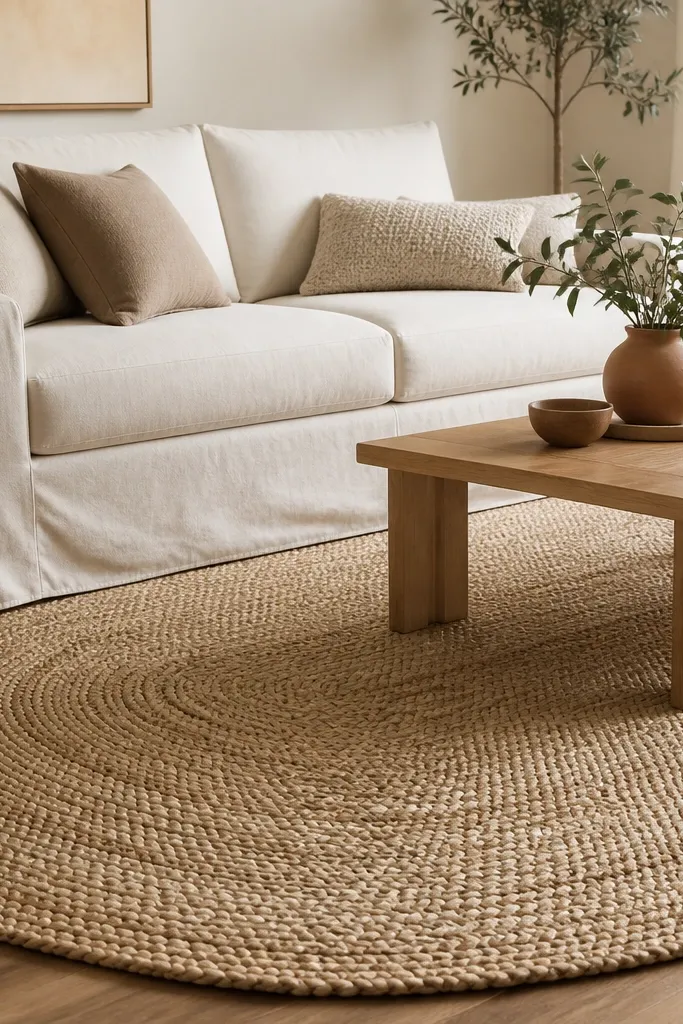
Use a rug around 8x10 for a standard sofa layout. Place it so the front legs of the sofa sit on the rug, then let the coffee table sit fully on the rug for a grounded look. Add a couple of woven throw pillows in oatmeal and light tan to keep the color story consistent.
This setup works because braided texture reads farmhouse without needing heavy patterns. The oat tone warms up a cream sofa and makes your wood look richer. I like pairing it with simple solids so the rug texture becomes the focal point, not the room’s entire personality.
Watch outAvoid pairing this rug with loud, high-contrast patterned curtains because the braid texture already carries the visual weight.
Pro tipIf your rug has a slightly uneven braid edge, trim nothing. Just center it and let the natural variation look like it was meant to be imperfect.
2. Black-and-Rust Buffalo Check for Cozy Contrast
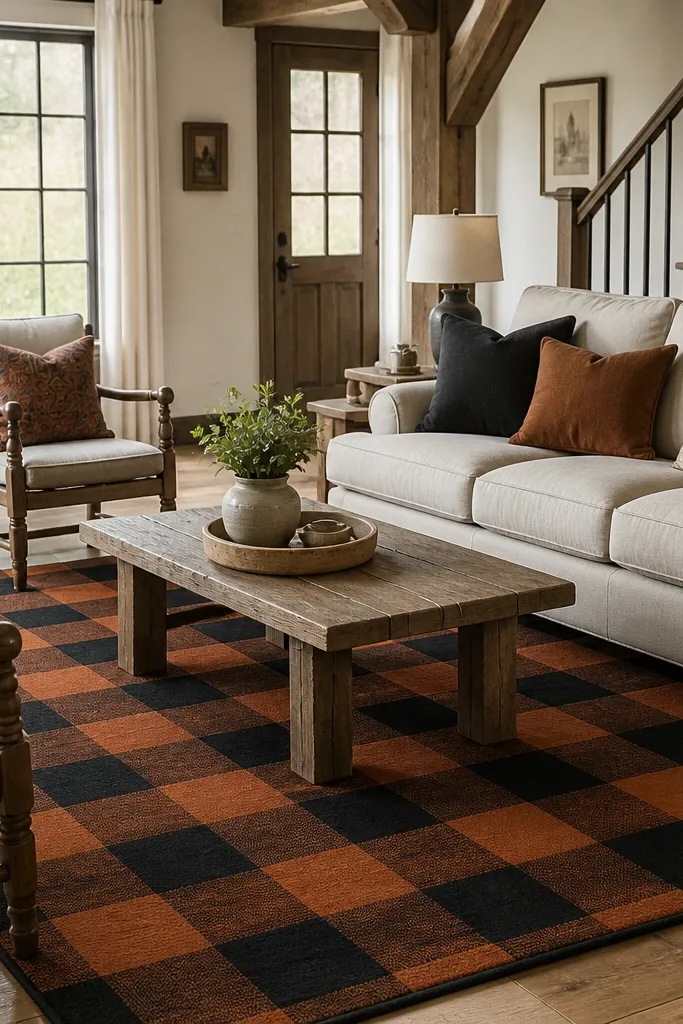
Choose a check rug in a cream base with black lines and rust accents. Size it so you have at least 8-12 inches of rug showing beyond the sofa sides. If your walls are white, add a warm-toned throw blanket in rust or clay to echo the rug.
Buffalo check can look cozy instead of busy when the check size is medium and the colors are warm. Black brings definition, rust adds that lived-in warmth, and the cream base keeps it inviting. I’ve seen this pattern work best when the rest of the room is mostly solid and textured.
Watch outSkip tiny micro-check sizes in large rooms; they read like print, not farmhouse texture.
Pro tipPick one other element to match the rust — like a ceramic vase or a throw — so the pattern feels intentional.
3. Weathered Gray Medallion Rug with Linen Curtains
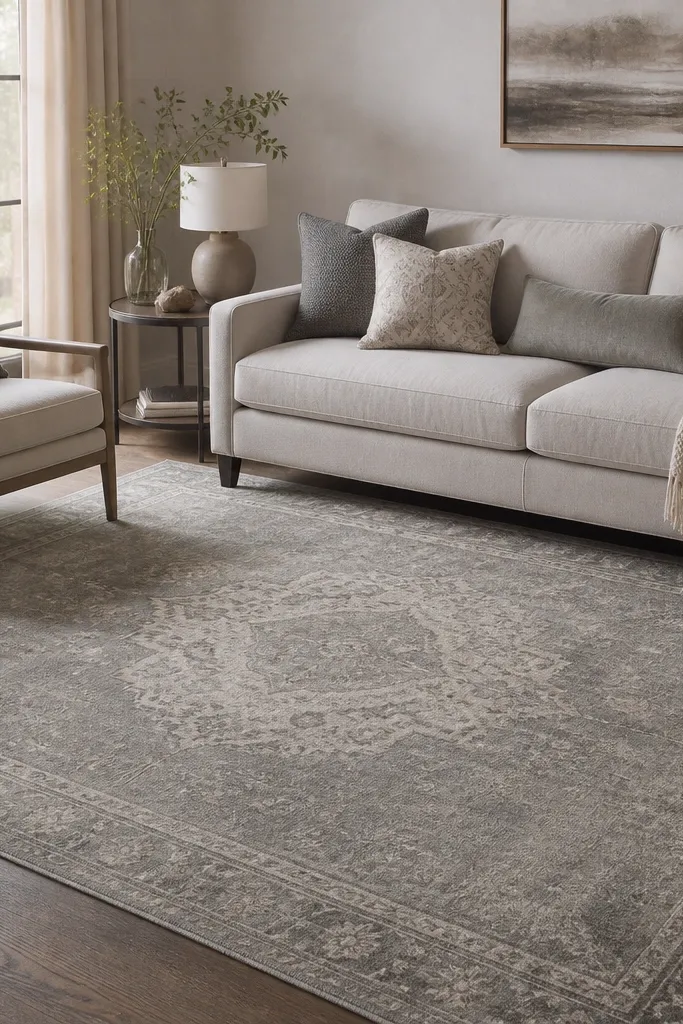
Look for a rug with a low to medium pile so the medallion doesn’t feel raised and chunky. Place the rug under the front legs, then hang curtains that hit just above the floor so you get clean vertical lines. Add a neutral jute basket or wood tray near the coffee table to echo the rug’s aged look.
A faded medallion gives you farmhouse drama without the loudness of bold florals. The weathered gray makes the room feel calm, and the cream highlights keep it from looking cold. Linen curtains in natural white add softness and make the rug pattern look older and more relaxed.
Watch outDon’t pair a faded medallion with bright white, glossy furniture finishes; it makes the rug look dull instead of aged.
Pro tipUse a rug pad to prevent sliding — medallion rugs often have a smoother backing and will creep on hard floors.
4. Cream + Warm Tan Striped Runner-Style Rug in a Wide Room
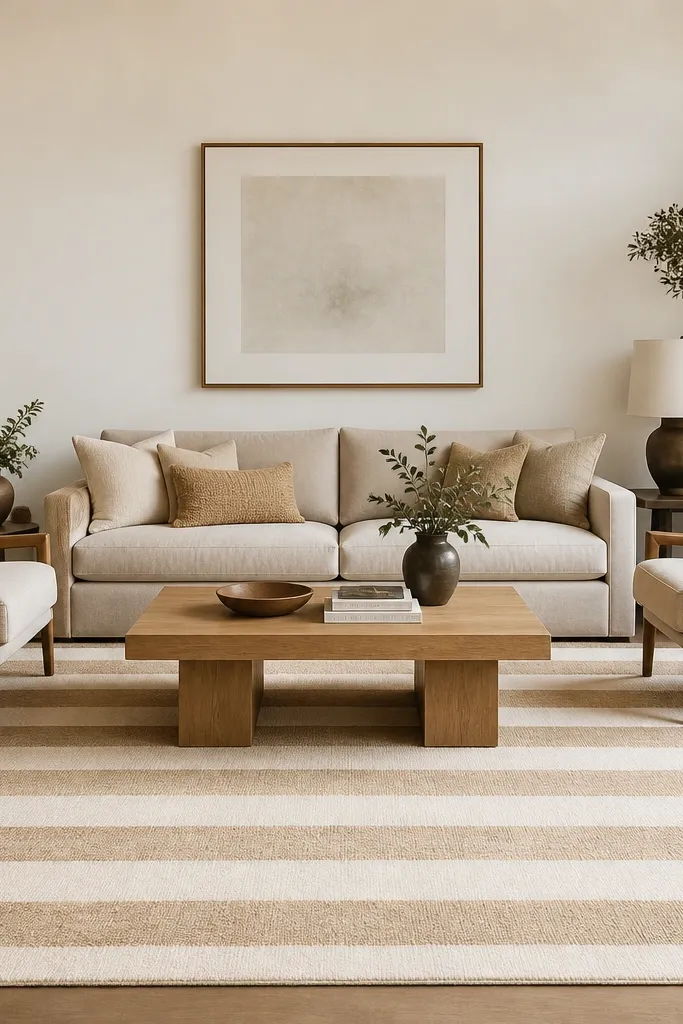
Choose a rug with stripes that are 2-4 inches wide, not super thin. If you have a long sofa, an 8x10 can work, but a 9x12 usually looks more balanced. Match with throw pillows in raw linen and a textured knit blanket in cream.
Horizontal stripes in farmhouse colors visually widen the room. This is the trick I use when the living room feels narrow — the stripes pull the eye across rather than up. Keeping the stripe tones close together (cream and warm tan) keeps it cozy and not modern-cold.
Watch outAvoid high-contrast black and white stripes if your walls are already dark; the room will feel harsh.
Pro tipRotate your rug so the stripes align with the longest wall, not the doorway. It makes the whole room feel more squared off.
5. Rustic Jute Blend Rug with a Cream Woven Under-Layer
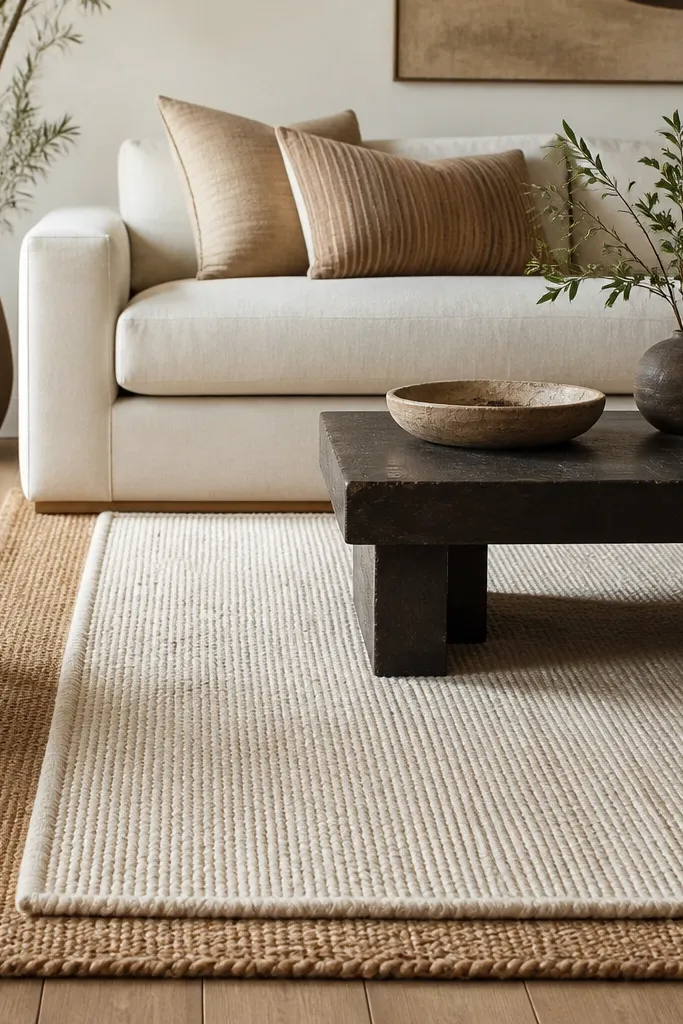
Layering jute over a lighter woven rug makes the farmhouse look feel intentional and soft. Jute brings that rough-hewn texture, while the cream layer adds warmth underfoot and prevents the room from feeling beige-only. This combo also hides minor wear better than a single light-colored rug.
Use a larger jute blend as the main rug, then layer a smaller cream woven rug centered under the coffee table. Keep the cream layer at least 6-8 inches smaller than the jute edges on all sides. Add a sisal-style basket or rattan lamp base to tie the natural textures together.
Use rug grippers between layers. Jute can slide on smooth floors, and the layered look falls apart fast if it shifts.
Skip thick pile layering; it creates uneven seating and makes the room feel lopsided.
6. Hand-Hooked Look Rug in Oat and Charcoal
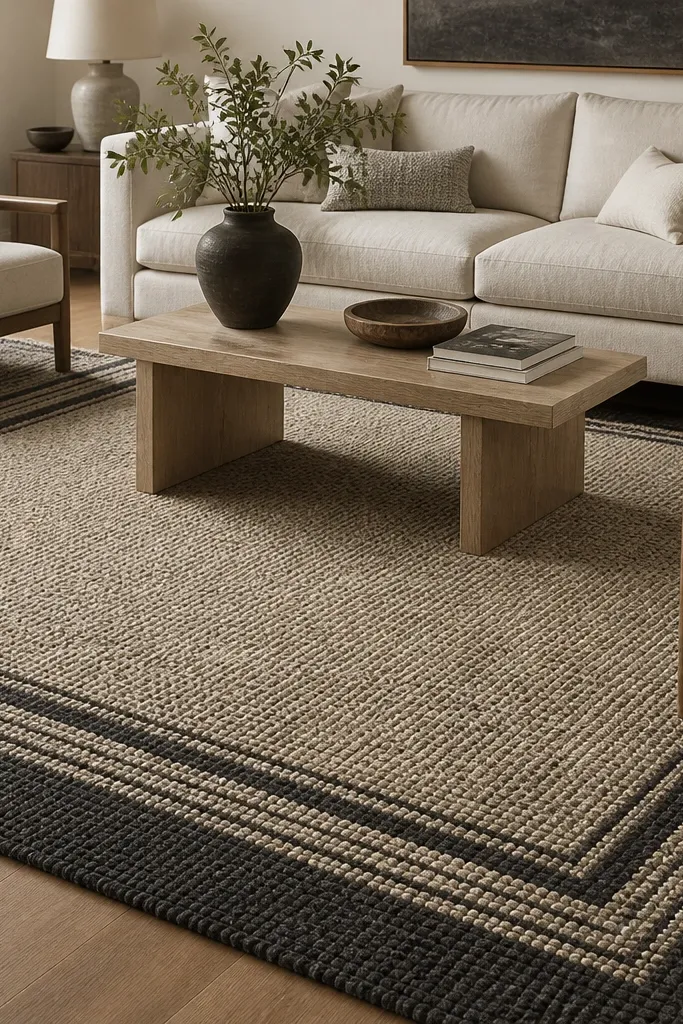
Pick a rug where the charcoal is used mostly for outlining or small sections, not huge blocks. Place it so the border shows evenly on both sides of the sofa. Add a chunky knit throw in oatmeal and a small black-framed mirror above the console.
The hooked texture is the farmhouse shortcut. It reads handmade, and the oat/charcoal palette looks grounded next to warm wood. I love this when you want cozy without a lot of pattern noise.
Watch outAvoid rugs with shiny synthetic fibers; the texture looks fake under warm lighting.
Pro tipVacuum slowly with the brush off. Hooked-loop rugs catch threads if you use a high-speed beater bar.
7. Subtle Cream Oversized Pattern for Small Living Rooms
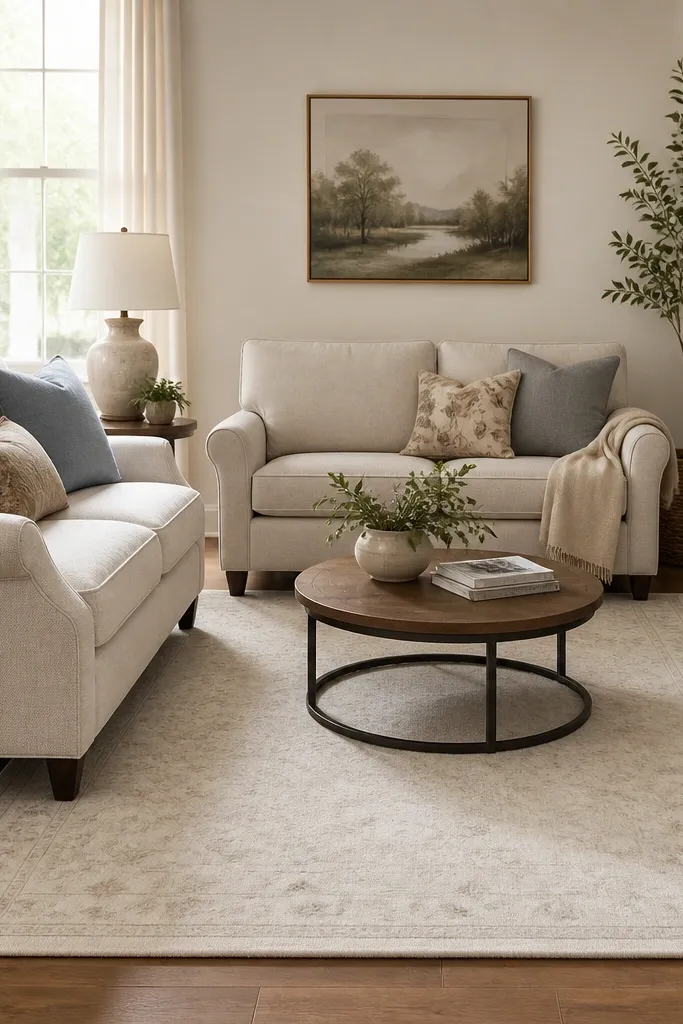
Choose a rug with a low-medium pile and a soft border. Go bigger than you think: even in small rooms, I aim for at least 7x9 if the sofa is standard size. Keep your seating pieces close so the rug doesn’t look lost.
For smaller living rooms, big busy patterns can make the rug feel like it’s crowding the space. A subtle cream-on-cream pattern keeps things cozy and lets your furniture and wall color do the talking. This is the setup I use when I want farmhouse style but the room already has a lot going on.
Watch outDon’t choose a cream rug with a gray cast if your walls are warm beige; it can look dirty even when it’s clean.
Pro tipIf you have a patterned throw pillow set, keep the rug pattern quiet. Two patterns at once usually feels cluttered.
8. Warm Taupe Geometric Rug with Linen Couch Pillows
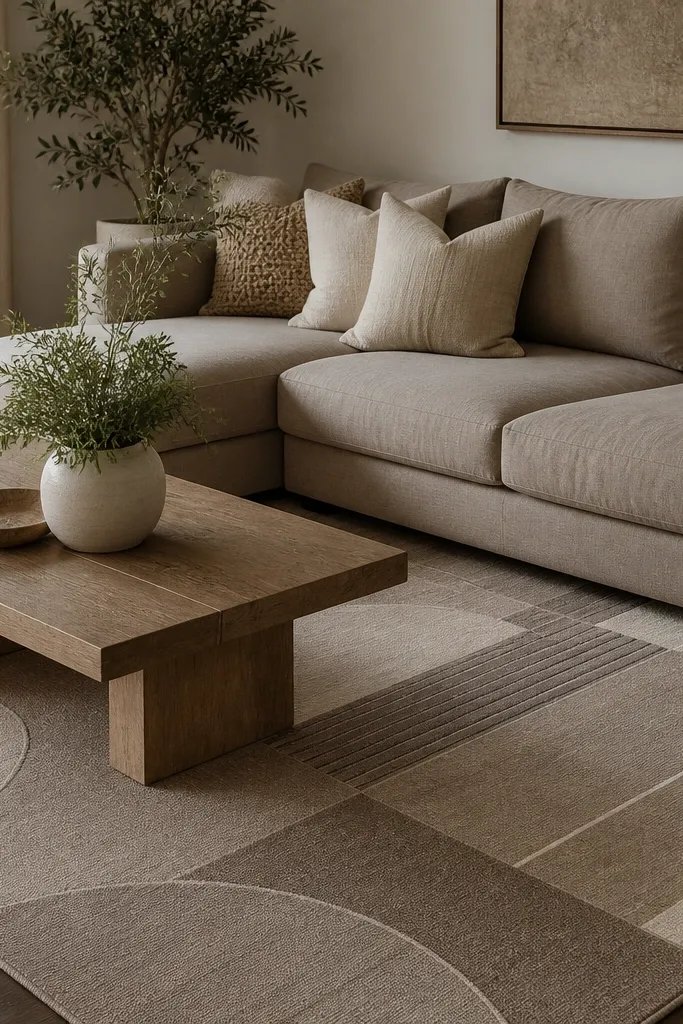
Pick a geometric rug with a warm base and lines in cream or slightly darker taupe. Size it to cover the front legs and leave 10-14 inches beyond the seating edge. Use pillows in linen, cotton gauze, or a simple textured weave to match the rug’s calm lines.
Geometric farmhouse rugs work when the shapes are muted and the lines aren’t too crisp. Warm taupe keeps it soft, and the linen pillows add that relaxed, lived-in feel. I like this when you want farmhouse without check or medallion.
Watch outAvoid bright navy or icy grays in the rug if your wood furniture is honey or oak-toned.
Pro tipTie one pillow color to the rug’s darker line color so the shapes look connected, not random.
9. Chocolate Brown Rug with Cream Fringed Edges
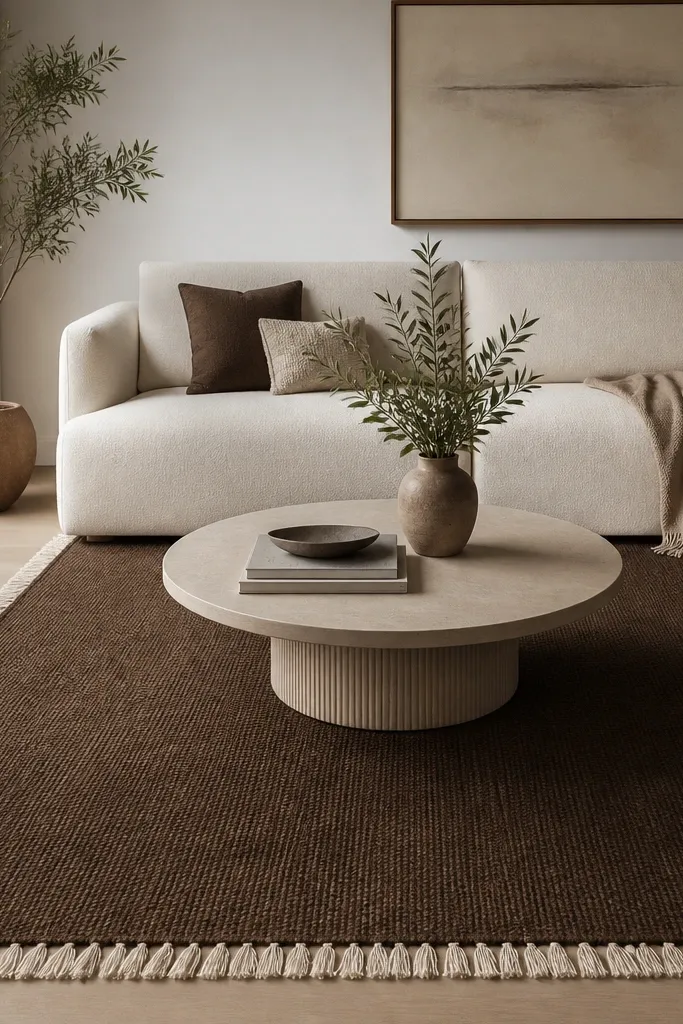
Choose a rug with short, even fringe so it doesn’t snag on feet. Place it under the sofa front legs and keep the fringe ends visible at the edges, not tucked under furniture. Pair with warm cream and caramel accessories: ceramics, a woven basket, and a knit throw.
Fringe can look farmhouse and cozy when it’s subtle and the base color is deep. Chocolate brown hides everyday life — crumbs, paw prints, and the occasional spill — and the cream fringe frames the room. This combination makes a light couch feel grounded.
Watch outAvoid fringe rugs in high-traffic areas with lots of kids running — the fringe gets pulled and looks tired.
Pro tipTrim nothing. If fringe is uneven from shipping, straighten it with a gentle steam pass and let it dry flat.
10. Washed Black Rug with Cream Border for a Sleek Rustic Look
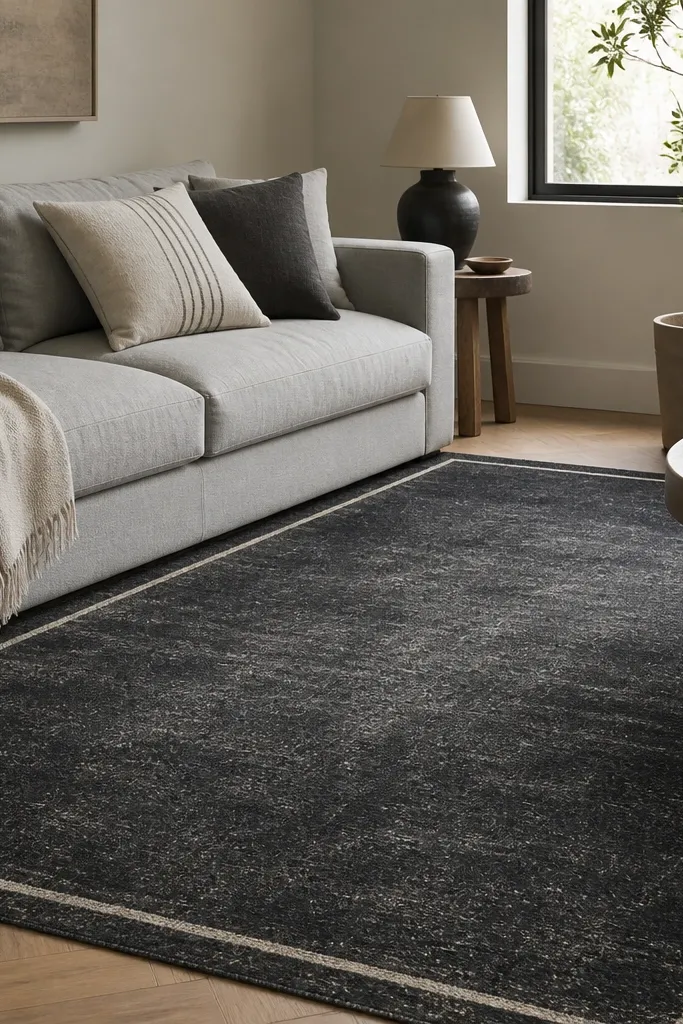
Pick a rug with a low pile and a slightly heathered surface so it doesn’t look glossy. Keep your coffee table wood warm and matte. Add one cream accent — a throw blanket or a ceramic lamp — to echo the border.
This is the farmhouse trick I use when I want cozy but hate beige rugs that show every mark. A washed black rug with a cream border gives you contrast and still feels rustic because of the faded texture. It looks great with pale wood and warm metals like brushed brass.
Watch outDon’t pair it with cool-toned silver accents only; the room will feel gray instead of cozy.
Pro tipUse a felt rug pad. Black rugs can show wrinkles if the pad is too thin.
11. Cream and Sage Farmhouse Stripe Rug
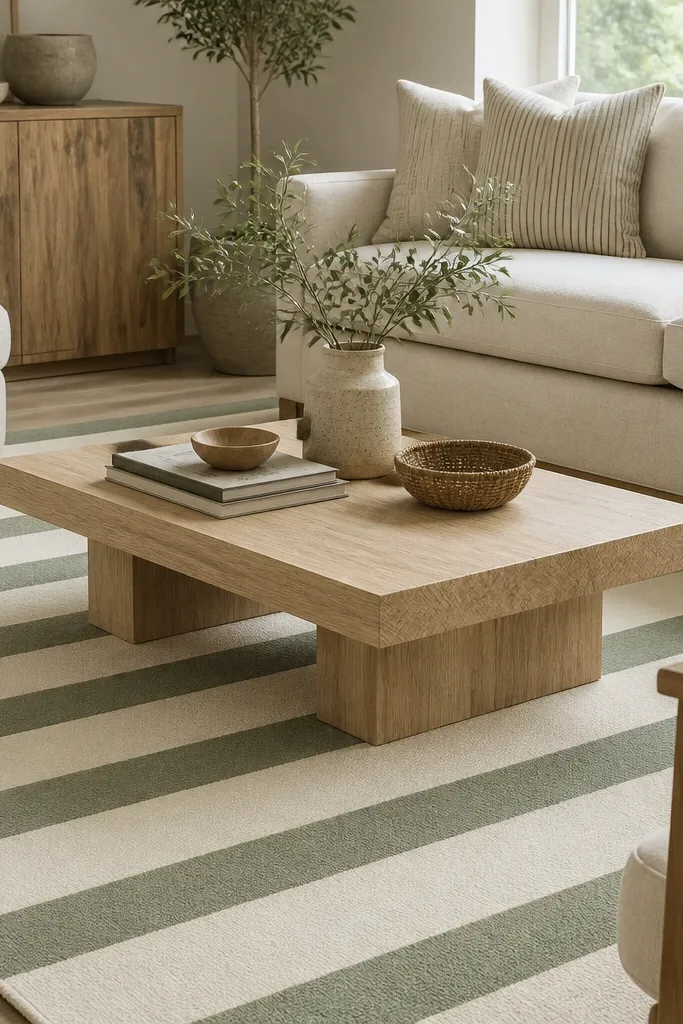
Choose stripes that are 2-3 inches wide and not too saturated. Size it to cover the front legs and let the stripes align with your main wall for a clean look. Add two pillows in sage and cream, plus a throw in oatmeal or light tan.
Sage green makes farmhouse feel fresh without going modern. Cream keeps the room bright, and the stripe spacing makes it feel tidy and intentional. I like this in living rooms that have a lot of white or light gray walls because the sage warms the palette.
Watch outAvoid mixing sage with bright teal; it pulls the farmhouse vibe in the wrong direction.
Pro tipMatch sage in a small way — like a ceramic planter or a vase — so the rug color feels supported.
12. Navy and Cream Country Plaid Rug for Cozy Winter Nights
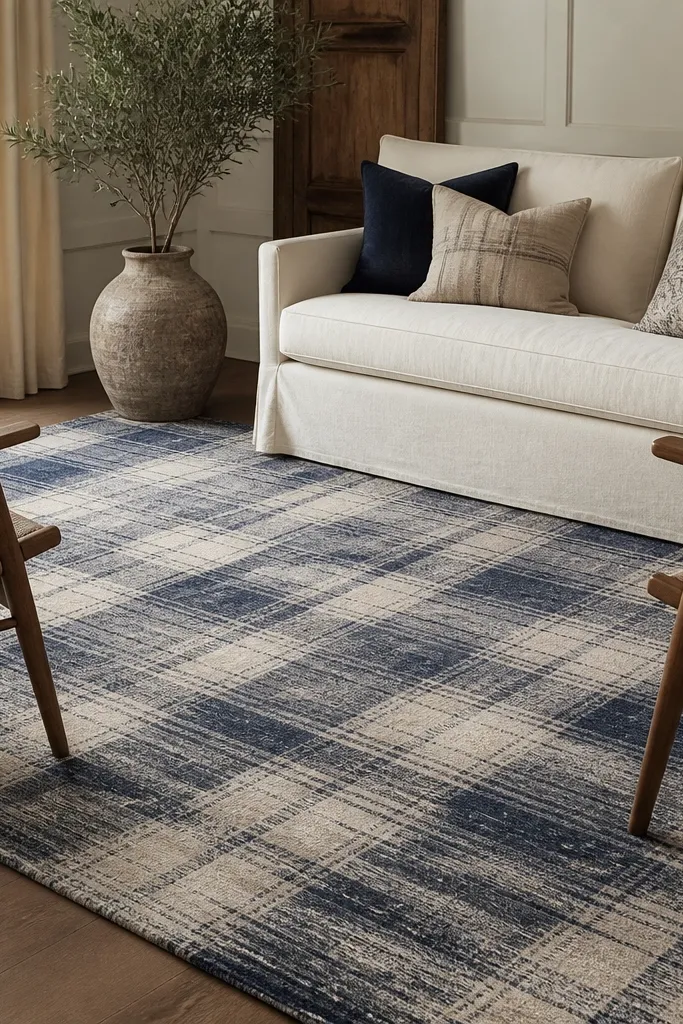
Pick a plaid rug where navy is the main color and cream acts as the highlight. Place it so the rug extends under chair seats, not just the backs. Add a wool throw in navy or cream and keep wall decor simple so the plaid stays the star.
Plaid gives you farmhouse coziness instantly, and navy makes it feel warm even in winter light. The key is choosing a worn or faded plaid so it reads like fabric, not like a printed pattern. Cream keeps it from looking heavy.
Watch outSkip high-gloss synthetic rugs in navy; the shine makes plaid look cheap fast.
Pro tipIf you have dark wood floors, go for a rug with a slightly lighter center so it doesn’t visually blend into the floor.