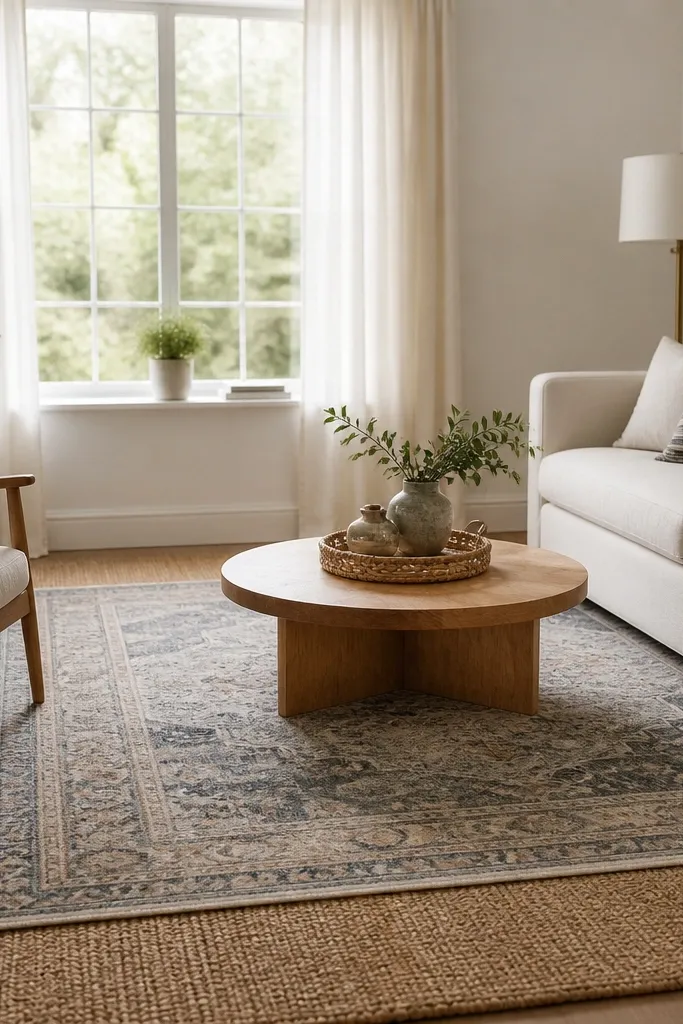
1. Cream Flatweave Base with a Charcoal Center Rectangle
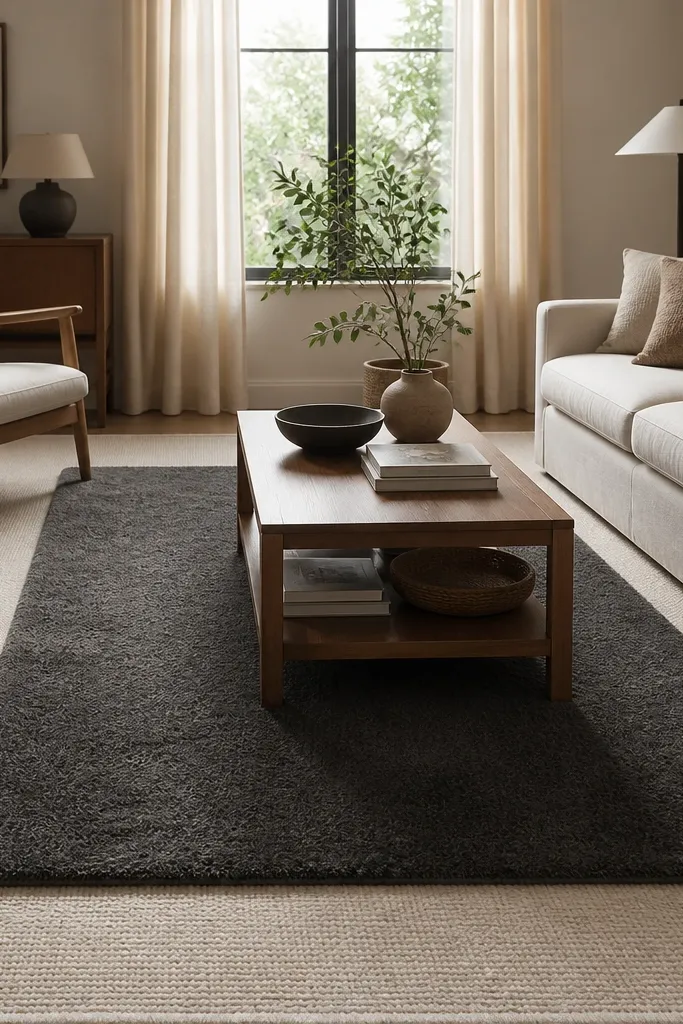
I like this combo because cream reads bright even with dark furniture, and charcoal adds that “weight” that keeps the room from looking washed out. The flatweave base is thin enough to avoid stacking bumps, and it gives you a clean edge to frame the darker center rug. This setup makes the coffee table look grounded without narrowing walkways.
Pro tipChoose a charcoal rug with subtle texture (wool or a low-sheen weave) so it doesn’t look flat under warm lighting.
Use an 8x10 cream flatweave as the anchor. Add a 5x8 or 6x9 charcoal rug under the coffee table so you see about 5 inches of cream on each side. If your couch is against a wall, keep the charcoal rug pulled forward 6-10 inches so it sits in front of the front legs.
Watch outDon’t layer two medium-pile rugs — the stack will ripple and everything looks unsteady.
2. Navy Anchor + Rust Overlay for a Warm "Coastal-Modern" Feel
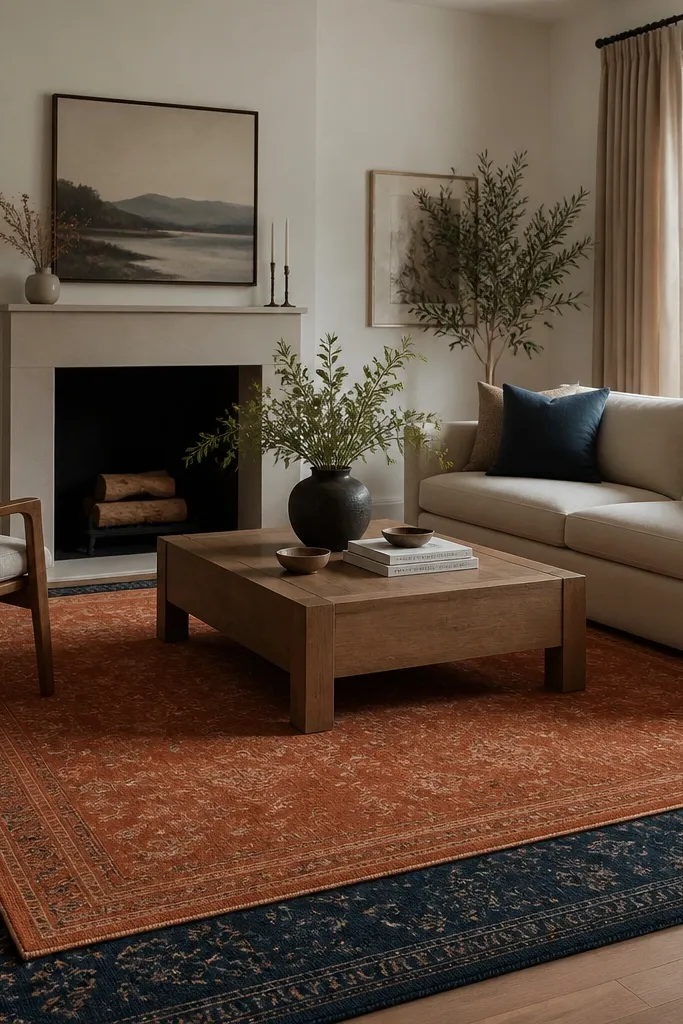
Navy gives you a strong foundation in small spaces because it visually “holds” the room together. Rust adds warmth where you need it — especially if your walls are cool white or gray. The slight offset makes the layer look intentional and keeps the whole setup from feeling too symmetrical.
Pro tipMatch one accessory color to the rust (cushions, a throw, or a ceramic tray) so the layer looks like part of the room, not a separate purchase.
Pick a navy anchor around 9x12 if you can; if not, go 8x10. Use a 5x7 or 6x8 rust rug on top and offset it 3-4 inches toward the seating side. Keep the top rug’s short edge aligned with the coffee table legs so it feels anchored to furniture.
Watch outAvoid bright orange rust with a neon sheen — it can clash with warm wood tones.
3. Jute Base + Small Checkered Wool Top Under the Coffee Table
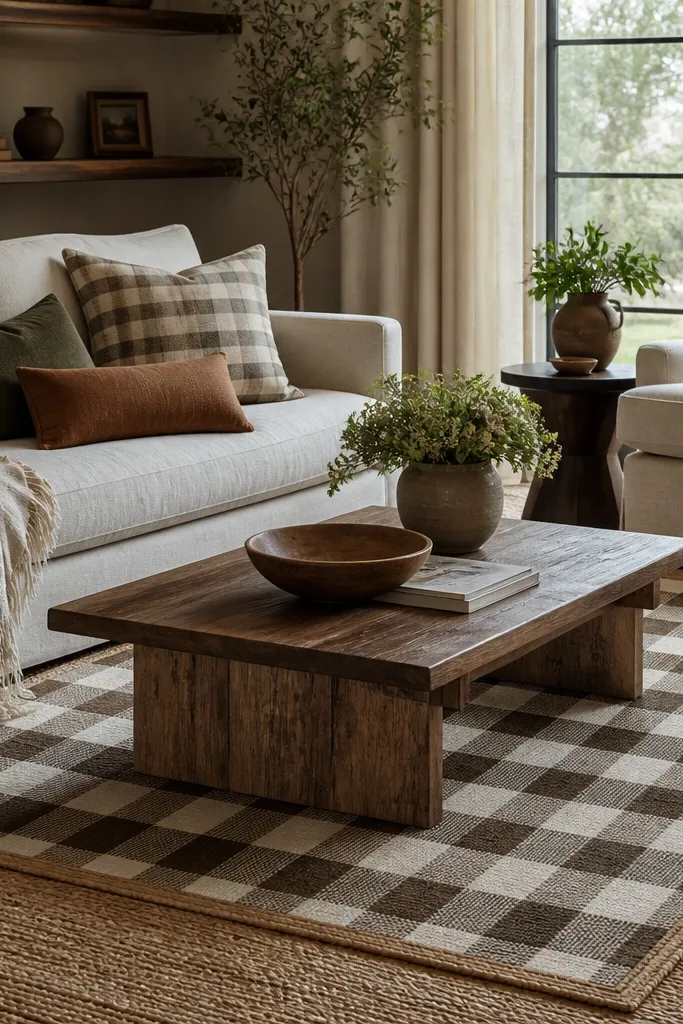
Jute is the quiet workhorse in layered rooms. It adds texture without competing with patterns, so you can go bold on the top layer. A checkered wool rug gives a tailored, cottage-meets-modern look, and the angled placement adds energy in a small footprint.
Pro tipIf your room has dark flooring, choose jute with a slightly darker honey tone so it doesn’t look gray by comparison.
Use jute as the base at 8x10 or 9x12 depending on your room. Place a 4x6 checkered wool rug under the coffee table, leaving 4-6 inches of jute visible. Angle it 10-15 degrees so the check lines don’t feel parallel to everything else.
Watch outDon’t use a thick shag as the top layer — the check will look blurry and the stack feels bulky.
4. Round Sisal Highlight on Top of a Rectangular Neutral
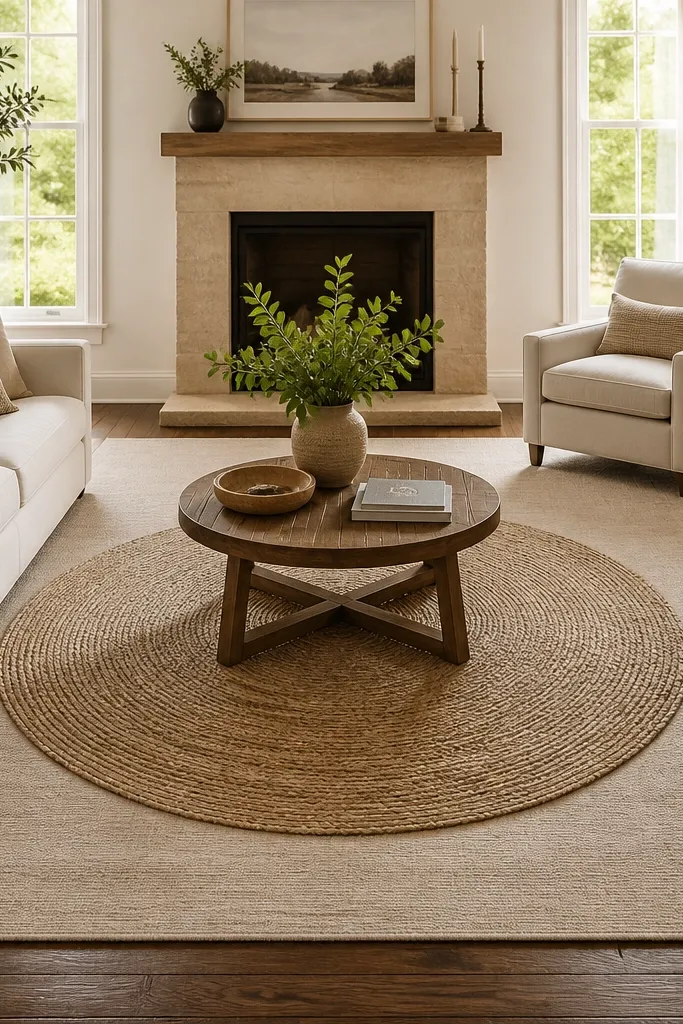
Round rugs are magic in small spaces because they soften the rectangle dominance of couches and TV stands. Sisal-style texture reads crisp and natural, and the halo effect makes the center feel designed. This is one of my go-to setups when the room has lots of straight lines.
Pro tipUse a rug pad that grips both materials — jute-style tops move more than you’d expect.
Start with a neutral flatweave or low-pile rectangle (8x10). Add a 4-foot round sisal rug centered under the coffee table. Keep an even 6 inches of rectangle visible all around the round to sell the layered look.
Watch outDon’t choose a round rug that’s too large; if it eats the rectangle border, the layering effect disappears.
5. Two-Tone Stripe Layer: Light Base + Darker Stripe Top
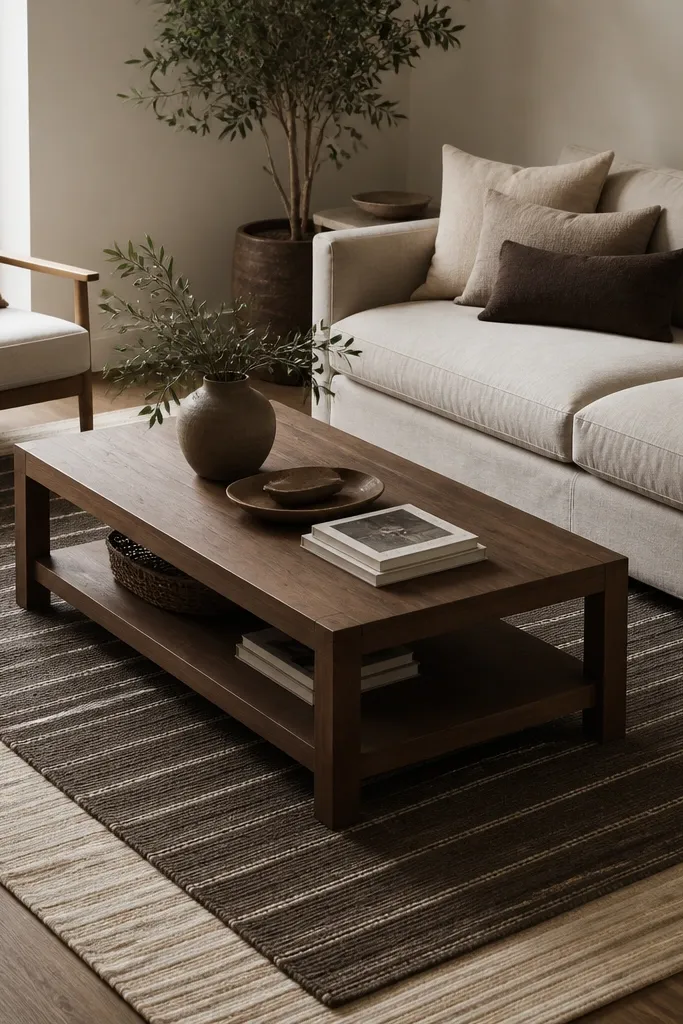
Stripes work because they create direction. In a small living room, that direction pulls the eye across the room and makes the space feel longer. The key is keeping one stripe muted and letting the top stripe be the statement. The visible border keeps the stripes from blending into one busy rug.
Pro tipMatch stripe thickness roughly. If the top stripes are super chunky and the base stripes are tiny, it can look chaotic.
Pick a light beige or oat anchor with thin stripes. Add a darker stripe rug (navy, charcoal, or espresso) in a size that leaves 4-8 inches of border. If your couch is narrow, use a 5x7 top; if it’s wider, go 6x9.
Watch outAvoid mixing two high-contrast patterns at once — it turns the floor into noise.
6. Gray Anchor + Soft Pink Runner Layered Up to the Seating
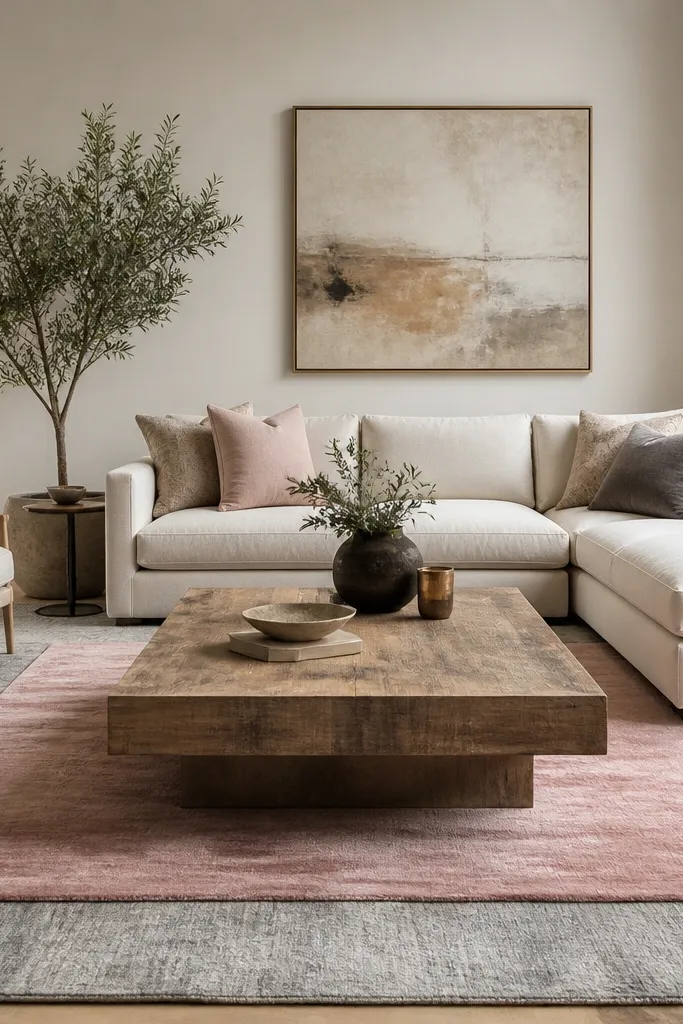
This is how you get the “designer editorial” vibe in a small room without needing a big statement rug. The runner shape gives you movement and defines the conversation zone. Pink adds warmth, especially if the room lighting is cool.
Pro tipChoose a runner with a low pile so it doesn’t curl at the edges when people walk nearby.
Use a gray anchor around 8x10. Add a 2.5x8 or 3x8 runner under the coffee table so it extends slightly toward the front edge of the couch. Leave 4-6 inches of gray on each side of the runner.
Watch outDon’t center a runner perfectly under the coffee table if your room layout is asymmetrical — it will look staged.
7. Monochrome Black Base with a Textured Oat Top
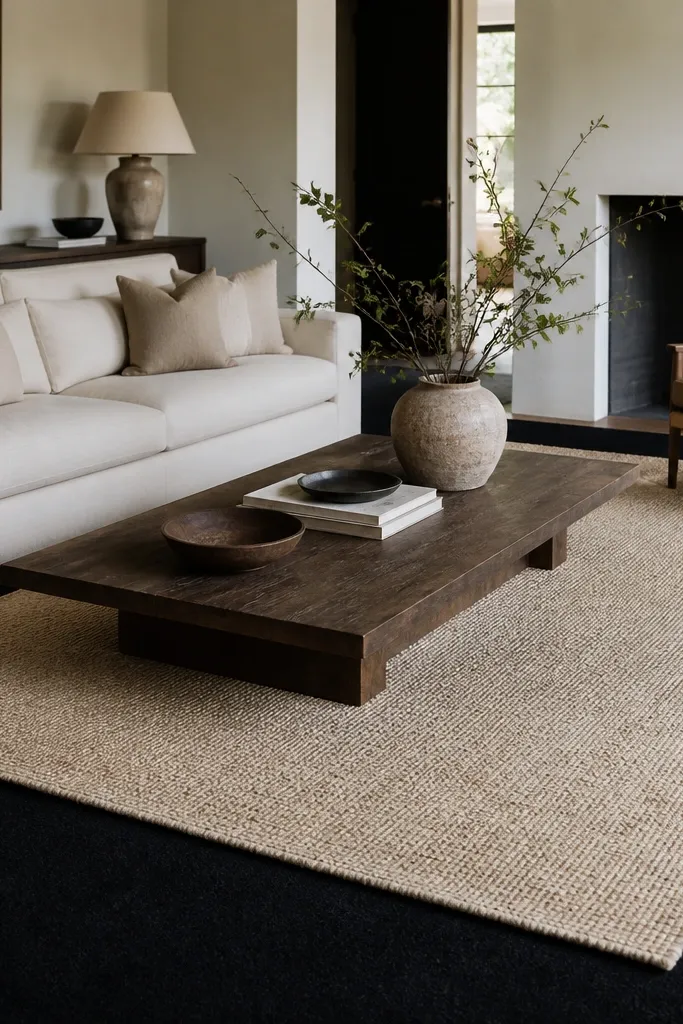
Black anchors make small rooms feel grounded, but they can also swallow light. That’s why I pair it with an oat top that has visible texture — you get contrast without the room feeling heavy. This combination also hides footprints better than lighter floors.
Pro tipPick an oat rug with a natural fiber look (flatweave or low loop) so the texture shows even in shadowed corners.
Use a black rug in 8x10 or 9x12 depending on your space. Add an oat textured rug in 5x8 or 6x9 and keep a 6-inch border. If you have light wood floors, consider a black base with a slightly brown undertone so it doesn’t look flat.
Watch outAvoid glossy black rugs — they reflect light patches and make layering look uneven.
8. Green Botanical Overlay on a Neutral Flatweave
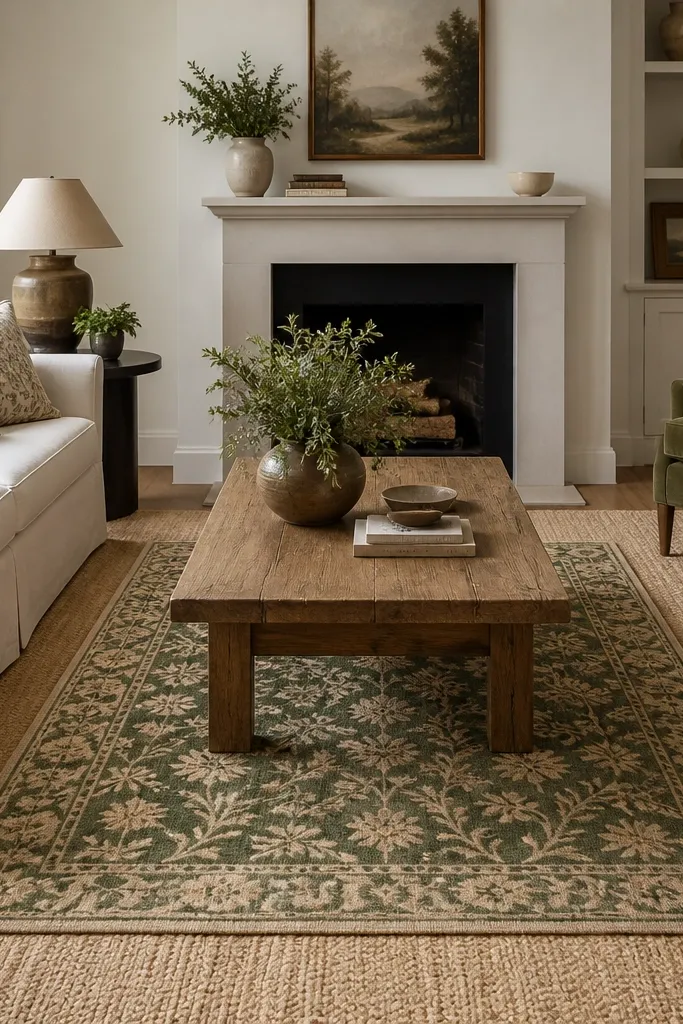
Botanical patterns look expensive when they’re limited to one layer. The neutral base keeps the leaves from feeling busy, and the green brings life without adding clutter. In small spaces, one strong pattern layer is easier to style than two patterned rugs at once.
Pro tipPull one color from the botanical (like muted tan) into your throw pillows so the floor pattern feels connected.
Choose a neutral base (cream or warm gray) in 8x10. Add a 5x7 or 6x8 green botanical rug on top with even border around it. If your walls are white, go for a sage-green pattern rather than bright emerald.
Watch outDon’t match the botanical with another green pattern nearby (curtains, wallpaper) — the floor will compete.
9. Wool Moroccan-Style Base + Solid Top for Calm
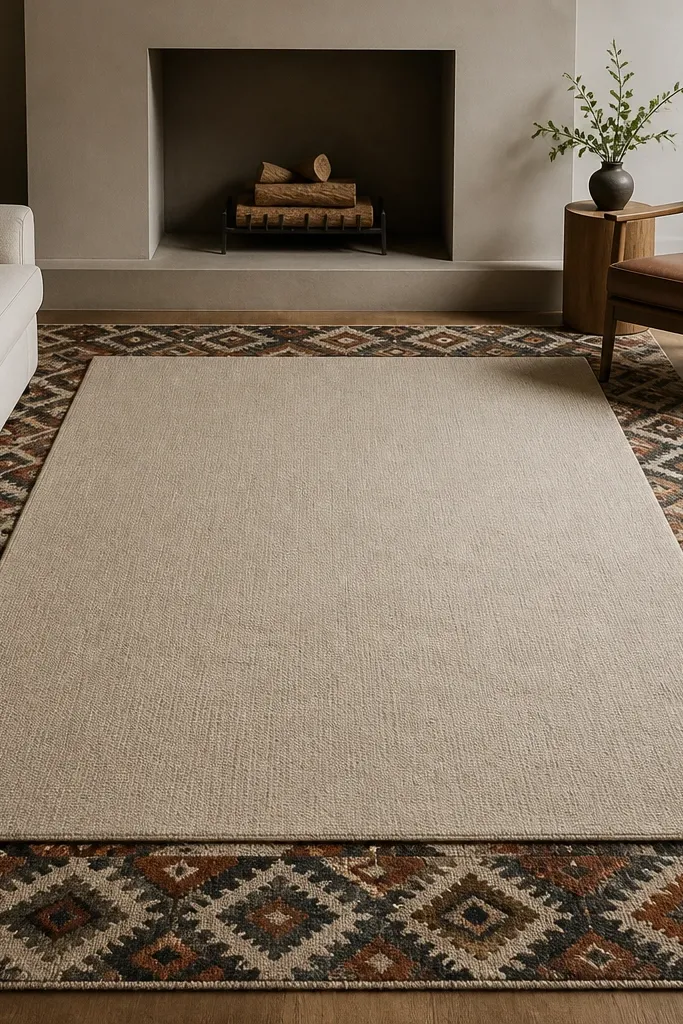
This is the calm layering trick I use when I want personality but don’t want visual chaos. The patterned wool base gives movement and depth, and the solid top creates a clean stage for furniture. The border becomes a “frame” that makes the solid feel deliberate.
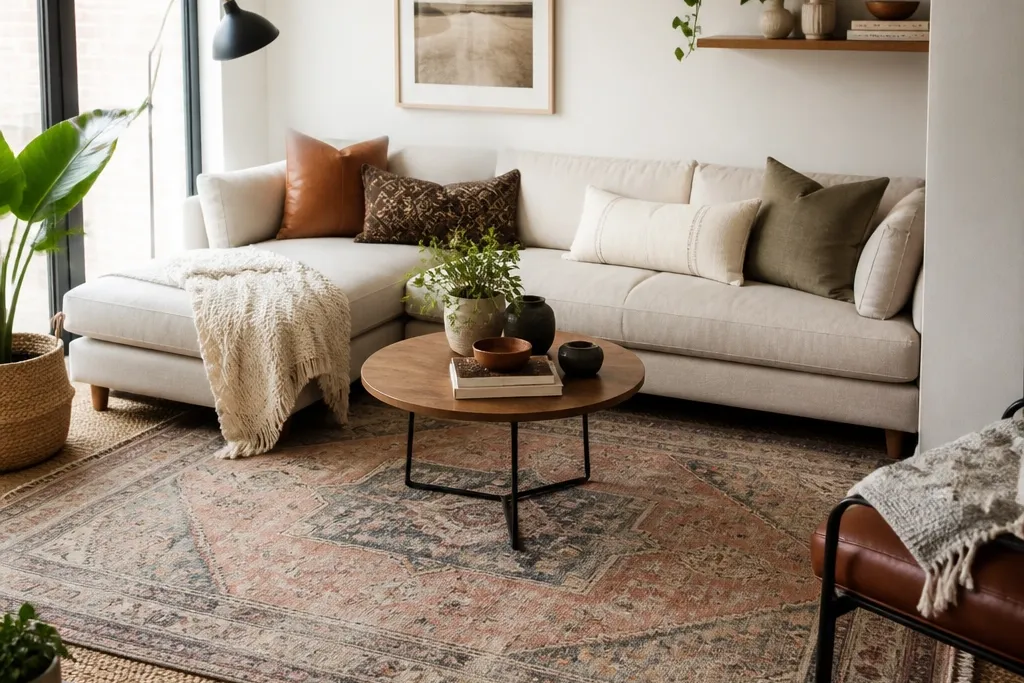
Start with a patterned wool base around 9x12. Add a solid rug on top in 6x9 or 5x8, centered under the coffee table. Keep 5-7 inches of patterned border visible so you can read both layers.
Use a solid top in the same undertone as the dominant color in the base (warm beige with warm diamonds, cool gray with cool diamonds).
Avoid a solid top that’s too white — it can look like a temporary mat.
10. Layered Texture: Flatweave + Low Loop in the Same Color Family
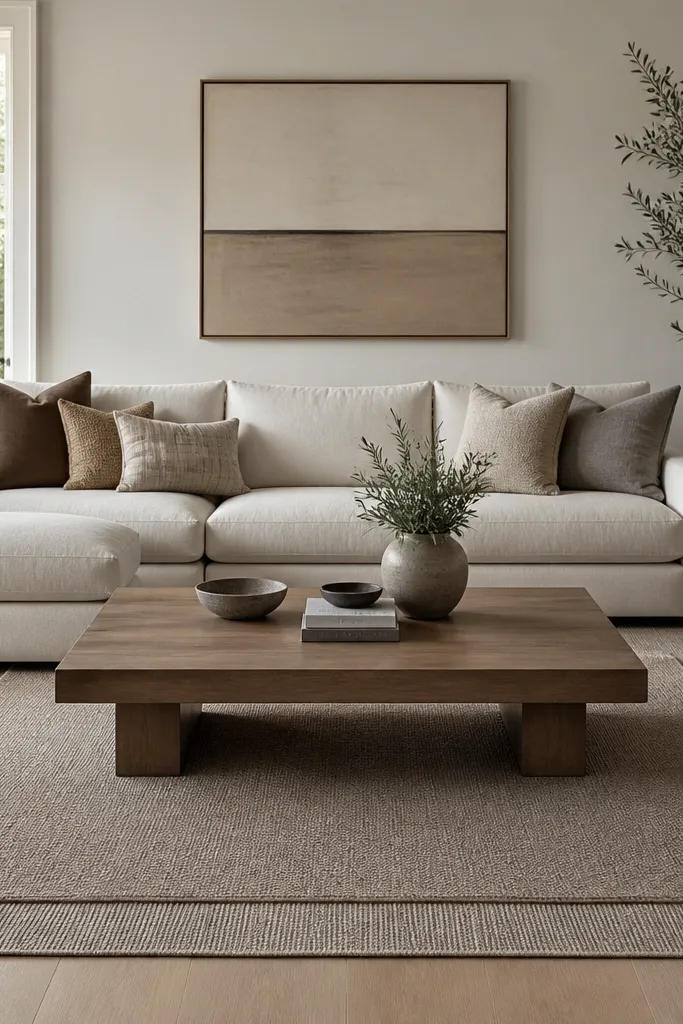
If you hate loud patterns, this is the route. Tonal layering looks designer because the room gains depth without adding visual noise. The flatweave reads crisp, while the low loop feels cozy underfoot. Same color family keeps it calm in a small room.
Pro tipBring the taupe into your decor via wood tone or linen — it prevents the rug from looking like a random beige purchase.
Use an anchor flatweave in taupe in 8x10. Add a low-loop rug in taupe that’s 1-2 shades darker in a 5x8 size. Leave 4-6 inches of border. Place the darker layer so it sits under the coffee table and extends slightly in front of the front couch legs.
Watch outAvoid layering two rugs that are identical in shade and texture — you’ll lose the benefit of layering.
11. Small Space Hack: Two Rugs Split by a Sofa Corner
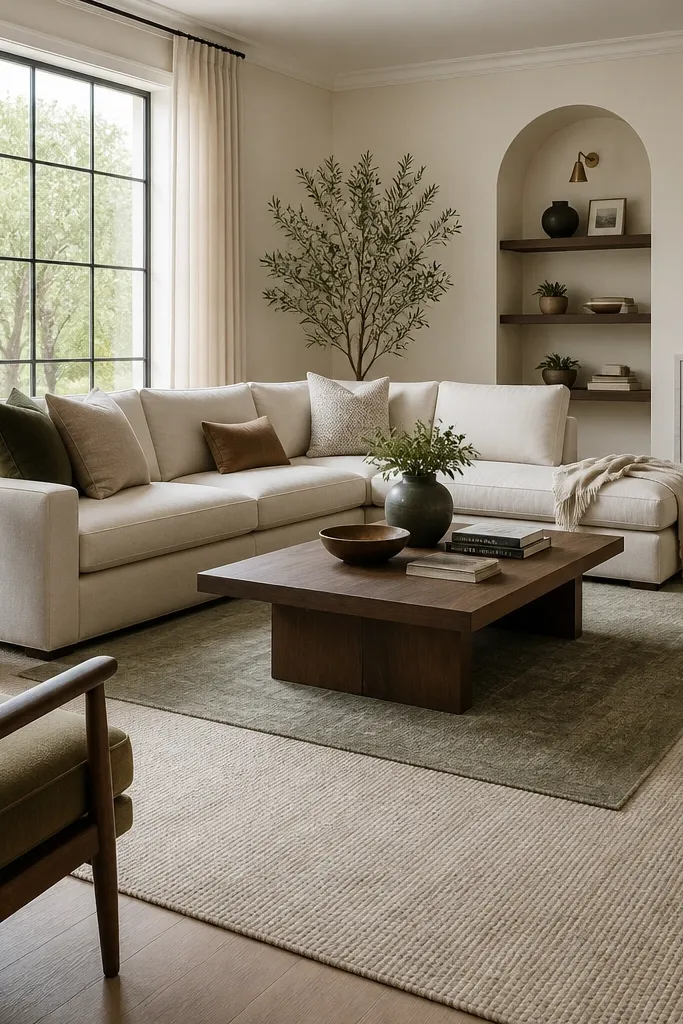
When your sofa blocks the center, layering can still work — you just don’t force everything to be centered. This setup defines the seating zone without covering the entire walkway. I like it for narrow rooms where the dining table or entry path cuts through the middle.
Use a base rug that reaches under the sofa front legs (8x10 often works). Add a smaller top rug (4x6 or 5x7) placed where the seating area is open. Leave 3-5 inches of base visible at the edges so the top rug doesn’t feel like it’s floating.
If the top rug is going to sit under a chair edge, choose a low-pile rug with a bound edge so it doesn’t snag.
Avoid placing the smaller rug too far forward — it will look like a runner that never got finished.
12. Ochre Accent Layer with a Soft White Base
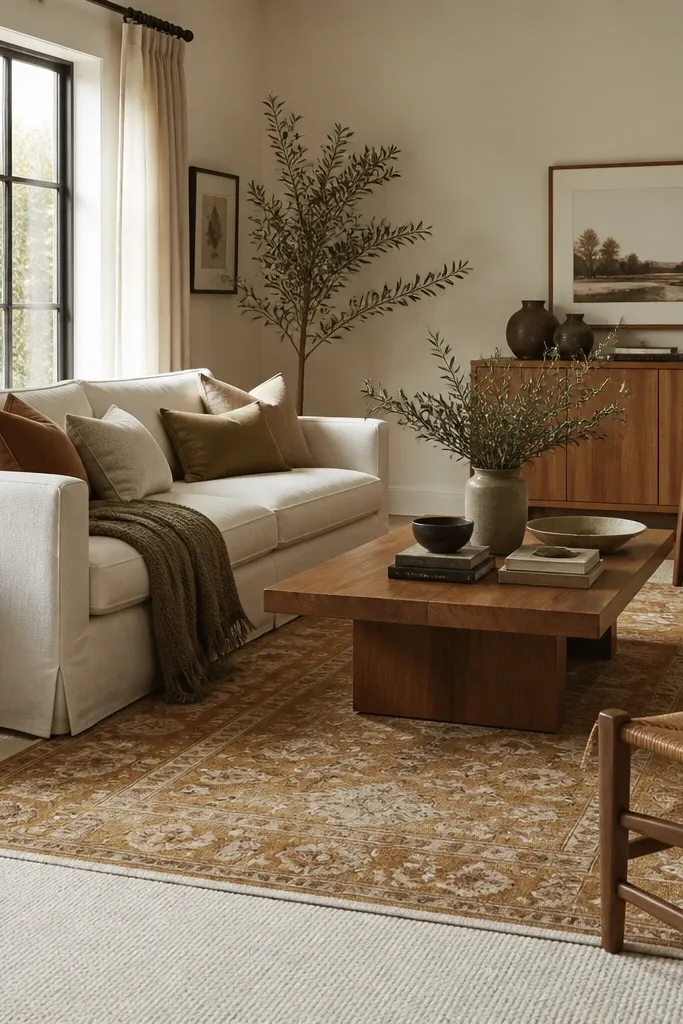
White bases can feel risky, but ochre makes them work. Ochre adds warmth and hides dust better than pure white, and the layered border keeps the look clean. This combo is especially good if your walls are a warm off-white and your sofa is oatmeal or camel.
Use a soft white rug around 9x12 if you have the space, or 8x10 if you don’t. Add a 6x9 ochre patterned rug on top. Keep an even 6-inch white border so the ochre reads as an intentional layer.
Choose an ochre rug with low-contrast pattern so it doesn’t overpower your cushions.
Avoid high-pile shag when the base is light — shadows make the stack look messy.