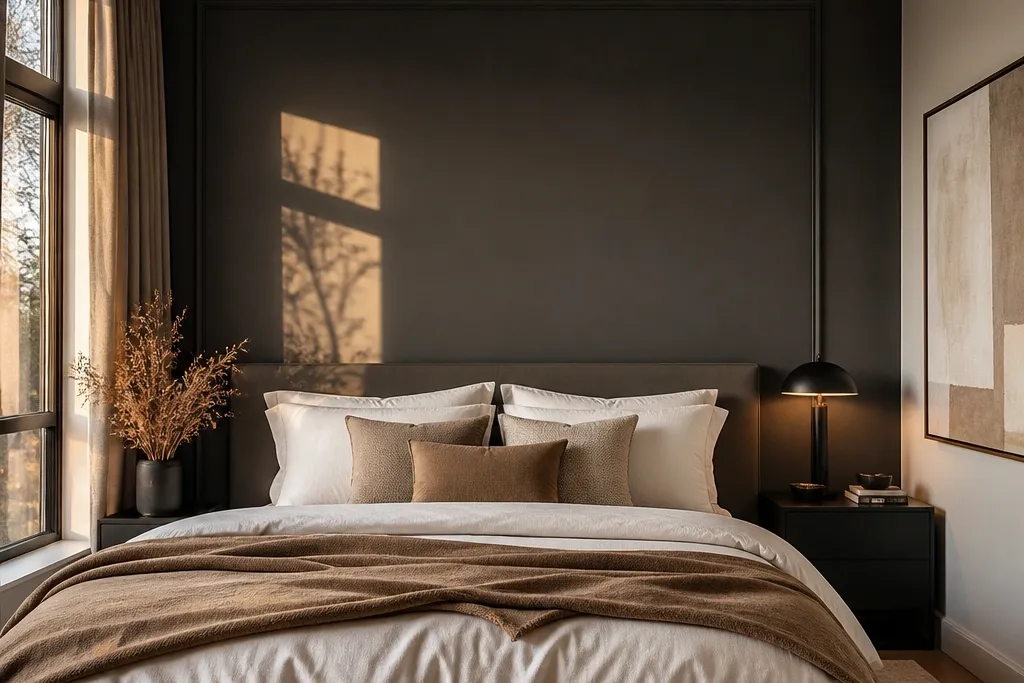
1. Deep charcoal full-height paint with a simple headboard frame
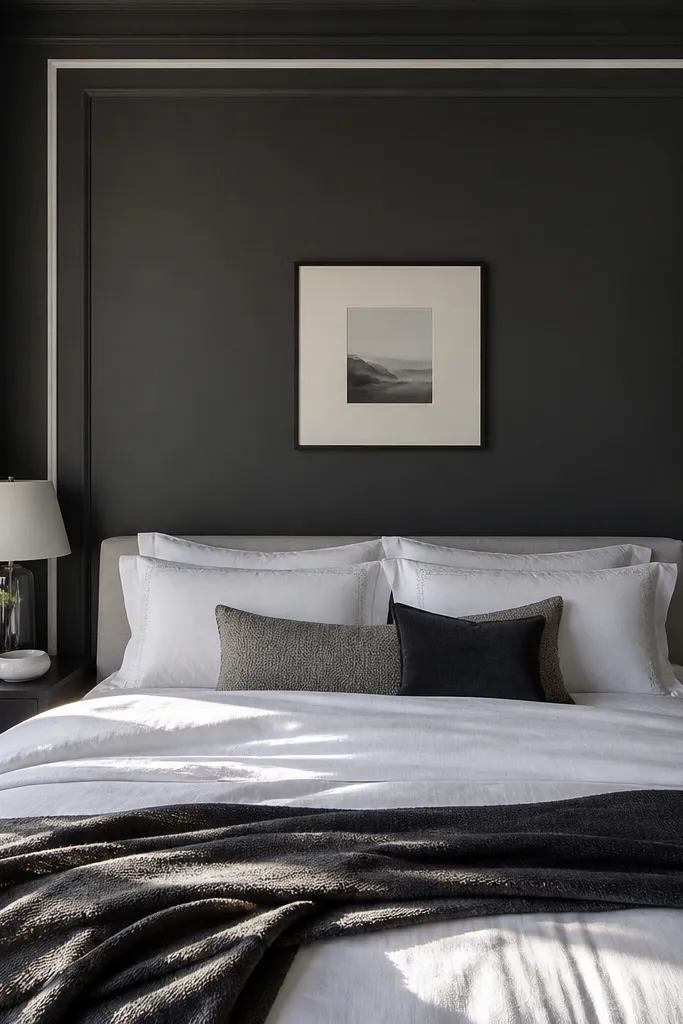
Start by measuring the headboard width and mark the wall so your accent area covers the headboard plus 6-12 inches on each side. Tape a crisp rectangle around the area and paint with a roller for even coverage, then cut edges with an angled brush. Apply two coats of matte charcoal and let it cure fully before removing tape — rushing can pull paint lines. Plan on $40-80 for a typical bedroom wall amount of paint depending on brand and coverage.
Go full-height with a deep charcoal and treat the headboard like a picture frame. Charcoal makes the bed look anchored and gives you instant contrast for light bedding, which is the fastest way to upgrade a bedroom without changing furniture. Use a matte or flat finish so the wall absorbs light instead of reflecting it back into the room. This works especially well if your headboard is wood, upholstered, or has a simple shape — the wall does the heavy lifting. It also helps bedrooms that feel too bright or too plain because the color changes the whole mood from day one.
Watch outAvoid glossy charcoal paint — the sheen looks uneven and can create glare near bedside lamps.
Pro tipPair charcoal with white or cream bedding and warm metal accents like aged brass so the wall doesn’t feel heavy.
2. Warm greige plaster look with a limewash-style finish
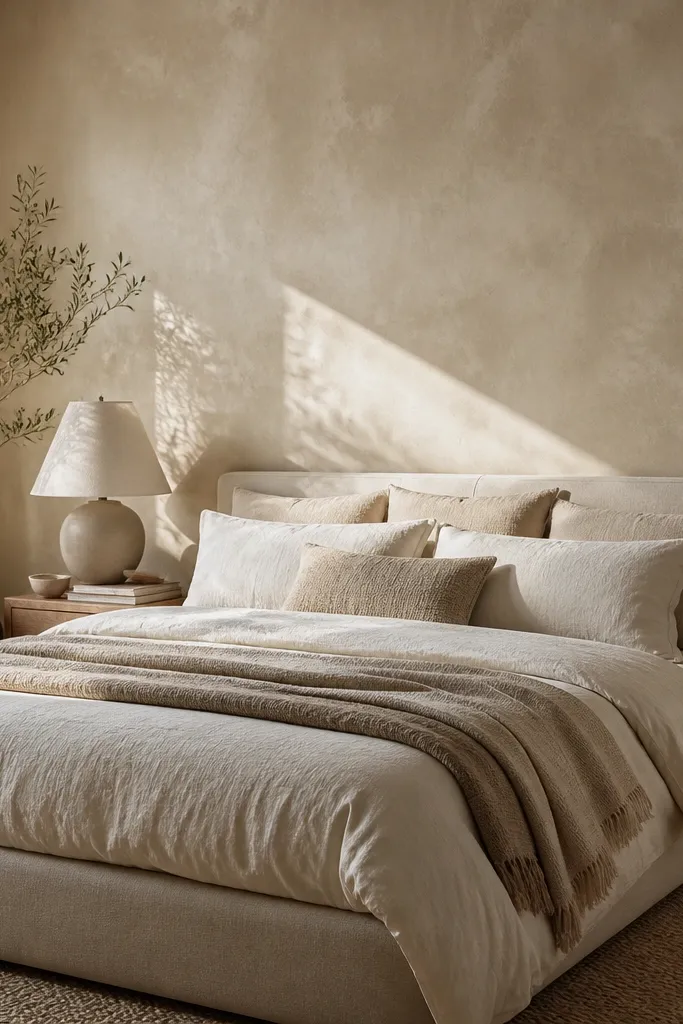
A warm greige plaster look gives you that designer texture without needing full stone cladding. The slightly uneven limewash-style finish catches light differently across the day, so the wall looks alive even when the room is still. Choose a warm undertone — think mushroom, oat, or sand greige — because it flatters skin tones and works with both wood and black furniture. This idea is perfect when your room feels sterile because the texture adds warmth and depth without shouting. It also photographs well because shadows and highlights create a natural dimension behind the headboard.
Prep the wall by patching holes and sanding smooth, then wipe dust so the finish adheres. Apply a plaster or limewash-style coating in thin coats using a broad trowel, then knock back high spots with a damp sponge for a soft mottled effect. Work in small sections behind the headboard and blend edges while the coating is still workable. Seal with a clear matte sealer if your product recommends it, then let it dry before adding bedding for a final, non-sticky texture.
Keep the headboard hardware minimal — texture plus ornate details can compete.
Avoid painting over glossy walls without sanding — the plaster look will streak and peel.
3. 3D linen wall panels in a soft oatmeal tone

Measure the wall behind the bed and plan your panel grid so the outer panels land symmetrically around the headboard. Install with construction adhesive and a level — start with the center panel row, then work outward to keep seams aligned. Use a panel trim piece where the wall meets the ceiling or adjacent walls for a clean border. Expect $200-500 for materials depending on panel size and whether you need extra trim.
3D linen wall panels turn the area behind the bed into a tactile focal point, and oatmeal keeps it cozy instead of cold. The panel seams create shadow lines that make the wall look expensive, even with simple bedding. This works best if your headboard is low or minimal because the panels add height and visual structure. It’s also a smart choice for bedrooms with acoustic issues — fabric textures absorb some sound and make the space feel calmer. If you want an accent wall that looks good from across the room, not just up close, panels deliver.
Watch outSkip skipping a level check — crooked seams show immediately behind a bed.
Pro tipRun the panel height to the ceiling if your room is short — it visually stretches the space.
4. Oversized botanical wallpaper in muted olive with a straight match
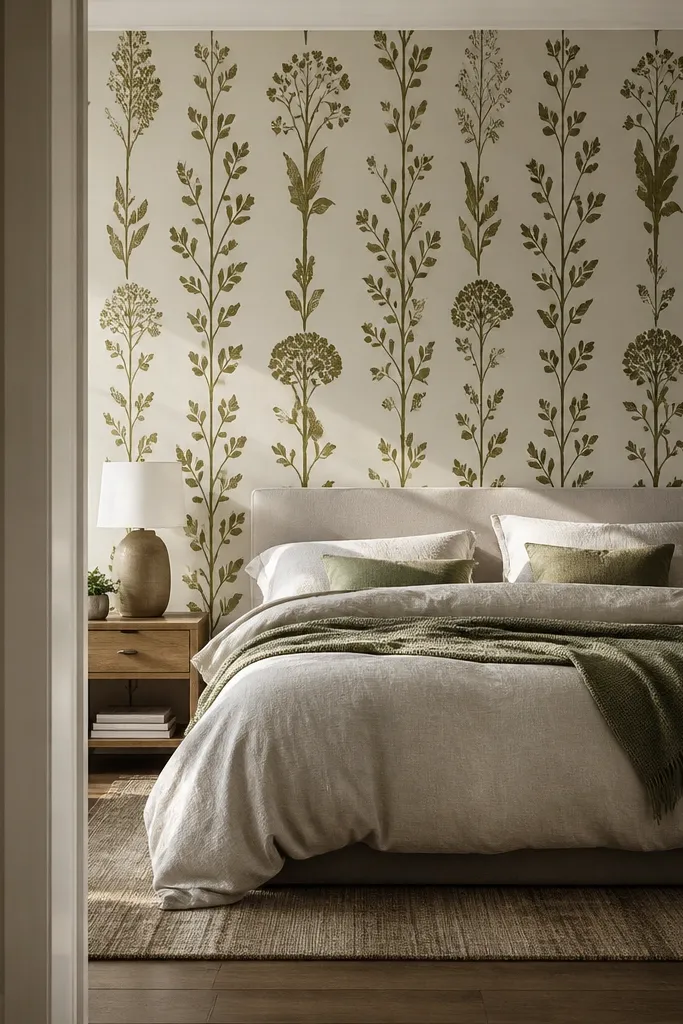
Measure the wall height from floor to ceiling or to your desired coverage and calculate how many drops you need, then add 10% for trimming. Dry-fit a first strip plumb from the ceiling line and mark where it lands behind the headboard. Paste or peel-and-stick based on your wallpaper type, then smooth with a plastic tool to prevent bubbles. For straight-match prints, align the design lines across panels before you trim the top and bottom.
Botanical wallpaper behind the bed looks best when the print is large enough to read from the doorway. Muted olive adds depth and warmth without turning the room into a dark cave. Choose a design with enough negative space so the wall doesn’t feel busy when you add pillows and art. A straight match keeps the stems vertical and makes the wall feel intentional. This works for bedrooms that need softness and pattern but can’t handle loud colors.
Watch outAvoid tiny-pattern wallpaper — it makes the headboard area look cluttered.
Pro tipKeep your bedside lamps simple — the wallpaper already has the visual rhythm.
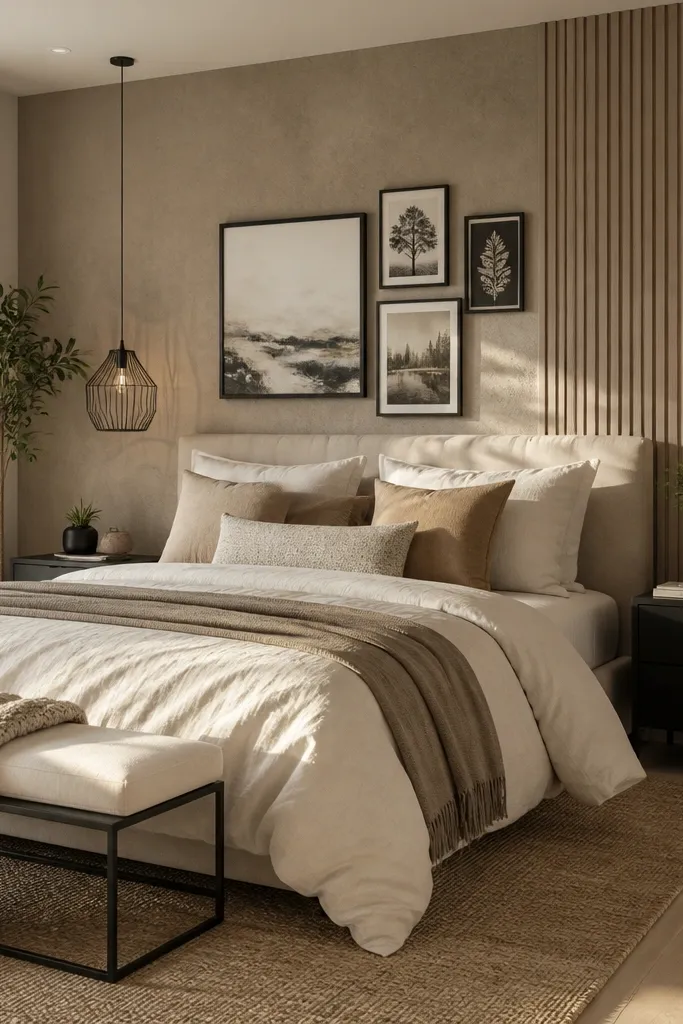
5. Vertical slat wood accent wall in natural oak
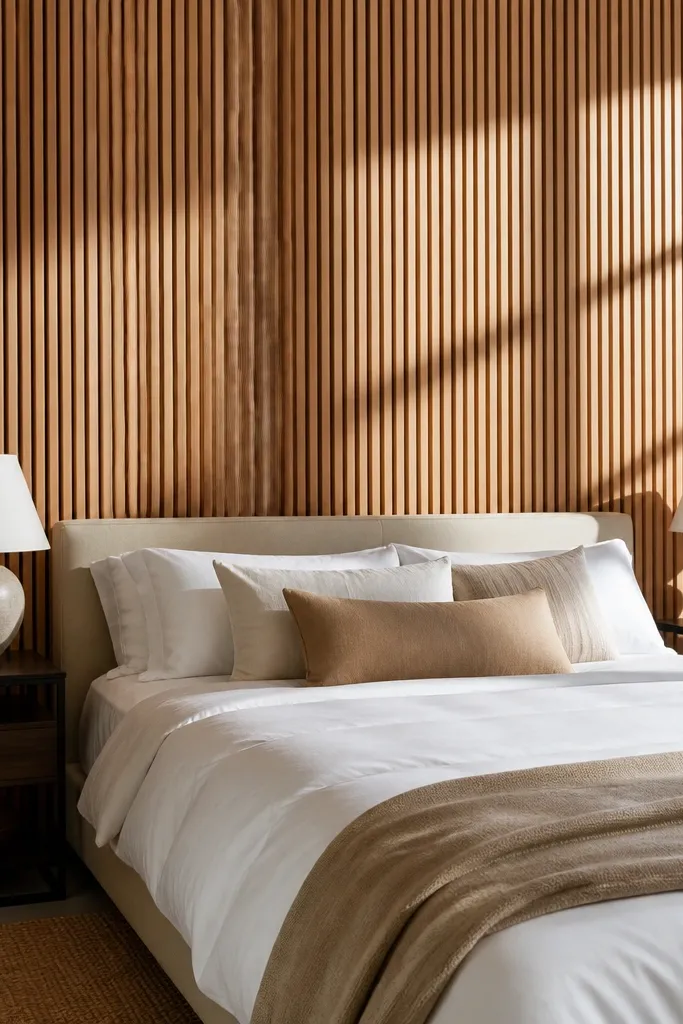
Decide your slat width and spacing first — 2-3 inch slats with 1/2-1 inch gaps is a good starting point for a balanced look. Install a level ledger board or use a mounting rail so slats line up straight, then attach each slat with screws or construction adhesive depending on the system. Stain or finish the slats before installation if you want an even tone. Finish by adding a thin trim border around the accent area and caulk gaps for a crisp, finished edge.
Vertical wood slats make the wall look custom and add height, which is great when your bedroom feels short or your ceiling looks low. Natural oak tones warm up the space and look clean with white bedding, black frames, and tan accessories. The slats create a shadow grid that stays attractive under morning light and evening lamps. This is a strong choice if you want a high-end look without complex design — the pattern is simple, but the material reads rich. It also gives you a place to visually “tuck” the bed — the headboard feels built into the wall instead of sitting in front of it.
Watch outDon’t wing the spacing — uneven slat gaps look cheap fast.
Pro tipChoose a matte clear coat so you don’t get shiny glare in the gaps.
6. Faux paneling with chair-rail lines and a darker top half
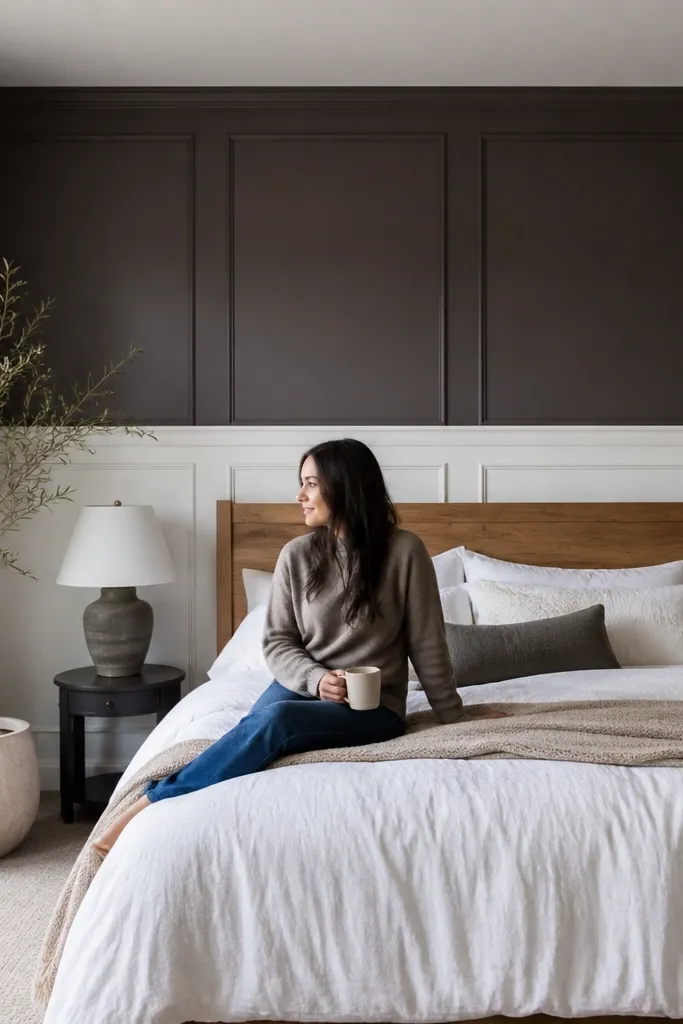
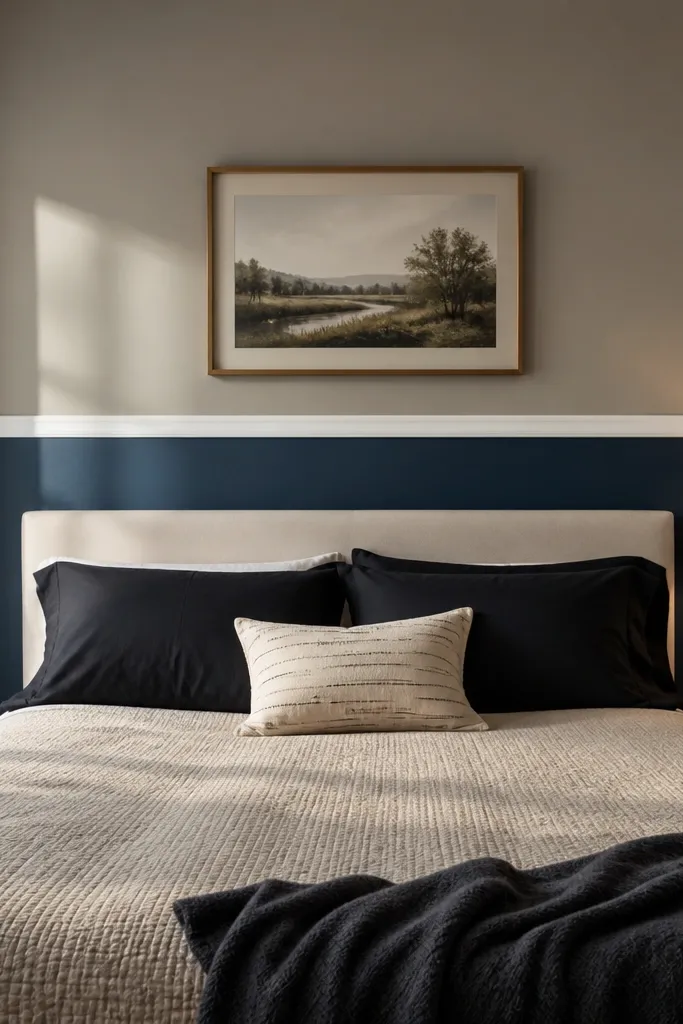
Painted faux paneling gives you structure without buying materials that can be hard to install. Use a lighter warm white on the lower portion and a deeper color on top to create a classic, tailored look behind the bed. Horizontal chair-rail lines add a visual “cut” so the wall doesn’t feel like one flat sheet. This is especially good if you have a taller headboard and want the accent to feel architectural. It also works in rentals because you’re just painting — no wallpaper seams to manage.
Mark your chair-rail line about 36-40 inches from the floor as a starting point, then tape a rectangle for the darker top section that fits the bed width plus 6-12 inches each side. Paint the lower section first and let it dry, then apply painter’s tape for the top and paint the darker shade with a roller. Add thin trim strips if you want more realism — 1/2 inch MDF or wood strips — and paint them the same color as the top section. Use a small foam brush to touch up edges so the lines look sharp.
Keep the darker color matte and the lower color eggshell for a subtle contrast.
Avoid thick, wobbly tape lines — clean edges matter more than the exact colors.
7. Linen-look wall fabric stretch with a knife-edge border
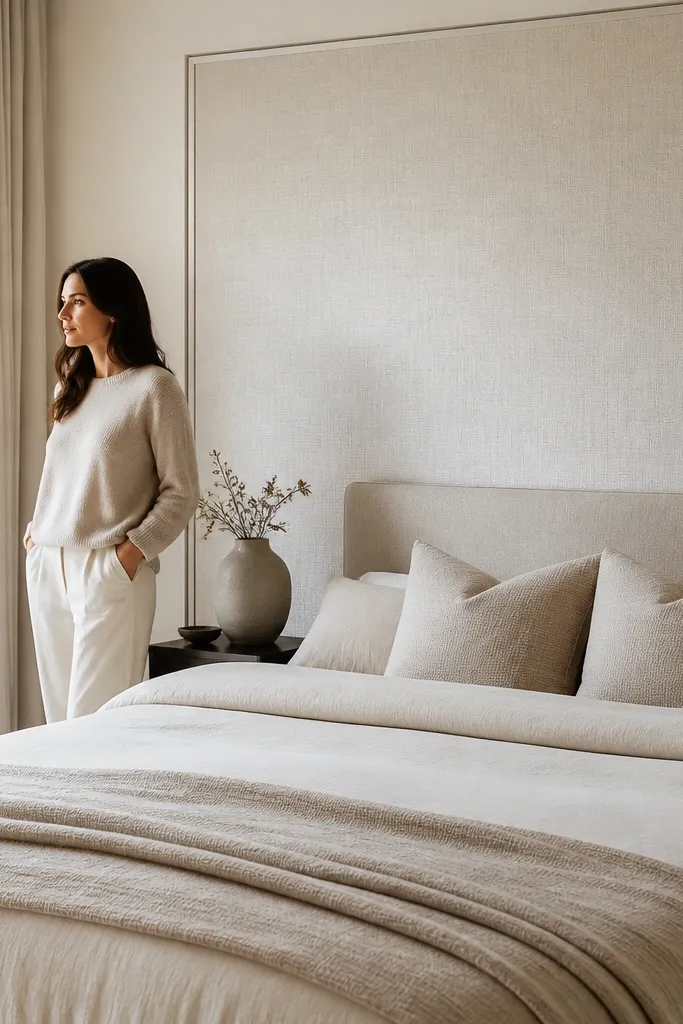
Build a simple frame or use a removable wall mounting system, then measure the area behind the headboard and cut fabric with 3-4 inches extra on each side. Stretch fabric taut and staple or attach to the frame, then trim and cover staples with a border strip. Paint the border strip the same color as the fabric for a seamless edge. Finish by attaching the fabric panel to the wall so the center aligns with the headboard; for a queen bed, aim for about 60-66 inches wide coverage.
Stretching linen-look fabric behind the bed creates a soft, upscale backdrop that feels calming and hides wall imperfections. The knife-edge border makes it look intentional instead of like a temporary drape. Choose a fabric in warm white, oatmeal, or soft sand so it works with almost any bedding color. This idea is great for bedrooms that feel too hard — lots of wood and metal can make a room feel sharp, and fabric smooths it out. It also photographs beautifully because it creates a gentle, even surface with subtle texture.
Watch outSkip cheap glossy fabric — it reflects lamp light and makes the wall look uneven.
Pro tipUse a fabric with a tight weave — looser weaves show ripples under strong light.
8. Stone-look peel-and-stick panels in warm travertine
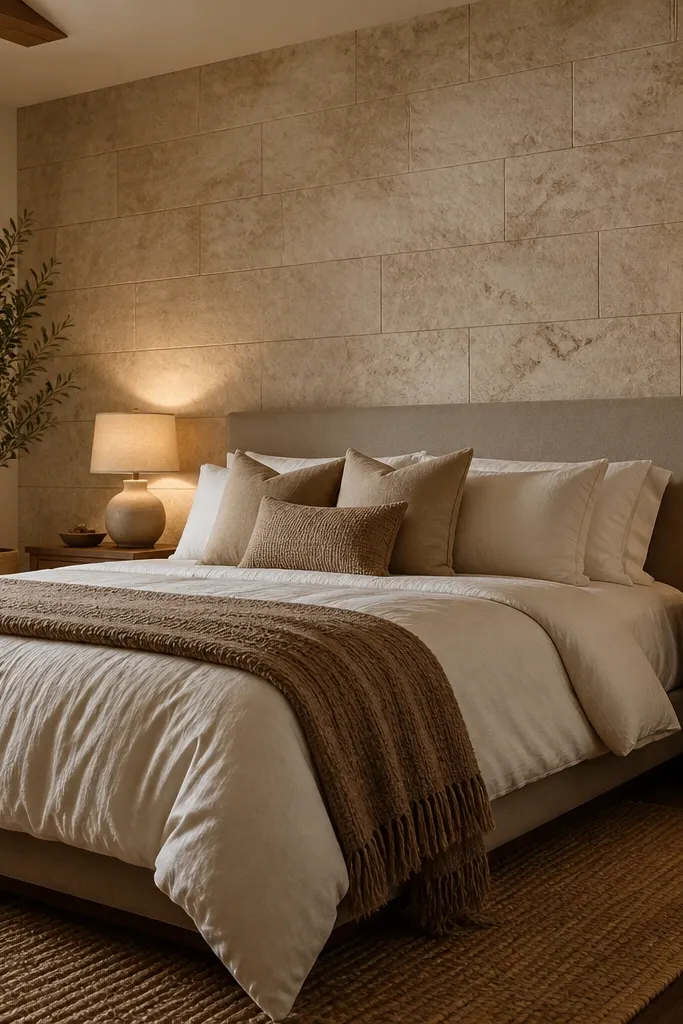
Stone-look panels behind the bed make the space feel grounded and expensive, especially with warm neutrals. Travertine-style tones — cream with honey undertones and subtle veining — keep it from looking cold like gray marble. Peel-and-stick panels are a practical option if you want the look without labor-heavy tiling. This works best when your headboard is simple so the wall can be the star. The veining adds movement, which makes the room feel less flat than paint.
Clean the wall thoroughly and let it dry completely, then prime if your panels recommend it for adhesion. Start at the center line behind the headboard and dry-fit the first row so you can control where the veining lines land. Apply panels in staggered rows if the pattern suggests it, using a smoothing tool to press out edges. Plan for trimming around outlets or baseboards and expect $80-200 for a typical accent wall depending on panel size.
Keep grout-look lines consistent by pressing seams with a straight edge tool.
Don’t install on dusty walls — stone-look panels lift at the edges.
9. Sunburst accent wall with painted triangles in two tones
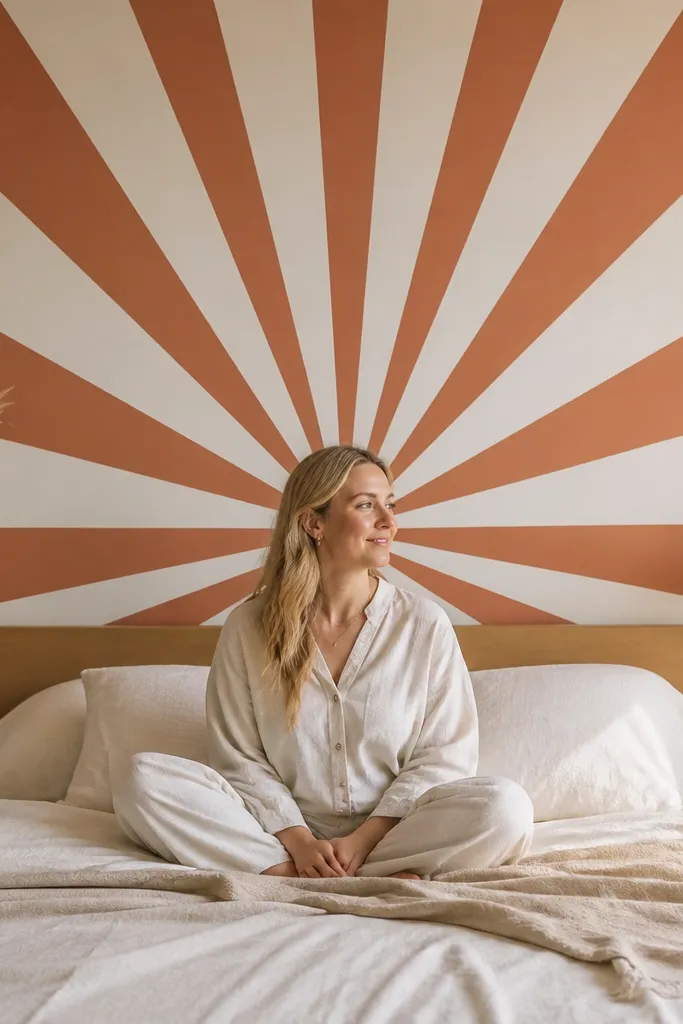
Measure the headboard width and mark the center point on the wall at the midpoint of the headboard height. Create a ray layout by drawing evenly spaced triangle lines with a level and measuring tape; start with fewer, wider rays for a calmer look. Tape each ray with thin painter’s tape and paint the two colors in separate passes, removing tape while paint is still slightly tacky for sharp edges. Touch up with a small brush where rays meet.
A sunburst accent wall is bold, but it looks clean when you keep the palette tight and the lines crisp. Use two tones: a soft warm white base and a muted clay or terracotta for the rays. Place the center point behind the middle of the headboard so the pattern “pulls” the eye upward. This idea is perfect for bedrooms that need personality without adding furniture. It also hides imperfect walls because the geometric lines draw attention away from small bumps.
Watch outAvoid too many narrow rays — they look busy and show tape mistakes.
Pro tipUse matte paint and keep the rays 4-6 inches wide so the pattern reads from the doorway.
10. Half-wall wainscoting with vertical slats on top
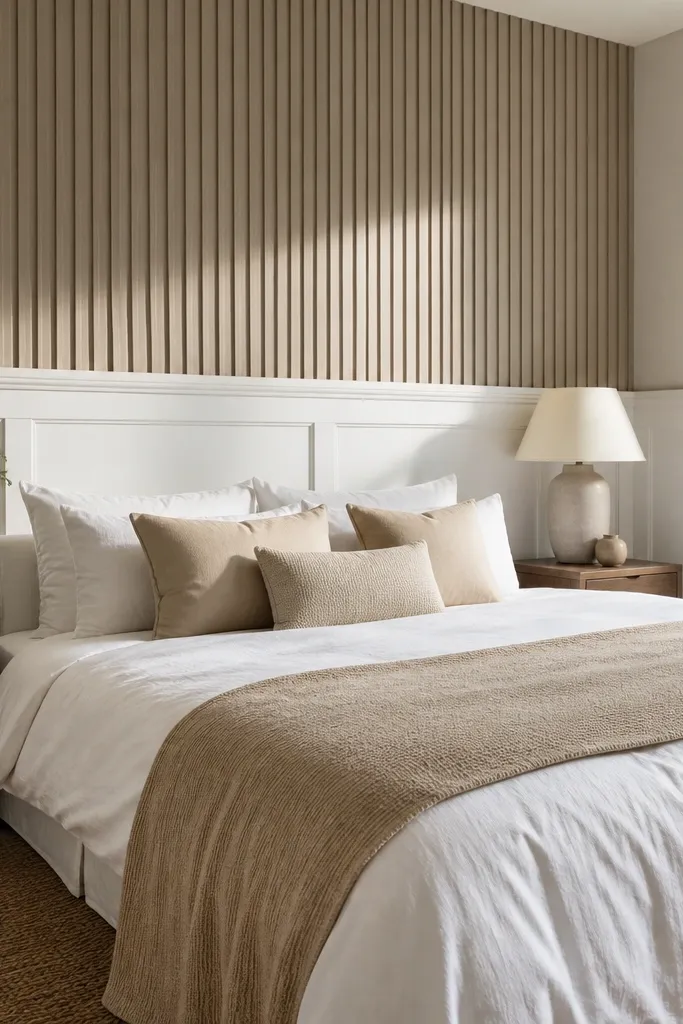
Decide your wainscoting height first — 36 inches is a dependable starting point for most beds. Install chair rail and panel molding for the lower section, then paint it white and let it cure. For the top slats, space 2-3 inch slats with 1/2 inch gaps, install on a level guide, then paint or stain. Cover the edges with trim so the transition line looks intentional.
This hybrid look gives you both structure and texture. The lower half wainscoting makes the room feel tailored, while vertical slats above add height and a modern edge. Keep the lower portion crisp white and choose a warm wood tone or painted greige for the slats. It’s ideal for bedrooms with traditional furniture that still wants a fresh, updated backdrop. The wall also helps when you don’t want full-height darkness or full-height wallpaper.
Watch outSkip caulk at trim seams — gaps show up instantly behind a bed.
Pro tipMatch the slat color to your nightstand wood so the whole room feels pulled together.
11. Wallpaper mural style clouds or arches in soft sand and ivory
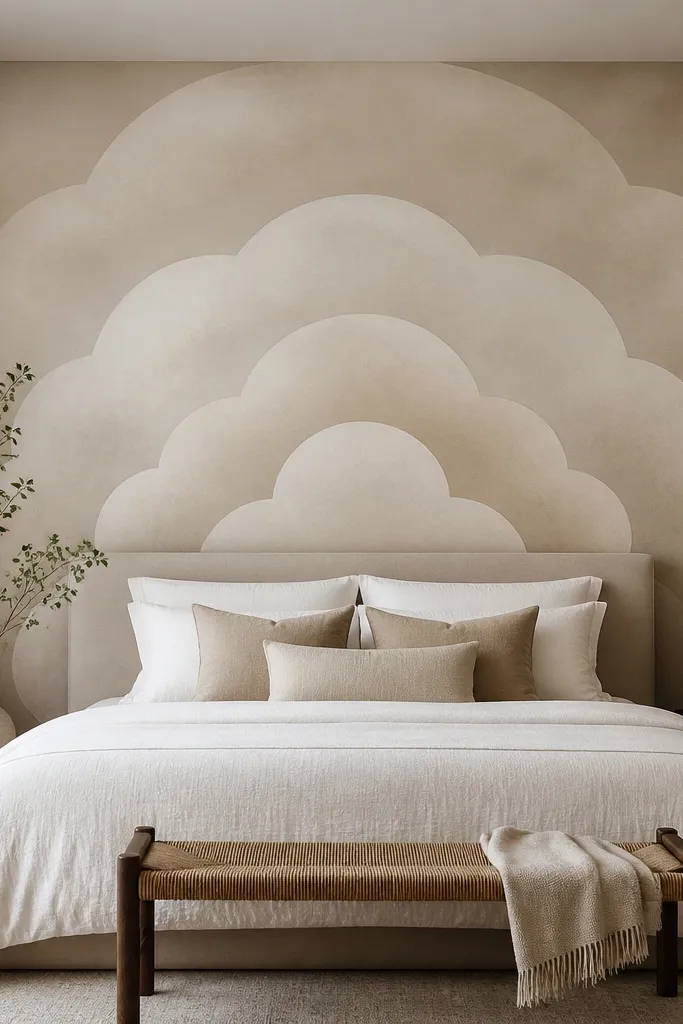
A mural-style wallpaper behind the bed creates a sense of depth without making the room feel crowded. Choose arches or cloud-like shapes in soft sand and ivory for a calm, airy look that still feels designed. The key is centering the main motif behind the headboard so the bed becomes the focal point. This works well in bedrooms that feel dark or boxed in because the light colors reflect lamp glow. It also makes the headboard look more styled even when the rest of the room is minimal.
Find (or create) a wallpaper panel layout that has a clear focal center, then measure your wall width to ensure the motif lands behind the headboard. Mark a center vertical line, hang the first strip plumb, then follow the motif alignment across strips. Trim at the ceiling and baseboard lines carefully with a sharp blade so edges look clean. Smooth seams with a seam roller and keep a damp cloth nearby to wipe paste before it dries.
Use solid-color bedding so the mural stays readable.
Avoid mismatched centers — if the arches don’t line up behind the headboard, the whole effect looks off.
12. Matte black board-and-batten with a light oak headboard
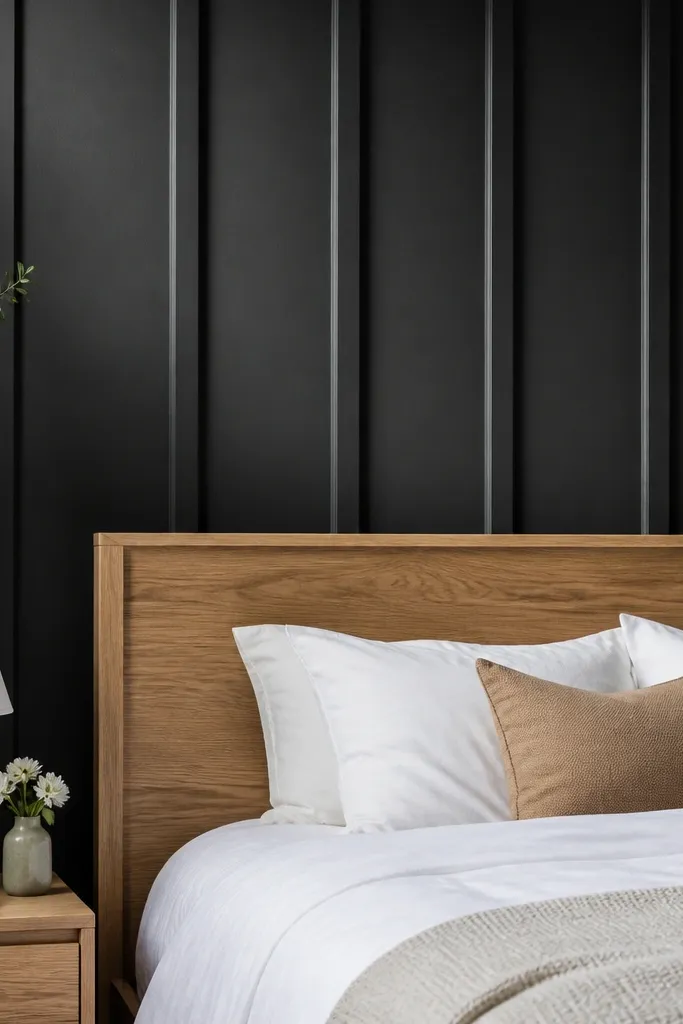
Board-and-batten in matte black is dramatic, but it looks intentional when you pair it with a lighter headboard like light oak or natural upholstered tones. The raised vertical battens create a strong rhythm that makes the bed look centered and designed. This is ideal for modern bedrooms that need contrast and a clean architectural feel. Because black absorbs light, it also helps reduce the look of clutter from framed photos or shelves. It’s a strong choice if your room has lots of light-colored textiles and you want the wall to provide grounding.
Plan battens on a grid: 1-2 inch battens with 8-12 inch spacing works well for most bedroom walls. Install horizontal rails first so battens stay level, then attach vertical battens and sand edges smooth. Prime, then paint matte black in two coats, using a foam roller for a consistent finish. Keep the accent width to the headboard plus 6-12 inches on each side so it looks like a designed feature, not a random patch.
Hang one large piece of art centered above the bed — black walls make anything asymmetrical feel louder.
Avoid semi-gloss black — it shows roller marks and reflects lamp glare.
13. Mirror-backed accent panels in a warm gold frame
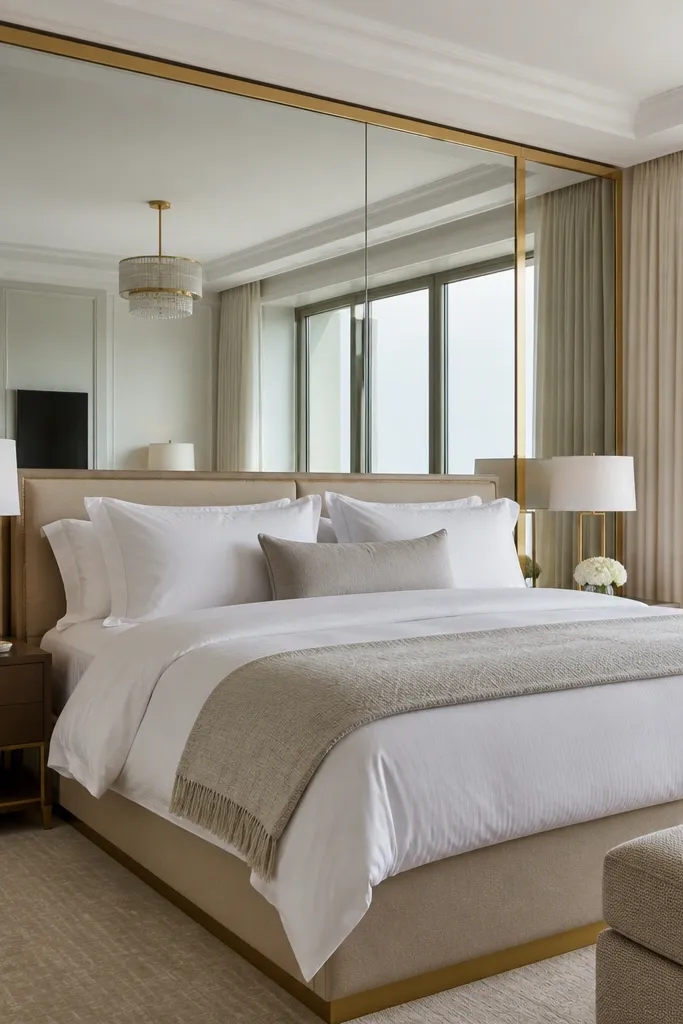
Choose mirror panel sizes that cover the headboard area evenly — for a queen bed, aim for about 60-66 inches wide total coverage. Mark mounting points and install a sturdy backing board or rails, then attach mirrors with manufacturer-approved clips or adhesive pads. Add a warm gold frame trim or purchase framed mirrors so edges look finished. Clean thoroughly and test lamp angles before final attachment so you don’t reflect harsh light directly into your eyes when lying down.
A mirror-backed accent wall behind the bed makes the room look bigger and brighter, especially if you have limited natural light. The trick is the frame — warm gold reads cozy, while silver can feel harsh. Use multiple smaller mirror panels or a single large panel with a clean border so it looks like a planned design element. This works best when you control reflections from windows and lamps; it can amplify glare if you place it wrong. If your bedroom feels cramped, mirrors behind the bed are one of the few accent moves that changes the whole sense of space.
Watch outSkip unframed mirrors — exposed edges look unfinished and can chip.
Pro tipPlace soft warm bulbs (2700K) if mirrors are involved — cooler bulbs can make reflections look blue.
14. Gallery-grid photo ledge wall with linen mats behind the bed
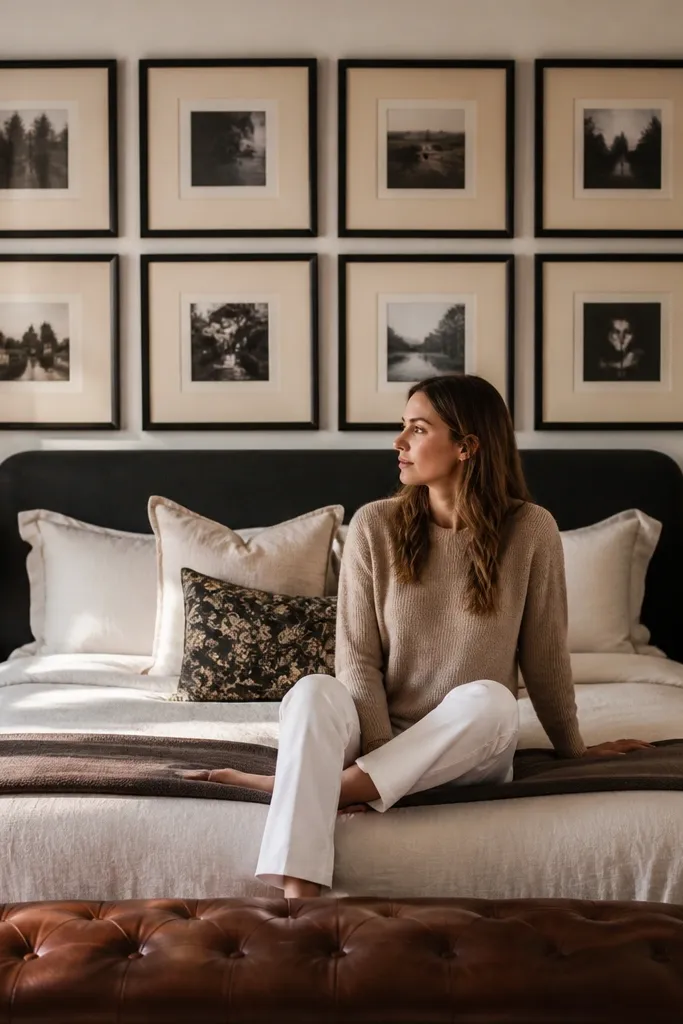
Pick a grid layout that matches your headboard: for a queen, a 3x3 or 2x4 arrangement usually looks balanced. Measure the wall and center the grid so the outer frames land 6-12 inches beyond the headboard sides. Use linen mats in cream or warm white and keep frame widths the same across the set. Mount with picture hooks or French cleat for stability, and level each row so the grid stays straight.
Instead of covering the whole wall with one material, build a controlled gallery grid behind the bed using linen mats and matching frames. This creates an accent wall effect through composition — the symmetry makes it feel intentional, not cluttered. Choose frames in black, aged brass, or natural wood and keep mat colors consistent so the wall doesn’t look chaotic. This works well if you already have photos or art you want to feature, and it’s also a flexible option if you change your decor seasonally. The wall looks great in photos because it’s centered and readable.
Watch outAvoid mixed frame widths — even small differences make the grid look accidental.
Pro tipUse art with similar color temperatures — warm landscapes with warm mats look cohesive.
15. Two-tone ombre vertical wash in warm white to clay
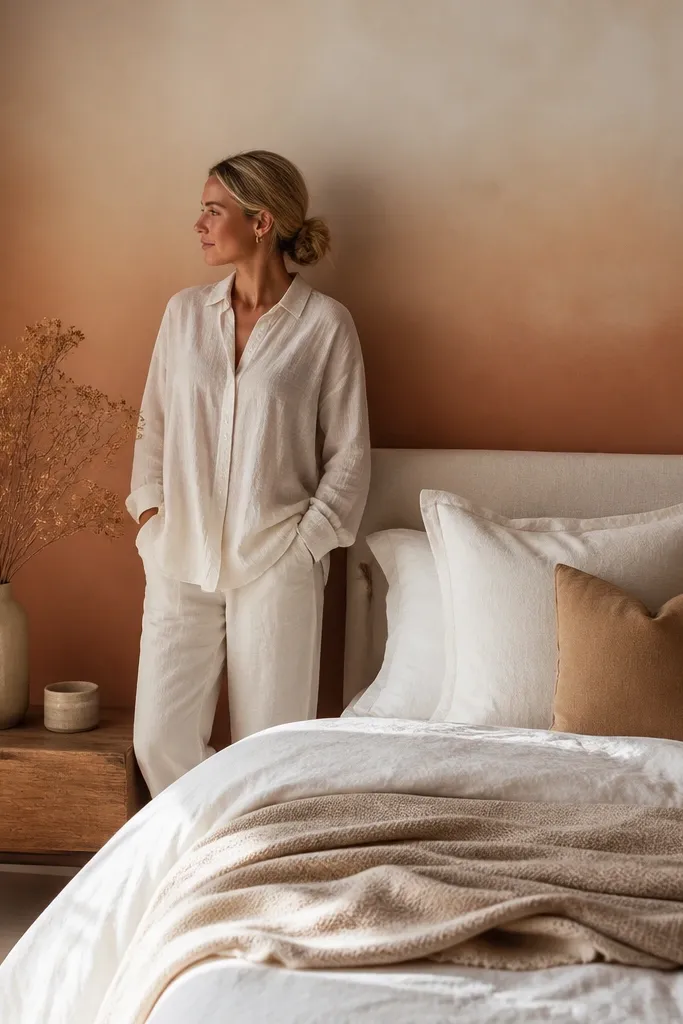
A vertical ombre effect gives you a soft gradient that looks designer but stays calm. Start with warm white near the ceiling or upper wall and fade down into clay or terracotta for warmth behind the bed. This works because it adds movement without busy patterns — your bedding and pillows stay the focus while the wall adds dimension. It’s a great choice for bedrooms that feel too flat but can’t handle wallpaper. Ombre also helps visually unify mismatched wall paint or minor sheen differences if the wall isn’t perfectly uniform.
Tape a vertical zone centered behind the headboard and mark where the fade starts, usually around 18-24 inches down from the top. Paint the base color first in matte, then blend the second color downward with a wide dry brush or sponge, working in thin layers. Add a third intermediate layer if you want a smoother gradient, then feather edges so there’s no hard line. Let it cure fully before removing tape to keep the fade edge clean.
Use a wide brush and keep blending light — heavy pressure creates streaks.
Avoid glossy paint for ombre — sheen differences show the gradient steps.