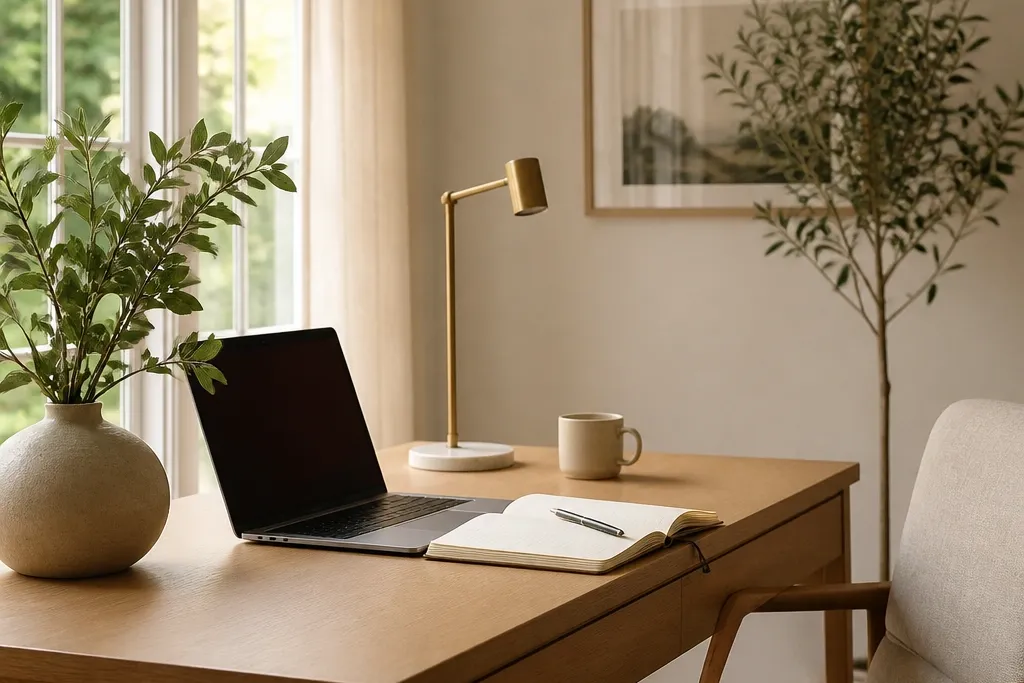
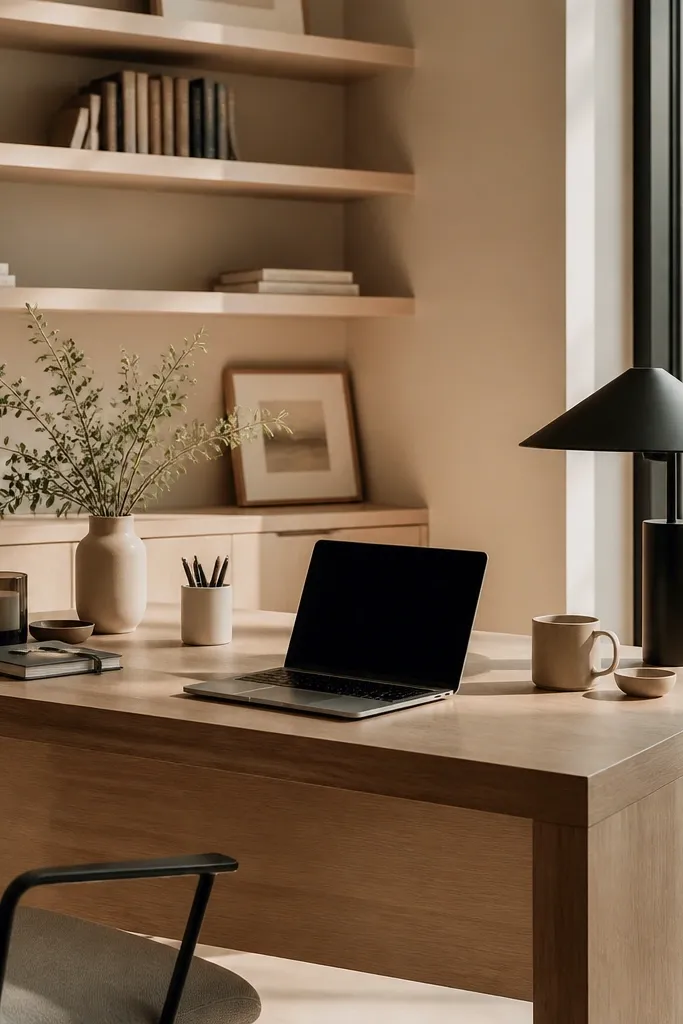
1. Warm Oak Desk + Cream Desk Mat + Black Tech
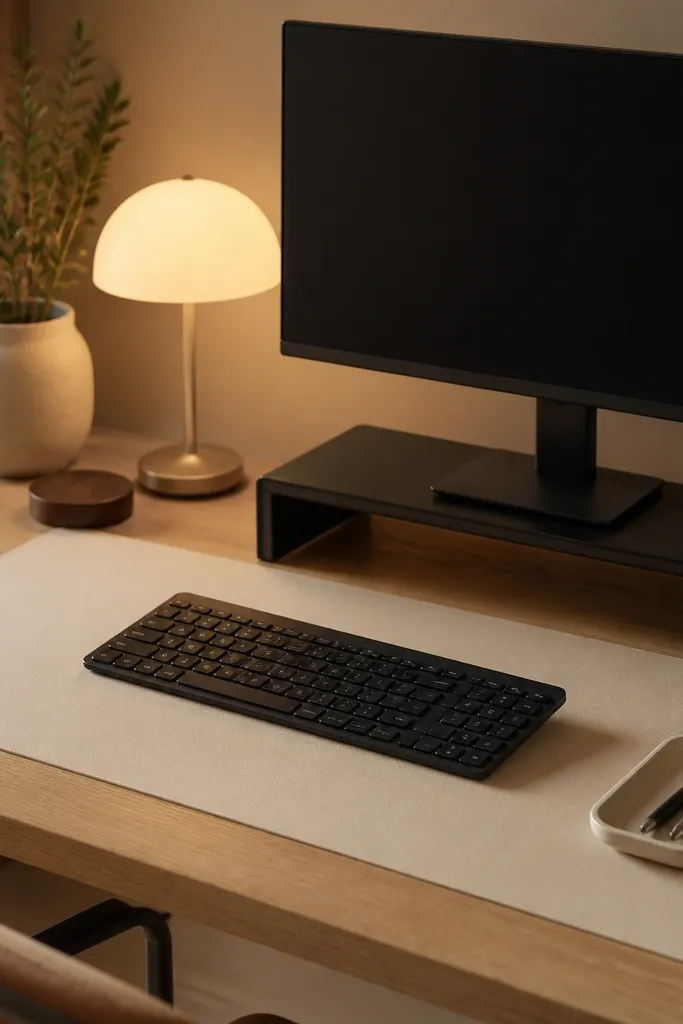
This combo works because warm wood and cream create a soft base, then matte black keeps the tech from looking messy. The desk mat also gives your setup a “finished edge” so cables and small items don’t feel like they’re floating. I used this exact pairing in my own home office and the desk stopped looking like a storage surface within days. It reads clean in daylight and still looks good at night.
Choose a desk mat that covers at least the keyboard footprint plus 4 inches on each side. Use a matte black monitor stand or riser so the screen height matches the lamp sightline. Keep the ceramic tray about 6 x 8 inches so it holds pens without taking over the desk.
Buy one cream item you can repeat — frame, mat, or cushion — so the palette feels deliberate.
Avoid shiny desk mats that reflect your screen and create glare.
2. Two-Shelf Wall Setup Above the Desk
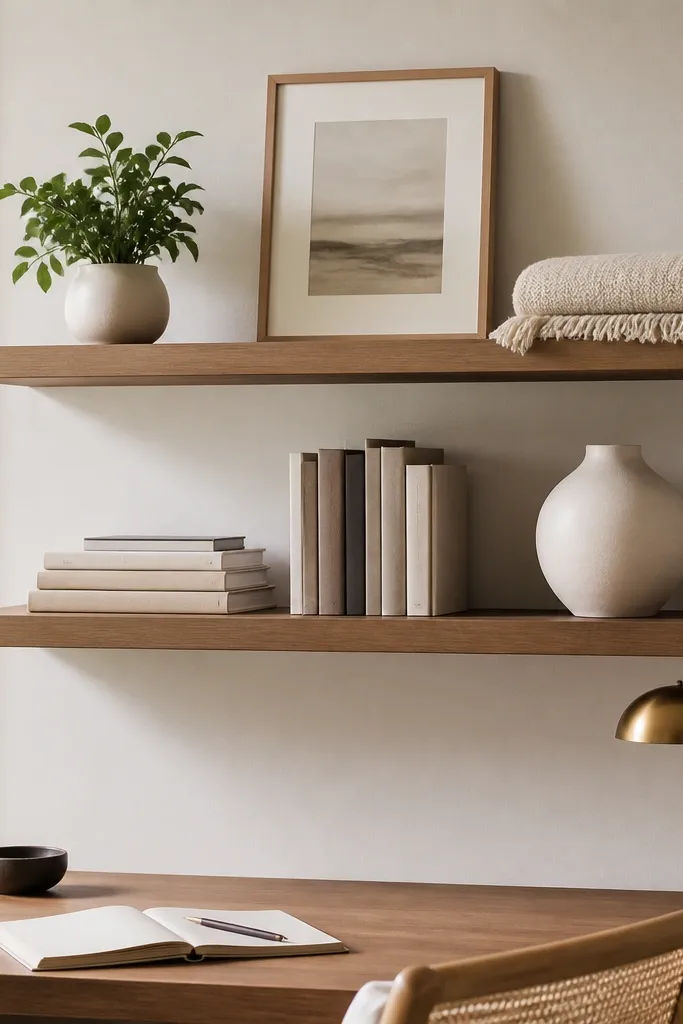
Wall shelves give your aesthetic work from home set up height without cluttering the desk. I like two shelves because you can separate “pretty” items from “useful” items — books on the bottom, decor on the top. When everything is stacked and spaced evenly, your desk area looks calmer even if you have a lot of tools. It also makes the room feel more designed from across the space.
Pro tipStagger book spines so you get a mix of heights instead of identical stacks.
Mount the top shelf about 56 inches from the floor and keep a 10-12 inch gap between shelves. Use the same finish on both shelves, like white oak or walnut stain, so they match your desk. Aim for 2-3 items per shelf for a clean look.
Watch outAvoid crowding the shelves with small knickknacks — it turns into visual noise fast.
3. Gallery Wall Grid Behind the Chair
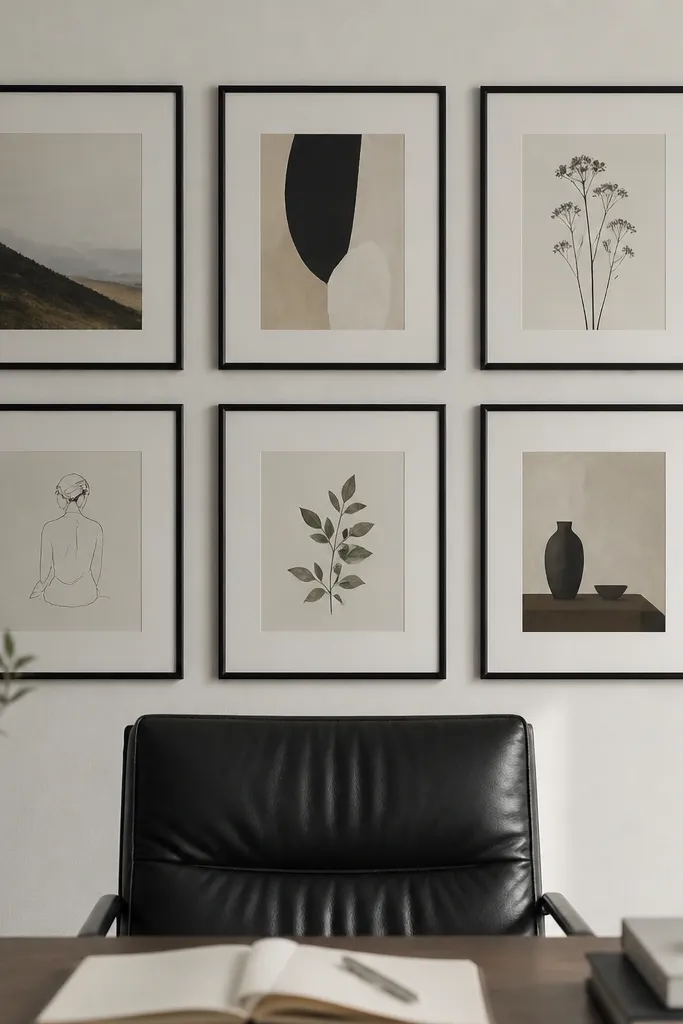
A gallery wall behind your chair is the easiest way to make your setup look styled, because it sits in your line of sight when you’re working. I’ve done this with black frames and white mats, and it instantly makes the room feel intentional even if the desk is minimal. The key is consistency in frame style and spacing. It also helps hide blank wall space that makes the room feel unfinished.
Pro tipChoose prints that share the same color temperature — warm neutrals together, cool blues together.
Use frames with the same width and mat color. Keep the center-to-center spacing around 2.5-3 inches so the grid looks even. If you’re hanging above a desk, align the bottom edge of the grid with the top of the chair back.
Watch outAvoid mixing frame finishes like gold, brass, and chrome all in one wall.
4. Rattan Pen Cup + Woven Basket Cable Hide
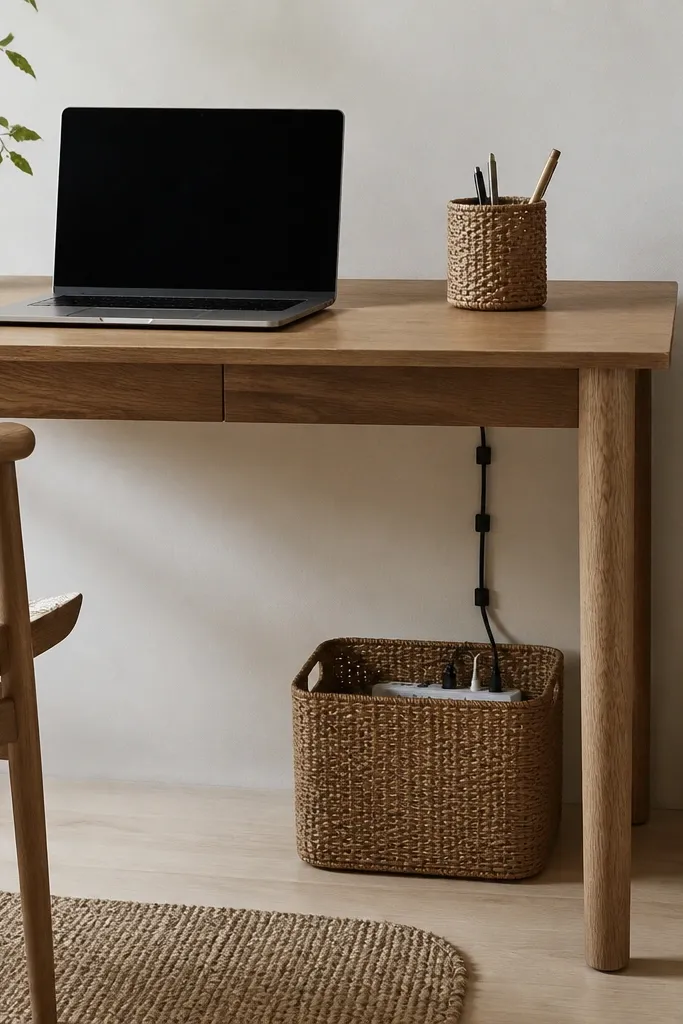
This is the “pretty function” look. The rattan pen cup adds texture without adding clutter, and the woven basket hides the ugly part — power strips and cable tangles. I used a basket under my desk and suddenly my setup looked styled even when I had cords plugged in. Texture also makes a neutral room feel warmer.
Pro tipUse one long cable sleeve in a matching neutral so you don’t see random cable colors near the edge.
Pick a pen cup about 3-4 inches wide and 4-5 inches tall so it fits next to your keyboard. For the cable hide, use a basket tall enough that the power strip sits at least 1 inch below the rim. Secure cables with adhesive clips so they run straight into the basket.
Watch outAvoid leaving cables loose — they ruin the aesthetic faster than any decor.
5. Terracotta Accent Shelf with One Big Plant
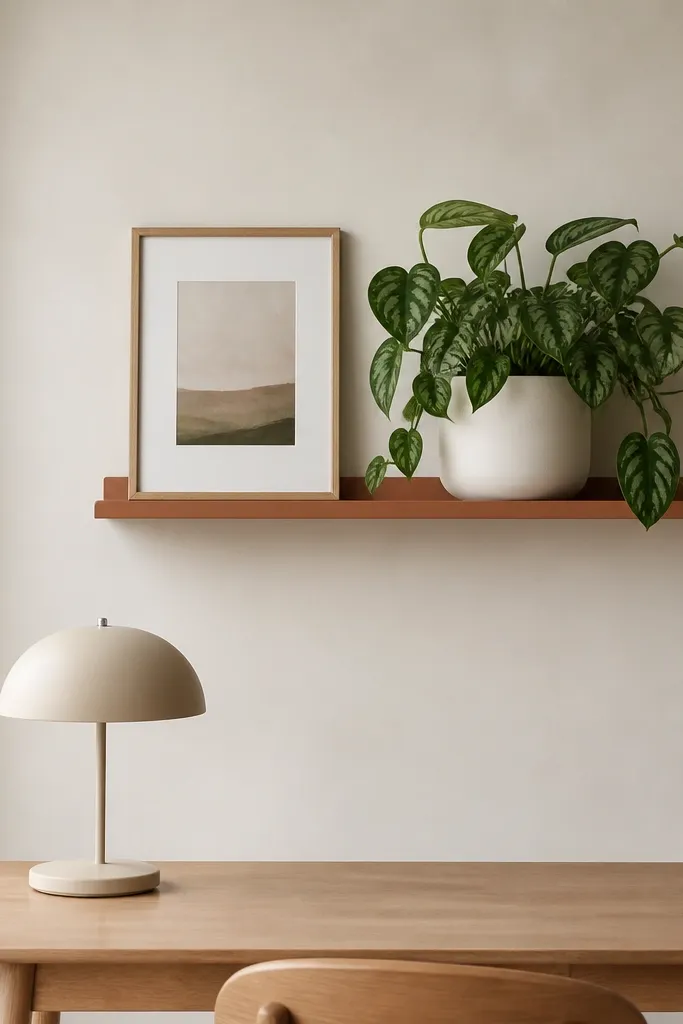
A terracotta accent gives warmth without turning the whole room orange. Pairing it with one big plant keeps the look grounded and alive, and the plant becomes your “hero” object. When I added a matte white pot and a terracotta accent shelf, my setup stopped feeling flat and started feeling lived-in. It also photographs well for flat lays and video calls.
Use one terracotta item only — shelf or planter — not five different terracotta pieces. Choose a plant with broad leaves like a rubber plant or faux option if you travel. Keep the pot matte and light so it doesn’t fight with terracotta.
Rotate the plant pot every two weeks so it grows toward the light and stays symmetrical.
Avoid tiny plants on a big desk — they look lost and cheap.
6. Soft Gray + White Setup with Brass Details
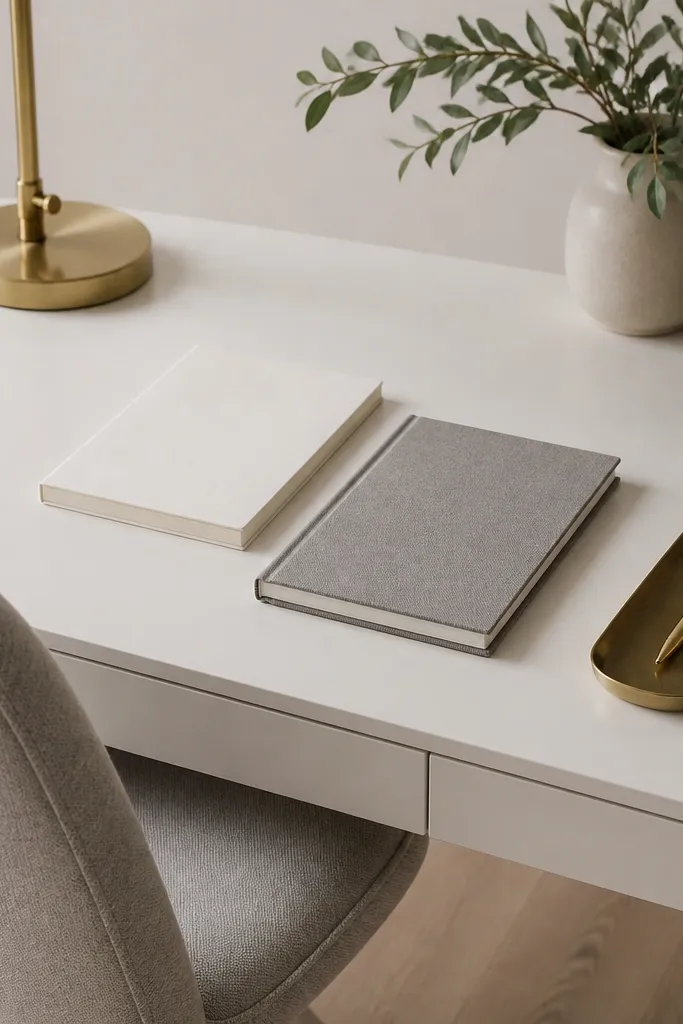
A soft gray and white palette makes your aesthetic work from home set up look crisp, and brass adds warmth so it doesn’t feel sterile. I like this look when your room has cooler daylight or north-facing windows. The brass details catch light and create a subtle glow around your desk area. It’s also easy to maintain because everything hides small scuffs and smudges better.
Pro tipMatch the brass finish on the lamp and one small tray to keep the palette tight.
Keep textiles in gray and off-white, not bright white. Choose a lamp with a warm bulb color temperature around 2700K. Use brass for only 2-3 accessories so it stays intentional.
Watch outAvoid chrome or silver accessories mixed with brass — it looks accidental.
7. Monochrome Desk: Black, Charcoal, and Off-White
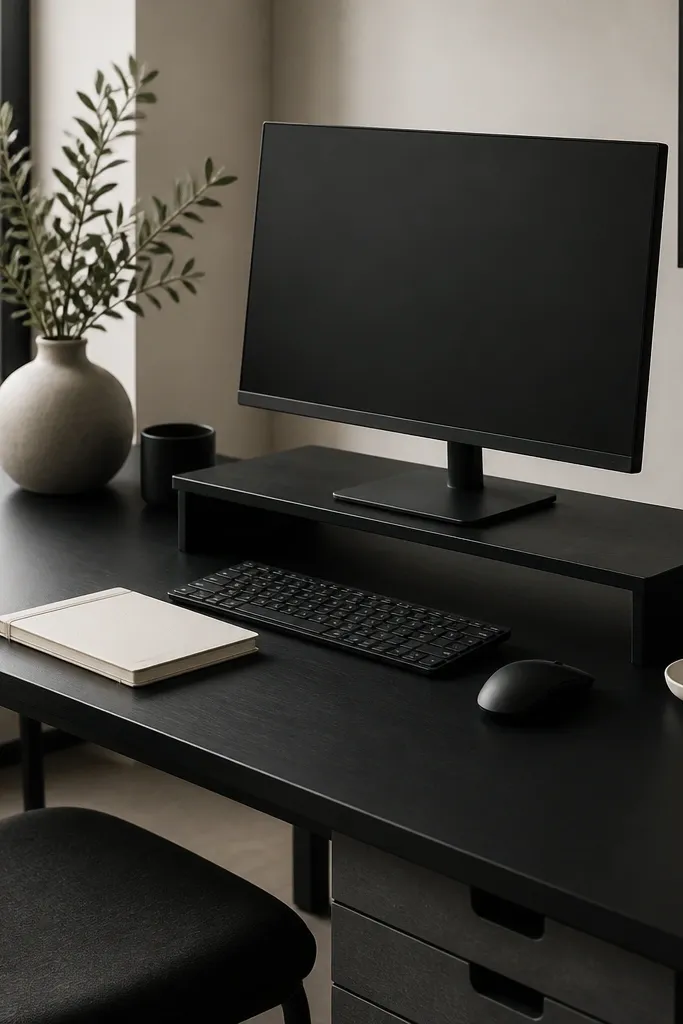
Monochrome looks expensive when it’s controlled. Black and charcoal hide visual clutter, and off-white gives you enough contrast that the desk doesn’t feel heavy. In my workspace, I used a monochrome setup during a busy season and it stayed tidy because everything blended even when papers piled up. The result is calm, not chaotic.
Pro tipUse a black cable sleeve so the underside doesn’t show random colors on camera.
Pick one main surface color (black or charcoal) and keep accessories in the same range. Use off-white for only one or two items like a notebook or tray. Keep paper stacks in a single size so the pile looks intentional.
Watch outAvoid mixing glossy black with matte black — the shine mismatch looks patchy.
8. Linen Curtain Backdrop for a Softer Look
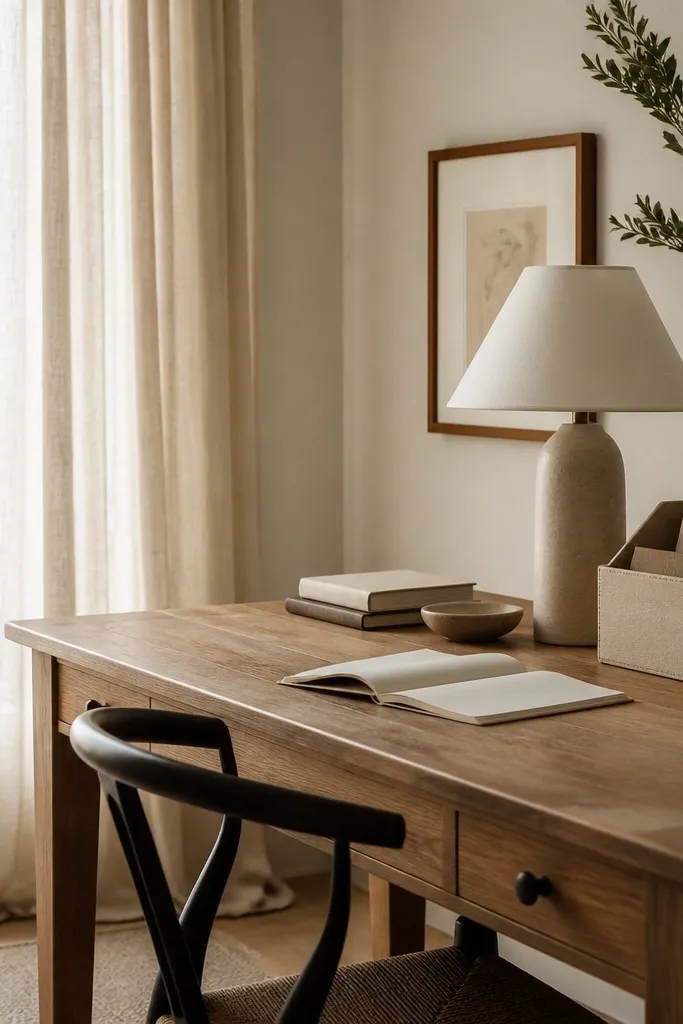
A linen curtain changes the whole vibe because it softens the light falling on your desk. For an aesthetic work from home set up, that matters more than people think — your camera view and eye comfort improve when the light is diffused. I added a sheer linen layer and it made the room look calmer instantly. It also makes your desk accessories look more flattering on video calls.
Pro tipSteam the curtain before you hang it so the folds look consistent, not wrinkled.
Use light linen in cream or oatmeal. Hang it high, close to the ceiling line, so it drops with height. Pair it with a beige or tan desk organizer so the textures match.
Watch outAvoid polyester “linen look” curtains that shine — they read cheap under warm bulbs.
9. Corner Desk Setup with a Reading Nook Chair
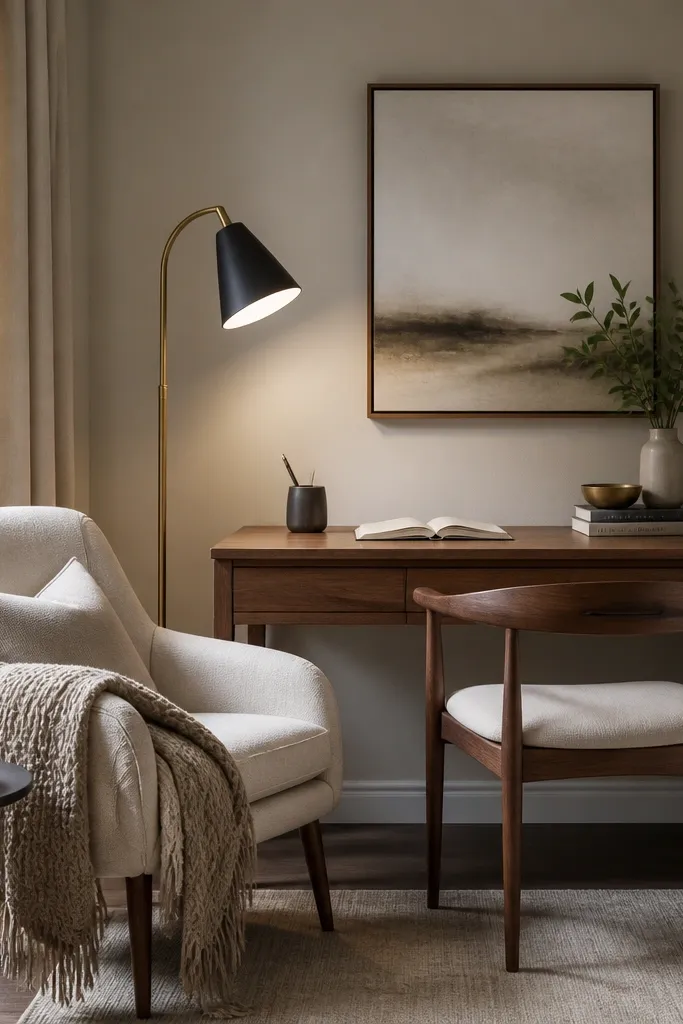
Corner setups feel more intentional because they create a dedicated work zone inside the room. I like adding a reading nook chair because it gives you a second “place to be,” which makes the area feel like a mini room instead of a desk. When you add a standing lamp and a small side table, the space looks designed even if the desk itself is simple. It also helps if you take calls from different angles.
Place the desk so your screen faces the room, not the wall. Leave at least 24 inches between chair and desk edge for comfortable movement. Use a side table that’s about 14-18 inches wide so it doesn’t crowd the corner.
Choose one fabric for the chair and one for the throw — same weave family if possible.
Avoid pushing the chair too close — tight corners look cramped and messy.
10. Desk Shelf Light + Warm Bulb for Night-Friendly Beauty
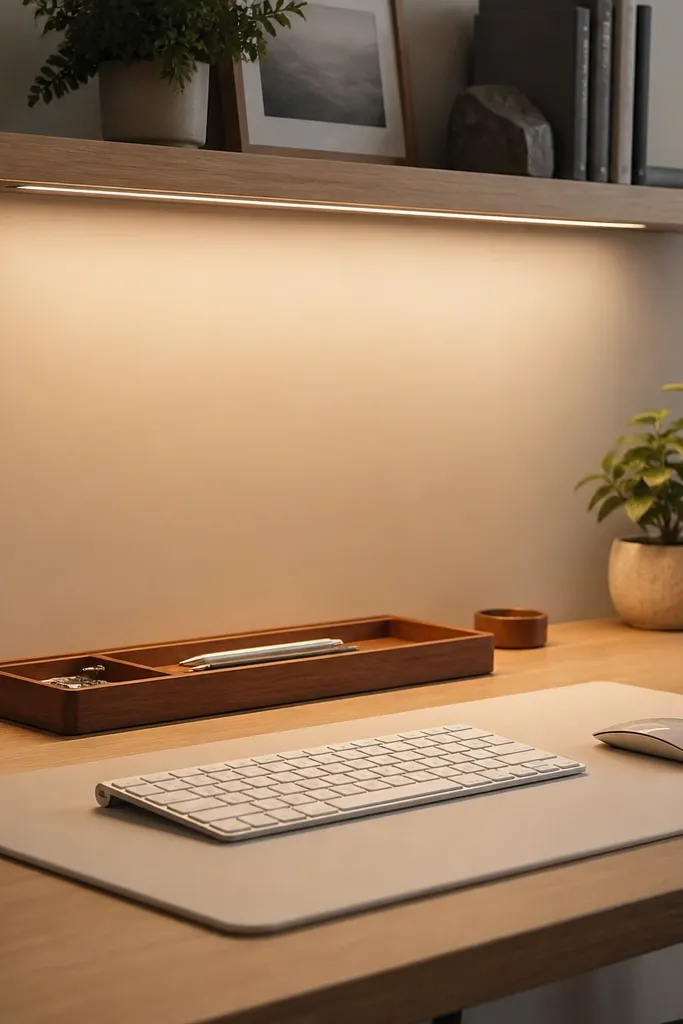
Lighting is the difference between “pretty during the day” and “pretty at 9pm.” When you add a shelf light or under-shelf lighting, your aesthetic work from home set up looks styled even when the overhead light is off. I installed shelf lighting and my desk stopped looking harsh and flat in the evening. Warm light also makes wood and ceramics look richer.
Use warm bulbs around 2700K. Under-shelf LED strips look best when they are hidden from direct view — mount them so you see the glow, not the strip. Aim the light to hit the desk surface, not your screen.
Put a small diffuser shade or frosted cover on the lamp so your camera doesn’t catch glare.
Avoid bright cool-white light — it makes neutrals look gray and tired.
11. Open Shelving with Color-Coordinated Storage Bins
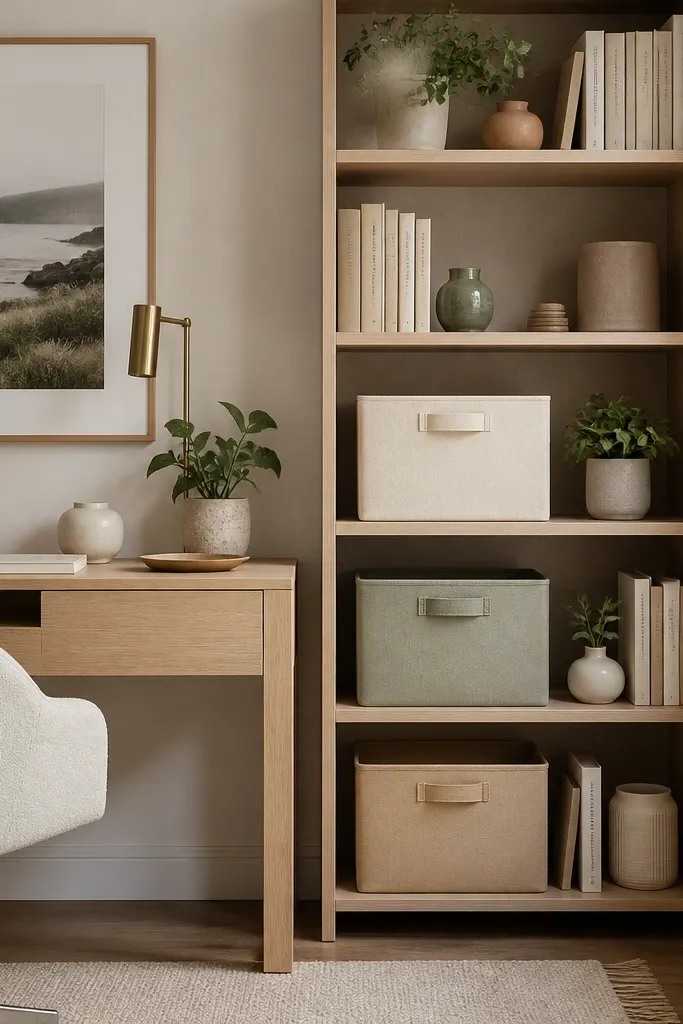
Open shelving looks aesthetic when the storage is actually part of the design. Color-coordinated bins turn “hidden storage” into intentional visual blocks. I’ve used this approach with work supplies and it keeps my desk from turning into a paper battlefield. The shelves also give you a place for decor that doesn’t cost much.
Pro tipLabel bins on the underside with small stickers so the front stays clean.
Choose 3 bin colors max and repeat them across the shelves. Keep bin sizes consistent so the shelf looks orderly. Leave 1-2 inches of air between bins and books so things don’t look jammed.
Watch outAvoid random bin colors — it makes the shelf look like a storage room.
12. Monogramd Notebook Stack + Matching Pen Holder
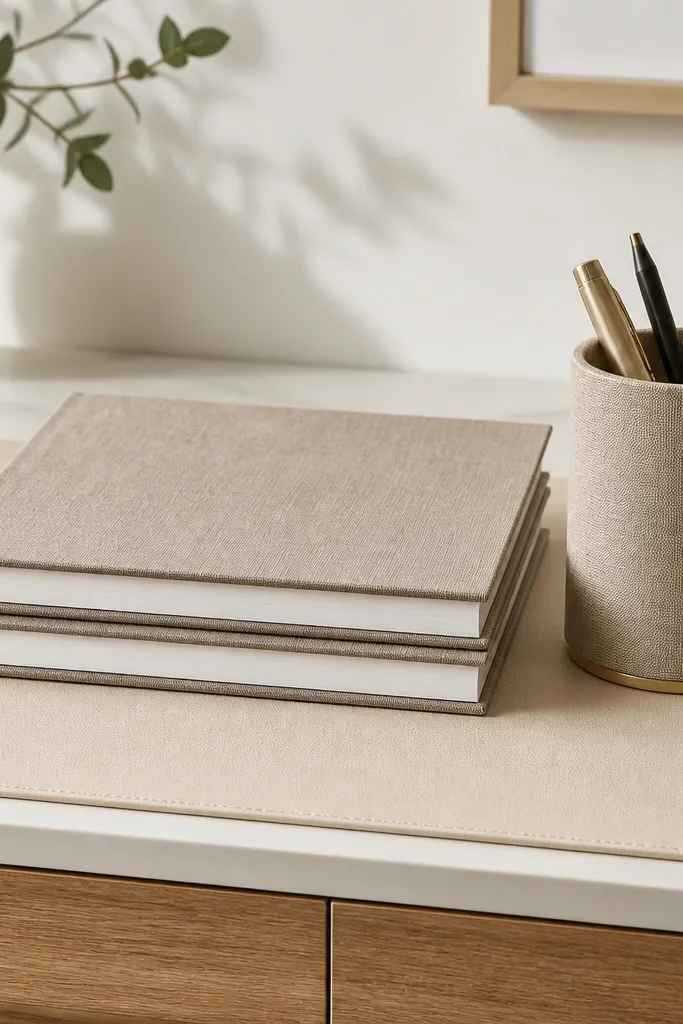
Small stationery styling makes your aesthetic work from home set up feel personal without turning it into clutter. I’m picky about alignment — if notebooks aren’t stacked square, the whole desk looks off. When the pen holder matches the notebook cover tone, your desk looks “done” even when you’re not arranging anything else. It’s one of the cheapest upgrades that still looks intentional.
Pro tipUse one color for sticky notes so they don’t scream for attention.
Pick two notebooks only: one for active work, one for reference. Stack them so the edges align and leave a 1-inch gap from the desk mat edge. Choose a pen holder that matches the notebook cover tone — wood with warm covers, ceramic with neutral covers.
Watch outAvoid leaving loose pens scattered across the desk.