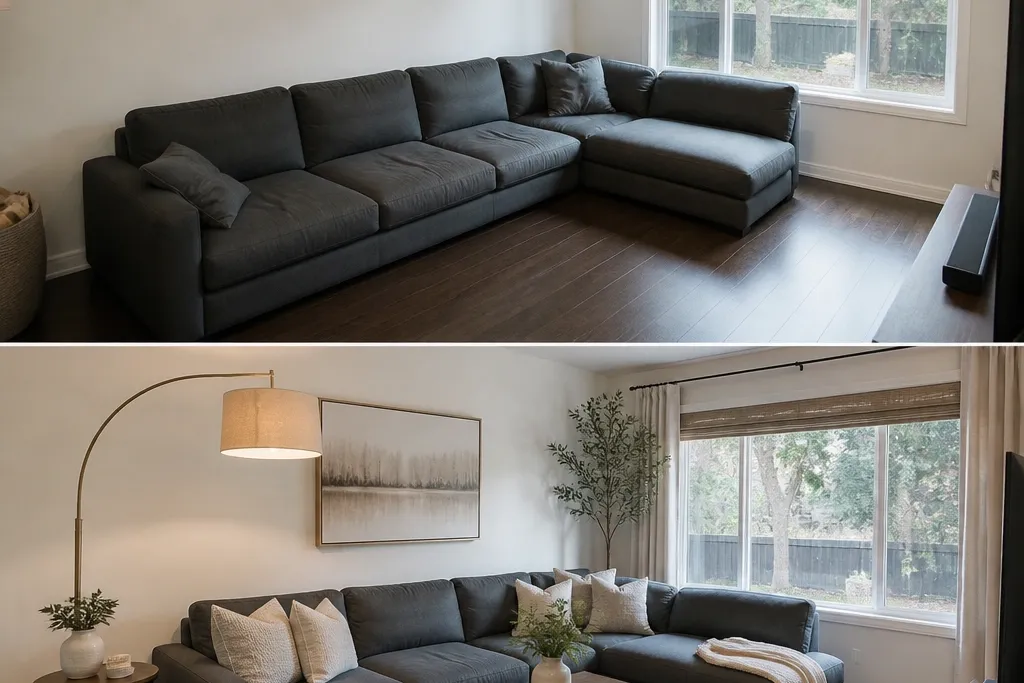
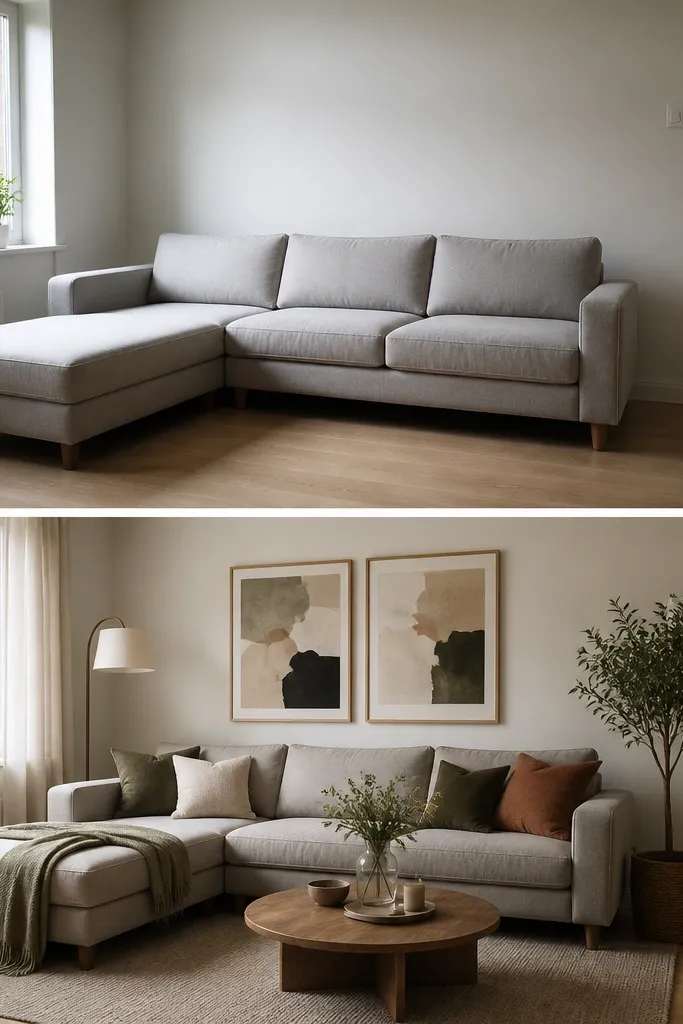
1. Warm Greige Rug + Black Metal Coffee Table Reset
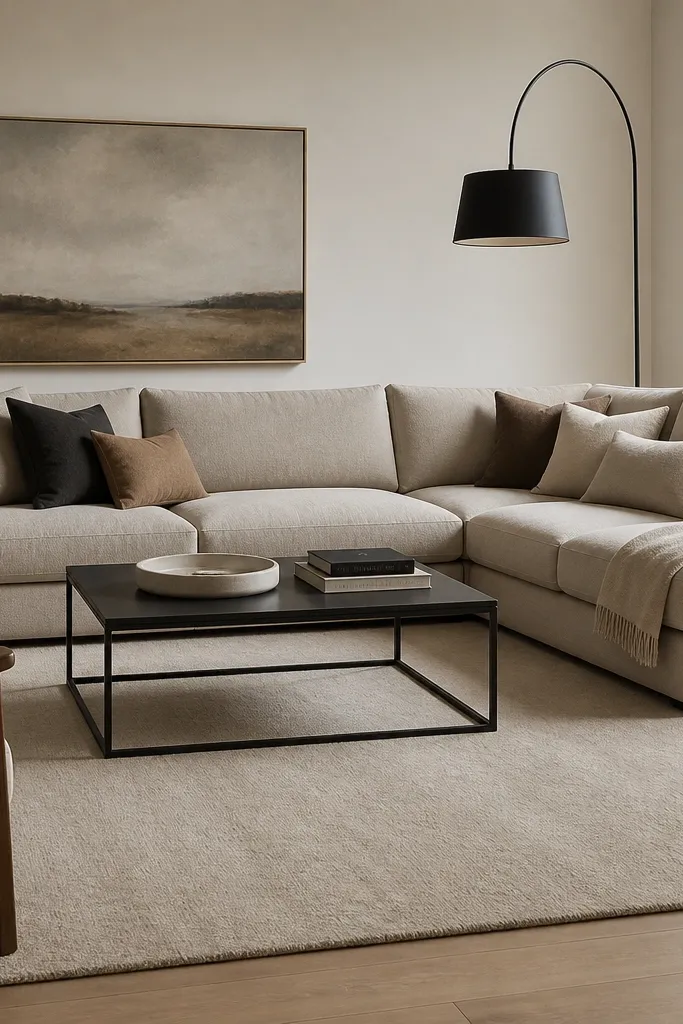
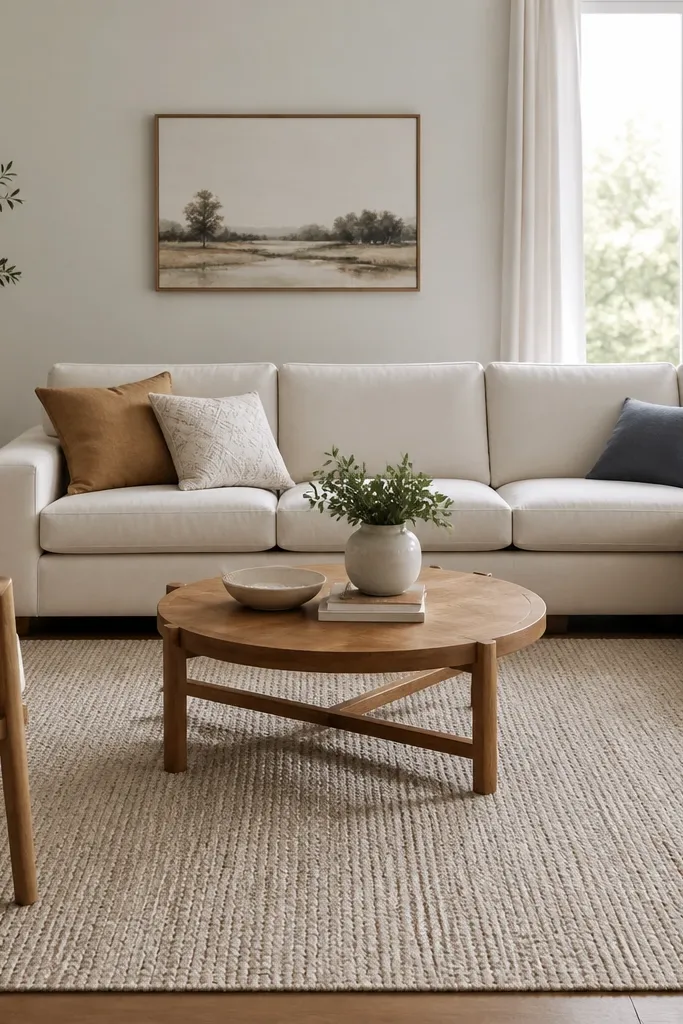
This one works because the rug sets the “floor plan” and the black metal table draws a clean line through the middle of the room. I pair a warm greige rug with the sofa’s neutral fabric so nothing fights for attention. Then I add black accents in the lamp and coffee table to give the corner a crisp frame. The result looks calmer than a bright pattern rug, but still styled.
Use a rug that is large enough for the sofa front legs to land on it. Aim for at least 8x10 if your seating area is tight, and go 9x12 if the room allows. Choose a coffee table with a slim profile — mine is about 48 inches long and 20-22 inches wide so it doesn’t crowd the chaise walkway. Add a tray in white or oatmeal to keep the top surface from looking messy.
Pro tipPlace the lamp so its light hits the wall behind the sofa corner — you’ll see the room look bigger in the evening.
Watch outAvoid a rug that only sits under the coffee table — it makes the sofa look disconnected from the rest of the room.
2. Layered Curtains to Make the Corner Disappear
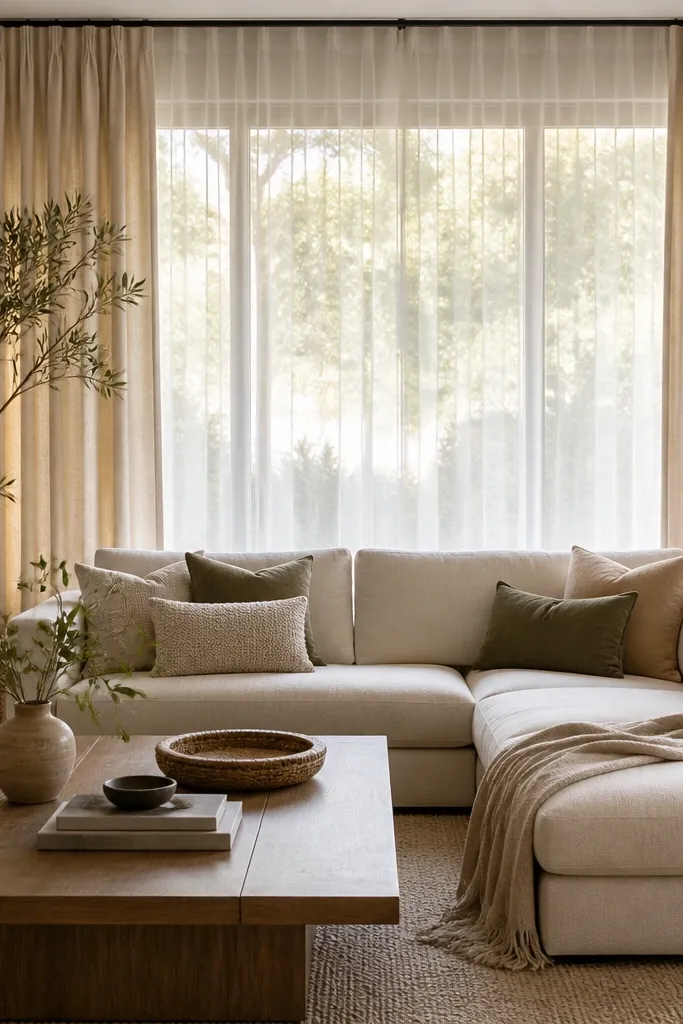
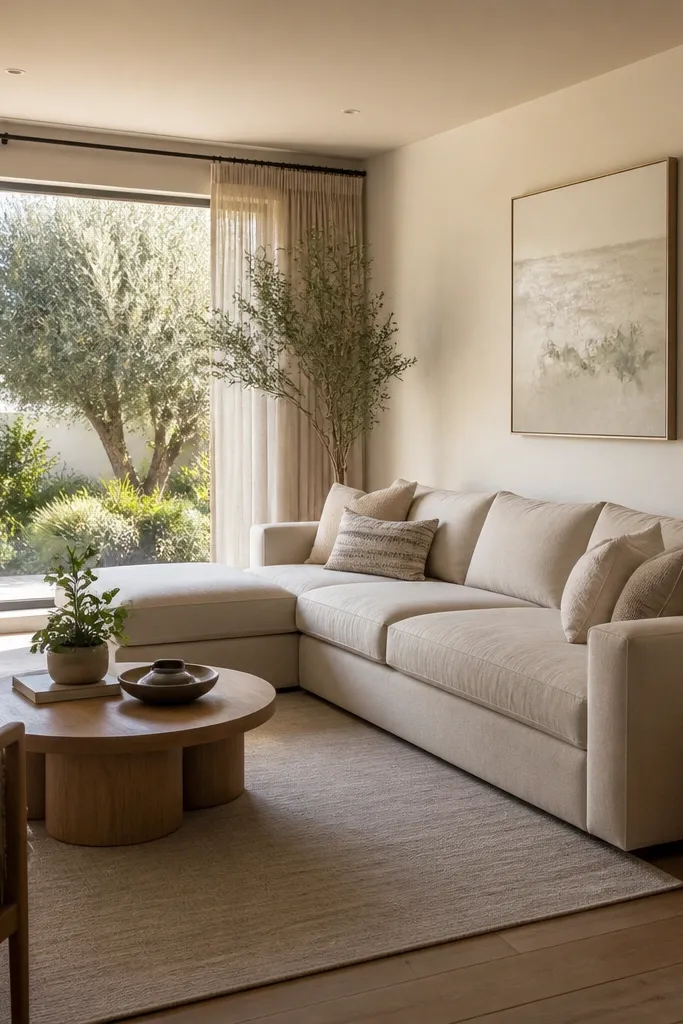
When your curtains are too short or hung low, the room ends up looking chopped up — and an L shape already creates a visual corner. Hanging curtains higher and letting them pool a little makes the eye travel up and across, so the corner feels less harsh. I like warm cream linen for a soft texture and a sheer layer for light diffusion. The plants add height that balances the chaise side.
Hang the rod 4-6 inches above the window frame and extend the curtain width by 1.5x the window width so it doesn’t pull tight. If your ceilings are 8 feet, curtains that end 1 inch above the floor look intentional; if you have taller ceilings, go for a slight break. Use a woven or rattan pot in a medium brown to echo the warmth of linen.
Steam the curtains and pull them open slightly when you style — the folds look better than a flat, stretched panel.
Don’t match curtains to the sofa fabric exactly — they blend and the room looks flat.
3. Two-Color Pillow Strategy for the L Shape
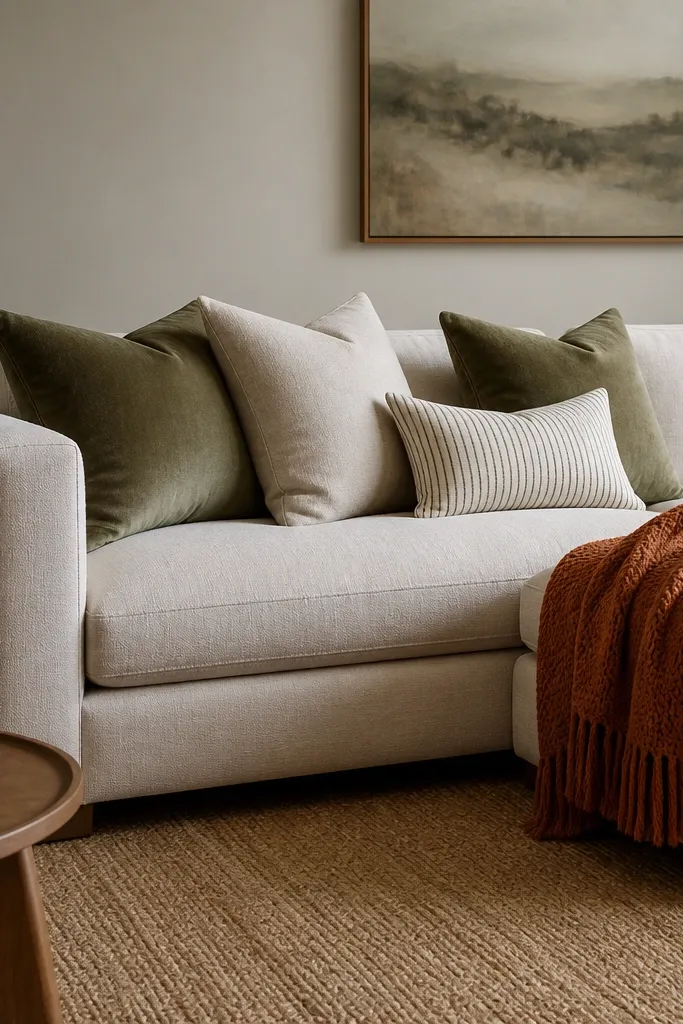
Most L shape sofa styling looks messy because people spread too many pillow colors across both sections. I use two main pillow colors and one texture throw. Deep olive adds depth against a light sofa, and oatmeal keeps it warm and grounded. One striped accent pillow gives movement without turning the room into a patchwork.
Start with 4 standard pillows on the back — 2 olive, 2 oatmeal. Add 1 smaller accent pillow on the chaise side only, so it doesn’t compete with the corner. Use a throw that’s 50x60 inches and drape it diagonally across the chaise arm. If your sofa fabric is patterned, choose solid pillows in the sofa’s lightest and darkest tones.
Pro tipFlip one pillow slightly so the seams don’t align perfectly — it looks more natural and less “set up.”
Watch outAvoid stacking pillows on both the back and the chaise arm — the corner turns into a pile.
4. Corner Gallery Wall That Respects the L Turn
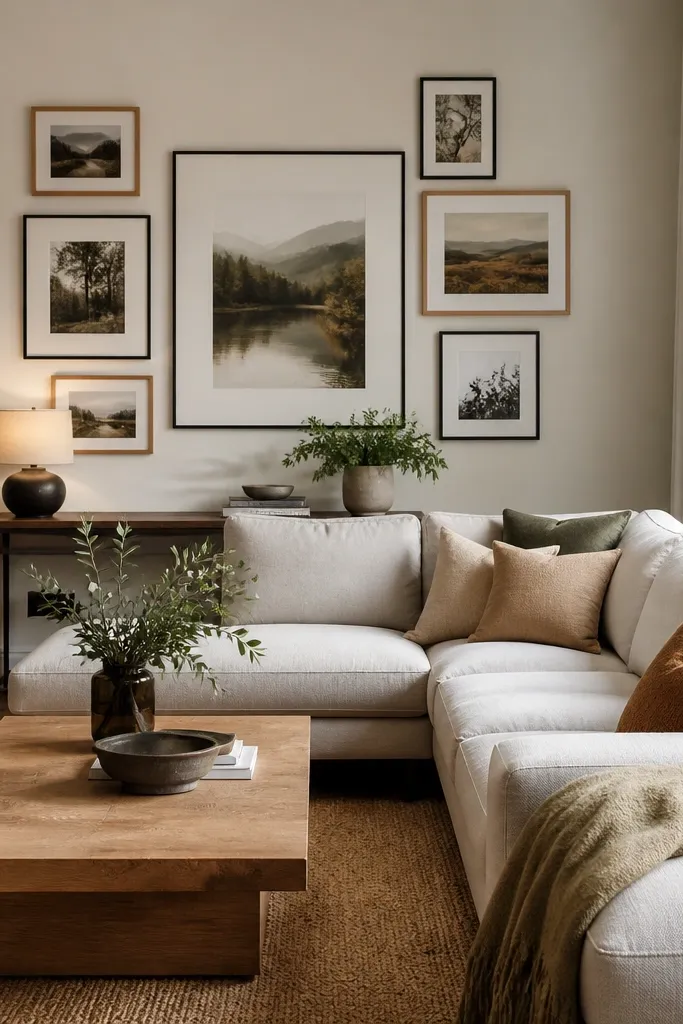
The corner is your staging point, so I treat the wall near it like a photo backdrop. A gallery wall adds personality, but only if the center piece aligns with the sofa’s back height. I keep the frame colors limited — matte black and natural wood — so it looks intentional. The staggered layout lets the L shape feel like it’s leading into the wall instead of breaking the room.
Use frames with consistent mat widths, about 2-3 inches, so the pieces look cohesive. Place the bottom of the gallery’s lowest frame about 6-8 inches above the console surface. A narrow console around 12-14 inches deep works because it doesn’t block the walkway. Keep decor on the console simple: one lamp and one tray.
Hang the gallery first with painter’s tape outlines — once it’s on the wall, small shifts are painful.
Don’t center the gallery to the wall if the sofa corner blocks part of it from your main viewing angle.
5. Ceiling-Height Mirror to Bounce Light Off the Chaise
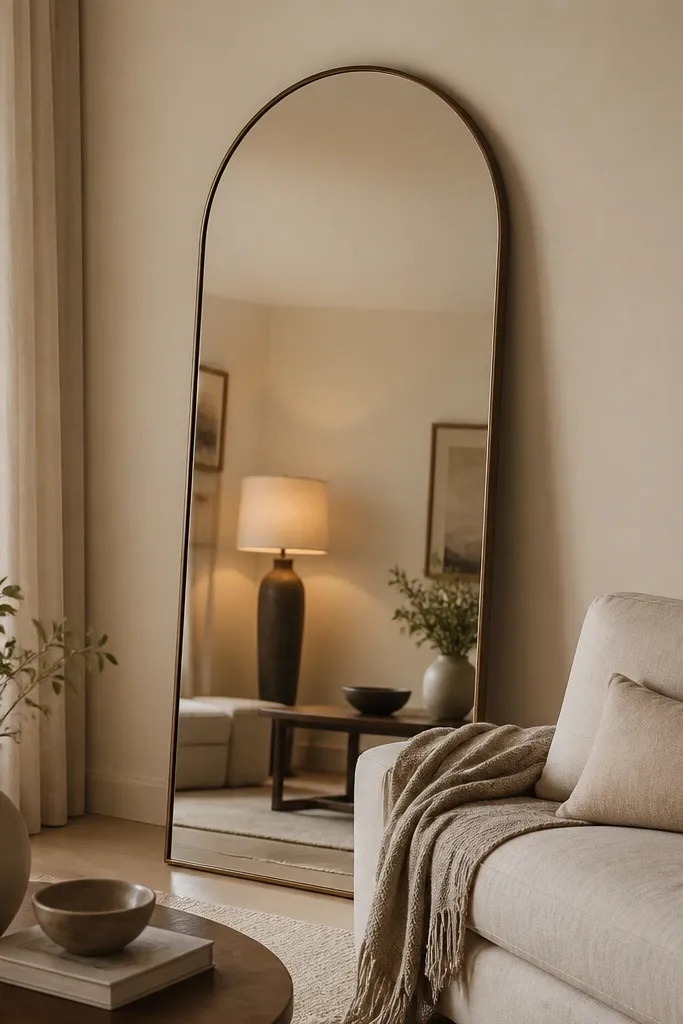
A tall mirror makes the room feel bigger because it bounces light back into the space created by the L turn. I like arched mirrors because they soften the geometry of the sofa corner. If you place it near the chaise side, the reflection helps that side look less heavy and more open. Pair it with warm bulbs so the reflection doesn’t turn gray.
Choose a mirror height around 60-72 inches for most living rooms. Place it 6-10 inches away from the wall if it’s leaning, so it doesn’t look stuck. Use warm 2700K bulbs in the lamp and keep the mirror frame either black or natural wood to match one other element in the room.
Pro tipWipe the mirror with microfiber right before you style — fingerprints show up fast under lamp light.
Watch outAvoid placing the mirror where it reflects a messy doorway or TV cords — the room will look chaotic.
6. Sculptural Floor Lamp + Small Round Side Table
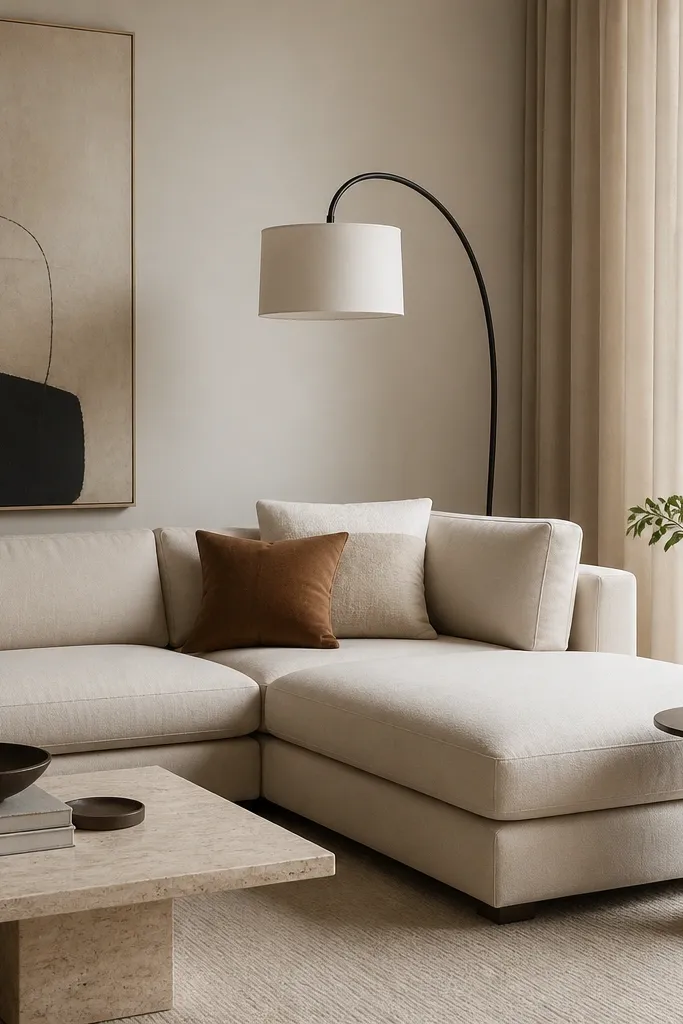
This is my go-to when the room feels empty around the chaise. A sculptural floor lamp fills height and draws the eye upward, so the corner feels designed instead of empty. The small round side table gives you a place for a drink without adding sharp corners that clash with the L shape. Keep the decor minimal so the lamp reads as the feature.
Position the lamp so the shade is roughly at the same height as the sofa back cushion top. The side table should be about 18-22 inches wide so it fits without blocking the chaise path. Use a vase with one or two stems, not a full bouquet, and choose ceramic in off-white or matte black.
Pro tipAim the lamp light slightly toward the seating area, not straight up — the shadows make the room feel warmer.
Watch outAvoid a tall lamp placed too far from the sofa corner — the light stops looking connected to the seating.
7. Wood Slat Console Behind the Sofa Corner
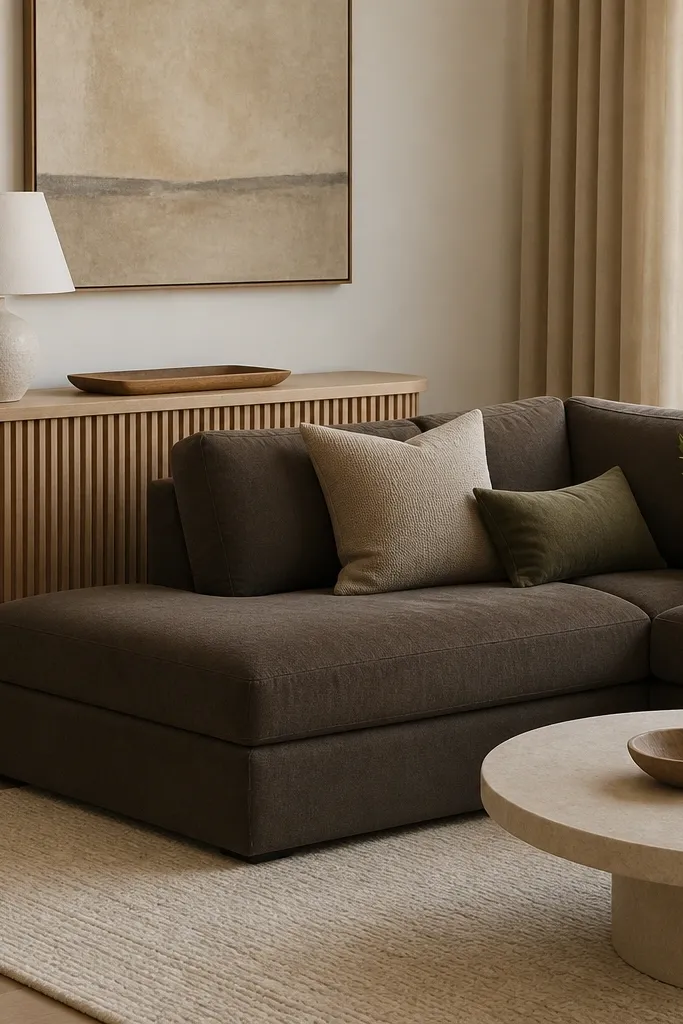
A console behind the sofa corner is one of the quickest ways to make the back wall look finished. The wood slats add texture without getting loud, and light oak warms up cooler sofa tones. The lamp gives you a second lighting source that doesn’t feel like overhead glare. It also creates a natural home for keys, remotes, or a weekend candle.
Pick a console depth around 10-14 inches so it doesn’t feel bulky when you walk past. Use a lamp base between 20-24 inches tall so it doesn’t overpower the art above. Tie the wood to another item — like a picture frame or coffee table detail — so it looks like a set.
Pro tipLeave the top surface mostly empty. One tray and one lamp looks better than five small items.
Watch outDon’t put a wide console that blocks the view of the corner — it makes the seating area feel cramped.
8. Monochrome Throw + Textured Rug for a Clean Look
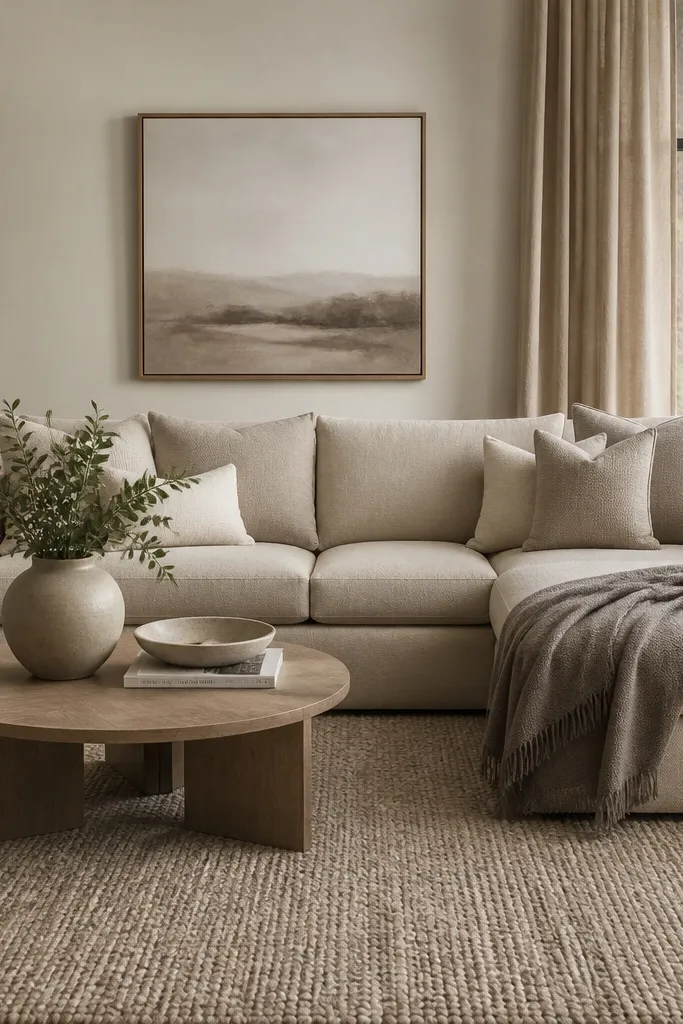
If you want the room to look expensive without adding loud patterns, go monochrome but vary texture. A textured rug with a tight weave or subtle loop pile adds depth even when the colors match. The throw brings softness and hides wear spots on the chaise. This approach makes the room look styled even when you’re not adding lots of decor.
Choose one base color family: cream/sand or taupe/greige. Then pick rug texture in the same family but a shade darker. For pillows, use covers with different weaves — one linen look, one boucle look, one smooth cotton. Keep baskets in natural fibers so the room stays warm.
Pro tipPress the throw fabric into place and smooth it with your hand instead of letting it slump randomly.
Watch outAvoid flat, same-texture everything — monochrome only looks good when the textures differ.
9. Bold Accent Wall Color That Works With Neutral Sofas
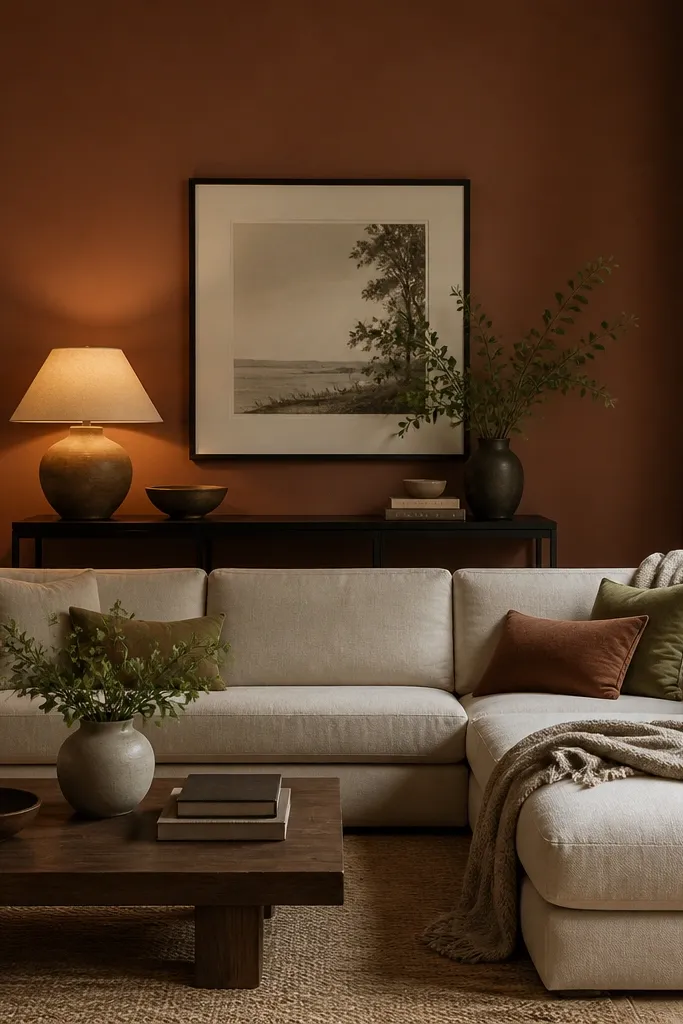
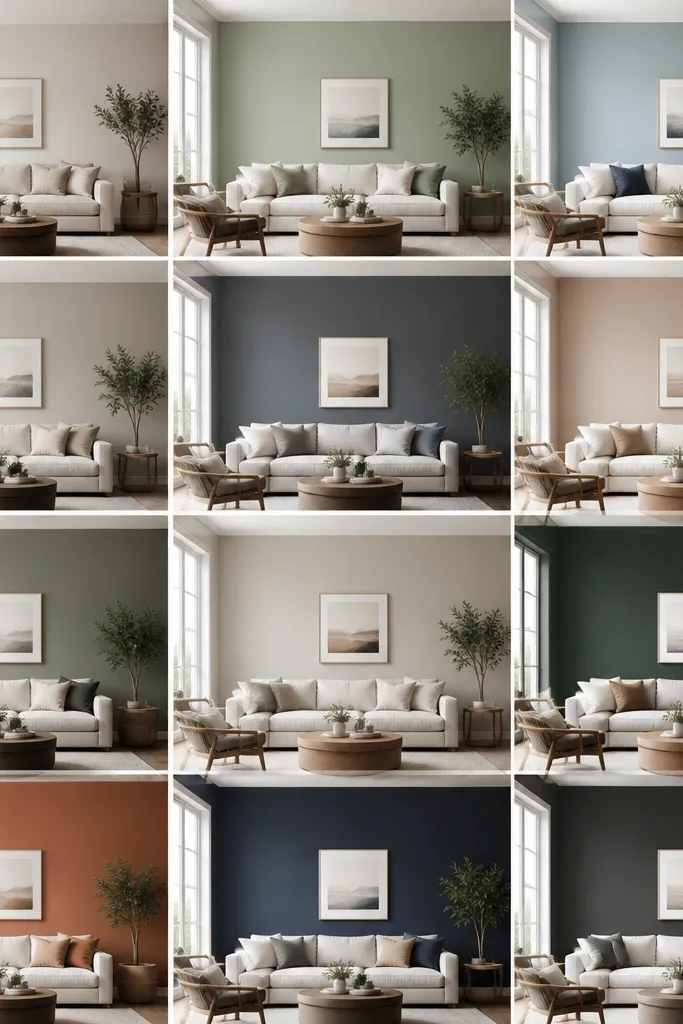
A painted accent wall can make an L shape sofa feel like it belongs in the room, not like it was dropped in. The key is choosing a warm deep tone that doesn’t fight the sofa fabric. I’ve used clay and deep olive the most because they make neutrals look warmer. Add one large piece of art and keep the rest simple so the wall becomes the backdrop.
Pick a wall color that reads warm in daylight. Paint one wall behind the sofa corner — not the wall opposite the windows, if it gets cold light. Use a satin or eggshell finish so it wipes clean and doesn’t look chalky. For art, use a large frame and a mat in cream or warm white.
Test the paint on a 2x2 section of the wall and check it at night under lamp light before you commit.
Avoid painting over a wall with heavy patchwork without priming — you’ll see uneven sheen around the sofa corner.
10. Rug Direction Trick for Long Rooms
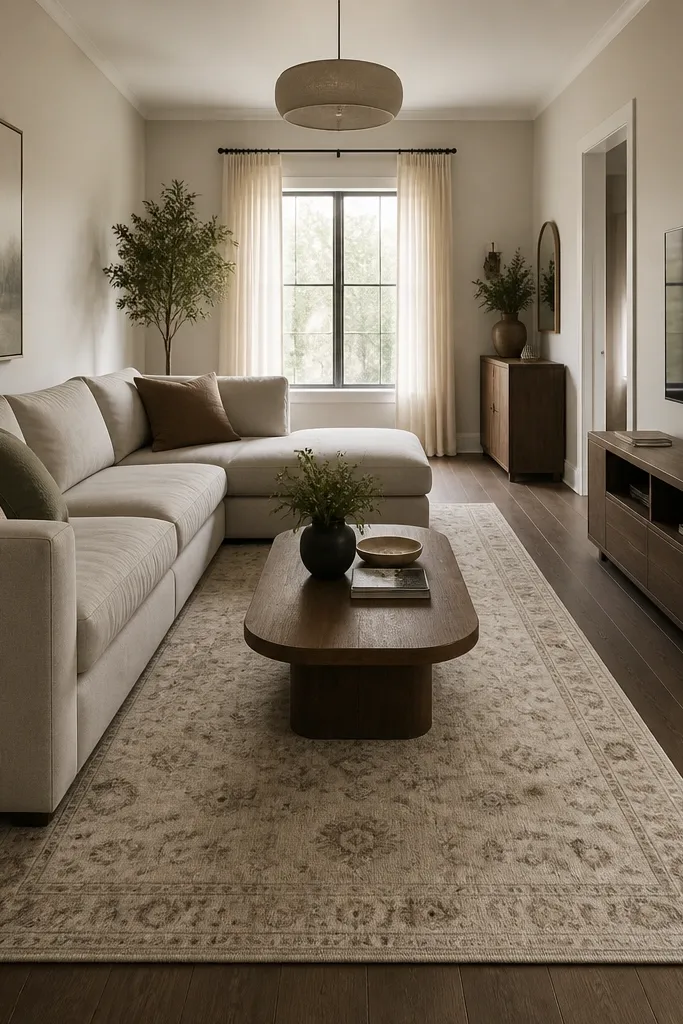
In long rooms, the L shape can make everything feel stretched in the wrong direction. Laying the rug so the pattern runs lengthwise pulls the eye down the room and makes the seating area feel intentional. I like rugs with subtle stripes or a border because they give you a direction to follow. This trick changes the “flow” you feel when you walk in.
If your room is longer than it is wide, put the rug so the longest rug edge aligns with the room’s length. Leave 6-10 inches of floor showing at the sides if the room is tight, but keep the front legs of the sofa on the rug. Use a coffee table that sits centered under the rug pattern so the whole zone reads like one unit.
Pro tipUse painter’s tape to map the rug edges on the floor before you buy — it saves you from guessing based on measurements alone.
Watch outAvoid placing the rug sideways in a long room — it makes the room feel narrower and the L turn looks harsher.