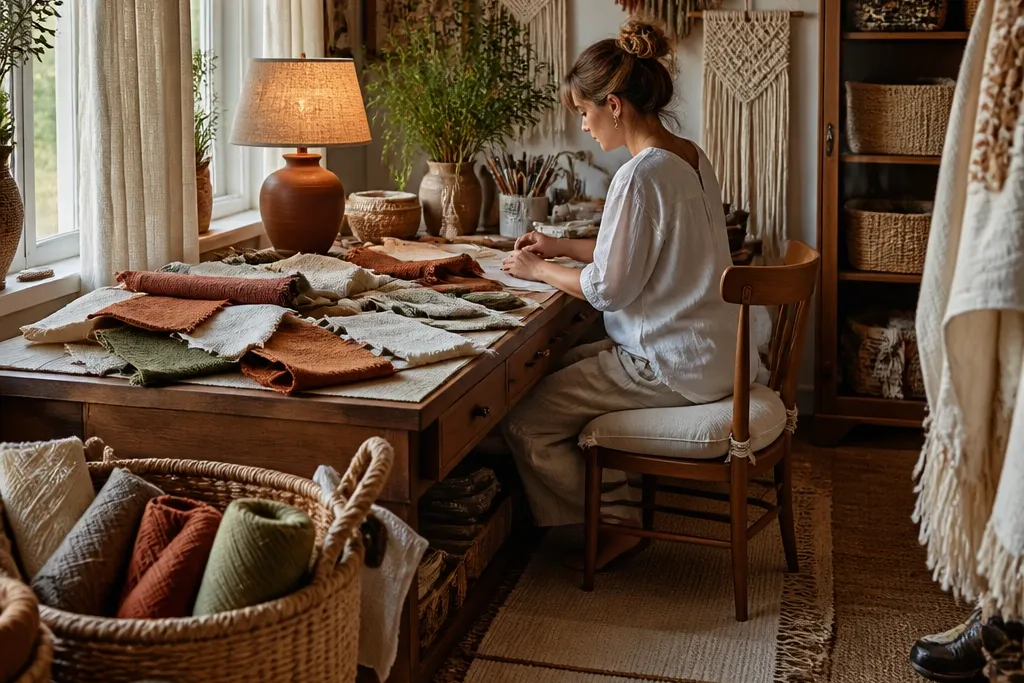
1. Jute rug + cream runner work zone
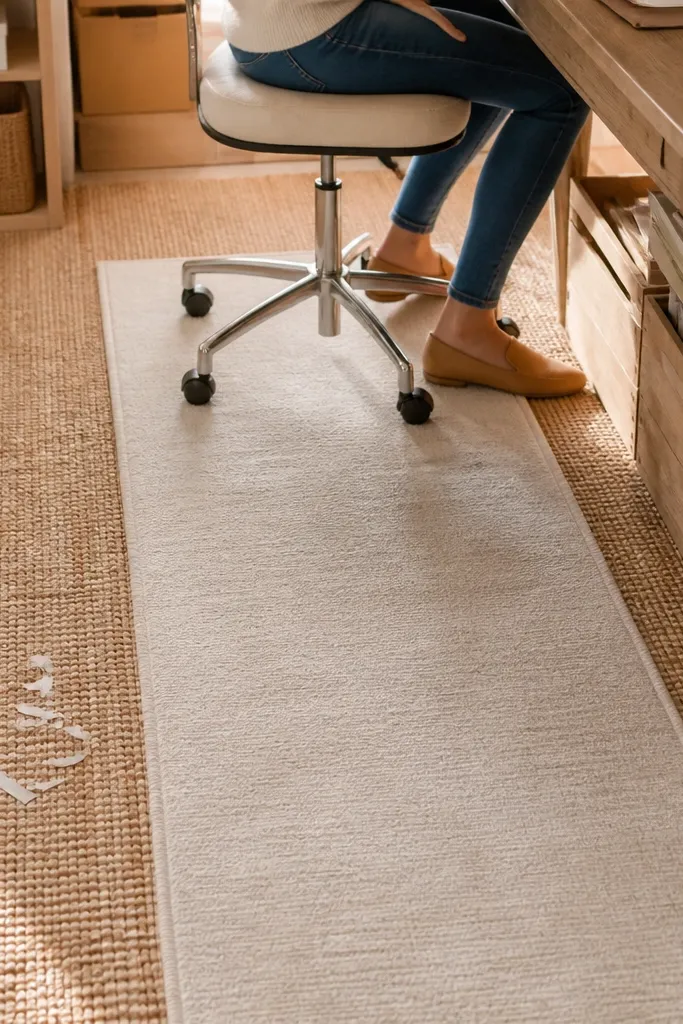
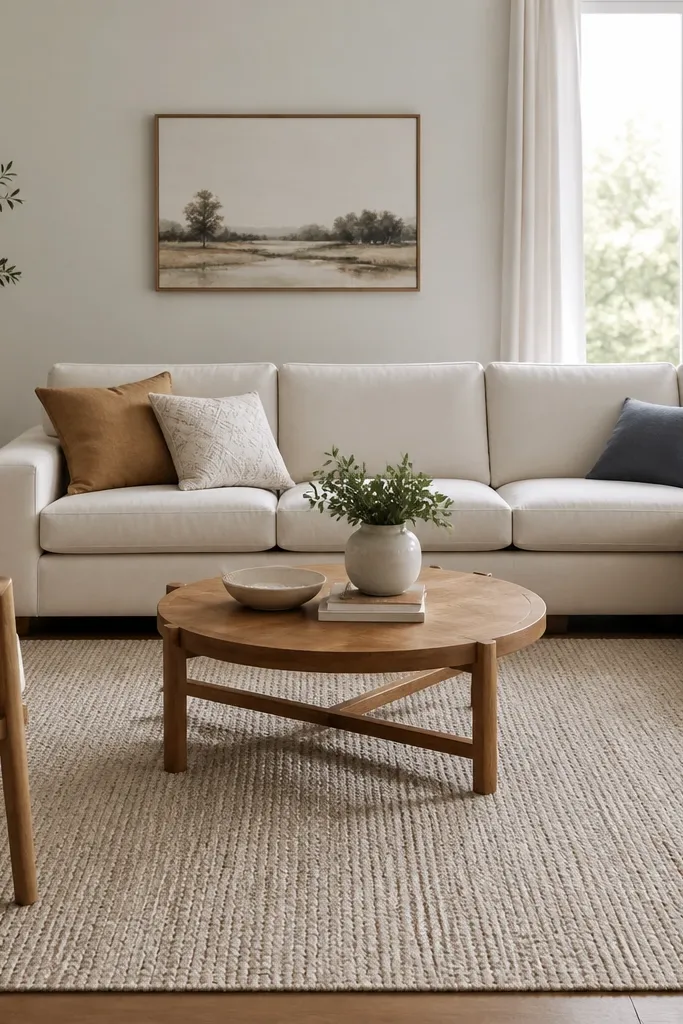
Start with a grounded base so your craft room feels like a dedicated workspace, not a corner of chaos. A flatweave jute rug in natural tan adds texture without adding clutter, and it hides small dust and paper scraps better than plush rugs. Then lay a cream runner exactly where your feet and chair move — that keeps the “cozy” look while protecting the main rug from heavy traffic. This combo works because it creates a clear visual lane for the eye, which makes the room feel calmer while you’re working.
Measure your craft table footprint first. Add 12-18 inches of rug beyond the table edges on the sides, then place the cream runner centered front-to-back under where you stand or sit. Choose a jute rug that’s flatweave (no high pile) and a runner with a low profile so chair legs and storage drawers don’t catch. Expect to spend roughly $60-200 depending on size and thickness, and budget one day for careful alignment.
Pro tipFinish the look by matching the rug tones with one storage bin color in cream or warm beige.
Watch outAvoid a high-pile shag rug in a craft room — it traps lint and makes sweeping annoying.
2. Macramé wall panel above the main desk
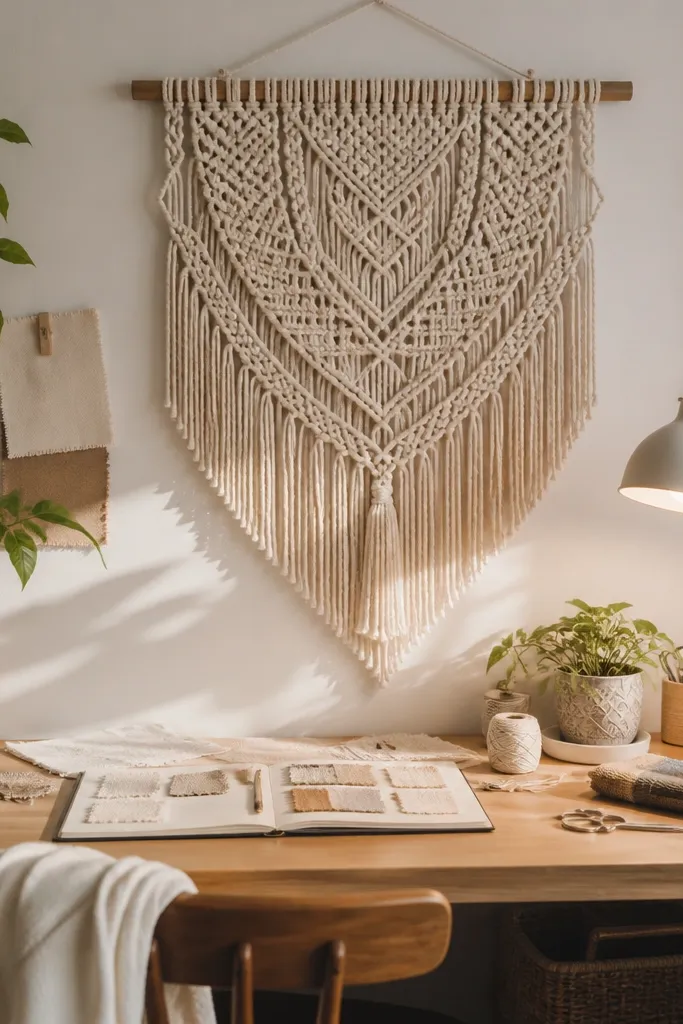
A macramé wall panel gives you that boho softness while also creating a visual “top anchor” above the mess level. Hang it above the main desk so it frames your working area and makes the room feel finished even when you have projects spread out. Keep the macramé in a neutral like ivory or natural rope so it blends with paper, fabric, and wood tones. This idea solves the problem of blank wall syndrome, where your eye has nowhere to rest and everything feels louder.
Find the center of your craft desk wall space and mark a level line. Mount a simple picture rail or two wall hooks, then hang the macramé panel so its bottom sits about 6-10 inches above the desk surface. If you want extra function, place one narrow ledge shelf under it for glue bottles or scissors. This is a $25-120 project depending on size, and it takes about 30-60 minutes once you have the hardware.
Pro tipPick one small color in your supplies (terracotta, olive, or chocolate) and echo it in a tiny pot or organizer on the ledge.
Watch outAvoid hanging it too low — if it dips into your work zone, it makes the room feel cramped.
3. Terracotta ceramic lamp with linen shade
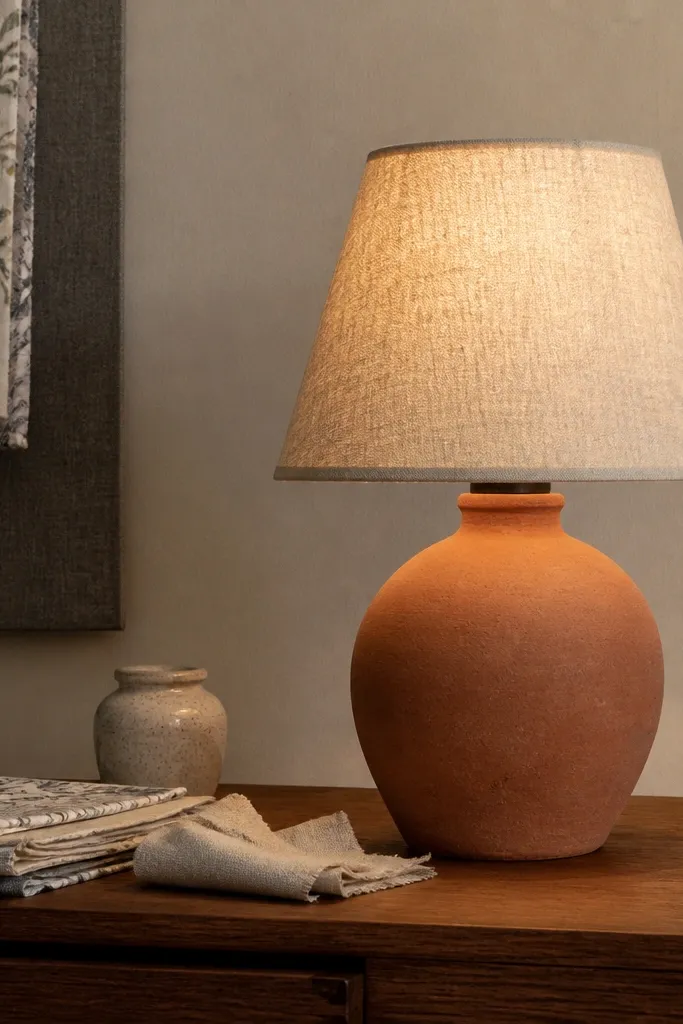
If your craft room feels cold, lighting is usually the culprit. A terracotta ceramic lamp looks warm even when it’s off, and the linen shade turns harsh overhead light into a soft glow that makes textures look richer. Choose a shade in cream or oatmeal so the room stays airy. Put the lamp on the side of your dominant work hand so you avoid glare on paper and craft tools. This delivers cozy craft room decor ideas that feel welcoming during late projects.
Choose a lamp height where the bottom of the shade is roughly at chest level when you’re seated. Pair it with a bulb that’s warm (2700K) and consider a dimmer if you do evening crafting. Place the lamp 12-24 inches from your work surface, angled slightly toward your desk so light pools where you need it. Cost is usually $50-180 depending on the shade and base.
Pro tipAdd one small ceramic tray under the lamp for a pen cup — it looks intentional and reduces desk clutter.
Watch outAvoid a white plastic shade — it reflects light like a classroom and kills the cozy mood.
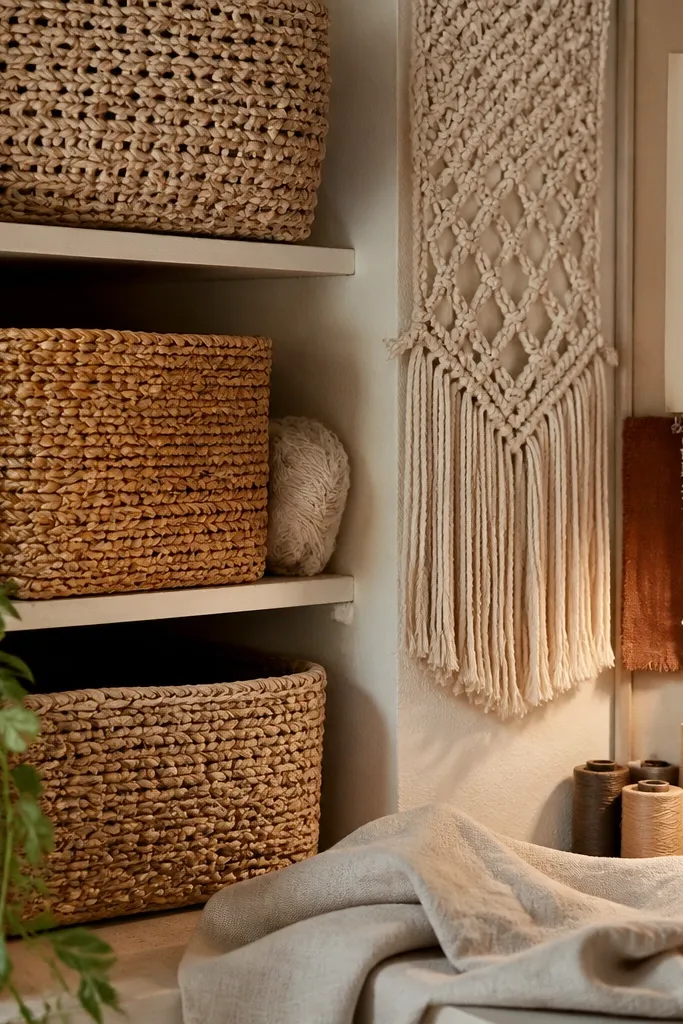
4. Woven storage baskets in matching sizes
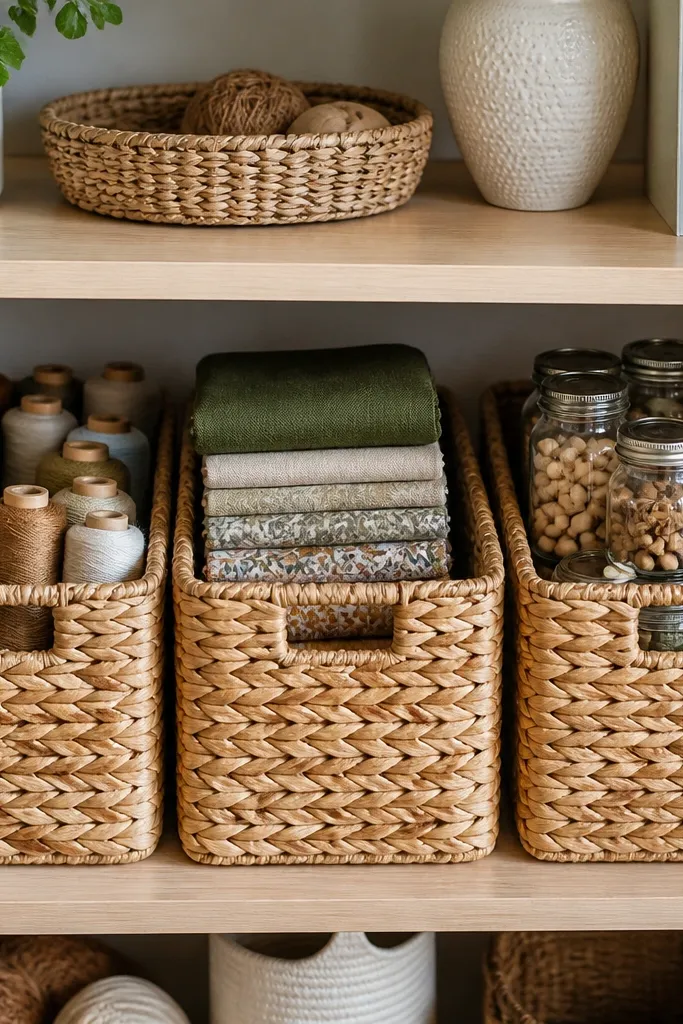
Boho cozy comes from texture, and woven baskets do that better than plastic bins. Use baskets in matching sizes so the shelves look styled instead of random. Choose natural materials like seagrass, rattan, or water hyacinth, and keep colors consistent — think tan, honey, or light brown. This solves the main craft room problem: visual noise from small items. When supplies are contained in baskets, you can still see what you need without the room looking chaotic.
Measure your shelf openings and buy baskets that fit with about 1-2 inches of clearance on each side. Sort supplies into categories that make sense for you — paper, fabric scraps, ribbons — then label the baskets with simple tags in one style. Start with three baskets for the most-used items so the look changes fast. Plan on $20-60 per basket depending on size and material.
Use fabric tape or twine to wrap basket handles in one color to tie everything together.
Avoid mixing five different basket shapes on one shelf — it reads messy even when everything is “organized.”
5. Round jute pouf as a mobile craft seat
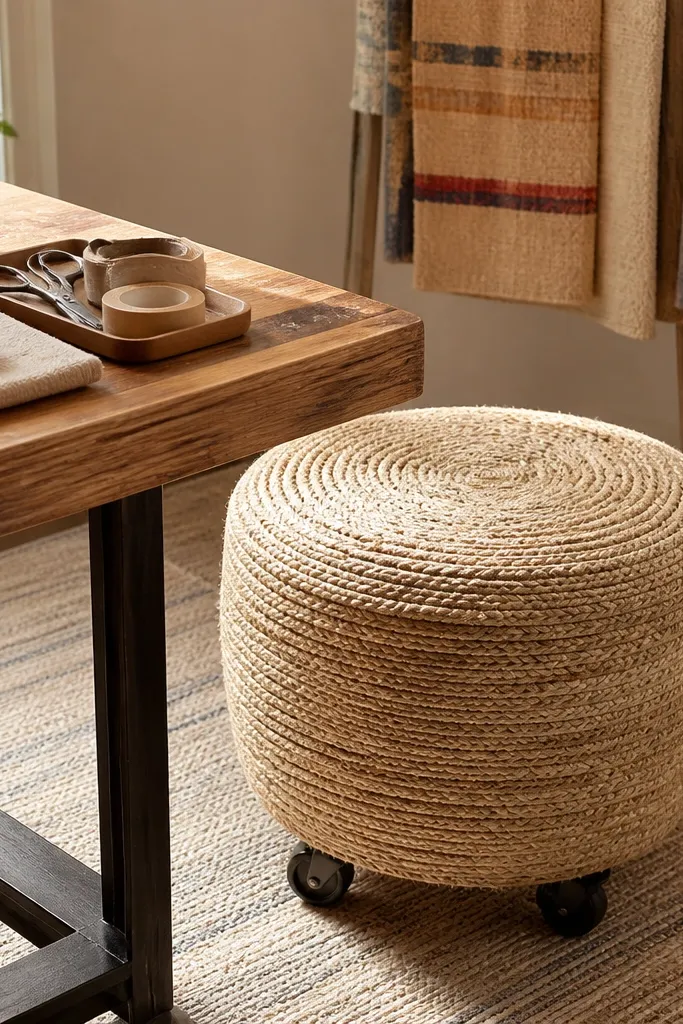
A pouf adds boho comfort and gives you flexible seating for cutting, sorting, and quick crafting sessions. Choose a round jute or woven pouf in natural tan so it matches the cozy palette and doesn’t fight with your walls. It also helps visually because it’s a big, soft shape that balances the hard lines of tables and shelving. Put it close to your main work area so the room feels lived-in, not like furniture is staged for guests.
Measure the space next to your craft table where you can sit without blocking drawers. Pick a pouf diameter that leaves about 6 inches of clearance around it when pulled out. If you plan to use it for cutting, choose a firm top and store lightweight supplies in the pouf if it has storage. Cost usually sits around $60-160.
Pro tipAdd a small cotton throw folded over the side of the pouf — it makes the room look finished and soft.
Watch outAvoid a pouf in shiny faux leather — it looks out of place with woven boho textures.
6. Boho pegboard with fabric-covered clips
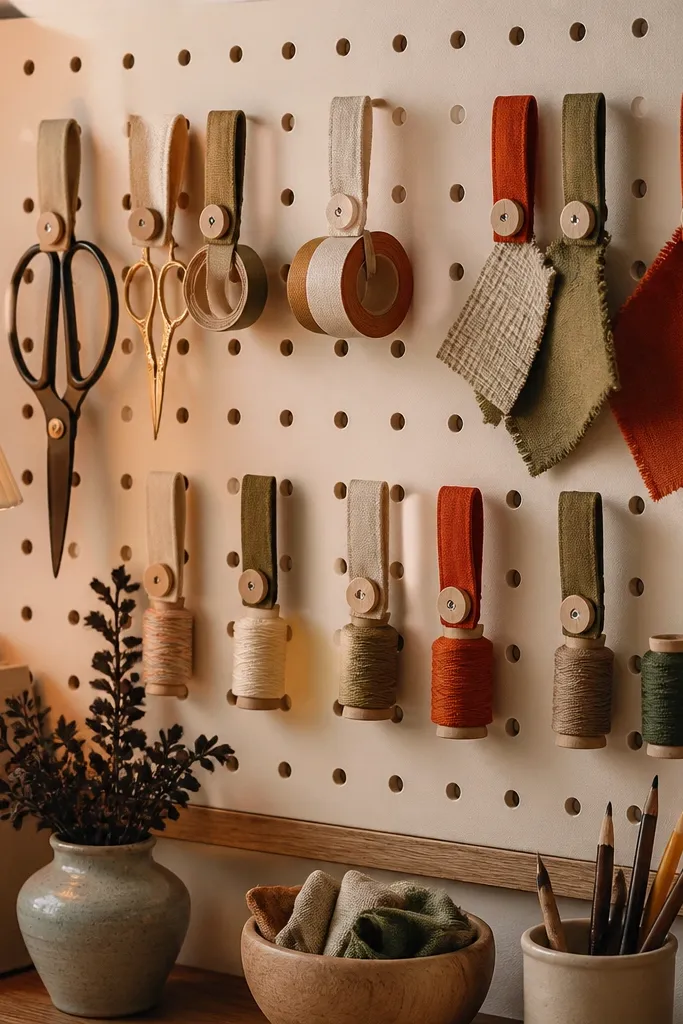
Pegboards are practical, but boho pegboards make them look warm instead of industrial. Use a light wood pegboard or paint one in soft cream, then hang fabric-covered clips for scissors, tape, and thread spools. This gives you an organized “display” that looks cozy because the clips soften the lines. It also solves the problem of tools living in drawers where you forget them. When tools hang neatly, your craft room looks ready and relaxed even between projects.
Mount a pegboard so the top is about 60-66 inches from the floor and centered on your work zone. Add clips and hooks first, then load tools gradually so you don’t overload one strip. Cover clip jaws with scrap fabric or use pre-made fabric clip covers in cream, rust, or olive. Budget $40-120 for pegboard and hardware, plus $15-40 for clips.
Pro tipKeep thread spools in one color family on the top row so the wall looks styled, not cluttered.
Watch outAvoid black pegboards in a small craft room — they make everything look heavier and less cozy.
7. Gallery wall of textile and paper frames
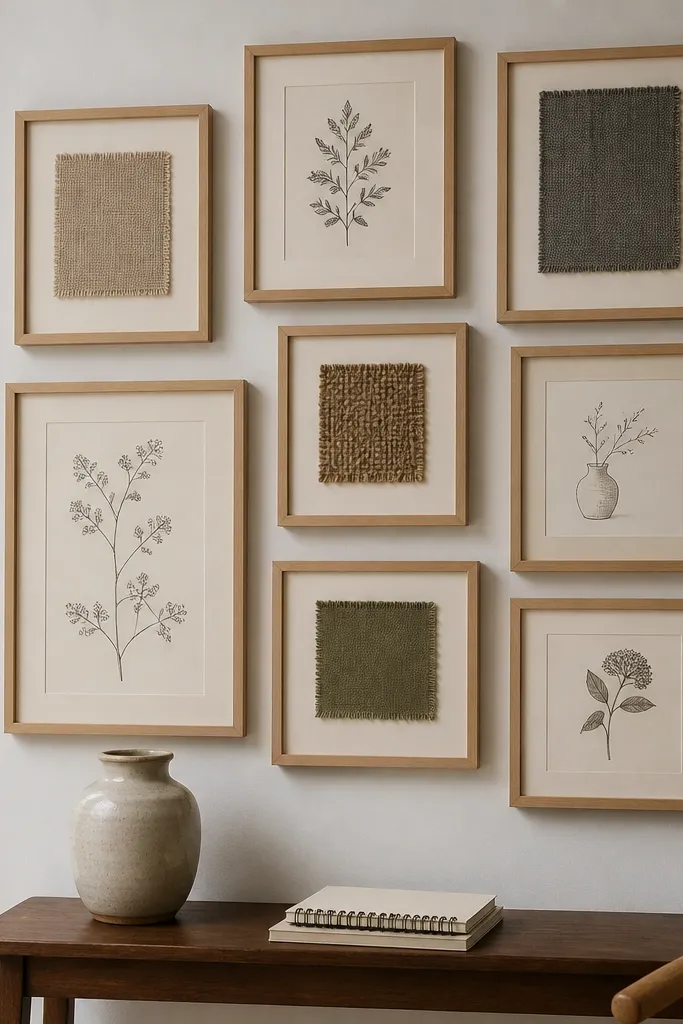
A gallery wall brings personality without adding more “stuff” on your desk. Mix small frames for fabric swatches, botanical prints, and simple line drawings in warm neutrals. Choose frames in one finish — light wood or matte black — then keep mat colors cream or oatmeal for cohesion. This works well for cozy craft room decor ideas because the wall adds softness and color without cluttering your working surfaces. It also gives you a visual backdrop that looks good in photos while your craft table is messy.
Pick one wall area that’s wide enough for 6-10 frames. Lay the frames on the floor first and create a grid with 2-3 larger pieces and the rest smaller. Hang so the center of the gallery sits about 57-60 inches from the floor. Use a level and spacers to keep gaps consistent, and plan $80-250 depending on frame sizes.
Use the same paper or fabric texture in at least three frames so the wall looks intentional.
Avoid mixing glossy frames with matte ones — the glare reads busy.
8. Curtain panels for a soft work nook
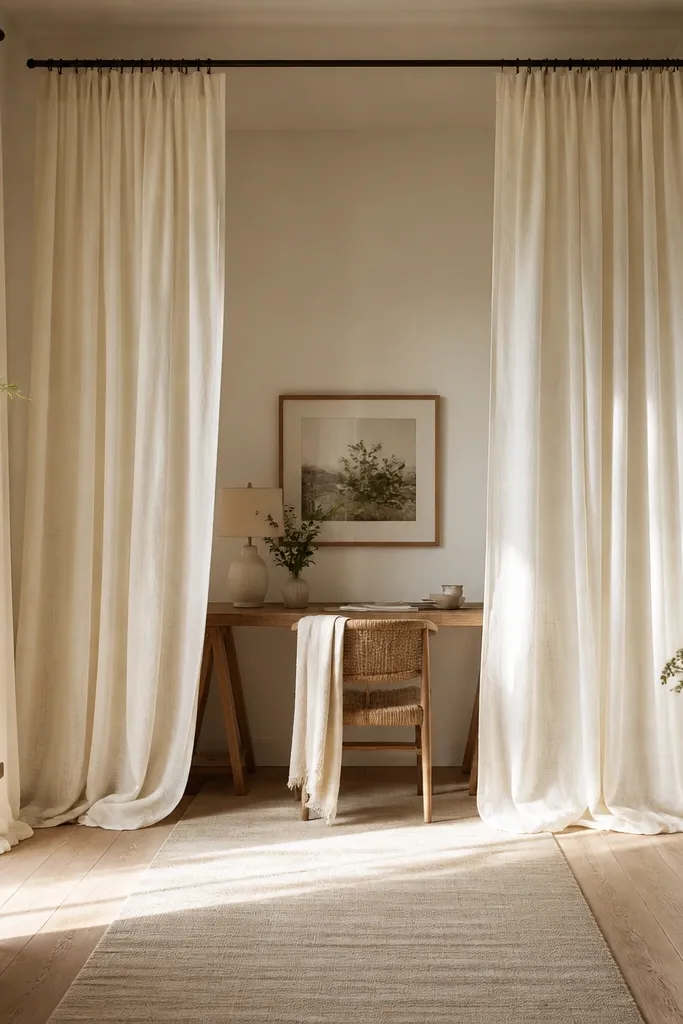
If your craft room shares space with a living room or hallway, curtains instantly make it feel like a cozy zone. Use two linen or linen-blend curtain panels in cream, and mount the rod high so the fabric hangs tall and airy. The boho look comes from the texture and movement, not from heavy patterns. This solves the problem of “open room chaos” where visual clutter spreads into the rest of your home. It also makes the craft area feel calmer when you’re between projects.
Measure from where you want the rod to the floor and add 1-2 inches for a clean break. Mount the rod 4-6 inches above the window line or ceiling height if possible. Choose panels that are wide enough to overlap in the middle, usually double the width of the opening. Cost is $60-180 for curtains and rod hardware, plus one afternoon for installation.
Pro tipTie the curtains back with a simple woven tie so you can switch between privacy and open access.
Watch outAvoid short curtains — they make the nook look unfinished and less cozy.
9. Layered wall shelves with terracotta planters
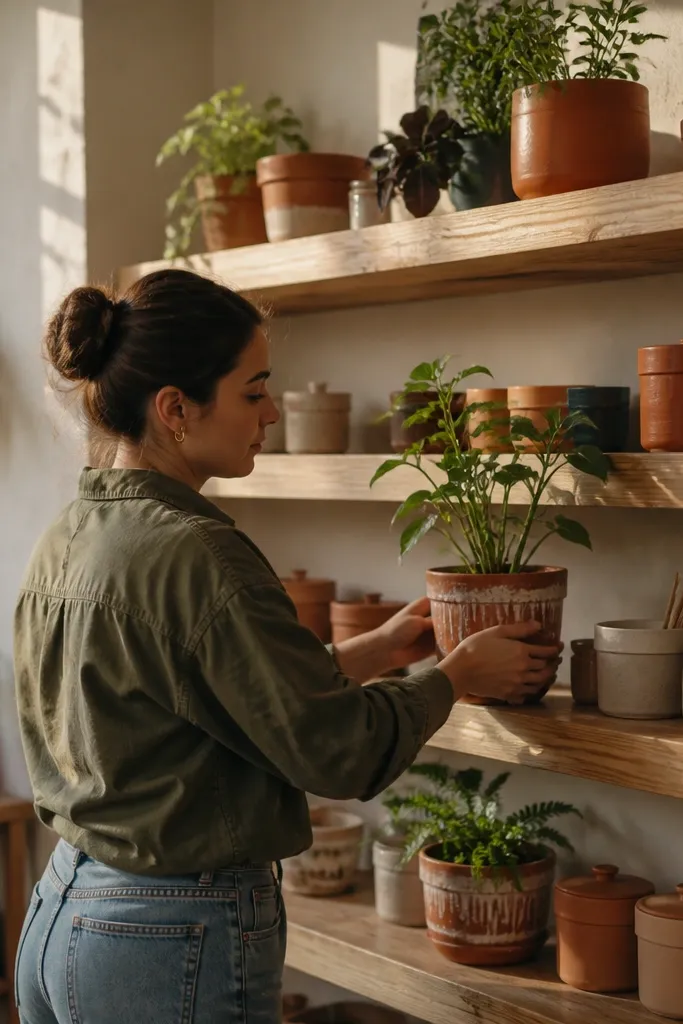
Shelves can look sleek or cluttered, depending on how you style them. Go boho-cozy with layered floating shelves in light wood, then place terracotta planters and ceramic jars for supplies. Keep jar lids in one tone and avoid too many different heights at once. This creates a gentle rhythm on the wall and gives your craft room a lived-in look. It also solves the “where do I put this?” problem by giving you a dedicated spot for tools you use daily.
Choose two shelf lengths that fit your wall — for example, one 24 inches wide and one 18 inches wide. Install the lower shelf so it sits about 48-52 inches from the floor, and put the upper shelf about 10-14 inches above it. Style with 2 planters and 3-5 jars total per shelf to keep it readable. Expect $90-250 depending on shelf length and planters.
Pro tipUse ceramic jars with matching shapes for glue, brushes, and beads so the wall reads like decor, not storage.
Watch outAvoid stacking heavy planters on the top shelf — it warps the look and can loosen brackets.
10. Patterned floor cushion for "sit and sew" corners
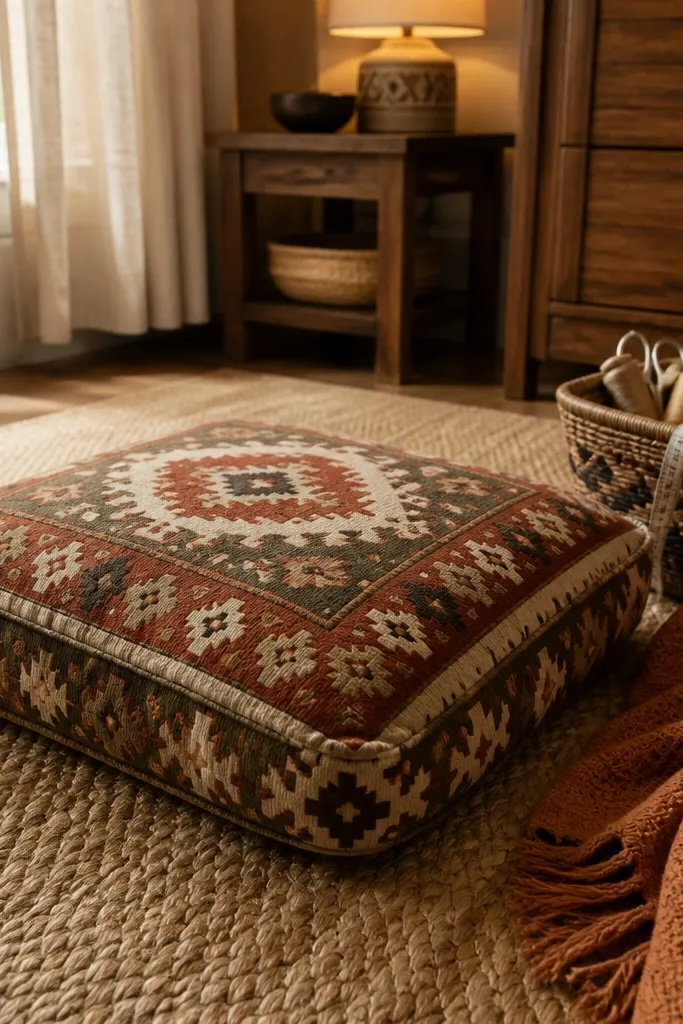
A floor cushion changes how the room feels because it invites a slower, more relaxed crafting posture. Choose a patterned cushion with warm tones like rust, cream, and olive, and keep the pattern grounded rather than neon. It adds boho texture directly where you sit — not just on walls. This is great for cozy craft room decor ideas if you do sewing, paper cutting, or beadwork that benefits from sitting close to the surface. It also makes your craft room look like a creative nook instead of a workstation.
Pick a corner near your main table where you can pull a cushion in without blocking movement. Choose a cushion size around 18-24 inches square so it’s comfortable but not oversized. Add a simple low tray or small table next to it for supplies you reach for constantly. Cost is usually $40-120 for a quality cushion with a washable cover.
Pro tipPair the cushion with a woven basket nearby for fabric scraps so the color story stays consistent.
Watch outAvoid thin cushions — they look sad on the floor and don’t read cozy.
11. Macramé plant hanger + hanging fairy lights
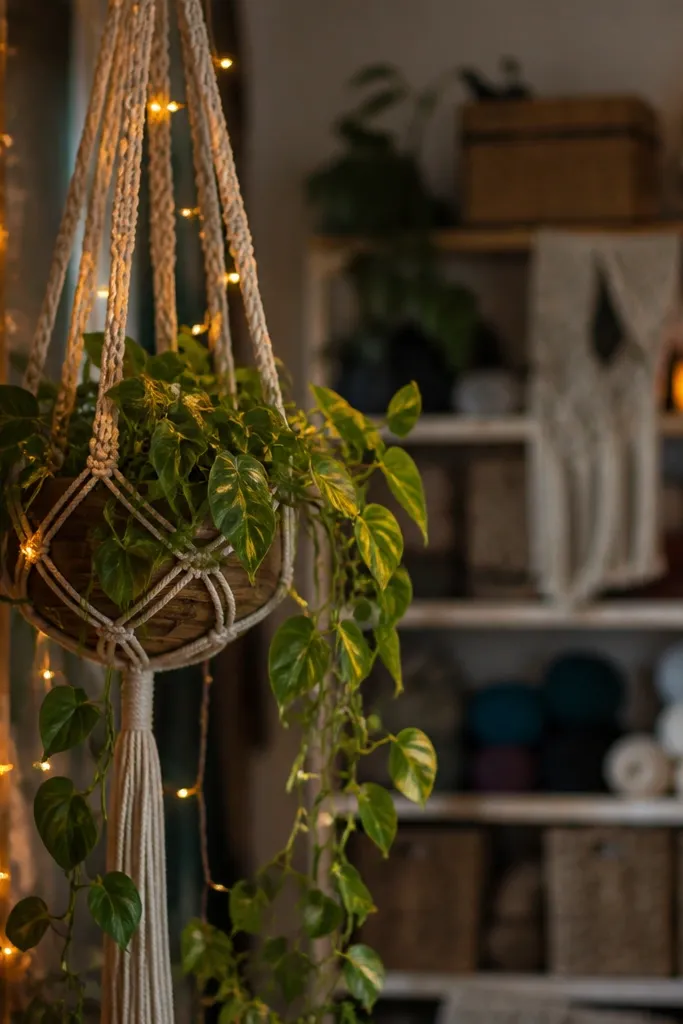
Plants are classic, but the boho cozy version is all about placement and glow. Hang a macramé plant hanger near the craft zone so the greenery softens the room and gives you a living focal point. Add warm string lights (battery or plug-in) along the vertical lines near the hanger or a shelf edge so light drapes downward instead of blasting. This creates a cozy atmosphere even when your desk is messy because the eye is drawn upward. It also adds texture from the macramé rope — not just leaves.
Choose a plant that tolerates your light level, then pick a hanger length so the leaves sit above desk height by 6-10 inches. Run warm white string lights along the hanger cord or tucked behind shelf brackets, keeping the wire hidden. Use a timer plug if it’s near an outlet. Cost ranges $25-120 depending on plant size and whether you go battery-powered.
Keep the plant hanger and lights on the same side of the room so the glow looks intentional, not scattered.
Avoid cool-blue LED lights — they make the whole craft room feel like a garage.
12. Rattan desk organizer tray set
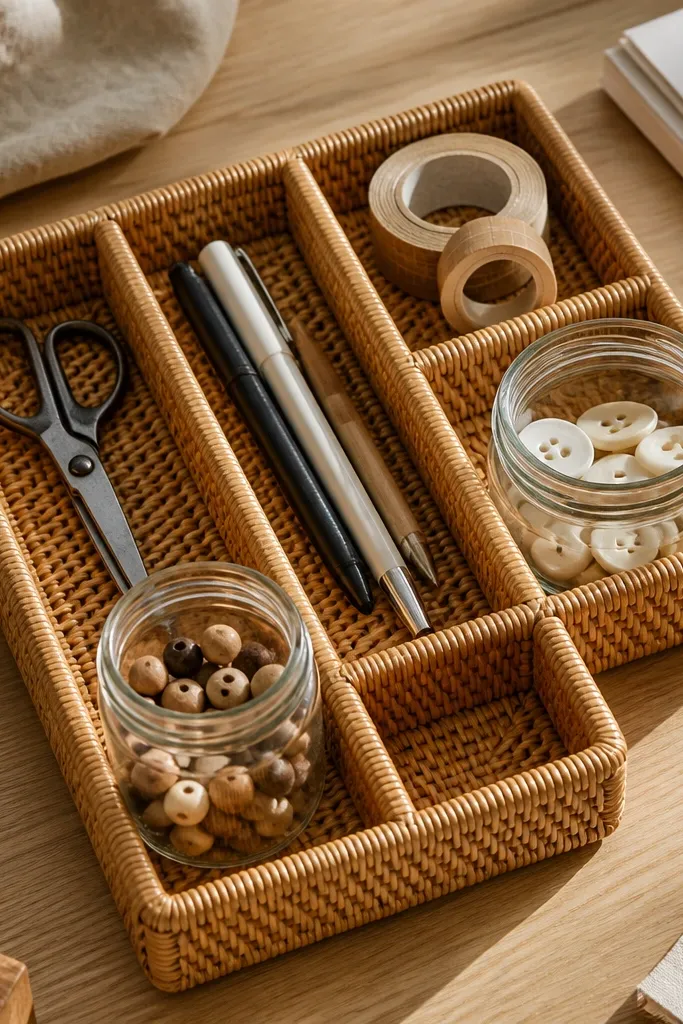
A desk can look messy even when everything is in the right drawer. Rattan trays fix that by giving your daily tools a “home” that looks like decor. Use a set of trays in natural rattan to hold scissors, pens, tape, and small jars so you can see what’s out without it looking chaotic. This is one of the best cozy craft room decor ideas because it turns the top of your desk into a styled surface, which makes the whole room feel calmer. It also helps you stop leaving supplies scattered because the shapes invite you to return items.
Clear your desk top completely and group tools by how often you use them. Place one large tray near your dominant hand for cutting and writing, then add smaller trays for glue sticks, brushes, and tape. Keep jar heights similar so the layout looks tidy from across the room. Cost is usually $30-100 depending on how many trays and whether you add matching jars.
Pro tipUse one label style for jars (kraft paper tags or simple ink) so the desk looks curated, not accidental.
Watch outAvoid metal organizers in a boho room — they read cold next to woven textures.