1. Matte "Oat Milk" paint with a soft halo line
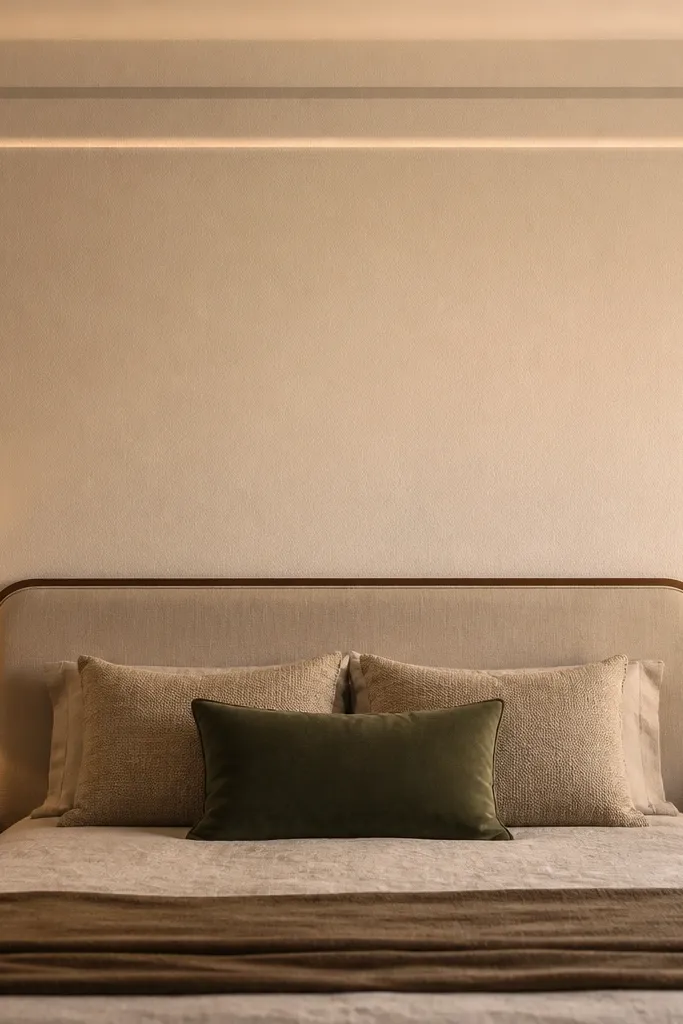
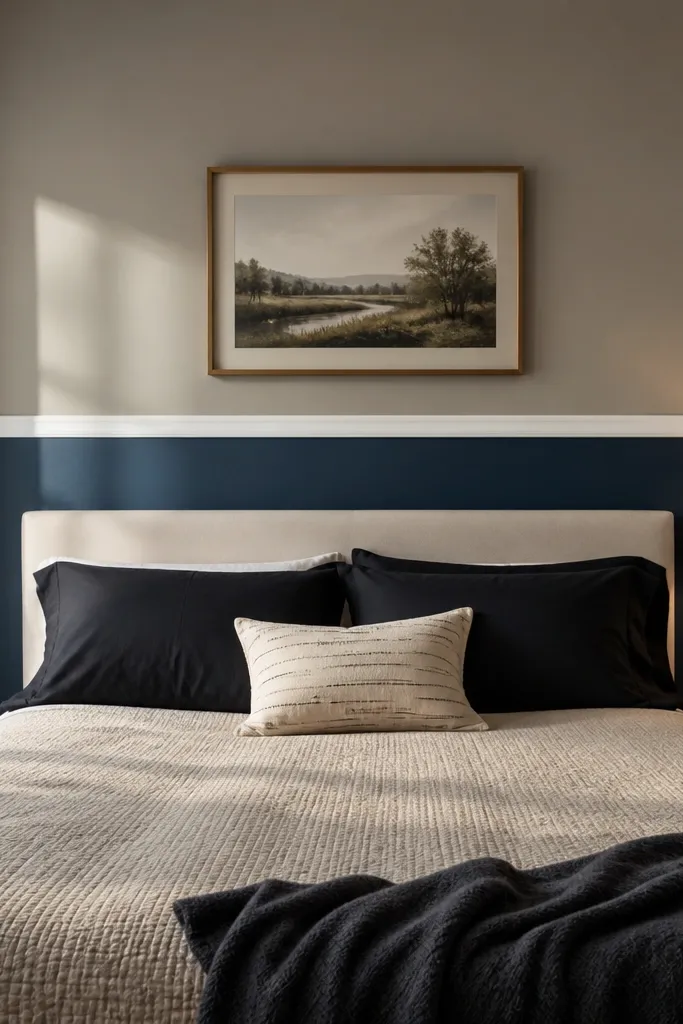
This is the cozy option when you want elegance without turning the room into a project. Oat milk (a creamy warm off-white) keeps the space bright but still soft, especially under warm bulbs. A thin halo line — painted a shade lighter — adds a subtle frame that makes the whole wall look designed. It’s also forgiving if your walls have minor imperfections because the matte finish hides glare. Use it behind the bed so the wall becomes a calm backdrop for pillows and throws.
Start by masking off a rectangle behind the bed: measure headboard height and add 6-12 inches above it, and extend 10-20 inches past each side of the bed. Roll the oat milk matte paint first using a 9-inch roller cover for even coverage, then let it dry fully. After that, tape a narrow halo band (about 1.5-2 inches) and paint it in a warmer light cream, using a small angled brush for crisp edges. Plan on 2 coats for the base and 1-2 for the halo, with touch-ups the next day.
Pro tipUse warm 2700K bulbs in the bedside lamps so the oat tone reads creamy, not yellow.
Watch outDon’t use glossy paint on this idea — glare ruins the cozy softness.
2. Vertical wood slats in warm walnut stain
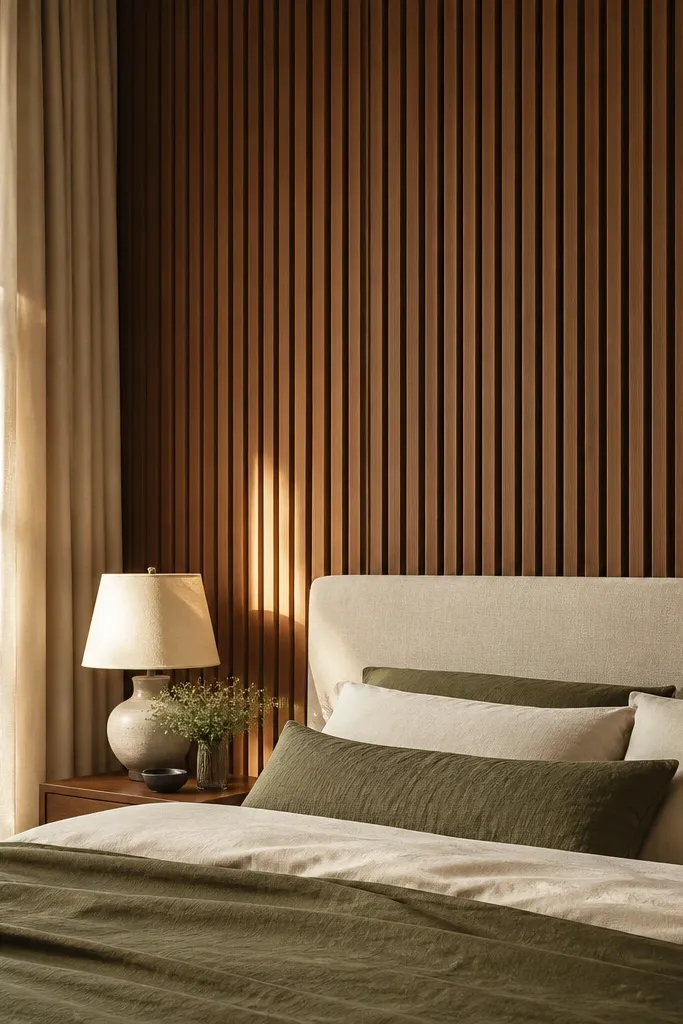
Vertical slats add instant depth and make a bedroom feel taller and warmer. Warm walnut stain reads rich without looking dark or heavy, and it captures light in a way flat paint can’t. This works best when your headboard is simple or fabric, because the wall provides the texture interest. Slats also hide small wall flaws because you’re covering the surface with a grid. The result feels like a boutique hotel corner — calm, tactile, and photogenic.
Measure your wall width and decide on slat width: a clean starting point is 2.5-3 inches wide slats with 0.5 inch spacing. Install a level guide rail or mark your stud locations, then screw the slat framework or battens into studs at 16-inch centers. Stain your slats before installing for even color, then attach them and fill nail holes if needed. Finish with a matte clear coat to prevent shine, and leave a small gap near trim so it doesn’t look boxed-in.
Pro tipRun slats from ceiling to headboard height only if your ceiling is low; full-height looks amazing but can overwhelm tight rooms.
Watch outDon’t paint wood slats with satin — it reflects light and kills the cozy warmth.
3. Plaster effect in warm greige with a lime-washed edge
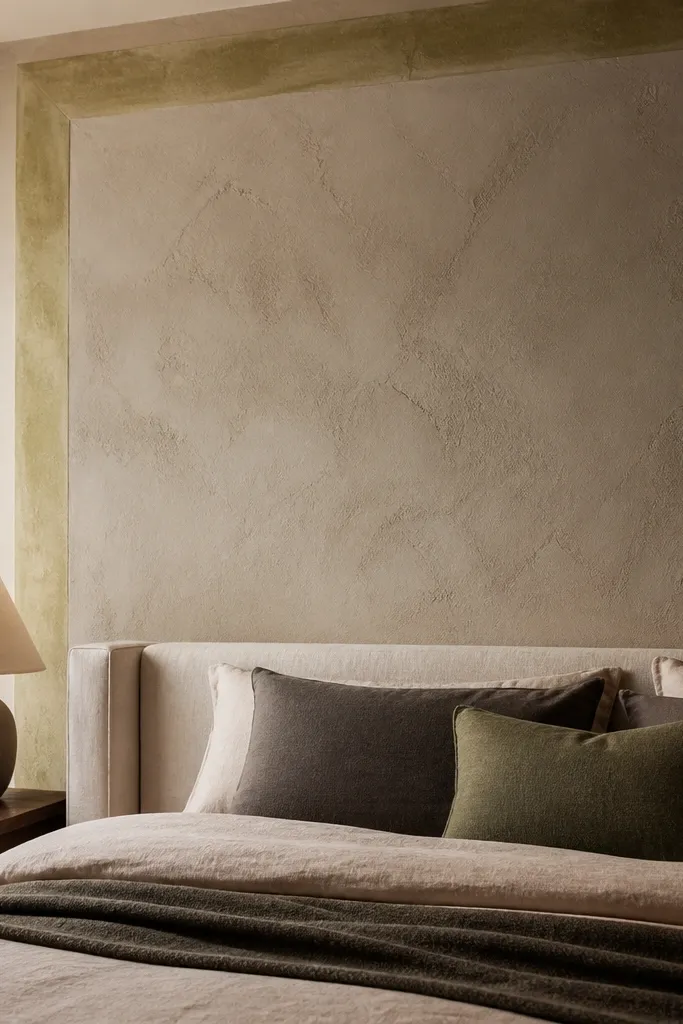
Plaster effect gives you that high-end texture look without needing real stone. Warm greige keeps the room grounded while still feeling airy, and the subtle lime-washed edge adds a gentle highlight that makes the wall feel layered. This is a great choice if your bedroom furniture is mixed — some pieces are wood, others are upholstered — because the neutral base ties everything together. It also photographs well from multiple angles since the surface catches light softly rather than reflecting it. Perfect behind a bed where you want texture without a pattern that competes with pillows.
Prep the wall by smoothing bumps and applying a bonding primer so the plaster product sticks evenly. Apply the plaster effect in small sections using a trowel, then drag or stipple lightly to create consistent micro-texture; aim for a thickness around 1/16 to 1/8 inch. Let it cure per the product directions, then wipe any rough peaks lightly with a damp cloth once it’s set. Finish with a thin lime-washed border: mask a top band 6-10 inches tall and brush on a watered-down warm light wash, then feather the edges.
Test the plaster on a 2x2 foot scrap first — the greige can read cooler or warmer depending on your wall undertone.
Skip heavy sanding after plaster — it flattens the texture and makes it look like paint.
4. Fabric panel wall using linen-look panels and nailhead trim
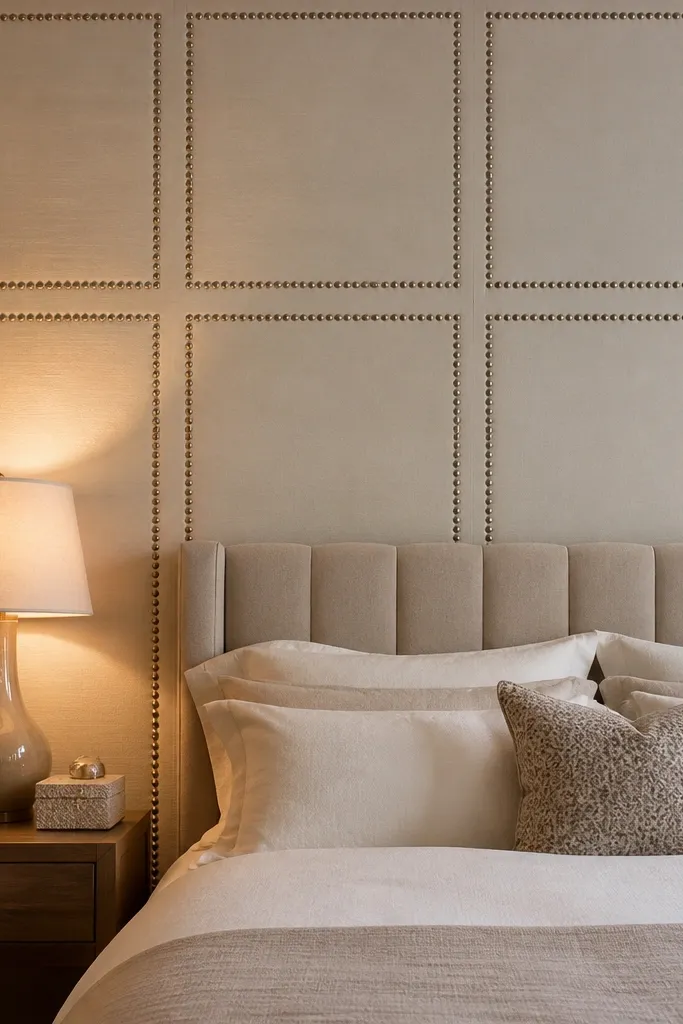
Fabric panels make a bedroom feel instantly softer and quieter. Linen-look panels with a structured edge give you a tailored look without needing real upholstery work across the whole room. Nailhead trim along the panel borders adds crisp contrast and makes the wall read “intentional,” especially in photos with warm lighting. This option is ideal when you want cozy but you hate the idea of messy plaster or wood installation. It also works great if your room has a lot of hard surfaces like tile floors or glass doors.
Pick panels with a thickness around 1 inch so they don’t look flimsy, and choose a warm neutral like oat, sand, or mushroom. Mark a grid on the wall behind the bed that matches your headboard width, then attach mounting boards or strong adhesive where you’ll anchor each panel. Hang panels in rows, starting at the center, and keep seams straight with a level. Add nailhead trim along the panel borders using a measuring tape to keep spacing consistent; finish by trimming edges around outlets and molding.
Pro tipUse a matte fabric with a tight weave — it reads upscale and hides light scuffs better than shiny textures.
Watch outDon’t use thin polyester sheeting; it sags and makes the whole wall look cheap.
5. Wallpaper mural in moody botanical, limited to headboard height
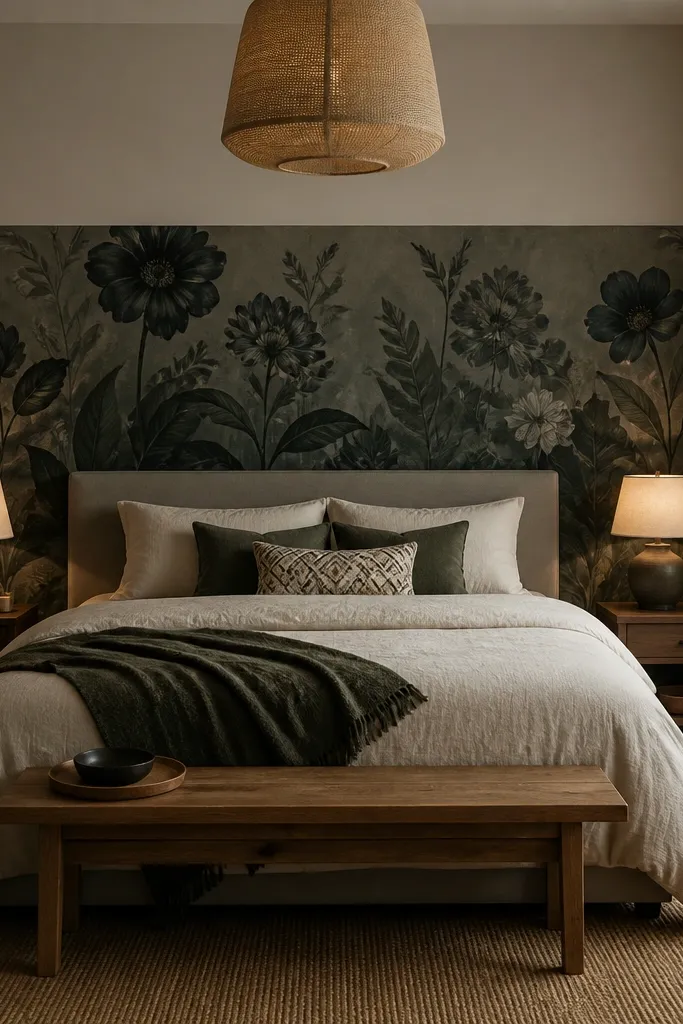
A mural lets you get drama and coziness at the same time, as long as you keep it contained. Choose moody botanical with deep greens or smoky charcoal, then limit it to headboard height so the room doesn’t feel dark all over. This approach is perfect if you love pattern but your bedroom is already busy with bedding or art. The wall becomes the focal point, and the rest of the room can stay simple. Photos look especially good because the mural creates a clear “frame” behind the bed.
Measure the exact area behind the bed: start at about 6 inches above the headboard top edge and end 6-12 inches above it, depending on your ceiling height. Order wallpaper with matching panels and plan for a pattern repeat; dry-fit sections on the floor before hanging. Apply paste or use peel-and-stick only if the wall is smooth and clean, then align the center panel first. Seal seams if the product recommends it, and use a sharp utility blade to trim at corners and trim lines.
If your bed has a tall headboard, choose mural art with lighter highlights near the top so it doesn’t feel heavy.
Don’t cover the entire wall to the ceiling if your room is small — it makes the bed area feel boxed in.
6. Cork accent wall in warm mushroom tone
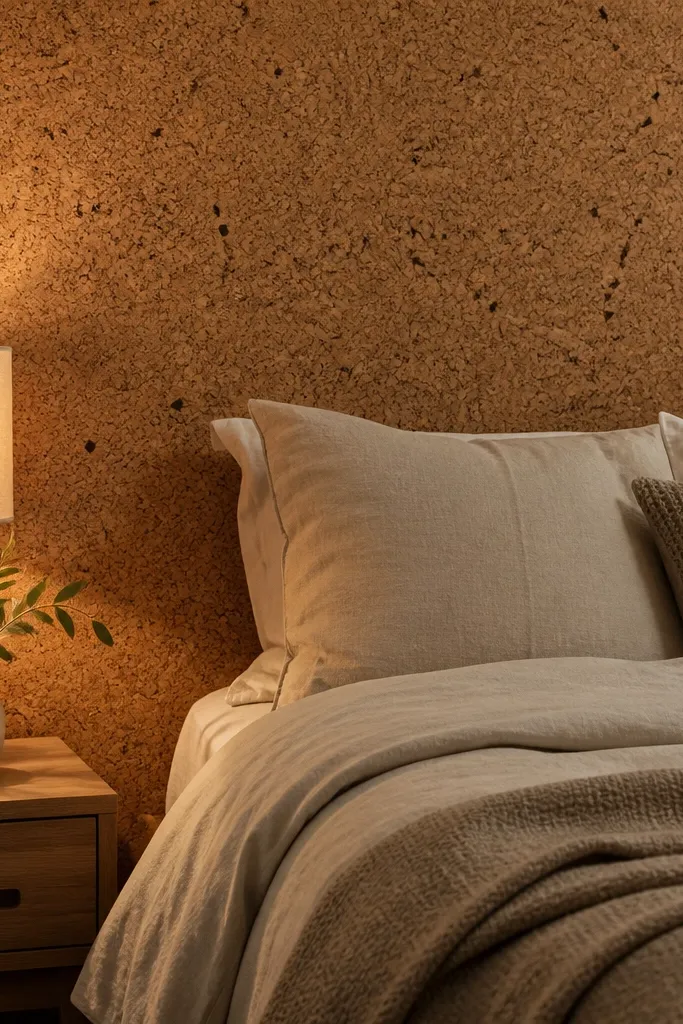
Cork is one of the most underrated cozy materials. It absorbs sound, softens echoes, and adds a warm, natural texture that looks good even in low light. A mushroom cork tone keeps it warm without turning orange, and it pairs beautifully with wood bedside tables and cream bedding. This is also practical: cork hides minor wall dents and is forgiving if your wall isn’t perfectly smooth. In photos, the texture reads rich and calm, not rustic in a messy way.
Choose cork tiles or cork panels with a matte finish in a neutral mushroom color; check thickness around 1/4 inch. Clean the wall with a degreaser, then prime if needed for adhesion. Apply construction adhesive or follow the tile system instructions, starting from the center behind the bed and working outward. Cut around outlets and trim carefully, then finish with a matching cork edge trim for a clean border.
Pro tipUse a warm paint color on the remaining walls (creamy white or beige) so cork reads intentional, not like a patch.
Watch outDon’t pick a bright tan cork; it can look dated and too casual behind a bed.
7. 3D geometric trim in soft white with warm shadows
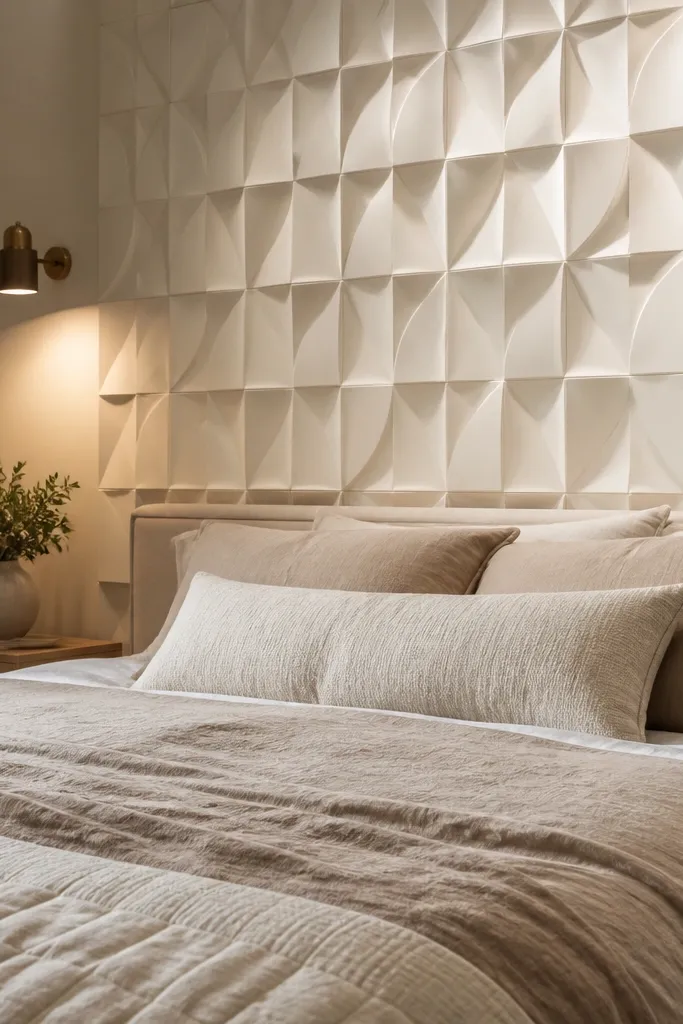
3D trim gives you depth without changing the room’s color palette. Soft white trim with a warm undertone makes the shadows look cozy instead of harsh, and it photographs beautifully when you have one directional light. This is the ideal accent wall if you want structure but don’t want wallpaper patterns. The geometric shape should be subtle and medium-scale so it doesn’t overwhelm pillows. Keep bedding neutral and let the wall do the work.
Pick a trim system with medium spacing, like 4-6 inch repeating shapes, so the pattern stays readable from across the room. Mark a level grid where the trim will sit, and install a backer board or directly mount to studs with spacers. Paint everything in a soft warm white matte, then let it dry before final caulking. Add touch-up paint to cover nail holes and sand lightly only where needed for smooth lines.
Pro tipAim a bedside sconce or floor lamp so it rakes across the trim texture; side lighting is what makes it look expensive.
Watch outSkip gloss paint on the trim — it makes the shadows look gray and the wall feels colder.
8. Dark charcoal paint with a hidden LED backlight strip
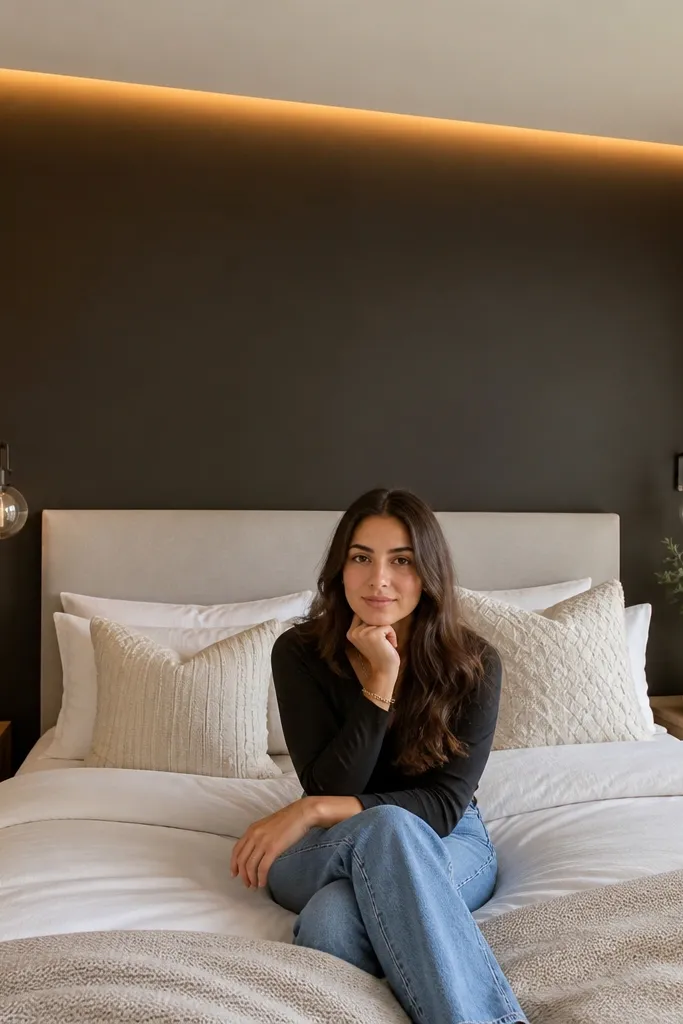
Charcoal can look cozy instead of gloomy if you control the light. A matte charcoal wall behind the bed creates a strong, calm backdrop, and a hidden LED strip adds a warm glow that makes the room feel like a lounge. The glow also separates the wall from the ceiling visually, which makes the space feel more finished. This works best with simple bedding in cream, taupe, or warm gray so the wall doesn’t compete. In photos, the LED line makes the accent look intentional, not flat.
Paint the wall in a matte charcoal (test a sample first, because undertones vary). Install an LED strip behind the headboard line or under a thin floating shelf about 2-3 inches above headboard height; keep the strip hidden behind trim or a recess. Run the wiring to a nearby outlet or low-voltage controller and secure the strip with aluminum channels for even light. Finally, set the LED color to warm white (around 2700K) and dim it so the glow is gentle, not bright.
Pro tipUse a diffuser channel or frosted cover if you see dotting on the LED — it should look like a smooth line.
Watch outDon’t put bright white LEDs (6000K) behind a dark wall; it turns the whole room harsh.
9. Horizontal paneling in warm oak with a linen throw texture
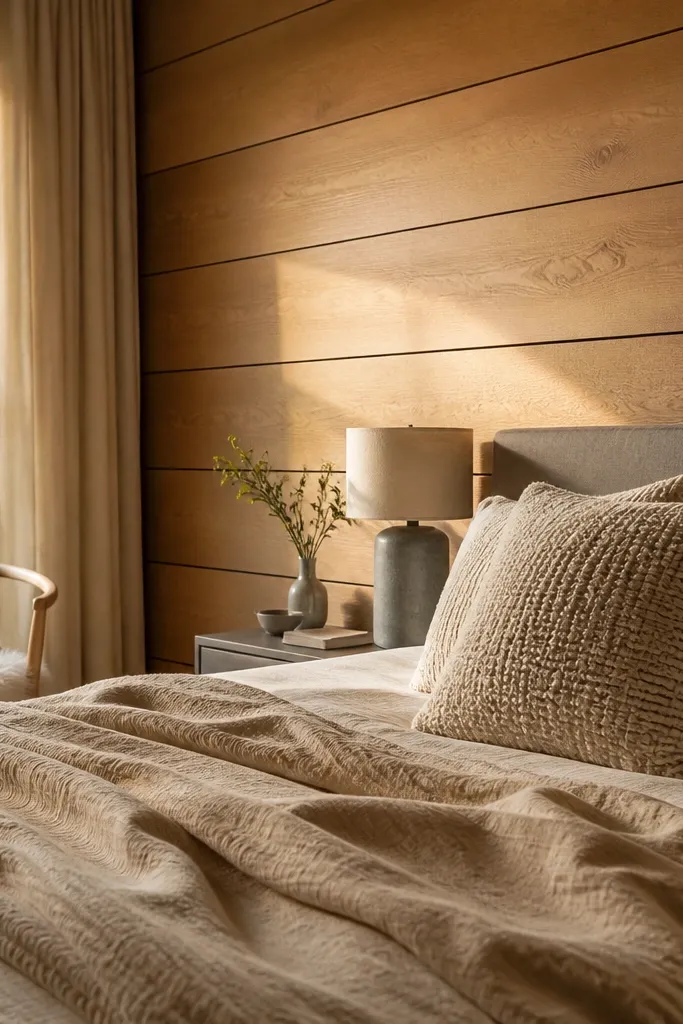
Horizontal paneling reads cozy because it breaks up the wall into grounded layers. Warm oak tones keep it inviting, and horizontal lines can visually widen a room that feels narrow. Pair the wall with a linen throw and chunky knit pillows so the textures match. This accent is especially good if you have a bed with a low profile headboard because the panels add height interest without needing a tall mural. It also works in bedrooms with traditional trim since you can echo the molding lines.
Decide on panel height: a common cozy setup is 40-48 inches tall, centered behind the bed, with the rest painted a warm creamy white. Install a simple frame using 1x3 or 1x4 boards spaced evenly, screwed into studs or anchored with proper wall anchors. Stain the oak panels before installation when possible, then seal with matte clear coat. Paint the surrounding wall after panel installation so edges look crisp and clean.
Pro tipKeep panel spacing consistent — uneven gaps show up fast in side lighting from bedside lamps.
Watch outDon’t use dark stain if your floor is already very dark; it can make the room feel bottom-heavy.
10. Large-format tiles in warm stone look with a matte grout line

Stone-look tile is cozy when the finish is matte and the grout line is subtle. Warm beige or soft travertine tones keep it inviting, and the tile texture adds weight and calm. This option is best for people who want an accent wall that’s durable and easy to keep clean — perfect if you have pets or kids who touch walls. The biggest visual win is the scale: large-format tiles look modern and make the wall feel like a real feature, not a patchwork. Keep bedding neutral and let the wall read as the “texture blanket.”
Choose large-format tiles around 12x24 inches or 16x24 inches with a warm stone look and a matte finish. Plan the layout so the center tile aligns with the bed center; dry-fit first to avoid tiny cut pieces at the edges. Use thinset and a leveling system if you’re comfortable with it; otherwise hire tile work for a clean, flat plane. Seal grout after curing, and keep the accent limited to headboard height plus a few inches for a cozy, framed feel.
Pick grout color close to the tile tone, not white — the wall stays soft and cohesive.
Don’t use glossy sealer on stone-look tile; it makes it look plastic in bedroom lighting.
11. Rattan-woven panels with a black trim border
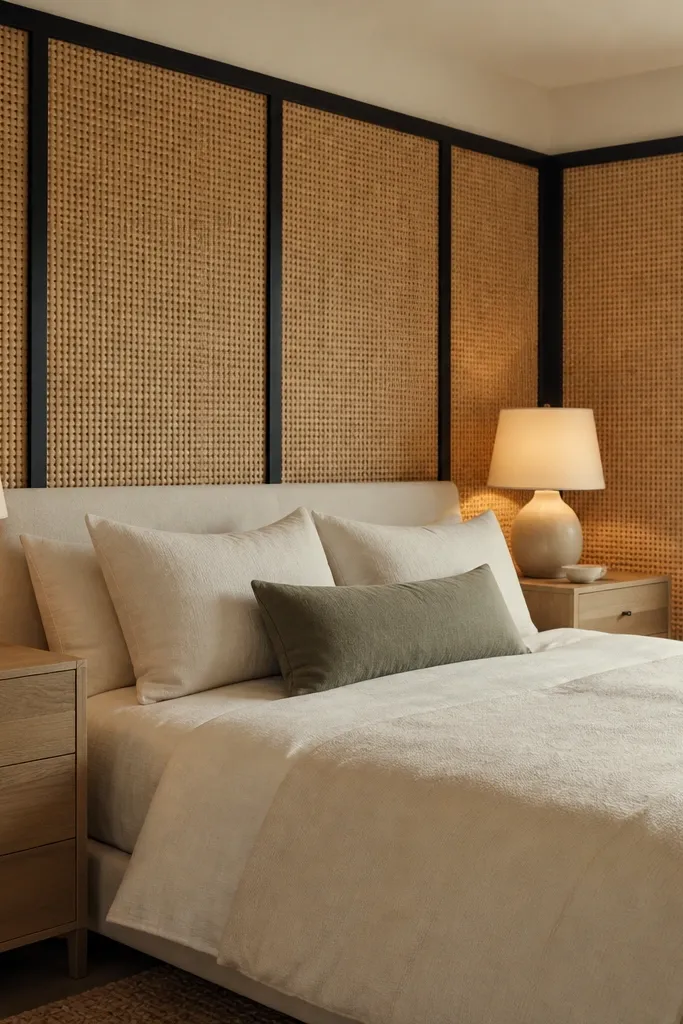
Woven rattan panels bring warmth and texture without the darkness of wood slats. The key is contrast: use a thin black trim border so the weaving looks intentional and framed, not like a temporary screen. This works especially well in bedrooms with light wood furniture and neutral bedding. The wall adds a cozy, breathable feel, and it looks great with warm lighting because the weave casts delicate shadows. It’s also a smart choice if you want a striking accent but don’t want paint or wallpaper maintenance.
Pick rattan panels in a natural warm tone and decide on a border width of about 1 inch. Install a backing frame or mounting tracks so the panels sit flat; rattan needs support to avoid warping. Attach the panels to the frame with small screws or clips, then add the black trim around the perimeter. Place the accent behind the bed centered horizontally, using the same headboard height guideline so it doesn’t swallow the room.
Use one black element in the room (lamp base, picture frame, or bed hardware) so the border matches the rest of your decor.
Don’t skip the border; loose edges make woven panels look unfinished.
12. Faux brick in warm white with distressed edges

Faux brick can feel cozy when you keep it warm and slightly imperfect. Warm white faux brick with distressed edges reads like old plaster brick, not a warehouse wall. It adds a strong texture pattern that still plays nicely with soft bedding and knit throws. This accent works best in bedrooms that already have some modern softness — think upholstered headboard, linen curtains, and light wood nightstands. The wall gives you character without needing a heavy color palette.
Choose faux brick panels or peel-and-stick brick sheets in warm white with a distressed finish. Prep the wall by cleaning and smoothing, then find the center behind the bed and start your first row there for symmetry. Cut panels around outlets and trim, then stagger seams slightly for a natural brick look. Seal or caulk edges where panels meet trim so it looks built-in and not like a temporary cover.
Add a simple fabric headboard or chunky quilt to soften the “hard” brick texture visually.
Don’t use glossy faux brick — shine makes the pattern look cheap.