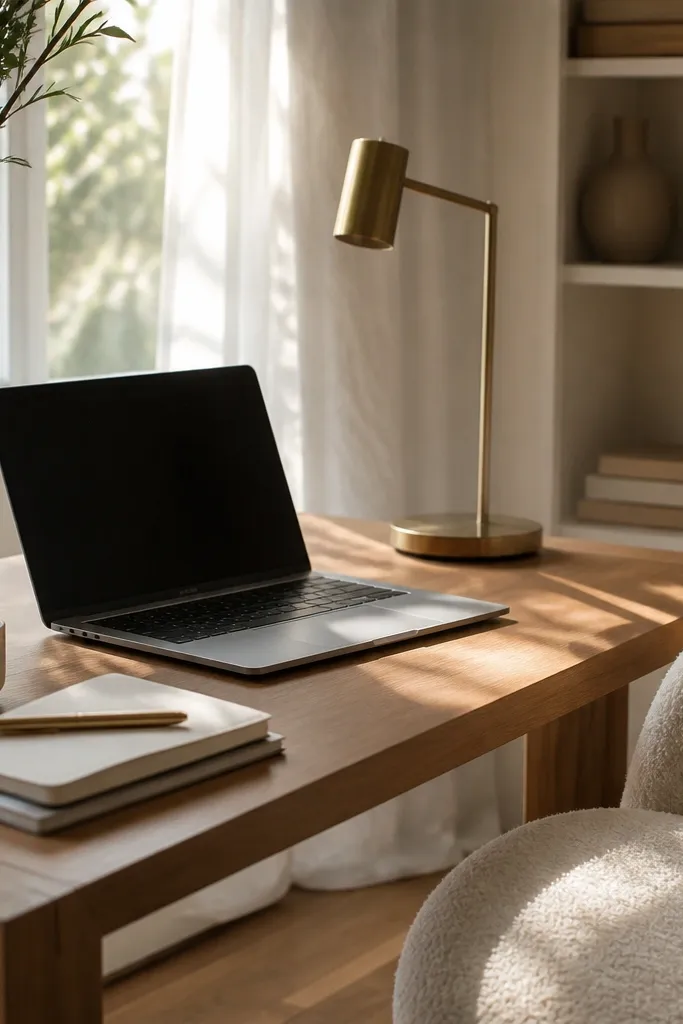
1. Linen runner + warm task lamp combo
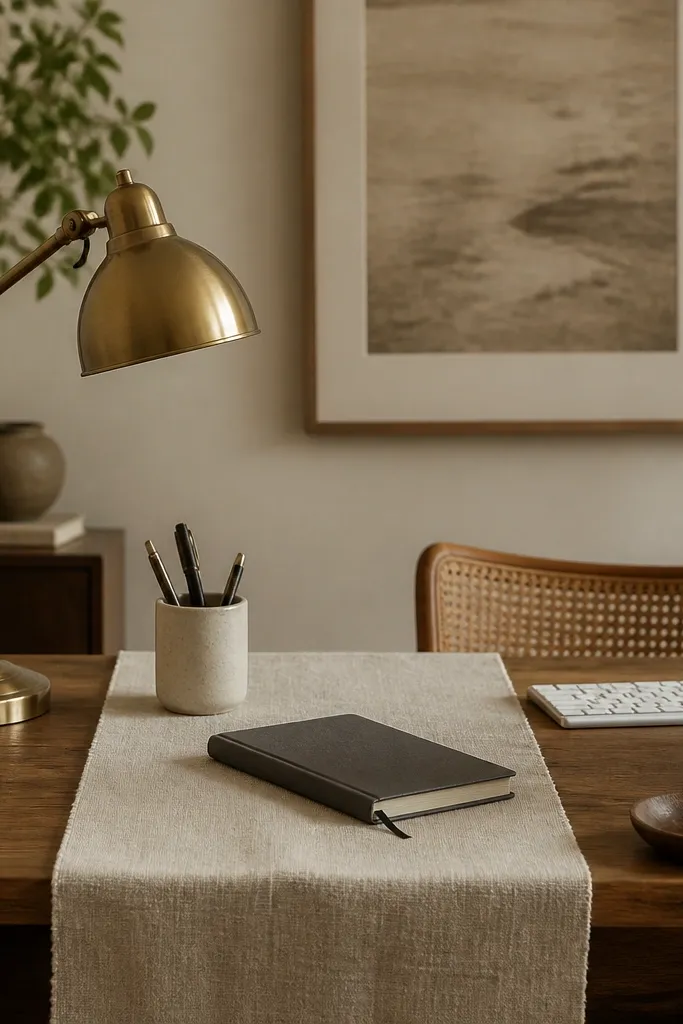
This setup makes your desk feel like a calm surface instead of a workbench. The linen runner adds texture and softens the whole palette, especially against wood or laminate. The brass-toned task lamp gives warm light at the exact angle where your eyes need it most. I like it because it works with almost any chair and doesn’t require matching furniture.
Use a runner about 14 to 16 inches wide so it covers the area you reach across, not the whole desk. Place the lamp so the light lands on your keyboard and notes, usually 8 to 12 inches from the keyboard edge. Keep your notebook cover dark (charcoal or ink blue) so the warm light doesn’t wash out the page.
Pro tipSet a timer for 10 minutes of work under the lamp only. If you can read comfortably without squinting, your angle is right.
Watch outAvoid a lamp that points light upward or straight toward your monitor — it makes the setup look cozy but your eyes will hate it.
2. Cable-free corner with a desk tray wall
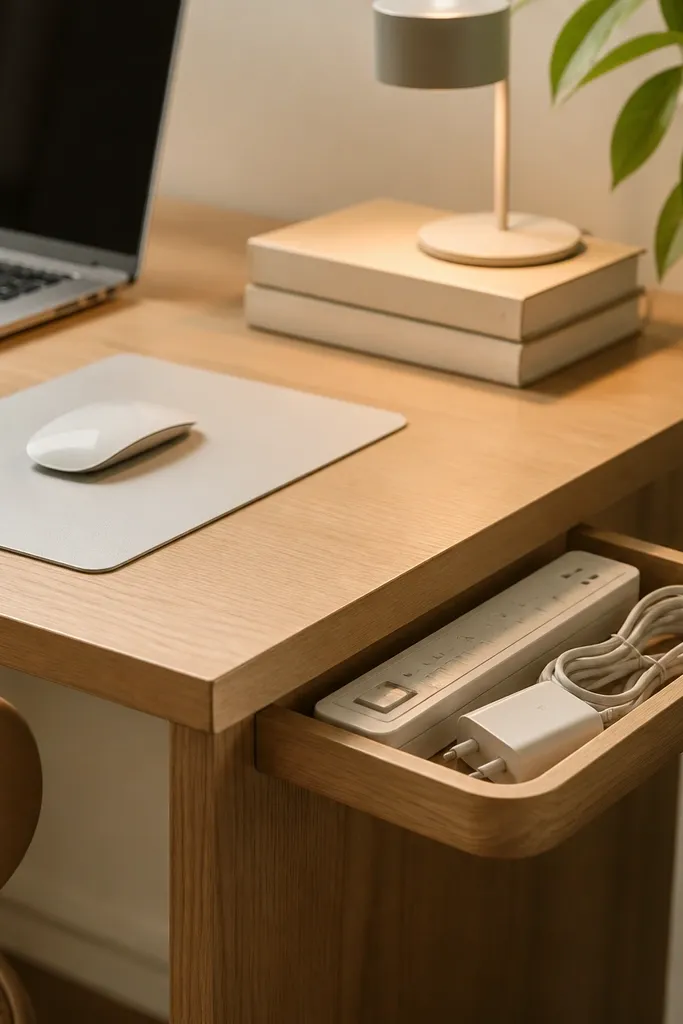
This is the fastest way I’ve found to make a work setup look intentional. The tray creates a “cable landing zone” so the mess stops spilling onto the top surface. When cables stay vertical or coiled, the desk looks tidy even when you’re actively working. The cozy part comes from using wood and soft neutrals, not plastic bins.
Choose a tray with a lip so cables don’t slide off. Mount it with adhesive strips or small screws to the desk side near where your power enters, not behind your monitor. Keep the top surface clear except for your laptop, mouse, and one small catch tray for receipts or sticky notes.
Wrap your charging cords with a Velcro strap and label each end with a small piece of tape so you don’t dig later.
Skip open cable piles on the desk edge — they look chaotic within a day.
3. Two-textile layering with a felt desk mat
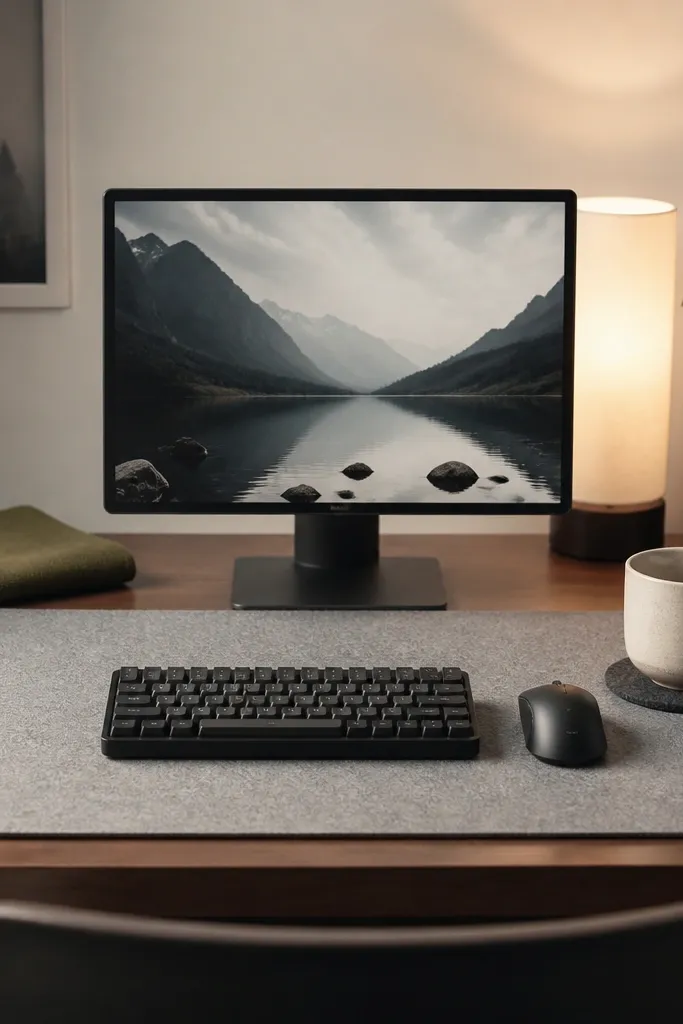
Layering textiles changes how your desk “reads” at a glance. Felt under the keyboard makes the whole work area feel grounded and reduces the echo of tapping sounds. The extra wool coaster and towel bring softness without turning the desk into a fabric trap. I like this combo because it’s cozy and still practical for everyday spills.
Pick felt at least 1/8 inch thick and cut it to fit your keyboard area, leaving a few inches around for movement. Use one coaster set in a natural fiber (wool or cork) and keep the towel small — about the size of a hand towel. Place the towel behind your notebook as a visual backstop for papers.
Pro tipIf your desk is dark, choose light felt (gray, oatmeal). If your desk is light, go darker felt (charcoal, forest green).
Watch outDon’t use fuzzy fabrics directly under your mouse — it slows tracking and looks messy fast.
4. Book stack riser with a gallery wall behind
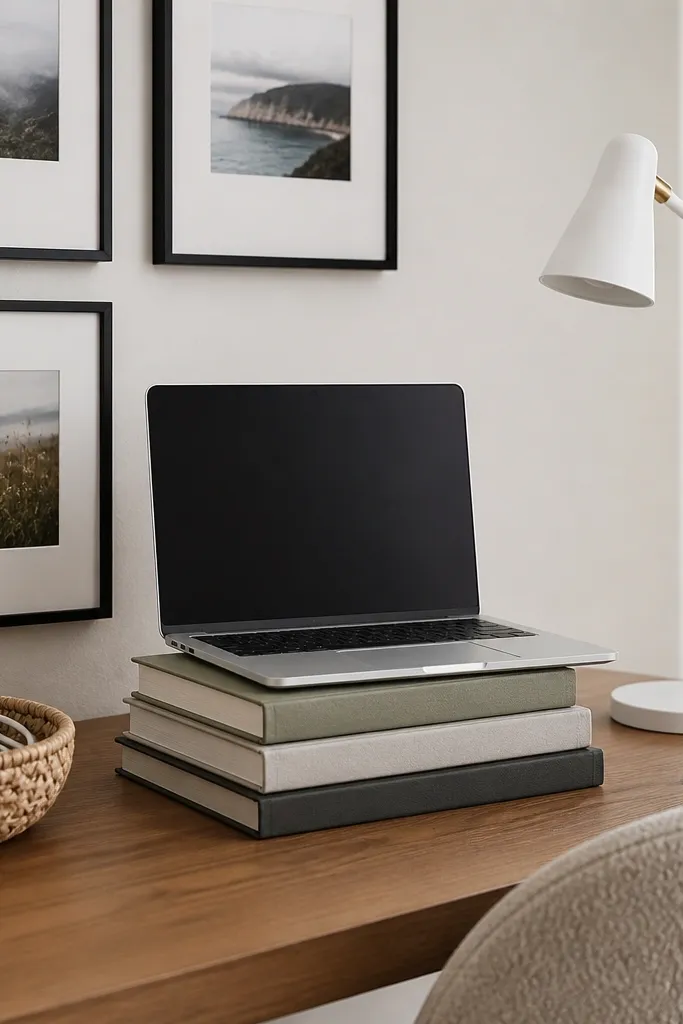
A riser fixes posture and makes your desk look styled instead of temporary. The book stack adds height and creates a “platform” for the cozy lamp glow. Frames behind the monitor make the space feel finished, even if the desk itself is simple. This is one of the setups that made my focus feel calmer because my eyes weren’t stuck on blank walls.
Use three books that add up to 4 to 6 inches of height, then center your laptop on top. Keep the lamp cord managed with a clip and run it along the back edge. Choose black frames or brass frames, but keep the mat color consistent (off-white works best).
Pro tipHang the first frame at eye level when you’re seated, not when you stand up.
Watch outAvoid tall risers that force your laptop screen to tilt — it increases glare and neck strain.
5. Warm wood + white desk accessories in a soft grid
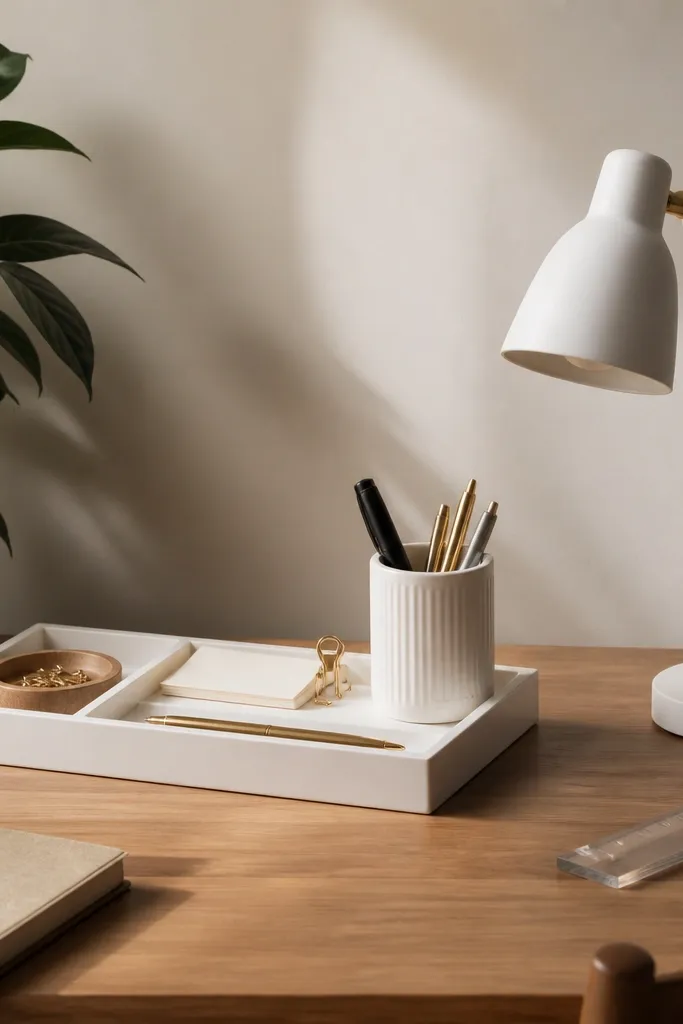
This is cozy through contrast. White accessories brighten the desk so warm wood doesn’t look heavy, and the clean shapes make the whole setup feel orderly. The plant adds life without clutter. I’ve used this in small rooms because it visually opens the desk area while still feeling warm.
Stick to one plant type with a compact footprint — I like a small pothos in a ceramic pot or a desk fern. Place the organizer tray near your dominant hand so pens and scissors don’t wander across the desk. Use a ruler or straight-edged item as a visual anchor along one side.
If your desk is near a window, keep white items off the direct light path to prevent glare spots.
Skip mixed metals everywhere — it looks messy even when the desk is clean.
6. Corner micro-office with a swing-arm lamp
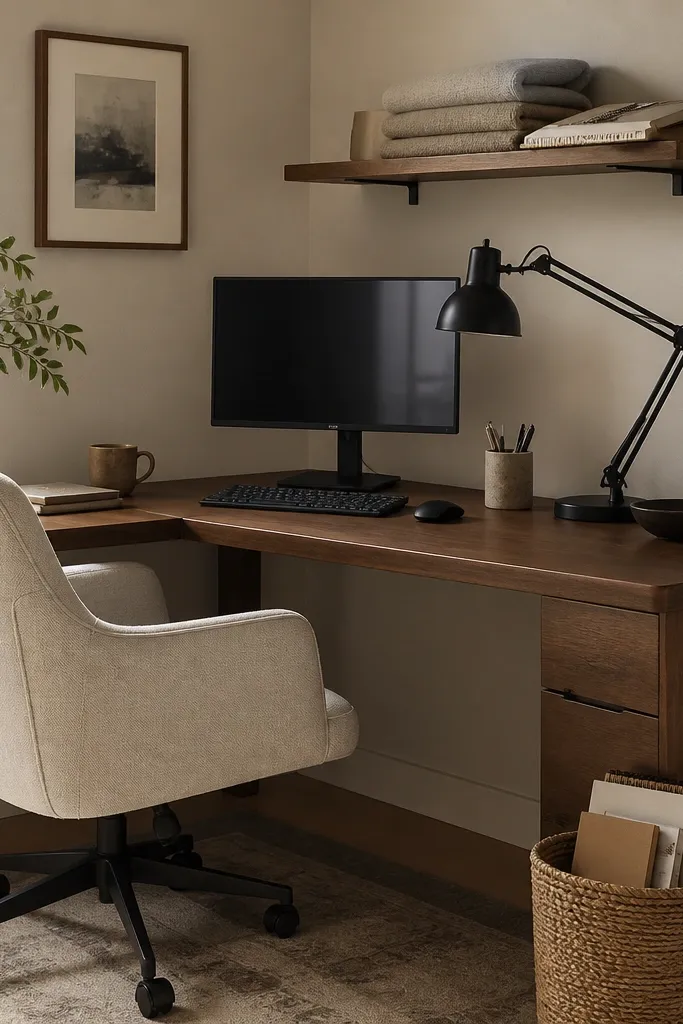
A swing-arm lamp is a cozy work setup cheat code. It lets you move light without moving the whole lamp base, so you can aim it perfectly even when your laptop angle changes. In a corner workspace, shadows are more obvious, so the adjustable light keeps your eyes comfortable. The shelf adds warmth through folded textiles and keeps mail out of sight.
Mount the lamp so the arm reaches the keyboard area from above, not sideways. Use a monitor stand or book riser to keep the screen at eye level. Put a basket under the shelf for mail so the corner doesn’t collect paper.
Choose a lamp shade that’s matte (not glossy). Matte shades hide glare and keep the light soft.
Don’t place the lamp behind your screen — you’ll create a halo reflection.
7. Terracotta and oatmeal desk palette
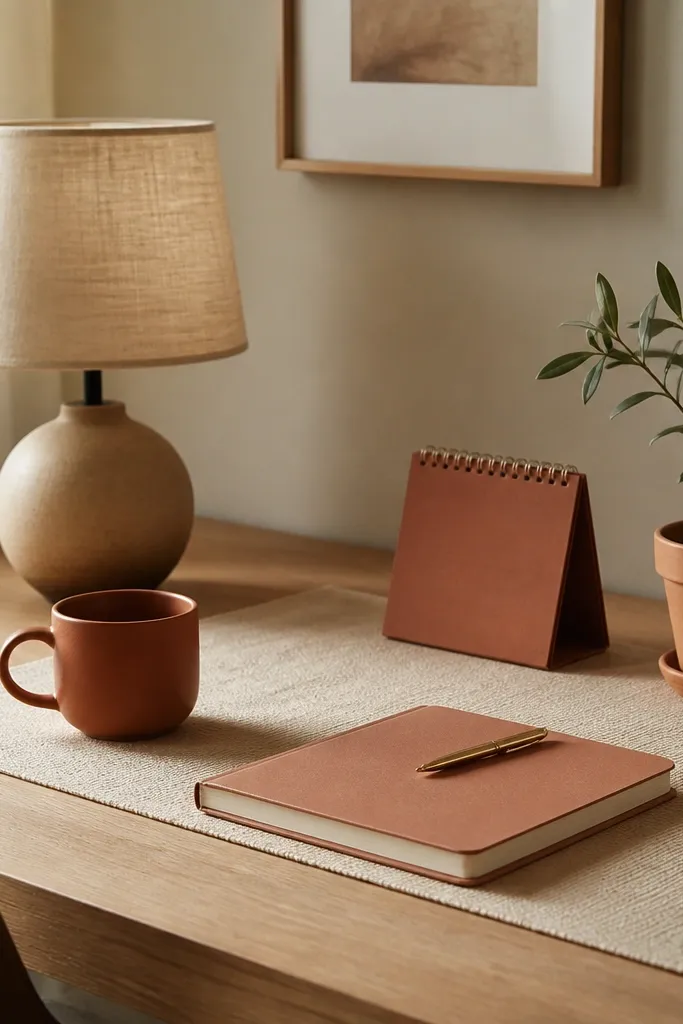
This palette feels warm because terracotta and oatmeal mimic natural clay and linen. It’s cozy without turning into “cutesy decor.” I used this color plan when I was working through winter months and wanted my space to feel less gray. The setup stays calm even when you add a lot of paper because the colors absorb visual chaos.
Pick one terracotta item (mug or calendar) and one oatmeal textile (runner or mat). Keep everything else neutral: cream, sand, or soft brown. If your walls are cool gray, add a warmer frame mat so the palette doesn’t fight the room.
Keep your notebook in the same family (clay, rust, or warm gray) to make the whole desk look intentional.
Avoid bright orange accents — they read harsh under warm bulbs.
8. Black desk, brass lamp, and cream papers
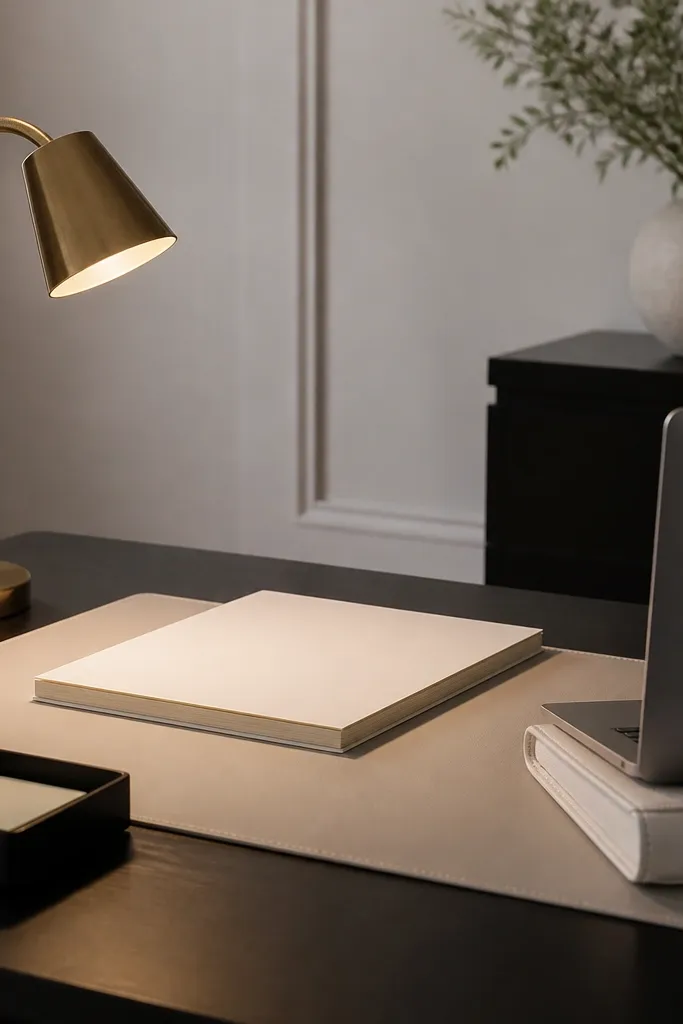
If you have a dark desk, you need lighter surfaces to keep it from feeling heavy. The brass lamp warms up black surfaces, and the cream desk pad makes papers easier to scan. This combo also hides fingerprints and small scuffs better than light wood. It’s cozy in a modern way.
Choose a desk pad or mat in cream or warm white and place it under the keyboard and notebook area. Use a tray in black or dark gray to keep small items contained. Keep sticky notes in cream or light gray so they blend instead of screaming.
Pro tipAngle your lamp slightly from the side so the light hits paper, not the screen.
Watch outDon’t rely on overhead lighting on a black desk — it creates harsh reflections.
9. Woven basket storage under a clear desk organizer
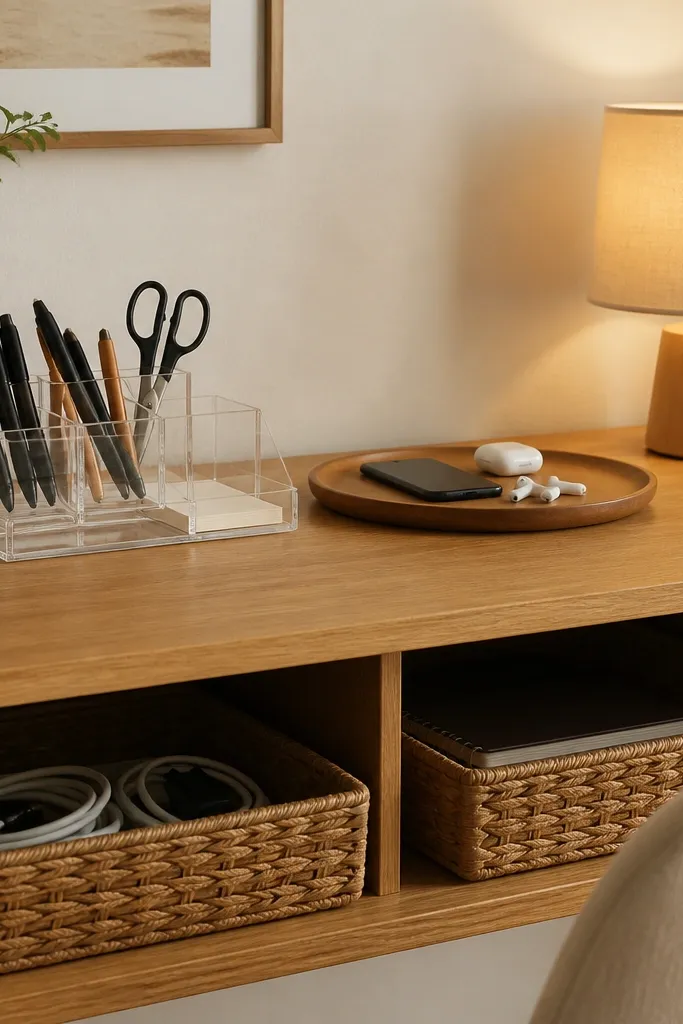
This setup looks tidy because the storage has two textures: clear for small tools and woven for bulk. You get the “cozy” feel from natural fibers, but you still see what you need at a glance. I like it because it hides the mess you can’t control — chargers, random cables, and extra paper. The desk top stays visually clean even on busy weeks.
Use two woven baskets that fit under your desk lip or shelf, sized so they don’t wobble. Put the acrylic organizer on the top and keep it limited to five items max. Add a small tray for phone and earbuds so they don’t end up on the runner.
Pro tipLabel the baskets with a small piece of tape on the side, not the front, so it looks clean.
Watch outSkip an all-clear system — it looks cluttered the moment you toss something in.
10. Soft desk shelf with a blanket drape
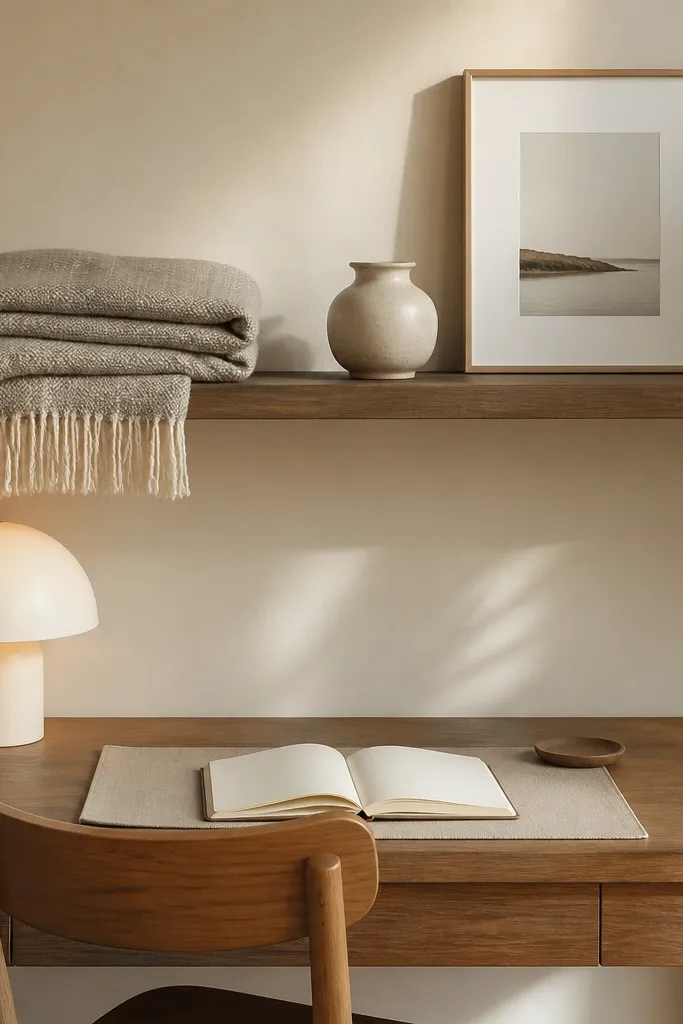
Draping one throw blanket near your work area adds instant coziness without adding clutter to your desktop. The shelf keeps the blanket from falling into your workspace, and the fabric creates a warm visual background behind your monitor. I’ve used this when I had a blank wall and no room for a full bookcase.
Choose a throw in chunky knit or a smooth cotton weave, but keep it one color family. Fold it so the drape is 6 to 8 inches and doesn’t cover the shelf items. Place the lamp so the light doesn’t reflect off the framed art glass.
Use a lint roller on the blanket before you drape it — it looks way cleaner under warm light.
Avoid draping a blanket directly behind the monitor — it can cause glare and distract you.
11. Compact plant + stone coaster grounding
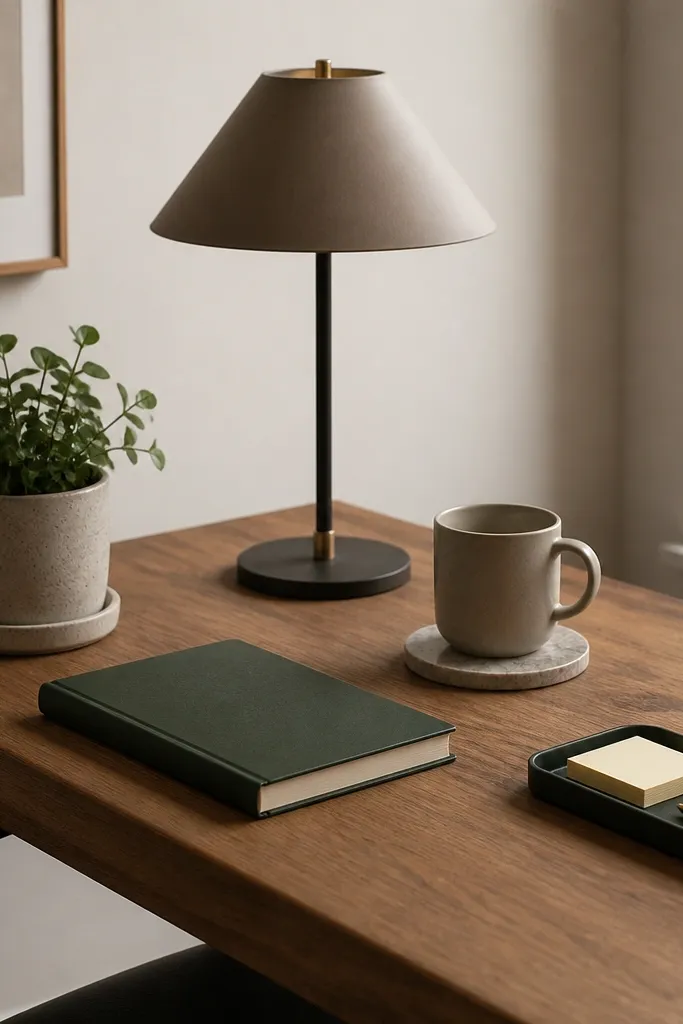
This is a tiny setup that still feels cozy because it grounds the desk with natural elements. A plant gives a soft focal point, and a stone coaster makes the desk feel “finished” rather than random. I like it for focused days because it adds warmth without turning into a full decor display.
Pick a plant that fits your light — pothos for low light, a small succulent for bright windows. Use a coaster size that matches your mug base so it doesn’t wobble. Keep your tray in wood or matte metal so it doesn’t look cold.
Move the plant a few inches closer to your non-dominant hand so you see it while you take breaks.
Skip a plant that’s too big for the desk — it blocks airflow and makes the setup feel cramped.
12. Desk calendar + weekly reset tray
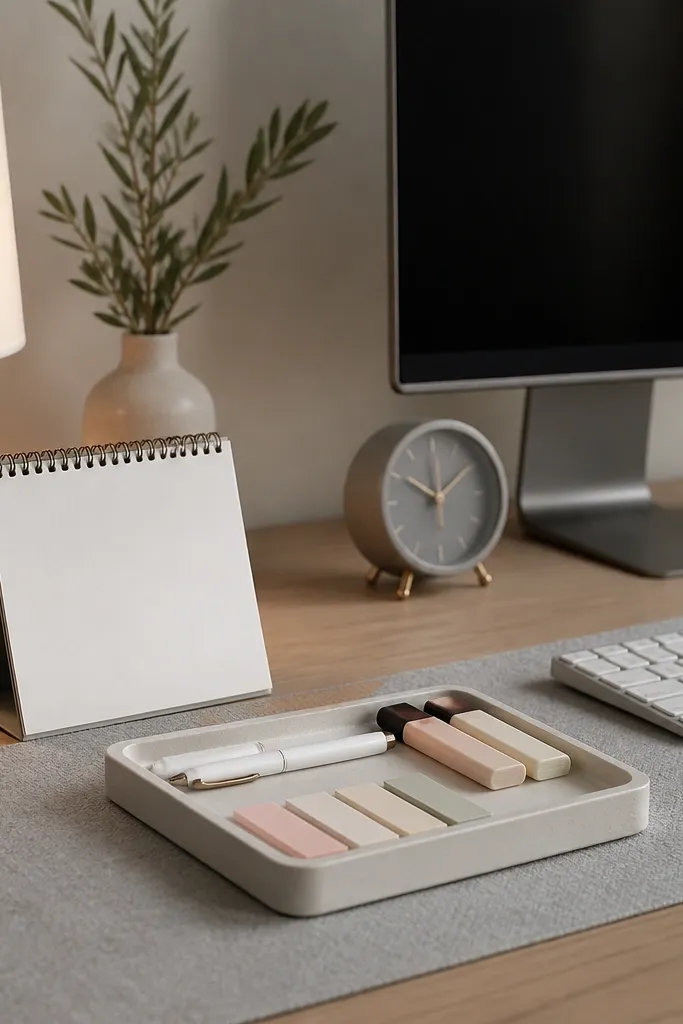
Cozy doesn’t have to be only textiles. A weekly reset tray reduces decision fatigue because you start each workday from a prepared station. The calendar stand gives your eyes a consistent reference point, and the runner keeps the whole area from looking too “office.” I’ve used this layout during busy weeks when my desk turned into a paper pile.
Use a tray about 10 by 14 inches and keep it for planning supplies only. Put it on the opposite side from your mouse so you don’t bump it mid-work. Choose a runner in gray, oatmeal, or sage so it doesn’t compete with the calendar.
Do a 3-minute reset at the end of each day: clear the tray back to the same spots and close the notebook.
Avoid mixing planning tools with daily clutter on the same tray — it stops being a reset system.