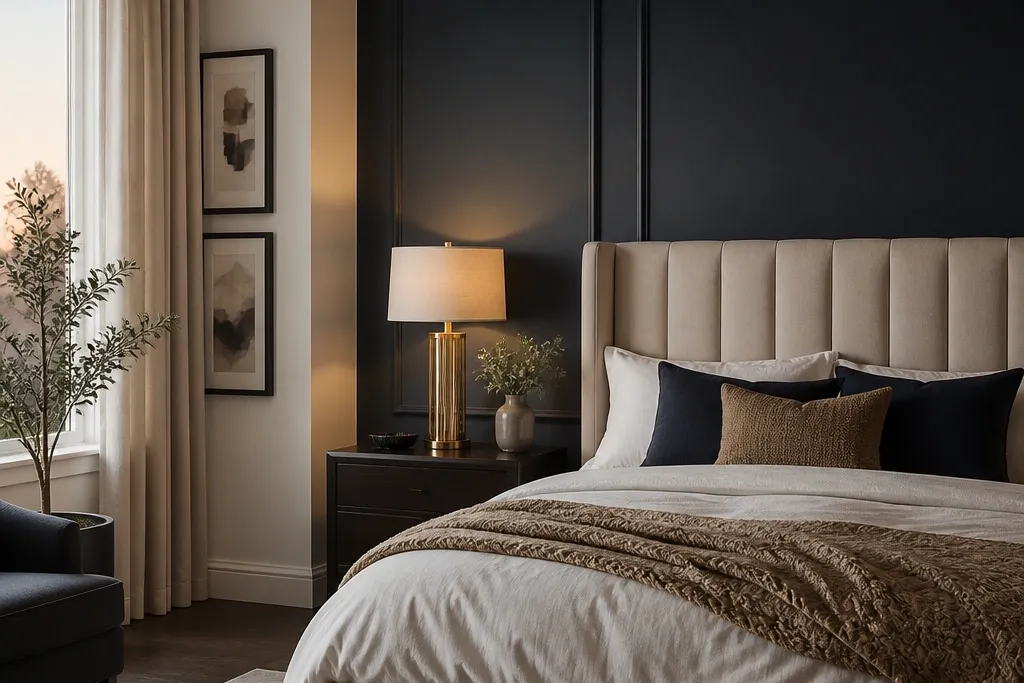
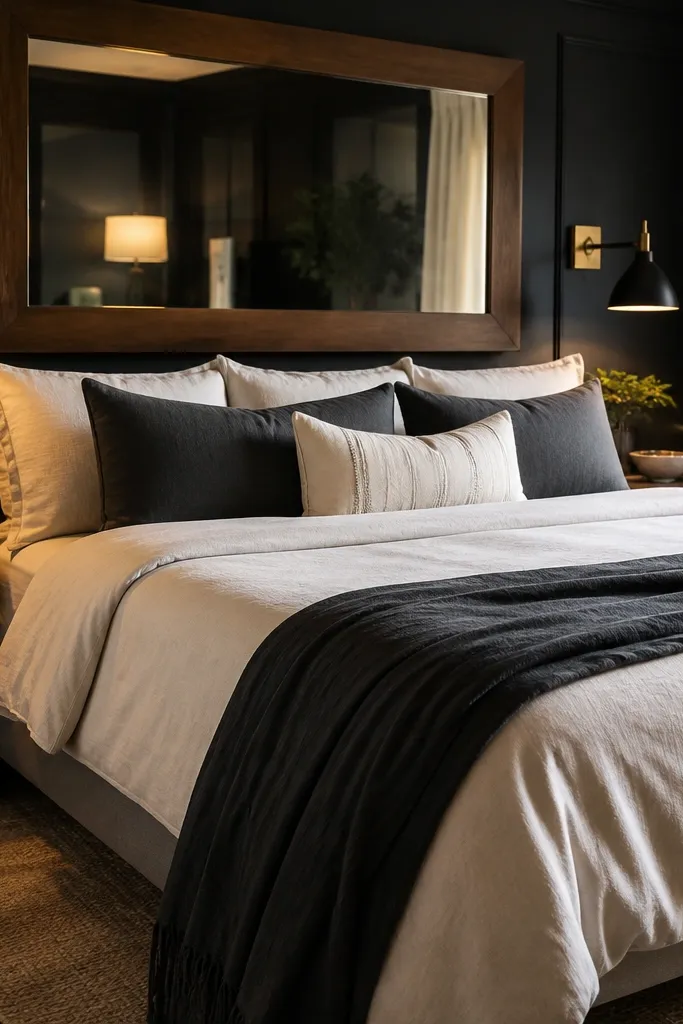
1. Blue-Black Wall With Crown Molding Frame
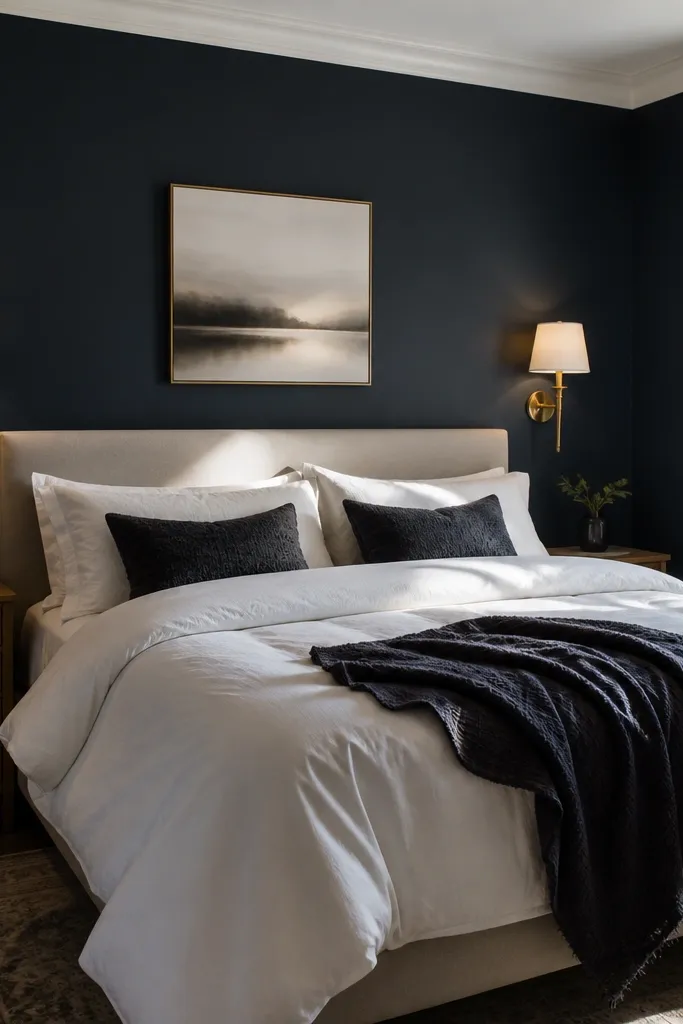
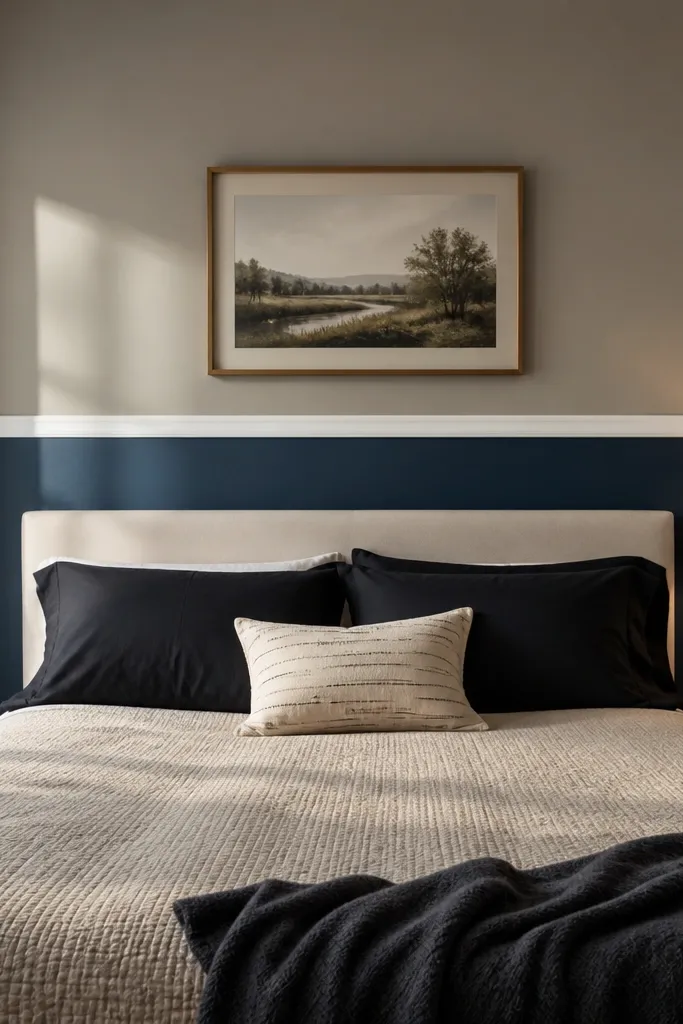
First, measure your headboard width and center the wall area behind it; aim for at least 4-6 inches of dark wall showing on each side past the headboard. Then paint the full wall, and install crown molding only if you can keep the line sharp and straight; use a level and cut miters carefully. Finally, paint the molding a bright, clean white (semi-gloss or satin for easy wipe-down) and add brass bedside lamps with shades that aren’t too reflective. Budget: paint plus molding and supplies typically lands around $300-900 depending on room size and trim complexity.
Choose a blue-black paint that leans slightly cool, not flat charcoal. This shade gives you drama without the “dead” look that many pure black walls get. Behind a bed, blue-black makes white bedding pop and gives skin tones a cleaner, less sallow look under warm lamps. Pair it with crisp white crown molding and a slightly darker baseboard so the wall reads layered. This works best in bedrooms with light trim, light wood floors, or white ceiling — it turns the wall into a high-end frame instead of a big dark block.
Watch outSkipping clean trim edges makes a blue-black wall look like a rushed repaint.
Pro tipUse warm bulbs around 2700K and aim the bedside light so it grazes the wall — the molding will glow instead of the wall absorbing everything.
2. Charcoal Two-Tone With Chair Rail Band
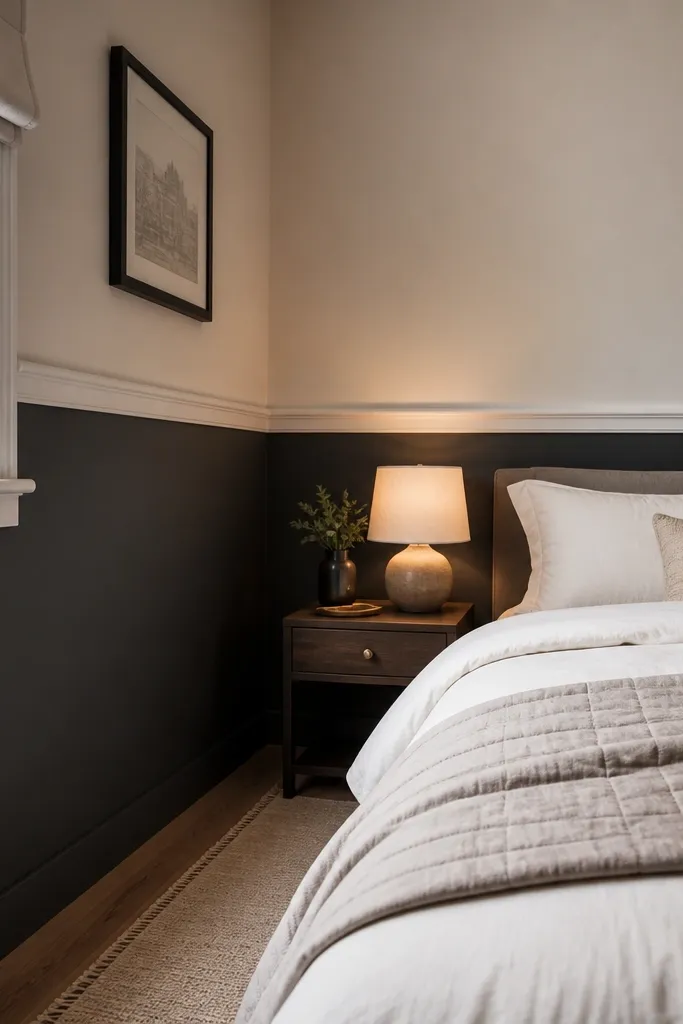
Start by marking your chair rail height — a good reference is about 32-36 inches from the floor to the top edge, then adjust based on your bed height. Paint the upper wall in a creamy off-white and the lower section in charcoal, then add the chair rail in matching bright white. Finally, pull your bedding toward cream, ivory, or soft gray so the dark band looks intentional, not like a random stripe. Plan on 2-3 coats for the dark paint and expect 1 weekend to do it cleanly.
This is the dark accent idea that looks expensive even in a small bedroom. You split the wall into a lower band and an upper field with a chair rail, then keep one side light and one side deep. The deep charcoal below grounds the bed visually, while the lighter above keeps the room from feeling boxed in. Use matte or eggshell paint on the wall planes so it doesn’t glare in photos. This works great when your bedroom has patterned curtains or mixed textures, because the chair rail creates a tidy visual boundary.
Watch outPutting the chair rail too high makes the dark band feel like it’s eating the ceiling.
Pro tipUse painter’s tape with a slow press and remove it while the paint is still slightly tacky for crisp edges.
3. Espresso Paneled Accent Behind the Headboard
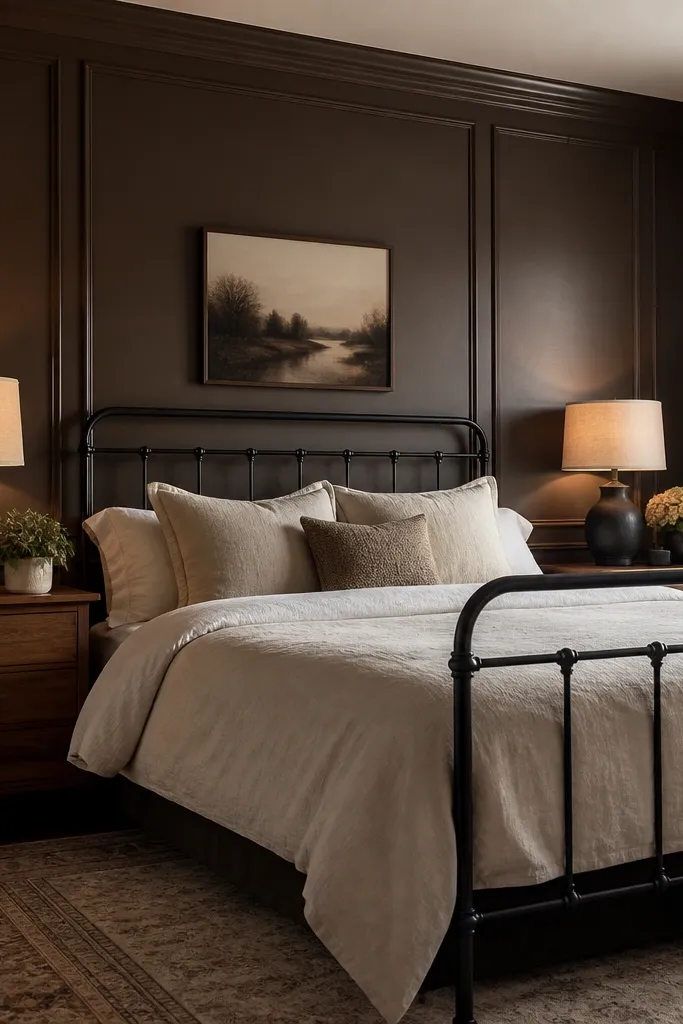
First, pick a paneling system you can measure and install in sections (MDF or primed wood strips). Mark a centered rectangle behind the headboard — leave 6 inches beyond the headboard sides and keep the top edge about 4-8 inches above it. Then install the vertical and horizontal strips, prime everything, and paint the entire paneled area in espresso with the same sheen on all surfaces. Finish by sealing and adding wall-safe caulk at seams, then hang one large framed piece above the bed or skip art and let the panels do the work.
If you want dramatic but not gloomy, build depth with paneling. An espresso-brown wall with raised panels creates shadows that make the wall look custom, even if the room is simple. The trick is to keep the panels crisp and the color consistent — no patchy sheen. This look pairs beautifully with warm woods, dark metal bed frames, and creamy bedding because the brown tone feels layered instead of harsh. It’s especially strong in bedrooms where the headboard is low or upholstered, since the wall supplies the “architecture” the bed needs.
Watch outUsing glossy paint on the panels creates glare and makes the shadows look washed out.
Pro tipUse a small foam roller on flat areas and a brush only for panel edges so the finish stays even.
4. Deep Evergreen Matte With Linen Sconces
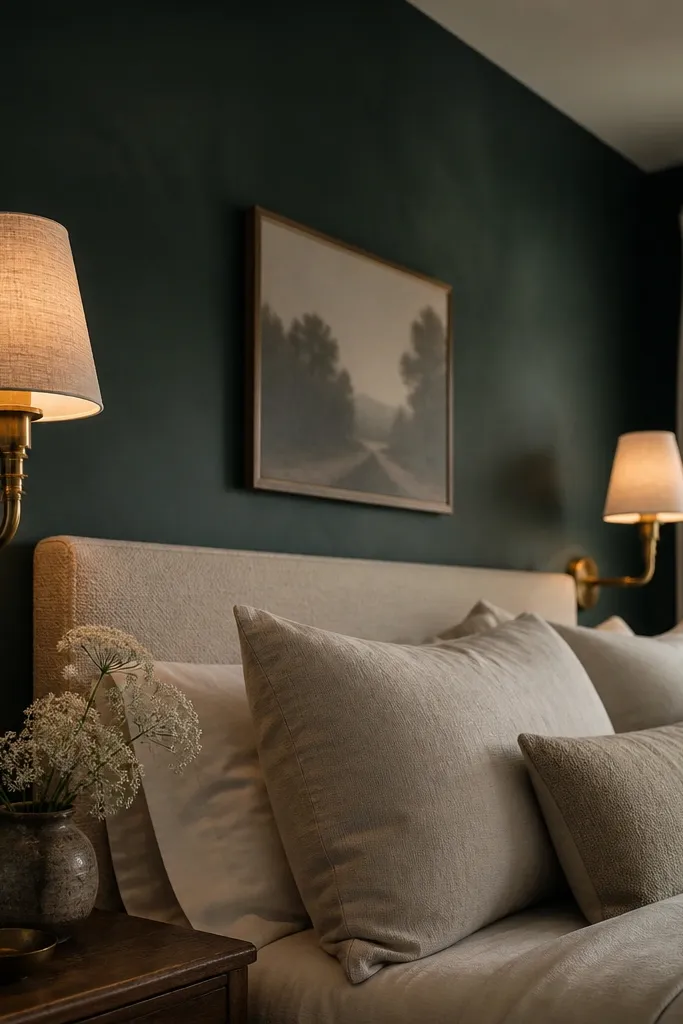
Start by choosing a matte paint labeled for walls and apply it with a roller cover meant for smooth finishes; matte hides imperfections but shows streaks if you rush. Then choose two matching sconces and mount them so the light centers align roughly with the top third of the bed’s headboard. After painting dries, install the sconces and use bulbs around 2700K. For cost, expect $450-1,200 for sconces and wiring materials plus paint depending on whether you’re tapping existing power.
Deep evergreen is dark accent gold because it reads warm and moody without turning gray. A matte finish makes the color look velvety, like stained fabric. Pair it with linen shades on wall sconces so the light spreads softly instead of reflecting off a glossy wall. This is a great pick for bedrooms with beige bedding, oatmeal knits, or tan leather accessories. The green tone also plays nicely with real plants and natural textures, so your room feels styled, not just painted.
Watch outAdding lots of competing dark accessories with evergreen makes the wall blend instead of stand out.
Pro tipKeep wall art minimal — one large piece or a pair of small mirrors keeps the green from feeling busy.
5. Matte Black Accent With Recessed Shadow Gap
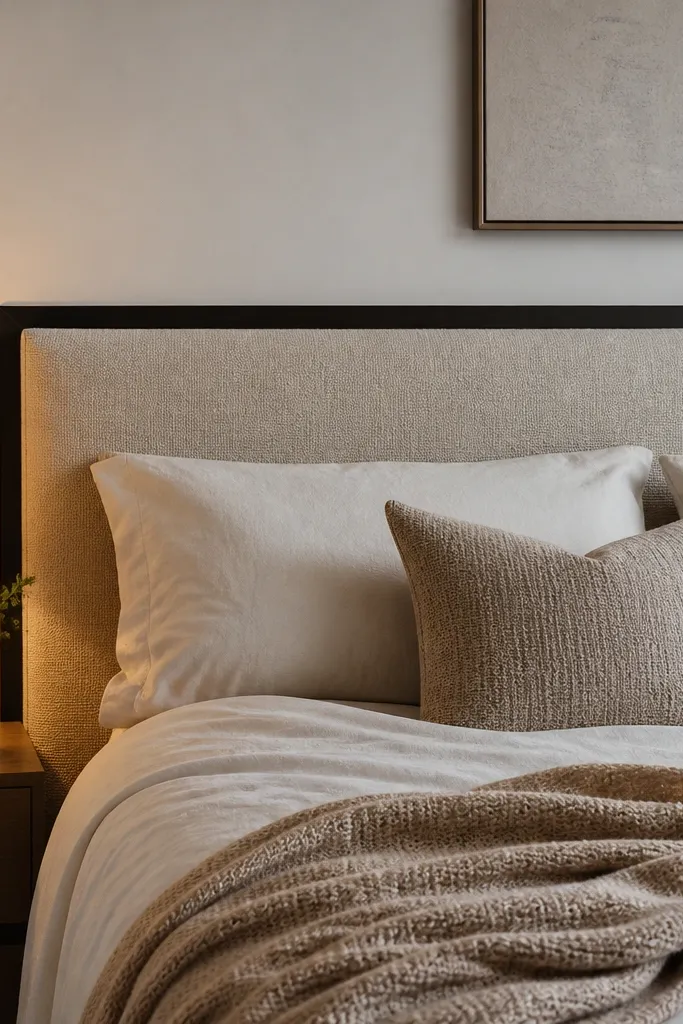
First, decide the size of the recessed area: aim for a rectangle that matches your headboard width plus 6-10 inches per side. Then build a shallow recess using drywall or a modular panel system and install a thin trim at the edges to create a consistent gap (about 1/2 inch is a good target). Prime everything and paint only the recessed plane matte black, leaving the surrounding wall bright. Finally, install accent lighting — even simple LED strips tucked behind the trim — and set them to warm white so the black glows at the edges.
Matte black sounds risky, but a recessed shadow gap makes it look architectural instead of flat. The gap creates a thin line of darkness and light separation, which is what makes this style feel high-end in photos. Use a matte black on the recessed plane, then keep the surrounding wall in a bright neutral so your bed becomes the center of gravity. This works best in modern bedrooms with clean lines, minimal decor, and either white or light oak walls. If your room already has strong shapes like a platform bed or a low headboard, this is the move.
Watch outPainting matte black over unprimed drywall — you’ll get uneven sheen and dark blotches.
Pro tipDo a test panel first. Matte black shows patchiness quickly if the wall isn’t fully primed.
6. Deep Charcoal With Walnut Floating Shelf Line
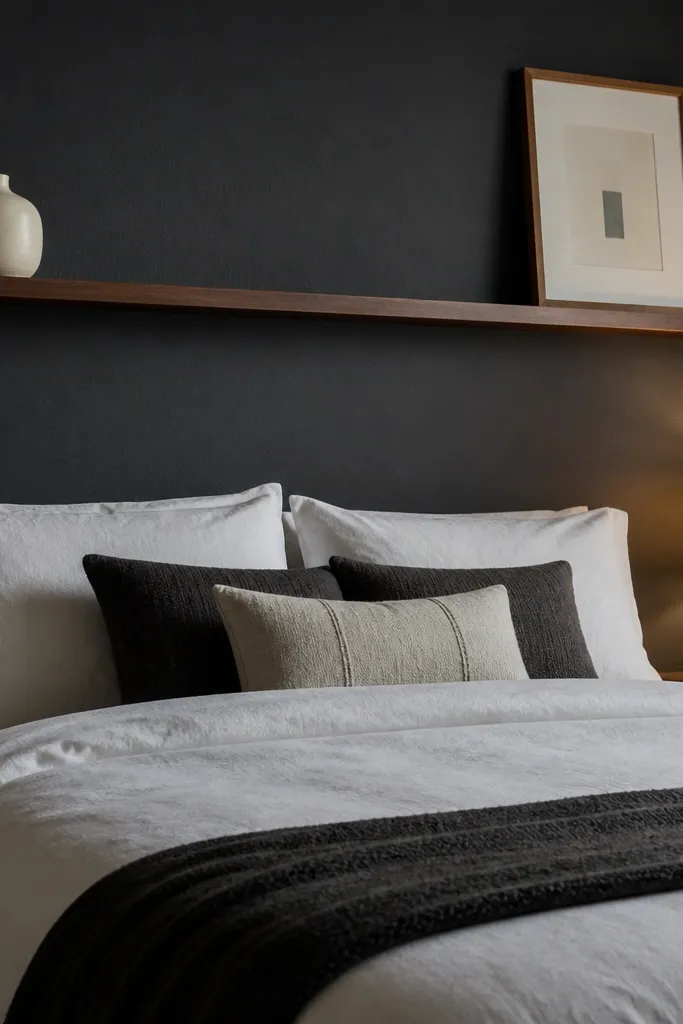
This idea makes the dark accent feel functional, not just decorative. Deep charcoal behind the bed gives you the drama, while a single walnut floating shelf line adds a warm wood highlight that reads expensive. Keep the shelf slim and straight, then style it with one object per side or a pair of matching frames. The dark wall improves contrast for light-colored bedding and makes the shelf look like furniture-grade design. It’s a great solution when you want the makeover to look intentional but don’t want to install paneling or molding.
Start by painting the wall a deep charcoal (eggshell or matte) and allow full cure time before stressing the finish. Then mount one floating shelf centered behind the bed — keep it about 10-14 inches above the top of the headboard or aligned with your bedside eye level. Use 3/4 inch walnut or walnut veneer shelf boards for a realistic look. Finally, style with two slim items like a ceramic vase and a stack of books, or hang two matching picture frames instead of clutter.
Match the shelf finish to your bed frame hardware. If your bed is black, keep shelf brackets hidden or black-tinted.
Over-styling the shelf — the dark wall already does the heavy lifting.
7. Smoked Gray With Oversized Linen Headboard Contrast
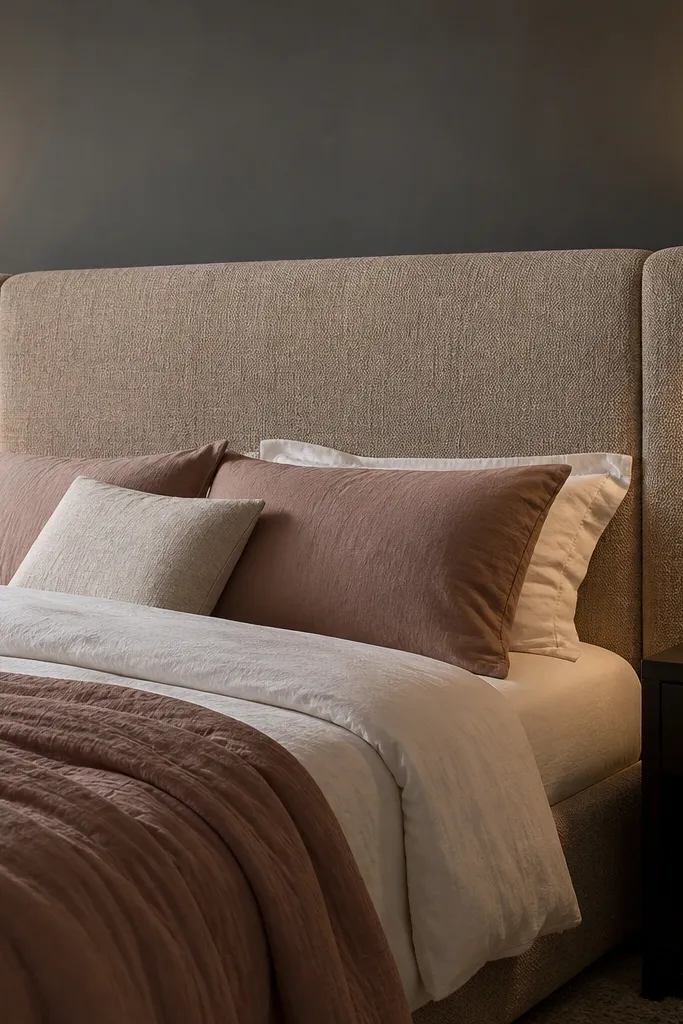
First, paint the wall smoked gray and use a primer if you have patchy existing colors. Then choose or place your headboard so it’s centered and large enough that the wall shows evenly around it — aim for 3-6 inches of wall visibility on each side. Add two matching bedside tables in light wood or painted white so the wall contrast stays crisp. Finally, keep bedding in cream, sand, or warm white with one throw in a slightly darker taupe for depth.
Smoked gray is the dark accent that flatters almost every bedroom because it’s dark without being as hard as black. The look becomes high-end when you pair it with an oversized linen headboard that has texture — not a shiny fabric. The wall acts like a soft backdrop, and the headboard becomes the sculptural element. This works especially well if you have neutral bedding and want it to look richer. The key is sheen: keep the wall eggshell or matte and keep the linen headboard in a natural weave so the room has texture contrast.
Watch outUsing a glossy wall finish — it turns smoked gray into a flat, reflective stain.
Pro tipHang curtains that touch the floor and keep them in one warm neutral — fabric movement looks great against smoked gray.
8. Charcoal Brick Wallpaper in a Clean Geometry Pattern
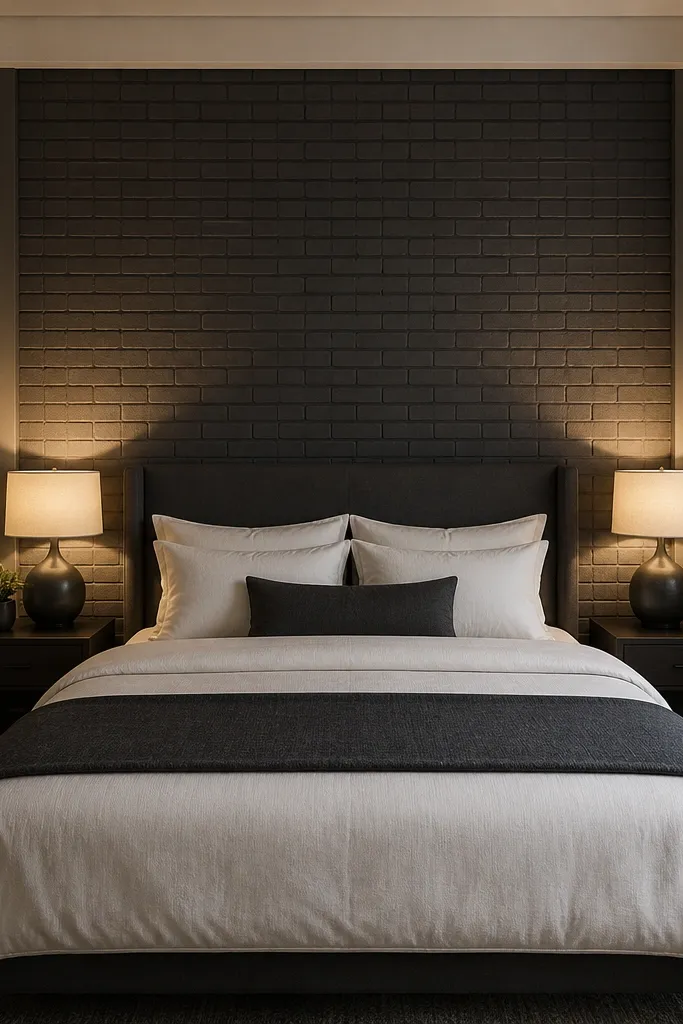
Brick wallpaper makes a dark accent wall feel textured and built-in, but only if the pattern is controlled. Pick a charcoal brick wallpaper with narrow mortar lines so the texture doesn’t look childish or overly rustic. The key is placement: cover the full wall behind the bed or at least a centered rectangle that matches your headboard. This look works when your bedroom has modern furniture or a simple bed frame — the texture adds interest without changing your style direction. It’s also photo-friendly because the shadows in the brick pattern create dimension even in flat lighting.
First, measure the wall height and width and buy wallpaper with enough extra for pattern matching; add 10% waste. Then install a plumb first line, paste the wall or paper depending on the product, and smooth from center outward with a plastic smoother. Finally, trim edges cleanly around baseboards and outlets, then paint or cover any exposed trim before installing bedding. Cost depends heavily on wallpaper price, but expect $150-500 for materials plus tools if you don’t have a smoothing tool and seam roller.
Use matte paint on nearby trim so the brick texture stays the star.
Choosing a high-contrast brick pattern — it can look like a theme wall instead of a luxe accent.
9. Deep Brown-Black With Leather Strap Details
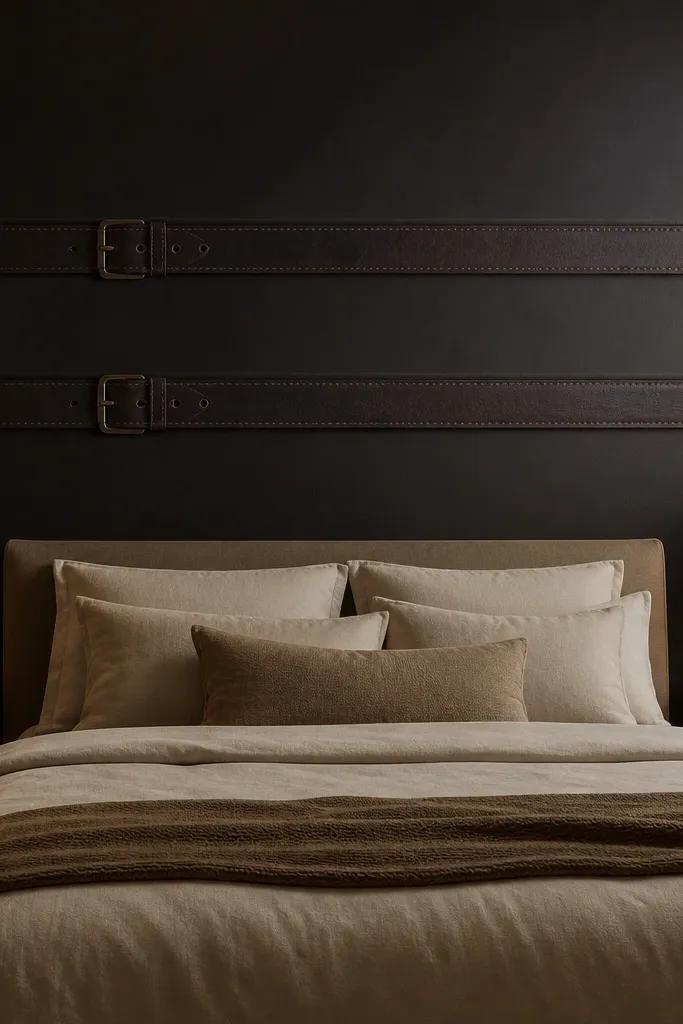
This is a styling-forward dark wall idea that looks designer because it mixes finishes. Paint the wall a deep brown-black (espresso-black) and add leather strap details as a repeated motif — think two vertical straps or a single horizontal strap line above the bed. The leather brings warmth and a tactile feel that keeps the dark wall from reading sterile. It works best with warm lighting, wood bedside tables, and bedding in cream, oatmeal, or cognac tones. If your room has a lot of hard surfaces like metal or glass, leather details soften the whole look.
Start by painting the wall espresso-black and choose a satin or eggshell finish so it catches light gently. Then install leather straps using small, concealed brackets or hardware — place them so the straps align with the bed centerline and repeat at equal spacing left and right. Finally, keep other decor minimal: one framed print or a mirror above the bed, plus two matching bedside lamps. Budget is mostly paint and the strap hardware, typically $200-700 depending on how custom you go.
Pick leather color deliberately. Cognac leather looks best against espresso-black; black leather can blend too much.
Adding random small decor everywhere — two or three intentional leather pieces beat clutter.
10. Night Navy With Soft White Plaster Look
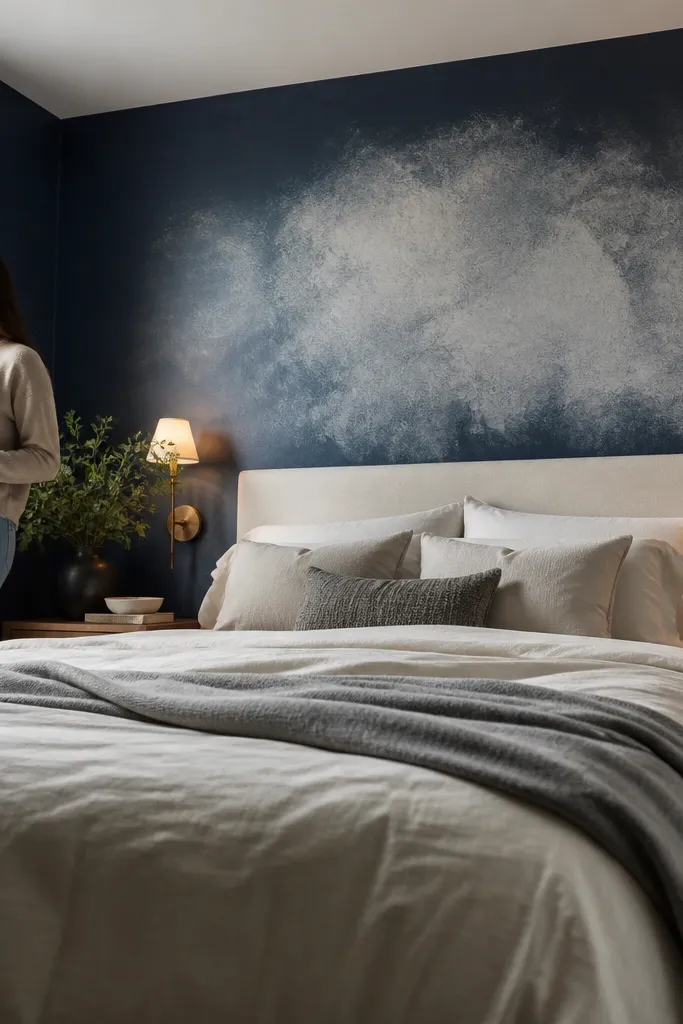
Night navy is the dark accent that feels calm and expensive at the same time. Pair it with a soft white plaster-look texture around the room area near the wall — not the entire room, just enough to create a halo effect. The navy holds the mood, while the plaster texture adds tactile contrast so the wall doesn’t look like flat paint. This works best in bedrooms with light floors and white ceiling, and it’s especially good if you have a simple bed frame and want the wall to do the styling. The plaster texture also photographs well because it catches light differently than smooth paint.
First, paint the accent wall night navy in two coats, and let it dry fully before any texture work. Then apply a plaster-look coating on a smaller surrounding zone like the wall edges or a framed rectangle around the bed area — keep it controlled so it looks intentional. Use a trowel technique with light passes to avoid heavy ridges. Finally, style with crisp white bedding and one warm element like a tan throw or a wooden bedside table to keep the navy from feeling too cool. Expect $250-700 for coatings and tools depending on whether you apply it yourself.
Use a matte top coat on the textured areas so the highlights look soft, not shiny.
Texture everywhere — it can make the room feel busy and reduce the contrast that makes navy dramatic.
11. Dark Slate With Vertical Wood Slats
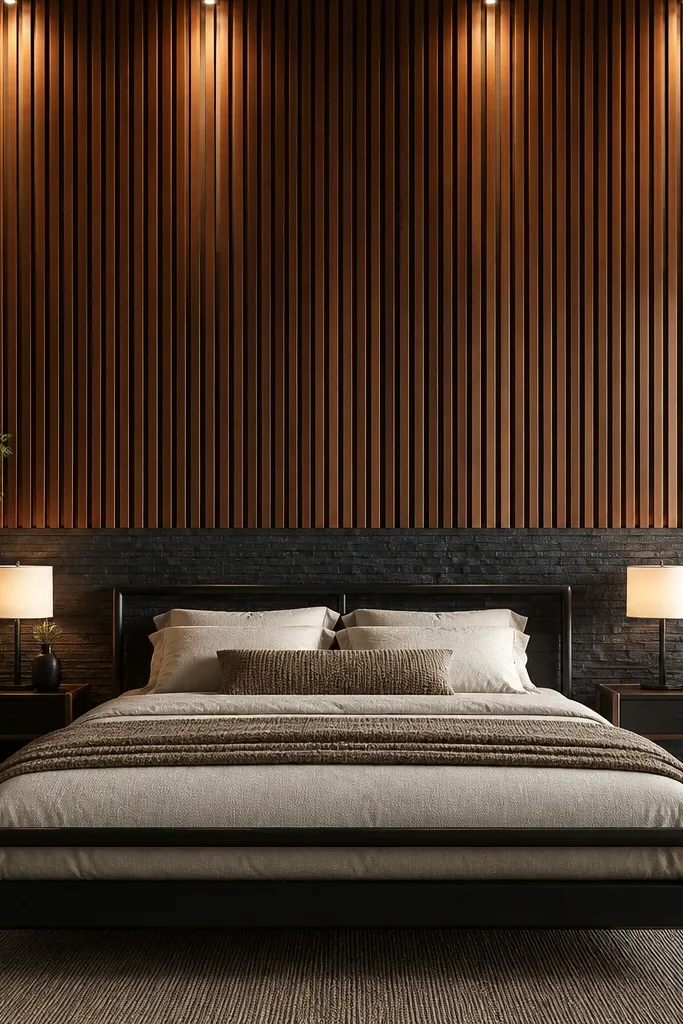
Start by painting the wall slate first and letting it cure. Then install vertical slats — 1x2 or similar strip size — with consistent spacing of about 1-1.5 inches between slats. Stain or finish the slats before installation if you can, so the color is even. Finally, add two warm bedside lamps and keep bedding light to let the slats and slate do the work. Materials typically run $300-1,200 depending on how much wall coverage you choose.
Vertical wood slats over a dark slate base give you high-end rhythm. The slats add warmth and movement, while the slate keeps the drama. This look is great for bedrooms where you want height — it visually pulls the wall upward and frames the bed like a gallery. Use a dark slate paint behind the slats, then stain the slats in a medium tone like walnut or smoked oak so the contrast stays refined. It’s especially photogenic when your lamps cast side light across the slats, creating shadow lines.
Watch outWide, uneven slats — they look more rustic than designer.
Pro tipUse a level and spacers while installing slats. Tiny spacing mistakes show immediately on a dark background.
12. Ink Black With Gold Mirror Triptych Placement
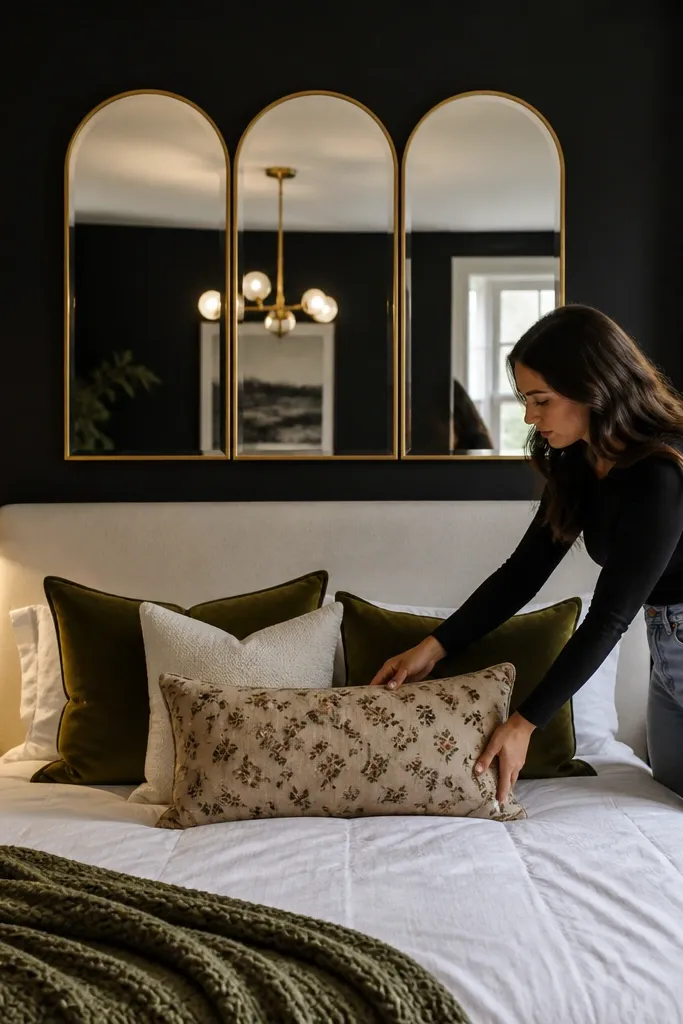
First, paint the wall ink black and keep the sheen eggshell or satin so it looks smooth, not chalky. Then hang the mirror triptych: center the middle mirror over the bed centerline, and space the left and right mirrors evenly so the overall width matches the headboard width plus a few inches. Finally, style the nightstands with one reflective element each like a brass tray or a ceramic in a warm glaze. Mirror triptychs vary widely, but plan roughly $200-900 for mirrors plus paint.
If you want the “dramatic makeover” look without changing the room layout, go with ink black and mirrors. The wall is the mood, and the mirrors add brightness and depth. Choose three gold mirrors in a matching finish — either arched or simple rectangles — and place them directly above the bed so the composition looks intentional. The gold reflects light and stops the black wall from feeling heavy. This works best when your bedroom already has warm lighting and neutral bedding, because mirrors will amplify what you already have.
Watch outHanging mirrors too high — if they sit near the ceiling, the wall looks top-heavy.
Pro tipWipe mirrors clean before styling. Dark walls make smudges show up fast in photos.