1. Warm Beige Sofa with Teal Rug and Brass Lamp Corners
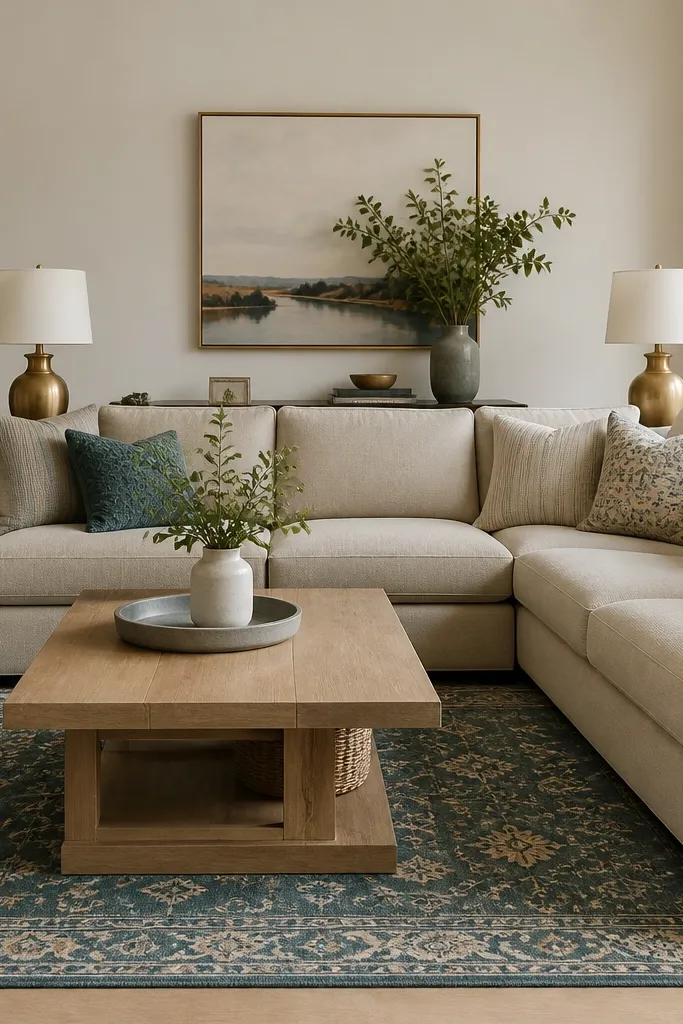
This setup works because teal gives you a strong color anchor against warm beige without looking loud. The brass lamps add a little Indian-home glow, especially in evening light, and they make the sofa look intentional instead of plain. I like a rug with subtle pattern — small motifs or faded geometrics — because it hides dust and makes the room feel lived-in. Keep throws in off-white or oatmeal so they don’t compete with the rug.
Use an L shape sofa in warm beige with a chaise on the right or left. Pair it with a teal rug that’s large enough to sit under the sofa front legs. Add 1 light wood coffee table and a pair of brass lamps with warm bulbs (2700K).
Choose one teal tone from the rug and mirror it in a single cushion cover — not three different teals.
Avoid matching the cushion color to the rug pattern every single time — it looks like a “set” from a catalogue.
2. Charcoal Sofa with Ivory Rug and Black-and-White Cushion Grid
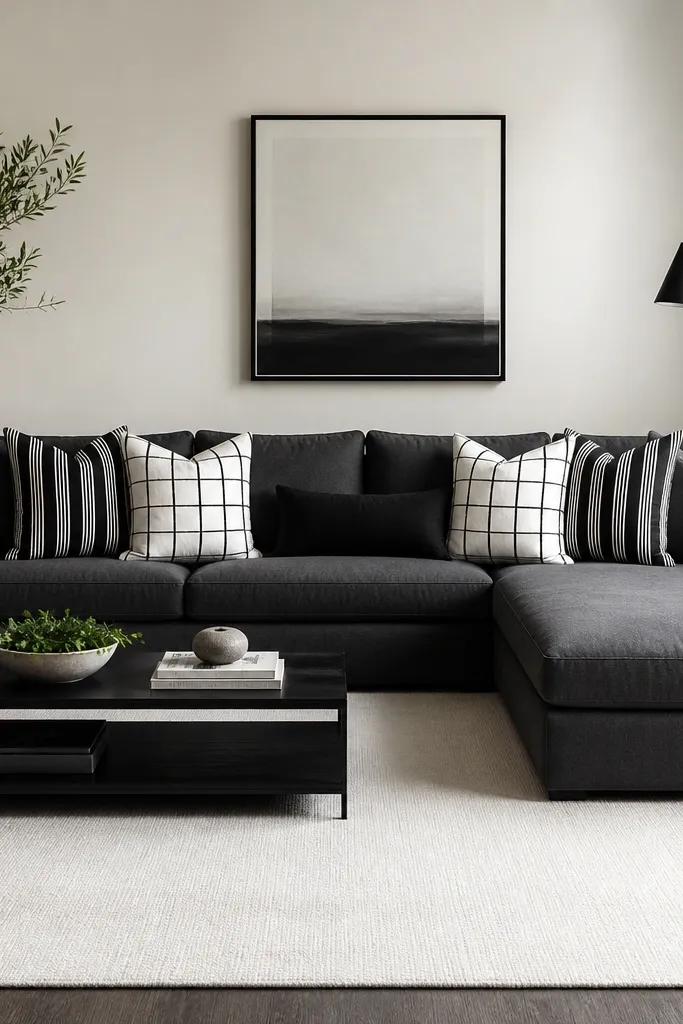
Charcoal needs brightness around it, and an ivory rug does that instantly. The cushion grid gives structure, which is important for L shape sofas because the corner can make the seating look bulky. I use one solid lumbar pillow to break the pattern rhythm. The black-and-white mix also photographs well, which matters if you like sharing room pics.
Pro tipUse a 45x45 cm cushion size for the main squares and 30x50 cm for the lumbar. The proportions make the grid look designed.
Pick a rug in ivory with a low pile so it doesn’t look shaggy next to a dark sofa. Arrange cushions on the long side first, then place the corner accent lumbar where the chaise meets the straight back. Keep throws in white or very light grey.
Watch outAvoid adding too many patterns — two is enough: one rug pattern (or none) and one cushion pattern.
3. Olive Green Sofa with Terracotta Clay Accents
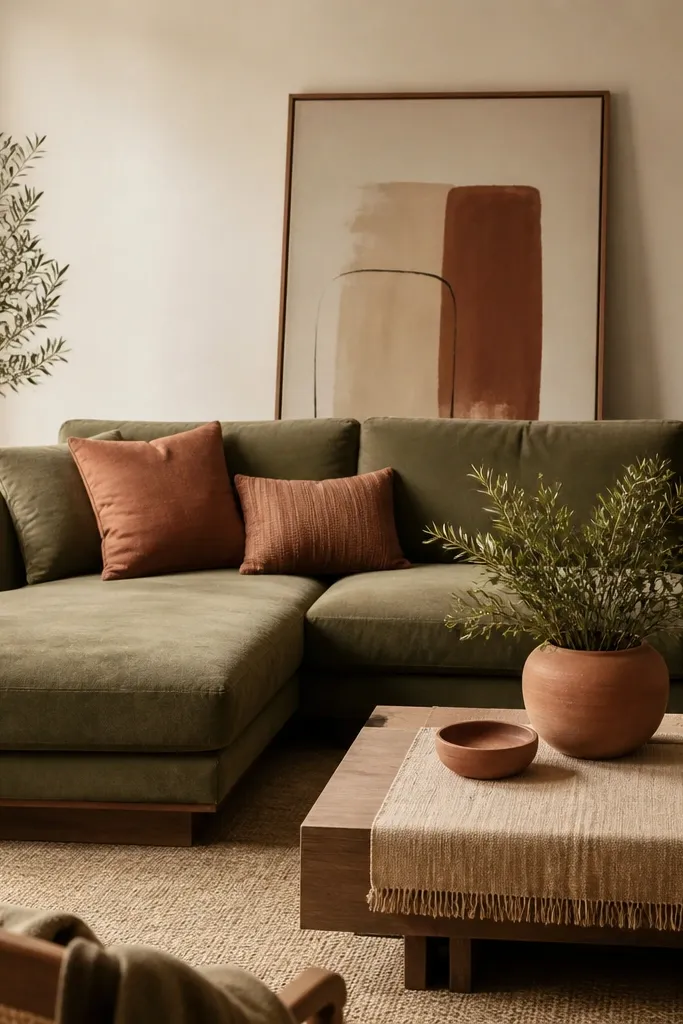
Olive + terracotta looks grounded and Indian because the tones feel natural. Terracotta on cushions and planters warms up the room, especially if your walls are cream or warm white. I like an olive sofa with matte upholstery because terracotta looks richer against it. Add one large art piece to visually fill the wall space above the sofa back.
Pro tipMatch terracotta to your planter color, not to your wall paint. It keeps the theme cohesive without making the room look painted over.
Choose terracotta cushion covers in cotton-linen blend for a lived-in feel. Add a beige or sand throw that matches your wall tone. Keep the coffee table clutter low: one tray, two planters, and one book or candle.
Watch outAvoid bright orange terracotta — it looks harsh with olive and can make the sofa look dirty.
4. Light Grey Sofa with Mustard Curtains and Indigo Textiles
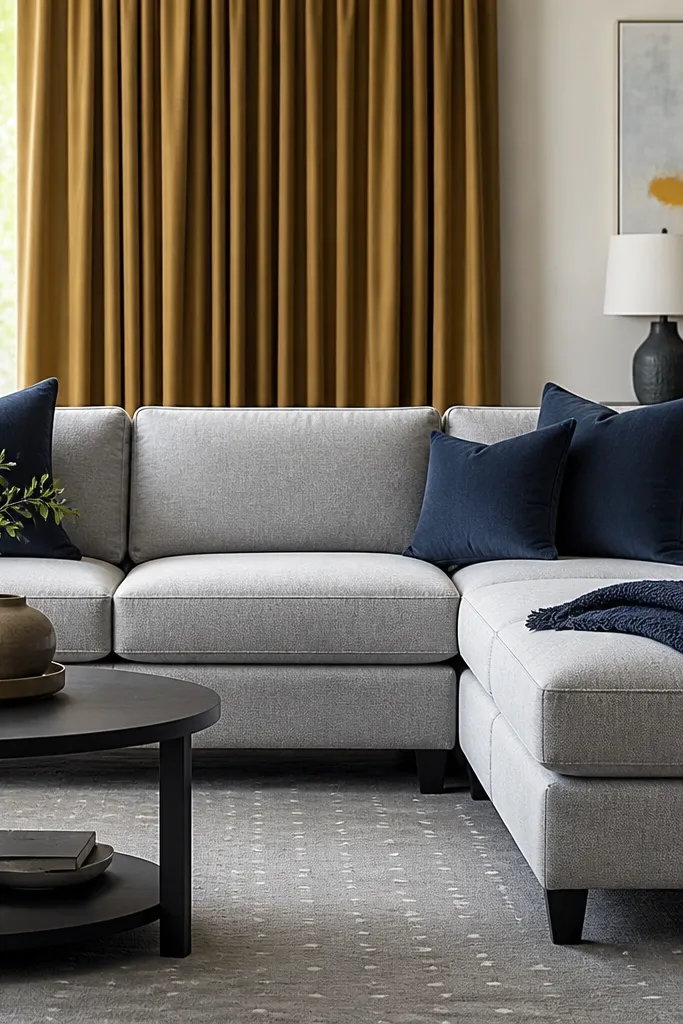
This is a smart way to bring Indian color drama without overwhelming a neutral sofa. Mustard curtains add warmth and frame the seating area, while indigo textiles add depth. The grey rug keeps everything from looking too busy. I like indigo with a slightly faded look because it softens the contrast.
Pro tipIf your curtains are mustard, keep the cushion mustard-free and let indigo do the work for accents.
Use 6-7 cushions maximum: two indigo patterned, two solid indigo, two neutrals (cream/grey), and one small accent. Place the indigo throw on the chaise arm, not across the entire sofa. For walls, use warm white or light greige.
Watch outAvoid using bright yellow cushions when your curtains are mustard — the room gets loud in the same spot.
5. Patterned Sofa Base with Solid Back Cushions and Woven Jute Rug
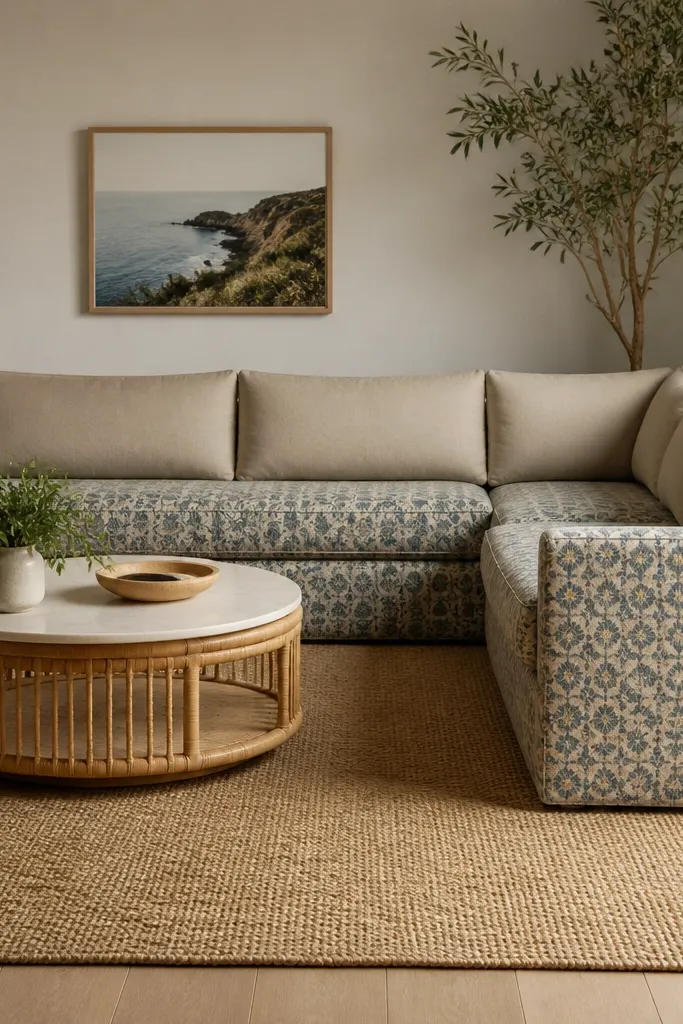
When the sofa fabric already has pattern, you have to calm the back cushions. A solid cushion set makes the eye rest and keeps the room from looking noisy. Jute rugs look great with Indian-style cane or rattan furniture and they hide minor marks, which helps in homes with kids or pets. This combo also makes the sofa look more expensive because textures do the heavy lifting.
Pick a jute rug that’s large enough to go under the front legs by 6 inches. Use 45x45 cm solid cushions in beige or oat. Add one small textured throw in cotton or knit. If you have a patterned sofa, avoid patterned curtains on the same wall.
Use a cane/rattan coffee table to echo the jute — same material family, different texture weight.
Avoid mixing a patterned sofa with a patterned rug. Choose one pattern source.
6. Navy Sofa with Tan Leather Pouf and Round Mirror Wall
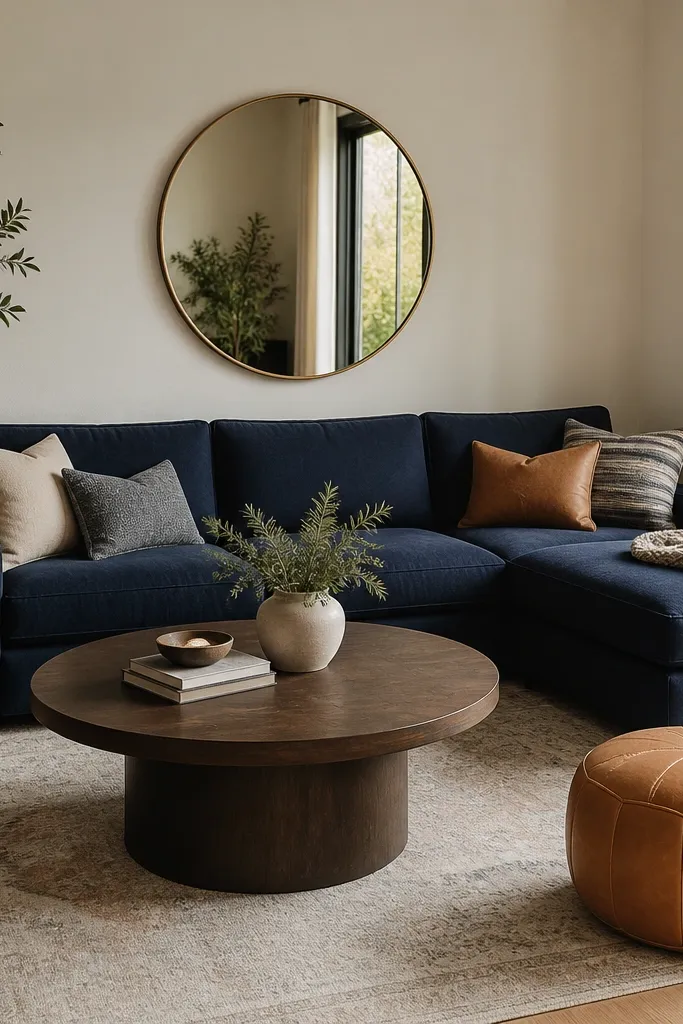
Navy is dramatic but classy when you add tan leather and warm woods. The round mirror bounces light and makes the corner feel less heavy. A tan pouf is a practical Indian living room move — it gives extra seating without adding another chair that blocks the walkway. This style also looks good in flats where space is tight.
Pro tipHang the mirror so its center sits about 58-60 inches from the floor for a clean eye-line behind the sofa.
Keep the coffee table round and low, around 16-17 inches high. Place the pouf where the chaise creates a natural gap, usually 1-2 feet from the coffee table. Choose mirror diameter around 24-28 inches for most medium living rooms.
Watch outAvoid oversized rectangular mirrors — they look top-heavy over an L shape sofa.
7. Crisp White Sofa with Blue Striped Runner and Sunburst Clocks
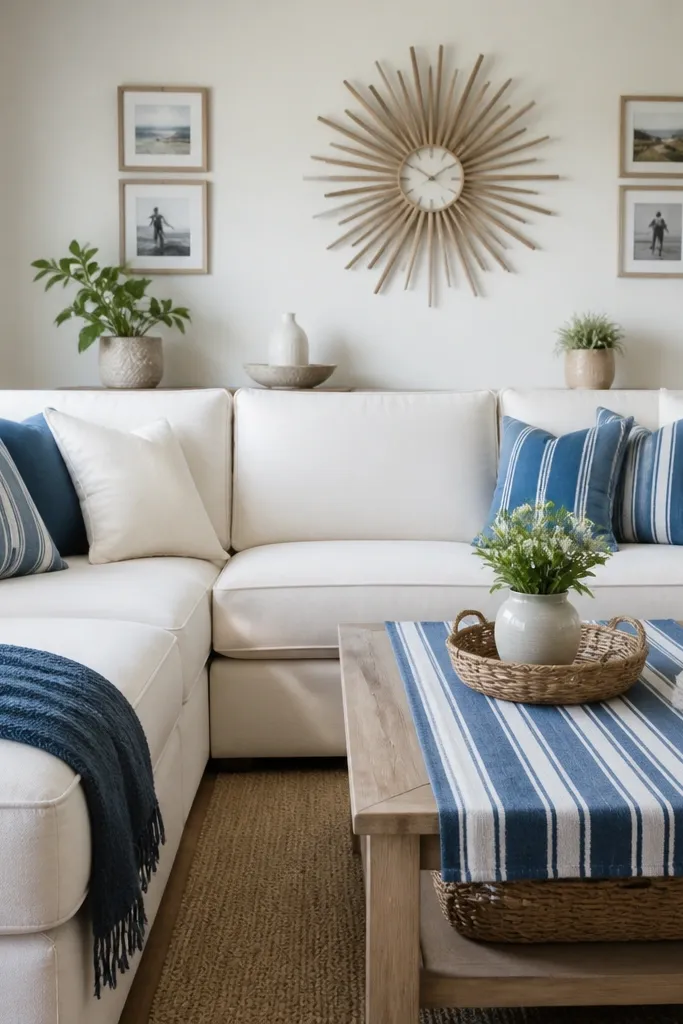
White sofas look bright in Indian homes, but they need color structure. Blue stripes give you that clean, organized look, and a runner on the coffee table ties the stripes together so the room feels styled, not scattered. I like a sunburst clock because it balances the sofa’s straight lines with a radial shape. Keep everything else simple so the blue stripes stay the hero.
Use washable cushion covers in cotton for white sofas. Keep the coffee table decor to a runner plus one tray and a small vase. Choose a rug in light grey or off-white to prevent the room from feeling too stark.
If you have pets or kids, treat the white fabric with a stain repellent and keep a backup cushion cover set.
Avoid mixing three different blues (navy, cobalt, baby blue). Pick one stripe tone and repeat it.
8. Sand Sofa with Black Iron Side Table and Sheer Curtain Stack
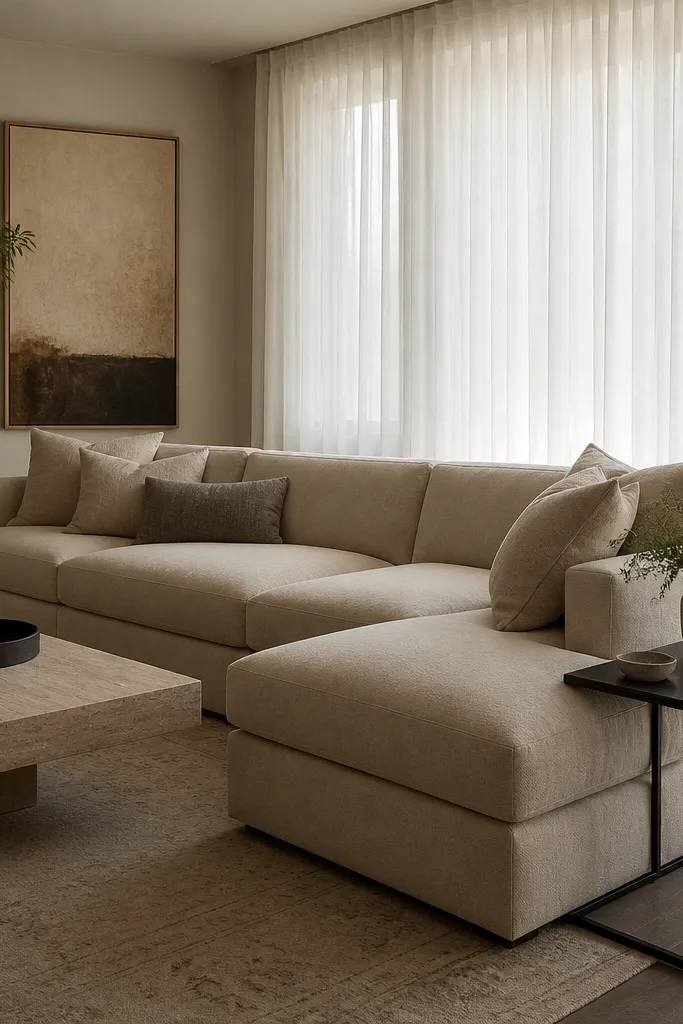
Sand tones need contrast, and black iron does that without making the room feel heavy. Sheers behind the sofa add softness and make the seating area look brighter during the day. The black tray and side table bring a “designed” feeling because they repeat the same finish. This is a great option if your room gets a lot of natural light and you want it to stay airy.
Pick black iron with a matte finish, not glossy. Place a side table on the chaise side so you have a spot for a lamp or water bottle. Use a beige rug with low contrast pattern so it doesn’t fight the sofa fabric.
Match the black in one other place — either the lamp base or the coffee table frame — not everywhere.
Avoid black accessories that are too shiny. Gloss looks cheap next to matte sand upholstery.
9. Rust Sofa with Cream Patchwork Cushions and Brass Tray
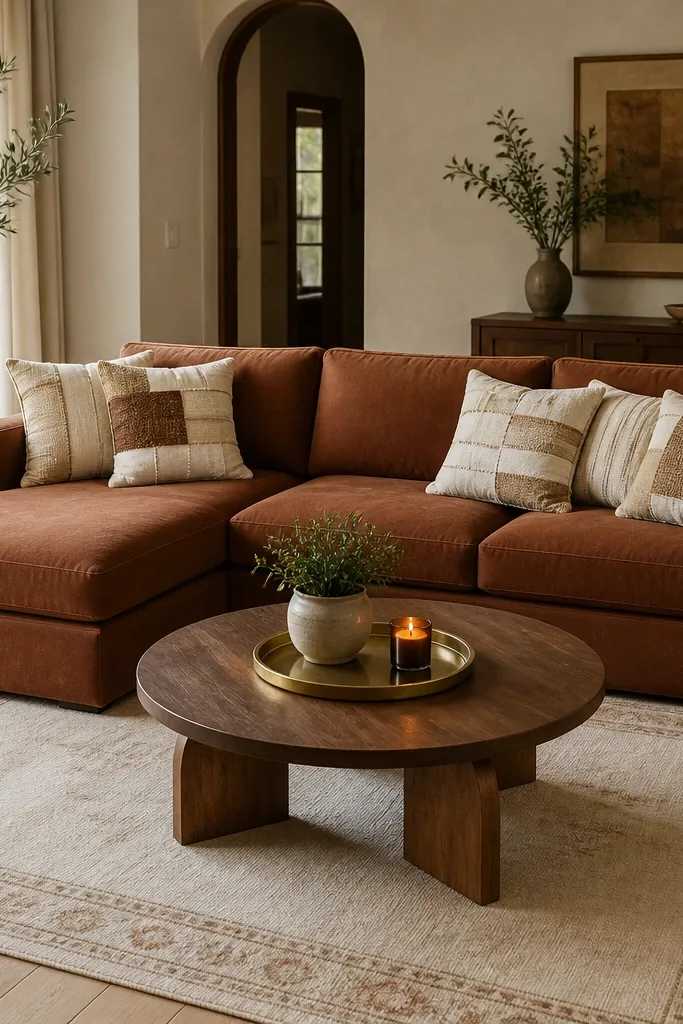
Rust looks best when you keep the rest of the palette creamy. Cream patchwork cushions add handmade texture without turning the room into a themed set. A brass tray on the coffee table makes the decor feel more “gathered” and it also hides small messes like remote clutter. This look works especially well in rooms with wood floors or warm marble.
Pro tipUse a 1:2 cushion size rule: if your main cushion is 45x45 cm, your accent patchwork should be around 30x50 cm.
Choose patchwork cushions with small sections, not huge blocks, so they don’t overpower the sofa. Keep the rug in cream with a border so it frames the seating area. Add one brass tray and one candle — keep it to two items.
Watch outAvoid pairing rust with too much dark brown wood. The room becomes heavy and dull.
10. Deep Teal Sofa with Pink Rose Cushions and Light Grey Rug
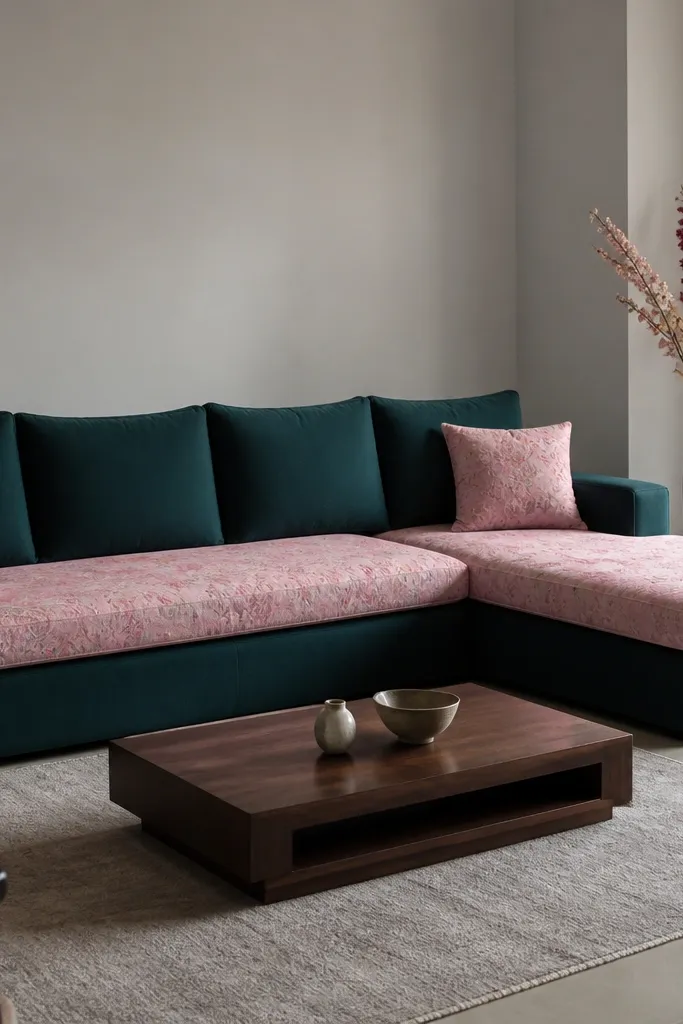
This combo is bold, but it works because the rug and wall stay quiet. Deep teal gives you the color weight, and pink rose cushions bring softness and a feminine contrast. I like rose prints that are muted, not bright cartoon flowers — they blend better with Indian interior lighting. A tall floor vase near the corner makes the chaise side feel balanced.
Pro tipPick one pink tone from the cushions and use it once on a wall frame or a small planter.
Use a tall vase with dried stems in beige or pale green. Place it on the wall side near the sofa corner, not in the middle of the seating. Keep cushion count to 5-6 so the rose pattern stays readable.
Watch outAvoid bright fuchsia with teal. It looks harsh in indoor lighting.
11. Taupe Sofa with Moroccan Tile Rug and Minimal Cushion Palette
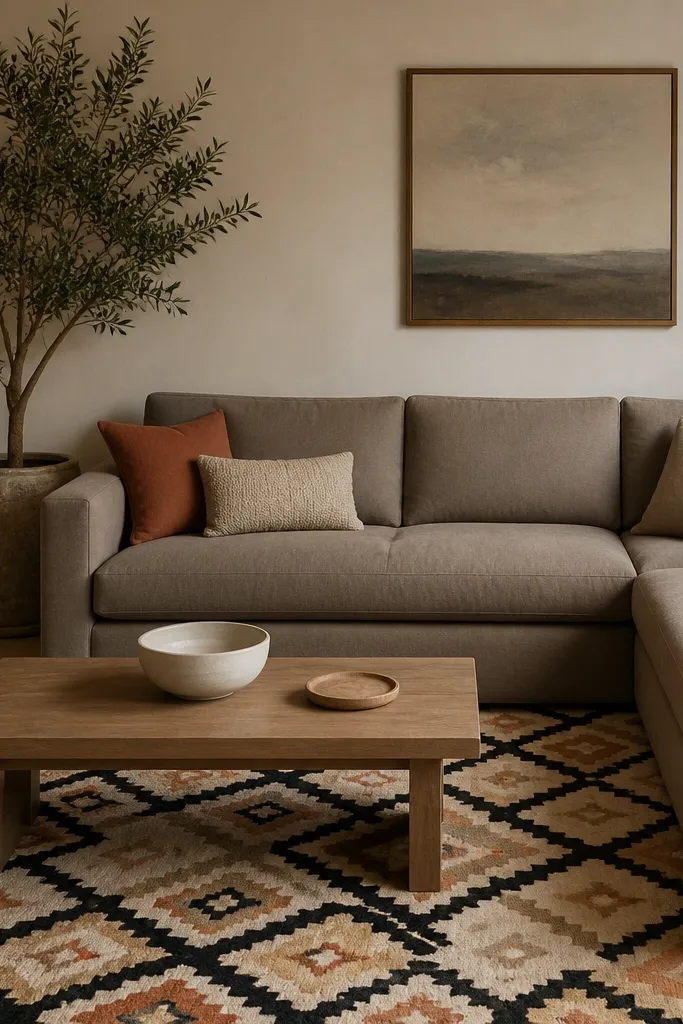
If your rug already has a Moroccan tile pattern, keep cushions minimal. Taupe is the perfect base because it doesn’t fight the rug colors. This look feels curated without adding more objects. The coffee table stays clean so your eye goes to the rug pattern, which is the room’s main visual anchor.
Choose a rug that covers most of the seating zone and has a border that lines up with the sofa front. Use two taupe cushions and one black-and-terracotta accent cushion. Add a solid throw in light beige.
Set your cushion spacing: leave about 2 inches between cushions on the long side so the pattern doesn’t look squished.
Avoid adding extra patterned cushions when the rug is already patterned.
12. Cream Sofa with Blush Cushions and a Low Wooden Coffee Table
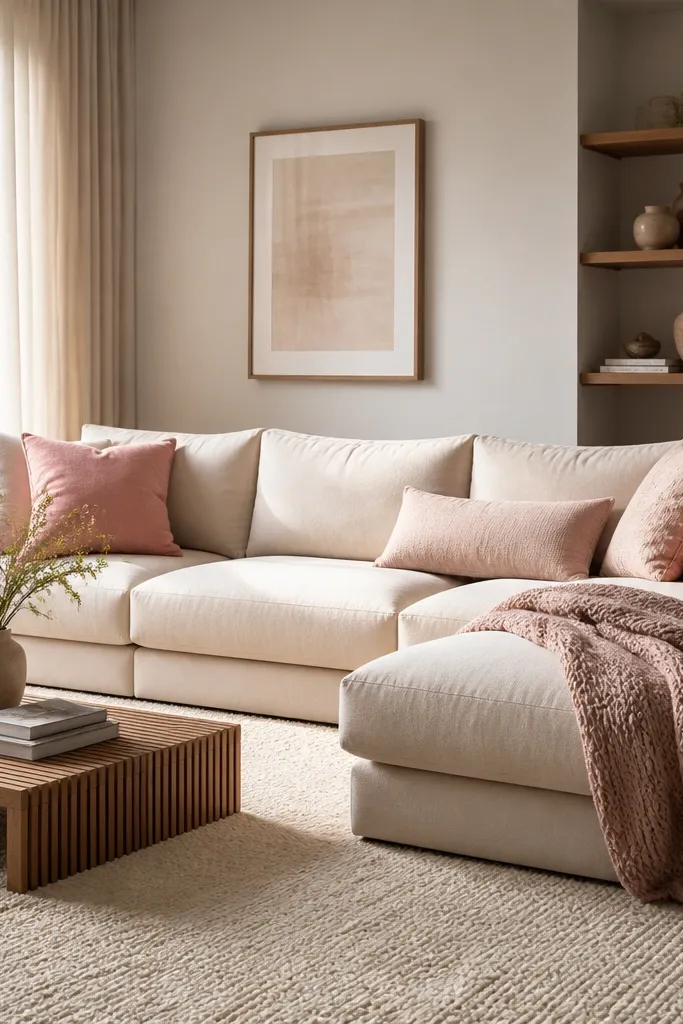
Cream + blush feels calm and works well in Indian homes where you want a soft look without going too white. The low wooden coffee table makes the whole seating area feel grounded and relaxed. Knit textures on the throw add comfort and hide minor stains better than smooth satin-like fabrics. This is a good pick for family rooms where you want it to look inviting all day, not just for guests.
Keep your coffee table close to the sofa height. If your sofa seat height is around 18-19 inches, aim for a coffee table around 16-17 inches. Use 4 blush cushions and 2 neutrals. Add one small wooden tray for keys or remotes.
Use a textured rug — cotton dhurrie or low-pile jute — so cream doesn’t look flat.
Avoid glossy blush pillows. They catch light and look plastic in daylight.