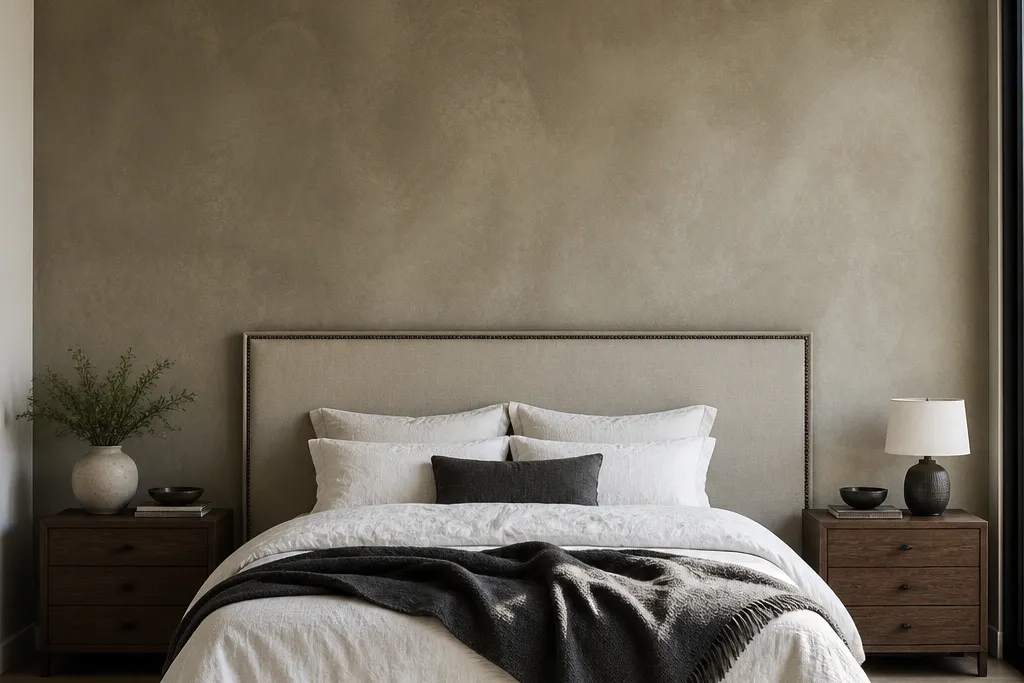
1. Matte plaster in warm greige with a crisp headboard outline
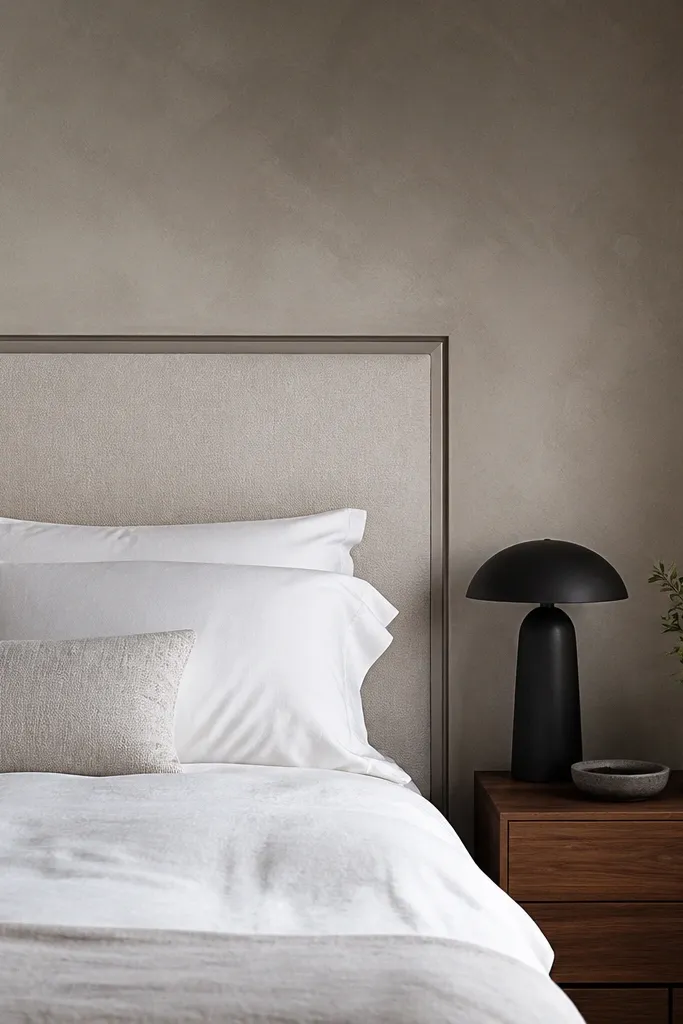
This look works because matte plaster soaks up light and makes the wall feel expensive without looking shiny. Warm greige keeps the bedroom from going cold, and the crisp outline gives the accent a modern, intentional frame that matches how headboards naturally pull focus. The best version is one solid tone with a very subtle texture, not heavy chunks of stucco. It’s ideal for bedrooms with neutral bedding, light wood floors, and window light that changes through the day.
Pro tipKeep your bedding in one to two neutrals so the plaster texture stays the hero.
Step 1: Paint-test two warm greiges on the wall where the headboard will sit, then choose the one that looks calm in both morning and evening light. Step 2: Apply a skim-coat or plaster finish product over the selected area, spreading it evenly with a wide trowel so the texture stays subtle. Step 3: Use painter’s tape to mask a clean rectangle around the headboard zone, then remove the tape while the surface is still workable for sharp edges. Budget-wise, plan for about $150-350 for materials depending on wall size and whether you skim-coat.
Watch outDon’t pick a gray that flashes blue — it makes the wall feel harsh at night.
2. White oak vertical slat wall with a floating ledge effect
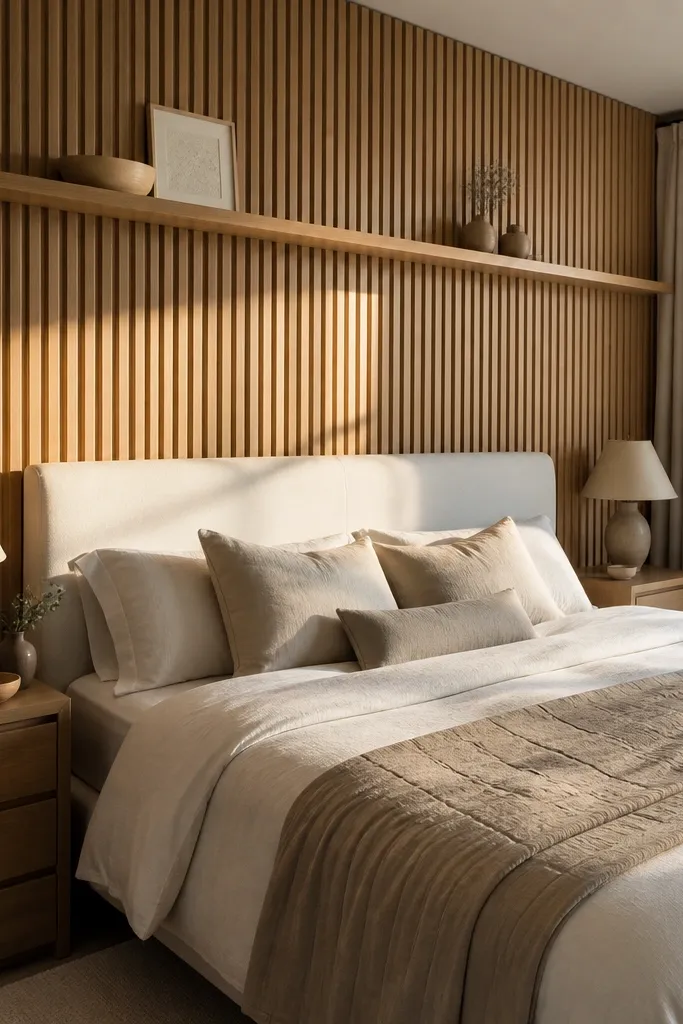
Vertical slats add height and a clean rhythm, which is why they work so well in modern bedrooms. White oak tones keep the look warm and natural, and the consistent spacing makes it feel architectural rather than “DIY-ish.” A shallow ledge line or built-in shelf effect near the top adds a subtle horizontal break so the slats don’t feel too tall. This is a strong choice for rooms with low-to-average ceilings, because the vertical lines pull the eye up.
Pro tipUse one matte topcoat across every piece so the slats don’t look patchy under angled light.
Step 1: Measure the headboard width and set your slat run to match it, then add 2-4 inches of extra coverage on each side. Step 2: Install slats over a flat backing or directly to studs if your wall is straight, keeping spacing consistent with spacers; aim for 2-3 inches wide slats with 1/4-1/2 inch gaps. Step 3: Stain or topcoat in a clear matte finish so the color stays light and modern. Costs run about $300-900 depending on slat material and whether you need a backing system.
Watch outDon’t vary slat widths — it kills the sleek, engineered look.
3. Charcoal two-tone wall with a lighter center panel
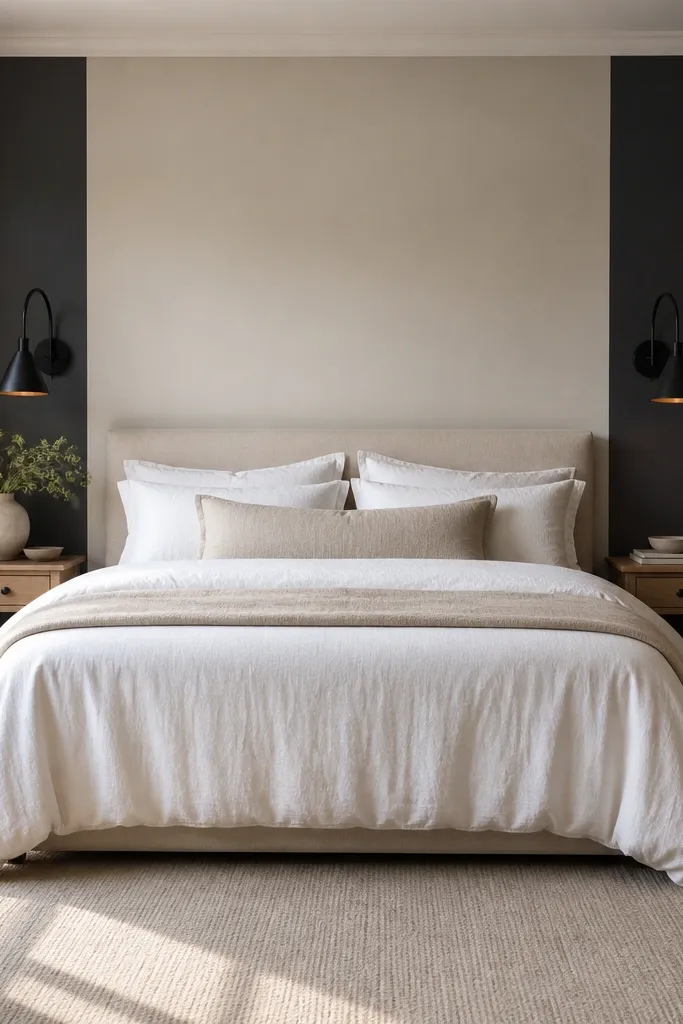
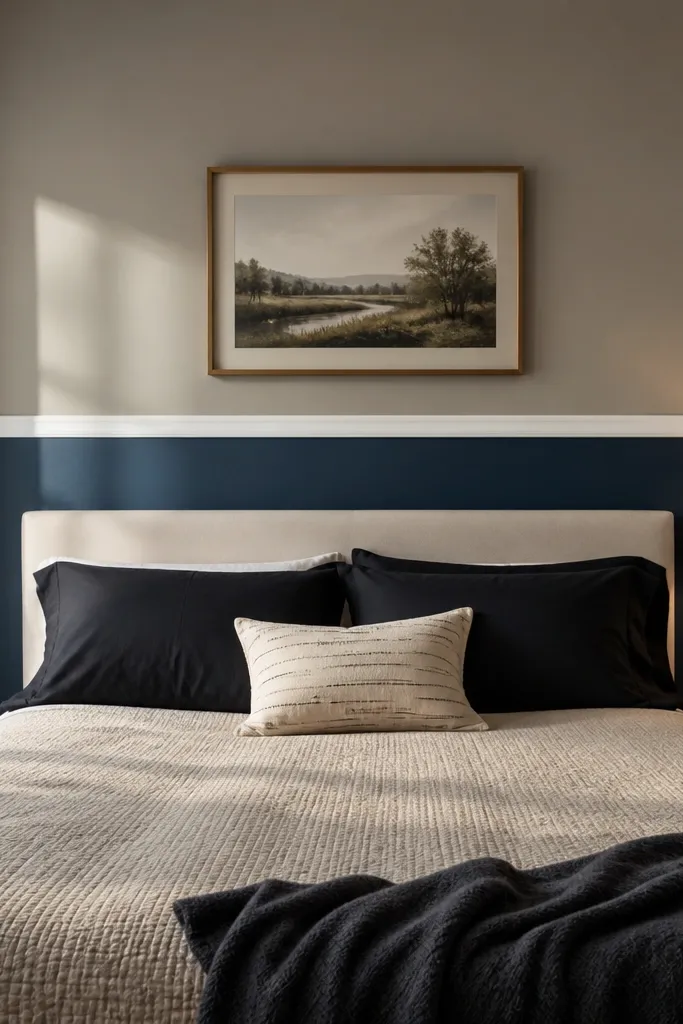
Two-tone walls look modern when the contrast is controlled. Charcoal on the outside creates drama and hides wall imperfections, while a lighter center panel behind the headboard keeps the room from feeling cave-like. The key is proportion: the center panel should be wide enough to read as a main feature, not a narrow stripe. This works especially well if your bedding is white, cream, or light gray and you want a hotel-like focus behind the bed.
Step 1: Tape off a center rectangle that matches the headboard width, then set its height from about 6 inches above the mattress line to 4-6 inches above the headboard top. Step 2: Paint the outer area charcoal first, then remove tape, let it cure, and apply the lighter panel color with new tape for clean edges. Step 3: Use a satin or eggshell finish for both tones so they wipe clean but don’t look glossy. Expect $80-250 for paint and supplies for a typical bedroom wall.
Choose a lighter panel color that’s one step warmer than you think; it keeps charcoal from feeling too cold.
Don’t use bright white for the lighter panel — it can look harsh against charcoal.
4. Large-format stone-look porcelain tile in a single vertical grid
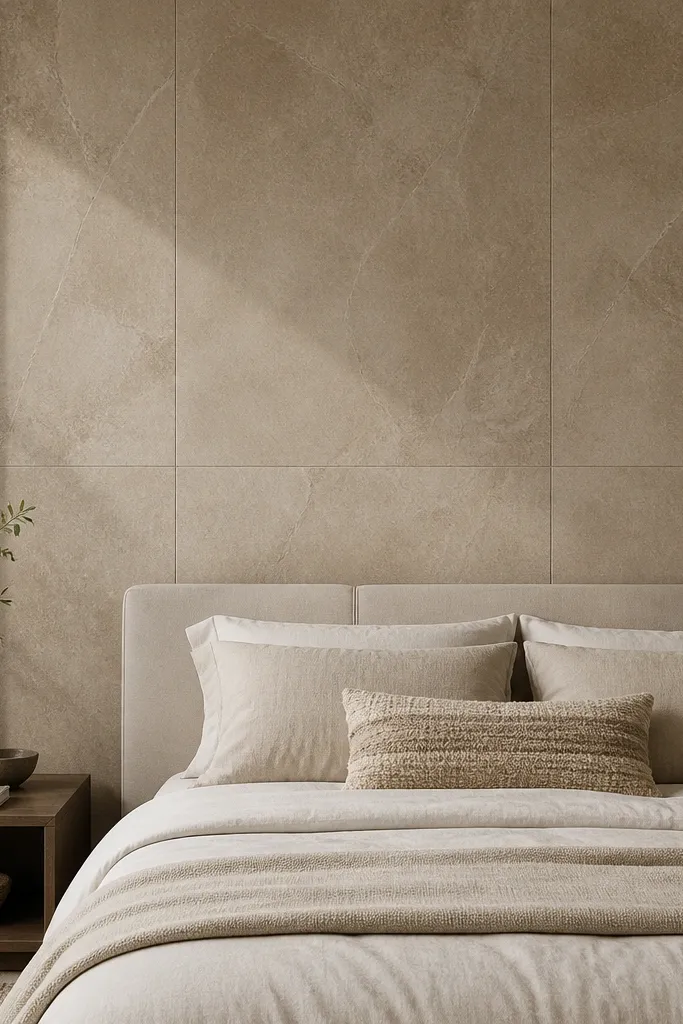
Stone-look tile gives you instant texture without the mess of real stone. A single vertical grid is the modern trick: it keeps lines straight and prevents the wall from looking busy. Choose large-format tiles (24x48 or similar) and use a grout color close to the tile so the surface reads sleek, not patchy. This is perfect for bedrooms where you want a durable accent that stands up to dust and cleaning, especially if you have pets or lots of airflow.
Step 1: Find tiles with a consistent veining direction and plan a layout that centers the grid behind the headboard, so you don’t end up with thin slivers on the sides. Step 2: Use a leveling system or careful spacers to keep grout lines straight; keep the grout narrow, around 1/16-1/8 inch if your tile allows. Step 3: Apply thinset, set tiles, then seal if the product calls for it. Materials for a headboard wall usually land around $400-1,200 depending on tile price and coverage.
Dry-lay two rows first to confirm the tile veining doesn’t break at weird heights.
Don’t pick a tile with random patterning if you want a sleek, modern grid.
5. Blackened steel look paneling with matte paint around it
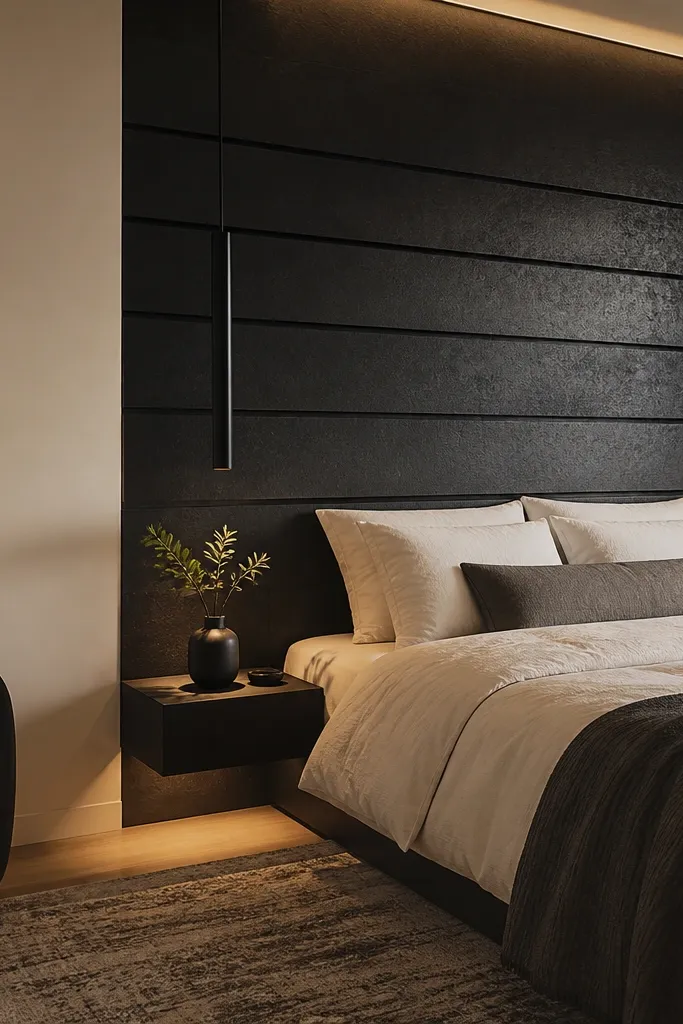
If you want modern with attitude, a blackened steel look panel gives you that dark, industrial edge without turning the room goth. The trick is pairing it with matte paint around it so the room stays soft and not reflective. The panel can be metal-look slats, a textured wall panel system, or a lacquered finish with very low gloss. This works best with warm woods, black metal bed frames, and crisp white bedding so the contrast feels intentional.
Pro tipAdd a black bedside lamp or frame element so the wall reads like part of a set, not a standalone statement.
Step 1: Choose a panel system sized for your headboard width; measure the wall area and buy panels that minimize cutting. Step 2: Paint the surrounding wall first in a warm off-white or light gray matte, then install the black panel after it dries and cures. Step 3: Use a level and spacers so the panel edges line up cleanly with the headboard zone, then caulk the perimeter for a seamless look. Budget is usually $250-700 for panels plus paint.
Watch outDon’t use glossy black paint nearby — it makes the room feel harsh and highlights wall flaws.
6. Ribbed plaster wall with horizontal bands at headboard height
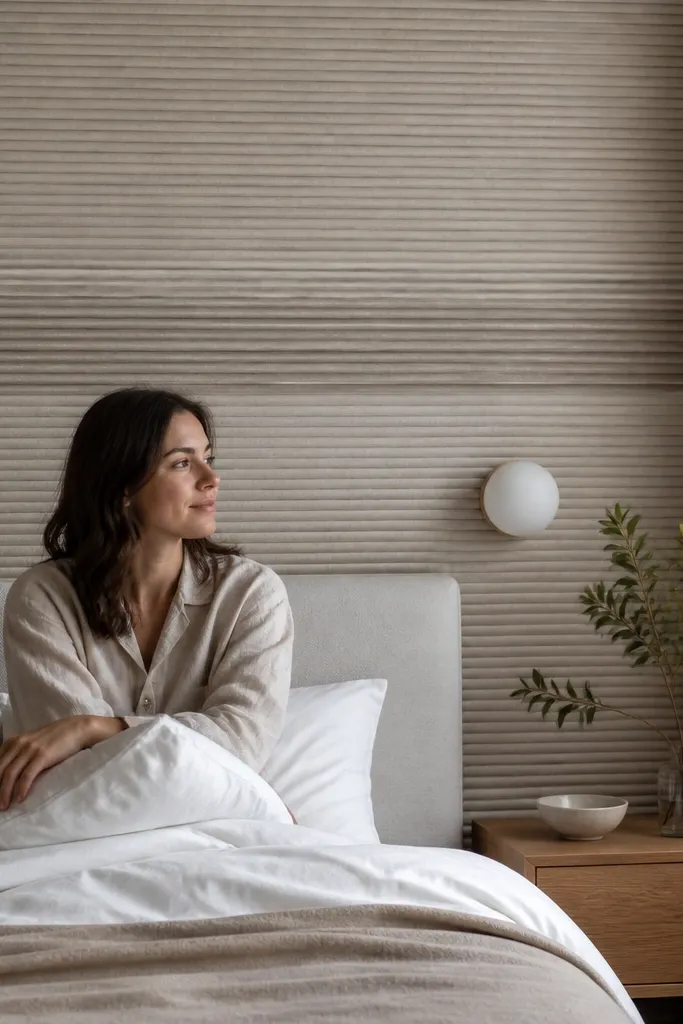
Ribbed plaster adds modern texture without loud color. Horizontal bands keep the geometry grounded and visually calm, especially when the rest of the room is minimal. Keep the ribs shallow and the finish matte so it reads like a single surface, not like 3D wallpaper. This is a great option for bedrooms that already have strong furniture shapes, because the texture adds depth while staying neutral.
Pro tipUse a small foam roller for the final coat; it keeps the ribs from looking streaky.
Step 1: Mark a horizontal band zone centered on the headboard, then apply primer so the texture material bonds evenly. Step 2: Use a plaster system or ready-made ribbed panel for the accent area, keeping the ribs consistent and not too deep; aim for subtle ridges you can feel but not see as thick lines. Step 3: Paint over with a matte finish in a light warm neutral, then remove any tape borders for clean edges. Expect about $200-600 depending on whether you use a panel system.
Watch outDon’t go glossy — ribbed textures look cheap when they shine.
7. Floor-to-ceiling linen-look wallpaper in a calm sand tone
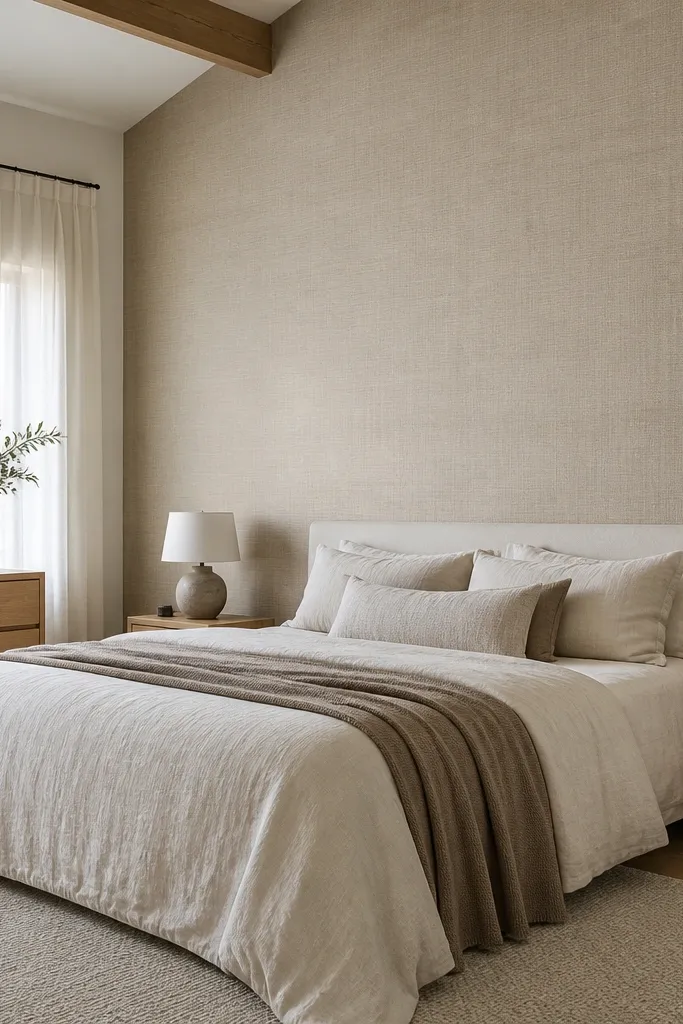
Linen-look wallpaper gives you that modern, soft texture that feels warm even when the room is minimalist. Going floor-to-ceiling makes the bedroom feel taller and more finished, and it’s especially flattering with light wood furniture. Choose a sand tone that matches your bedding undertones so the wall blends without disappearing. This works when you want an accent wall that photographs well in daylight and still looks cozy at night.
Pro tipUse a seam roller on each seam line so the texture stays uniform under raking light.
Step 1: Measure wall height and width, then buy rolls that match your pattern repeat; linen-look textures usually have a small or no-repeat layout. Step 2: Prep the wall by smoothing any bumps, then apply wallpaper paste or use peel-and-stick if the wall is very clean and flat. Step 3: Install plumb first, then trim edges carefully around outlets and baseboards. Plan for $150-450 for wallpaper and tools.
Watch outDon’t wallpaper over uneven paint — the ridges will show through.
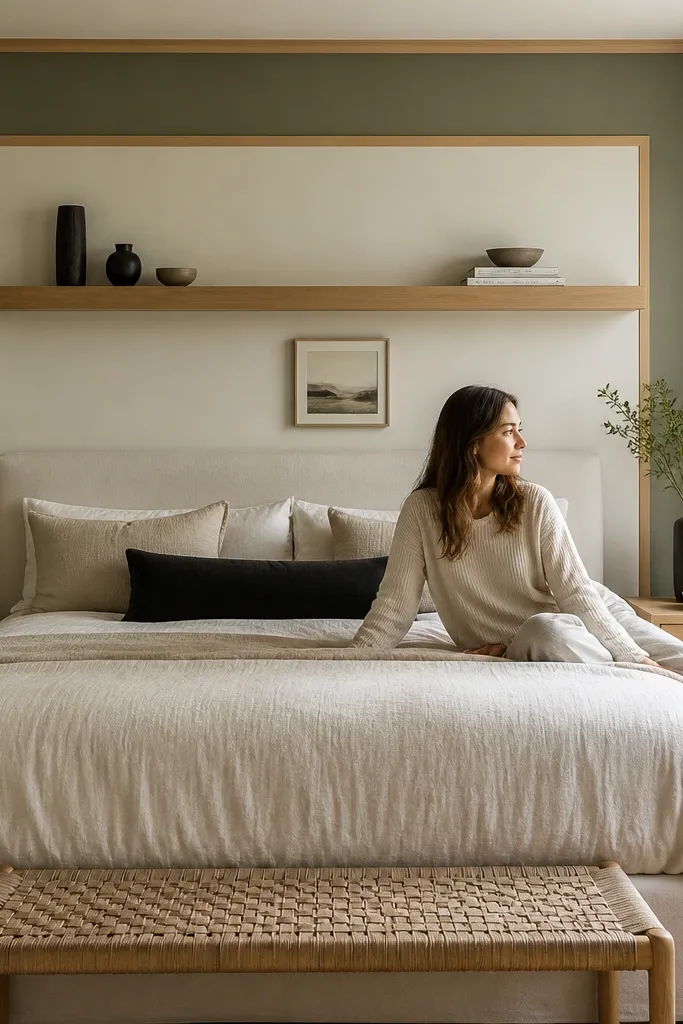
8. Monochrome sage paint with a vertical shadow-gap panel frame
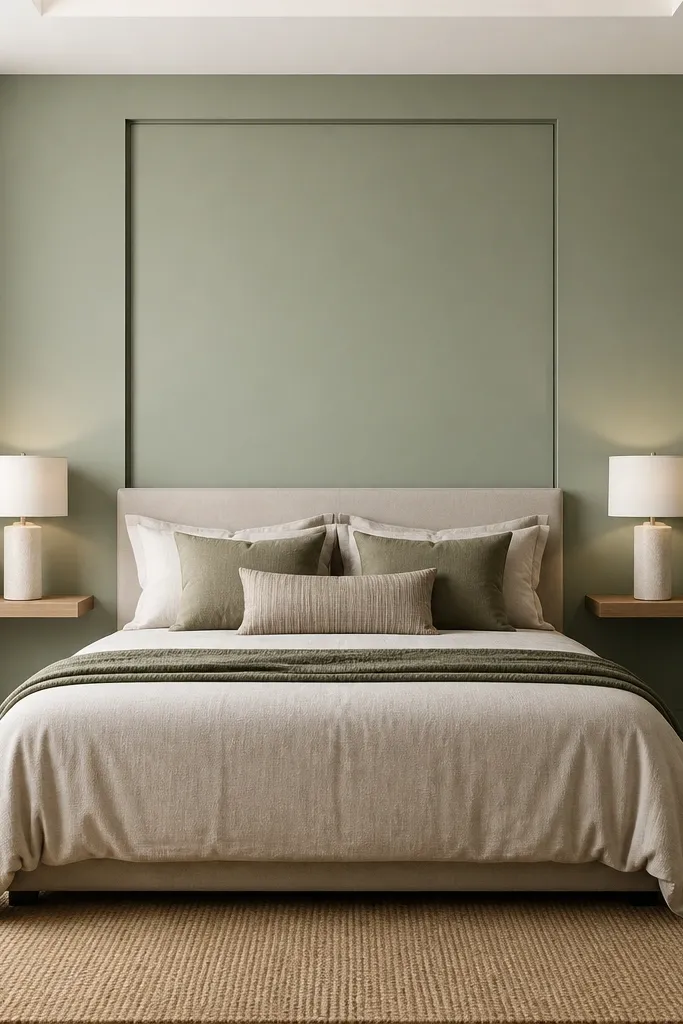
This is modern because the wall stays monochrome but gets depth from a shadow-gap frame. The inset outline makes the accent feel custom, and sage gives a calm color that doesn’t feel trendy for one season only. The shadow gap also helps hide minor wall unevenness because the frame creates a crisp boundary. It’s a great pick if you want color on the wall but still want the room to feel clean and airy.
Step 1: Pick a sage paint and test it on a large sheet taped to the wall overnight to see how it reads under your bedroom lighting. Step 2: Install thin MDF or wood trim strips to create an inset rectangle or vertical bars, leaving a small gap so light shows in the recess. Step 3: Paint the entire wall sage, then paint the trim matte and keep the gap clean by masking lightly. Materials usually cost $120-350 plus paint.
Keep your frame proportions slim: about 1-2 inches wide trim looks modern; thick trim looks traditional.
Don’t use glossy paint on the frame — it reflects and kills the shadow-gap effect.
9. 3D geometric panel wall in matte off-white with black accents
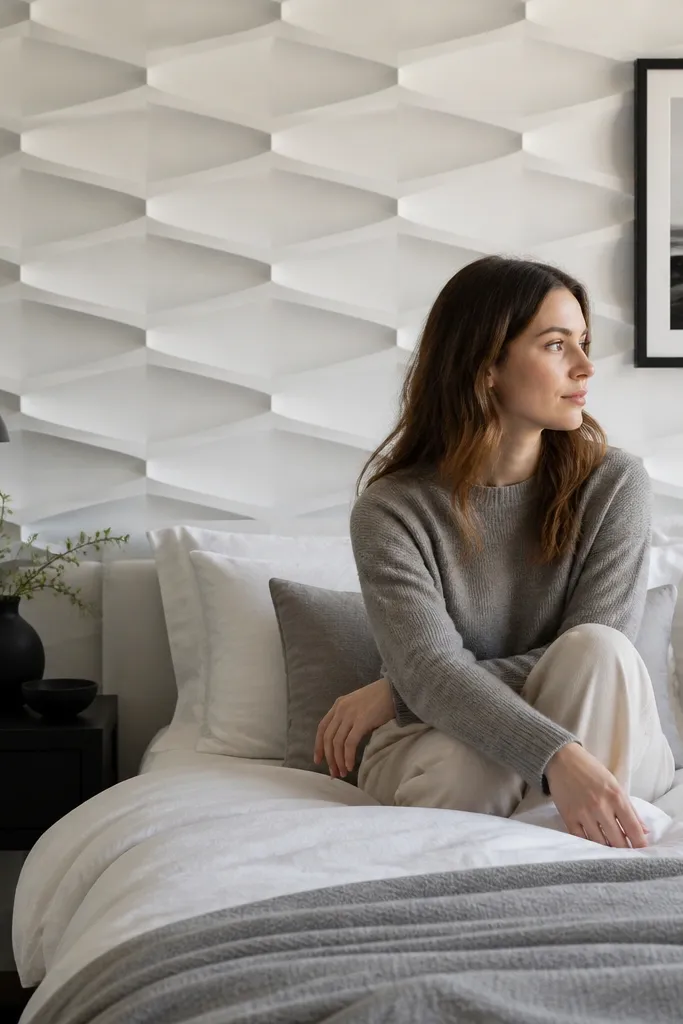
3D geometric panels look sleek when the color is restrained. A matte off-white keeps the geometry from feeling busy, and black accents in bedding or frames add contrast without adding more patterns. Choose panels with a repeating wave or hex-like texture, but keep the depth shallow so it reads as sculptural texture, not chunky wall art. This is a strong option for bedrooms that need visual interest but have simple furniture and plain bedding.
Pro tipUse directional light in your design — a wall sconce near the panels makes the texture pop in photos.
Step 1: Measure the headboard zone and buy panels that cover it with minimal cutting; plan for a clean center alignment. Step 2: Install panels over a flat surface using adhesive rated for wall panels, starting from the center and working out so the pattern stays symmetrical. Step 3: Paint the panels in a matte off-white after installation, or buy pre-finished panels if you want faster results. Budget is commonly $250-650 depending on panel type.
Watch outDon’t pair high-contrast patterns on bedding with bold 3D texture on the wall.
10. Walnut slat wall with a floating reading ledge
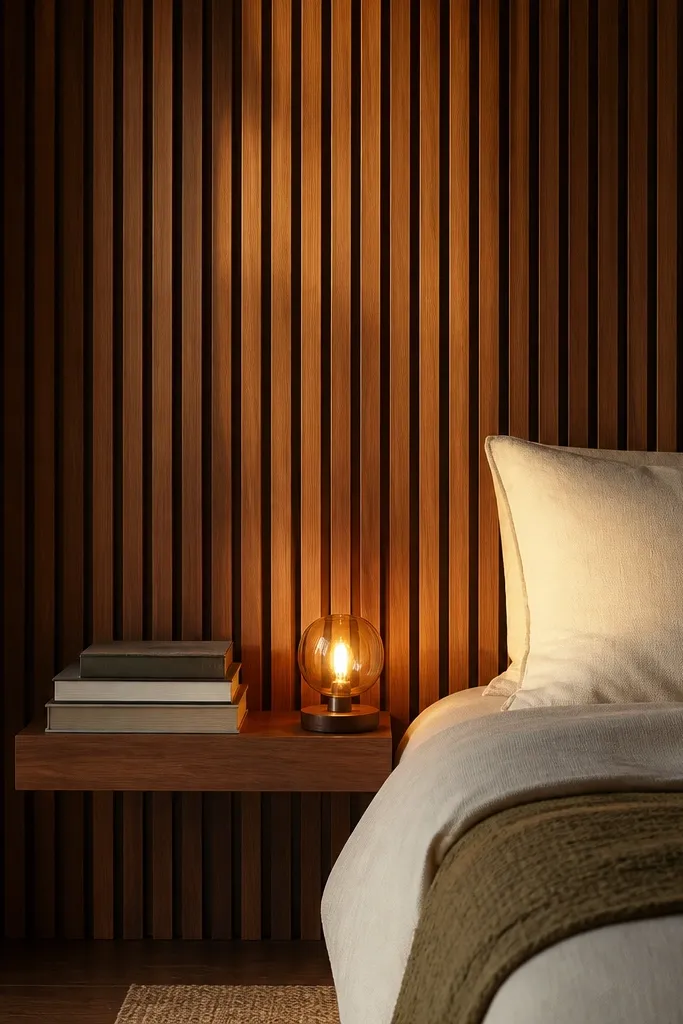
Walnut slats are warm, modern, and they make the bedroom feel grounded. Adding a slim floating ledge turns the accent wall into a functional design element, giving you a place for a small lamp or a book stack without clutter. Keep the slats straight and consistent so it looks like millwork, not random wood sticks. This is ideal for bedrooms with neutral bedding and black or brass lighting where you want the wall to bring the warmth.
Pro tipMatch the ledge finish to the slats — even a slightly different sheen looks off in daylight.
Step 1: Choose slat widths around 2-3 inches and keep spacing tight; mark your grid so the slats align with the headboard edges. Step 2: Mount the slat backing first, then attach slats and finish with a matte or satin walnut stain. Step 3: Install a ledge shelf (about 6-8 inches deep) at headboard height, anchored to studs or a proper mounting rail. Costs typically land around $400-1,200 depending on wood grade and shelf hardware.
Watch outDon’t install ledges that are too deep; bulky shelves make the wall feel heavy.
11. Smoked glass style accent with warm LED edge lighting
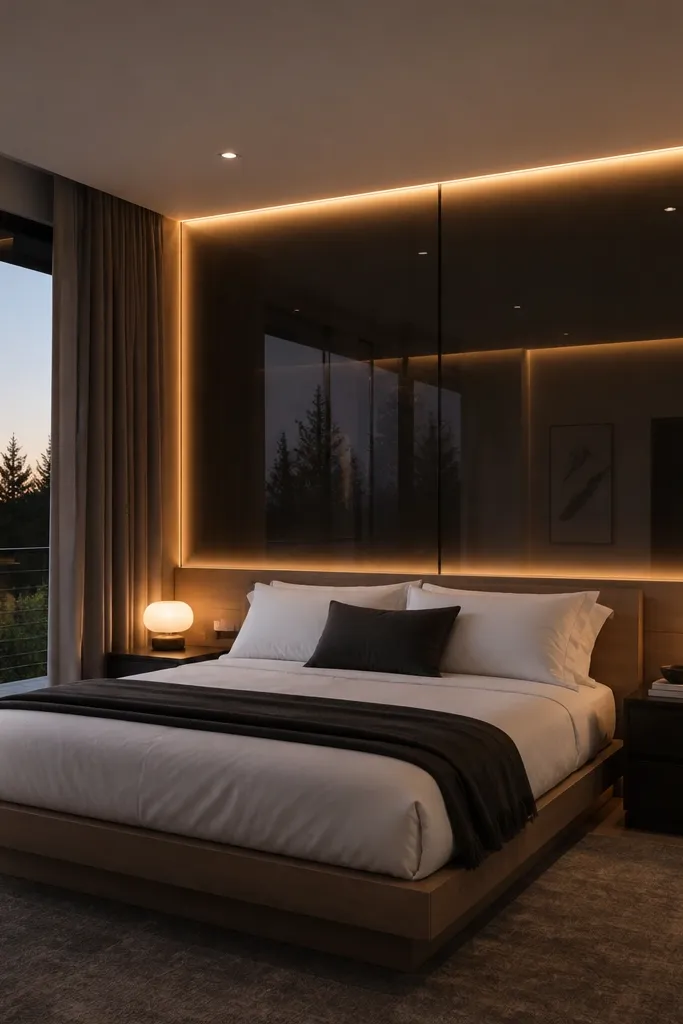
Smoked glass look panels bring a sleek, nightlife vibe while still reading modern in a bedroom. The glow along the edges is what makes it look designed, not random — warm white LEDs hide behind a diffuser so you get a soft halo. This works best with a simple bed frame and clean bedding because the wall is already doing the heavy lifting visually. If your bedroom has low natural light, this can make the space feel higher-end without adding more furniture.
Pro tipKeep the LED color around 2700K warm so the smoked panel looks cozy, not greenish.
Step 1: Pick a smoked panel system sized for the bed width and decide where the light channel will sit; plan for a recess or trim that holds a diffuser. Step 2: Install the panel with mounting rails, then add LED strips with a diffuser channel along the perimeter of the accent area. Step 3: Use a dimmer switch so you can dial the glow down for bedtime. Budget is usually $250-800 depending on panel size and LED kit quality.
Watch outDon’t place bright LEDs directly visible — you want glow, not exposed dots.
12. Cement-look microcement wall with a single tonal band
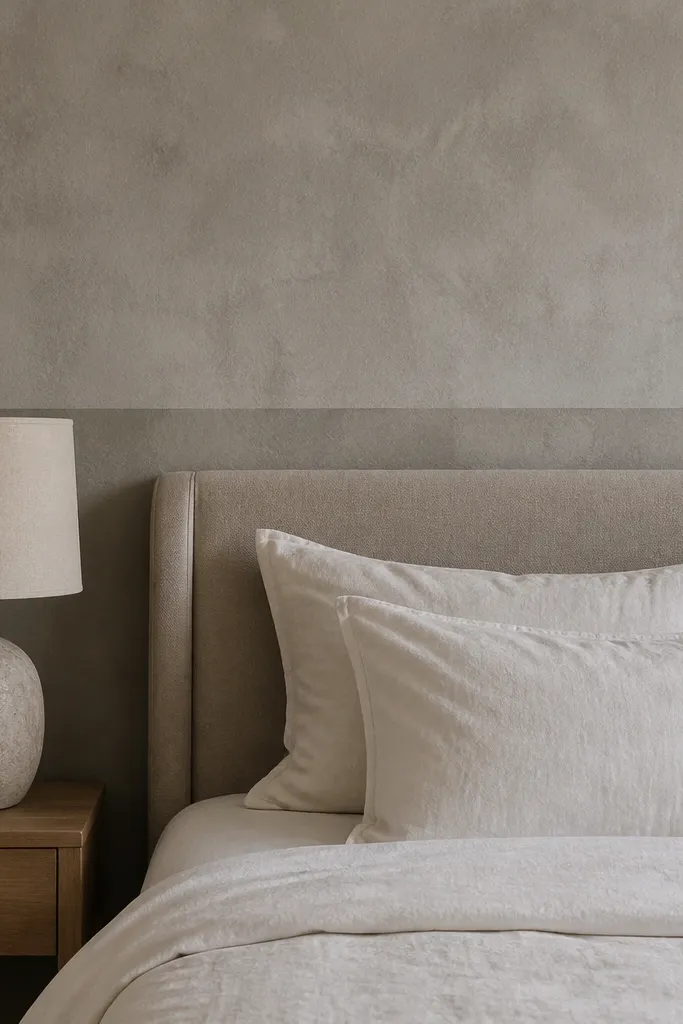
Microcement and cement-look finishes look modern because they’re smooth, matte, and slightly imperfect in a controlled way. A single tonal band behind the headboard gives you structure without turning the wall into a patchwork. Keep the band only a few inches taller than the headboard so it frames the bed without shrinking the wall. This works well in bedrooms with black metal, concrete floors, or large light-toned rugs where you want a cool industrial feel.
Pro tipTest color samples on the wall — cement finishes shift as they cure and dry.
Step 1: Use a cement-look primer and finish system that matches your wall substrate; prep is everything for adhesion and even color. Step 2: Mask a tonal band with tape at the headboard zone, then apply the base coat across the whole accent area and a lighter or darker band coat within the mask. Step 3: Seal with the product’s recommended topcoat so the finish stays wipeable. Expect $300-900 for materials depending on system thickness and wall size.
Watch outDon’t skip sealing — unsealed microcement stains fast with dust and skin oils.
13. Bold terracotta with a thin white trim border

Terracotta looks modern when it’s paired with clean trim lines. The warm clay color creates instant depth and makes white bedding pop, while a thin white border keeps the look crisp instead of rustic. Use a matte finish so the terracotta reads like paint, not glossy pigment. This is a great option for bedrooms that need warmth but don’t want the heavy look of dark charcoal or wood-only accents.
Step 1: Paint the accent wall terracotta matte, covering the headboard zone with extra coverage 6-12 inches beyond it on each side. Step 2: Once dry, apply thin painter’s tape and paint a narrow white border, around 1-2 inches wide, then remove tape carefully for sharp edges. Step 3: Add a simple black or brass bedside lamp to keep the modern feel. Cost is usually $60-200 for paint and trim supplies.
Choose terracotta with a slightly muted undertone, not bright orange — it looks more interior-design and less craft-store.
Don’t use thick trim — it pushes the look toward traditional.