
1. Weathered pine peg rail with numbered hooks
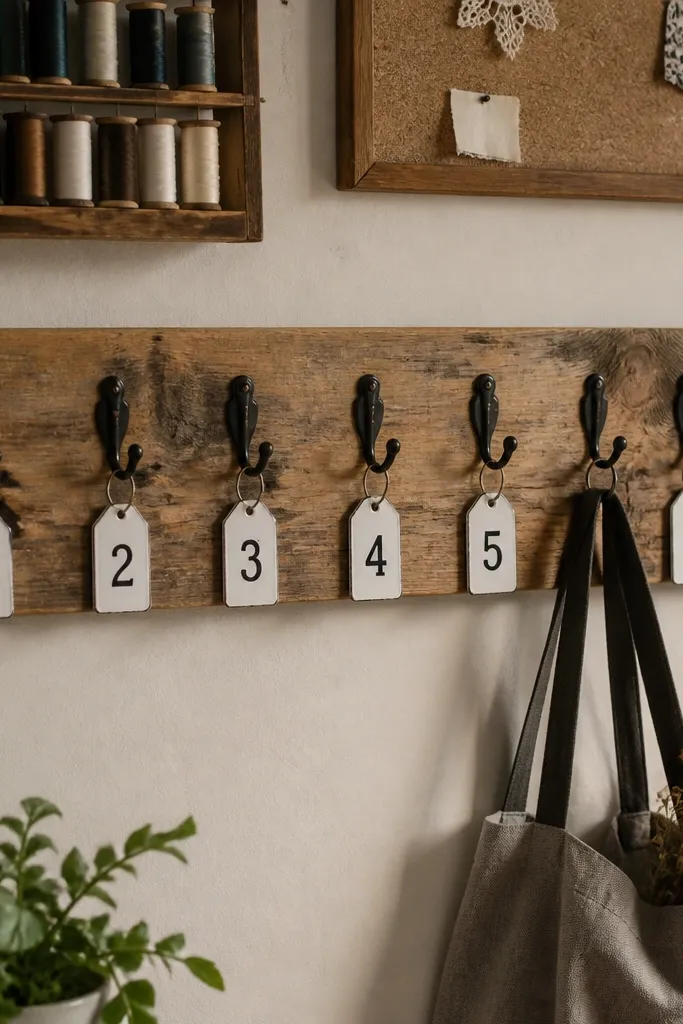
A weathered pine peg rail gives you that vintage workshop feel without adding visual noise. The aged wood reads warm and lived-in, while the numbered hooks keep the whole setup modern and orderly. Choose black hooks with white numbers so the contrast pops against the pale wood and stays readable. This is great for modern minimalist craft room decor because it turns hanging tools into a designed grid instead of a random pile of cords, scissors, and measuring tapes. Use it above a worktable so you get instant access, and the room looks styled even when you are mid-project.
Pro tipPaint one accent hook with a matte sage or terracotta dot so you have a “color cue” for the tool you reach for first.
Start by mounting the rail so the hook points sit about 58-62 inches from the floor, then leave 2-3 inches of clearance from the table edge. Line up hooks in rows: for example, 6 hooks across, then a second row staggered by 1 hook width. Use small screws into studs when possible; if you must use anchors, keep them to the rail’s mounting points only. Cost is usually $60-140 for the rail plus $20-60 for hooks depending on finish and size. Finally, hang only tools you actually use daily, and keep cords gathered with a twist tie so the rail stays clean.
Watch outSkip glossy metal hooks and mixed number styles — they make the vintage look feel messy instead of intentional.
2. Cream linen project cubby with open-front tray inserts
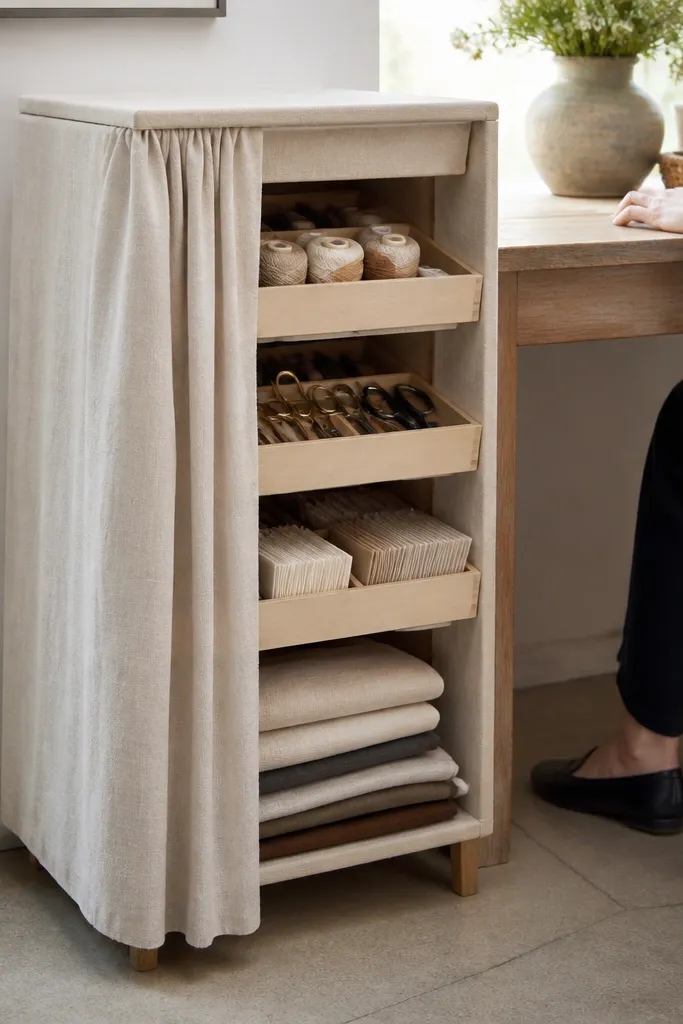
A cream linen project cubby softens the room and adds vintage texture without clutter. Open-front tray inserts keep supplies visible and easy to grab, but the linen hides the ugly stuff behind a calm curtain-like surface. Aim for a cubby width of 18-24 inches so it fits on a shelf wall or beside your worktable. Choose brass label plates or brass corner trim for that older workshop tone. This works for modern minimalist craft room decor because the main storage looks fabric-soft and cohesive, while the trays control chaos.
Pro tipUse one label font style and keep labels short, like “Buttons” or “Thread,” not full sentences.
Pick a cubby with removable trays so you can set up categories: thread, small beads, pattern paper. Step one is to choose a tray color that matches your palette — warm white, natural wood, or matte black. Step two is to place the cubby where you can see it while working, usually within arm’s reach of your cutting area. Add a label plate on the front center so each tray reads like part of a system. For materials, you need the cubby, trays, label plates, and hook-and-loop or small magnets if you want trays to stay put when you move things.
Watch outAvoid patterned linen or multiple fabric textures in one cubby — it pulls focus away from the clean minimalist layout.
3. Vintage frame shadow boxes for pattern swatches
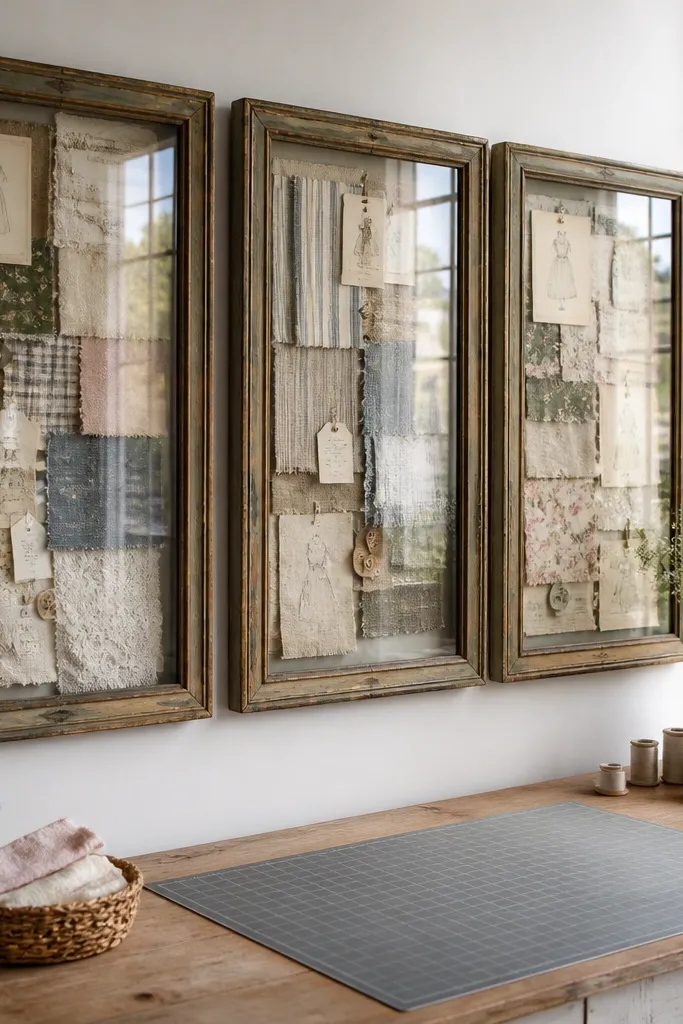
Shadow boxes turn scraps into decor. Vintage frames add patina and old-world charm, while the deep glass or acrylic keeps swatches from looking like random clutter. Use fabric swatches, old recipe card-style pattern notes, and small paper tags — the mix looks curated and satisfying. This idea is perfect for modern minimalist craft room decor because the frames create a consistent rectangle pattern on the wall, and the swatches add texture without taking over every surface. Keep the swatches in a tight palette: cream, oatmeal, black ink, and one muted accent color.
Choose three frames with the same outer dimensions and similar inner openings, even if the glass differs. Step one is to cut swatches to roughly 4x6 inches, then mount them with small corners of archival tape so they lie flat. Step two is to add a paper tag under each swatch that matches your palette, like off-white cardstock with black ink. Hang them as a vertical column or a tight grid, with 2-3 inches between frames. Expect $25-80 per frame depending on thrift vs new, plus $10-20 for archival tape and cardstock.
Keep the tags aligned left inside each box so the set looks designed, not assembled.
Don’t mix frame colors like gold, silver, and raw wood in the same cluster — it makes the wall feel chaotic.
4. Stained oak thread wall with spool rails
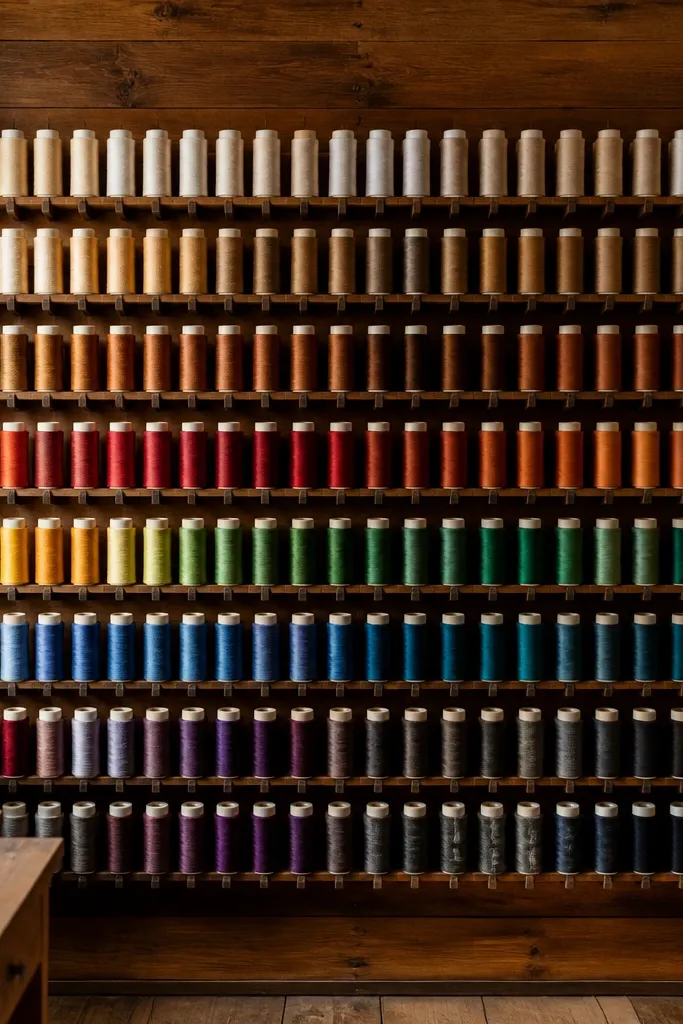
A stained oak thread wall is one of the best ways to get vintage craft room decor that still looks modern. Spool rails on a wood board let thread become a color display instead of a tangled storage problem. Choose a board finish that reads warm and worn, like medium oak with a matte topcoat. For modern minimalist craft room decor, limit the thread colors you display: 10-20 spools in a controlled set (cream, black, charcoal, plus one muted accent like dusty teal). This creates a gallery look and keeps your room from feeling like a supply warehouse.
Start by mounting a board 30-36 inches wide on the wall behind your main work area. Step one is to attach spool rails so each rail is level and parallel; spacing about 2 inches between spools keeps it tidy. Step two is to load spools in a deliberate order, alternating dark and light so the visual rhythm looks intentional. Add a small tray below the rails for scissors or a seam ripper. Materials include the oak board, matte finish, spool rails, screws, and thread organizers if you want extra spools stored flat elsewhere.
Use matte black rails if your room has lots of warm wood — it keeps the look grounded.
Skip displaying every thread you own; you need a curated set or the board turns into a clutter wall.
5. Matte black utility cart with vintage drawer pulls
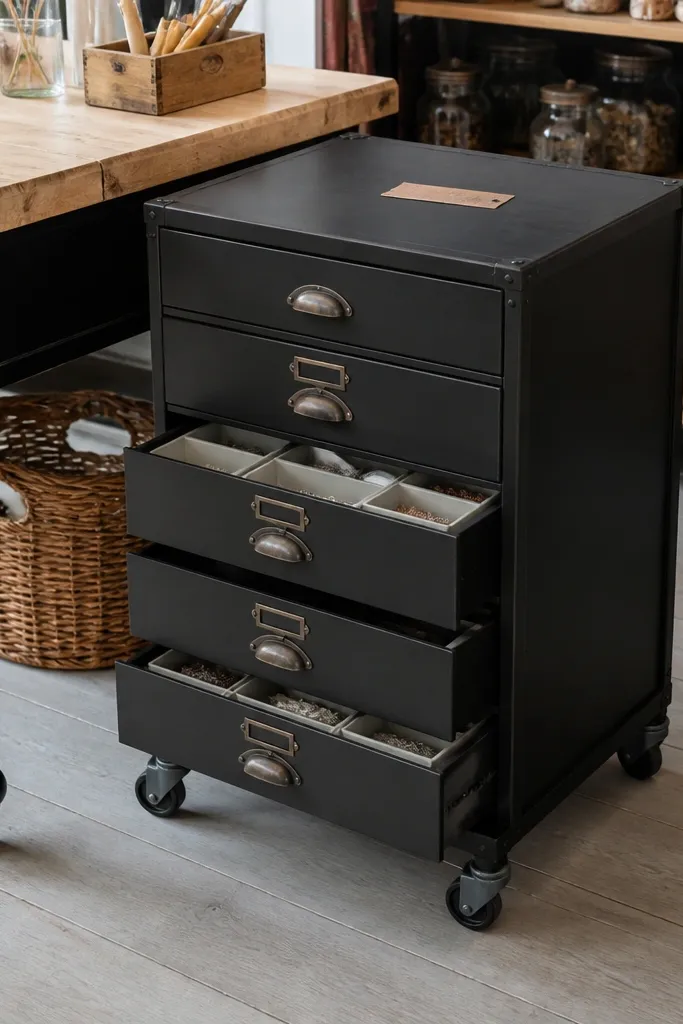
A utility cart gives you vertical storage, and matte black keeps it modern. Swap the pulls for vintage-style brass or aged bronze to add character without turning the cart into a mismatched thrift pile. Put labeled bins inside the drawers so the cart looks organized even when you are actively working. This is a strong modern minimalist craft room decor move because it adds function and visual structure at the same time. Aim for a cart height that matches your work surface so you can roll it in and out without straining.
Pro tipStick to one label format: same size, same ink color, same placement on each bin.
Choose a cart with drawers or pull-out bins so you can separate paper, tools, and smaller supplies. Step one is to replace only the pulls and knobs with the same finish across all drawers. Step two is to add labels in a consistent style and place the cart near your cutting or gluing area. If you want extra vintage charm, add a small tray on top for pens and a single open cup for scissors. Cost usually lands around $120-260 for the cart depending on size, plus $20-50 for pulls.
Watch outAvoid mixing drawer pull finishes on the same cart — it breaks the clean modern line.
6. Galvanized tin organizer wall with matching hooks
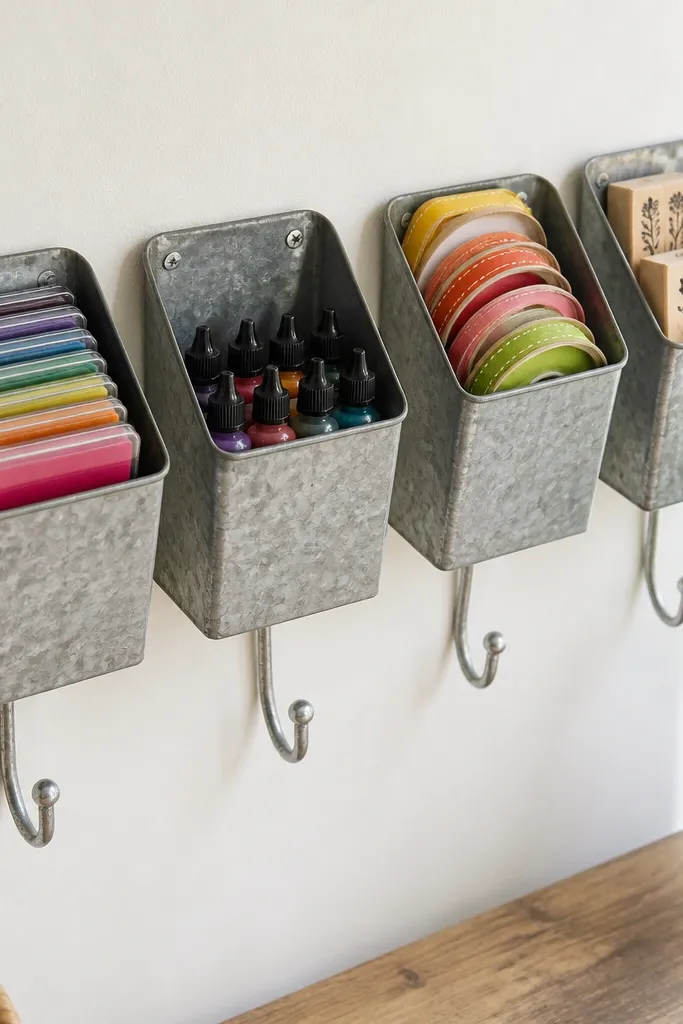
Galvanized tin instantly reads vintage, and it does it without needing heavy ornament. When you mount tin organizers in a vertical line and add matching hooks underneath, you get a clean “station” look instead of scattered storage. Use tins for things like stamp pads, small paints, and ribbon spools that you want visible. For modern minimalist craft room decor, keep the tins uniform in size and mount them with equal spacing — the repetition is what makes it feel curated. The cool metal tone also balances warm wood and linen.
Pro tipWipe tins with a dry cloth before mounting so they don’t look dusty in photos.
Pick 3-5 tin organizers with the same opening height and mounting style. Step one is to mount them on a wall near your working spot, keeping the top edge around 60-65 inches from the floor. Step two is to attach a hook rail directly below, then hang only long items like measuring tapes or scissors. Add one small tray under the tins for frequently used caps and clips. You’ll need screws, a level, and a drill; costs vary widely, but $40-120 per tin is common if you buy new.
Watch outSkip mixing deep tins and shallow tins in the same row — it makes the wall look uneven.
7. Aged brass and glass desk letter tray for paper scraps
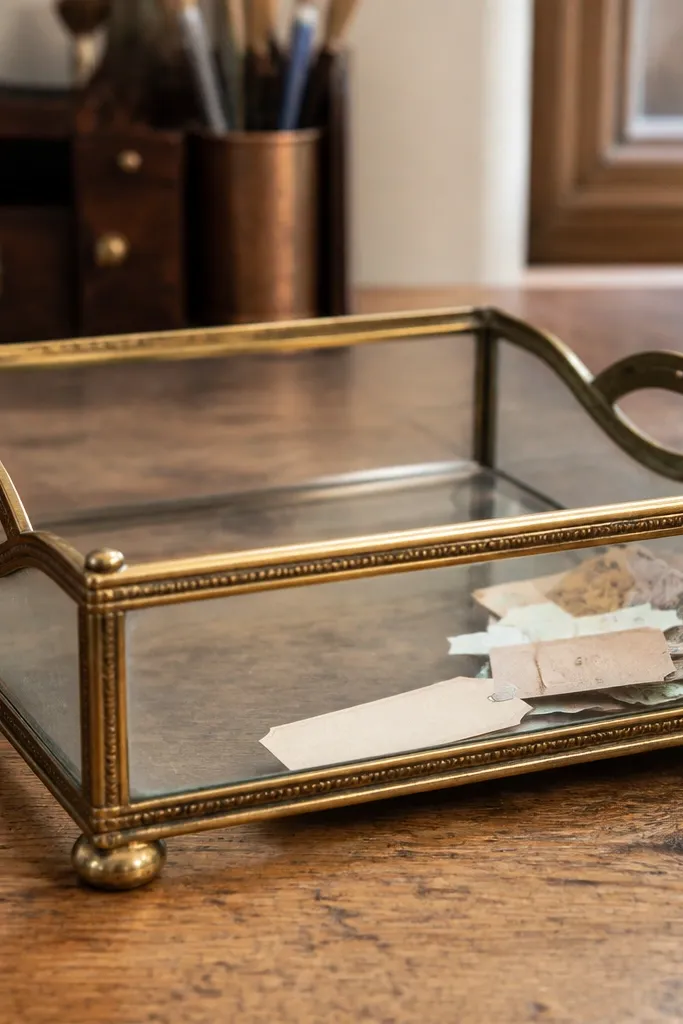
Paper scraps are the fastest way to make a craft room look messy. A brass and glass letter tray solves that while adding vintage shine. Choose a letter tray with a warm aged brass frame and clear glass or acrylic sides so you can see what’s inside without digging. Keep the contents curated: only “in-progress” scraps, cut-offs you will use soon, and a small stack of blank labels. This is modern minimalist craft room decor because it gives you controlled visibility and a clean desk footprint, not a pile of paper envelopes.
Pro tipUse a single color of label tape on the tray so everything looks coordinated.
Place the tray on your main desk surface near your cutting mat, ideally within 12-18 inches of where paper sits. Step one is to sort scraps into one size category, like strips and squares, so the tray stays tidy. Step two is to add a small paper divider inside the tray using a thin chipboard sheet. Wipe the glass or acrylic weekly so it doesn’t look smudged. Costs are commonly $35-90 for a good tray depending on brass finish quality.
Watch outAvoid stacking loose papers taller than the tray — it turns into a paper “tower” instantly.
8. Vintage quilted wall hanging over a shelf edge
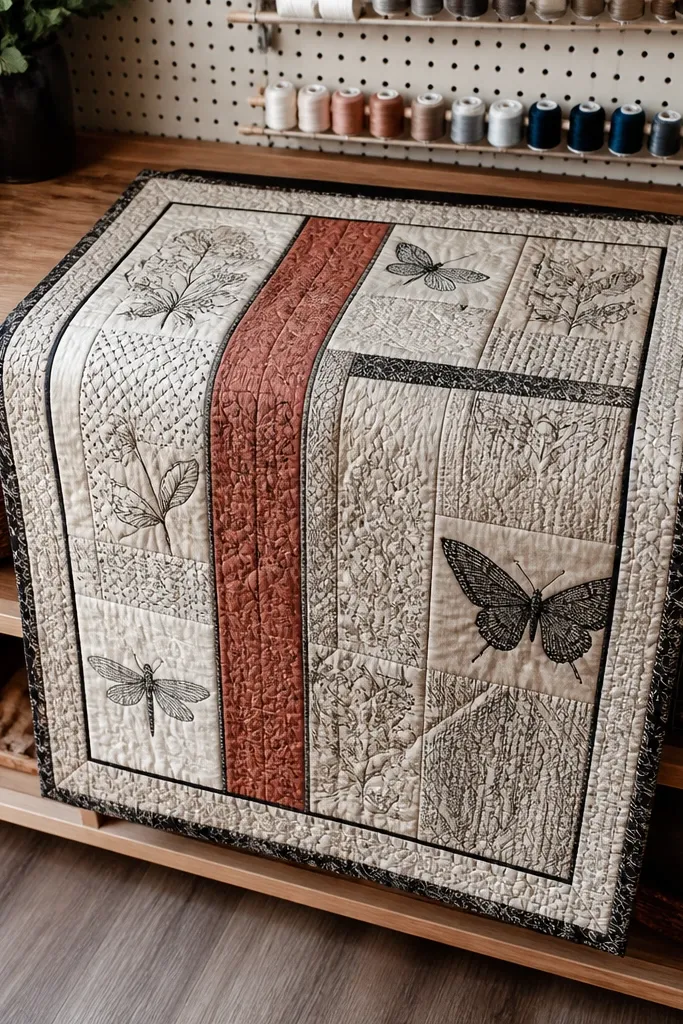
A vintage quilted wall hanging adds softness and pattern texture, and it makes the room feel lived-in. The trick for modern minimalist craft room decor is placement: drape it over a shelf edge or the back of a pegboard, not across the whole wall. Choose a quilt in cream, oatmeal, and black linework, with one muted accent block like sage. Keep the shelf styling minimal: two jars, one book stack, and one small tool. This creates a photogenic contrast between soft textile and clean storage.
Pro tipPress the quilt lightly so creases look natural, not wrinkled.
Pick a quilt panel about the width of your shelf plus 6-10 inches on each side for a gentle drape. Step one is to hang it so the top edge sits straight, then use small hidden tacks or command hooks along the shelf back. Step two is to style the shelf in a single palette and remove anything that doesn’t belong to your craft workflow. Add one thin runner under the quilt panel edge if the shelf is wood to keep the look intentional. Costs depend on whether you thrift; expect $25-120 for a small panel.
Watch outSkip bright saturated patchwork — it clashes with the minimalist calm you’re aiming for.
9. Clear acrylic stamp organizer with vintage label cards
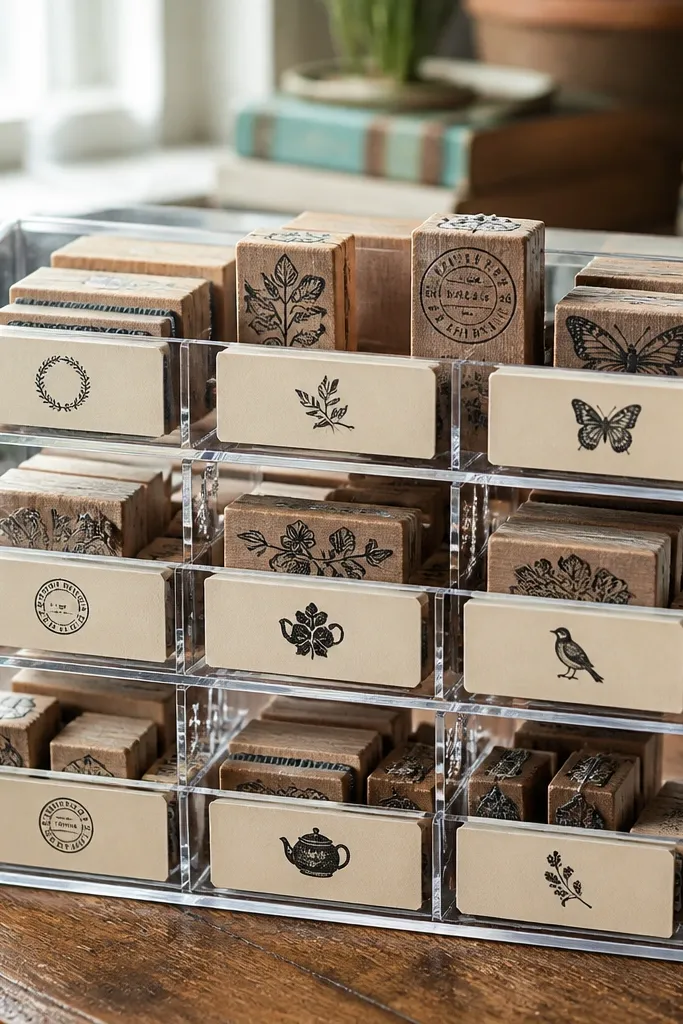
Stamps and ink pads are small, but they multiply. A clear acrylic organizer keeps everything visible and stackable, while vintage label cards make it feel curated. Write labels on off-white cards with black ink, then slide them into the organizer’s front slots. This is modern minimalist craft room decor because the acrylic keeps the layout clean and the labels create a system. Pick label cards that match your other vintage elements — for example, cream cardstock with simple typography or small border lines.
Measure your stamp collection first, then buy an organizer with compartments that match your stamp sizes. Step one is to group stamps by type (floral, borders, numbers) so you don’t create a chaotic mix. Step two is to cut label cards to the organizer’s slot size and insert them consistently. Place the organizer on a shelf or cart drawer where you can see it while working. Cost is usually $20-60 for acrylic organizers plus $5-15 for cardstock and ink.
Use a fine-tip black marker so the labels look crisp instead of scribbly.
Avoid handwritten labels on different paper colors — it destroys the calm, modern rhythm.
10. Ceramic vase for pencils with a linen ribbon wrap
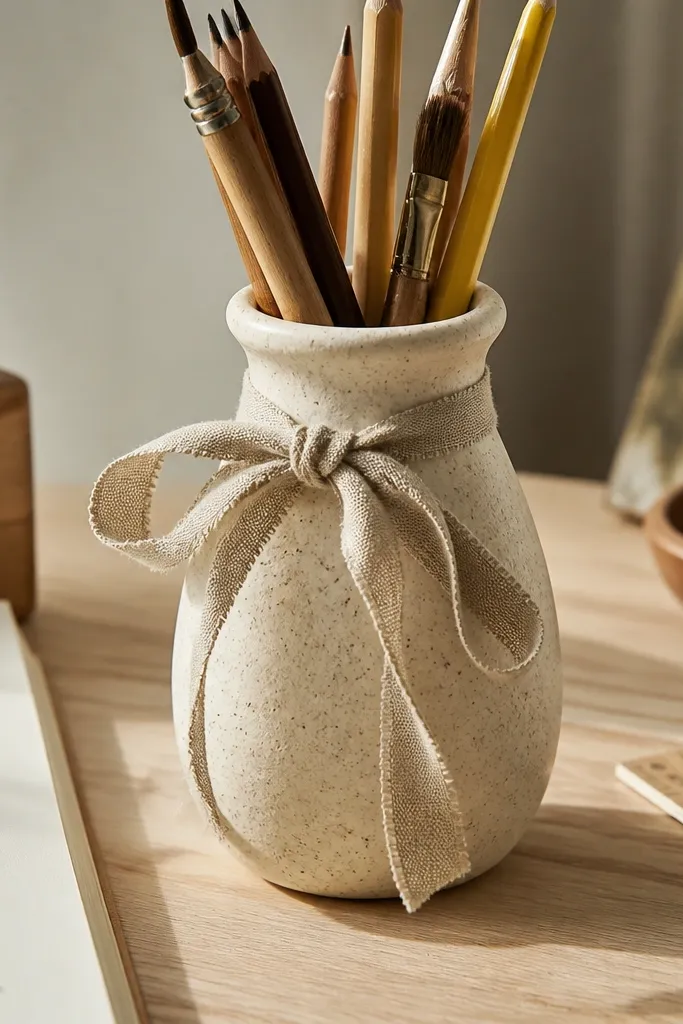
This is the easiest vintage-looking upgrade for a craft desk. A ceramic vase with a matte cream or slightly speckled glaze holds pencils and brushes, and the linen ribbon wrap adds texture that reads vintage. Keep it to one “desk hero” item so the space stays minimalist. Choose a vase that is 6-8 inches tall and wide enough that pencils don’t crowd the rim. This works for modern minimalist craft room decor because it’s one clean shape, one vintage material (linen), and it reduces visual clutter by pulling pens into a single container.
Pick a vase finish that matches your palette — cream, warm gray, or black-brown. Step one is to wrap a strip of linen ribbon around the neck and secure it with a hidden knot at the back. Step two is to fill the vase with pencils sorted by thickness so the tops align at a similar height. Add one small tray under it if your desk gets scratchy or messy. Cost is usually $20-60 for a vase plus $5-12 for ribbon.
Trim the ribbon tails so they end at the same length on both sides.
Skip shiny glossy vases and tangled ribbon loops — they look fussy next to minimalist storage.
11. Old-world label maker style on glass jars
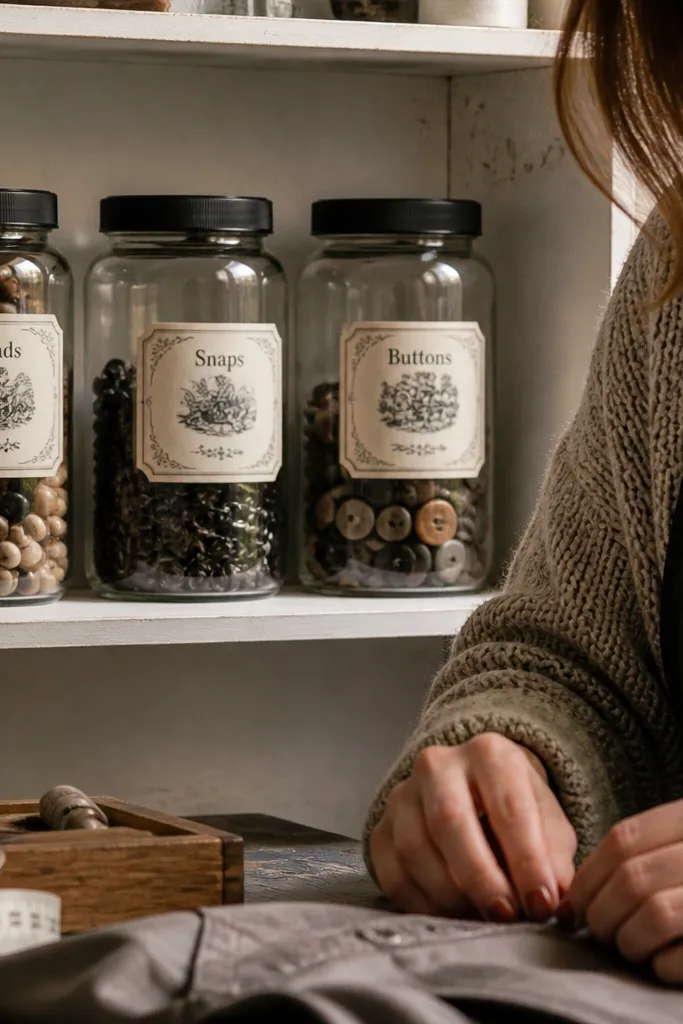
Glass jars are classic, but the modern minimalist craft room decor version is about uniform labels and limited jar colors. Use clear glass jars with matching lids in matte black, warm brass, or natural wood. Then apply vintage-style labels using off-white paper and black ink, with simple categories like “Beads,” “Snaps,” or “Buttons.” Keep the number of jars on one shelf to 6-10 maximum so the shelf doesn’t turn into a retail display. The vintage charm comes from the label presentation and glass texture, while the minimalist vibe comes from repeating the same jar shape and label format.
Pro tipLabel the jar on the same side for every jar so the shelf looks aligned from across the room.
Start by choosing one jar size for your main shelf, like 8-10 oz jars, then buy only those sizes so everything matches. Step one is to clean lids and dry fully so labels stick flat; use archival label tape or paper label stickers designed for jars. Step two is to line jars on a shelf with equal spacing, then add one larger jar as a visual anchor in the center. Cost usually lands around $60-150 for jar sets depending on lid finish and number of jars.
Watch outAvoid mixing different jar heights on the same shelf — it makes the vintage display look accidental.
12. Vintage rolling tool caddy with leather strap handles
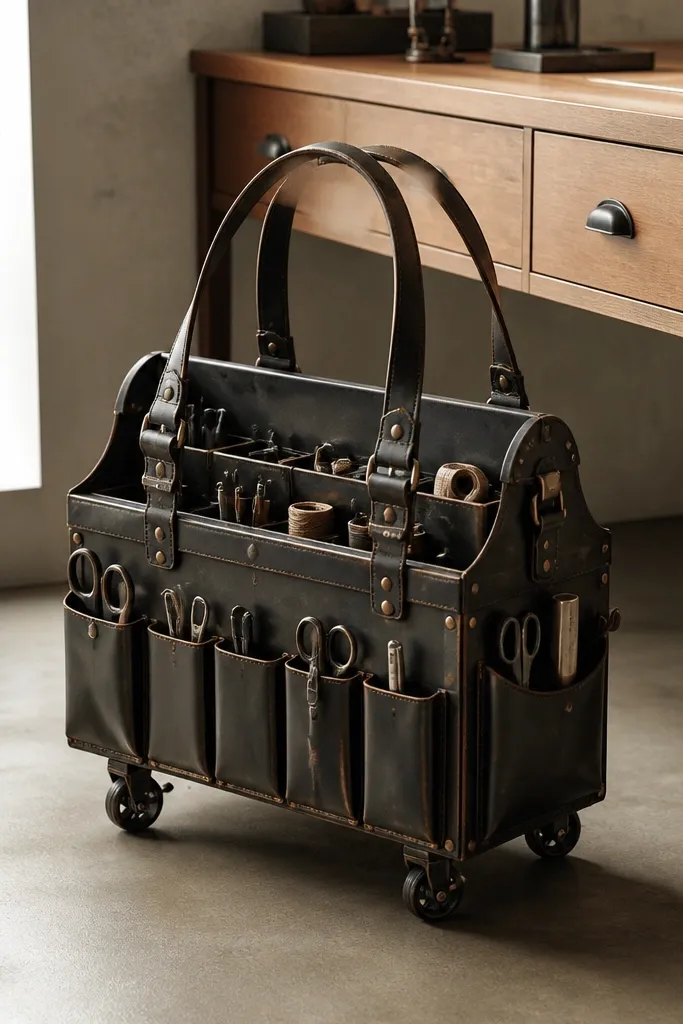
A rolling tool caddy keeps your craft room looking clean because tools stay contained when you’re switching tasks. Vintage shows up in the leather-look straps and the aged hardware, but the compartments keep the modern minimalist feel. Choose a caddy with a neutral body like black, dark brown, or warm gray, and leather straps in cognac. Label the compartments with short tags so you can put things back quickly. This works especially well for craft rooms where the worktable is shared or you need to move supplies between sewing and paper projects.
Pro tipKeep the straps clean and slightly conditioned so they look intentional, not worn-out.
Pick a caddy with at least 3 compartments so paper tools, cutting tools, and small hardware do not mix. Step one is to set it next to your main workspace and load it based on your most frequent workflow, not everything you own. Step two is to add labels on the compartment fronts and use a simple color code: black ink labels for general tools, one accent label color for the “current project.” Cost is commonly $70-180 depending on size and strap material.
Watch outSkip overstuffing — when compartments bulge, it stops looking vintage and starts looking messy.
13. Gallery wall of thrifted instruction cards and rulers
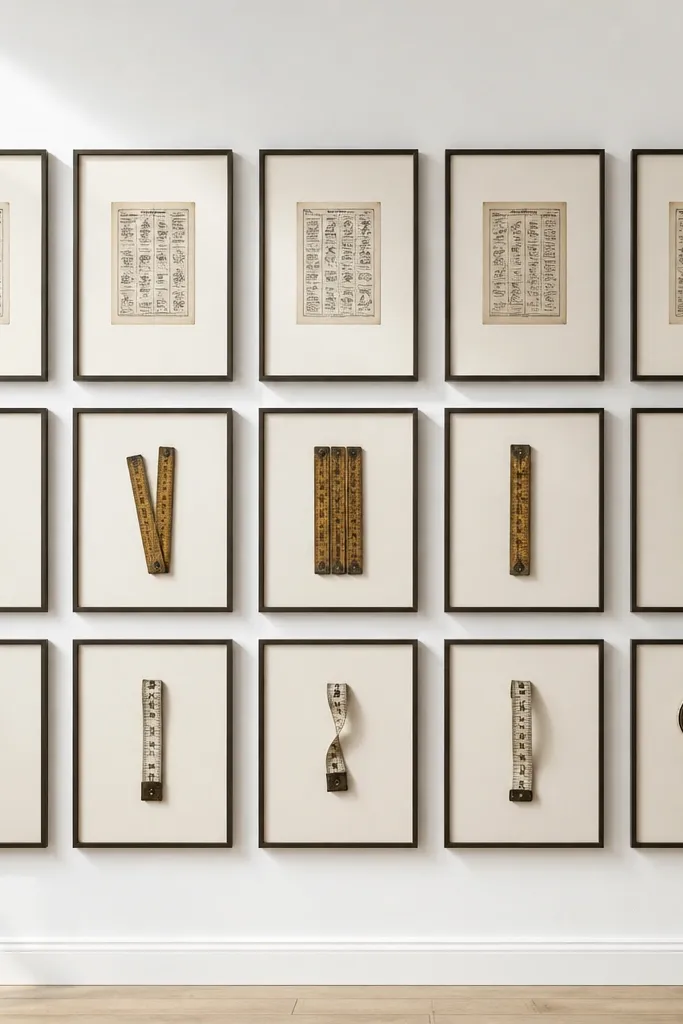
This is vintage decor that looks modern because it is disciplined. Instead of large art pieces, you build a gallery wall out of small thrifted instruction cards, old rulers, and measuring tape segments, all framed in matching thin frames. Use cream or warm white matting so the wall stays light. Keep the content monochrome-ish: black ink, faded gray, and one muted color block. This idea delivers modern minimalist craft room decor because the frames create a consistent grid and the vintage ephemera reads like design, not junk. It also helps your brain — you see measuring references near your work area.
Pro tipUse one mat color across the whole wall so the vintage pieces look intentional together.
Choose 8-12 small frames with matching outer sizes; thin frames in black or dark wood work best. Step one is to cut or trim mats so each item sits centered with equal margins, around 1 inch of mat border. Step two is to lay out the grid on the floor first, then measure the wall width and hang with consistent spacing of about 2 inches between frames. Cost varies, but you can keep it reasonable by thrifting frames and using new glass or acrylic if needed. If you’re using paper cards, tape them down with archival corners so they do not warp.
Watch outAvoid mixing thick chunky frames with thin frames — the wall becomes visually noisy.