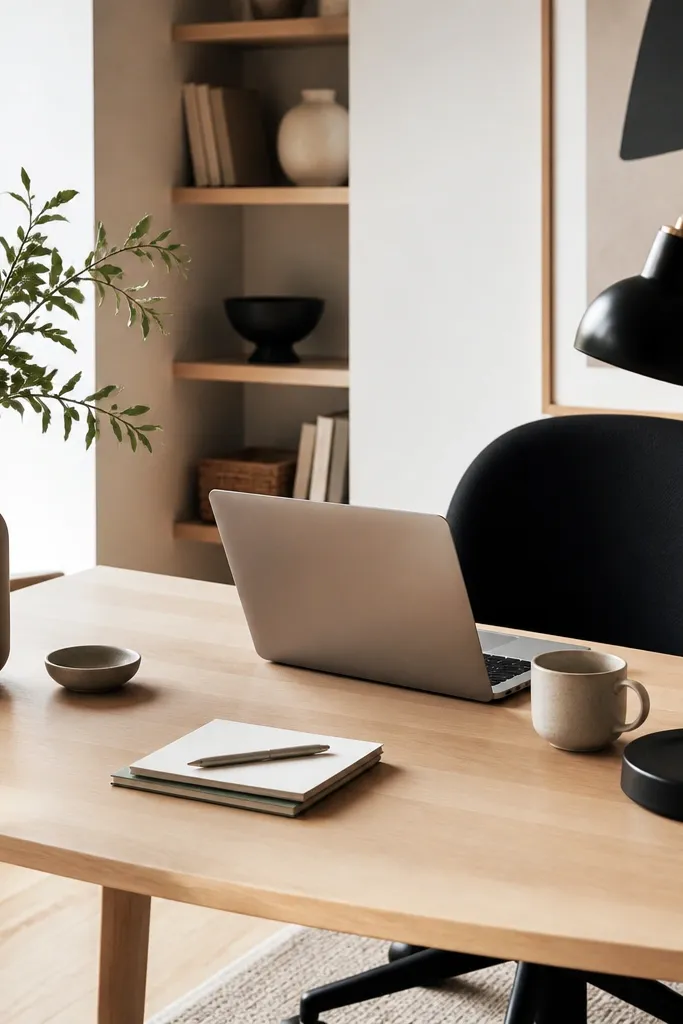
1. Slim floating desk with wall shelf spine
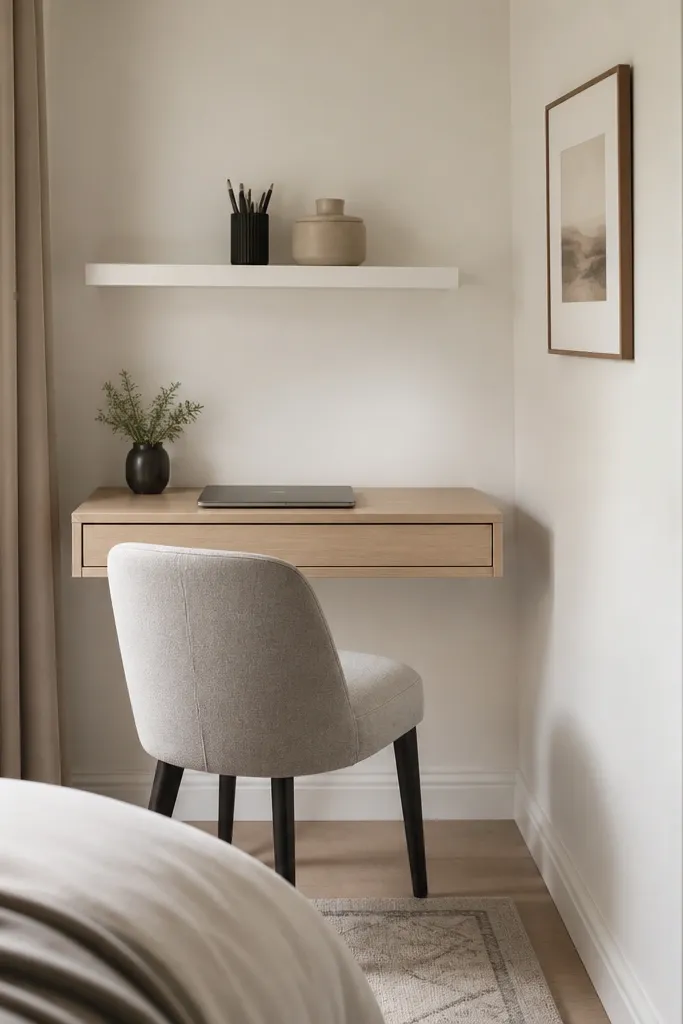
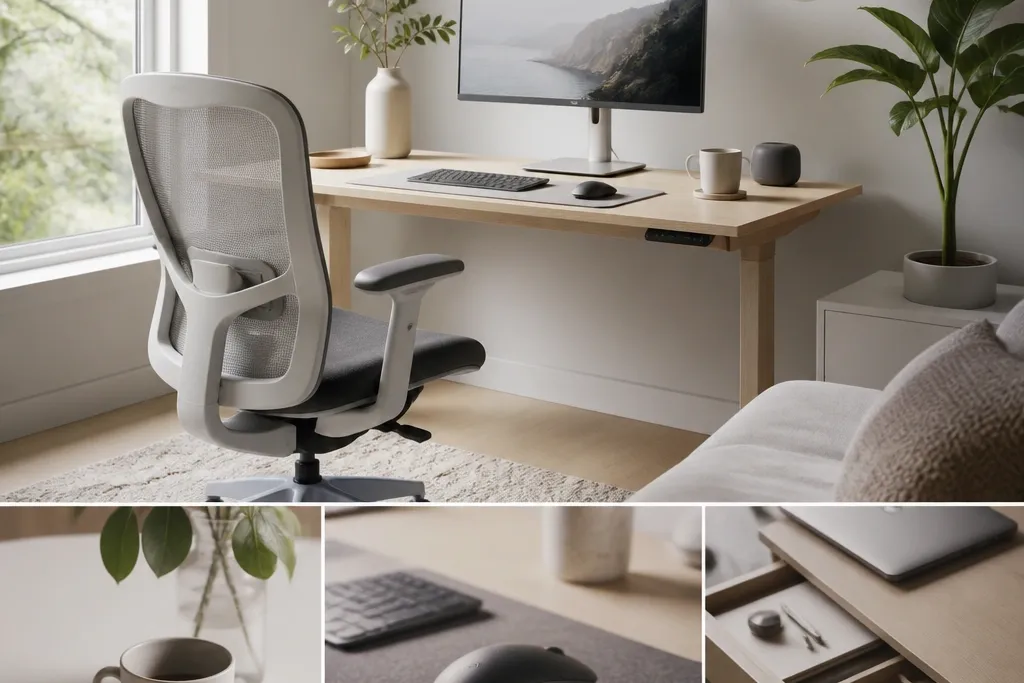
This setup works because the desk looks like part of the wall, not furniture you have to “fit.” A floating desk keeps the floor clear, which makes a small bedroom feel bigger. The long shelf above gives you storage height without adding visual bulk. Keep the shelf items to two categories: one for daily use (pens, sticky notes) and one closed container for everything else.
Use a desk top with a matte finish so it doesn’t glare under warm bulbs. Aim for a chair seat height that matches your desk — most people do best around 18 inches from floor to seat for a standard desk height. The shelf should sit so the top of your monitor is close to eye level when you’re seated, usually about 50-60 inches from the floor depending on your chair.
Pro tipMount a cable clip under the desk edge and run the cords straight down to a small power strip taped to the inside of a nearby cabinet or a wall outlet cover box.
Watch outAvoid stacking open books and random decor on the shelf — it turns into visual noise fast.
2. Bedside desk swap with a matching cabinet
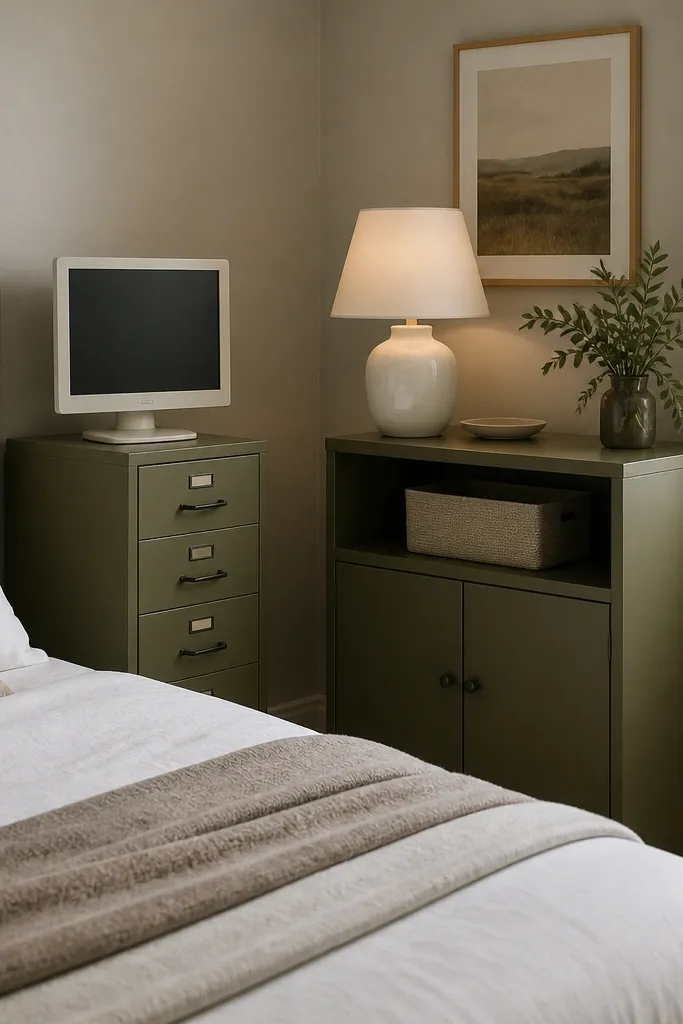
When your bedroom already has a bedside rhythm, swapping in a desk that matches the existing nightstand style makes the whole room look calmer. The drawer unit handles the clutter that would otherwise land on the desk surface. The cabinet adds vertical storage so you don’t need shelves that collect dust. Keep the desk top clear — one monitor, one tray, one lamp.
Look for a desk-height unit around 28-30 inches tall. Use a single shallow tray for daily tools like a mouse, pen cup, and a small notepad. The lamp should be warm and directional — a white or oatmeal shade softens the light on your screen.
Pro tipPut your “daily receipts” in the drawer immediately. If you leave a paper stack on top for a day, it never fully disappears.
Watch outDon’t use a desk that’s too tall for your chair — you’ll end up slouching and the setup will feel wrong.
3. Corner desk with a single light wood L-shape
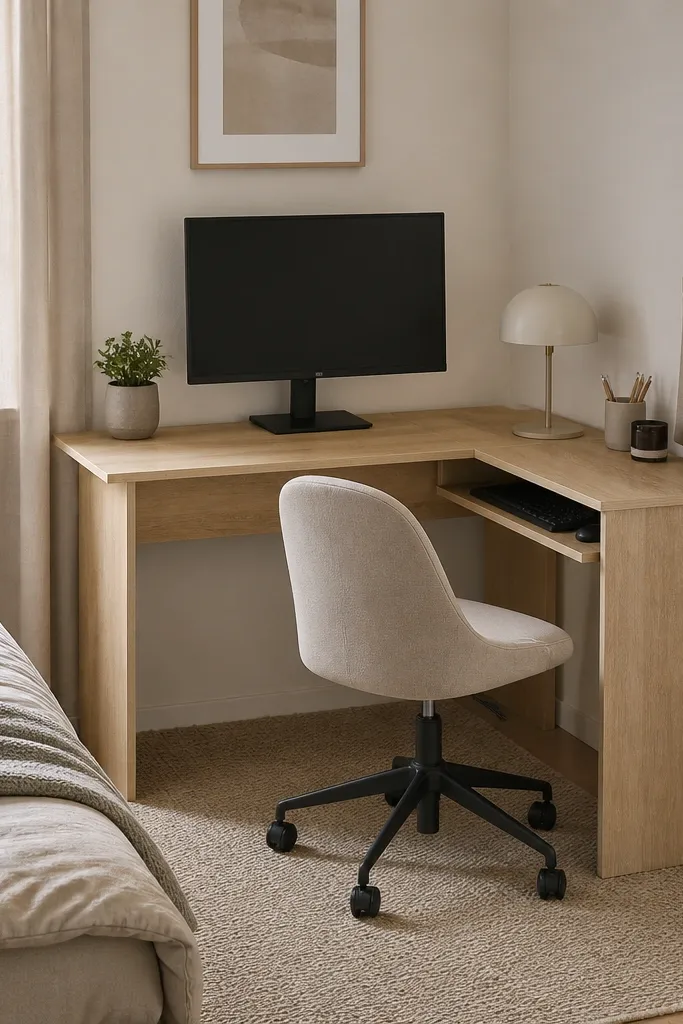
Corner setups hide the “messy” side because the wall takes over the visual background. The L-shape gives you a natural separation between work and personal items. Light oak keeps the room warm and modern without looking cold or sterile. The linen rug adds softness and makes the chair area feel intentional.
Use a desk that’s about 55-60 inches wide across the longer side and under 30 inches deep on the shorter side. Place your monitor on the longer leg and keep the shorter leg for a closed container or notebook. Choose a rug that’s large enough for the chair to stay on it — at least 24x36 inches.
Angle the chair slightly toward the desk so your shoulders align with the monitor — it makes the space feel more “designed” even in a corner.
Avoid placing a bright, patterned rug — it competes with the clean lines of the desk.
4. Wardrobe-top laptop station with pull-out tray
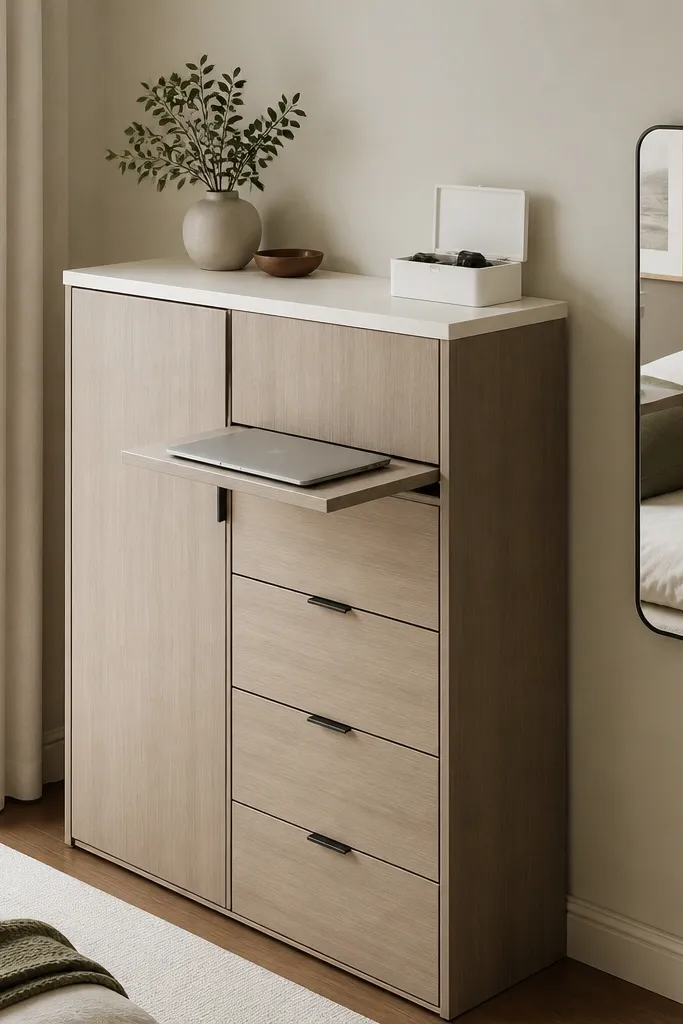
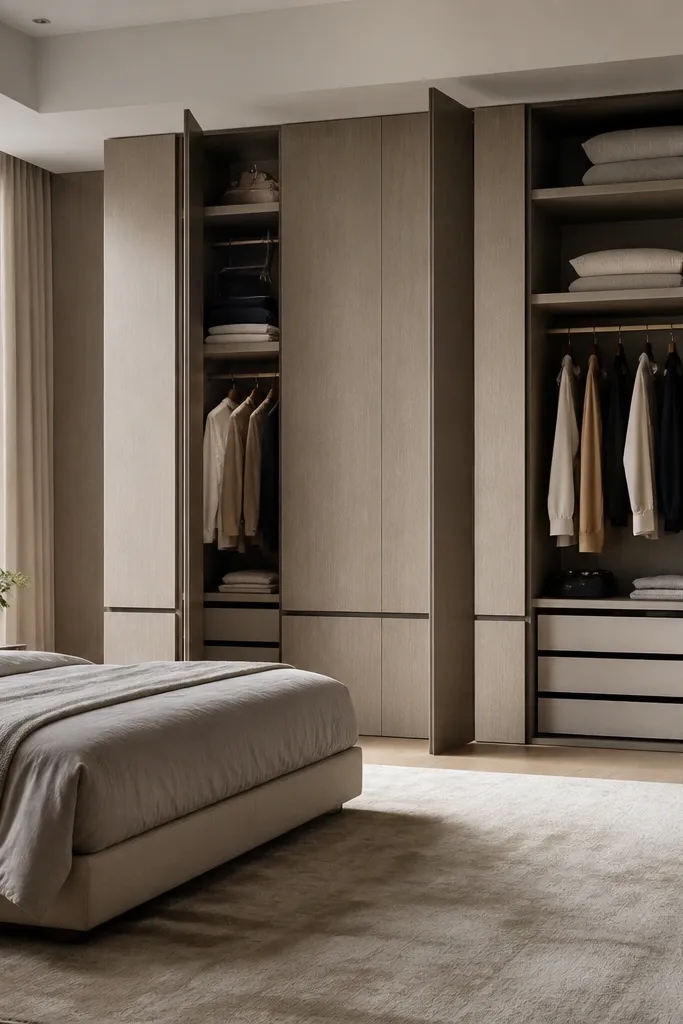
If your bedroom is tight, using wardrobe top space is a smart way to create a work surface without adding another piece of furniture. The pull-out tray keeps the laptop centered and prevents the “laptop on random surfaces” look. A closed organizer box hides charging cables and adapters. This is minimalist because the clutter stays inside the wardrobe ecosystem.
Pick a wardrobe with a top depth at least 12 inches so the tray has support. Use a pull-out tray with a lip so the laptop doesn’t slide. Add a small desk mat under the tray for scratch protection and a softer feel.
Mount a small under-shelf LED strip above the tray so you don’t rely on overhead lighting that washes out the room.
Skip open cable organizers on the wardrobe top — they make the station look messy instantly.
5. Desk on a low platform with storage drawer under
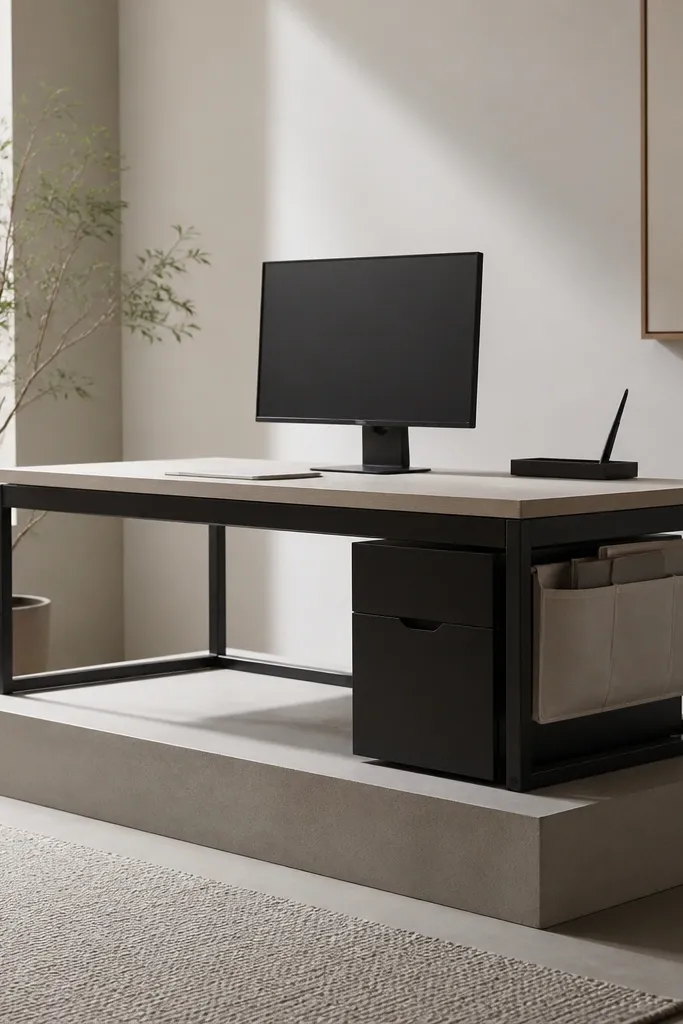
A platform desk changes the whole feel because it creates built-in storage. You get a visual “clean line” from the floor up, and the drawer under the desk keeps supplies out of sight. The black-and-wood combo reads modern without being stark. It also helps when you need to store a monitor stand, extra chargers, or a document stack.
The platform height should let your knees clear the underside by at least a couple inches. Choose a drawer system that rolls smoothly so you actually use it. Keep the desk accessories monochrome: black tray, white paper organizer, and a single warm lamp.
Pro tipStore cables in a zippered pouch that fits inside the drawer. When you need to work, you pull out the pouch, not loose cords.
Watch outDon’t use glossy desk surfaces with overhead lights — you’ll see glare every time you open a spreadsheet.
6. White desk + oatmeal linen curtain divider
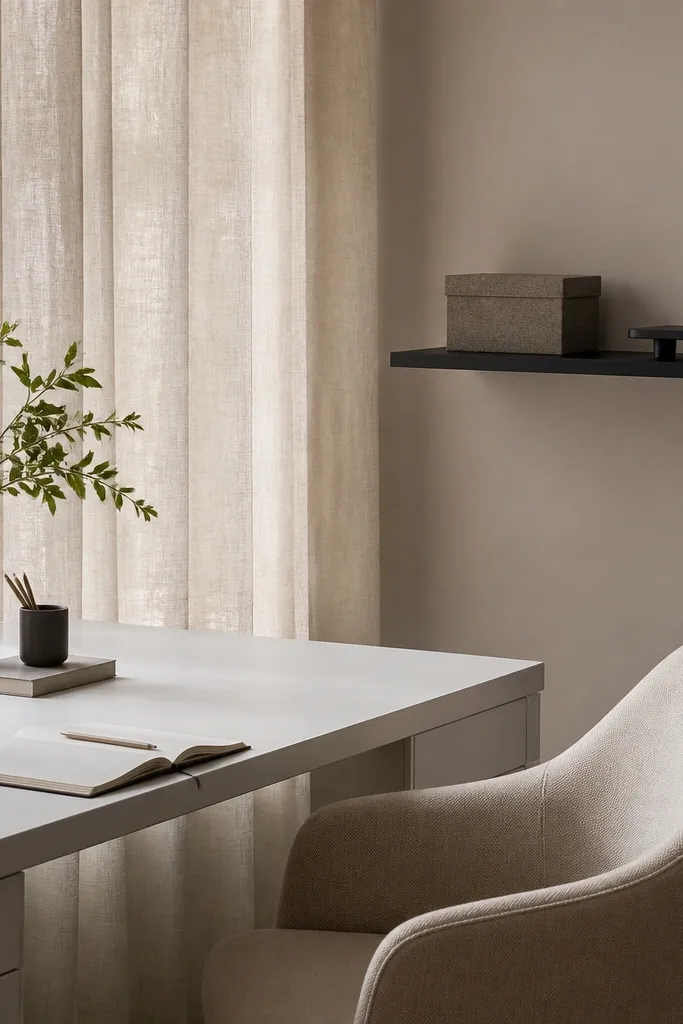
This setup uses a soft divider so the work area feels separated from the bed zone. It’s still minimalist because the divider is one material, one color, and it’s mostly sheer. Oatmeal linen adds warmth and hides the visual chaos that lives behind you. It also makes the room look styled even if your actual storage is inside drawers.
Hang a curtain rod slightly above the desk line so it frames the station. Use a curtain panel width that covers at least the desk width plus a few inches. Keep the desk accessories in a tight palette: white, black, and one wood tone.
Pro tipClip a small blackout lining to the curtain back if glare from the window hits your screen in the afternoon.
Watch outAvoid mixing multiple fabric patterns in the same divider area — it reads cluttered fast.
7. Wall-mount monitor arm + keyboard tray
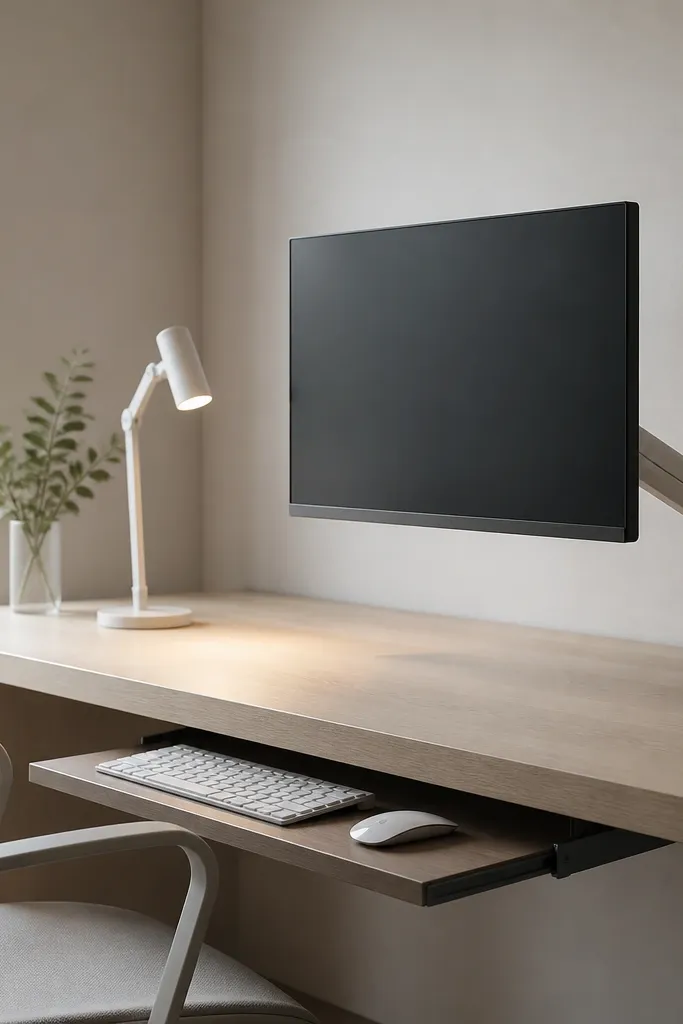
When you mount the monitor, you free up desk space and reduce the pile-up of stands and risers. It also lets you position the screen height precisely without adding extra furniture. A keyboard tray makes the desk look cleaner because your keyboard disappears when you’re not typing. This is a strong choice for bedrooms where you want the desk to look almost invisible.
Set the monitor so the top of the screen is around eye level. A keyboard tray under the desk should pull out enough for your elbows to stay near a 90-degree angle. Choose a desk surface big enough for a mouse pad and a single tray, not a full second workstation.
Use a cable sleeve from the monitor arm down to the desk edge so you don’t see a bundle hanging in the room.
Skip a random monitor height — if the screen is too low, you’ll slouch and the whole setup feels uncomfortable.
8. Rattan-wrapped file drawer + matte desk accessories
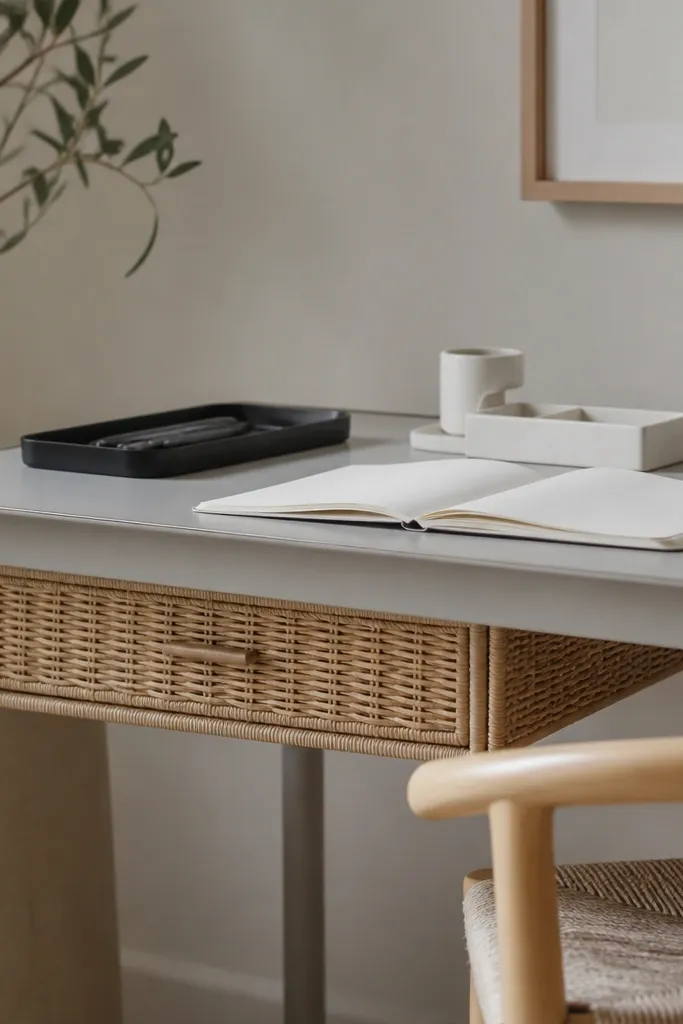
Minimalism doesn’t have to be all white and metal. The rattan file drawer adds texture while still keeping the rest of the setup controlled. Matte desk accessories prevent glare and make the area look intentional. This combo works when you want warmth in a bedroom but still need your work zone to feel calm.
Pick one texture only — here it’s rattan. Keep metals consistent (either black or brushed steel) and stick with one neutral notebook color like cream or soft gray. Place the file drawer in the “reach zone” so you don’t leave papers on the desk.
Use bookends for loose papers — even small stacks look tidy when they stand straight.
Avoid mixing rattan with multiple other textures like faux fur and busy woven throws — it stops reading minimalist.
9. Two-tier desk shelf for laptop + paperwork separation
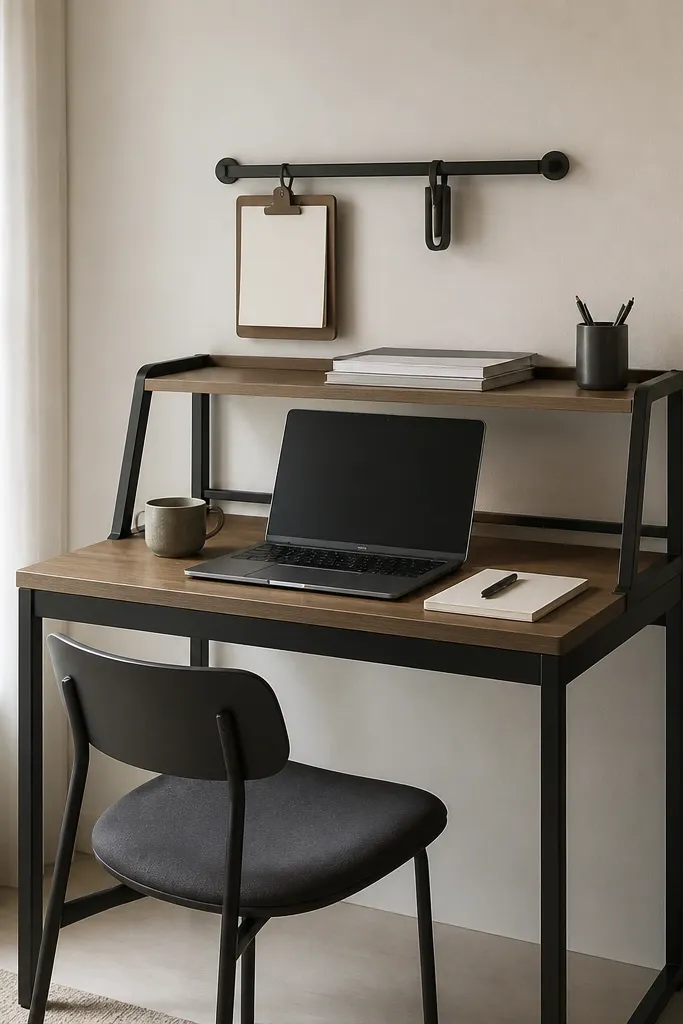
Two tiers stop the daily paper pile from creeping onto the laptop area. It also makes your desk look organized even if you’re mid-project. Keep the upper tier mostly for paper — notebooks, a folder, and maybe one reference book. The lower tier stays for the laptop and a mouse pad.
Measure your laptop footprint and leave at least 2 inches of clearance on each side. The upper tier should be high enough that you don’t knock your wrist while writing. Use a folder in a single color to unify all paper storage.
Label one folder for “Today” and one for “Waiting.” Put them on the upper tier so your brain stops re-sorting constantly.
Don’t use a two-tier setup with open bins everywhere — it looks like office storage, not bedroom minimalism.
10. Minimal desk with fabric drawer under for cables
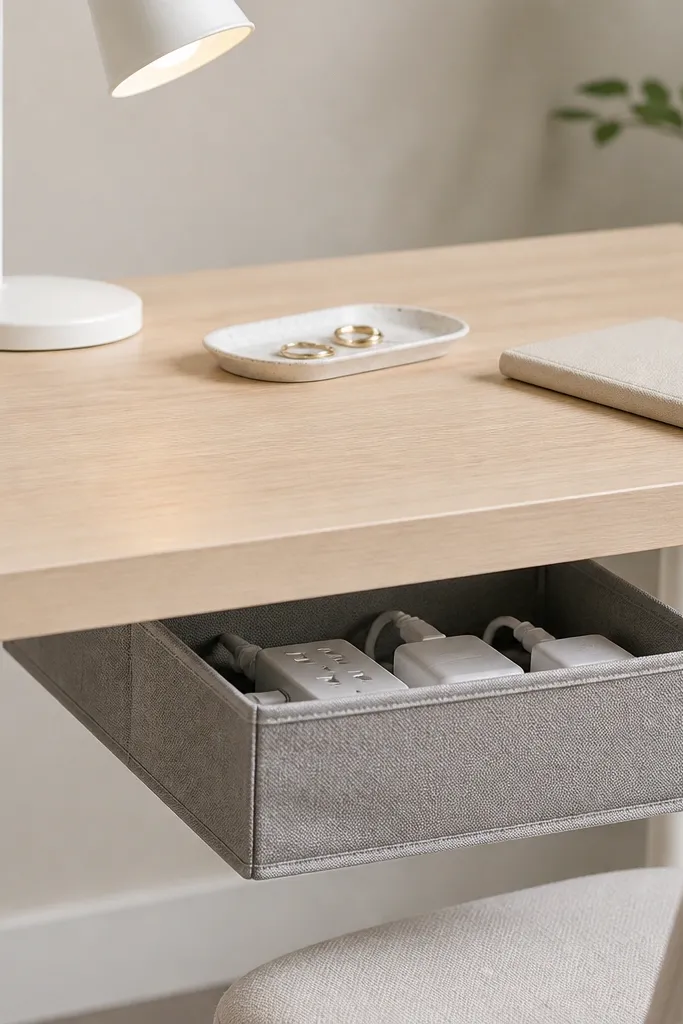
This is the quickest way I’ve found to hide cable chaos without building a cabinet. Fabric drawers look softer in bedrooms than plastic bins, and that matters because your work zone sits near your sleeping space. The desk stays clean, and you still get fast access to chargers and adapters. It’s a true minimalist trick because it removes the visual clutter at the source.
Choose a fabric drawer with stiff sides so it doesn’t collapse under the weight of bricks. Keep the power strip anchored with a Velcro strap so it doesn’t slide when you open the drawer. Use a small cable organizer inside the drawer so cords don’t become a tangled nest.
Pro tipStore one charging cable per device in a labeled pouch inside the drawer. When you need a cable, you grab the pouch, not a handful of cords.
Watch outAvoid leaving the charging brick on the desk — it breaks the clean look immediately.
11. Monochrome gallery wall behind desk
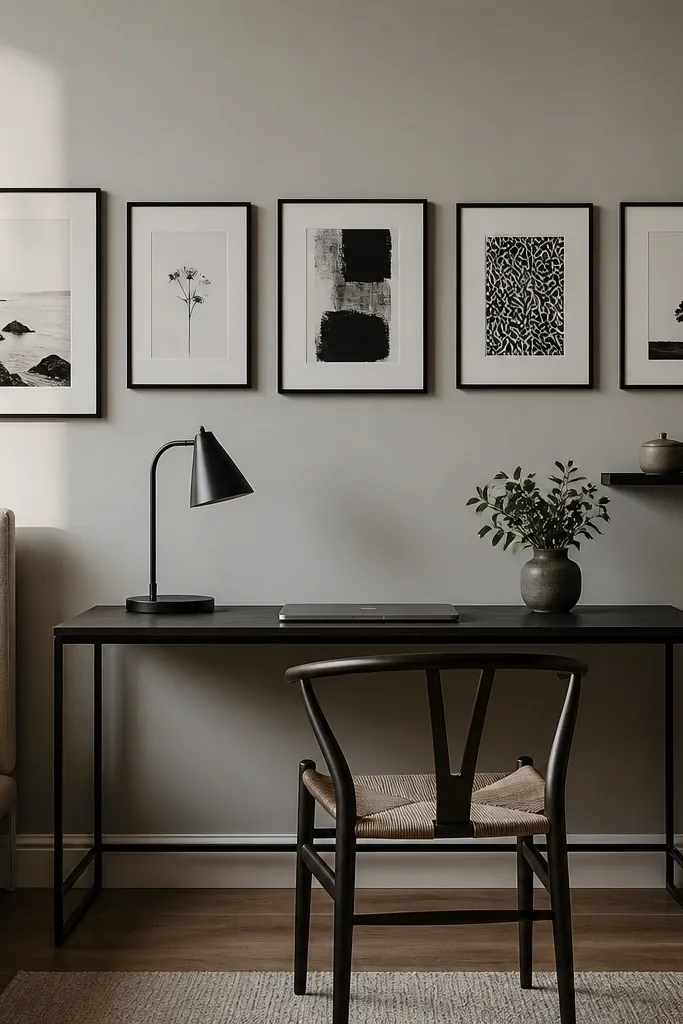
If your desk sits where it’s always visible from the bed, the wall behind it matters. A monochrome gallery wall gives the eye a neat background so the desk accessories can stay simple. It also makes the whole setup look like it belongs in the room, not stuck there. I like frames with the same width so the wall reads organized.
Use frames in one width, like 1 inch black frames, and keep mat colors off-white. Hang the center of the gallery at about 60 inches from the floor for a seated viewing angle. Keep the desk accessories low and minimal so they don’t compete with the wall.
Pro tipLeave 2-3 inches between frames. Too tight makes it look cramped, especially in small bedrooms.
Watch outAvoid mixing frame finishes like gold, chrome, and black — it looks accidental.
12. Matte black desk with light oak chair rail
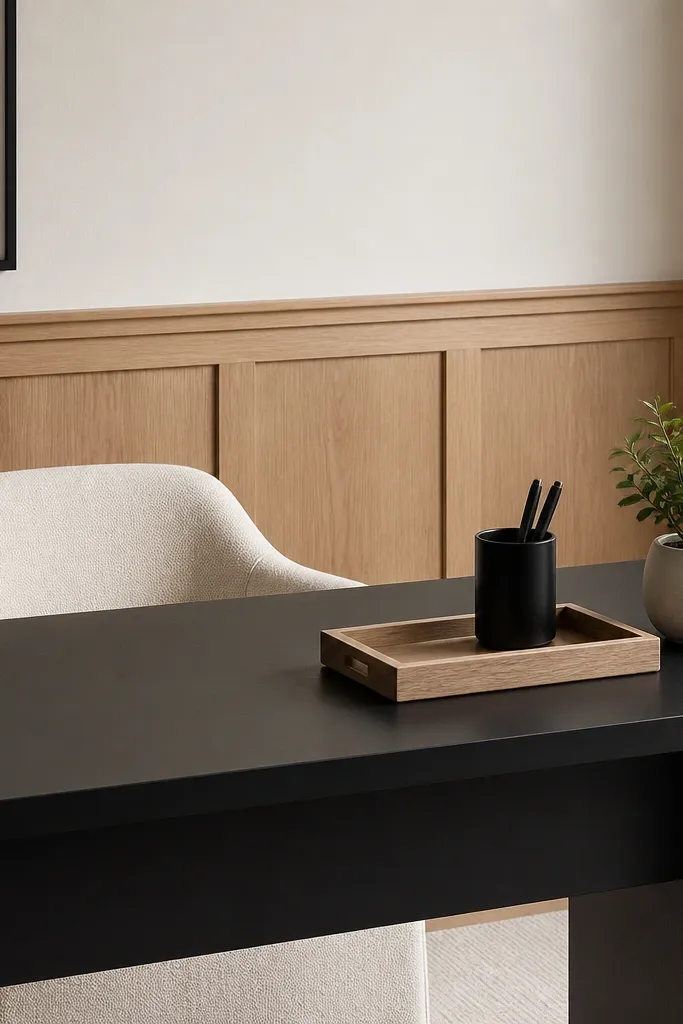
The trick here is contrast without chaos. Matte black gives a crisp modern edge, while the light oak chair rail adds warmth and keeps the room from feeling heavy. The plant is one controlled accent, not a jungle. This look works great when you have darker bedroom furniture and want the work zone to feel intentional.
Choose a chair that doesn’t have a high back so the desk line stays clean. Keep the plant pot white or cream and limit leaves to one plant. Use one tray on the desk to corral small items — it makes cleanup fast.
Wipe the desk daily with a dry microfiber cloth. Matte black shows dust and fingerprints quickly.