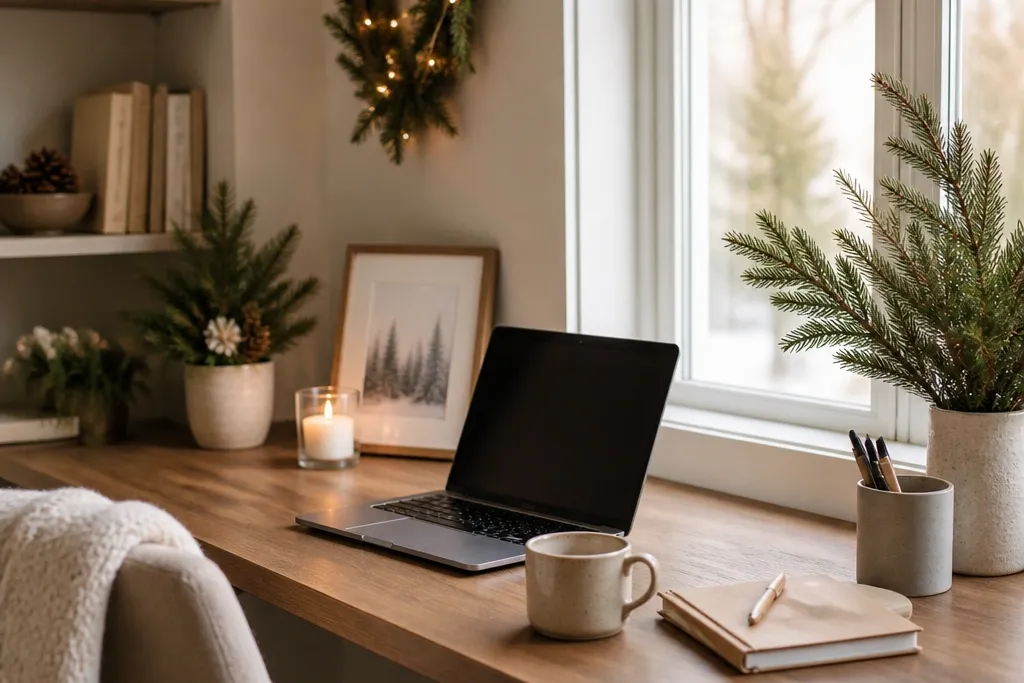
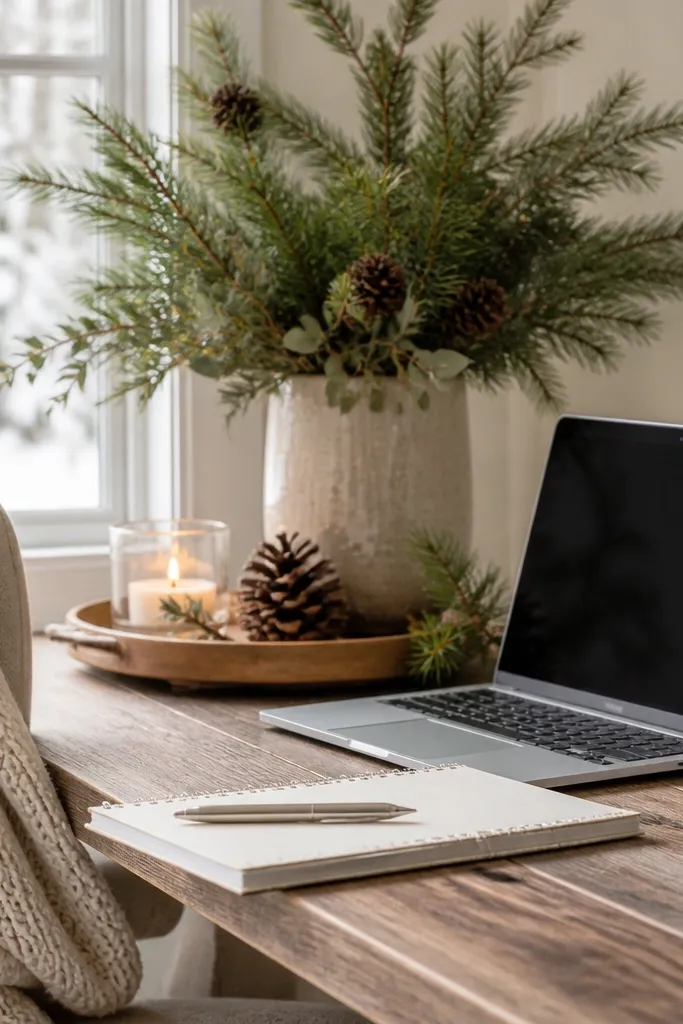
1. Evergreen console desk with tray styling
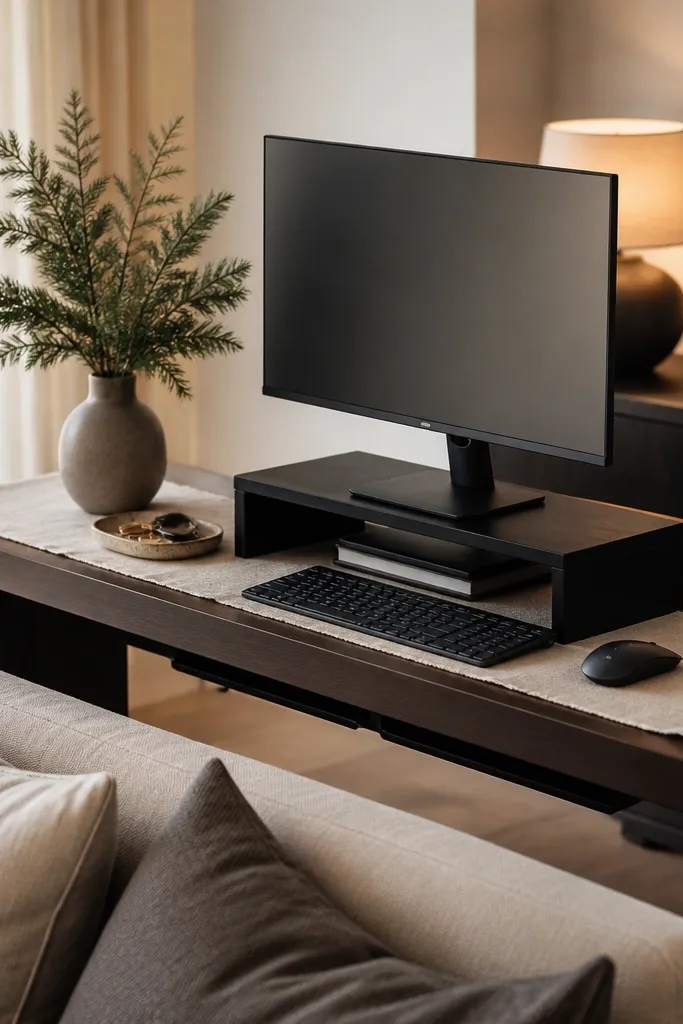
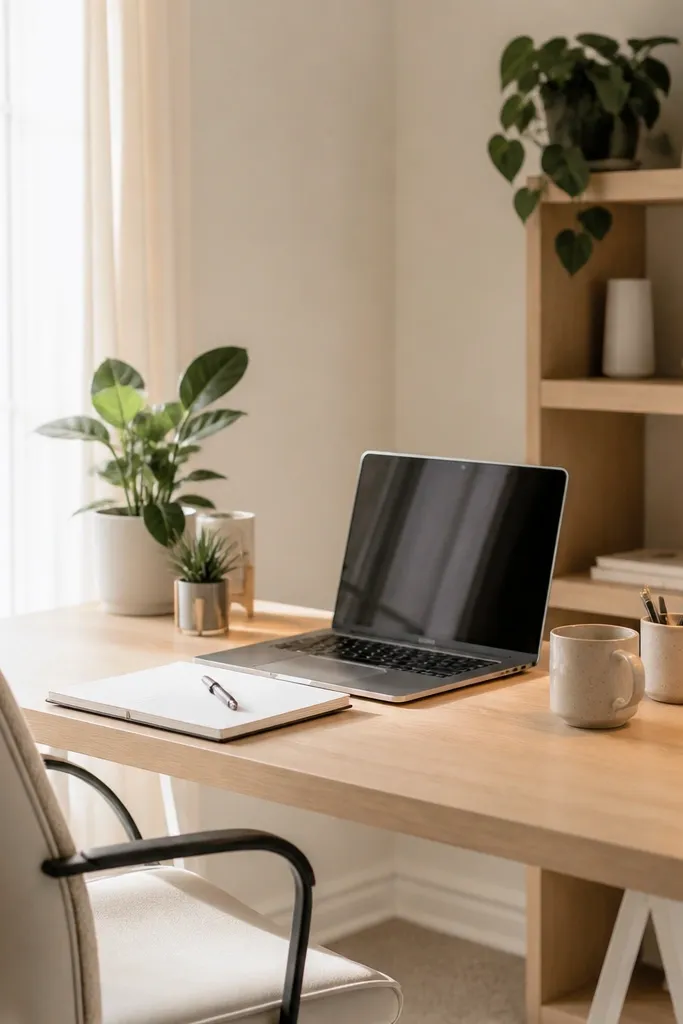
This setup works because the console reads like furniture first, not office equipment. A linen runner softens the flat surface and makes the desk look intentional even when papers are out. The ceramic tray keeps small items from scattering and gives you a single “home” for chargers, sticky notes, and pens. I use evergreen sprigs or a small faux branch in winter and swap to fresh-looking greenery for other seasons so the base stays consistent.
Use a console or sideboard with a 10-14 inch depth so it doesn’t swallow the room. Aim for a runner width that leaves 2-3 inches of wood showing on each side. Keep the monitor centered and set it on a riser so it aligns with the lamp height; I like lamp shade bottoms around eye level when seated.
Pro tipRun all cables into a fabric cord cover or a slim raceway under the console so nothing dangles when you stand up.
Watch outAvoid a high-gloss desk surface — it shows fingerprints and makes the whole setup look like an office.
2. Boucle reading chair + desk lamp corner
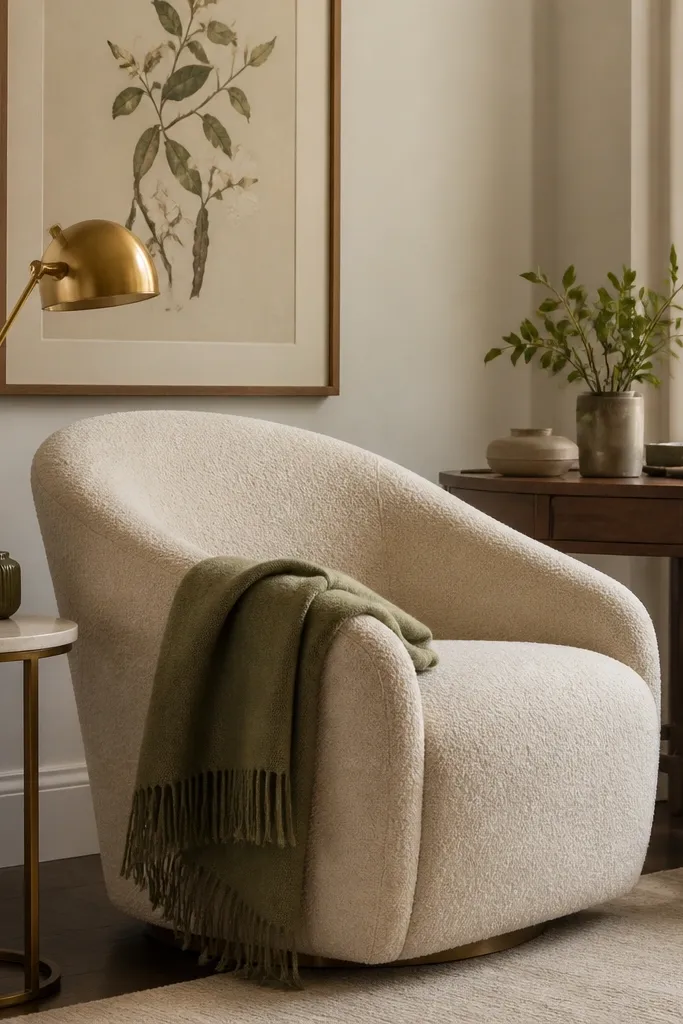
This is my go-to for small living rooms because it keeps the “work” tucked into a cozy corner. Boucle has that soft, fuzzy texture that makes a desk feel less harsh. The lamp corner gives you a focal point even when you’re not using the desk, and the green throw ties into the seasonal evergreen theme without needing constant decor changes. I like a brass lamp because it warms the room and makes neutrals feel lived-in.
Place the chair first, then set the desk so you can work without twisting your torso — leave about 2 feet of walkway in the corner. Use a side table that’s 14-18 inches wide and mount the lamp so the light hits your keyboard area, not the wall. Choose a throw in deep evergreen or muted sage and keep it on the chair year-round.
Pro tipPick one wall print style (same frame color) and rotate only the art mat color each season.
Watch outDon’t put the chair too close to the desk — if your knees bump, you’ll stop using the corner.
3. Linen slipcover ottoman as document drop
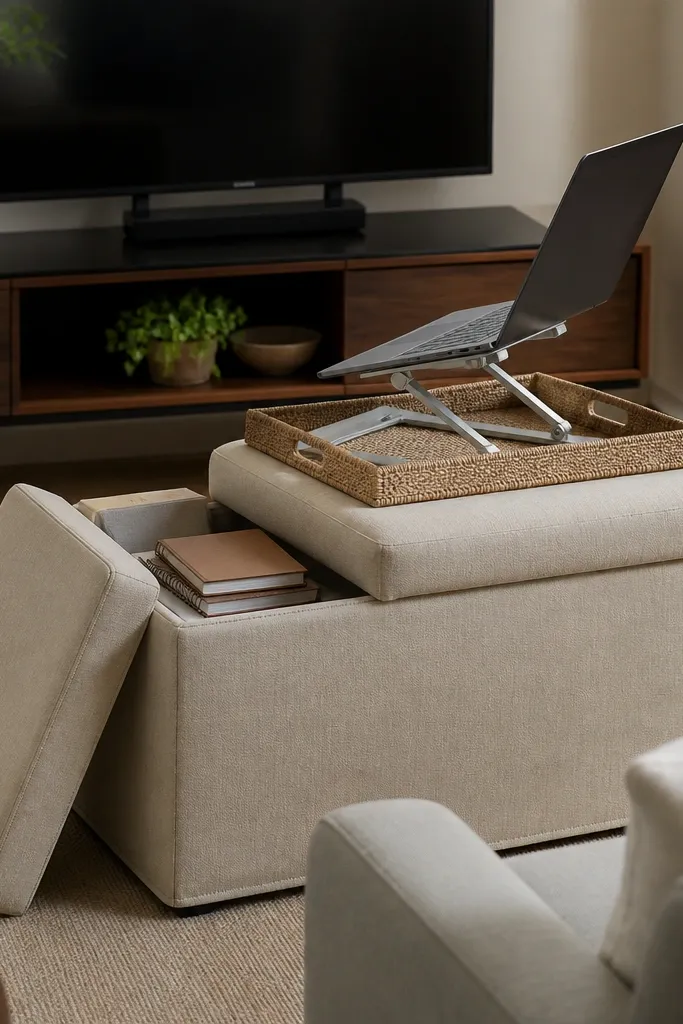
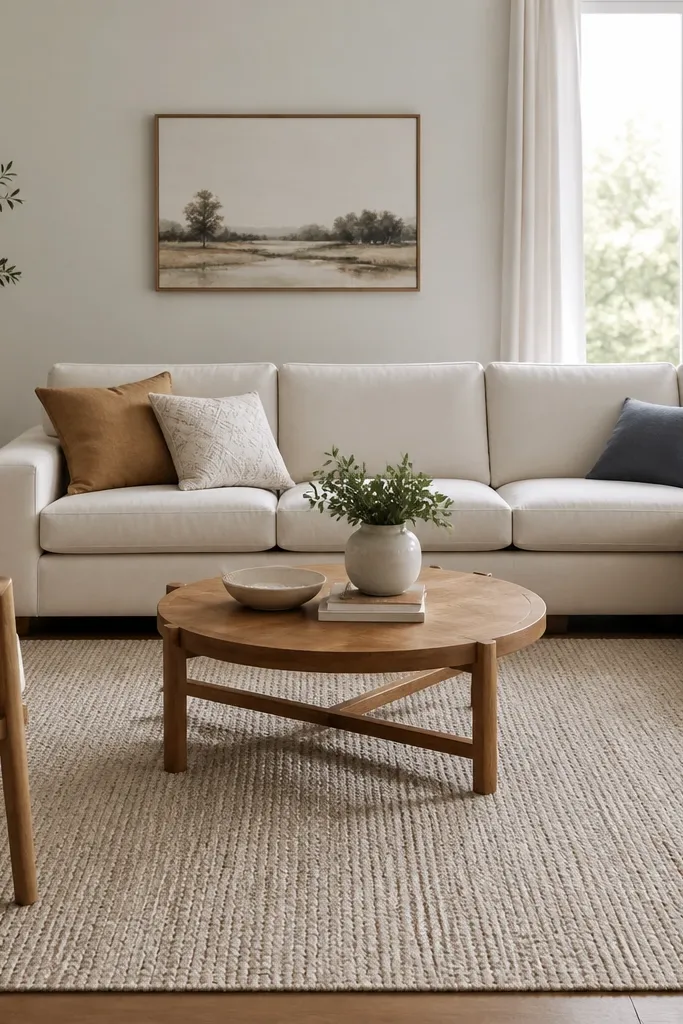
If clutter is your biggest enemy, an ottoman with a lid changes everything. You can keep documents and spare cables inside, so the room looks clean even when you’re in the middle of a project. The linen slipcover makes the ottoman match your sofa, so the work zone doesn’t look separate. Pair it with a laptop stand and a tray so your desk becomes a styled surface.
Use a laptop stand that lifts your screen to about eye level; aim for 4-6 inches of lift. Keep the tray size small enough to leave space for your plant or a small lamp base on the media console. Store chargers, spare pens, and sticky notes inside the ottoman — I keep everything in a single zip pouch for fast resets.
Line the inside with a thin fabric divider so papers don’t slide to the bottom.
Skip shiny plastic trays — they look temporary and cheap under warm living room lighting.
4. Gallery wall behind the monitor with repeat frames
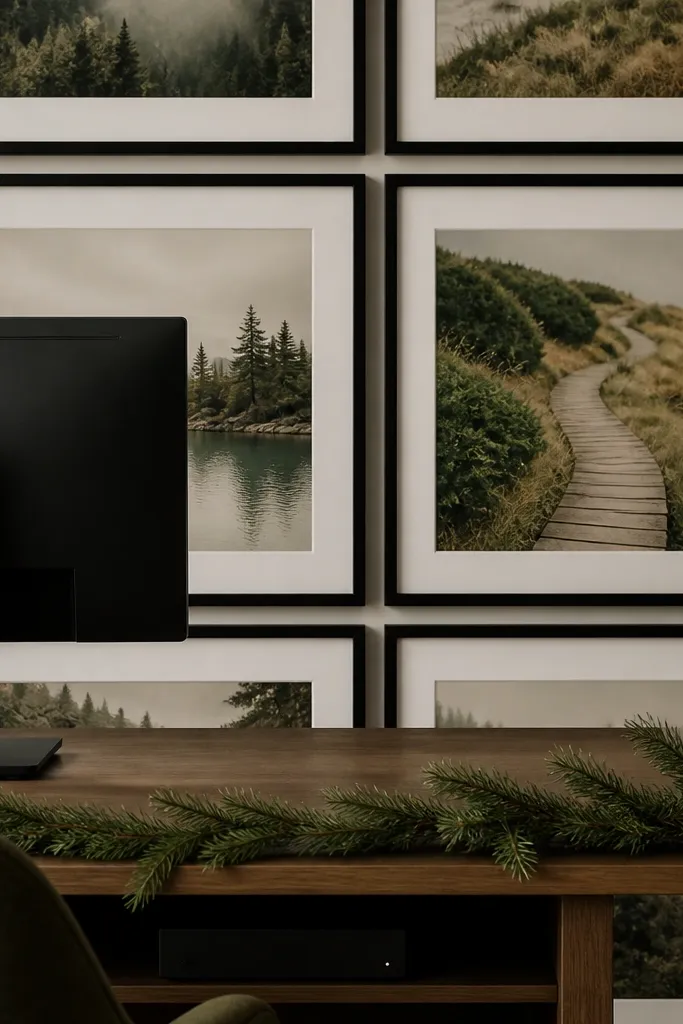
A gallery wall makes the monitor feel like part of your decor plan. When frames match in size and finish, the visual noise drops, and your seasonal evergreen work from home set up looks curated without needing fancy furniture. I repeat one green accent across seasons by choosing art with sage, olive, or muted pine tones. The desk stays functional, but it stops looking like a separate office.
Pick 5-7 frames in the same finish. Use a mix of print sizes but keep the mat color consistent (cream or warm white). Hang the center of the grid at about 58 inches from the floor so it sits right behind the screen when you’re seated.
Pro tipSwap seasonal art by changing mats only, not the entire frame layout.
Watch outDon’t hang art too high — if the top of frames cuts into your monitor area, it looks messy.
5. Green runner + seasonal candle trio
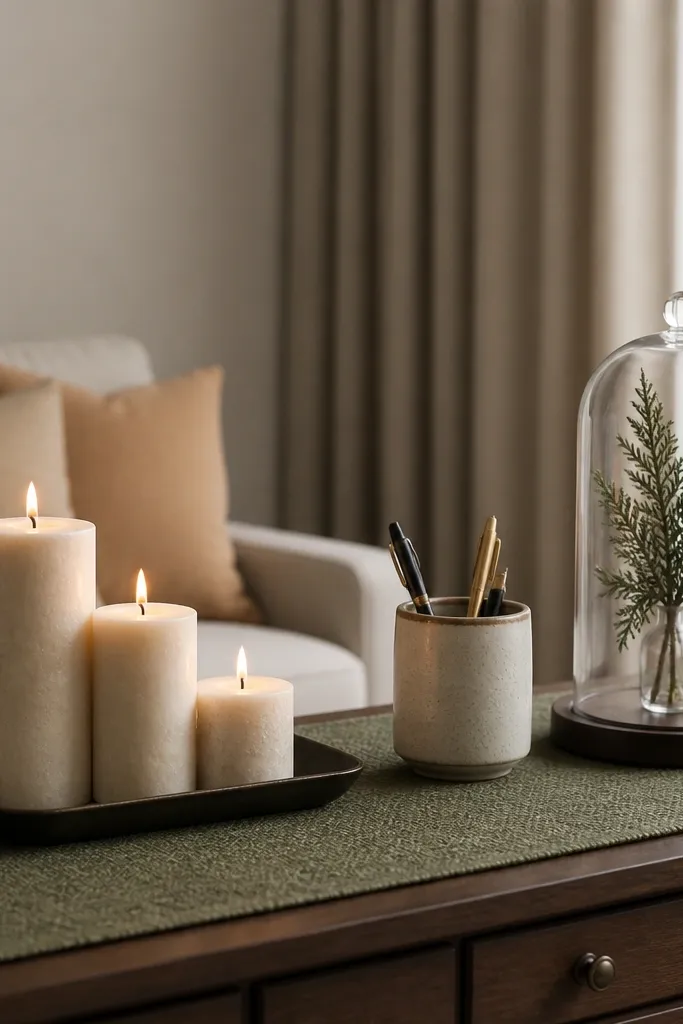
This is a simple seasonal evergreen work from home set up that looks finished even when you’re mid-week. A textured runner anchors the whole desk and gives you a consistent evergreen base. The candle trio adds height and softness, and it’s easy to swap scents or candle colors by season without changing the layout. I like using matte candles in glass so the shine doesn’t fight with your monitor glow.
Choose a runner in olive, deep green, or moss — not bright neon. Keep candle heights around 4 inches, 6 inches, and 8-10 inches tall for a natural stacked look. Place the trio to the right side of the monitor so you don’t cast flicker shadows across your keyboard.
Use flameless LED candles during workdays if you want the vibe without burning time.
Avoid real candles on unstable trays — heat and wobble make it look careless.
6. Rattan desk tray + matte black cable box
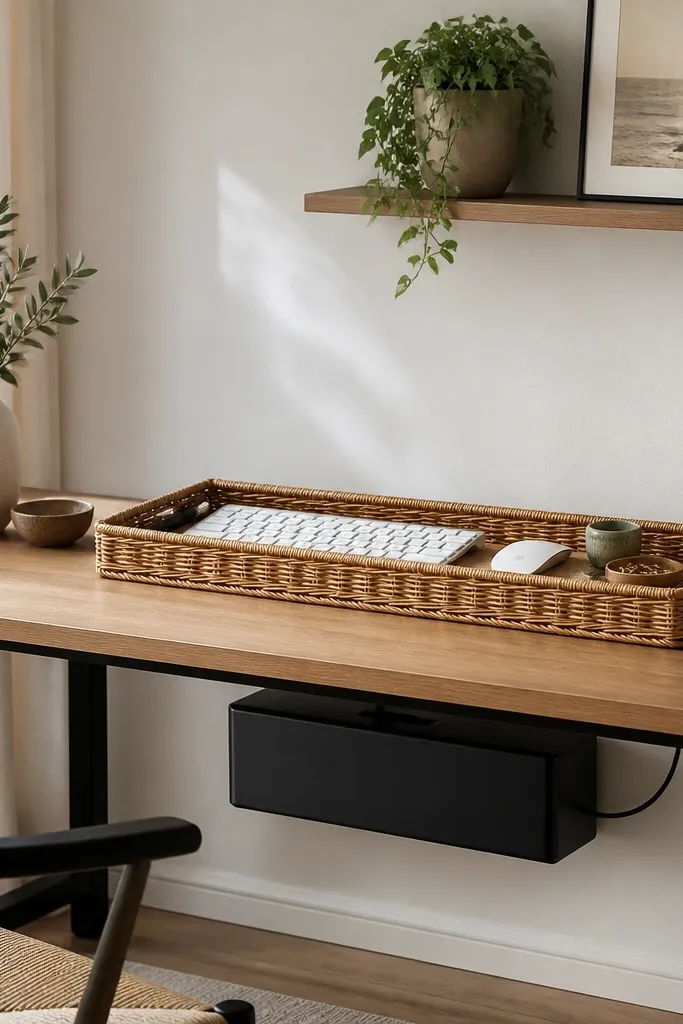
Rattan adds texture that makes electronics look less industrial. When you corral the essentials into one tray, the desk surface stays calm, and your seasonal evergreen accents can be just one plant or one frame. The matte black cable box is the unsung hero — it removes the “tangle” look that kills aesthetics. I’ve used this combo in living rooms where outlets are awkward and it still looks clean.
Pick a tray large enough to hold your keyboard and mouse front-to-back without hanging off the edge. Use a cable box that fits your power strip width and mount it with screws or industrial Velcro under the desk. Keep the plant on a shelf or at the far end so it doesn’t block your light source.
Route cords behind the tray edge and down through the cable box so nothing crosses your line of sight.
Don’t use a white cable box in a dark room — it’s the first thing your eyes catch.
7. Seasonal throw swap with fixed desk lamp
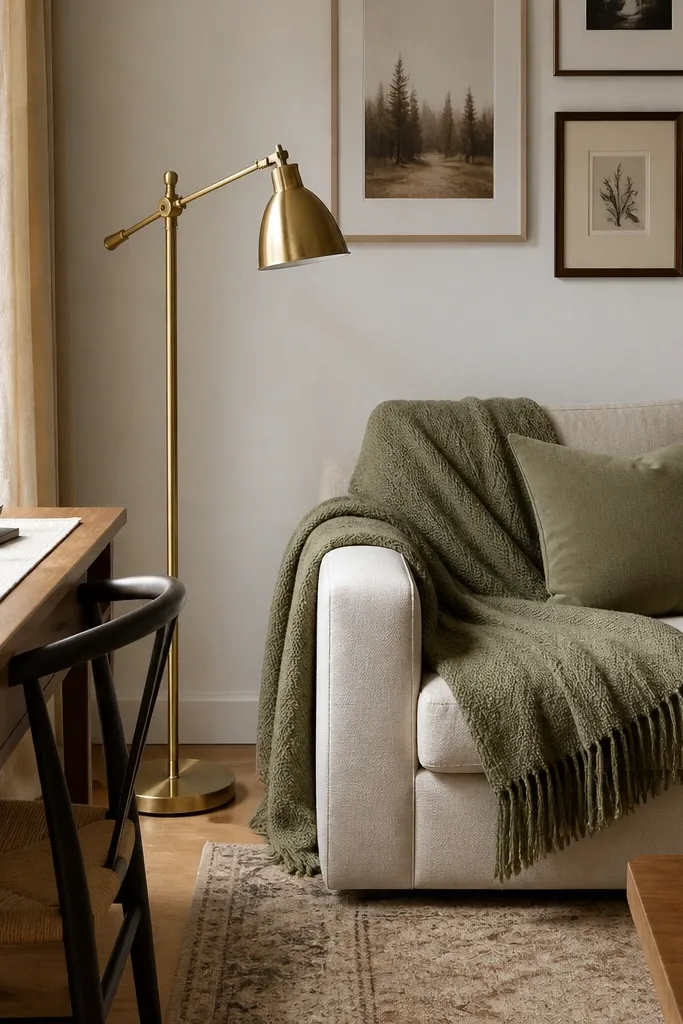
This is the easiest way to keep a seasonal evergreen work from home set up from looking like it’s changing every week. Your desk lamp stays put, and the runner or desk mat stays put, so the work zone doesn’t reset. When you swap throws, you get the seasonal feel without moving furniture or changing your cable situation. Evergreen stays present through greenery or a consistent green pillow.
Choose one lamp style you love and keep it year-round. Use a desk mat in neutral linen or wool felt so it doesn’t clash with seasonal throws. For throw swaps, keep the same size and fabric weight each time so the room keeps the same drape and thickness.
Take a photo of your setup in winter and use it as your baseline when you swap throws later.
Avoid mixing heavy knit throws with thin curtains — the room looks mismatched in texture.
8. Wall-mounted shelf desk riser for tight rooms
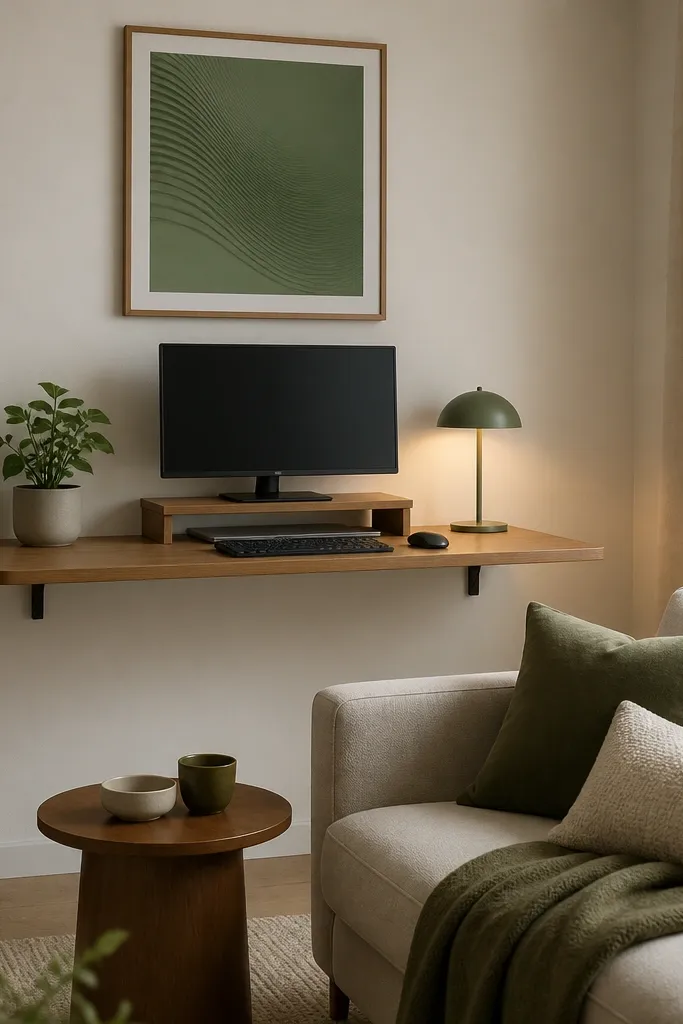
When floor space is tight, a wall-mounted shelf makes your work zone disappear between uses. It looks like a shelf first, and your laptop setup reads as decor. The seasonal evergreen element can be small and repeatable: a plant, a green print, or a textured book stack. I like this idea because you don’t have to fight a desk chair blocking the living area.
Use a shelf depth around 12-14 inches so your arms rest without your body leaning forward. Place the monitor on a riser to get eye level, then keep the lamp on the far side for even light. Add a slim felt strip under the laptop stand so it doesn’t slide on smooth finishes.
Install a cable outlet behind the shelf if possible, then route cords straight down behind the wall panel or a cord cover.
Don’t mount the shelf too high — if your keyboard is above elbow height, your posture will suffer.
9. Neutral sofa table with evergreen mirror behind
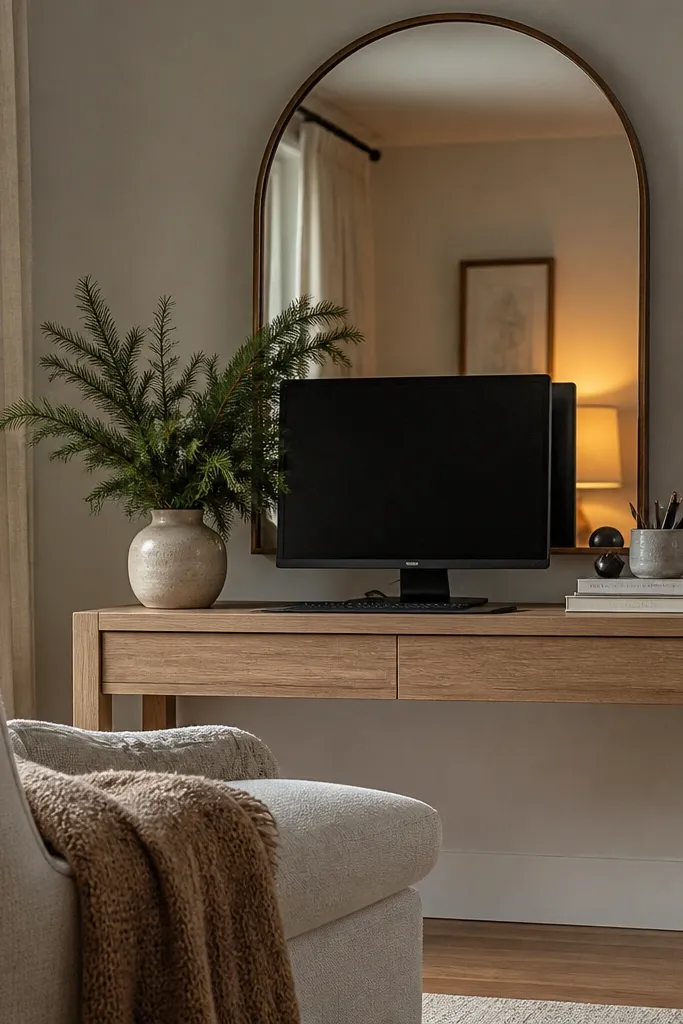
A mirror behind the work zone makes the room feel bigger and keeps the setup from looking flat. I’ve used an arched mirror because it softens straight lines and makes the whole corner feel more “designed.” The seasonal evergreen part stays consistent through greenery and book covers in muted green tones. The mirror also helps hide the fact you have a workspace — it bounces light and turns it into ambiance.
Pick a mirror height where the bottom edge lines up near the top of your monitor when seated. Use a sofa table with a lower shelf for storing a laptop bag, so you’re not hunting for things. Keep the desk top simple: one organizer, one lamp, one evergreen accent, and a small book stack.
Pro tipAngle the mirror slightly so it reflects the lamp, not the mess under the desk.
Watch outAvoid mirrors with heavy ornate frames — they compete with your decor and make the workspace feel louder.
10. Book-led desk styling with evergreen spine color
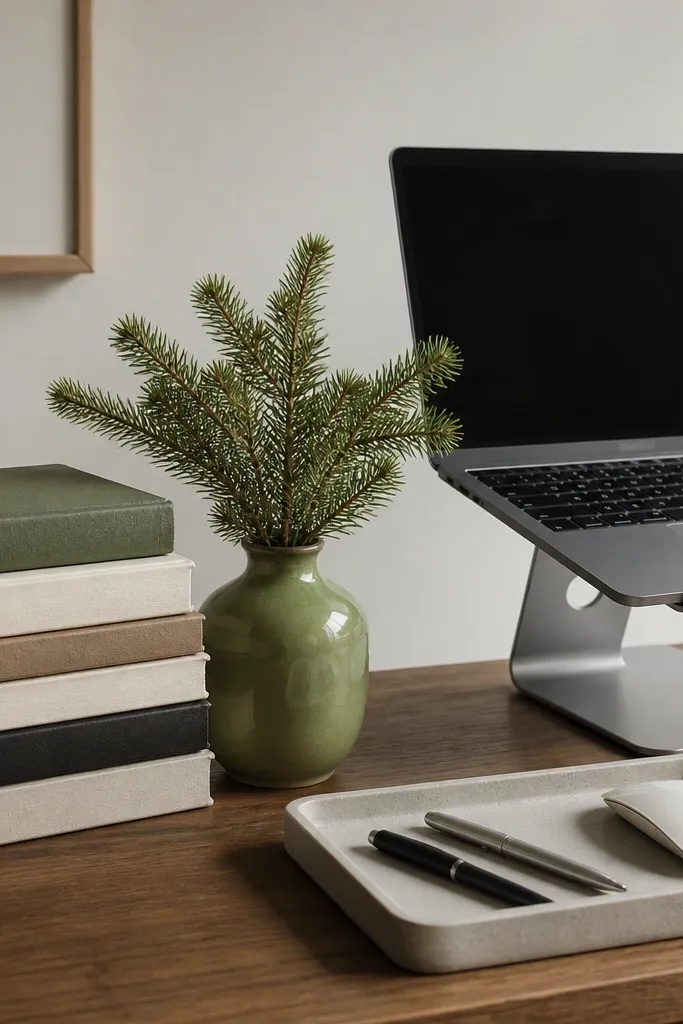
This works because books create height and structure without adding clutter. If you choose one consistent evergreen spine color (sage, olive, or deep pine), it ties every season together. I like using books with matte covers so the monitor doesn’t reflect glare. The styling is practical too: the books are within arm’s reach for reference and notes.
Stack two books vertically and one horizontally so you get a stable base. Keep the top book’s green spine facing outward toward the room. Use a small ceramic vase or jar with a narrow opening so the greenery looks intentional, not like it’s thrown there.
Rotate the books by season but keep one green-spined title in the stack all year.
Skip glossy covers — the glare looks cheap under desk lamps.
11. Felt pin board + seasonal notes corner
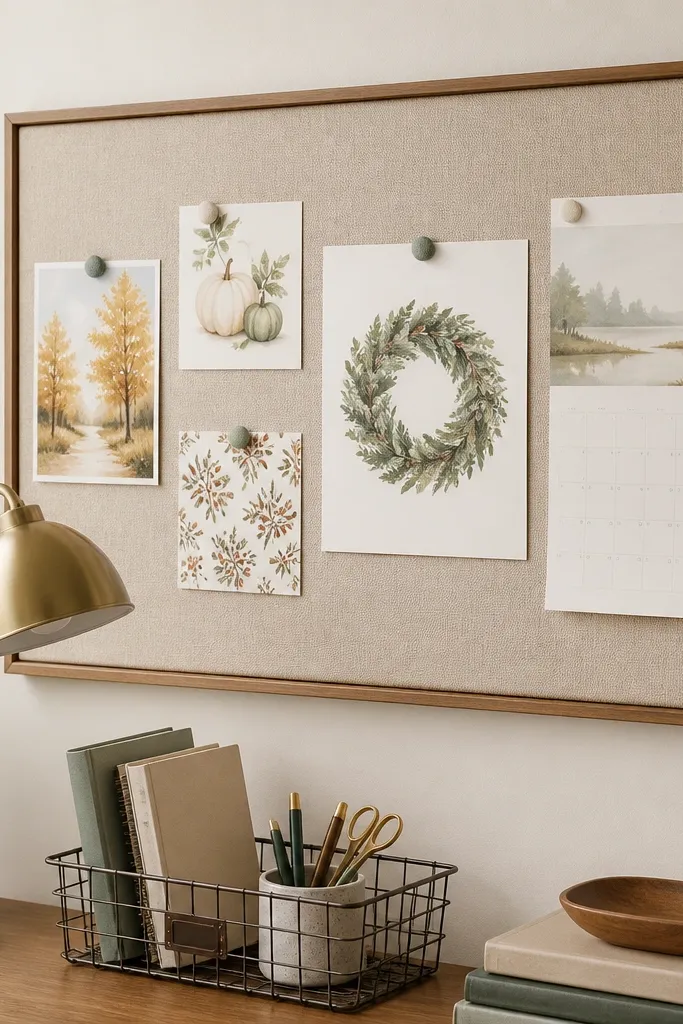
A felt board makes the workspace look like home rather than a command center. You can keep your schedule and reminders visible without paper stacks taking over the desk. The evergreen element is easy: pin a green botanical print in winter, then swap to a lighter leaf illustration in spring and keep the same board. Felt also absorbs the visual “buzz” from sticky notes and cables.
Use a board size that’s about the width of your desk plus 6 inches. Mount it so the top sits around shoulder height when seated. Choose push pins in muted colors that match your room, and keep the number of pinned items low — I aim for 6-10 pieces max.
Pro tipWrite your weekly schedule on one reusable card so you’re not printing new paper every month.
Watch outDon’t overfill the board — too many notes turns it into clutter.