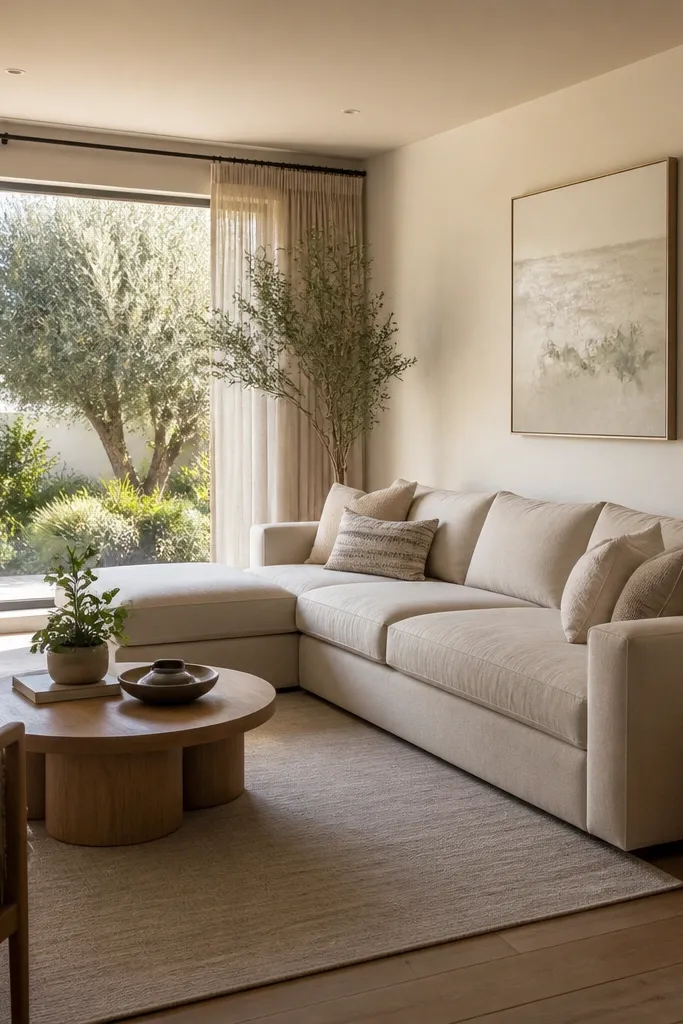
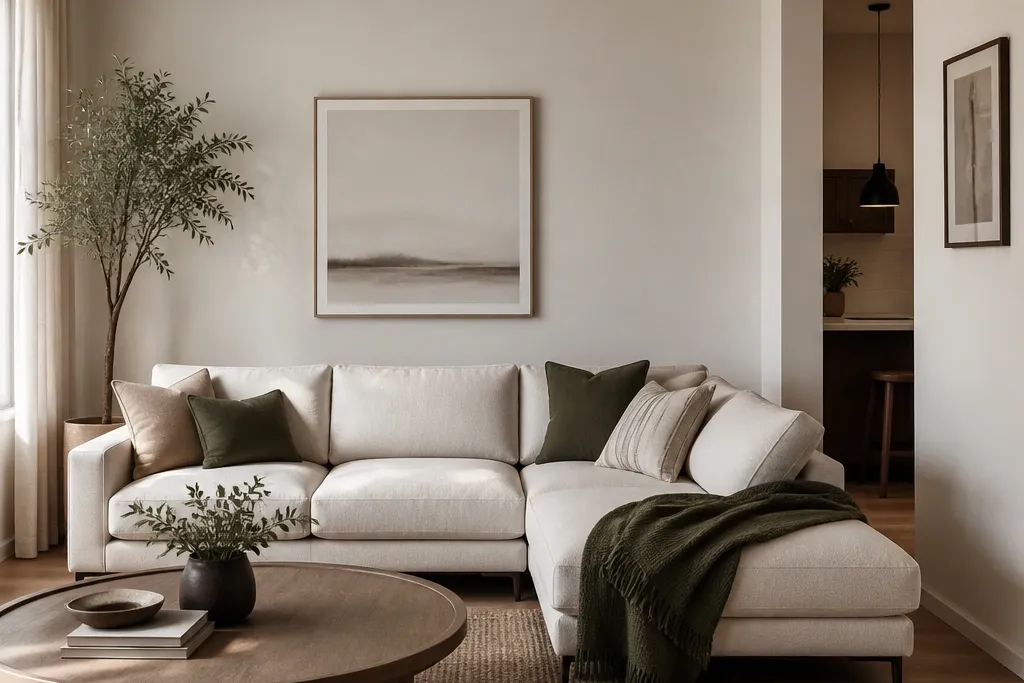
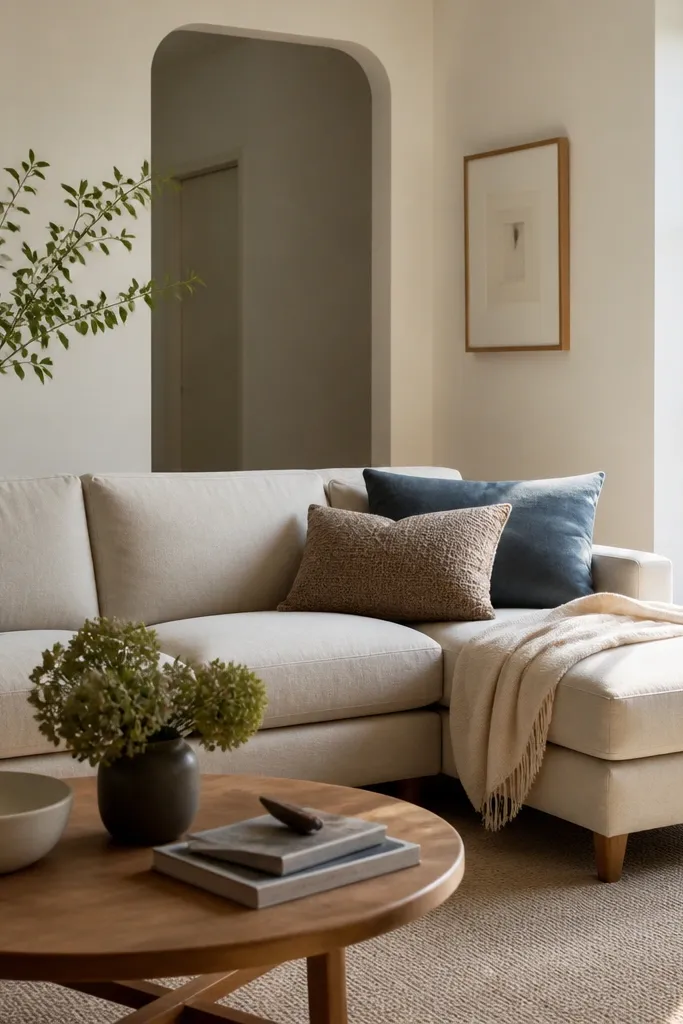
1. The 90-Degree Corner Reset with a Backed Media Wall
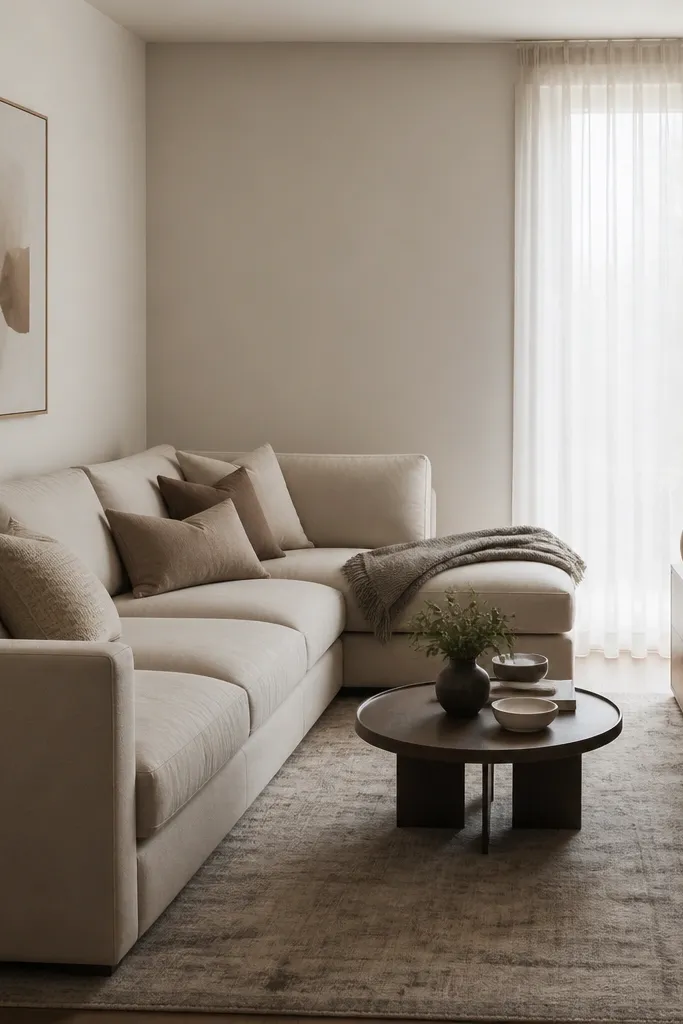
Put the chaise toward the room center so the long side reads as a clean border, not a block. Use a low media console on the back wall so your eye lands at one horizontal line. I like a rug that is 8x10 or 9x12 depending on room size — the rug edges visually stitch the sectional into the floor instead of floating it. Curtains in off-white sheer fabric soften the hard corner and reduce the “boxy” feeling.
Pro tipChoose console hardware in brushed nickel or matte black to match the sofa legs for a cleaner read.
Measure your wall first: keep the console within 2-4 inches of the sofa’s end so it doesn’t look mismatched. Use a rug that extends at least 6 inches beyond the sofa front edges. If your sectional is 90 inches long on the main side, a 8x10 rug usually works in a 10x12 room.
Watch outAvoid placing the console on a different wall plane with big gaps — it makes the sofa look randomly dropped.
2. Float the Sectional 6 Inches Off the Wall for Airflow
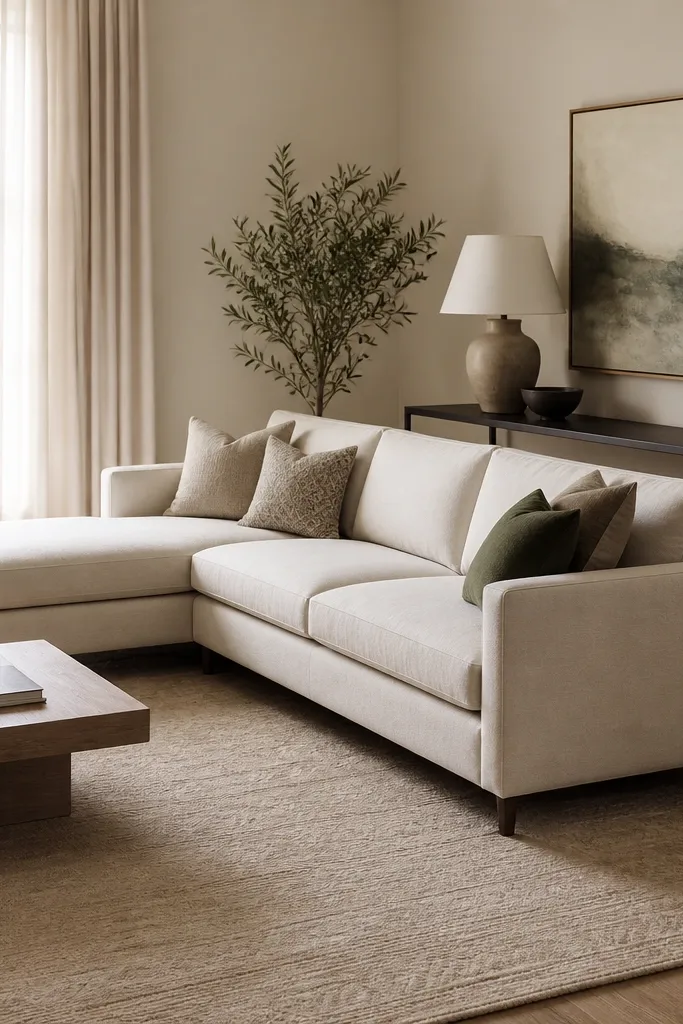
Floating the sofa a few inches changes everything. It gives you a visual “shadow gap” that makes the room feel taller and lighter. Put a slim console behind it only if you can keep the walkway clear. In my installs, 6 inches off the wall is the sweet spot — enough to feel intentional, not enough to create awkward space you can’t use.
Pro tipAdd a slim floor lamp near the floating gap to make that space feel like part of the room instead of empty void.
Use a console depth under 10 inches so it doesn’t steal space. Keep the sofa’s chaise end aligned with the rug’s long edge so the rug looks straight and not pulled by the furniture. If your room is narrow, keep the floating gap consistent across the whole sofa length.
Watch outDon’t float it more than 8 inches in a small room unless you truly have clearance — it starts to look disconnected.
3. Round Rug + L Shape Sofa to Break Square Corners
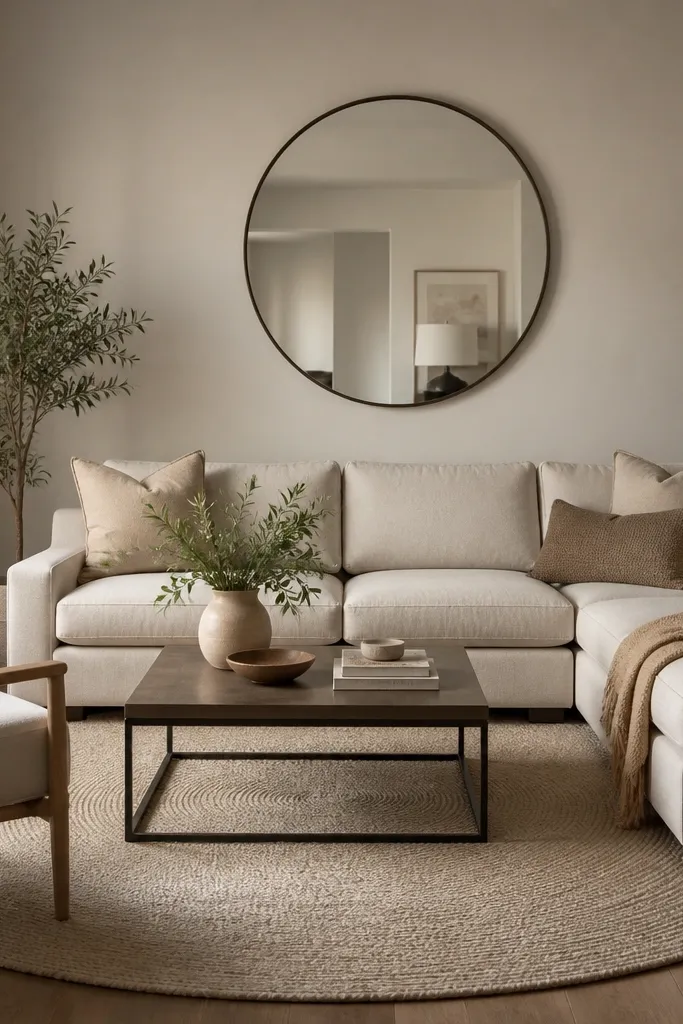
If your room has sharp corners, a round rug softens the geometry fast. The L shape already has a bold angle; the circle calms it down. I use a round rug with a diameter 6 inches wider than the sofa’s widest front footprint. This creates a halo effect that makes the seating area feel larger without adding more furniture.
Pro tipChoose rug tones that match the sofa base color — beige sofa + warm greige rug looks cohesive instead of patchy.
Anchor the rug so the front legs of the sofa sit on it, not hovering. Keep the coffee table round or oval to avoid fighting the rug shape. Stick to low pile (2-3 mm) in tight rooms so doors and traffic don’t snag.
Watch outAvoid using a shag pile in a small layout — it looks messy and makes furniture placement feel unstable.
4. Two-Leggy Side Tables Instead of One Big Coffee Table
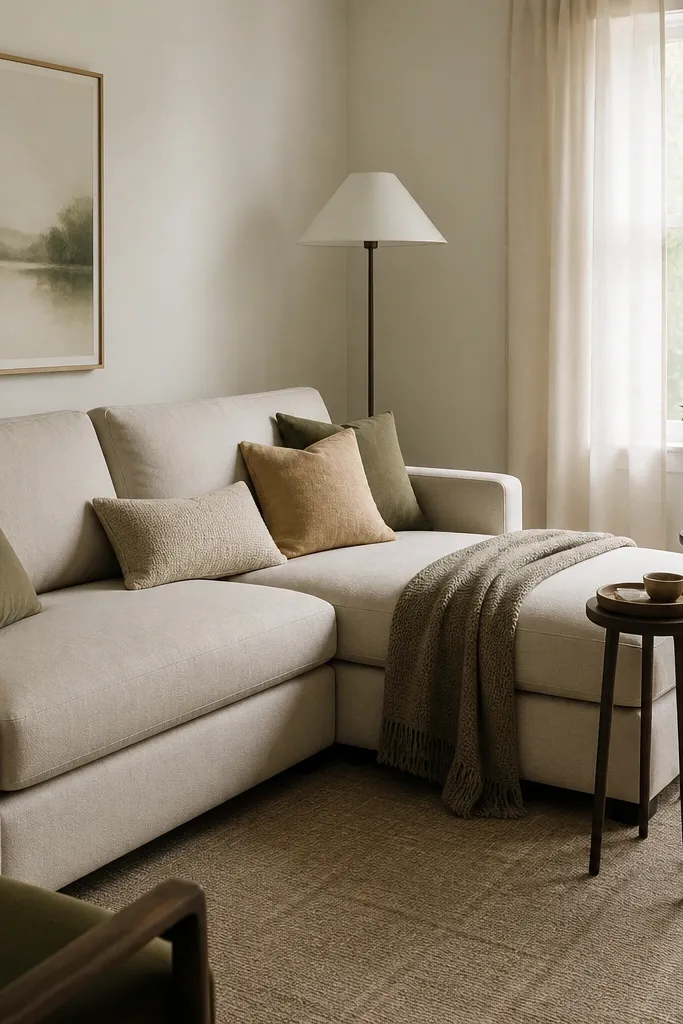
When space is tight, one big coffee table can feel like a traffic bump. Two narrow tables give you surface area without blocking your walk lane. I like tables that have open bases or slim legs so you can see the floor through them. This makes the room feel airy even though you still have a place for drinks and remotes.
Place the tables so there’s a 16-18 inch gap from the sofa’s front edge to each table. Use one table for a lamp/tray and the other for a stack of books. Keep the table tops around 18-24 inches wide so they don’t look oversized.
Use a matching wood tone for both tables — walnut + walnut or white oak + white oak keeps the look intentional.
Avoid heavy blocky ottomans in small rooms unless you have a clear 36-inch lane around them.
5. Chaise Facing the Window for Natural Light Seating
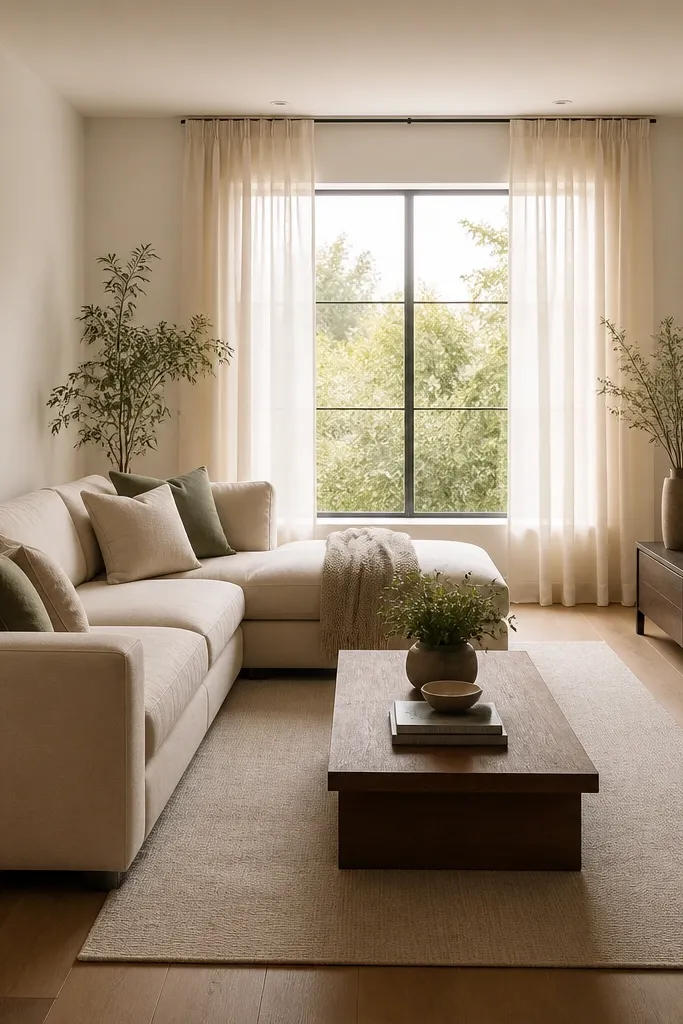
Turning the chaise toward the light makes the room feel bigger because you’re using the brightest area as your “living zone.” It also gives you a more relaxed seating posture, which is what most people want in a small space. Keep the sofa fabric in a light tone so it reflects daylight instead of absorbing it.
Pro tipAdd one long throw pillow on the chaise side in a stripe or subtle texture to pull the light direction into the seating.
Angle the sofa so the chaise is within 10-15 degrees of the window line. Use a floor-length curtain panel that nearly touches the floor to add height. If your window is narrow, skip a huge curtain valance and go straight panels.
Watch outDon’t cover the window with tall furniture — it shrinks the room fast.
6. Low Media Console + L Shape Sofa for a Clean Wall Line
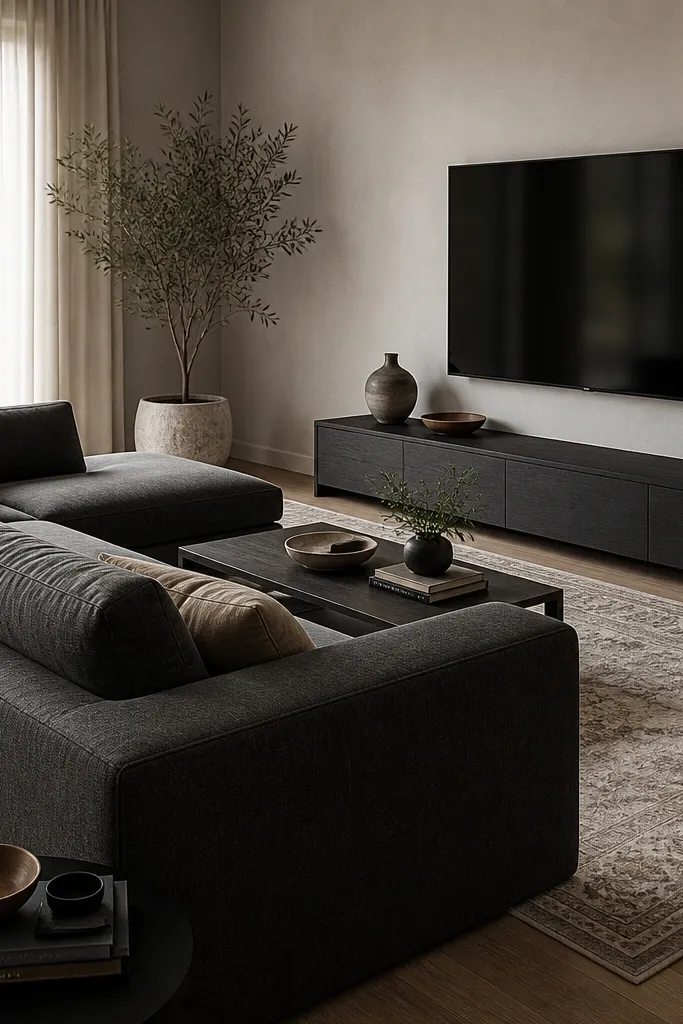
A wide, low console creates one long horizontal line that makes the room feel organized. When your sofa is in an L shape, that organization matters. I use a console height around 16-20 inches so it stays visually under the sofa back. Pair it with a rug that runs toward the console — it visually pulls the room together.
Pro tipUse two matching baskets on the console shelves for remotes and chargers to keep the front clean.
Mount the TV so the center is about 42-46 inches from the floor if you sit at the sofa. Keep the console width at least 70% of the sofa’s long side so it looks proportional. Choose cable management so cords don’t hang — small rooms show clutter instantly.
Watch outAvoid a tall cabinet style next to a small sectional — it makes the whole wall feel top-heavy.
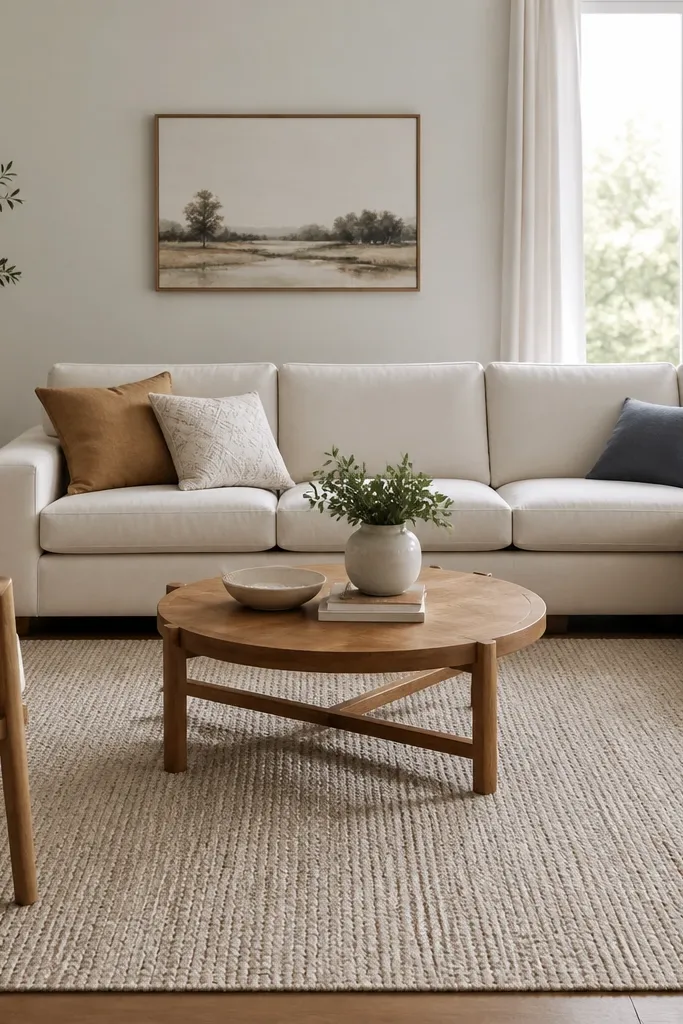
7. Greige Sofa + White Walls + One Warm Wood Accent
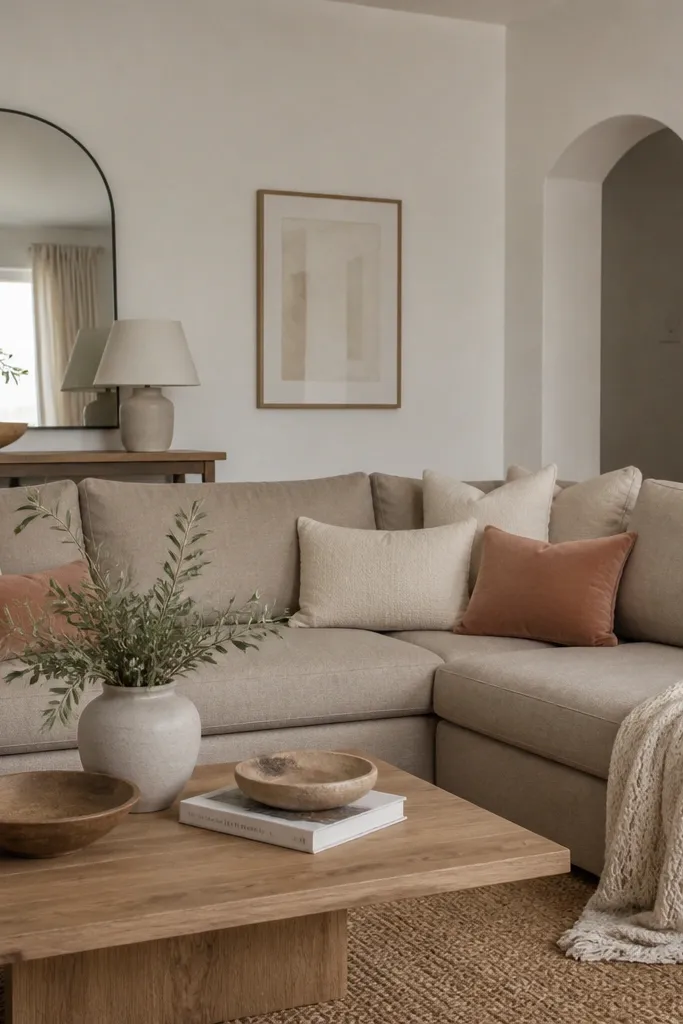
This combo is my go-to for small rooms because it keeps contrast low. Greige on white walls reads clean and bright without turning the room into a cold showroom. Add one warm wood element — coffee table, side table, or a slim picture frame — so the greige doesn’t feel flat. The mirror spreads light and makes the open space feel wider.
Pro tipIf your walls are off-white, test a greige swatch against the wall in daylight — some greiges turn yellow fast.
Stick to two main neutrals (greige and cream) and one accent (muted clay or terracotta). Keep pillow patterns small — micro-stripe or tiny dot looks better than big bold prints in tight rooms. Choose a coffee table with a light finish and rounded edges.
Watch outAvoid mixing too many wood tones (walnut + pine + black) in a small room — it looks busy.
8. Patterned Runner Rug to Guide the Eye Down the Room
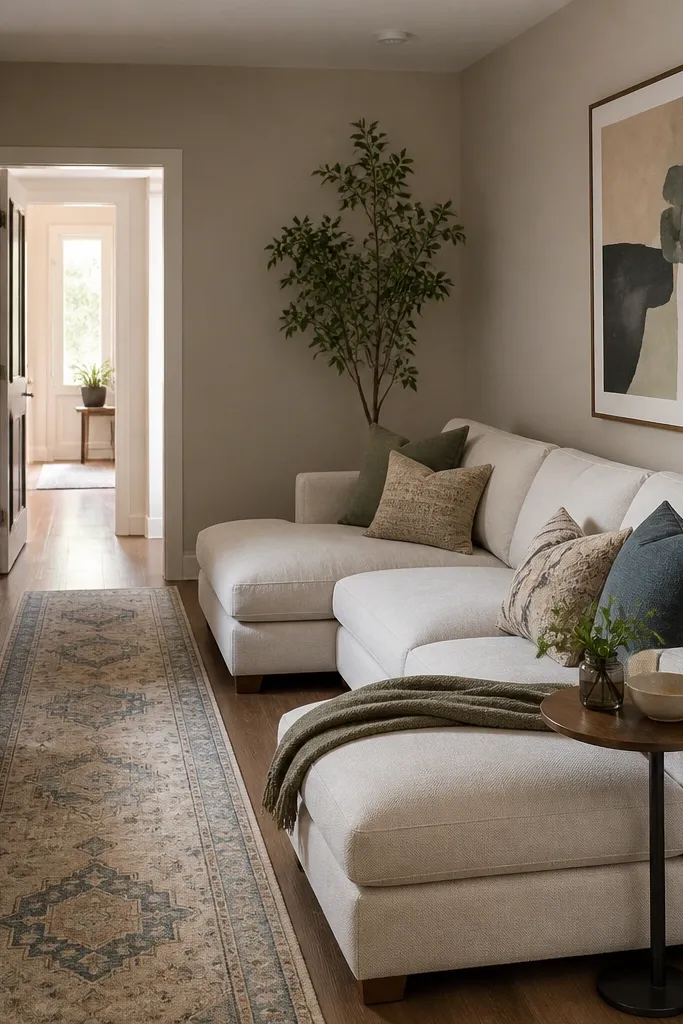
In narrow rooms, a runner can make the space feel longer and more intentional. Use a low-contrast pattern (subtle stripes or medallion) so it doesn’t fight the sectional’s shape. The runner also gives you a clear path so you don’t walk through the seating area.
Pro tipMatch one color in the runner pattern to a pillow fabric so the room feels tied together.
Choose a runner that’s at least 30 inches wide and long enough that it reaches under the front legs of the sofa on the side closest to it. Keep the sofa slightly off the wall on the runner side so the rug isn’t crushed. If your room is 10 feet long, a 2.5x8 runner works well.
Watch outAvoid high-contrast black-and-white patterns in tiny rooms — they can make the space look harsher.
9. Corner Bench Back Cushion for Softer Lines
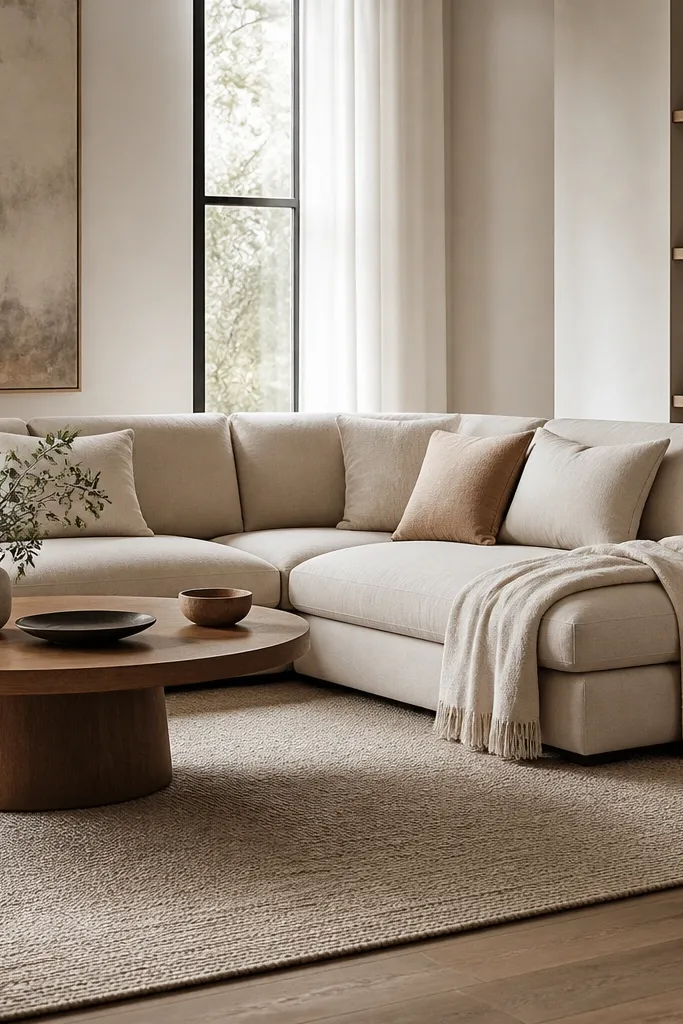
Lower backs and soft seat lines help the room feel less enclosed. If your sectional has a tall back, you can still soften the look with pillow styling and a throw that breaks up the big silhouette. I like linen or cotton throws in oatmeal or natural sand because they don’t look shiny under lamps.
Use two pillows for the main seat (20x20 or 22x22) and one long lumbar pillow (12x24) on the corner. Keep pillow colors within a tight palette so the sofa reads calm. Drape the throw over the chaise arm so it hangs 10-12 inches down.
Press the throw fold with your hands so it drapes in a straight line instead of flopping.
Avoid piling five different cushion covers — small rooms look cluttered fast.
10. Slim Bar Cart on the Chaise Side
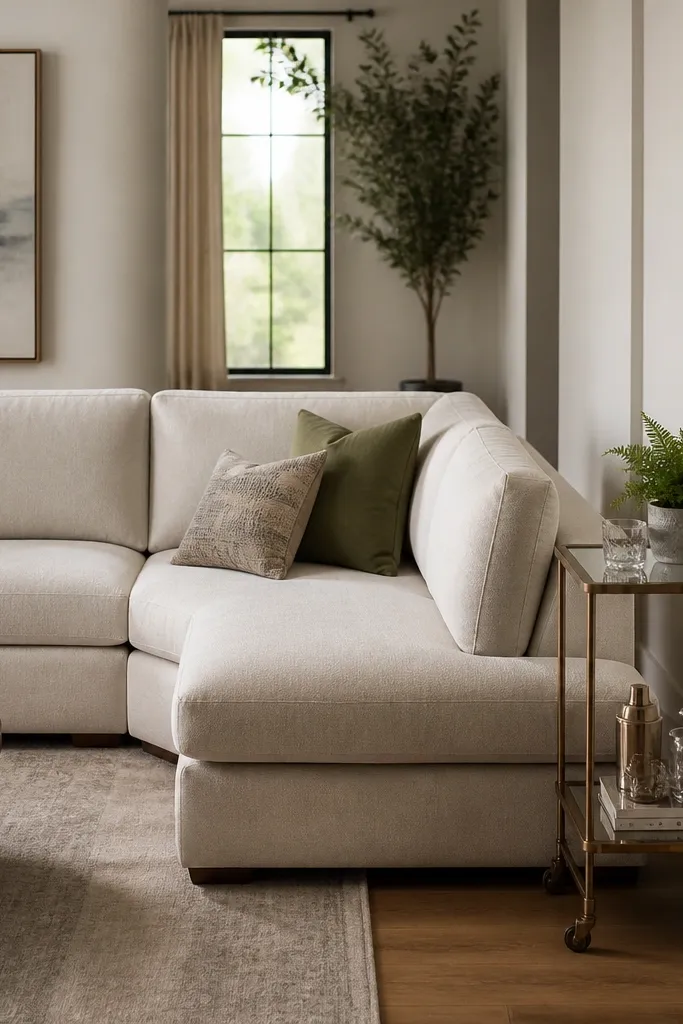
A bar cart gives you storage and serving space without a fixed footprint. In small living rooms, I like carts because you can roll them out of the main lane when you need to pass. Use it near the chaise where you naturally reach for drinks. Choose a cart with open shelves so it doesn’t visually block the sofa.
Pro tipUse a single color tray (matte black or white) to make the cart look styled, not random.
Pick a cart width around 22-26 inches and height under 36 inches so it doesn’t crowd the sofa. Keep the top clear except for a tray and one plant. If your room is tight, select wheels with locking brakes so it stays put.
Watch outAvoid a cart with mirrored panels — it can reflect clutter and make the room feel messier.
11. Sofa + Accent Wall with One Big Art Piece
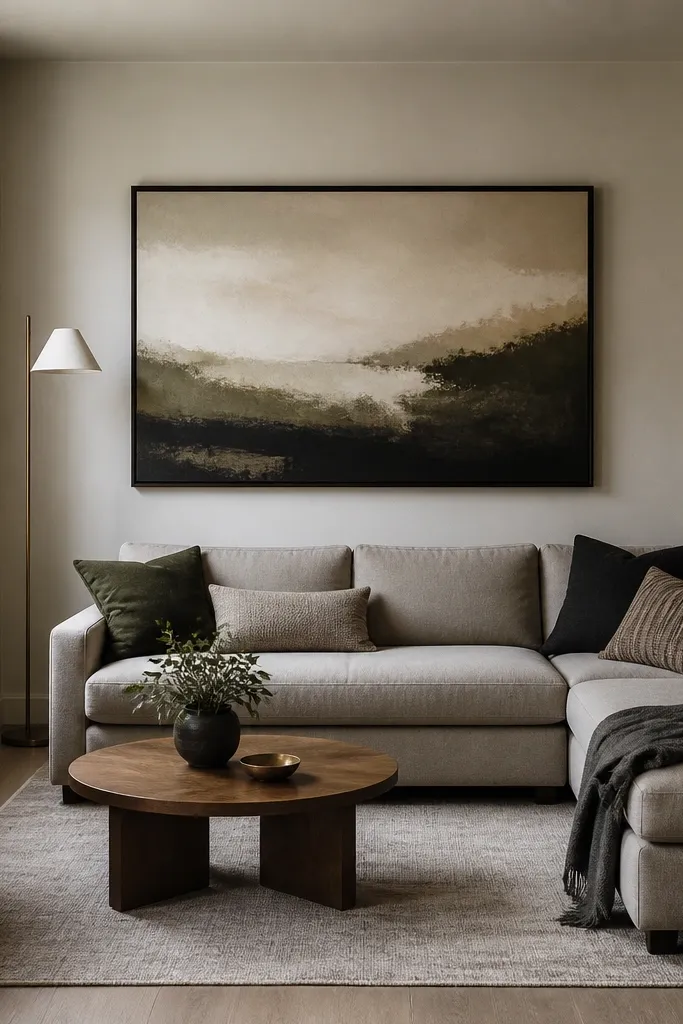
When your room is small, you need fewer focal points. One big art piece creates a clear visual stop behind or above the sofa, so the room looks designed instead of scattered. I like art in muted tones that echo your sofa fabric — charcoal art over greige sofa looks clean.
Pro tipIf your sofa blocks part of the wall, hang the art slightly higher so it doesn’t feel hidden by the back cushion.
Hang the artwork so the center is about 57-60 inches from the floor. Keep the frame width around 60-70% of the sofa’s long side for balance. Use a thin black or brushed metal frame to avoid thick, bulky edges.
Watch outAvoid hanging multiple small frames near the sofa — it crowds the wall in tight rooms.
12. Upholstery Match with Curtains for a Single Color Block
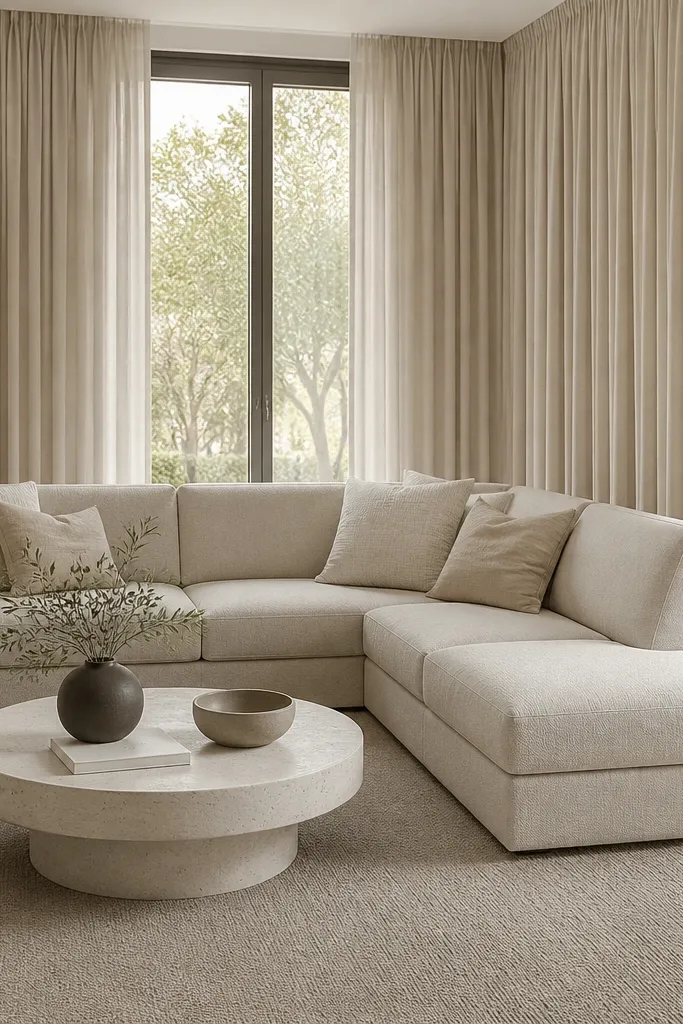
Matching sofa and curtains in close tones makes the room feel continuous. That continuity tricks your eye into seeing a larger space, because you don’t get hard breaks across the room. I use a slight variation in depth — oatmeal curtains, greige rug, and sofa in oatmeal — so everything doesn’t blend into one flat blob.
Pro tipBring the sofa fabric sample to a store and compare under daylight, not store lighting.
Choose curtains that reach the floor and have a rod high enough to add height (about 4-6 inches above the window top). Use a curtain fabric with weight, like cotton-linen blend, so it drapes in soft folds. Keep the curtain color within one shade family of the sofa.
Watch outAvoid curtains that are too sheer for your room if you need privacy — thin sheers make the furniture look darker by comparison.