1. Warm-White Duvet with Navy Euro Pillows
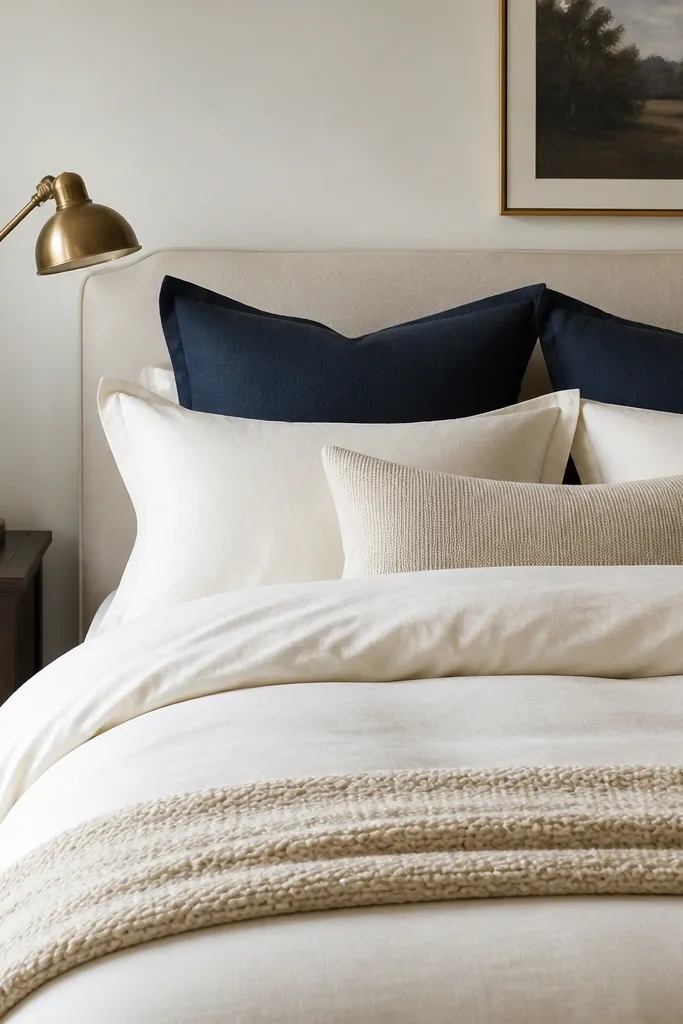
This setup works because navy is concentrated in the pillow stack, which reads rich without taking over the whole room. The warm white duvet keeps the bedroom bright, and the cream throw adds a cozy texture layer. I like adding a subtle stripe or small texture on the navy euro shams so the navy doesn’t look flat. The brass lamp finish gives navy a warmer highlight at night.
Use a duvet cover in cream or warm white (not bright optical white). For the pillows, try 26x26 inch navy euro shams with 20x20 inch navy or cream inserts. Keep the throw in a medium-weight knit or faux-wool with a visible weave so it catches light. This looks best in rooms with medium or dark wood floors.
Press your duvet corners and keep the pillow stack tight; a messy pillow stack makes navy look darker than it is.
Avoid mixing three different navy shades in the same stack — it reads like you grabbed leftovers.
2. Navy Linen Curtains to the Floor
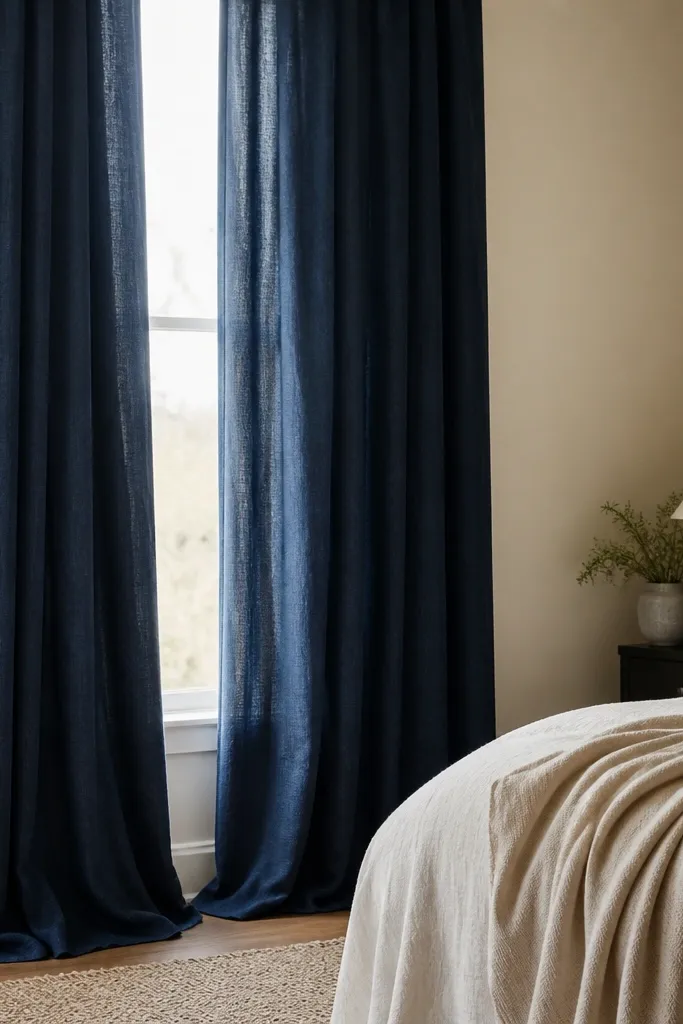
Floor-length navy curtains make the room feel finished because they create a continuous vertical line. Linen-blend fabric keeps the navy from looking too formal, and the slight movement helps the color feel relaxed. If your bed is against a wall, curtains also soften the hard edges around it. I’ve found navy works especially well when the curtains are matte and slightly slubby.
Hang the curtain rod 4 to 6 inches above the window frame and extend the panels 6 to 10 inches past the sides. Choose a curtain length that hits the floor with a small break (about 1 inch puddle). Pair with warm white sheers or skip sheers if you have privacy needs; either way, keep the hardware in brushed brass or matte black.
Pro tipSteam the curtains before hanging. The difference between wrinkled and pressed linen is huge for navy.
Watch outAvoid short curtains that stop at the sill — navy plus a short length makes the window look smaller.
3. Navy and Oatmeal Striped Rug Under the Bed

A navy-and-oatmeal striped rug brings structure without making the room feel heavy. Stripes also help the navy look intentional, like part of a design plan instead of random color. The oatmeal tone keeps the rug warm underfoot, which matters because bedrooms feel cold fast when the floor is dark. I like rugs with a low pile or flat weave so the navy doesn’t trap dust-looking grime.
Choose a rug size where the front legs of the bed are on the rug. For a queen bed, that’s often 8x10 feet, but measure your side clearance. Keep the stripe scale medium — thin pinstripes can look busy in a bedroom. Pair with solid warm bedding so the rug pattern doesn’t fight your pillows.
Pro tipTest the rug in daylight first. Navy stripes can shift darker in warm lamp light.
Watch outAvoid high-pile shag in navy — it shows lint and makes the color look uneven.
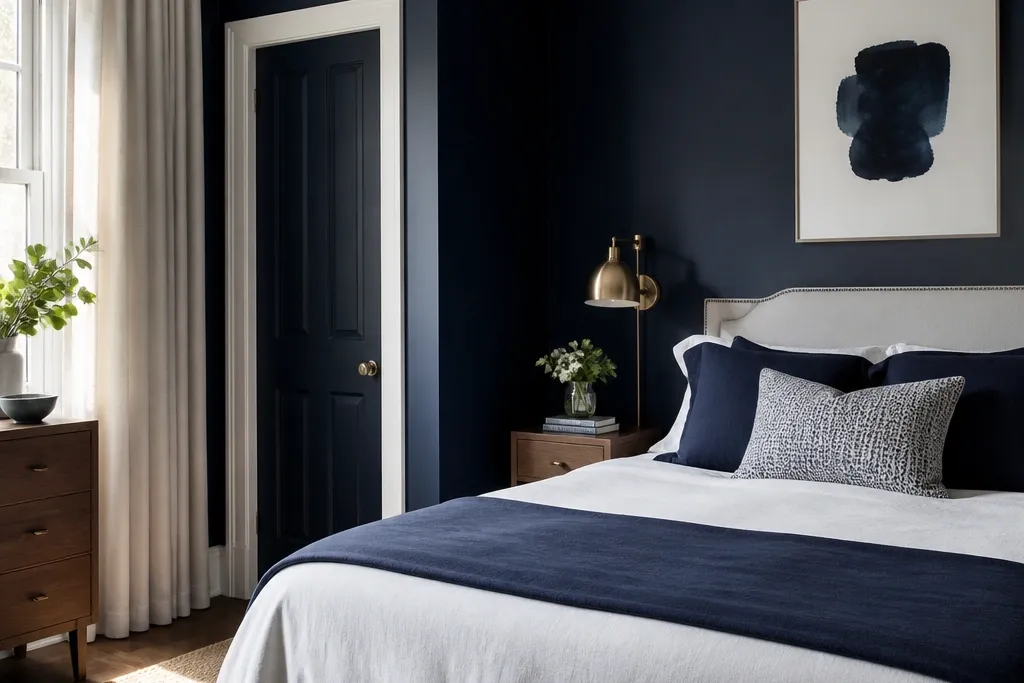
4. Matte Navy Accent Wall Behind the Bed
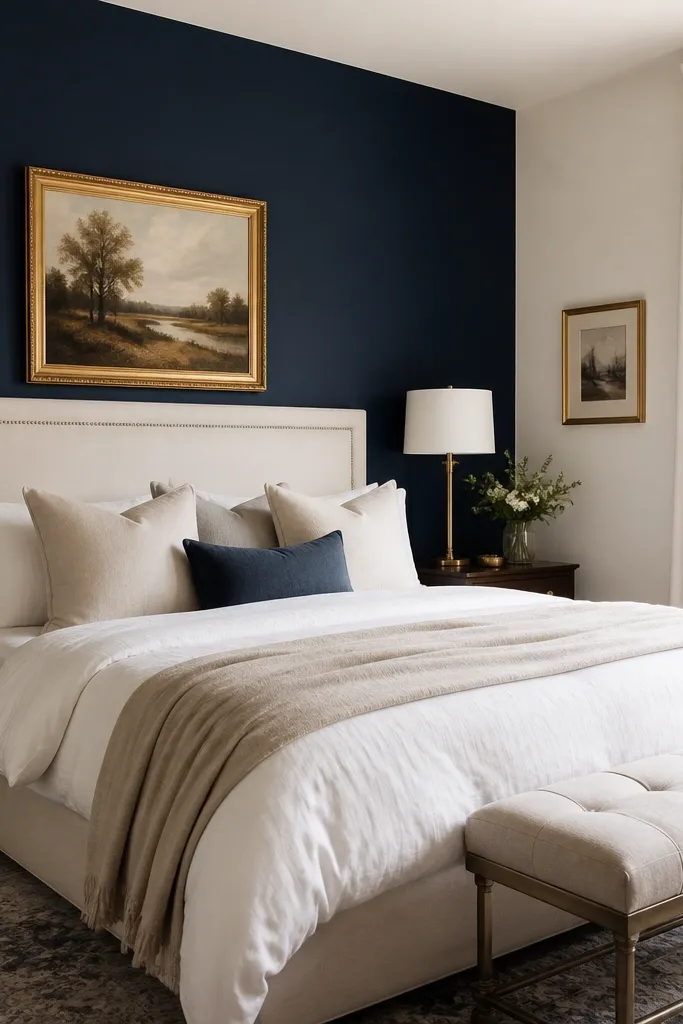
A matte navy wall behind the bed creates depth and makes the headboard look taller. Matte paint also prevents navy from looking glossy and cold. I always pair this with warm light and warm bedding so the wall turns cozy instead of dramatic. If you’re nervous, start with a small headboard zone and paint only behind where your pillows sit.
Pick a matte or eggshell finish, not satin. Tape off a rectangle that reaches from about 4 inches above the headboard top down to the height of your bed’s top pillow line. Use a warm off-white on the other walls (cream with a hint of yellow). Add one brass or antique gold frame to warm up the navy tones.
Pro tipUse 2-inch painter’s tape and press it down hard along edges. Navy paint bleeds visually more than light paint.
Watch outAvoid glossy navy paint — it reflects light and makes the wall look harsher.
5. Navy Quilted Headboard with Cream Bedside Styling
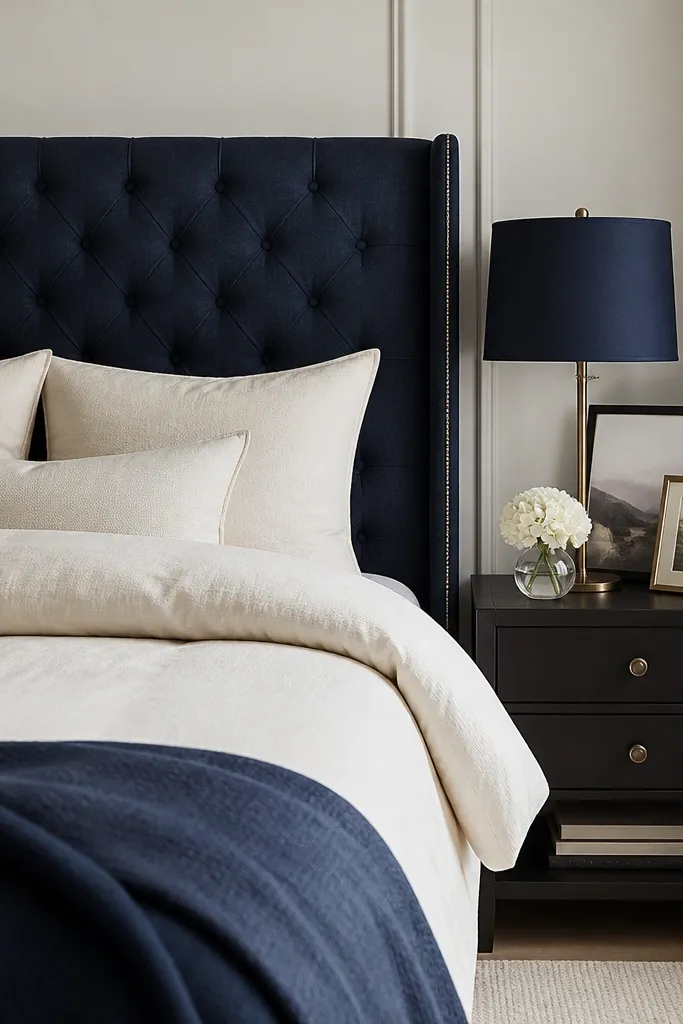
A navy quilted headboard gives you the color without covering the entire room. Quilting adds dimension, so navy reads cozy instead of flat. Keep the bedding mostly cream so the headboard becomes the focal point. I like pairing with a single navy lamp shade or one navy accent pillow to tie it together.
If your headboard is upholstered, choose a medium-depth navy, not near-black. Add a duvet in cream and use pillowcases in cream with one or two navy accents. Keep the nightstand styling simple: one tray, one lamp, and one small stack of books in warm tones. This look works in both modern and traditional rooms.
Match the headboard fabric look to the curtains. If your headboard is matte, pick matte linen curtains too.
Avoid too many navy items on the nightstands. Two items max looks intentional.
6. Navy Throw Blanket with a Textured Knit Pattern
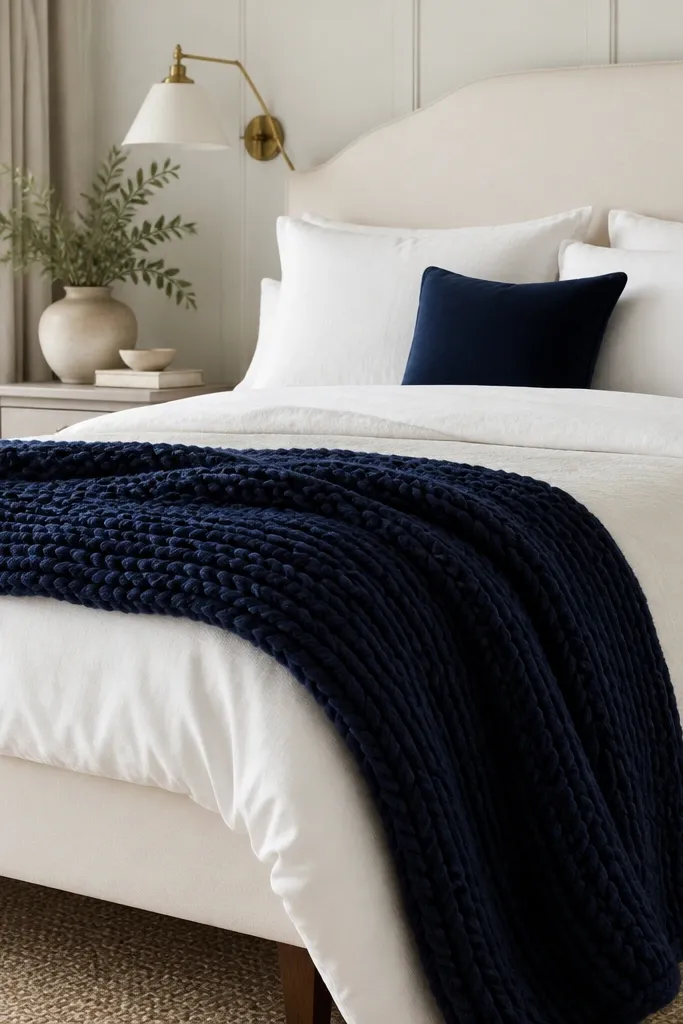
This is the “dip your toes” option for beginner navy blue bedroom ideas. The navy shows up as a texture layer, not a wall-to-wall commitment. Chunky knit also makes the navy feel warm because the fibers catch light in small highlights. Pair it with smooth cotton bedding so the texture contrast looks deliberate.
Drape the throw over the foot of the bed so it hangs 8 to 12 inches down. Use a knit with visible cable or basket weave so the navy looks dimensional. Keep the rest of the bedding white or cream with minimal pattern. If you have a neutral rug, this idea still works because the throw becomes the navy anchor.
Wash the throw once before styling. New knits shrink slightly and soften after the first wash.
Avoid a thin fleece throw — it makes navy look cheap and flat.
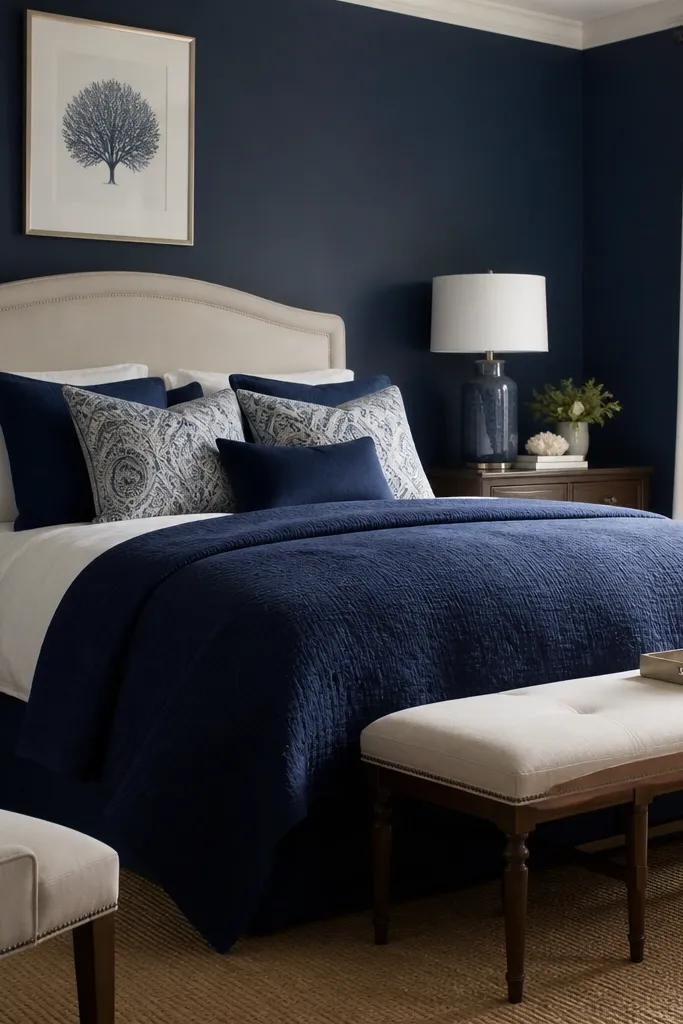
7. Navy Velvet Bench at the Foot of the Bed
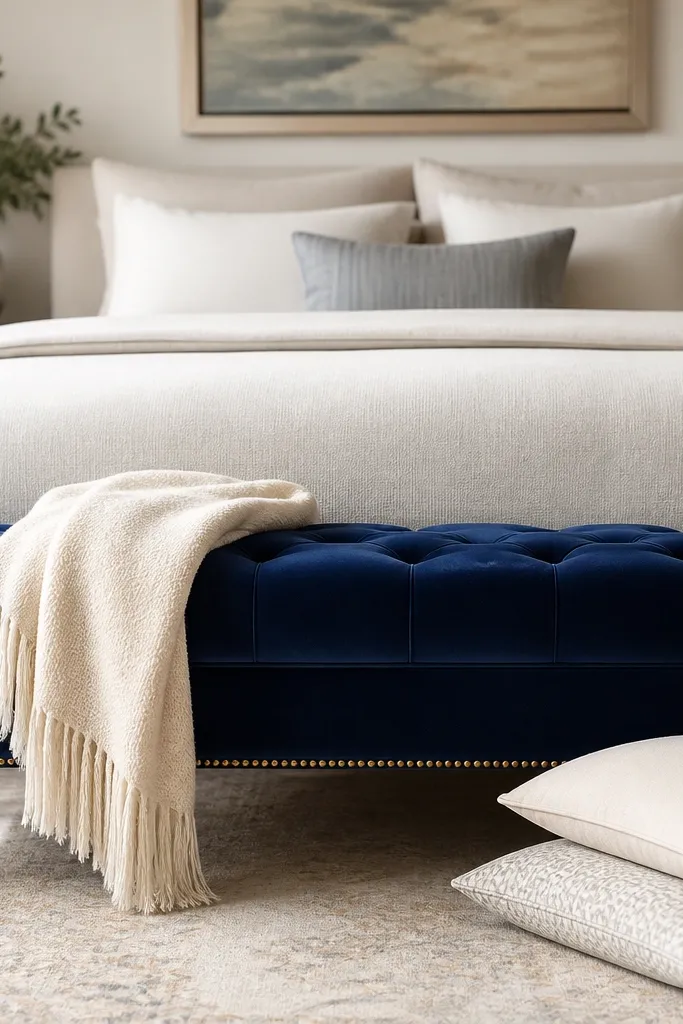
A navy velvet bench adds a “grown-up” look without needing paint or wallpaper. Velvet reflects light softly, so navy feels luxurious instead of dark. Keep the bench the only shiny navy element; the rest should be matte or woven. I’ve seen this work great in guest rooms where you want it to feel special but still easy to maintain.
Choose a bench with a simple shape and legs in dark wood or brushed metal. Use a bench width around the same width as your bed minus 6 to 12 inches so it doesn’t feel crowded. Add a cream cushion or throw on top and keep bedding mostly warm neutrals. Place a small tray on the bench if you want a functional styling moment.
Brush velvet lightly with your hand in one direction to keep the nap looking even.
Avoid patterned velvet. Navy velvet already has a lot going on.
8. Navy and Cream Geometric Pillow Mix
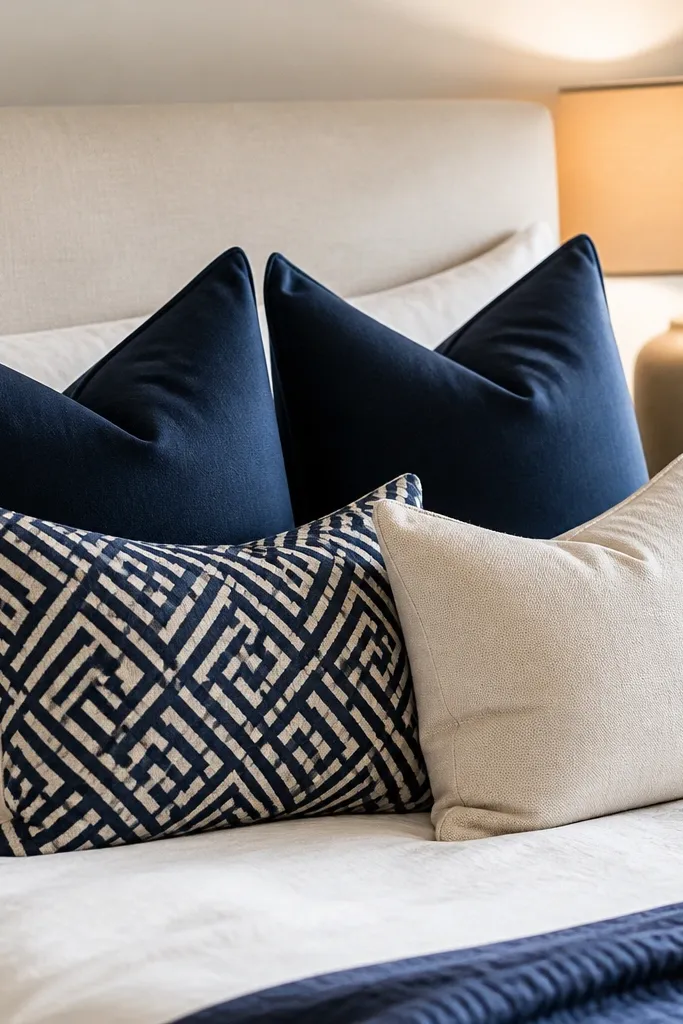
Geometric pillows let you bring navy in without changing your whole bed. The trick is keeping the palette tight: cream background with navy shapes, plus one texture pillow like boucle. I’ve used this when clients couldn’t replace curtains or rugs. The bed looks styled because the pattern repeats the color story.
Start with four pillows: two solid navy, one cream geometric, one cream textured. Use 18x18 inch inserts for a clean look on most beds, or 20x20 if your headboard is tall. Keep the duvet solid warm white or oatmeal. Add one small navy accent on the nightstand so the pattern doesn’t feel random.
Hold the pillows up to the lamp light before you commit. Some navy prints look almost black under warm bulbs.
Avoid mixing navy patterns with different scale. It reads chaotic fast.
9. Antique Gold Wall Sconces with Navy Bedding

Lighting is the cheat code for beginner navy blue bedroom ideas. Navy absorbs cooler light, but warm sconces make it glow and look soft at night. Antique gold adds warmth without going too bright. I’ve used this combo to make navy feel romantic even in small bedrooms.
Install sconces at about 60 to 66 inches from the floor to the center of the fixture. Use warm bulbs around 2700K and pick shades that diffuse light rather than direct glare. Pair with a navy duvet or navy curtains, then keep the wall color warm off-white. Add one framed print with a gold frame to repeat the metal tone.
If you can, use dimmers. Navy looks best when the room is slightly under-lit.
Avoid cool-white bulbs (4000K). Navy turns gray and flat.
10. Whitewashed Wood + Navy Bedding Combo

Whitewashed wood makes navy feel calmer because it adds a bright, airy tone. The contrast is softer than pairing navy with stark black or deep espresso. I like this look for starter rooms because you get warmth from the wood grain and you only need one navy textile to pull the palette together. Add woven baskets in natural tan for texture.
Use navy bedding as the main color: duvet plus two navy pillows. Keep hardware on the dresser in brass or brushed nickel. Choose a rug in oatmeal or light gray with a navy accent stripe if you want a link. This setup works especially well in rooms with smaller windows because the light wood boosts brightness.
Add one natural fiber item within arm’s reach of the bed — a woven basket or jute rug edge — it keeps navy from feeling too “painted.”
Avoid pairing navy with very dark, glossy floors. It can make the room feel heavy.
11. Navy Wallpaper Only on the Closet Door
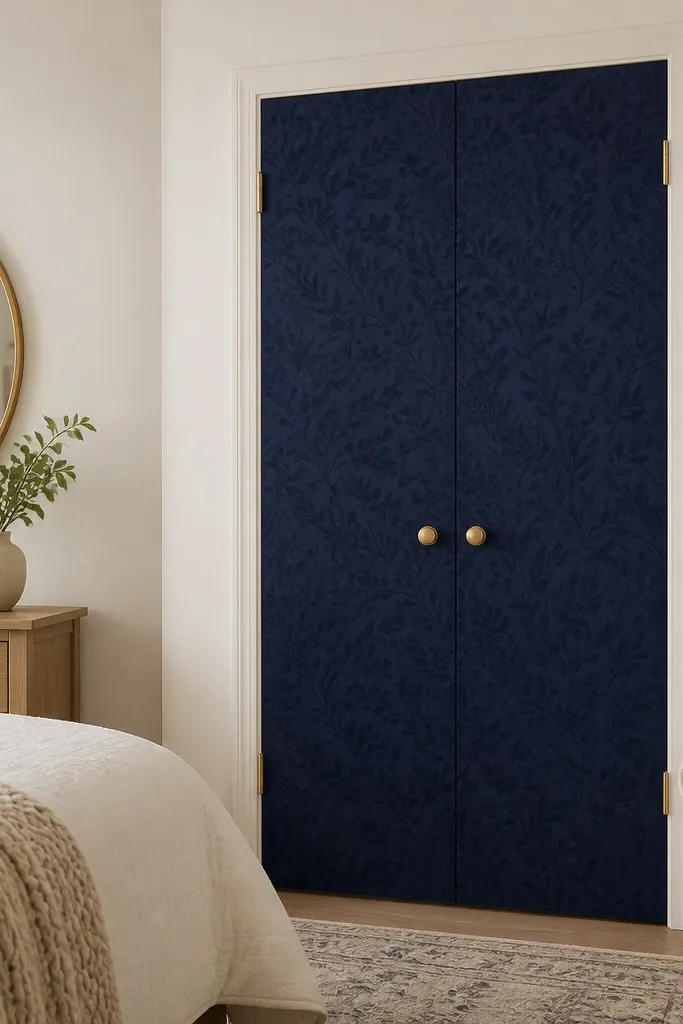
This is a low-risk way to try navy without committing to a full wall. Closet doors are a small surface, so even a bold navy pattern reads intentional instead of overwhelming. Peel-and-stick wallpaper lets you test how the navy looks with your lighting before you paint anything. I’ve used this trick in apartments where landlords won’t allow changes.
Pick a navy wallpaper with a subtle pattern like small dots or a faint damask so it doesn’t fight bedding texture. Cut panels carefully and smooth with a plastic squeegee to prevent bubbles. Keep the bed textiles warm: cream duvet, navy pillows, and a neutral throw. If the closet has a mirror, the navy will bounce light and look brighter.
Pro tipClean the door surface with rubbing alcohol before sticking. It’s the difference between smooth edges and peeling corners.
Watch outAvoid thick embossed wallpaper. It’s harder to align and can look messy in tight spaces.
12. Navy Bedside Table Lamp with Linen Shade
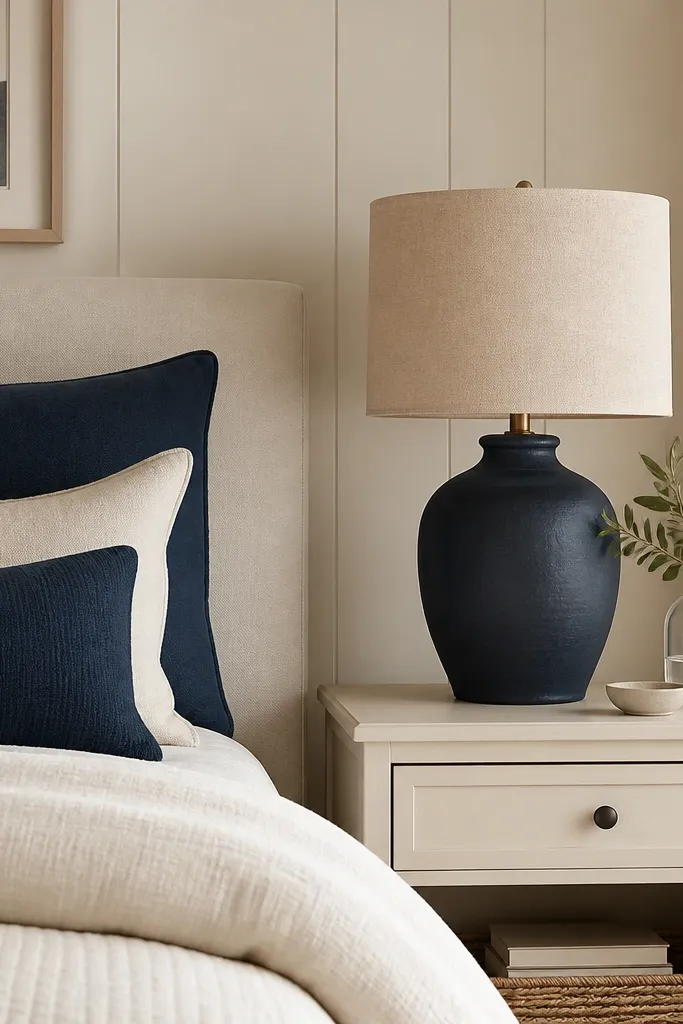
A navy lamp base is a subtle way to repeat the color without making the room feel like a navy store. Linen shades soften the light and make navy look warmer on the bed. This is the easiest fix if you already have a navy duvet or curtains but the room still feels unbalanced. The shade texture matters more than the lamp base color.
Choose a lamp base in navy ceramic or painted wood with a matte finish. Pick a linen shade in natural or oatmeal with a warm interior lining if the lamp has one. Place it at the bedside so light hits the pillows directly when you sit up. Keep the nightstand top uncluttered — a tray and a small frame is enough.
Use a bulb with a warm glow and keep the lamp height around the middle of your pillow when seated.
Avoid glossy lamp bases. They add glare and make navy look harsh.