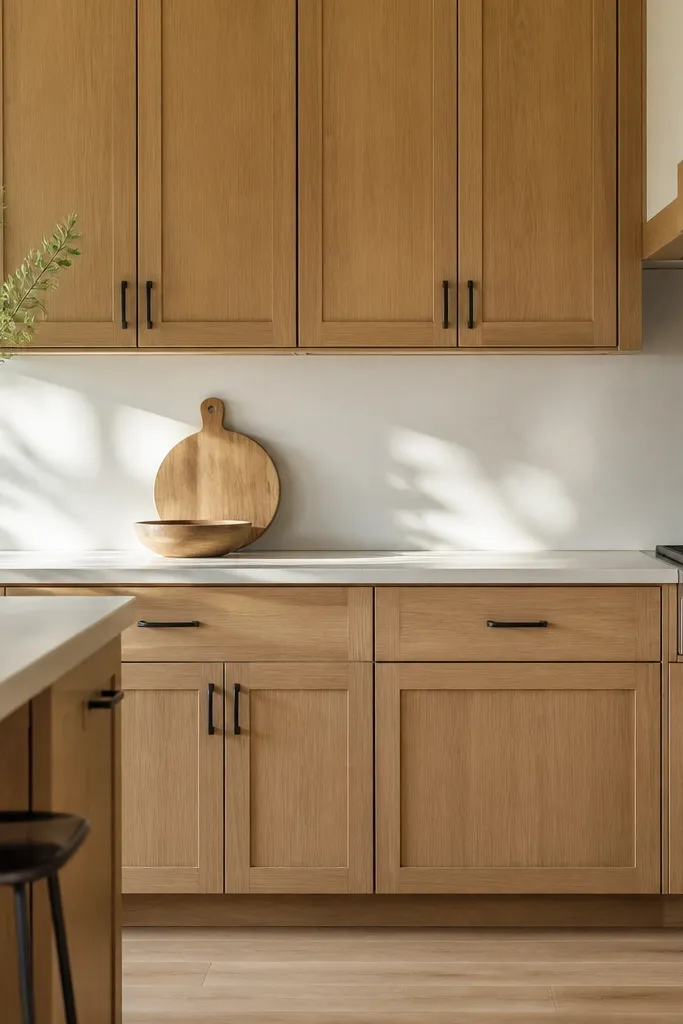
1. Satin white oak shaker with warm off-white walls
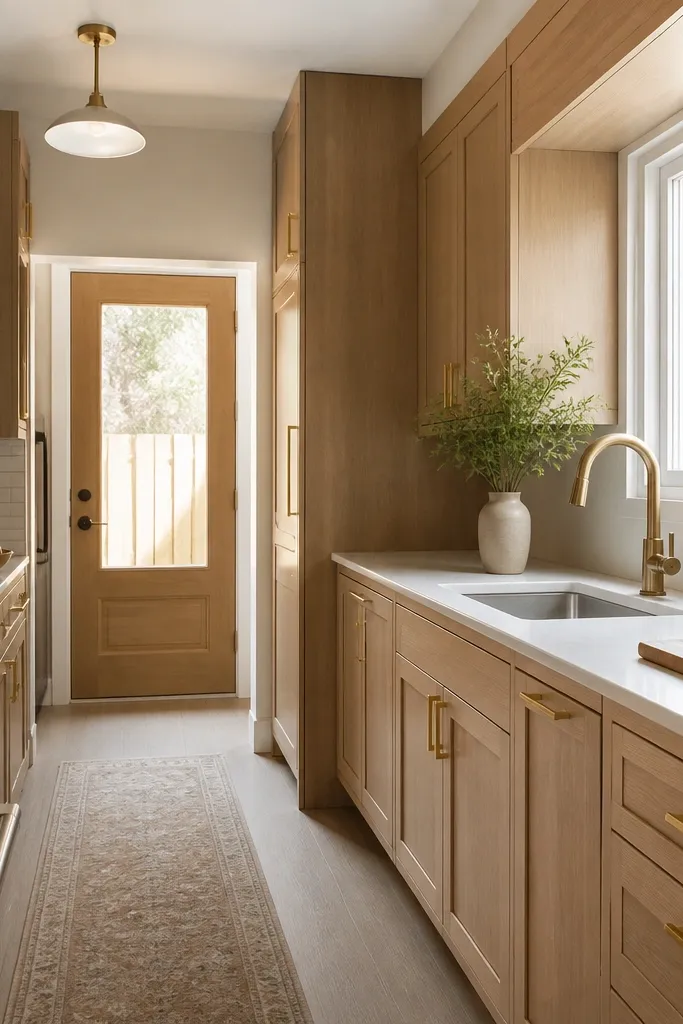
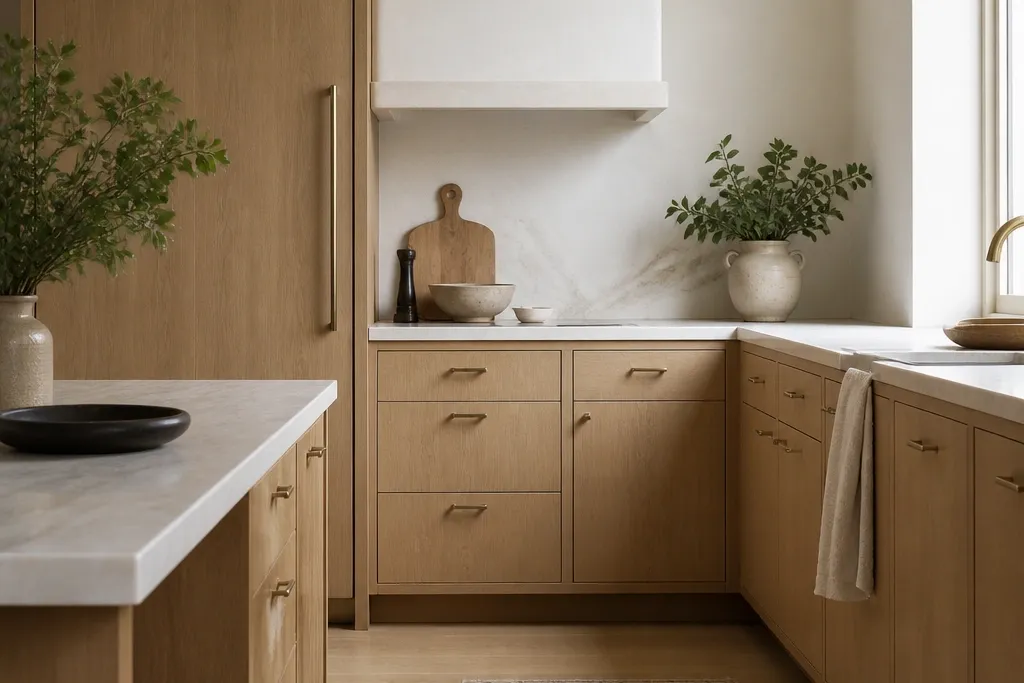
This look keeps the oak tone steady by pairing it with a warm off-white wall color instead of a stark cool white. The satin finish on the doors catches light softly, so you don’t see every hand mark after cooking. Shaker doors are practical because the edges guide your cloth — you wipe, and the grime lifts instead of sitting in deep recesses. I like brushed nickel here because it reads clean against the pale grain.
Use 3/4-inch thick doors or a solid-looking face frame so the cabinet reads sturdy. Keep pulls centered at about 3-6 inches from the top rail on uppers and 2.5-3 inches on lower doors so the rhythm feels intentional. Pair with a cream quartz or honed limestone-look slab to keep the color temperature friendly.
Put the brightest light over the sink and stove, then use 2700K bulbs — oak looks most natural under that warmth.
Avoid high-gloss clear coat on oak; it shows smudges and water streaks fast.
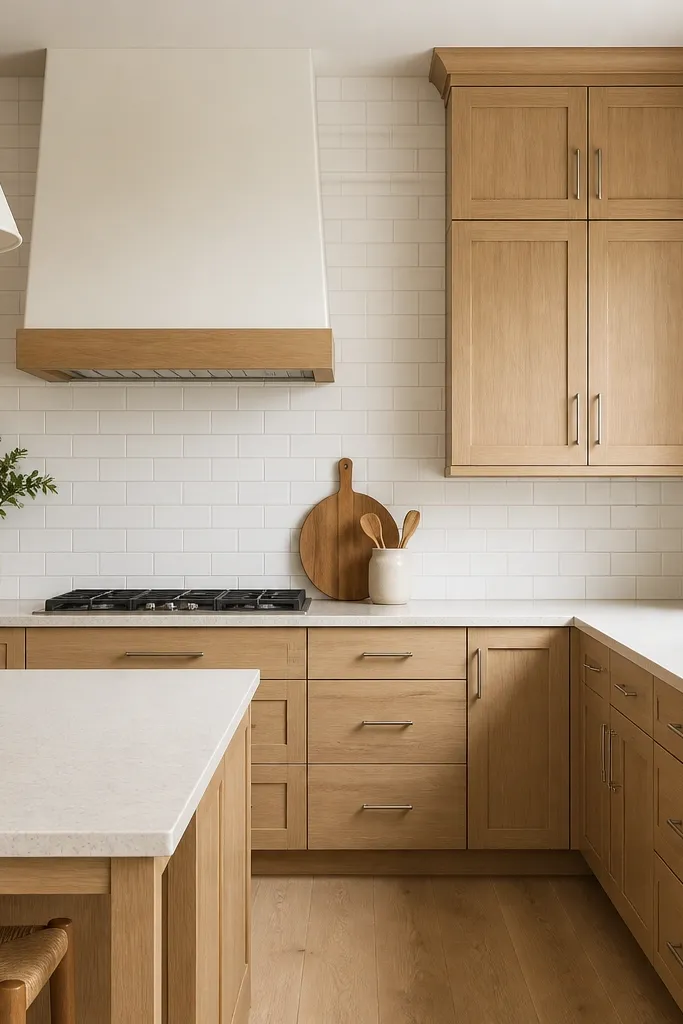
2. White oak cabinets with matte driftwood counters
Matte counters calm down the visual contrast. When you pair matte stone with satin oak, the kitchen doesn’t look shiny or plastic, which is where low_maintenance ideas often fail. The driftwood color has gray-brown undertones that keep white oak from tipping too yellow. You get an organic feel without turning the room into a beach rental.
Choose a quartz with a soft, linear pattern or a honed surface that doesn’t reflect the cabinets. Keep hardware in brushed brass or brushed nickel — I prefer brushed brass because it adds warmth without going orange. Add one or two wood accessories in the same tone range as the cabinets so the whole kitchen feels connected.
Use a microfiber cloth that’s only for countertops and another only for cabinets so oils don’t travel between finishes.
Skip glossy backsplash glass if your cabinets are already satin; too many sheen levels makes the kitchen look messy.
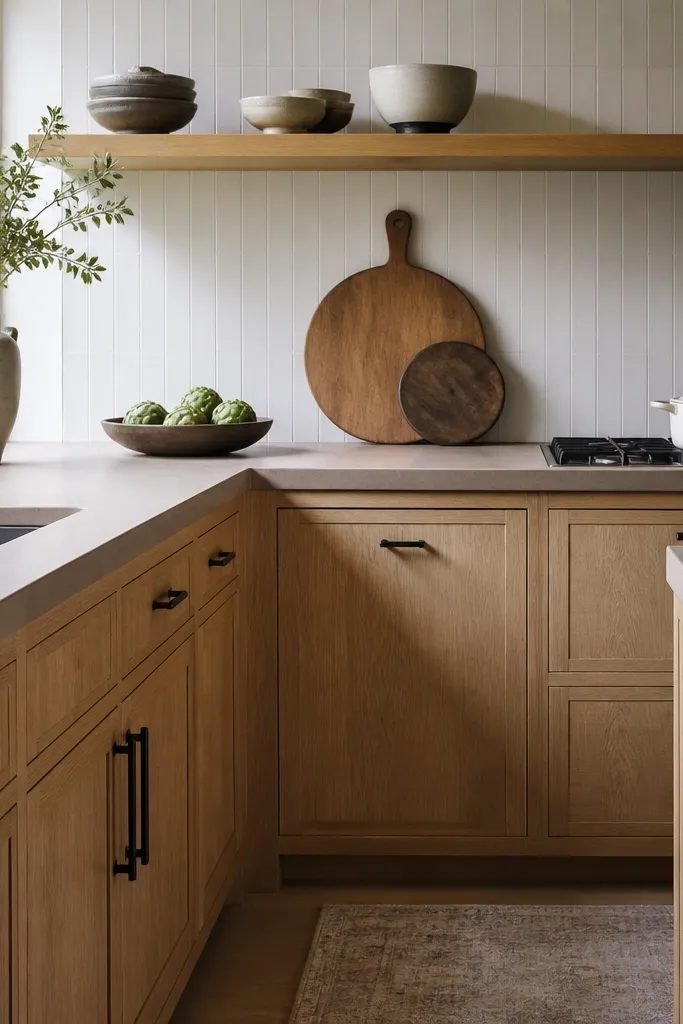
3. Clear-finish white oak with white quartz and black accents
A clear finish is the most honest way to show white oak grain, and the key is keeping the rest of the room crisp. Bright white quartz keeps the oak from looking muddy, while black hardware and faucet add definition. This combo is surprisingly low_maintenance because white quartz hides minor cooking stains better than dark counters, and clear-sealed oak wipes down clean when the seal is hard.
Ask for a clear satin that’s UV-cured and factory-sealed. Use black hardware with a flat profile — bar pulls around 5-6 inches long look sharp on shaker doors. Keep the backsplash grout white or light gray so the contrast stays clean.
After installation, run a test wipe on one cabinet door with your usual cleaner to confirm it doesn’t leave a haze.
Avoid oil-rubbed bronze hardware; it darkens unevenly next to clear oak and looks blotchy.
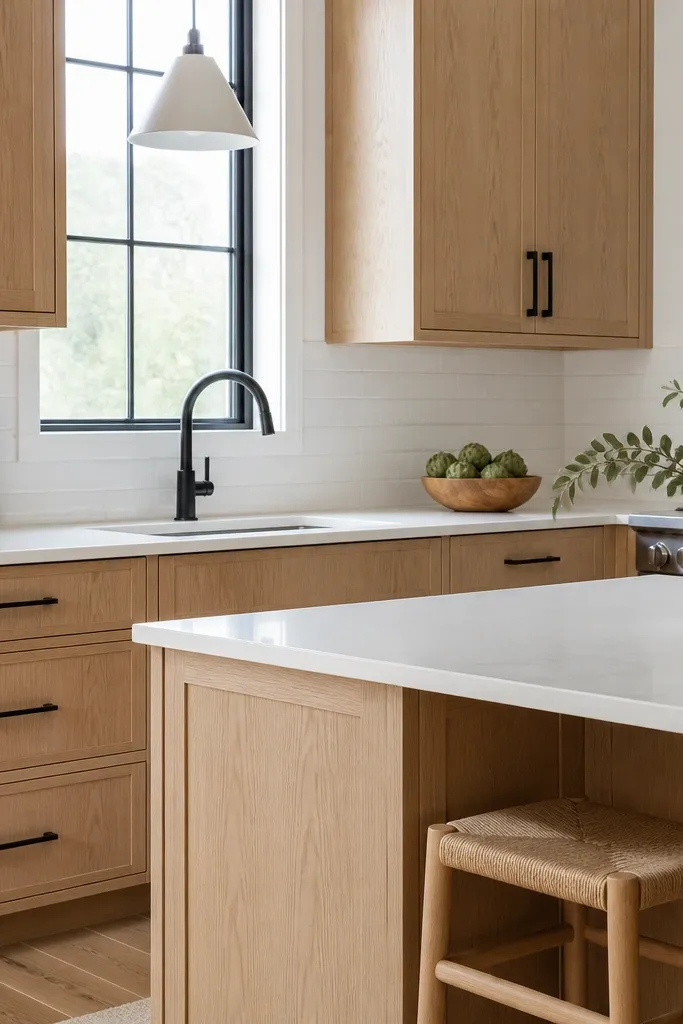
4. White oak cabinets with sage green island and simple pulls
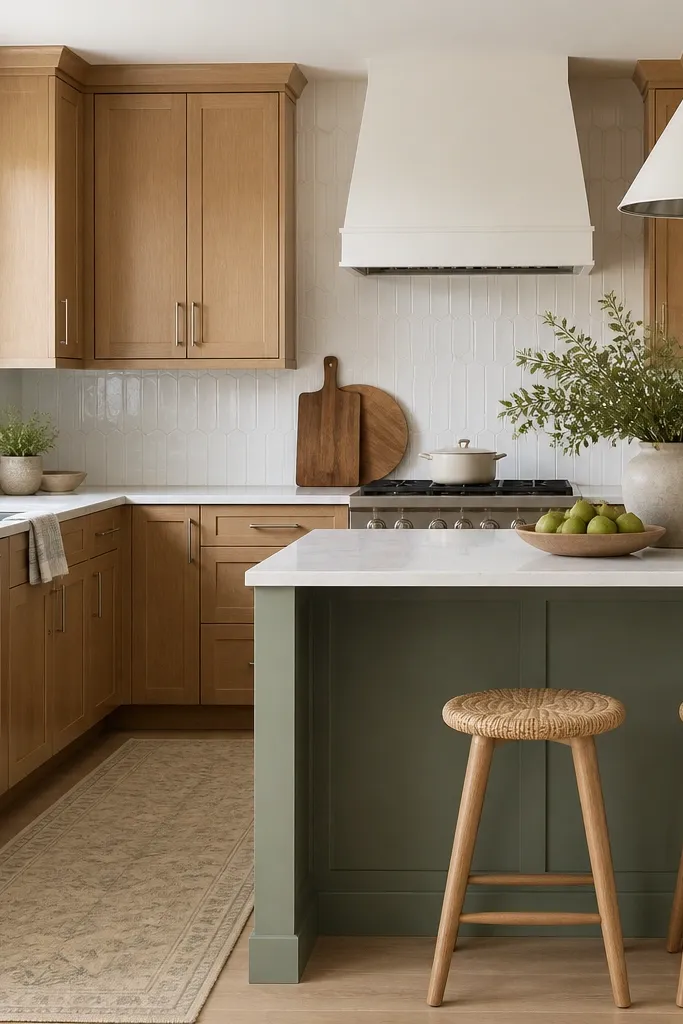
Sage green makes white oak feel softer and more lived-in. The trick is choosing a muted sage with a touch of gray, not a neon green — that keeps the cabinets from looking yellow. Keep the hardware the same everywhere so the two colors don’t fight. I’ve found this combo stays visually calm even as you add dishes and small decor.
Paint the island in a semi-matte cabinet paint or a factory pre-finished coating. Use the same white oak finish on uppers and lowers around the perimeter, then echo the oak tone in a wood tray or cutting board. Pair with a light warm countertop like off-white quartz.
Use painter’s tape to test the sage on a cabinet side panel in your kitchen lighting for two days before committing.
Don’t mix oil-based and water-based hardware finishes; the sheen difference shows up fast.
5. Two-tone look with white oak upper cabinets and lower in warm white
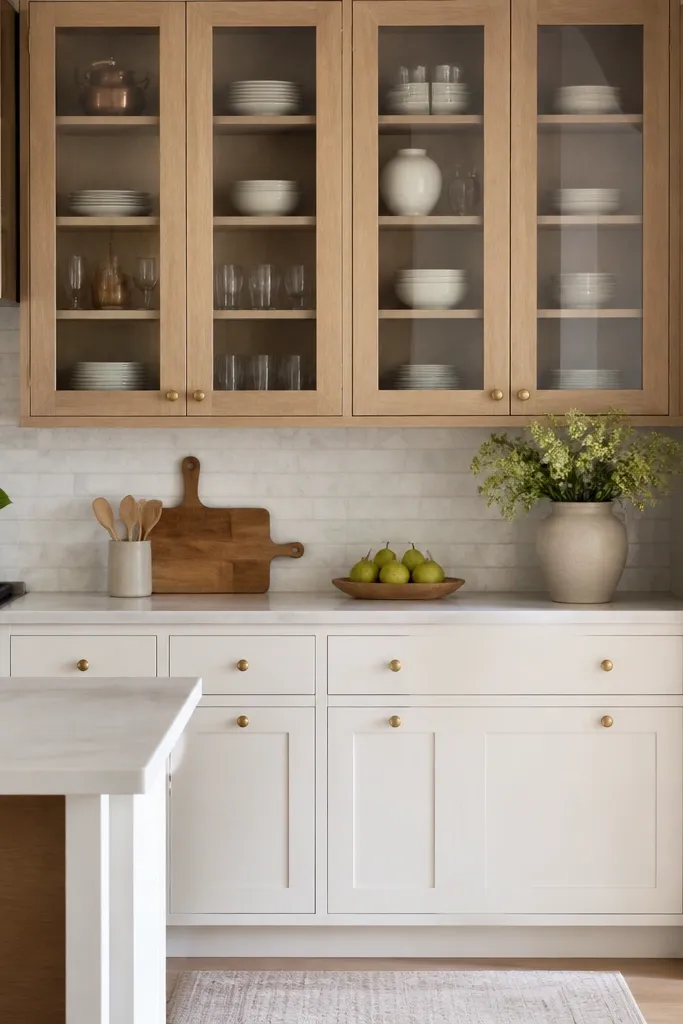
This is the easiest way to get the organic warmth of oak without making the whole kitchen feel heavy. The white lowers give your eye a break, and glass-front uppers let you display matching ceramics without clutter. Brass knobs feel warm next to white oak, but you keep them simple so daily cleaning stays straightforward. The open shelves and glass fronts also help you spot spills quickly.
Use glass-front doors only on uppers and keep the glazing consistent — I like clear glass with a thin muntin grid. Make sure the warm white lower paint matches your wall undertone. Use knobs on lowers and pulls on uppers so your hand learns the system.
Line glass-front shelves with thin felt or cabinet liner paper so dust and small crumbs don’t bounce around.
Avoid dark glass or smoky glazing; it makes fingerprints and cooking splatter more noticeable.
6. White oak cabinets with rift-cut grain direction for a clean pattern
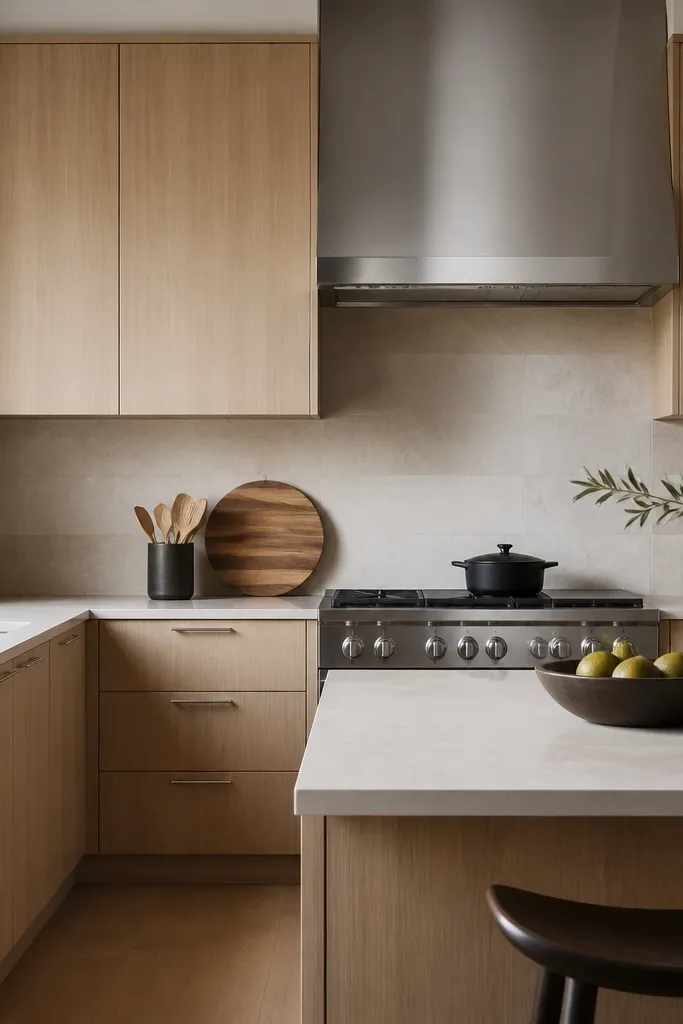
Grain direction changes how “busy” oak looks. When the grain is more linear and consistent, the kitchen reads organized even if you have open shelving. This matters for low_maintenance white oak kitchen cabinets because you’re visually distracted less by natural variation, so minor scuffs don’t stand out as much. Straight grain also catches light evenly, which helps satin finishes look uniform.
Ask your cabinet maker about grain selection or rift-sawn look. Keep doors flat-panel or shaker with shallow bevels. Pair with a simple, light backsplash like small-format white ceramic or a slab-style tile.
Use a single hardware finish across all drawers and doors so the grain is the only texture star.
Don’t mix random grain boards with different finishes; it looks patchy after a few months.
7. White oak cabinets with a ceramic tile backsplash in warm ivory
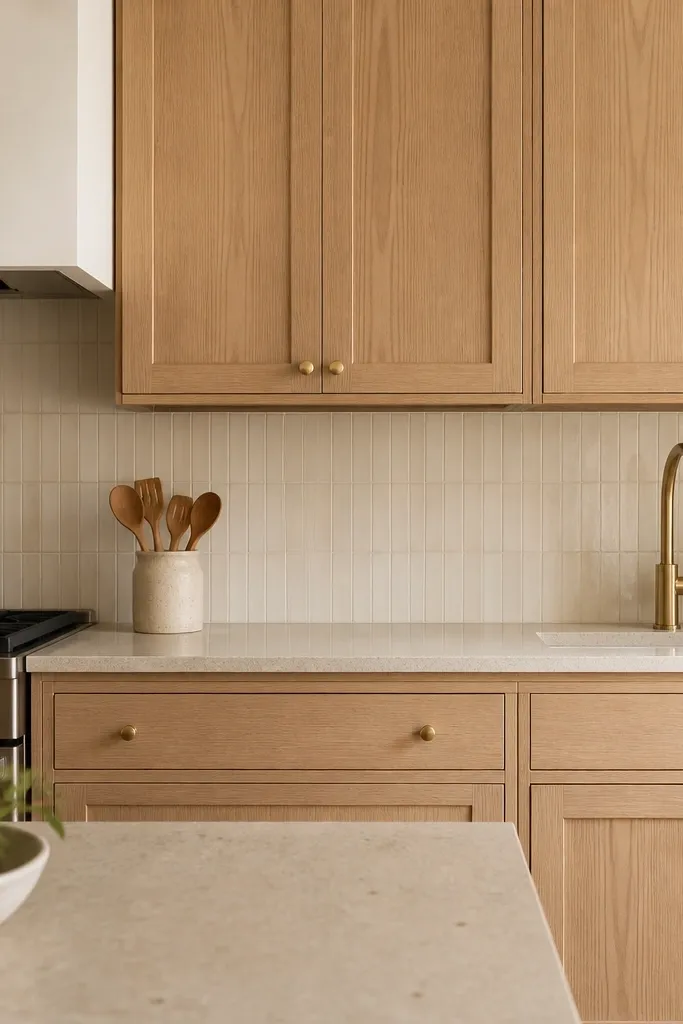
Warm ivory tile makes white oak read creamy instead of yellow. I like ceramic tile for a low_maintenance kitchen because grout lines are easy to keep clean when you seal them once and maintain gently. Oak with a sealed satin finish wipes down fast, and the warm tile gives the whole kitchen a soft, organic rhythm. This look doesn’t require fancy decor to feel finished.
Choose a backsplash with a slightly textured surface so it hides small water spots. Seal grout after install and re-check annually in wet areas. Keep hardware brushed brass or brass-plated, and match the faucet finish to it.
After cooking, wipe the backsplash and cabinet fronts with a damp microfiber — steam residue is what makes finishes look dull.
Avoid bright white grout with warm oak; it makes the oak look more yellow than it is.
8. Shaker cabinets with warm gray stone and brushed bronze hardware
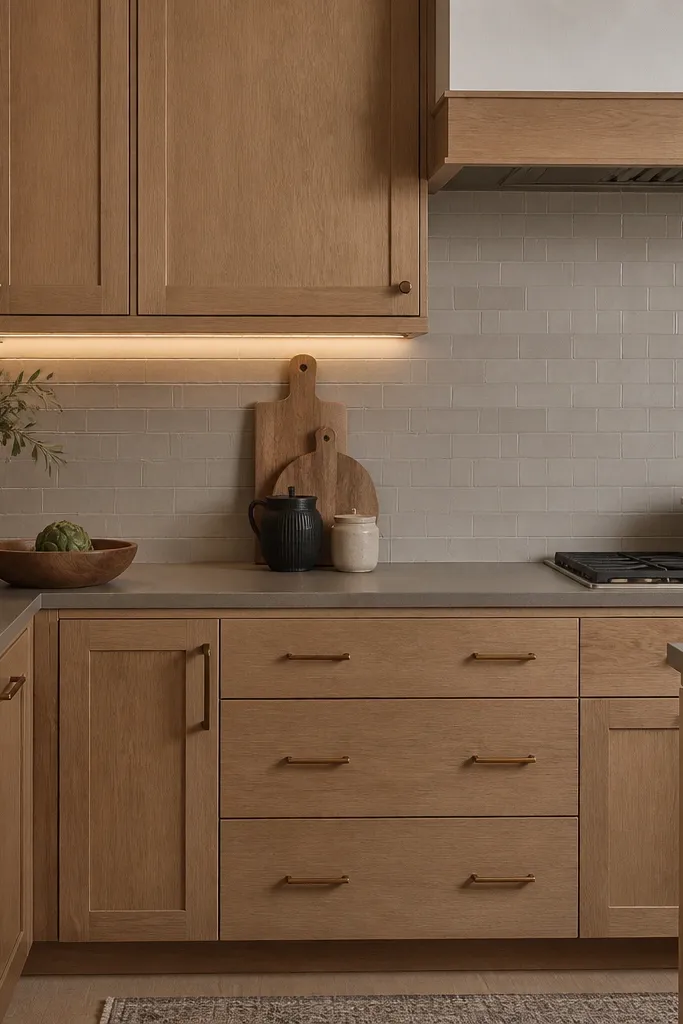
Use under-cabinet LED strips at 3000K for a steady tone. Choose a backsplash tile with minimal pattern so the counters stay the main texture. Keep pulls consistent — bronze pulls around 5 inches long on uppers and smaller knobs on drawers.
Warm gray stone plus brushed bronze keeps oak from becoming too golden. The secret is the undertone of the gray — look for gray with beige or greige, not blue-gray. Bronze hardware reads natural against oak and hides tiny water marks better than shiny metals. This setup stays low_maintenance because warm gray counters hide everyday wear and the cabinet finish is sealed for wipe-downs.
Watch outAvoid cool-toned gray counters; they make oak look sickly and washed out.
Pro tipWipe bronze hardware dry after heavy cooking splashes; it prevents spotting that looks like white film.
9. White oak slab-front cabinets with pocket-style pulls
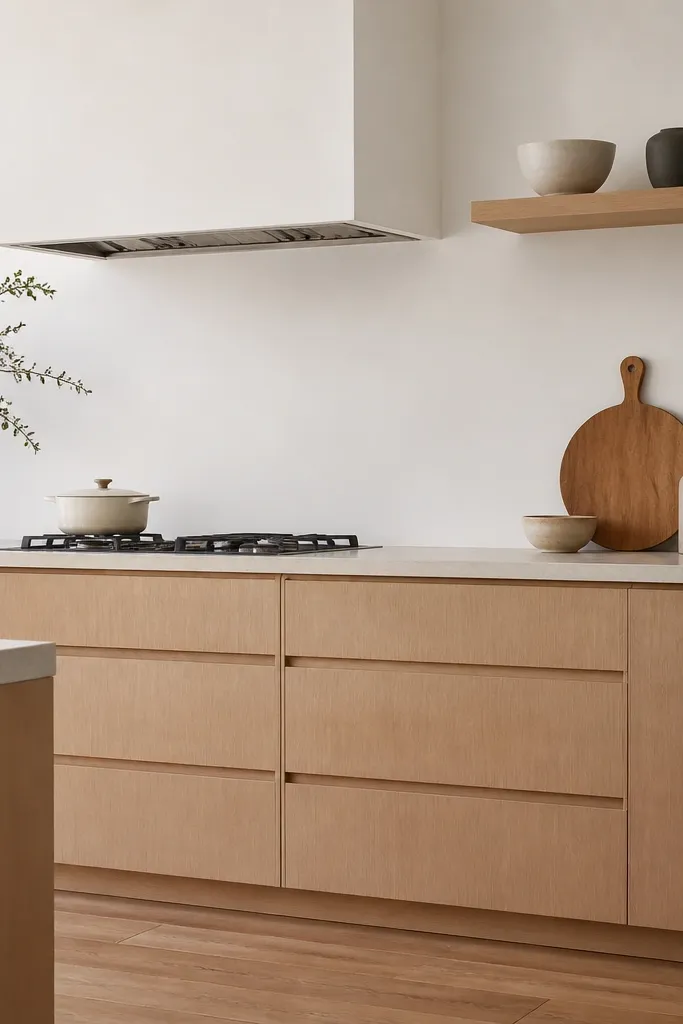
Slab fronts with integrated pulls are one of the fastest cleaning choices I’ve used. There are fewer seams and fewer corners where grime sits, and the pull is built into the door so you don’t have fingerprints on a separate knob body. The oak grain still shows, but the overall look is crisp and modern. It reads organic because of the wood, not because of heavy detailing.
Pick a satin or matte finish that’s smooth to the touch, not a textured oil rub. Install pulls so the pocket sits about 1 inch from the top edge of drawers and centered on doors. Pair with a light limestone-look countertop and a simple white backsplash so the slabs stay the focus.
Use a soft bristle brush on the cabinet seam only once a week; don’t scrub aggressively or you’ll rough up the finish.
Avoid deep inset slab designs; they trap crumbs and water in the shadow line.
10. White oak cabinets with woven rattan cabinet pulls and warm lighting
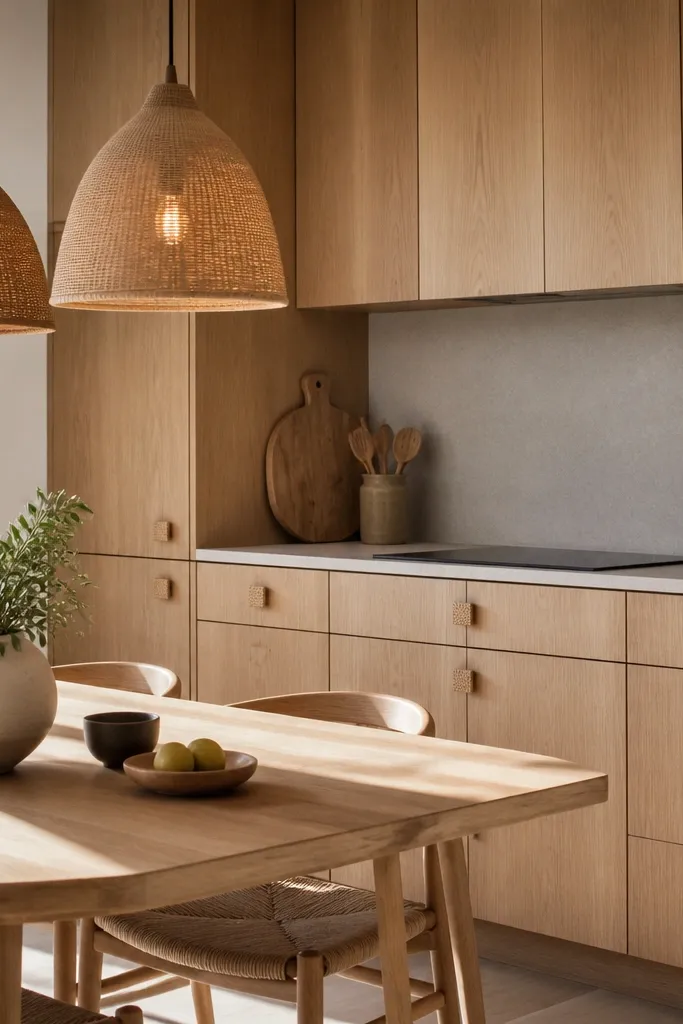
Use rattan pulls on drawers and keep doors on a simple bar pull or a matching smaller rattan pull. Keep the countertop light and non-porous so you aren’t dealing with extra spills. Place a light runner or basket on the counter to reinforce the texture theme.
Rattan pulls add texture without adding complicated cleaning surfaces. The oak stays the main material, and the rattan gives that lived-in organic feel. The low_maintenance part is choosing rattan that’s sealed and sized for easy gripping — small enough that grease doesn’t soak into fibers. Warm pendant lighting makes the oak look honeyed instead of pale.
Watch outAvoid unsealed rattan; cooking splatter will stain it and it will look uneven.
Pro tipDust rattan pulls with a dry microfiber monthly, then wipe with a barely damp cloth only when needed.
11. White oak cabinets with a light green backsplash and brass hardware
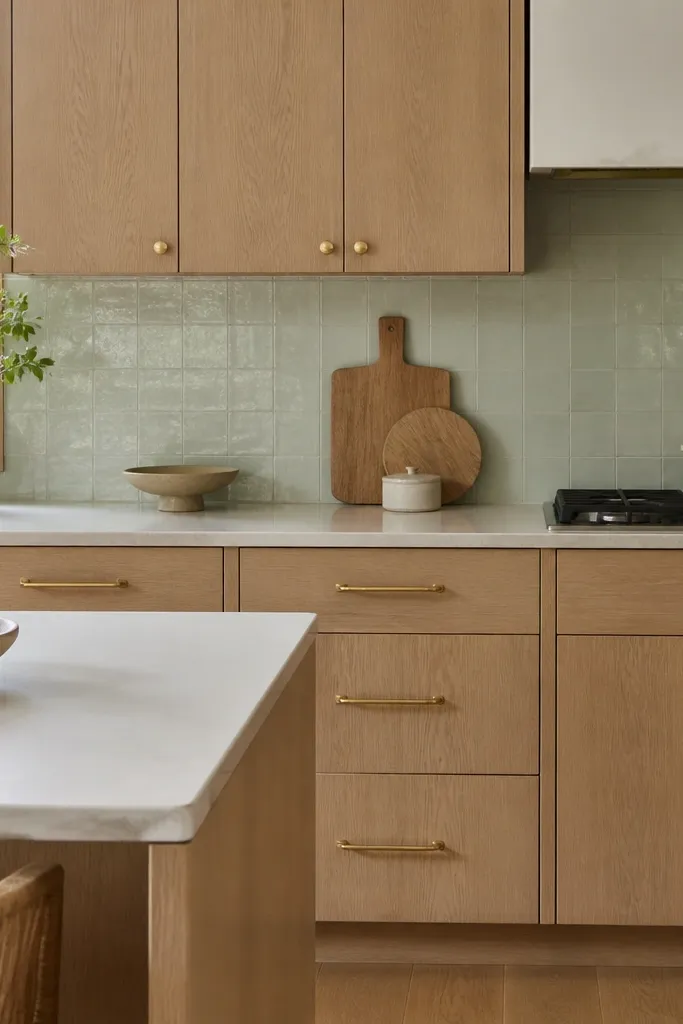
A pale green backsplash makes white oak look fresh and clean. The key is picking a green that leans gray, like a soft sage-mint, so it doesn’t fight the warm oak undertone. Brass hardware adds warmth, and the satin cabinet finish keeps the whole look from getting shiny or reflective. This combo feels organic because it brings color from nature without going bold.
Choose small square or subway tiles in a pale green with a matte glaze. Use matching brass faucet and pulls so the metal doesn’t look random. Keep the countertop off-white to prevent the green from pulling the oak toward yellow.
Test the green tile under your real cabinet lighting; some greens look blue once installed.
Avoid neon or saturated green; it makes oak look dull and the kitchen feels harsh.
12. White oak cabinets with a honed marble-look backsplash
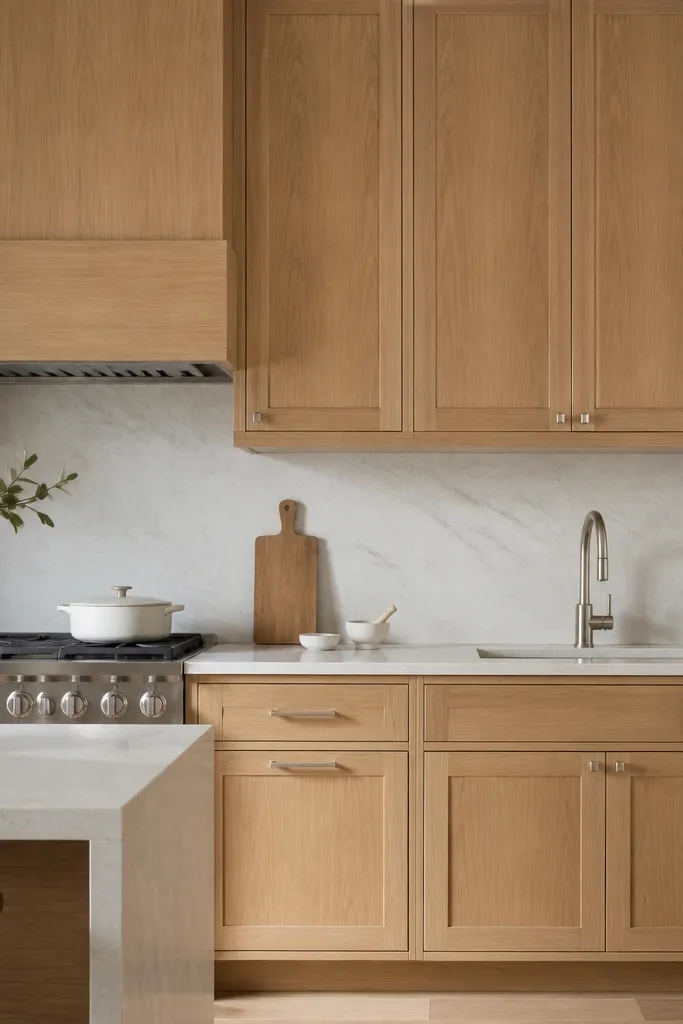
Pick a backsplash with soft gray-beige veining, not high-contrast black-and-white. Use brushed nickel pulls and keep grout minimal if you use tile. If you do a full-height backsplash, leave a small gap at the top for caulk so cleaning stays easy.
Honed stone textures are forgiving. They don’t glare, and they hide tiny water marks better than glossy tile. When you pair honed marble-look with white oak, the room feels layered but still calm. This is a low_maintenance look because both surfaces are sealed and easy to wipe, and the veining pattern hides minor splashes.
Watch outAvoid glossy marble-look; it shows splatter and fingerprints next to satin oak.
Pro tipUse a pH-neutral cleaner on honed surfaces; acidic sprays can dull them over time.