1. Cedar-green runner with black iron tray in the center
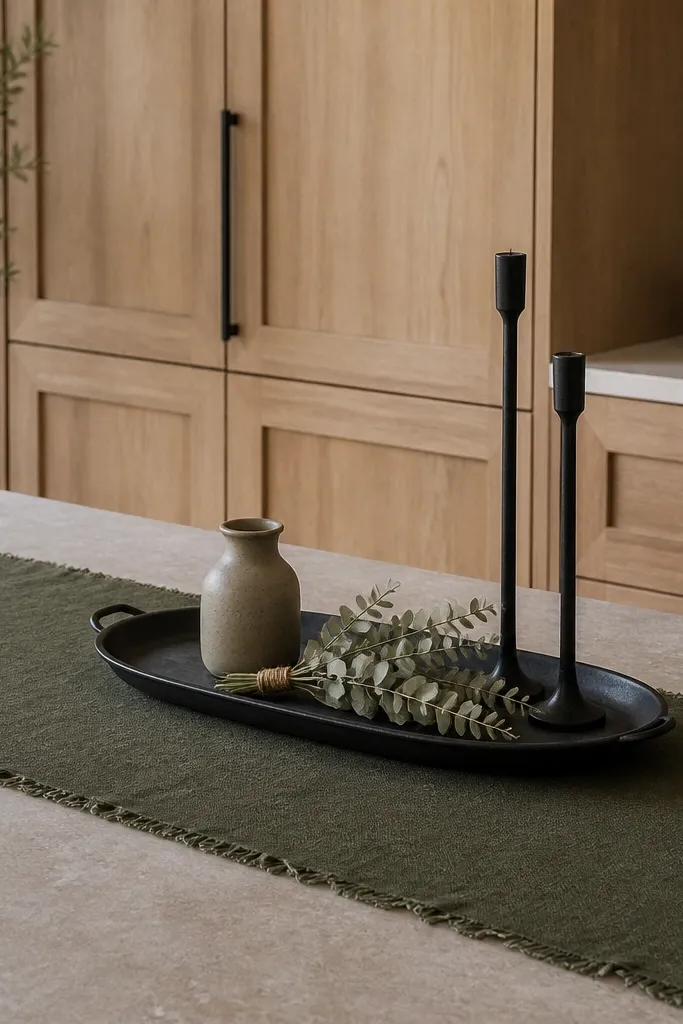
This works because the cedar-green reads like winter without turning the kitchen into a holiday set. The black iron tray echoes your cabinet hardware and keeps the color from floating around. Dried eucalyptus adds a soft gray-green tone that sits well on white oak, especially under warm bulbs. I like this setup for kitchens where you want seasonal style but don’t want to cover the whole counter.
Lay the runner lengthwise so it stops 2-3 inches before the cabinet edge so it doesn’t look cramped. Use a tray that’s about one-third of the counter width, and keep items on the tray to 2-4 pieces so the oak grain still shows. Pick a eucalyptus bundle that’s mostly gray-green and not bright neon green.
If your cabinets have black pulls, choose black decor items with the same finish family — matte or oil-rubbed — so everything looks like it belongs.
Avoid shiny green decor or high-gloss ceramics, because they reflect cabinet light and make the whole setup look staged.
2. White oak cutting board wall grid with a seasonal wreath ring
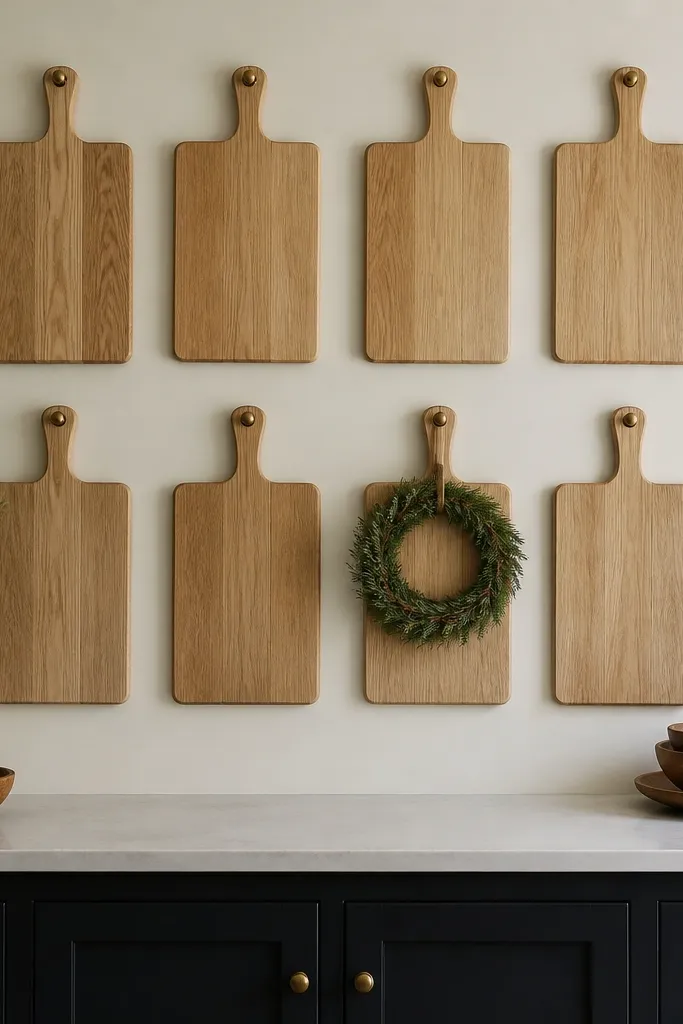
You get seasonal change without touching the cabinets. The cutting boards repeat the wood tone from your cabinetry, so the space feels “built-in,” not decorated. The wreath ring uses evergreen stems in a controlled circle, which looks tidy against the clean black door lines. It’s a great choice when you want something visible from the kitchen doorway.
Pro tipUse small command hooks or picture rails only if your boards are light; otherwise use proper screws into studs for a steady look.
Mount boards with spacing of about 2 inches between each board so the wall doesn’t look crowded. Use one wreath ring that fits the width of a single board (around 10-14 inches across). Keep the ring mostly dark green with a few tan dried accents so it matches both winter and spring.
Watch outDon’t mix three different wood tones up there; if the boards don’t match your oak, the wall looks patchy.
3. Matte black lantern pair with cream candles and olive sprigs
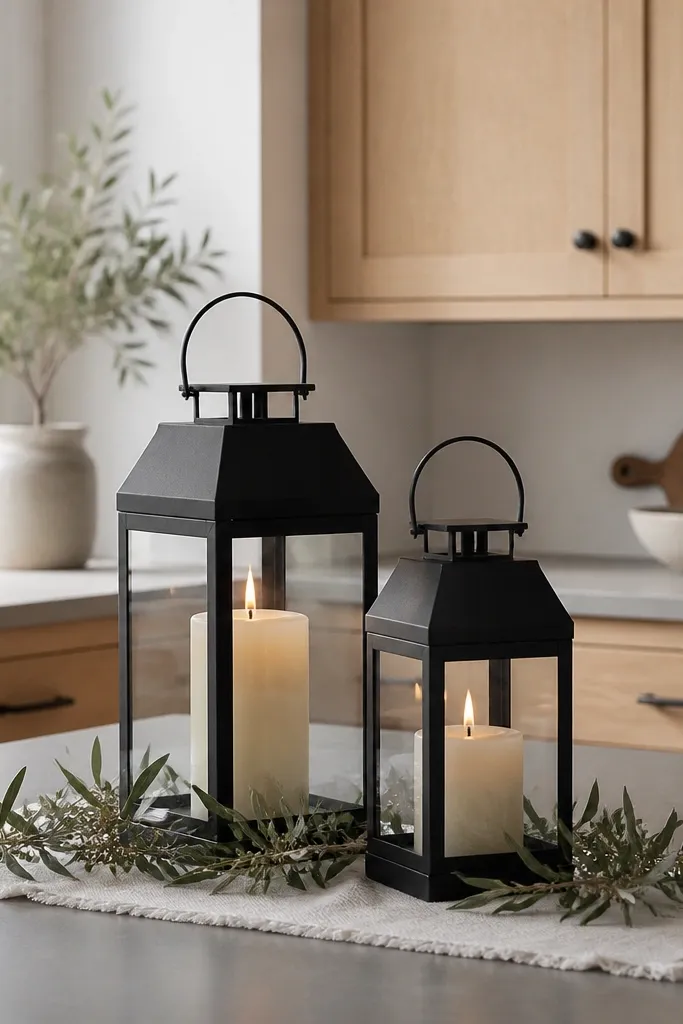
Lanterns look good on black-and-oak because the black frames catch light softly, not sharply. Cream candles keep the palette light and stop the greens from dominating. Olive sprigs give you a more muted evergreen than bright pine, which keeps the kitchen feeling grown-up. This setup is especially flattering when your backsplash is white or light stone.
Pro tipIf your counter is dark, use a light tray or cloth pad under the lanterns so they don’t sink visually.
Place the lanterns about 8-10 inches apart so you still see countertop space between them. Use LED candles if you have kids or pets; the look stays the same. Choose sprigs that are mostly olive and gray-green, and tuck them so they don’t spill over the front edge.
Watch outSkip thin, flimsy lanterns that look like party decor; they look out of place next to real cabinet hardware.
4. Linen curtain panels in soft ivory with a black rod and evergreen tiebacks
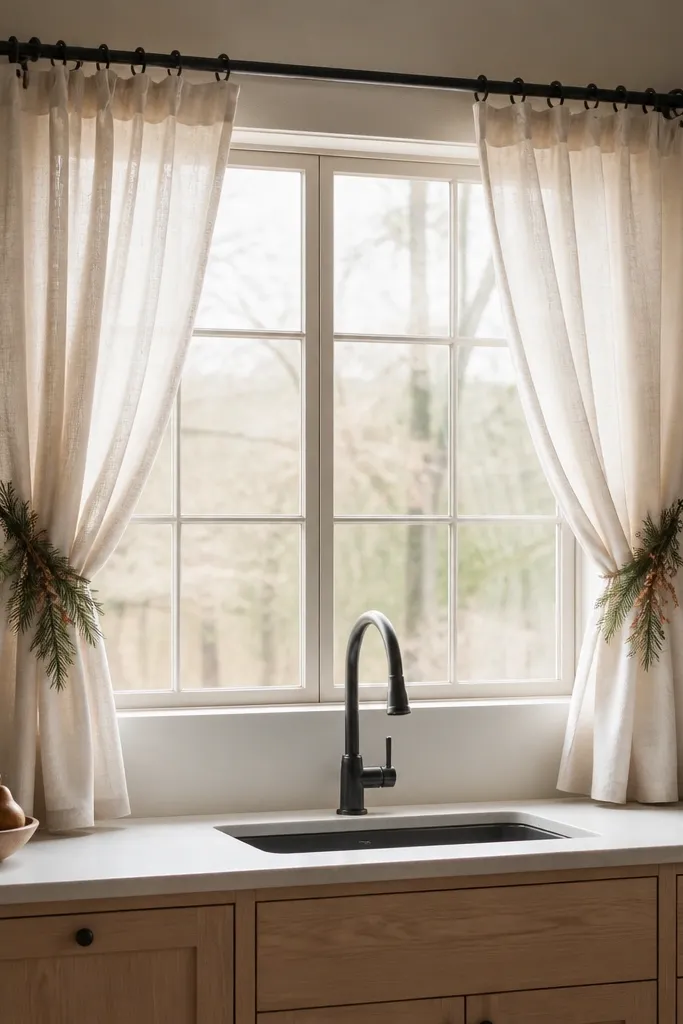
This is one of the fastest ways to make seasonal evergreen feel intentional. Linen adds texture that calms the contrast between white oak and black, so the room looks softer without losing structure. Tiebacks keep the fabric from collapsing, and dark evergreen accents echo your cabinet trim. It also works year-round because ivory linen doesn’t fight spring or summer.
Pro tipSteam the linen and crisp the folds; wrinkled linen reads messy against clean cabinet lines.
Hang panels with the rod centered, and let the fabric puddle only slightly — about 1 inch below the sill if you want a tailored look. Tiebacks should be small enough to sit at mid-height, not high up near the rod. Use dried berries or a few tan stems sparingly so it doesn’t become a heavy Christmas look by November.
Watch outAvoid sheer polyester curtains; they look shiny next to oak and make black hardware look harsher.
5. Black-framed open shelf styling with one evergreen color family
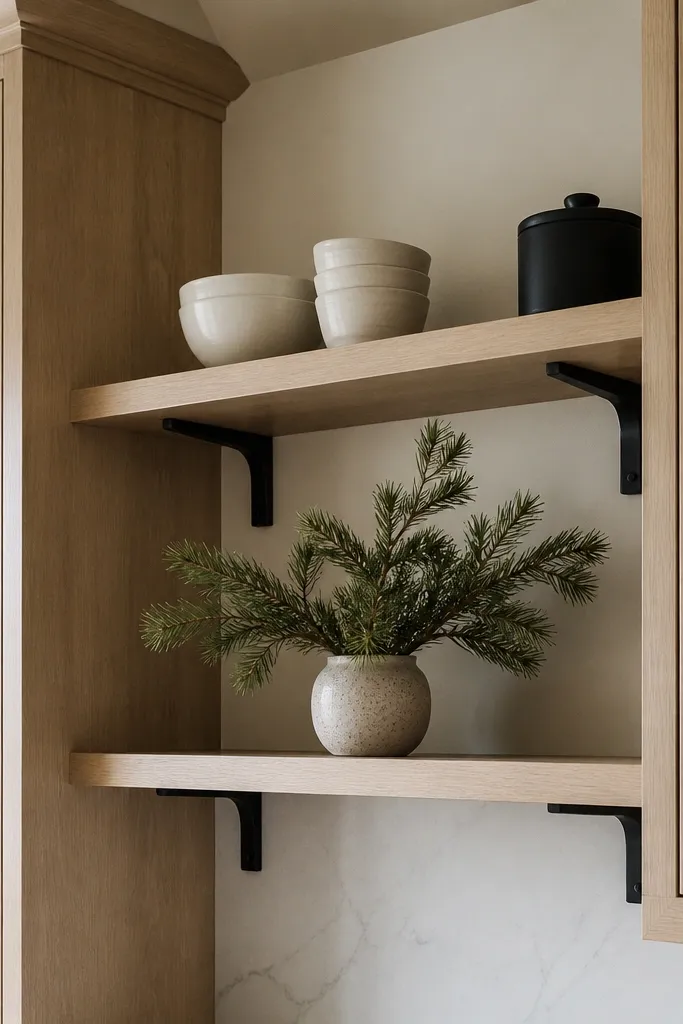
Open shelves show you how the kitchen looks when you’re not actively cleaning it every day, so keep it edited. Black brackets tie into your cabinet black and make the shelf feel built-in. Using one evergreen color family — like deep forest green and a touch of gray-green — keeps the shelf from looking like mismatched holiday items. White ceramics let the oak stay warm and bright.
Pro tipDust shelves last, not first — it’s easier to style after you’ve cleaned the surfaces.
Use 3-5 items total per shelf. The evergreen piece should be the tallest item, with the rest shorter so your eye has a clear landing point. Put one black canister or container where your eye hits it from the doorway so the color repeats with the cabinet pulls.
Watch outDon’t stack too many small ornaments; clutter reads as “temporary holiday storage” instead of design.
6. Seasonal soap and towel set in black, cream, and evergreen
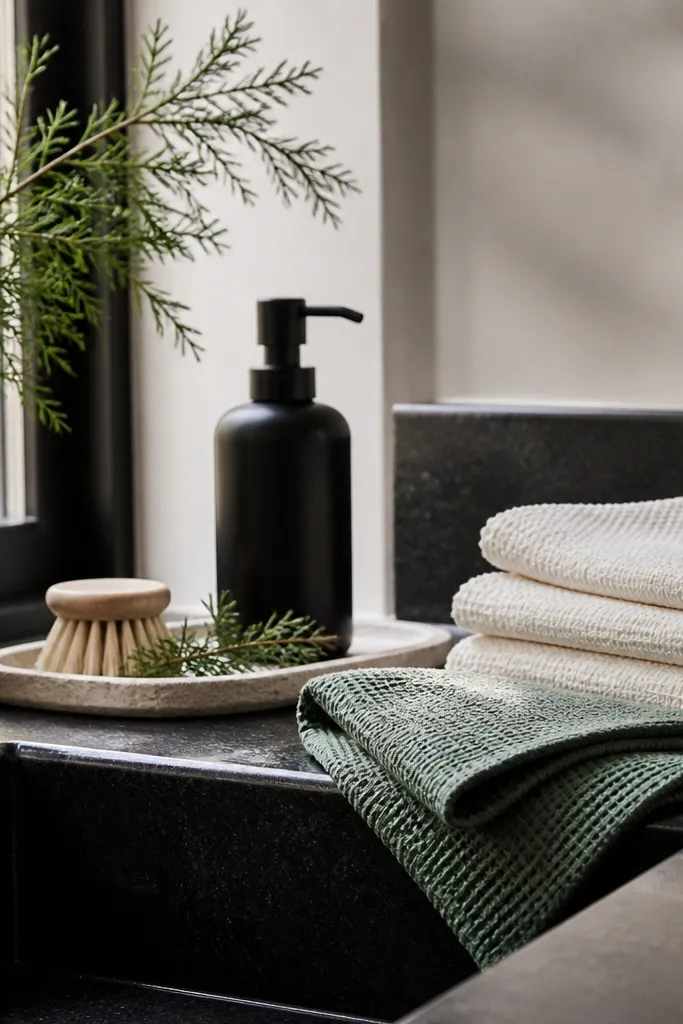
This is the kind of seasonal swap people actually notice because it’s close to where you stand and work. The black dispenser matches your cabinet hardware, while cream towels keep the sink area bright. One evergreen towel gives the seasonal cue without turning the whole kitchen into a holiday display. Wood accessories in the tray area also echo the white oak cabinets.
Pro tipBuy two sets of towels and rotate them weekly; you keep the look crisp without constant re-styling.
Fold towels into a tight rectangle so they stack neatly and don’t flop onto the counter. Add the evergreen towel as a single accent fold, not a full matching set. Keep the tray small — around 10-12 inches — so it doesn’t block sink function.
Watch outAvoid patterns with tiny busy details; they fight the cabinet lines and make the sink area look chaotic.
7. Black countertop riser with white oak base for a holiday-height look
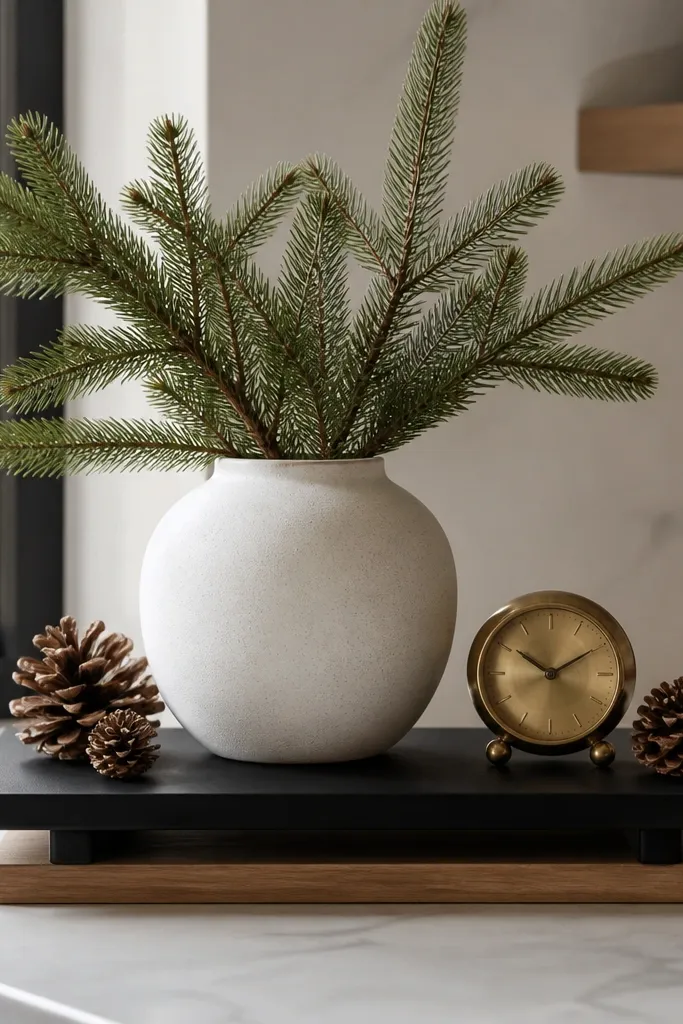
Height is what makes small seasonal decor look intentional. The black riser pulls the eye up and echoes your cabinet black, while the oak base keeps it warm and tied to your kitchen material. A white ceramic vase gives you a clean backdrop for evergreen stems. I like using height when you have limited counter space because it creates a focal point without spreading clutter.
Choose a riser that lifts the centerpiece about 6-8 inches. Keep the vase narrow so the stems don’t look like a bush. Pine cones or dried seed heads should be sparse — 3-5 pieces — and spread around the base for a natural look.
If your evergreen stems are too bright, mist them lightly with a gray-green spray (or mix in dried eucalyptus) so they look more “winter natural” and less dyed.
Avoid oversized vases that touch the cabinet doors; the scale looks off fast in kitchens.
8. Black and white stone-look tray with winter fruit and evergreen stems
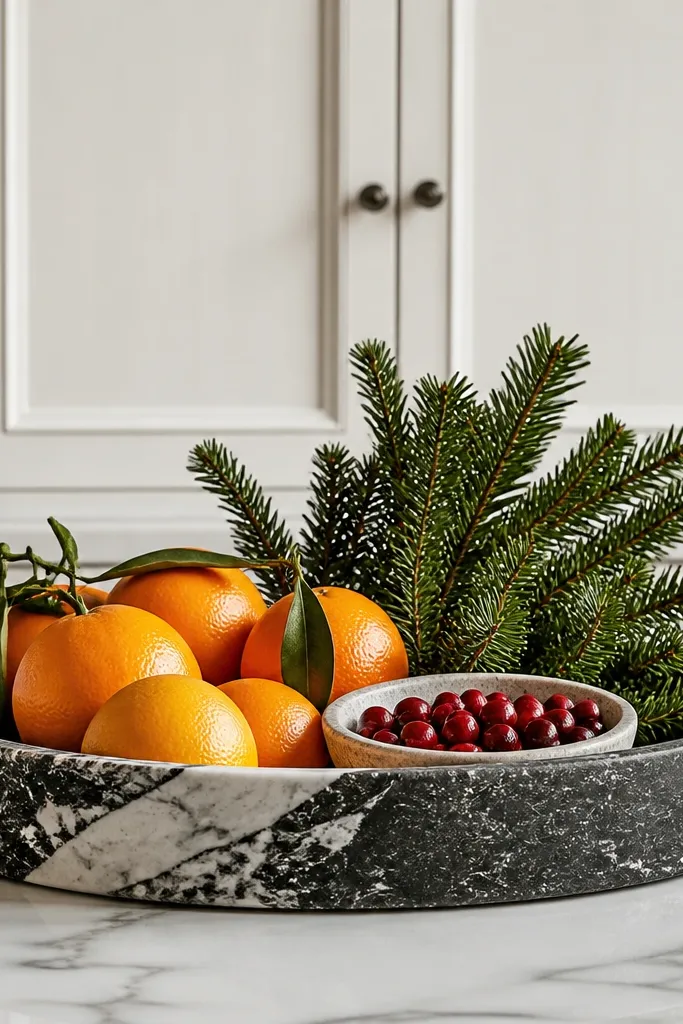
This setup makes evergreen feel like a kitchen, not a mantel. Citrus gives you bright color that plays nicely with white oak, while the black tray ties into the cabinet hardware and keeps it grounded. Evergreen stems are short and clustered, so the color reads as seasonal without taking over. The stone-look tray adds a cool neutral that balances the warmth of oak.
Pro tipSwap citrus in mid-season; when oranges start to dry, replace them so the look stays fresh.
Use a tray that’s wider than it is tall, and keep the evergreen cluster to one corner so it doesn’t block the fruit. Choose oranges with warm tones and berries that read deep red or cranberry. Place the tray on a spot you already use daily, like near the coffee station or bread box area, so it doesn’t feel like decoration only.
Watch outDon’t use artificial fruit; it looks plasticky next to real wood and stone finishes.
9. Matte black vase trio on a white oak corner ledge with mixed greens
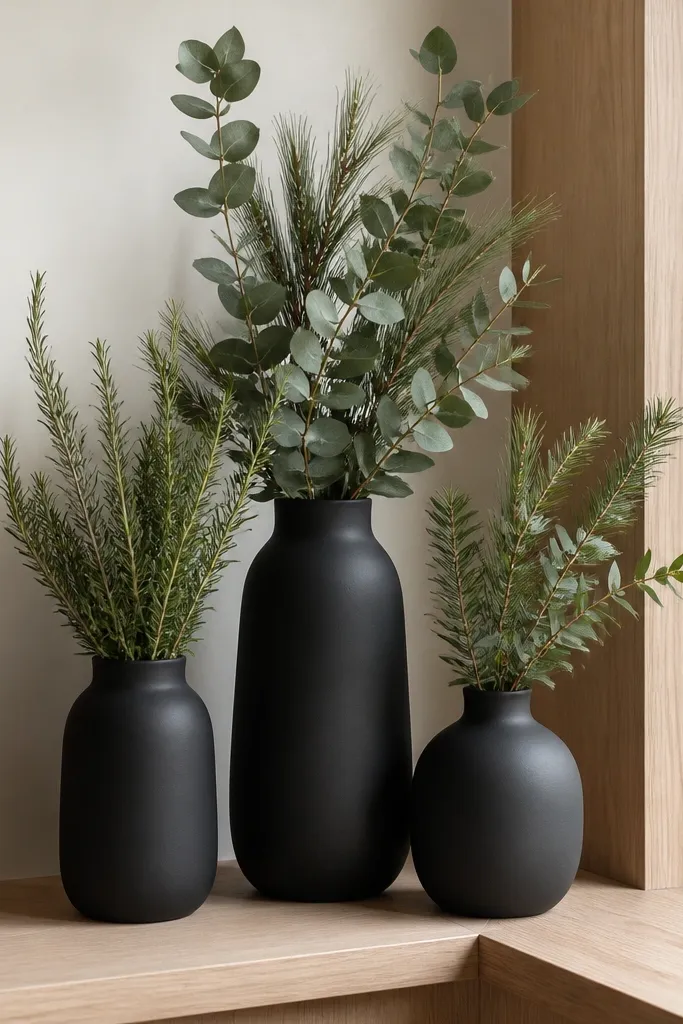
A vase trio works because it layers height and texture without needing lots of small objects. Matte black keeps the trio cohesive, and the mixed greens add realism — rosemary looks different from eucalyptus, and pine adds structure. White oak trim ties the whole display to your cabinetry, so it doesn’t feel like it came from a different room. This is a strong option when your kitchen has an open corner spot that looks empty.
Pick three vases where the tallest is about 10-12 inches and the others step down by 3-4 inches. Use water-tight vases if you’re using fresh stems; otherwise use dry floral foam-free arranging with short stems. Keep the greenery palette limited: one deep green, one gray-green, and one herb green.
Cut stems at an angle and trim after 24 hours; they settle and the display looks fuller.
Avoid mismatched black finishes like one glossy vase and one matte — it breaks the “intentional” look.
10. Evergreen runner on the entry console with black hardware echo
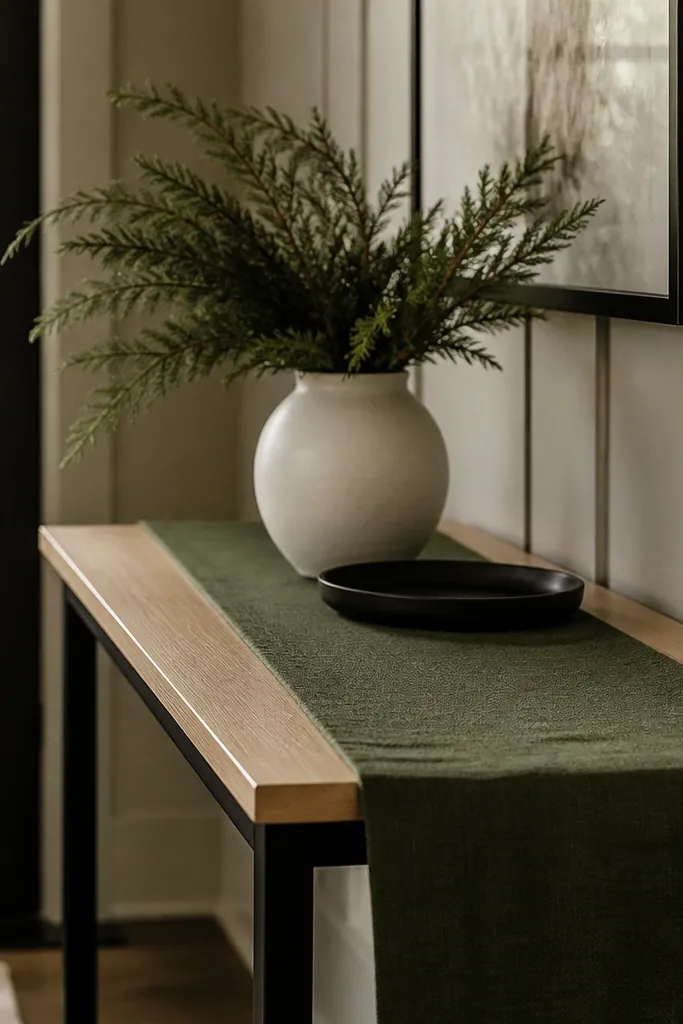
This is an entry-to-kitchen continuity trick. When your entry has the same evergreen color and black accents, the kitchen feels like part of the same designed home. The runner makes the space look dressed, even if you only set out a couple of items. A white ceramic vase keeps the greens from getting too dark in the hallway light.
Pro tipMatch the black tone to your kitchen pulls by holding the hardware next to the decor piece in daylight.
Use a runner that’s narrow enough to leave 3-4 inches of console surface on each side. Keep decor to one tray plus one vase so the entry doesn’t turn into storage. If you have coats on hooks, skip tall decor that blocks them.
Watch outAvoid heavy winter signage or large wreaths in the entry; the console needs breathing room.
11. Seasonal evergreen wreath ring on a cabinet door handle hook
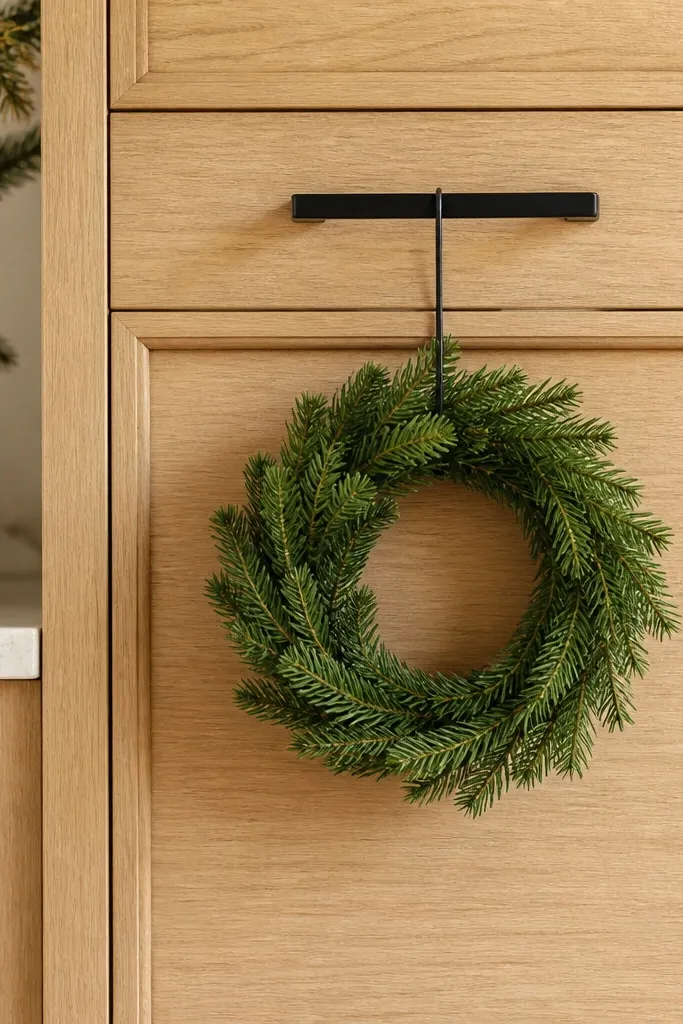
This is the smallest seasonal move that still looks intentional. A wreath ring hung at the same height as the cabinet pulls makes the black hardware feel like part of the decor plan. Because it’s compact, it doesn’t fight the horizontal lines of upper cabinets. I’ve used this in kitchens where there’s no counter space left for seasonal items.
Make sure the ring diameter is 6-10 inches so it doesn’t crowd the door. Use a thin black hook or a small wreath hanger clipped to the handle area only. Keep the greens mostly dark with a few tan dried accents so it reads winter, not cartoon Christmas.
If your cabinet doors close tightly, add a small felt pad on the hook so it doesn’t scratch the finish.
Avoid thick, bulky wreaths that press into the door — they can chip the cabinet edge over time.
12. Black-and-cream coffee bar with evergreen stir sticks and oak jars
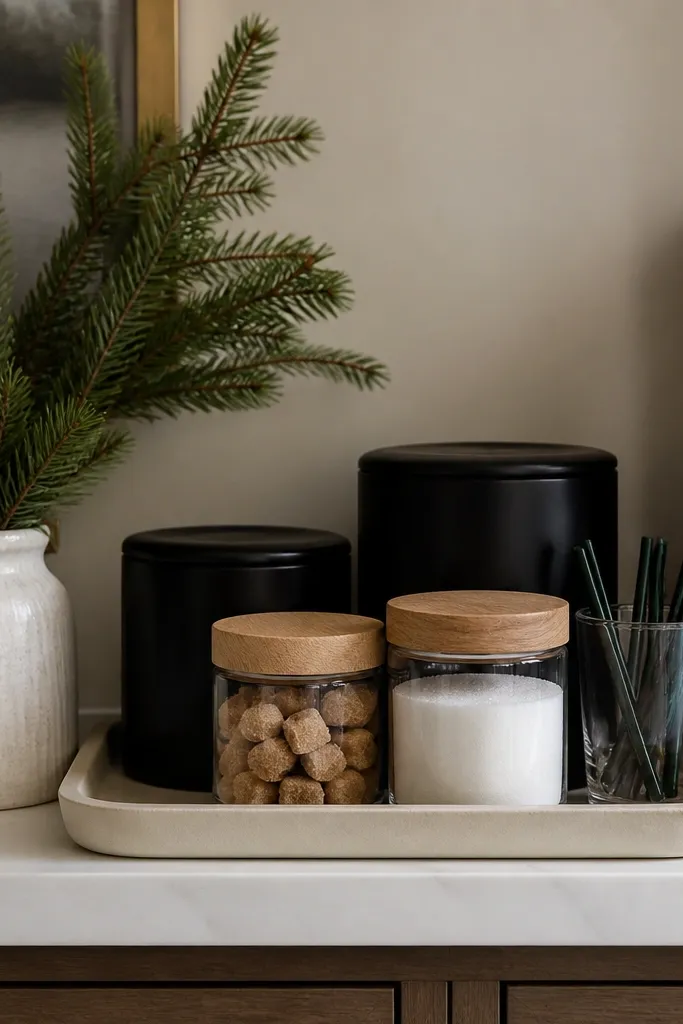
Coffee bars get used every day, so seasonal details feel natural instead of forced. Black canisters repeat your cabinet hardware and make the bar look grounded. Cream tray and white ceramics keep the palette bright, which matters because oak can look heavy when the kitchen lighting is dim. Evergreen stir sticks are a fun seasonal cue without adding clutter.
Use oak-lidded jars or glass jars with wooden lids so the wood repeats your cabinet material. Put the evergreen sprig vase in the back corner of the coffee bar so it doesn’t block mugs. Keep stir sticks in a clear cup so they look tidy and not scattered.
Choose evergreen accents that are matte or felt-like, not shiny plastic, so they sit nicely beside wood and stone.
Skip a full “themed” bar with too many novelty items; one seasonal element is enough.