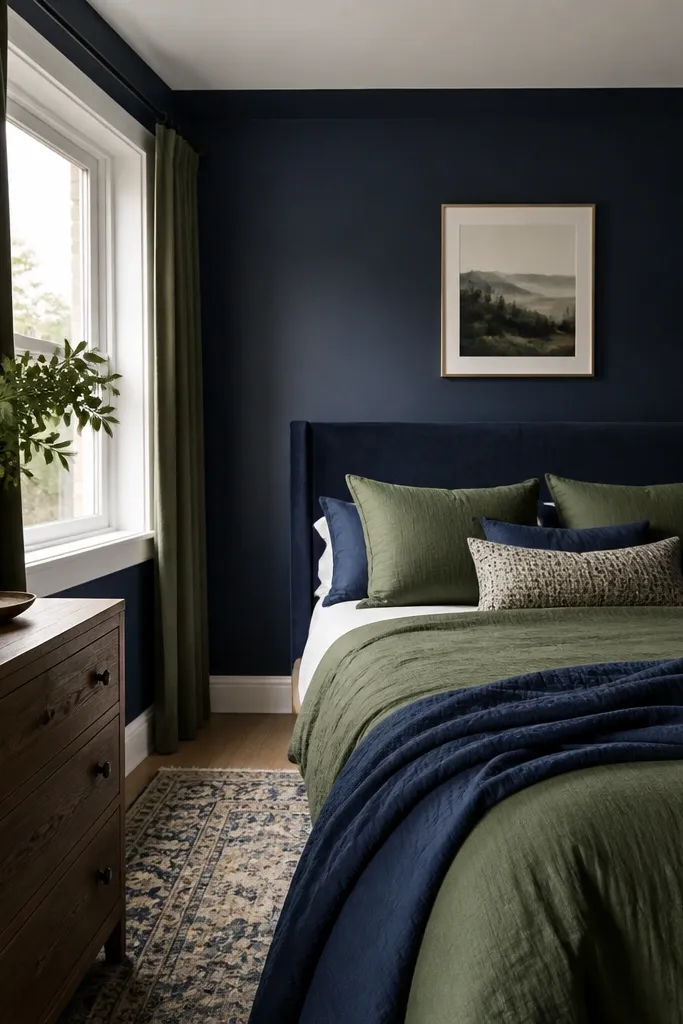
1. Coastal-Navy Walls with Sage Bedding Set
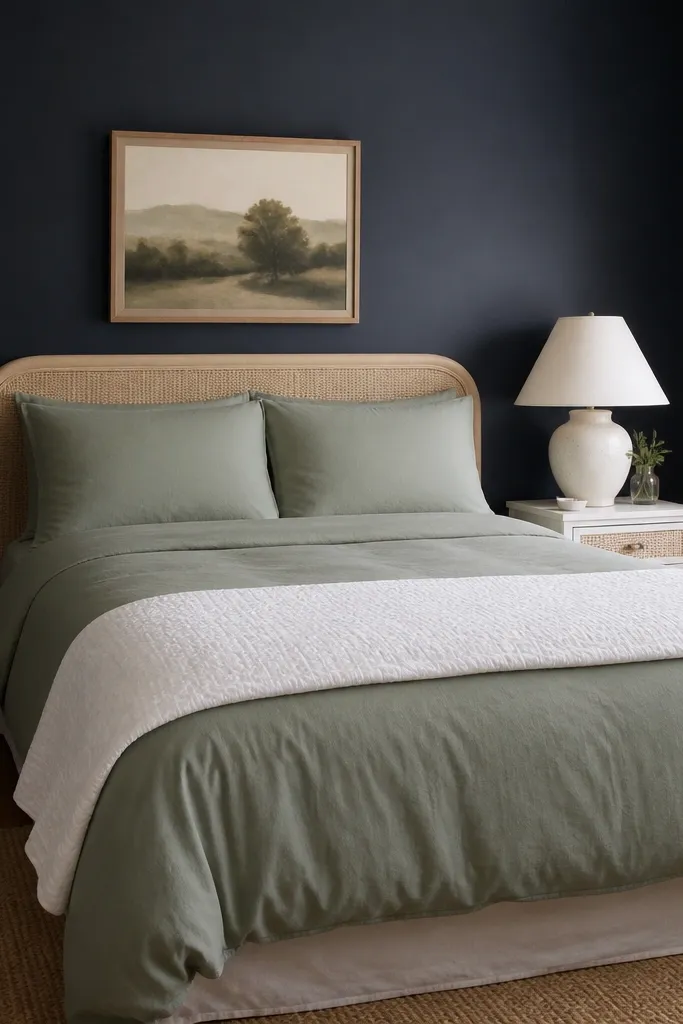
Paint the walls a deep navy that leans slightly cool, then bring in sage bedding with a soft matte finish. The sage reads airy against navy, so the room feels open even when the walls are dark. Keep the bedding crisp with white or cream top layers, and add green only in the bedding and one small piece of art. This pairing makes navy feel coastal and lived-in instead of heavy.
Pro tipHang sheer white curtains behind the main curtain panel so daylight softens the navy.
Use a full duvet set in sage (cotton percale or a matte microfiber) and add a cream throw with a visible weave. Choose a headboard in off-white upholstered fabric or keep the frame simple and let the wall do the work. Add one green accent pillow with a subtle texture — linen slub looks best with navy.
Watch outAvoid bright neon greens; they look cheap against navy and make the room feel harsher.
2. Evergreen Velvet Headboard with Soft White Walls
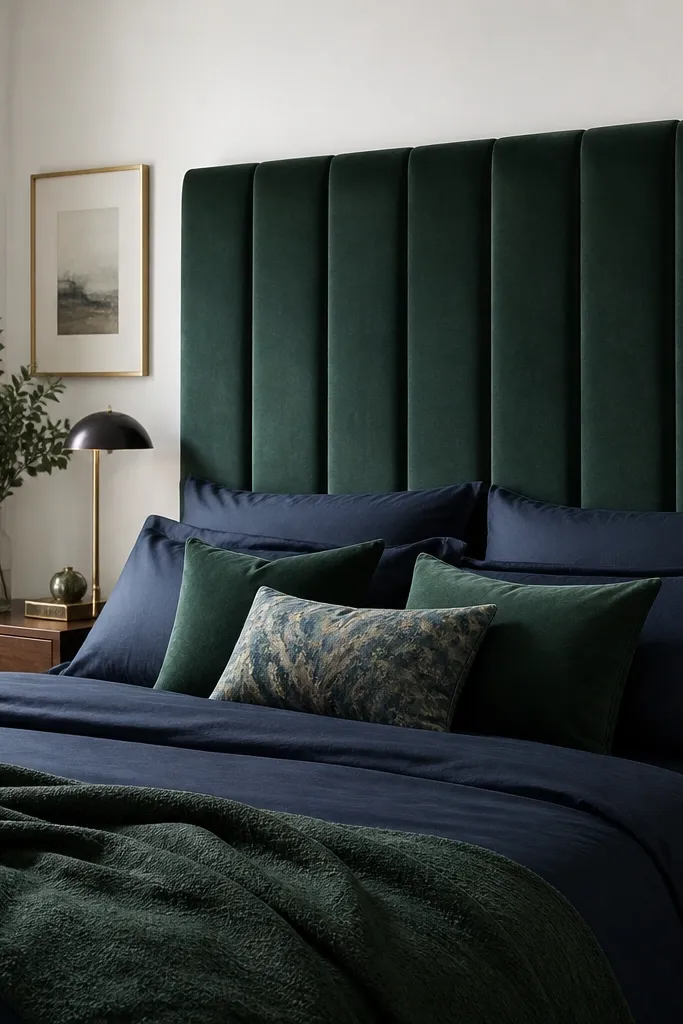
If you’re not ready to paint, put the navy into textiles and make the headboard the star. An evergreen velvet headboard gives that rich, cozy depth, while white walls keep the room bright. Navy sheets and a navy throw tie the look together without covering the whole room in dark color. The contrast makes the bed look taller, which matters in small spaces.
Pro tipPlace a small tray on the nightstand with a brass lamp base — warm metal makes navy feel inviting.
Pick a headboard height around 52-60 inches, so it reaches above the pillows. Use navy bedding with a matte finish (cotton or brushed microfiber) and add one evergreen pillow in velvet or velour. Keep the bed skirt minimal or skip it so the floor stays visually open.
Watch outDon’t use shiny satin navy on top of velvet; the light reflections will look messy in a small room.
3. Navy and Green Striped Quilt for Instant Height
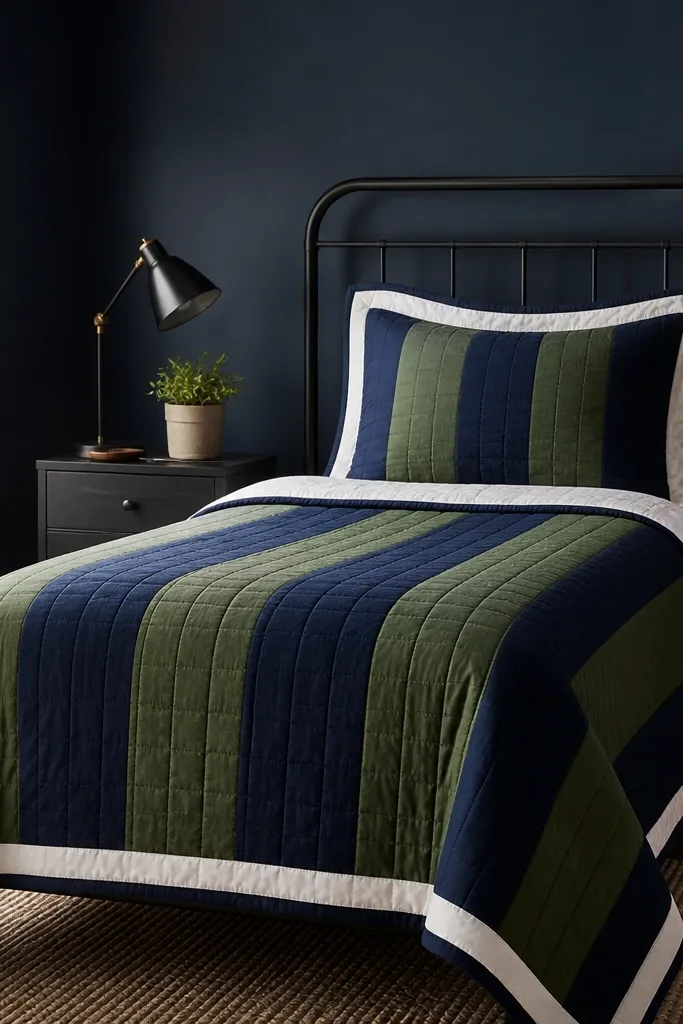
Vertical stripes trick your eye upward, which is exactly what a small navy blue bedroom needs. Use navy as the main stripe color and green as the secondary stripe — sage and evergreen both work depending on how dark your navy is. This look is graphic but still cozy because the quilt has texture and weight. It also lets you keep walls neutral, which helps if your room gets harsh afternoon light.
Pro tipAdd a thin navy piping detail on one pillow cover to make the stripes look intentional.
Choose a quilt or coverlet with vertical stripes at about 1-2 inches wide. Keep the pillow covers solid (cream or pale green) so the stripes don’t compete. Use a slim bed frame and a low-profile nightstand so the vertical pattern stays the focus.
Watch outAvoid horizontal stripes in a small room; they widen the space and make it feel shorter.
4. Navy Curtains with Sage Sheer Layer
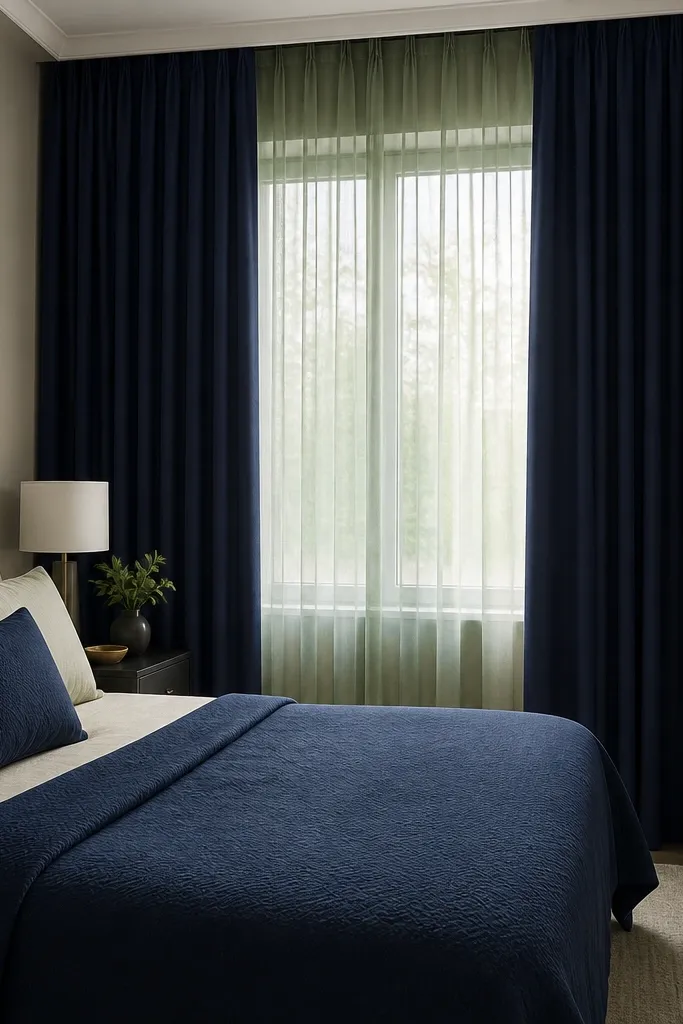
Curtains are the fastest way to make a small room look taller, and navy does it in a way that feels designed. The trick is layering: navy blackout panels for depth and sage sheers for soft color in daylight. This keeps the room from looking like a cave at night and from looking gray during the day. The green sheer acts like a gentle filter, so the navy feels warmer.
Pro tipIron the sheers flat and let them pool just 1 inch on the floor for a tailored look.
Hang the navy curtains 4-6 inches above the window casing and extend them 6-10 inches past each side. Use grommet curtains or pinch-pleat panels with a 1.5x fullness. For the sheer, pick a sage that isn’t too yellow — look for a muted, dusty green.
Watch outSkip short curtains that stop at the windowsill; they cut the height and make the room feel smaller.
5. Olive and Navy Bedding with White Linen Topper
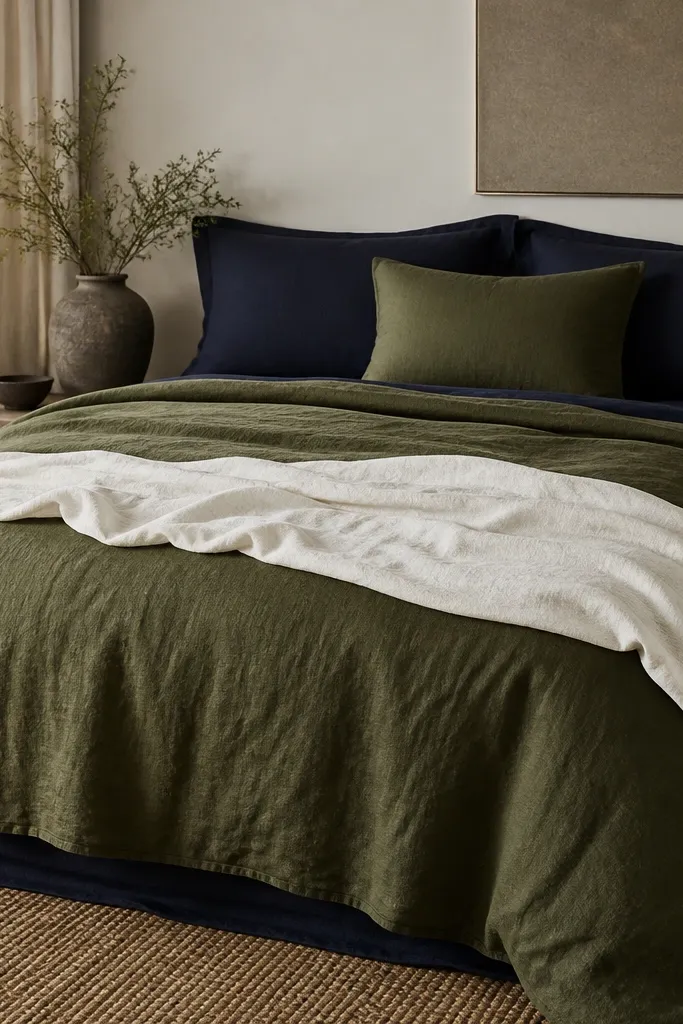
Olive-green sits between sage and evergreen, so it’s forgiving with navy. The white linen topper breaks up the dark colors and keeps your bed looking airy. I like this combo when the room has warm floors (oak or honey-toned wood) because olive flatters warm undertones while navy grounds the look. It’s comfortable, not formal.
Pro tipWash and dry linen once before styling — it will drape better and look less stiff.
Use an olive duvet or coverlet in a matte weave (linen blend or textured cotton). Add navy pillow covers and a navy sheet set so the navy shows only in small edges. Drape the white linen throw across the top of the bed and tuck one corner behind a pillow.
Watch outAvoid matching olive and green accessories that are too close in hue; you want contrast, not a monochrome mess.
6. Dark Navy Wall Panel Behind the Bed
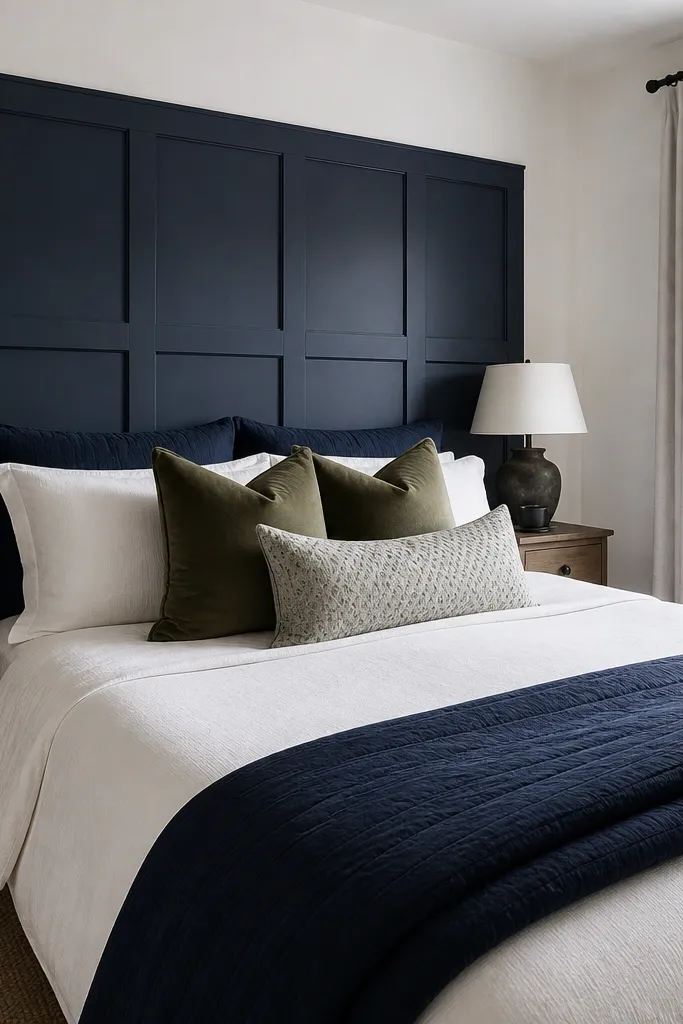
Instead of painting the whole room, paint or panel just the wall behind the bed. A navy wall panel gives you the depth of a dark room without shrinking every corner. Green accents pop against the navy, and the white walls keep the space bright. This look also makes the bed feel custom, even in a rental.
Pro tipKeep the bed centered on the panel and use a headboard that matches the panel’s width.
Create a simple grid with painter’s tape or add removable wall panels in rectangular sections. Keep the navy paint matte, not satin, so it absorbs light softly. Style with one green throw pillow plus one green art piece or lamp shade so the color shows up in more than one place.
Watch outDon’t use glossy navy on the panel; it reflects light and makes the edges look messy.
7. Navy Bed Frame + Evergreen Throw Blanket
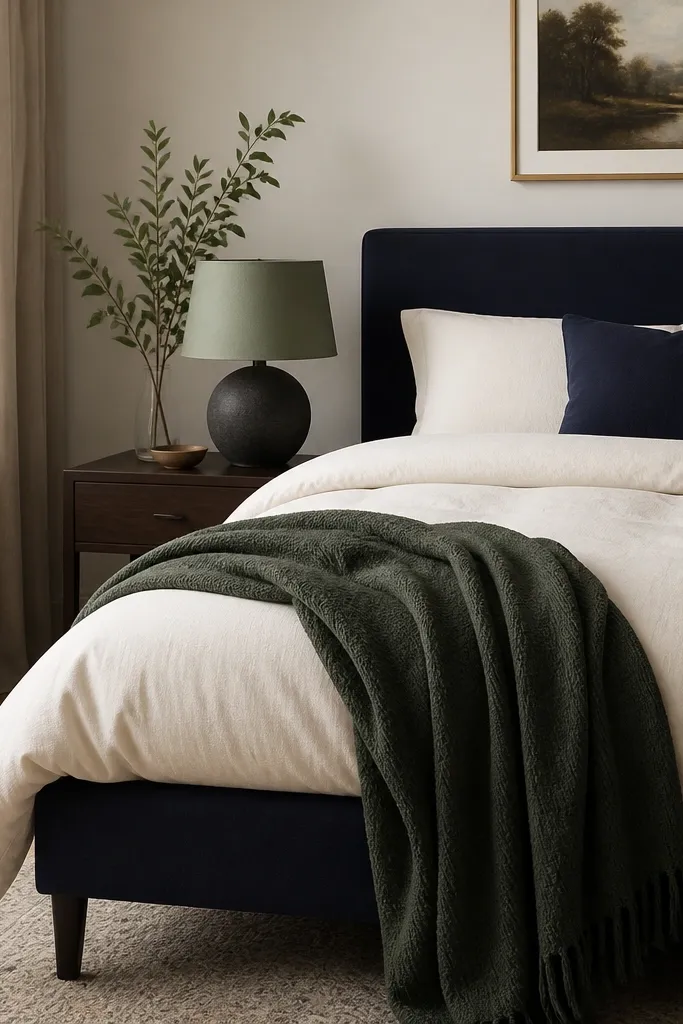
When your furniture is small, you can cheat the color story by choosing one navy piece of furniture and letting everything else stay light. A navy bed frame anchors the room, then an evergreen throw adds the green hit where your eye naturally lands. Cream bedding keeps the navy from feeling heavy. This is a clean look that still feels warm because of the blanket texture.
Pick a navy bed frame with a fabric finish that looks like cotton or linen, not patent leather. Use a cream duvet and one navy pillow, then drape an evergreen throw blanket over the bed edge where you’ll see it from the doorway. Match one small item — like a lamp shade — to sage or evergreen.
Fold the throw into a thick rectangle so it looks intentional, not tossed.
Avoid too many colors on the bed; in a small room, two neutrals plus navy and green is enough.
8. Sage Accent Wall Corner with Navy Trim
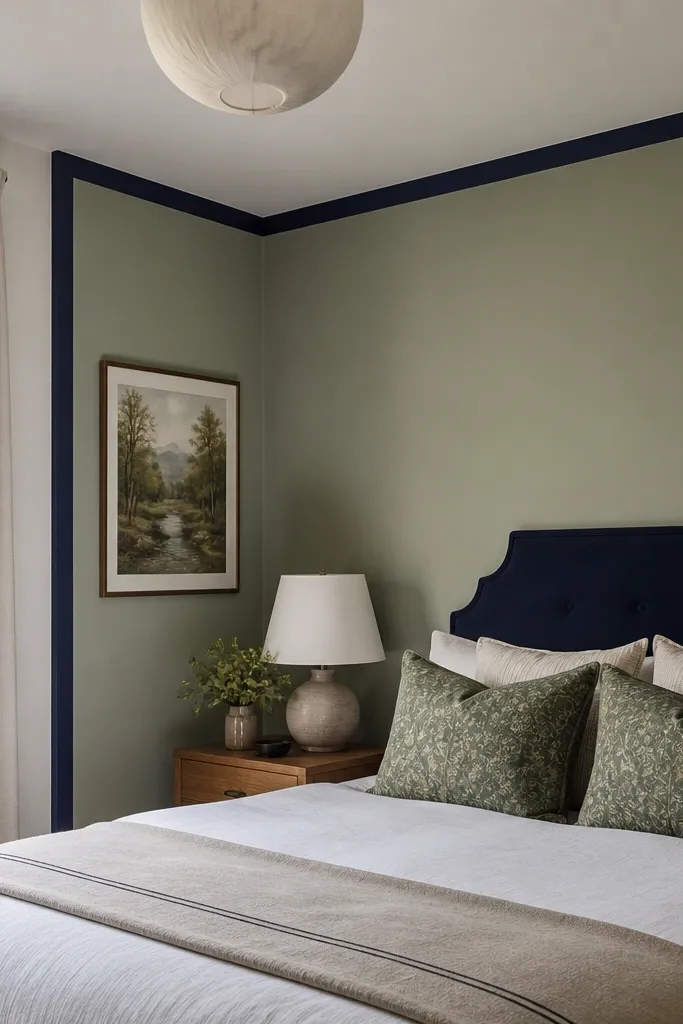
A corner accent keeps green from taking over the whole room. Sage in one corner brightens the space and gives the navy a gentler partner. Add navy trim lines or a navy picture frame to connect the accent to the rest of the room. This is great for awkward layouts where you can’t center the bed perfectly.
Pro tipUse painters tape burnish hard along the edges so the navy trim looks crisp.
Tape a simple corner shape — just one wall corner works — and paint it sage with a matte finish. Use a narrow navy brush line around the accent area for a clean boundary. Keep bedding navy and add green pillows, but keep the rest of the wall mostly white.
Watch outDon’t choose sage that’s too bright and minty; it clashes with navy undertones.
9. Navy Wallpaper Stripe on the Ceiling Edge
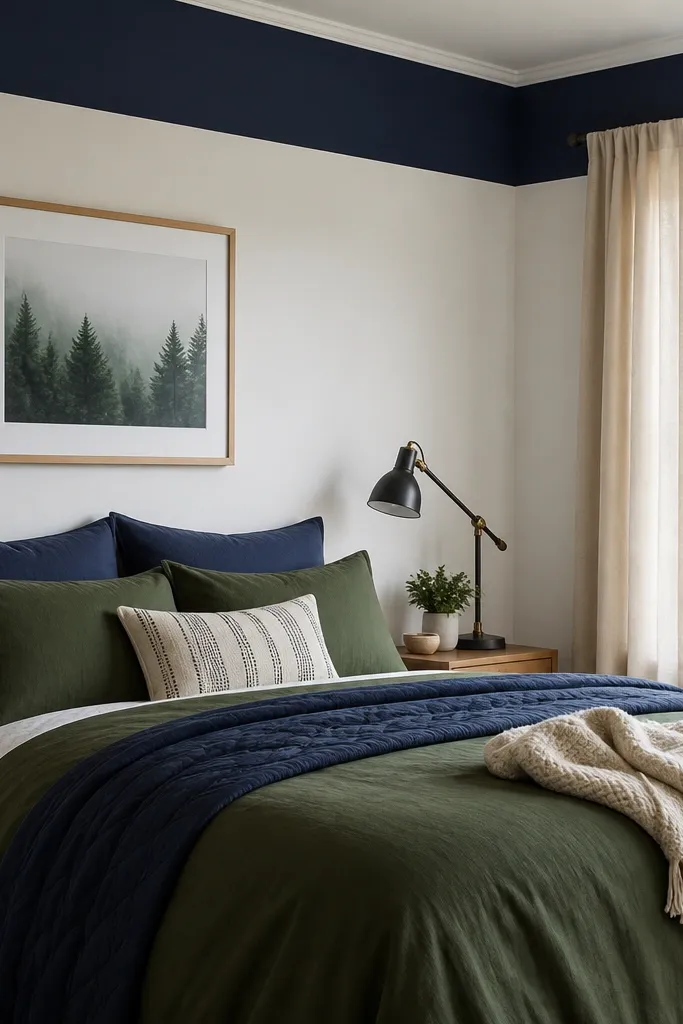
This is the sneaky trick: add a navy stripe near the ceiling to pull your eye upward. In a small bedroom, you don’t need full wallpaper coverage to get the effect. Pair it with green bedding so the stripe feels connected, not random. It looks designed in photos and in person because the stripe frames the room’s height.
Use removable wallpaper or a simple fabric stripe painted onto the trim line. Keep the stripe thickness around 6-10 inches. Choose a wallpaper pattern that’s subtle — a thin navy stripe or small scale texture — so it doesn’t fight with bedding.
Make sure the stripe lands in line with the headboard center so the room looks symmetrical.
Skip loud geometric wallpaper; in a small room it makes the ceiling feel lower.
10. Green and Navy Gallery Wall with Navy Frames

A gallery wall makes navy feel personal instead of like paint. Use navy frames so the color repeats and ties everything together, then choose prints that have both green and off-white. I like botanical line drawings because they add calm without clutter. If your room is narrow, place the gallery horizontally so it doesn’t eat vertical space.
Use 4-6 frames, all the same color finish. Keep matting white or warm ivory so the prints breathe. Hang them so the center of the group is about 58-62 inches from the floor, then step the frames slightly taller near the bed for balance.
Lay everything on the floor first and measure spacing with painter’s tape on the wall before you drill.
Avoid mixing frame colors; navy plus random browns looks unfinished in small rooms.
11. Navy and Green Knit Throw + Woven Basket Storage
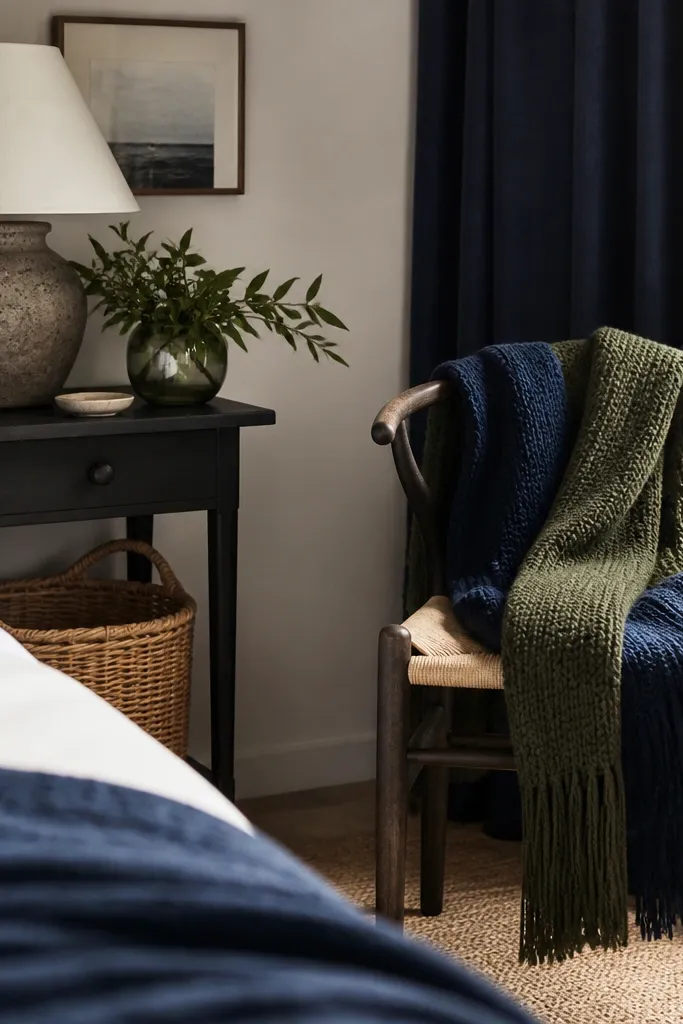
Small space bedrooms need storage that looks like decor. A woven basket keeps clutter hidden, while the knit throw brings navy and green texture into the room. This combo looks intentional because you’re repeating materials — woven for storage, knit for softness. It also helps the room stay tidy, which makes color look better.
Pro tipDrape the throw over the chair arm and tuck the end so it falls straight — messy drapes look small and cluttered.
Choose one woven basket in natural tan with a flat weave. Put it near the bed or under a narrow console. Add a knit throw in navy with green stripes or blocks, and keep the rest of the bedding light so the texture stands out.
Watch outDon’t use plastic bins in the same corner as soft textiles; it kills the cozy look.
12. Navy Quilt with Green Embroidered Accent Pillow
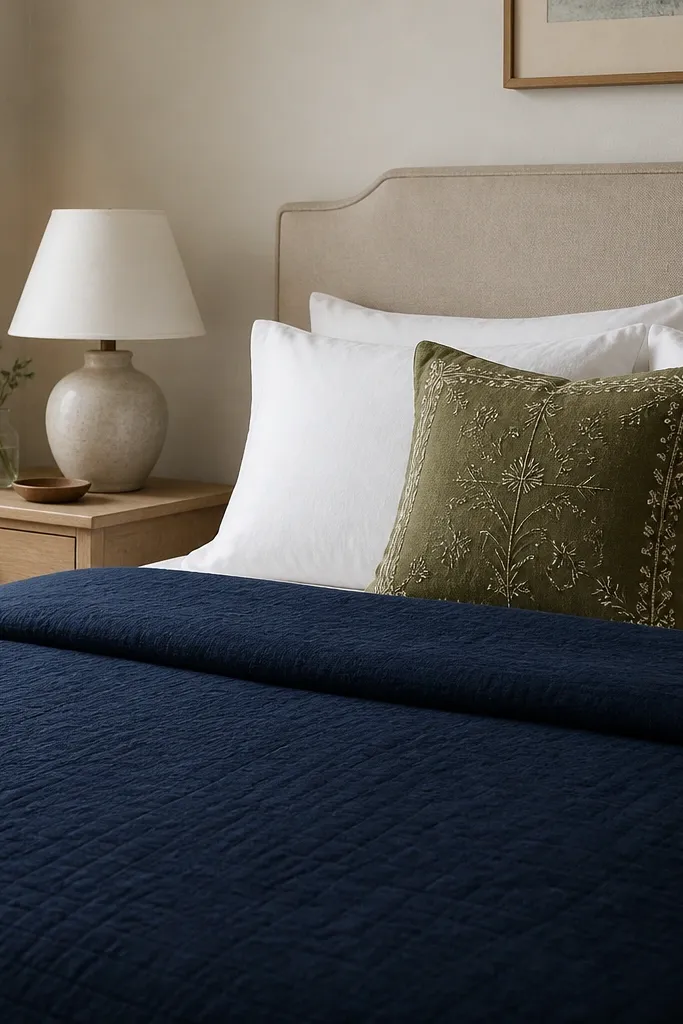
Go solid on the quilt, then let green show up as a crafted detail. Embroidery adds dimension that looks expensive without adding visual clutter. Navy stays calm and uniform, which is what you want when your room is small. The white pillows keep everything from turning too dark.
Use a navy quilt that has a visible stitch or slight texture — cotton with a stitched channel looks great. Add one green embroidered pillow and keep other pillows white or cream. Choose a lamp shade in either white linen or a pale green fabric.
Match the embroidery color to the undertone of your green — sage embroidery looks best with gray-navy, evergreen with black-leaning navy.
Avoid patterned pillows on top of a patterned quilt; it crowds the bed.