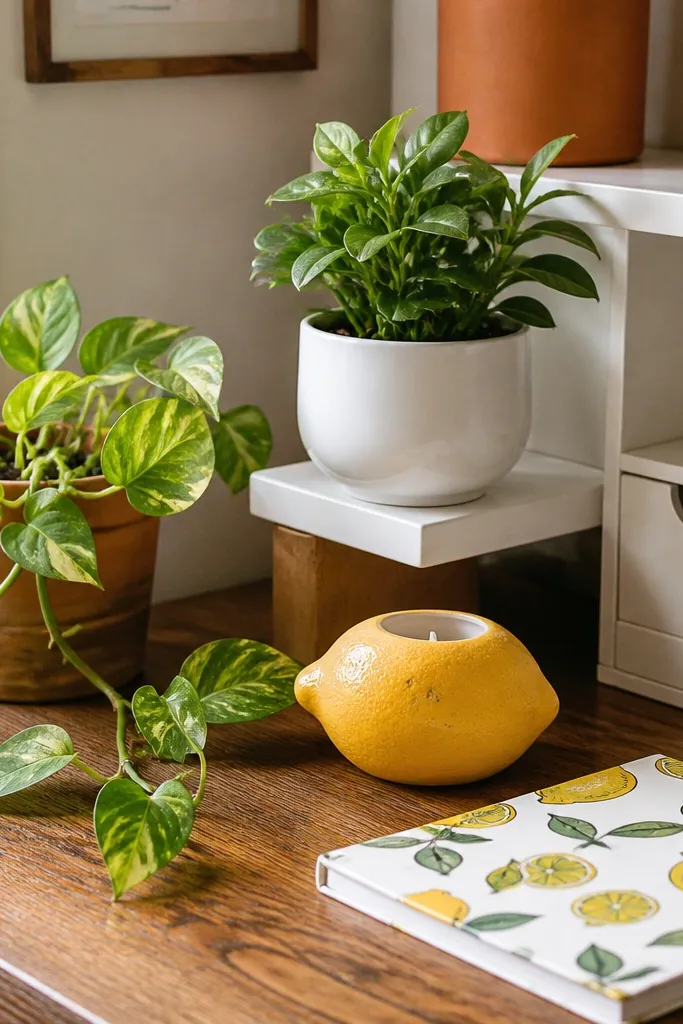
1. Terracotta Garden Shelf Stack
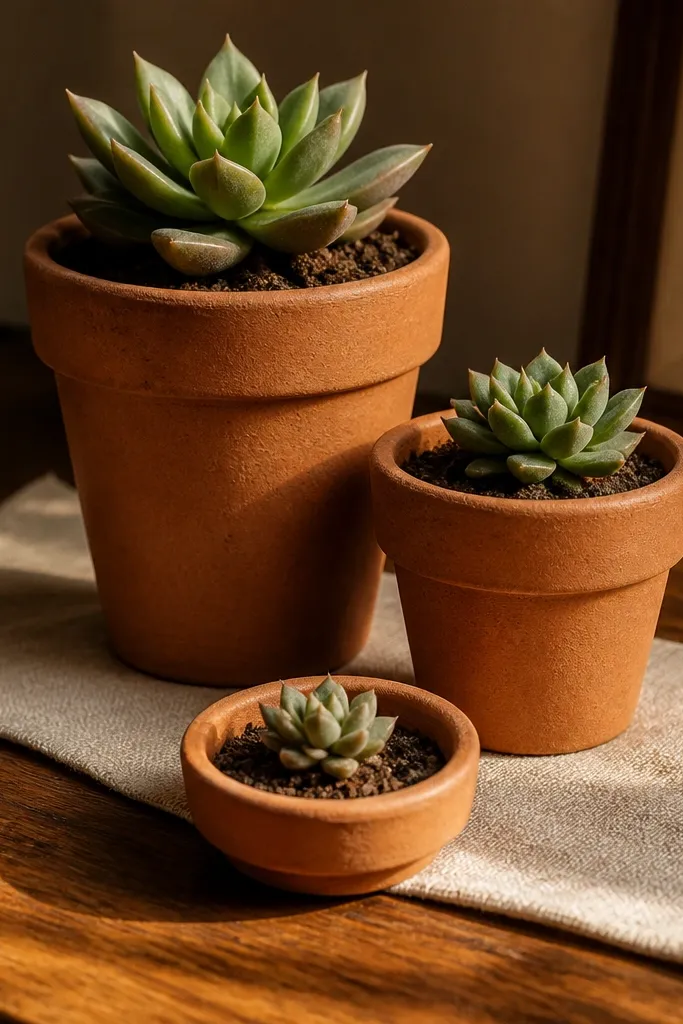
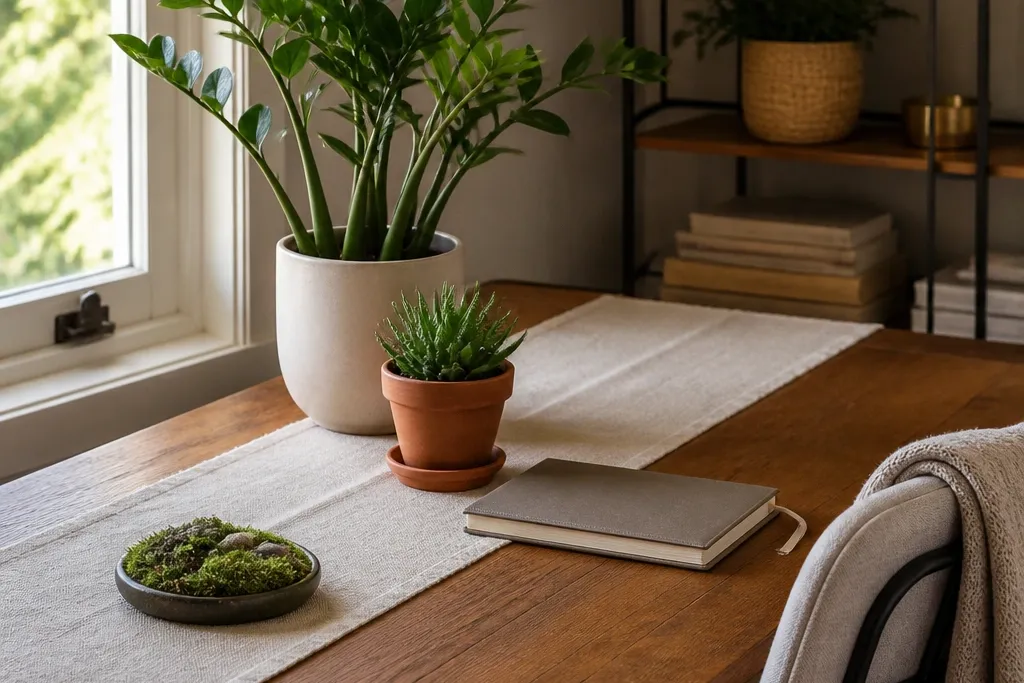
This look is for warm wood desks and people who want a cozy, earthy theme without heavy decor. Use three terracotta pots in descending sizes: a medium succulent pot in the back, a smaller one beside it, and a tiny low pot for the front corner. Add a thin linen runner under the pots so the table reads styled even when the plants are small. The earthy clay tones photograph well against light surfaces and make the green feel intentional instead of “random plant sitting.”
Step 1: Place a linen runner across the desk width, leaving 2-3 inches clear on the front writing edge. Step 2: Set the medium terracotta pot about 4-6 inches from the back edge, then cluster the smaller pot 3-4 inches to the left. Step 3: Add the tiny low pot at the front-right corner of the runner and balance with one small stone or mini figurine next to it. This setup is mostly low-cost pots and a runner; expect around $25-60 depending on plant size.
Pro tipChoose one pot shape for all three (round or slightly fluted) so the stack looks like a set, not three different buys.
Watch outDon’t put more than three plant sizes in this theme or it starts looking like a plant collection dump.
2. Monochrome Black Pot Desk Lab
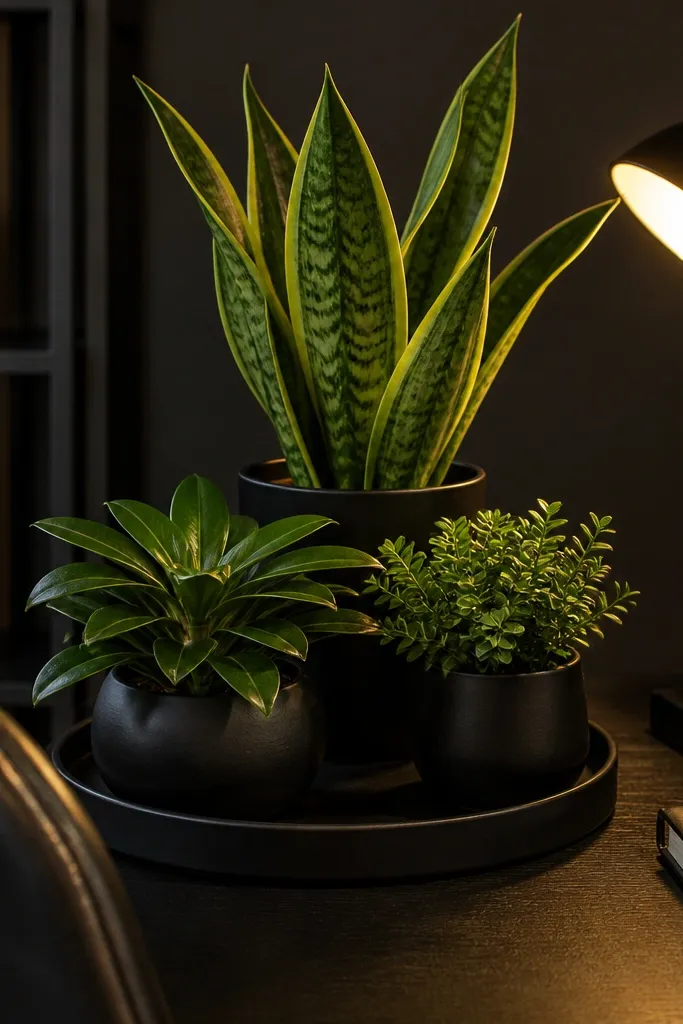
If your workspace is dark — black desk, charcoal accessories, or a moody room — monochrome plant decor looks sharp and clean. Go with black ceramic pots and one matte black tray to organize everything into a single block. Use an upright plant like snake plant or ZZ in the back for structure, then add a low plant like a small peace lily or mini fern in the front. The black-on-black contrast makes the green read brighter, and the tray stops stationery and cords from breaking the theme.
Step 1: Put a matte black tray centered on the desk, leaving space on the right for a lamp or laptop. Step 2: Place the tall upright plant pot on the tray’s back half, then add the smaller pot in the front-left corner of the tray. Step 3: Add one tiny propagation-style glass jar with a single cutting or a small moss dish on the tray’s right. Keep plant heights within 10-14 inches difference so it looks designed, not messy.
Use a plant stand riser or stack coasters under the tall pot to create a clear height ladder.
Skip mixed pot colors here; white, terracotta, and patterned pots will break the monochrome look.
3. White Desk Citrus + Green Pops
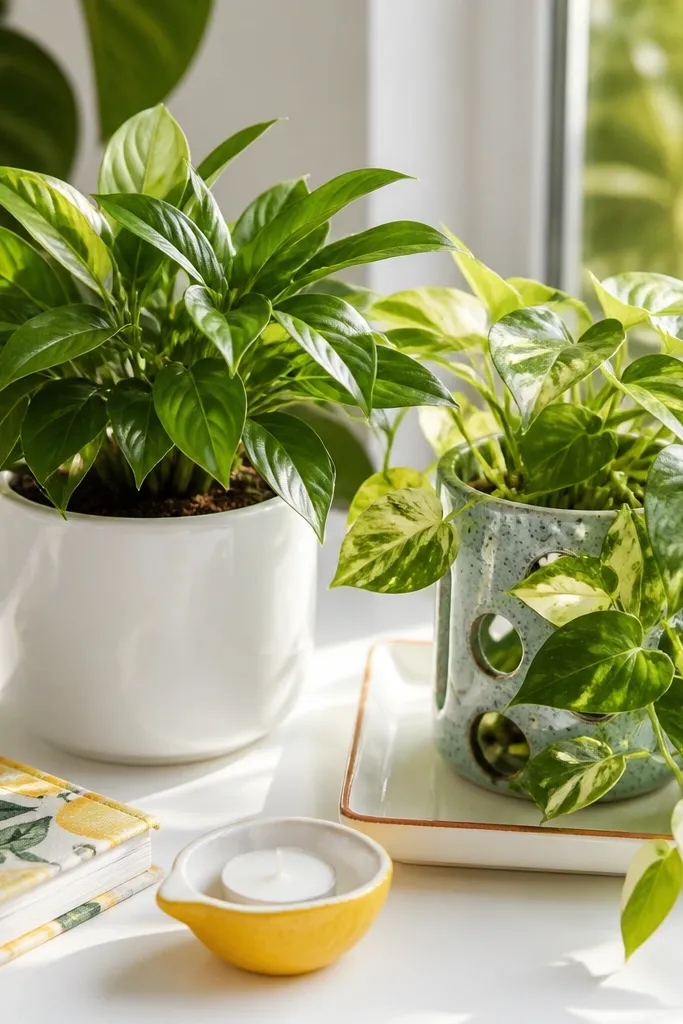
This theme is bright and photogenic for white desks or rooms with lots of daylight. Keep plants simple: one compact plant in a white pot, plus one trailing plant in a small ceramic holder that spills over the edge of a shallow tray. Add a single citrus accent — a small lemon-shaped candle holder, citrus print notebook, or a yellow pen cup. The yellow-orange pop against white makes the plant look like part of the styling plan, not an afterthought.
Step 1: Choose a shallow tray in white or light wood and place it near the desk’s left side (about 6-10 inches from the edge). Step 2: Put the compact plant in the back of the tray, then position the trailing plant so the vines drape over the front edge. Step 3: Add one citrus item and one coordinating stationery piece (yellow notebook or pen cup) on the tray’s remaining open space. Aim for a 12-16 inch tray footprint so it doesn’t crowd your work area.
Pick one yellow shade only — lemon yellow looks different from mustard, and mixing them dulls the punch.
Don’t add multiple fruit themes (berries + citrus + tropical) or the table turns into a collage.
4. Botanical Book Stack With Mini Planter
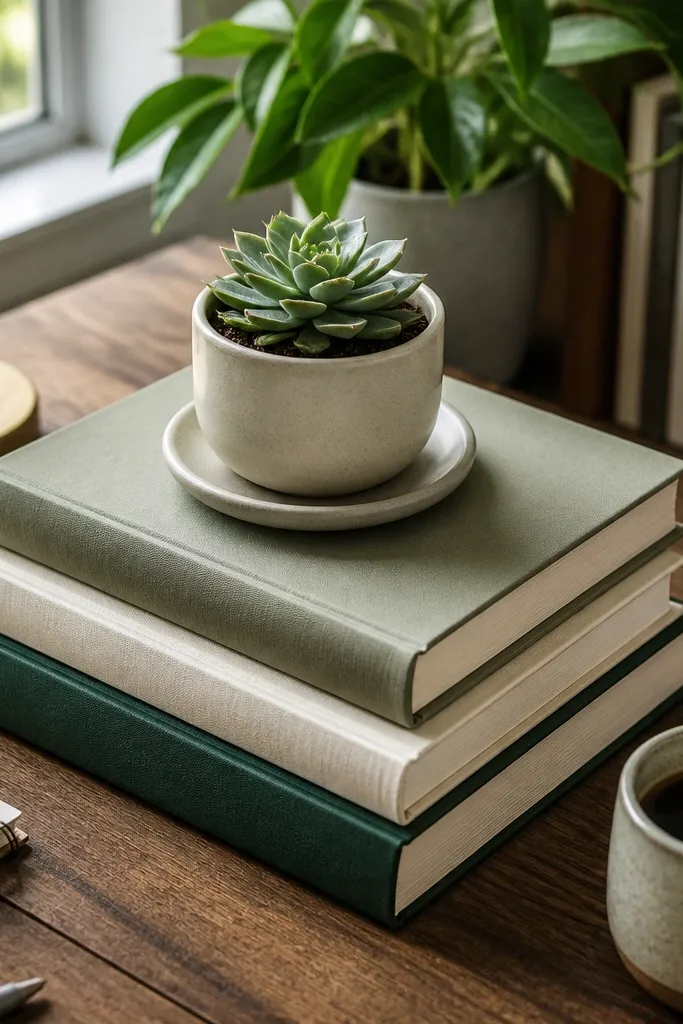
Books bring height without extra clutter, and botanical spines make the theme read instantly in photos. Stack 2-3 books with consistent spine tones, then place a small planter on top — not directly on the cover; use a small saucer or tray so it looks intentional. For plants, choose something compact and tidy like a small succulent rosette or a mini pothos in a tiny pot. This works best when your desk surface is small because the books take vertical space and keep the plant cluster tight.
Step 1: Pick books with similar spine colors and stack them near the back-left corner, leaving at least 8 inches clear for writing. Step 2: Set a small saucer on top of the stack and place the mini planter in the saucer. Step 3: Add one “finisher” item — a slender pen holder or a small brass paperweight — on the desk beside the stack. Total footprint should stay under 14-16 inches across.
Dust the book spines before styling. It sounds basic, but grime kills the photo look fast.
Skip tall book stacks if your lamp blocks the plant; the setup must stay visible from the chair.
5. Zen Stone Tray With Moss Dish
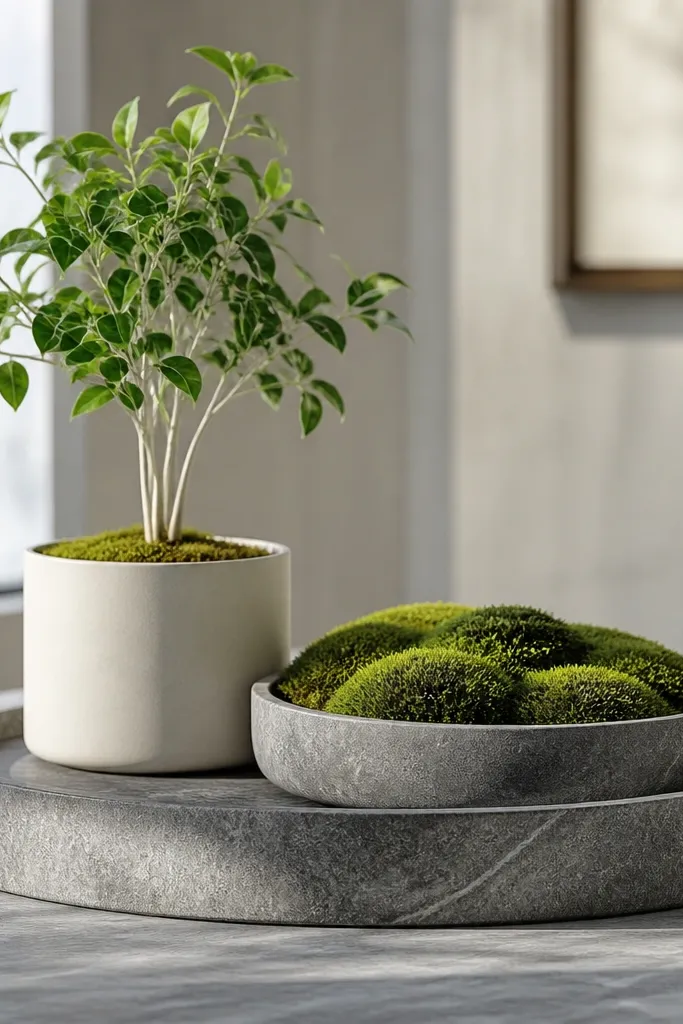
If you want calm, spa-like study table decor, a stone-toned tray with a moss dish looks clean and intentional. Keep the palette to gray, off-white, and plant green. Use a small upright plant in a pale pot for structure, then add a moss dish or faux moss pad as the low layer. The stone texture adds depth and makes the plants look like part of a mini landscape, even though it’s simple. This theme is great for quiet workspaces and desks that already have busy stationery.
Step 1: Place a flat gray stone or cement-look tray in the center of the desk’s non-writing zone. Step 2: Put the upright plant pot toward the back of the tray, then add the moss dish in front with a little space between them. Step 3: Add one small smooth stone or ceramic pebble cluster on the side for balance. Keep everything within a 10-12 inch tray so it reads neat in photos.
Use a matte finish tray. Glossy stone reflects light and makes the setup look harsher in pictures.
Don’t use bright colored pots here; they fight the calm gray palette.
6. Pastel Desk Candy Colors + Trailing Pothos
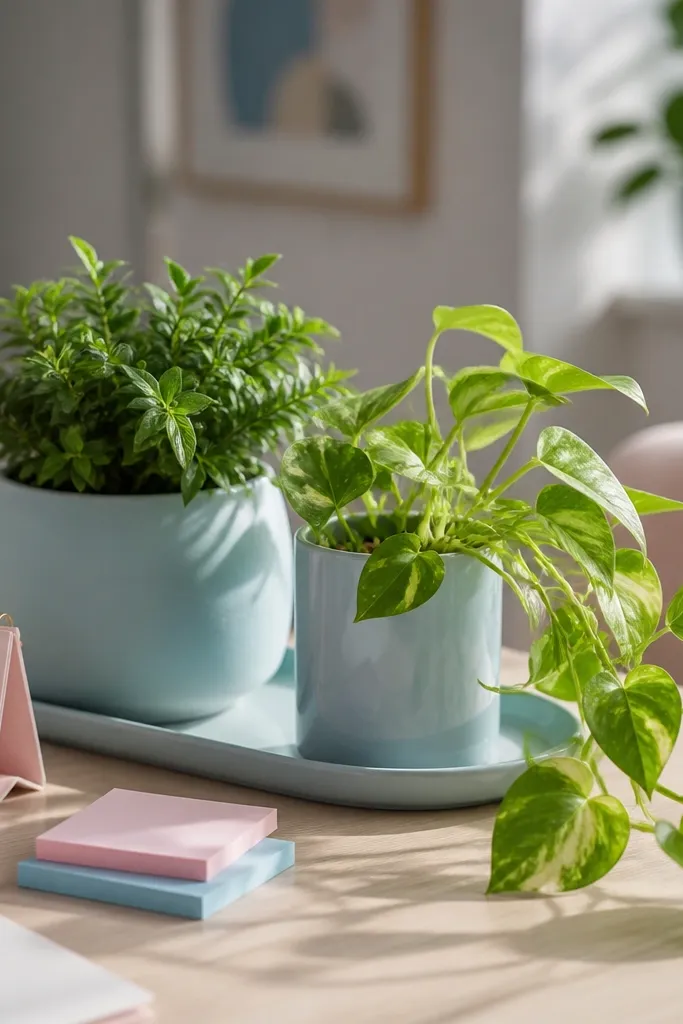
Pastel themes look best when you choose one soft color family and let the plant trail create the “movement.” Use a pastel pot (powder blue, blush pink, or mint) and a trailing pothos or small heartleaf philodendron that spills over a ceramic holder. Add a matching pastel item — a tiny desk calendar, pastel sticky notes holder, or a soft pink pen cup. The plant becomes the main texture, while the pastel items keep the look sweet and cohesive for study corners.
Step 1: Pick one pastel color and keep it to two items besides the plant pot (for example, pastel pen cup and sticky note holder). Step 2: Place the trailing plant near the desk’s front-left corner so the vines drape toward the center, not toward the writing edge. Step 3: Add a small tray under the pot to catch drips and keep the base tidy. Aim for a 9-12 inch visual footprint.
Pro tipPin the vines lightly with a small clip so the drape line looks deliberate.
Watch outAvoid mixing multiple pastels in different saturations; it makes the table look childish instead of styled.
7. Jungle Shelf Look With Two-Tier Planting
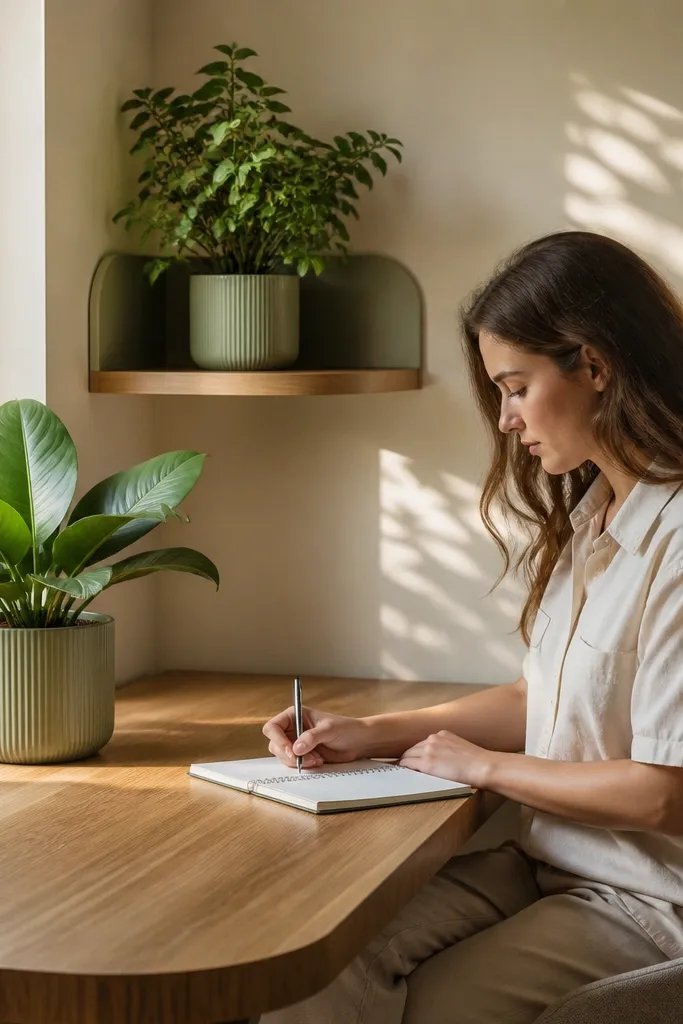
For people who want a full jungle vibe without cluttering the tabletop, use a two-tier plan. Put one leafy plant on a small wall shelf or desktop riser behind the desk, then keep a second plant on the table surface in a pot that matches the shelf color. Choose plants with different leaf shapes — for example, one broad-leaf plant and one narrow-leaf plant — so the textures show clearly in photos. This looks great in study corners because it frames your workspace from the back and adds depth behind the desk.
Step 1: Install or place a small shelf/riser behind the desk at about 12-18 inches above the tabletop. Step 2: Put the taller plant on the upper tier, then place a smaller plant on the desk surface about 6-8 inches in front of it. Step 3: Add one neutral backdrop item like a beige notebook or linen frame so the greens don’t blend into the wall. Keep both pots in the same color family to unify the theme.
Pro tipChoose one repeating color for both pots (all matte terracotta or all black) so the jungle feels curated.
Watch outDon’t overcrowd with three or more plants on the tabletop; the two-tier structure is the point.
8. Rattan + Terracotta Warm Coastal Desk
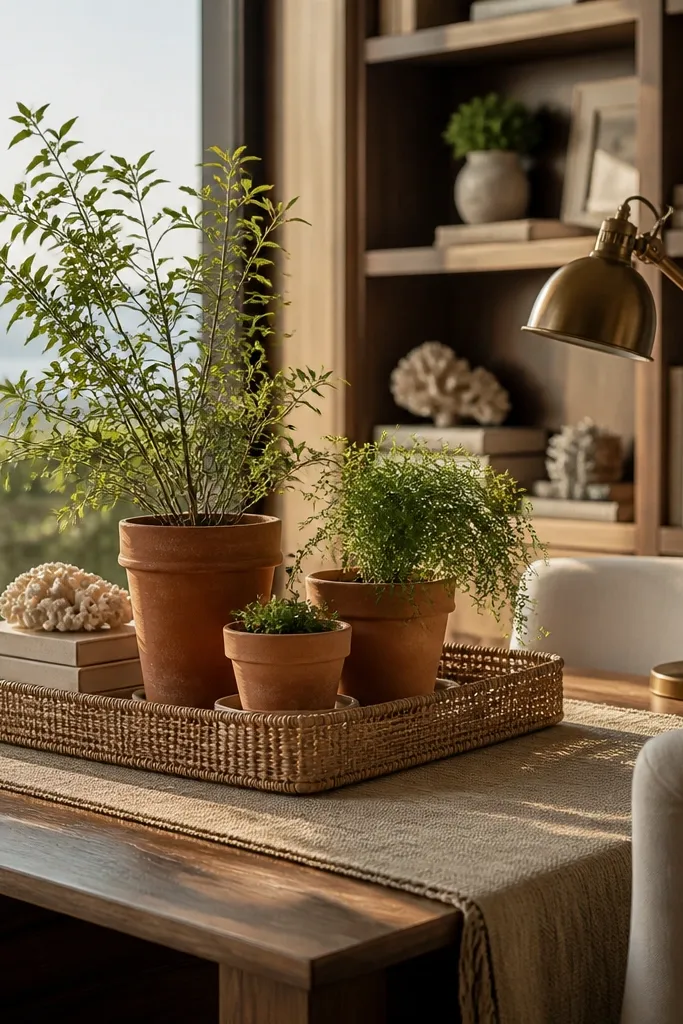
This is a warm coastal look that feels airy instead of beachy. Use rattan or woven trays for the base layer, then pair with terracotta pots and a sandy neutral runner. Add one plant with a slightly softer silhouette like a small fern or pothos so the woven texture works with the plant’s movement. The rattan creates a natural, handmade feel that photographs beautifully in daylight and hides small mess — like minor stationery spills — because the texture is forgiving.
Step 1: Place a rattan tray on the desk’s non-writing zone and center it about 2-3 inches from the edge you want closest to you. Step 2: Set one terracotta pot on the back-center of the tray and one small fern pot on the front-left. Step 3: Add a folded linen napkin or small woven mat under the tray edges if your desk is very smooth. Keep the color palette to sand, terracotta, and green so it stays cohesive.
Use a plant saucer that matches the terracotta so water rings don’t show.
Skip shiny metallic decor in this theme; it makes the rattan feel out of place.
9. Dark Academia Desk With Ivy + Brass Tray
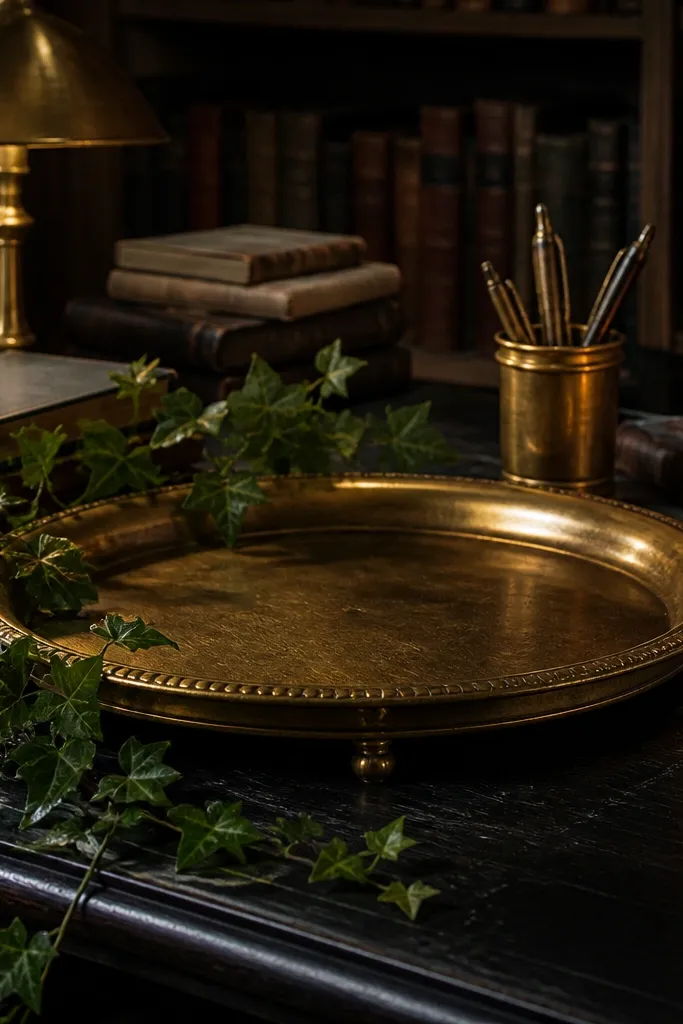
Dark academia works when you add plants that look like they belong in an old library. Use a brass tray as your anchor, then place a trailing ivy-style plant so the vines curl over the tray edge. Add stacked books with muted covers and a small candle or brass pen holder for metal contrast. The brass catches warm light and makes the green look deeper. This setup is ideal for walnut desks, leather chair aesthetics, and study spaces that already feel serious.
Step 1: Put a brass tray near the desk’s center, leaving room for a lamp. Step 2: Place the trailing plant pot on the tray’s back-left corner, then tuck the vines so they drape down the front. Step 3: Stack two books behind the tray or on the tray’s left side, then add one brass pen holder on the opposite side. Keep the tray items within a 14-18 inch width for a clean photo frame.
Pro tipChoose ivy or pothos with longer vines so the drape line is visible even from across the desk.
Watch outDon’t use bright neon stationery here; it kills the antique mood.
10. Japanese Minimal With One Tall Plant and One Ceramic
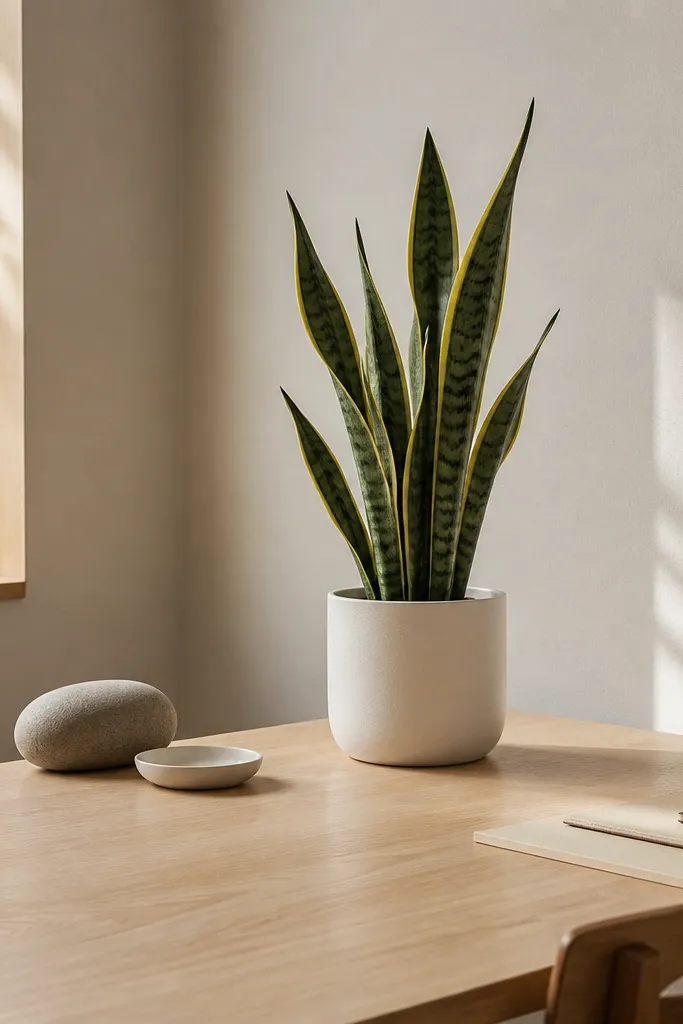
Minimal doesn’t mean empty; it means fewer objects with better spacing. This look uses one tall plant in a simple ceramic pot, plus one low accent like a smooth stone or small ceramic dish. Keep the rest of the desk clean and let negative space do the work. A tall upright plant like a snake plant or a small bamboo-style plant reads crisp and calm. The theme feels intentional because the plant sits like a sculpture rather than a decoration.
Step 1: Place the ceramic pot near the back corner of your desk, about 2-4 inches from the wall side. Step 2: Add one low accent dish or stone 6-8 inches in front of the pot. Step 3: Keep stationery in a single catch-all tray elsewhere so it doesn’t visually compete. You’re aiming for a 10-12 inch cluster area and clear open space around it.
Use a pot with a matte glaze. Gloss reflects the room and makes the setup look less calm in photos.
Skip multiple small plants in this theme; it stops being minimal fast.
11. Glass Terrarium Style on a Plant Stand
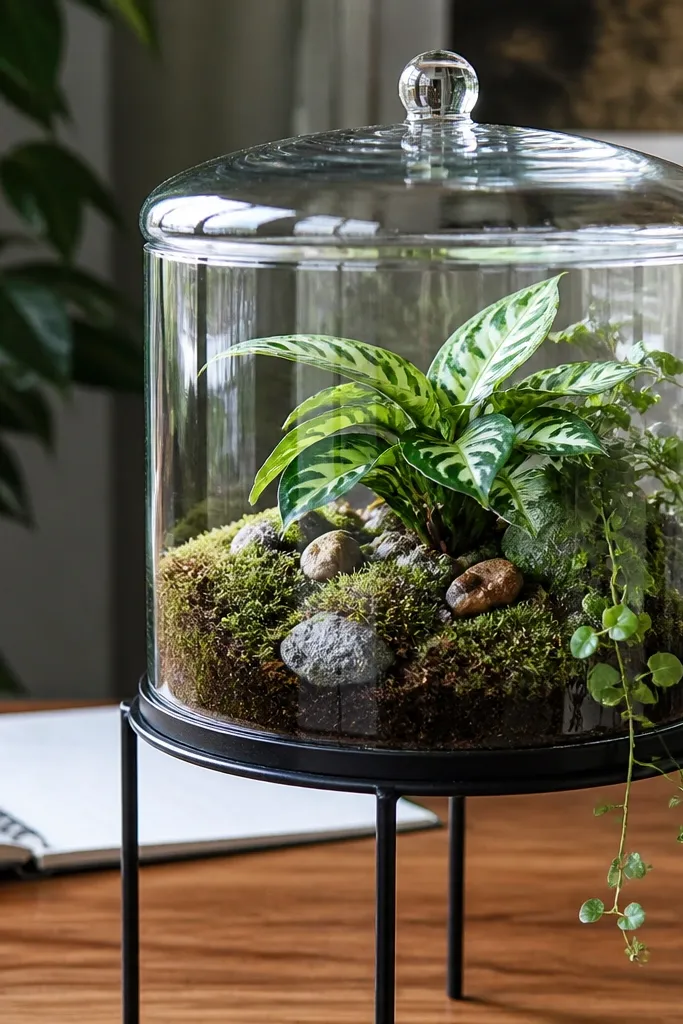
A glass terrarium makes themed study table decor with plants feel like a curated mini world. Choose a small terrarium with a clear lid or open glass container and place it on a plant stand or riser so it sits at eye level when you’re seated. Inside, keep a simple mix: one base plant and one trailing accent. The glass edges create crisp lines in photos and the enclosure keeps the look tidy even if the plants grow. This is a strong option for people who want a distinct theme without lots of loose pots.
Step 1: Pick a terrarium container size around 8-12 inches wide and place it on a stand that lifts it 6-10 inches above the desk. Step 2: Add planting media and your base plant, then tuck one trailing plant so it reaches toward the side. Step 3: Surround it with a simple base mat in neutral fabric so water and soil don’t show. Expect about $40-120 depending on container quality and plant selection.
Pro tipUse a black or dark gray tray under the stand. It makes the glass look sharper in pictures.
Watch outDon’t overfill the terrarium with too many types; clutter shows through the glass.
12. Navy + White Coastal Notes With Ferns
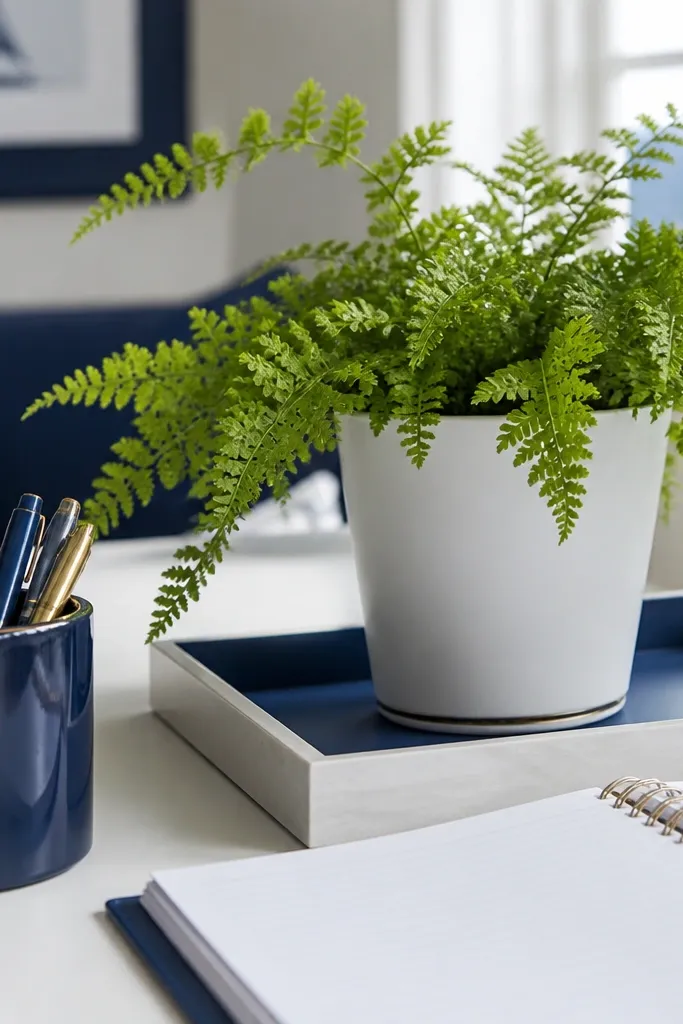
This is coastal without shells everywhere. Navy and white create a crisp theme, and ferns add the right greenery texture that looks delicate but full. Put a white pot with a small fern on a tray, then add one navy item — a notebook, pen holder, or desk organizer. The fern’s fronds create movement that balances the structured navy stationery. It looks clean in photos because the color palette stays tight and nothing competes with the plant’s texture.
Step 1: Place a white tray on the desk’s non-writing zone and set the fern pot on the back-center of the tray. Step 2: Add a navy notebook or navy pen cup on the front-right side of the tray. Step 3: Add one small white candle or ceramic dish to complete the triangle. Keep the tray to about 12-14 inches so the cluster feels intentional.
Pro tipChoose a fern with tight, compact fronds for a neater silhouette in photos.
Watch outSkip multiple navy shades (navy plus teal plus cobalt) — it turns the theme muddy.
13. Scandi White Planters With Wood Beads Accent
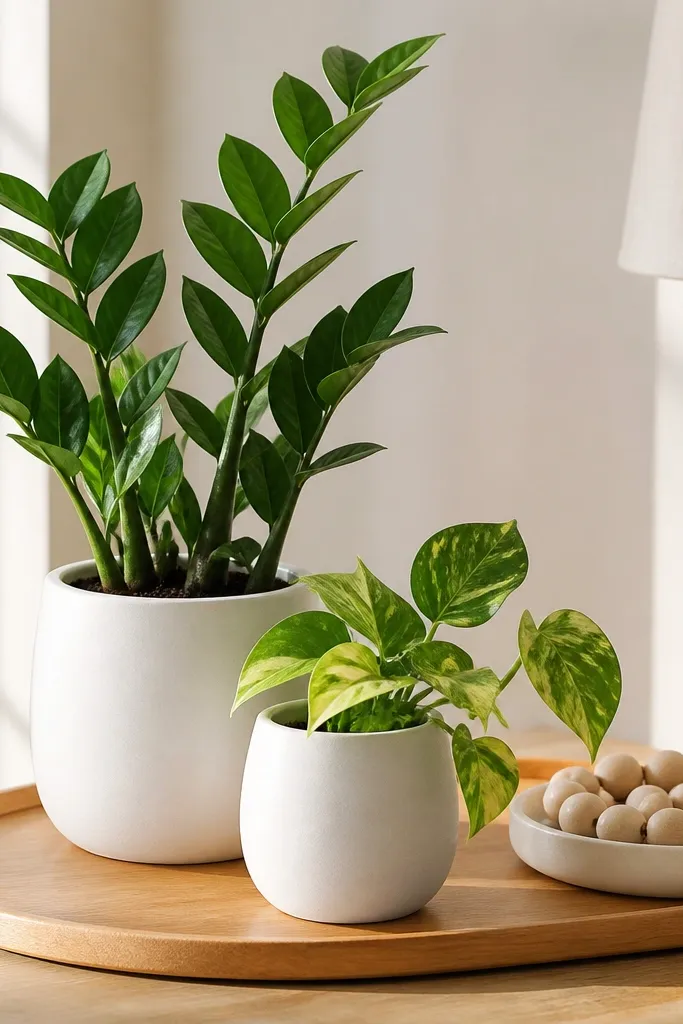
Scandi styling looks best when the textures are natural and the colors are limited. Use white planters, a light wood tray, and one small wood-bead detail like a bead garland or simple bead cluster in a dish. Add one plant with clean leaves, like a ZZ plant, and one smaller plant for depth, like a mini pothos. The wood beads bring warmth without adding loud color, so the plant green stays the star. This works in bright rooms where you want a calm, tidy study corner.
Step 1: Put a light wood tray on the desk and center it in the non-writing zone. Step 2: Place the larger plant pot on the back-left and the smaller pot on the front-right. Step 3: Add the wood bead accent in a small neutral dish between them. Keep spacing around 3-5 inches between pots so leaves don’t tangle visually.
Pro tipUse planters with similar lip shapes so the tray looks like a matched set.
Watch outDon’t add patterned ceramics here; the theme depends on clean, soft textures.
14. Gold Frame Plant Corner With Monstera Leaf Cutout

This look is built around a photo-friendly corner composition. Put a small gold frame or gold mirror behind the desk area, then place a monstera-style plant (real or faux if you need low effort) on the desk to echo the leaf shape. Add one smaller trailing plant in a pot below or beside it. The gold frame gives a crisp backdrop, making the greenery pop and giving the setup a clear “corner theme” instead of a scattered table.
Step 1: Position your plant so it sits directly in front of the gold frame — about 4-6 inches away from the wall so leaves don’t touch. Step 2: Place a small trailing plant pot on the desk’s front edge near the corner, letting it drape toward the center. Step 3: Add one simple desk accessory in neutral color (white notebook or cream pen holder) to keep the frame-gold and green as the main contrast. Aim for a tight corner footprint under 24 inches.
Angle your trailing plant slightly toward the frame so the vines create a line that leads the eye upward.
Don’t use more than two plant types in this setup; the frame already adds visual weight.
15. Cream Candle + Plant Pairing on a Linen Tray
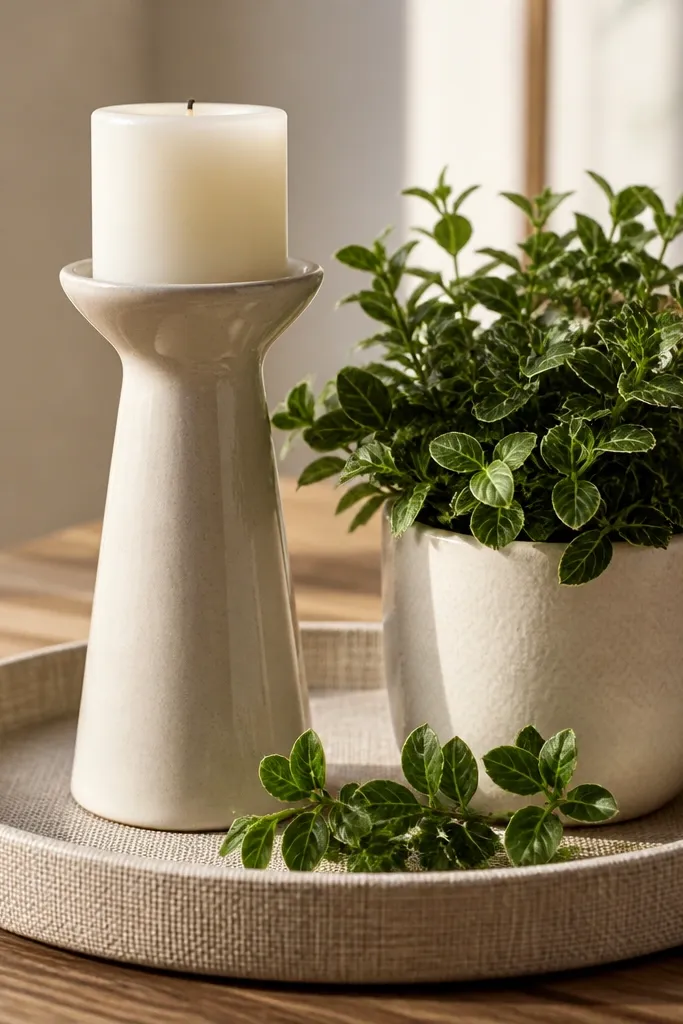
This theme is cozy and clean for desks that need a warm touch. A linen tray gives texture, a cream candle holder adds height and a soft warm tone, and a small plant keeps it from feeling like pure decor. Use a compact plant in a cream or beige pot so it blends with the linen, then add one low greenery accent like small clippings or a tiny moss pad. The candle look is photogenic because it creates a vertical line, and the linen keeps the whole cluster soft.
Step 1: Fold or place a linen tray mat on the desk and center it in the non-writing zone. Step 2: Put the candle holder on the back-right of the tray and the plant pot on the front-left, keeping 4-6 inches between them. Step 3: Add a tiny moss dish or small decorative stone in the remaining open space on the tray. Keep the tray small enough that your writing space stays clear.
Pro tipUse an unscented candle holder with a matte finish. Glossy holders reflect light and can look messy in photos.
Watch outDon’t place the candle directly next to paper stacks; keep it separated so the theme stays safe and tidy.