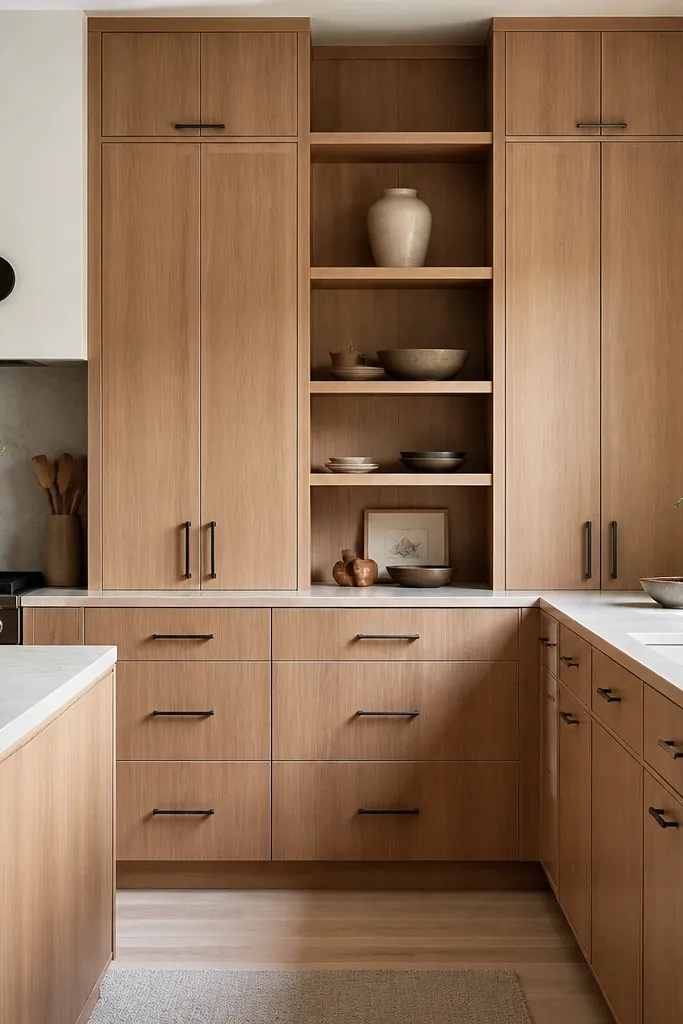
1. Matte Black Hardware with Creamy Off-White Backsplash
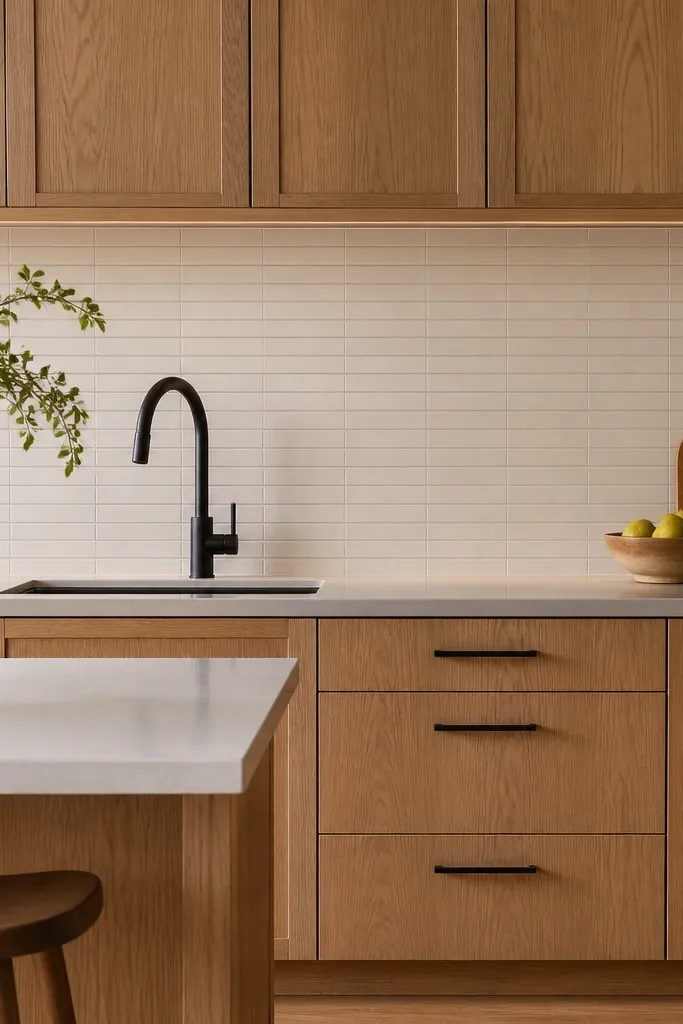
This look works because the oak grain stays the star while black only sharpens edges. Creamy off-white tile keeps the room warm and makes the oak look deeper, not washed out. Matte black hardware adds contrast without reflecting light like chrome would. The subway tile’s clean lines give you structure against the wood’s organic pattern.
Use 3-inch subway tile with 1/16-inch grout lines so it reads crisp. Choose matte black pulls with a length around 5 inches for drawers and 8-10 inches for cabinet doors. Keep the grout warm white, not bright white, so it doesn’t fight the oak undertone.
Spray a test card of your backsplash color next to the cabinet door in daylight — warm white grout can look gray under cool bulbs.
Avoid bright white tile with warm oak and shiny black hardware — that combo often looks like a mismatch from a showroom floor.
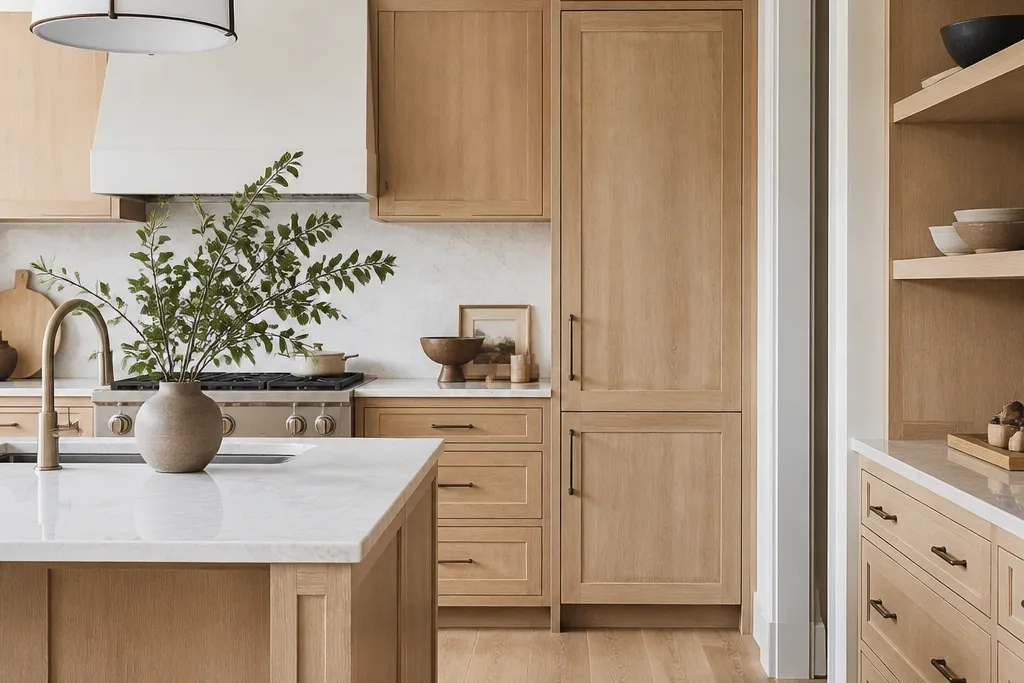
2. Black Hood + White Oak Upper Cabinets for a Tall, Clean Look
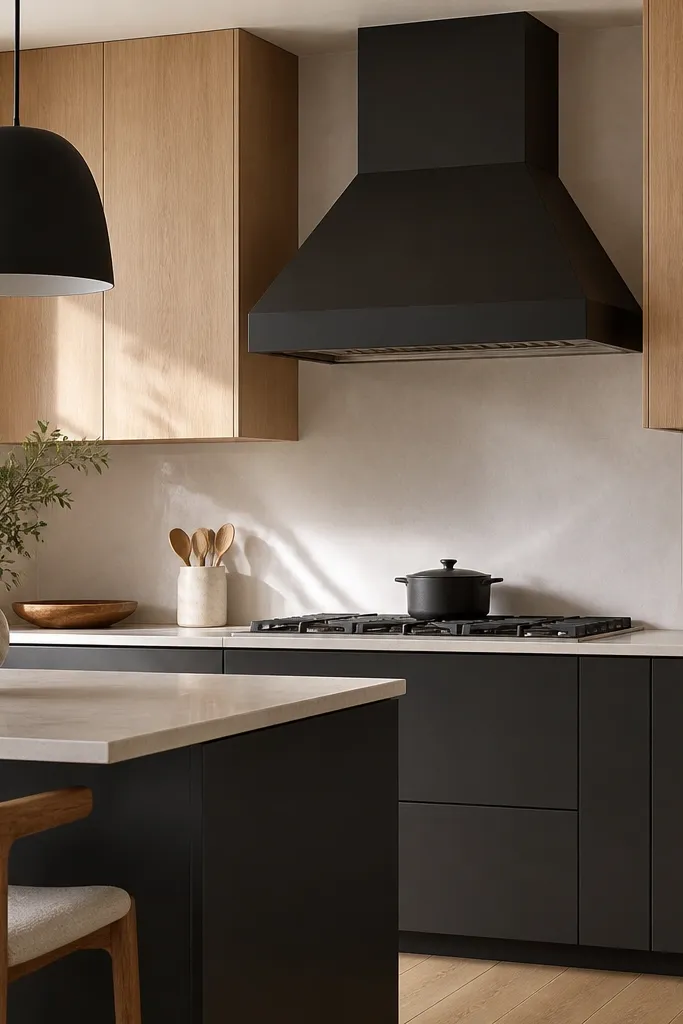
A black hood gives you one bold vertical anchor. Keeping the upper cabinets in natural white oak maintains warmth at eye level, which makes the black feel intentional instead of heavy. The key is simplicity: the cabinets are plain and the hood is the only dramatic shape. Pendant lighting in matte black ties it together.
Choose a hood with a flat front panel and minimal trim so it doesn’t compete with the oak grain. Hang pendants about 30-32 inches from the counter for a breakfast bar height around 36 inches. Use warm white bulbs around 2700K so the oak reads honey, not orange.
Run black accents in a straight line: hood, faucet, and one light fixture in the same matte finish.
Don’t add extra black decor pieces right away — let the hood do the work.
3. Black-Framed Glass Inserts on White Oak Cabinets
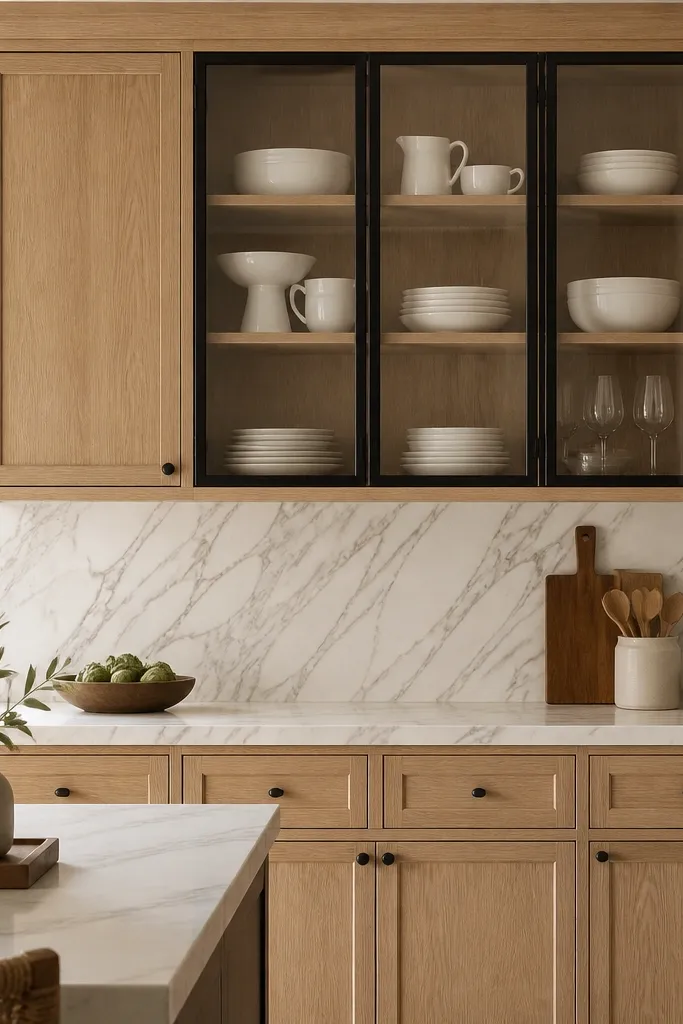
Black-framed glass doors make the oak feel curated without turning the kitchen into a display case. The black grid adds a modern grid pattern that balances oak’s organic grain. You get visual depth when items inside are bright and uniform. This look also helps smaller kitchens because glass breaks up solid wood mass.
Pick black frames that are matte or textured so they don’t glare. Keep glass doors to the upper cabinets or one end run, not every door. Use 1/4-inch clear glass or lightly smoked glass — smoked can make oak look dingy if you use cool lighting.
Use only one dish style inside (all white mugs or matching bowls) so the glass reads calm.
Avoid tinted glass plus warm oak in cool 4000K lighting — it can make the wood look muddy.
4. Black Counter Edge + Oak Cabinets with Honed Quartz
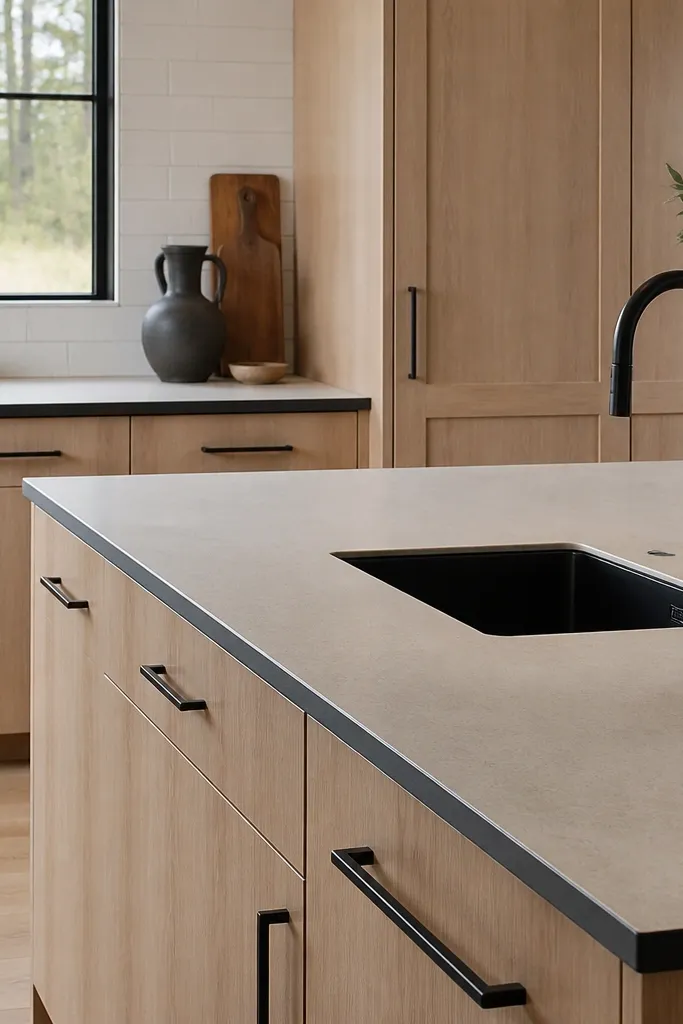
Honed quartz has the right softness for oak — it doesn’t reflect harshly, so the wood stays warm. Adding a dark edge detail gives you a subtle black outline that makes the cabinets look crisp. Black sink hardware pulls the eye down and makes the whole run feel designed. It’s bold, but controlled.
Ask for a 2 cm honed quartz with a dark bullnose or a thin waterfall edge in a near-black tone. Use a black undermount sink and matte black faucet to match. Keep cabinet fronts simple so the edge detail is the only sharp moment.
Bring a cabinet sample to the fabricator and ask for a mock edge sample against the oak — the undertone matters more than the name on the slab.
Avoid glossy quartz with oak — the shine makes black edges look like a sticker instead of part of the stone.
5. Zellige Backsplash in Warm White with Black Faucet
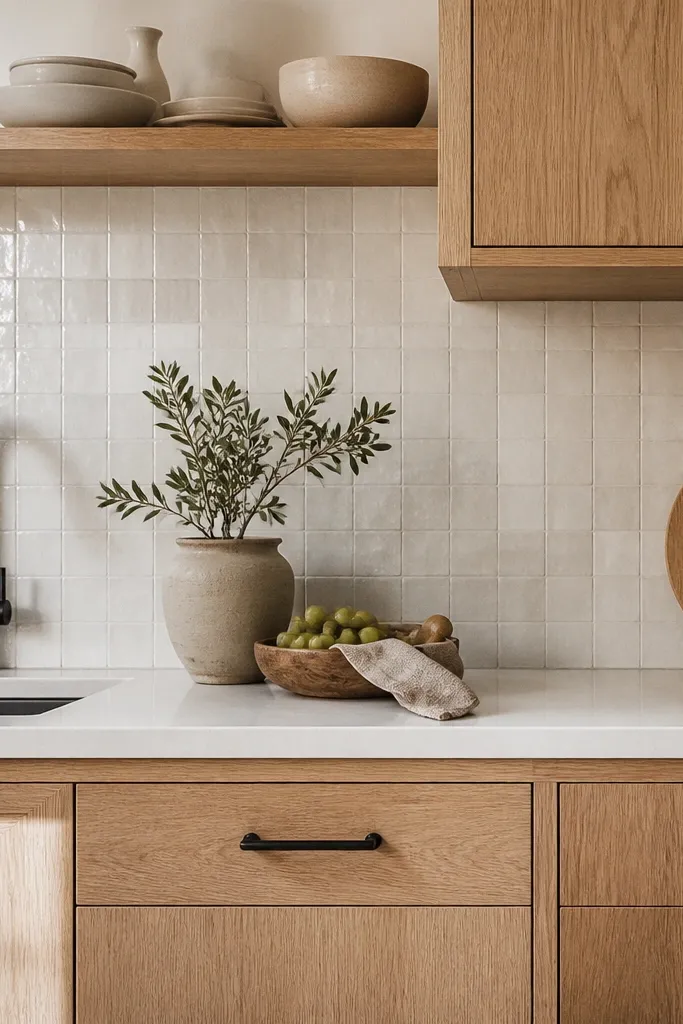
Zellige texture is the secret ingredient here. Oak cabinets already have grain, so the backsplash needs a surface that also has micro texture. Warm white zellige keeps everything bright without looking sterile. Matte black plumbing hardware adds depth and prevents the room from turning into “all light.”
Use warm white zellige in a staggered pattern with grout in sand or warm off-white. Place the black faucet at the sink run so it anchors the textured tile. If you have a window above the sink, keep the trim white and not gray so it harmonizes with warm tile.
Seal zellige after installation only if your installer recommends it for that specific glaze — some glazes don’t need it.
Avoid cool gray grout with warm white zellige — it makes the tile look dusty.
6. Black Metal Open Shelving on an Oak Wall
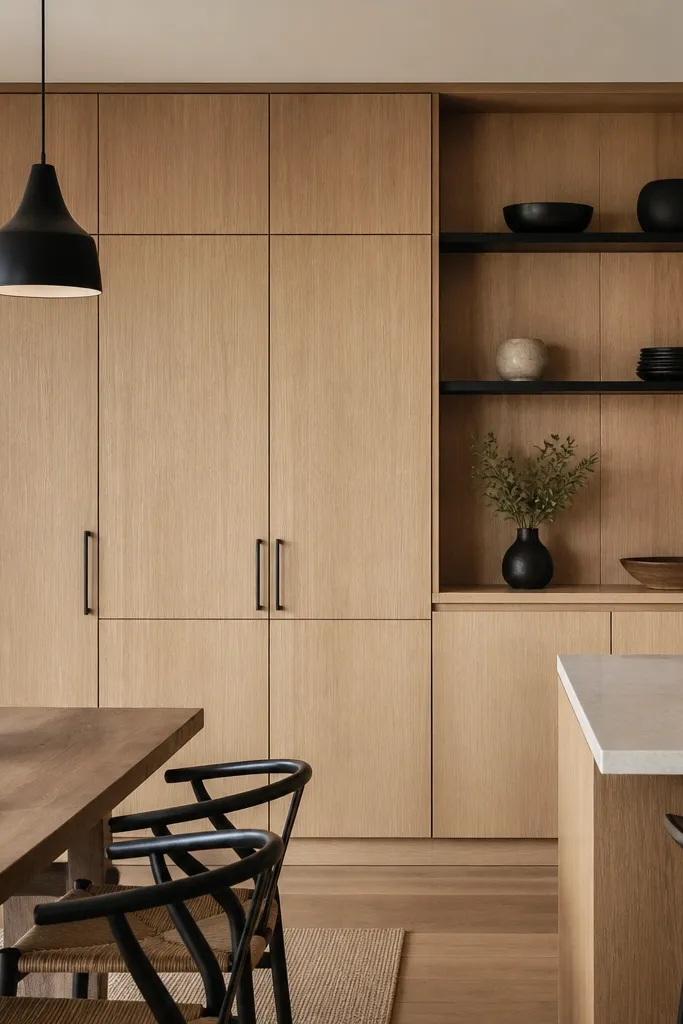
Open shelving is the easiest way to repeat black without adding more cabinet hardware. The black metal rails make the oak look intentional and architectural. It also gives you a place to add warm objects that soften black, like cream ceramics or a light linen runner. When you keep shelf styling tight, it looks high-end instead of cluttered.
Use black metal shelves with an oak-toned backer panel or a warm white painted back if your cabinet wall is very busy. Keep the shelf depth around 10-12 inches so items don’t look swallowed. Style with three heights: one tall vase, two medium canisters, and one small tray.
Dust test: if you can’t easily wipe the shelf rails, choose a different mounting — black rails show dust fast.
Avoid open shelves across the whole kitchen — the look turns into storage, not design.
7. Deep Green Accent Wall with White Oak and Black Trim
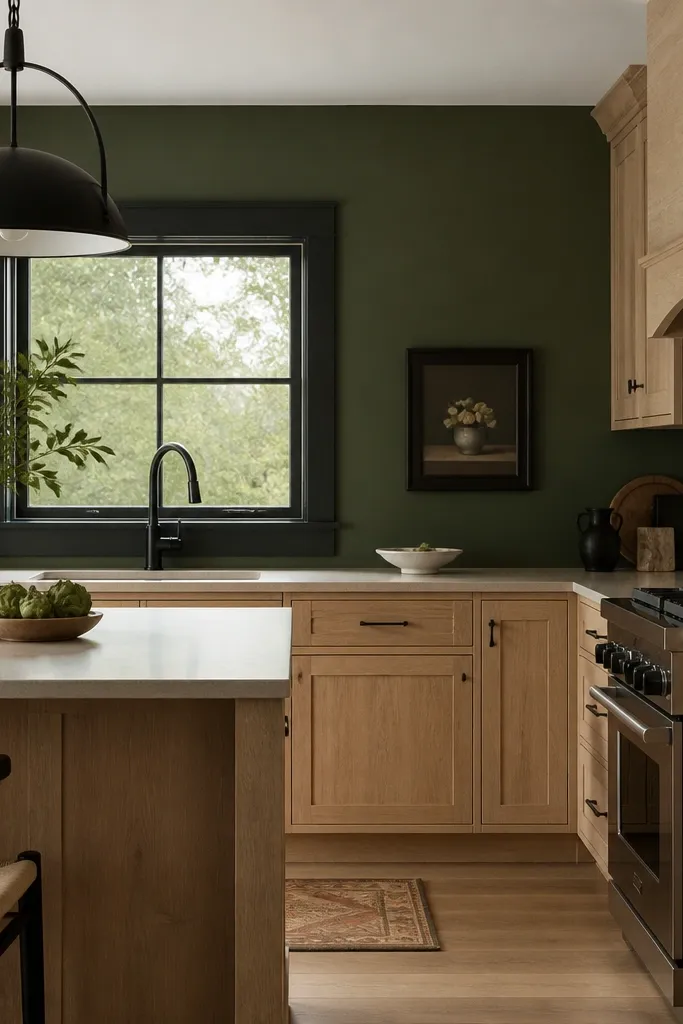
Deep green plus oak feels grounded, and black trim makes the colors look sharper. The green gives you a third tone that doesn’t fight the wood grain. Black ties the trim, faucet, and light into one cohesive style. This is bold without going all industrial.
Paint the accent wall a deep green with a hint of blue, not a bright leaf green. Keep the rest of the room warm white. Choose black lighting with a simple shade shape, and keep the cabinet hardware matte black so it matches the trim.
Use painter’s tape to mark the cabinet edge lines before painting the wall — clean edges make the green look expensive.
Avoid pairing deep green with glossy black hardware — it reads cheap and too shiny against matte paint.
8. Two-Tone Island: White Oak Fronts with a Black Base
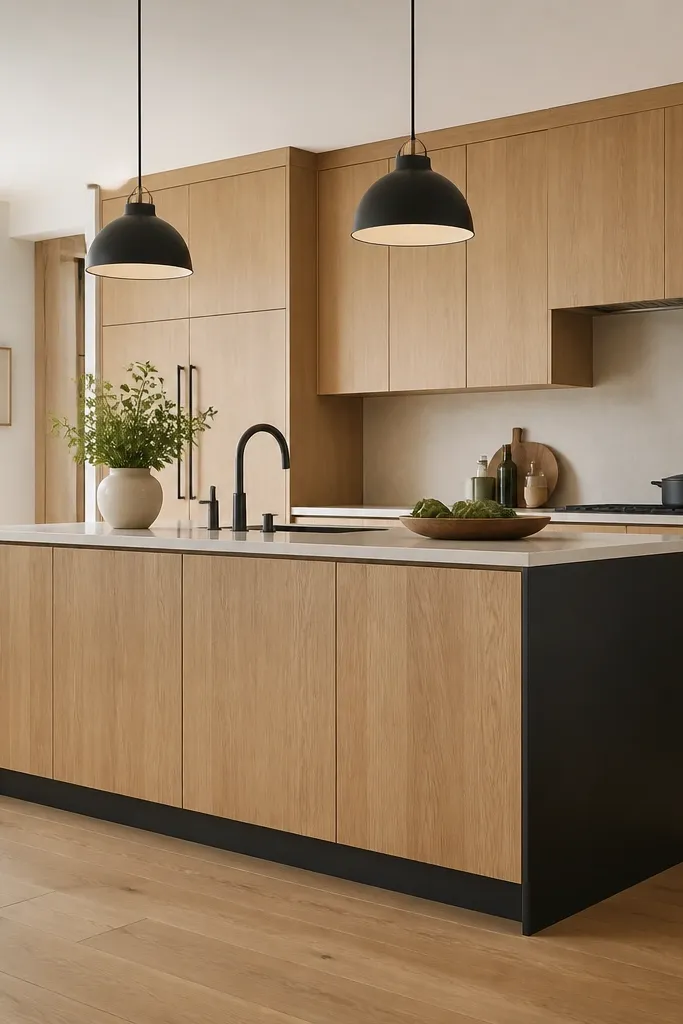
This makes the island feel like furniture. The black base anchors the island visually and helps it stand out from the rest of the cabinetry without making the entire kitchen dark. White oak fronts keep the room warm and prevent that 'all black island' look that can feel heavy. It’s a strong design move that still reads livable.
Keep the island top in a light neutral stone like white quartz or a pale marble-look. Use matte black for the sides and toe-kick, and match it to your hardware finish. The toe-kick should be clean and straight, not thick and chunky, or it will look dated.
Pro tipIf your island is under 7 feet long, keep black only on the base and hardware, not on the top edge.
Watch outAvoid black base with a black countertop too — it collapses the island into a block.
9. Black and White Marble-Look Backsplash with Oak Cabinets
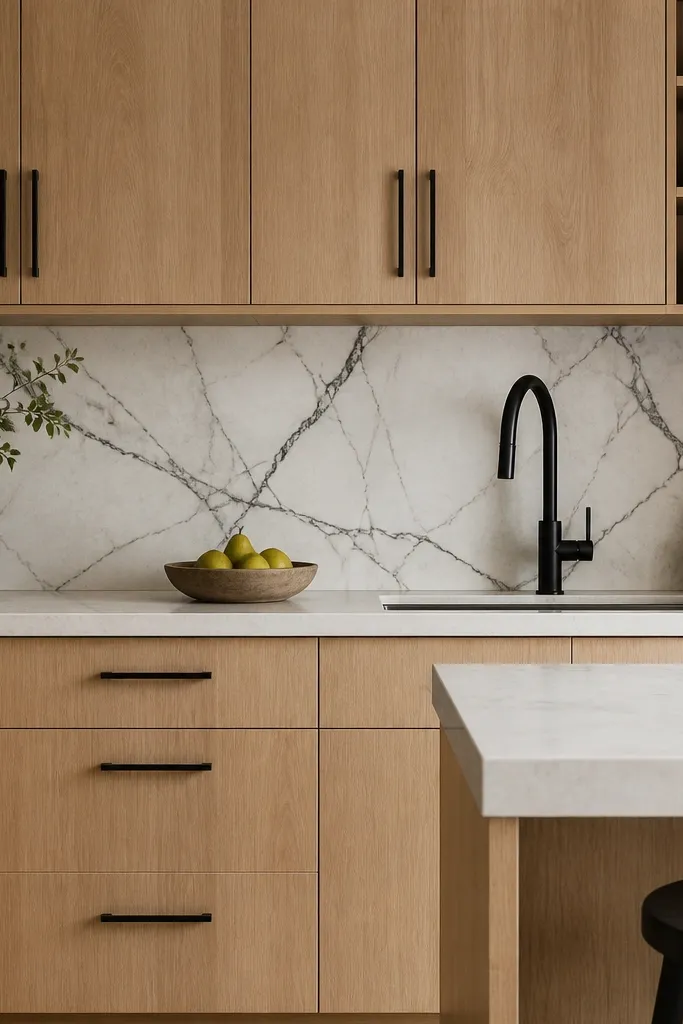
When your backsplash has black veining, the black hardware becomes a natural extension instead of a separate decision. The marble-look pattern adds movement that plays nicely with oak grain. Keep the countertop light so the black stays in the backsplash and hardware only. This prevents the room from getting visually heavy.
Choose a marble-look porcelain with medium contrast veining, not super high-contrast. Use a warm white grout so the pattern reads cohesive. Match faucet and pulls to the same black finish, ideally matte.
Pro tipLay out two backsplash samples on the countertop before committing — the veining scale changes how bold it feels.
Watch outAvoid tiny subway tile grout lines with a big veined backsplash — it can look like too many competing patterns.
10. Black Framed Microwave and Pantry Doors on Oak Walls
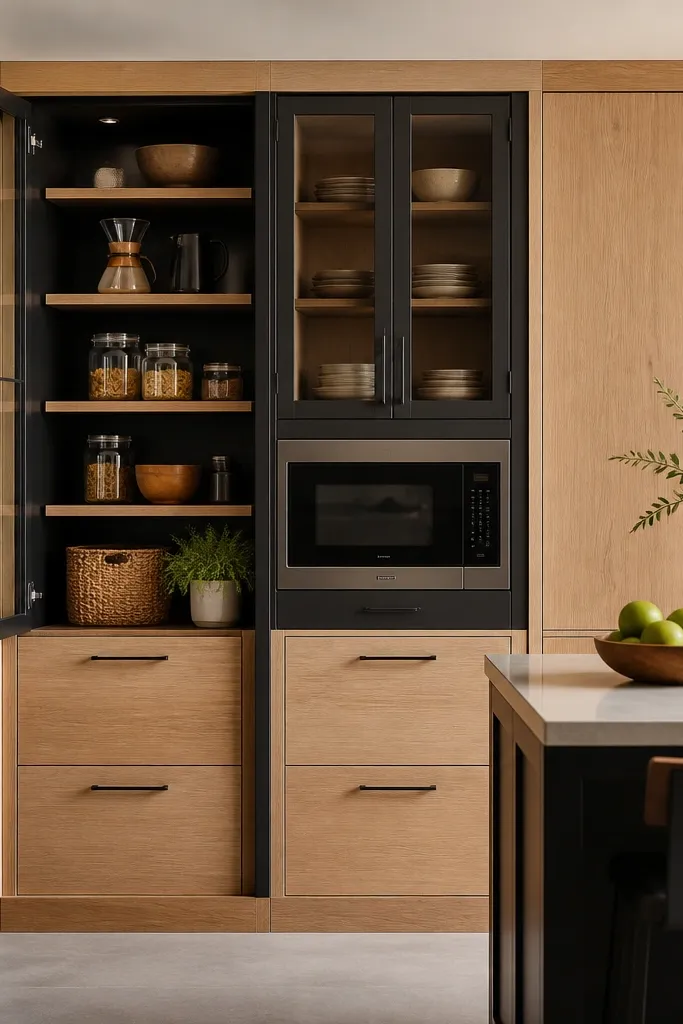
Framing appliances and pantry openings in black is a clean way to add black without turning every cabinet door black. It gives you a modern built-in look and makes the appliances look like part of the cabinetry. The oak surrounds keep the room warm. This works especially well in galley kitchens where you need structure.
Use black trim pieces that match your hardware finish. Keep the oak panels around the framed openings simple, with flat fronts and minimal bevel. Plan your reveal lines so the black frame width is consistent around the microwave and pantry doors.
Check clearance before installing — black trim can add 1/2 inch to the opening edge depending on the product.
Avoid mismatched black finishes between trim and pulls — it reads like unfinished construction.
11. Matte Black Faucet + Brassless Lighting for a Clean Modern Mix
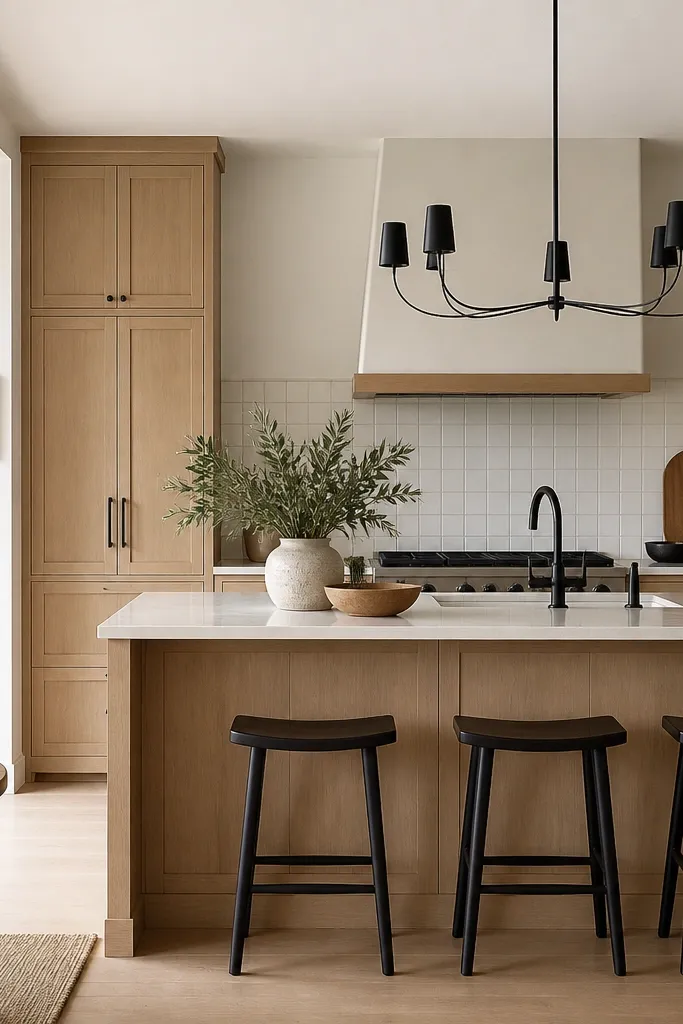
If you want modern and not farmhouse, skip brass entirely. Black hardware and black lighting create a crisp line that makes the oak look intentional. Simple square tile backsplash keeps the focus on cabinet grain and lighting shape. This is the cleanest combo when you have white walls and neutral flooring.
Choose lighting in matte black with a simple cylinder or slim shade, and keep the cord length short so it hangs straight. Use a square tile backsplash around 2x2 or 3x3 with warm white grout. Match the faucet finish to the lighting — both should be matte.
Set your bulbs to 2700K; cooler bulbs make black look blue and oak look flat.
Avoid adding a single random brass cabinet pull — one brass piece can pull the whole palette off.
12. Black Track Lighting + Oak Cabinets with Warm White Walls
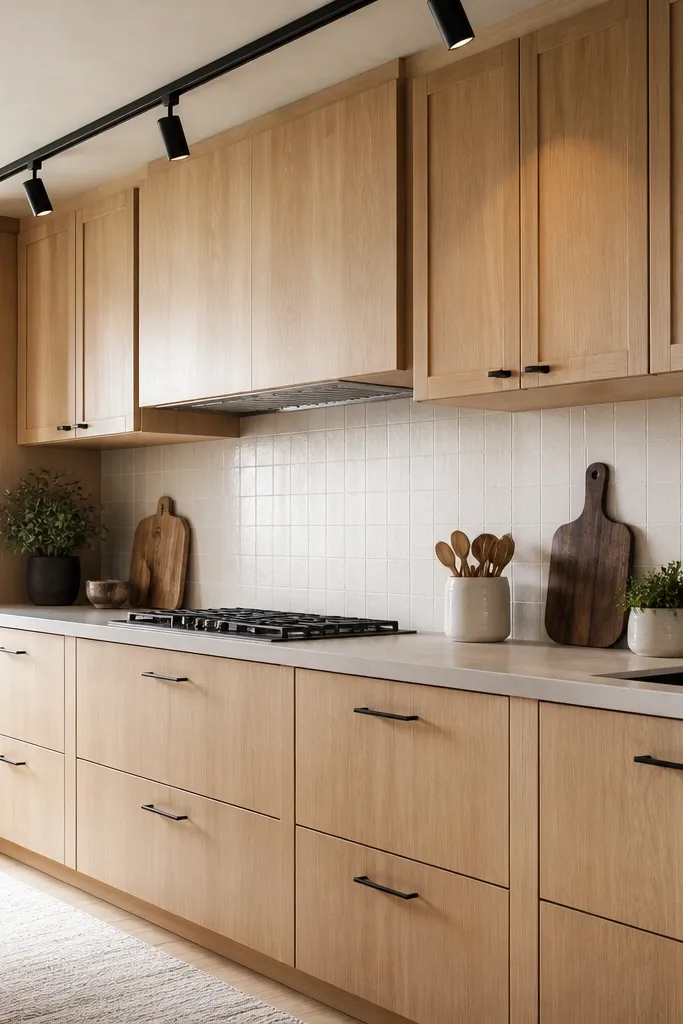
Lighting is where this combo either looks sharp or looks dull. Black track lighting gives you directional control so the oak grain pops where you cook and prep. Warm white walls keep the room cozy, and the black hardware ties it together. It’s a practical look that also looks design-forward.
Aim the track heads at the countertop edge and backsplash so you get even illumination. Use 90+ CRI bulbs so wood tone stays true. Keep the backsplash simple so the track light can do the visual work.
Use two rows of track heads if your kitchen is wider than 10 feet; one row leaves the corners dim.
Avoid high-gloss black fixtures with oak — they show every smudge and make the room look neglected.