1. Narrow Bench + Two-Tier Shoe Rack Wall
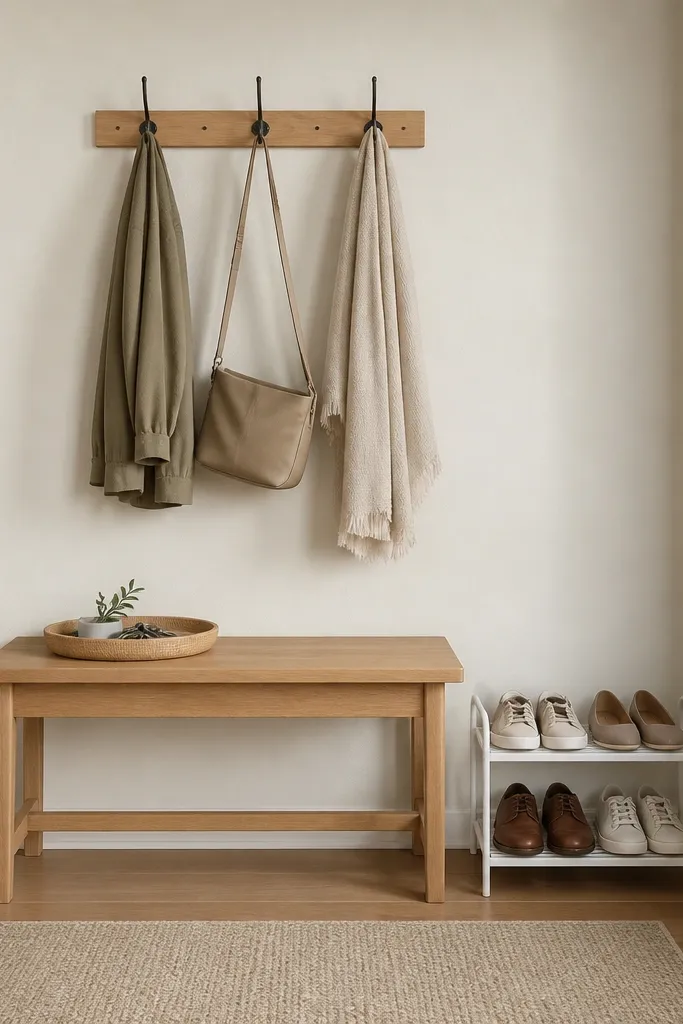
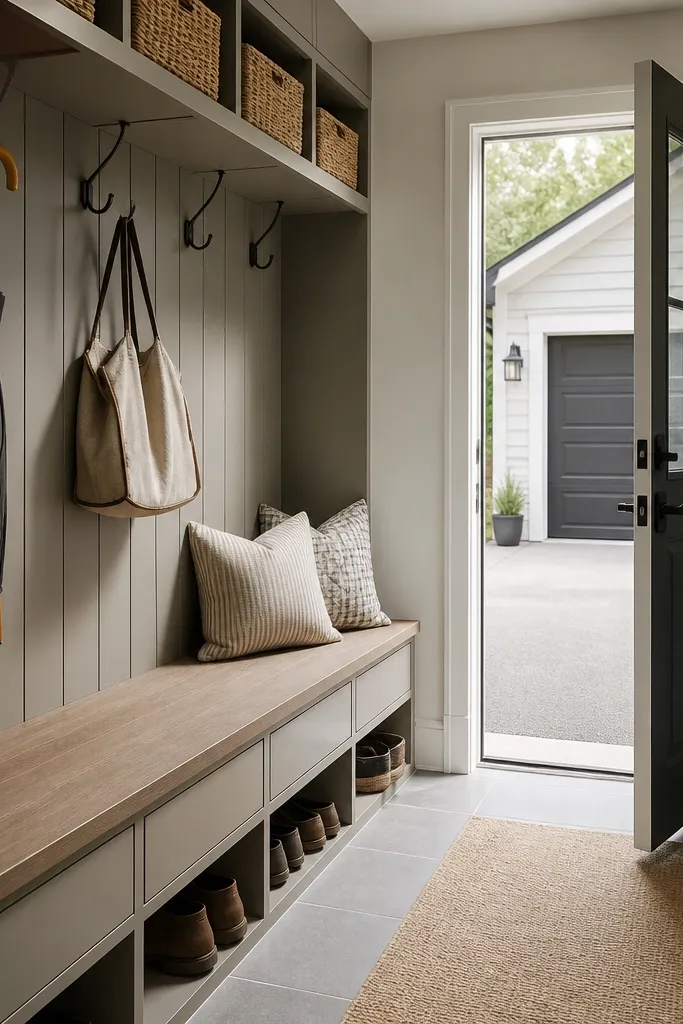
This layout works because shoes and coats share one landing area. The bench top becomes your “pause” spot for bags, while the two-tier rack keeps shoes visible enough that you stop stacking them. I like light oak with matte black metal because it reads clean even when the room is busy.
Use a bench that’s about 12-14 inches deep so you can reach the shoe rack without stepping into it. Keep the shoe rack height around 8-12 inches per tier so you’re not fighting tall boots. Put a peel-and-stick vinyl mat under the rack if you have a rough floor.
Add a removable tray liner in waterproof fabric for wet umbrellas. Pull it out and rinse it in the sink.
Avoid deep benches (18+ inches) in small entries because they steal walkway width and make people drop bags on the floor.
2. Tall Cabinet with Hidden Shoe Pull-Out
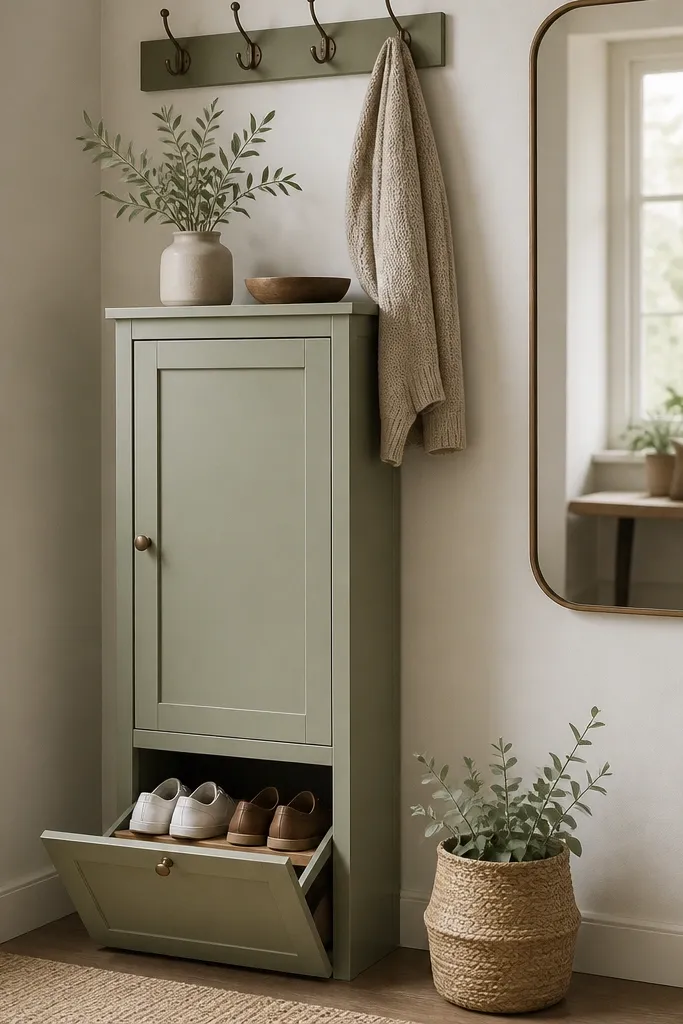
A cabinet that hides shoes makes a mudroom feel even when the entry is tiny. You get vertical storage without the visual clutter of open racks. Sage paint plus a warm mirror frame makes the whole wall look intentional.
Pick a cabinet depth of 12-14 inches so it doesn’t jut out into the walkway. Install the hooks about 48 inches high for adult coats, then keep the cabinet top at around 60-66 inches so umbrellas and bags have a ledge. Add felt pads to the pull-out shelf so it slides quietly.
Label the inside shelf with small strips of painter’s tape by person. It cuts down on “mixed” shoe piles.
Don’t choose a high-gloss finish if you get sunlight glare. It shows every fingerprint and scuff.
3. Pegboard Mudroom Wall with Color-Coded Bins
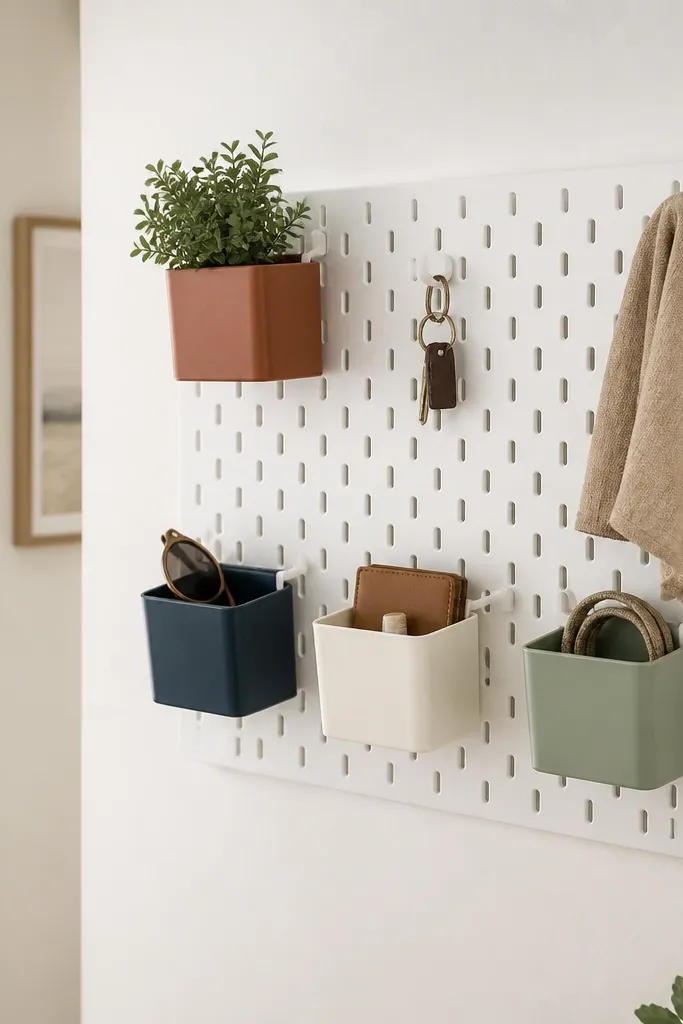
Pegboard is a cheat code for beginners because you can move hooks as your household changes. Color-coded bins give bags, hats, and gloves a fast home without needing fancy furniture. The clean white board keeps it from looking cluttered even with lots of pieces.
Use 1/4 inch pegboard and mount it over studs if possible. Space bins so they don’t overlap — I aim for at least 3 inches between bin edges. Choose bins with smooth plastic interiors so you can wipe dirt off.
Pro tipPut the most-used items in the center zone of the pegboard so you don’t stretch across the wall.
Watch outAvoid tiny hooks that can’t hold wet coats. Use hooks with a wider bend so fabric doesn’t slip.
4. Wicker Basket Wall with Solid Backer Tray
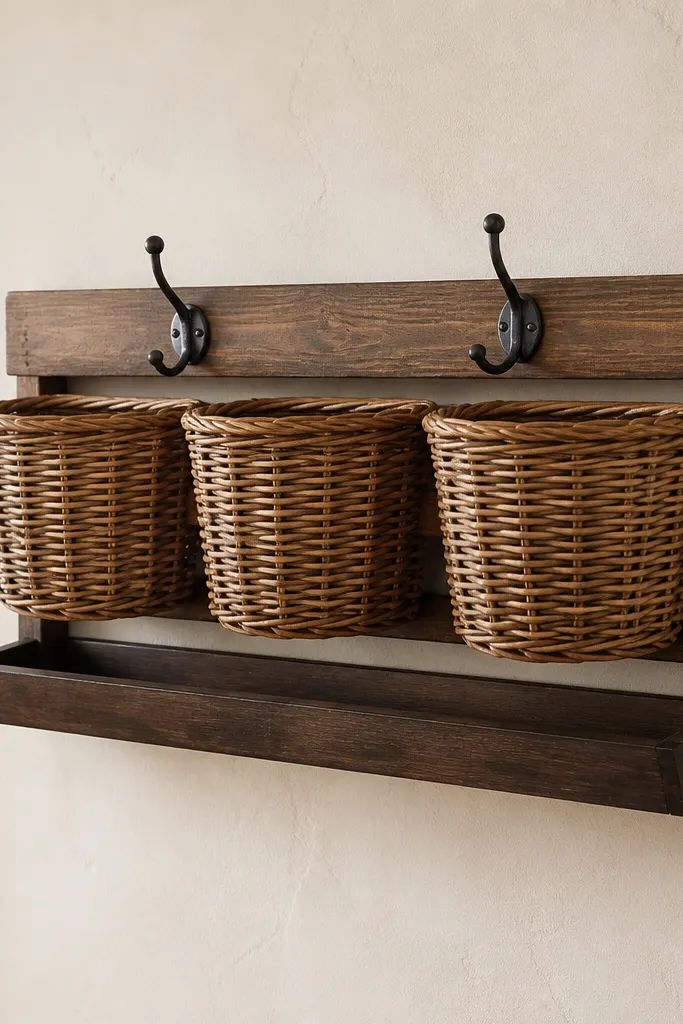
This is the “pretty but practical” setup. Baskets hide smaller items like scarves and gloves, while the backer tray catches water from wet umbrellas and damp mittens. Dark stained wood makes the wicker look intentional instead of rustic-for-rustic’s-sake.
Mount baskets 6-10 inches above the tray so you don’t splash water directly onto the baskets. Make the tray at least as long as the three baskets combined. Use weatherproof sealant on the tray so it doesn’t absorb grime.
Line each basket with a thin waterproof liner. It turns muddy mess into a quick lift-and-rinse job.
Avoid placing baskets directly on the floor in wet seasons. They stay damp and start to smell.
5. Floating Shelf + Drop Zone Tray + Low Boot Shelf
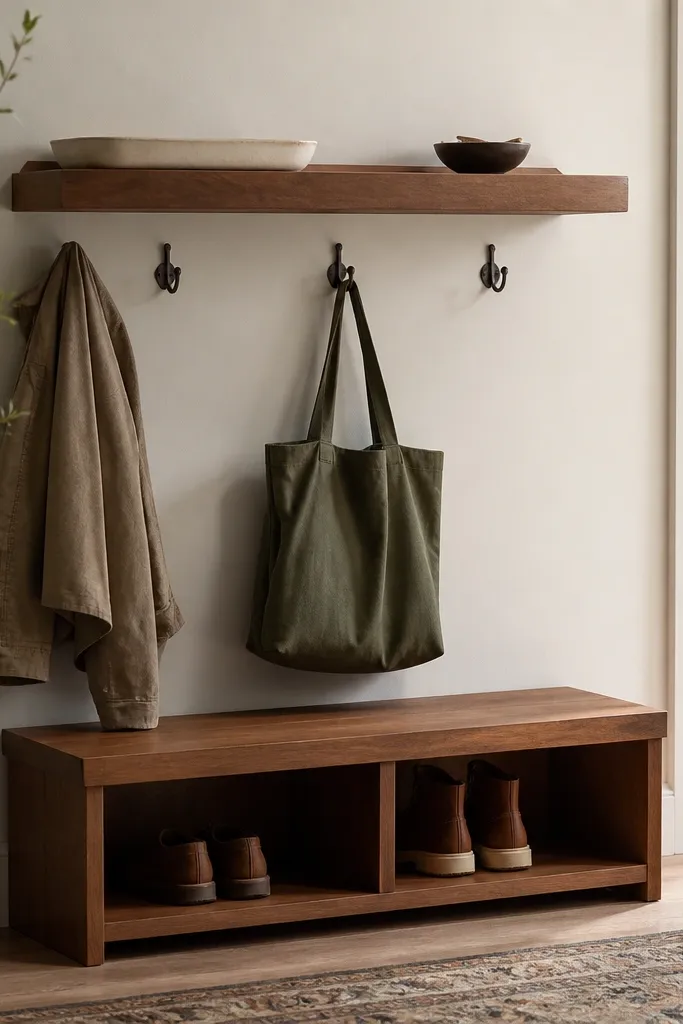
When you don’t have room for a full bench, a floating shelf creates a landing spot without taking floor space. The key is the drop zone tray: it stops keys, mail, and sunglasses from spreading across the entry. A low boot shelf keeps footwear from migrating to the living room.
Set the shelf so the tray rim sits around your hip height when standing at the door — usually 34-38 inches. Use a ceramic or metal tray with a lip so items don’t slide off. Choose a boot shelf height of 10-12 inches for easy reach.
Put a small “weekly reset” tray liner in the same color as your shelf so you can swap it quickly.
Avoid storing shoes on top of the floating shelf. It looks tidy for a day, then it turns into a dust magnet.
6. Corner Entry Mudroom with Ladder Shelf
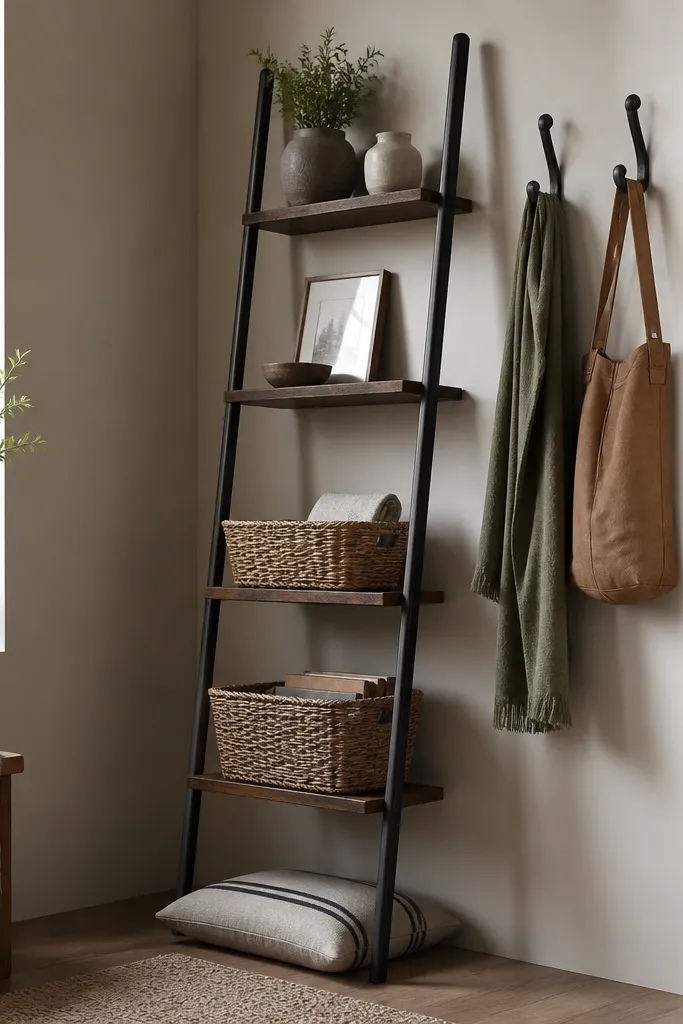
Corners are where entryway chaos hides because people forget them. A ladder shelf makes the corner usable without blocking the doorway, and the open rungs let you see what’s in each basket. Black metal keeps it crisp, even with lots of small items.
Use a ladder shelf with at least two lower rungs for shoes or bins. Keep the ladder’s widest point at least 2 inches away from doors or baseboards. Add a small cushion on the floor if you’re placing it near a shoe-changing spot.
Pro tipHang a single coat hook at 52 inches for long coats. Short hooks make long coats drag on the floor.
Watch outAvoid leaning a ladder shelf against bare drywall. Add a wall spacer or use a mounting kit so it doesn’t wobble.
7. Color-Blocked Entryway with Paint Zones
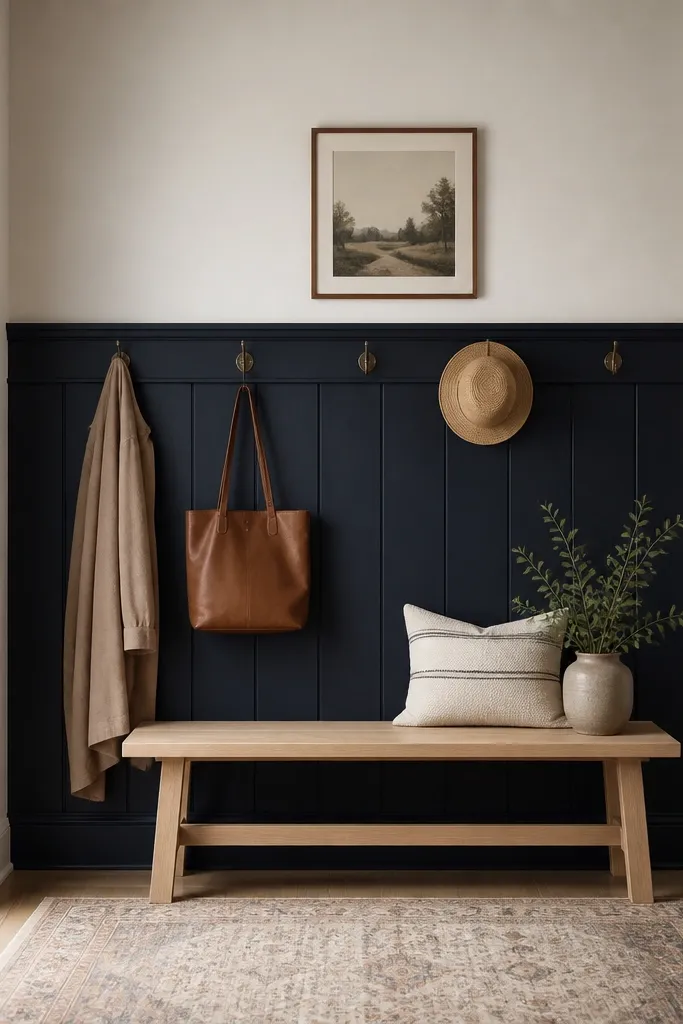
Paint is an instant mudroom organizer because it visually separates the landing area from the rest of the room. Dark lower walls hide scuffs from shoes and backpacks, and hooks on the lower zone look centered. This is great for renters because paint changes the whole entry without building anything.
Choose a semi-gloss or washable paint for the lower zone. Keep the color boundary at about 36-40 inches so coats hang nicely above it. Use a bench in pale wood or white to balance the navy.
Tape a straight line and use a mini roller for the lower zone edges. Clean lines make the whole thing look built-in.
Avoid flat paint on the lower zone. It stains and gets chalky fast.
8. Budget Rail + Curtain for Bag Storage
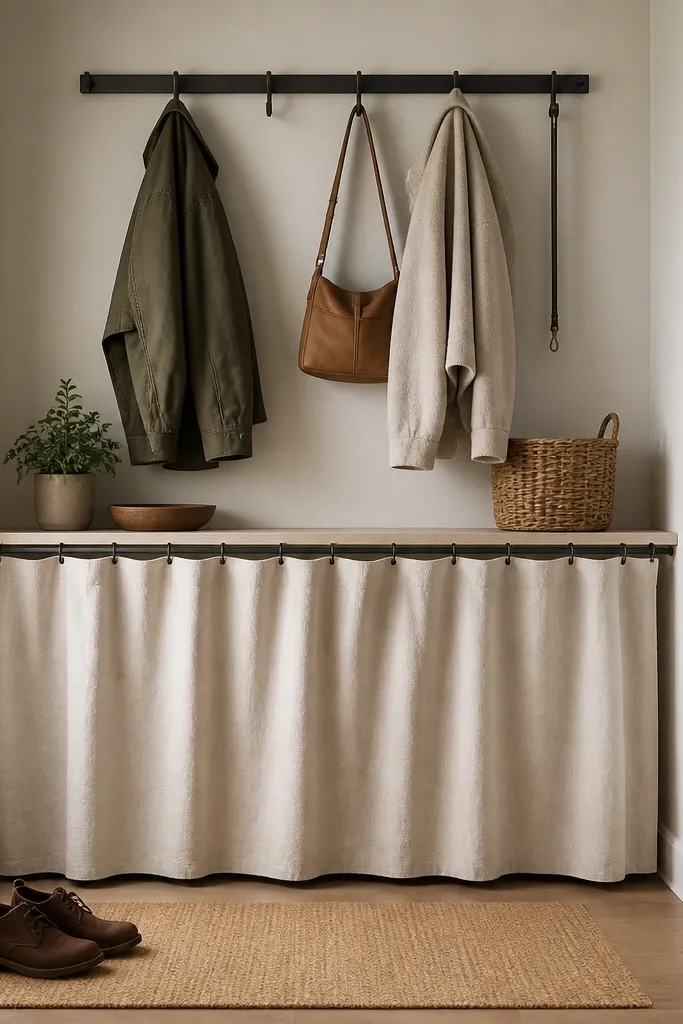
This is how you keep bags out of sight without spending on cabinets. The curtain softens the entry and controls visual clutter. I like canvas in oatmeal or light gray because it matches most walls and doesn’t look like a bathroom shower curtain.
Use a tension rod or a basic track mounted above the bins. Leave 2-3 inches of clearance between curtain bottom and the shoe mat so it doesn’t drag. Pick bins with handles so you can pull them out quickly.
Pro tipAdd a magnetic strip at the top edge so the curtain closes neatly when the door opens.
Watch outAvoid thin polyester curtains. They cling when wet and look wrinkled fast.
9. Rust-Proof Metal Bench with Rubber Mat Top
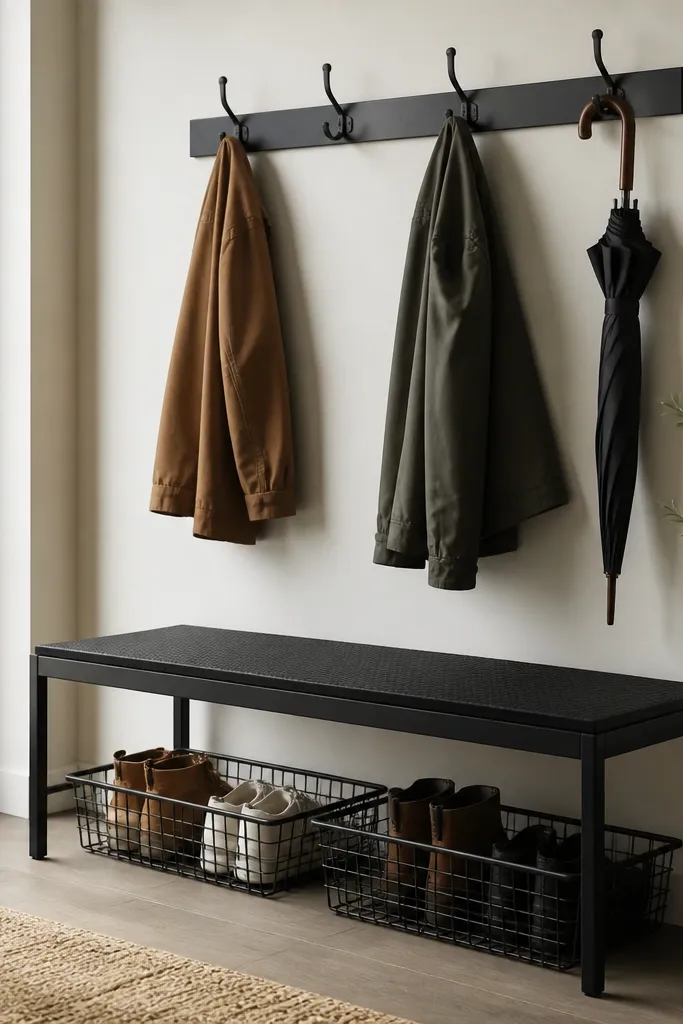
If your entry gets rain, this setup is practical and still looks sharp. Metal frames handle wet gear better than many wood benches, and a rubber mat top wipes clean like a gym floor. Wire baskets also drain quickly and stop the “damp shoe” smell.
Choose wire basket sizes that fit common sneaker sizes: about 10-12 inches wide per person. Place the umbrella hook slightly off-center so it doesn’t drip onto shoes. Add a small wall shelf for key hooks so you’re not using the bench surface for everything.
Wipe the rubber mat after rainy days. It stays dark and doesn’t develop dull spots.
Avoid fabric bench cushions in rainy climates unless the cover zips off and washes.
10. Shiplap Look Peel-and-Stick Backdrop + Hooks
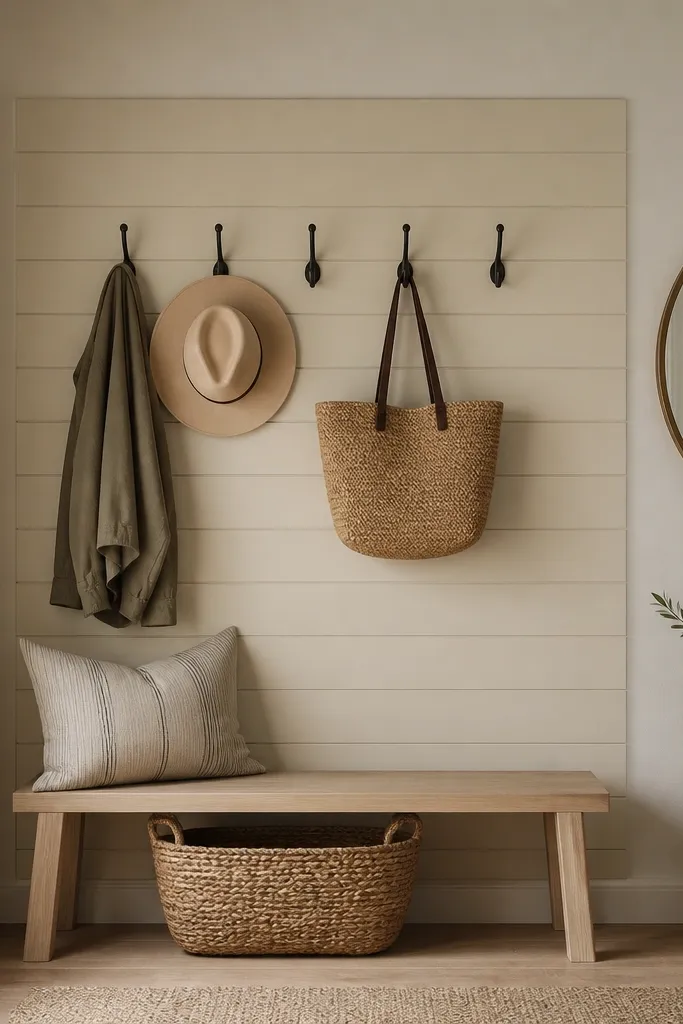
A backdrop makes hooks look intentional and keeps the entry from feeling like “random hardware on a wall.” The light shiplap look also hides minor wall imperfections. Pair it with a simple bench and one mirror and you get a mudroom vibe without building a whole unit.
Apply the peel-and-stick panel to a clean, dry wall. Leave a 1/8 inch gap at edges if the wall isn’t perfectly straight. Mount hooks into studs if you can; use anchors rated for the hook load if you can’t.
Paint the back edge of the panel where it meets trim a matching color. It stops the seam from showing as a thin shadow line.
Avoid mounting heavy items directly to the peel-and-stick layer. Always secure hooks to studs.
11. Long Runner Rug + Shoe Storage at the Doorline
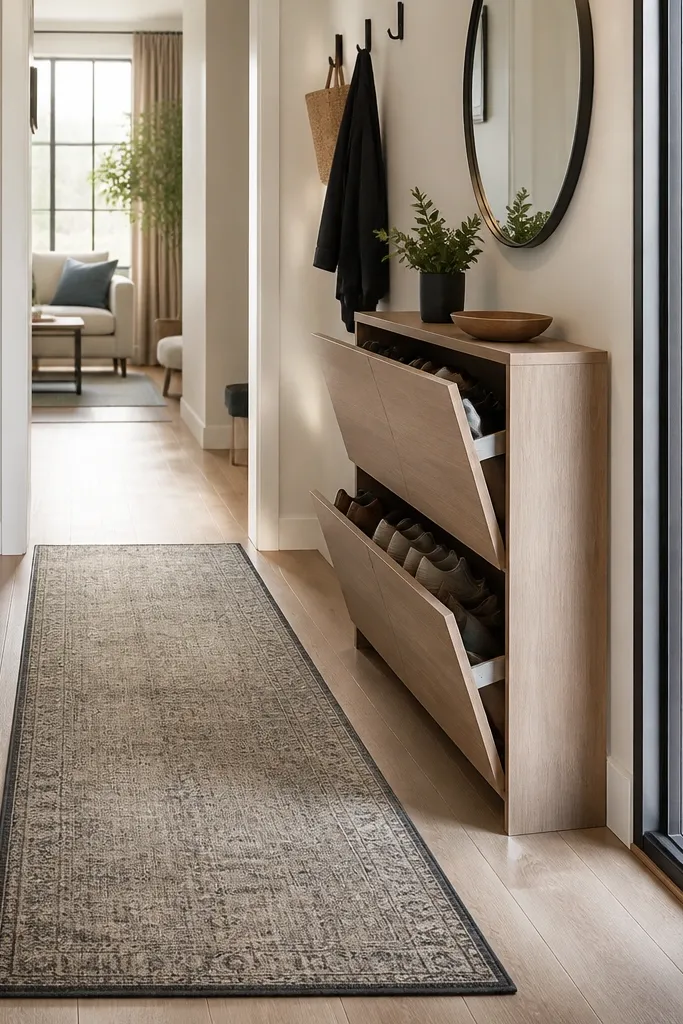
Rugs help the entry feel finished, but only if shoe storage stays at the doorline. This keeps mud off the runner and stops people from moving shoes deeper into the home. A low-pile runner in a darker tone hides tracked dirt and looks clean longer.
Choose a shoe cabinet depth around 10-12 inches so it doesn’t block the runner path. Mount hooks above the cabinet so coats hang while you’re still at the door. Keep the cabinet top at about 52-60 inches depending on your mirror height.
Pro tipUse a washable rug pad under the runner. It prevents slipping and makes vacuuming easier.
Watch outAvoid high-pile shag rugs in entryways. They hold grit and look gray after a few weeks.
12. Built-In Look with IKEA-Style Cubes + Bench Cushion
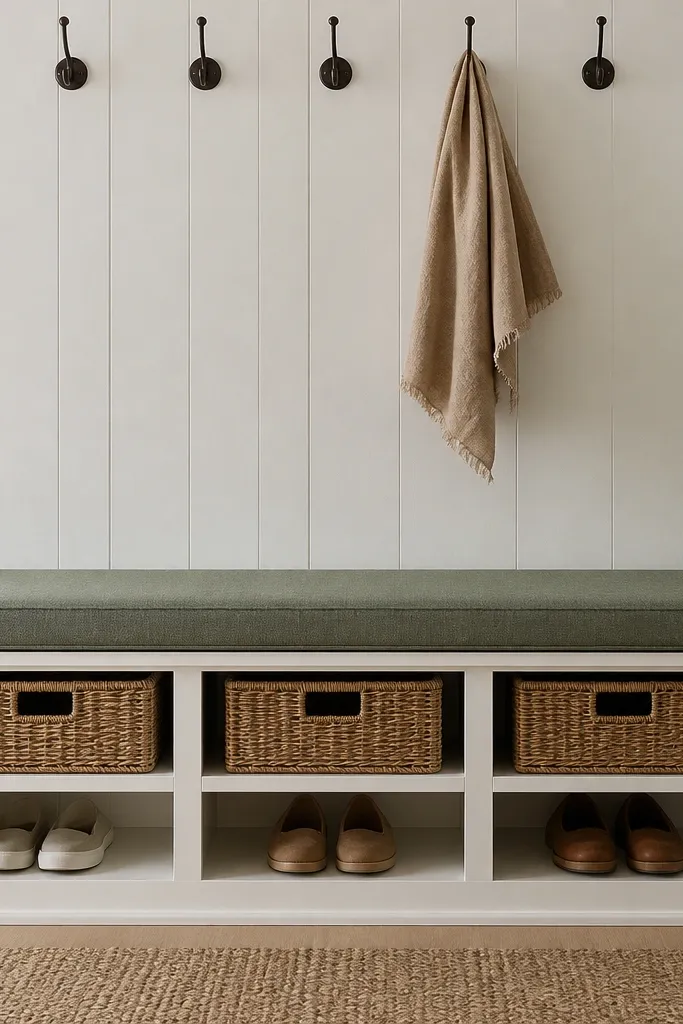
Cubby systems are the fastest way to get a built-in look. Baskets in the open cubbies make it look styled, and the bench cushion turns the top into a seating and drop point. I like muted green fabric because it hides lint and doesn’t show every scuff.
Use baskets sized to the cubby openings so they don’t sag. Cut a thin non-slip mat under the cushion so it doesn’t slide when you sit. Mount hooks above the cubbies so coats don’t brush the cushion.
Add a small gap between the top of the cubbies and the hooks so your coats hang straight instead of bunching.
Avoid leaving cubbies empty. Open storage looks messy fast when you add daily items.