1. 30-Inch Floating Shelf + Double Hook Line
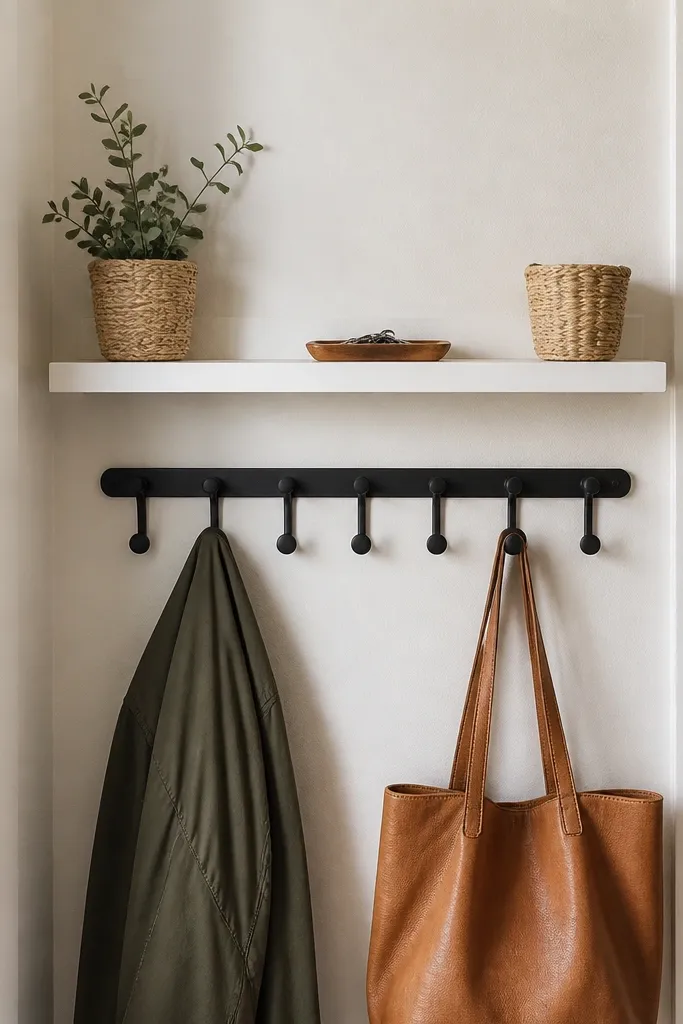
This layout gives you one clean vertical surface for daily items. The floating shelf holds keys, sunglasses, and a small mail stack so paper doesn’t end up on the floor. The double hook line keeps coats off furniture arms and stops that “one coat on the chair” habit. I like the matte black hooks with a white shelf because the contrast reads sharp even on a budget.
Pro tipPut a small label inside each basket lid — not on the outside — and you’ll get way less rummaging.
Use a shelf depth around 6 inches so it doesn’t protrude into the walkway. Install hooks 68-72 inches from the floor for adult coats and add two lower hooks (about 48 inches) if you have kids. Pair with two baskets that are 10-12 inches wide so each person gets a clear bin boundary.
Watch outAvoid mixing three metal finishes (like brass + silver + black) in the same wall run; it makes everything look mismatched.
2. Bench with Hidden Shoe Storage and a Washable Mat
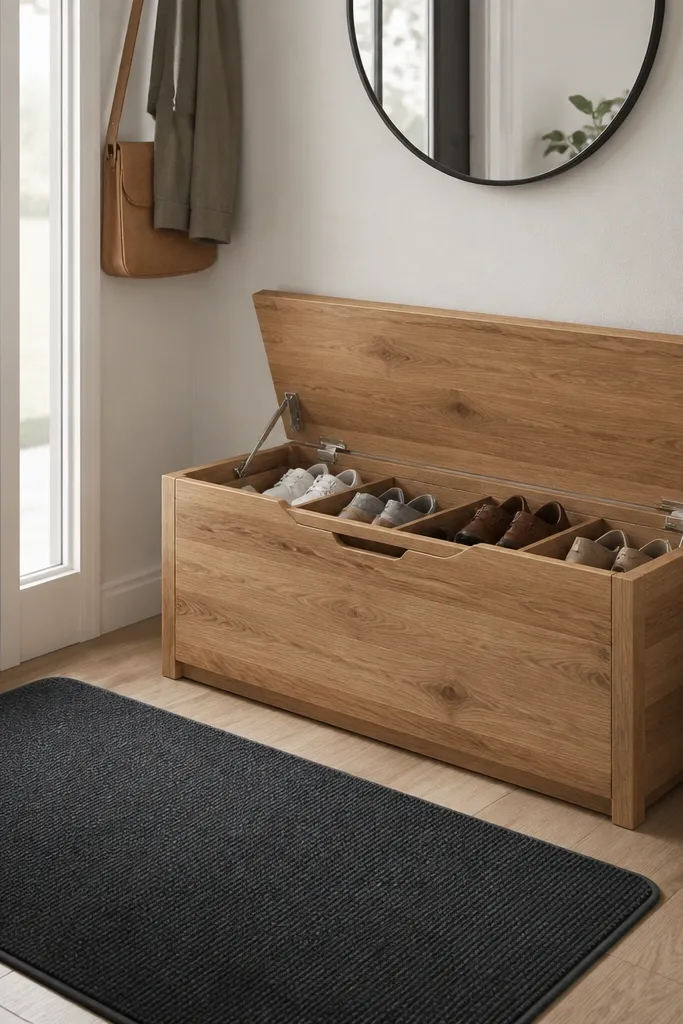
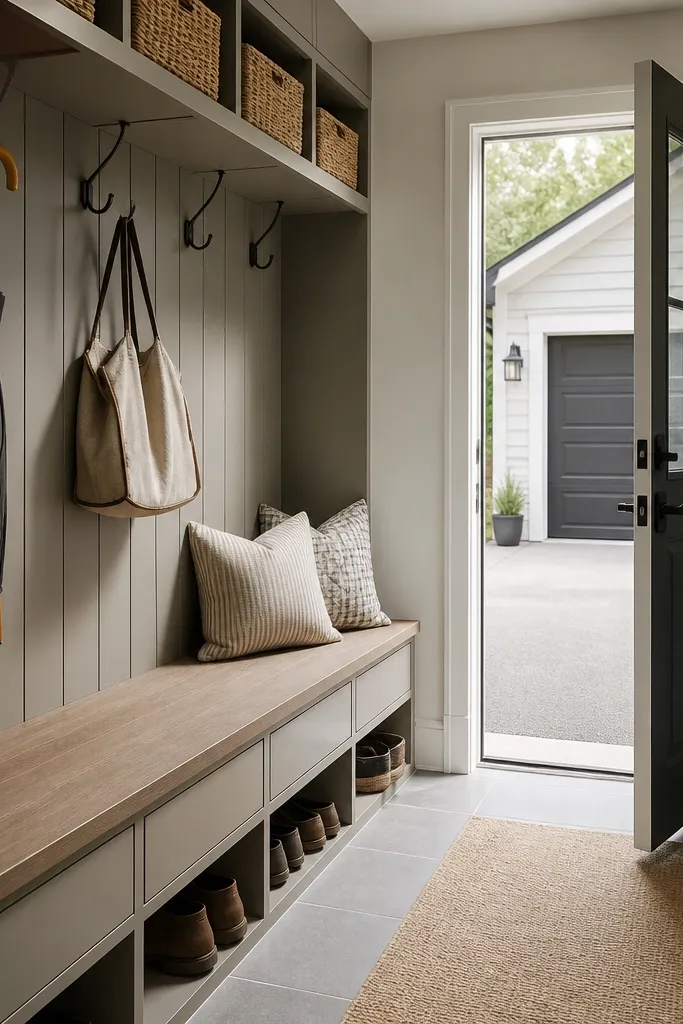
A bench that hides shoes makes the entryway look finished immediately. When shoes are visible, people assume it’s okay to leave them where they land. With the storage closed, you get a clear visual boundary — sit, drop bags, open lid, store shoes. The washable mat handles wet bottoms so you don’t have to baby the floor.
Look for a bench width 36-48 inches and depth around 14-16 inches for tight entries. Choose a lid with slow-close hinges if you have small kids; it prevents loud slam sounds. For the mat, use a rubber-backed indoor/outdoor style in charcoal or navy so dirt doesn’t show as fast.
Add a small hook on the side of the bench for leashes or a tote strap.
Avoid a bench with fabric drawers on the bottom; mud and wet shoes turn it into a stain magnet.
3. Corner Pegboard Mudroom Wall with Bins
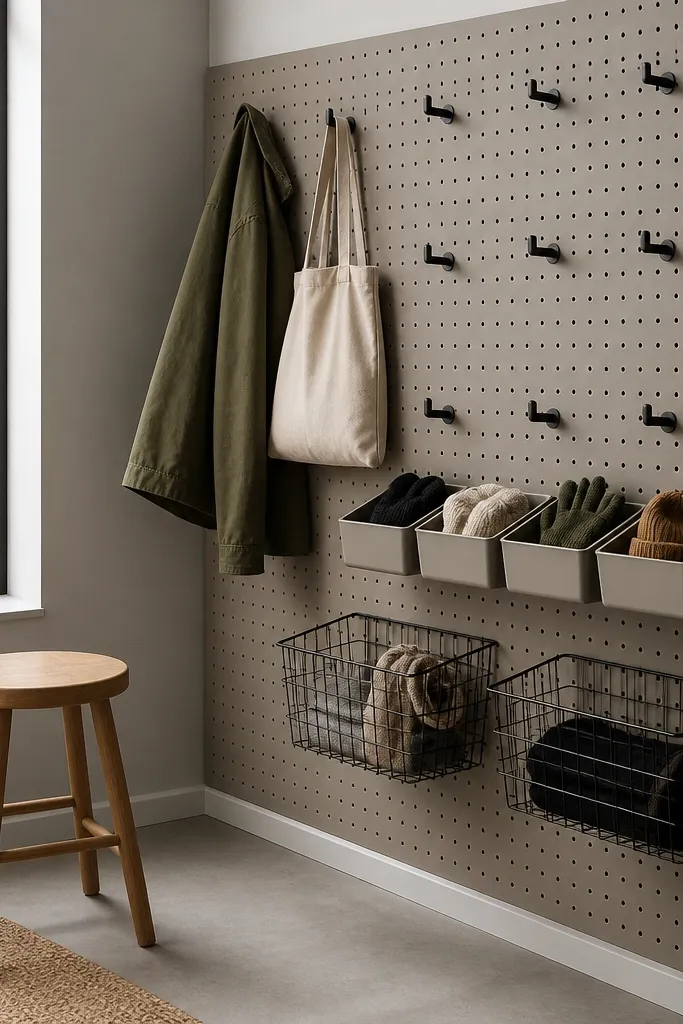
Pegboard is the most forgiving “budget built-in” I’ve used. You can move hooks and bins as your family grows, which matters because entryway chaos changes every year. It also keeps everything vertical, so the floor stays open. I like using white pegboard with black hardware because it looks crisp and doesn’t fight with wall paint.
Cover the corner with a 2x3-foot or 2x4-foot pegboard sheet. Mount bins low (around 18-24 inches) for hats and gloves, and hang hooks high for coats. Use shallow bins — about 6-8 inches deep — so kids can see what’s inside without dumping.
Add a small tray under the lowest hook row for loose change and dog treats.
Avoid mounting bins too high; if kids can’t reach, the system becomes decorative.
4. Over-the-Door Organizer for Daily Grab Items
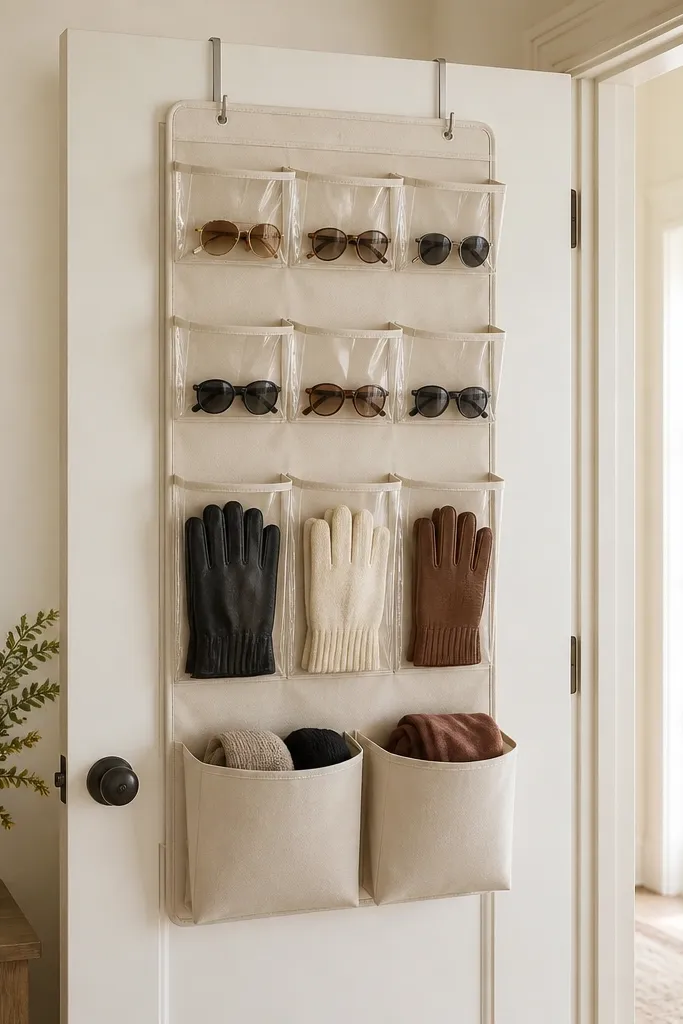
This is the easiest way to claim storage without drilling into walls. I use it for things that people grab twice a day: gloves, sunglasses, charging cables, and the small stuff that usually disappears. Clear pockets make it easy to reset quickly at night. It works best when your hallway is too narrow for a bench or console.
Pro tipSet a rule: anything that goes in the organizer must fit the pocket — if it doesn’t, it gets its own spot elsewhere.
Install it on the back of the entry door and keep items grouped by person or category. Use the bottom pouches for charging bricks and umbrella bands, because they’re thicker and need room. Choose a fabric organizer in black or navy so it doesn’t look messy when pockets fill up.
Watch outAvoid putting wet umbrellas in pockets; use a tray or floor stand for those.
5. Shoe Rack Ladder with a Wall-Top Shelf for Keys
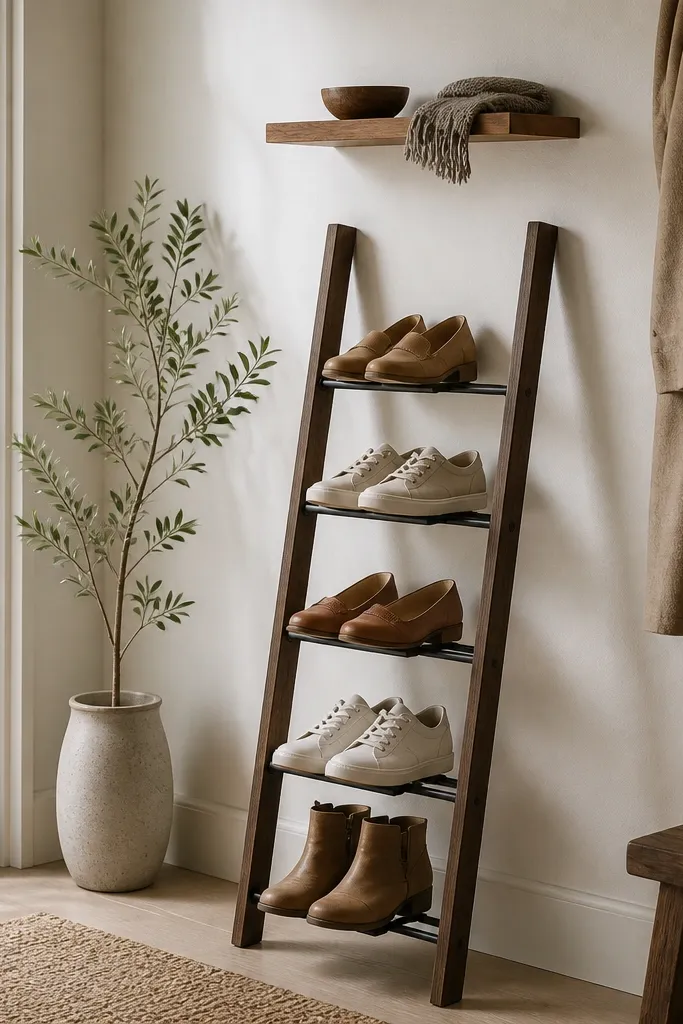
A ladder shoe rack uses vertical space and stops the shoe pile from taking over the entry floor. The top shelf is where you win the “keys and mail” battle. When keys have a bowl and mail has a tray, you stop the weekly rummage. I like pairing warm wood shoe racks with a painted shelf because it looks intentional, not temporary.
Pro tipUse two small felt liners on the top shelf so keys don’t clatter and slide.
Choose a ladder rack that’s 12-16 inches wide so it doesn’t block traffic. Put the top shelf 56-60 inches from the floor so it’s reachable without stretching. Keep the shoe rack near the door opening so you store shoes immediately after coming in.
Watch outAvoid placing the rack too far from the door; if it’s inconvenient, shoes land on the floor instead.
6. Narrow Console Table with Pull-Out Drawer + Basket Stack
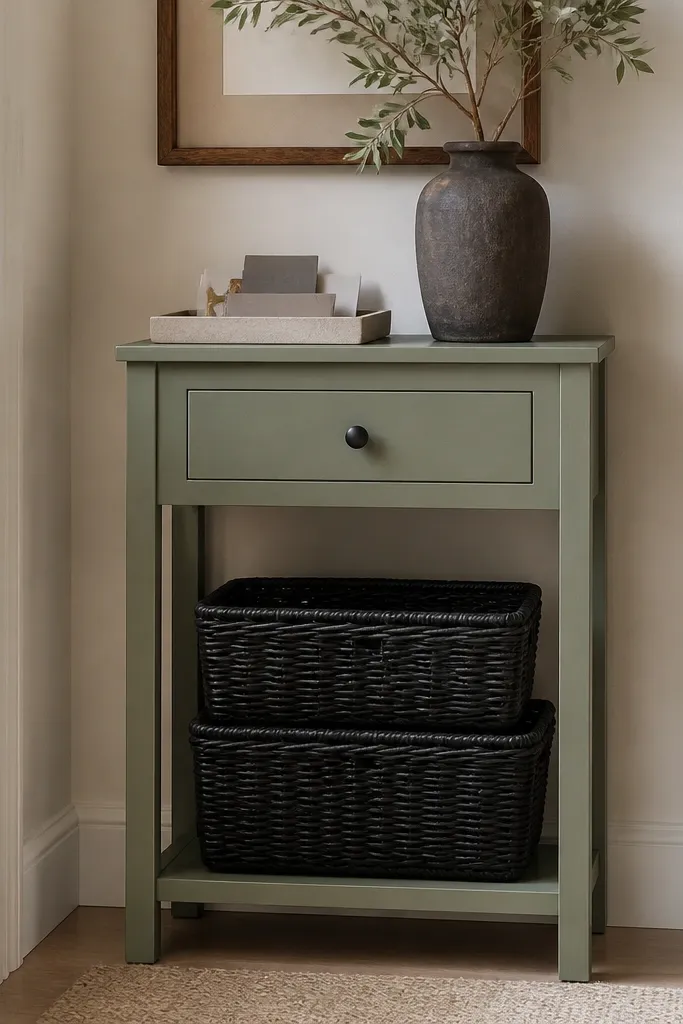
A narrow console works when you pair it with hidden or semi-hidden storage. The pull-out drawer is for chargers, spare keys, and gloves, so you don’t see clutter. Baskets below manage shoes or small bags without taking a full bench footprint. Sage green with black baskets looks calm and practical, especially in small entries.
Pick a console depth around 10-12 inches. If you have a drawer, use it for small items; if not, add a small lidded box inside. For baskets, use two matching sizes so the bottom looks uniform even when you’re busy.
Add a magnetic catch on the drawer so it closes softly and doesn’t rattle at night.
Avoid using an open shelf with mixed items; it looks like an accident happening daily.
7. Mini Mudroom Station with a Peg Rail + Boot Tray
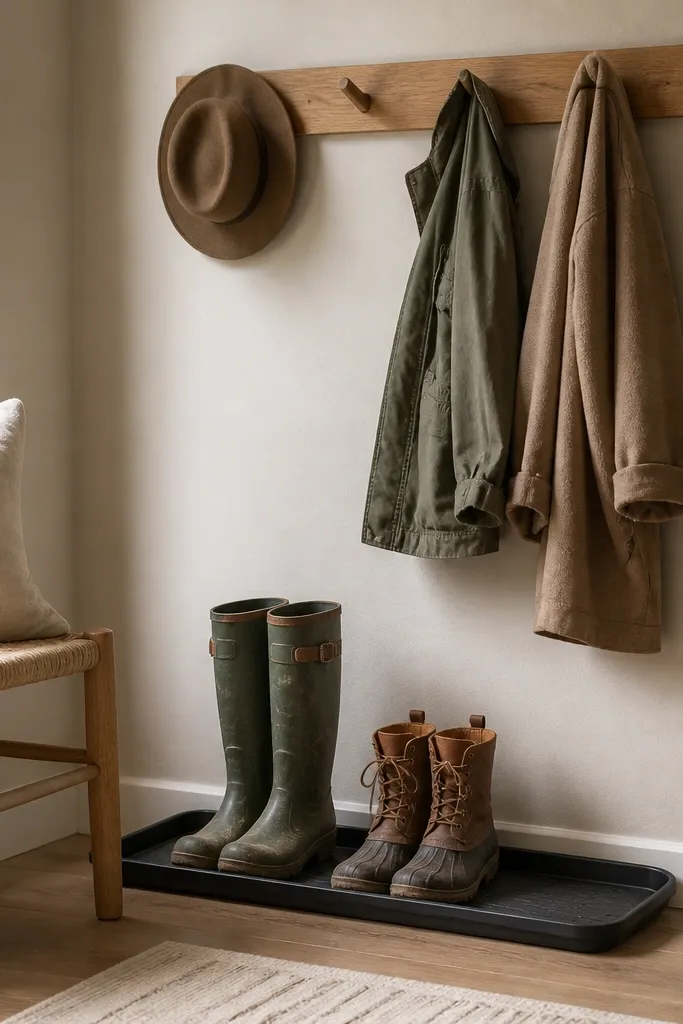
This is a “do the wet part right” setup. The boot tray catches water from rain boots so you don’t get puddles that creep under rugs. The peg rail keeps the coats where you can grab them, and a hat hook is low enough for quick access. I like this in apartments because it doesn’t require a full bench or cabinetry.
Pro tipPut a small spray bottle of cleaner in a lidded container under the bench so you can wipe the tray in two minutes.
Use a boot tray at least 18 inches wide and place it directly in front of the door area where boots land. Mount the peg rail with hooks at two heights: 70 inches for coats and 52 inches for hats. Keep the bench stool within arm reach so you can sit while putting on shoes.
Watch outAvoid skipping the tray; water damage to floors and rugs shows up faster than you think.
8. Vertical File-Style Mail Slot + Wall Shelf Combo
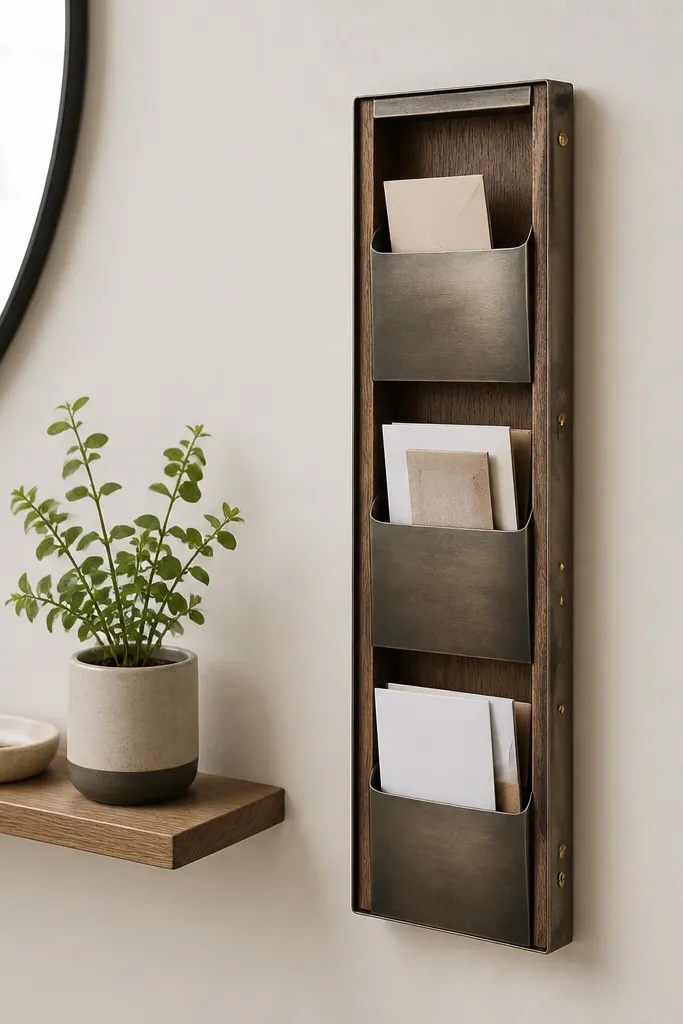
Mail is a chaos magnet because it piles in random places. A vertical file-style mail slot forces it into one narrow channel, which keeps your entryway from becoming a paper storage room. Pair it with a small shelf for keys so the daily grab items stay in one line. The look stays clean because you’re not stacking loose envelopes on a table.
Install the mail slot at about 42-48 inches from the floor for easy use. Put the key dish on a shelf 6-8 inches deep so it doesn’t feel crowded. Choose a mail slot in matte black or white to match your hooks or hardware.
Use one small bin under the mail slot for “outgoing” mail so you don’t hunt for stamps later.
Avoid placing the mail slot too low; if it’s hard to reach, people drop it on the nearest surface.
9. Two-Tone Wall: Painted Hooks on One Side, Lighter Shelves on the Other
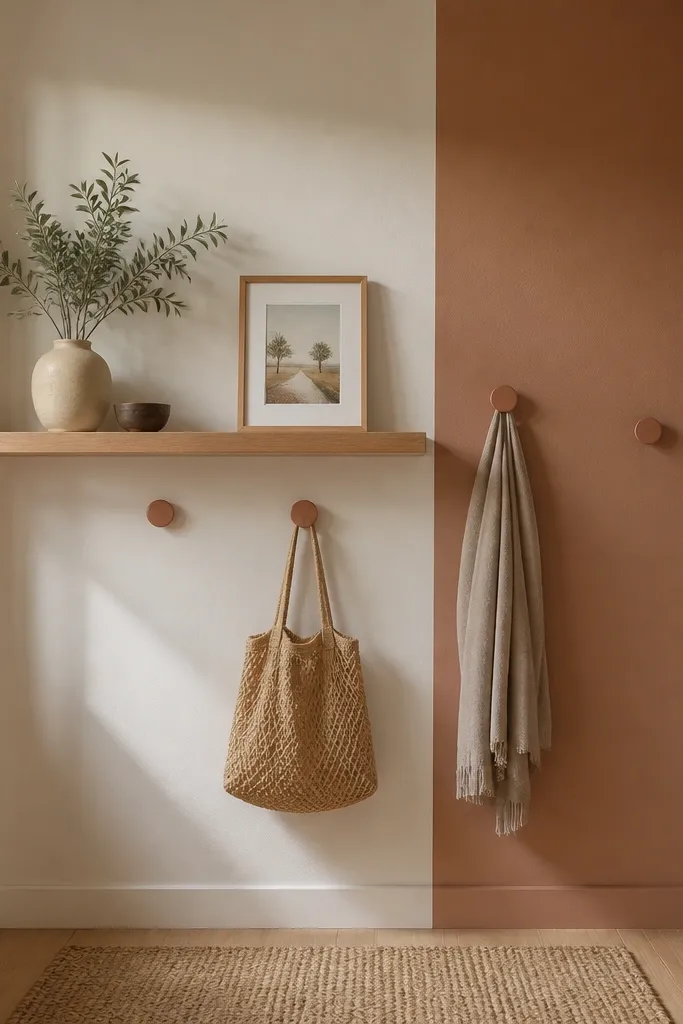
Color zoning makes a small entry feel larger because your eye knows where to look. Paint a narrow vertical strip behind the hooks in a clay or muted terracotta, then keep shelves in light wood or white. The contrast makes the hook area look intentional even when you’re using budget hardware. I’ve used this in rentals and it still looks good because the color is doing the “design work.”
Use painter’s tape to create a 10-12 inch vertical zone for the hooks. Mount hooks on that painted strip so they’re visually anchored. Add a light wood shelf 30-36 inches long and keep decor minimal: one tray, one small plant, one basket.
Match your hook color to your shelf brackets if you can — it makes the whole wall look assembled.
Avoid a high-gloss paint on the hook wall; it shows scuffs and fingerprints immediately.
10. Wall-Mounted Shoe Cabinets with Flip-Top Doors
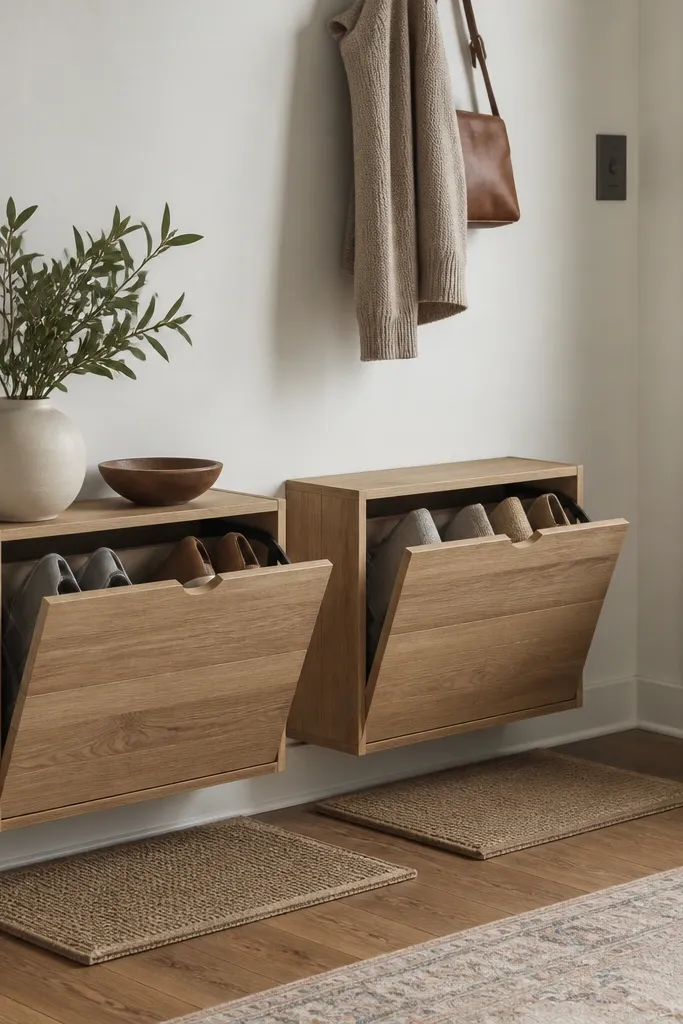
Flip-top shoe cabinets hide the mess while keeping shoes accessible. If you have a narrow hallway, wall-mounted storage makes the floor look clear and reduces tripping hazards. Labels keep it from turning into a “grab any pair” free-for-all. I love the look when cabinets are in the same finish as the wall trim.
Pro tipWipe cabinet doors weekly with a microfiber cloth so fingerprints don’t build up and make them look dirty.
Choose cabinets with a depth under 12 inches so you don’t lose walkway clearance. Mount the bottom edge around 10-14 inches from the floor to make opening easy. Place a small washable mat under the cabinets for any scuffs during shoe changes.
Watch outAvoid overcrowding the cabinet; if doors feel tight, people start leaving shoes on the floor.
11. Corner Bench with Overhead Rail for Coats and Hats
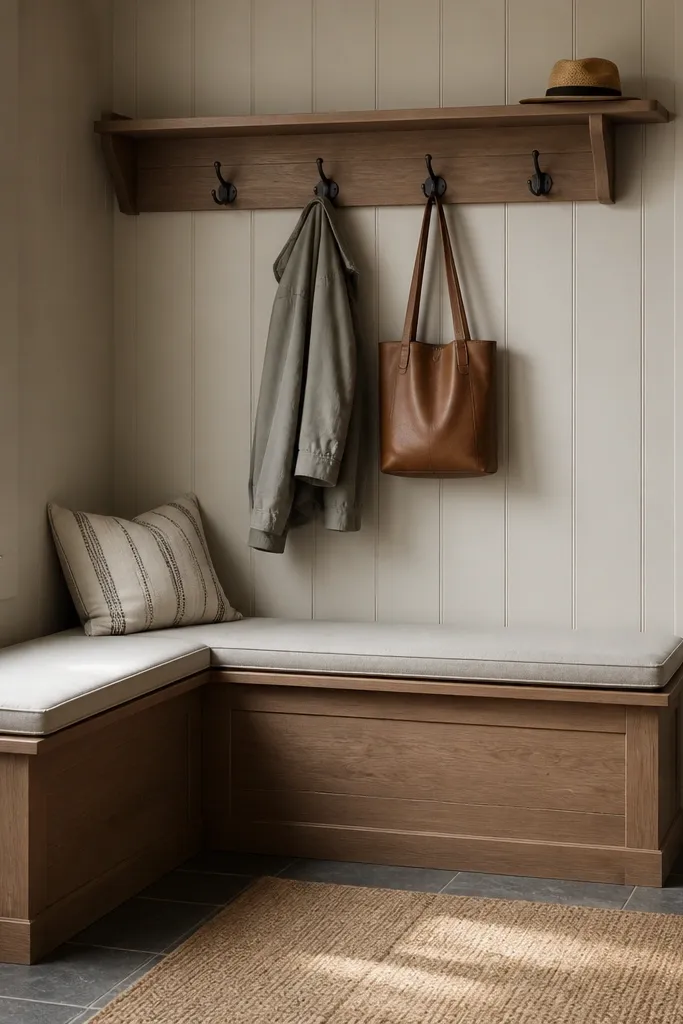
Corner setups squeeze storage into the space you already underuse. The bench gives you a place to sit and tie shoes, while the overhead rail keeps coats and hats off the bench surface. This prevents the bench from turning into a coat pile. The overhead rail also makes the area feel taller, which helps in short entryways.
Use a corner bench width that matches your corner footprint, often 36x36 inches. Install the overhead rail about 84-90 inches from the floor so coats hang without dragging. Add one small shelf on the side for hats and scarves so you don’t stack them on the bench cushion.
Hang one hook near the bench for a single “always here” item like a leash or a small tote.
Avoid hanging hooks so low that coats brush the floor; it looks sloppy and drags dirt indoors.