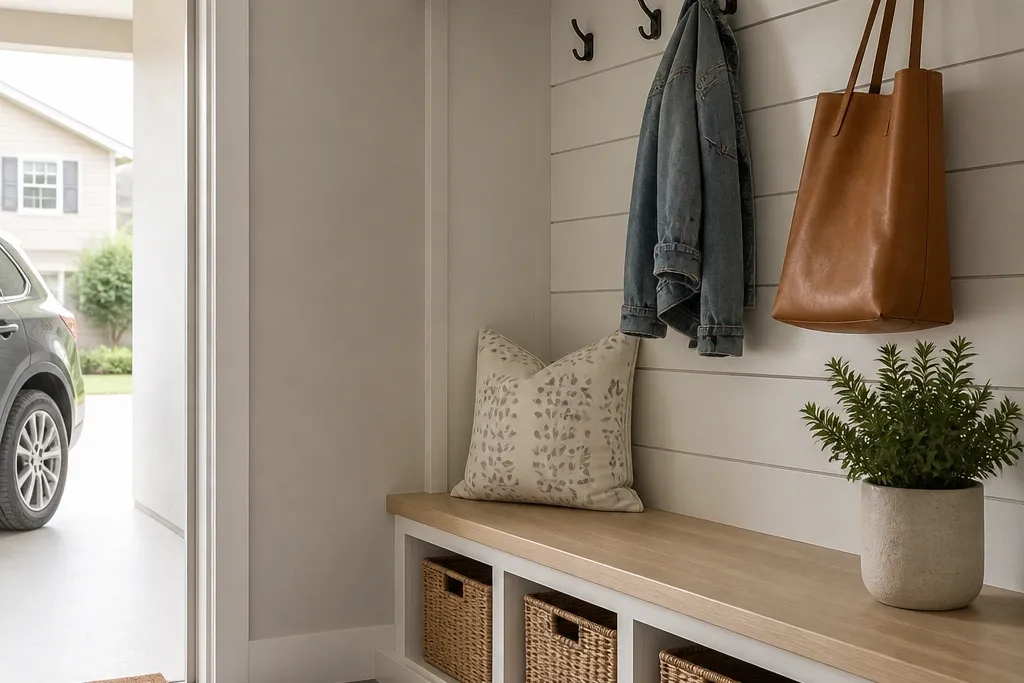
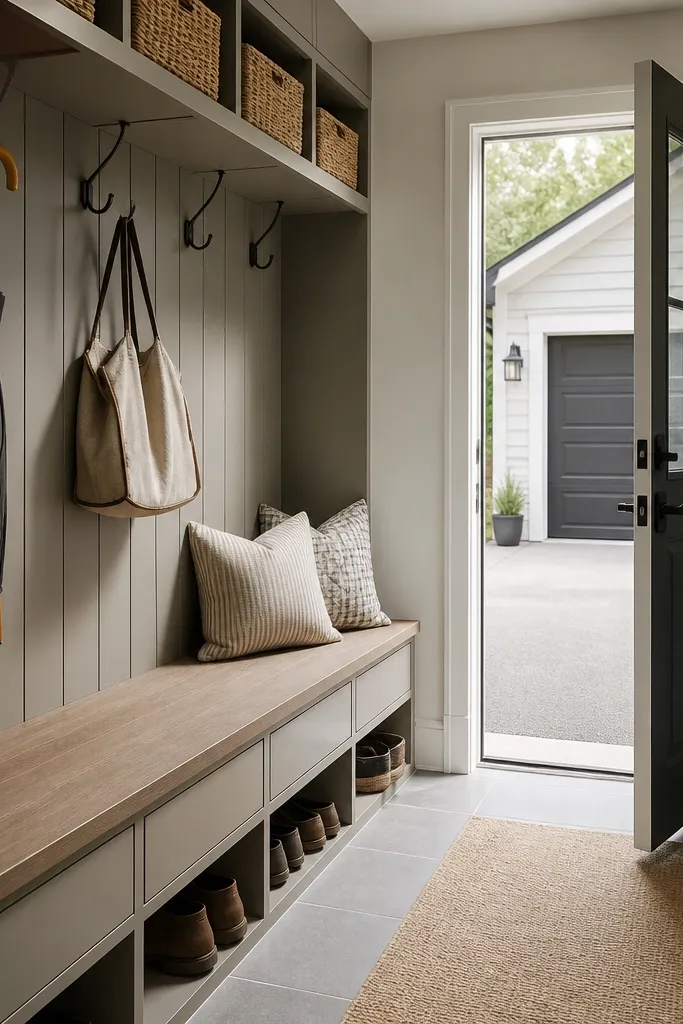
1. The 48-Inch Bench With Hidden Shoe Drawers
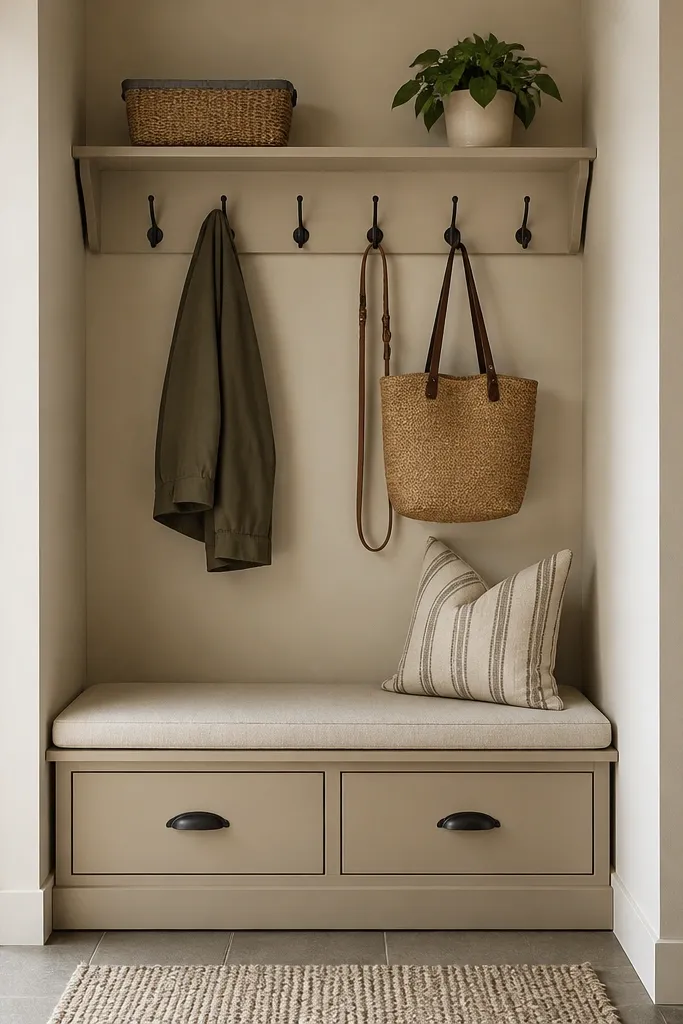
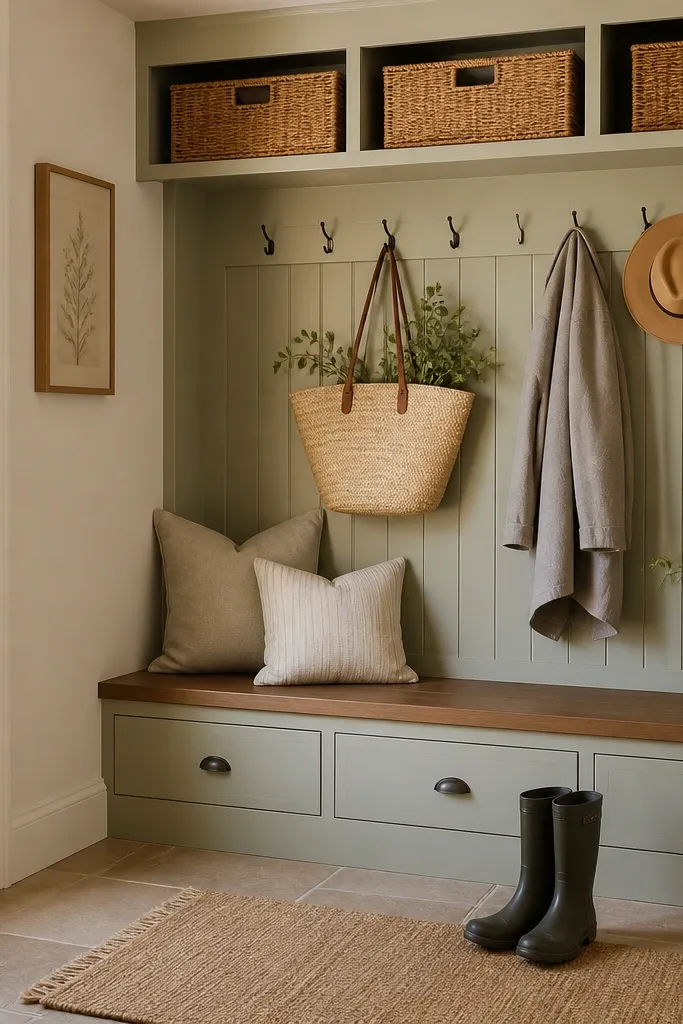
This setup works because it turns the bench into both seating and storage. When shoes get shoved under the bench, the floor stays cleaner and the wall looks calmer. I like pairing a medium oak bench top with black hardware so it looks intentional even in a small space. Add a simple hook rail above for wet coats so they don’t pile on the bench surface.
Use a bench that’s about 16-18 inches deep so it fits in tight entryways without blocking the door swing. Choose a cushion that wipes with a damp cloth, like performance fabric or a removable cover. Put the hooks at 60-66 inches so adults can hang coats without the kids dragging them.
Line the drawers with a thin rubber mat so wet boots don’t scuff the wood and so the drawer slides stay easy.
2. Wall-Mounted Drop Shelf With Hanging Hooks
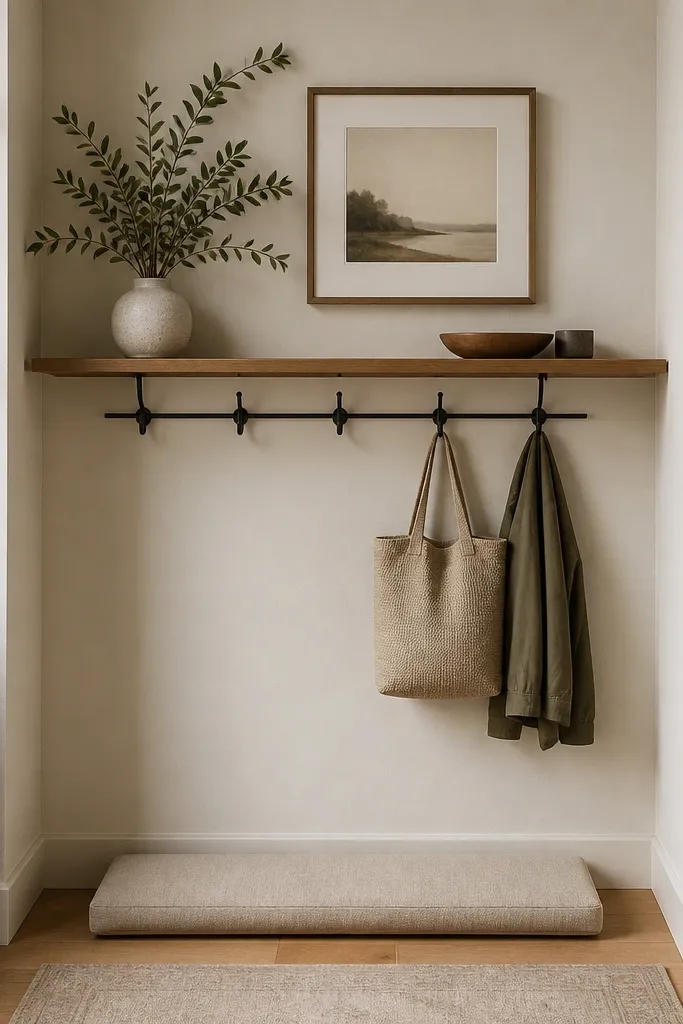
Mount the shelf at 44 inches high, then put hooks 10-12 inches below it. Use a sealed wood shelf or a laminate shelf with a matte finish. Keep the wall color consistent with the rest of the garage entry so the shelf blends instead of feeling like a patch.
A floating drop shelf gives you a “landing” spot without eating floor space. I’ve installed these in narrow garage hallways where a bench would block traffic. The hooks underneath keep coats accessible, and the shelf catches keys and mail instantly. It looks neat because everything has a home on the same wall.
Pro tipAdd a small tray on the shelf for keys and sunglasses so you’re not hunting for them at bedtime.
3. Two-Column Shoe Cabinet With Upper Locker Doors
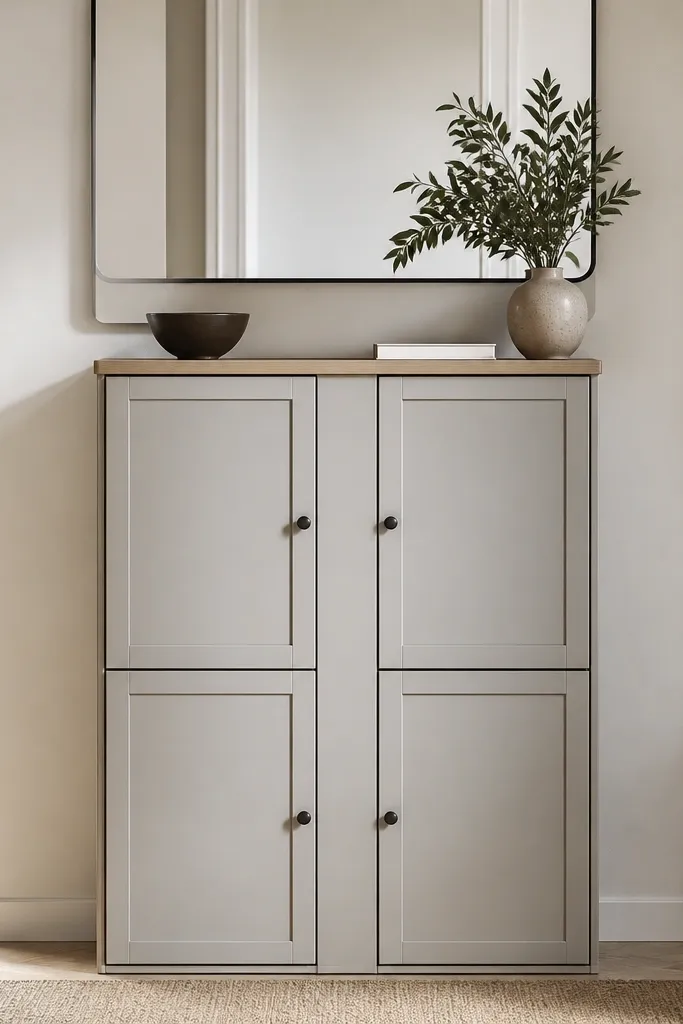
Aim for a total width under 60 inches for typical garage entries. Use adjustable shelves in the upper section so you can fit taller items like winter beanies. Finish the countertop in a wipe-clean laminate or sealed butcher block with a clear matte topcoat.
This is one of the best small mudroom ideas entryway small space layouts because it hides the mess behind doors. People think they need an open rack, but closed compartments look cleaner and reduce the “pile” effect. I like the locker door idea because each family member gets a clear compartment for hats and gloves. The top counter gives you a flat surface for a basket of dryer-safe items.
Pro tipLabel the inside of each door with a small vinyl label so kids grab the right bin fast.
4. Mudroom Pegboard Wall With Color-Matched Bins
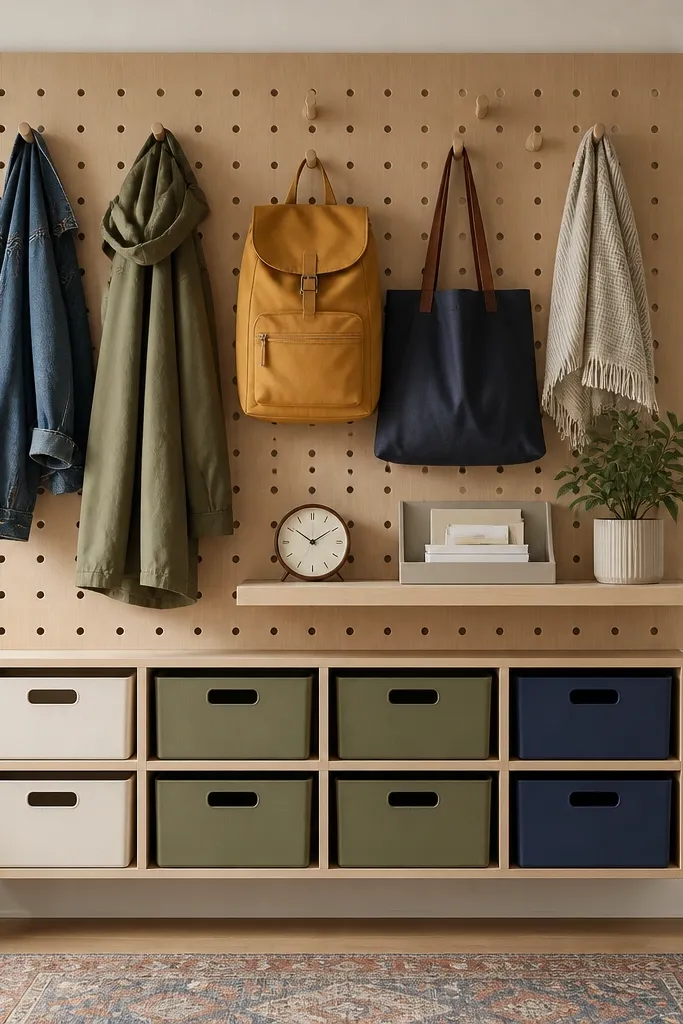
Use a pegboard that’s at least 3/4-inch thick for sturdiness, and mount it with proper anchors into studs. Paint pegboard and hooks the same color — I like matte black or warm white. Put bins on the lower half so kids can reach them without stretching.
Pegboard is tough in garage entries because it lets you rearrange hooks as your family grows. The bins keep everything from looking random, and matching bin colors make the wall look styled instead of chaotic. I’ve used pegboard in narrow spaces because you can build a system without bulky furniture. It also makes it easy to add a second row of hooks later.
Pro tipUse one bin size for all backpacks and one bin size for gloves so the wall stays uniform.
5. Boot Tray Under Bench With Wipe-Clean Landing Mat
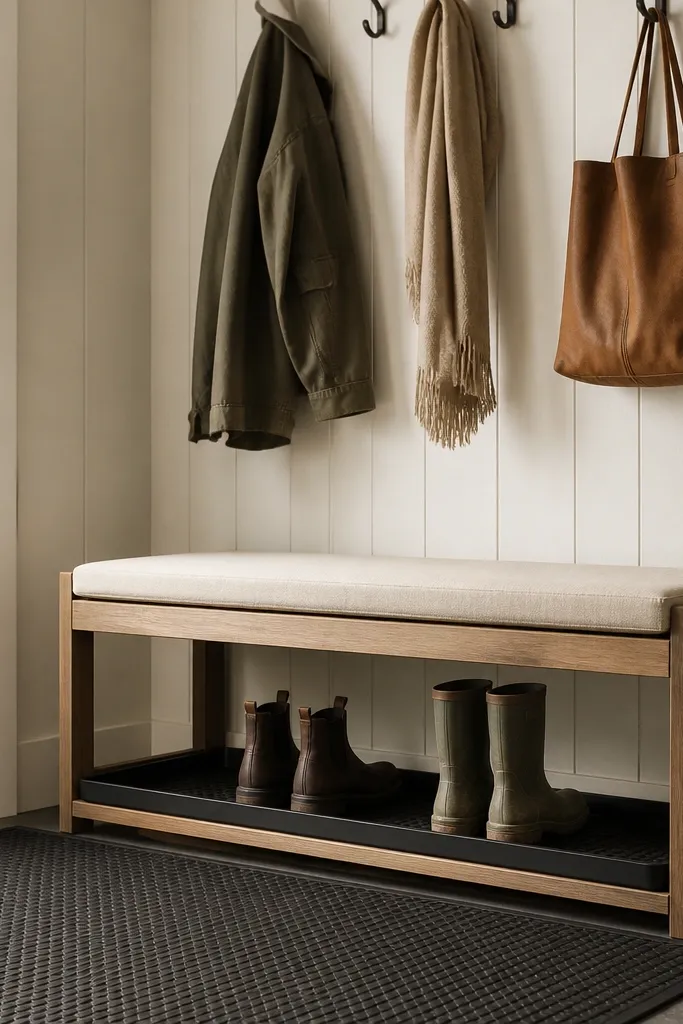
Choose a boot tray sized to the bench footprint, leaving a 1-inch gap around edges for easy cleaning. Use a bench with legs or clearance so the tray can sit flush. Add a washable mat 18-24 inches deep in front of the hooks so the “first step” area stays clean.
This is a practical fix for the wet-boot problem that destroys small spaces. The boot tray catches drips before they stain the floor, and the landing mat keeps grime from spreading. I like dark rubber or textured vinyl mats because they hide scuffs. With hooks above, wet items have airflow instead of pooling under open racks.
Pro tipKeep a small spray bottle of diluted vinegar and a microfiber cloth in the entry for quick wipe-downs after rainy days.
6. Narrow Console Table With Lower Drawer Baskets
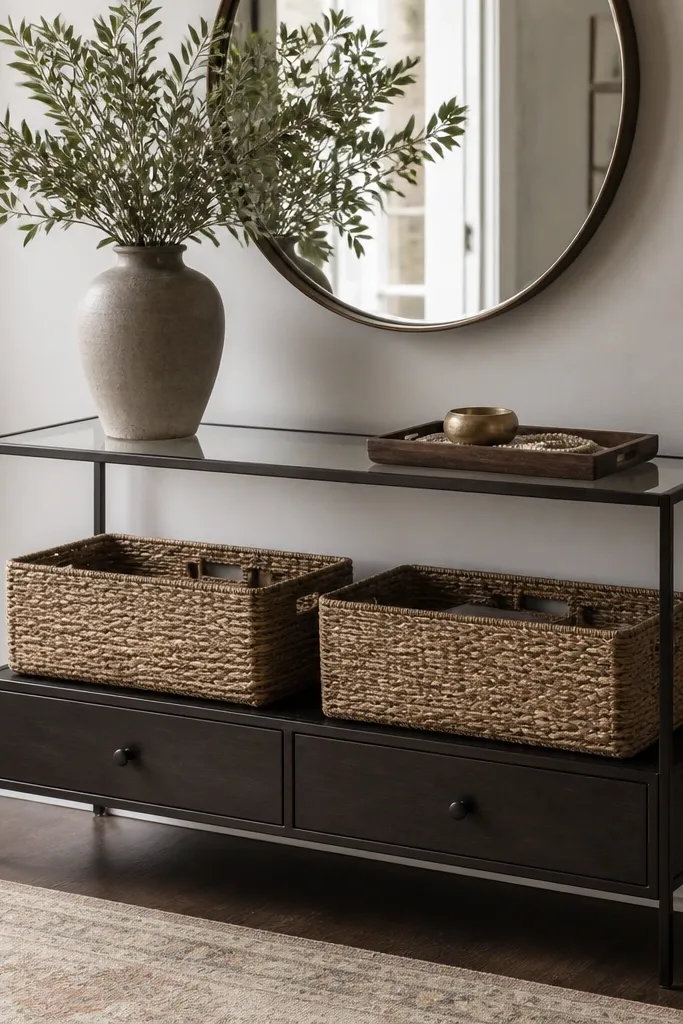
Pick a console with at least two drawers, not open shelves. Use baskets with flat fronts that slide smoothly in drawers, like fabric-lined or sealed paper rope baskets with a stiff base. Keep the top minimal: one tray, one small plant or candle, and a mail sorter.
A narrow console gives you a polished look without the bulk of a cabinet. The trick is to use drawers for the messy stuff — shoes, chargers, and spare gloves — so the surface stays tidy. I prefer a console depth around 10-12 inches for garages because it doesn’t steal walkway space. The mirror above makes the small entry feel wider, but the real win is the closed drawers.
Pro tipMatch basket colors to your wall trim paint — I go with white or natural for a clean, calm look.
7. Corner L-Shape Bench With Vertical Hook Rail
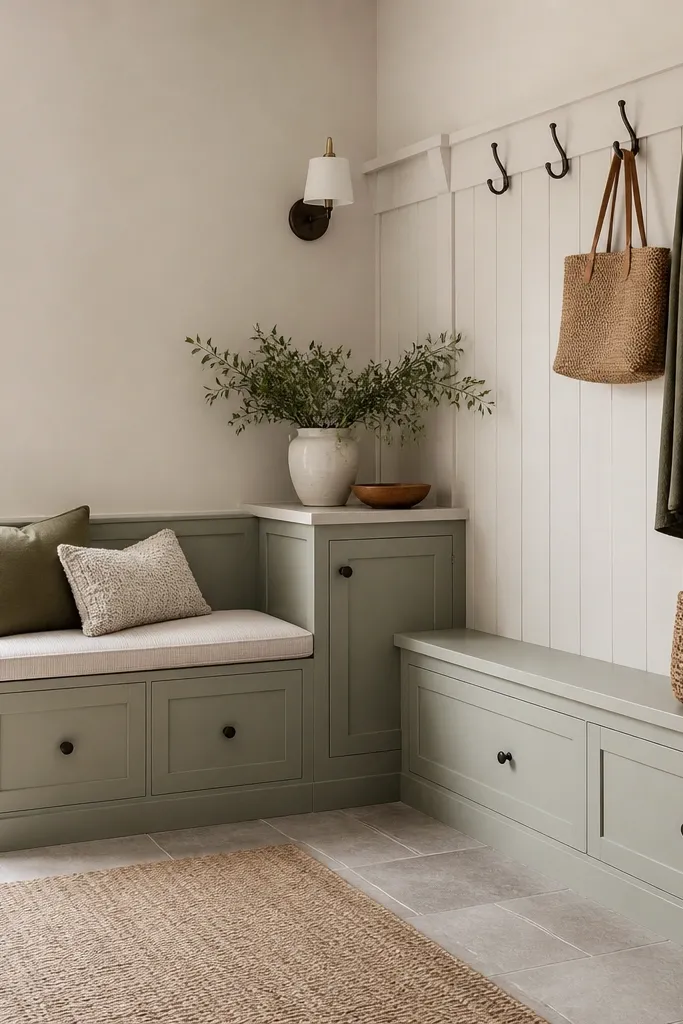
Measure the corner first. Leave at least 24 inches of clearance on each leg for people to pass comfortably. Use a sealed plywood base with a wipeable cushion cover, and add a small cabinet at the corner for umbrellas or extra towels.
Corner seating is how you get storage in a garage entry without shrinking the walkway. The L-shape gives you two landing zones — one for shoes and one for bags — and the vertical hook rail keeps coats off surfaces. I like this when the door hits one wall and the other wall is tight. It makes the space feel designed instead of squeezed.
Pro tipAdd one shelf at the top of the hook rail for hats so they don’t fall onto the bench.
8. Ceiling-Hung Coat Bar With Short Ground Storage
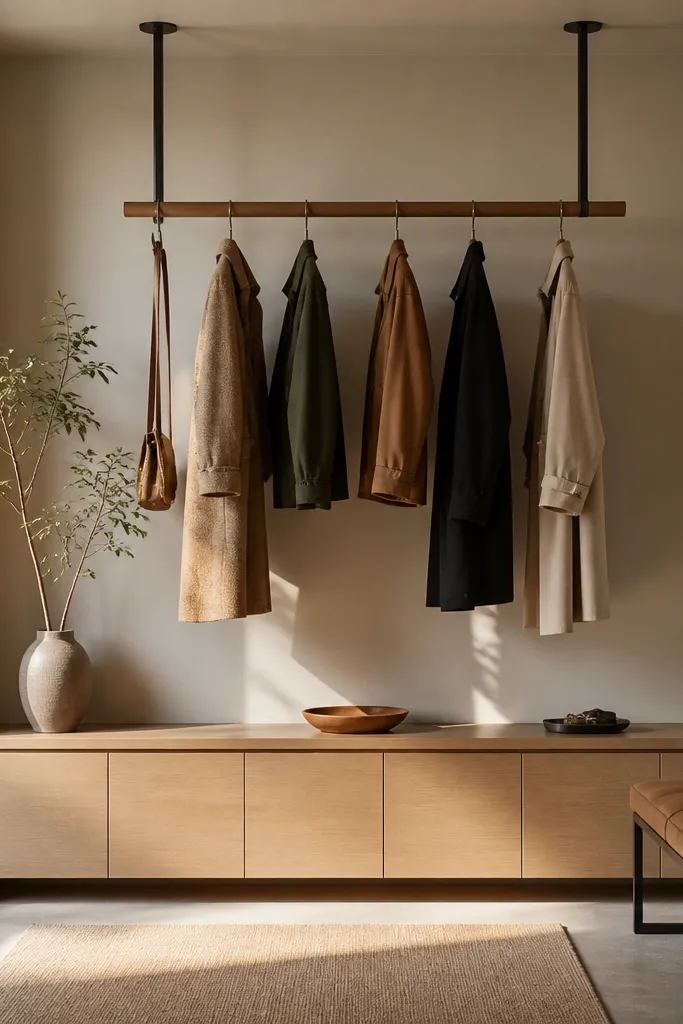
If your walls are crowded or you have low-hanging garage features, ceiling suspension is a smart workaround. It keeps coats off the wall, which helps when you’re dealing with damp outerwear. Ground storage stays compact, so you’re not stepping around clutter. This looks clean because coats hang in a single line.
Use a heavy-duty ceiling bar rated for coats, with mounting into joists. Keep the bar height so coat bottoms land above the bench top by a few inches. Pair with short cabinets or a 12-15 inch shoe drawer unit below so the floor stays clear.
Use two types of hooks: one for coats and one for bags, so the hanging area stays organized.
9. Over-the-Door Organizer Above a Bench
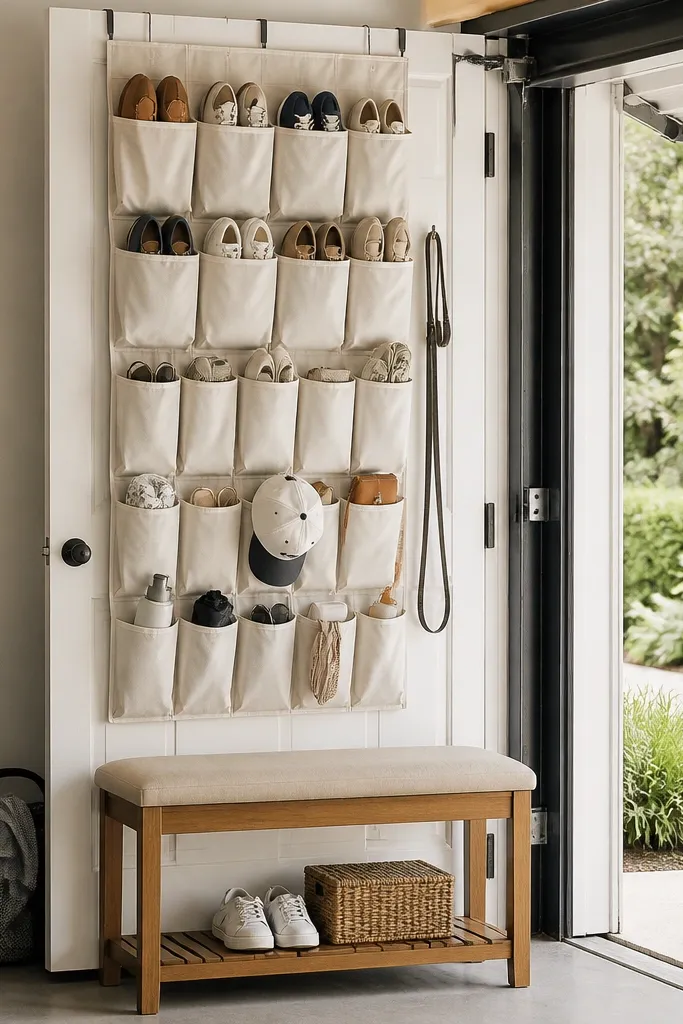
This is the budget-friendly move that still looks good. The over-the-door organizer is perfect for gloves, hats, and smaller items that disappear on the floor. Pair it with a bench for shoes and you get two separate zones without building a full wall system. I like it because it doesn’t require carpentry and it keeps small items off the bench top.
Choose an organizer with clear pockets or sturdy fabric that wipes clean. Mount it high enough that it doesn’t drag when the door opens and closes. Keep the bench simple and closed storage so wet boots don’t end up in the organizer pockets.
Put the same items in the same pocket every day — gloves in one pocket, dog leash in another.
10. Open Shelf + Closed Baskets for a Clean Look
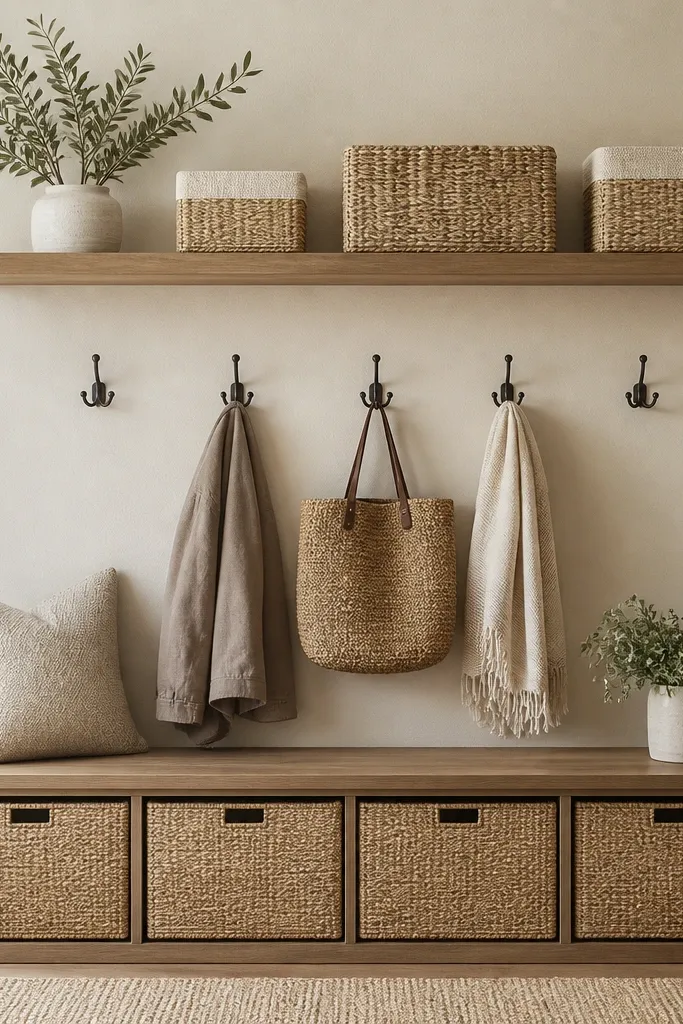
Use one shelf length that fits the wall, usually 36-48 inches, and keep items limited to trays and one bin row. Choose baskets in the same material and color — like white fabric with stiff sides. Put hooks above the shelf for coats so you don’t stack damp items on top.
You can use open shelving in a mudroom if you control what shows. The secret is closed baskets that hide the messy stuff while still letting you see what’s where. I’ve used this when renters can’t install cabinets but still want an organized entry. It looks intentional because the bins match and sit in the same positions.
Pro tipAdd a small label on the basket front with a simple label maker so everyone finds things fast.
11. Tile-Top Bench With Under-Shelf Storage
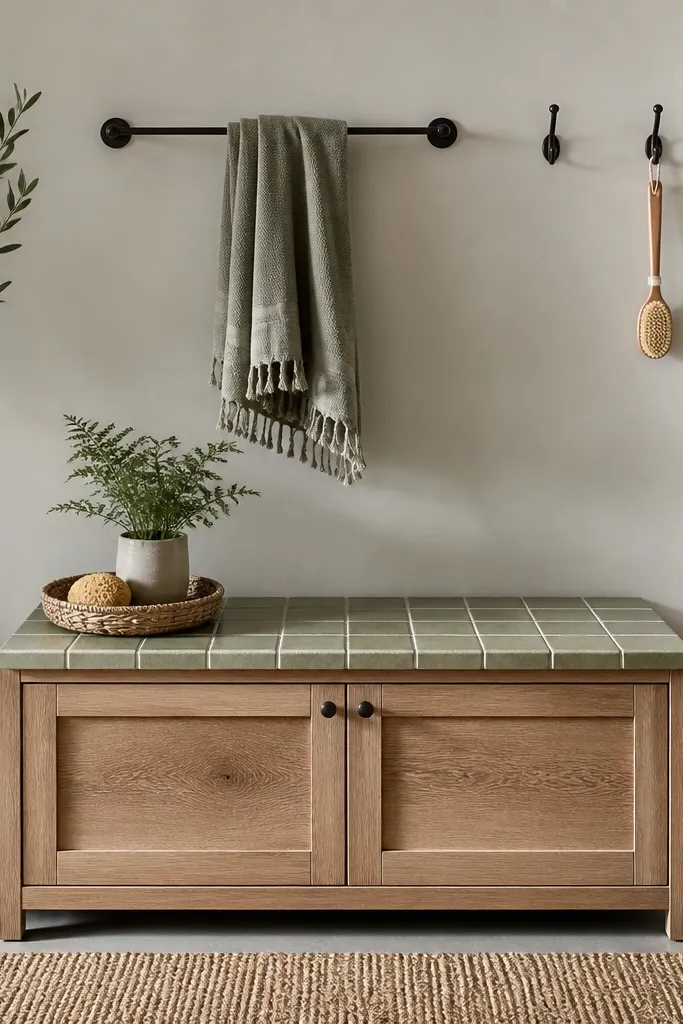
Use a bench base with closed compartments and a tile top that’s sealed. Keep grout lines minimal by using smaller tiles and proper sealing. Match the hardware finish — black towel bar, black pulls — for a consistent look.
Tile top is one of the easiest ways to make a garage entry look high-end without expensive cabinetry. It wipes clean when muddy boots touch down, and it doesn’t stain like fabric. Under-shelf storage keeps shoes and cleaning supplies hidden. The towel bar gives you a place for drying cloths after you wipe down boots.
Pro tipSeal the tile and grout after installation and re-seal once a year if you get a lot of winter moisture.
12. Rolling Shoe Cart Station With a Wall Anchor
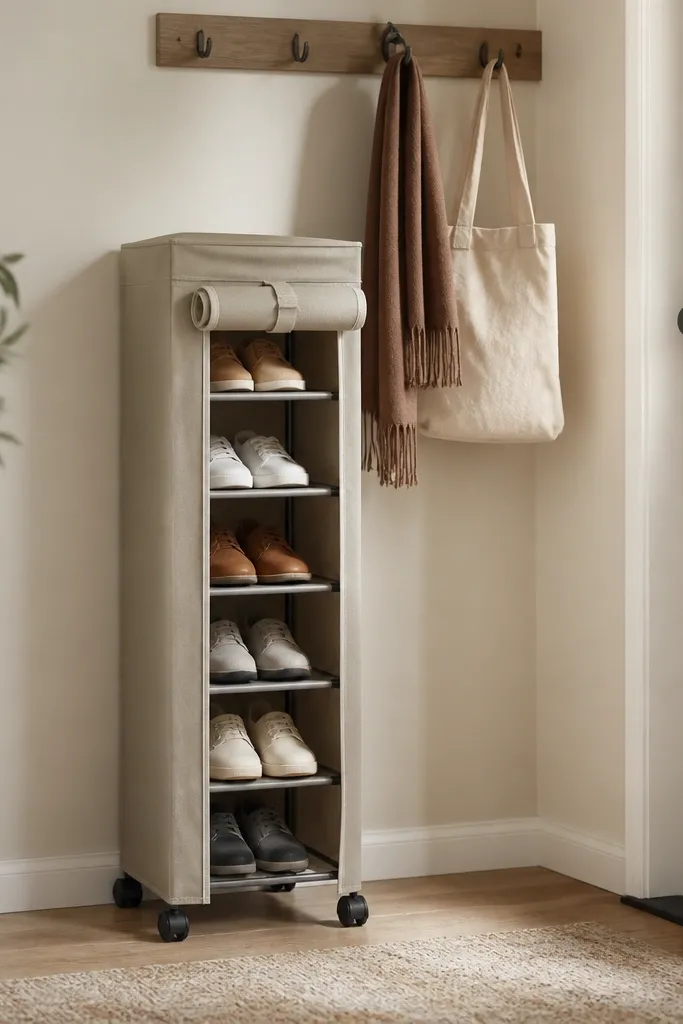
Pick a cart with shallow tiers so boots fit without squeezing. Use a cover in a dark color like charcoal so dirt doesn’t show. Anchor the cart by adding a small hook or strap to the wall behind it.
This layout is great when your garage entry changes seasonally. The rolling cart lets you move shoes to the side when you need the floor for cleaning or a stroller. I like adding a wall anchor hook so the cart doesn’t drift and so backpacks can hang nearby. The fabric cover keeps the cart looking tidy.
Pro tipStore only one family member’s shoes per tier so the cart doesn’t turn into a jumble.